Ancient text
Laws of Lipit-Ishtar
A text for line-by-line reading, with transliteration, translation, and resources.
Sumerian law collection associated with Lipit-Ishtar of Isin in the twentieth century BCE.
Last reviewed:
Text
The Laws of Lipit-Ishtar are a Sumerian legal text associated with the twentieth-century BCE king of Isin, earlier than HammurapiHammurabiKing of Babylon in Mesopotamia, reigning around 1792–1750 BCE. A celebrated legal text preserved on a stele and cuneiform copies bears his name.Glossary · Click to read the explanation. The prologue announces lifting servitude’s yoke and returning groups to their cities. [1][2]
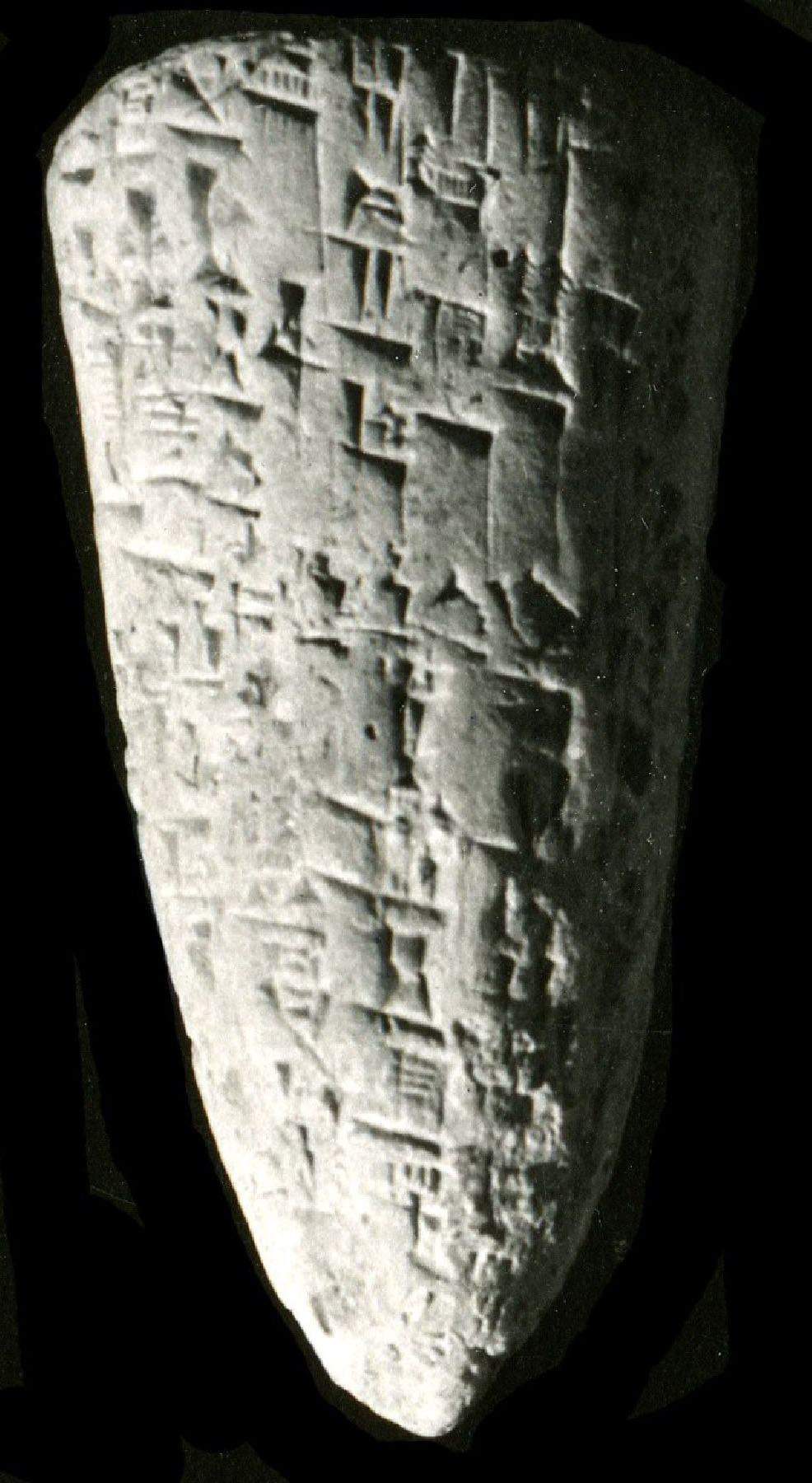
Sections 12–13 regulate compensation for harbouring a fugitive slave for a month. Royal liberation language thus coexists with ownership claims. The pictured cone is a votive inscription of the same king, not a witness bearing the law collection’s clauses. [1][2]
References and notes
- CDLI P 464355, Lipit-Ishtar composite: prologue 55–70 and §§12–16, Sumerian transliteration and English read; not the complete text. Return to the text ↑
- Walters 48.1455, Lipit-Ishtar votive cone,1934–1924 BCE: description, date, credit and CC 0 licence read; downloaded photograph viewed. Not a tablet of the law collection. Return to the text ↑
Archive records may be reviewed and refined as better evidence or sources become available. Suggest a correction
Suggest a correction · Suggest a source for this record
Cite this record
IL Archive, «Laws of Lipit-Ishtar», https://ilarchive.com/en/texts/laws-of-lipit-ishtar-collection