Ancient text
Psalm 50 and sacrifice
A text for line-by-line reading, with transliteration, translation, and resources.
Hebrew poem rejecting divine need for sacrificial flesh and calling for thanksgiving and fulfilled vows.
Last reviewed:
Text
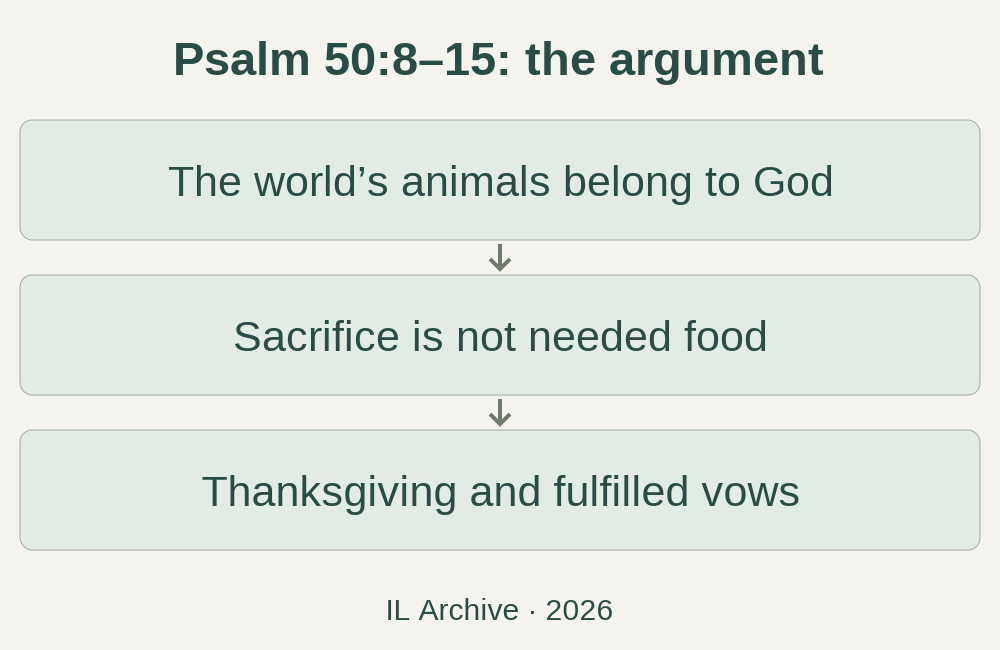
Psalm 50 is a poem in the Book of Psalms, using HebrewHebrewA Northwest Semitic language of the Canaanite group, encompassing Iron Age epigraphy, Biblical, Rabbinic, medieval and Modern Hebrew; its scripts and pronunciations changed over time.Glossary · Click to read the explanation numbering. Verses 8–15 give divine speech about offerings: the world’s animals belong to God, who need not request human food. A question about eating bulls’ flesh and drinking goats’ blood leads to thanksgiving and fulfilled vows. [1]
The passage illuminates varied sacrificial language in Hebrew texts. It rejects a need for nourishment while continuing to speak of worship and offerings, rather than abolishing every meaning of sacrifice. [1]
References and notes
- Psalm 50:8–15, particularly 12–14, Hebrew and JPS 1917: sacrifice, food and thanksgiving. The psalm’s entire compositional history was not studied. Psalm 50:8–15, particularly 12–14, Hebrew and JPS 1917: sacrifice, food and thanksgiving. The psalm’s entire compositional history was not studied. Return to the text ↑
Archive records may be reviewed and refined as better evidence or sources become available. Suggest a correction
Suggest a correction · Suggest a source for this record
Cite this record
IL Archive, «Psalm 50 and sacrifice», https://ilarchive.com/en/texts/psalm-50-sacrifice-and-food