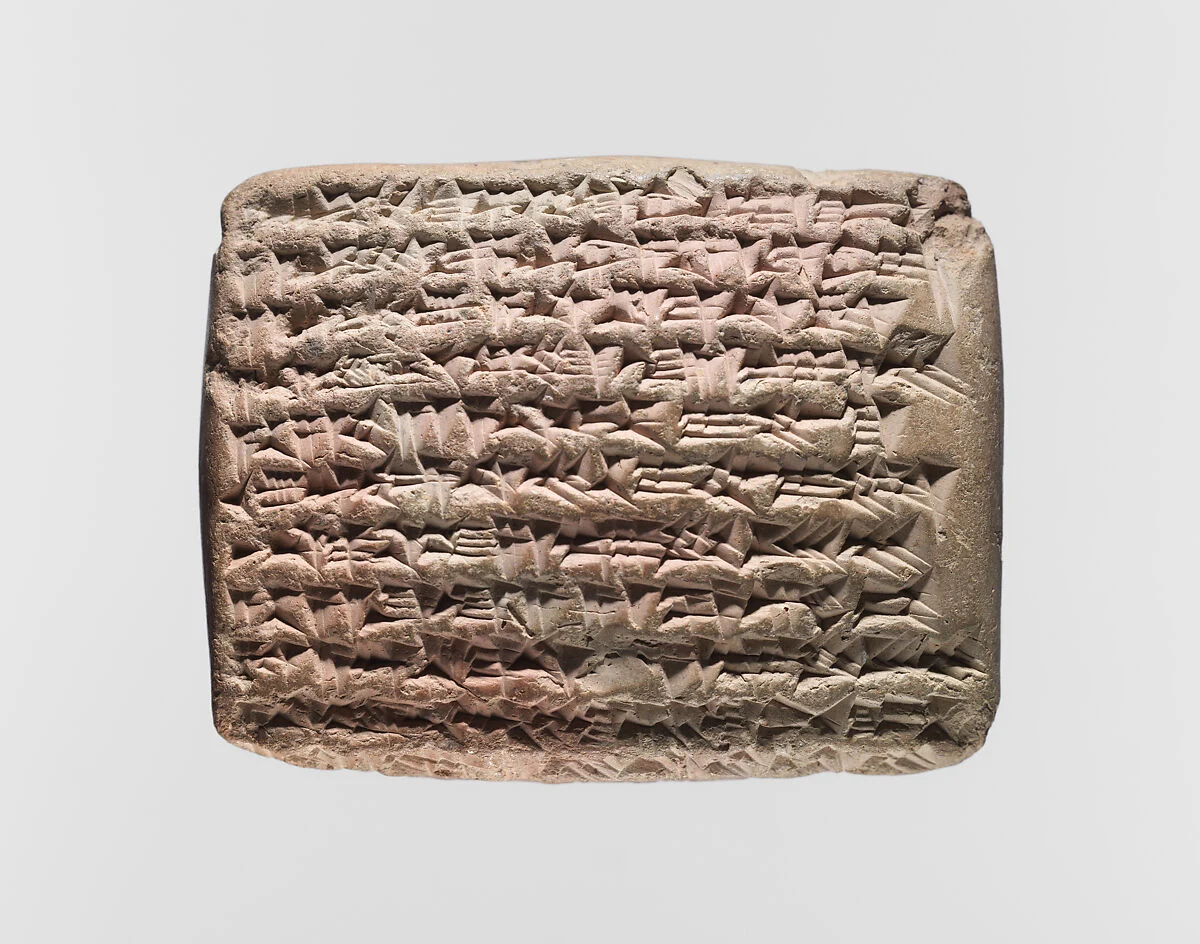
Ancient text
Sefire III inscription
A text for line-by-line reading, with transliteration, translation, and resources.
Eighth-century BCE Aramaic treaty inscription addressing political obligations and fugitives.
Last reviewed:
Text
Sefire III is an eighth-century BCE Aramaic treaty inscription. Its name connects it with the Sefire inscriptions, but the parties’ names are not clearly preserved, so it need not belong to exactly the same agreement as the other two. [1][2]
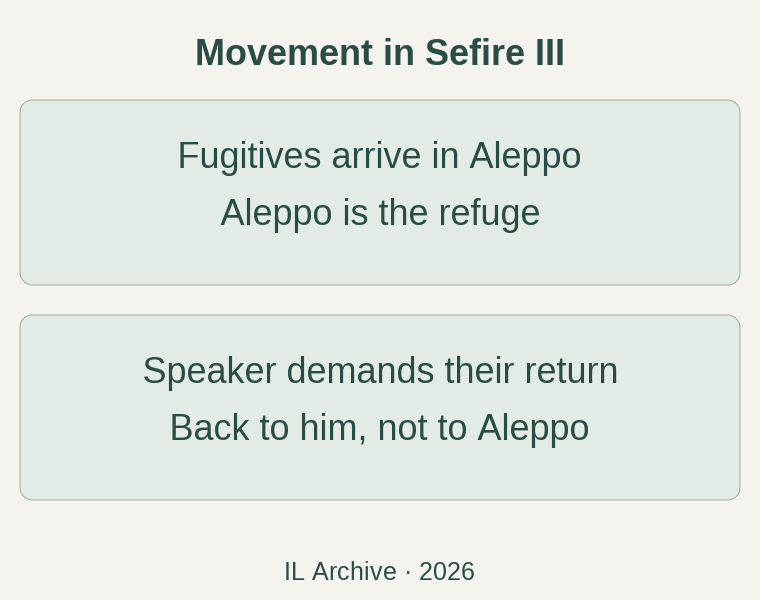
Lines 4–7 concern officials, relatives and dependants fleeing to AleppoAleppo, historical cityNorthern Syrian city whose region appears in Mari reports, with architecture from multiple periods.Glossary · Click to read the explanation, whom the addressee must return to the speaker rather than shelter. These are political obligations, not a uniform description of every fugitive household slave. [1][2]
References and notes
- Omar Hikmat al-Khuli, Sefire III, Dalet 2024; introduction and lines 4–7 read, flight direction checked against Russell p.24. Parties’ names are not clearly preserved; the CC BY-NC-ND 4 translation is not reproduced. Return to the text ↑
- Stephen C. Russell, Near Eastern Practice of Law in Deuteronomy, Oxford Handbook of Deuteronomy, 2025; printed pp. 23–26 = PDF 40–43 read completely; 2025 copyright is PDF 5. Not the entire chapter. Return to the text ↑
Archive records may be reviewed and refined as better evidence or sources become available. Suggest a correction
Suggest a correction · Suggest a source for this record
Cite this record
IL Archive, «Sefire III inscription», https://ilarchive.com/en/texts/sefire-third-aramaic-treaty-inscription
Continue reading