Enki et Ninmah Chapitre 1
Les deux défis
Dans le récit de Thorkild Jacobsen, Ninmah façonne six personnes dans l’argile, et Enki trouve pour chacune un moyen de subsister. Les deux divinités échangent leurs rôles. La lecture suit leur dispute jusqu’à la plainte de Ninmah, à son décret et au dénouement fragmentaire.
SourcesTournez les pages avec les flèches, le clavier ou en balayant l’écran.
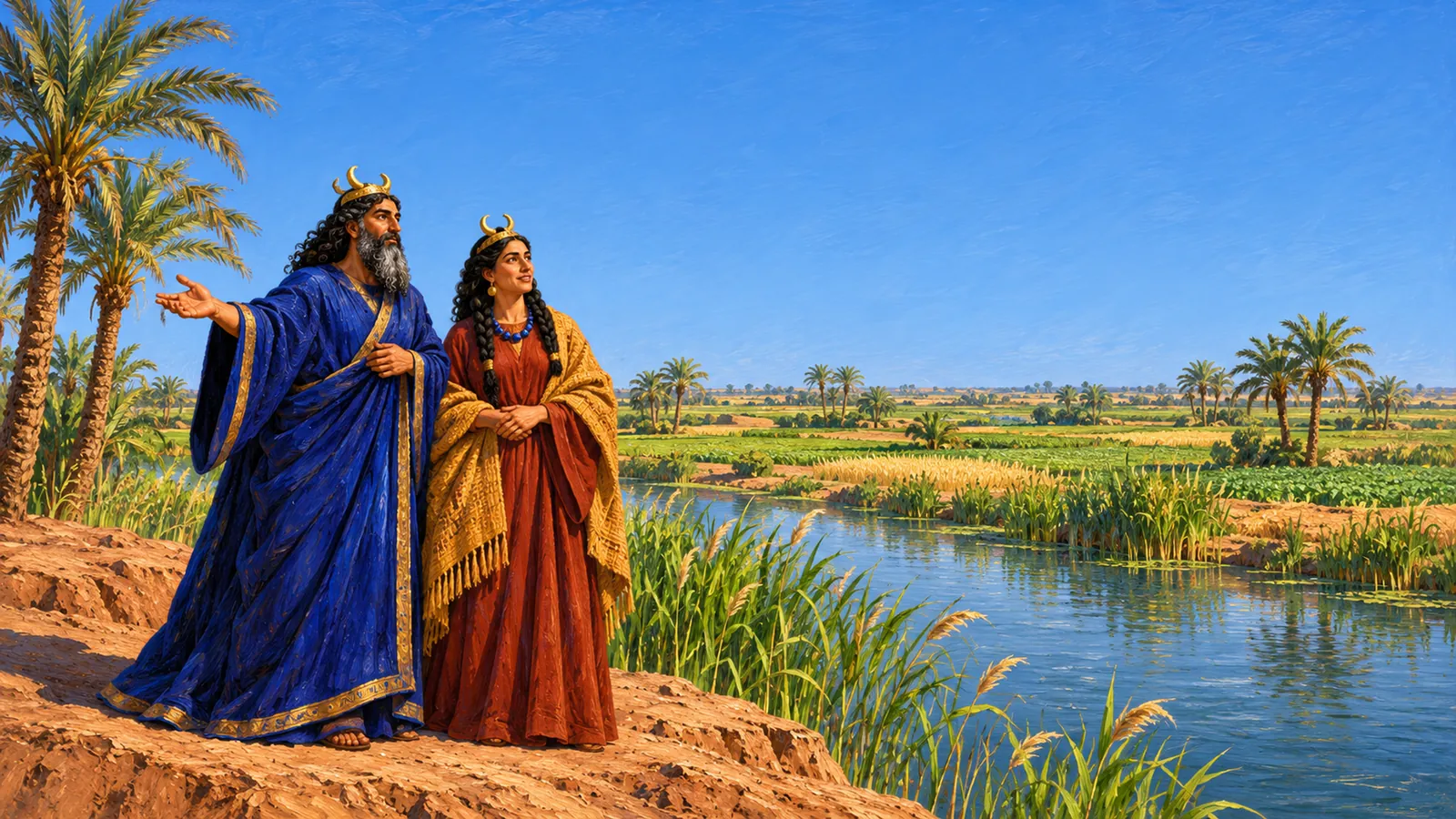
LE CIEL ET LA TERRE
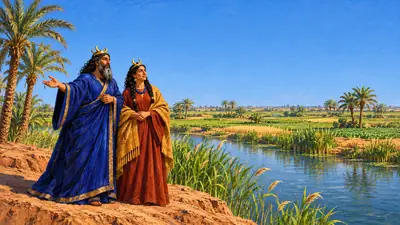
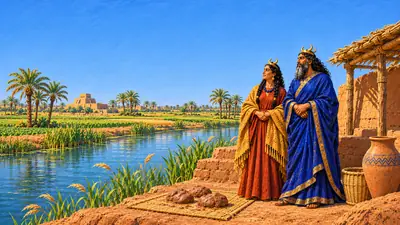
Thorkild Jacobsen présente Enki, dieu des eaux douces, et Ninmah, un nom de Ninhursaga, déesse de la terre. Les premiers vers situent leur histoire dans les jours et les nuits qui suivent la séparation du ciel et de la terre.
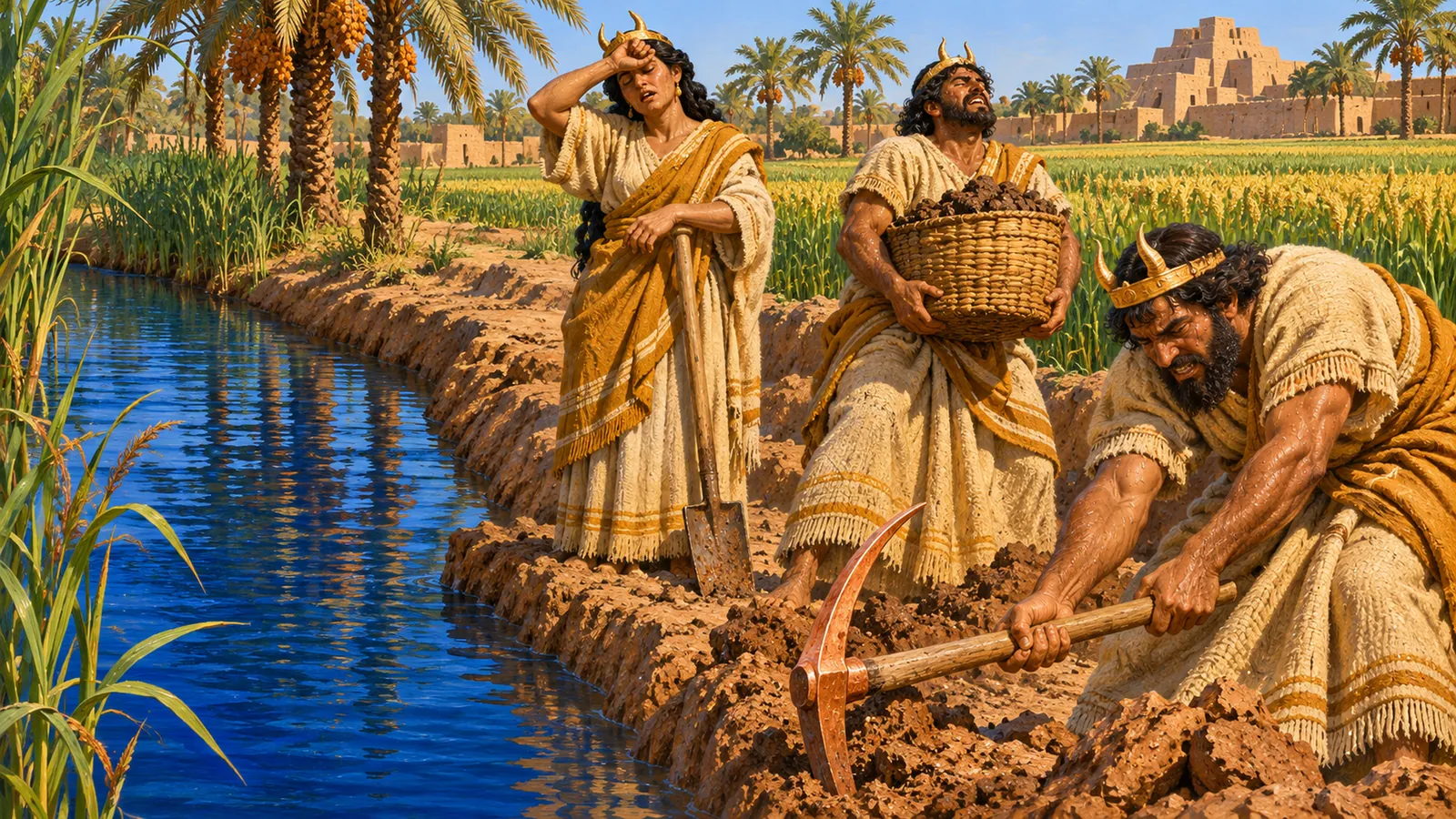
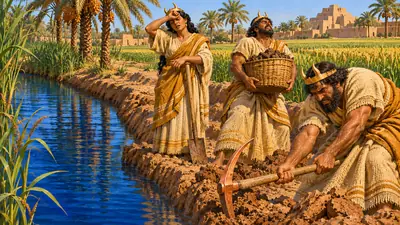
Dans le récit de Jacobsen, les dieux travaillaient autrefois pour se nourrir. Ils maniaient la faucille et la pioche, creusaient des canaux et détestaient ce travail.
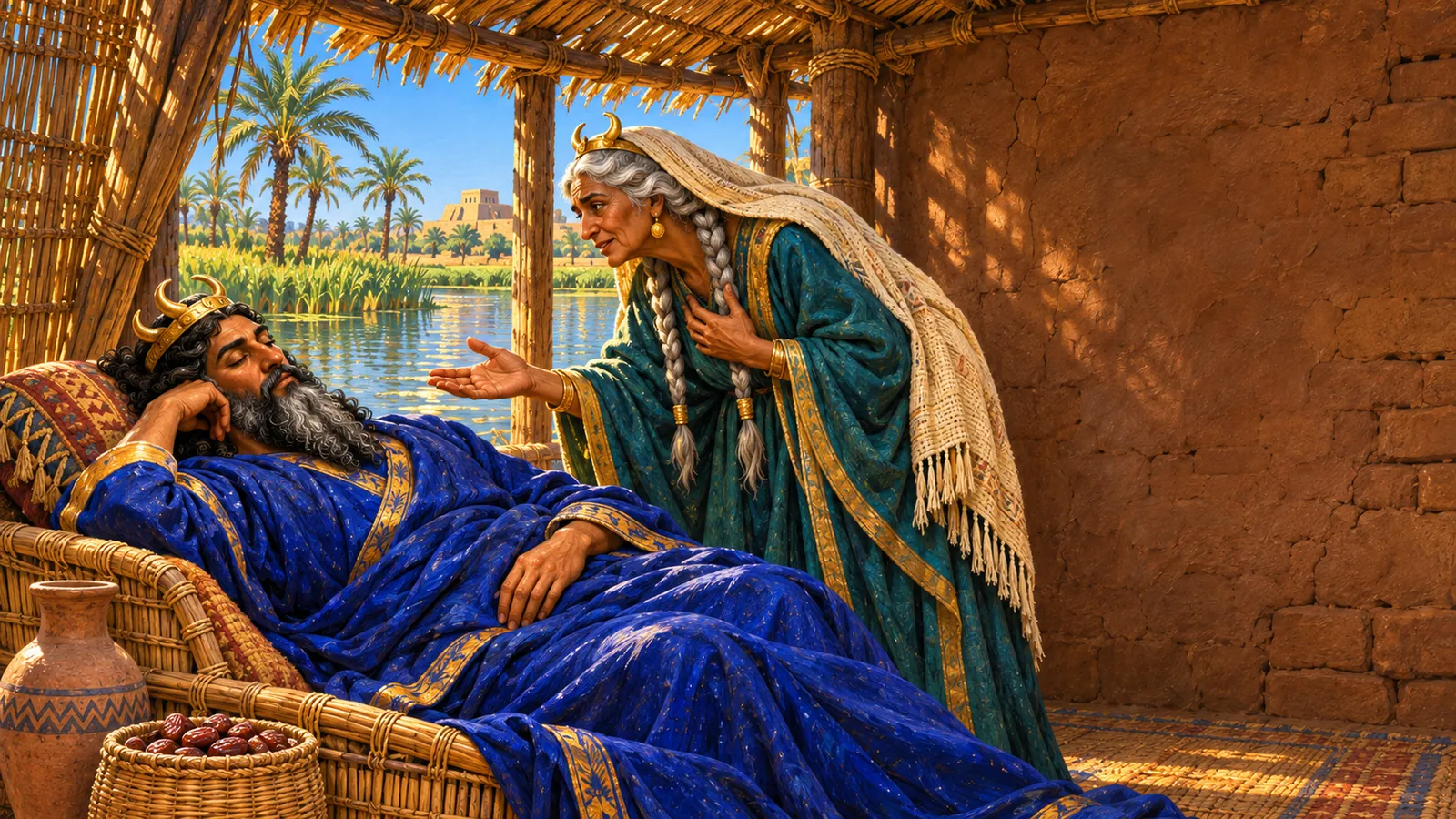
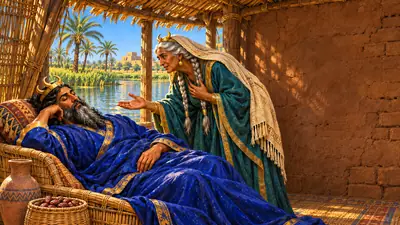
Les dieux se tournent vers Enki, qui dort. Sa mère, Nammu, que Jacobsen associe aux eaux profondes, lui transmet leurs plaintes.
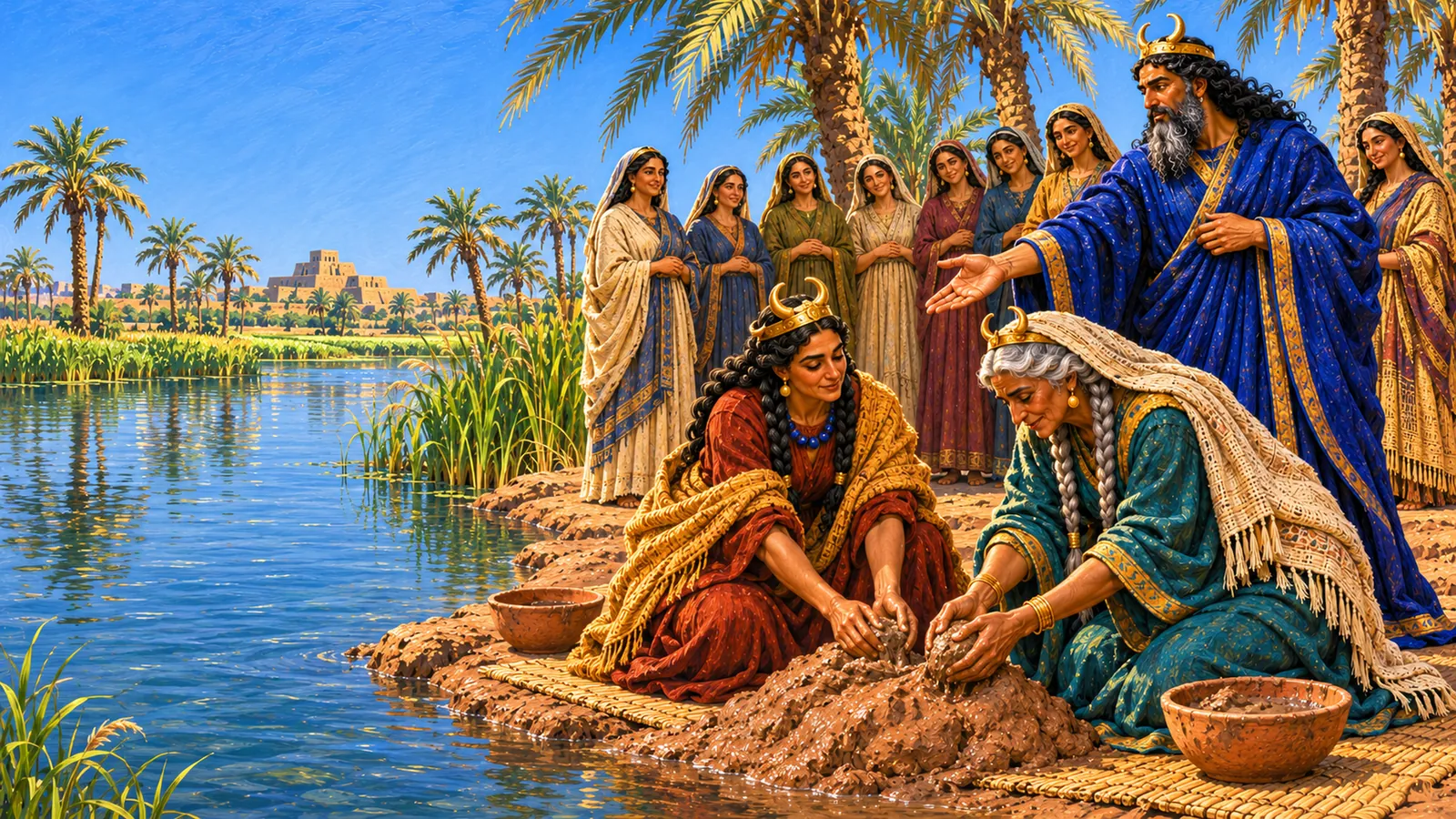
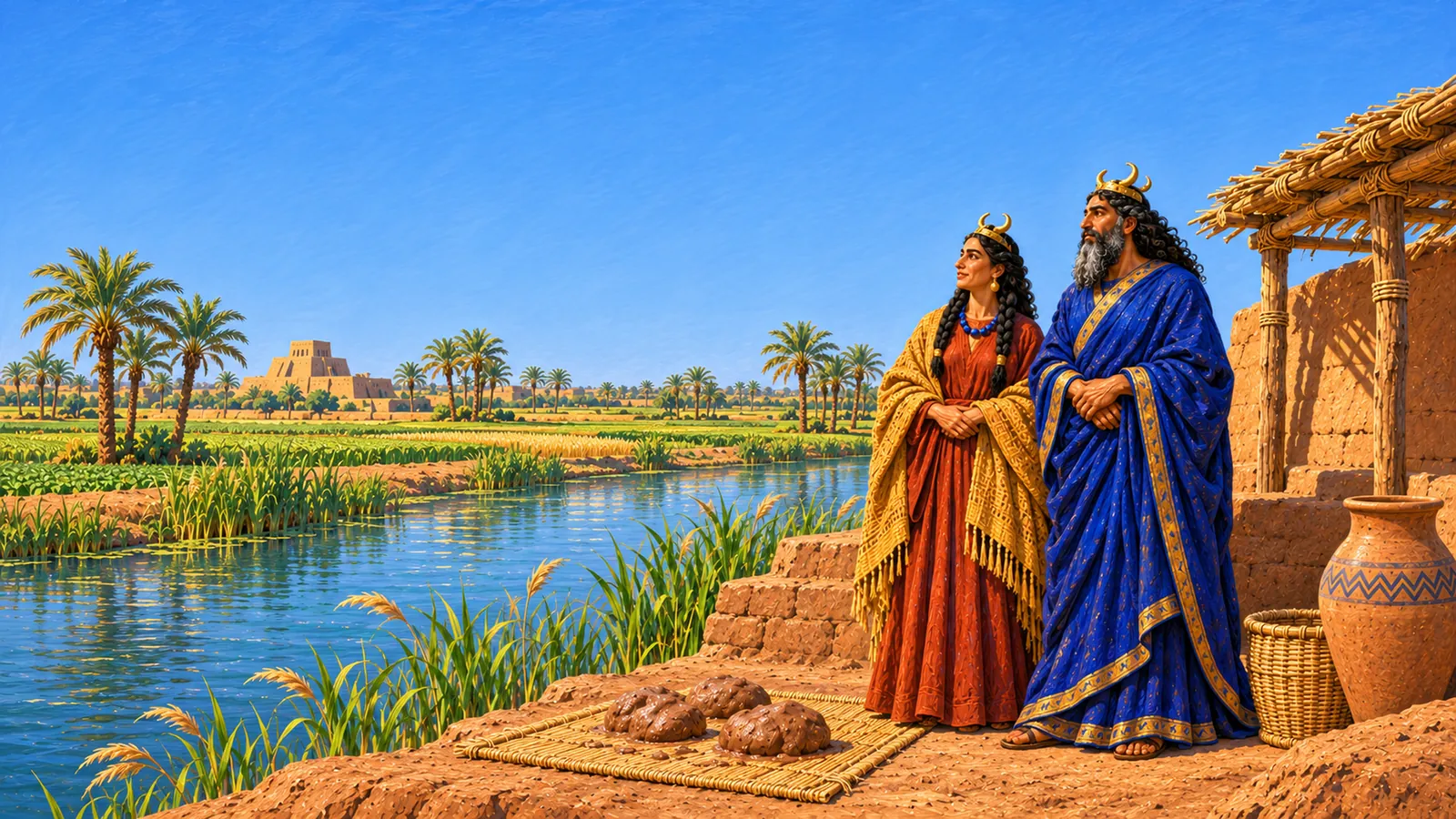
Enki dit à Nammu de se préparer à donner naissance à l’argile située au-dessus de l’apsu. Jacobsen explique que l’argile se trouve au-dessus des eaux souterraines et que Ninmah et huit autres déesses doivent aider Nammu.
UNE LACUNE
Une lacune importante laisse incertaine la façon dont l’humanité a été créée. Jacobsen suppose que l’argile est née d’abord, puis que les êtres humains ont été façonnés à partir d’elle.
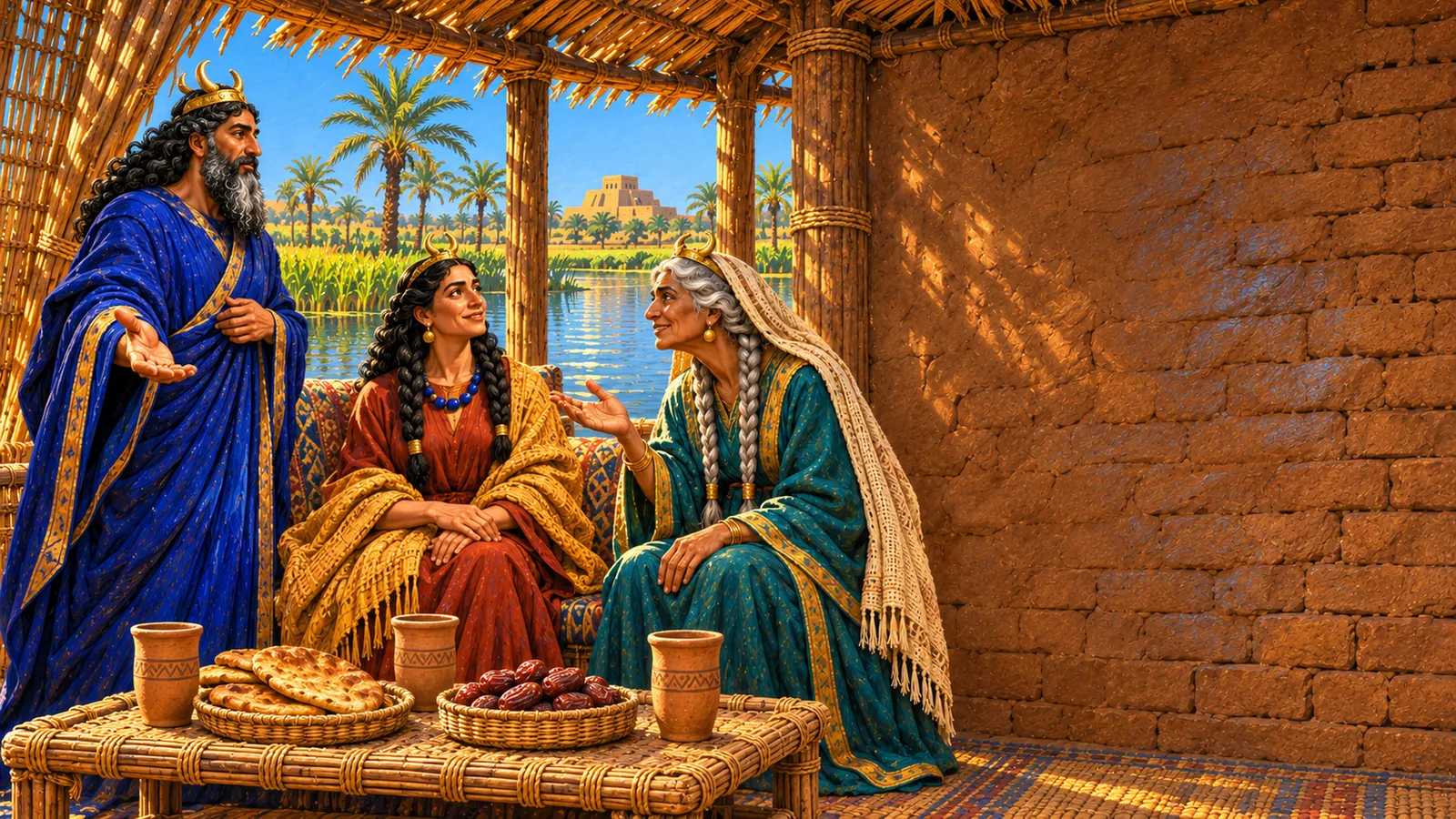
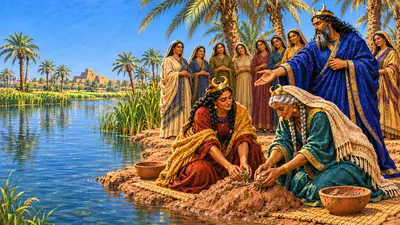
Lorsque le texte reprend, Jacobsen décrit Enki préparant un festin pour Ninmah et Nammu. Les dieux louent son habileté, et Jacobsen suppose que le festin célèbre peut-être la naissance.
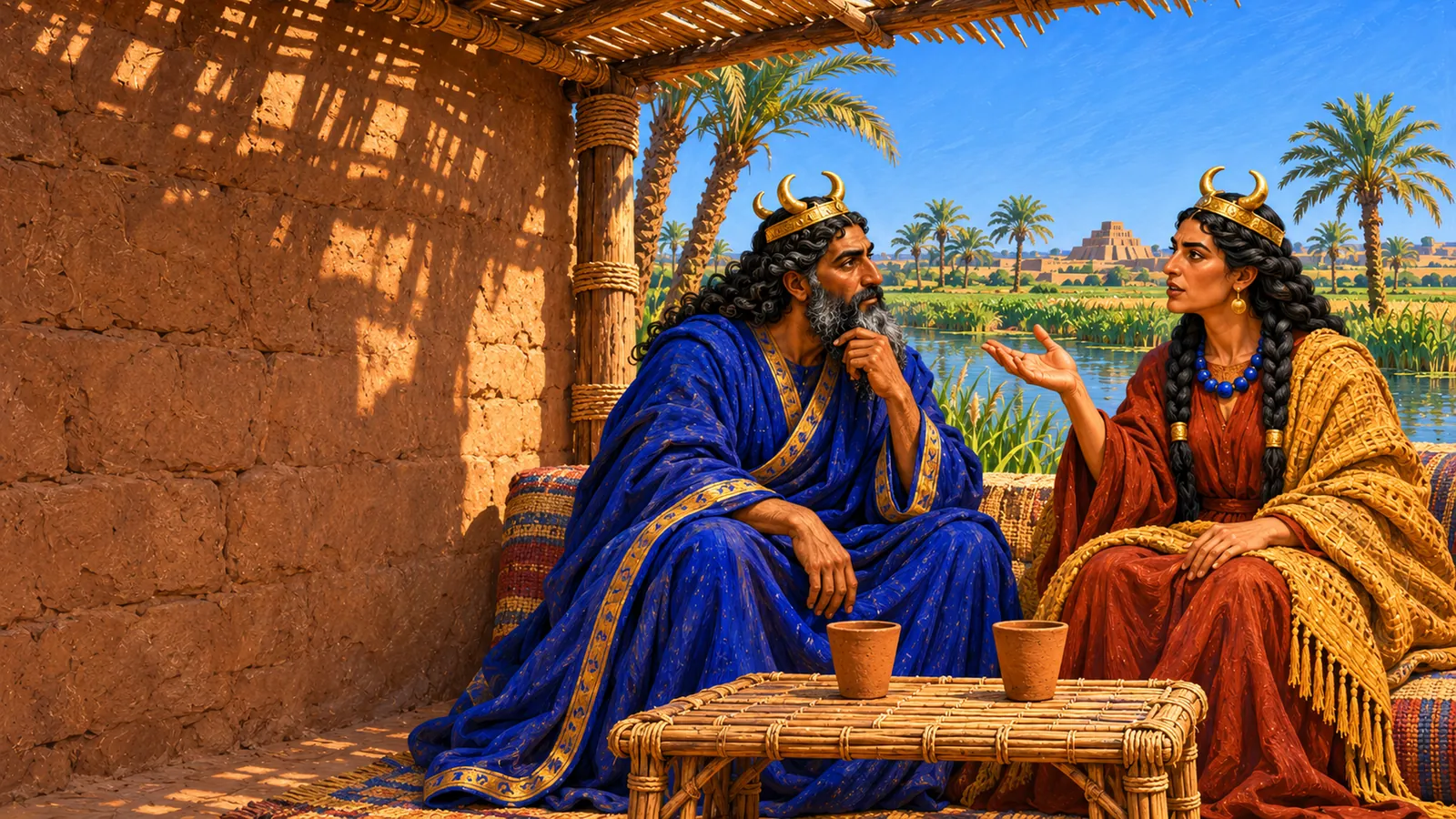
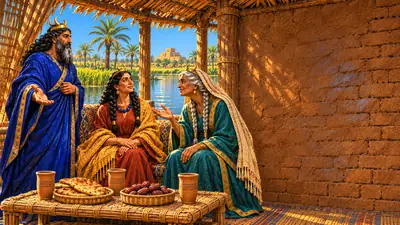
Après avoir bu de la bière avec Enki, Ninmah demande ce que le corps humain peut avoir de bon ou de mauvais. Elle dit qu’elle peut lui donner un sort favorable ou défavorable, selon son choix.
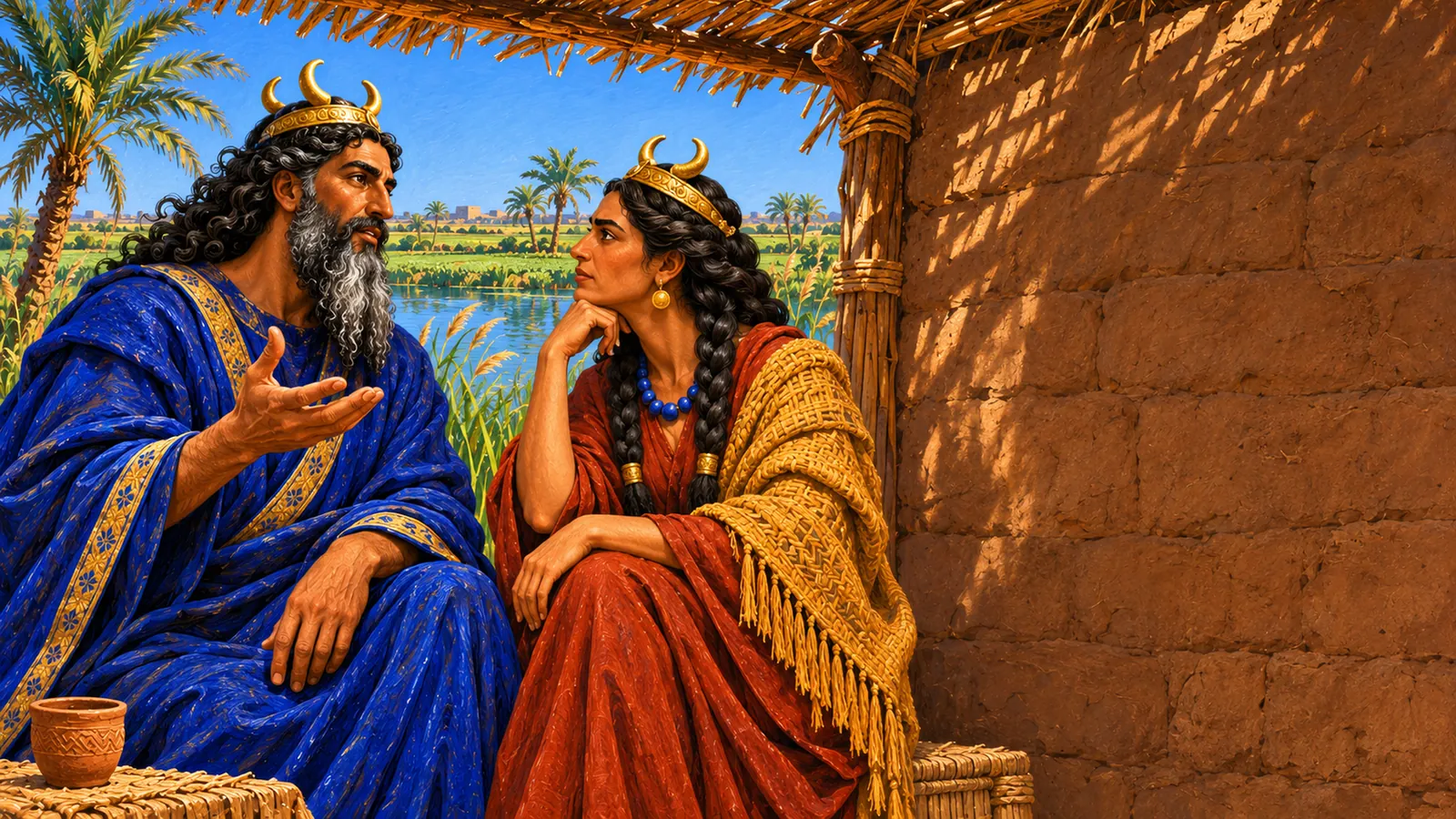
Enki dit qu’il répondra au sort que Ninmah choisira, bon ou mauvais. L’édition signale que le verbe rendu par « équilibrer » est incertain.
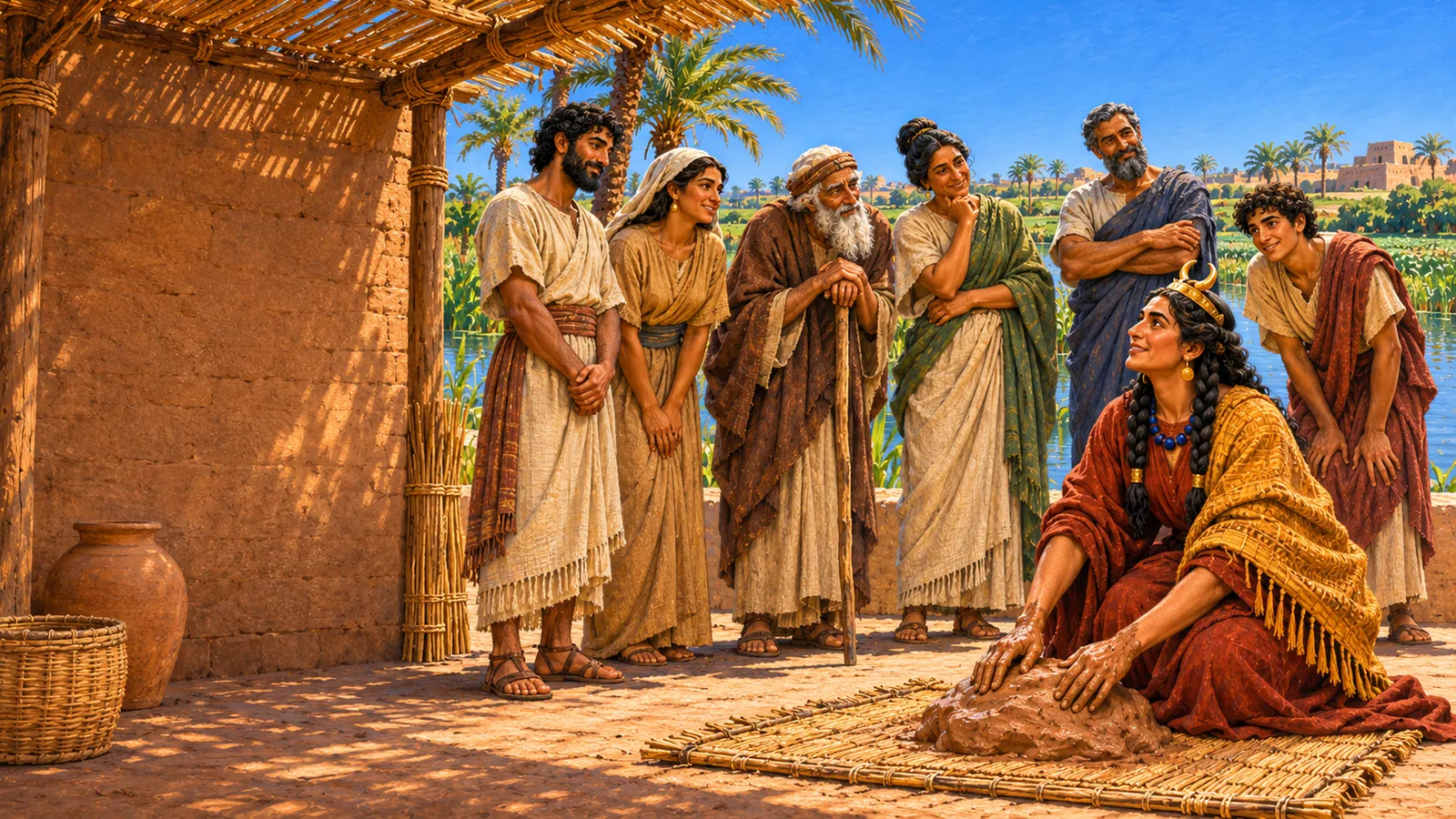
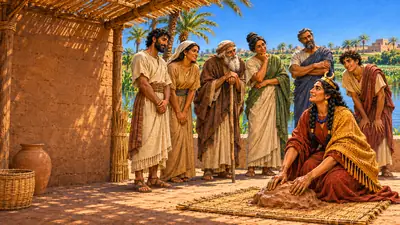
Selon Jacobsen, Ninmah façonne six personnes dans l’argile. Parmi elles figurent un homme qui ne peut retenir son urine, une femme qui ne peut avoir d’enfants et une personne sans organes sexuels masculins ni féminins.
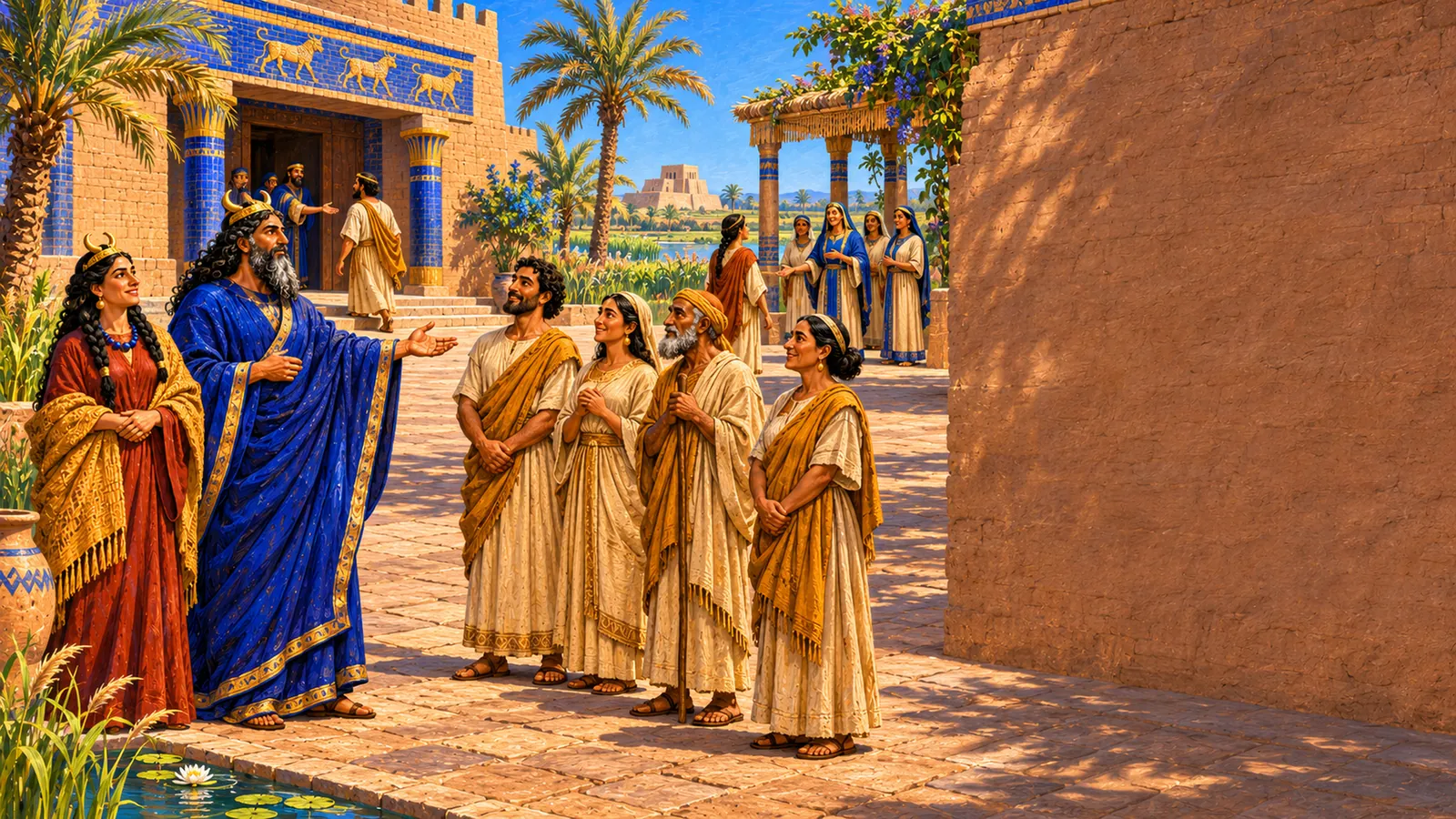
Selon Jacobsen, Enki trouve pour les six un moyen de gagner leur vie. L’une de ces personnes entre au service du roi et une autre rejoint les dames de la reine.
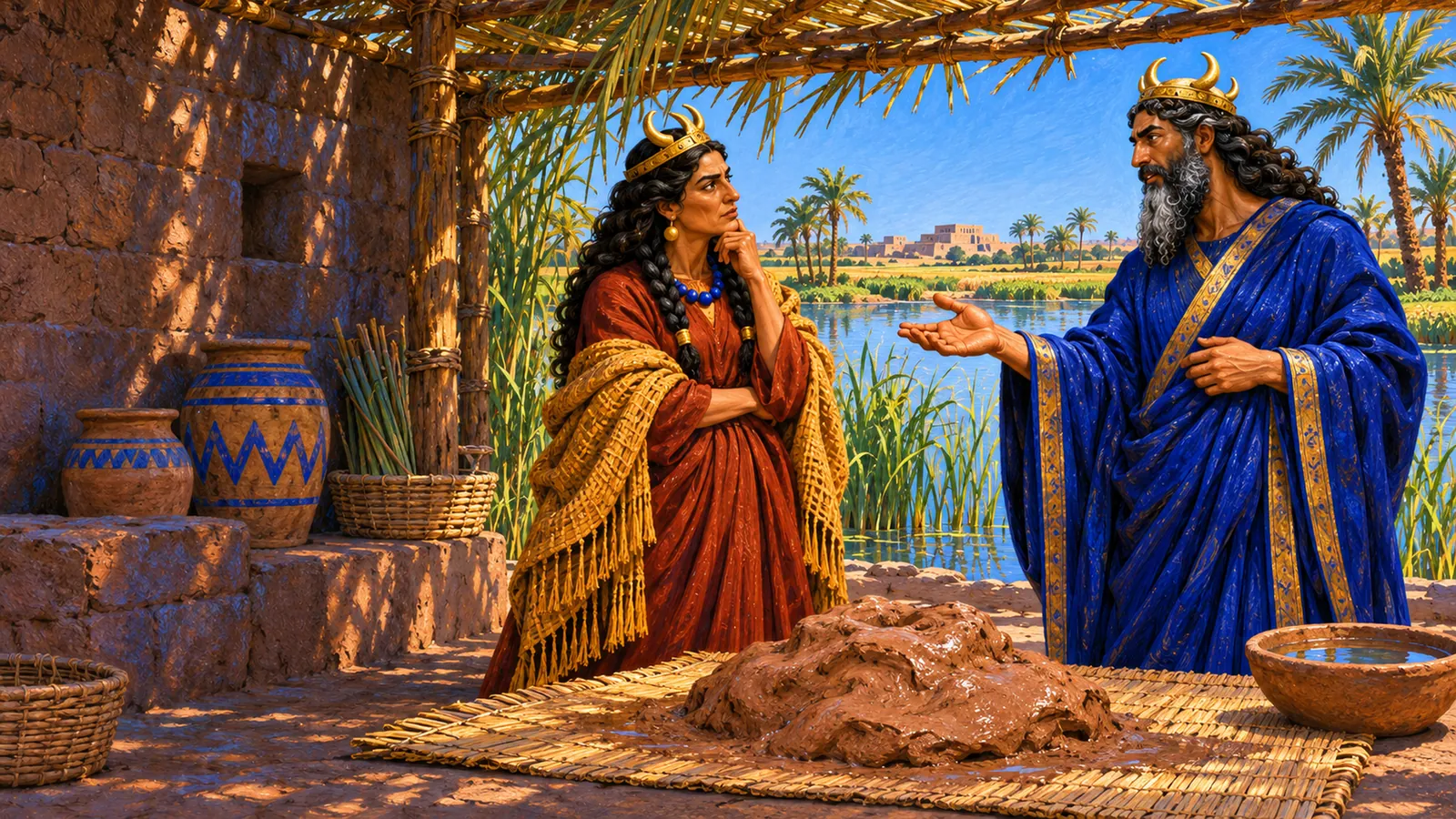
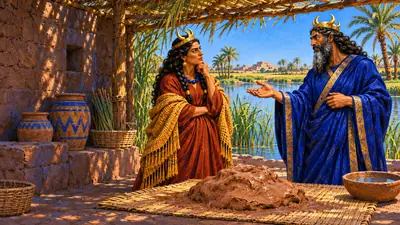
Jacobsen dit qu’Enki échange les rôles avec Ninmah et lui demande de trouver comment les personnes qu’il façonne pourront subsister. Un passage endommagé laisse sa première tentative inconnue.
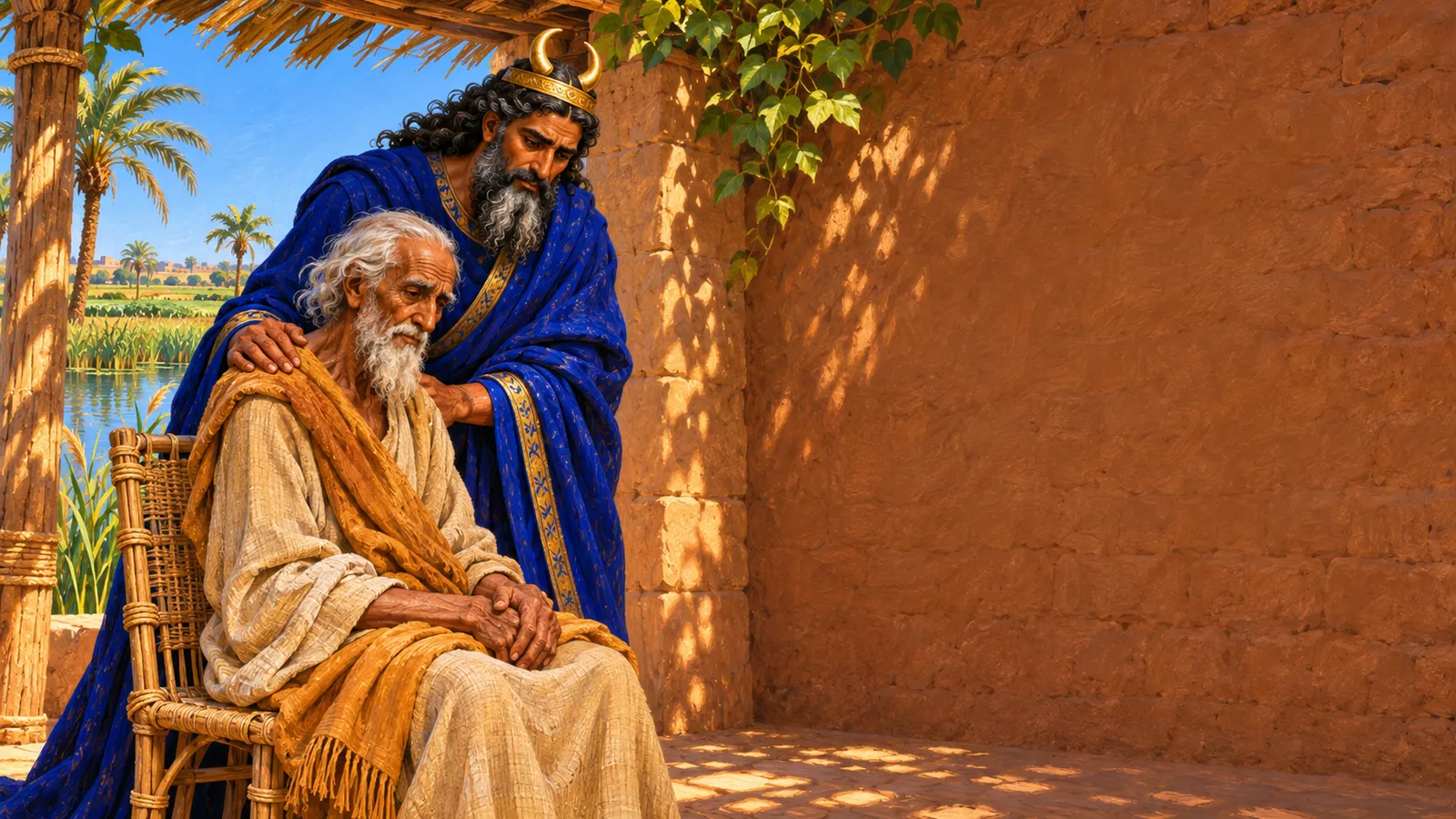
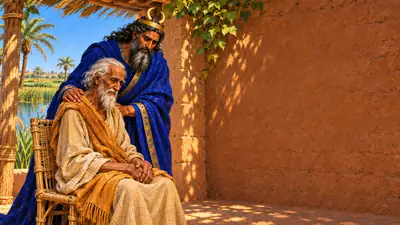
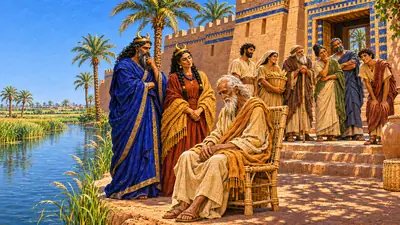
Jacobsen décrit le second être façonné par Enki comme un homme très âgé dont il explique le nom par « mon jour est lointain ». Il évoque une maladie des yeux, des douleurs au foie et au cœur, des mains tremblantes et une vie qui s’éteint.
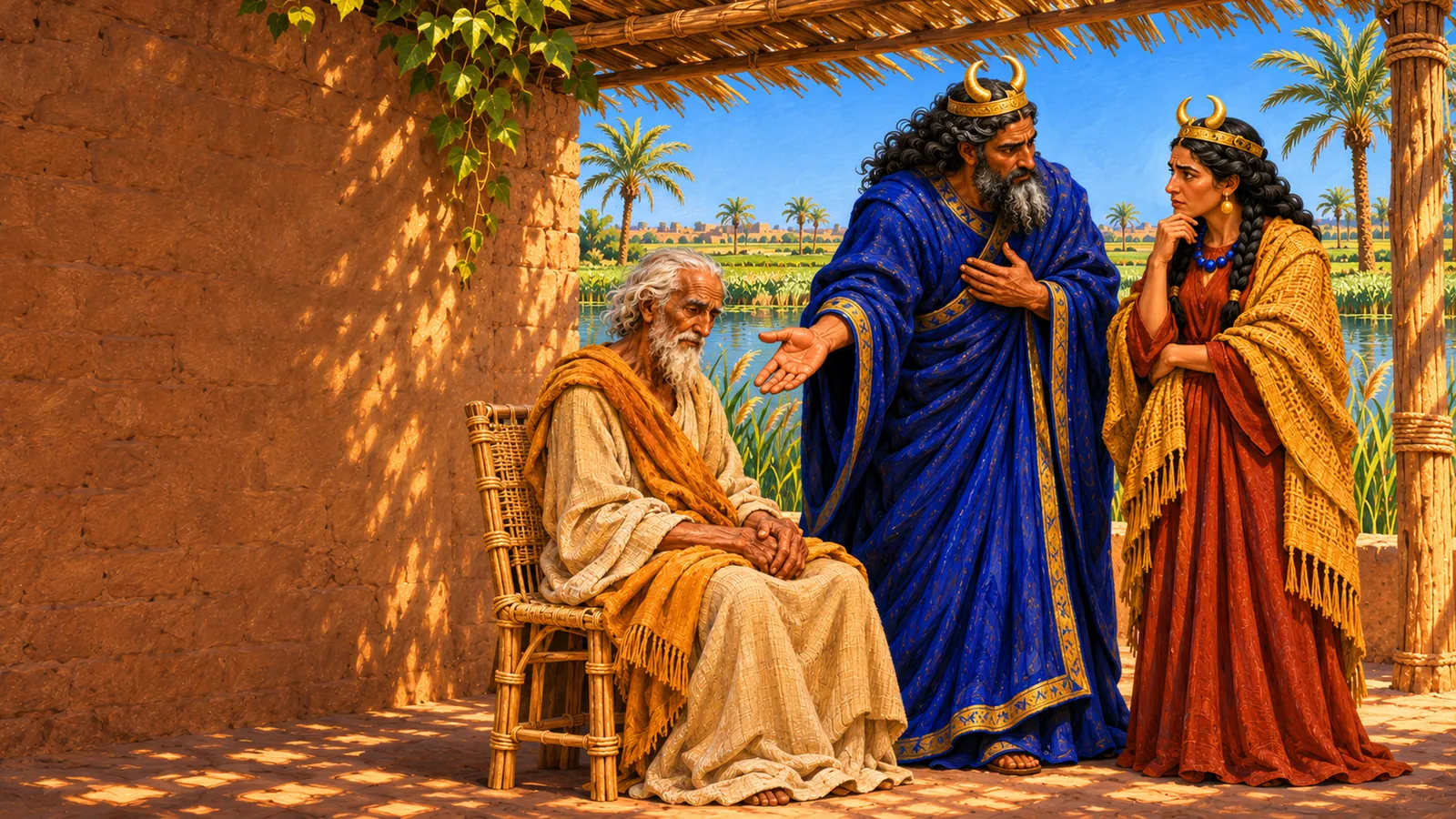
Enki dit qu’il a assigné aux personnes façonnées par Ninmah un sort qui leur permettait de subvenir à leurs besoins. Il lui demande d’en faire autant pour l’homme qu’il a façonné.
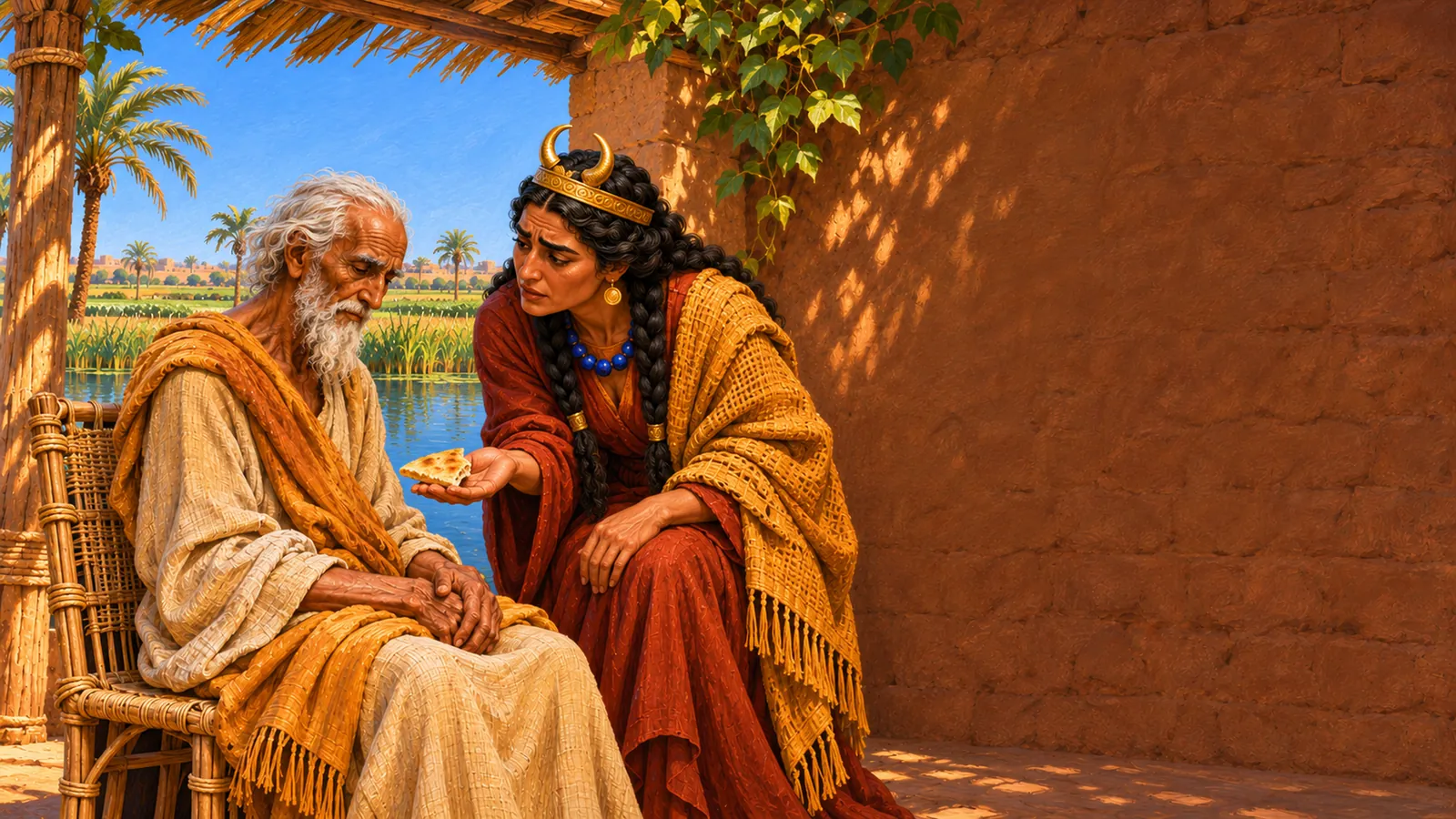
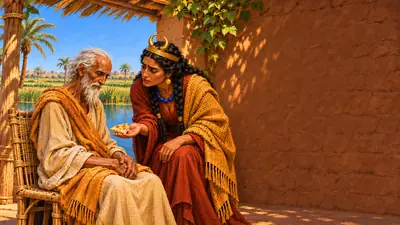
Jacobsen dit que l’homme ne peut pas répondre à la question de Ninmah. Il ne peut pas non plus atteindre le pain qu’elle lui tend.
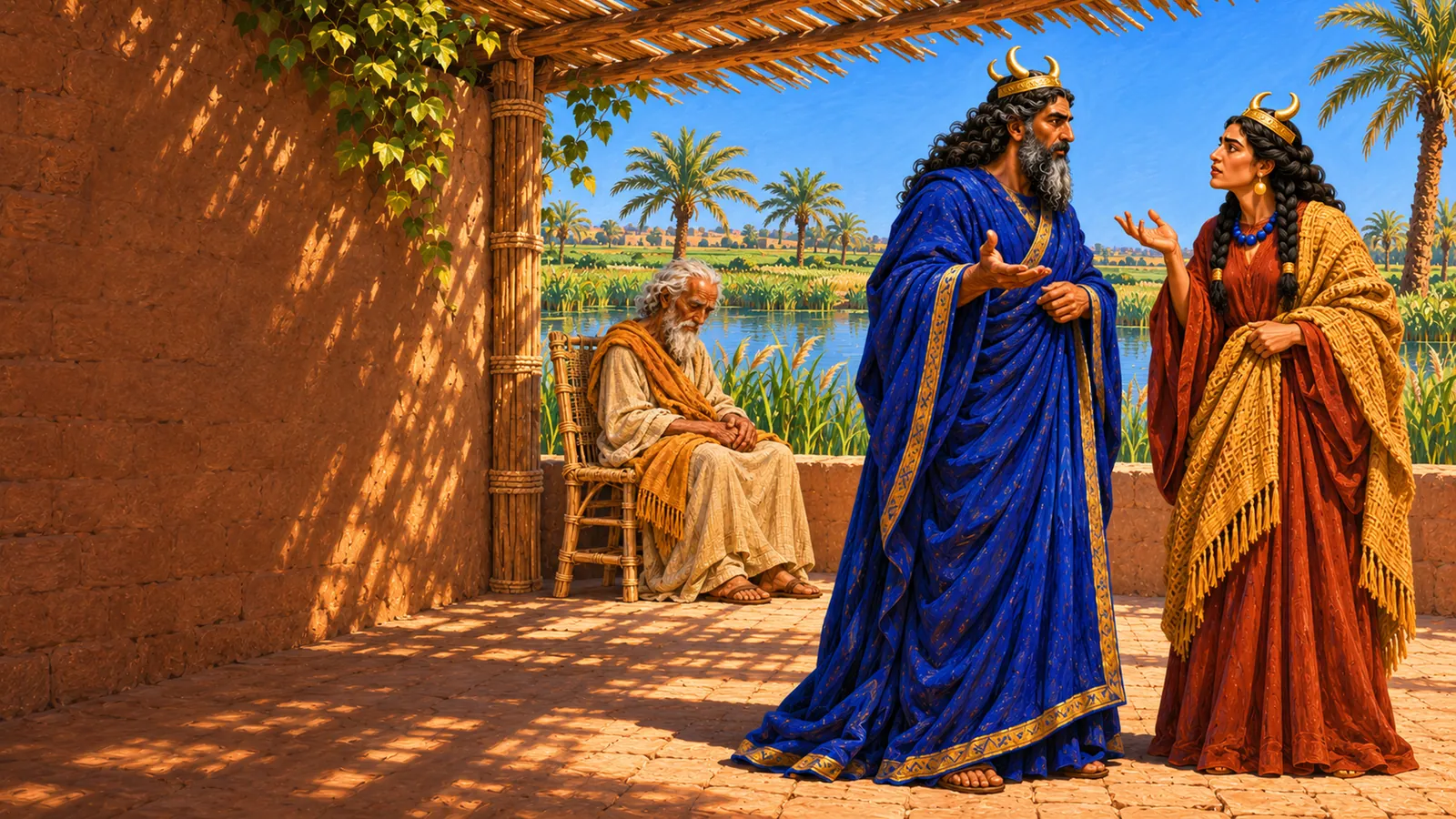
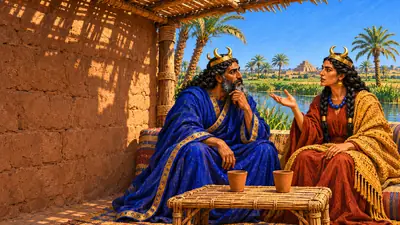
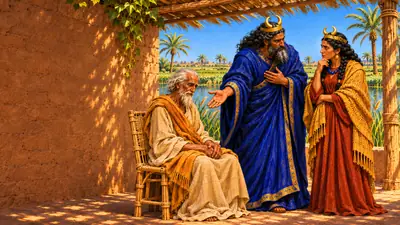
Dans le récit de Jacobsen, Ninmah dit que l’homme façonné par Enki n’est pas vivant. Enki lui rappelle qu’il a trouvé des moyens de subsistance pour les personnes qu’elle a créées. Une lacune interrompt la dispute.
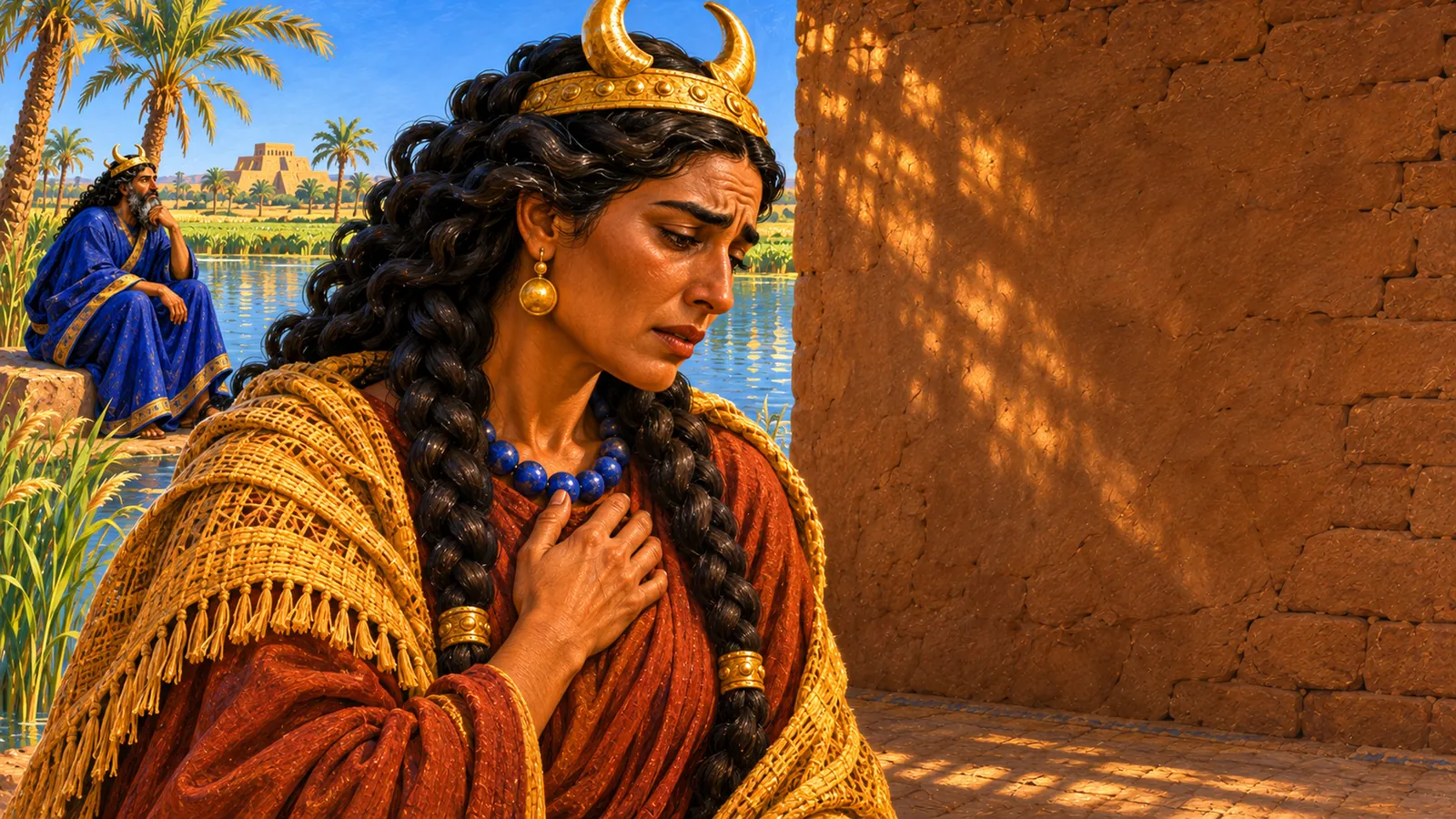
Jacobsen associe la seconde figure d’Enki aux difficultés du grand âge. Il se demande si les effets des deux figures sur le pays et la ville de Ninmah l’ont affligée ou si Enki l’a de nouveau humiliée. Les lacunes laissent la cause incertaine.
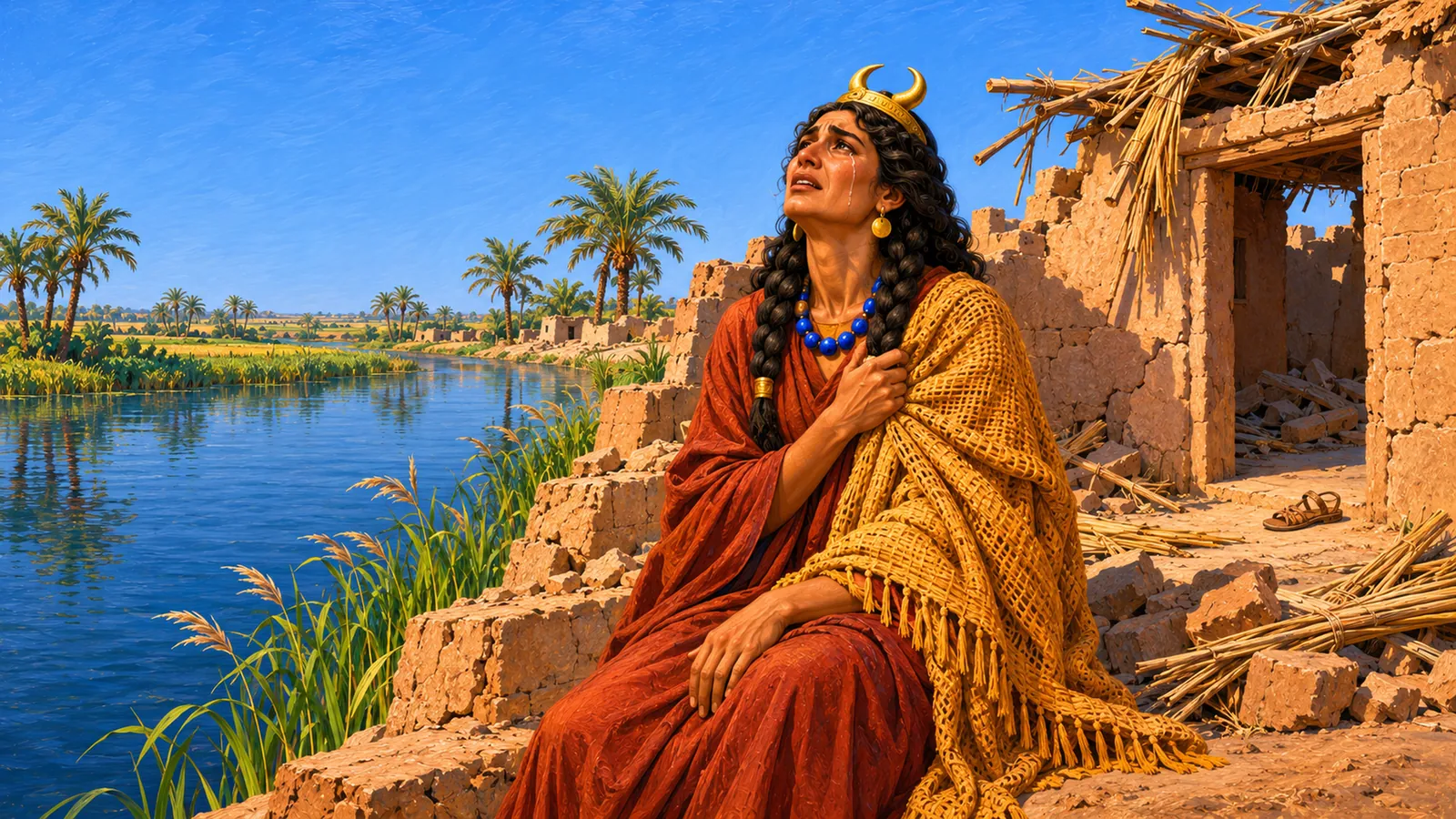
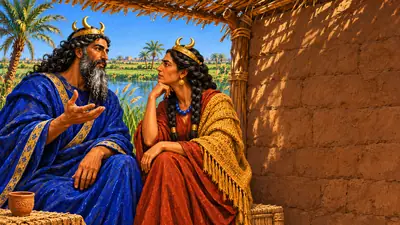
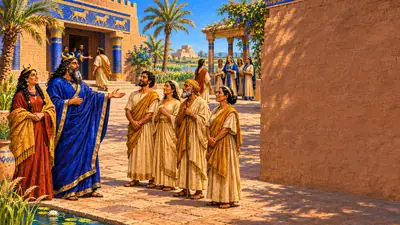
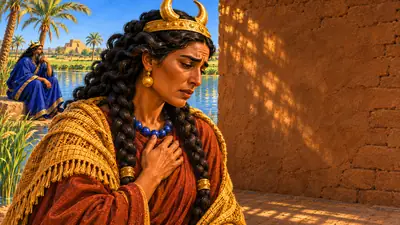
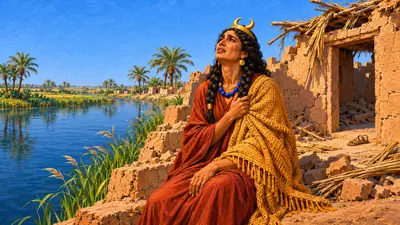
Ninmah dit que sa ville a été détruite, sa maison dévastée et ses enfants emmenés en captivité. Elle dit qu’elle a été forcée de quitter Ekur et qu’elle ne peut toujours pas échapper au pouvoir d’Enki. Jacobsen marque comme incertaine sa lecture de « fugitive ».

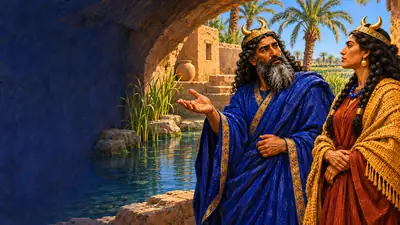
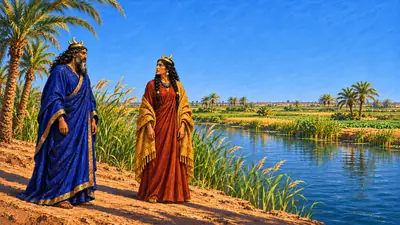
Ninmah interdit à Enki de vivre au ciel ou sur la terre. Jacobsen lit la malédiction comme une explication de la présence des eaux douces sous terre.
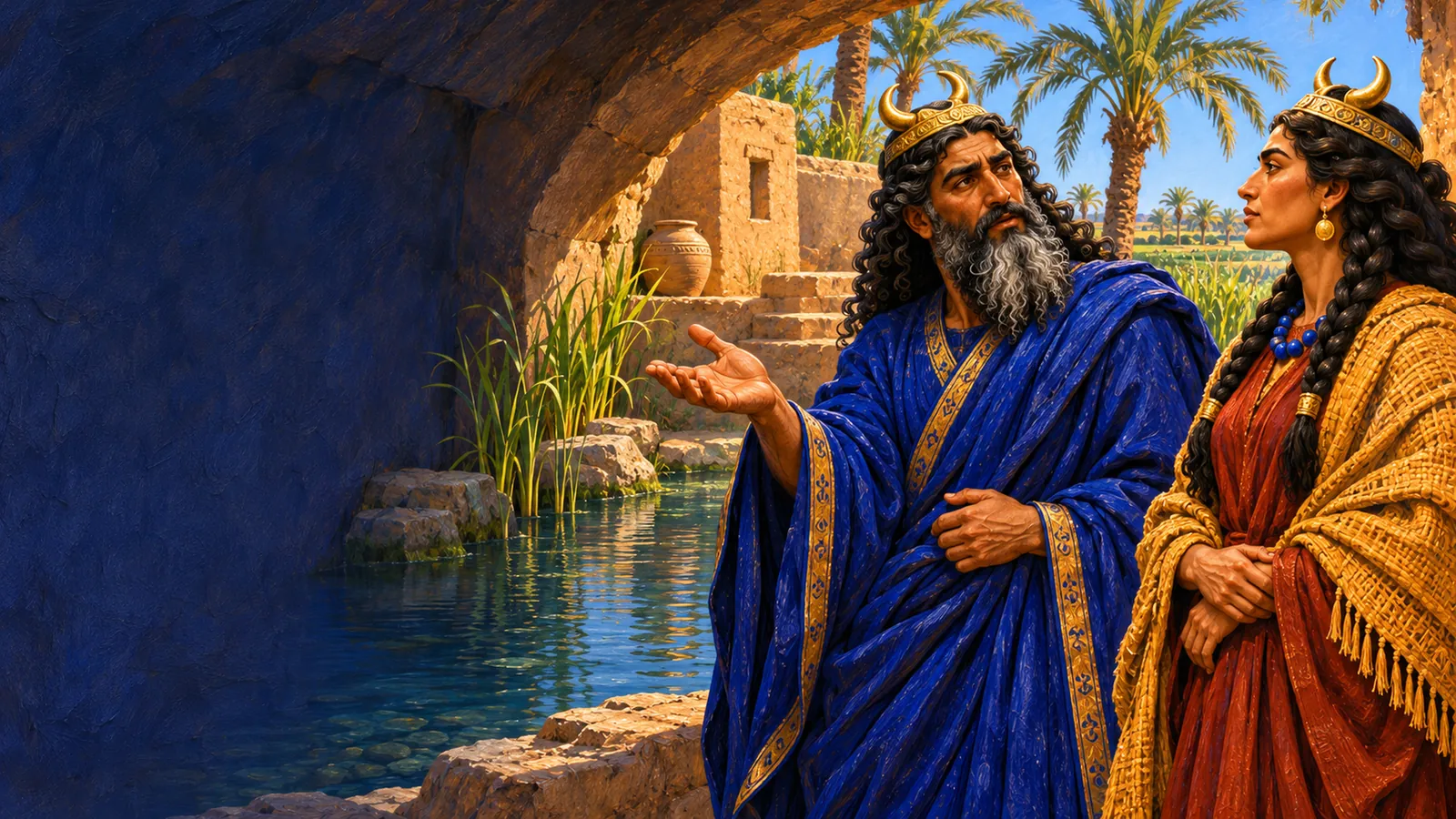
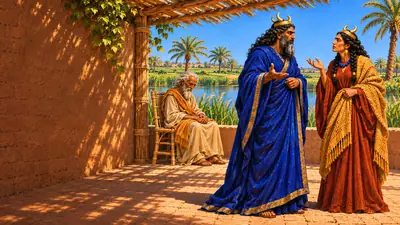
Enki demande qui pourrait changer un ordre émanant de Ninmah. Jacobsen y voit que son décret est contraignant.
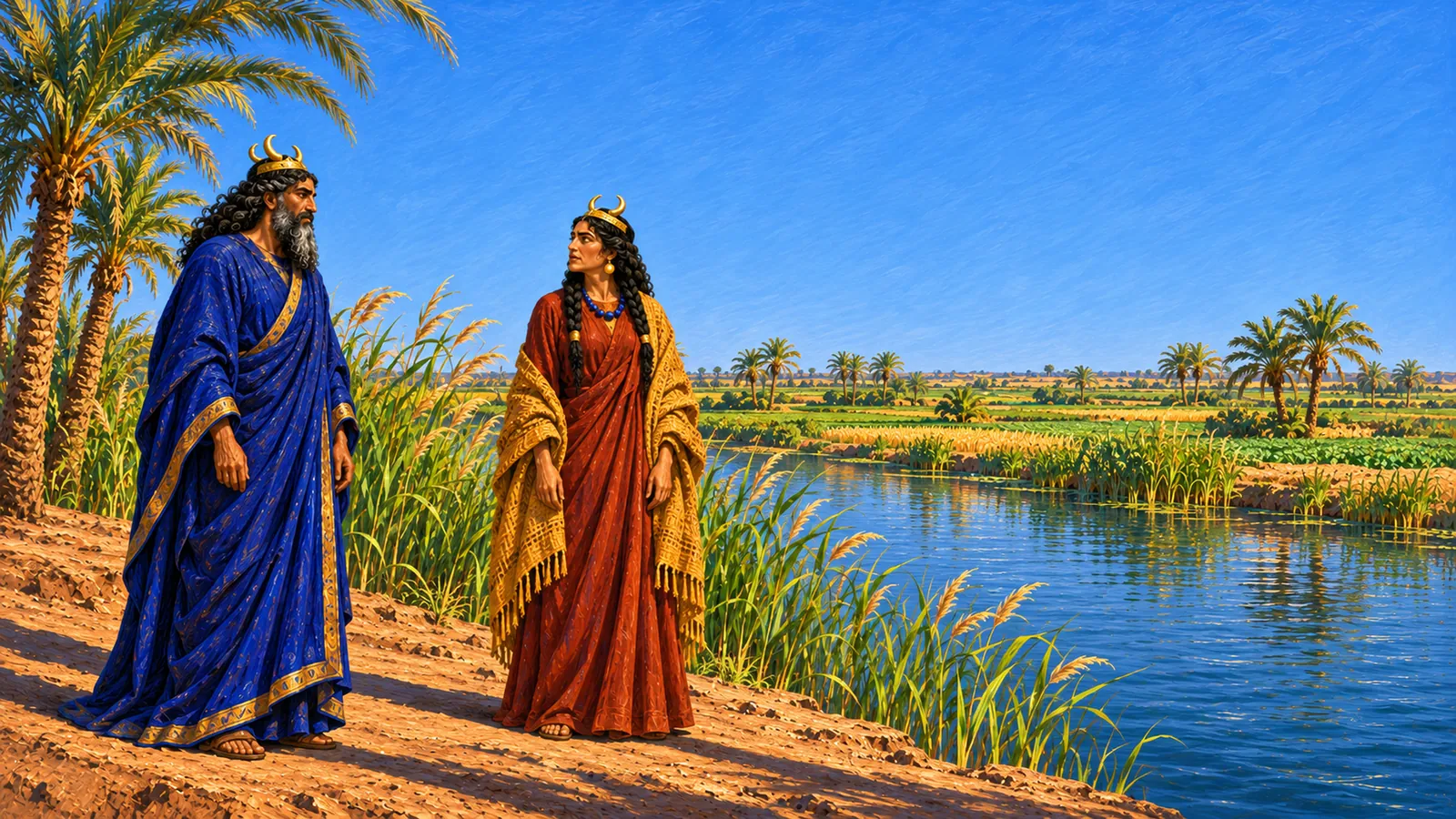
Jacobsen dit que le texte continue, mais qu’il est fragmentaire et difficile. Il suggère que la sentence a peut-être été adoucie et qu’ils se sont peut-être réconciliés.
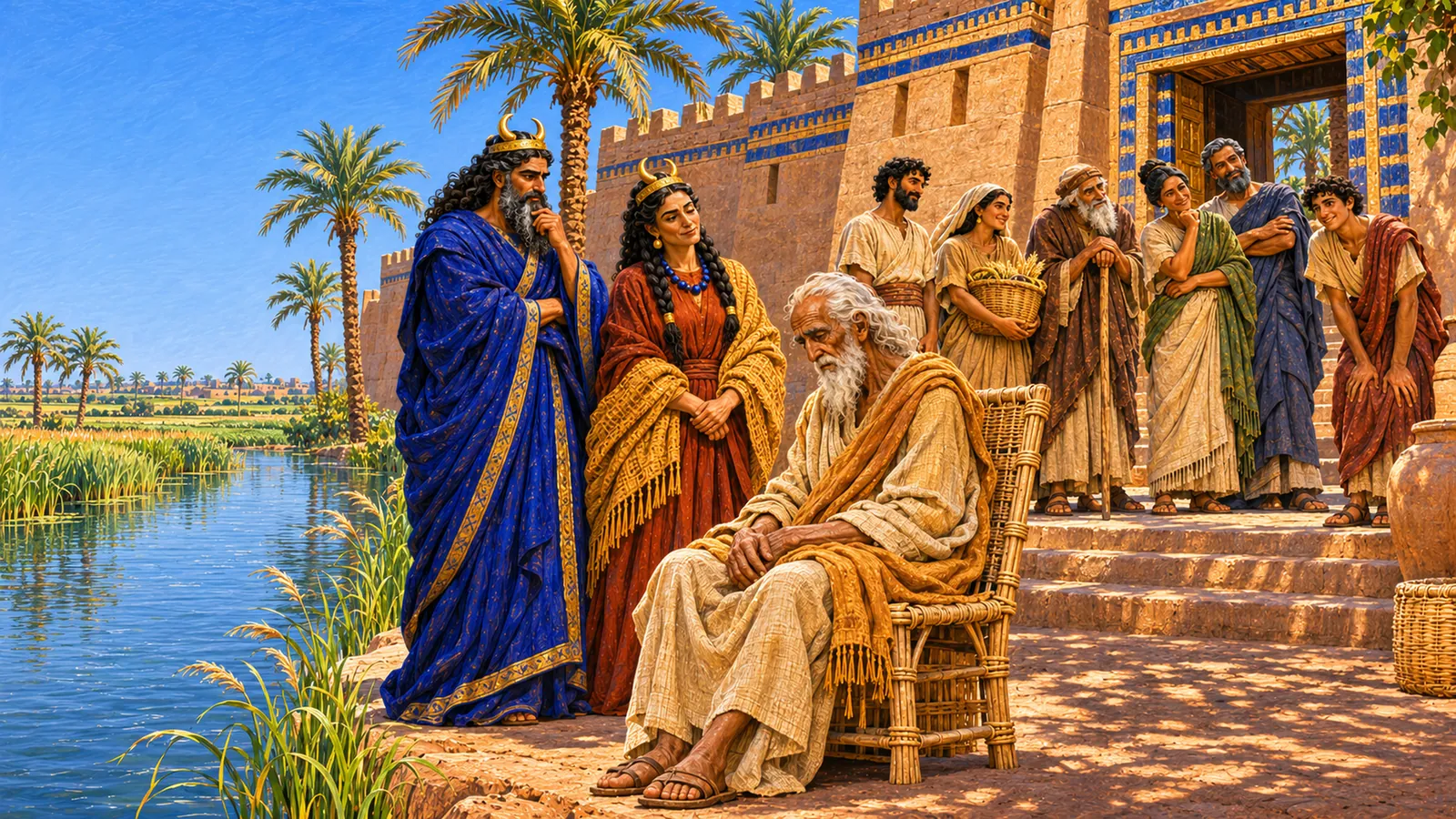
Jacobsen lit le récit comme une explication des rôles sociaux liés aux différences physiques et des difficultés du grand âge. Il rapproche les moyens de subsistance trouvés par Enki pour les êtres de Ninmah de son propre défi, dont l’issue reste incertaine.
Fin du chapitre 1
Toutes les pages

Sources
This reading follows Thorkild Jacobsen’s subsection on Enki and Ninmah in The Cosmos as a State, The Intellectual Adventure of Ancient Man, University of Chicago Press, 1946, first Phoenix edition 1977, pp. 161–165. The book credits H. A. Groenewegen Frankfort for the English poetic form (preface p. vi and p. 184, note 3). Chapter note 26 on p. 184 refers to Kramer’s Mythology, note 73.
Éditions consultées
- University of Chicago, The Intellectual Adventure of Ancient Man
- Jacobsen’s printed subsection, pp. 161–165
- Chapter notes 3 and 26, p. 184
Notes sur ce récit
Page 1, opening. Jacobsen’s introduction on pp. 161–162 describes Enki as the god of sweet water and gives Ninmah as an epithet of Ninhursaga. The opening translated lines repeat the separation of sky and earth across a pair of lines on days and nights. The book credits H. A. Groenewegen Frankfort with the English form of the poem selections (preface p. vi and p. 184, note 3).
Pages 2–3, labor and Nammu’s appeal. The prose following the opening selection on p. 162 recounts the gods’ agricultural toil, the canals they dig and their appeal to Enki. Nammu is Enki’s mother in the account and Jacobsen associates her with the watery deep.
Page 4, the clay and the apsu. A short quotation within the prose on p. 162 locates the clay above the apsu. Jacobsen glosses this as the level above the underground waters and adds the account of Ninmah and eight other goddesses helping Nammu. His prose compares the severing of the clay to that of a newborn from its mother.
Pages 5–6, the gap and feast. The p. 162 break leaves the making of human beings uncertain. Jacobsen’s suggestion about clay being born before humans are formed is conjectural. The proposed reason for the feast is another conjecture.
Pages 7–8, the first challenge. The printed passage on p. 162 sets the exchange after Ninmah and Enki drink beer. Parentheses mark “really” within her question about the human body. The edition places a question mark after the verb rendered “balance” in Enki’s reply.
Pages 9–10, physical descriptions and livelihoods. Jacobsen’s prose on p. 163 gives three examples among the six people Ninmah forms. The person without male or female sexual organs is assigned to the king’s service, and the woman who cannot bear children joins the queen’s attendants. Jacobsen proposes that the former is a eunuch. That identification is conjectural.
Page 11, reversal and the first attempt. Jacobsen’s prose on p. 163 describes Enki taking up the shaping of people, while Ninmah is asked to determine their lot. The text is damaged where Enki’s first attempt would be described.
Page 12 · p. Jacobsen reads the second as a very old man and glosses his name “my day is remote.” The spoken version uses the clearly readable gloss because the extracted transliteration from the scan is uncertain. Jacobsen’s description mentions eye disease, pain in the liver and heart, trembling hands, and life ebbing away.
Pages 13–14 · p. 163, translated challenge and explanatory prose. Enki says that he assigned the people Ninmah made a lot allowing them to subsist and asks her to find such a lot for the man he made. Jacobsen’s narrative says the man cannot reply to Ninmah’s question or reach for the bread she offers.
Pages 15–16 · pp. 163–164, the interrupted quarrel and Jacobsen’s conjectures. Jacobsen reports that Ninmah says the man is not alive. A break interrupts the quarrel.
Page 17 · p. 164, translated lament. In the printed translation, “fugitive” has a question mark. The still shows an intact doorway.
Pages 18–19 · p. 164, the curse and translated reply. Ninmah forbids Enki from dwelling in heaven or on earth. Jacobsen links this to the sweet waters beneath the earth and compares the decree with one in the separate Tilmun narrative. Enki asks who could alter a command from Ninmah. Jacobsen reads his reply in terms of the binding force of a divine decree.
Page 20 · p. 164, the fragmentary continuation. Jacobsen says that the text continues but is difficult to read. He suggests the sentence may have been eased and a reconciliation may have followed. The wording keeps both as conjectures.
Page 21 · pp. 164–165, Jacobsen’s closing interpretation. His historical interpretation mentions eunuchs and hierodules. It ends before the next category of myths.
Les vers antiques de chaque page
- Page 1: Jacobsen, “Enki and Ninmah,” 1977 Phoenix ed., pp. 161–162, framing prose and opening verse
- Page 2: Jacobsen, “Enki and Ninmah,” 1977 Phoenix ed., p. 162, prose on the gods’ work
- Page 3: Jacobsen, “Enki and Ninmah,” 1977 Phoenix ed., p. 162, prose on Nammu and Enki
- Page 4: Jacobsen, “Enki and Ninmah,” 1977 Phoenix ed., p. 162, short translated phrase and surrounding prose
- Page 5: Jacobsen, “Enki and Ninmah,” 1977 Phoenix ed., p. 162, lacuna and Jacobsen’s inference
Dark homogeneous matte mud plaster covers the upper two thirds, undisturbed by the roof edge, doorway lines, or lit seams. - Page 6: Jacobsen, “Enki and Ninmah,” 1977 Phoenix ed., p. 162, Jacobsen’s account of the resumed text
- Page 7: Jacobsen, “Enki and Ninmah,” 1977 Phoenix ed., p. 162, translated feast scene and Ninmah’s challenge
- Page 8: Jacobsen, “Enki and Ninmah,” 1977 Phoenix ed., p. 162, Enki’s translated reply
- Page 9: Jacobsen, “Enki and Ninmah,” 1977 Phoenix ed., p. 163, Jacobsen’s summary of Ninmah’s figures
- Page 10: Jacobsen, “Enki and Ninmah,” 1977 Phoenix ed., p. 163, Jacobsen’s prose on the people’s roles
- Page 11: Jacobsen, “Enki and Ninmah,” 1977 Phoenix ed., p. 163, role reversal and damaged passage
- Page 12: Jacobsen 1977, The Intellectual Adventure of Ancient Man, ch. V, Enki and Ninmah, p. 163, Jacobsen’s prose on Enki’s second figure
- Page 13: Jacobsen 1977, The Intellectual Adventure of Ancient Man, ch. V, Enki and Ninmah, p. 163, translated answering challenge
- Page 14: Jacobsen 1977, The Intellectual Adventure of Ancient Man, ch. V, Enki and Ninmah, p. 163, Jacobsen’s prose on Ninmah’s tests
- Page 15: Jacobsen 1977, The Intellectual Adventure of Ancient Man, ch. V, Enki and Ninmah, p. 163, Jacobsen’s prose and break in the quarrel
- Page 16: Jacobsen 1977, The Intellectual Adventure of Ancient Man, ch. V, Enki and Ninmah, p. 164, Jacobsen’s conjectural bridge
- Page 17: Jacobsen 1977, The Intellectual Adventure of Ancient Man, ch. V, Enki and Ninmah, p. 164, Ninmah’s translated lament
The low wider left area remains even continuous natural lapis-grey shade on matte clay, with no opening line, brick detail, bright spot or shape through the reserve. - Page 18: Jacobsen 1977, The Intellectual Adventure of Ancient Man, ch. V, Enki and Ninmah, p. 164, Ninmah’s quoted curse and Jacobsen’s interpretation
- Page 19: Jacobsen 1977, The Intellectual Adventure of Ancient Man, ch. V, Enki and Ninmah, p. 164, Enki’s quoted reply
- Page 20: Jacobsen 1977, The Intellectual Adventure of Ancient Man, ch. V, Enki and Ninmah, p. 164, Jacobsen’s account of the broken ending
- Page 21: Jacobsen 1977, The Intellectual Adventure of Ancient Man, ch. V, Enki and Ninmah, pp. 164–165, Jacobsen’s closing interpretation
Illustrations réalisées par IL Archive avec des outils d’IA ; le texte s’appuie sur les sources antiques (voir les sources à la fin de chaque chapitre).