Isis et Osiris Chapitre 2
Le pilier de Byblos
La mer porte le coffre jusqu’à une côte appelée Byblos, où un tamaris pousse autour de lui. Son tronc devient un pilier de la maison royale. Isis suit cette piste jusqu’à une fontaine, entre à la cour et demande le pilier. Le récit conserve plusieurs versions de la suite.
SourcesTournez les pages avec les flèches, le clavier ou en balayant l’écran.
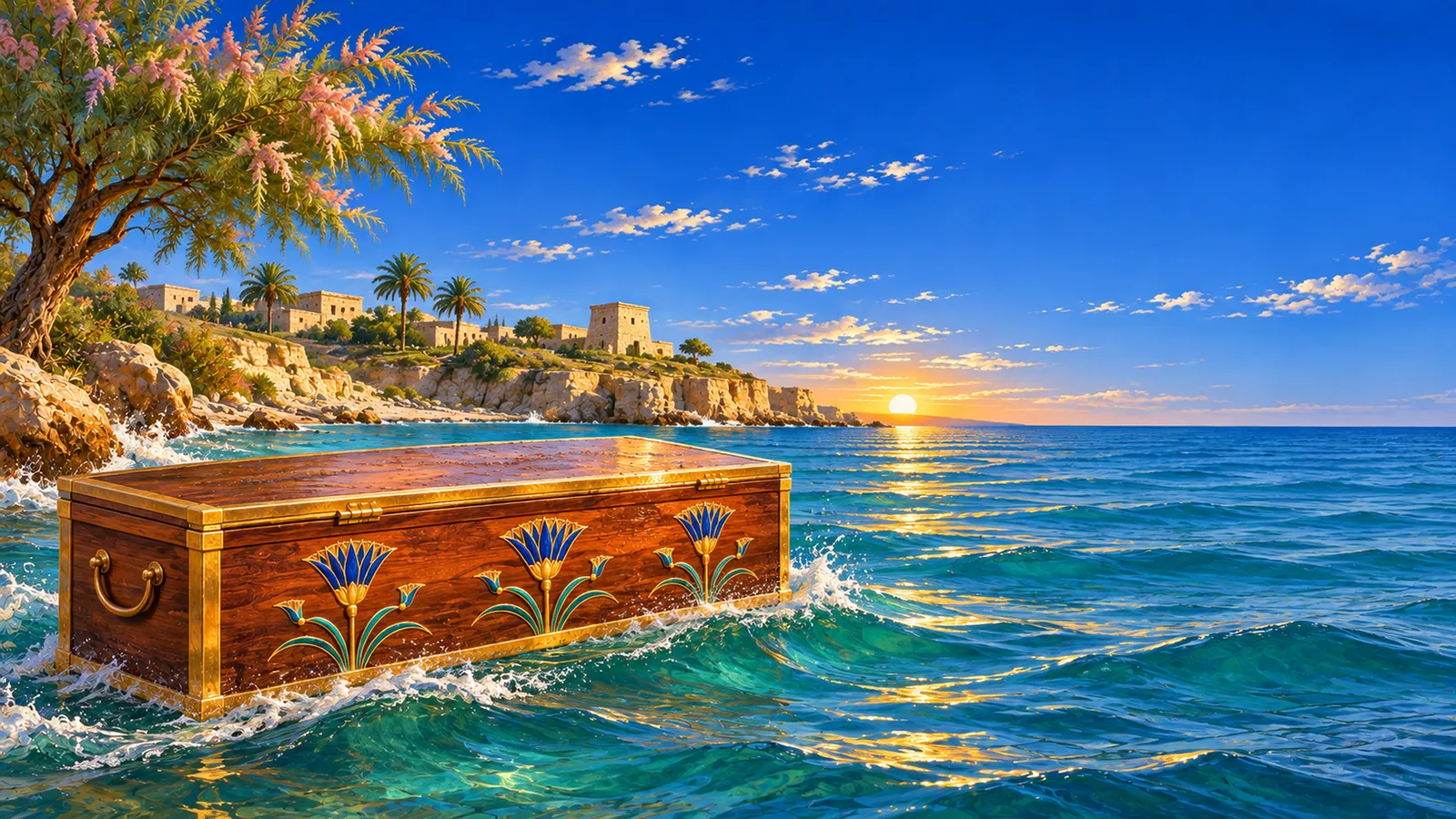
LA CÔTE
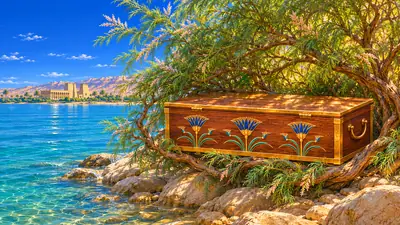
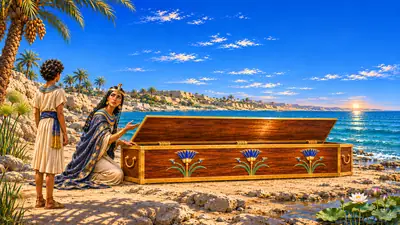
La mer a porté le coffre sur ses vagues. Dans le récit ancien, il est arrivé sur une côte appelée Byblos.
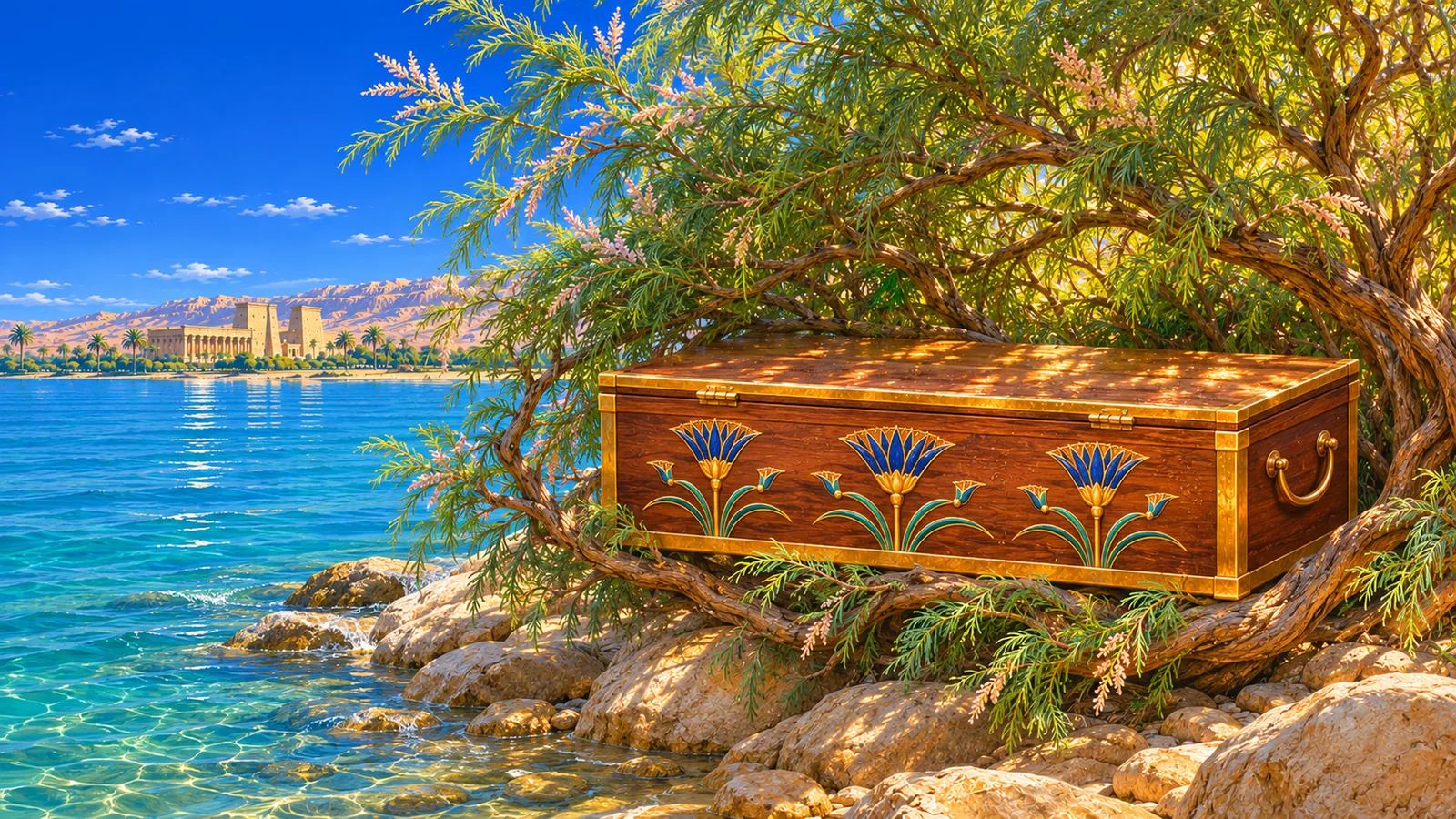
Là, le coffre s’est logé parmi les branches d’un buisson de tamaris. Le récit ancien dit qu’il s’y est posé doucement.

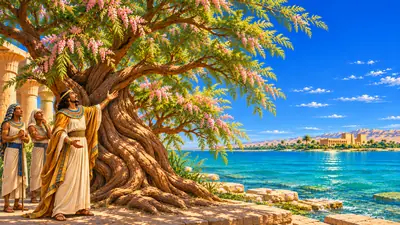
En peu de temps, le tamaris est devenu un grand et bel arbre. Ses branches ont poussé autour du coffre.

L’arbre a enserré le coffre de tous côtés. Le récit dit qu’une fois à l’intérieur du tronc, le coffre n’était plus visible.
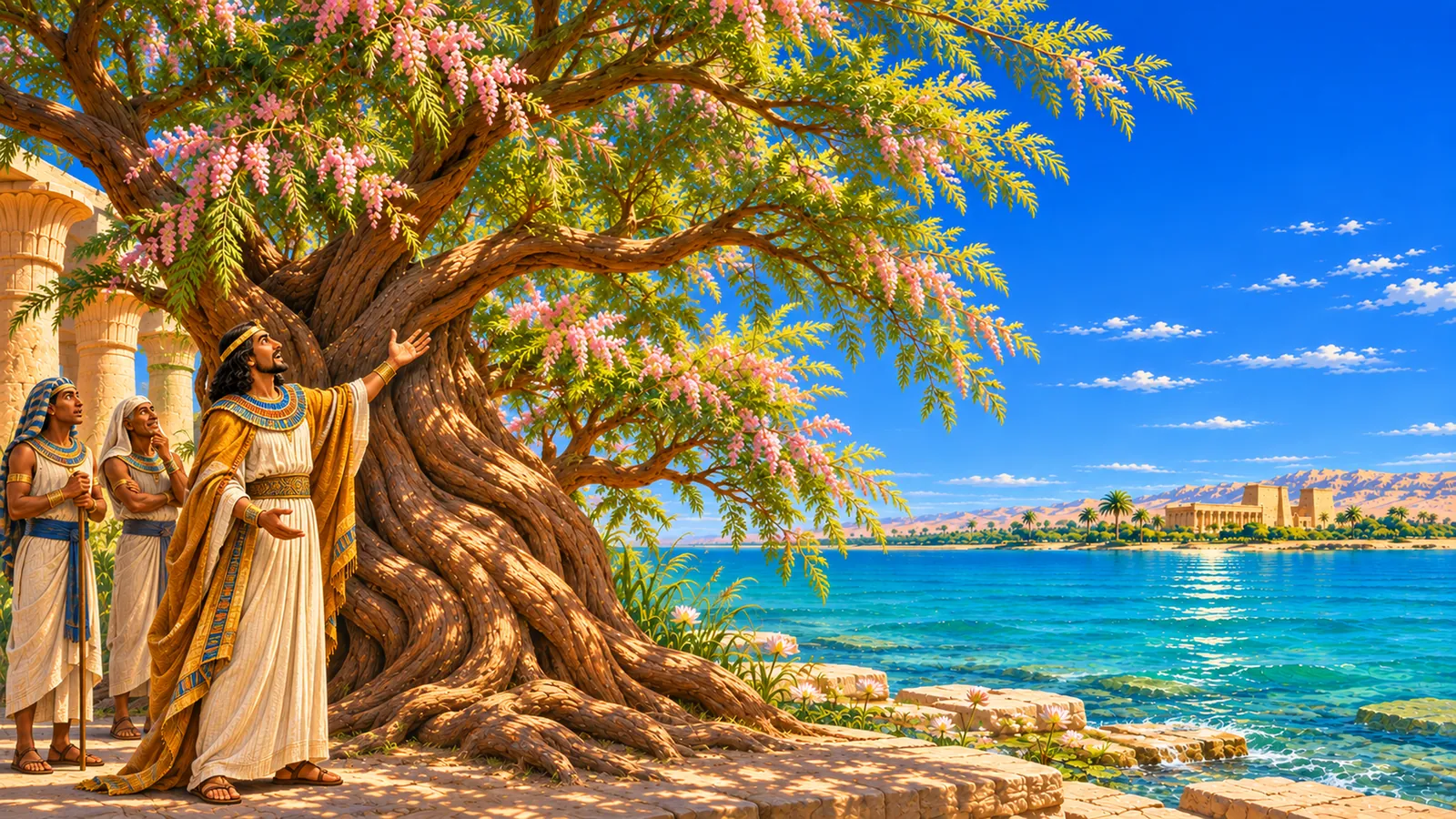
Le roi du pays a vu le tamaris et s’est émerveillé de la taille inhabituelle qu’il avait atteinte.
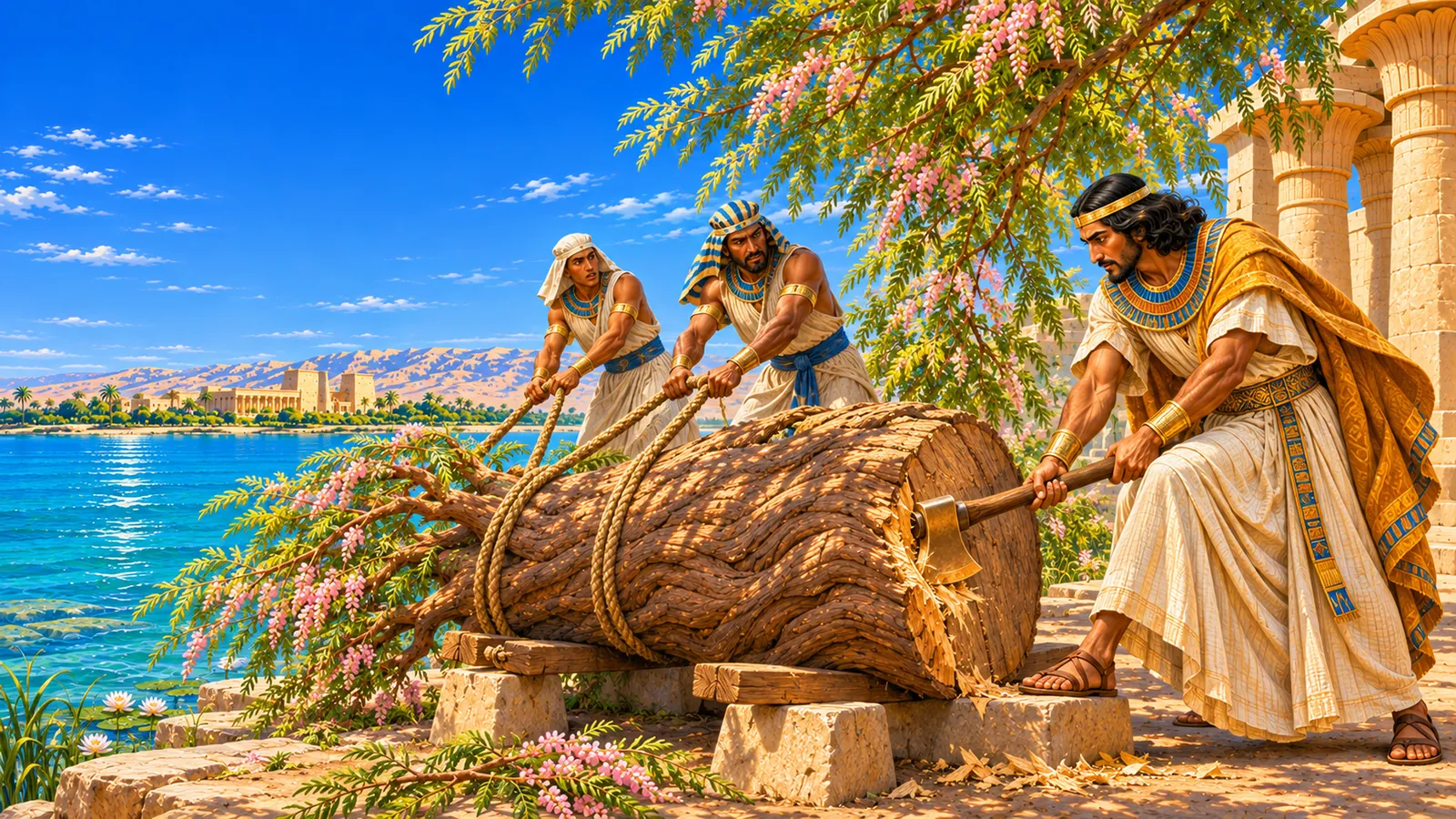
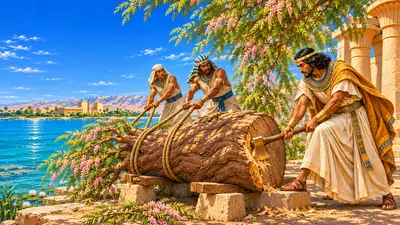
Le roi a abattu l’arbre. Il a pris la partie du tronc où le coffre était toujours caché.
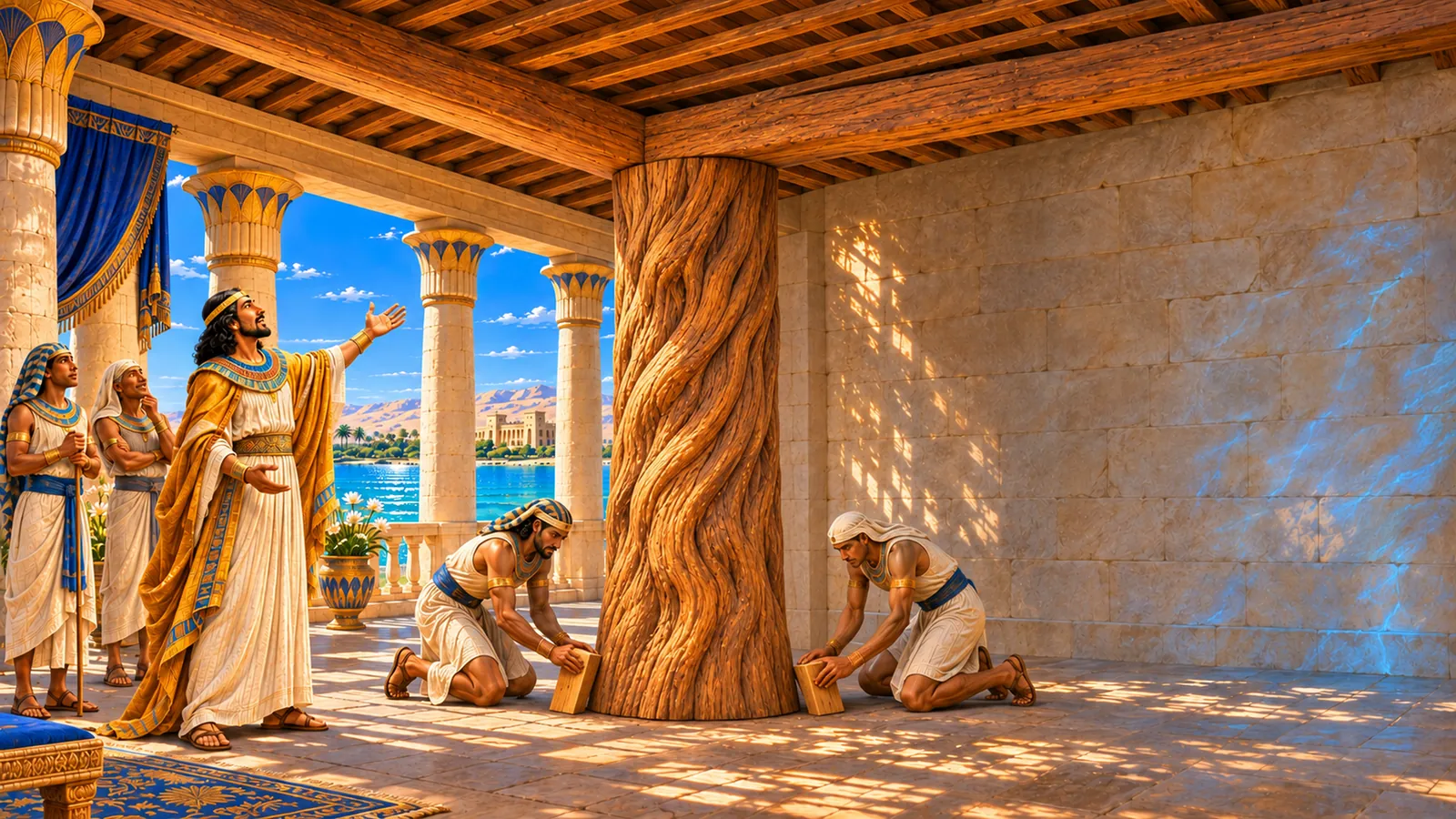
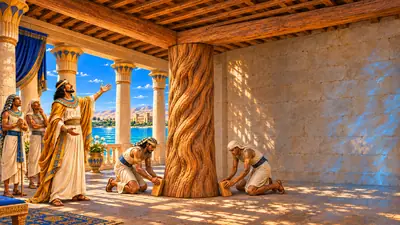
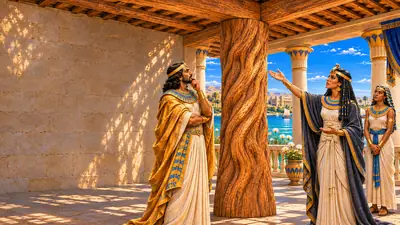
Le roi a fait un pilier de cette partie du tronc. Placé debout, il soutenait le toit de sa maison.
LA NOUVELLE
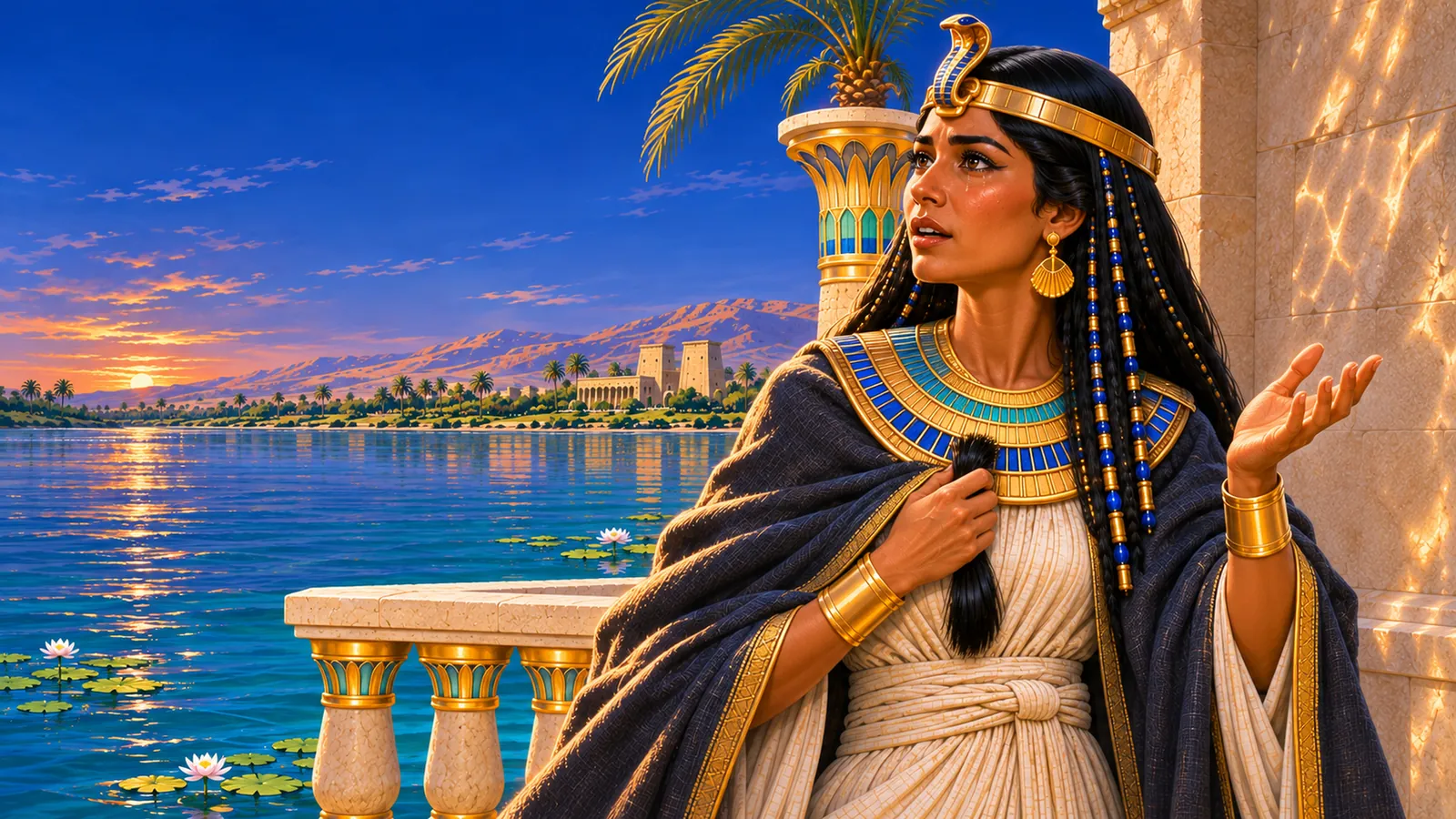
Dans ce récit, des esprits ont appris à Isis la nouvelle de l’arbre et du coffre. Le narrateur présente cette façon de recevoir la nouvelle comme extraordinaire.
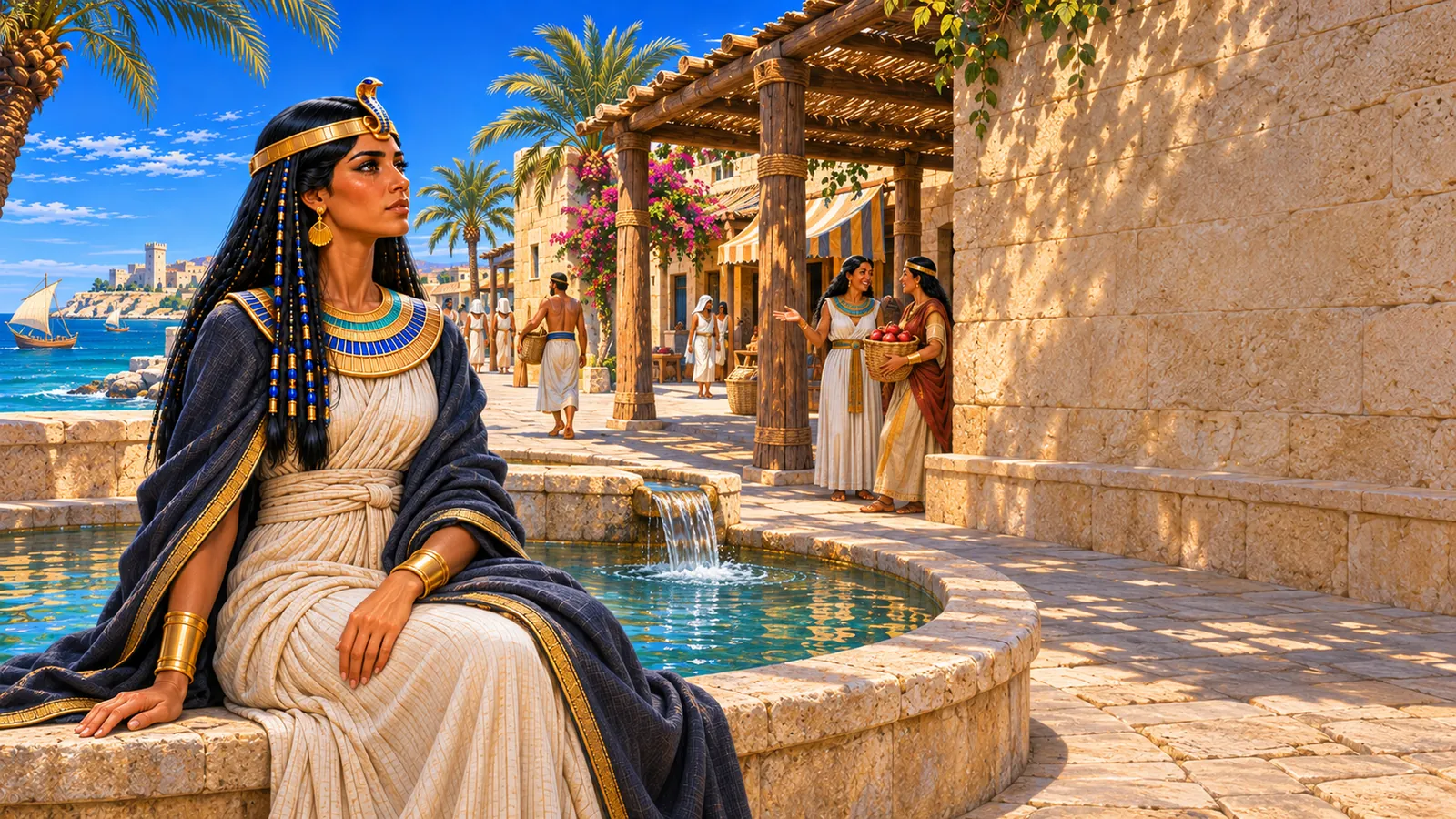
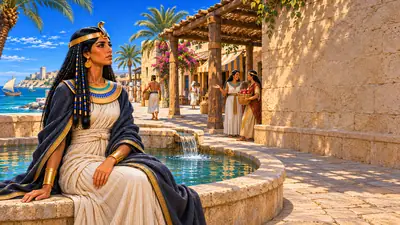
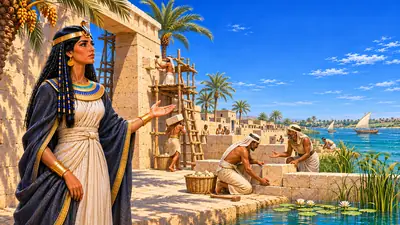
Isis s’est rendue aussitôt à Byblos. En arrivant, elle s’est assise près d’une fontaine.
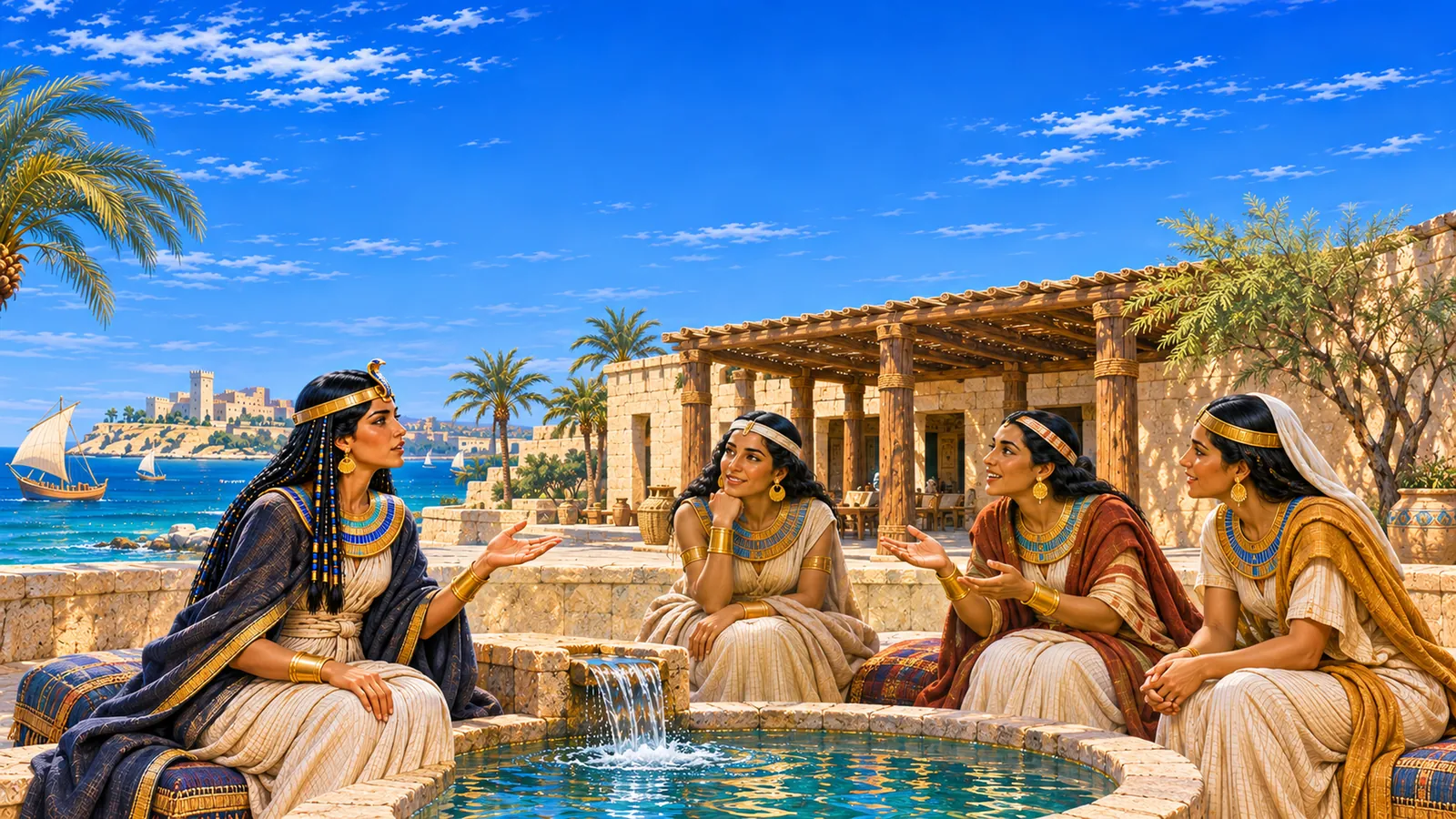
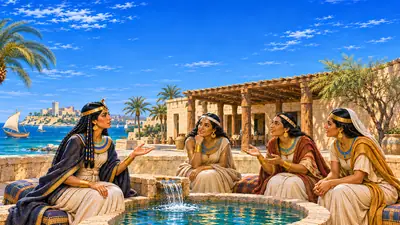
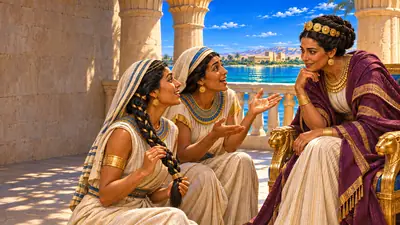
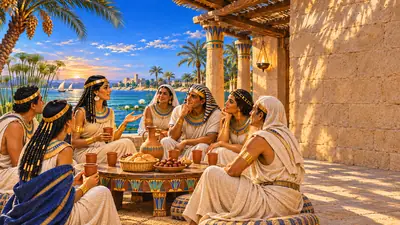
Isis a refusé de parler à qui que ce soit, sauf aux femmes au service de la reine. Elles se trouvaient par hasard près de la fontaine.
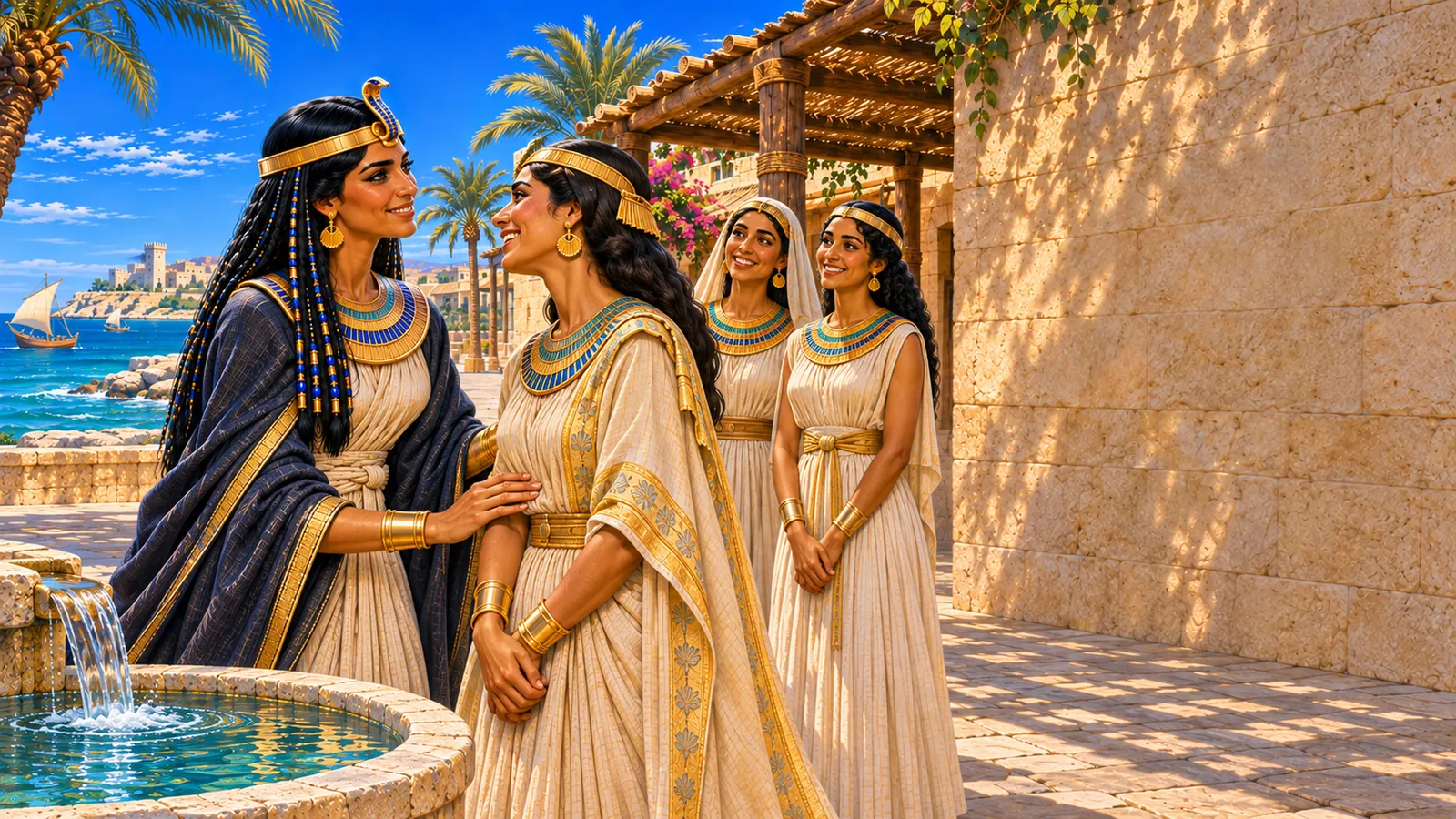
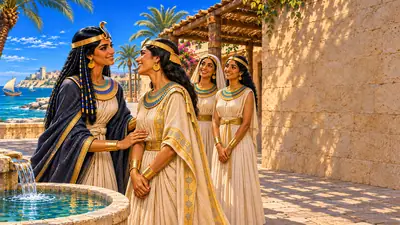
Isis a accueilli chaleureusement les femmes au service de la reine. Le récit dit qu’elle s’est montrée d’une grande bienveillance envers elles.
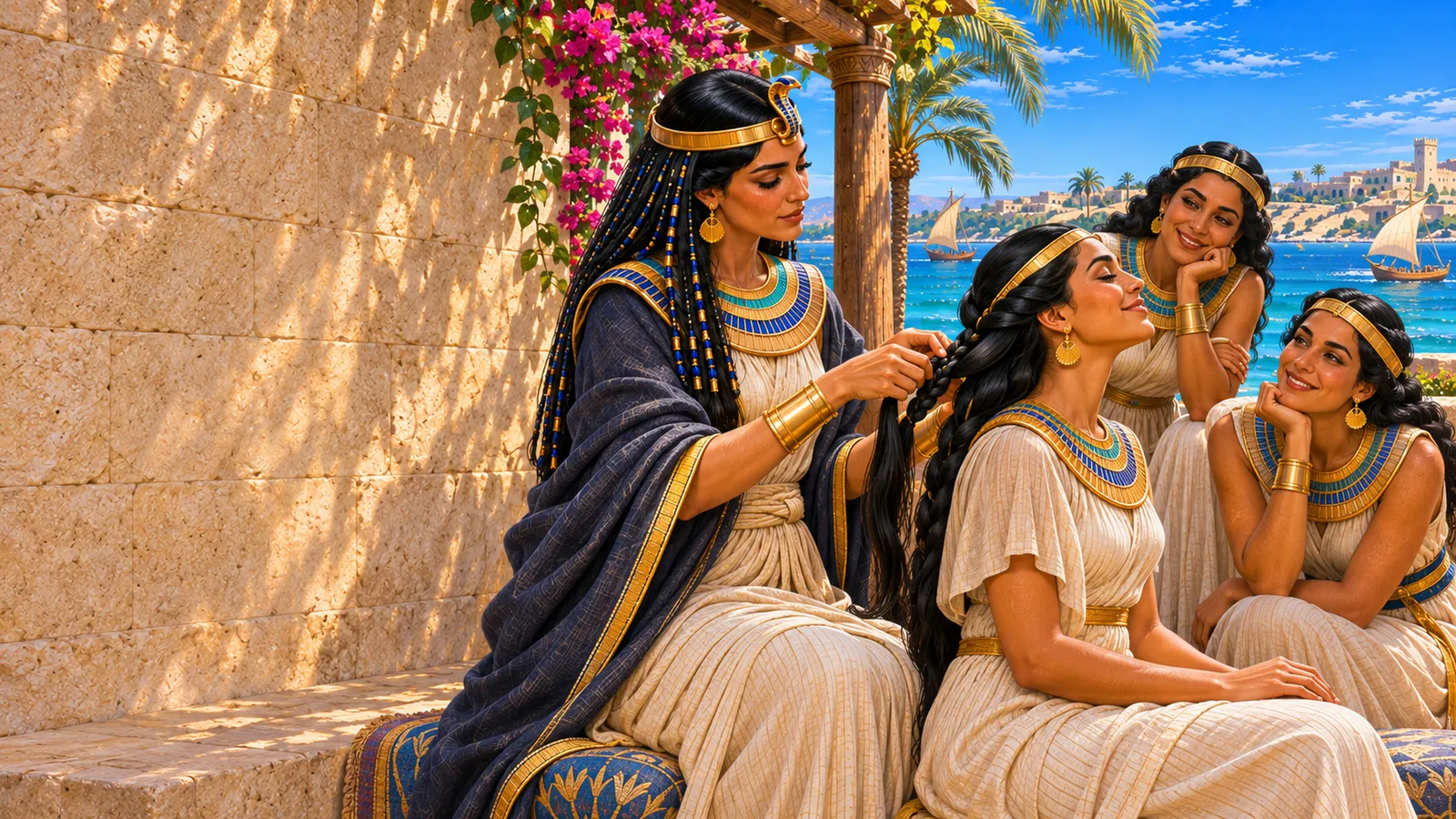
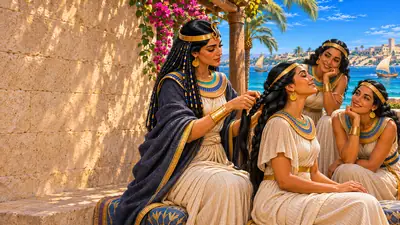
Isis leur a tressé les cheveux. Dans le récit, un peu de son propre parfum est passé aux femmes pendant qu’elle les coiffait.
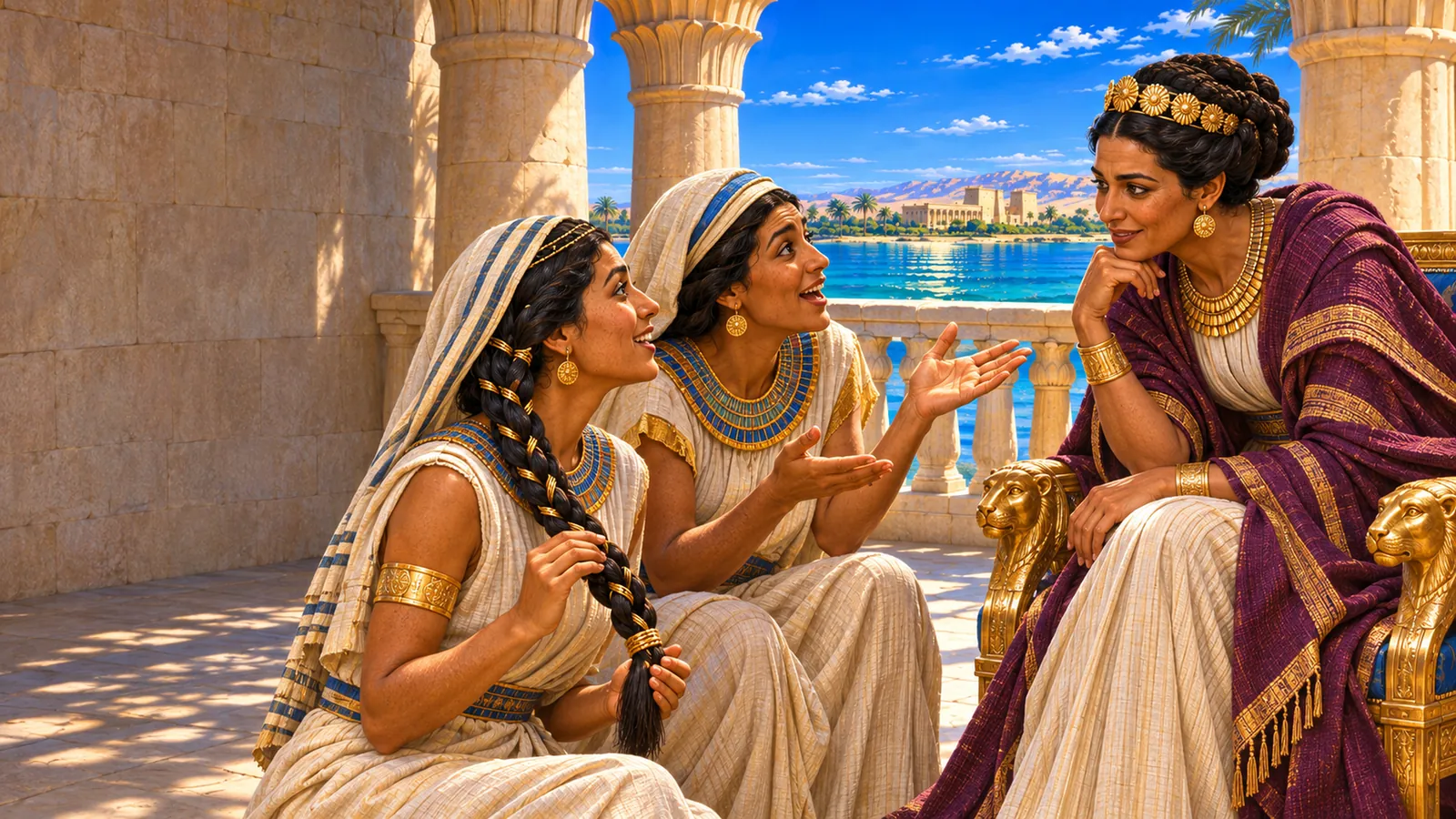
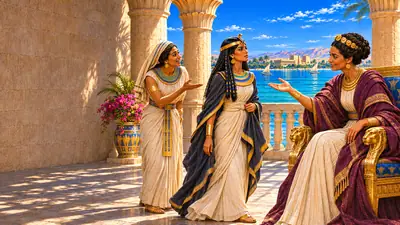
La reine a appris qu’une inconnue avait transmis un peu de son propre parfum aux femmes. Elle a vivement souhaité la voir.
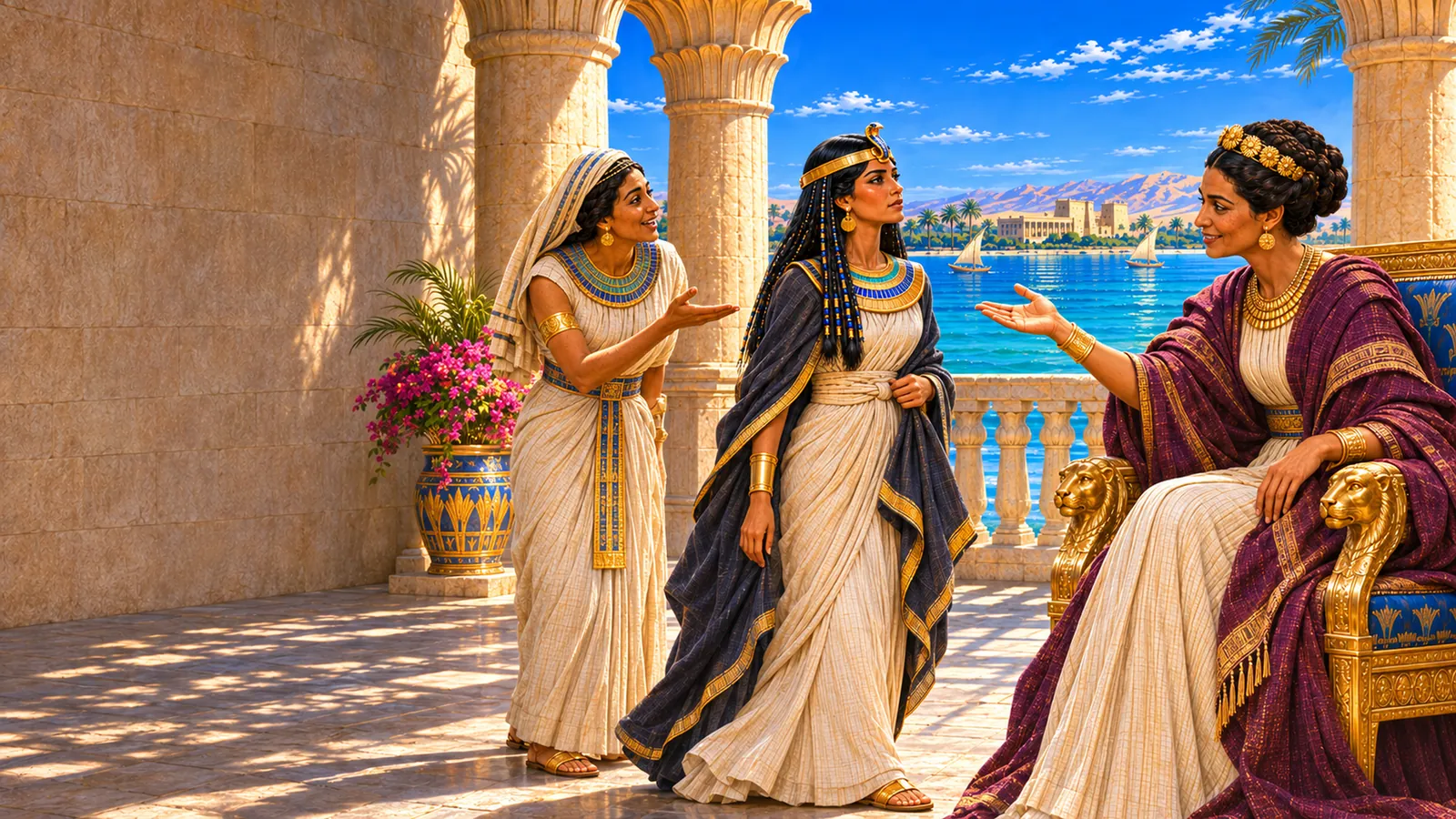
La reine a fait chercher l’inconnue de la fontaine. Elle l’a appelée à la cour afin de la rencontrer.
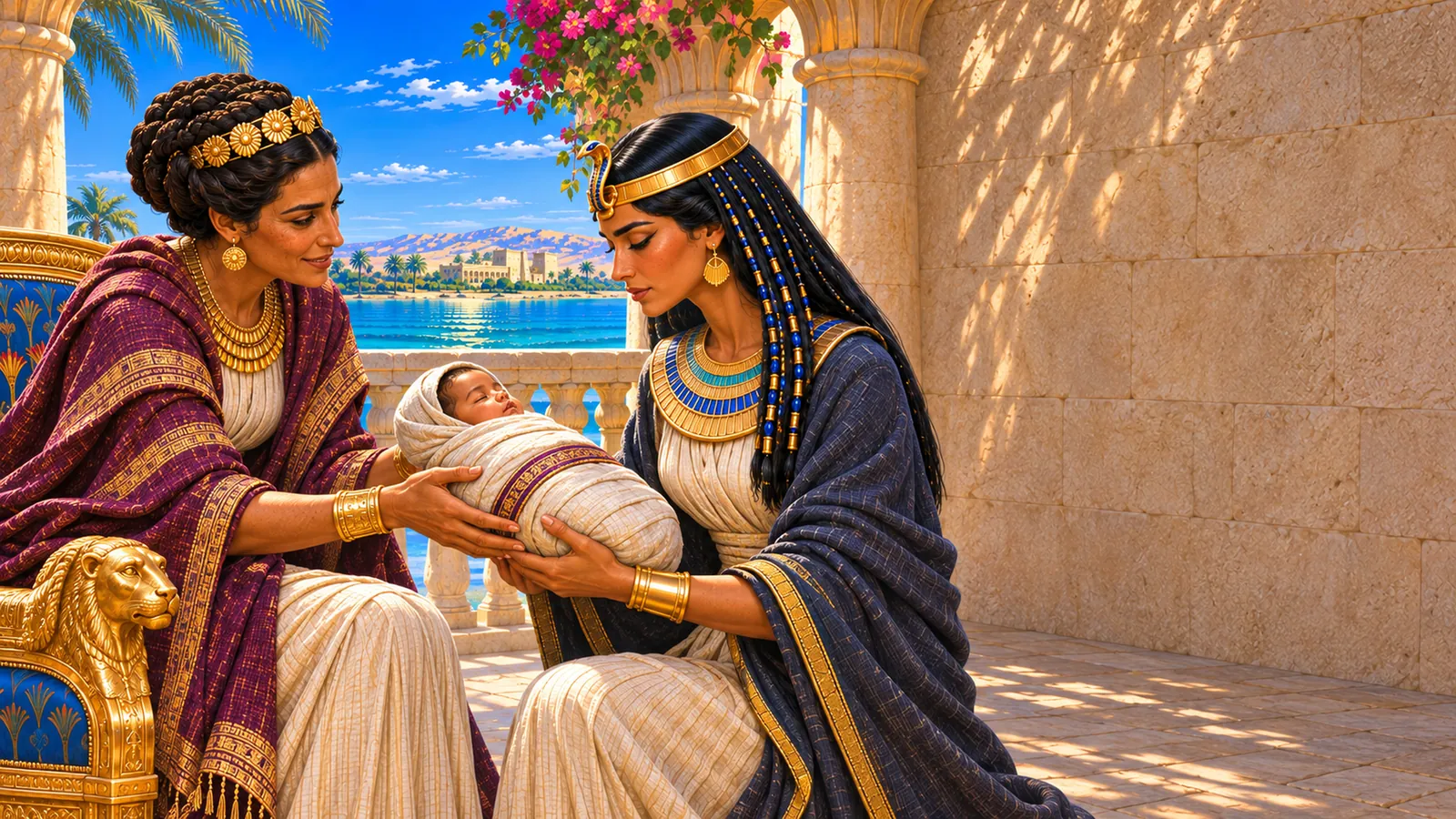
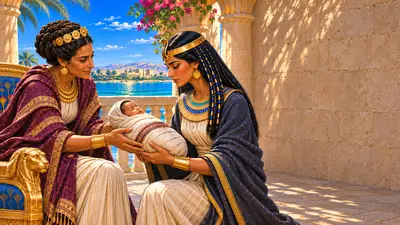
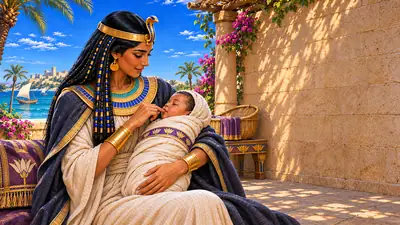
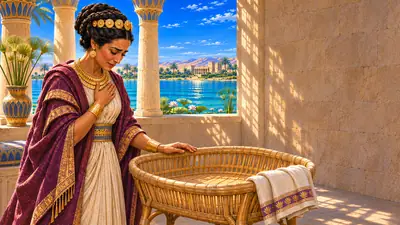
Après avoir fait plus ample connaissance avec la visiteuse, la reine lui confia l’un de ses fils. Isis devint sa nourrice.
LA COUR
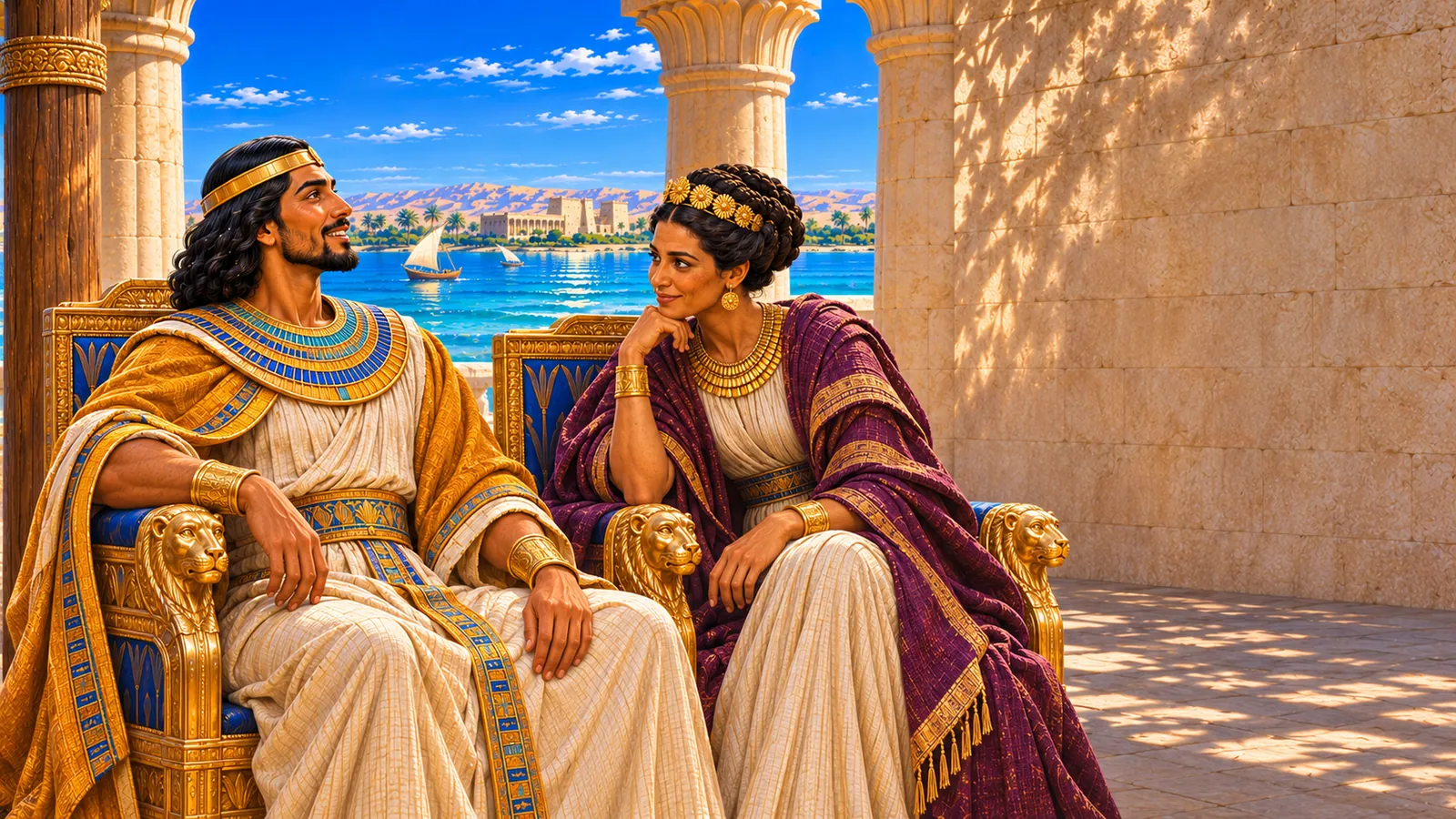
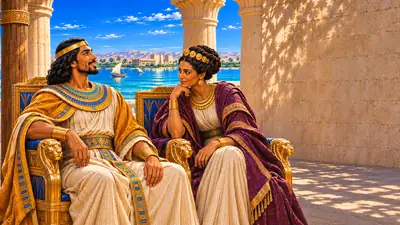
Le roi de Byblos s’appelait Meloarthus. La reine est appelée Astarte dans un récit et Saosis dans un autre. Certains l’appellent Nemanoun, nom que le texte rapproche du grec Athenais.
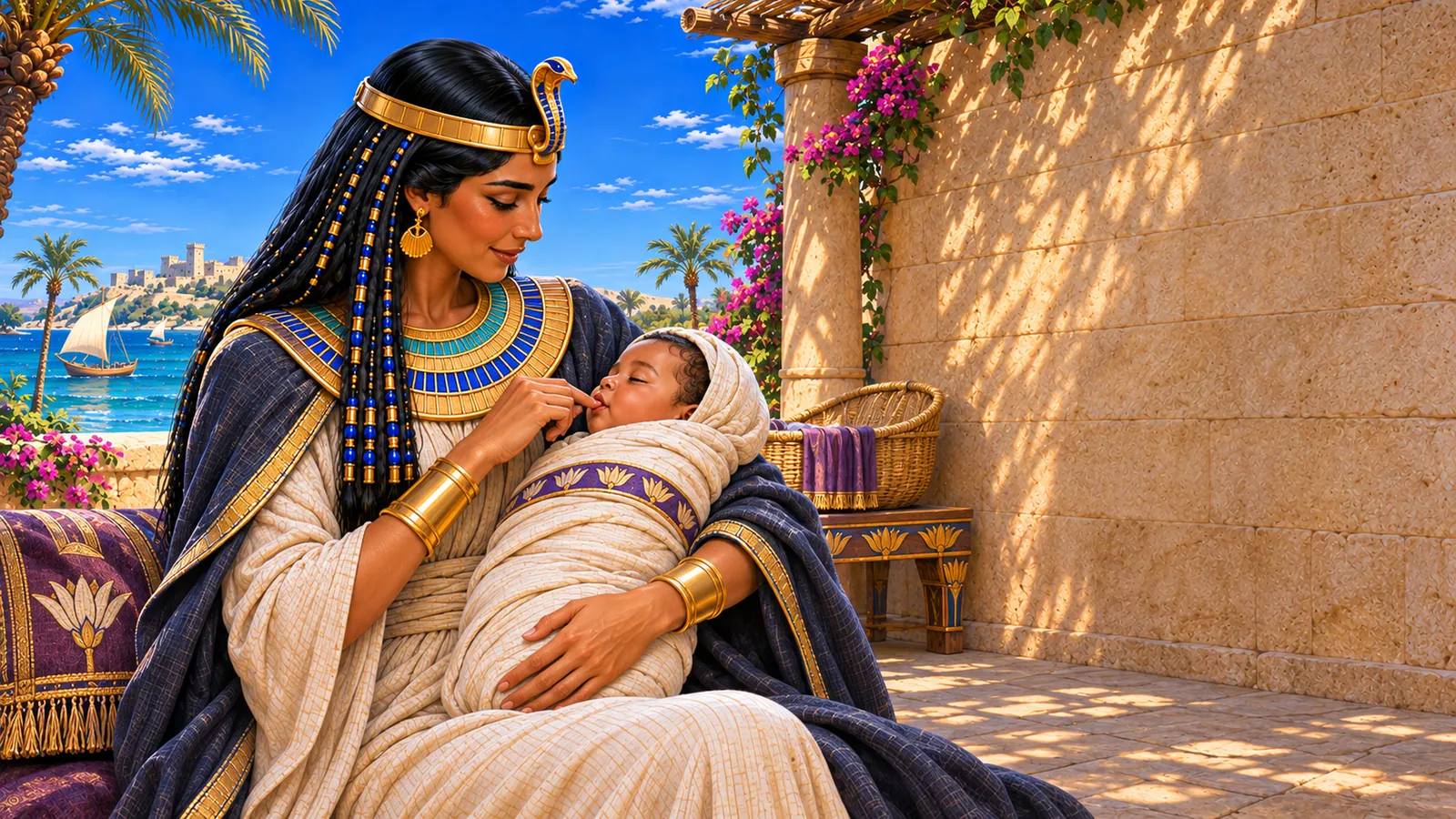
Dans le récit, Isis nourrit l’enfant d’une manière inhabituelle. La traduction de Squire dit qu’elle lui laisse téter son doigt.

Plutarque dit qu’Isis mit l’enfant dans le feu la nuit. Dans le mythe, elle voulait faire disparaître ce qu’il y avait de mortel en lui.
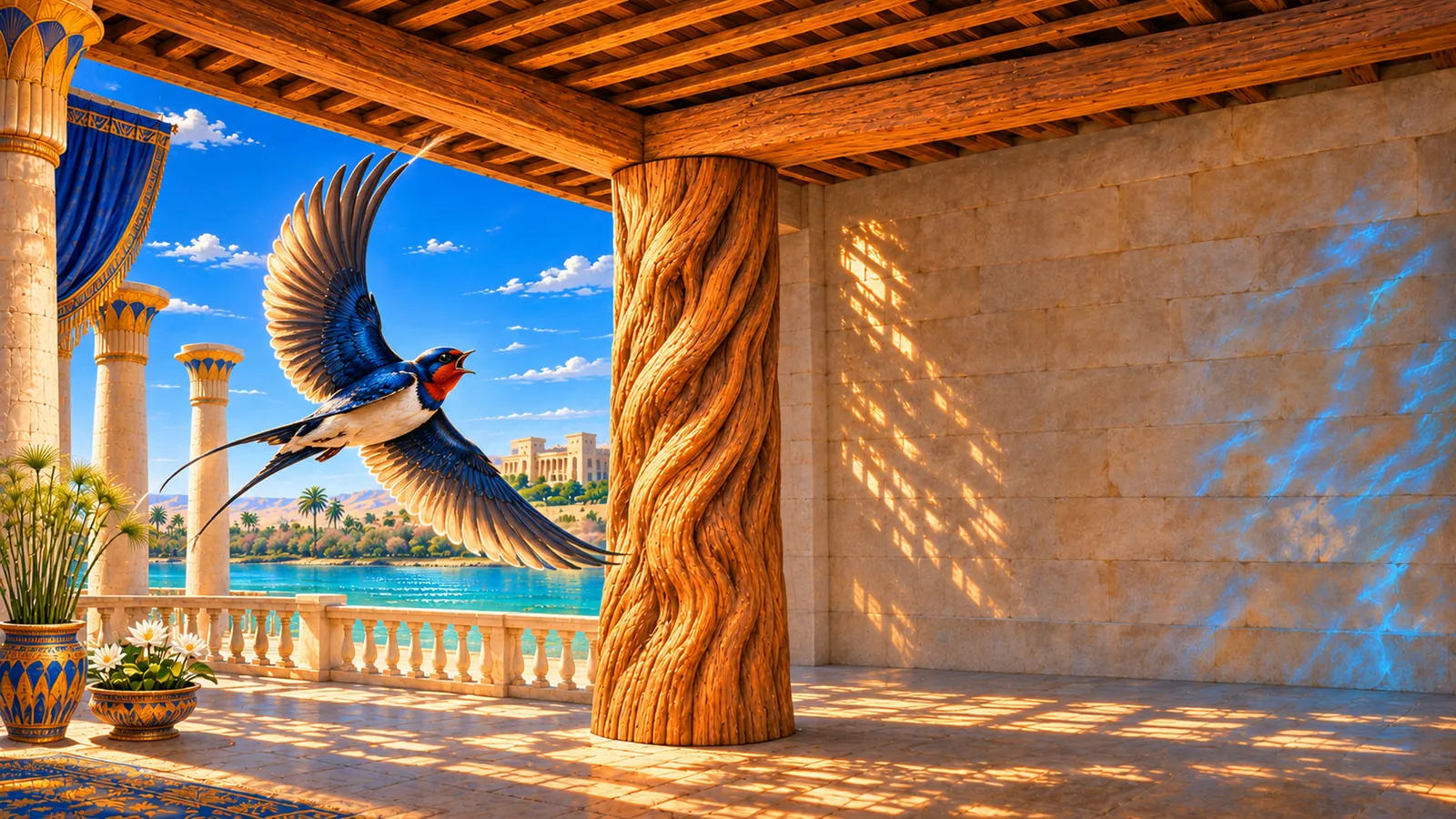
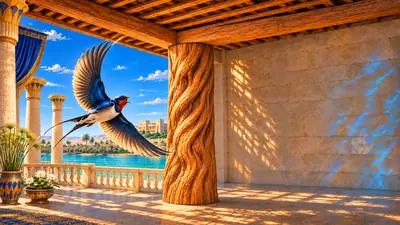
Le récit dit qu’Isis devint une hirondelle et tourna autour du pilier en se lamentant sur ce qui lui était arrivé.
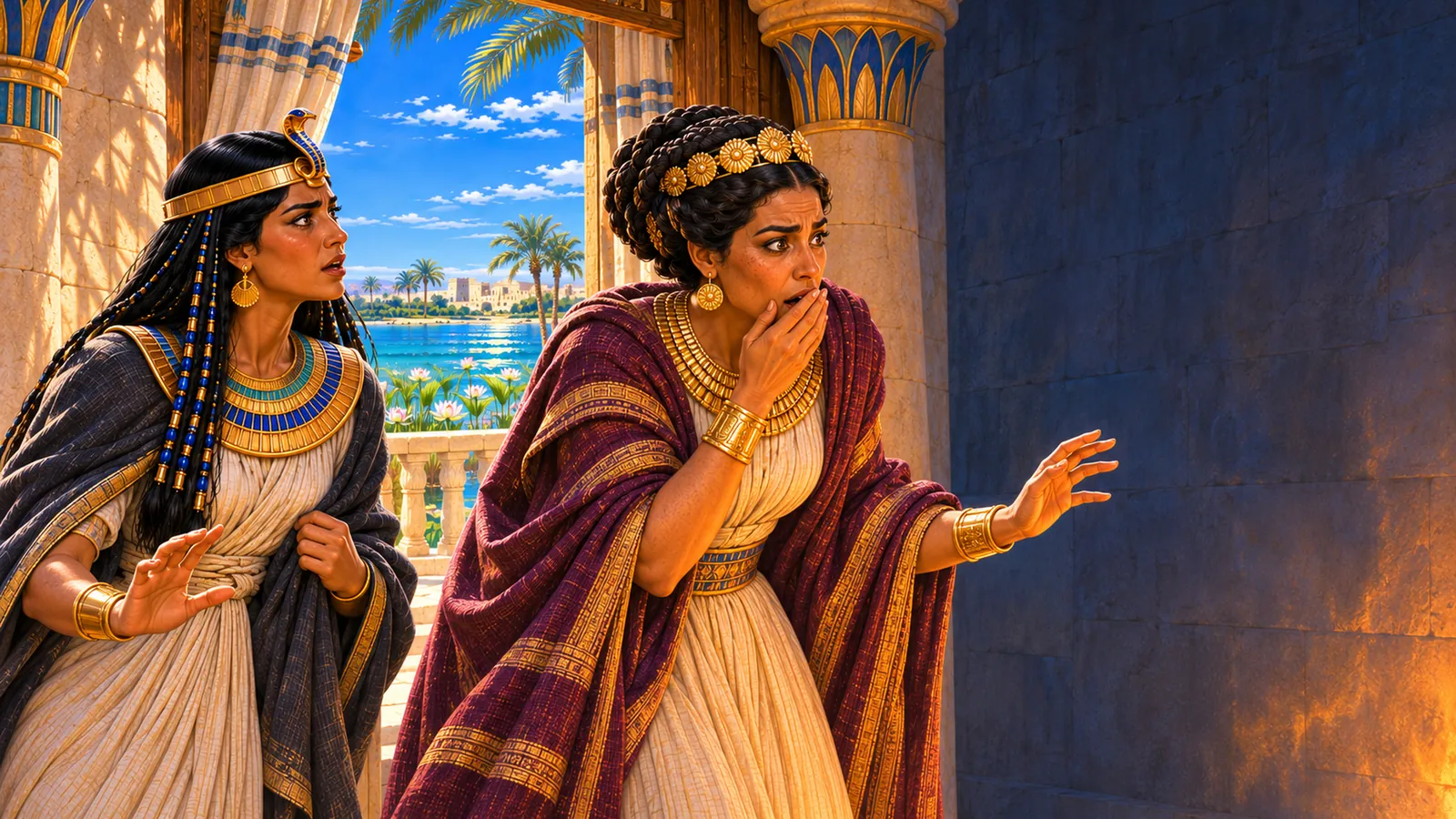
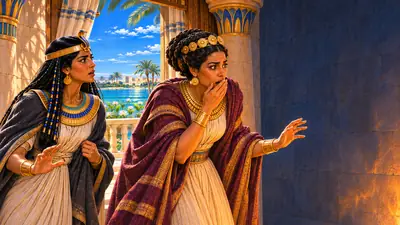
Après que cela eut duré un certain temps, la reine observa Isis. Dans le récit de Plutarque, elle vit l’enfant dans le feu.
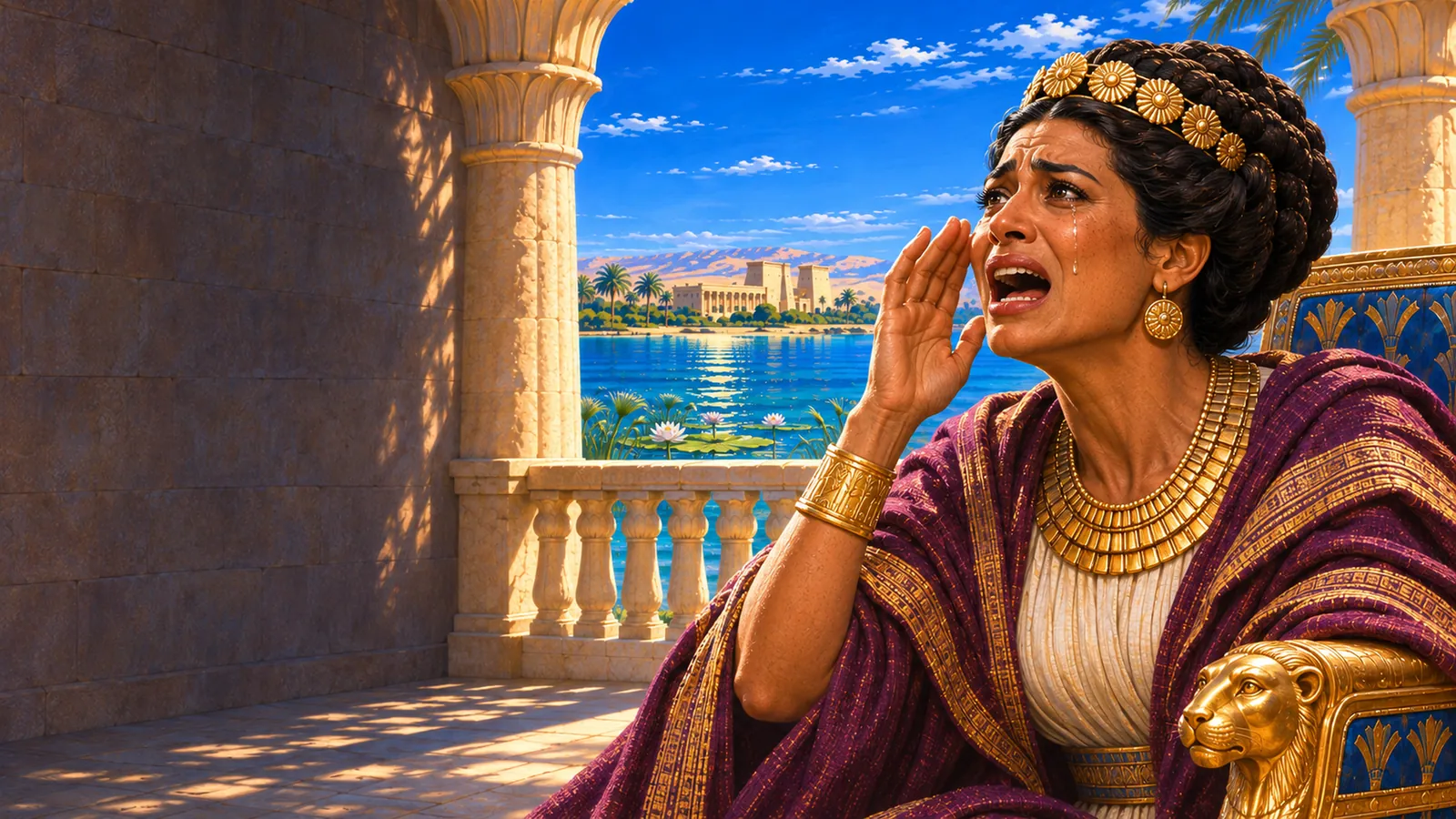
La reine poussa un cri en le voyant. Dans le récit de Plutarque, son cri priva l’enfant de l’immortalité qu’il aurait reçue autrement.
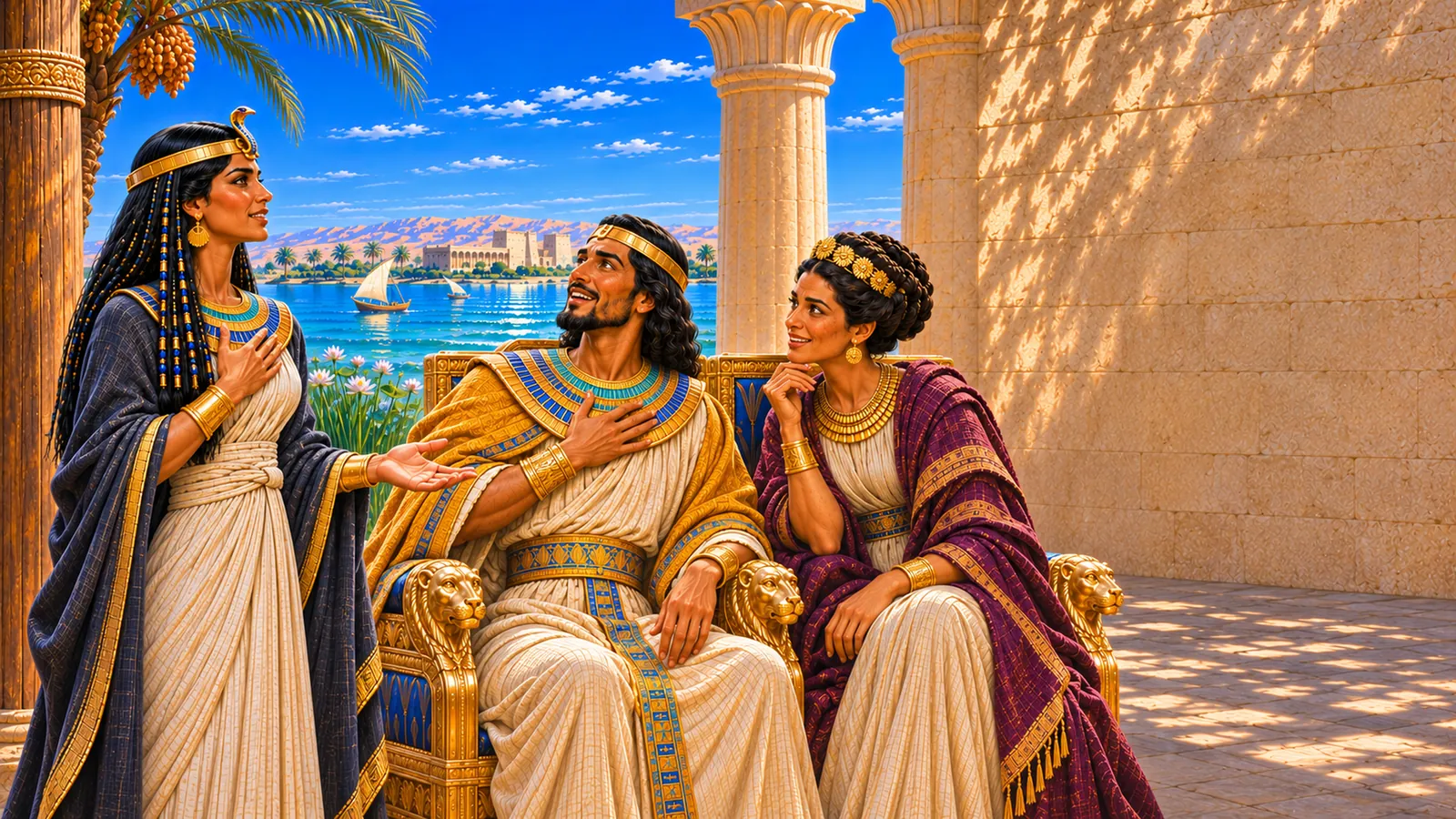
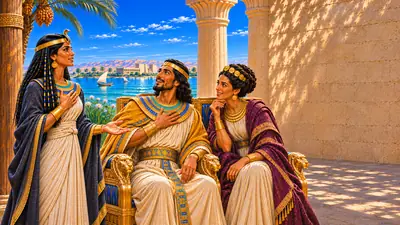
Isis révéla alors son identité. Jusque-là, dans le récit, elle avait servi à la cour comme nourrice de l’enfant.
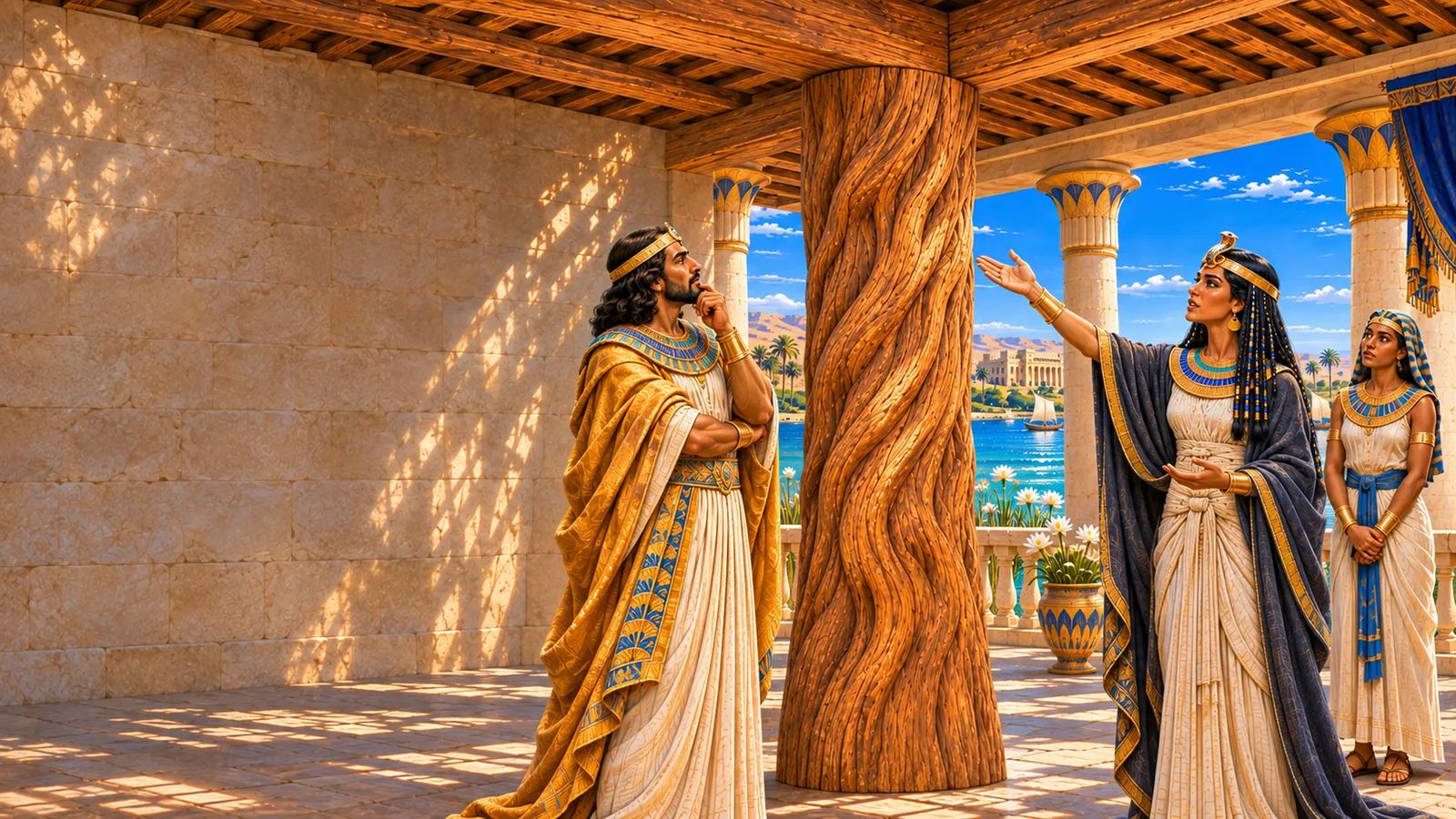
LE PILIER
Isis demanda qu’on lui donne le pilier qui soutenait le toit de la demeure du roi.
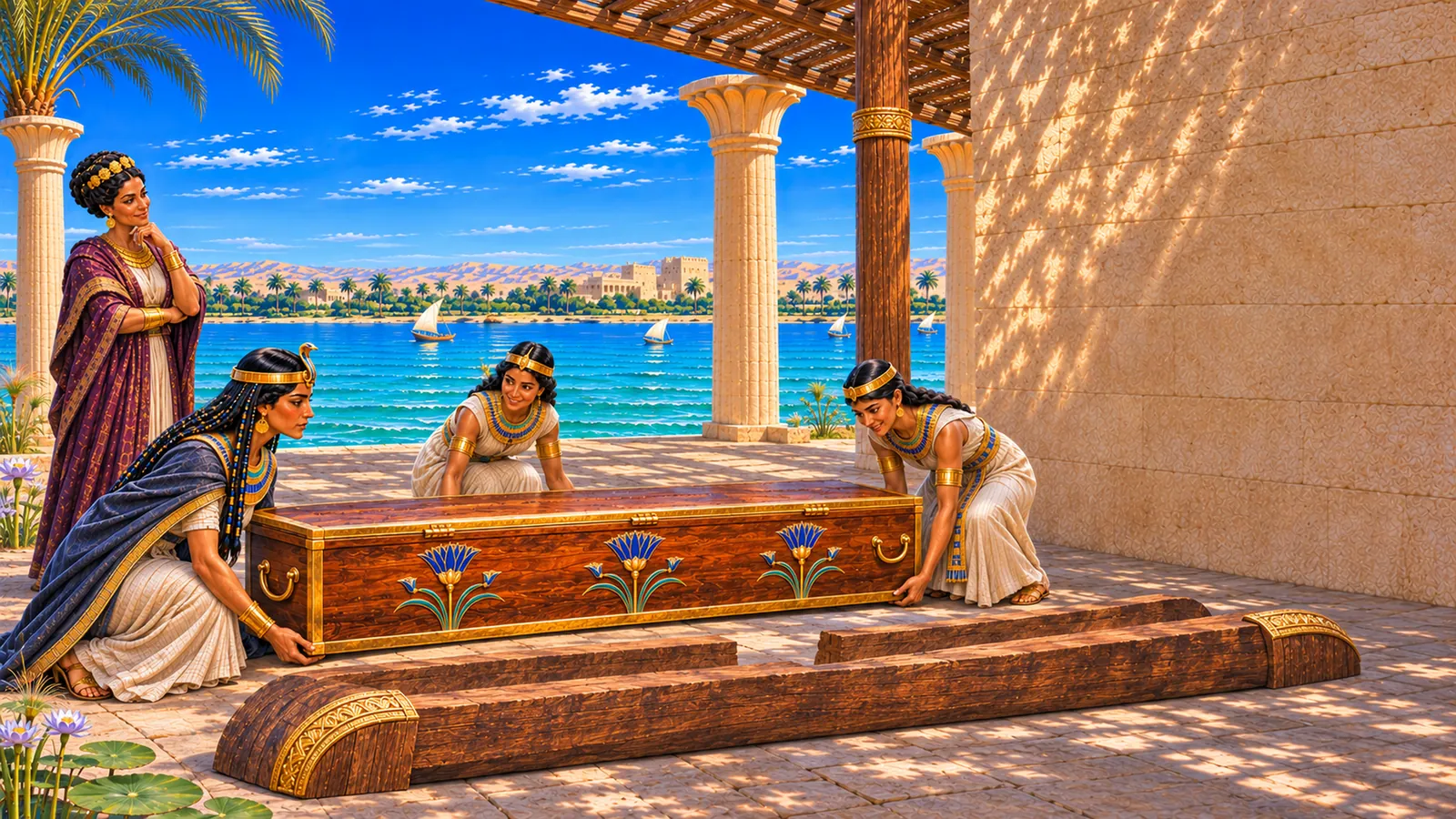
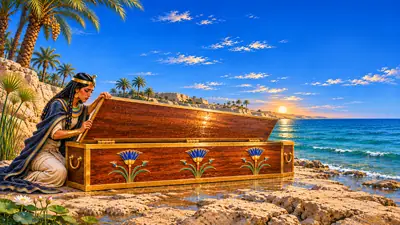
Isis ouvrit le pilier et en retira ce qu’elle était venue reprendre. Le coffre avait été caché dans le tronc.
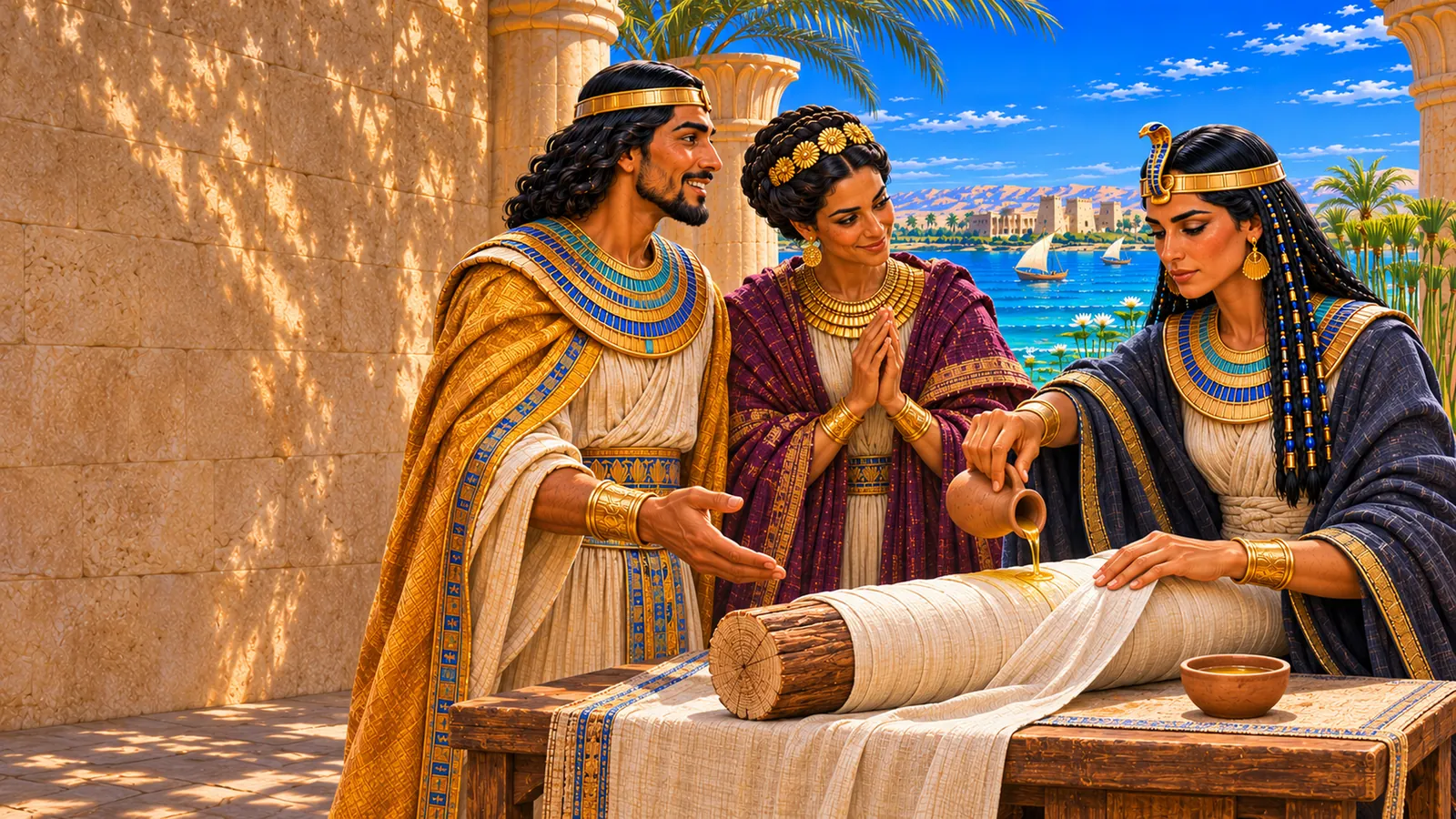
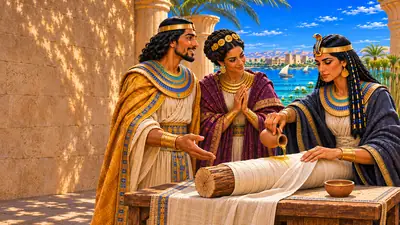
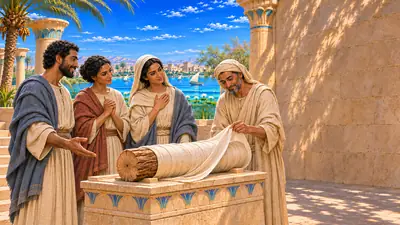
Elle enveloppa le bois qui restait dans du lin fin et l’enduisit d’huile parfumée. Elle le rendit au roi et à la reine.
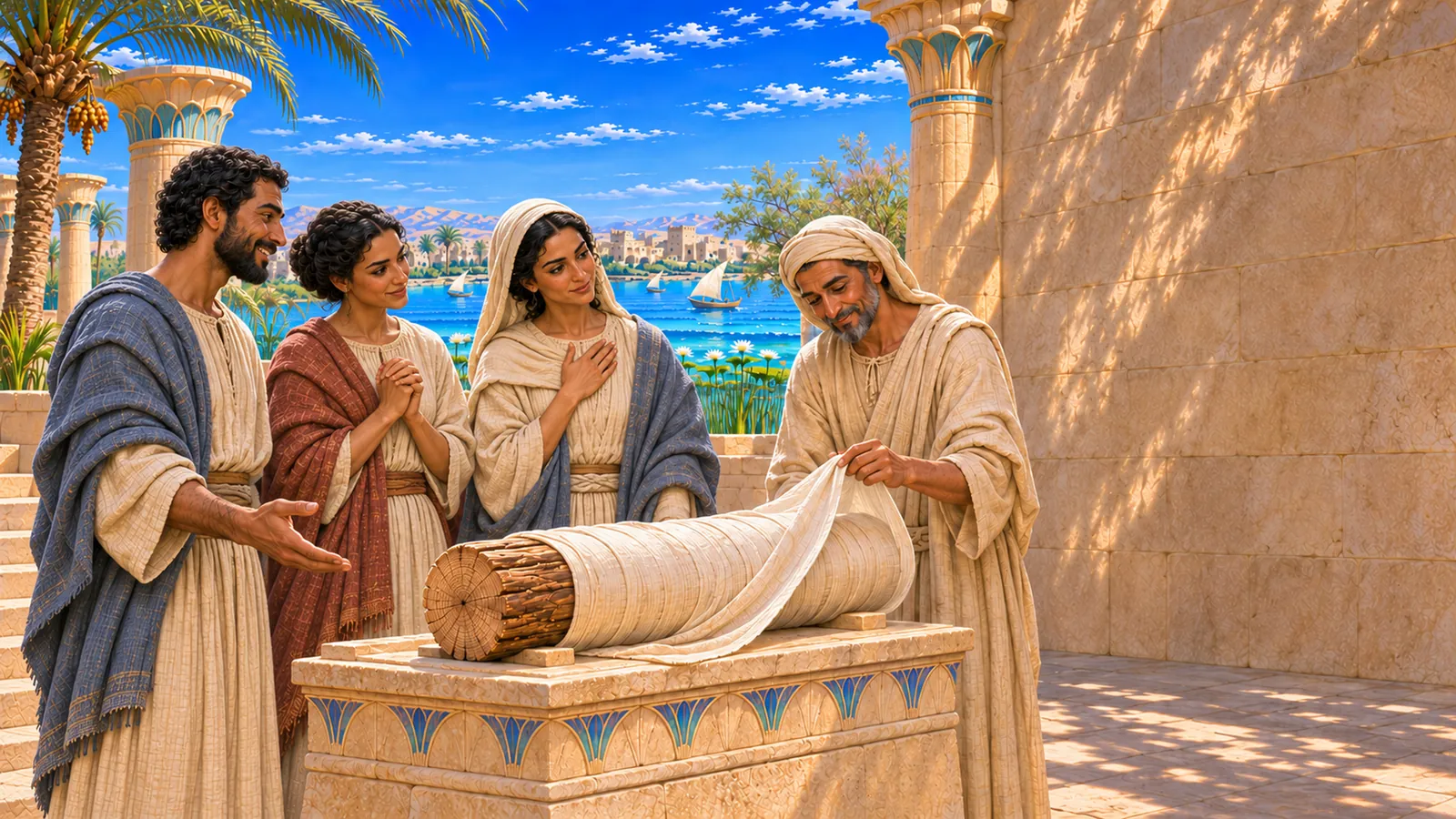
Plutarque dit qu’à son époque le bois était conservé dans un temple d’Isis. Il dit que les gens du lieu qu’il appelle Byblos l’y honoraient.
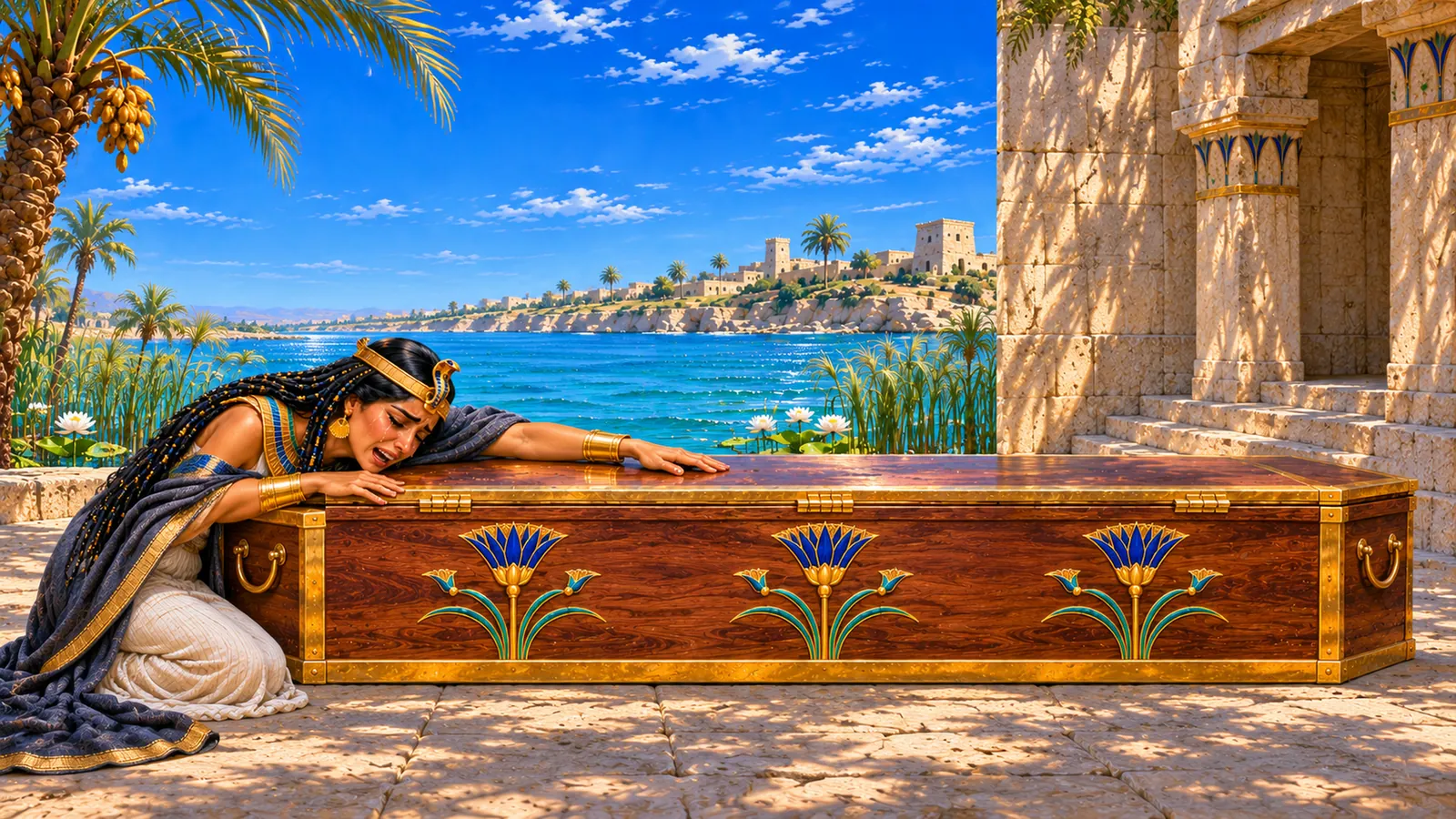
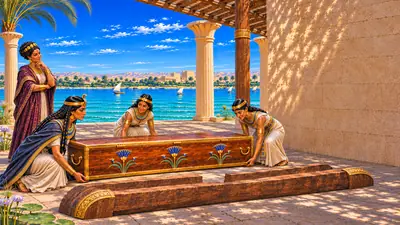
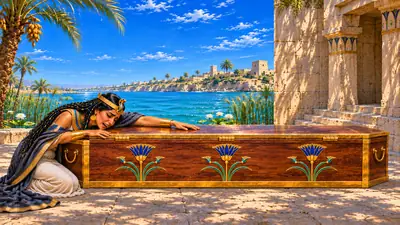
Une fois le bois rendu, le récit dit qu’Isis se jeta sur le coffre et se lamenta à grands cris.
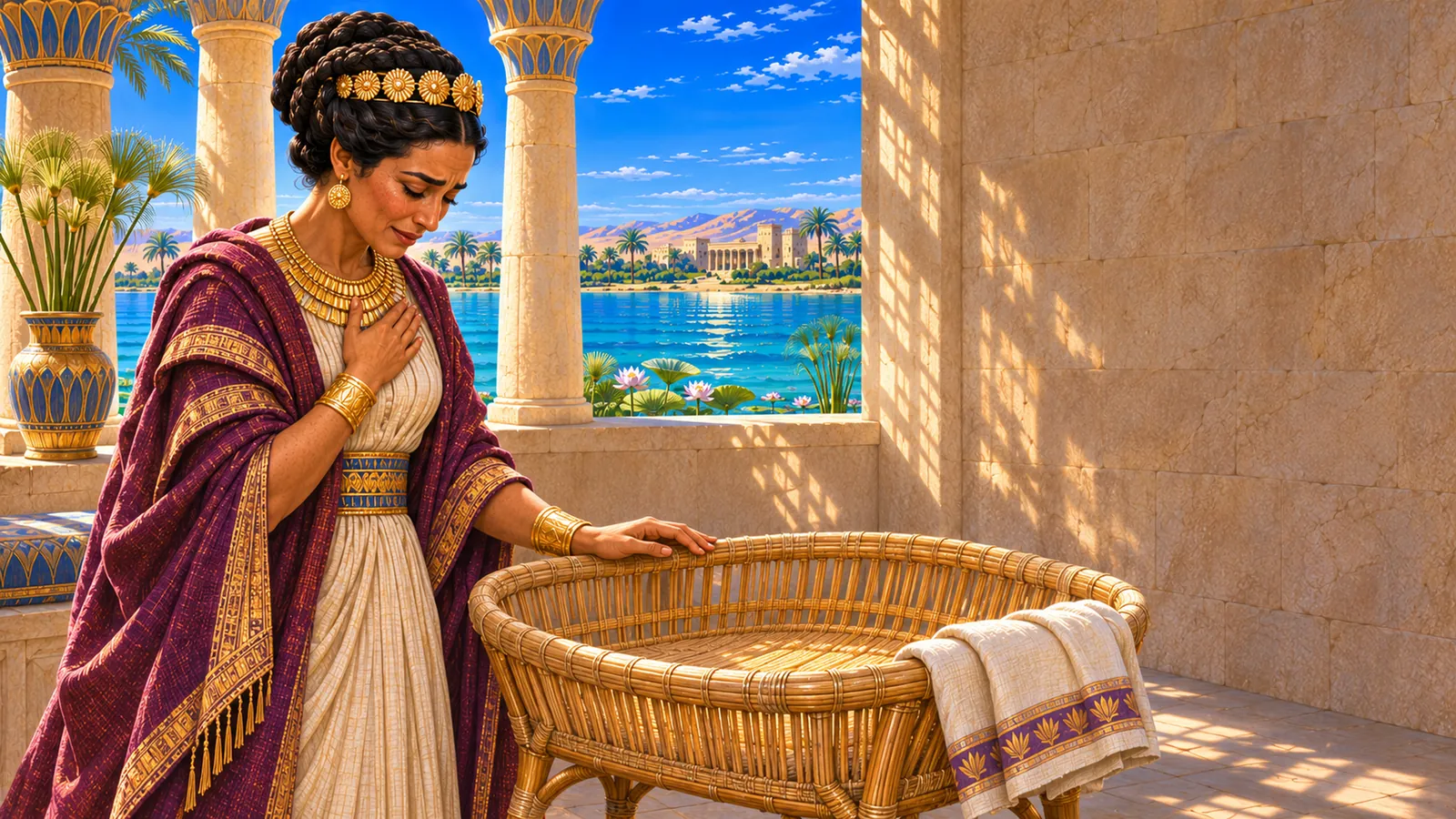
Plutarque dit que le fils cadet du roi entendit Isis se lamenter. Dans cette version, le cri l’effraya à mort.

Isis emmena avec elle le fils aîné du roi. Ils prirent la mer pour l’Égypte, le coffre à bord.

Le matin vint, et un vent âpre et vif souffla du fleuve Phèdre. Irritée par ce vent, Isis assécha le courant, selon le récit.
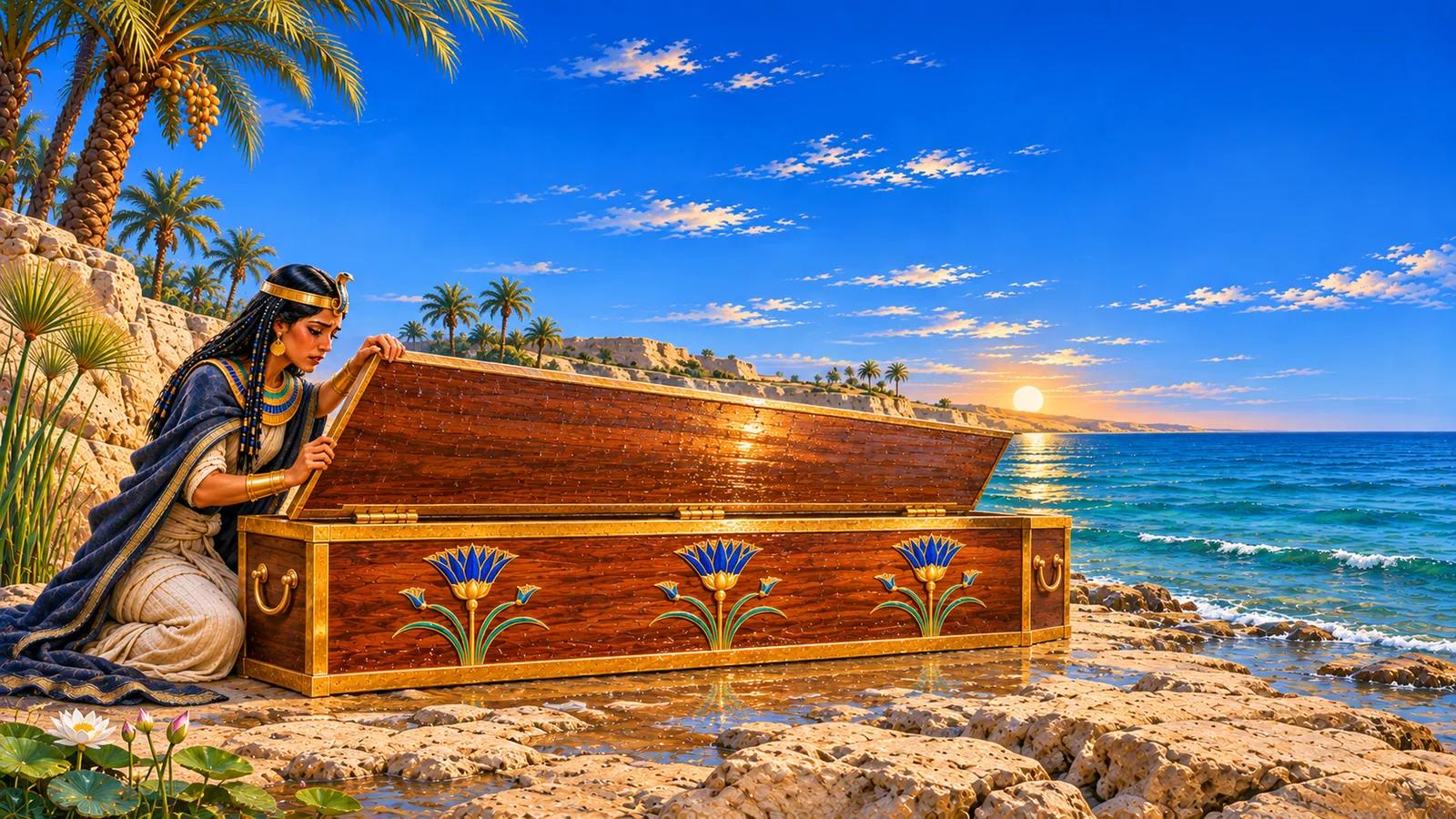
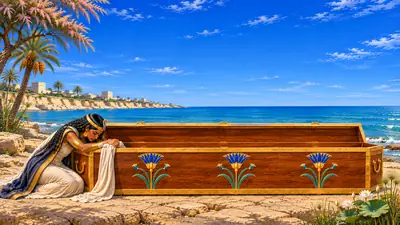
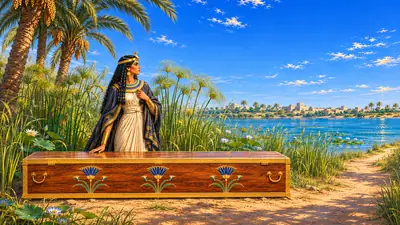
Quand Isis parvint dans un lieu désert, elle se crut seule. Elle ouvrit enfin le coffre qu’elle avait transporté par-delà les eaux.
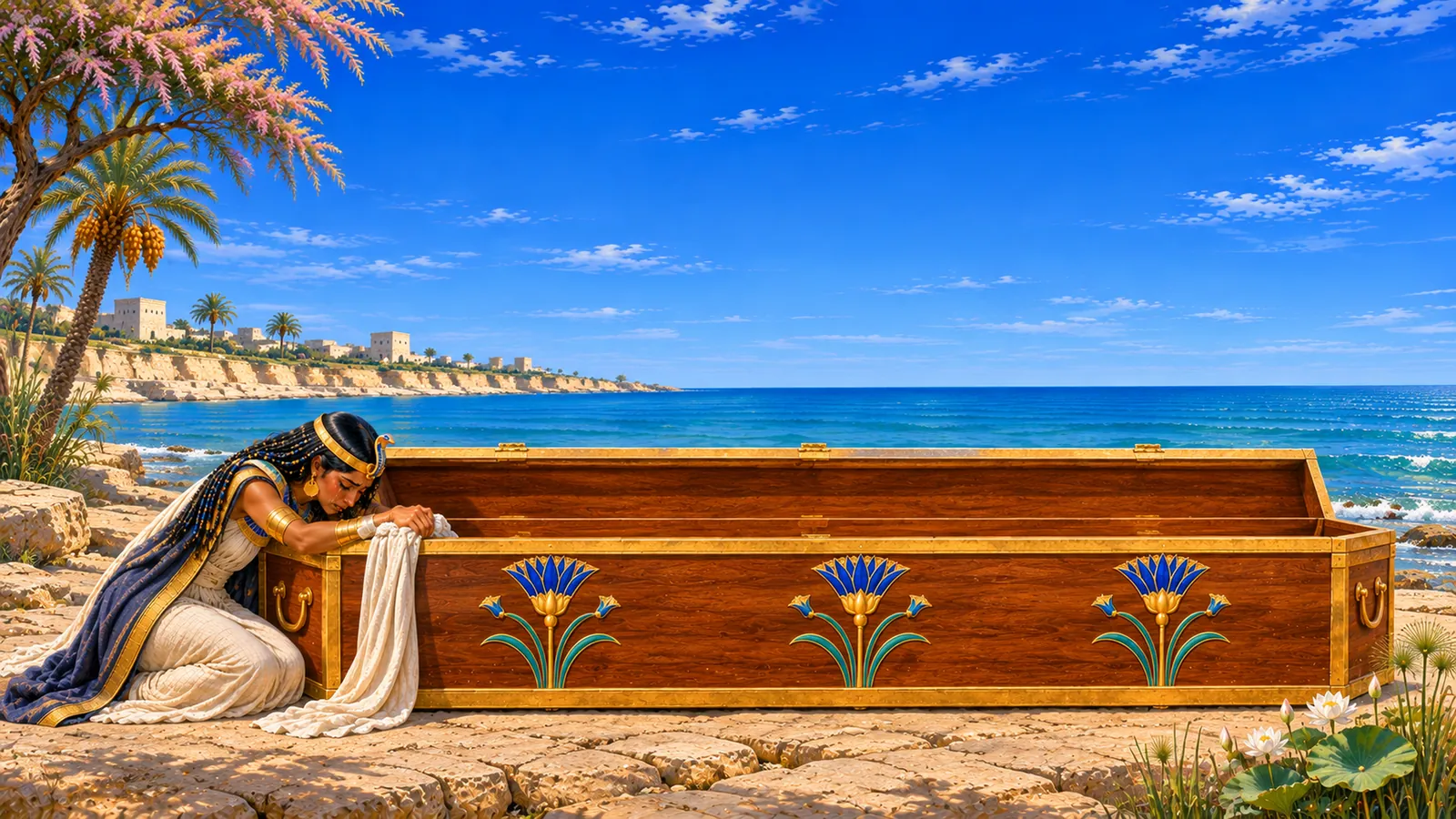
Isis posa son visage contre celui de son époux mort. Elle serra Osiris dans ses bras et pleura amèrement.
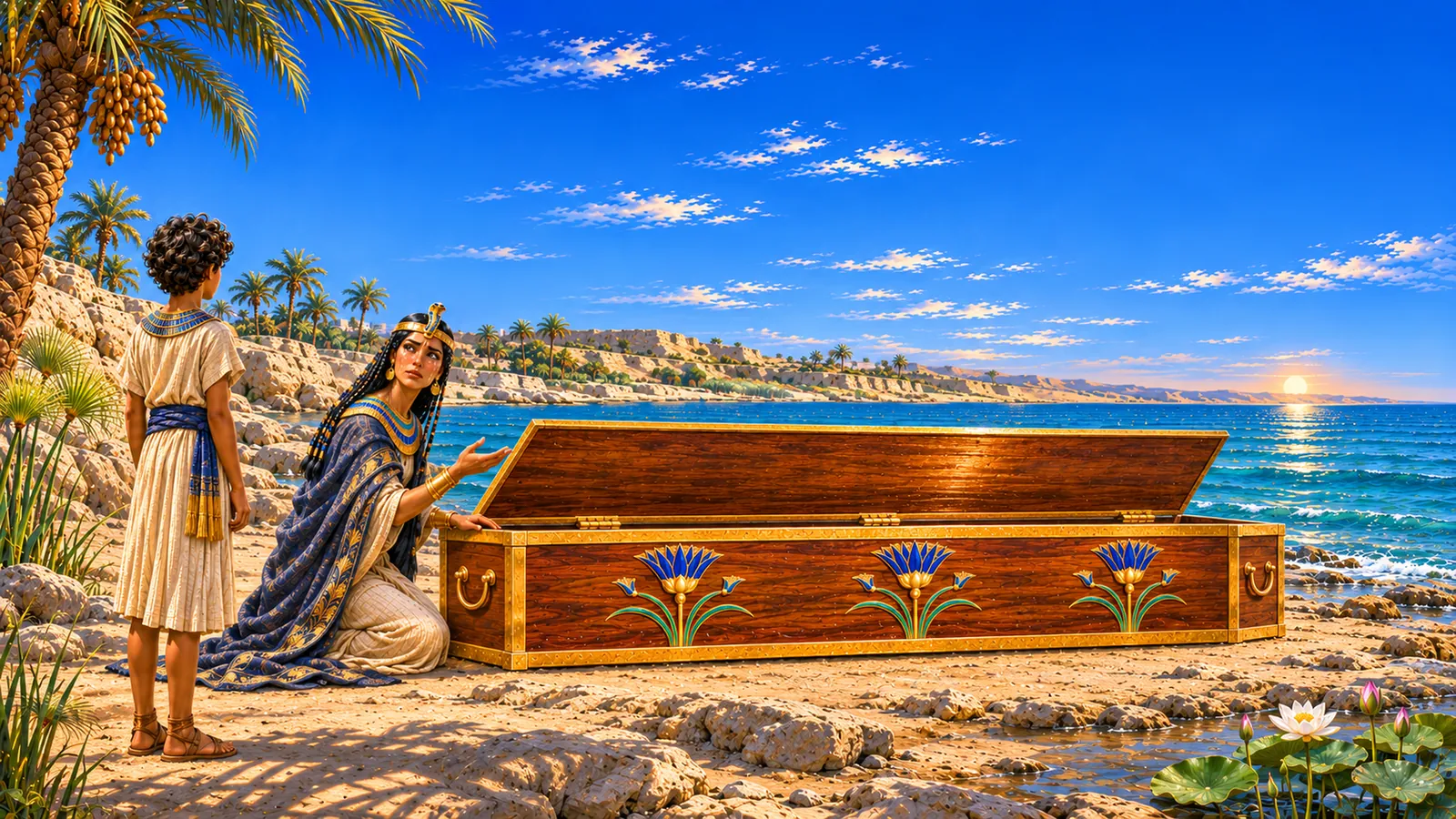
Un garçon l’avait suivie en silence et avait vu la cause de son chagrin. Le récit dit que, lorsqu’Isis se retourna vers lui avec colère, il mourut de peur.

D’autres racontaient les choses autrement. Ils disaient que le garçon était mort en tombant dans la mer et qu’il avait ensuite reçu de grands honneurs à cause d’Isis.
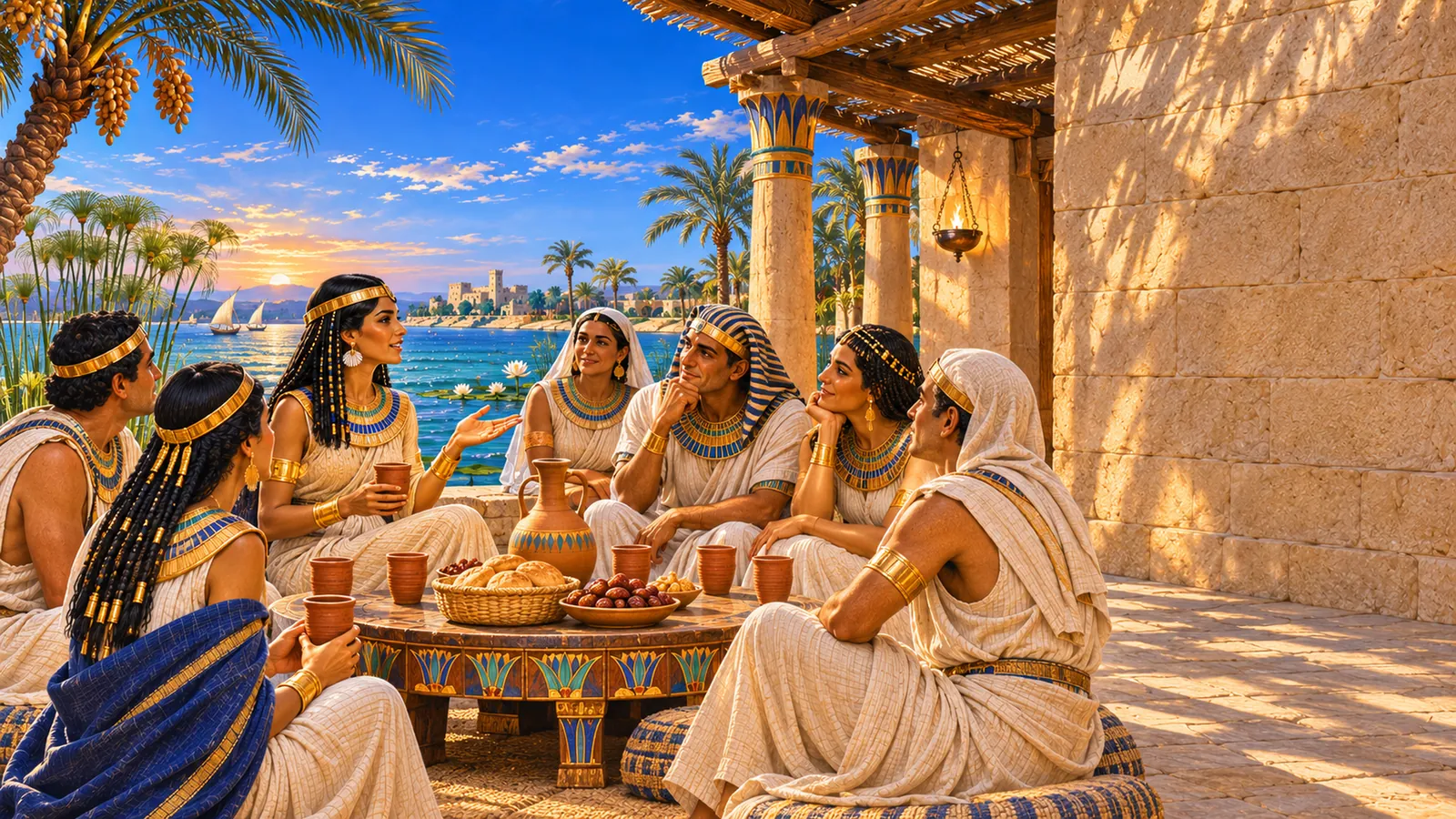
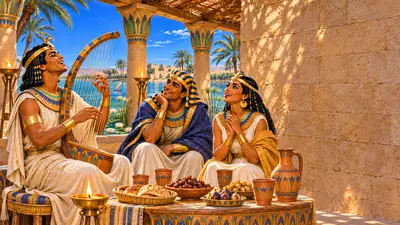
Dans cette version, le garçon est Manéros. Le récit le lie au nom que, selon Plutarque, on invoquait si souvent dans les banquets égyptiens.
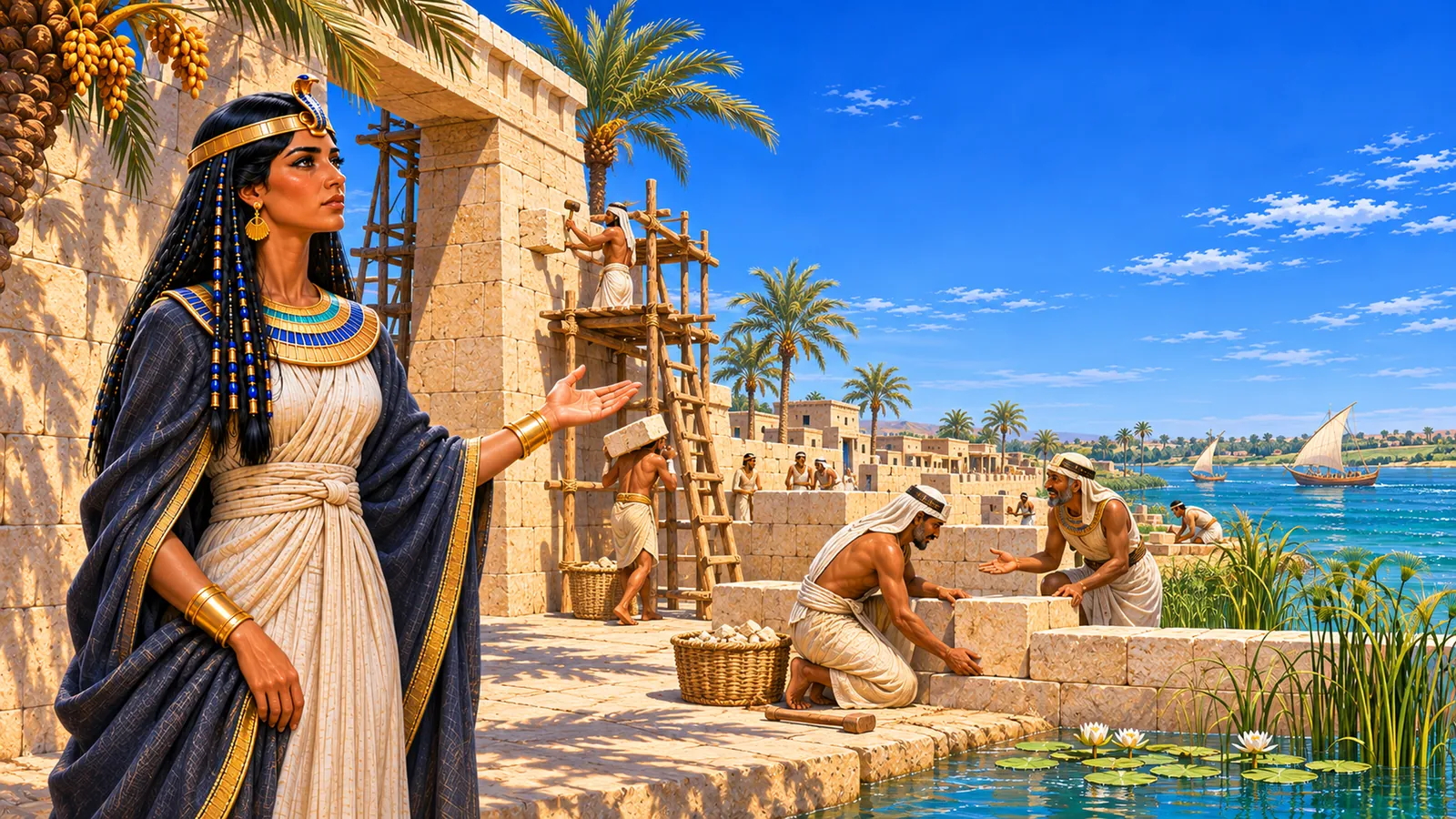
D’autres écartaient cette version et donnaient à l’enfant le nom de Palaestinus ou Pelusius. Ils disaient qu’Isis avait fondé en sa mémoire une ville qui portait son nom.
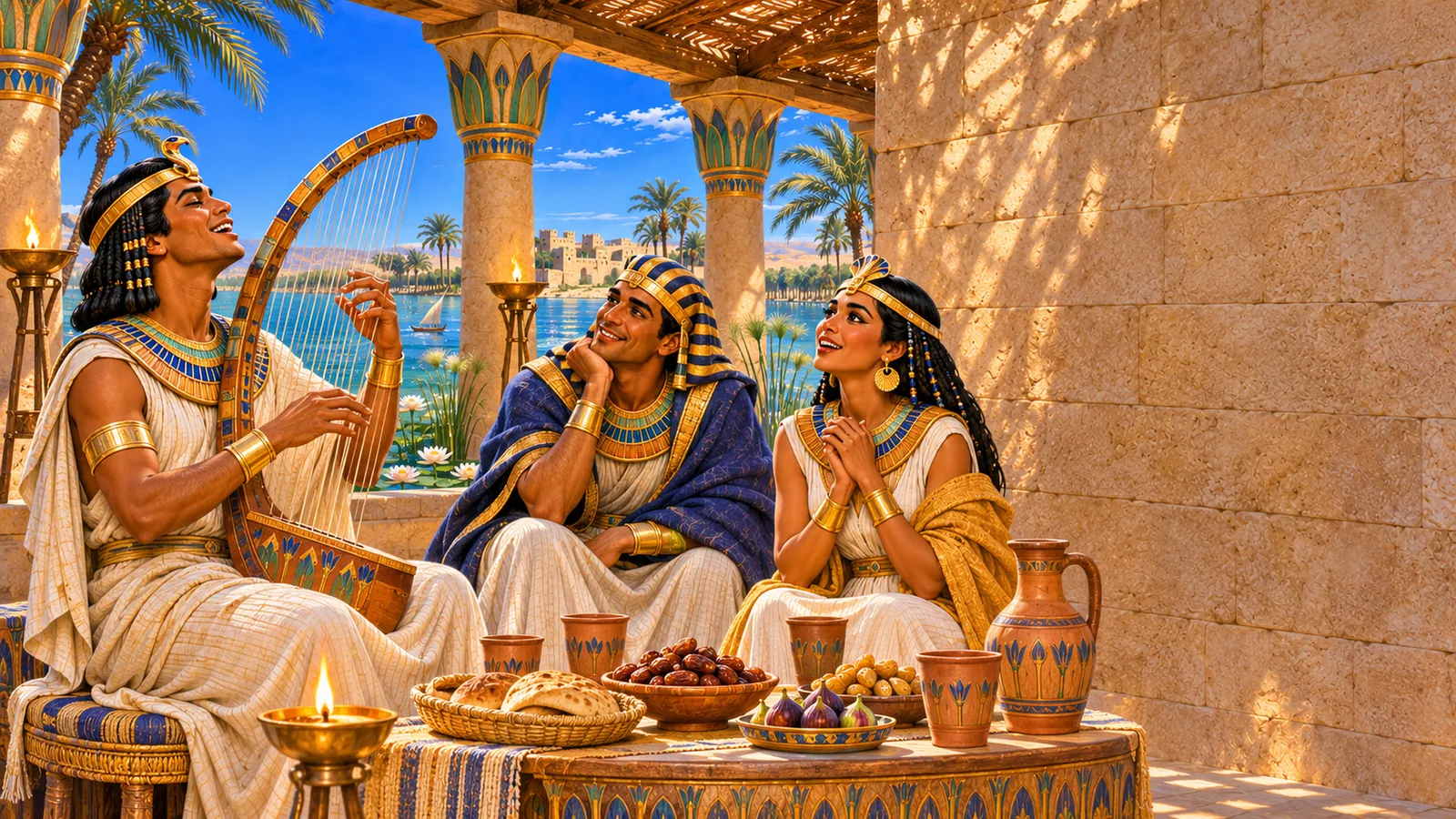
Ceux qui donnaient un autre nom au garçon expliquaient autrement l’honneur fait à Manéros lors des fêtes. Ils disaient qu’il avait été le premier à inventer la musique.
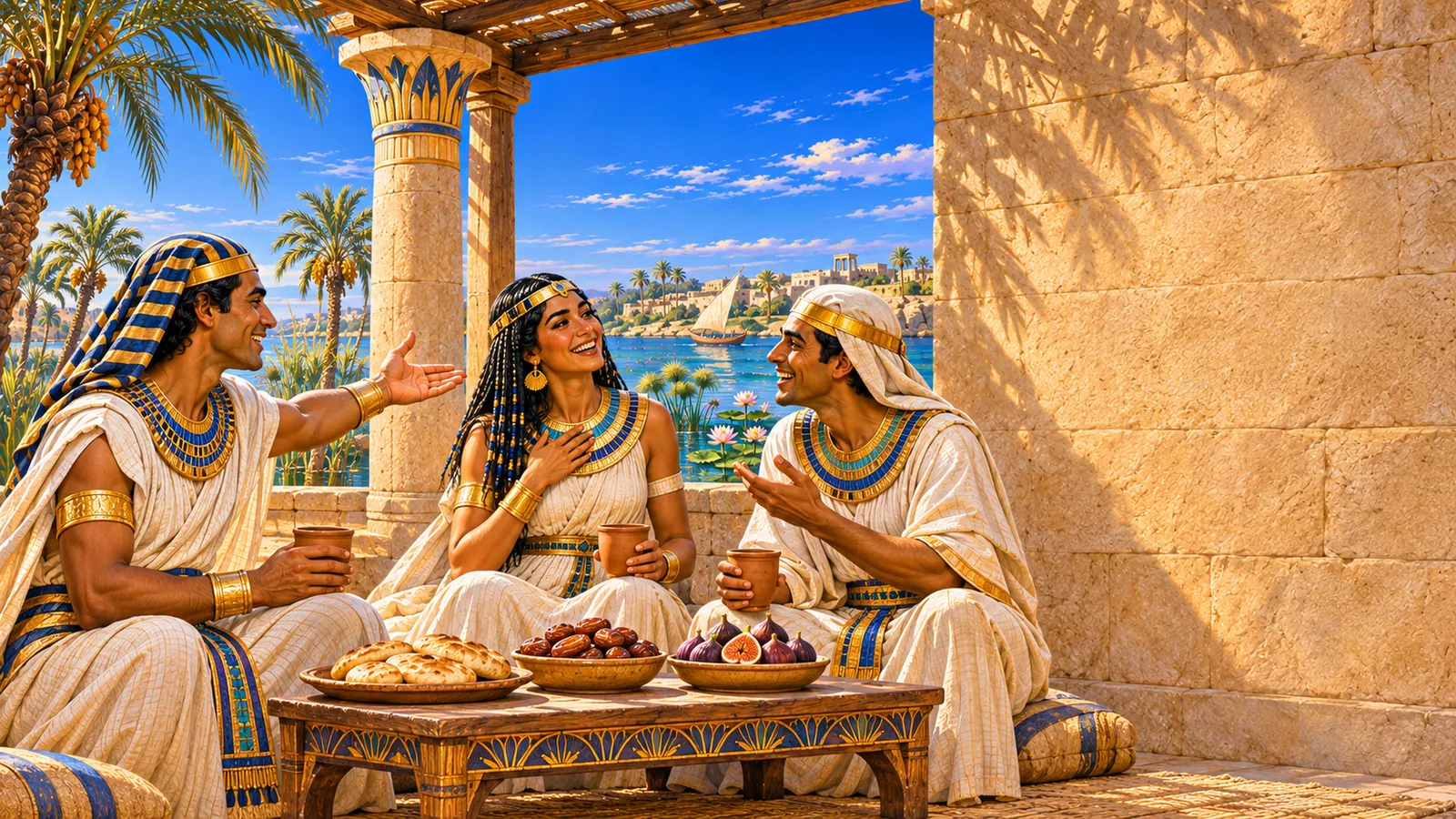
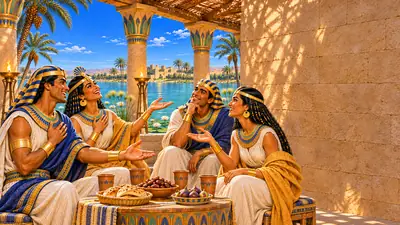
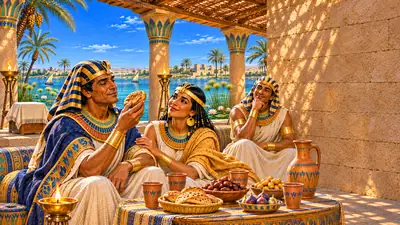
D’autres encore disaient que Manéros était une salutation usuelle dans les banquets solennels. Selon eux, c’était une formule que les convives échangeaient.
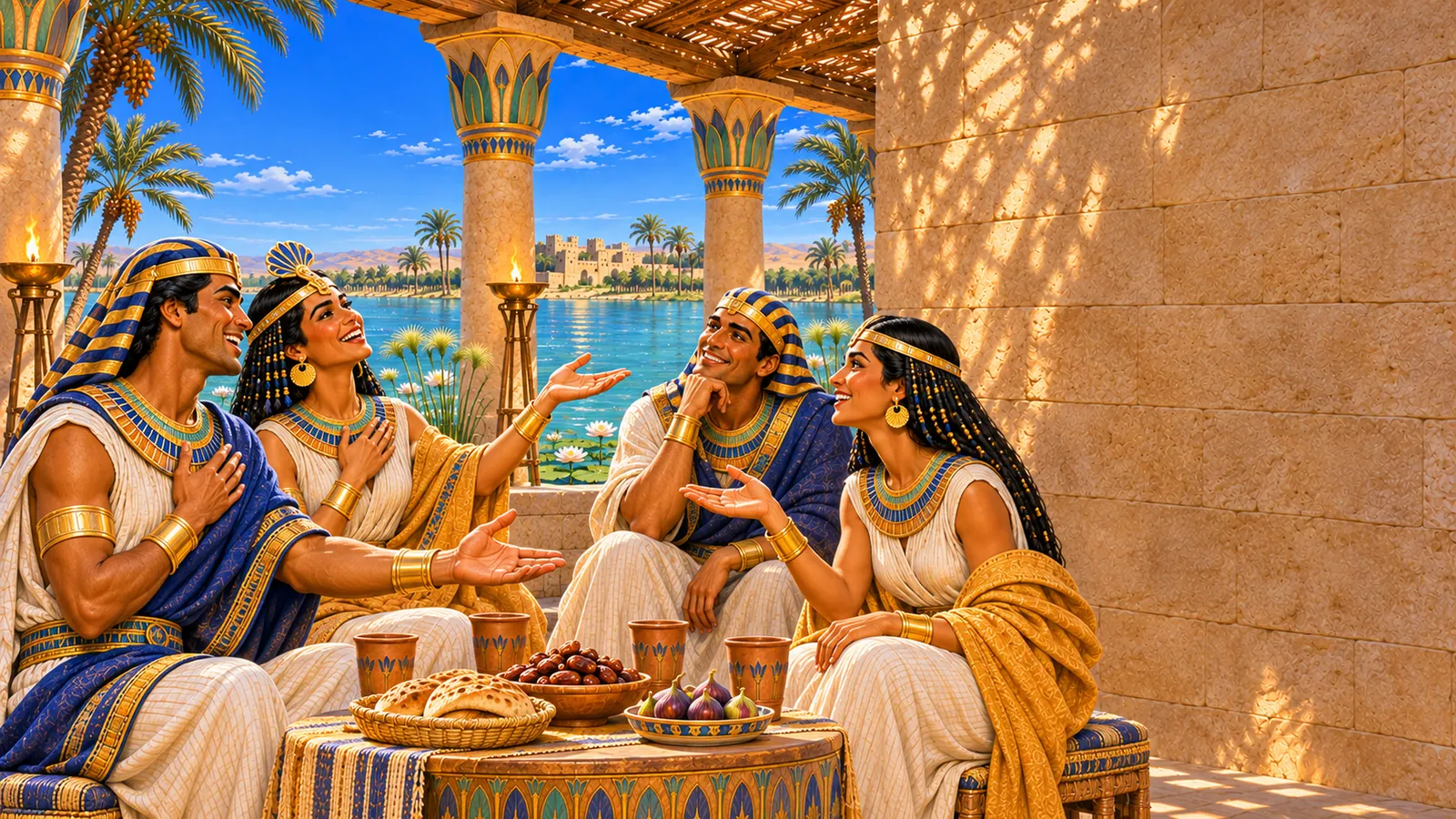
Dans cette explication, la salutation exprimait un vœu. Les convives souhaitaient que ce qu’ils allaient partager leur soit heureux et favorable.
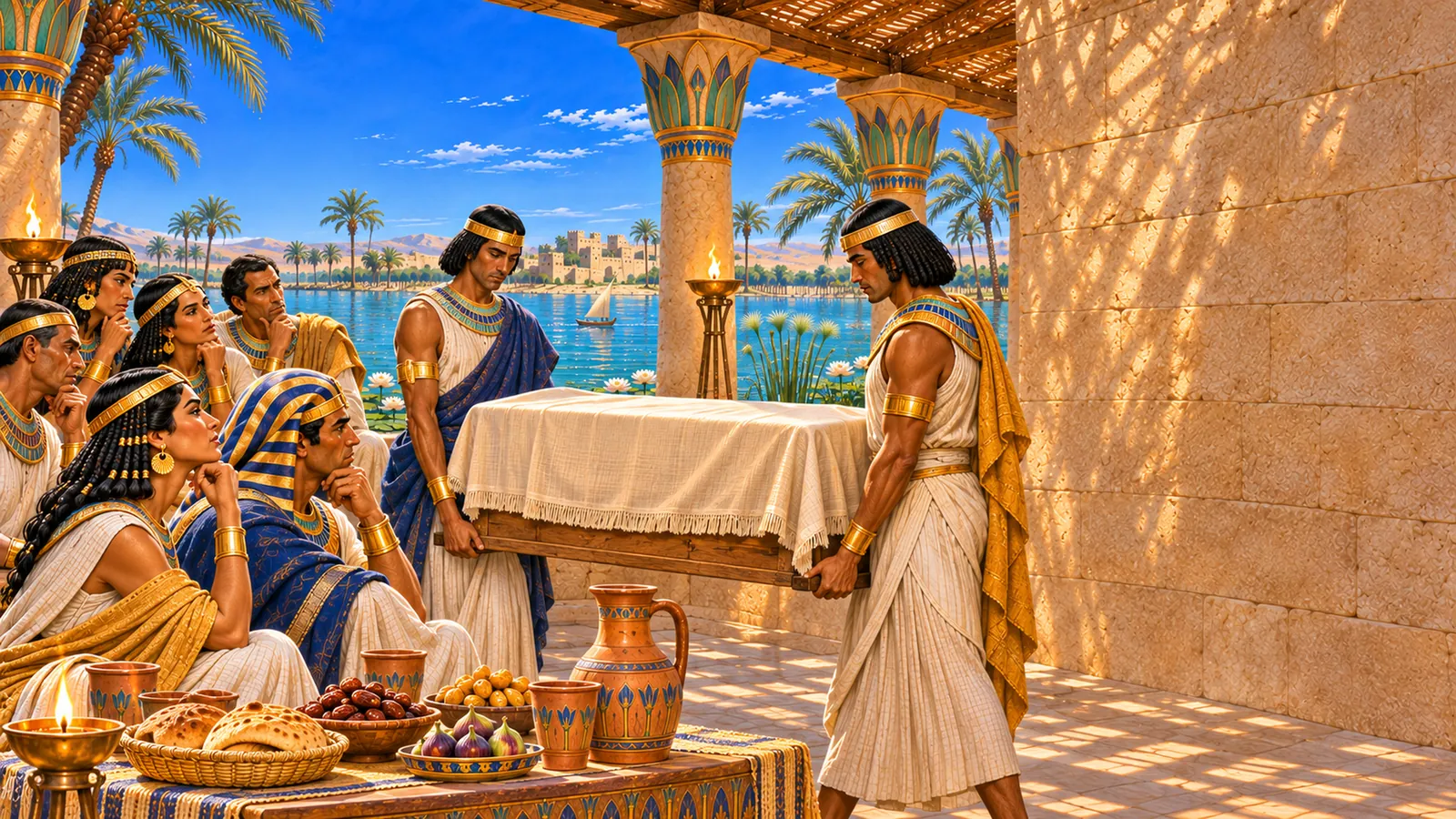
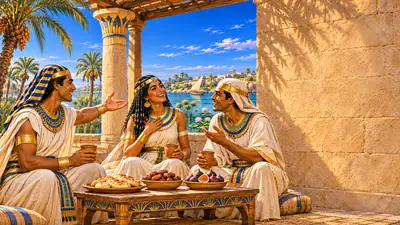
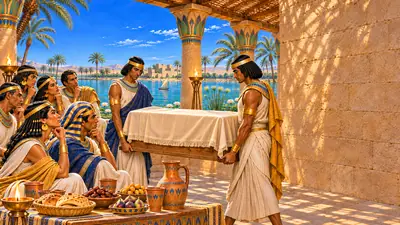
Plutarque évoque aussi un squelette humain qu’on portait dans une boîte et que l’on montrait à tous les convives lors d’un banquet.
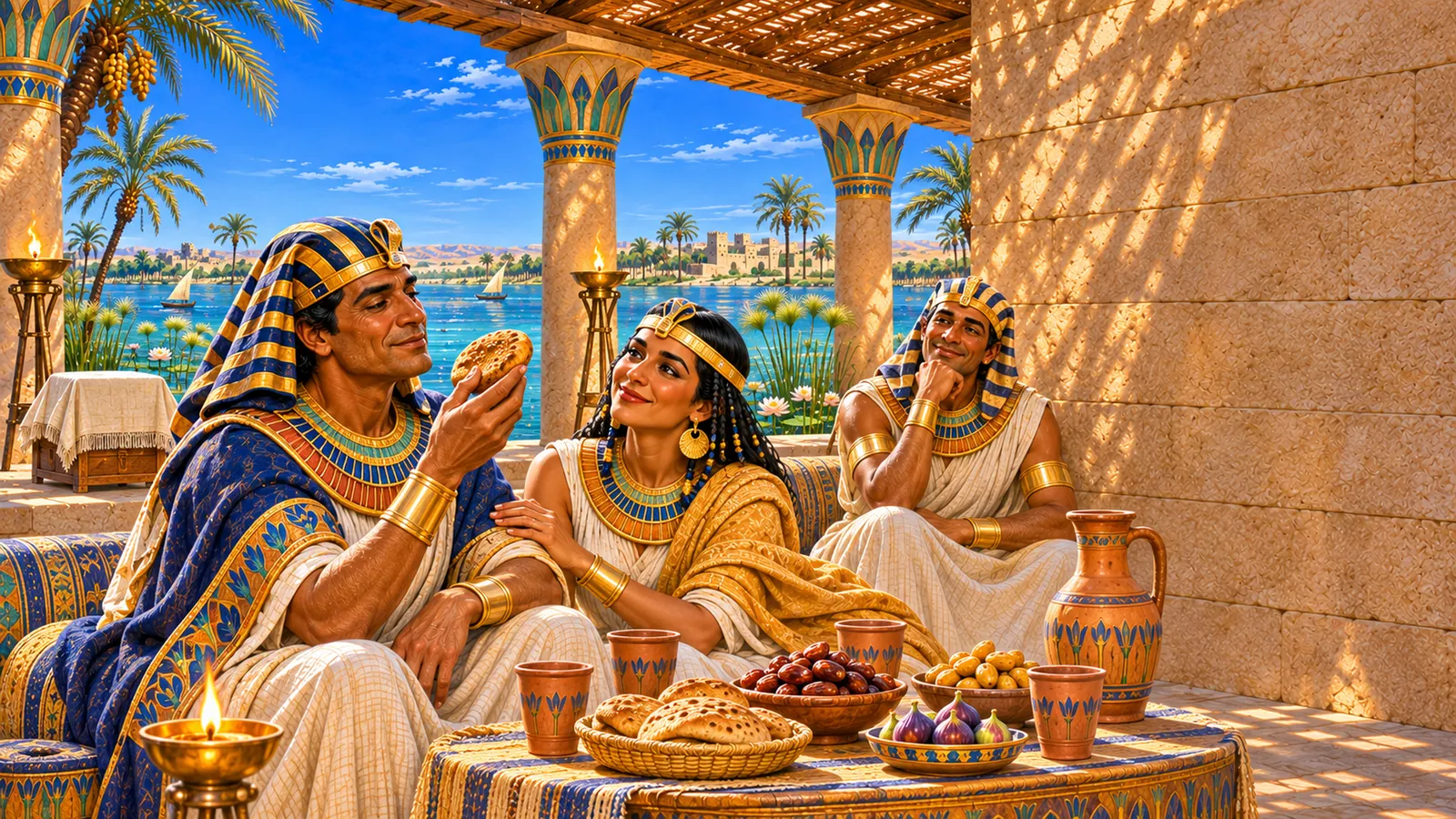
Certains reliaient cette pratique aux malheurs d’Osiris. D’autres disaient qu’elle rappelait aux convives leur mortalité et les invitait à jouir des bonnes choses devant eux.
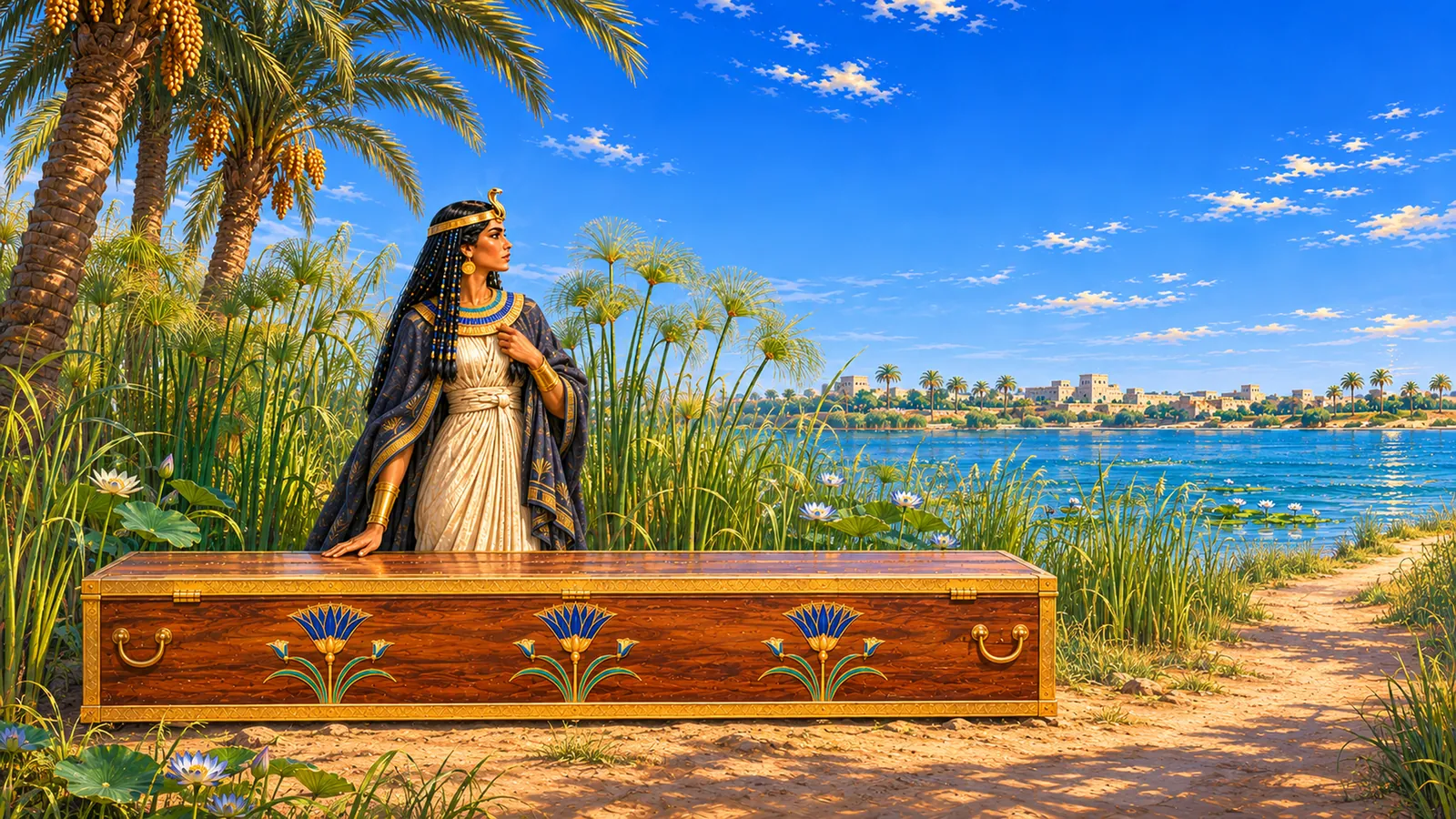
CACHÉ
Le récit revient au coffre. Isis le dépose en un lieu peu fréquenté, comptant rendre visite à son fils Horus, que l’on élève à Boutos.
Fin du chapitre 2

Toutes les pages









Sources
Line positions in the page notes refer to the Project Gutenberg HTML of Budge’s edition. The source gives several names for the queen at Byblos.
Éditions consultées
- E. A. Wallis Budge, Egyptian Ideas of the Future Life, third edition, 1908, Chapter II
- Plutarch’s narrative in Samuel Squire’s translation as quoted in Chapter II
- Budge’s footnote on the name Byblos
- Budge’s footnote on Maneros
- Budge, Egyptian Ideas of the Future Life, Gutenberg ebook 11277
Notes sur ce récit
Plutarch in Samuel Squire’s 1744 translation as quoted by E. A. Wallis Budge, *Egyptian Ideas of the Future Life*, third edition (1908), chapter II. Numbers refer to physical lines in the locally cached Gutenberg HTML. The title pages are 1, “The Coast,” and 8, “The Report.” Stings are on pages 3 and 8.
The text spells the place Byblos.
Page 15 (Squire 1744 in Budge 1908, chapter II, HTML 1301–1303). After getting to know the visitor, the queen appoints her as nurse to one of her sons. The passage leaves the nursed son unnamed.
Page 16 (1303–1306). Squire calls the king at Byblos Meloarthus. Astarte, Saosis and Nemanoun are given as names of the queen. The text pairs Nemanoun with the Greek name Athenais. Byblos is the story’s place name. Budge’s footnote 51 locates it in the papyrus swamps of the Egyptian Delta. The location remains uncertain.
Page 17 (1308–1309). In Squire’s translation, Isis feeds the child by letting him suck her finger in place of ordinary nursing.
Pages 18–19 (1309–1311). The account says Isis puts the child into fire at night in an attempt to remove his mortal part. It also says she changes into a swallow, circles the pillar and laments her fate.
Pages 20–21 (1312–1315). The queen watches and sees the child in the fire. She cries out. The myth says her cry deprives him of the immortality he would otherwise have received.
Pages 22–23 (1315–1317). Isis makes her identity known and asks to be given the pillar that supports the roof.
Page 24 (1317–1318). Isis takes the pillar down, opens it and removes what Squire calls “what she wanted.” In 1285–1291 the trunk enclosed the chest before it was made into a pillar. The chest is named again in the lament at 1322–1324.
Page 25 (1318–1320). Isis wraps the remaining wood in fine linen, applies perfumed oil to it and returns it to the king and queen.
Page 26 (1320–1322). The old account says the wood was preserved and worshipped at a temple of Isis in Byblos “to this day.” The time reference belongs to the teller’s claim.
Pages 27–28 (1322–1325). Isis falls upon the chest and laments aloud. In this telling the king’s younger son hears her and dies of fright. This passage identifies him as the younger son. Earlier it calls the child entrusted to Isis one of the queen’s sons. The elder son appears in the following sentence, and later pages record other accounts of a boy’s death.
### Pages 29–42 · The return across the sea
Les vers antiques de chaque page
- Page 1: Plutarch, Squire 1744 in Budge 1908, chapter II, HTML 1282–1285
- Page 2: Plutarch, Squire 1744 in Budge 1908, chapter II, HTML 1285–1287
Left is desaturated matte gray-green water and naturally soft shade, with no ripples, shore line or distinct objects in the box. - Page 3: Plutarch, Squire 1744 in Budge 1908, chapter II, HTML 1286–1288
- Page 4: Plutarch, Squire 1744 in Budge 1908, chapter II, HTML 1287–1288
- Page 5: Plutarch, Squire 1744 in Budge 1908, chapter II, HTML 1288–1289
- Page 6: Plutarch, Squire 1744 in Budge 1908, chapter II, HTML 1289–1291
- Page 7: Plutarch, Squire 1744 in Budge 1908, chapter II, HTML 1290–1291
- Page 8: Plutarch, Squire 1744 in Budge 1908, chapter II, HTML 1291–1293
- Page 9: Plutarch, Squire 1744 in Budge 1908, chapter II, HTML 1292–1294
- Page 10: Plutarch, Squire 1744 in Budge 1908, chapter II, HTML 1293–1295
- Page 11: Plutarch, Squire 1744 in Budge 1908, chapter II, HTML 1295–1296
- Page 12: Plutarch, Squire 1744 in Budge 1908, chapter II, HTML 1296–1298
- Page 13: Plutarch, Squire 1744 in Budge 1908, chapter II, HTML 1298–1301
- Page 14: Plutarch, Squire 1744 in Budge 1908, chapter II, HTML 1300–1302
- Page 15: Plutarch, Squire 1744 in Budge 1908, chapter II, HTML 1301–1303
- Page 16: Plutarch, Squire 1744 in Budge 1908, chapter II, HTML 1303–1306
- Page 17: Plutarch, Squire 1744 in Budge 1908, chapter II, HTML 1308–1309
- Page 18: Plutarch, Squire 1744 in Budge 1908, chapter II, HTML 1309–1310
- Page 19: Plutarch, Squire 1744 in Budge 1908, chapter II, HTML 1310–1311
- Page 20: Plutarch, Squire 1744 in Budge 1908, chapter II, HTML 1312–1313
- Page 21: Plutarch, Squire 1744 in Budge 1908, chapter II, HTML 1313–1315
- Page 22: Plutarch, Squire 1744 in Budge 1908, chapter II, HTML 1315–1316
- Page 23: Plutarch, Squire 1744 in Budge 1908, chapter II, HTML 1316–1317
- Page 24: Plutarch, Squire 1744 in Budge 1908, chapter II, HTML 1317–1318
- Page 25: Plutarch, Squire 1744 in Budge 1908, chapter II, HTML 1318–1320
- Page 26: Plutarch, Squire 1744 in Budge 1908, chapter II, HTML 1320–1322
At far lower right, show only the shallow opening of a low ordinary limestone recess and one matte dark wood fragment on a simple shelf. - Page 27: Plutarch, Squire 1744 in Budge 1908, chapter II, HTML 1322–1324
- Page 28: Plutarch, Squire 1744 in Budge 1908, chapter II, HTML 1324–1325
- Page 29: Plutarch, Squire 1744 as printed by Budge 1908, Chapter II, HTML lines 1325–1326
- Page 30: Plutarch, Squire 1744 as printed by Budge 1908, Chapter II, HTML lines 1326–1328
- Page 31: Plutarch, Squire 1744 as printed by Budge 1908, Chapter II, HTML lines 1330–1332
- Page 32: Plutarch, Squire 1744 as printed by Budge 1908, Chapter II, HTML lines 1331–1333
- Page 33: Plutarch, Squire 1744 as printed by Budge 1908, Chapter II, HTML lines 1333–1336
Right side solid near wall in quiet slate shade, no water line or object in it. - Page 34: Plutarch, Squire 1744 as printed by Budge 1908, Chapter II, HTML lines 1336–1339
- Page 35: Plutarch, Squire 1744 as printed by Budge 1908, Chapter II, HTML lines 1339–1341
- Page 36: Plutarch, Squire 1744 as printed by Budge 1908, Chapter II, HTML lines 1342–1344
- Page 37: Plutarch, Squire 1744 as printed by Budge 1908, Chapter II, HTML lines 1344–1346
- Page 38: Plutarch, Squire 1744 as printed by Budge 1908, Chapter II, HTML lines 1346–1349
- Page 39: Plutarch, Squire 1744 as printed by Budge 1908, Chapter II, HTML lines 1349–1352
- Page 40: Plutarch, Squire 1744 as printed by Budge 1908, Chapter II, HTML lines 1352–1355
- Page 41: Plutarch, Squire 1744 as printed by Budge 1908, Chapter II, HTML lines 1353–1359
- Page 42: Plutarch, Squire 1744 as printed by Budge 1908, Chapter II, HTML lines 1359–1364
Illustrations réalisées par IL Archive avec des outils d’IA ; le texte s’appuie sur les sources antiques (voir les sources à la fin de chaque chapitre).