La Lamentation d’Ur Chapitre 1
La supplique devant l’assemblée
Ningal parle d’Ur dans deux passages présentés par Thorkild Jacobsen, dont H. A. Groenewegen Frankfort a donné la forme poétique anglaise. Sa peur de la tempête conduit à une supplique devant l’assemblée divine. Les passages choisis se terminent par le décret de détruire Ur et de tuer ses habitants.
SourcesTournez les pages avec les flèches, le clavier ou en balayant l’écran.
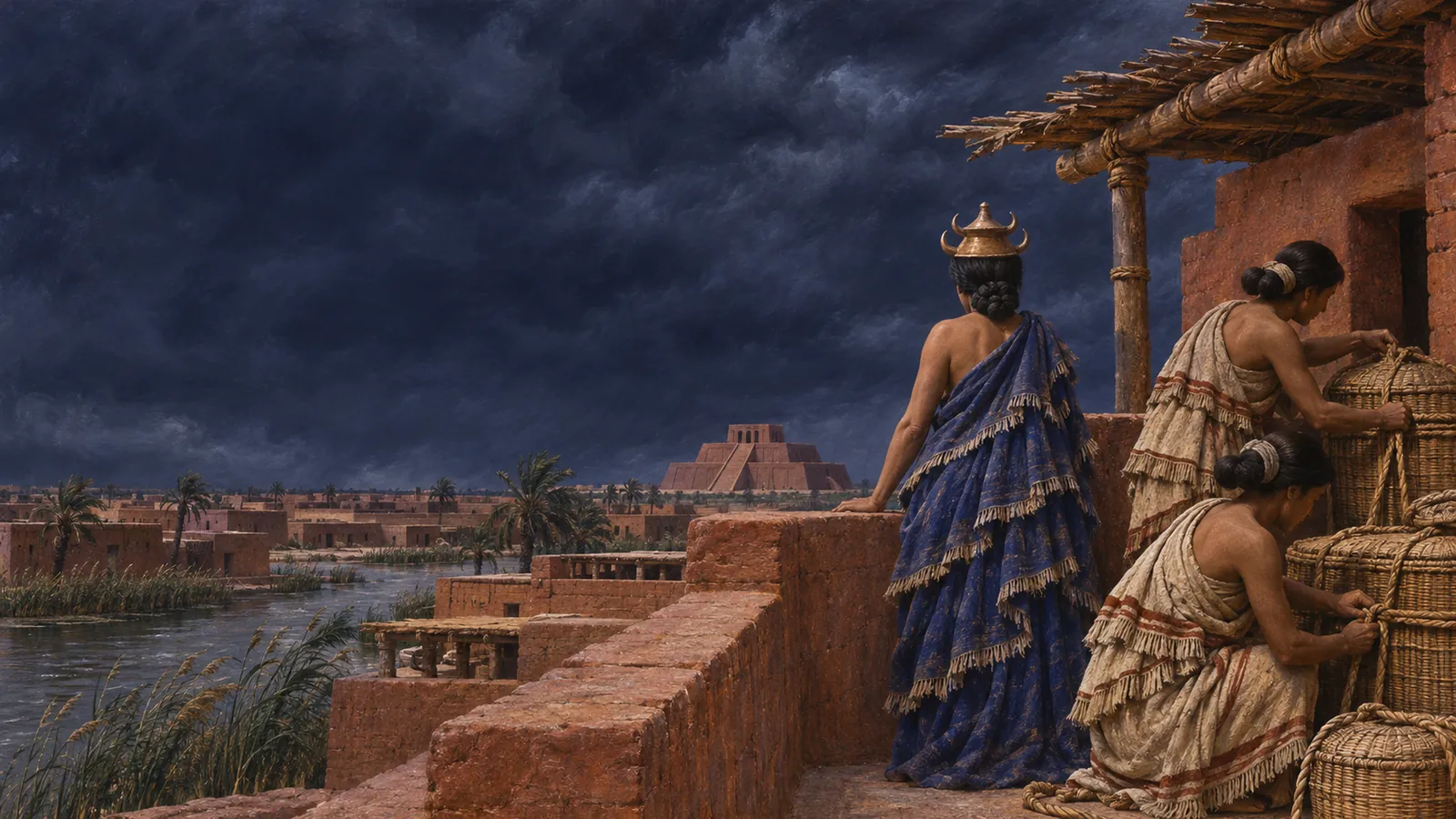
NINGAL
Thorkild Jacobsen présente deux passages dans lesquels Ningal, la déesse d’Ur, parle de sa ville. H.A. Groenewegen Frankfort a donné leur forme poétique anglaise aux traductions.
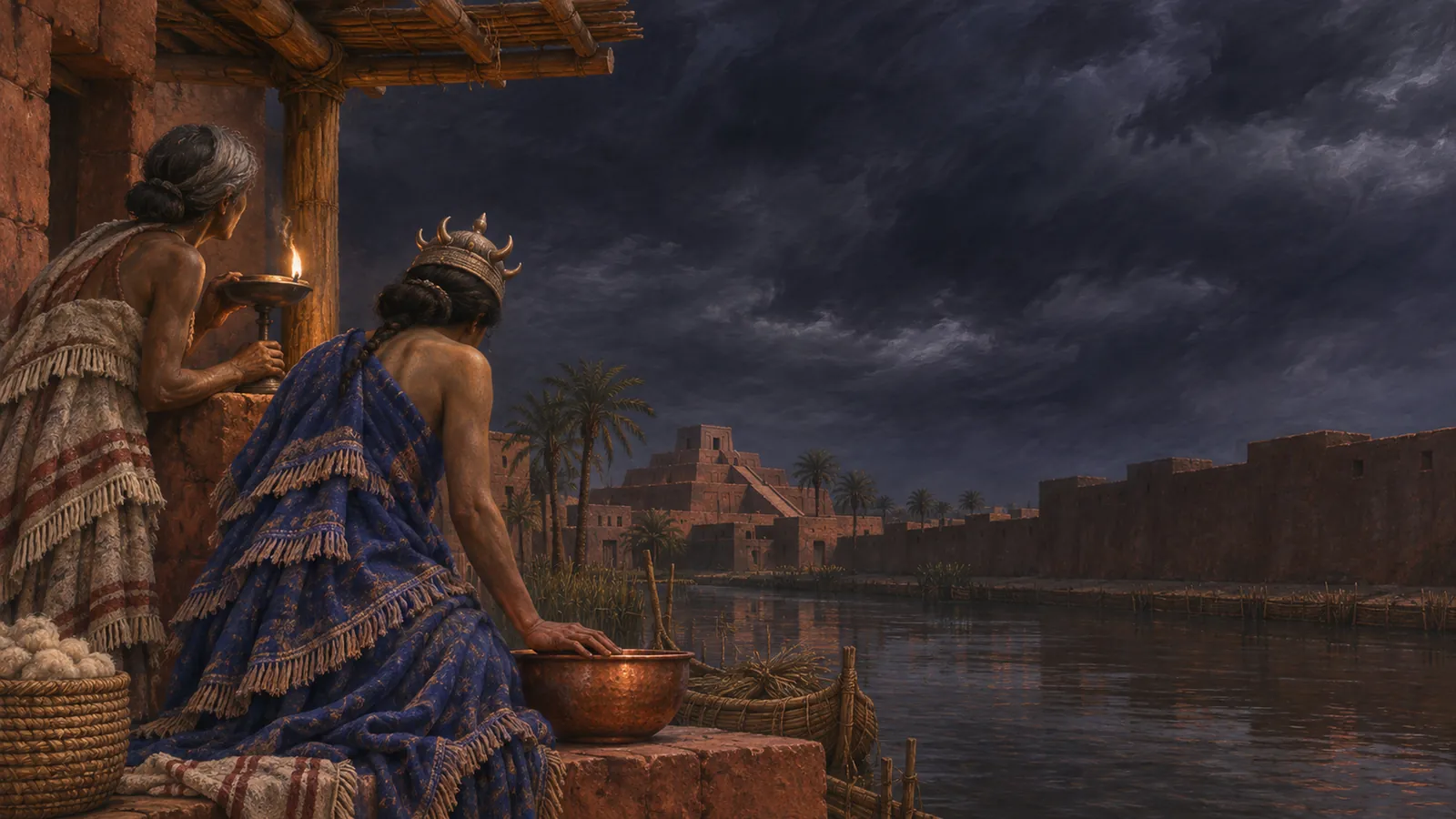
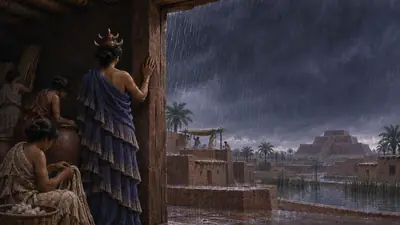
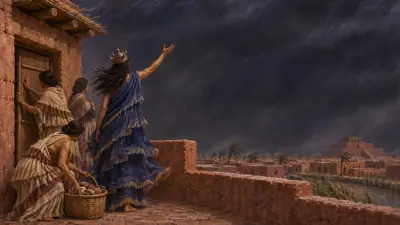
Ningal pleure un jour de tempête qui lui est imposé par le destin. Parlant en tant que femme, elle décrit ce jour comme un fardeau chargé de larmes.
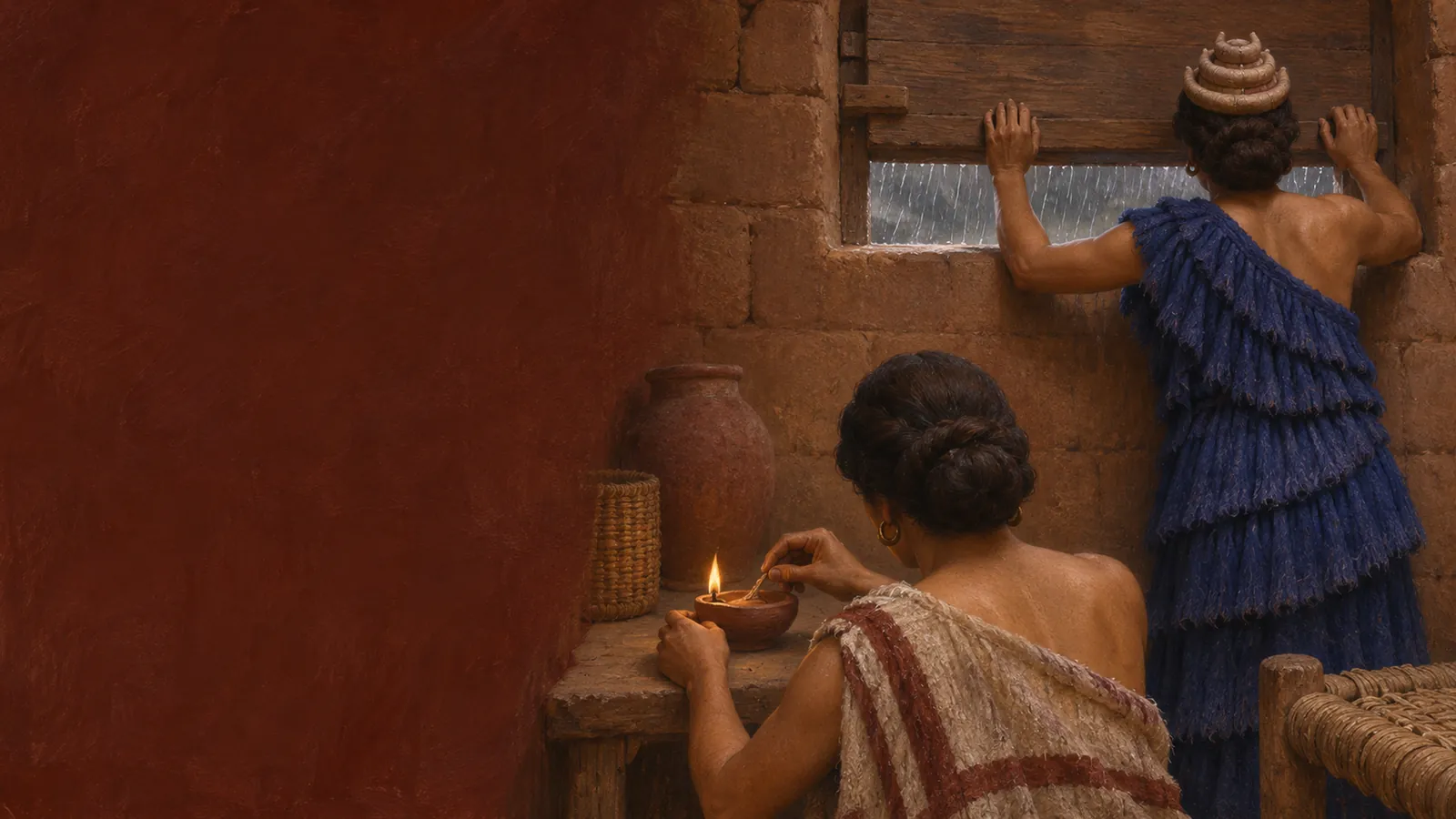
Sa voix revient encore au jour de tempête. Ningal dit qu’elle tremble devant lui et le qualifie de cruel.
Ningal dit qu’elle ne peut échapper à ce qui lui a été assigné pour ce jour de tempête.
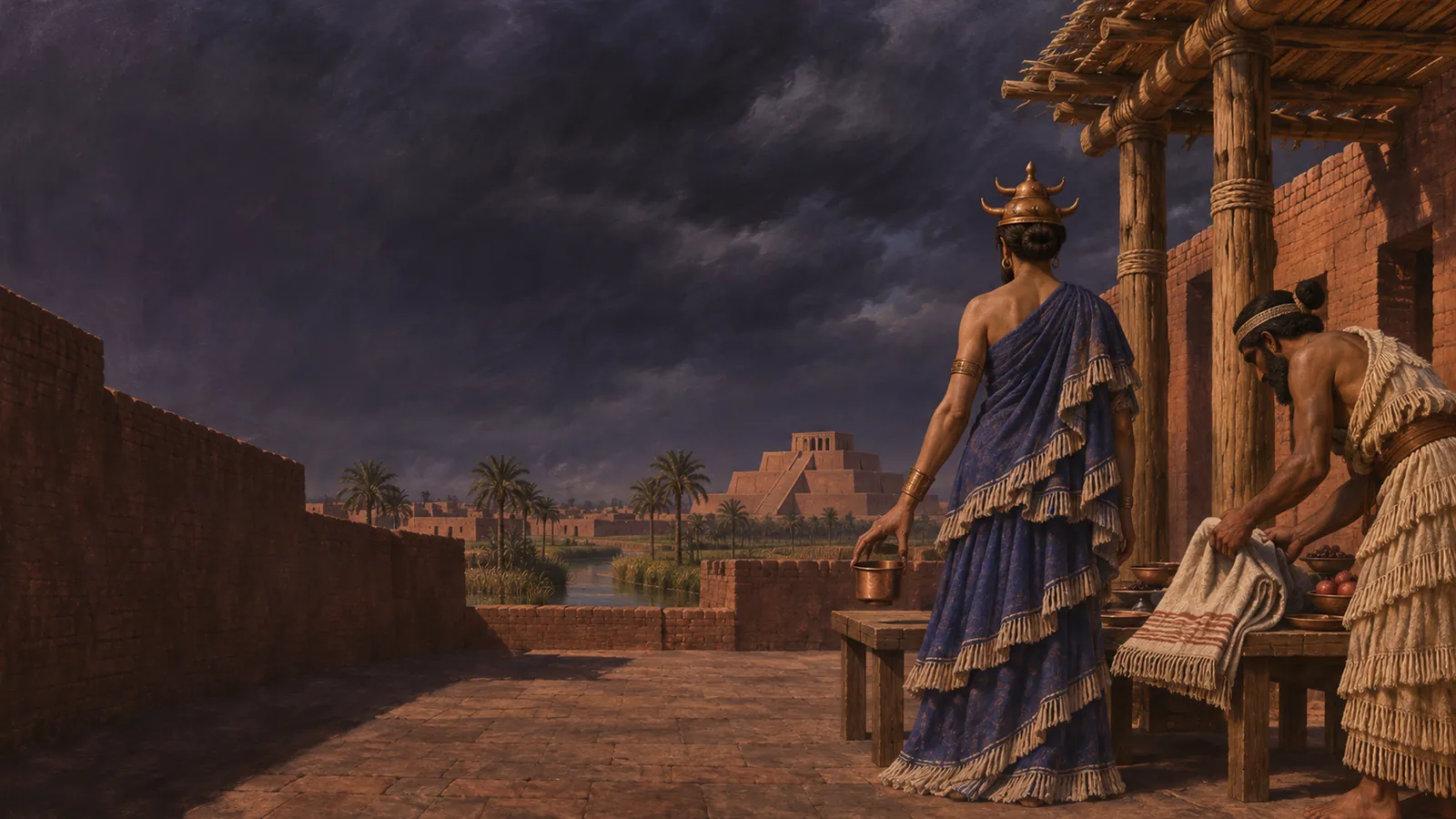
Ningal dit que soudain elle ne voit plus de jours heureux dans son règne. Sa lamentation reprend cette pensée.
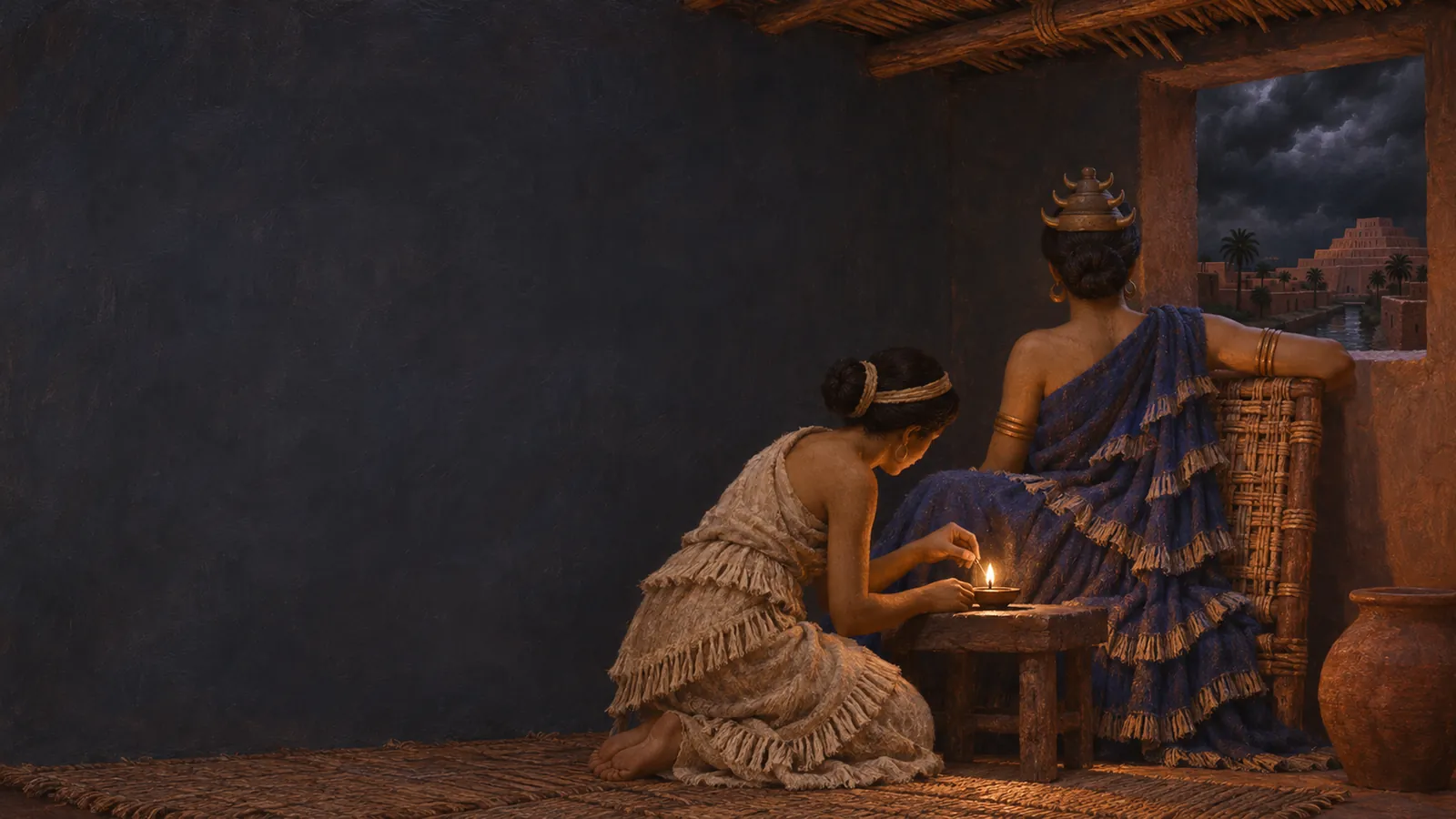
LA NUIT DES PLEURS
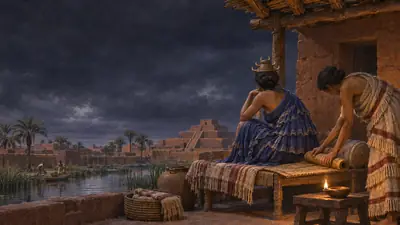
Ningal tremble devant la nuit de pleurs amers qui l’attend. Elle dit qu’elle ne peut échapper à ce que cette nuit lui réserve.
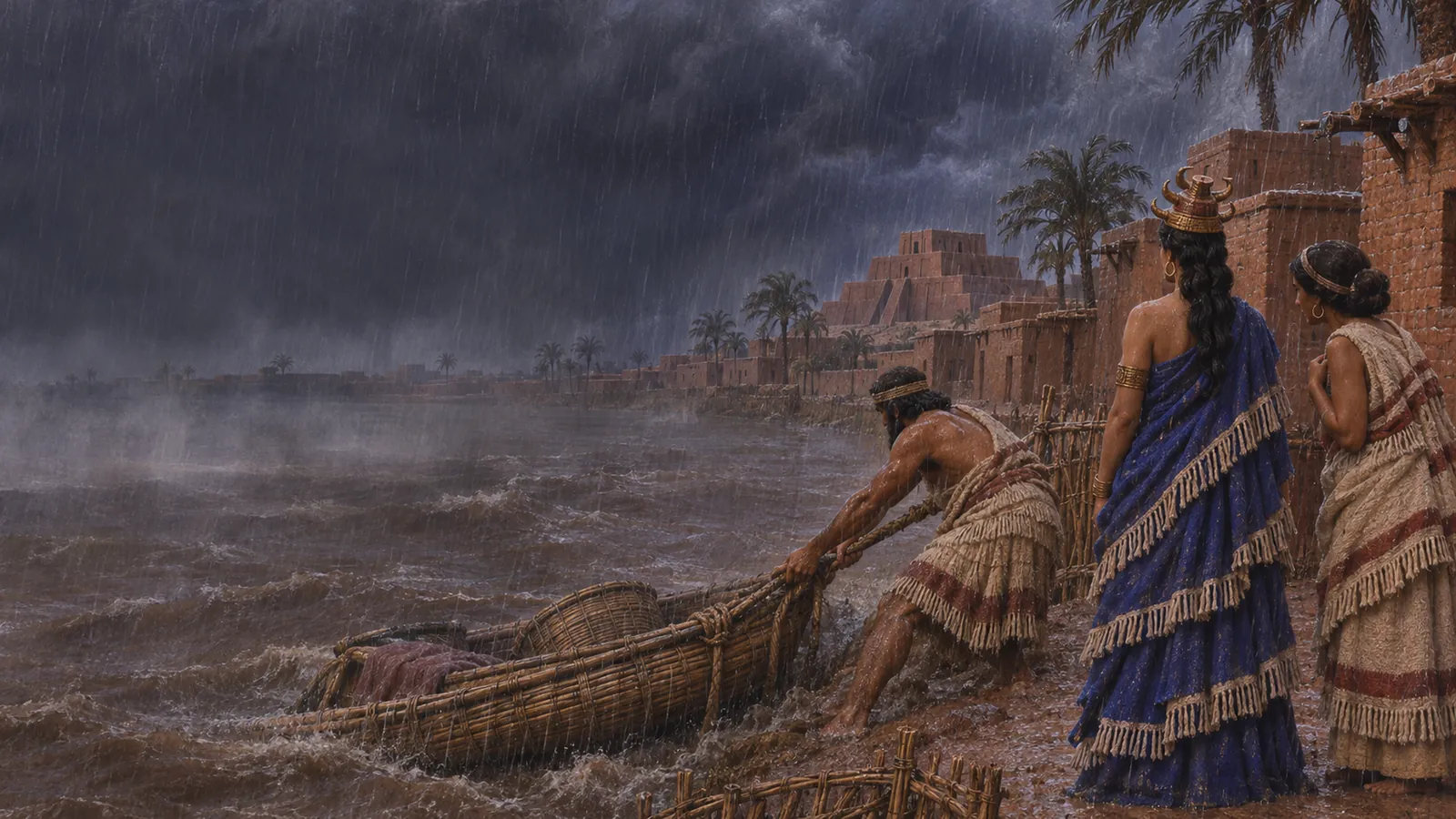
Ningal dit que la peur pèse lourdement sur elle. Elle redoute les ravages de la tempête et compare sa destruction à une inondation.
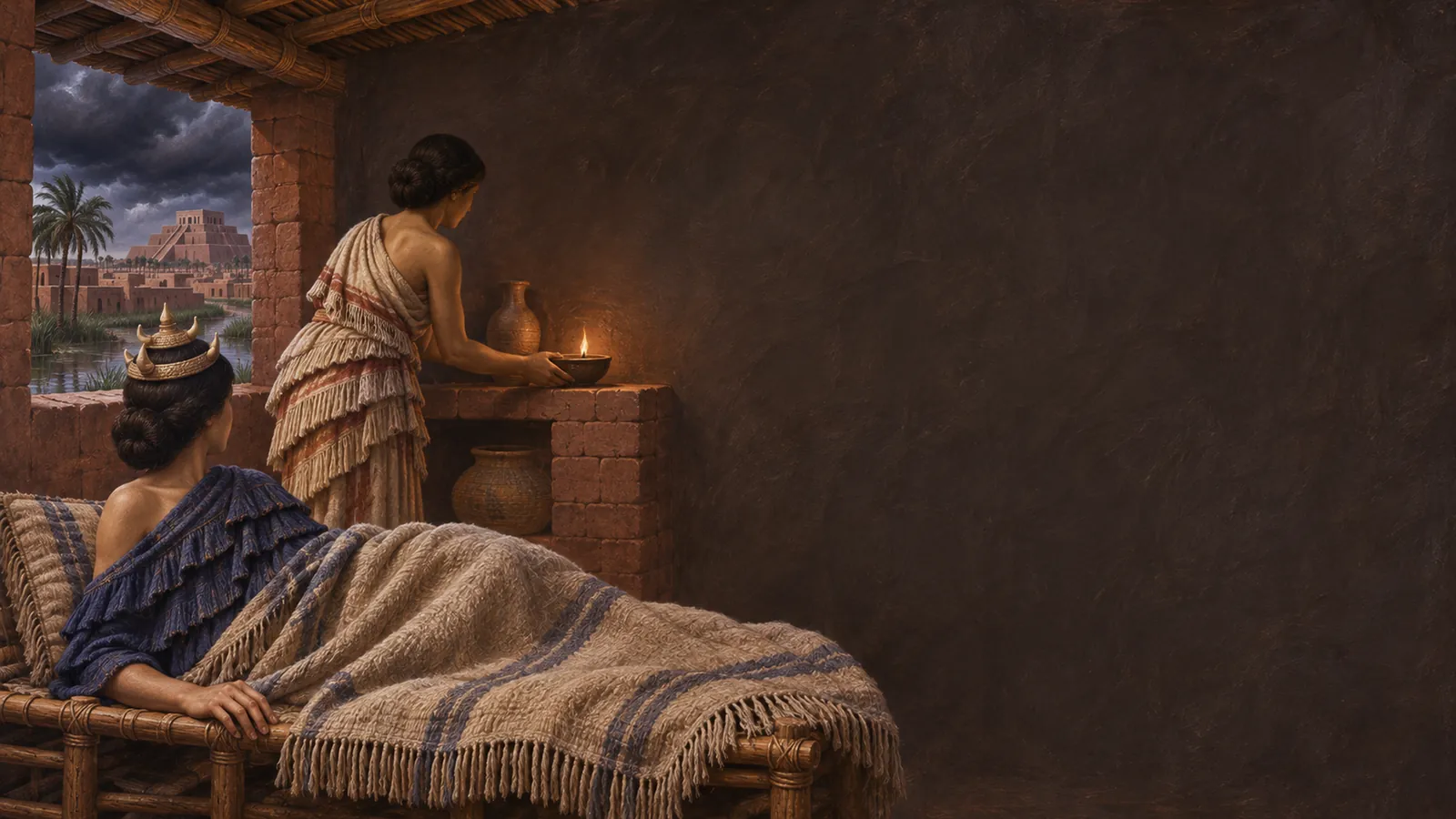
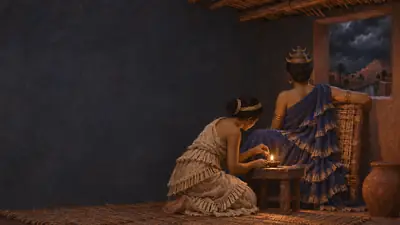
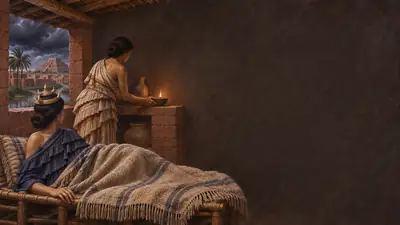
Ningal parle de son lit pendant la nuit. Elle dit qu’aucun rêve ne lui y est accordé.
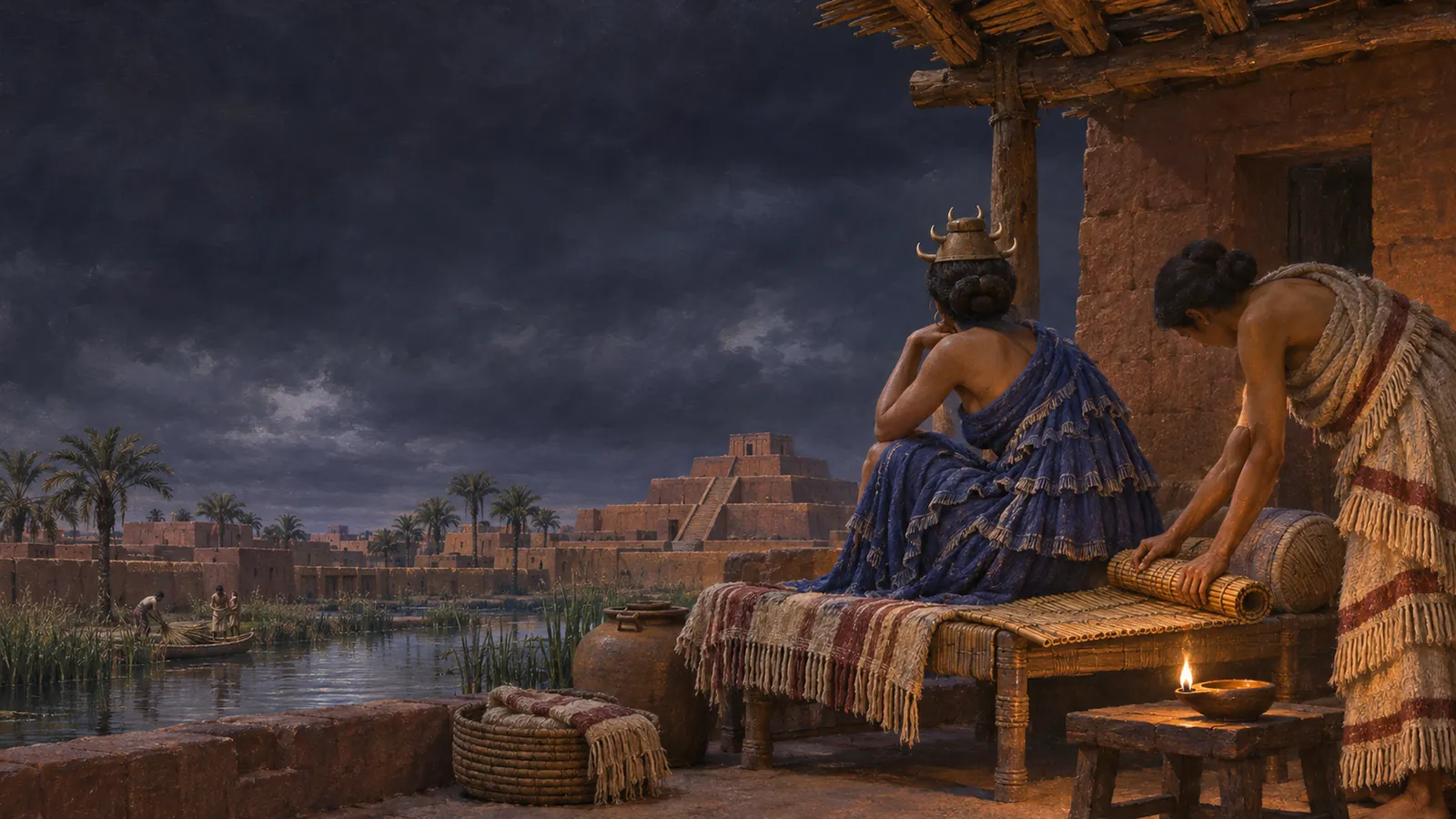
Ningal revient à son lit dans sa lamentation. Elle dit que l’oubli ne lui y est pas accordé non plus.
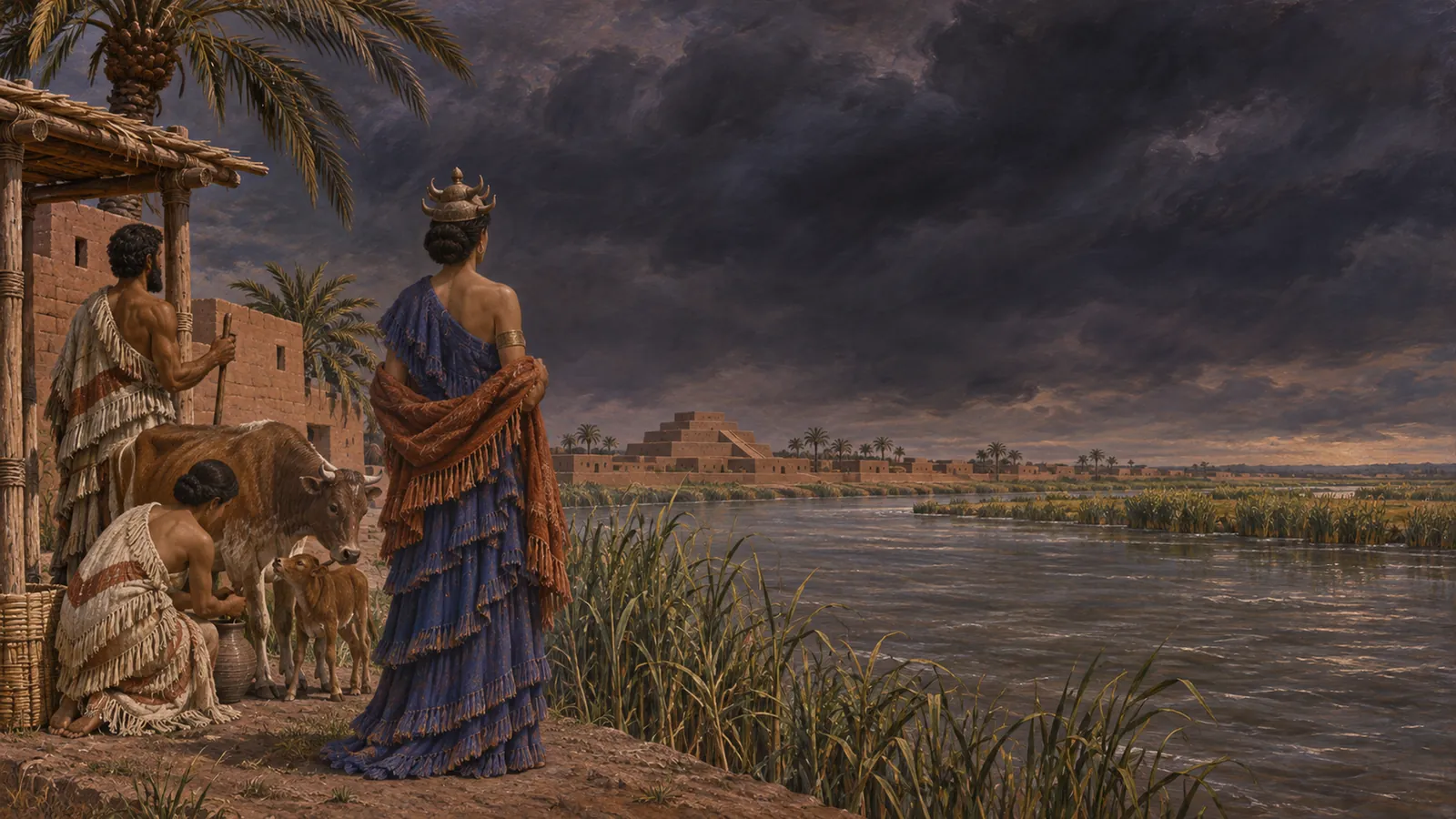
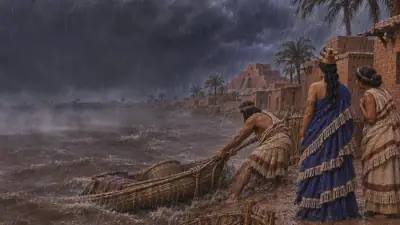
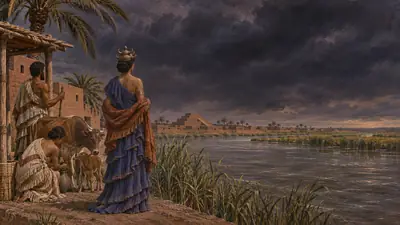
Ningal dit que des pleurs amers ont été assignés à son pays. Même si elle parcourait toute la terre comme une vache cherchant son veau, elle ne pourrait ramener son peuple.
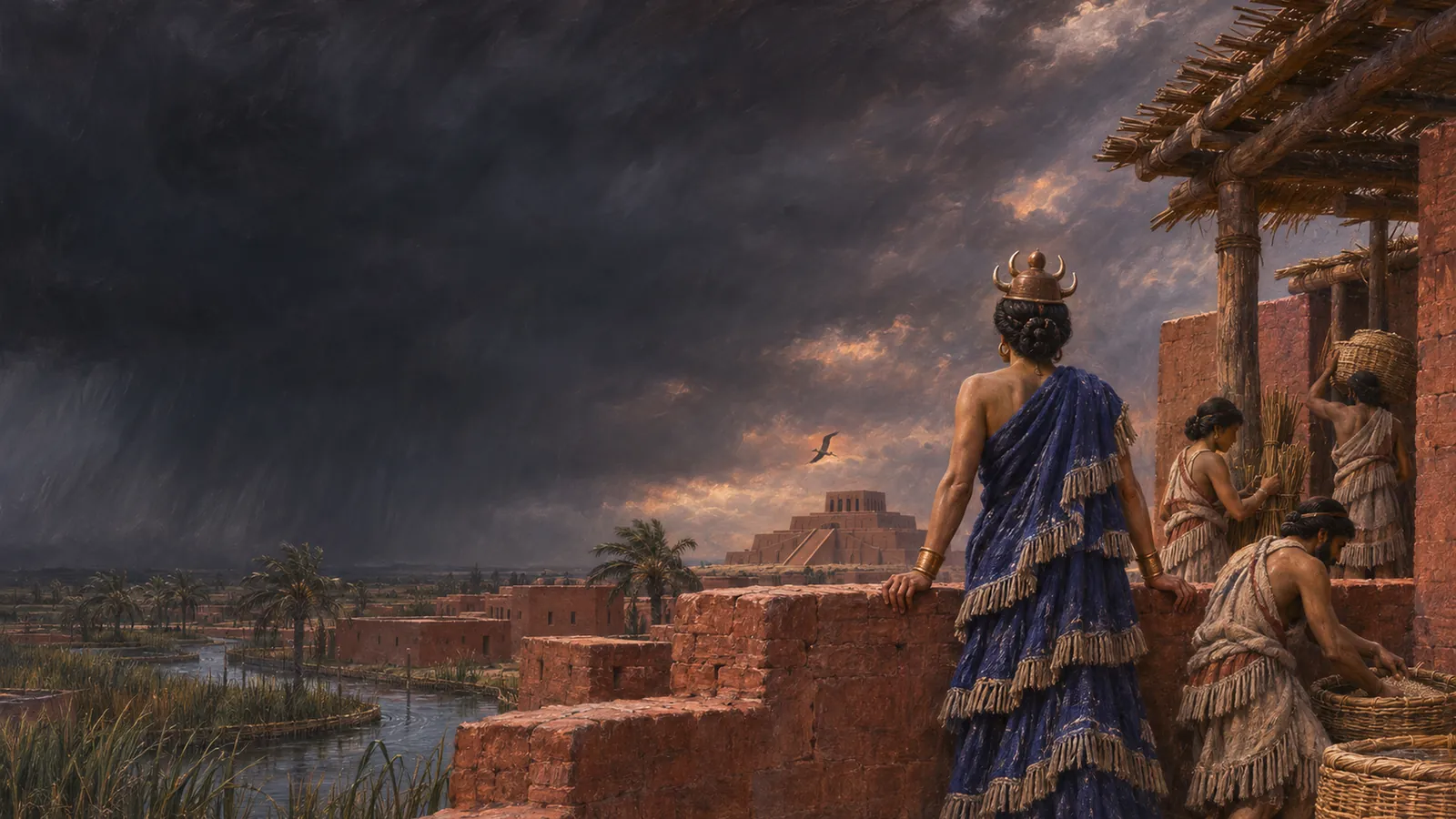
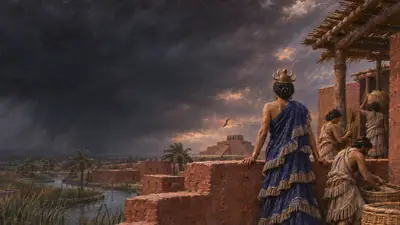
Ningal dit qu’une douleur amère est destinée à sa ville. Même si elle déployait ses ailes et y volait comme un oiseau, la ville serait détruite jusqu’à ses fondations et Ur périrait.
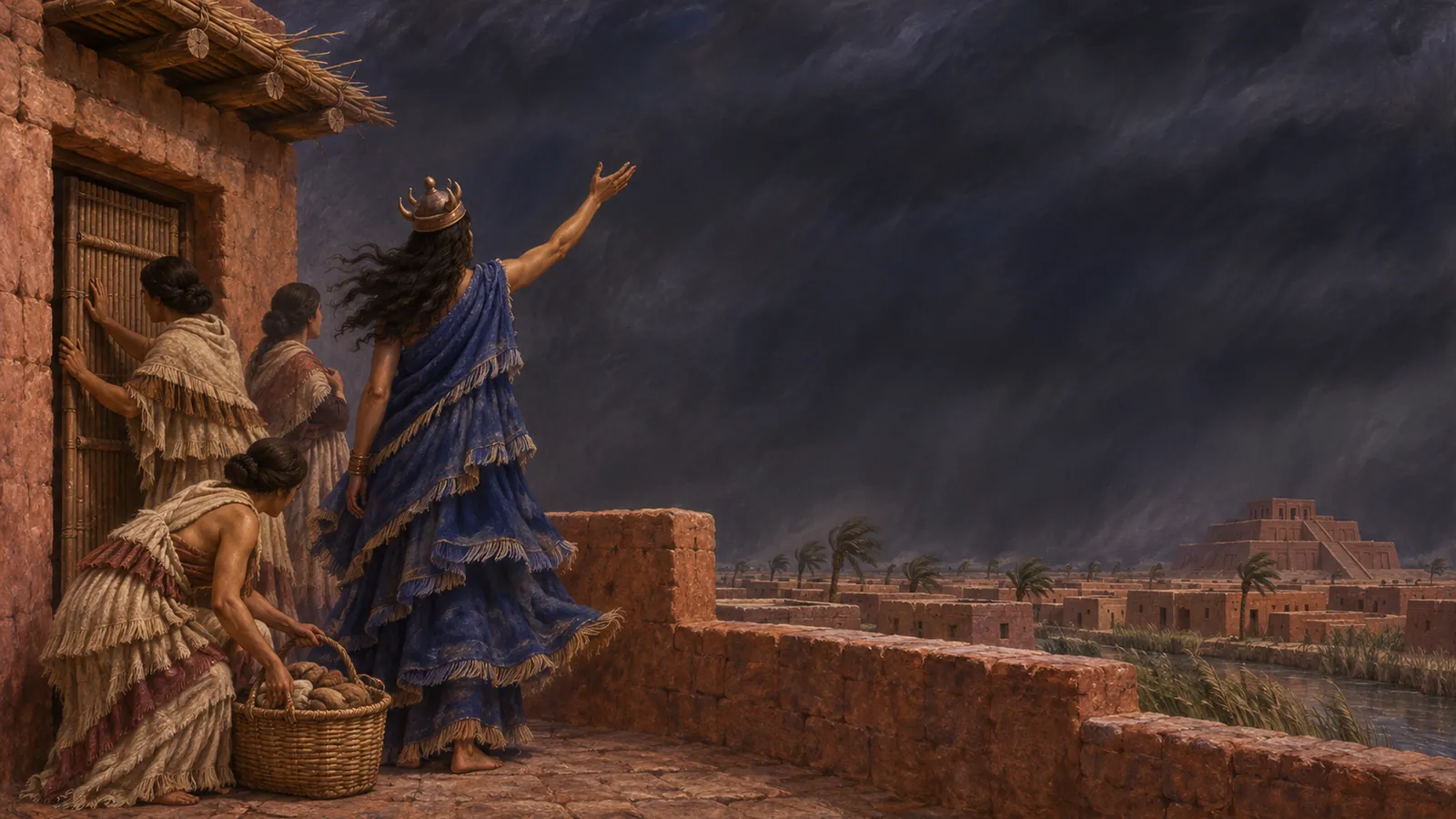
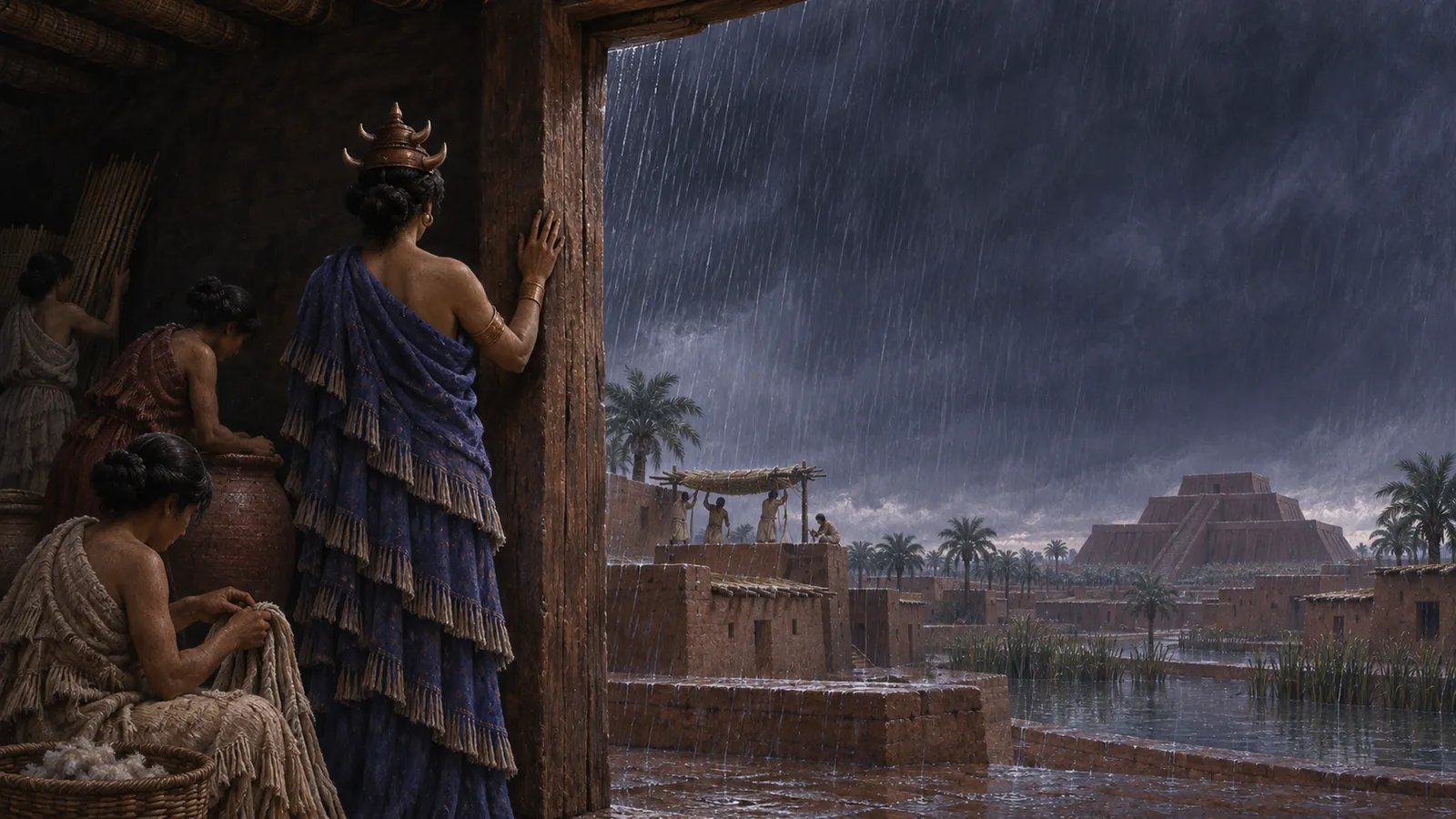
Ningal dit que le jour de tempête a levé la main. Même si elle lui criait de retourner à son désert, le poids de la tempête continuerait de peser sur elle.
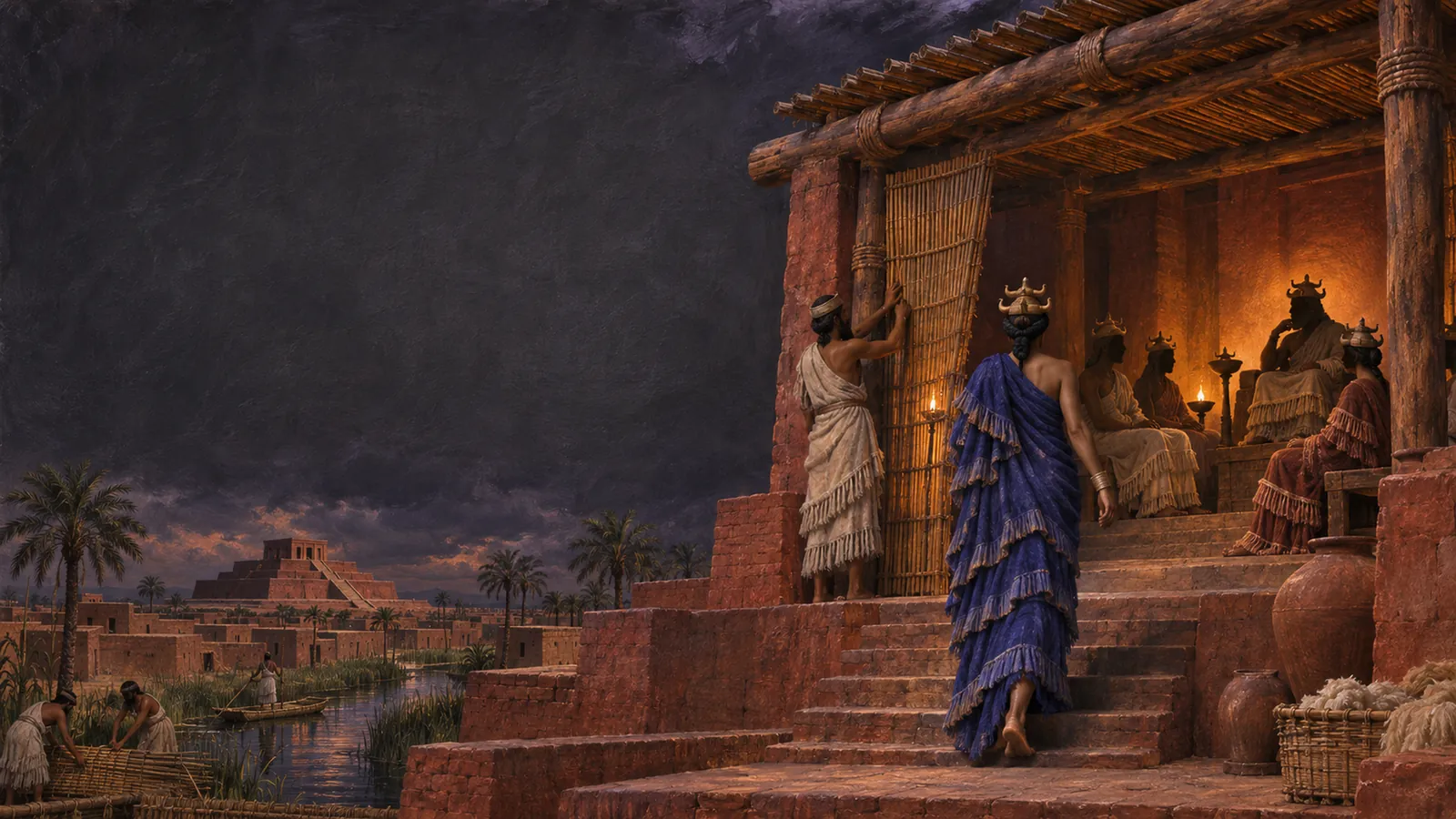
L’ASSEMBLÉE
Le résumé de liaison de Jacobsen décrit les appels infructueux de Ningal à Anu et Enlil, puis à l’assemblée. Sa sélection omet les lignes anciennes cent treize à cent cinquante et un entre les deux passages cités.
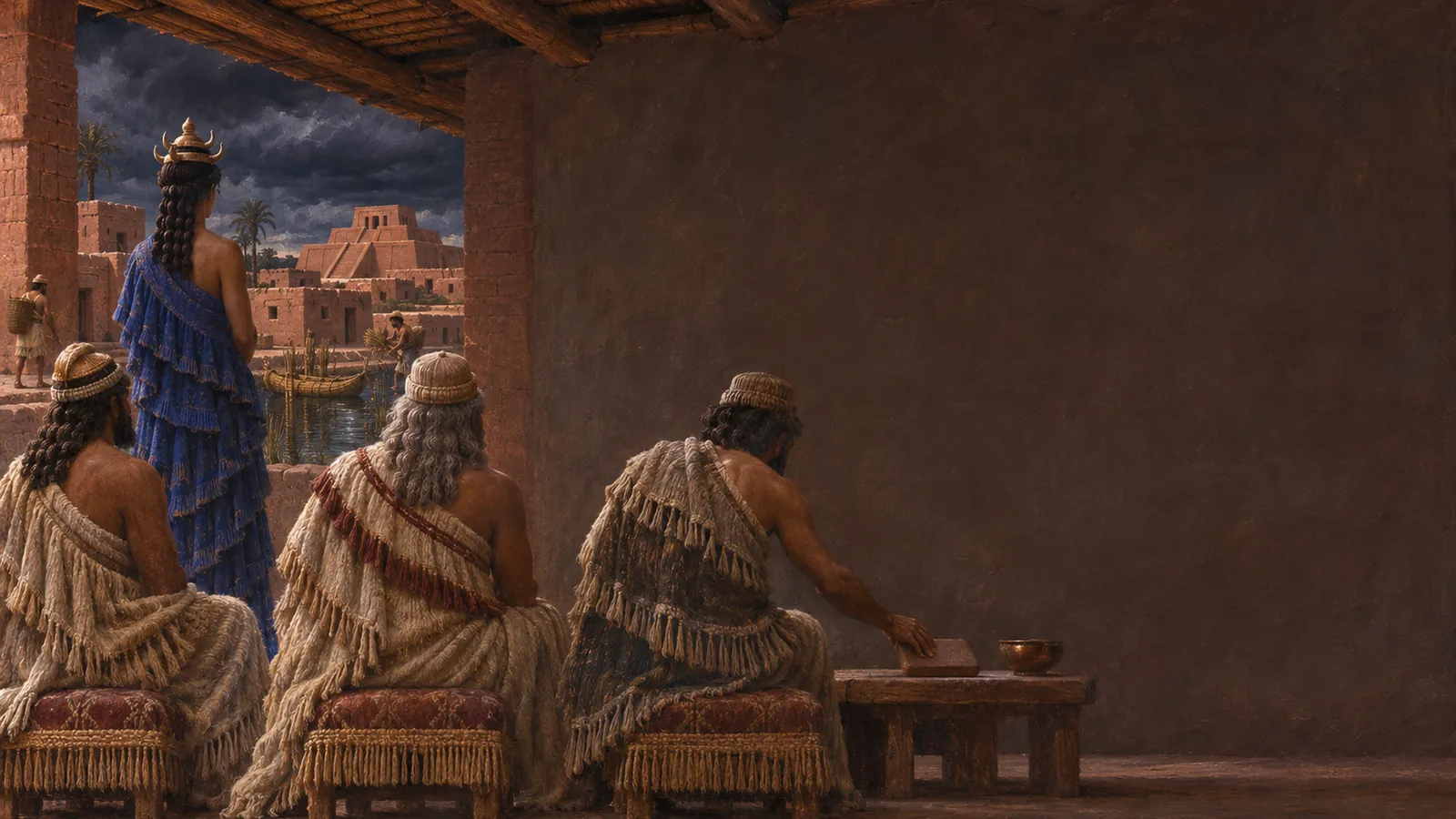
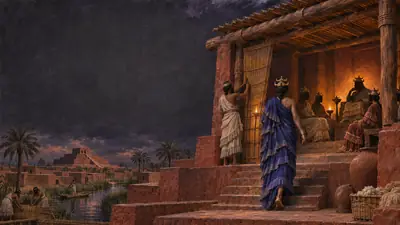
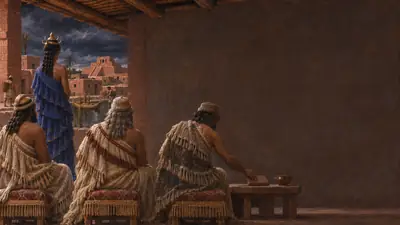
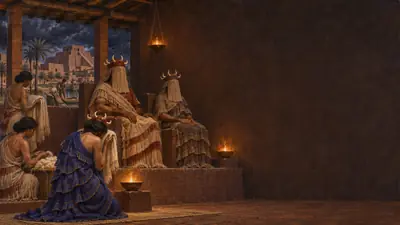
Ningal décrit l’assemblée avant qu’elle se lève, tandis que les Anunnaki sont encore assis. La version anglaise dit qu’ils s’engagent à soutenir la décision.
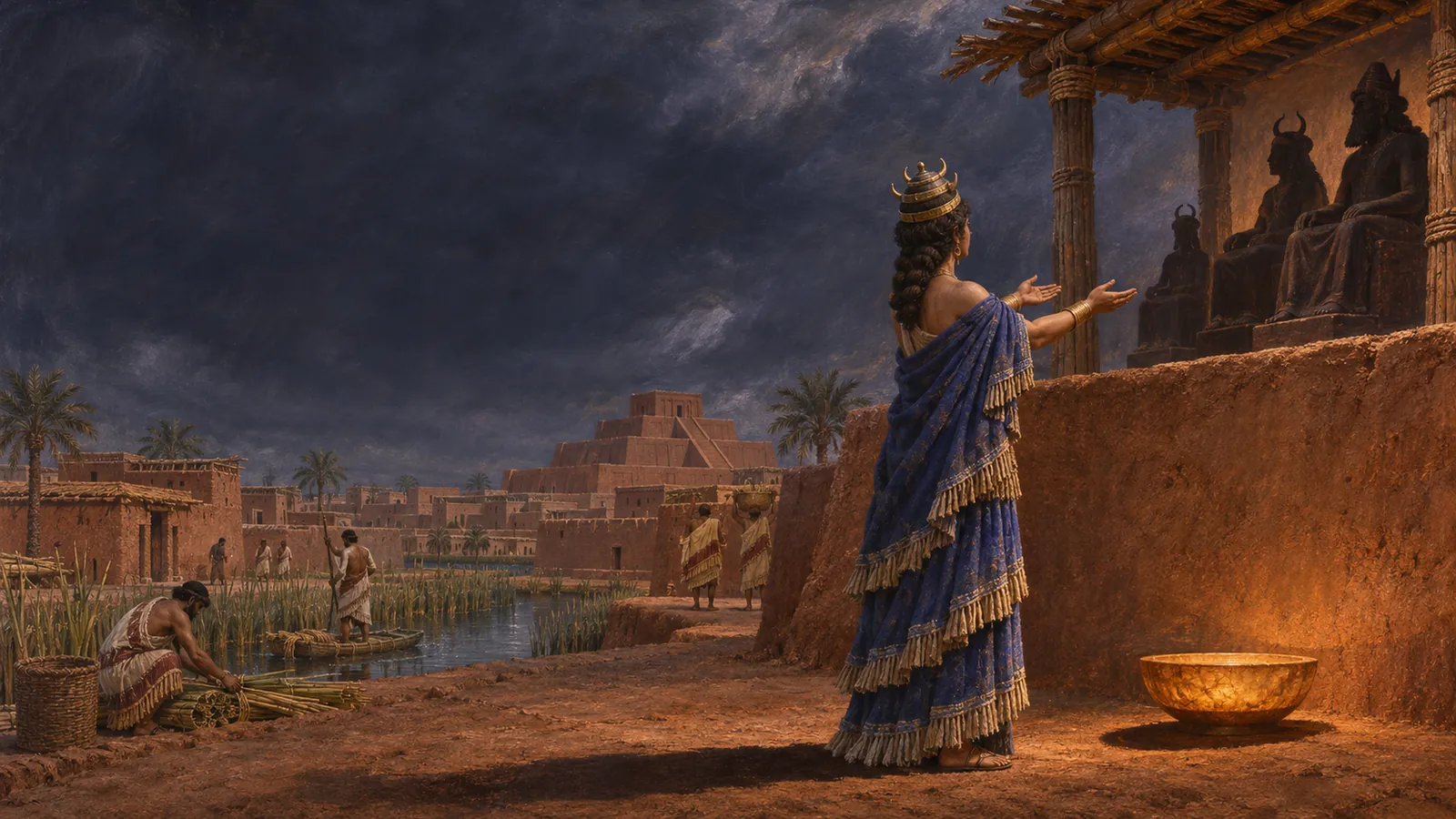
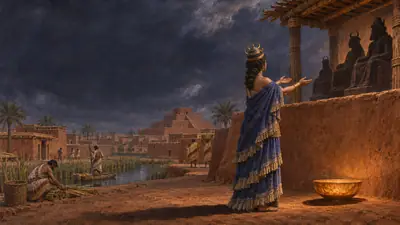
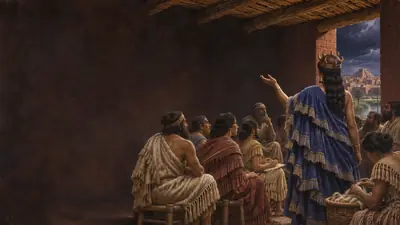
Ningal dit que, devant l’assemblée assise, elle traîne les pieds et tend les bras en présentant sa supplique.
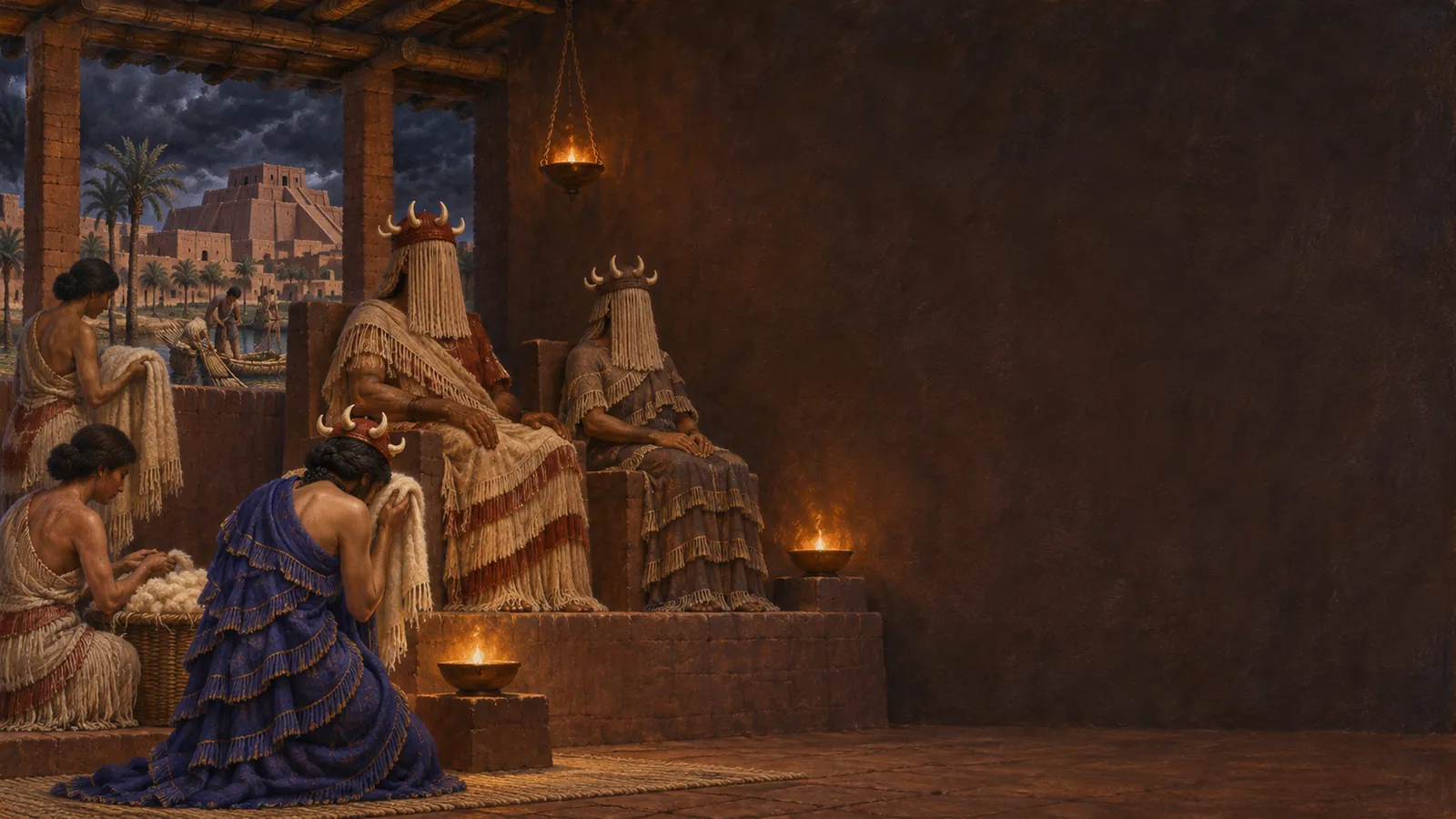
Ningal dit qu’elle verse ses larmes devant Anu. Elle dit ensuite qu’elle-même se lamente devant Enlil.
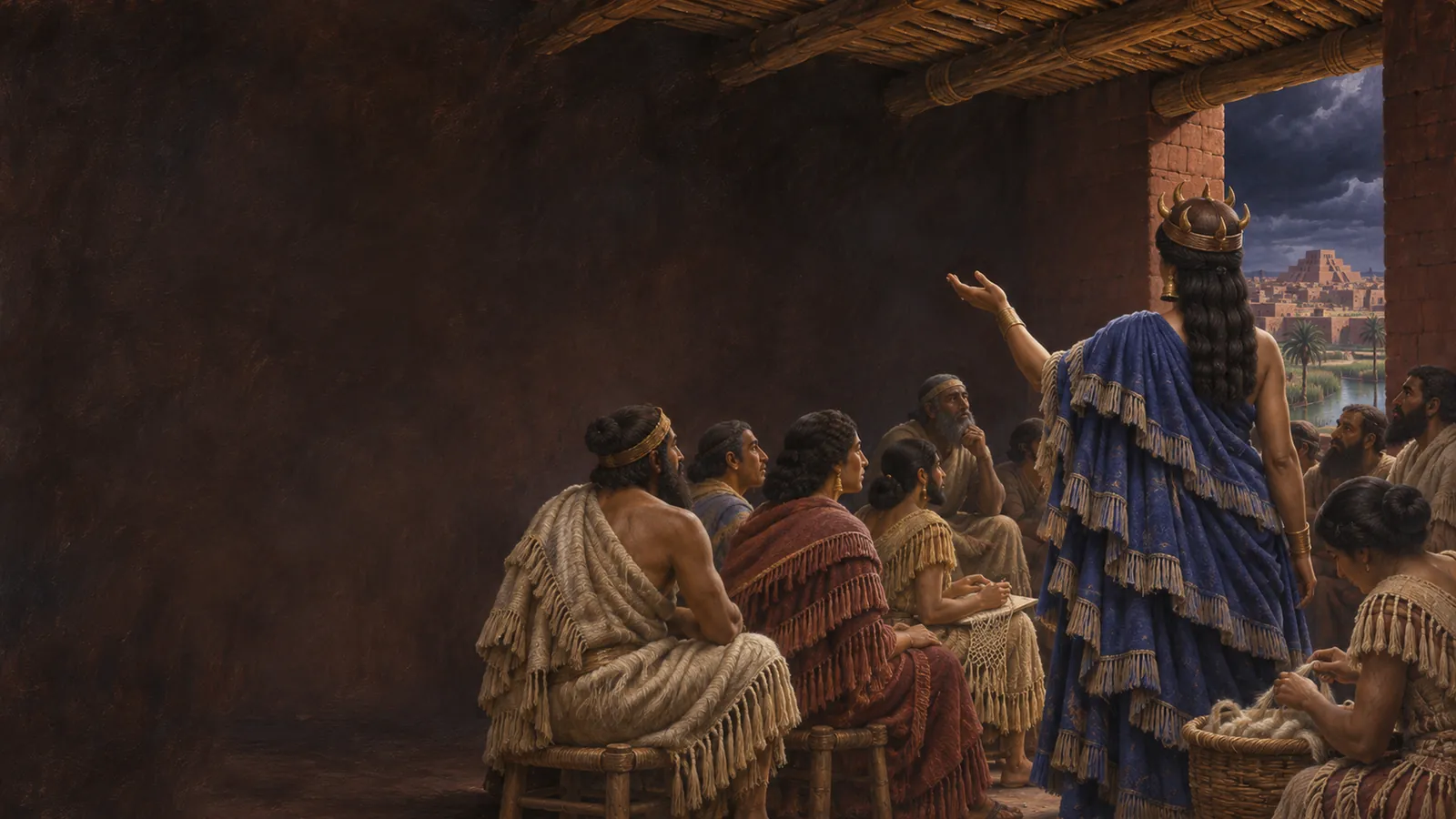
Ningal demande que sa ville ne soit pas détruite. Elle répète sa supplique en nommant Ur et en demandant que la ville soit préservée.
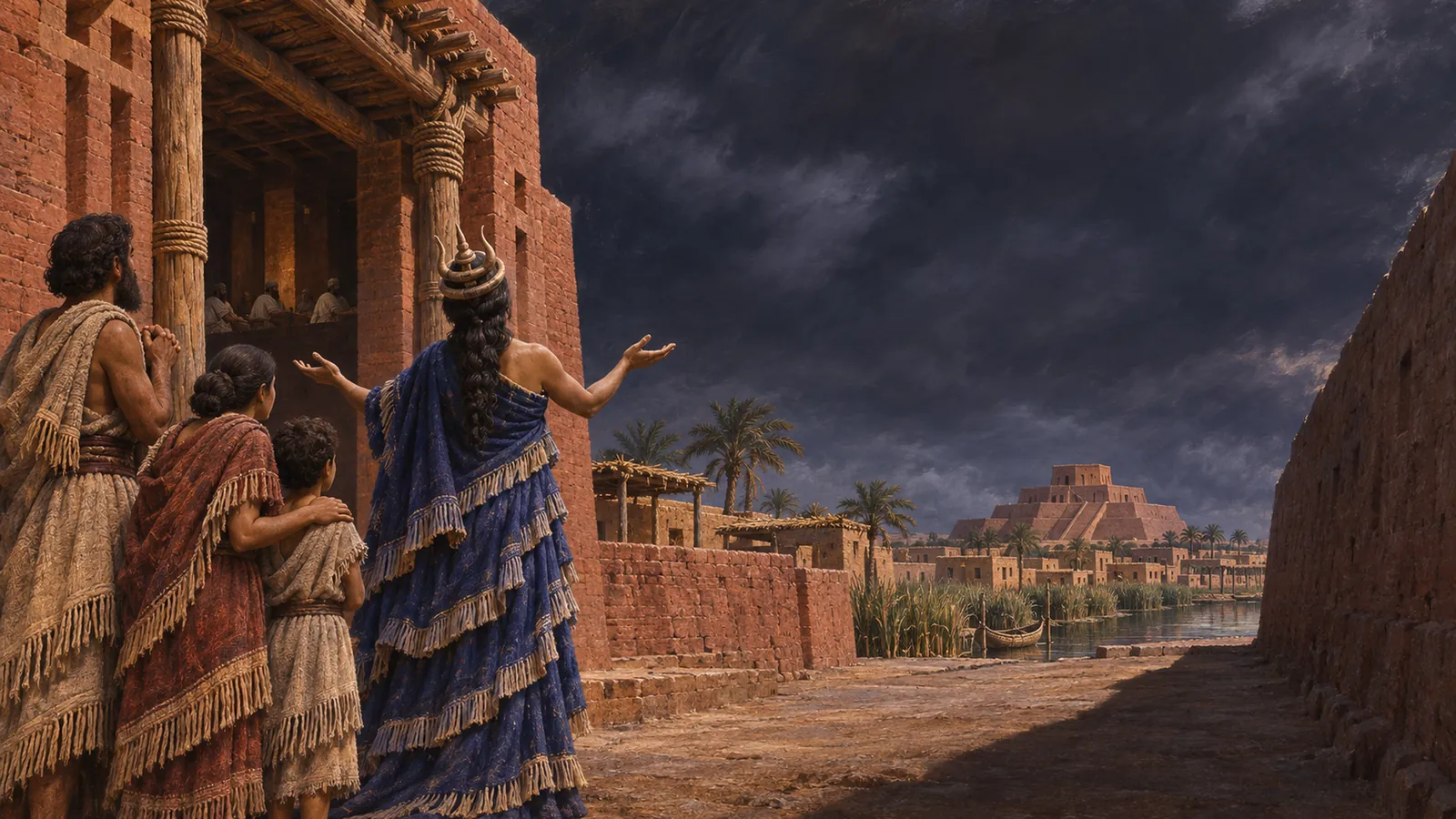
Ningal plaide ensuite pour les habitants de la ville. Elle dit à l’assemblée qu’ils ne doivent pas être tués.
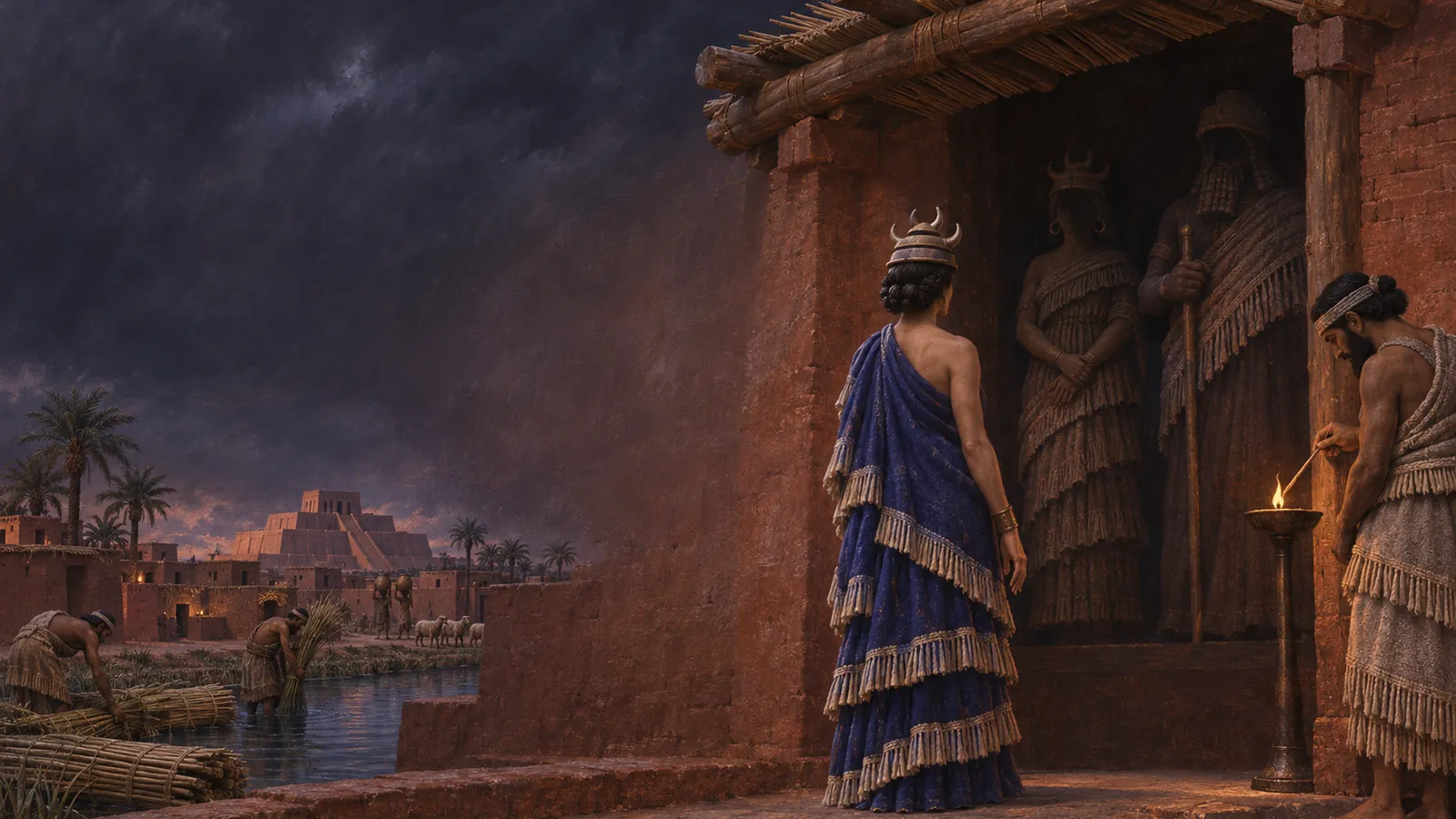
Ningal dit qu’Anu ne prête pas attention à ses paroles. Enlil ne donne aucune réponse favorable pour apaiser son cœur.
LE DÉCRET
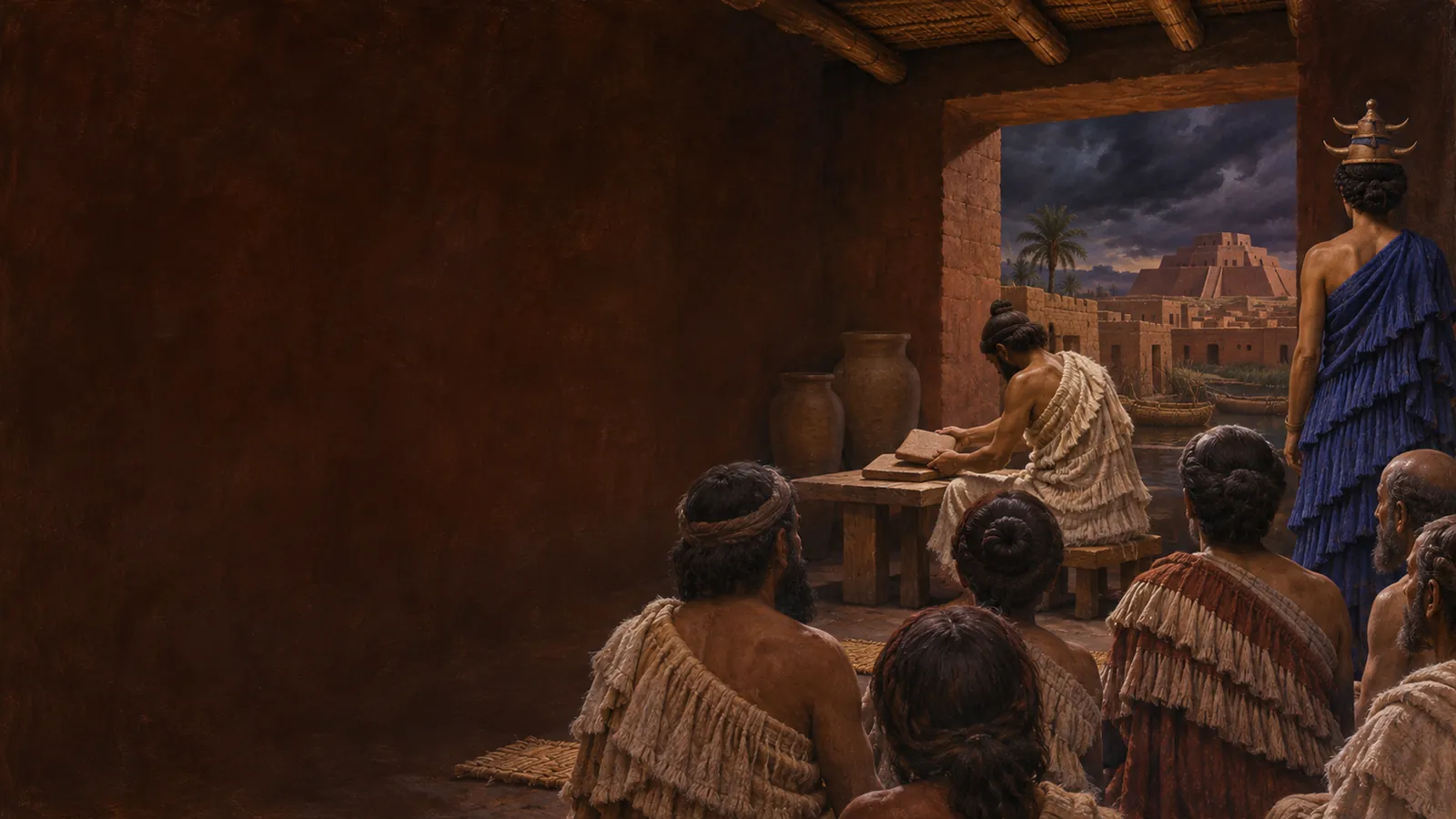
Ningal dit que l’assemblée ordonne la destruction de sa ville, Ur. Elle décrète que les habitants de la ville seront tués.
Fin du chapitre 1
Toutes les pages
Sources
This reading follows two translated selections printed by Thorkild Jacobsen in The Intellectual Adventure of Ancient Man, pp. 196–197. The preface credits H. A. Groenewegen Frankfort with the poetic rendering of translations in chapters V–VII. The main text dates to 1946, retained in the first Phoenix edition of 1977. Jacobsen’s notes cite Samuel Noah Kramer, Assyriological Studies XII, pp. 26 and 28, ancient lines 88–112, then p. 32, lines 152–164. Individual ancient line numbers are absent from the printed quotations. Lines 113–151 are outside this modern selection. The second quotation ends with the decree against Ur and its inhabitants.
Éditions consultées
- University of Chicago, The Intellectual Adventure of Ancient Man
- Jacobsen’s two printed selections, pp. 196–197
- Source notes 12–13, printed p. 201
Notes sur ce récit
Page 1, Jacobsen’s lead-in on p. 196. Jacobsen presents Ningal, the goddess of Ur, as the speaker of the following quotation. 197. His notes on p. 201 cite Kramer, AS XII, pp. 26 and 28, lines 88–112, and p. 32, lines 152–164. The preface credits H. A. Groenewegen Frankfort with the English poetic rendering of the translations in chapters V–VII. The first Phoenix edition dates to 1977 and retains the main text published in 1946.
Page 2, first quotation, lines 88–112, opening storm-day formulas. Ningal grieves over the day of storm described as destined for her and laid upon her, burdened with tears. She calls herself a woman.
Page 3, first quotation, lines 88–112, trembling and cruelty. Repeated storm-day formulas describe Ningal trembling before the coming day and call it cruel.
Page 4, first quotation, lines 88–112, the fate of the day. Ningal says she cannot flee the day’s fatality.
Page 5, first quotation, lines 88–112, happy days.
Page 6, first quotation, lines 88–112, the night formula. Ningal trembles and says she cannot flee what is destined for that night.
Page 7, first quotation, lines 88–112, the flood comparison. Ningal says that dread of the storm’s destruction weighs on her and compares its force to a flood.
Pages 8–9, first quotation, lines 88–112, the couch. On her couch at night, Ningal says that neither dreams nor oblivion are granted to her.
Page 10, first quotation, lines 88–112, the cow comparison. Ningal says bitter weeping is destined for her land.
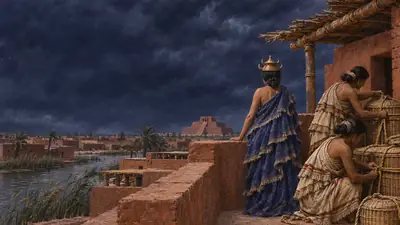
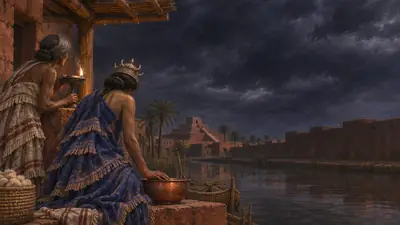
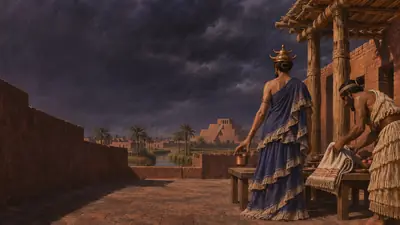
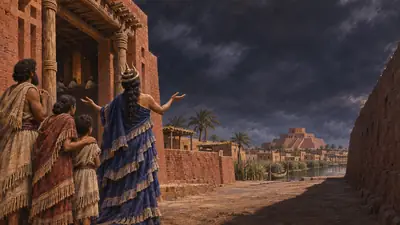
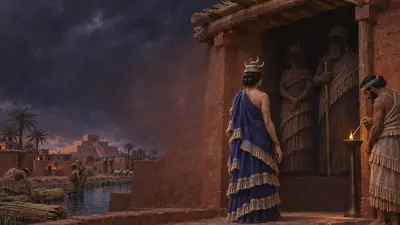
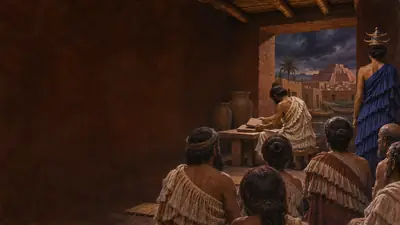
Ningal appears from behind as she watches the storm, searches the riverbanks and pleads before the assembly.
first quotation, lines 88–112 as cited in note 12. Ningal says sorrow is destined for her city. She imagines spreading wings and flying there like a bird, yet the city would still be destroyed on its foundations and Ur would perish. The quotation continues across the page break. The inclusive range is Jacobsen’s own citation, with no individual ancient line numbers printed beside the translated lines.
The storm day raises its hand. This closes the first printed excerpt.
Jacobsen’s connecting paragraph. Ancient lines 113–151 lie outside this modern selection. This interval is an editorial omission between excerpts.
beginning of the second quotation, lines 152–164 as cited in note 13. The assembly remains seated. The rendering explains the Anunnaki’s binding themselves with a parenthetical statement about upholding the decision.
second quotation, cited lines 152–164. Ningal describes dragging her feet and stretching out her arms before the assembly.
second quotation, cited lines 152–164. Ningal sheds tears before Anu and mourns before Enlil. Their order and the distinction between the two clauses are retained.
second quotation, cited lines 152–164. The plea against the destruction of her city is repeated, with Ur named in the second plea.
second quotation, cited lines 152–164. Ningal asks that the inhabitants not be killed. This is her appeal in the poem.
second quotation, cited lines 152–164. Anu does not heed her words and Enlil gives no approving answer to comfort her.
The divine assembly gives the instruction to destroy the city and decrees that its inhabitants be killed. The selection ends with that decree.
Les vers antiques de chaque page
- Page 1: Jacobsen, The Intellectual Adventure of Ancient Man, first Phoenix ed. (1977; main text 1946), p. 196, Jacobsen’s lead-in to the two selected passages; poetic rendering by H. A. Groenewegen Frankfort
- Page 2: Jacobsen, The Intellectual Adventure of Ancient Man, first Phoenix ed. (1977; main text 1946), p. 196, first quotation, Kramer lines 88–112, storm-day opening; poetic rendering by H. A. Groenewegen Frankfort
- Page 3: Jacobsen, The Intellectual Adventure of Ancient Man, first Phoenix ed. (1977; main text 1946), p. 196, first quotation, Kramer lines 88–112, repeated trembling formula; poetic rendering by H. A. Groenewegen Frankfort
- Page 4: Jacobsen, The Intellectual Adventure of Ancient Man, first Phoenix ed. (1977; main text 1946), p. 196, first quotation, Kramer lines 88–112, inability to flee the day; poetic rendering by H. A. Groenewegen Frankfort
- Page 5: Jacobsen, The Intellectual Adventure of Ancient Man, first Phoenix ed. (1977; main text 1946), p. 196, first quotation, Kramer lines 88–112, repeated happy-days clause; poetic rendering by H. A. Groenewegen Frankfort
- Page 6: Jacobsen, The Intellectual Adventure of Ancient Man, first Phoenix ed. (1977; main text 1946), p. 196, first quotation, Kramer lines 88–112, night formula; poetic rendering by H. A. Groenewegen Frankfort
- Page 7: Jacobsen, The Intellectual Adventure of Ancient Man, first Phoenix ed. (1977; main text 1946), p. 196, first quotation, Kramer lines 88–112, dread and flood comparison; poetic rendering by H. A. Groenewegen Frankfort
- Page 8: Jacobsen, The Intellectual Adventure of Ancient Man, first Phoenix ed. (1977; main text 1946), p. 196, first quotation, Kramer lines 88–112, couch and dreams; poetic rendering by H. A. Groenewegen Frankfort
- Page 9: Jacobsen, The Intellectual Adventure of Ancient Man, first Phoenix ed. (1977; main text 1946), p. 196, first quotation, Kramer lines 88–112, couch and oblivion; poetic rendering by H. A. Groenewegen Frankfort
- Page 10: Jacobsen, The Intellectual Adventure of Ancient Man, first Phoenix ed. (1977; main text 1946), p. 196, first quotation, Kramer lines 88–112, land’s weeping and cow simile; poetic rendering by H. A. Groenewegen Frankfort
- Page 11: Jacobsen, The Intellectual Adventure of Ancient Man, 1946 text / 1977 Phoenix ed., pp. 196–197, first quotation; n. 12, p. 201 cites Kramer AS XII, lines 88–112
- Page 12: Jacobsen, The Intellectual Adventure of Ancient Man, 1946 text / 1977 Phoenix ed., pp. 196–197, first quotation; n. 12, p. 201 cites Kramer AS XII, lines 88–112
- Page 13: Jacobsen, The Intellectual Adventure of Ancient Man, 1946 text / 1977 Phoenix ed., p. 197, modern connecting paragraph between quoted lines 88–112 and 152–164
- Page 14: Jacobsen, The Intellectual Adventure of Ancient Man, 1946 text / 1977 Phoenix ed., p. 197, second quotation; n. 13, p. 201 cites Kramer AS XII, lines 152–164
- Page 15: Jacobsen, The Intellectual Adventure of Ancient Man, 1946 text / 1977 Phoenix ed., p. 197, second quotation; n. 13, p. 201 cites Kramer AS XII, lines 152–164
- Page 16: Jacobsen, The Intellectual Adventure of Ancient Man, 1946 text / 1977 Phoenix ed., p. 197, second quotation; n. 13, p. 201 cites Kramer AS XII, lines 152–164
- Page 17: Jacobsen, The Intellectual Adventure of Ancient Man, 1946 text / 1977 Phoenix ed., p. 197, second quotation; n. 13, p. 201 cites Kramer AS XII, lines 152–164
- Page 18: Jacobsen, The Intellectual Adventure of Ancient Man, 1946 text / 1977 Phoenix ed., p. 197, second quotation; n. 13, p. 201 cites Kramer AS XII, lines 152–164
- Page 19: Jacobsen, The Intellectual Adventure of Ancient Man, 1946 text / 1977 Phoenix ed., p. 197, second quotation; n. 13, p. 201 cites Kramer AS XII, lines 152–164
- Page 20: Jacobsen, The Intellectual Adventure of Ancient Man, 1946 text / 1977 Phoenix ed., p. 197, second quotation; n. 13, p. 201 cites Kramer AS XII, lines 152–164
Illustrations réalisées par IL Archive avec des outils d’IA ; le texte s’appuie sur les sources antiques (voir les sources à la fin de chaque chapitre).