La Lamentation d’Ur Chapitre 2
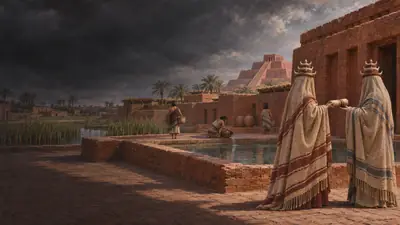
La tempête sur Ur
Enlil appelle la tempête et le peuple se lamente dans trois passages plus tardifs de la Lamentation sur Ur. Jacobsen présente ces extraits dans la forme poétique de H. A. Groenewegen Frankfort, dans le texte de 1946 réédité en 1977. La sélection se termine sur les suites du désastre dans la ville.
SourcesTournez les pages avec les flèches, le clavier ou en balayant l’écran.
LA TEMPÊTE SUR UR
Trois extraits plus tardifs de la lamentation sur Ur décrivent la tempête et ses suites. Thorkild Jacobsen les présente dans la forme poétique anglaise donnée par H A Groenewegen Frankfort.
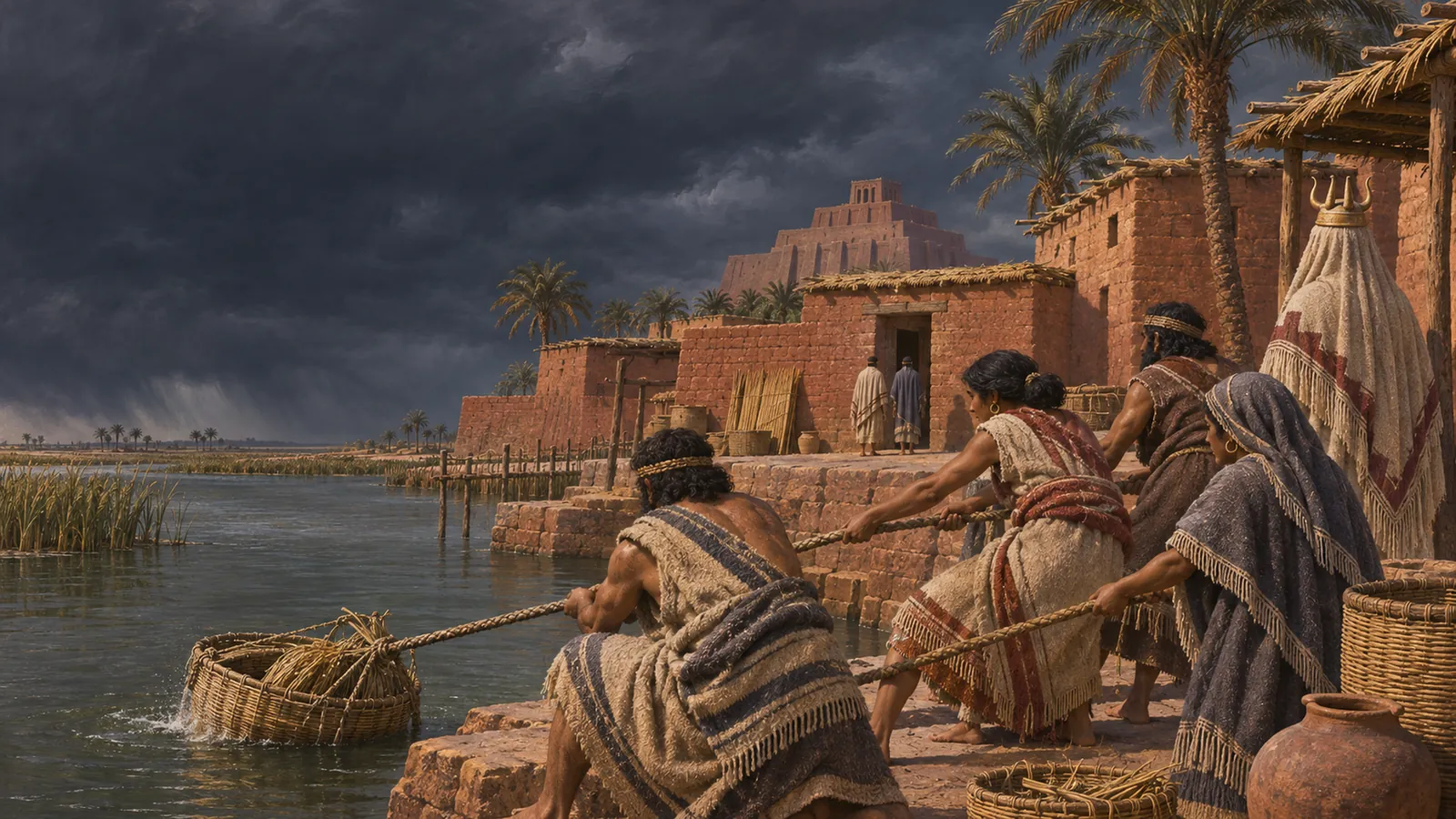
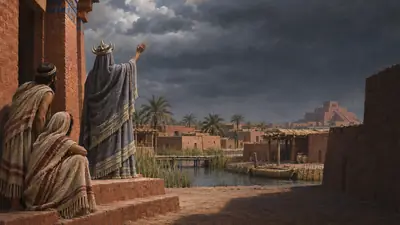
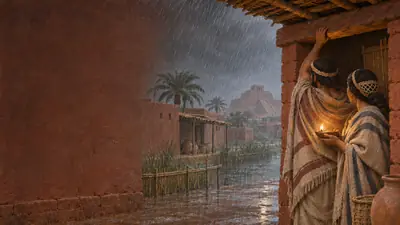
Dans le poème, Enlil appelle la tempête. Le peuple se lamente, et cette lamentation devient un refrain qui revient à mesure que la tempête est invoquée.
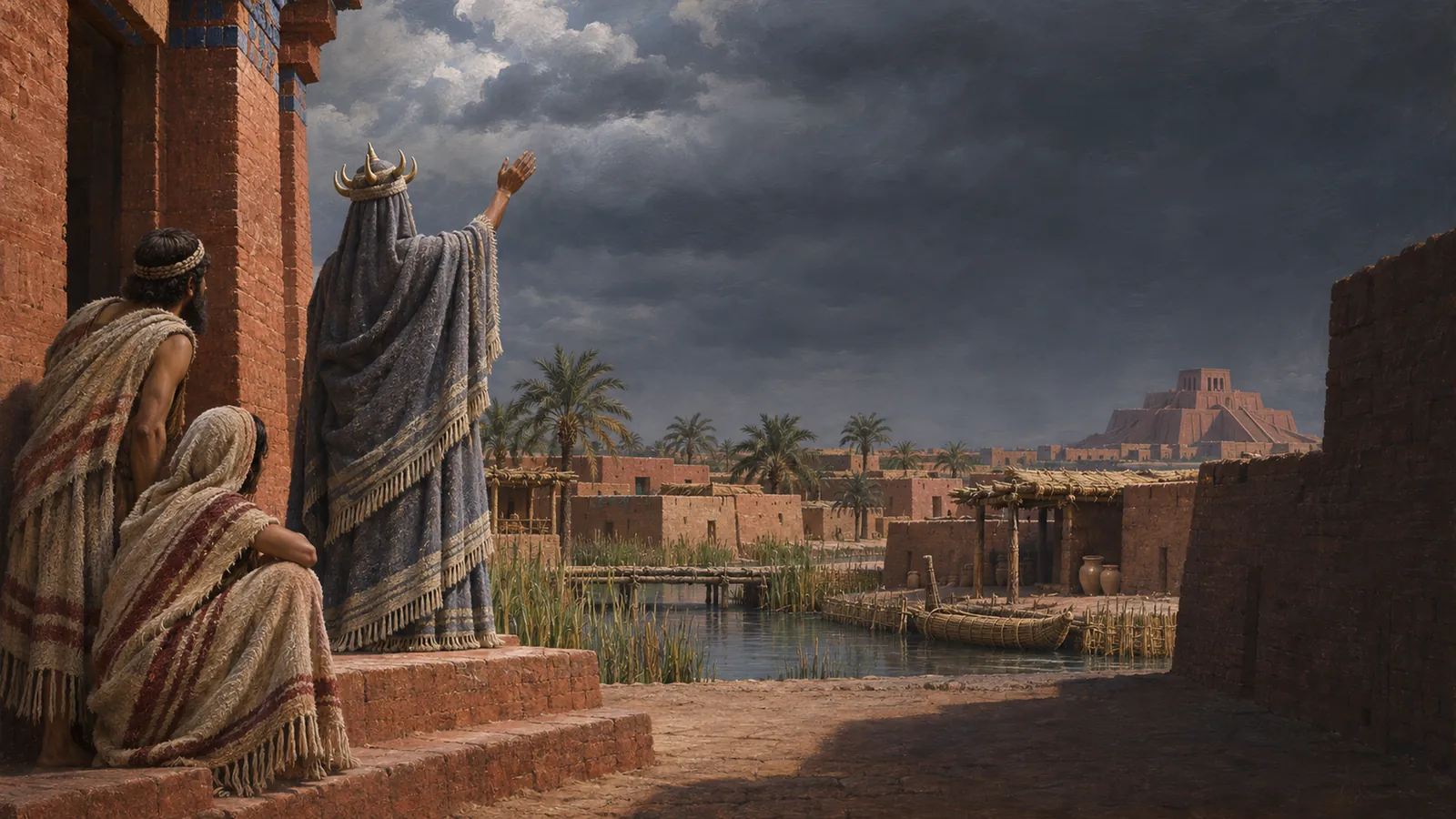
Le poème dit qu’Enlil retire au pays les vents vivifiants et enlève à Sumer les vents bienfaisants. Le peuple se lamente après chaque perte.
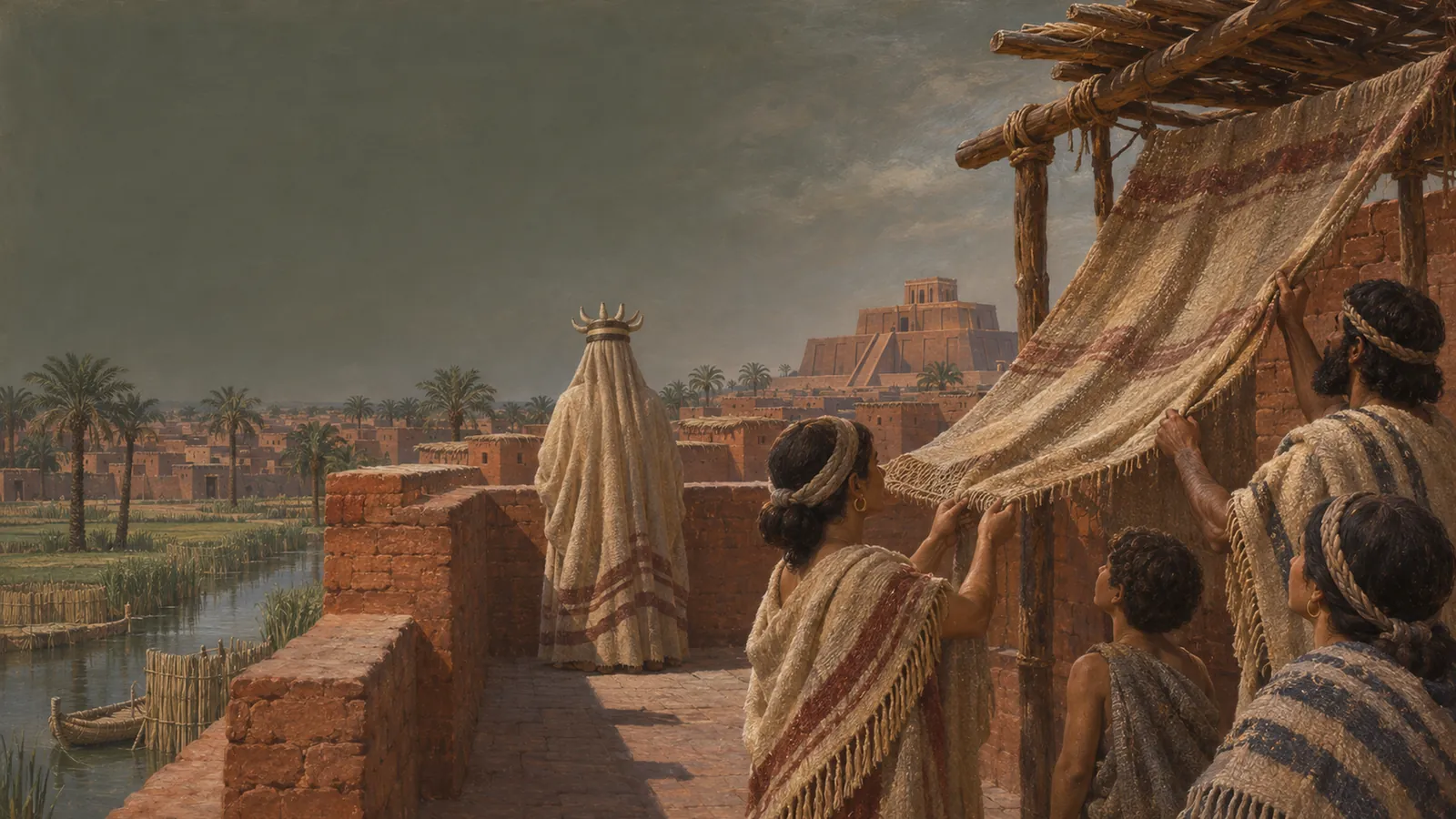
Enlil appelle ensuite les vents que le poème qualifie de mauvais. De nouveau, le vers sur la lamentation du peuple répond à son action.
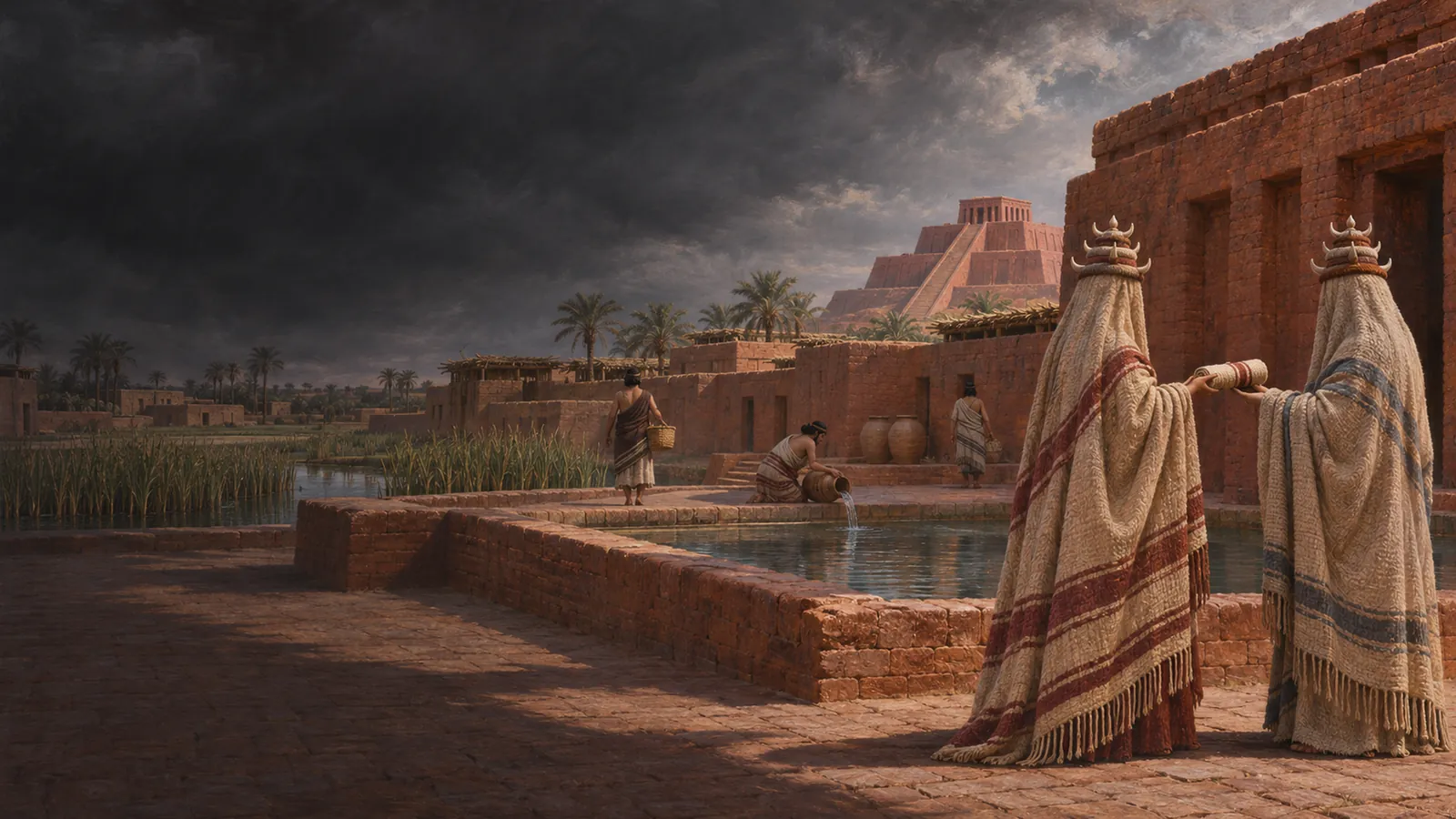
KINGALUDA
Le poème dit qu’Enlil confie ces vents à Kingaluda. Il donne à Kingaluda le titre de gardien des tempêtes.
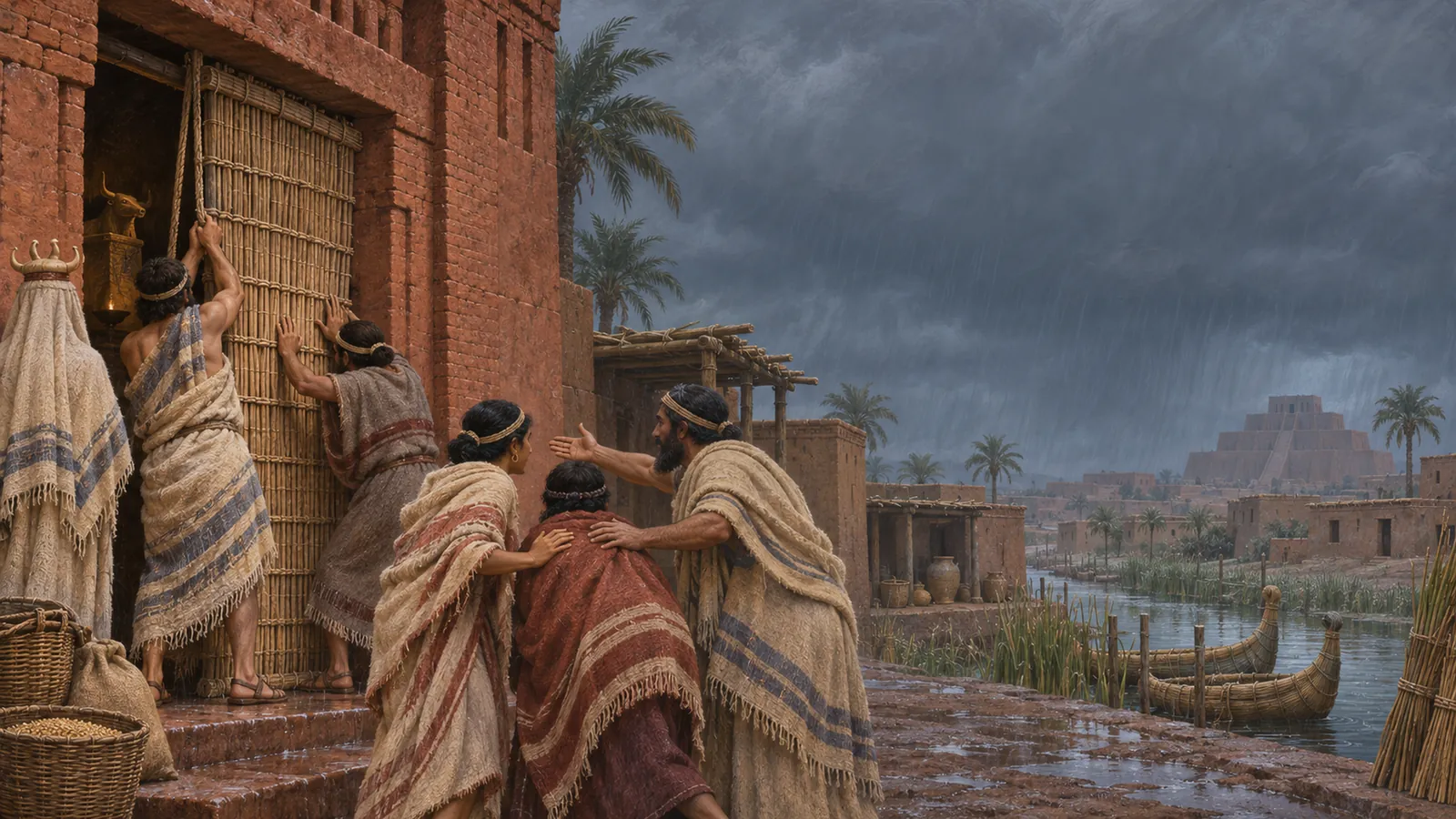
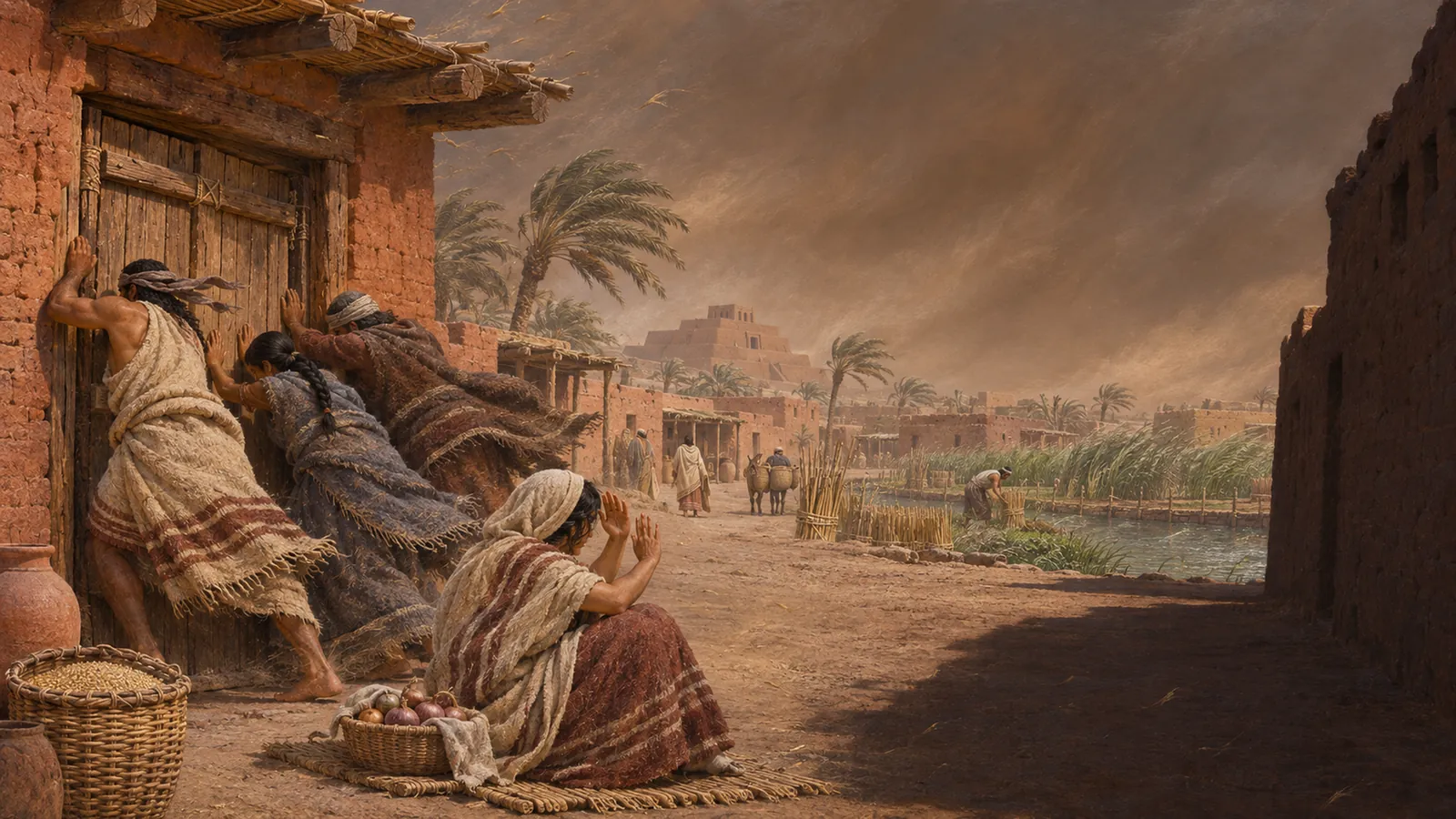
Enlil appelle la tempête qui anéantira le pays et convoque des vents désastreux. Le refrain dit que le peuple se lamente après chaque appel.
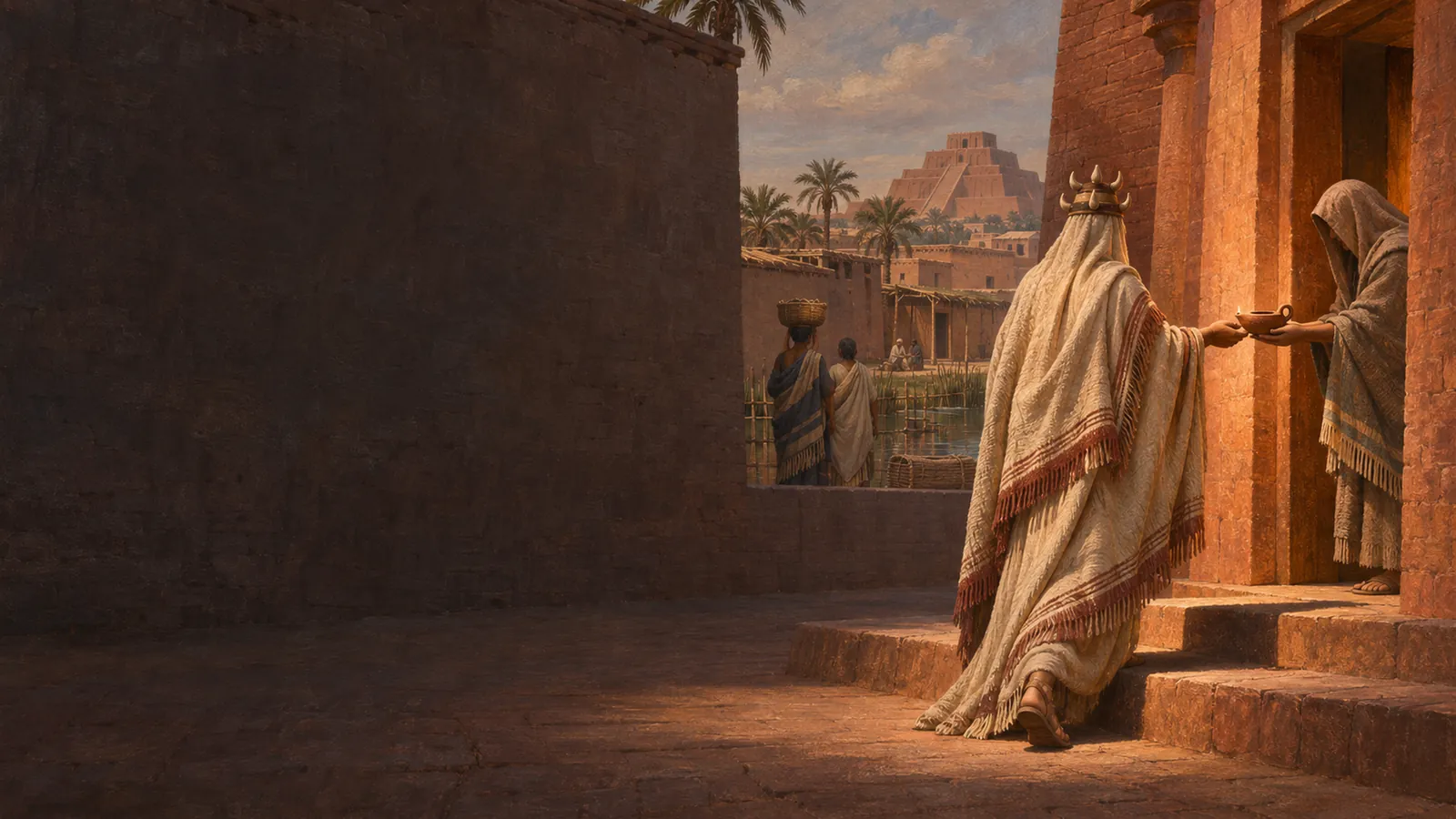
Le poème nomme maintenant Gibil comme l’auxiliaire choisi par Enlil. Ce choix précède l’appel à l’ouragan du ciel.
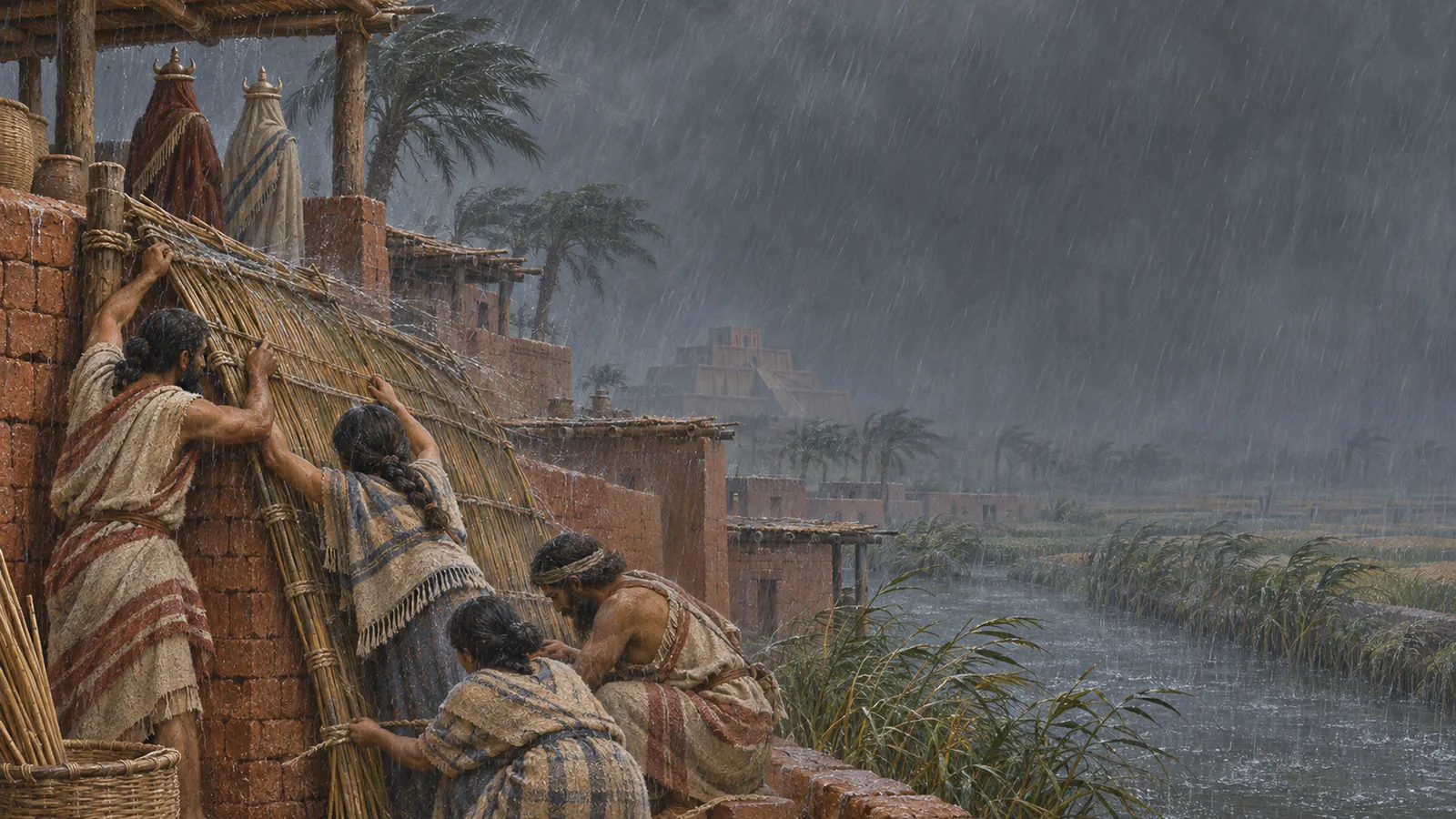
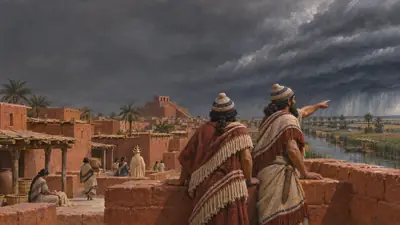
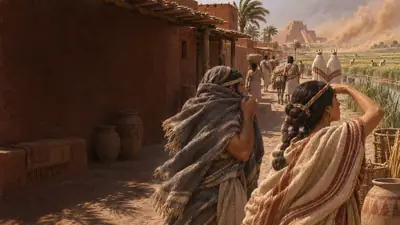
Enlil appelle l’ouragan du ciel. Le poème décrit l’ouragan qui hurle à travers les cieux, tandis que le refrain dit que le peuple se lamente.
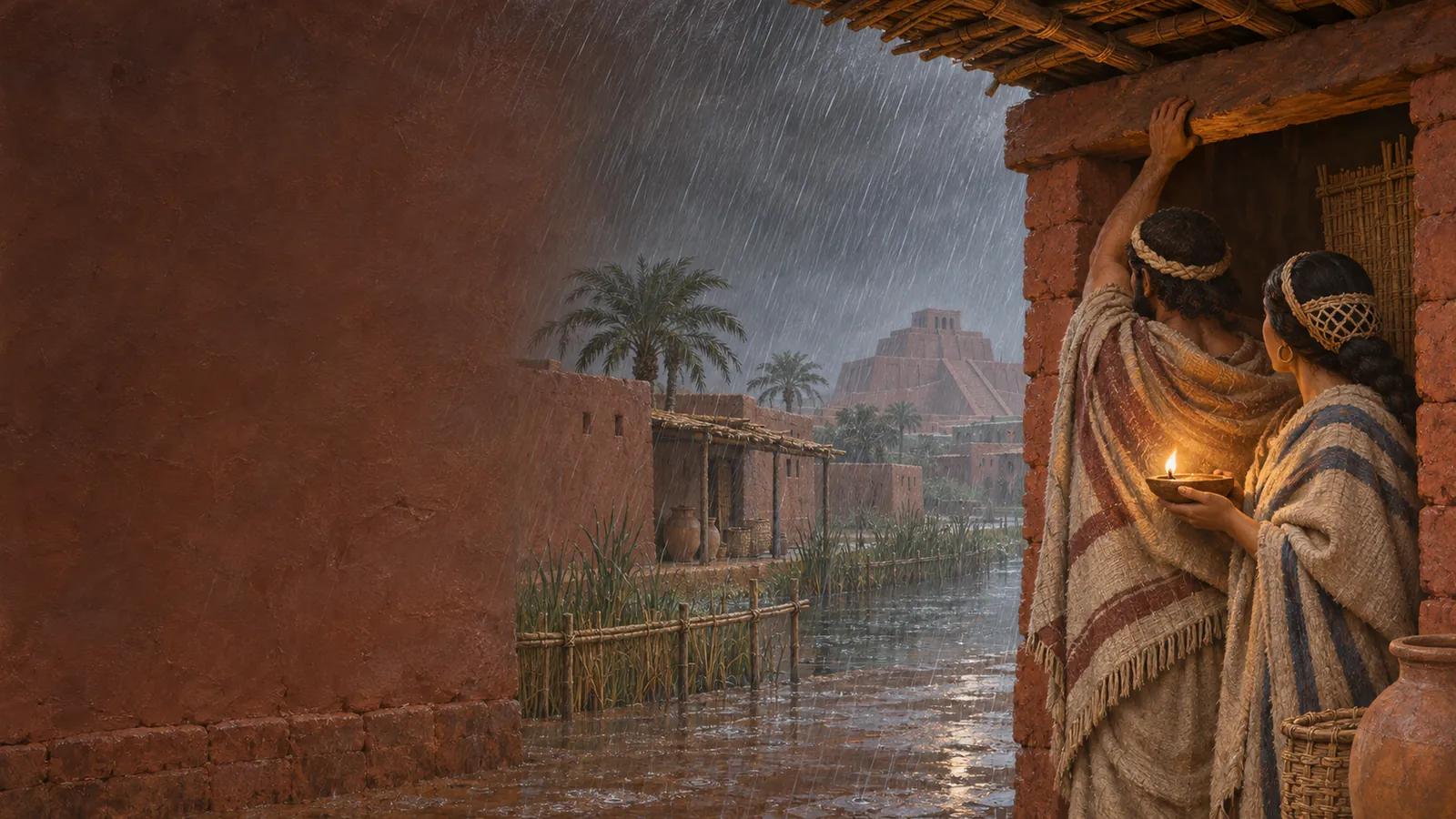
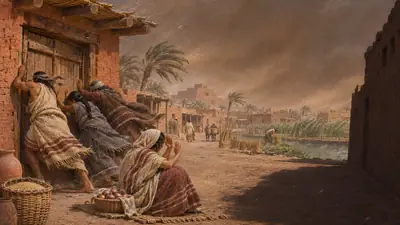
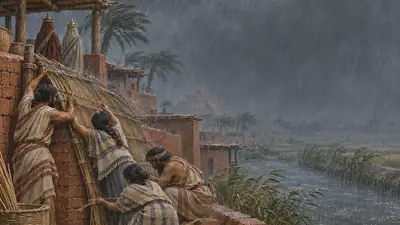
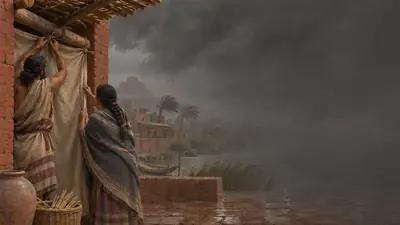
Le poème décrit la tempête dévastatrice qui rugit à travers le pays. Une fois encore, la lamentation du peuple interrompt la description de sa force.
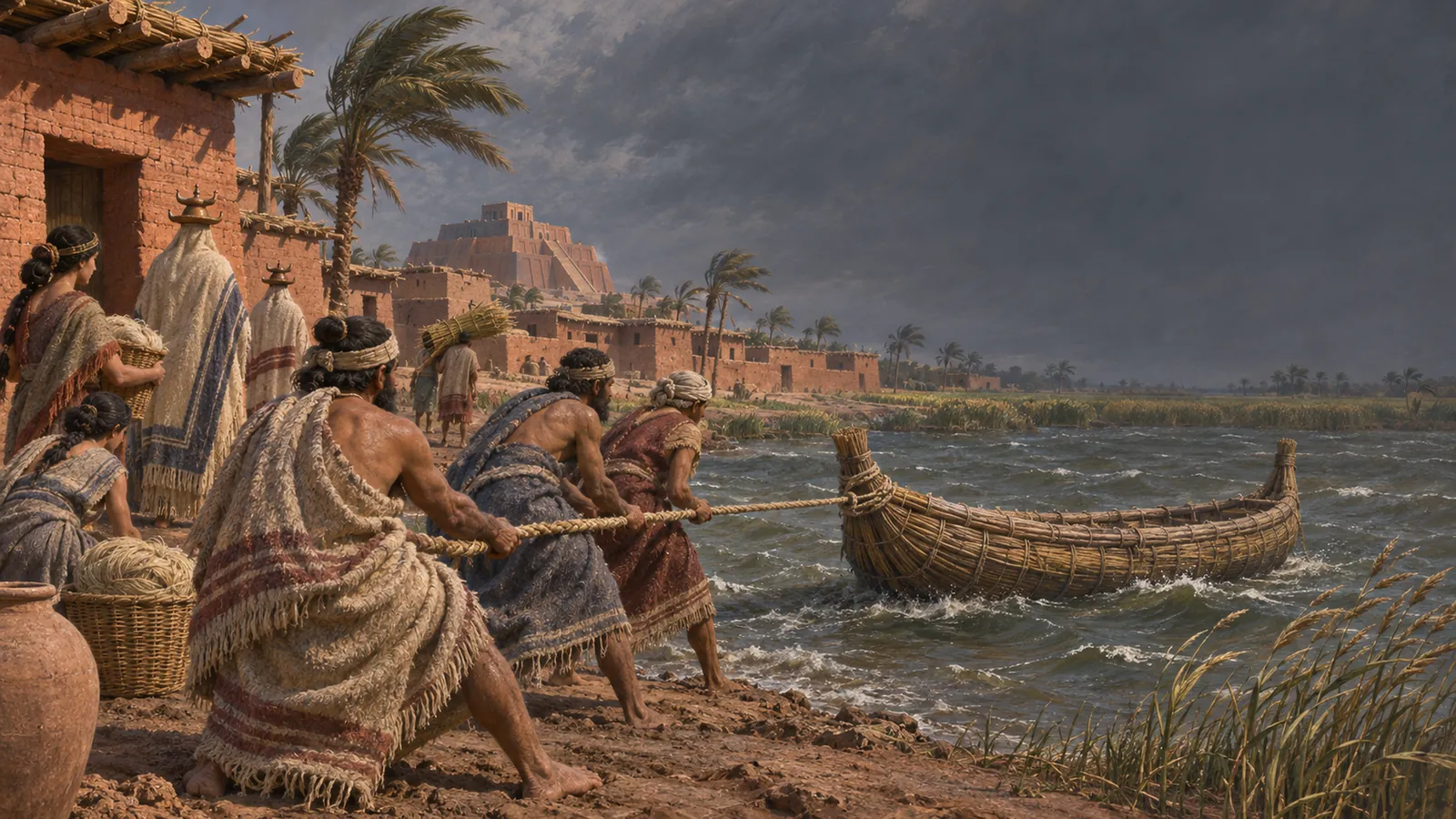
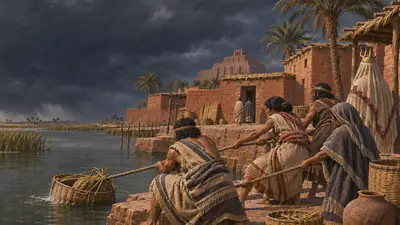
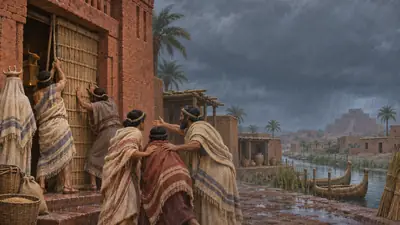
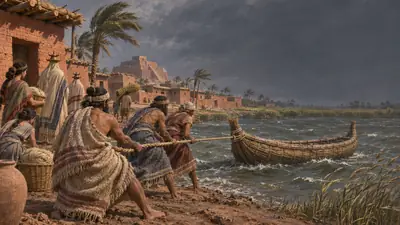
Le poème présente la tempête aussi implacable qu’une vague de crue. Elle s’abat sur les bateaux de la ville et les dévore.
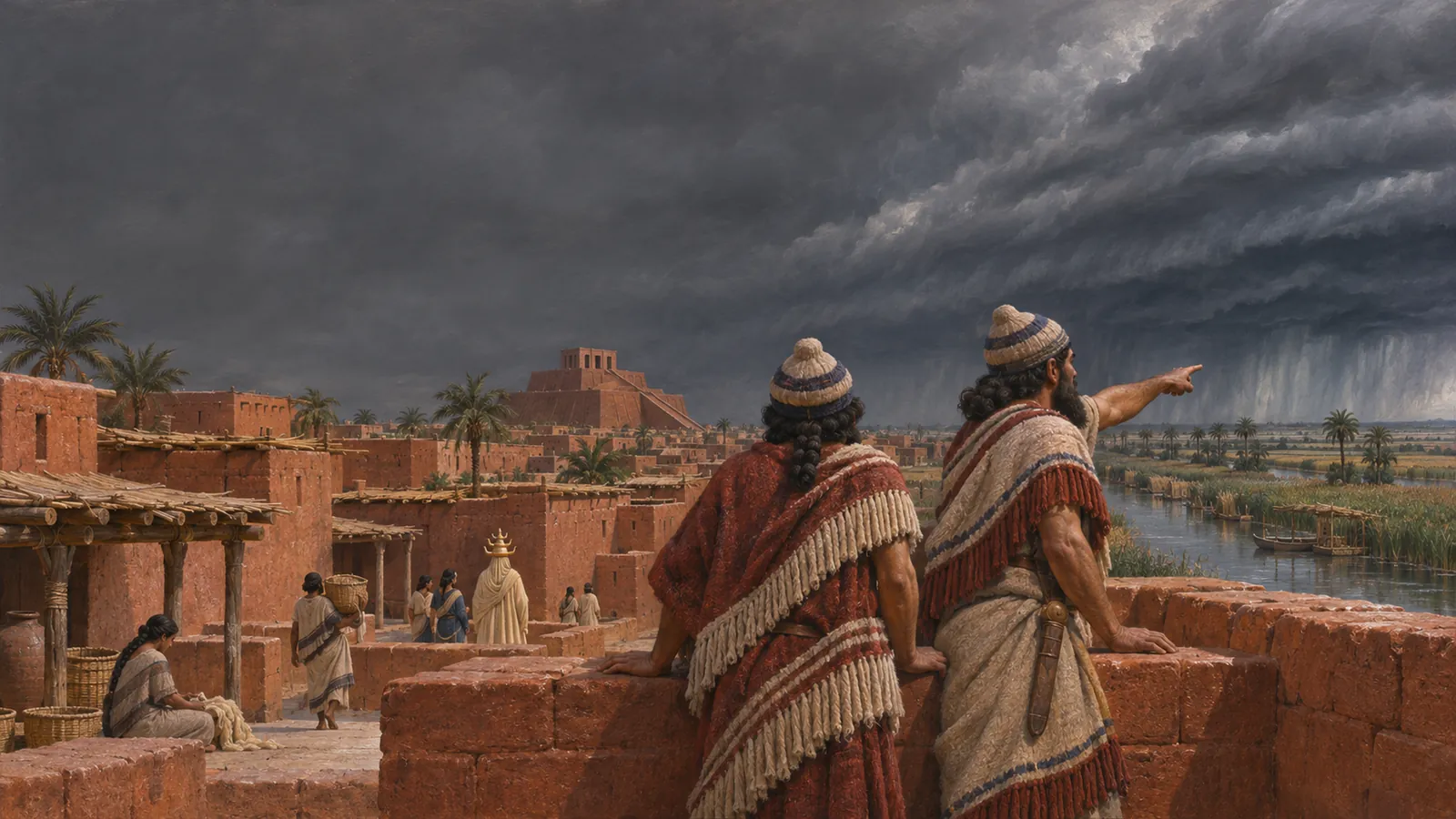
Enlil rassemble toutes ces tempêtes à la base du ciel. Une fois encore, le poème répond par le deuil du peuple.
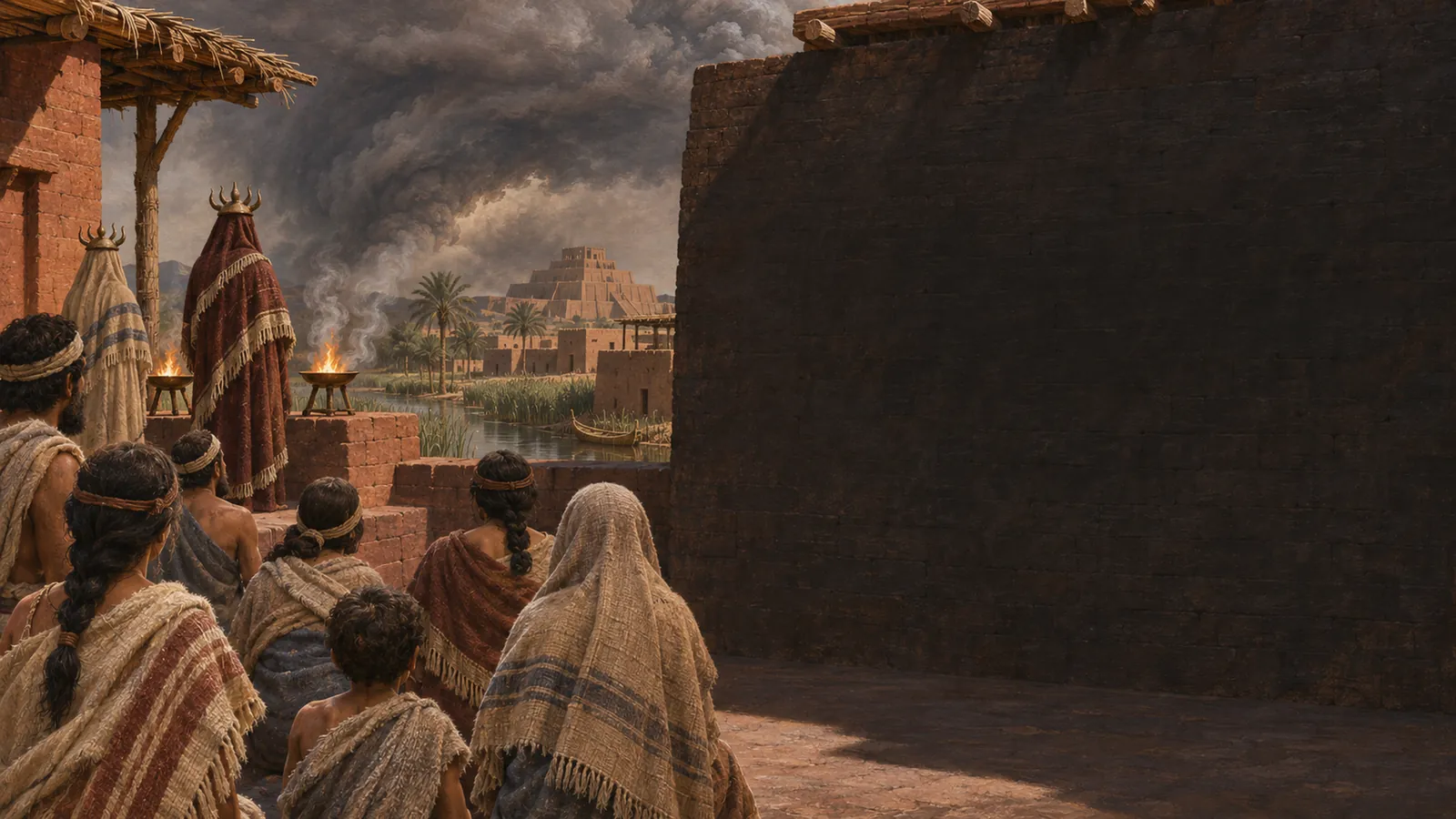
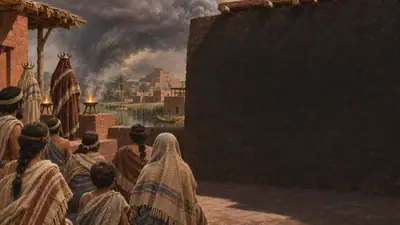
Le poème dit qu’Enlil allume de grands feux pour annoncer la tempête. Le deuil du peuple revient entre ses images.
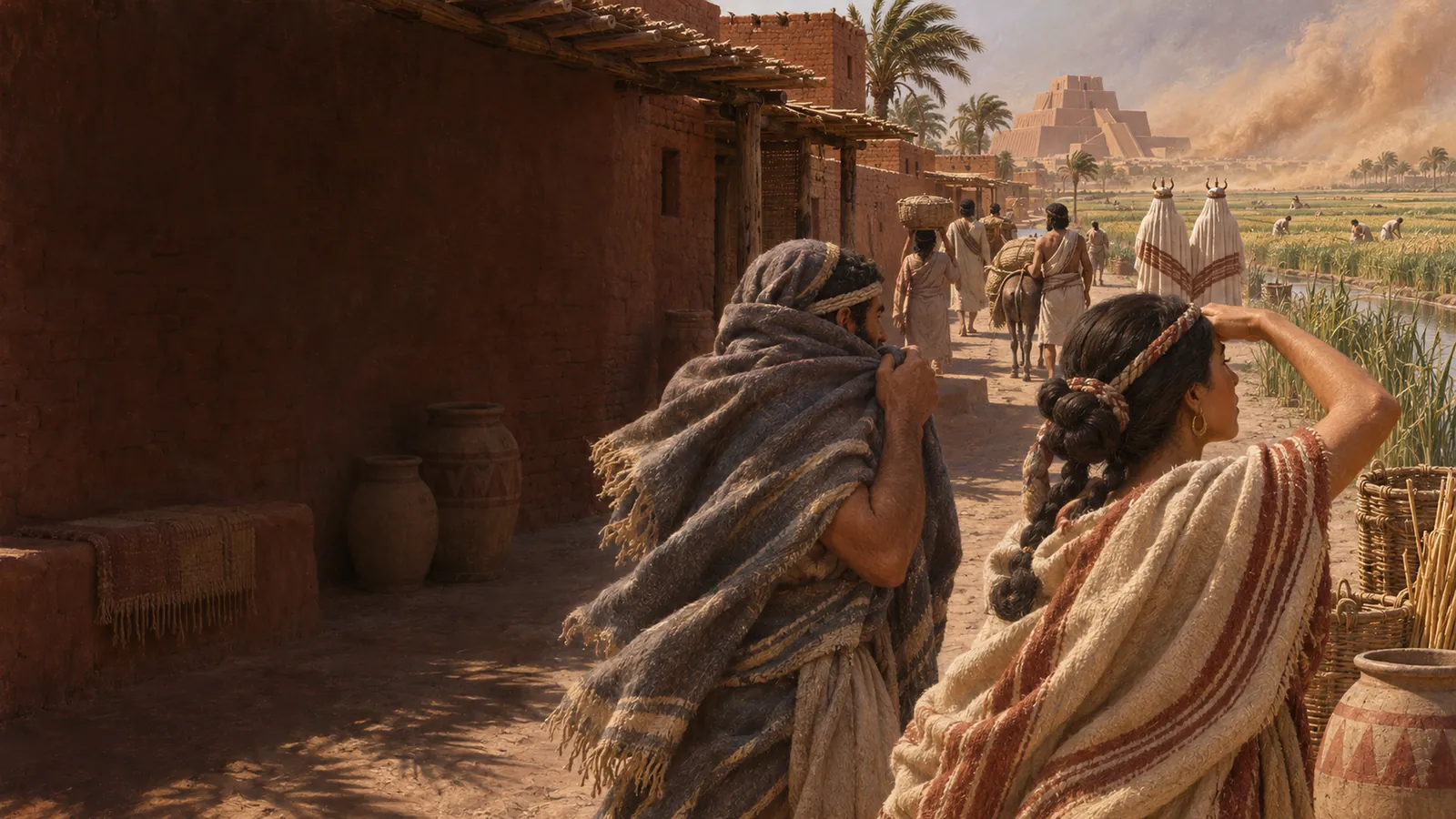
Il place la chaleur brûlante du désert sur les deux flancs des vents furieux. Le poème compare cette brûlure à la chaleur de midi.
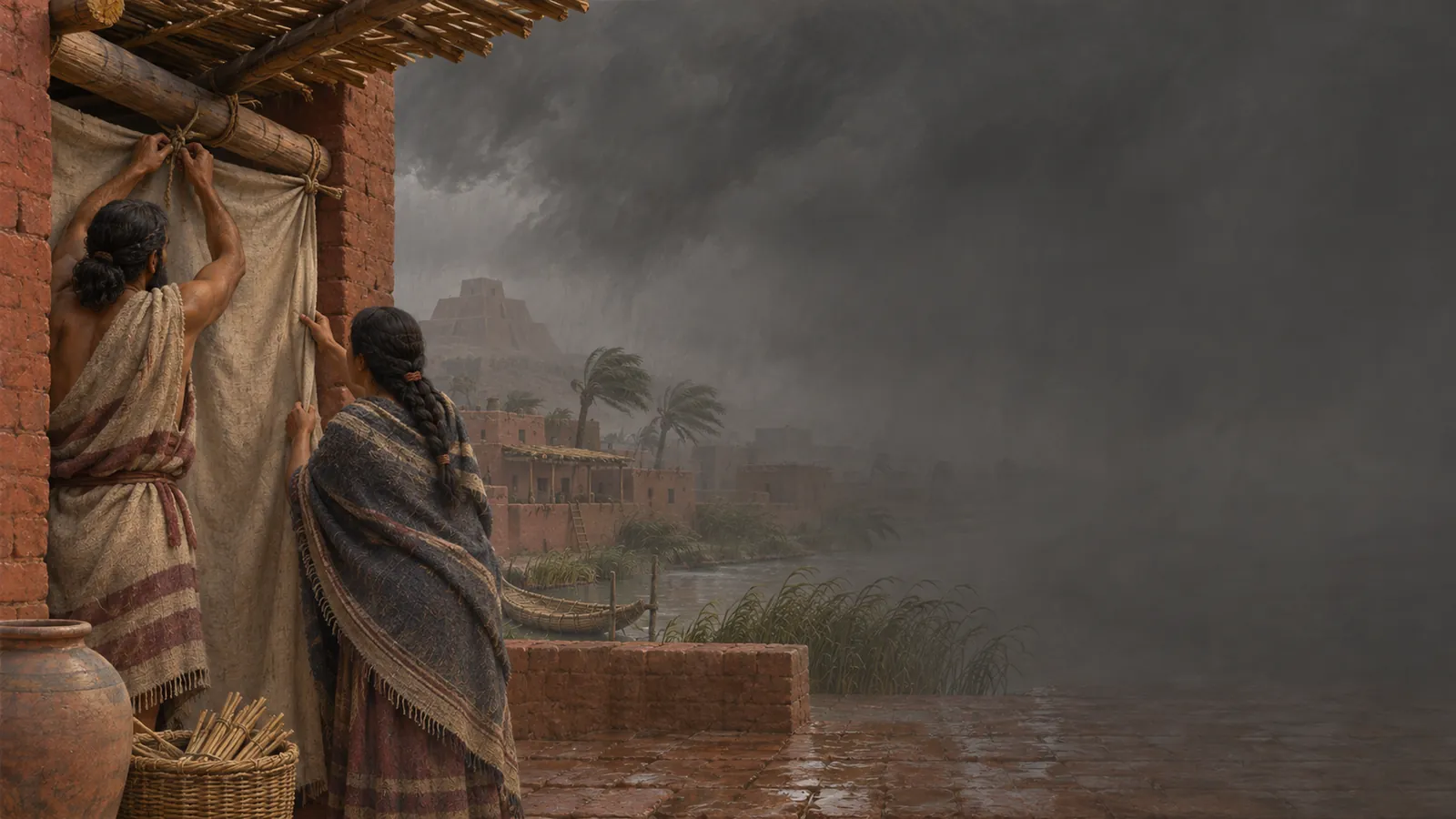
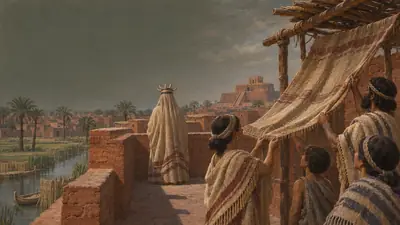
Dans une citation distincte, la tempête ordonnée par Enlil dans sa haine use le pays. Elle couvre Ur comme une étoffe et l’enveloppe comme un drap de lin.
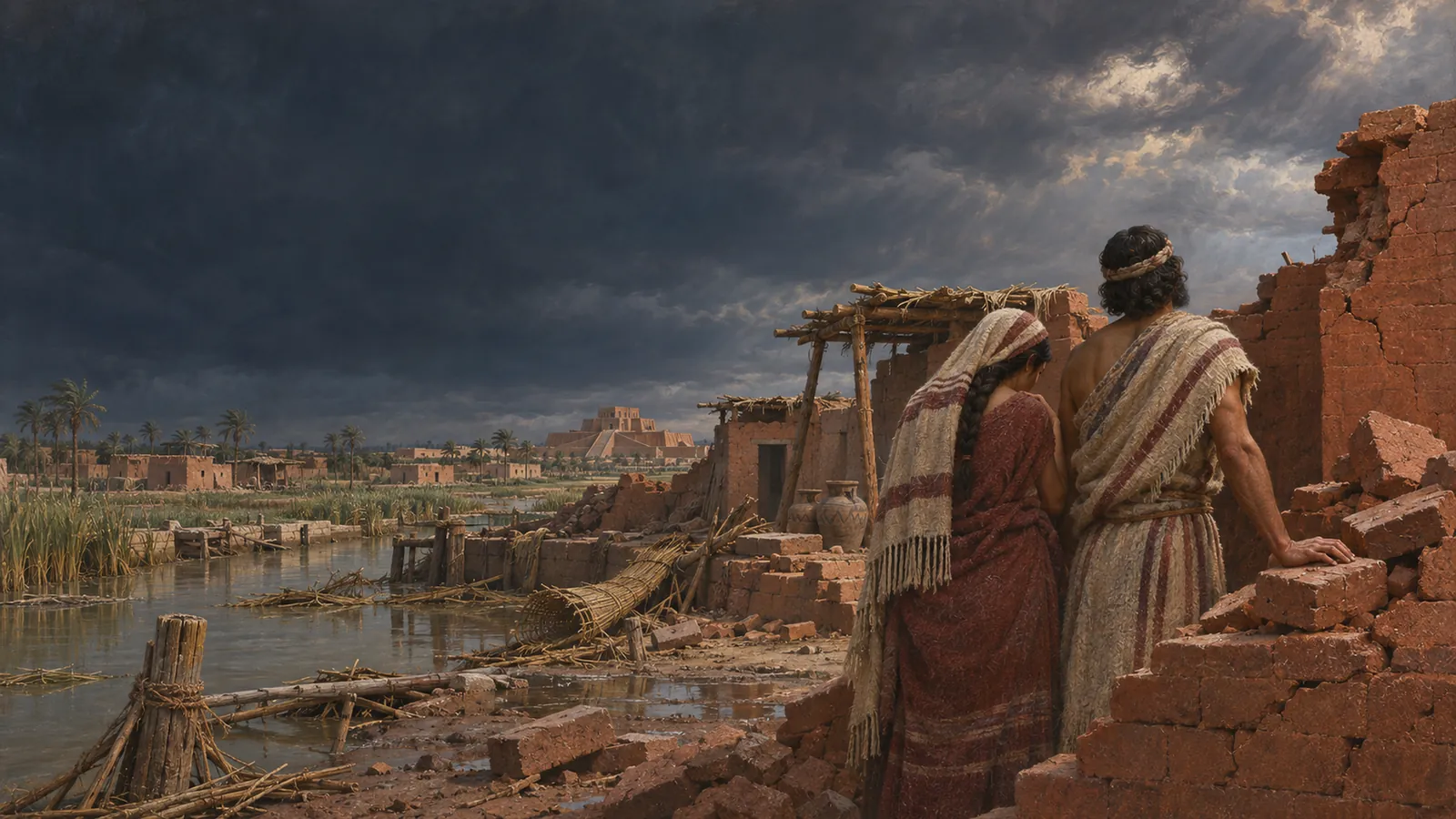
RUINES
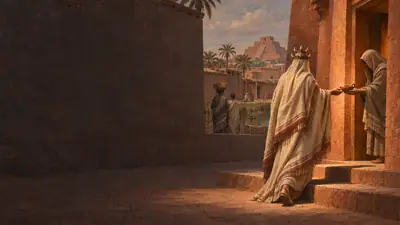
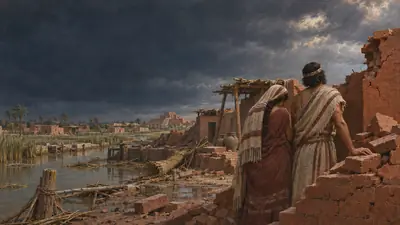
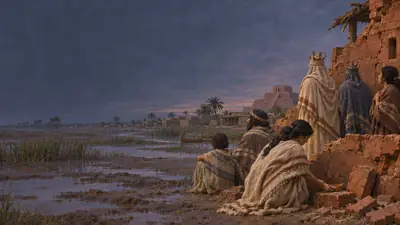
Une autre citation dit que la tempête a quitté la ville en la laissant en ruines. Elle s’adresse au père Nanna et répète que la cité est dévastée, tandis que le peuple se lamente.
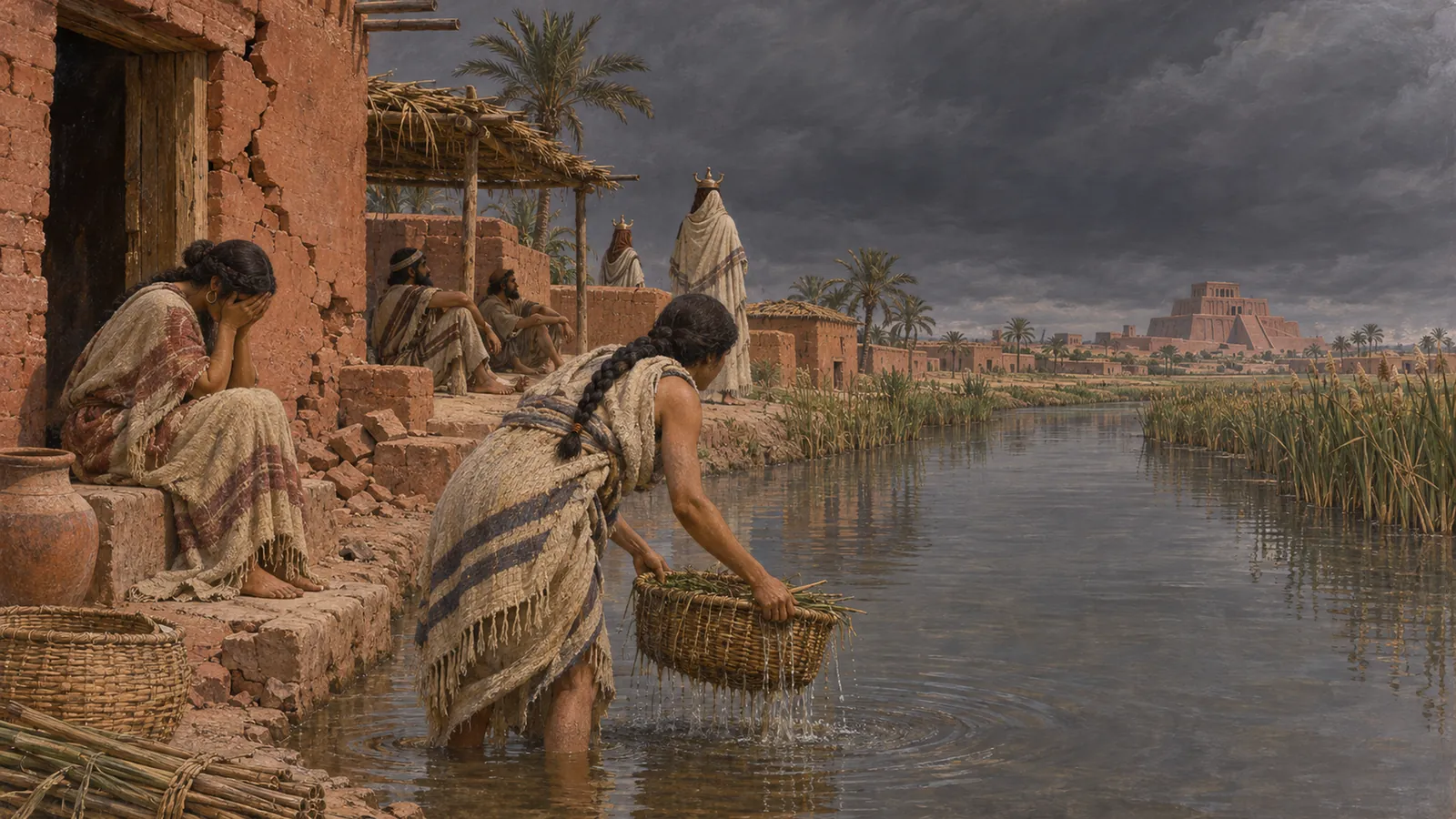
La tempête a quitté le pays, dit le poème. Sa réponse récurrente fait entendre encore une fois le deuil du peuple.
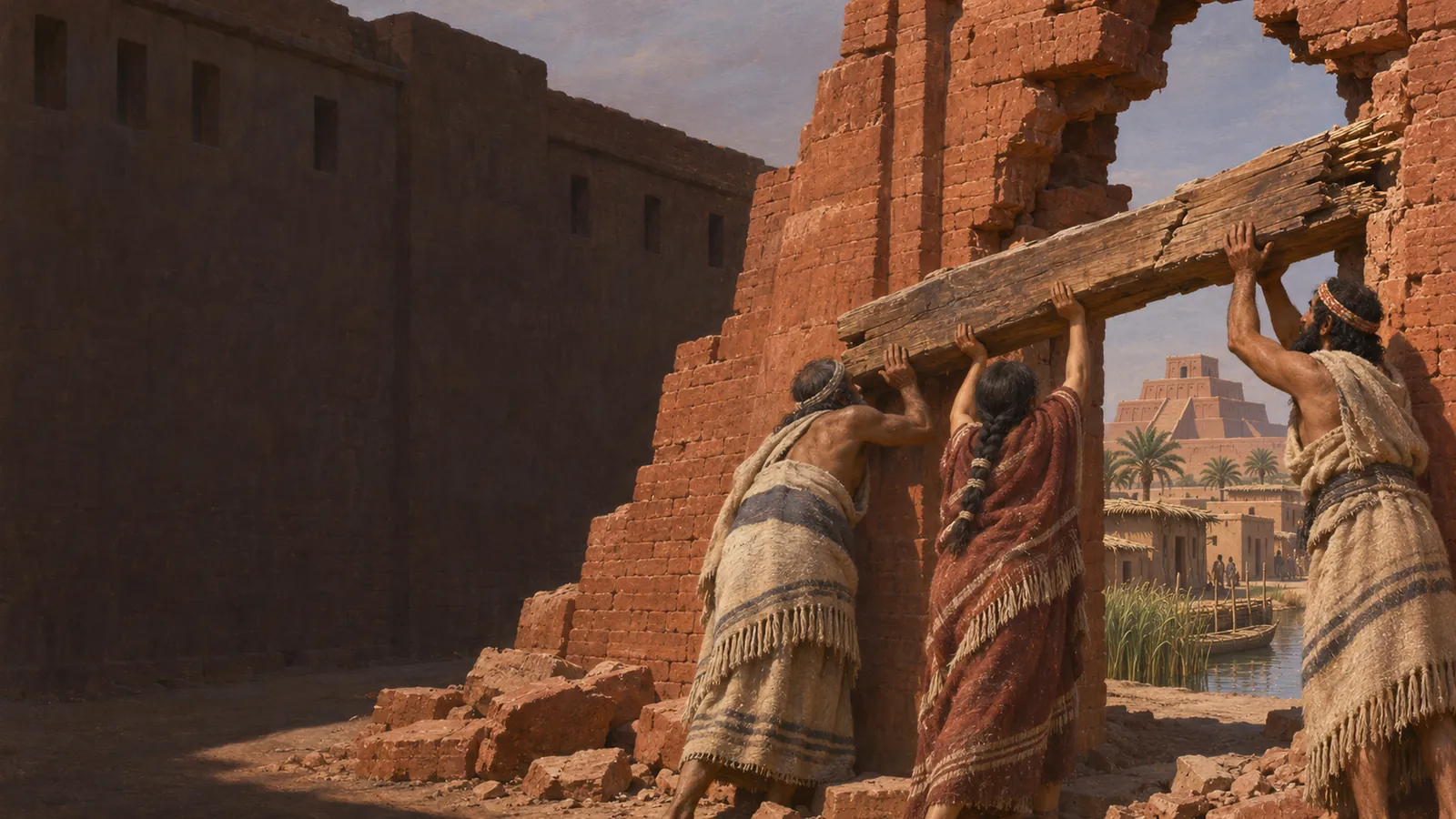
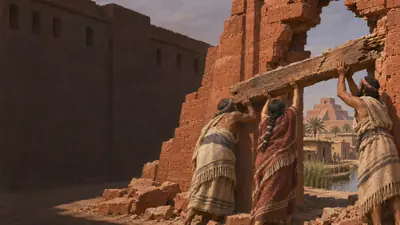
Les morts couvrent les abords de la ville. Les murailles sont éventrées, et les hautes portes ainsi que les routes sont encombrées de morts.
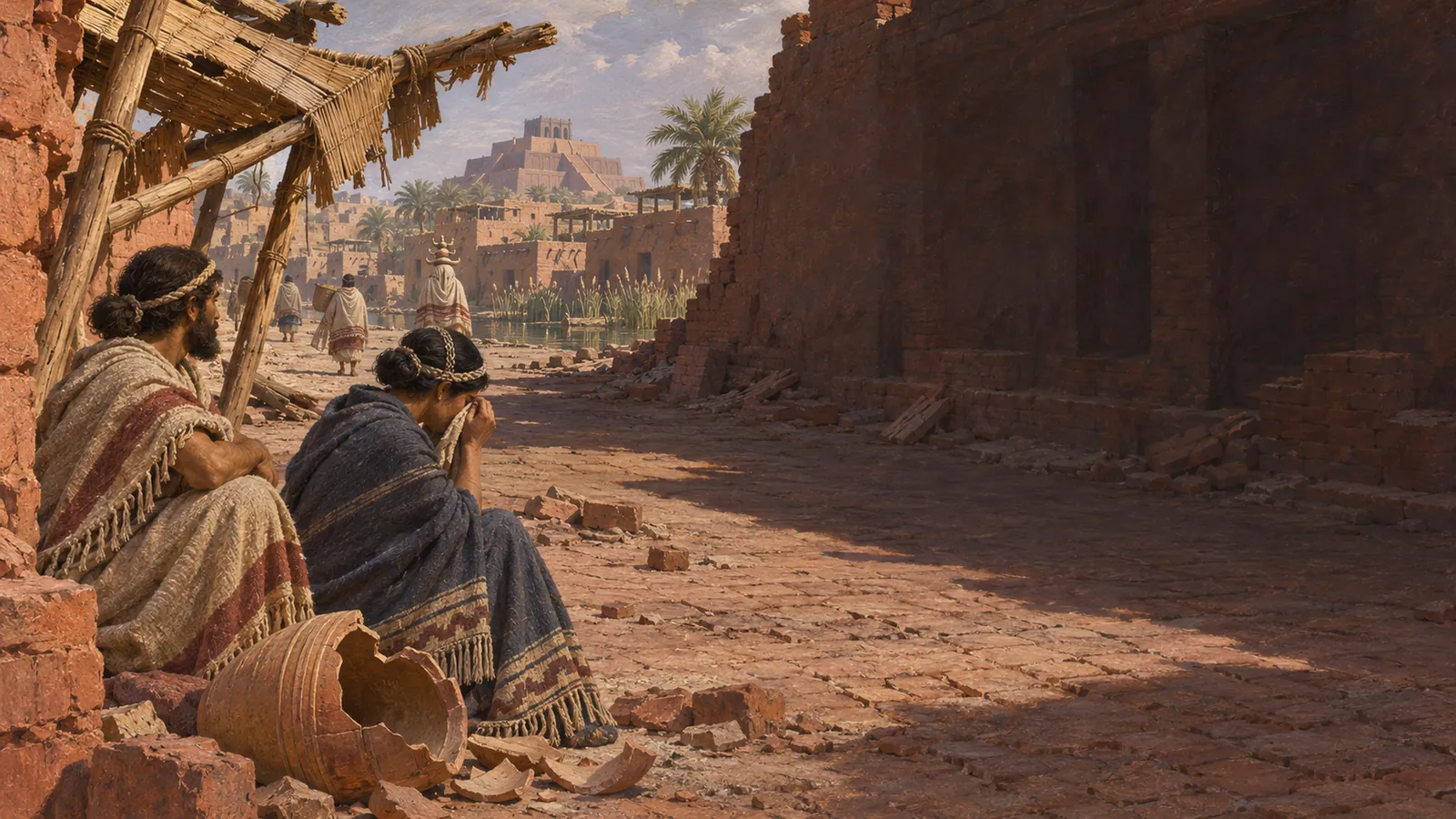
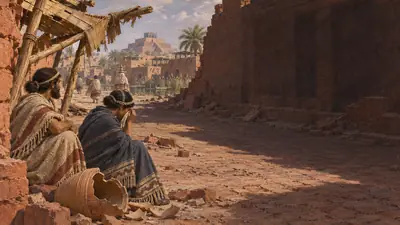
Les larges rues rassemblaient autrefois les foules pour les festins. Le poème dit maintenant que les morts y sont dispersés, dans toutes les rues et les voies.
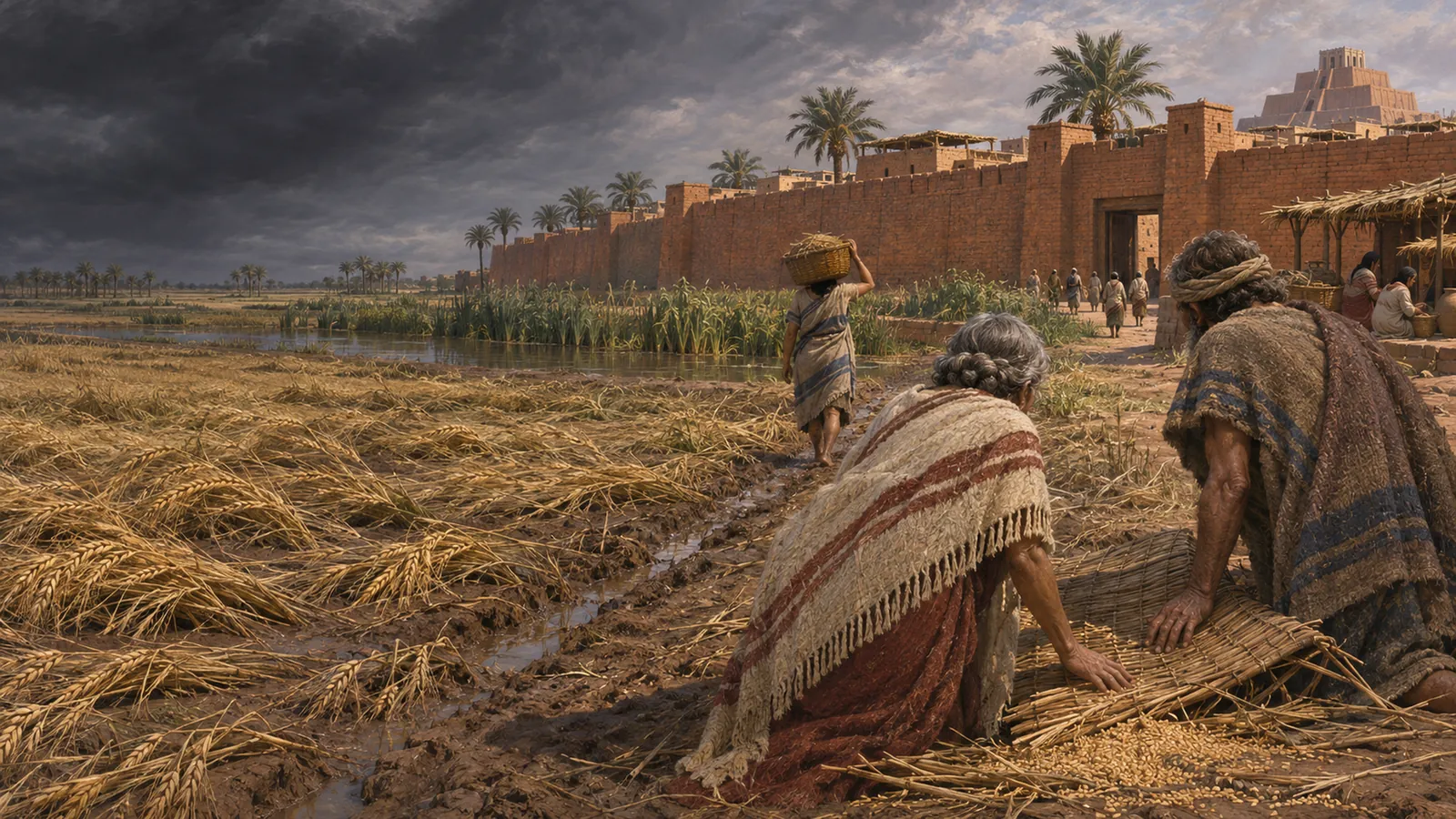
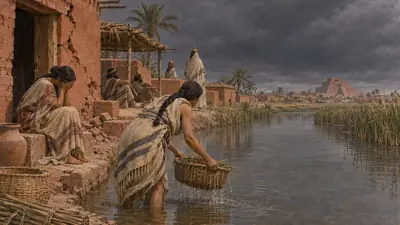
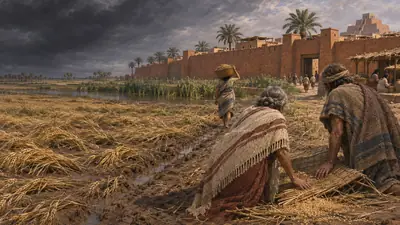
Le poème se tourne vers les champs ouverts où les danseurs se réunissaient autrefois. Il dit que les morts y gisent maintenant en monceaux.
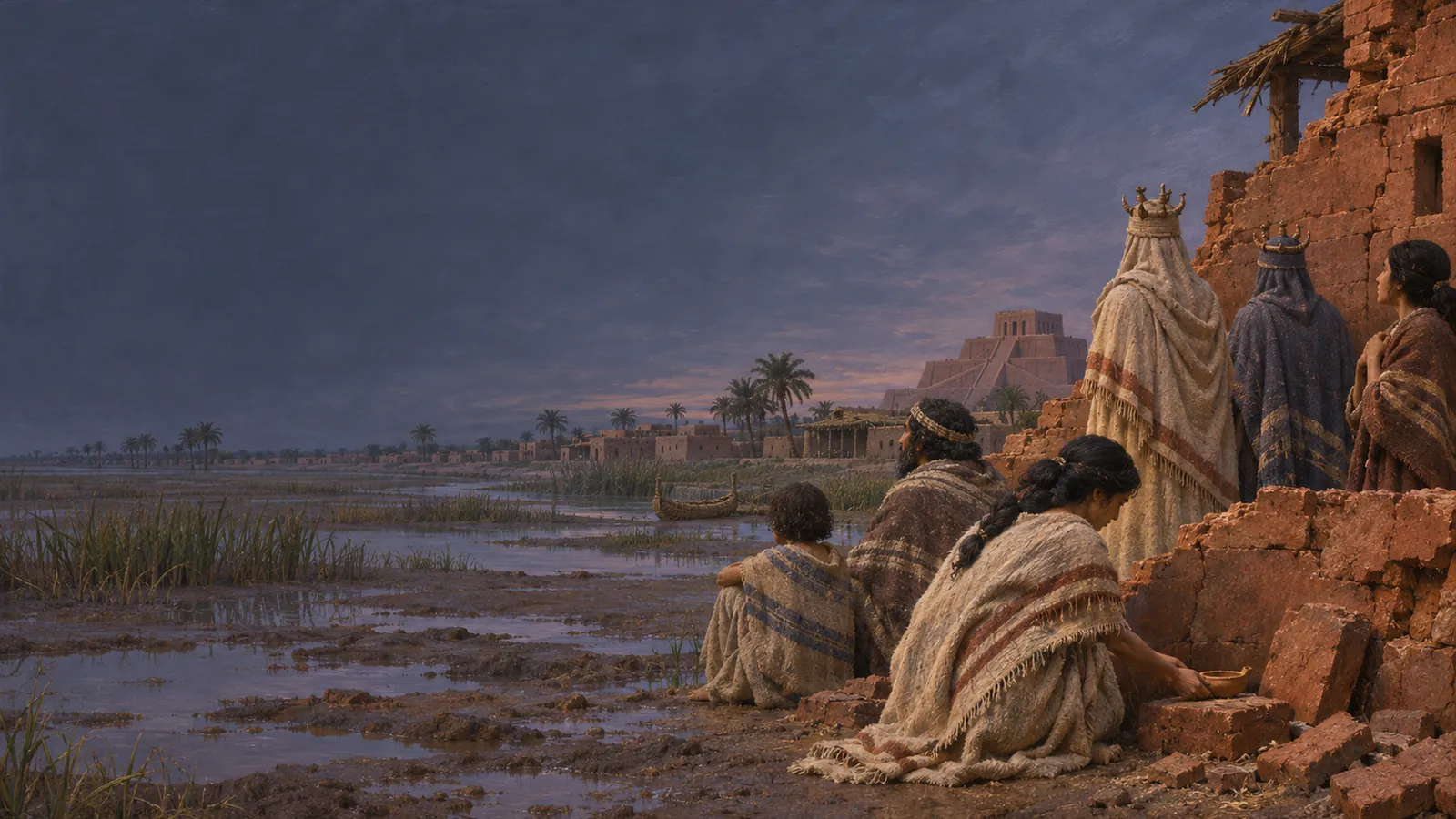
APRÈS LA TEMPÊTE
Les dernières lignes décrivent le sang du pays remplissant les creux et la décomposition des morts. Ce passage choisi se termine sur ces images de dévastation.
Fin du chapitre 2
Toutes les pages
Sources
This chapter follows three further selections from the same Ur lament printed by Thorkild Jacobsen. The first is cited in note 16 as Kramer, Assyriological Studies XII, pp. 34 and 36, ancient lines 173–189. The second is cited in note 17 as p. 38, lines 203–204. The third is cited in note 18 as pp. 38 and 40, lines 208–218. The omitted intervals, 190–202 and 205–207, fall outside this modern selection. The book supplies inclusive ranges for its quotations. H. A. The 1946 main text is retained in the 1977 Phoenix edition. The ancient poem voices destruction, mourning and the death of inhabitants.
Éditions consultées
- University of Chicago, The Intellectual Adventure of Ancient Man
- Jacobsen’s three later Ur-lament selections, pp. 141–142
- Source notes 16–18, printed p. 184
Notes sur ce récit
printed pp. 141–142 and notes 16–18, p. 184. The opening names the modern scholars and the three selected excerpts.
first quotation, cited lines 173–189, opening call. Enlil calls the storm. The people’s mourning is printed immediately afterward and recurs throughout the selection.
same quotation and group bounds, withdrawal of the winds. Enlil takes exhilarating winds from the land and good winds from Sumer, printed as Shumer in the rendering. The people mourn after each statement.
same quotation and group bounds, evil winds. Enlil summons evil winds, followed by the mourning refrain.
same quotation and group bounds, Kingaluda. Enlil entrusts the winds to Kingaluda, described as the tender of storms.
same quotation and group bounds, two renewed calls. Enlil calls the storm that will annihilate the land, then disastrous winds. The refrain follows each call.
same quotation and group bounds, helper. Enlil chooses Gibil as his helper before calling the heavenly hurricane.
same quotation and group bounds, heavenly hurricane. Enlil calls the hurricane of heaven, and the text describes its howl across the skies. The words describing its greatness and blinding quality are parenthetical in the English rendering.
same quotation and group bounds, storm over the land. The shattering storm roars across the land. The printed mourning refrain interrupts the description.
same quotation and group bounds, ships. The tempest is compared to a relentless flood wave that beats down upon and devours the city’s ships.
After the tempest and the city’s ships, Enlil gathers all the storms at the base of heaven. The people’s mourning follows. This clause closes the portion printed on p. 141, and the same quotation continues on p. 142. The sequence is retained after page 10’s ship clause.
first quotation continued, cited ancient lines 173–189. The opening of this printed page gives the great fires that herald the storm, followed by the mourning response. The subject remains Enlil from the preceding passage.
The next clauses place the searing heat of the desert on either flank of the furious winds. The final comparison is to the flaming heat of noon. Note 16 cites Kramer, *AS* XII, pp. 34 and 36, lines 173–189. Jacobsen gives the inclusive ancient range for the entire quotation, without assigning separate ancient line numbers to these translated clauses.
second quotation, cited ancient lines 203–204. Enlil orders the storm in hatred. It wears away the country, covers Ur like cloth and encloses it like a linen sheet. These are two closely paired textile comparisons in the printed rendering. Note 17 cites the same edition, p. 38, lines 203–204. Ancient lines 190–202 lie outside this selection between the first and second quotations. This is an editorial interval between excerpts.
opening of the third quotation, cited ancient lines 208–218. The storm leaves the city, which is a ruin. The next clause addresses father Nanna and repeats that the town has been left ruined, followed by the people’s mourning. Father Nanna remains an address within the quoted lament. Note 18 cites Kramer, *AS* XII, pp. 38 and 40, lines 208–218. Ancient lines 205–207 lie outside Jacobsen’s selection between the second and third quotations.
third quotation, cited ancient lines 208–218. After leaving the city, the storm leaves the country. The response repeats the people’s mourning.
third quotation, cited ancient lines 208–218. The approaches are covered by men rather than potsherds. The word “Dead” is parenthetical in the printed English. The walls gape, and the high gates and roads are piled with the dead. The comparison with potsherds belongs to the printed passage.
third quotation, cited ancient lines 208–218. The wide streets once drew feasting crowds. The poem now places scattered dead there and continues with bodies throughout the streets and roadways. The past feasts and present deaths are both explicit in this quotation.
third quotation, cited ancient lines 208–218. This change of setting follows the streets in the printed order.
The last lines describe the country’s blood filling its holes like metal in a mold. Bodies dissolve like fat left in the sun. These are the two final material similes. The two explicit comparisons are retained in this note. The selected quotation ends here, before Jacobsen resumes his prose about Enlil’s role.
Les vers antiques de chaque page
- Page 1: Jacobsen, The Intellectual Adventure of Ancient Man, 1946 text / 1977 Phoenix ed., pp. 141–142; notes 16–18, p. 184, selected lines 173–189, 203–204, 208–218
- Page 2: Jacobsen, The Intellectual Adventure of Ancient Man, 1946 text / 1977 Phoenix ed., p. 141, storm quotation; n. 16, p. 184 cites Kramer AS XII, lines 173–189, opening call and refrain
- Page 3: Jacobsen, The Intellectual Adventure of Ancient Man, 1946 text / 1977 Phoenix ed., p. 141, storm quotation; n. 16, p. 184 cites Kramer AS XII, lines 173–189, the two withdrawals of good winds
- Page 4: Jacobsen, The Intellectual Adventure of Ancient Man, 1946 text / 1977 Phoenix ed., p. 141, storm quotation; n. 16, p. 184 cites Kramer AS XII, lines 173–189, the summoning of evil winds and refrain
- Page 5: Jacobsen, The Intellectual Adventure of Ancient Man, 1946 text / 1977 Phoenix ed., p. 141, storm quotation; n. 16, p. 184 cites Kramer AS XII, lines 173–189, the entrusting of winds to Kingaluda
- Page 6: Jacobsen, The Intellectual Adventure of Ancient Man, 1946 text / 1977 Phoenix ed., p. 141, storm quotation; n. 16, p. 184 cites Kramer AS XII, lines 173–189, the annihilating storm and disastrous winds
- Page 7: Jacobsen, The Intellectual Adventure of Ancient Man, 1946 text / 1977 Phoenix ed., p. 141, storm quotation; n. 16, p. 184 cites Kramer AS XII, lines 173–189, Gibil chosen before the heavenly hurricane
- Page 8: Jacobsen, The Intellectual Adventure of Ancient Man, 1946 text / 1977 Phoenix ed., p. 141, storm quotation; n. 16, p. 184 cites Kramer AS XII, lines 173–189, the heavenly hurricane and howling skies
- Page 9: Jacobsen, The Intellectual Adventure of Ancient Man, 1946 text / 1977 Phoenix ed., p. 141, storm quotation; n. 16, p. 184 cites Kramer AS XII, lines 173–189, the shattering storm and repeated mourning
- Page 10: Jacobsen, The Intellectual Adventure of Ancient Man, 1946 text / 1977 Phoenix ed., p. 141, storm quotation; n. 16, p. 184 cites Kramer AS XII, lines 173–189, flood-wave simile and the city’s ships
- Page 11: Jacobsen, The Intellectual Adventure of Ancient Man, first Phoenix ed. (1977; main text 1946), p. 141, first quotation, cited ancient lines 173–189, closing gathering at the base of heaven and mourning response; poetic rendering by H A Groenewegen Frankfort
- Page 12: Jacobsen, The Intellectual Adventure of Ancient Man, first Phoenix ed. (1977; main text 1946), p. 142, first quotation continued from p. 141, cited ancient lines 173–189, opening fires that herald the storm and mourning response; poetic rendering by H A Groenewegen Frankfort
- Page 13: Jacobsen, The Intellectual Adventure of Ancient Man, first Phoenix ed. (1977; main text 1946), p. 142, end of the first quotation, cited ancient lines 173–189, desert heat on either flank and noon-heat comparison; poetic rendering by H A Groenewegen Frankfort
- Page 14: Jacobsen, The Intellectual Adventure of Ancient Man, first Phoenix ed. (1977; main text 1946), p. 142, second quotation, cited ancient lines 203–204, storm ordered in hatred, wearing away the country, cloth and linen-sheet similes; poetic rendering by H A Groenewegen Frankfort
- Page 15: Jacobsen, The Intellectual Adventure of Ancient Man, first Phoenix ed. (1977; main text 1946), p. 142, third quotation, cited ancient lines 208–218, opening departure from the city, ruined town, address to father Nanna and mourning response; poetic rendering by H A Groenewegen Frankfort
- Page 16: Jacobsen, The Intellectual Adventure of Ancient Man, first Phoenix ed. (1977; main text 1946), p. 142, third quotation, cited ancient lines 208–218, departure from the country and recurring mourning response; poetic rendering by H A Groenewegen Frankfort
- Page 17: Jacobsen, The Intellectual Adventure of Ancient Man, first Phoenix ed. (1977; main text 1946), p. 142, third quotation, cited ancient lines 208–218, men rather than potsherds at the approaches, gaping walls, high gates and roads; poetic rendering by H A Groenewegen Frankfort
- Page 18: Jacobsen, The Intellectual Adventure of Ancient Man, first Phoenix ed. (1977; main text 1946), p. 142, third quotation, cited ancient lines 208–218, wide streets formerly filled with feasting crowds, followed by streets and roadways; poetic rendering by H A Groenewegen Frankfort
- Page 19: Jacobsen, The Intellectual Adventure of Ancient Man, first Phoenix ed. (1977; main text 1946), p. 142, third quotation, cited ancient lines 208–218, open fields formerly filled with dancers and heaps of the dead; poetic rendering by H A Groenewegen Frankfort
- Page 20: Jacobsen, The Intellectual Adventure of Ancient Man, first Phoenix ed. (1977; main text 1946), p. 142, end of the third quotation, cited ancient lines 208–218, blood in hollows like metal in a mold and bodies dissolving like fat left in the sun; poetic rendering by H A Groenewegen Frankfort
Illustrations réalisées par IL Archive avec des outils d’IA ; le texte s’appuie sur les sources antiques (voir les sources à la fin de chaque chapitre).