Artifact
Urfa Man
An object record bringing together its image, metadata, rights, and context.
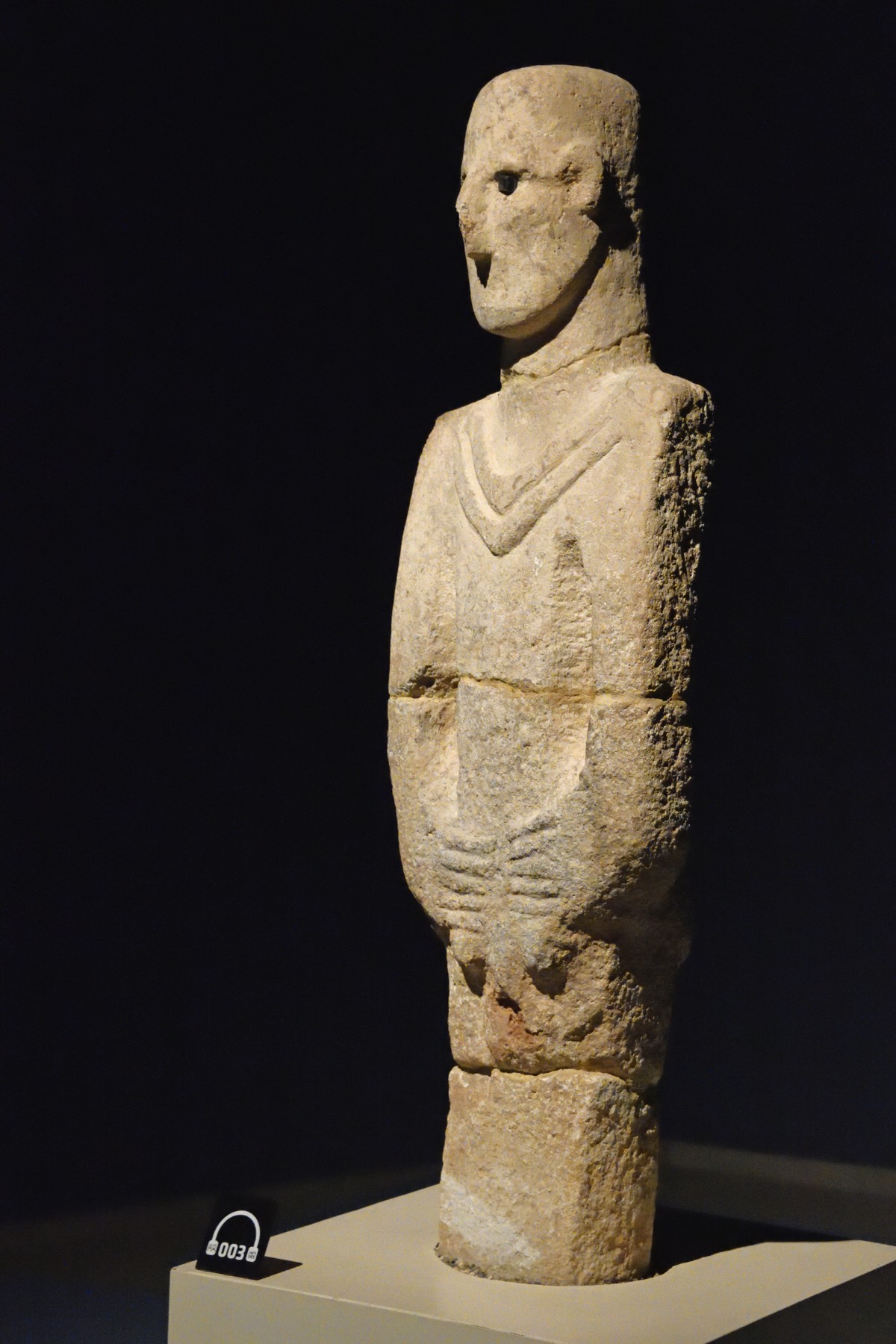
A Neolithic human statue from Yeni Mahalle in Şanlıurfa, with a face and obsidian-inlaid eyes but no represented mouth. It was not found at Göbekli Tepe; its original function remains uncertain.
Original photograph
CC BY-SA · Dosseman (Dick Osseman)
Urfa Man in the Şanlıurfa Archaeology Museum, photographed on 20 September 2019. The statue was found at Yeni Mahalle in Urfa, not Göbekli Tepe. Facial features, eyes and hands are visible; a mouth and separate legs are not represented
License · Image sourceObject details
- Title
- Urfa Man
- Rights
- CC BY-SA
Metadata
These are descriptive fields, not conclusions.
- Edition
- 2
Text
Object and context
Also known as the Yeni Mahalle statue, it was found during construction in the area of a Neolithic settlement in Urfa. A detailed find context was not recorded, limiting identification of its function. The German Archaeological Institute associates surrounding material with the Pre-Pottery NeolithicPre-Pottery NeolithicA regional term for early Neolithic phases in Southwest Asia before the local spread of pottery; it does not imply an absence of settlement, architecture or cereal processing.Glossary · Click to read the explanation B, without providing an independently precise date for the statue.[1]
It depicts a face, arms and hands, with a V-shaped necklace-like feature on the chest. A mouth and separate legs are absent; the body ends in an extension for setting it upright. The photograph documents its display in the Şanlıurfa Archaeology Museum.
Why compare it with the pillars?
Regional sculpture could represent human facial features more explicitly than the T-shaped pillars. The comparison does not establish the statue as a god or make style alone proof of a division between humans and deities.
References and notes
- Oliver Dietrich (2016). The “Urfa Man”. Tepe Telegrams, German Archaeological Institute, 14 October. Yeni Mahalle findspot, facial features and obsidian-inlaid eyes; no represented mouth or separate legs; probable PPNB context. The “oldest” wording is not used as a global judgement. Return to the text ↑
Research history
Substantive changes are retained here. Minor copy edits remain in the internal operational log.
-
Substantive record update
Archive records may be reviewed and refined as better evidence or sources become available. Suggest a correction
Suggest a correction · Suggest a source for this record
Cite this record
IL Archive, «Urfa Man», Edition 2, https://ilarchive.com/en/artifacts/urfa-man