Entity · literary_genre
Apocalyptic literature
A reference page linking a name, group, or concept to the materials that discuss it.
Writing disclosing hidden heavenly and historical knowledge, not every catastrophe.
Text
Visions employ heavenly guides, symbols and history interpreted beyond ordinary observation. Daniel is an example, but its story setting need not be the date of its visions’ composition. [1][2]
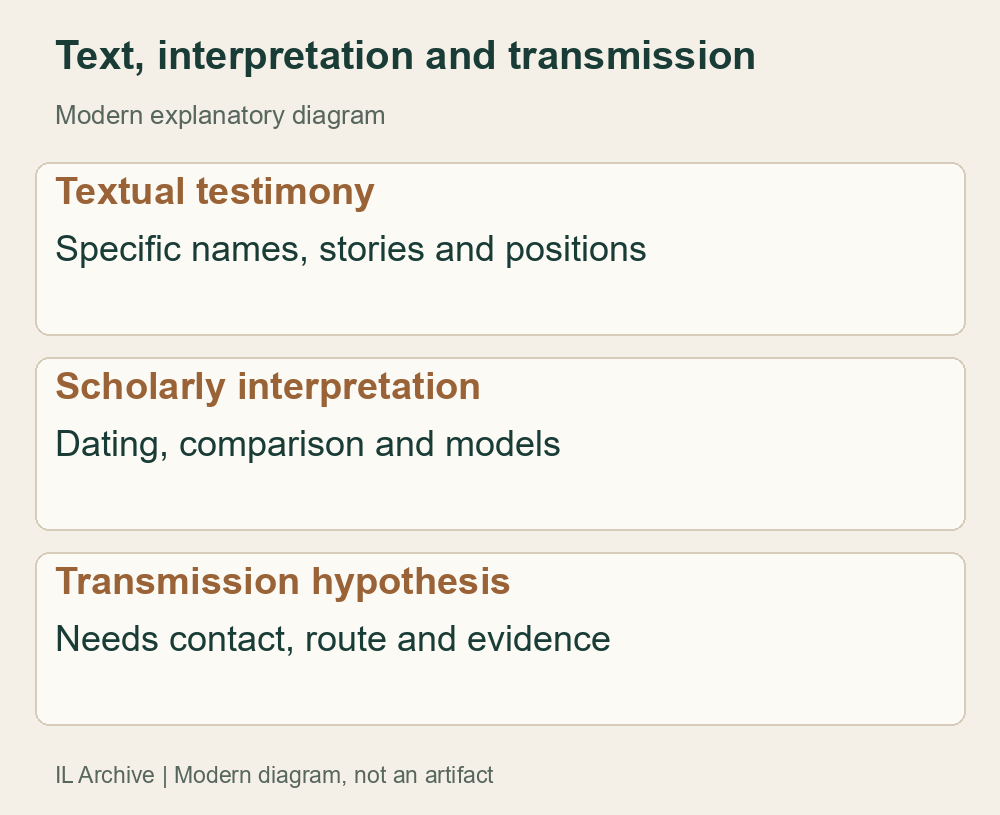
An end need not destroy the cosmos; it can end unjust rule or a corrupt age. The evidence diagram separates text and reconstruction; it is not an ancient book illustration.
References and notes
- Annette Yoshiko Reed (2005). “Angelic Descent and Apocalyptic Epistemology.” Fallen Angels and the History of Judaism and Christianity, pp. 24–57. Summary: composite text joins Genesis 5’s Enoch with Genesis 6’s divine sons; no single date for all units. Return to the text ↑
- Carol Newsom (2010). “Daniel.” Oxford Bibliographies in Biblical Studies. Introduction separates tales from visions dated to the Maccabean crisis, c.168–164 BCE. Return to the text ↑
Research history
Substantive changes are retained here. Minor copy edits remain in the internal operational log.
-
Substantive record update
Suggest a correction · Suggest a source for this record
Cite this record
IL Archive, «Apocalyptic literature», Edition 2, https://ilarchive.com/en/entities/apocalyptic-literature