Entity · Concept
Clay envelopes
A reference page linking a name, group, or concept to the materials that discuss it.
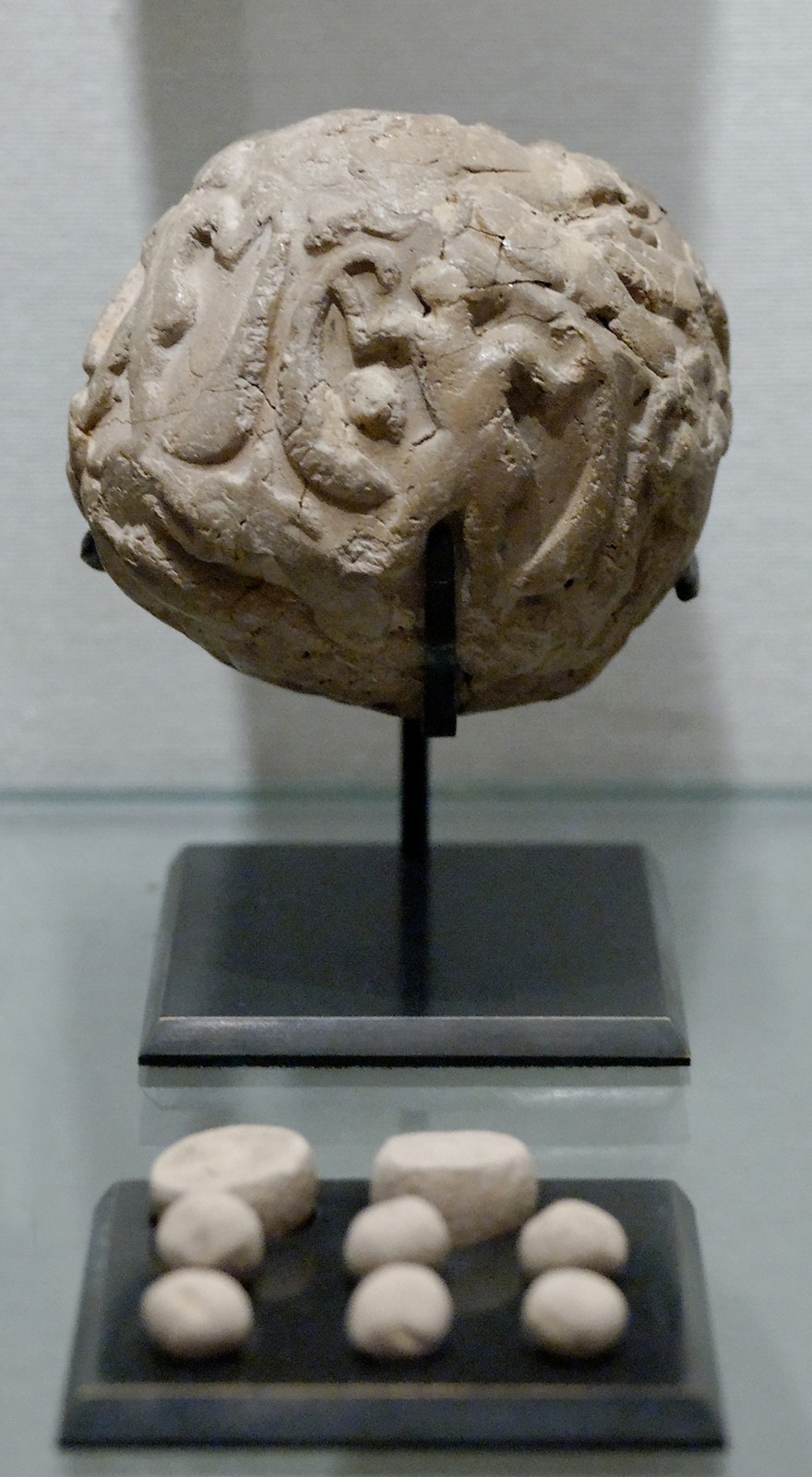
Hollow clay envelopes, sometimes enclosing tokens and bearing seals or numerical impressions; fourth-millennium administrative recording devices.
Text
Interior and surface
An envelope could preserve an account and make opening evident; some carry information outside too. Bulla is a broader term: this entry concerns hollow envelopes, not every clay sealing. Their existence does not establish the ancestry of every written tablet.[1]
References and notes
- Kathryn Kelley, Mattia Cartolano & Silvia Ferrara (2025; online 5 November 2024). Seals and signs: tracing the origins of writing in ancient South-west Asia. Antiquity 99(403), 64–82. doi:10.15184/aqy.2024.165. Introduction, Information technologies, Inter-related systems, and conclusion: recording and sealing precursors and proposed textile/vessel sign relationships. Table 1 not visually inspected; broad dates are approximate, with IV/III ranges independently checked in CDLI. Return to the text ↑
Research history
Substantive changes are retained here. Minor copy edits remain in the internal operational log.
-
Substantive record update
Suggest a correction · Suggest a source for this record
Cite this record
IL Archive, «Clay envelopes», Edition 2, https://ilarchive.com/en/entities/clay-envelope