Entity · theological_term
Homoousios — consubstantial
A reference page linking a name, group, or concept to the materials that discuss it.
Term in the 325 creed relating the Son’s substance to the Father, debated in reception.
Text
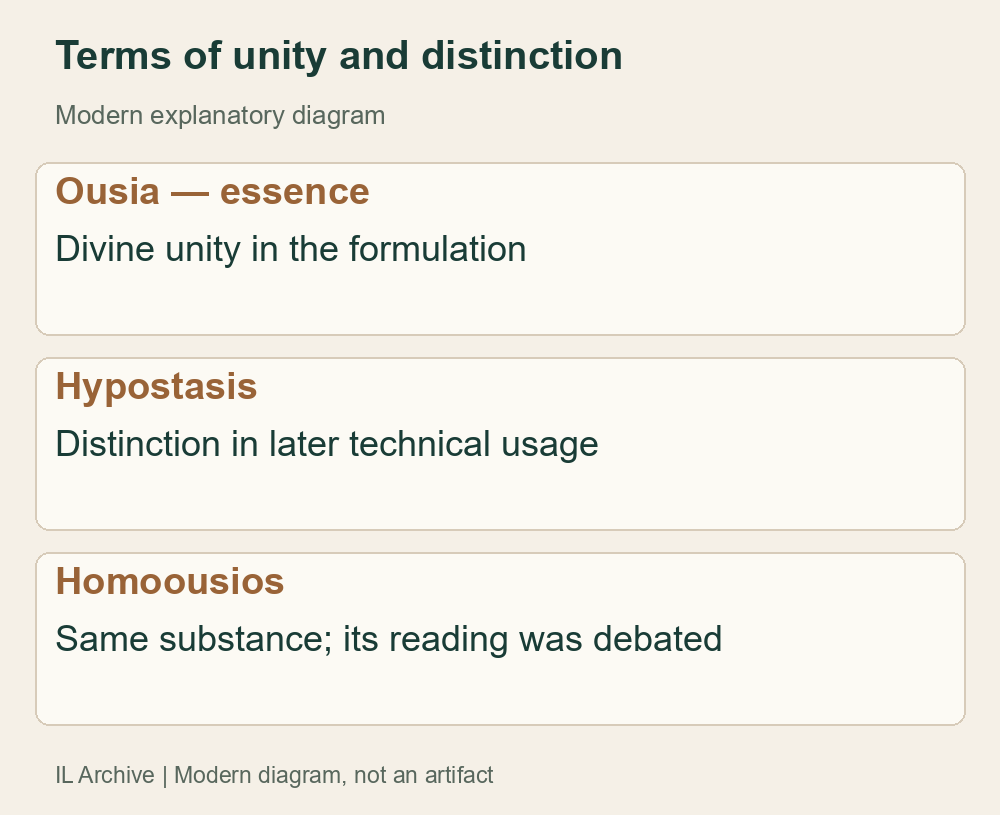
Usually translated of the same substanceOusia — essenceGreek term for essence or nature, with meanings changing between authors.Glossary · Click to read the explanation or consubstantial. Eusebius explains accepting the word and rejects bodily division of the Father. A dictionary alone cannot determine every participant’s understanding. [1]
The modern diagram displays a term and its usage history, not a physical mechanism of divine relationship.
References and notes
- Eusebius of Caesarea, Letter on the Council of Nicaea, sections 1–11, transmitted by Athanasius. Displayed letter read: Eusebius credits Constantine’s recommendation and explanation of homoousios and explains acceptance. A participant defending his position, not neutral minutes. Return to the text ↑
Research history
Substantive changes are retained here. Minor copy edits remain in the internal operational log.
-
Substantive record update
Suggest a correction · Suggest a source for this record
Cite this record
IL Archive, «Homoousios — consubstantial», Edition 2, https://ilarchive.com/en/entities/homoousios