Entity · Concept
Rebus principle
A reference page linking a name, group, or concept to the materials that discuss it.
Using a word sign for its sound in another similarly pronounced word, extending writing beyond depictions of things towards language.
Text
Meaning and sound
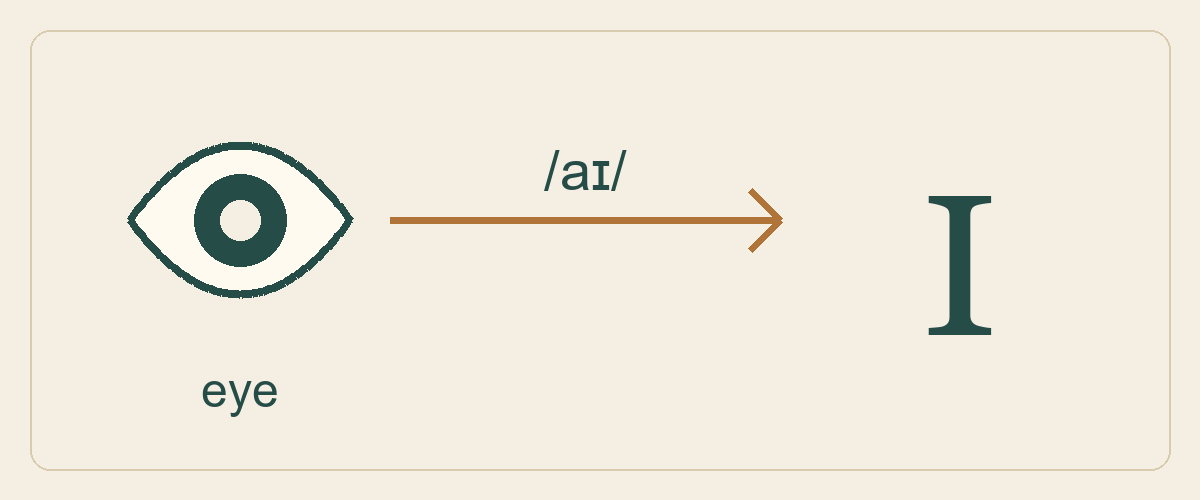
In a modern English illustration, an eye image can represent I because both are pronounced /aɪ/. This is not an ancient sign or use of an initial letter. Woods gives the Sumerian reed sign gi used for the similarly pronounced verb “return.” Phonetic use grew gradually; it did not immediately produce an alphabet.[1]
References and notes
- Christopher Woods (2010; corrected reprint 2015). The Earliest Mesopotamian Writing, in Visible Language: Inventions of Writing in the Ancient Middle East and Beyond, OIMP 32, pp. 33–50. Selected pp. 33–37 and 43–45: Uruk, secondary deposits, sign forms, language, rebus and phonetic development. Page 43 visually checked. Not the complete book. Current CDLI ranges used instead of treating the older 3200 BCE convention as a fixed boundary. Return to the text ↑
Research history
Substantive changes are retained here. Minor copy edits remain in the internal operational log.
-
Substantive record update
Suggest a correction · Suggest a source for this record
Cite this record
IL Archive, «Rebus principle», Edition 2, https://ilarchive.com/en/entities/rebus-principle