Entity · Concept
Composite statue
A reference page linking a name, group, or concept to the materials that discuss it.
A sculpted image assembled from multiple components or materials; missing parts do not automatically reveal identity or material.
Text
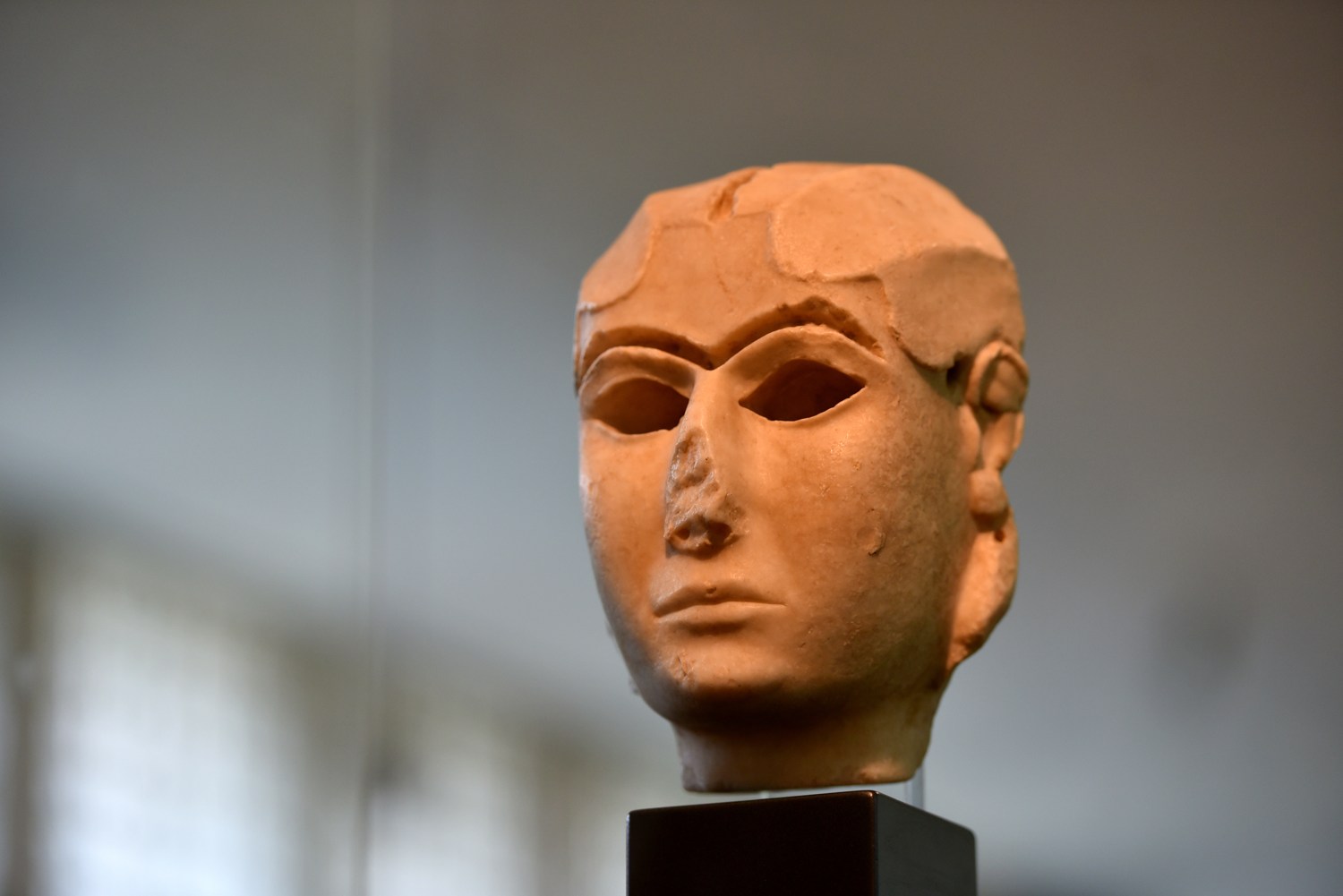
A composite statue combines separately made components or different materials, such as a stone element with inlays or an attached hair covering. Joins, holes, grooves and material traces support identifying assembly rather than conjecture alone.
The WarkaUrukAncient city at Warka in southern Iraq, a major urban centre around 3200 BCE that preserved early writing and accounting tablets.Glossary · Click to read the explanation Head retains eye sockets and eyebrow grooves; archaeological description also identifies possible fastenings for a wig or headdress. They imply an appearance richer than bare stone, without preserving the full body or naming every lost material. Interpreting the head as part of a composite statue is probable; identifying the figure as InannaInanna / IshtarProminent Mesopotamian goddess with a major centre at Uruk, whose parentage and cult traditions vary rather than forming one fixed genealogy.Glossary · Click to read the explanation is a separate question. The photograph shows the surviving head, not an imagined body.[1][2]
References and notes
- Ann Louise Perkins (1949). The Comparative Archeology of Early Mesopotamia. Studies in Ancient Oriental Civilization 25. University of Chicago. Printed pp. 135–136: vase, ruler and priestess possibilities; pp. 150–151: marble head, inlays, wig/headdress fastenings and modelling. Selected passages, not the entire book. Older chronology and terminology balanced against a modern catalogue. Return to the text ↑
- Clemens Reichel (2008). Cataloging the Losses: The Oriental Institute’s Iraq Museum Database Project. In G. Emberling & K. Hanson (eds), Catastrophe! The Looting and Destruction of Iraq’s Past, OIMP 28; with D. George & M. Gibson, The Looting of the Iraq Museum Complex. Selected pp. 22–25 on looting and the reconstructed vase base; p. 57, Figure 3, visually inspected head entry: ca. 3000 BCE, white marble, height 21 cm. P. 59, Figure 5: four bands and ancient repair. Not the full volume. Recovery month varies internally and is not resolved here. Return to the text ↑
Research history
Substantive changes are retained here. Minor copy edits remain in the internal operational log.
-
Substantive record update
Suggest a correction · Suggest a source for this record
Cite this record
IL Archive, «Composite statue», Edition 2, https://ilarchive.com/en/entities/composite-statue