Entity
Eros
A reference page linking a name, group, or concept to the materials that discuss it.
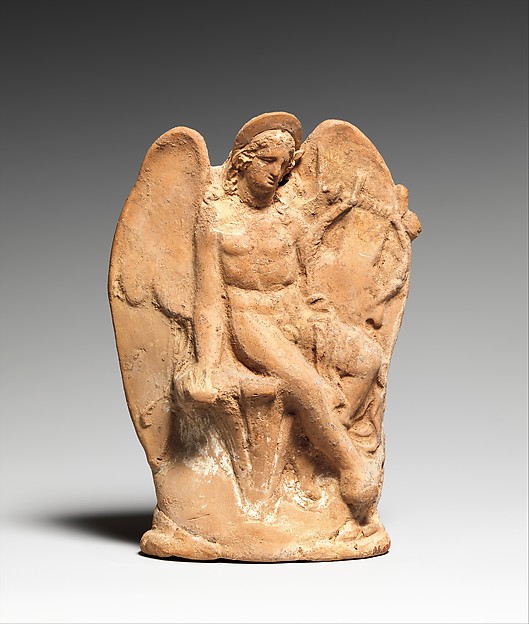
Eros is the Greek god of love, represented with wings in ancient art.
Last reviewed:
Text
Eros is the Greek god of love, represented with wings in ancient art.
The Metropolitan Museum holds a terracotta figure from the first half of the fourth century BCE, described as Greek, probably Attic. A different vessel from the middle of that century includes Eros in a scene the museum relates to the AdoniaAdonia: the celebration of AdonisAdonia: a festival associated with Adonis, attested through women’s laments and ephemeral plantings; its surviving descriptions vary among Athens, Alexandria, and Byblos.Glossary · Click to read the explanation and AdonisAdonis: death and return in differing narrativesA Greek mythic figure associated with Aphrodite, lament, and the Adonia; ancient sources diverge on his birth, death, divided residence, and ritual return.Glossary · Click to read the explanation gardens. These are separate artistic objects; this entry’s image shows the figure, not the vessel scene. [1] [2]
References and notes
Suggest a correction · Suggest a source for this record
Cite this record
IL Archive, «Eros», https://ilarchive.com/en/entities/eros-greek-god