Person · Figure
Anitta of Nesha
- Names
- Anitta · Anitta of Kuššara · Anitta of Nesha · Anittas
- Region
- وسط الأناضول
Anitta ruled in central Anatolia in the eighteenth century BCE. An inscribed bronze object and legal tablets attest him independently of the later Hittite copies of his proclamation.
Estimated reading time: 5 min Published Last reviewed:
Share article
Text
Introduction
Anitta was a ruler in central AnatoliaAnatoliaAnatolia is the region occupying the Asian part of present-day TurkeyGlossary · Click to read the explanation in the eighteenth century BCE. His father Pithana took Nesha, the city called Kanesh in Old Assyrian records and identified with modern Kültepe. Anitta appears in documents written during the period of Assyrian trade there. A bronze object found on the upper mound names his palace. A different source, a Hittite composition known as the Proclamation of Anitta, gives his account of campaigns, religion and royal authority. Its surviving manuscripts were written after his lifetime. [1][2][3]
The king in documents from Kanesh
Several legal records from the lower town were written with a formula naming an official or ruler before whom a transaction took place. A tablet concerning the redemption of a family names Anitta as king alongside Perwa-kammalia, who bears a title conventionally rendered chief of the staircase. In another document Anitta appears with that office while Pithana is called king. Such records place the two men in the administration of the city and show Anitta bearing different titles. Their evidence concerns named people and transactions. It gives little information about the wars that the royal text makes central. [1][3]
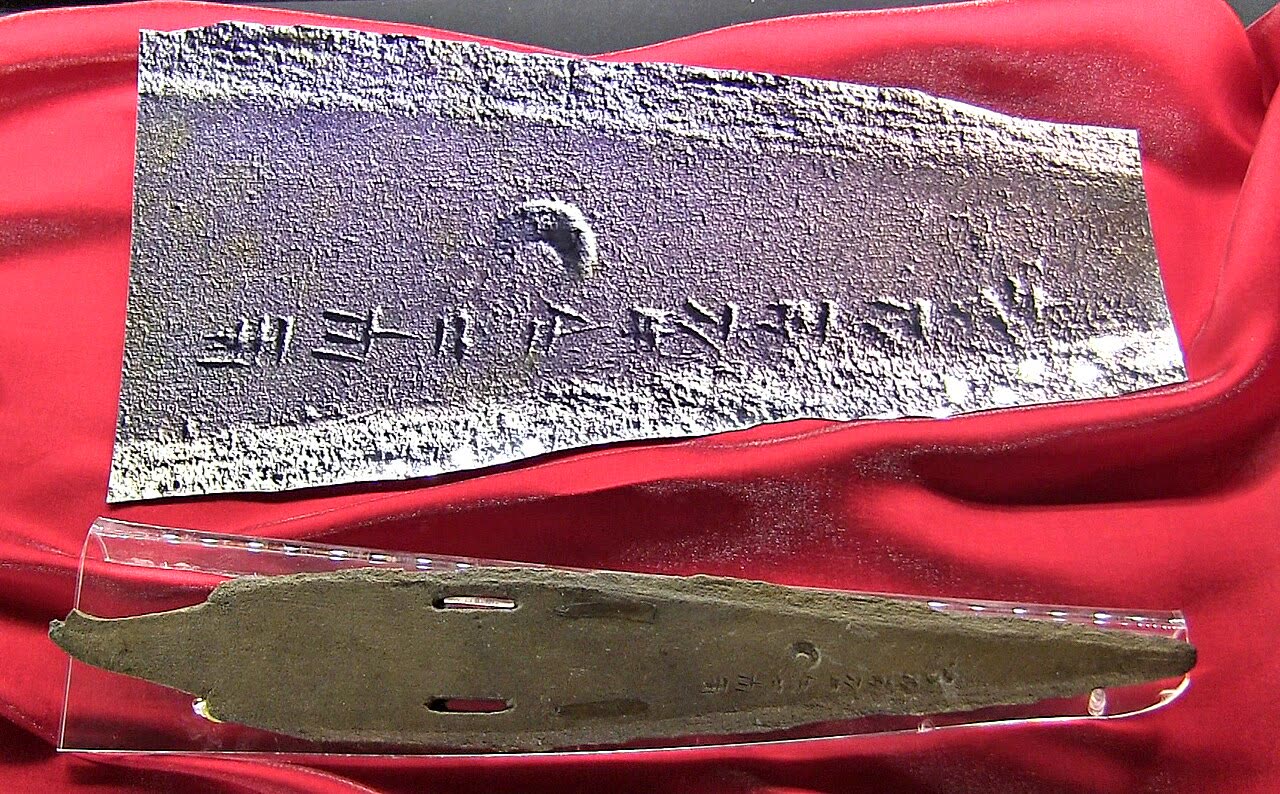
In 1954 excavators on the upper mound found an inscribed bronze object among burnt material from a substantial building later interpreted as a palace. The short legend identifies the palace of Anitta and calls him ruler. The piece is often called a dagger, although Lisa Wilhelmi describes it as a spearhead. What can be read on it is more important for identifying the owner than the modern terminology for the shape. Its inscription and find circumstances connect Anitta's name to the upper town. The legal tablets record the same name in a different part of the settlement and in a different kind of writing. [1][3]
What Anitta says about Nesha and Hattusa
The Proclamation starts by naming Anitta, son of Pithana, and Kuššara. The positioning of the words can raise a question about which man bears the title of king of Kuššara in the opening line. The narrative itself calls Pithana the king who came from Kuššara and took Nesha at night. It then credits him with treating the inhabitants as parents. The phrase emphasizes the conqueror's conduct toward the population and helps explain why Anitta presents the fall of Nesha as the beginning of a continuing royal connection to the city. In the following passage Anitta describes suppressing a revolt after his father's death. [2][4]
The composition links political authority with the possession of sacred images and the favor of gods. Anitta claims to have recovered from Zalpuwa the cult image earlier carried away from Nesha. He also recounts his conflict with Piyushti of HattusaHattusha, Hittite capitalHittite capital near Boğazkale in present-day Turkey, preserving witnesses to treaty traditions.Glossary · Click to read the explanation. The account says he captured Hattusa at night, sowed the site with cress and called on the Storm God to strike a future king who tried to resettle the place. At Nesha, he says that he built fortifications and temples and dedicated goods brought from his campaigns. The two episodes make different claims about the king's duties toward the cities he controlled. The use of divine sanction is part of the argument the text makes for Anitta's authority. [2]
Near the end comes the episode of the ruler of Purushhanda. In the preserved account he brings an iron throne and an iron crook. Anitta takes him back to Nesha and assigns him a seat on his right. The objects could be understood as signs of submission, but the text is fragmentary, and the seating implies a specific relationship whose terms are unwritten. Jan Gerrit Dercksen compared other instances in which ancient rulers sent thrones, including gifts that accompanied assurances of alliance or protection. The comparison leaves more than one way to understand the exchange of costly objects in Anitta's account. [2][3]
A royal account with a later history
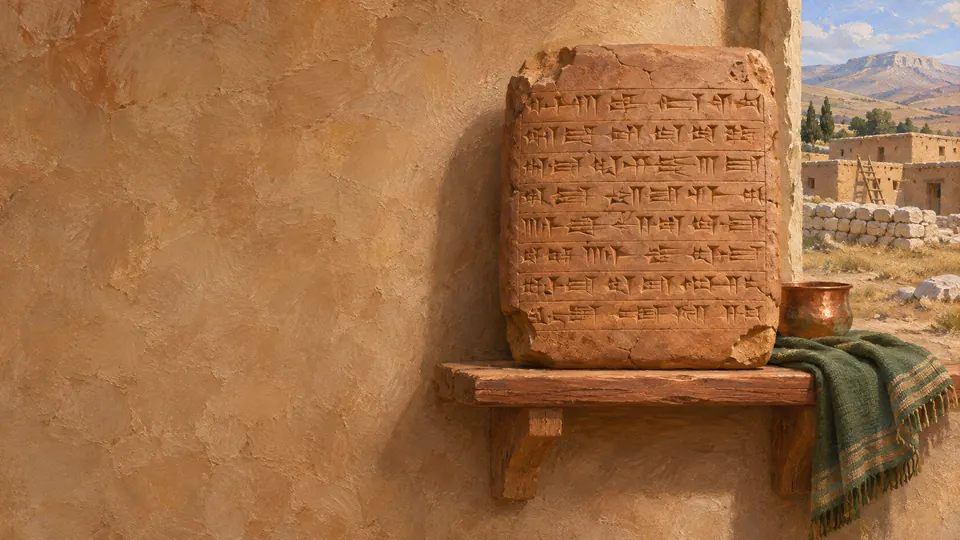
The Hittite manuscripts were kept at Hattusa, the city that Anitta says he destroyed and cursed. The best preserved tablet, KBo 3.22, is in an Old Hittite hand. Later fragments preserve parts of the work, sometimes with passages from a different royal composition. One later fragment preserves a related wording that varies from the other copies. The manuscripts show that Hittite scribes returned to the text across successive periods. The references in their versions to a tablet and Anitta's gate have led scholars to ask whether the composition preserves the words of an inscription that once stood at Nesha. The position of the gate passage within the surviving text suggests that it may combine more than one earlier account. The original form and language of any such sources remain uncertain. [1][5][6]
The two groups of evidence make it possible to speak of a historical ruler and of a later tradition about him with different degrees of precision. The legal tablets give Anitta a place among named officials of Kanesh. The inscribed bronze links him to a palace, and the manuscripts describe how he presented his rule in relation to other cities and their gods. The destruction and curse of Hattusa are known chiefly through that last group. Its later preservation at Hattusa shows the interest the city's scribes took in the story of a ruler who had once spoken against it. [1][2][3][5]
References and notes (6)
- Lisa Wilhelmi, Materiality and Presence of the Anitta Text in Original and Secondary Context Pp. 229–233, Old Assyrian records, inscribed bronze, manuscript differences and possible originals Return to the text ↑
- Harry A. Hoffner Jr., Proclamation of Anitta of Kuššar Context of Scripture 1.72, translation and notes, §§1–19 Return to the text ↑
- Jan Gerrit Dercksen, Anitta and the Man of Purušhanda Old Assyrian attestation, regnal setting and comparison with royal gifts Return to the text ↑
- TITUS, Goethe University Frankfurt, Der Anitta-Text Transliteration and translation after Erich Neu, opening lines and Pithana at Nesha Return to the text ↑
- Alvise Matessi and Federico Giusfredi, Society, Culture, and Early Language Contact Pp. 93–95, Kanesh ruler sequence and the relation between later manuscripts and contemporary evidence Return to the text ↑
- LAMAN, Hittite and Anatolian Names, CTH 1 Proclamation manuscript and name concordance, including KBo 3.22 and KUB 26.71 Return to the text ↑
Suggest a correction · Suggest a source for this record
Cite this record
IL Archive, «Anitta of Nesha», https://ilarchive.com/en/people/anitta
Continue reading