Person · Figure
Nebka, a royal name in Egypt's early dynastic record
- Names
- Nebka
- Region
- Egypt
Nebka appears as an early Egyptian king in the Abydos and Turin lists and in a story in the Westcar Papyrus. A broken seal links the name to Horus Sanakht in one influential reconstruction of the Third Dynasty.
Estimated reading time: 5 min Published Last reviewed:
Share article
Text
Introduction
Nebka is an Egyptian royal name remembered in early accounts of the Old Kingdom. The Abydos King List and the Turin Royal Canon place Nebka before Djoser. In the Westcar Papyrus, he is the ruler of an earlier court whose wonders are recounted to Khufu. A broken sealing from Beit Khallaf is central to the proposal that Nebka was the throne name of Horus Sanakht. The name is secure in the later sources, while its relationship to the damaged inscription and its place in the early royal succession remain matters of interpretation. [1] [2] [3]
A king in a story told to Khufu
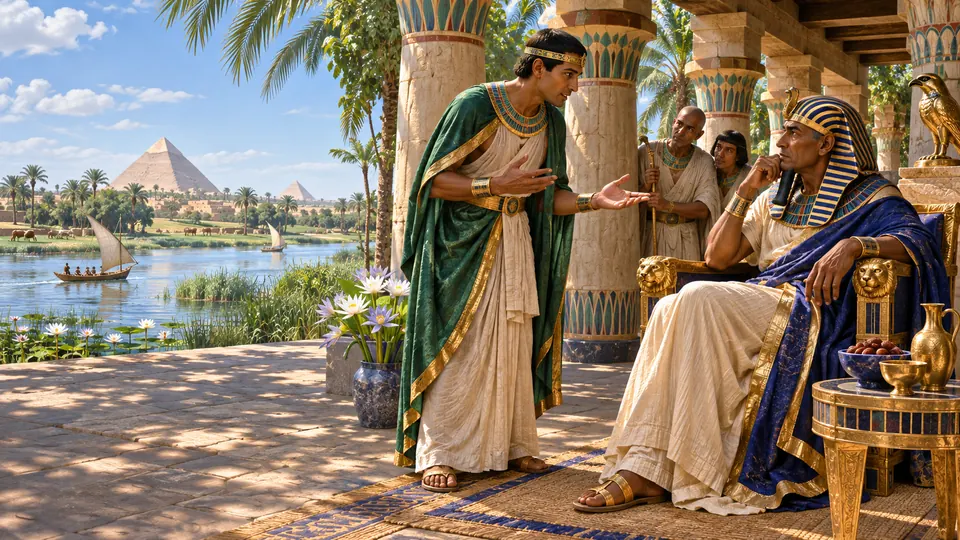
The Westcar Papyrus presents a series of tales told at the court of Khufu. In the episode set in Nebka's time, a chief lector priest named Weba-iner discovers that his wife has been meeting another man. He makes a crocodile of wax and directs his caretaker to throw it into the lake when the man enters the water. In the story it grows to seven cubits, seizes the man and holds him until the priest calls it back. Nebka is brought to see the marvel after seven days. [2] [4]
The crocodile brings the man back from the lake, and the priest takes the creature in his hand in the form of wax again. After hearing the priest's account, Nebka orders the crocodile to take the man away and has the wife put to death. The teller addresses Khufu and identifies Nebka as his ancestor. In the frame of the story, Khufu commands offerings for the earlier king and the priest. The verdict and the offerings are parts of the tale's depiction of royal authority. The Berlin museum dates the surviving hieratic manuscript to the Seventeenth Dynasty, many centuries after the early kings who appear in the stories. [2] [4]
Reading Beit Khallaf sealing 7
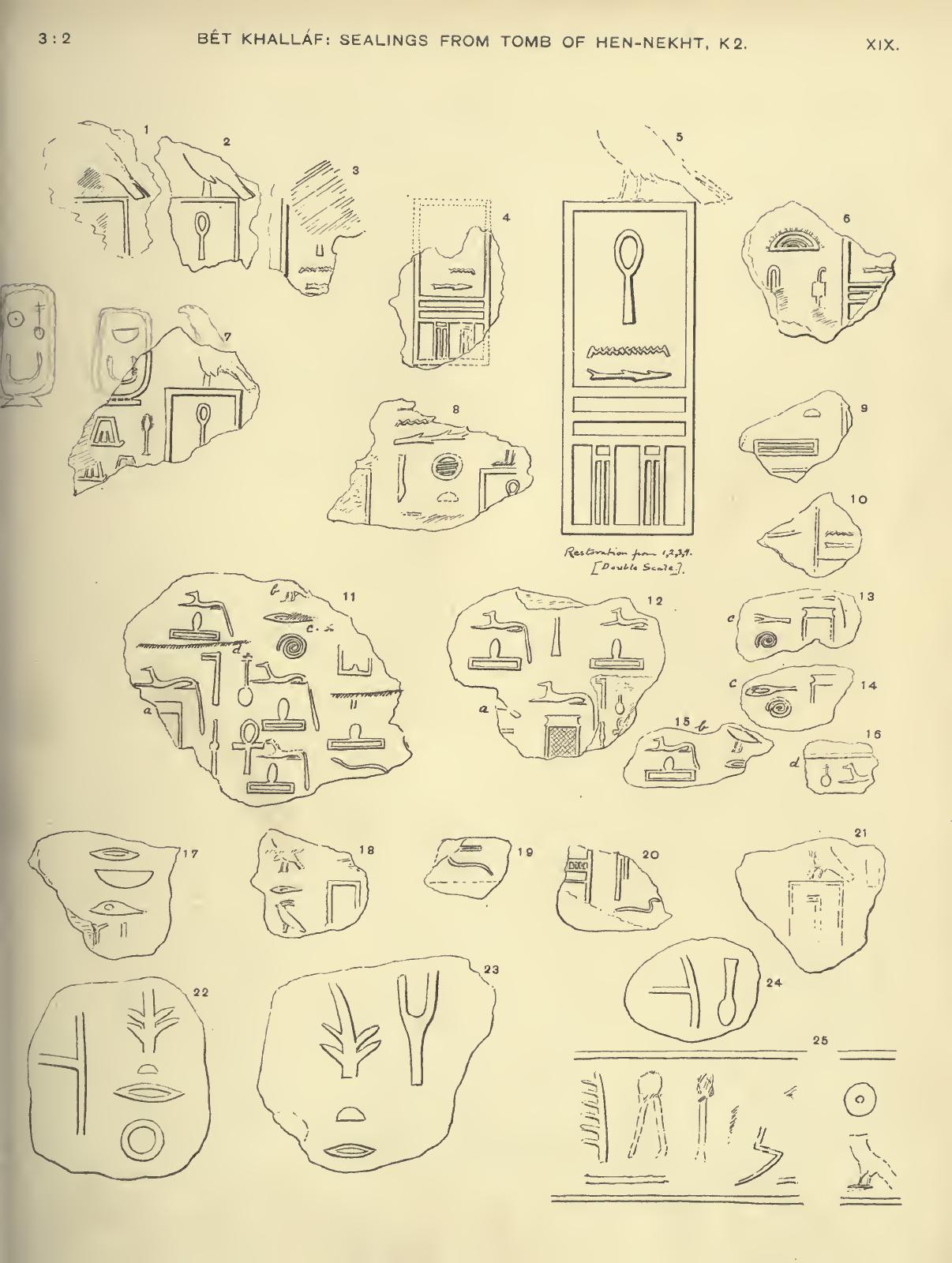
John Garstang's excavation of Beit Khallaf in 1900–01 included the large tomb he numbered K2. The report illustrates clay sealings there in plate XIX. Garstang described a broken impression, number 7, beside a royal name and suggested that it might preserve part of an oval cartouche. He also said the fragment fell short of establishing the king's identity from these traces. Other impressions from the tomb carry the Horus name now generally written Sanakht. The rectangular royal enclosure surmounted by a falcon is called a serekh. The possible cartouche stands beside it on the damaged impression. [3] [5] [6]
Toby Wilkinson describes the lower part of the suspected cartouche as containing a sign resembling an early form of ka. Restoring the remaining name as Nebka then gives Sanakht a Horus name and a throne name on one object. Ronald Leprohon adopts that identification in his survey of royal titulary. The distinction between the traces and the restoration is important. The sealing preserves the proposed final sign and a possible enclosing line. The full reading depends on supplying the missing portion and relating the candidate to the name known from elsewhere. [1] [3] [5]
Two kinds of royal chronology
The name Nebka appears as the fifteenth entry in the Abydos King List in the temple of Seti I. Leprohon notes that both that list and the Turin Canon place him before Djoser. The Museo Egizio explains that the Turin list is written in hieratic on the back of a papyrus whose front carries a tax register from the reign of Ramesses II. Its compilers set out names and reign lengths. The manuscript's sequence is a source for what later Egyptian scribes recorded about the succession. The conditions of survival are visible in its modern reconstruction, which includes the rearrangement and addition of fragments. [1] [7] [8]
Wilkinson uses evidence from the Third Dynasty itself to argue that Sanakht belongs toward the end of the dynasty. The argument draws on the unusual early use of the cartouche and on a sealing from ElephantineElephantine / YebElephantine / Yeb, near Aswan at the Nile’s First Cataract, preserves a long-lived Egyptian town, temples of Khnum and Satet, and Persian-period garrisons. Aramaic papyri document several communities, including Judeans and Yaho’s temple, whose rebuilding was sought in 407 BCE; claims and archaeological interpretations must be distinguished.Glossary · Click to read the explanation with the Horus name and an official title associated with a royal estate. He connects the context tentatively to administrative activity near a small step pyramid dated late in the dynasty. Tessa Dickinson's study also discusses the Elephantine evidence and points out the limitations of the stratigraphy for connecting the sealing to that structure. The sealings from Djoser's North Temple at Saqqara likewise offer limited help with direct succession because the excavated context is later than the pyramid. [3] [9]
A name remembered after the reign
There are further traces of the royal name that do not depend on the broken cartouche. William Stevenson Smith discusses the title of Akhetaa, a priest associated with Nebka in a tomb chapel at Saqqara, and a named estate recorded in the funerary temple of Nyuserre. These references preserve the name in contexts of royal cult and property. The lists preserve it in an ordered succession, and the Westcar narrator puts it to work in court literature. Smith also reviews a reconstruction that assigns part of an annals register to Nebka. He points to the difficulty of matching the surviving year-count with the reign length given in the Turin Canon. Those contexts explain why Nebka can be recognised as a king of Egyptian tradition even while the identification with Sanakht and the precise sequence of reigns remain debated. [1] [2] [3] [8]
References and notes (9)
- Ronald J. Leprohon, The Great Name: Ancient Egyptian Royal Titulary 2013, p. 33 and nn. 13–14. Read the royal names, the sealing identification and the positions in the later lists. Return to the text ↑
- Bibliotheca Alexandrina, Digital Library of Inscriptions and Calligraphies, The Westcar Papyrus English translation of the second tale, including Nebka's orders and Khufu's offerings. Return to the text ↑
- Toby A. H. Wilkinson, Early Dynastic Egypt Sanakht section, pp. 100–102. Read the Beit Khallaf, Elephantine and Saqqara evidence and the discussion of sequence. Return to the text ↑
- Staatliche Museen zu Berlin, Papyrus Westcar, P 3033, columns X–XII Museum dating and description of the manuscript and frame narrative. The object page documents later columns of the same manuscript. Return to the text ↑
- John Garstang, Mahâsna and Bêt Khallâf 1903, p. 12, the inscription discussion around p. 24 and plate XIX. Read the original publication in the University of Toronto scan. Return to the text ↑
- Griffith Institute, Artefacts of Excavation, 1900–01 Bet Khallaf Excavation dates, director and publication history. Return to the text ↑
- Museo Egizio, History, Content and Restoration of the Turin King List Object Cat. 1874. Read the recto and verso descriptions and the reconstruction history. Return to the text ↑
- William Stevenson Smith, The Old Kingdom in Egypt and the Beginning of the First Intermediate Period Third Dynasty chapter, pp. 5–6 and 15–17. Read the discussion of the lists, Nebka's later cult and the fragmentary Annals evidence. Return to the text ↑
- Tessa Dickinson, A Landscape and Materials-based Approach to Royal Mortuary Architecture in Early Third Millennium BC Egypt Chapter on the Third Dynasty, pp. 44–46. Read the chronology discussion and qualification of the Elephantine stratigraphy. Return to the text ↑
Suggest a correction · Suggest a source for this record
Cite this record
IL Archive, «Nebka, a royal name in Egypt's early dynastic record», https://ilarchive.com/en/people/nebka