Person · Figure
Zabdas, Commander of Zenobia’s Army
- Names
- Septimius Zabda · Septimius Zabdas · Zabda
- Region
- The Levant
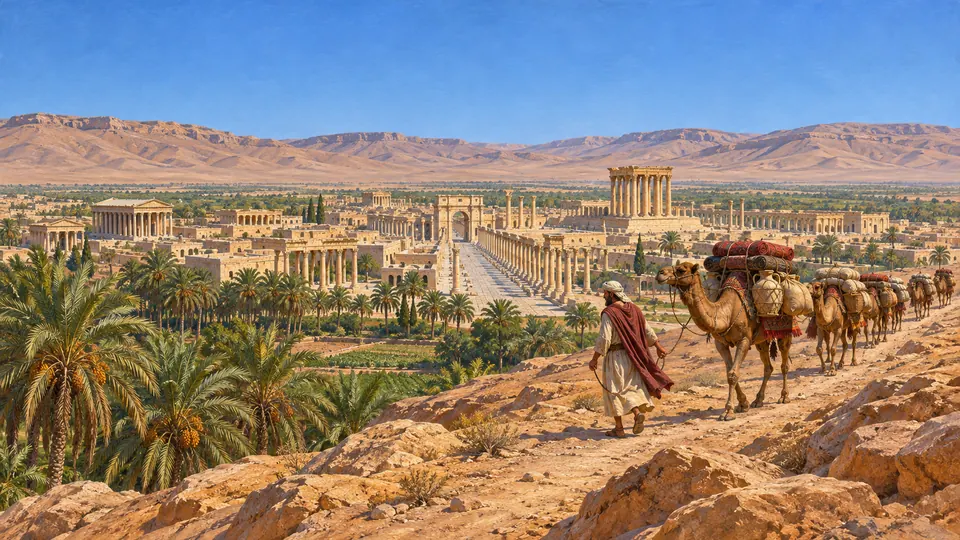
Zabdas led the Palmyrene expedition to Egypt and commanded against Aurelian in Syria. His name and rank survive on two public dedications made in Palmyra in 271 CE.
Estimated reading time: 5 min Published Last reviewed:
Share article
Text
Introduction
Septimius Zabdas was a senior commander under Zenobia of Palmyra. Two inscriptions dated to 271 CE name him as a dedicator of statues to Zenobia and her late husband, Odaenathus. A later historian, Zosimus, identifies Zabdas as the officer whom Zenobia sent into Egypt and places him in the war against Aurelian. Together the sources give him a public title at home and a role in the fighting that extended Palmyrene power and then brought it to an end. [1] [2] [3]
The commander named in stone
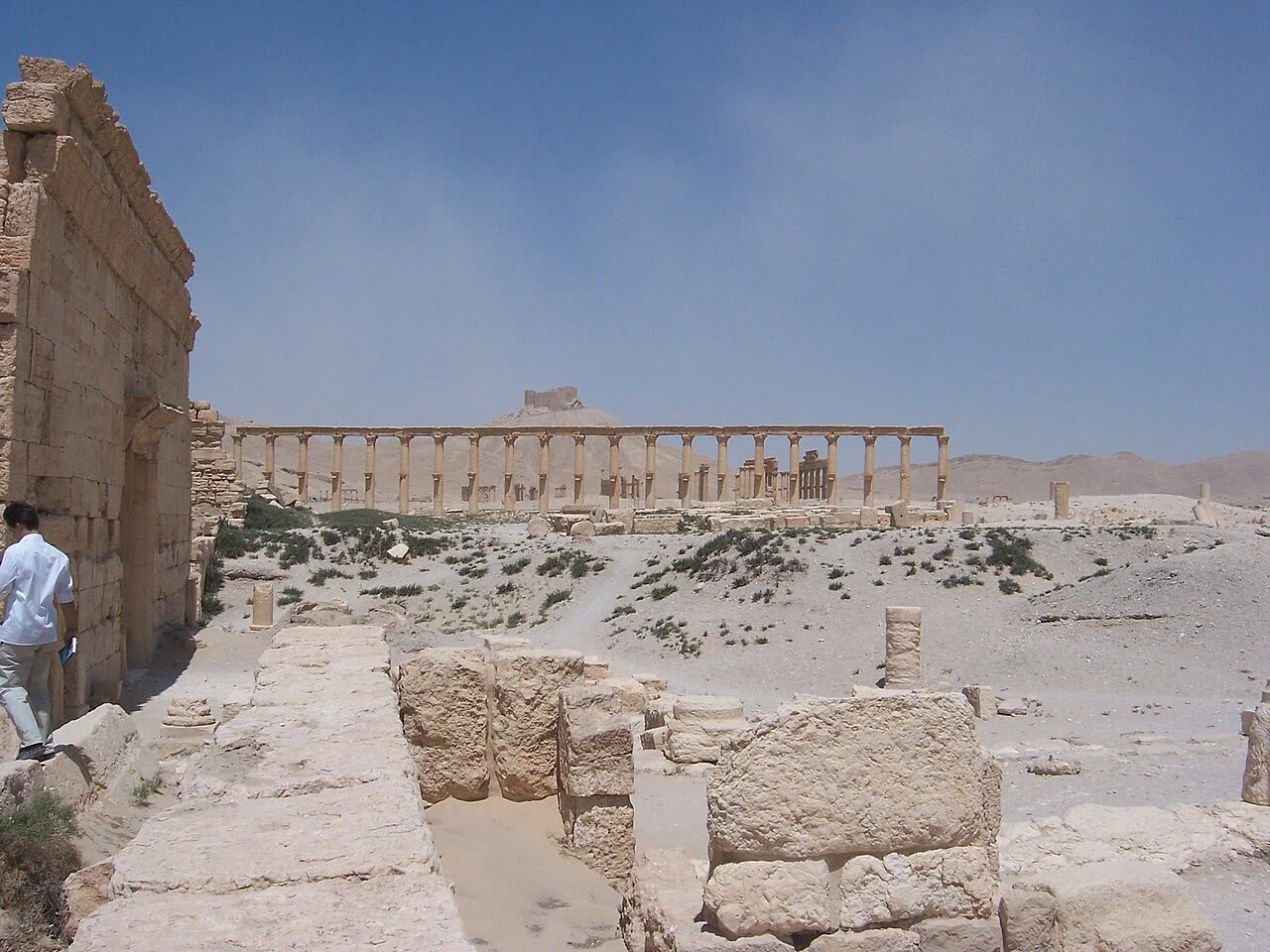
The two dedications stood on neighboring columns of the Great Colonnade at Palmyra, near the Tetrapylon. The Aramaic inscription for Odaenathus calls him king of kings and uses a title for his authority over the East that scholars have rendered as governor, corrector, or restorer. Zabda and Zabbay are named as the men who erected the statue for their lord. They share the name Septimius and an honorific corresponding to the Greek kratistos. The wording distinguishes their commands. Zabdas is the senior general, while Zabbay is commander of Tadmor, the local name for Palmyra. [1] [2] [4]
The dedication for Zenobia has Greek and Palmyrene Aramaic versions. Zabdas appears under closely corresponding forms of his name in the two languages, and Zenobia is called queen in both. The Palmyrene alone expressly names the object as her statue. It calls the dedicatee Septimia Batzabbay and says that the commanders put it up for their lady. The Greek dates it to the month Loos, the Palmyrene to Ab, and both give year 582, corresponding to the summer of 271 CE. Nikolas Hächler reads the placement of the dedications side by side as an expression of loyalty to the ruling house and its continuity after Odaenathus’s death. [2] [4]
Neither of the statues survives according to Eleonora Cussini’s account, so the surviving record is the inscribed honor. A view of the central colonnade helps place the dedications in a public avenue. The Getty’s study of the street describes projecting brackets on its columns that originally supported honorary statues and identifies a group of dedications near the theater from the time of Odaenathus and Zenobia. Zabdas’s name belongs to that documented practice of making rank and allegiance public in stone. [1] [5]
The place of each commander in these texts is specific. The Greek for Zabbay describes him as the general serving locally, and the Aramaic removes any doubt about the place by naming Tadmor. Both inscriptions name Zabdas first. The dedications therefore furnish contemporary evidence of a distinction that cannot safely be reconstructed simply from the frequency with which the two officers appear in later histories. [2] [4]
The expedition to Egypt
Zosimus assigns the decision to send Zabdas to Egypt to Zenobia and says that Timagenes, an Egyptian, worked to bring the province under Palmyrene control. In his account, Zabdas’s forces win an initial engagement and leave a garrison. Probus, who had been charged with operations at sea, returns with supporters among the Egyptians and dislodges the garrison. The balance changes again near a place Zosimus calls BabylonBabylonBabylon is an ancient city in central present-day Iraq, south of BaghdadGlossary · Click to read the explanation, usually taken to be Babylon in Egypt, where he credits Timagenes’s knowledge of the area with the defeat of Probus. The narrative gives different roles to the officer sent by Zenobia and to the local figure who appears at the end of the episode. [3]
The Historia Augusta tells a shorter and different story. Its life of Claudius names the commanders as Saba and Timagenes. It remembers the death of the Roman leader, called Probatus there, but concludes with the Egyptians swearing allegiance to Claudius. The editor of the Loeb translation identifies Saba with Zabdas, using the parallel accounts. The two traditions agree that a commander of this name was involved and that Timagenes played a part in the death of the opposing leader. Their versions of the result and sequence diverge. They also report the early stages from different points of view. The life of Claudius emphasizes the Egyptian response and allegiance to Rome. In Zosimus the initial Palmyrene victory and the later reversal at Babylon belong to the same account of how Zenobia’s control expanded. The inscriptions at Palmyra mention neither the men who fought Zabdas in Egypt nor any details of the expedition. [1] [3] [6]
The war in Syria
In Udo Hartmann’s reconstruction, the engagement near Antioch commonly associated with Immae took place in 272 CE as Aurelian advanced into Syria. Zabdas led the Palmyrene force there. Zosimus gives an account of the defeat and retreat into Antioch, followed by a story in which the commander parades a man made to resemble Aurelian in order to represent him as a prisoner. The older English translation gives the commander’s name as Labdas in this passage. Hartmann identifies the officer as Zabdas. The account places Zenobia and the surviving force on the road to Emesa the following night. [3] [7]
After another defeat at Emesa, Zenobia and her advisers withdrew to Palmyra. Zosimus describes the siege, her capture at the Euphrates, and the proceedings that followed at Emesa. He singles out Longinus among those Aurelian condemned to death and leaves the fates of some other members of Zenobia’s circle unclear. Hartmann’s reconstruction and the surviving dedications give Zabdas a recognizable place in the events that precede the siege. The record securely establishes his rank and public role in 271 CE. His whereabouts after the defeat and the circumstances of his death remain uncertain. [1] [2] [3] [7]
References and notes (7)
- Eleonora Cussini, Tadmorena. Documenti per lo studio della cultura e dell’aramaico di Palmira Pp. 30–31, PAT 0292–0293, funerary and honorific context, identities of the two generals, and original placement Return to the text ↑
- John F. Healey, Aramaic Inscriptions and Documents of the Roman Period Nos. 35–36, pp. 161–164, original languages, translations, date formulas, and titles Return to the text ↑
- Zosimus, New History, Book I, English edition of 1814 Episodes corresponding to §§44 and 50–56, Egypt, Antioch, Emesa, siege and trial Return to the text ↑
- Nikolas Hächler, The Role of Tradition for the Negotiation and Legitimisation of Imperial Rule in the Gallic and Palmyrene Empires Pp. 254–256, including note 49 and notes 52–53, paired dedications and bilingual titulature Return to the text ↑
- Getty Research Institute, The Legacy of Ancient Palmyra, Colonnade Street The Great Colonnade, its statue brackets, and the inscriptions near the theater Return to the text ↑
- Historia Augusta, Life of Claudius, translated by David Magie Chapter 11.1–2 and note 46, Saba, Timagenes, Probatus, and differences from Zosimus Return to the text ↑
- Udo Hartmann, Das palmyrenische Teilreich Pp. 368–371, retreat from Antioch, campaign at Emesa, and fall of Palmyra Return to the text ↑
Suggest a correction · Suggest a source for this record
Cite this record
IL Archive, «Zabdas, Commander of Zenobia’s Army», https://ilarchive.com/en/people/zabdas