Person · Figure
Zakkur of Hamath and Luash
- Names
- Zakir · Zakkūr · Zakur
- Region
- The Levant
Zakkur ruled Hamath and Luash and recorded a siege of Hazrak led by the king of Damascus. His inscription credits Baalshamin with his kingship and deliverance.
Estimated reading time: 5 min Published Last reviewed:
Share article
Text
Introduction
Zakkur was king of Hamath and Luash around the turn of the ninth and eighth centuries BCE. His Aramaic stele records how a coalition led by Bar-Hadad of Damascus besieged Hazrak and how BaalshaminBaalshaminCelestial deity attested in the Palmyrene region of Syria; depicted with Aglibol and Malakbel in a Louvre relief.Glossary · Click to read the explanation promised to protect him. An Assyrian stele names Zakkur separately in a settlement over a border with Arpad. The two records place him in the same northern Syrian political world and preserve different accounts of what a king needed to secure his position. [1] [2] [3]
A king of two lands
Zakkur introduces himself by name and as king of both Hamath and Luash. He also gives an account of his standing before he became king, in wording that has been understood in several ways. The edition by James D. Moore describes him as a humble man. Alan Millard discusses the possibility that the expression identifies him as a man of Anah, on the middle Euphrates. The reading would make it a statement of origin. The stele’s next words, in which Zakkur credits Baalshamin with standing beside him and making him king in Hazrak, are firmer evidence than either reconstruction of his background. [1] [4]
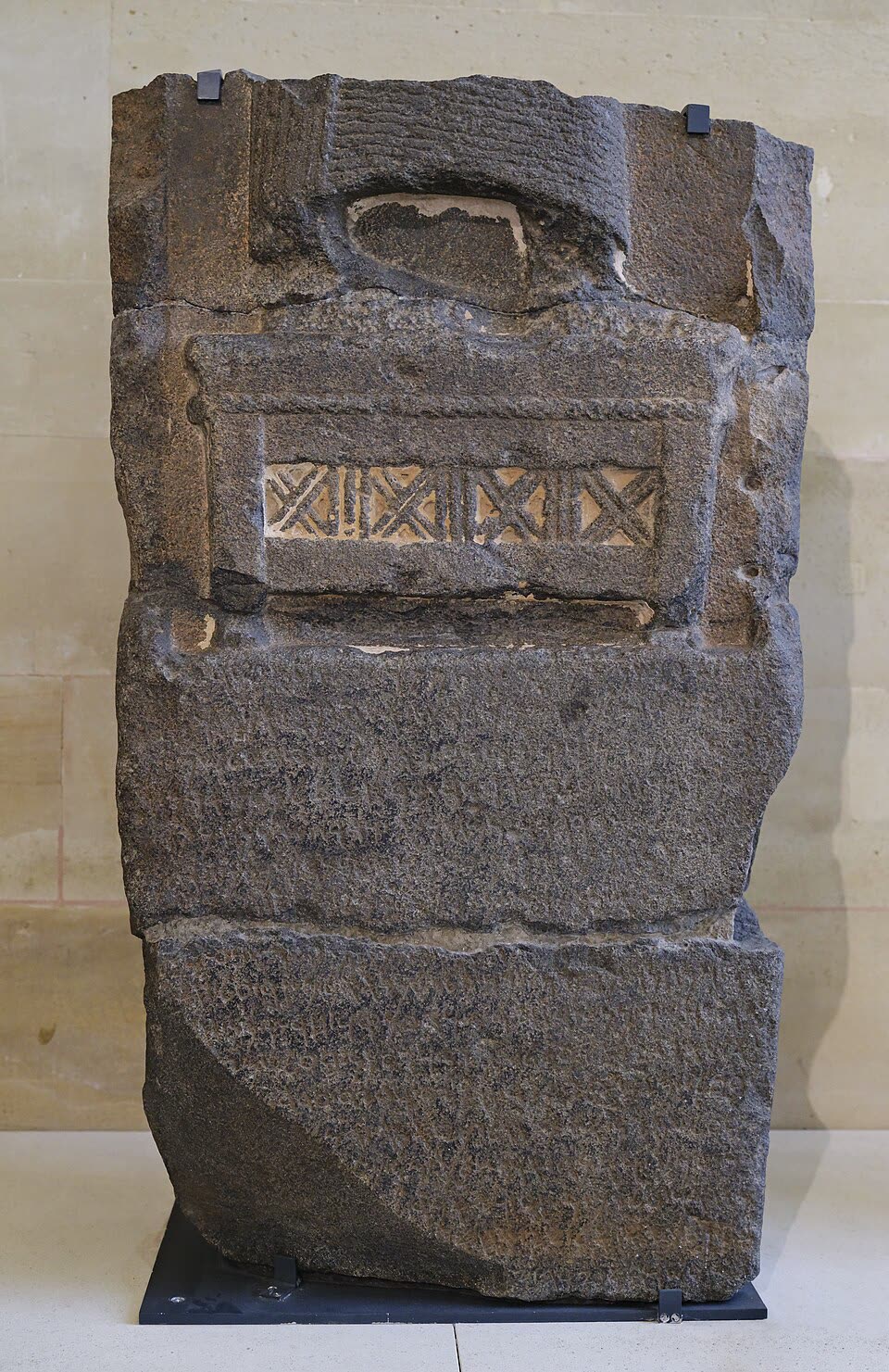
The stone was recovered at Tell Afis in Syria in fragments. The Louvre identifies the image above the inscription as the lower portion of a figure of Zakkur, standing on a platform and wearing a pleated garment. The expedition at Tell Afis identifies the site with ancient Hazrak, also written Hatarikka in Assyrian sources. Its account describes Iron Age rebuilding and expansion around the acropolis. Finds reported by Maria Giulia Amadasi Guzzo include a fragment with the divine name El-Wer, the deity to whom Zakkur dedicates his stele. The fragment gives the dedication a local parallel. [2] [5] [6]
The siege of Hazrak
The stele names the leader of the coalition as Bar-Hadad, son of Hazael, king of Aram. It names Bargush and the kings of Que, Amuq, Gurgum, and Samal among the participants. Bargush points to the dynasty at Arpad. Damage affects some of the names and the total. Millard supplies seventeen in his translation, while Marcio Loureiro Redondo argues for sixteen based on the distribution of surviving words and the available space for missing names. The identity of the coalition’s leader and the presence of several northern rulers are clearer than the precise size of the alliance. [1] [4] [7] [8]
The list repeatedly names a ruler and then his army. This repeated unit matters to Redondo’s reconstruction, because the number of such phrases that could fit in the gap affects the total. It also matters to the way Zakkur tells the story. The inscription makes the threat grow as each king is named with his own forces. [1] [4] [7]
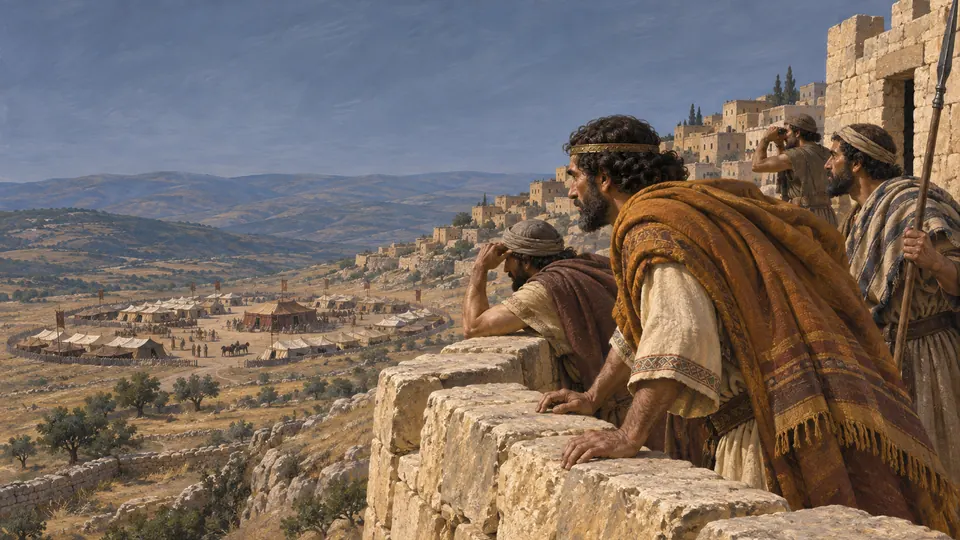
Zakkur describes the besiegers’ works in relation to his own defenses. Their wall was higher and their trench deeper. He then says that he raised his hands to Baalshamin and received an answer through human intermediaries, including seers. The divine message addresses the king’s fear and promises protection from those besieging him. The reason given is the one Zakkur has already set out at the beginning. Baalshamin had made him king and would stand by him. The royal account presents the defense of the city as a test of the relationship that entitled Zakkur to rule there. [1] [4]
The text grows fragmentary where a reader might expect a description of the siege ending. Millard observes that several explanations for the relief of the city are conceivable, including action or pressure from Assyria. The preserved lines leave that possibility unverified. On another face Zakkur describes building work at Hazrak and temples in his lands. The combination of ruined and surviving lines makes the monuments and building claims easier to recover than the sequence by which he escaped the coalition. [1] [4]
The border with Arpad
The Antakya stele is written in AkkadianAkkadianAn ancient East Semitic language written in cuneiform from the third millennium BCE; its varieties include Babylonian and Assyrian, and it served in international diplomacy.Glossary · Click to read the explanation and speaks from an Assyrian point of view. Veysel Donbaz’s edition gives the names of Adad-nirari III and his commander Shamshi-ilu as the authorities who set a boundary between Zakkur of Hamath and Attar-shumki. The settlement assigns the town of Nahlasi and its fields, gardens, and dependent settlements to Attar-shumki. It also records a division of the Orontes between the two sides. Its legal language extends the provision to Attar-shumki’s descendants and invokes Assyrian gods against anyone who uses force to take away the border or substitutes another name for his. [3]
The date of that settlement within Adad-nirari’s reign remains debated. Its relevance to Zakkur is secure because the inscription names him as one party to the boundary. The stele makes no reference to the siege of Hazrak. Fleur van der Sande treats the location of the border settlement in the sequence of regional conflicts as a historical reconstruction. Whatever the chronology, the two records let us see Zakkur beside other named rulers in agreements and conflicts, as well as in the account of deliverance he chose to inscribe. [3] [8]
The final damaged portion of Zakkur’s own stele also warns against altering the monument or removing it from its place. Where the Assyrian text invokes divine protection for a frontier, the Aramaic monument invokes several gods, including Baalshamin and El-Wer, in the context of protecting a dedication. The ruler’s name survives on a further face even though much of the conclusion is lost. [3] [4] [7]
References and notes (8)
- James D. Moore, Digital Editions of Aramaic and Phoenician Sources, Louvre AO 8185 Translation and transliteration, face A opening, siege and oracle, and surviving building account on face B Return to the text ↑
- Musée du Louvre, Stèle de Zakkur AO 8185, inventory and physical description, Old Aramaic, Afis findspot and carved figure Return to the text ↑
- Veysel Donbaz, Two Neo-Assyrian Stelae in the Antakya and Kahramanmaraş Museums Pp. 5–7, Antakya stele, translated lines 4–19 and remarks on the frontier and Orontes Return to the text ↑
- Alan R. Millard, Israelite and Aramean History in the Light of Inscriptions Pp. 267–268 and Appendix 2, pp. 273–274, interpretation and reconstruction of the stele’s three faces Return to the text ↑
- Tell Afis Archaeological Expedition, History of Tell Afis Iron Age occupation, the town’s expansion around the acropolis and the identification with Hazrak/Hatarikka Return to the text ↑
- Maria Giulia Amadasi Guzzo, Tell Afis in the Iron Age: The Aramaic Inscriptions Article abstract on the stele’s discovery, site identification and separate fragment naming El-Wer Return to the text ↑
- Marcio Loureiro Redondo, The Portrayal of the King in Ancient Semitic Texts and the Hebrew Book of Kings Section 2.8.1, pp. 172–179, the Aramaic text of KAI 202 and commentary on the disputed coalition count Return to the text ↑
- Fleur van der Sande, King Zakkur, Besieged and Saved Sections 3–4, coalition members and proposed dates for the Antakya boundary settlement Return to the text ↑
Suggest a correction · Suggest a source for this record
Cite this record
IL Archive, «Zakkur of Hamath and Luash», https://ilarchive.com/en/people/zakkur
Continue reading