Site · City
Kazallu, a City Known Through Its Neighbours
- Names
- Kazallu · Kazallum
- Region
- Mesopotamia
Kazallu was a Mesopotamian city whose exact site is still uncertain. Cuneiform records describe its boundaries, its temple of Numushda and its position between rival rulers.
Estimated reading time: 5 min Published Last reviewed:
Share article
Text
Introduction
Kazallu was an ancient city in Babylonia. Its exact archaeological site remains uncertain. A survey attributed to Ur-Namma describes part of a boundary between Kazallu and Kish, and modern reconstructions put Kazallu in the region of Kish and Marad. The city also appears in royal year names, literary letters and Sumerian verse. These sources place it in a landscape of canals, settlements and religious buildings that can be traced through names and relationships. [1][2][3]
Kazallu’s principal god was Numushda, whose sanctuary was called Kun-satu. A year name of Shulgi records Numushda’s entry into his temple. A hymn from the time of Sin-iqisham of Larsa associates the restoration of the city and its waterways with the same god. Those accounts preserve aspects of the city’s public life alongside the records of political struggles in the region. [3][4][5]
A boundary shared with Kish
The text known as the cadastre of Ur-Namma survives in later copies. One passage starts at a landmark on the boundary shared by Kish and Kazallu, then proceeds to the bank of the Me-Enlil canal. Further lines refer to crossing that canal and to another canal near a place described as the Village of the Governor. Broken sections obscure parts of the route. Its surviving descriptions show how a written survey could combine canals, settlements and named points to situate an administrative boundary. [1][2]
Francesco Pomponio re-examines one of the Nippur tablets and notes that the boundary between Kish and Kazallu appears both in the account’s opening and toward its end. He proposes that the front describes the territory of Kazallu and the back describes that of Marad. On his reconstruction, Apiak would lie north of Kazallu and Marad to its south, with the Me-Enlil canal marking portions of the wider region. The name of the first territory would have stood in a damaged part of the tablet. Its identification therefore depends on how the landmarks fit together. [2]
The wording near the end of the route makes the neighbouring territory important to the reconstruction. The survey turns back to the landmark between Kazallu and Kish and names Lugal-Marad and the city of Marad in the statement that Ur-Namma confirmed the boundary. In this passage, the lands of adjoining communities are described in the same sequence. The text therefore offers evidence for how Kazallu bordered its neighbours even where individual names of canals and villages still have no secure modern equivalents. [1][2]
Numushda comes to his temple
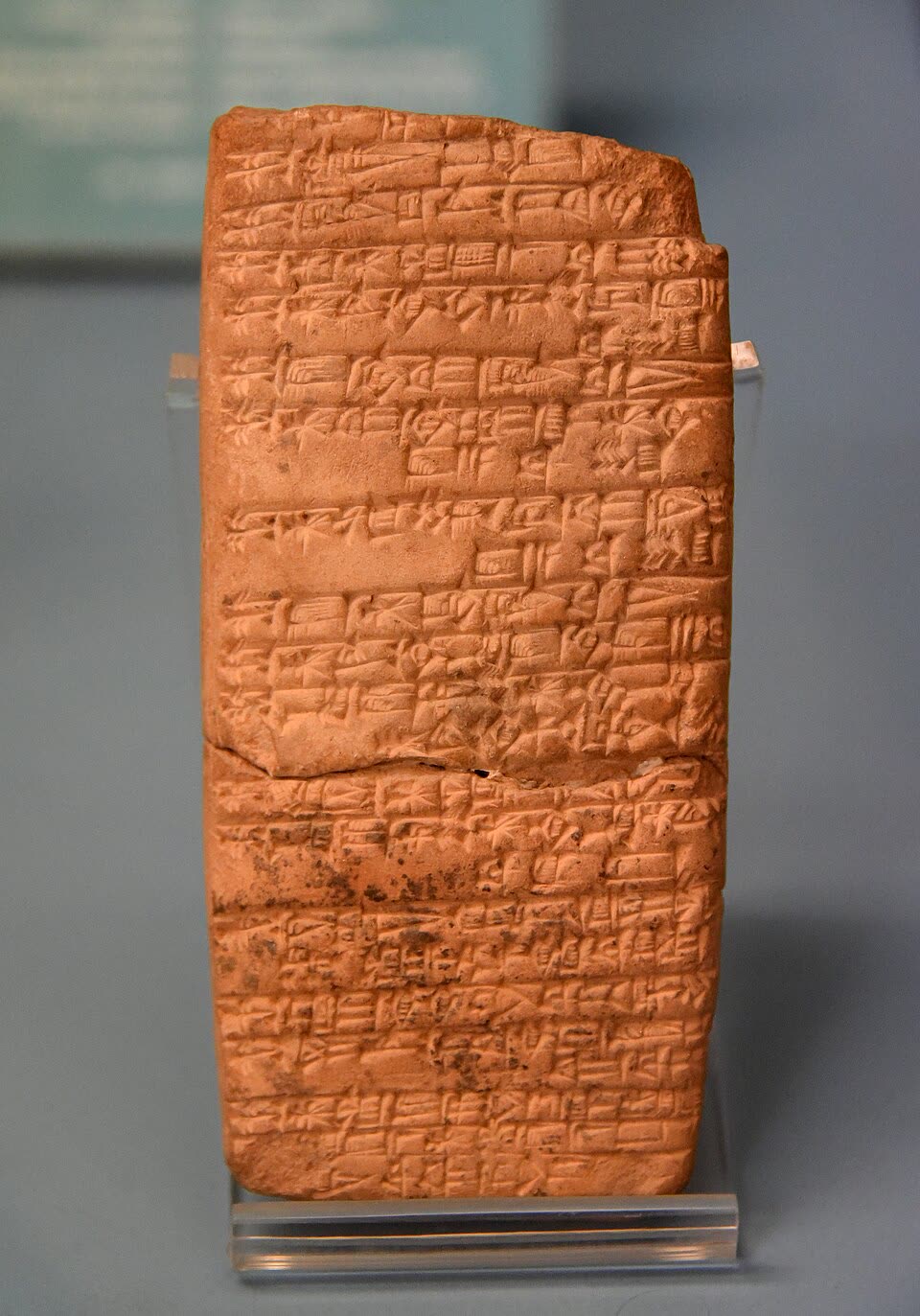
The list of Shulgi’s year names includes the entry commemorating Numushda of Kazallu being brought into his temple, assigned to Shulgi’s twelfth year. A clay copy from Nippur dates to the Old Babylonian period, later than Shulgi’s reign. The list preserves the formula beside others commemorating the entry of different gods into their sanctuaries. The formula itself joins the name of the city to that of its god, and it records the event as the distinguishing name of a year during the Third Dynasty of Ur. [3]
The hymn for Sin-iqisham calls Kazallu a place of abundance that EnlilEnlilEnlil/Ellil: a major Mesopotamian god associated with destinies, kingship, and Ekur at Nippur, already prominent in third-millennium god lists. His name’s origin and cult beginnings remain debated.Glossary · Click to read the explanation assigned to Numushda and connects the sanctuary to the restoration of the city and its outlying settlements. The king is credited with clearing levees and irrigation ditches and dredging the canals. The Lament for Sumer and Ur presents the opposite condition. Numushda leaves Kazallu, his wife Namrat mourns, the river bed is empty and the fields fail to yield grain. The two works use the state of the watercourses and fields to express the condition of the city and its relationship with its god. [4][5][6]
A city between rival rulers
In the literary correspondence of the kings of Ur, Ishbi-Erra tells Ibbi-Sin that he was sent to buy grain in Isin and Kazallu. A different letter gives the governor of Kazallu, Puzur-Numushda, a report for Ibbi-Sin that includes a message from Ishbi-Erra himself. In the embedded message, Ishbi-Erra threatens to take Kazallu. Piotr Michalowski notes that the events mentioned in the letter span a number of years and questions whether Kazallu remained under Ibbi-Sin’s authority as late as the narrative might suggest. The letters establish Kazallu’s importance in the scribal account of the conflict. The chronology of its allegiance is harder to recover. [7][8]
Year names from the early Old Babylonian period preserve another set of claims about Kazallu. Rients de Boer compares formulas associated with Sumu-abum, Sumu-la-El of BabylonBabylonBabylon is an ancient city in central present-day Iraq, south of BaghdadGlossary · Click to read the explanation and Erra-imitti of Isin, and proposes that some refer to the same attack. Among the names in a later list of Sumu-la-El’s years are one for the expulsion of Yahzir-El from Kazallu and another for the destruction of its wall and defeat of its army. Contemporary dated tablets preserve fewer forms than the later list. The difference affects how many events a historian can confidently distinguish. [9]
Together the documents preserve a city with its own god and an important place in the accounts of other rulers. The boundary descriptions make it possible to reason about its position relative to Kish and Marad. The hymns and lament give its waterways and sanctuary a place in the city’s identity. The royal records describe allegiance and conquest from the perspective of competing courts. Kazallu is well enough attested to follow those connections even when the site itself cannot be assigned to a mound. [1][2][4][6][8][9]
References and notes (9)
- Cuneiform Digital Library Initiative, RIME 3/2.01.01.21, composite of the Cadastre of Ur-Namma, P432131 Read the boundary of Kish and Kazallu and the following canal landmarks in the edition’s surface b2. Also read the end of that surface, including its statement on Marad’s boundary. Return to the text ↑
- Francesco Pomponio, Another Province in the ‘Cadastre’ of Ur-Namma, N.A.B.U. 2025/1, no. 8 Read the Nippur witnesses, review of their gaps, the argument about Ni. 2438, and the proposed relationship of Apiak, Kish, Kazallu and Marad. Return to the text ↑
- Cuneiform Digital Library Initiative, Shulgi Year Names, Ist Ni 00394 Read the provenance, copy date, and obverse lines 9–16 including the formula for Shulgi’s twelfth year. Return to the text ↑
- Electronic Text Corpus of Sumerian Literature, A Hymn to Numushda for Sin-iqisham, 2.6.7.1 Read lines 42–60 on Kazallu, Kun-satu and the restoring of settlement and irrigation. Return to the text ↑
- Jeremiah Peterson, New Sumerian Literary Texts Involving the Gods Numušda and Gibil Read §1 on Kazallu as the primary cult and the sanctuary there, and the royal hymn on the restoration of the canals and settlements. Return to the text ↑
- Electronic Text Corpus of Sumerian Literature, Lament for Sumer and Urim, 2.2.3 Read lines 123–132 on Kazallu, the departure of Numushda and Namrat, and the failure of the river and grain. Return to the text ↑
- Electronic Text Corpus of Sumerian Literature, Letter from Ishbi-Erra to Ibbi-Suen about the Purchase of Grain, 3.1.17 Read lines 1–33 on the journey to buy grain, the Martu and the request for authority at Isin and Nippur. Return to the text ↑
- Piotr Michalowski, The Correspondence of the Kings of Ur Read pp. 190–192 on the governor’s letter, the cited last contemporary mention and the discrepancies between the narrative and other dates. Return to the text ↑
- Rients de Boer, Beginnings of Old Babylonian Babylon: Sumu-abum and Sumu-la-El Read the passages comparing the late year-name list and contemporary dates, the formulas for Kazallu and the hypothesis about the coordinated attack. Return to the text ↑
Suggest a correction · Suggest a source for this record
Cite this record
IL Archive, «Kazallu, a City Known Through Its Neighbours», https://ilarchive.com/en/sites/kazallu