Site · Region
Mukish, the Kingdom Around Alalakh
- Names
- Mukis · Mukish · Mukiš · Mukiše
- Region
- The Levant
The kingdom of Mukish included towns and farmland in the Amuq Plain, with Alalakh as its chief city. Its records trace local rule under Mittani and disputes over territory in the Hittite period.
Estimated reading time: 5 min Published Last reviewed:
Share article
Text
Introduction
After one of the campaigns recounted on his statue, Idrimi says he returned to Mukish and entered Alalakh, his capital. The distinction between the land and the city runs through the documents from the Amuq Plain. Local rulers administered settlements beyond Alalakh, made agreements with neighbouring kings and dealt with an overlord in Mittani. Later, when the HittitesHittitesAncient people and kingdom of Anatolia, dominating much of Anatolia and northern Syria around 1650–1200 BCE.Glossary · Click to read the explanation held power in northern Syria, the people of Mukish and the king of UgaritUgaritAncient city and kingdom at Ras Shamra on the Syrian coast, flourishing between the fourteenth and early twelfth centuries BCE and preserving multilingual archives.Glossary · Click to read the explanation took a dispute over towns to Muršili II. [1][2][3]
The land and its chief city
Mukish lay in the northern LevantThe LevantThe Levant is a regional name for lands along the eastern MediterraneanGlossary · Click to read the explanation. The wide Amuq Plain east of the Amanus Mountains formed its core, and Tell Atchana, ancient Alalakh, lay near the Orontes. Peter Pfälzner describes the earlier political relationship with the kingdom based at Aleppo and the emergence of a local royal house under the suzerainty of Mittani. The geographical reach of that house changed over time, as did the wider powers with whom it had to come to terms. The best-documented local picture comes from tablets of Alalakh's Level IV, much of whose archive belongs to the fifteenth century BCE. [2][4]
The royal titles give one way to see the city's relationship with the land. One text calls its ruler king of Alalakh, while a treaty with the king of Tunip introduces Niqmepa as king of the land of Mukish. Both formulations could represent authority exercised from the same centre. The difference remains useful when reading an itinerary or a dispute about the possession of a town. In those contexts a writer may be speaking of a particular city or of the territory and communities reached through its government. [2]
The return claimed by Idrimi
Idrimi's inscription says that after a crisis at Aleppo his family took refuge in Emar. He went on to Ammiya in Canaan, where people from several places, including Mukish, rallied to him. He describes approaching the region by sea and coming ashore at Mount Casius in the translation of Edward Greenstein and David Marcus. The country and its settlements appear as actors whose support he needed. The statue presents their reconciliation with Idrimi as part of a royal account of how he gained power. [1]
In the same account, the Hurrian king Barattarna was hostile to Idrimi for years. Idrimi appeals through an intermediary to earlier agreements between their houses, then describes paying tribute and swearing an oath. An independent tablet preserves his agreement with Pilliya. The two rulers agree to return fugitives from one another's territory. It sets rewards for their capture and return and requires a mayor and elders to make a statement under oath if a town is suspected of concealing a fugitive. It also names Barattarna, placing the arrangement in the same wider political setting as the statue's account. [1][5][6]
Reading the settlement records
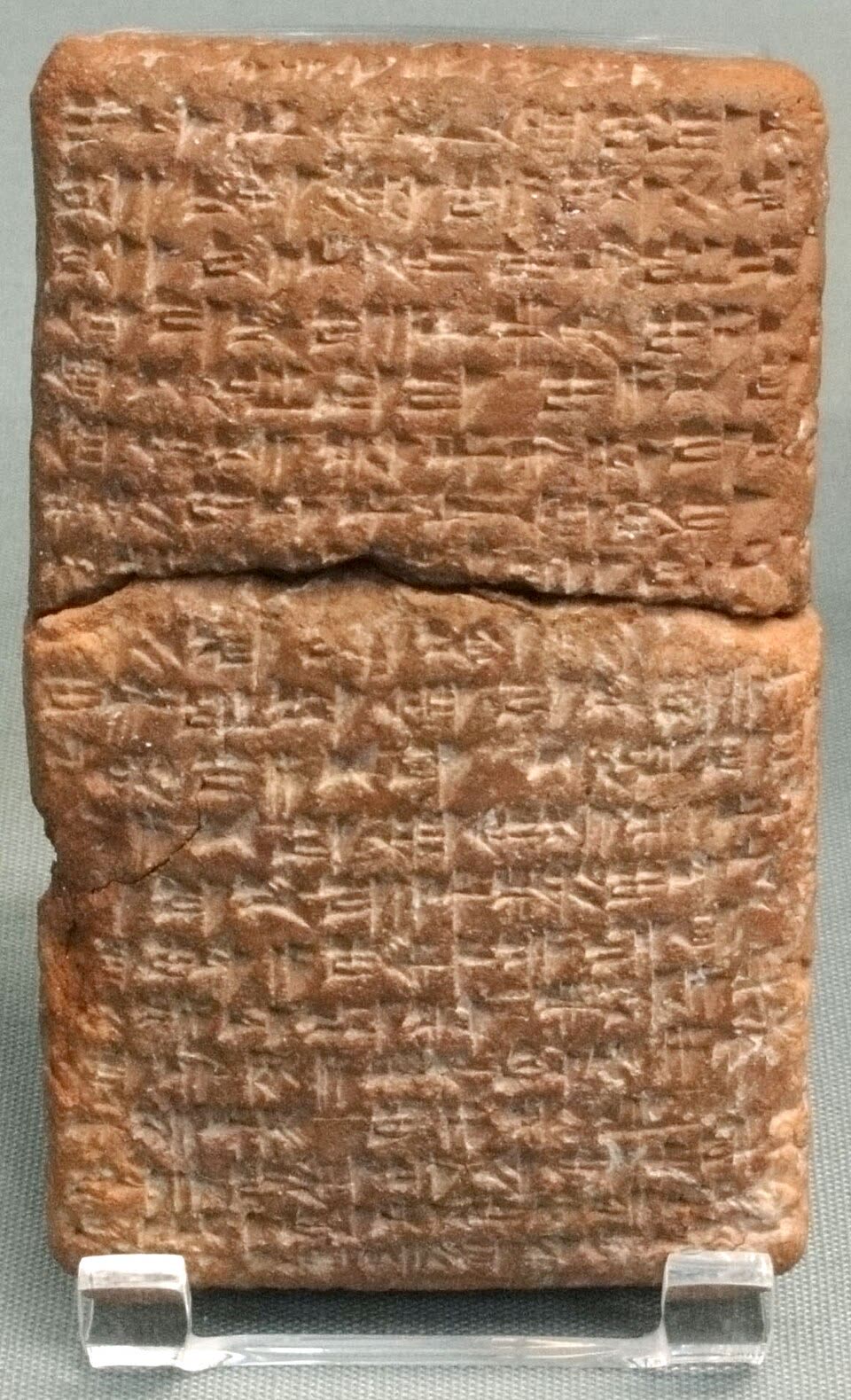
The Level IV tablets record people, places and land to which the rulers of Alalakh had claims or obligations. Jesse Casana compares the cuneiformCuneiformWriting with wedge-shaped signs, developed from Mesopotamian recording traditions and used for several languages from the third millennium BCE.Glossary · Click to read the explanation material with regional archaeological survey data to see how far the geography of the kingdom can be recovered. Over two hundred place-names appear in the archive, including cities well outside the Amuq. A more restricted list, assembled from records such as census lists and registers of agricultural holdings, is a better starting point for investigating the distribution of towns that dealt with the palace. Even a town named in this material may lie outside the kingdom's compact core. [2]
Casana compares a census list for Alime with the mound of Bozhöyük, a proposed identification. The text provides a count of seventy-five households, and the mound covers a little over four hectares depending on how its edge is measured. The reconstruction depends on both the identification and what sort of people the record was designed to count. Other lists are incomplete or refer only to particular groups. At the smaller end, some towns appear in the archive with only seven households. Such figures help account for communities well below the scale of the capital without fixing an overall population for Mukish. [2]
The border with Ugarit
Hittite sources name Mukish in the conflicts that accompanied Šuppiluliuma I's advance into Syria. They also place Alalakh at a meeting with Niqmaddu of Ugarit. Eva von Dassow discusses how much can be reconstructed from such documents and from a fragmentary treaty with Mukish found at Boğazköy. The sequence of occupation at Alalakh and the date at which Hittite control became effective remain difficult to align. A set of later tablets recording monthly distributions, including allocations to named people and to gods, provides a more direct indication of Hittite administration at the city. [7]
Under Muršili II, another document describes how Niqmepa of Ugarit approached the Hittite king because the people of Mukish had brought a claim over certain towns. Elena Devecchi reads the document as a verdict, pointing to its language of dispute and investigation and to the absence of a new vassal's oath. The text differs in purpose from Idrimi's agreement with Pilliya. It shows local interests submitted to a monarch with authority to settle a boundary dispute, and it makes the people of Mukish visible in the record even while the extent of their land has to be reconstructed from separate witnesses. [3][5]
References and notes (7)
- Edward L. Greenstein and David Marcus, The Akkadian Inscription of Idrimi Read the translation of lines 1–29, 35–58 and 77–86 on the flight, return, relations with Barattarna and distinction between Mukish and the capital. Return to the text ↑
- Jesse Casana, Alalakh and the Archaeological Landscape of Mukish Read the Level IV titles, the discussion and table of recorded towns, and pp. 29–31 on the census lists and Alime and Bozhöyük. Return to the text ↑
- Elena Devecchi, RS 17.62 + RS 17.237 (CTH 64), Treaty, Edict or Verdict? Read pp. 105–108 on the dispute, the translation of obverse lines 6–11 and the argument for reading it as a verdict. Return to the text ↑
- Peter Pfälzner, Levantine Kingdoms of the Late Bronze Age Read the section on Alalakh, pp. 781–782, on location, dependence on Aleppo, the role of Mittani and the settlement's level IV. Return to the text ↑
- Erica Reiner, Treaty between Idrimi and Pilliya Read the translation in Ancient Near Eastern Texts, p. 532, on reciprocal obligations, rewards, town officials and the reference to Barattarna. Return to the text ↑
- Donald J. Wiseman, The Alalakh Tablets Read the introduction on Level IV, pp. 5–6, on Alalakh's rule under Mittani and the tablet agreement between Idrimi and Pilliya. Return to the text ↑
- Eva von Dassow, Alalaḫ between Mittani and Ḫatti Read pp. 202–206 on the debate about Hittite rule, the meeting at Alalakh, CTH 136 and the allocation tablets. Return to the text ↑
Suggest a correction · Suggest a source for this record
Cite this record
IL Archive, «Mukish, the Kingdom Around Alalakh», https://ilarchive.com/en/sites/mukish