Site · City
Nigin, the City of Nanše
- Names
- Nigin · Niĝin · Tell Surghul · Tell Zurghul
- Region
- Mesopotamia
Tell Zurghul in southern Iraq preserves the remains of Nigin, one of the principal cities of the state of Lagash. Inscriptions, excavation and Sumerian literature reveal how its sanctuary of Nanše was tied to waterways, offerings and royal travel.
Estimated reading time: 5 min Published Last reviewed:
Share article
Text
Introduction
Nigin was one of the principal cities of the Sumerian state of Lagash. Its site, Tell Zurghul in present-day Dhi Qar in southern IraqIraqIraq is a modern country encompassing much of ancient MesopotamiaGlossary · Click to read the explanation, has yielded inscribed clay objects that name both the ancient city and É-Sirara, the sanctuary of its goddess Nanše. The site also preserves occupation from the Ubaid period, long before the surviving royal texts. The early settlement, the third-millennium city and the sanctuary known from literature belong to different bodies of evidence. [1] [2]
The name on bricks and cones
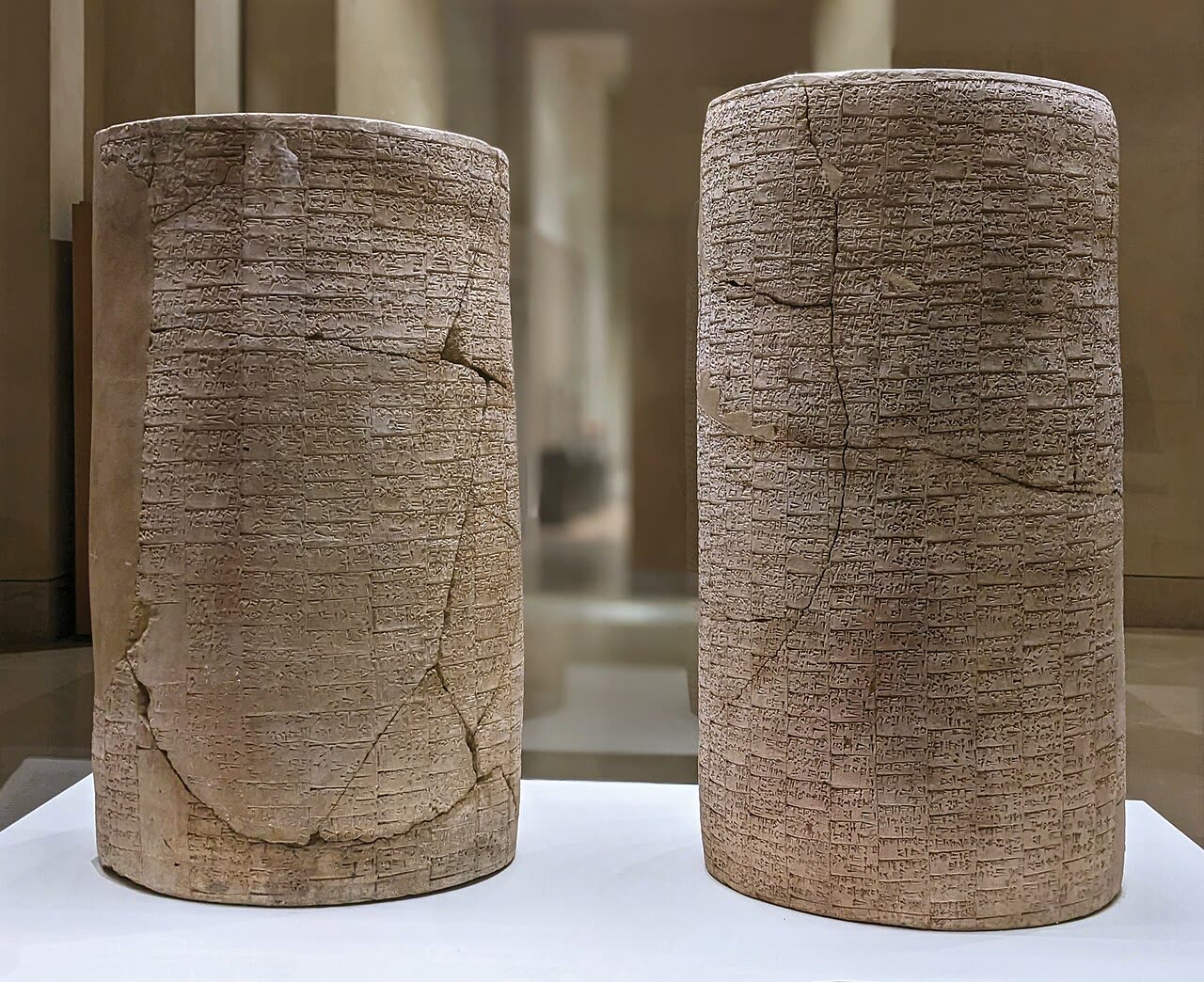
Robert Koldewey investigated the mound in 1887. A joint Italian expedition began new excavations in 2015, combining a survey of the main mound with a trench on a second mound. The team recovered stamped bricks and inscribed clay cones, mostly around the southern and southeastern sides of the main mound. These are small objects with a large bearing on identification. The building text names GudeaGudeaRuler of Lagash in the late third millennium BCE, whose inscriptions document temple construction and the name Anunna.Glossary · Click to read the explanation as ruler of Lagash, gives Nigin as the city beloved by Nanše and credits him with work on her Sirara temple. [1] [2]
The editors distinguish versions of the text by small changes in wording and by the presence of additional lines. One version adds the restoration of a lofty wall. Related cones and bricks also reached other sites, including Lagash and Ur. An object's place of recovery and the building named in its inscription are therefore two pieces of information to record separately. At Tell Zurghul, the concentration of material and its agreement with the ancient geographical record make a stronger case than a single unprovenanced cone would. [2]
Before and beneath the sanctuary
On Mound B, the excavators found late Ubaid pottery and walls in stratified deposits. They proposed a public or sacred building on the basis of the substantial wall and its niches and buttresses. The trench gives a limited view of the plan, so the building's use remains a hypothesis. The Ubaid evidence establishes occupation in the fifth millennium BCE. The royal texts identifying the sanctuary by name belong to a much later period. [1]
On Mound A, excavations in Areas D and E documented a later sequence. The upper trench exposed massive compacted mud terracing and plastered surfaces. A second terrace lay beneath the upper platform. The excavators connect this construction with the foundations of É-Sirara and place the best-preserved late phase near the time of Gudea. Erosion had cut into the edges, leaving parts of platforms and their supporting deposits. Gudea's description of the sanctuary rising above other buildings fits the excavators' interpretation of the mound. [2] [3]
Lower on the slope, excavators assigned older walls and vessels to successive Early Dynastic phases. The excavated deposits included pottery for storage, installations interpreted in connection with food preparation, and animal and fish remains. These finds help explain the activities below the later summit structures. The proposed role of some rooms in food collection or distribution depends on how the installations and associated vessels are read together. [3]
A visit by boat
Gudea's account of building Ningirsu's temple at Girsu gives Nigin a particular role. In Cylinder A the ruler has a dream he cannot interpret. After addressing the goddess Ĝatumdug, he boards a boat for Nigin, ties up at its quay and enters Nanše's courtyard. There she explains that the great figure he saw was her brother Ningirsu, who requires a temple. She identifies other dream figures and explains the significance of the brick, its mold and the tablet bearing the building plan. [4]
The scene moves between two cult centers. Girsu is the destination of Gudea's building project for Ningirsu, and Nigin is where Nanše explains the commission. A study of the kings' inscriptions also traces a named canal linking Girsu, Lagash, Nigin and the harbor of Guabba. A literary journey can help explain how the settlements were understood in relation to one another. The text gives the quay and the courtyard their roles in the story, while the physical reconstruction of the waterway and its banks requires investigation on the ground. [4] [5]
What came into Nanše's house
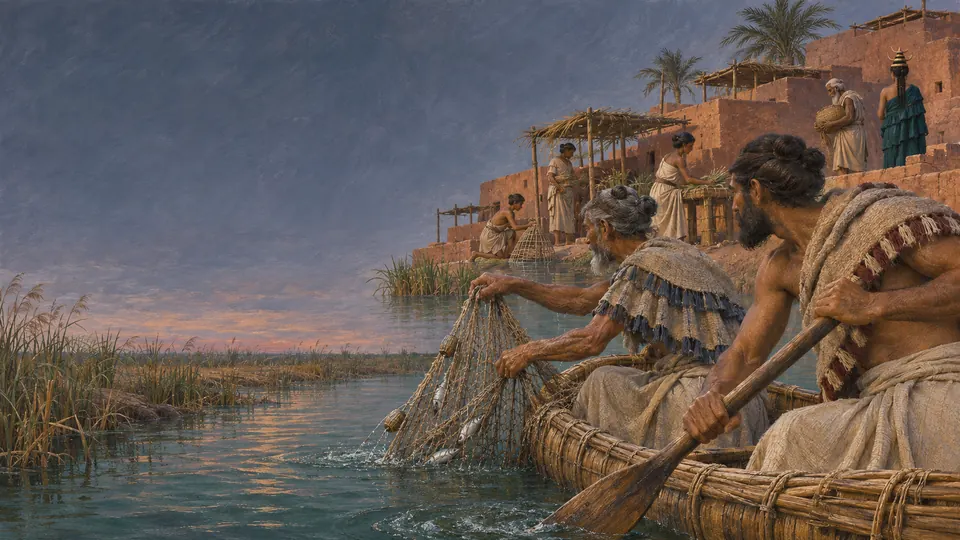
A Sumerian hymn to Nanše associates her sanctuary with the inspection of offerings and the appointment of temple personnel. Water arrives from the Sirara canal, festival equipment comes from Lagash, and wine is carried in from the countryside. The text prescribes regular deliveries of fish, butter, milk and firewood. During the New Year rites, Nisaba serves as chief scribe, holding tablets as personnel are brought forward for inspection. The hymn imagines an institution where supplying the household, managing its workers and serving the goddess are related responsibilities. [6]
The waterways and marshes also belong to the goddess's literary landscape. A study of Sumerian descriptions of the sea notes that other compositions link Nanše with fish and the birds of the reedbeds. In the hymn, fish appear in offerings and in passages about allocations. In the archaeological deposits on the slope, fish remains occur alongside animal bones and pottery. Those finds provide an independent sign of how people used resources from water and land. The written passages express the order Nanše was expected to oversee, while the excavated material lets researchers ask how food was prepared and used at particular places and times. [3] [6] [7]
References and notes (7)
- Davide Nadali and Andrea Polcaro, The Early Stages of the Sumerian City at Tell Zurghul Abstract and §§ 1, 3–4, on the 2015 expedition, Mound B and late Ubaid occupation. Return to the text ↑
- Davide Nadali, Andrea Polcaro and Lorenzo Verderame, New Inscriptions of Gudea from Tell Surghul/Niĝin, Iraq Survey locations, discussion of the distribution of inscribed objects, and table 1 translating the inscription variants. Return to the text ↑
- Davide Nadali and Luca Volpi, The Third Millennium B.C.E. Pottery Sequence of Southern Mesopotamia Introduction, archaeological contexts for Areas D and E, and concluding remarks. Return to the text ↑
- Electronic Text Corpus of Sumerian Literature, The Building of Ninĝirsu's Temple Composition 2.1.7, lines 71–172, Gudea's visit to Nigin and Nanše's interpretation. Return to the text ↑
- Davide Nadali and Andrea Polcaro, Excavating the Ancient State of Lagash Pages 18–20, Nigin's waterways, Sirara and the account of Gudea's dream. Return to the text ↑
- Electronic Text Corpus of Sumerian Literature, A Hymn to Nanše Composition 4.14.1, especially lines 38–112 on offerings, staffing and the New Year rites. Return to the text ↑
- Lorenzo Verderame, The Sea in Sumerian Literature Discussion of the Sirara marshes, Nanše and the fish and birds of the wetland. Return to the text ↑
Suggest a correction · Suggest a source for this record
Cite this record
IL Archive, «Nigin, the City of Nanše», https://ilarchive.com/en/sites/nigin