Site
Parsua in Neo-Assyrian Records
- Names
- Parsua · Parsuaš · Parsuwa
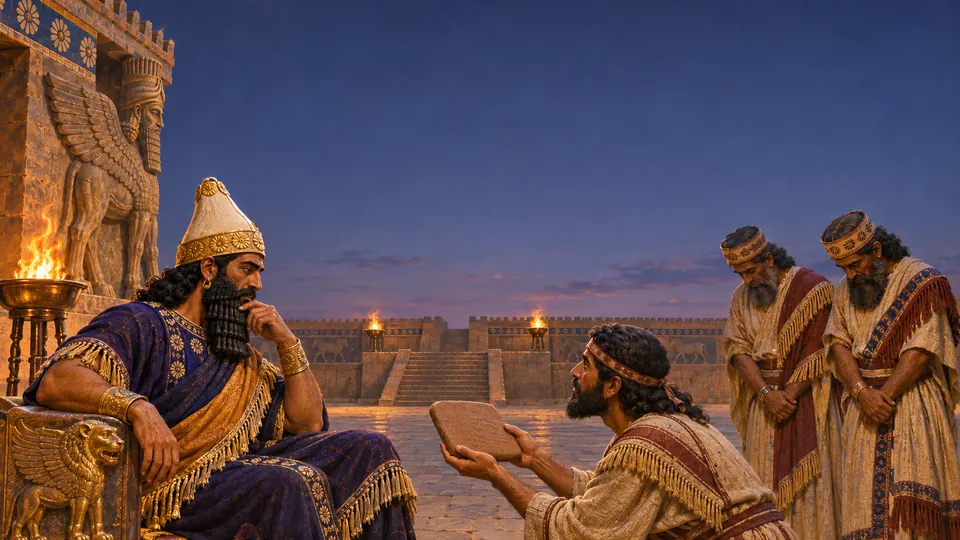
Assyrian kings used the name Parsua for a region in the western Zagros that later became a province. In Sargon II's account of his expedition of 714 BCE, it was a meeting place where rulers from surrounding lands brought tribute.
Estimated reading time: 5 min Published Last reviewed:
Share article
Text
Introduction
Parsua was a region of the western Zagros known through Neo-Assyrian inscriptions. Shalmaneser III's records refer to multiple rulers there in the ninth century BCE. By the time of Sargon IISargon IISargon II was an Assyrian king of the late eighth century BCE; ORACC dates his reign about 721–705 BCEGlossary · Click to read the explanation, Parsua was an Assyrian province with a governor. Sargon's account of his expedition of 714 BCE places a gathering of tribute bearers there before he moved into Mannea. The ancient texts give the province a political role and a position among neighboring regions. Its precise extent and the location of some places associated with it remain debated. [1] [2] [3]
From local kings to a province
In the ninth century BCE, Shalmaneser III campaigned in several parts of the western Zagros. Accounts of his expeditions name Parsua alongside Mannea and Allabria, and place it on another route from Namri toward Missi and Media. The inscriptions use the territorial name alongside other lands, and a later passage claims tribute from twenty-seven kings of Parsua. Daniel T. Potts places that encounter in a campaign that began in Namri. The number and designation come from the Assyrian king's report. A gathering of numerous rulers under one regional name is evidence for a landscape of local authorities, whose ranks and territories the text leaves largely unexplained. [1] [3]
The evidence changes under Tiglath-pileser III. Parsua and Bīt-Hamban were made Assyrian provinces during his reign, and governors were installed. Much later in the century, Sargon's texts place some further settlements under Parsua's administration. The inscriptions can therefore name Parsua as a geographical region and also treat the name as that of a particular office and territory within the Assyrian system. The latter usage describes an administrative arrangement whose reach could change as towns came under the governor's authority. In a damaged version of his annals from the palace at Khorsabad, Sargon describes adding Šurgadia to the province. In the expedition report he assigns another district to the governor's authority. These entries describe the province through changes in jurisdiction. [1] [2] [3] [4]
Where Sargon received tribute
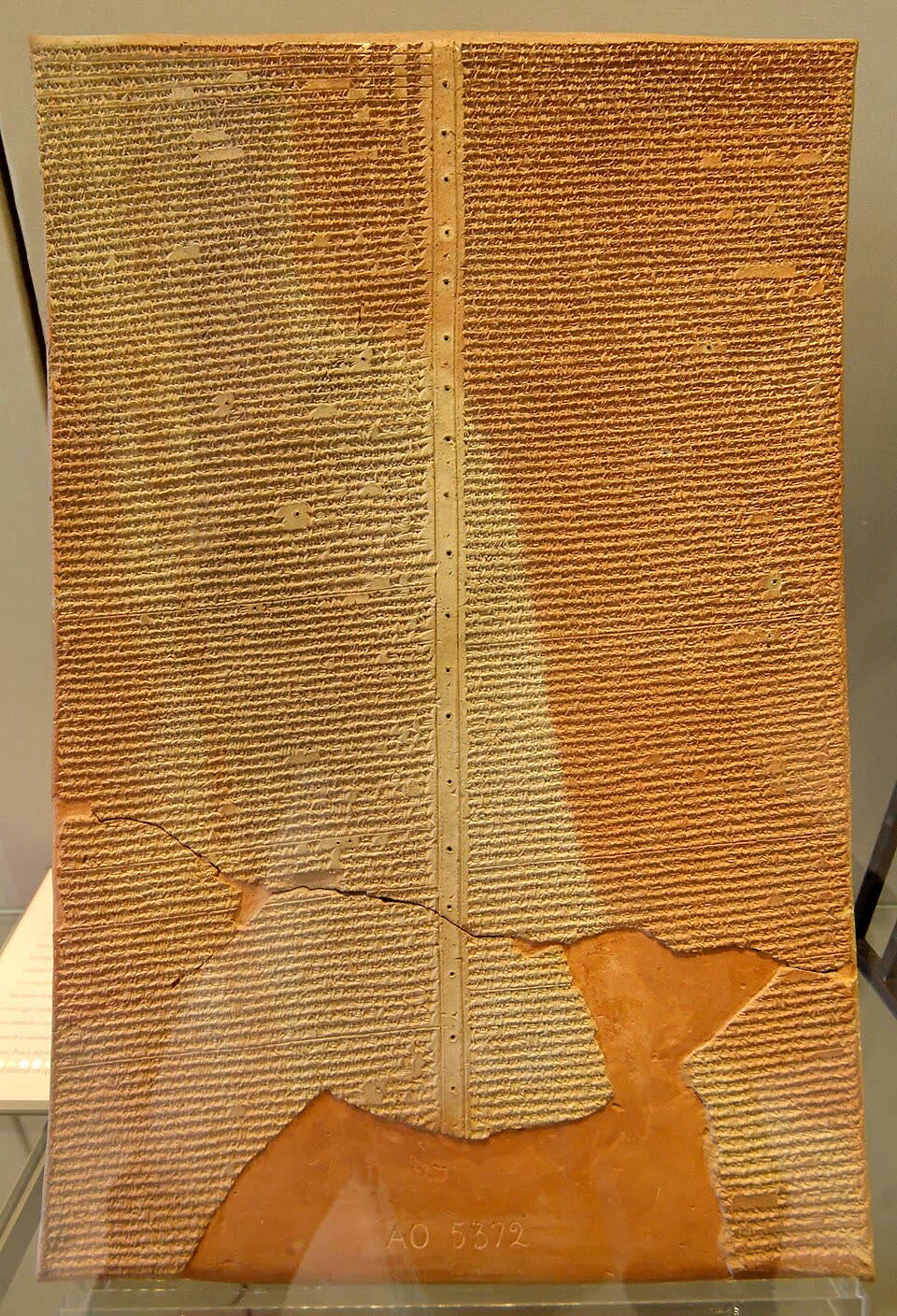
The clay tablet now at the Louvre as AO 5372 gives the fullest surviving royal narrative of Sargon's eighth campaign. It is written in AkkadianAkkadianAn ancient East Semitic language written in cuneiform from the third millennium BCE; its varieties include Babylonian and Assyrian, and it served in international diplomacy.Glossary · Click to read the explanation as a report to the god Aššur. The tablet's size and surviving cuneiformCuneiformWriting with wedge-shaped signs, developed from Mesopotamian recording traditions and used for several languages from the third millennium BCE.Glossary · Click to read the explanation preserve a long itinerary despite damage to parts of the surface. François Thureau-Dangin published the text in 1912 with a translation, a map and plates. Its descriptions of Parsua belong to a royal account prepared to report what Sargon claimed to have accomplished. [2] [5]
Sargon tells of meeting a ruler of Allabria before descending to Parsuaš. There he received tribute from people named in connection with Namri, Sangibutu, Bīt-Abdadāni and the Medes. The passage names many individual leaders and assigns them to settlements or districts. Horses, mules, camels, cattle, sheep and goats appear in the tribute list. The account then takes Sargon from Parsua into Missi, a district of Mannea. The sequence makes Parsua one of the last points of provincial administration on this part of his itinerary. [2] [3] [4] [6]
John Marriott and Karen Radner read the place as a staging point where homage from vassal rulers also supplied the expedition with animals. The text gives the arrival of tribute a political meaning as a demonstration of Sargon's authority. Moving between the territories of the province and an allied ruler, the party also depended on resources provided away from the Assyrian heartland. The named providers belong to several places. Their assembly in Parsua followed from the king's presence there and cannot by itself determine the borders of the province. [2] [3] [6]
What the itinerary can locate
Proposals for Parsua differ. Some place it west or southwest of Lake Urmia, on the order Allabria, Parsua and Missi in Sargon's report; others place it closer to Sanandaj, between Sanandaj and Kermanshah or near other sectors of the western Zagros. Sorena Firouzi and Jamie Novotny review these identifications while working with particular place-names in Sargon's texts. They distinguish the list of rulers who delivered tribute in Parsua from a separate royal inscription that gives a sequence of travel between some of their settlements. That sequence supplies a different basis for a proposed position. [2] [3] [6]
The physical evidence has grown with the study of Assyrian monuments around Lake Zeribar. Karen Radner and colleagues identified a fragment from Qal’eh-i Imam as part of a stele of Sargon II. They use a separate itinerary and official letters to investigate a chain of places that linked the Assyrian heartland with the lake and neighboring provinces. One identification places Sumbi in Parsua near the border with Mazamua. The authors present the royal stele and identification of individual stops with varying degrees of confidence. The discovery of the monument points to Assyrian activity in the area and contributes a local find to the evidence of royal tablets and letters. [7]
Assyrian scribes used several forms of the name. The campaign letter has Parsuaš, and Firouzi and Novotny also identify examples of Parsua and Parsumaš for the western Zagros district in Sargon's inscriptions. Matthew Waters compares similar names in the wider question of evidence for Persians in southwestern IranIranIran is the modern country containing Shush, ancient SusaGlossary · Click to read the explanation. The spelling of an individual name can be read directly, while the land it refers to is established through context, neighboring places and date. For the western province, the earliest royal claims about tribute, the later references to a governor and the sequence of places in Sargon's report are the most specific anchors. [1] [2] [3] [8]
References and notes (8)
- Daniel T. Potts, International Trade and Relations: Mesopotamia and Iran in the First Millennium Discussion of Shalmaneser III and Tiglath-pileser III, the twenty-seven kings, annexation and governors. Return to the text ↑
- François Thureau-Dangin, Une relation de la huitième campagne de Sargon (714 av. J.-C.) Introduction pp. I–V and translation lines 34–55, the tablet as a letter and the entry into and departure from Parsuaš. Return to the text ↑
- Sorena Firouzi and Jamie Novotny, Locations of Several Cities in the Western Region of the Iranian Plateau Pages 10–16 and 23–24, earlier itineraries, place-name variants, tribute, annexations and proposed locations. Return to the text ↑
- Grant Frame, The Royal Inscriptions of Sargon II, RINAP 2 Texts 4 and 65, the damaged annals' addition of Šurgadia and lines 38–51 and 70–72 of the campaign narrative, in a republication of the edition. Return to the text ↑
- Musée du Louvre, Tablet of the Eighth Campaign of Sargon II AO 5372, date, form, language and editions listed in the object record. Return to the text ↑
- John Marriott and Karen Radner, Sustaining the Assyrian Army Among Friends and Enemies in 714 BCE Introduction and discussion of Parsua in lines 38–50 of Sargon's narrative, including the interpretation of tribute. Return to the text ↑
- Karen Radner, Mohammad Masoumian, Hassan Karimian, Eghbal Azizi and Kazem Omidi, Neo-Assyrian Royal Monuments from Lake Zeribar in Western Iran Pages 84–91, Sargon's stele fragment, the Mazamua Itinerary, Parsua's border and Sumbi. Return to the text ↑
- Matthew W. Waters, The Earliest Persians in Southwestern Iran: The Textual Evidence Extract and notes 6–13 on spellings, contexts and the problem of identification. Return to the text ↑
Suggest a correction · Suggest a source for this record
Cite this record
IL Archive, «Parsua in Neo-Assyrian Records», https://ilarchive.com/en/sites/parsua