The Famine Stela Chapter 1
Seven Years
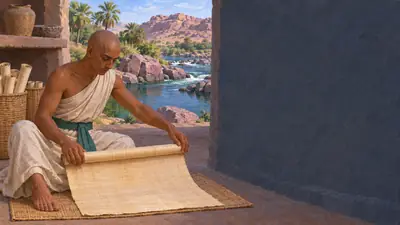
A priest reads the old writings to learn who can release the Nile flood. Khnum promises Djoser that the years of hunger will end. After the dream the king makes a gift, whose terms fill the last columns of the inscription.
SourcesTurn the pages with the arrows, the arrow keys or a swipe.
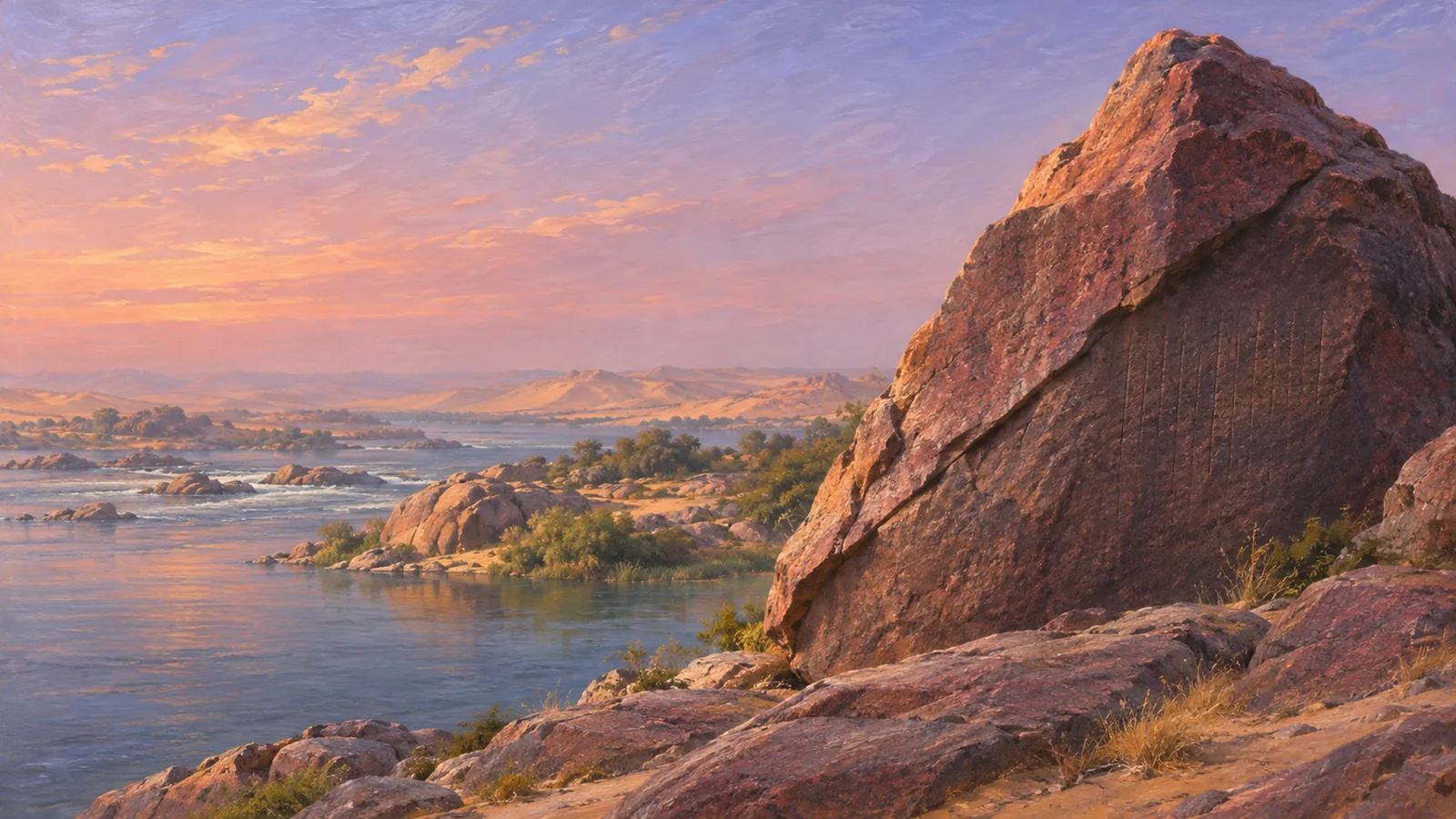
THE FAMINE STELA
On the island of Sehel in southern Egypt, a story is cut into a granite boulder. It was carved in the Ptolemaic period, more than two thousand years after Djoser, the king whose voice it gives us.
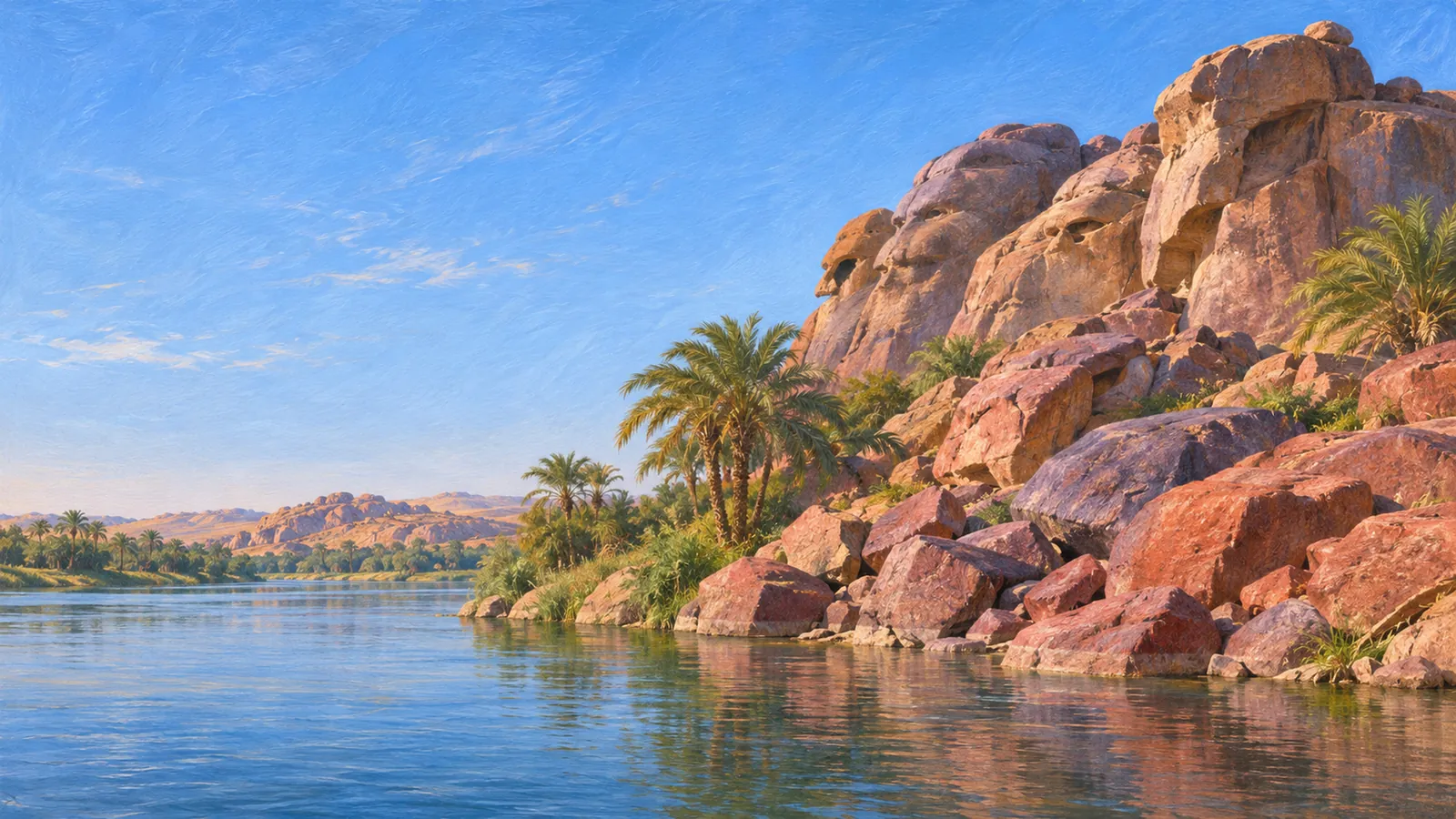
Sehel has rock inscriptions from many periods. This one has thirty-two columns and a natural crack running across its face. The people who cut it chose a rock that was already part of the island.
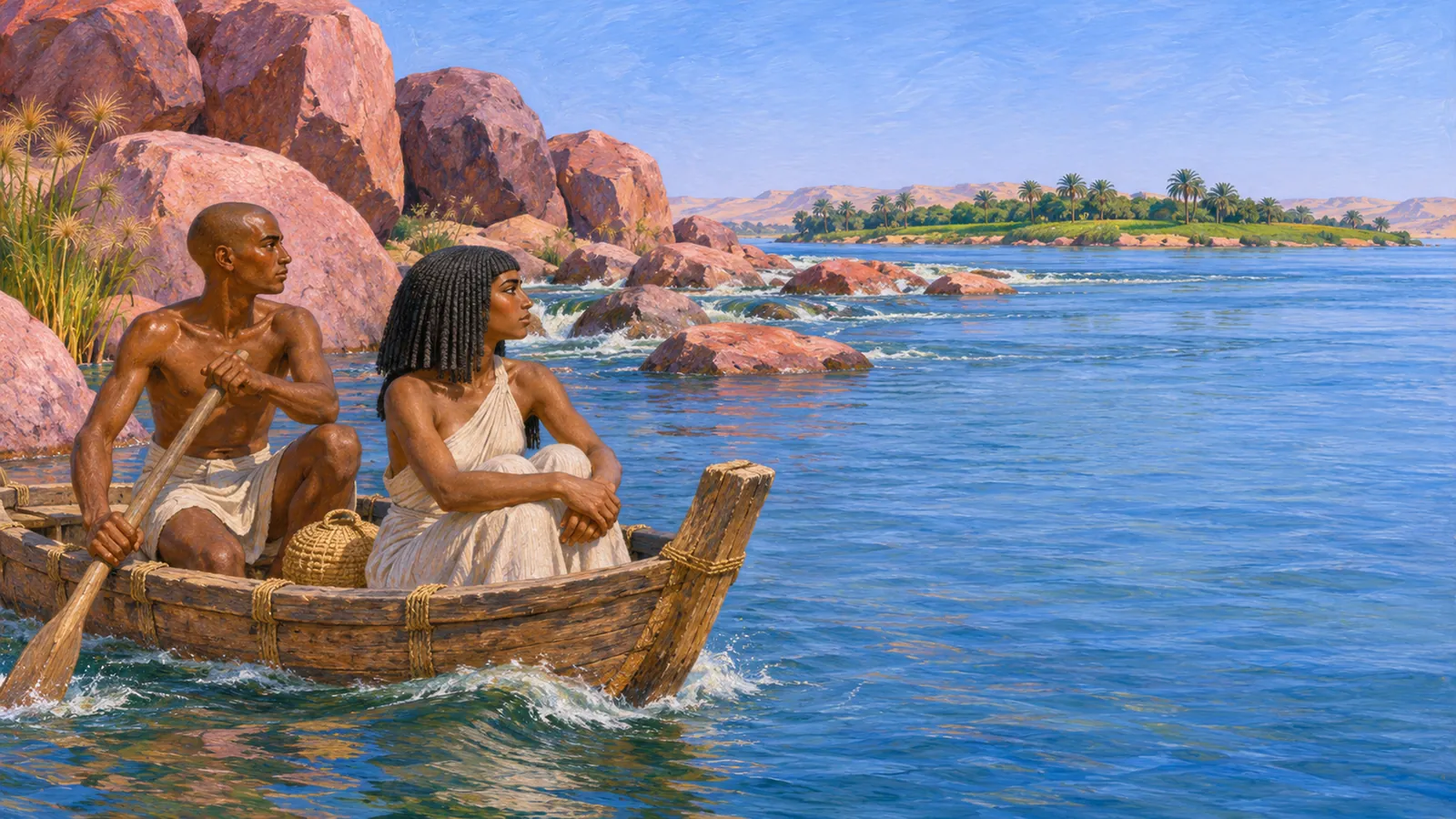
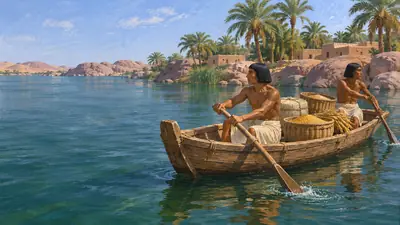
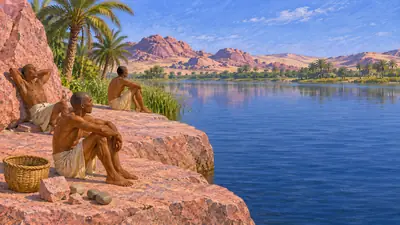
The Nile threads its way around the granite islands. Sehel is where the story was carved. A little farther downstream is Elephantine, called Yebu in the inscription. That is where the king’s search will lead.
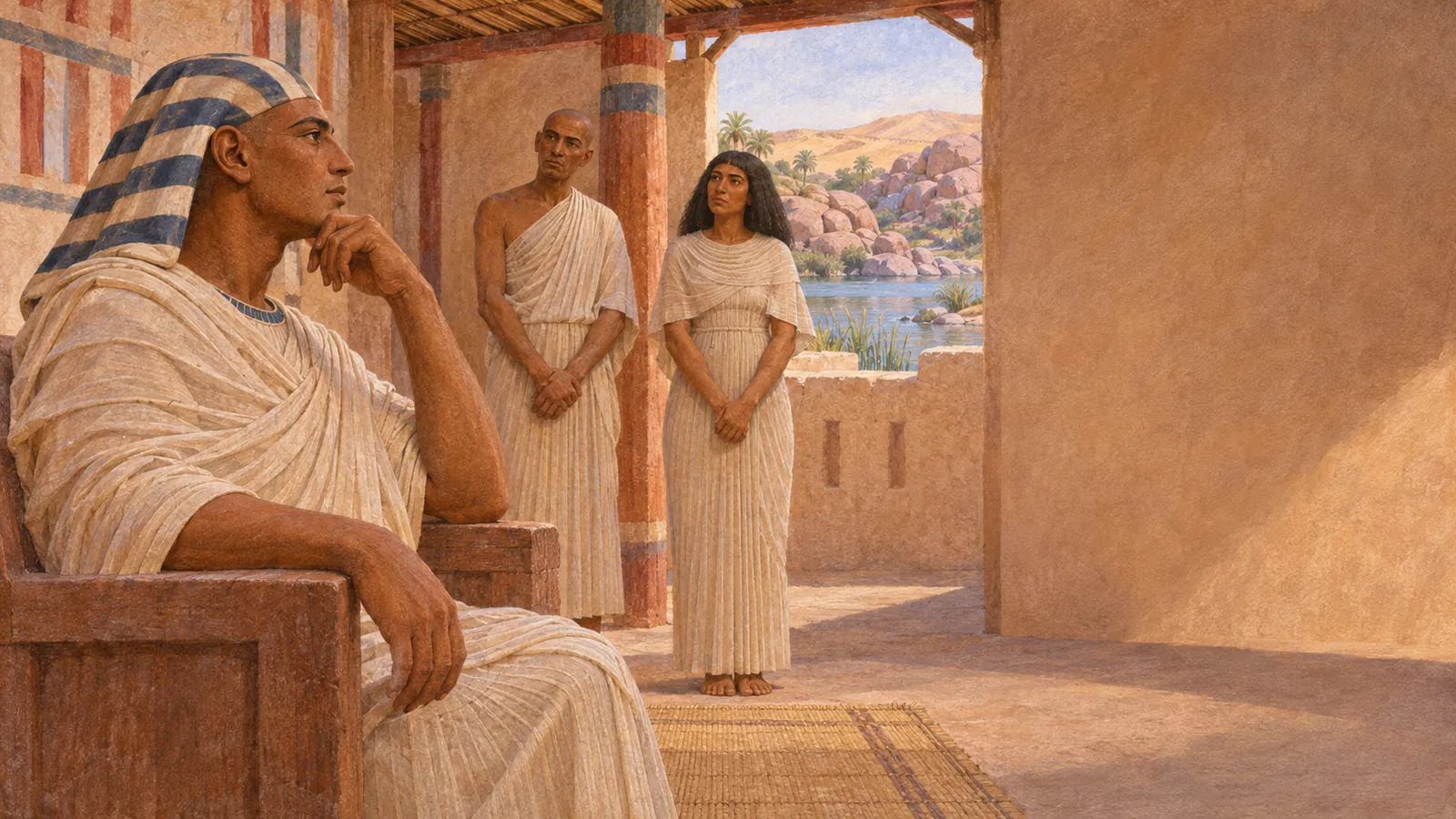
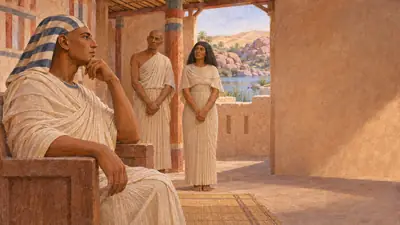
The story dates itself to the eighteenth year of Djoser. It gives him royal names, including Neterikhet. Then it lets the king speak. On his throne, he says, he sits in sorrow.
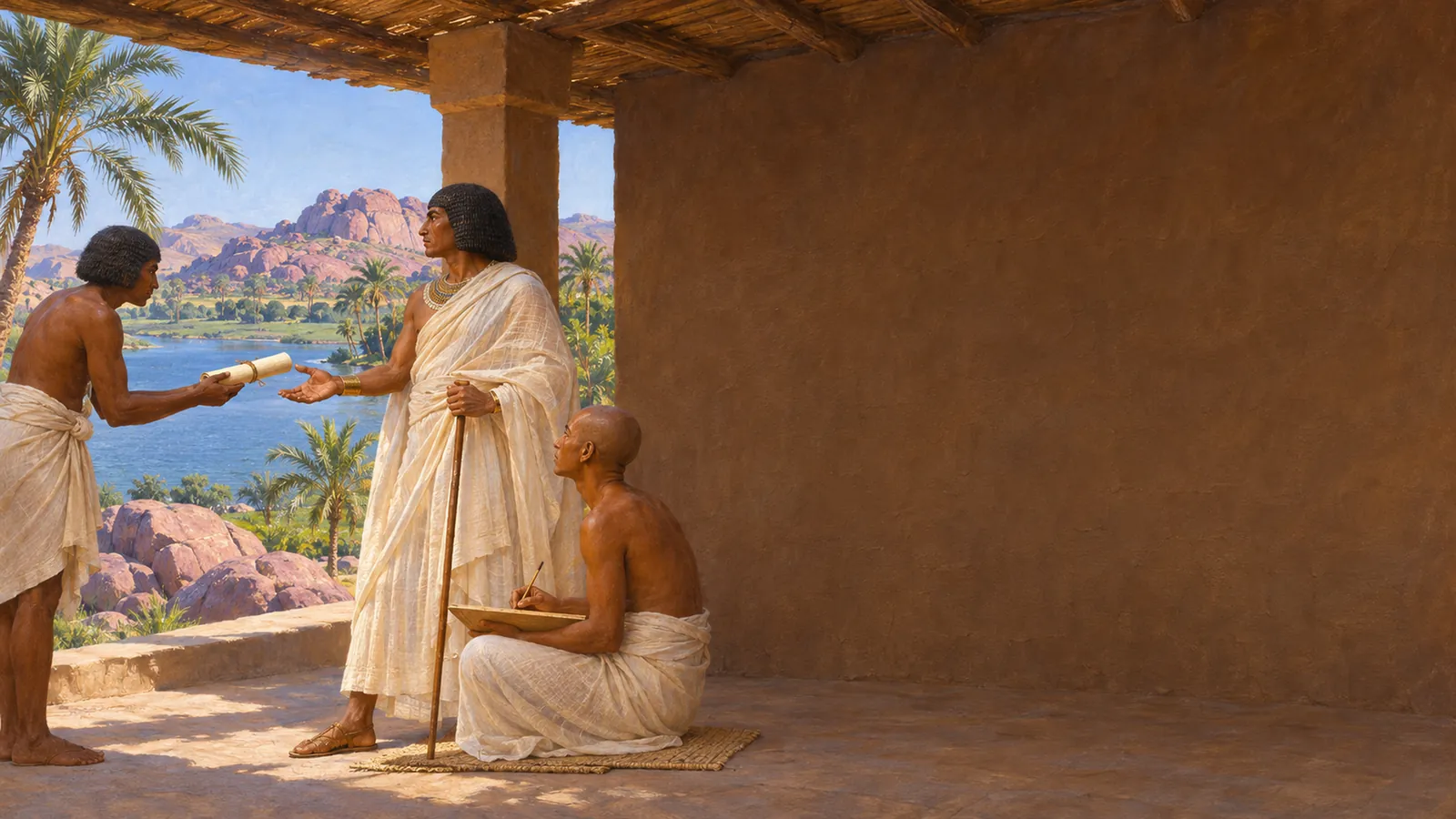
The first column names Mesir, who governs the southern domains and has charge of Nubians at Yebu. He is the recipient of the decree. The story begins with the voice of a king and the name of the official meant to hear him.
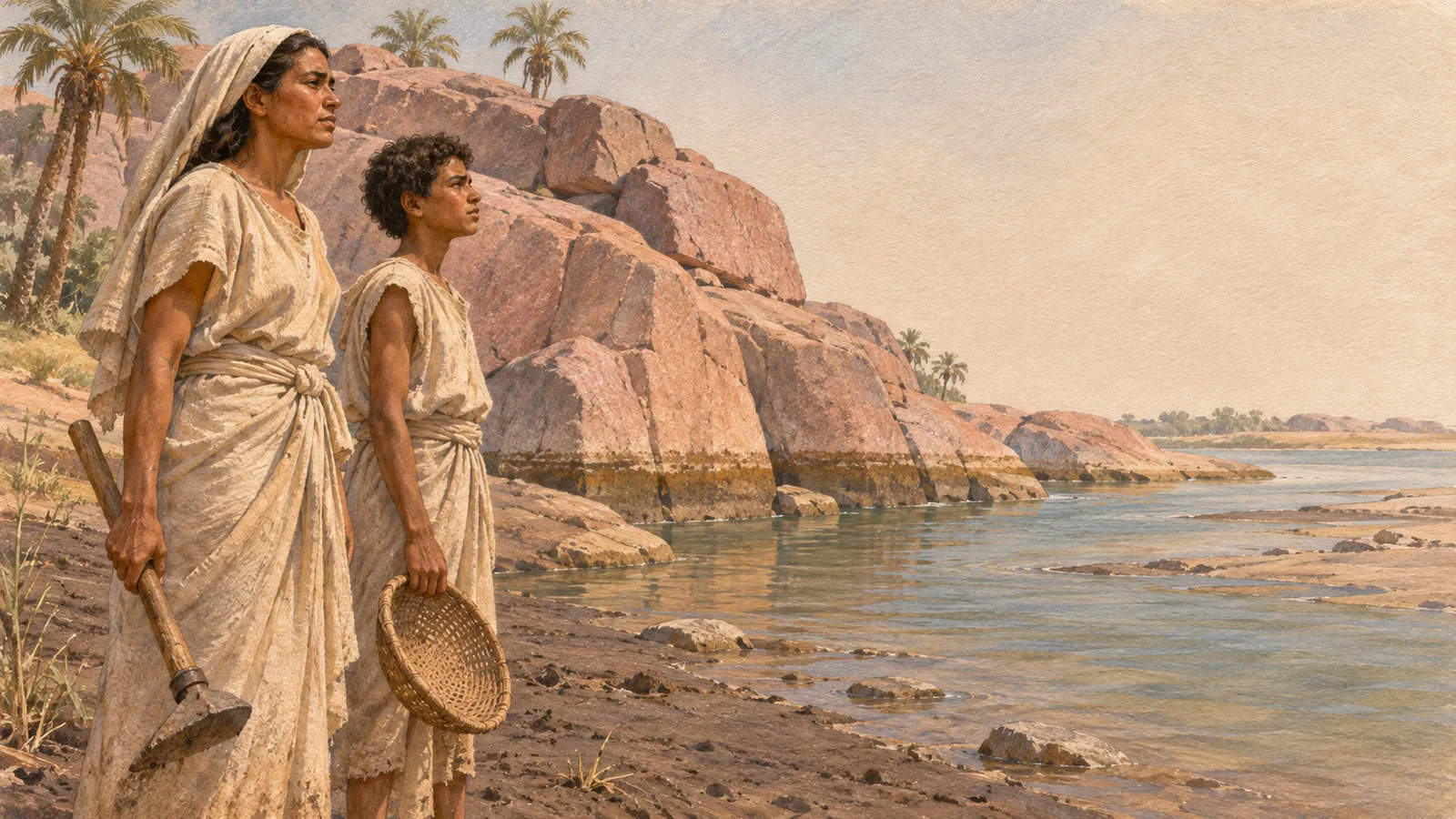
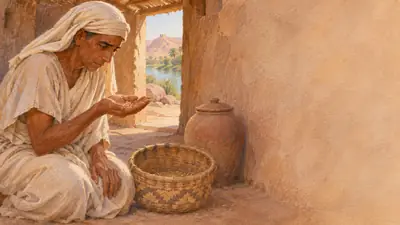
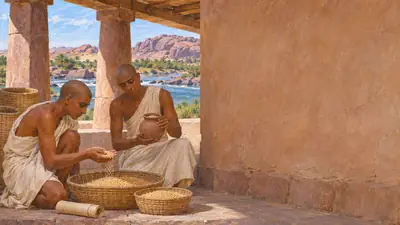
For seven years, the inscription says, Hapy failed to come in time. Hapy is the Nile flood in divine form. With too little water on the land, farmers had little grain to grow and store.
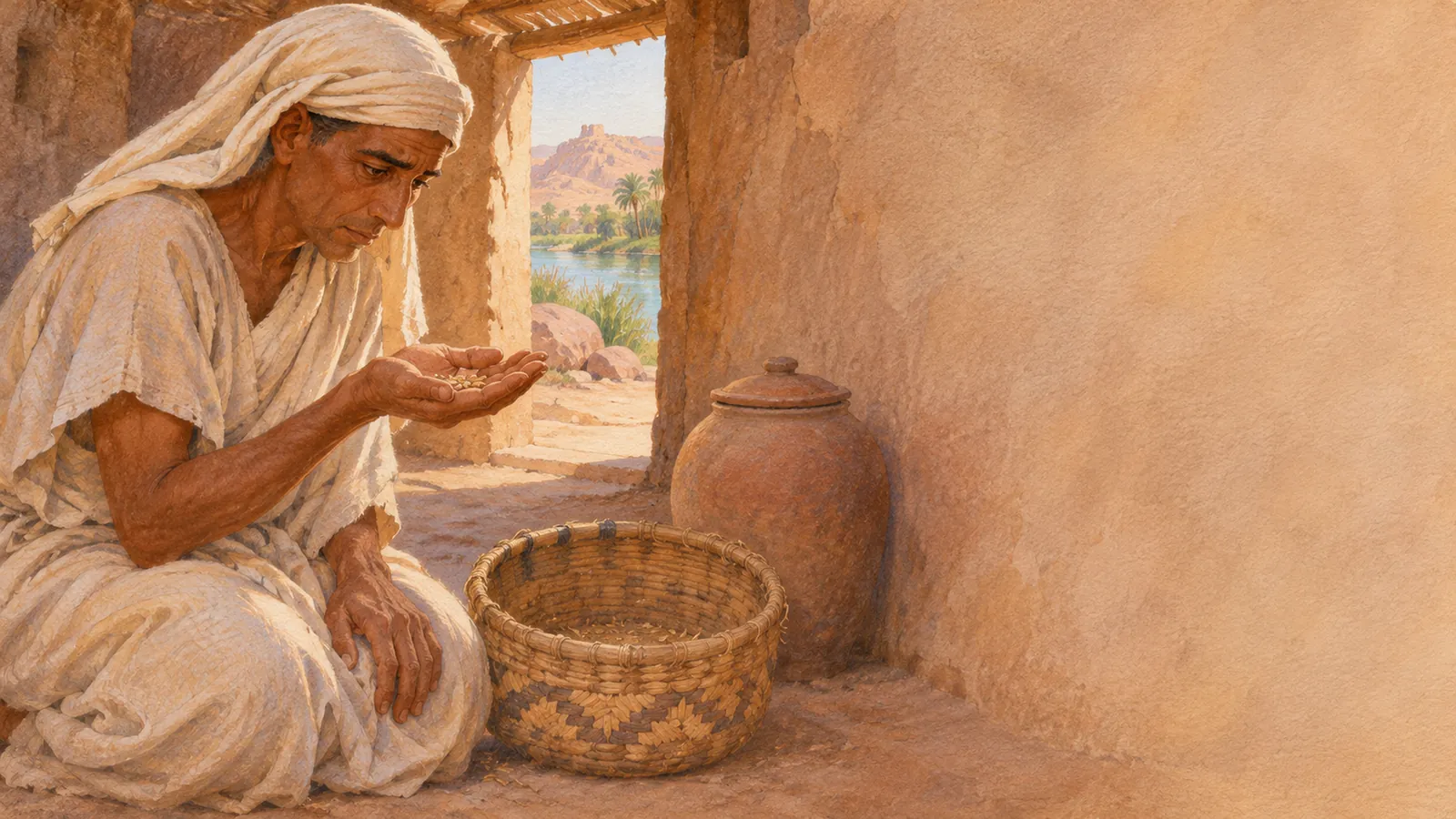
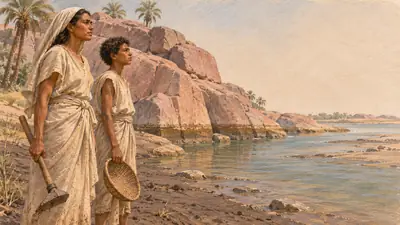
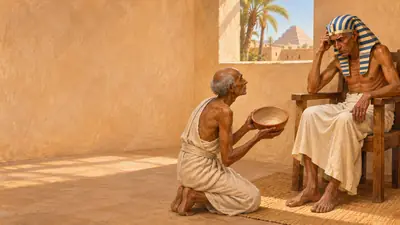
Djoser says the kernels dried up and every kind of food grew scarce. Children cried. Older people grieved with their knees drawn up and their arms wrapped around themselves.
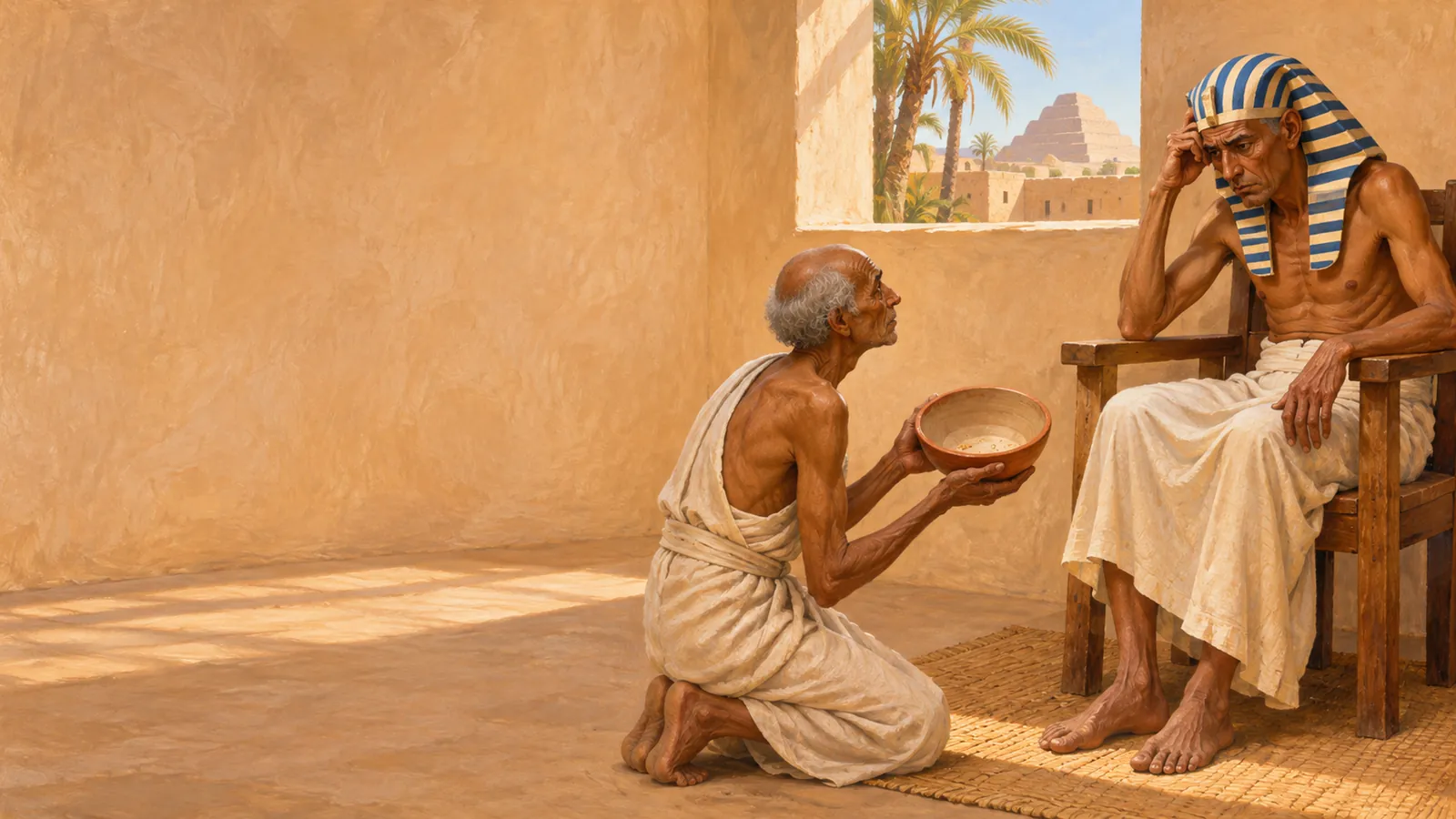
The king describes people taking food from their own kin. Even his courtiers had too little. In his account the famine reaches people who serve at the palace as well as the people who grow its food.
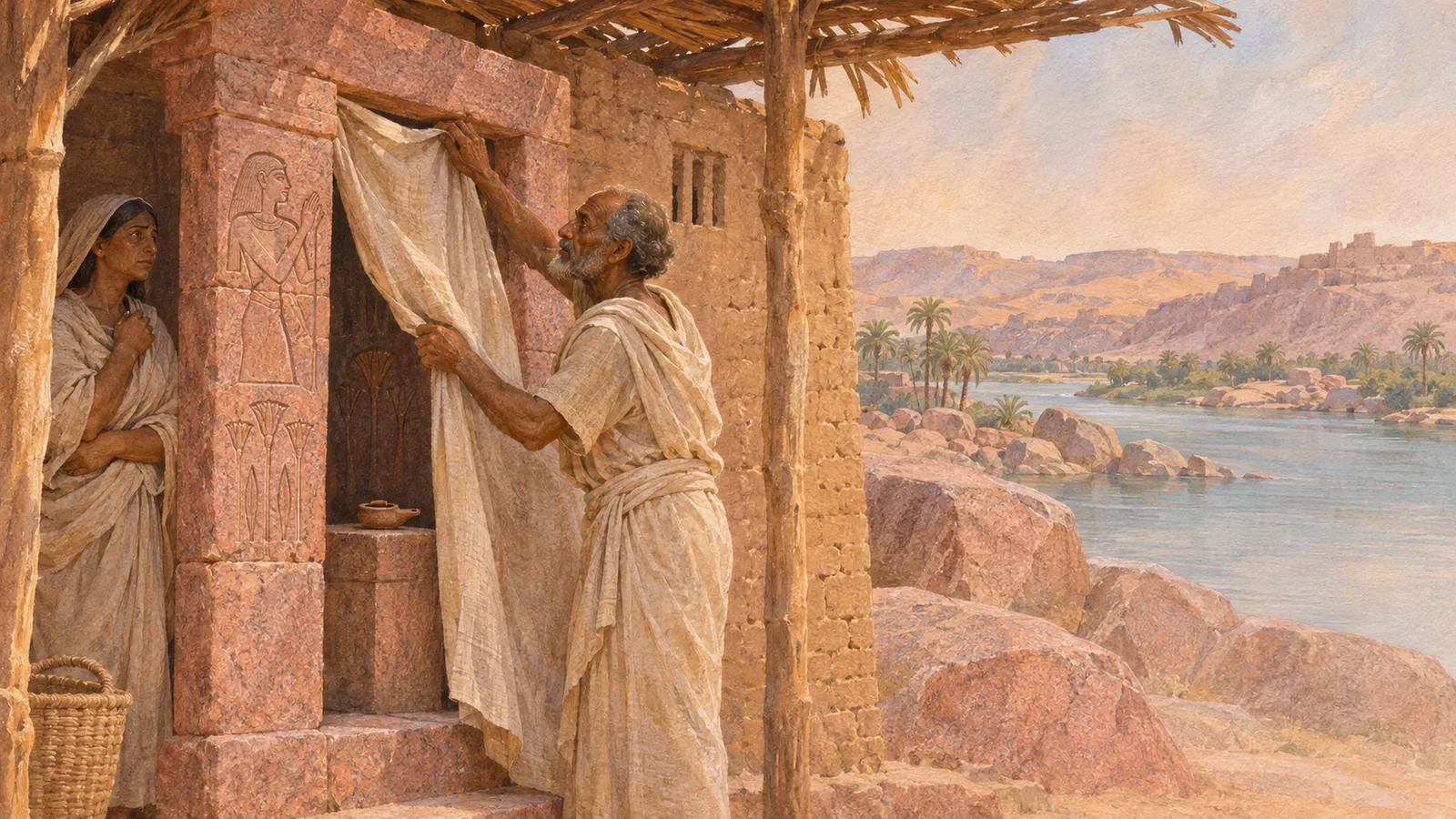
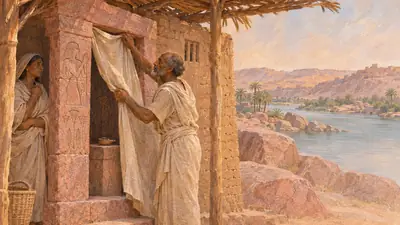
Temples shut and dust gathered on the shrines, Djoser says. The places that usually received offerings were quiet. The king turned his mind toward the past and looked for somebody who knew the old writings.
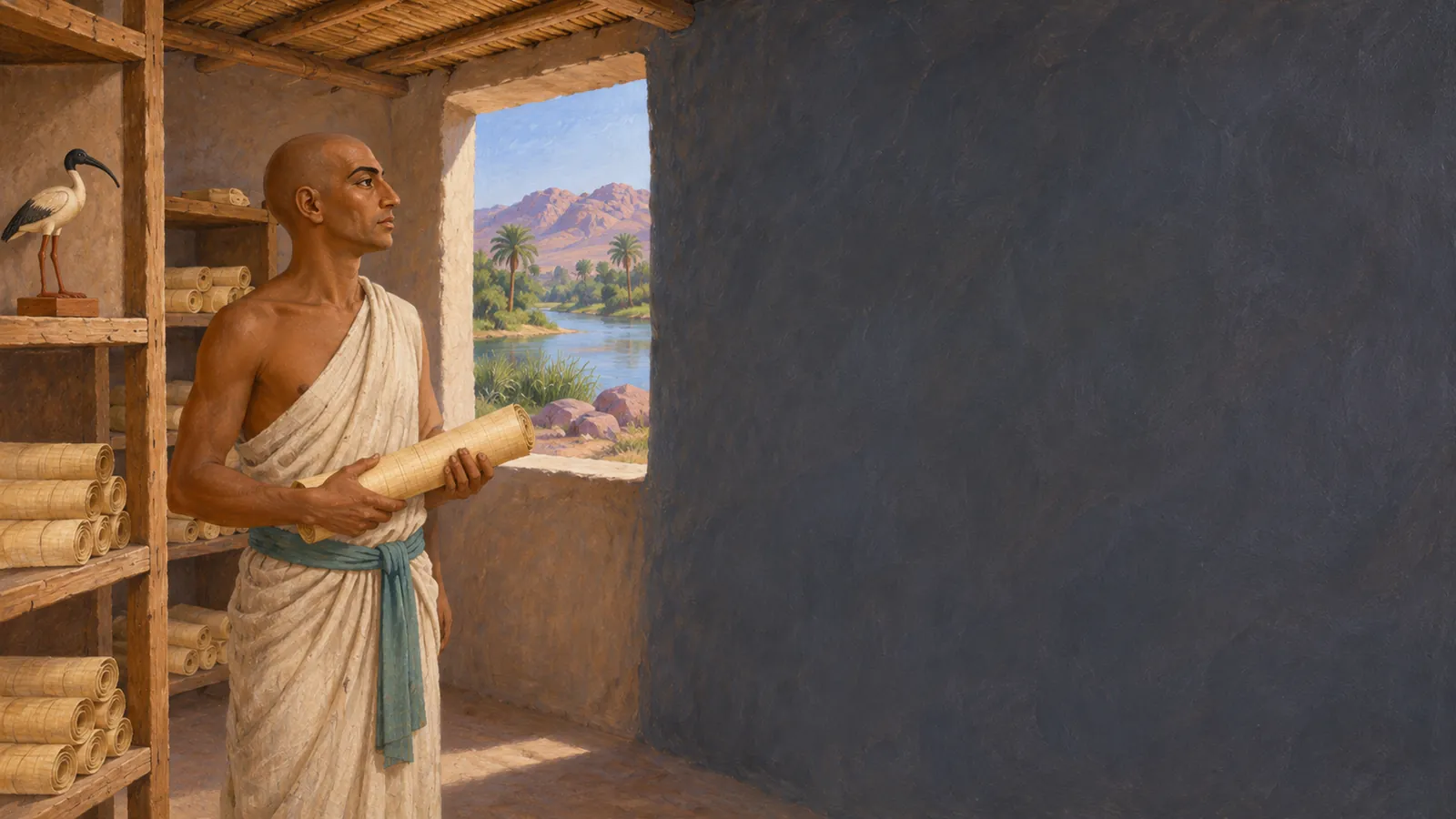
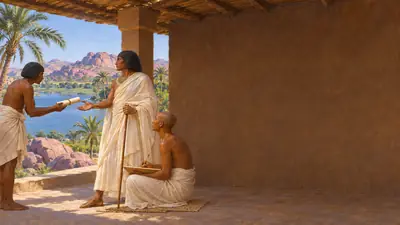
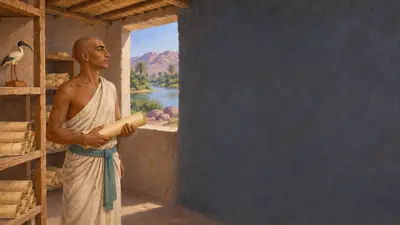
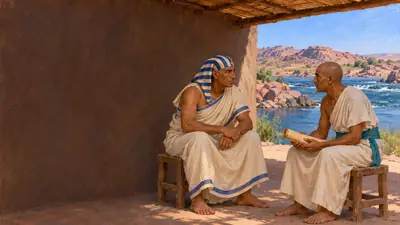
Djoser consults a learned reader of ritual texts. The inscription links him with the ibis and with Imhotep. In popular retellings he often bears Imhotep’s name himself.
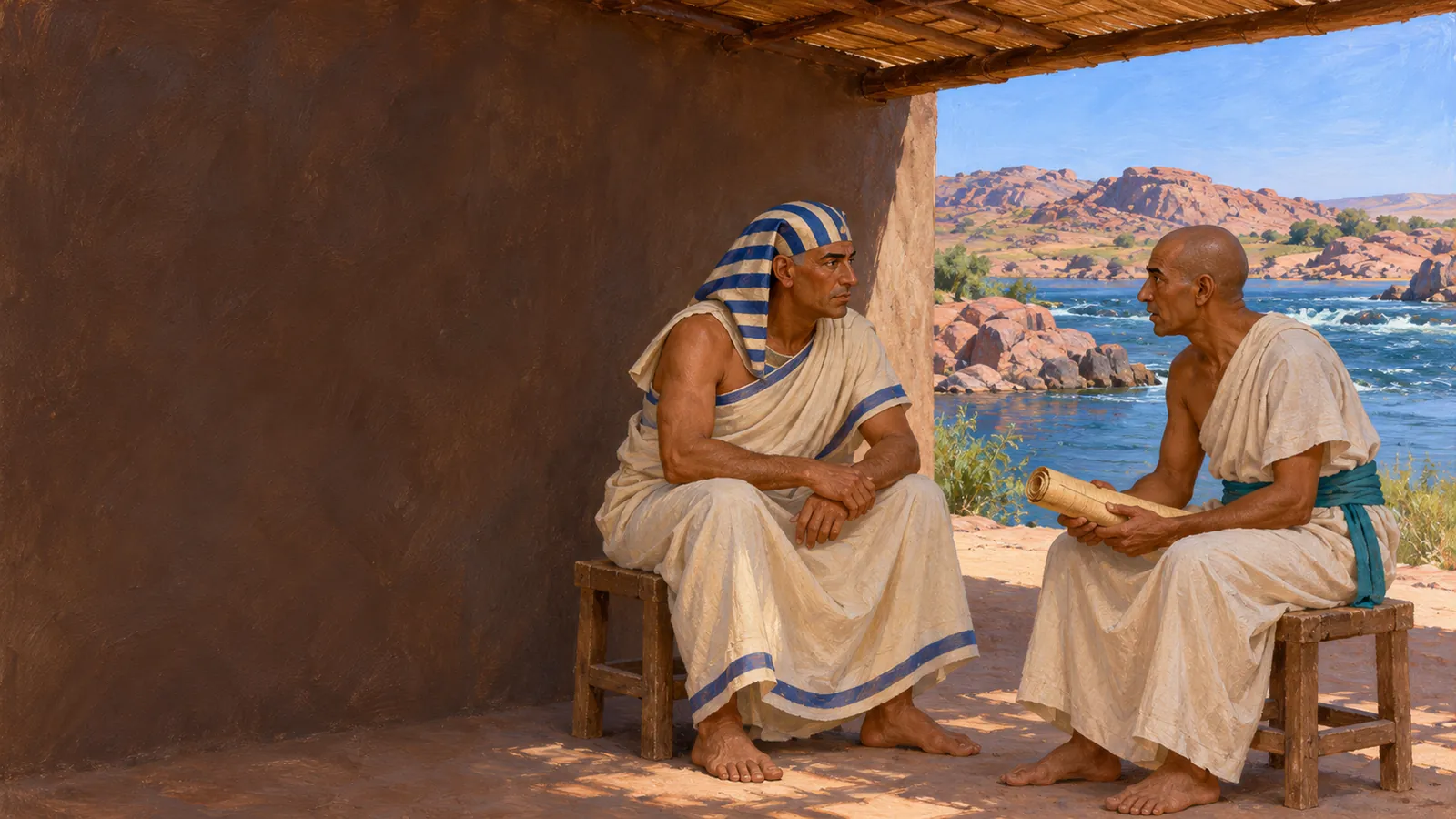
The king asks where Hapy is born, what town belongs to the winding river and which god lives there. He is looking for the god who might join him and bring the flood.
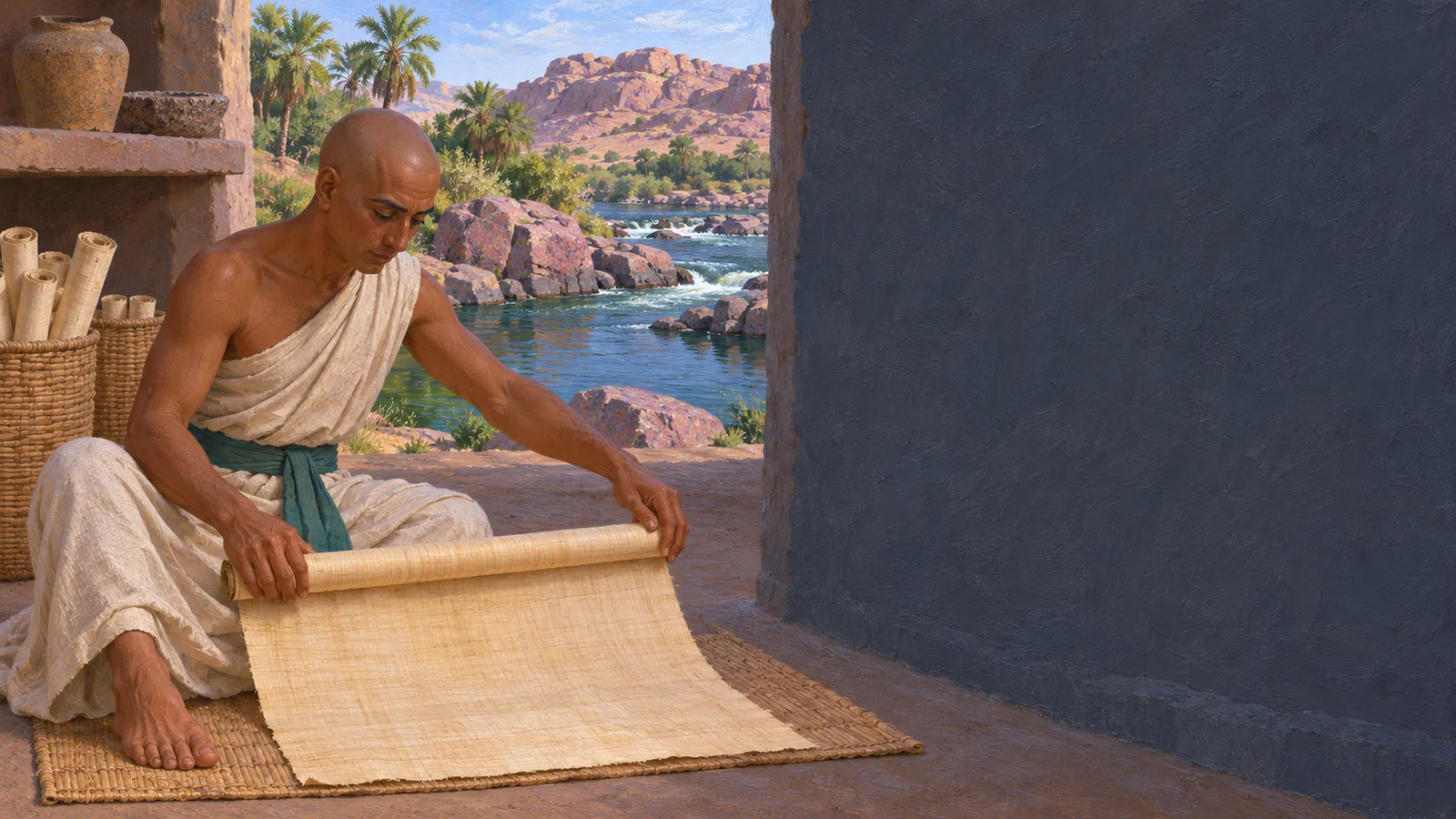
The priest goes to the House of Life to read the rolls called the Souls of Ra. He returns with an account of the river and its shores, and things the ancestors had known.
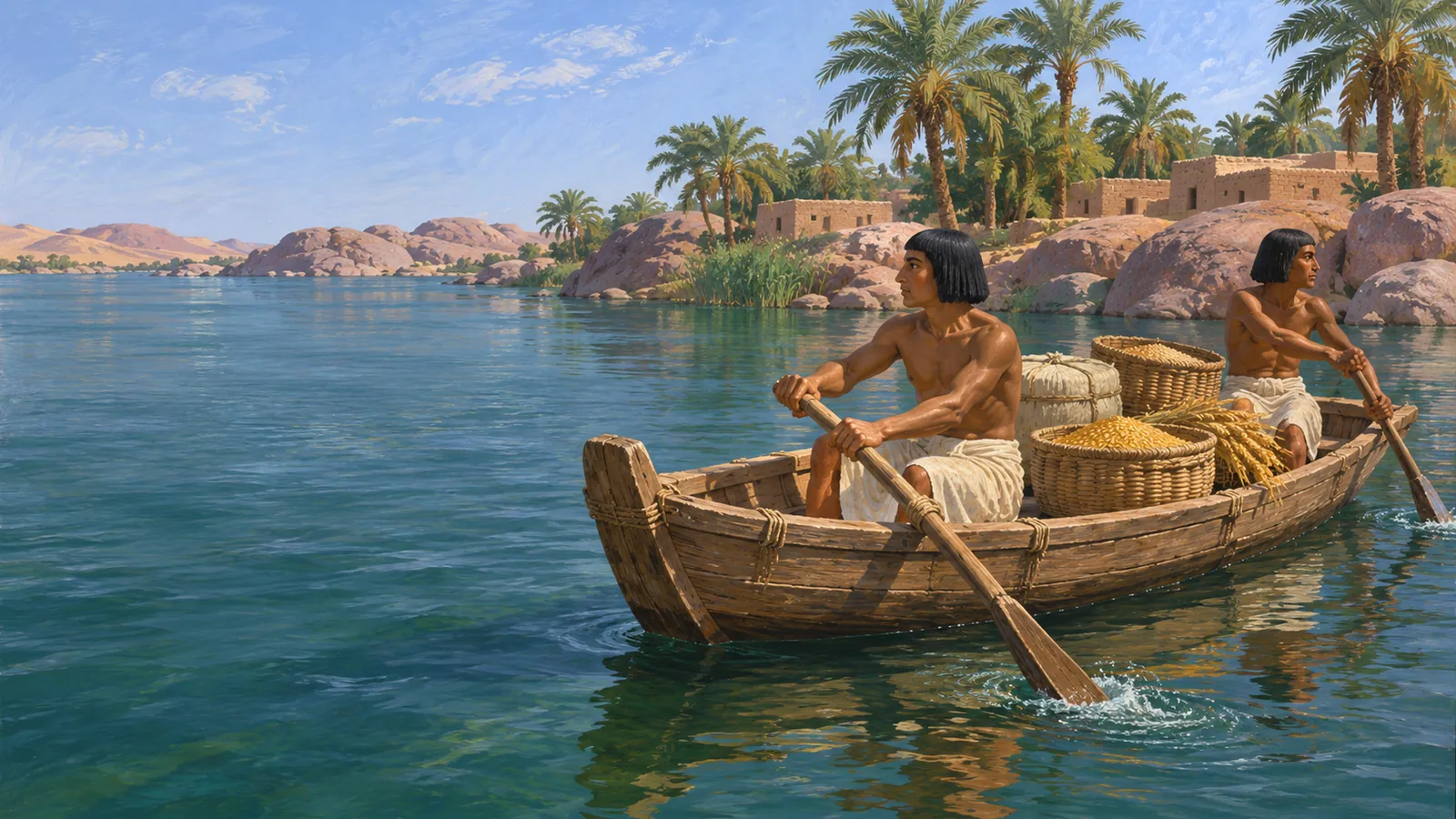
The priest describes Yebu, an island town with the Nile all around it. At the First Cataract the water splits into channels between granite rocks. In the story, this is where Hapy lives.
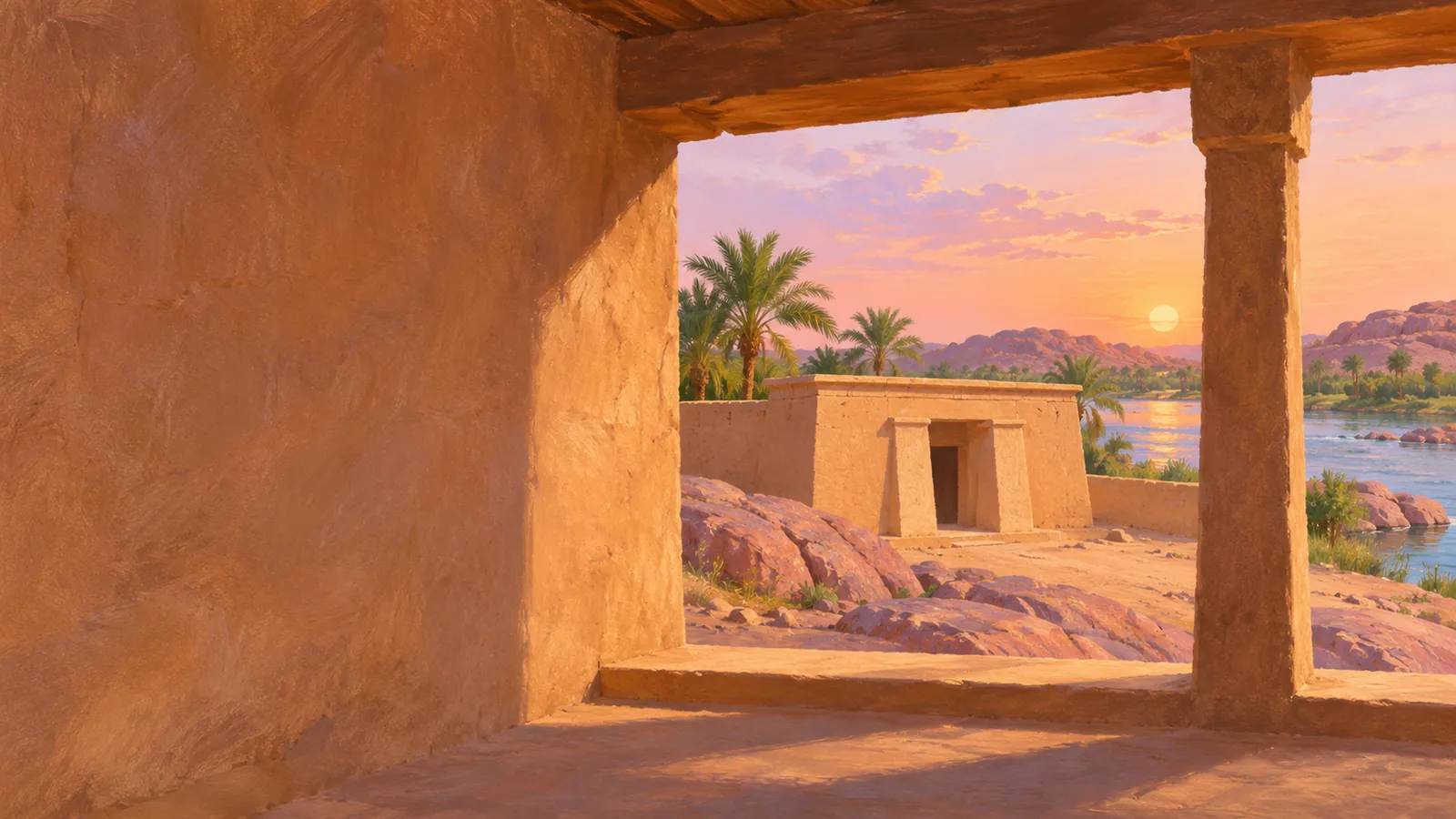
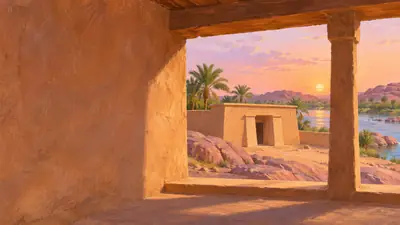
The priest calls the temple Joy of Life. He says its doorway faces southeast, so that Ra rises before it. To him, the town in the river is also a place where the sun prepares to give life.
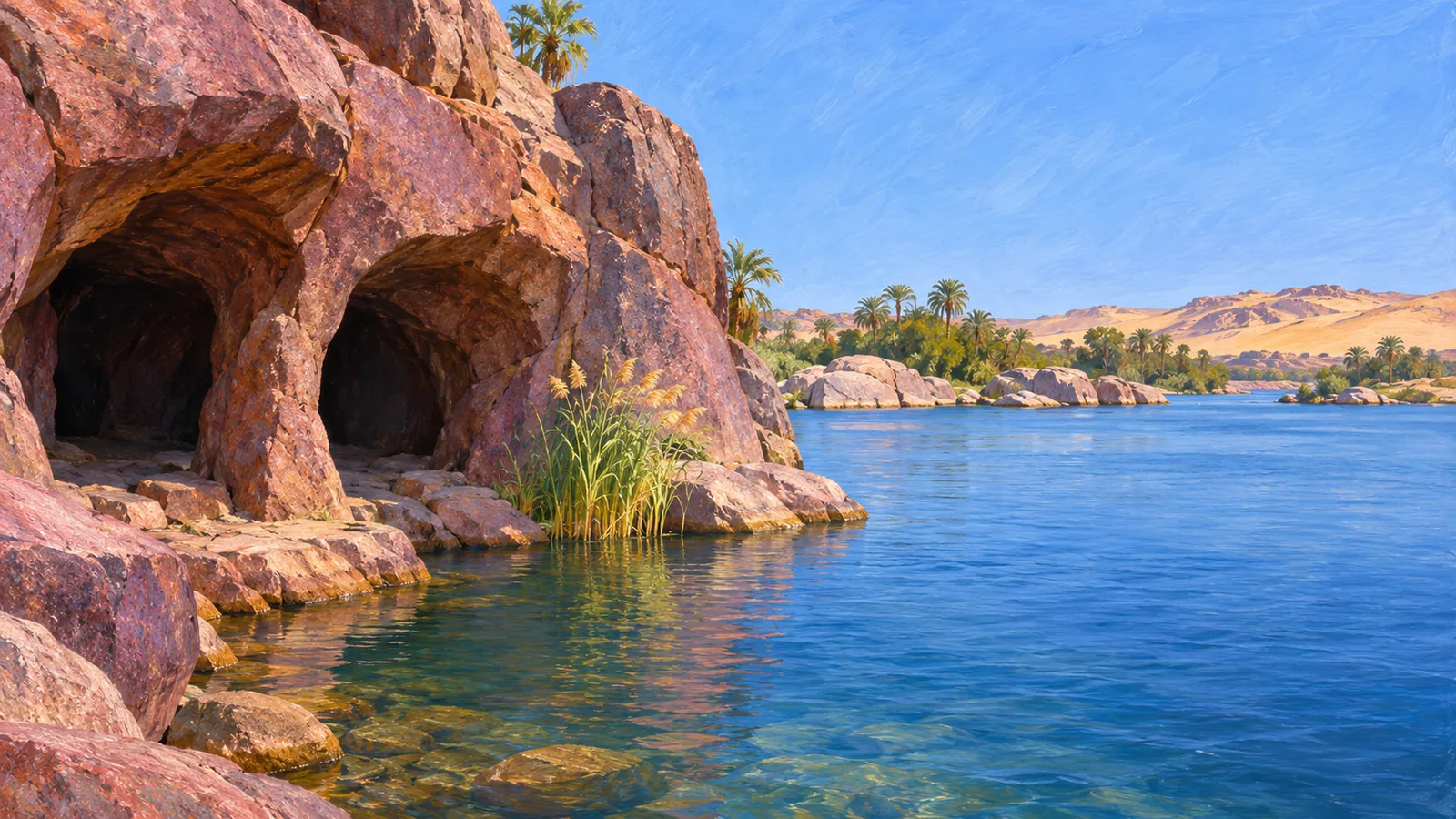
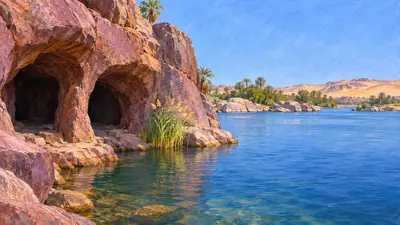
In the priest’s account, Hapy rests in the Twin Caverns. There he grows young again and comes forth with the flood. The caverns are how the inscription imagines the water’s return.

The priest measures the flood in cubits. He pictures it racing out at a height of twenty-eight cubits. Farther along, he mentions seven. The water changes as it goes.
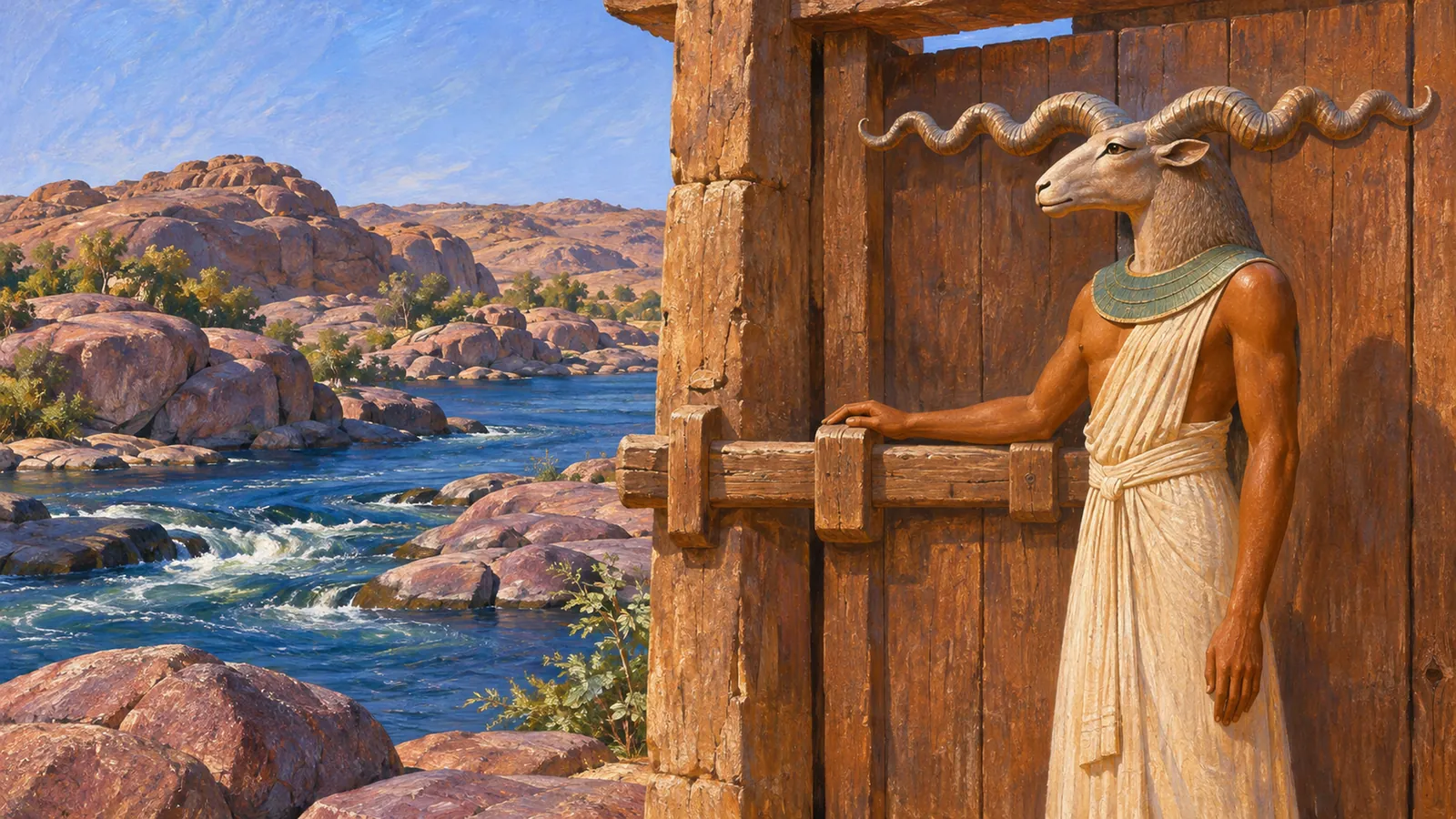
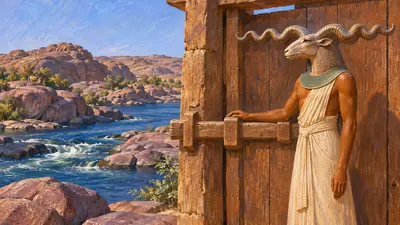
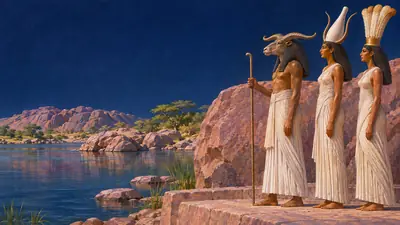
The priest names Khnum as god of the cataract. He pictures the god above the deep with his sandals on the flood and his hand on a bolt. Khnum can open the gate whenever he chooses.
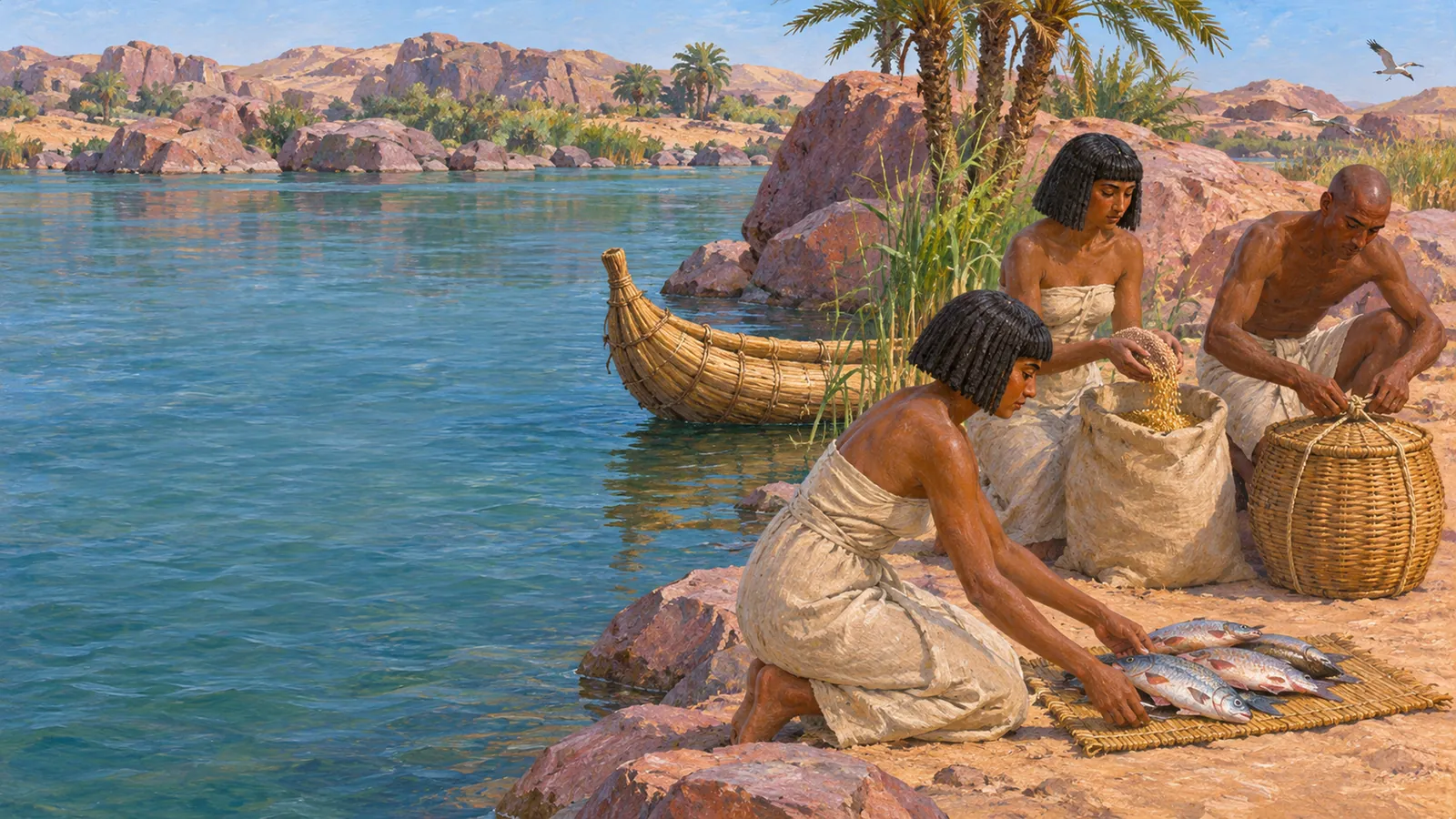
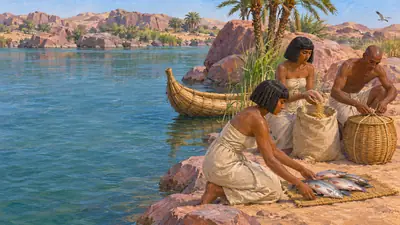
Khnum is responsible for the things that keep people alive. The priest names grain, birds and fish. The lord of the cataract is also the lord of the fields, where the river spreads each year.
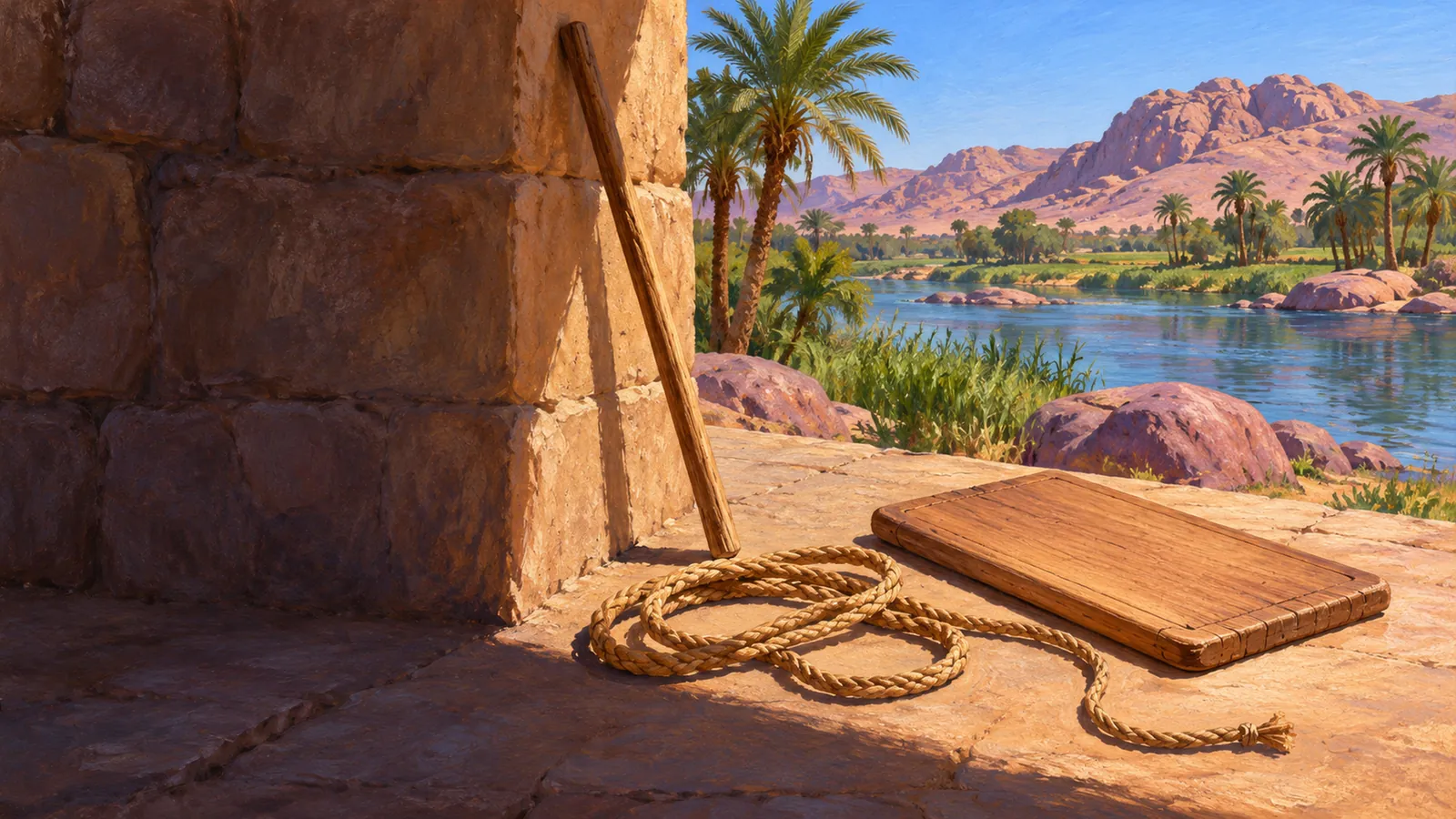
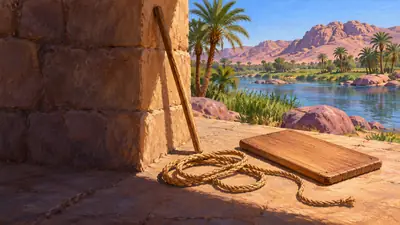
The priest says Khnum measures the lands of the south and north and assigns each god a share. A cord and a writing board appear in his account, as if this god were also a surveyor and scribe.
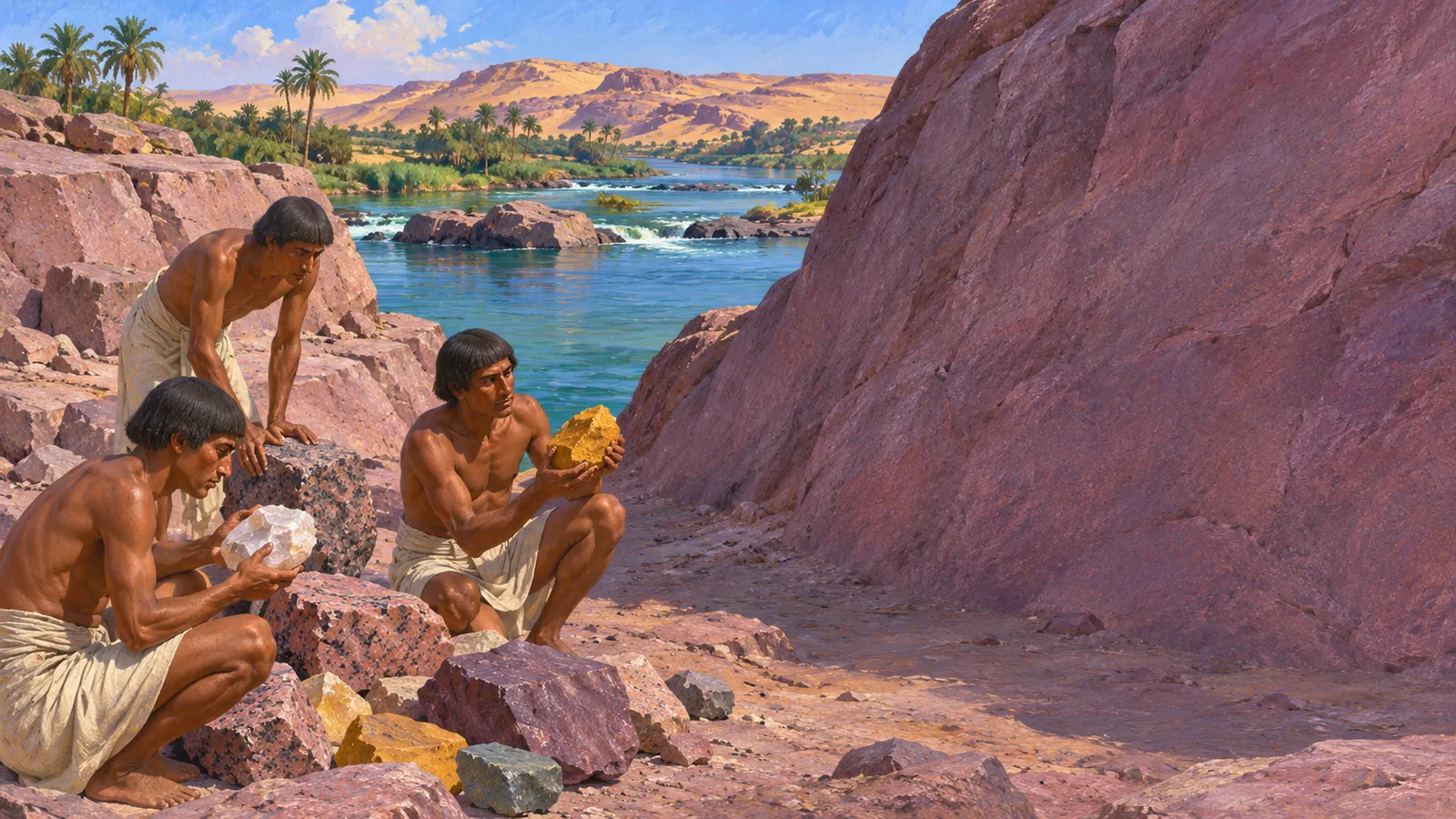
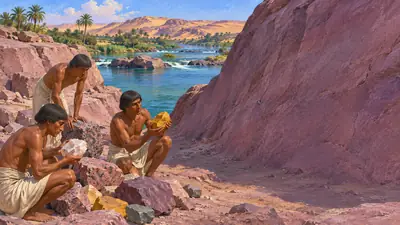
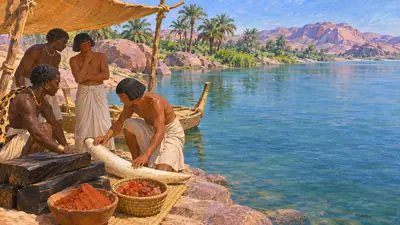
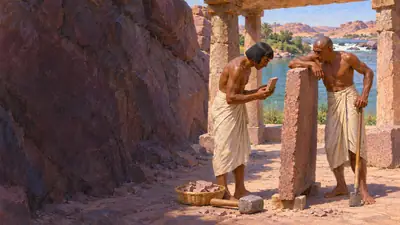
The eastern cliffs hold stones fit for places of worship, royal buildings and statues. The priest describes where different stones lie. Some are east or west of Yebu, others beside the canal or in the river itself.
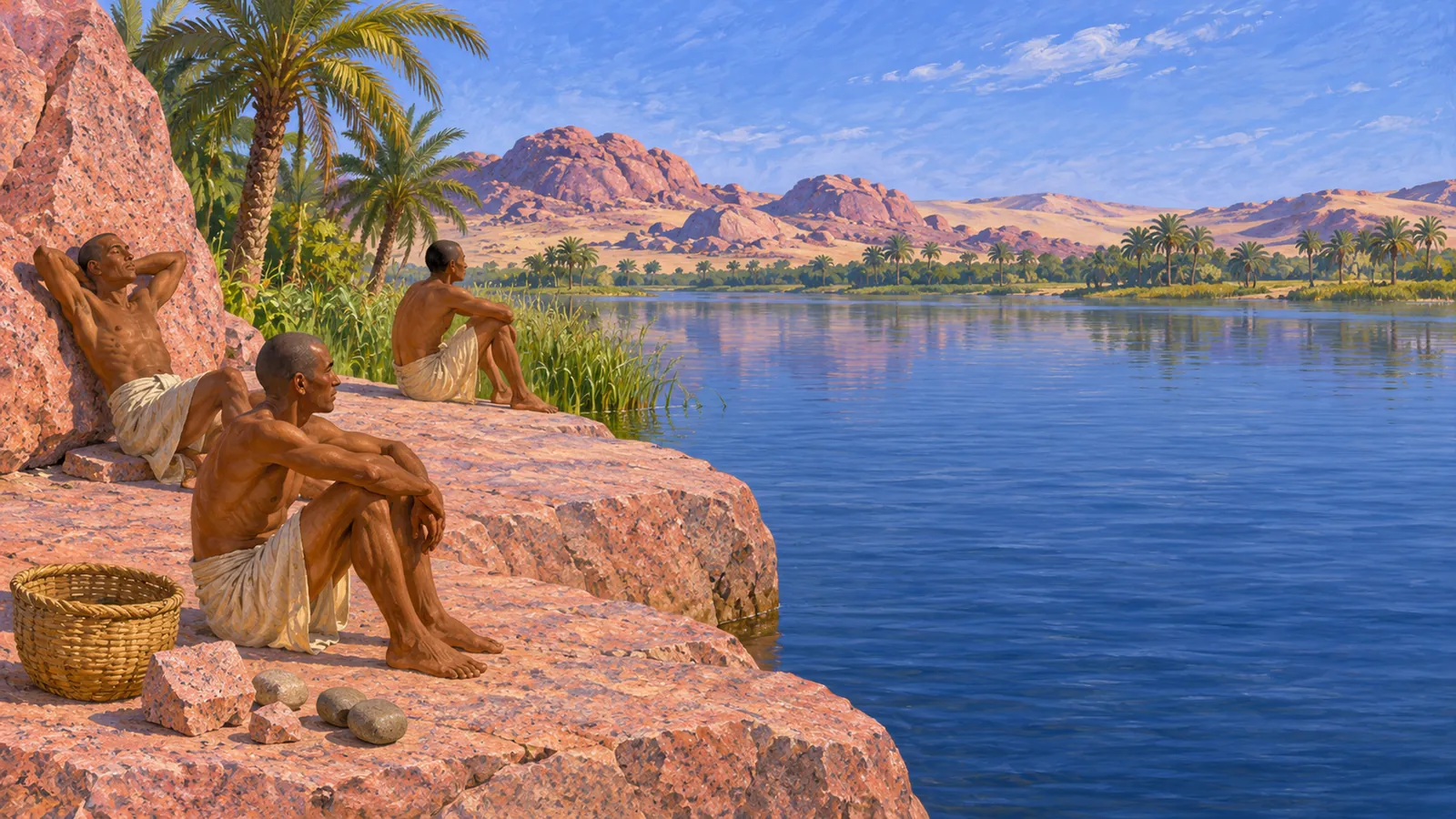
The priest speaks of a place in the river where people who work the stone can rest. The annual flood covers it. In his description there is room for the quarry workers and the changing water as well as the gods.
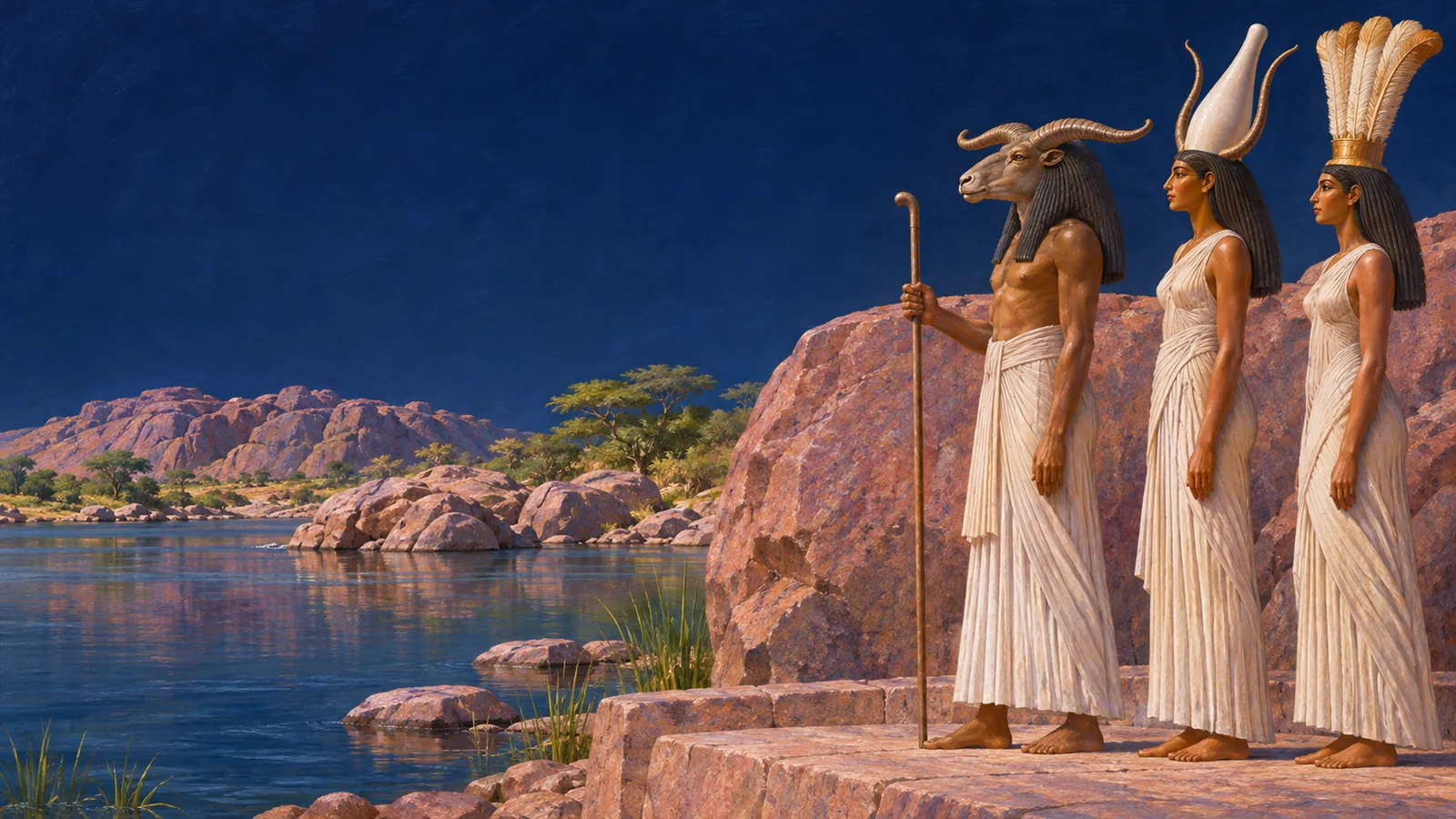
The priest names Satet and Anuket among the gods of Khnum’s temple. They are shown with Khnum on Sehel, where the relief above the writing shows Djoser bringing gifts to the three.
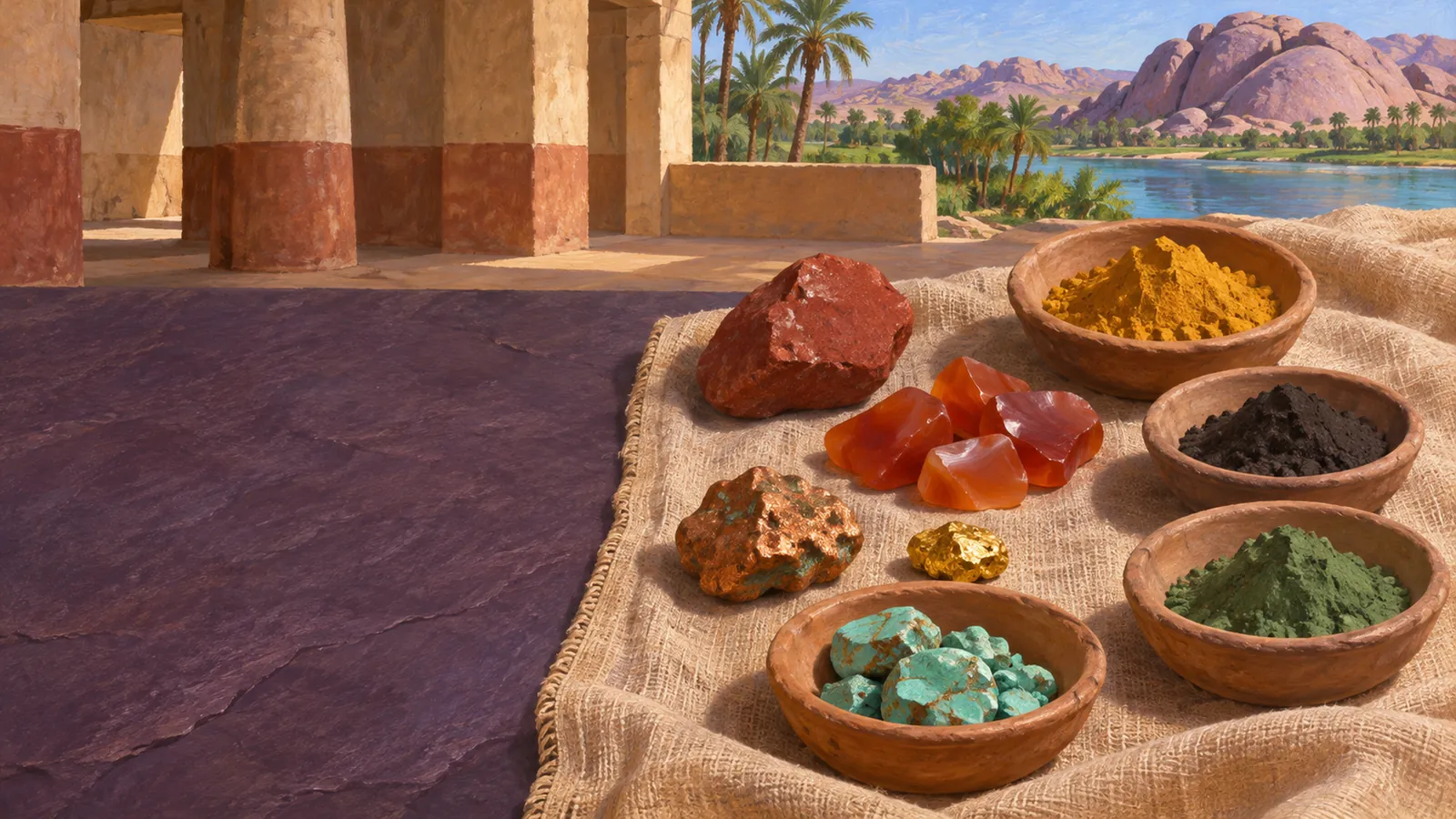
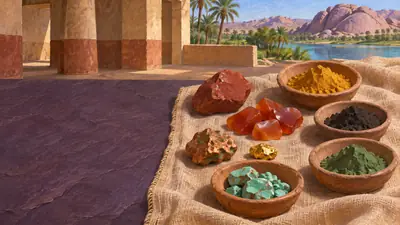
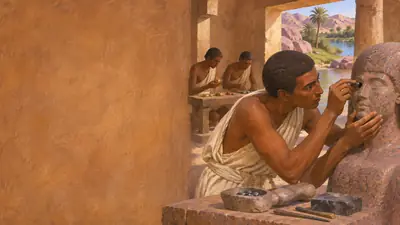
The priest lists gold, copper, turquoise and red jasper. Then come ochre and the materials for black and green eye paint. Bright colors fill a story that began with dry grain.
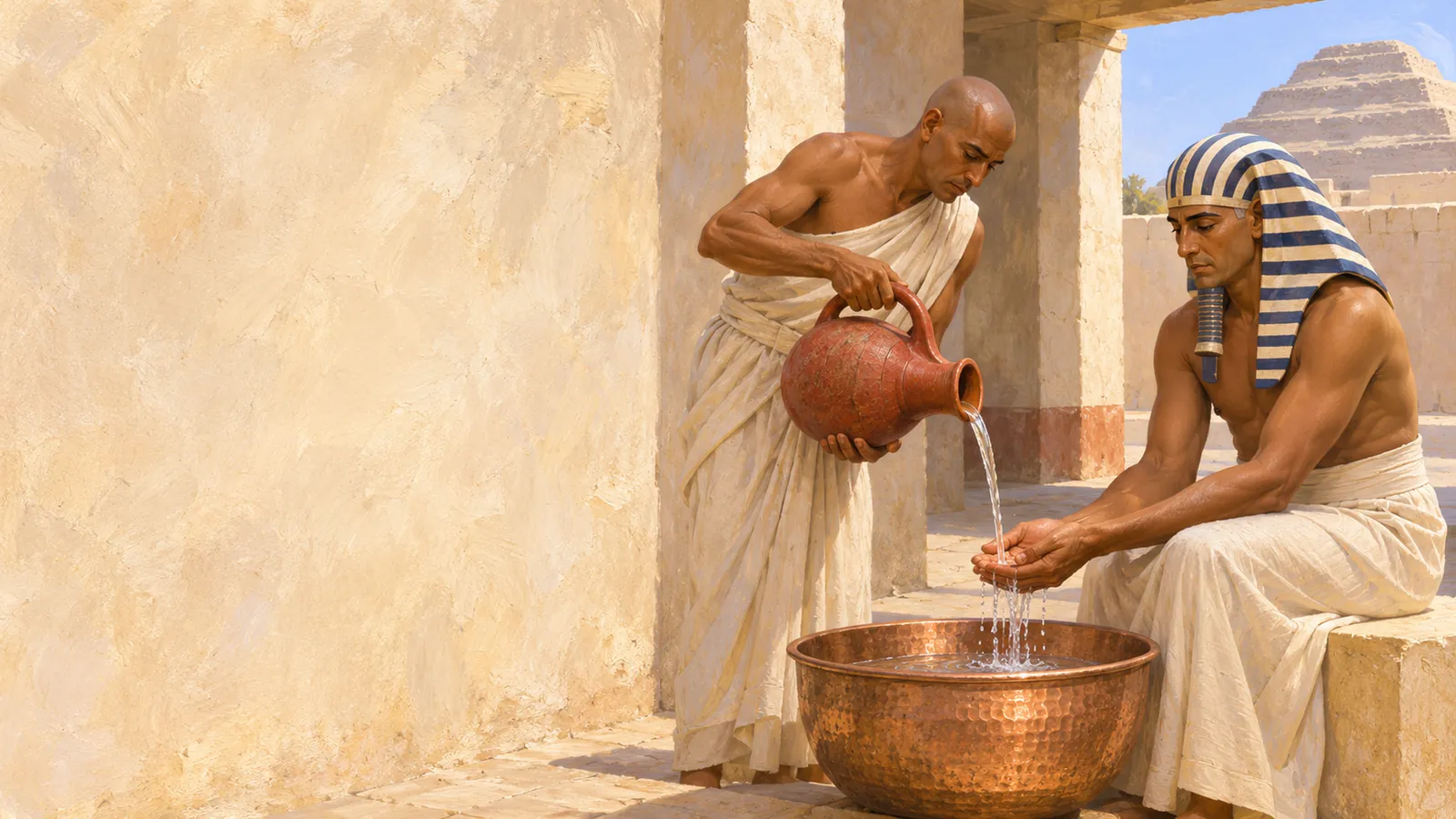
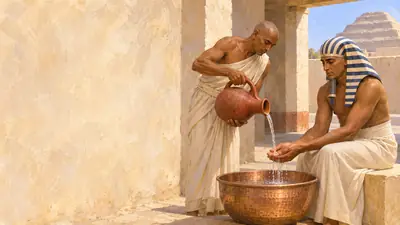
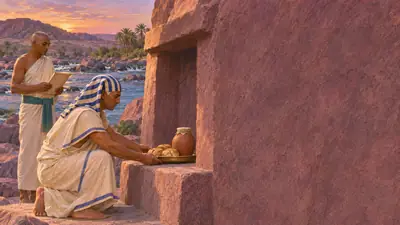
The king says the priest’s account showed him what to do. He opened wrapped books and purified himself before the procession. The written knowledge of the river led him to acts of worship at Elephantine.
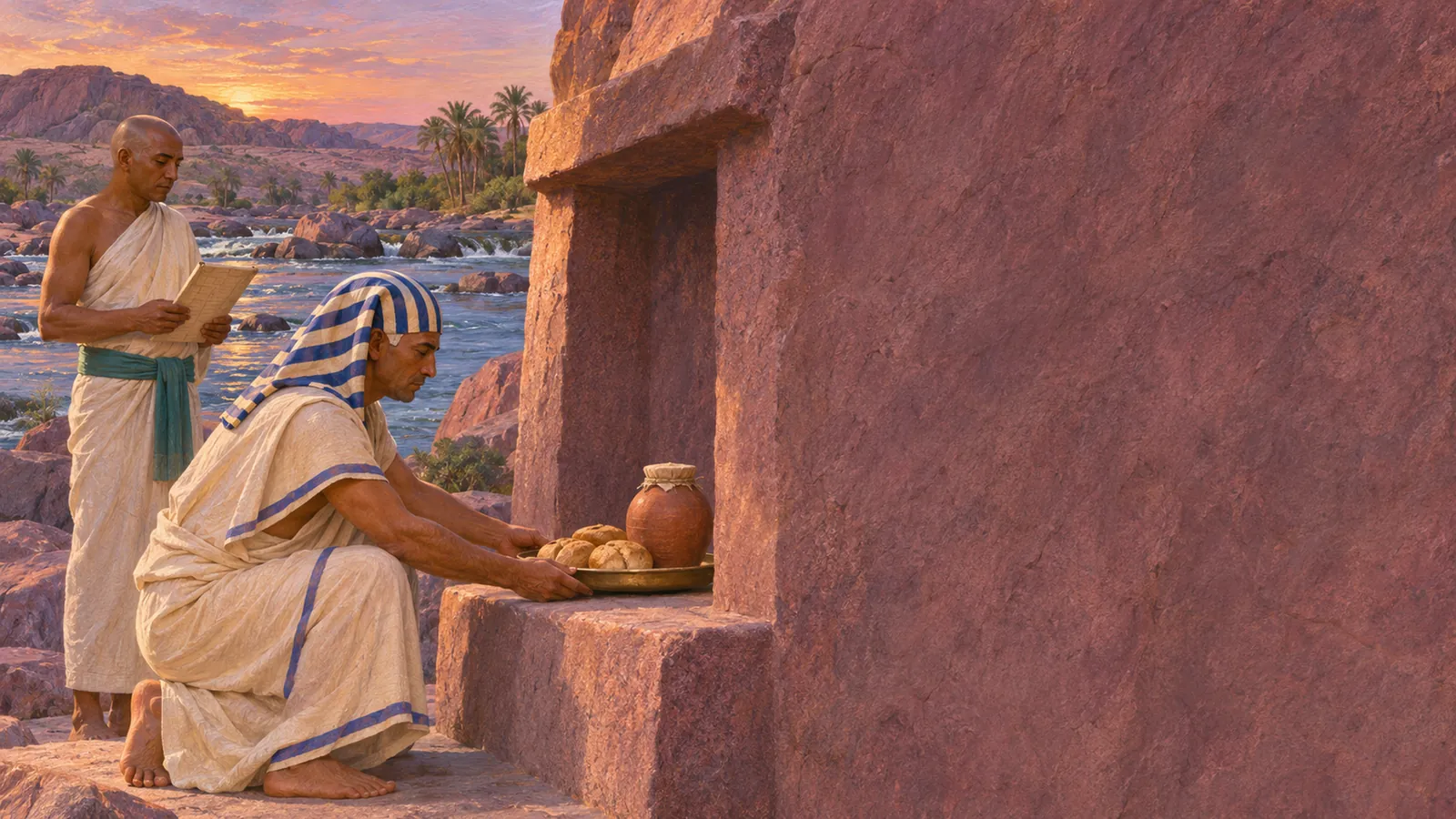
Djoser describes bringing bread and beer, cattle and birds, and other gifts for the gods and goddesses named by the priest. The gifts were made before he went to sleep.
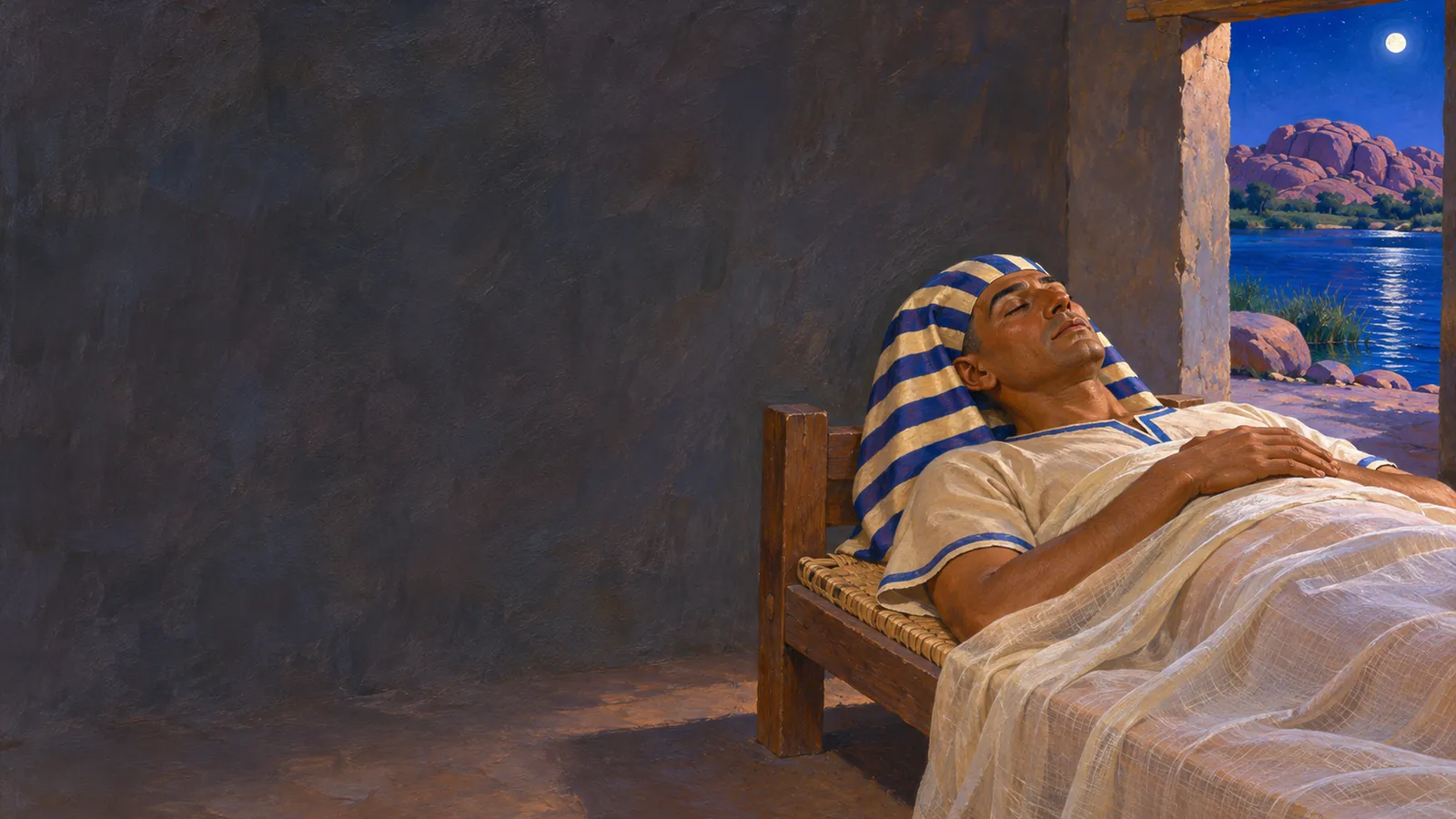
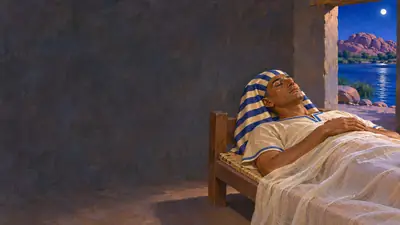
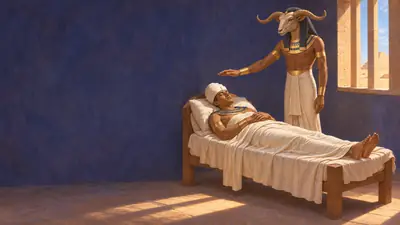
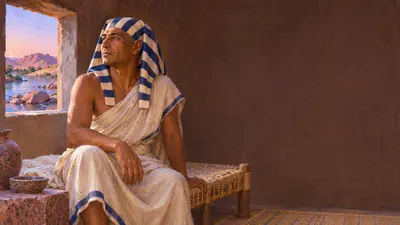
The story turns from the public offering to a quiet room. Djoser says he fell asleep in peace and found a god standing before him. He speaks of bowing and praying to him.
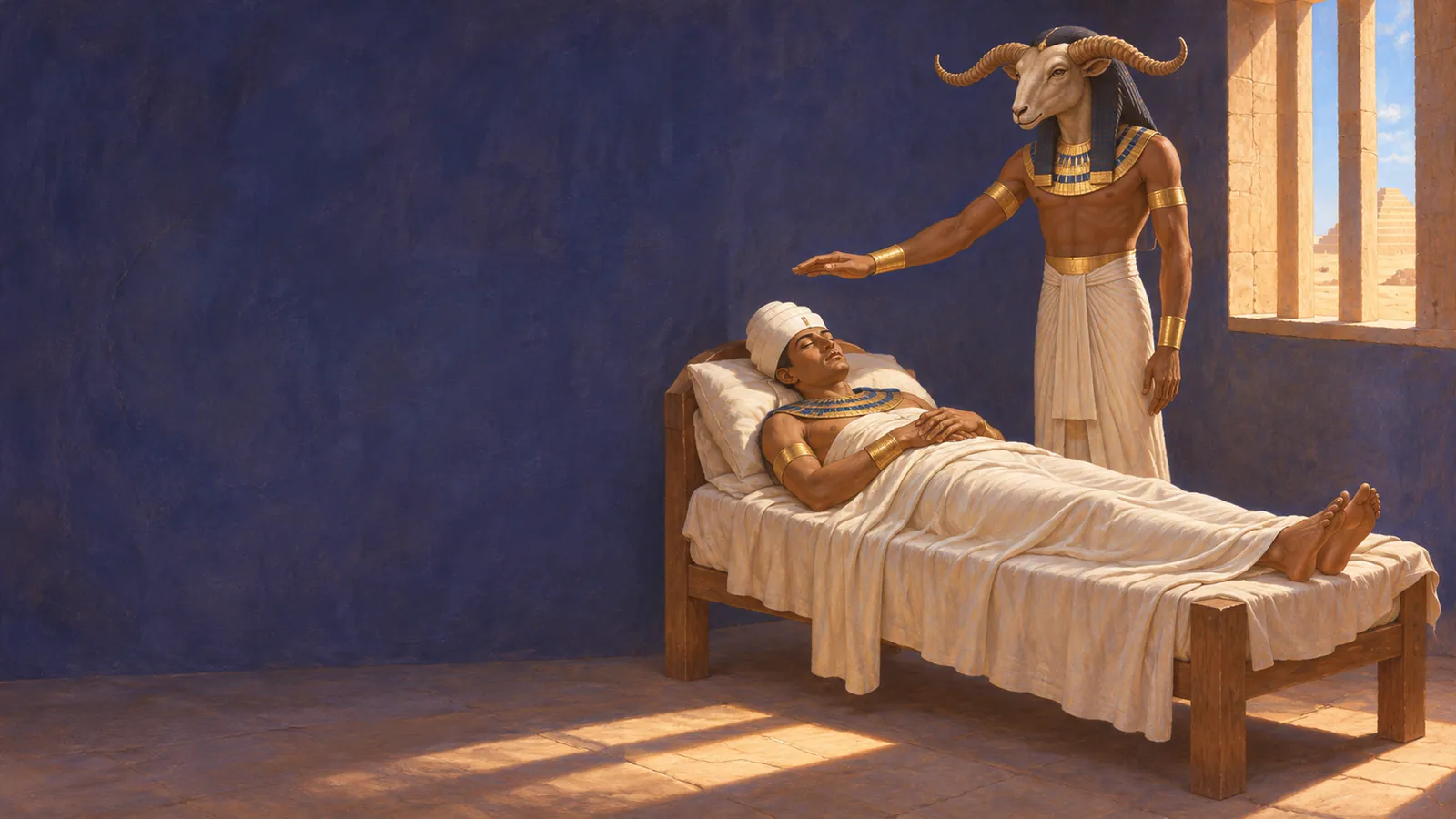
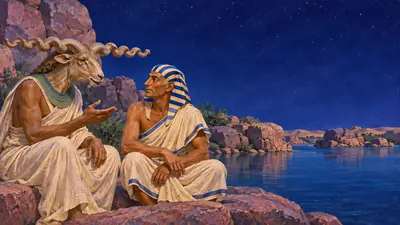
Khnum speaks as a maker. He says he made Djoser and will steady his body and keep him safe. Farther on, he calls himself the one who forms every person.
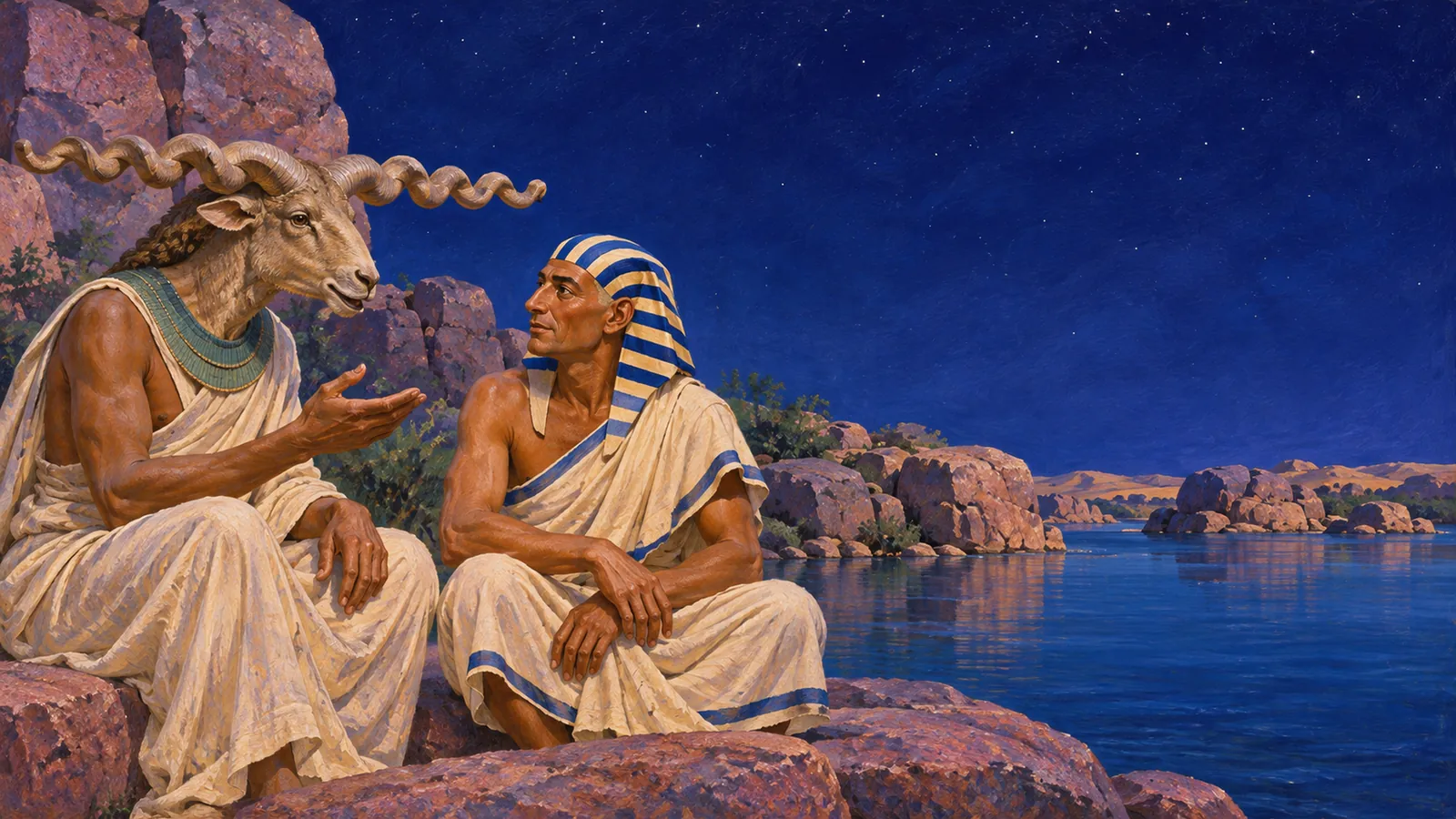
Khnum offers Djoser stone never worked before. It will be used to build temples, repair ruins and set the eyes in statues. The materials the priest listed are now gifts that the god promises.
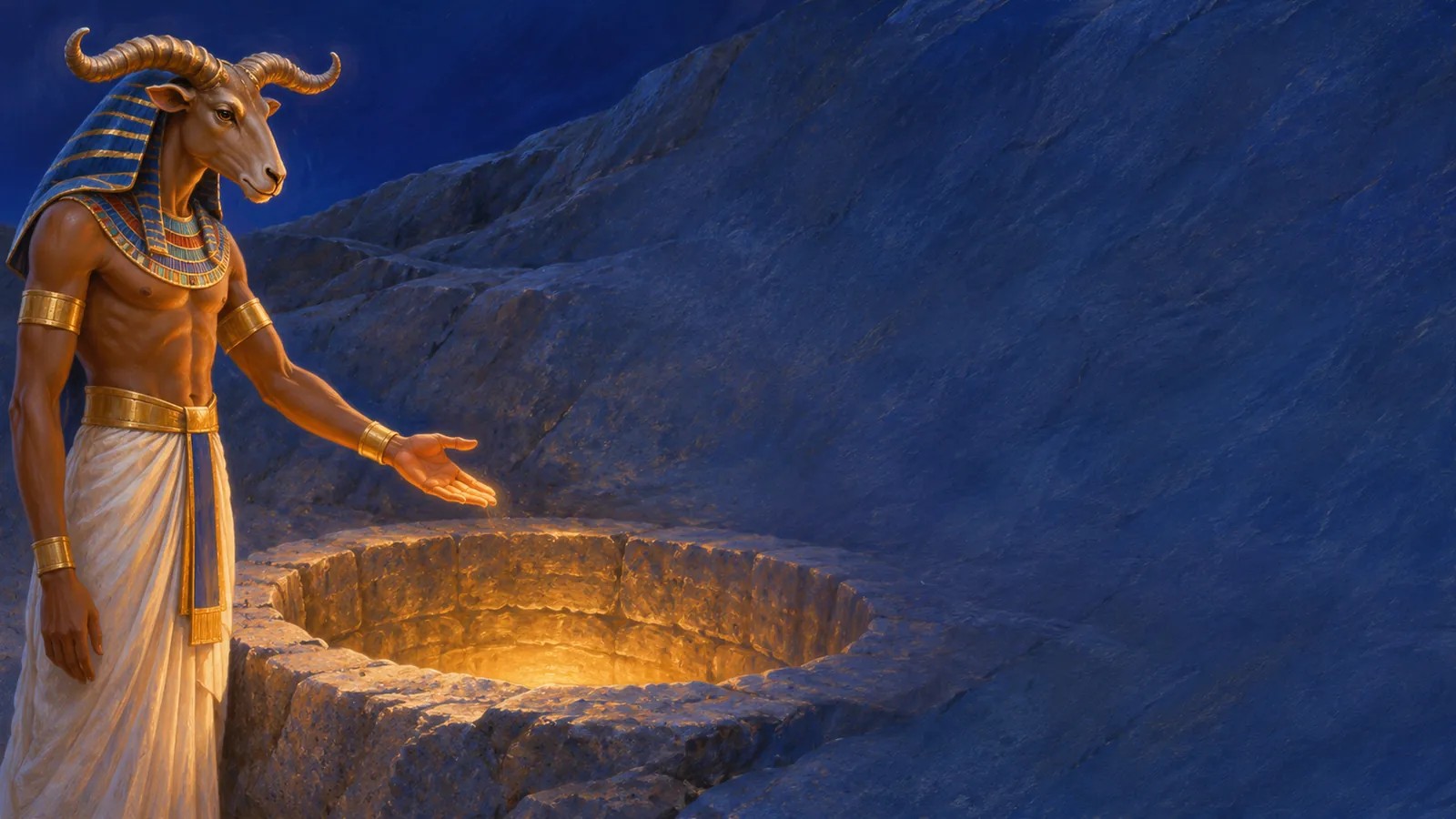
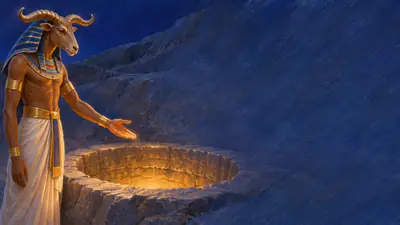
In the dream Khnum describes two lips at his shrine and a well he can open. When the flood reaches a field, he says, it gives the place new life. The god says he can bring it back.

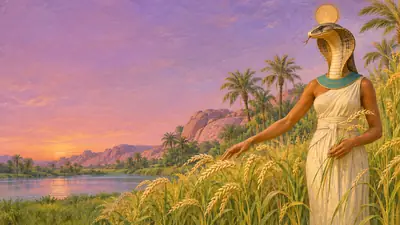
Khnum promises to let Hapy out. The shores will shine in the flood and plants will bend under their fruit. The years of hunger will end and people will walk the river country again.
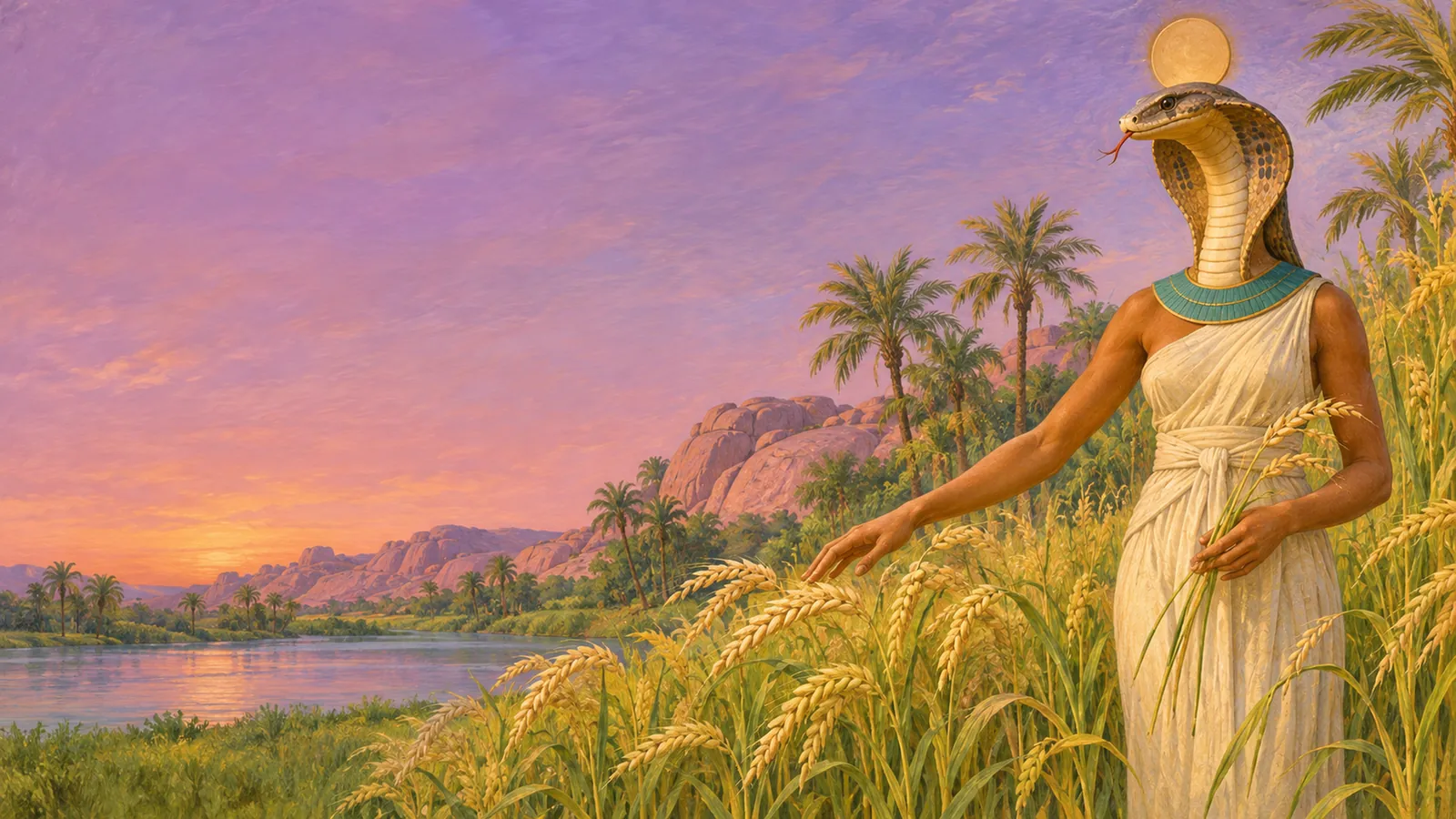
Khnum names Renenutet as he promises plenty. With the goddess attending to the crops, he says, the people will have all they need. Their stores will be full after the years of shortage.
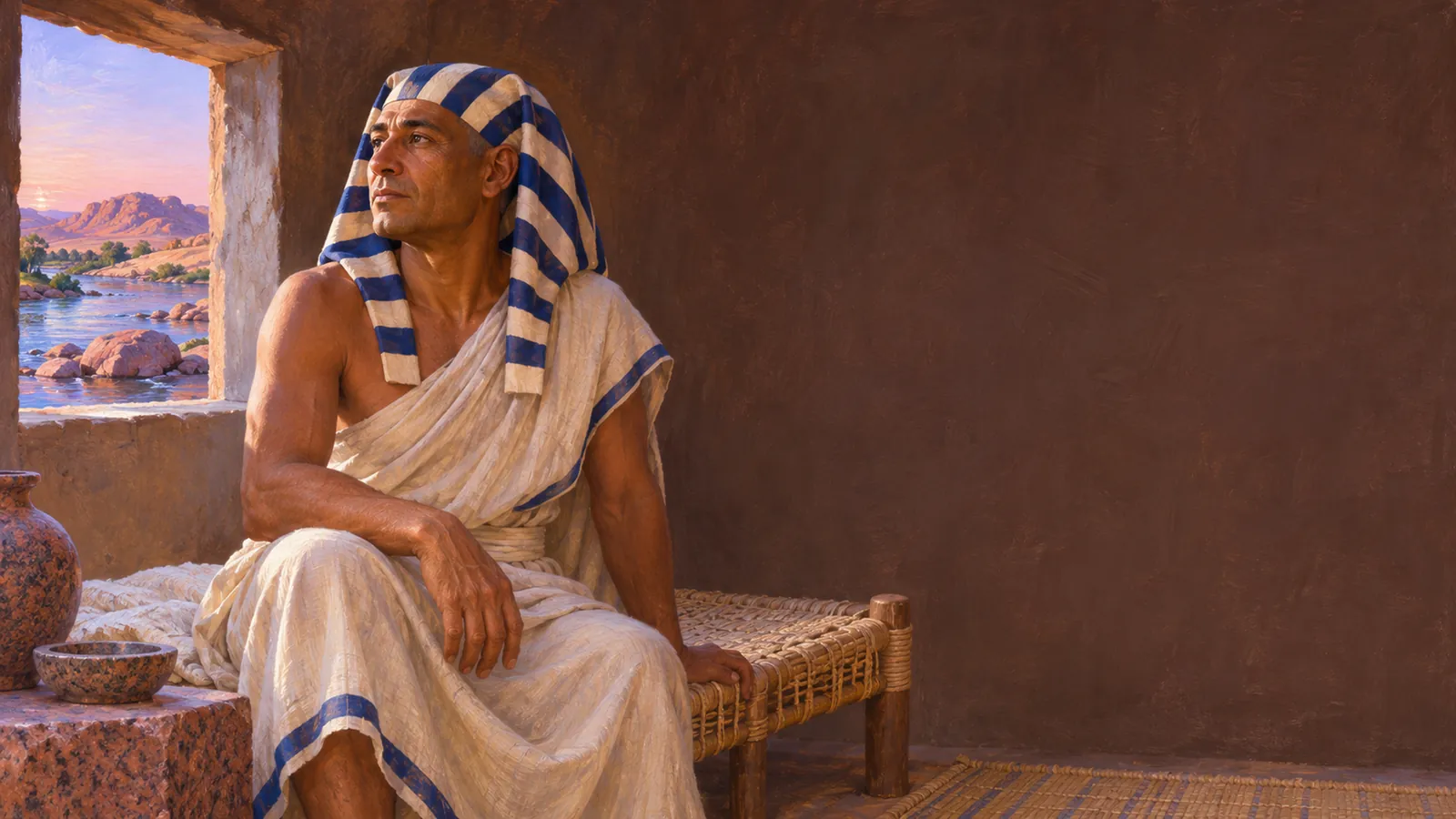
Djoser wakes with his heart racing but feels free of his weariness. He says he made a decree for his father Khnum. The rest of the inscription sets out what that gift will include.

Djoser grants a reach of the river from Yebu south to Kemsat. It includes the fields, pastures and water on both sides. The text gives the length as twelve iter, an Egyptian measure of distance.
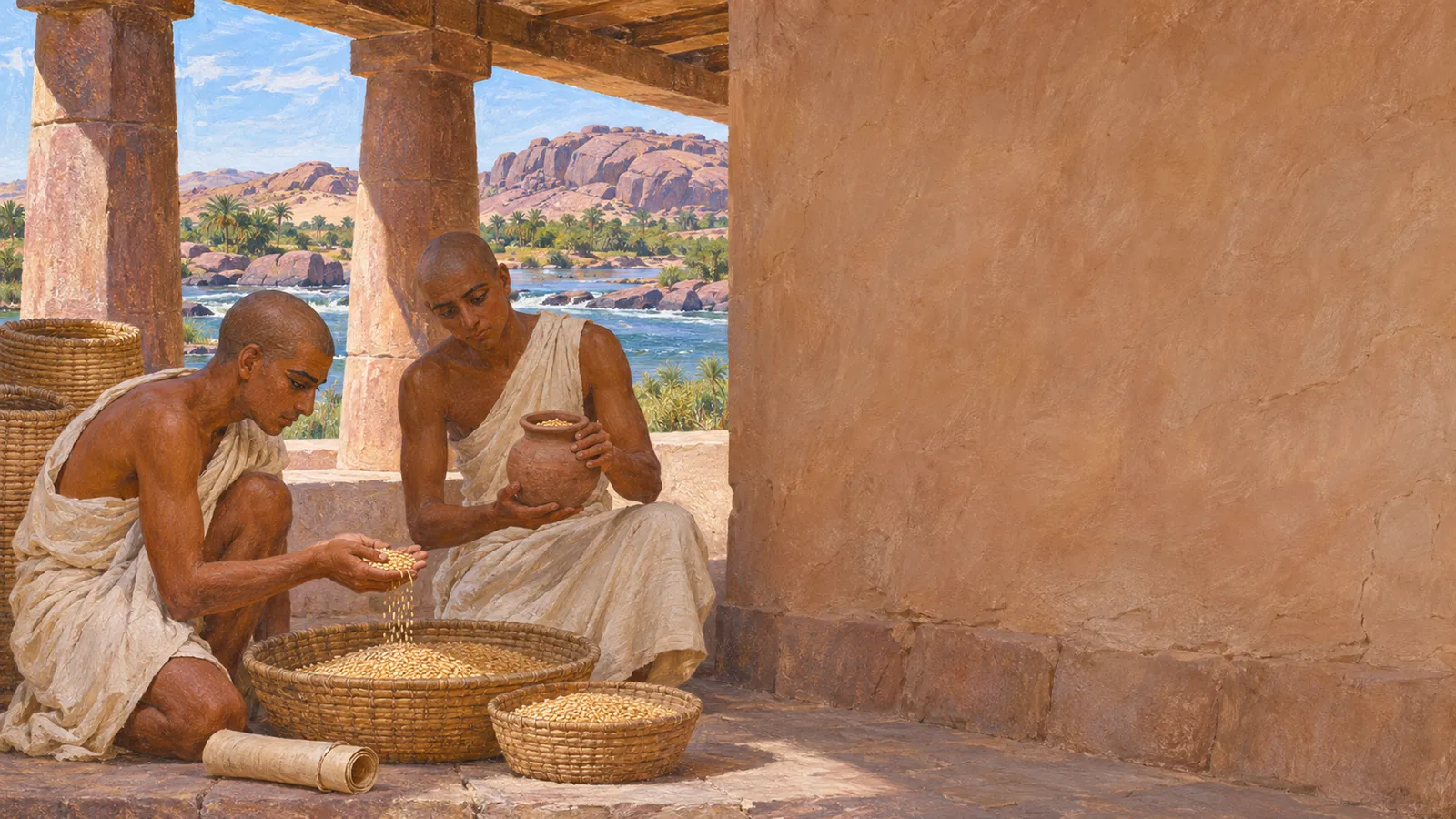
The decree sends harvests to Khnum’s granary and calls for a tenth of what fishers and hunters take. Other officials must leave the sanctuary’s revenues alone. Khnum’s scribes and southern overseers will keep the accounts.
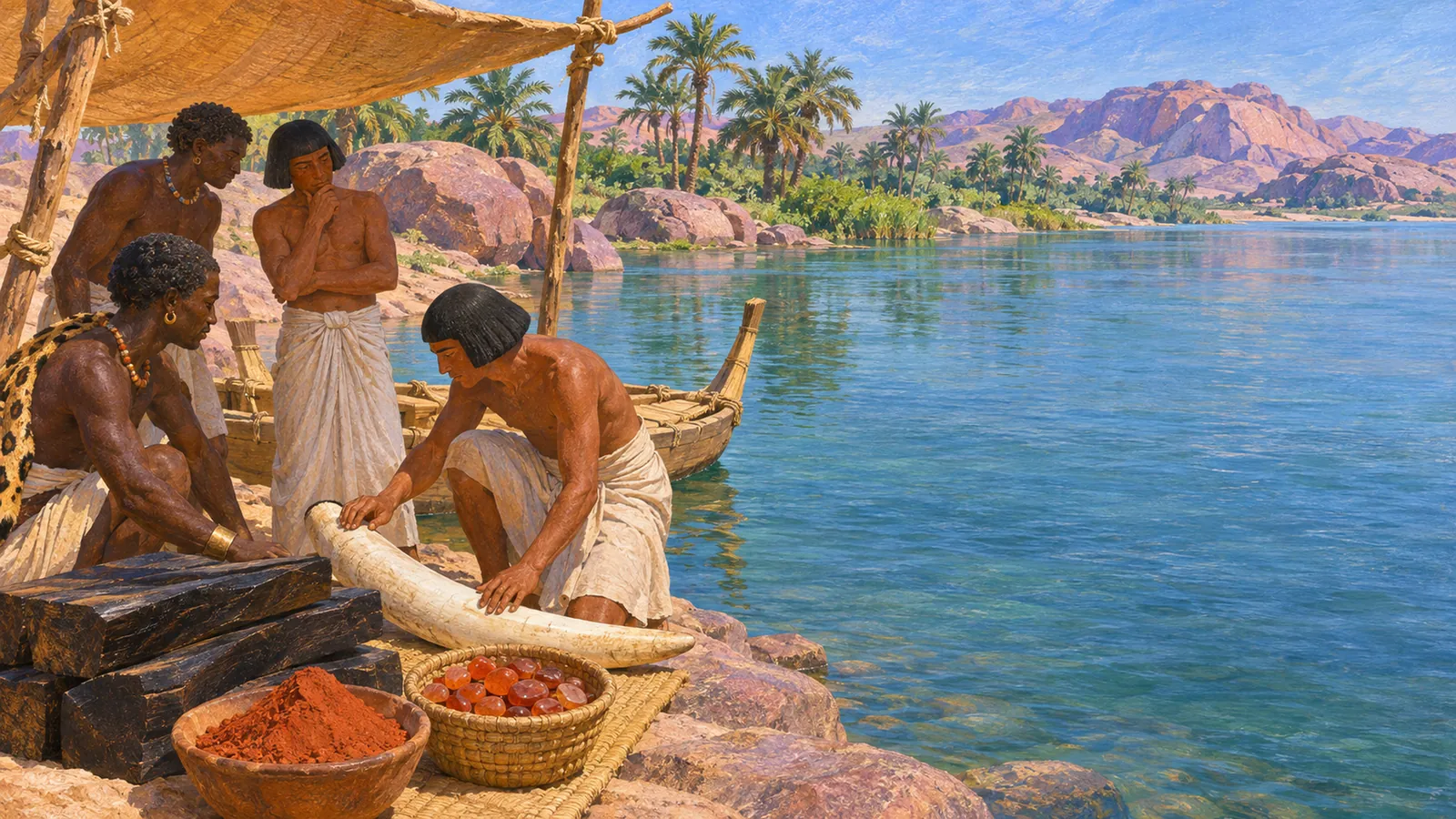
The decree also assigns a tenth of goods brought from Nubia, including gold, ivory, ebony and ochre. It calls for dues from craftsmen and from stone taken out of the eastern hills.
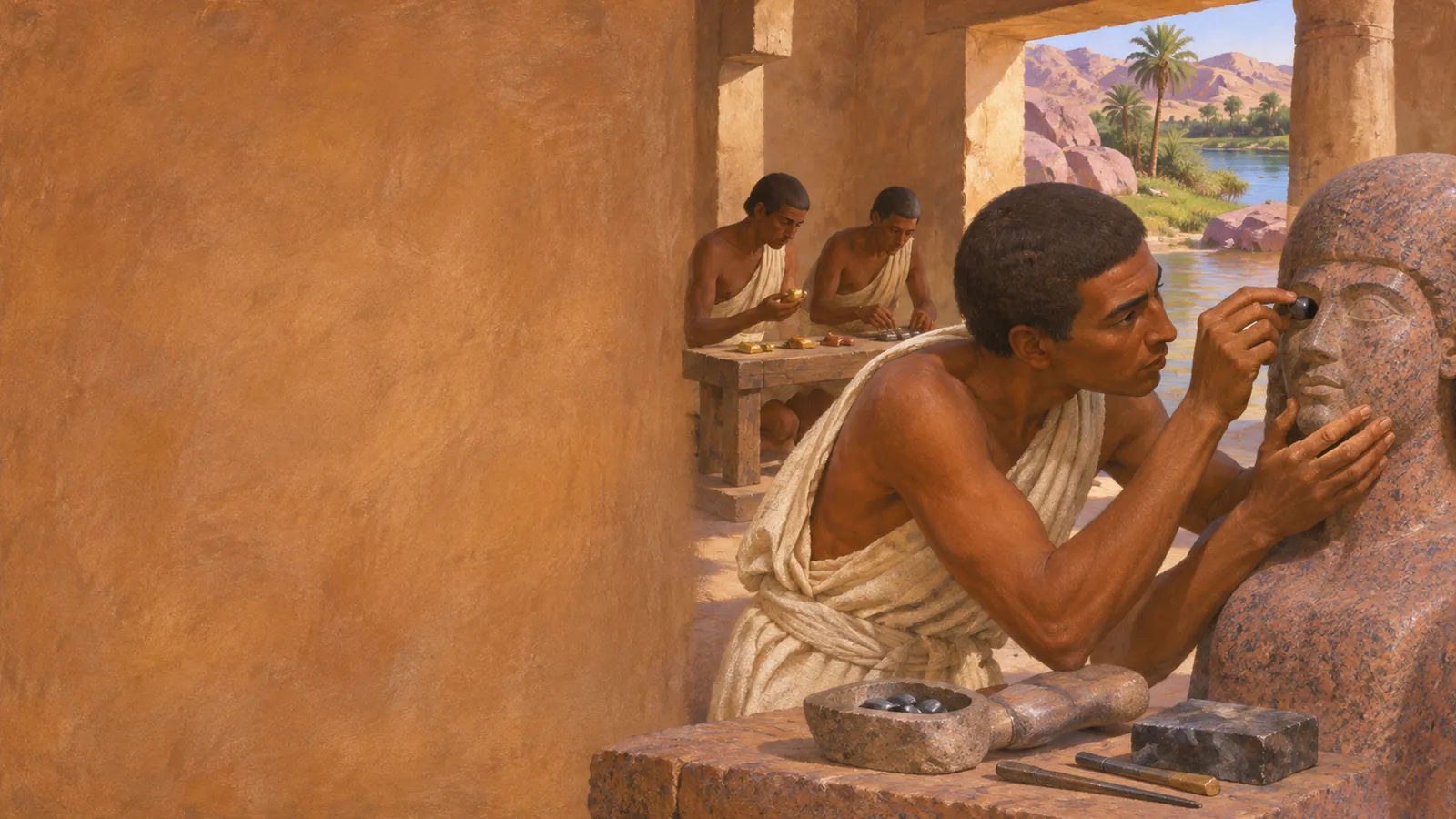
The decree requires an overseer to measure metals and precious stones. What the temple needs will be kept ready in a storeroom. Craftspeople can make sacred images, repair older ones and replace missing equipment.
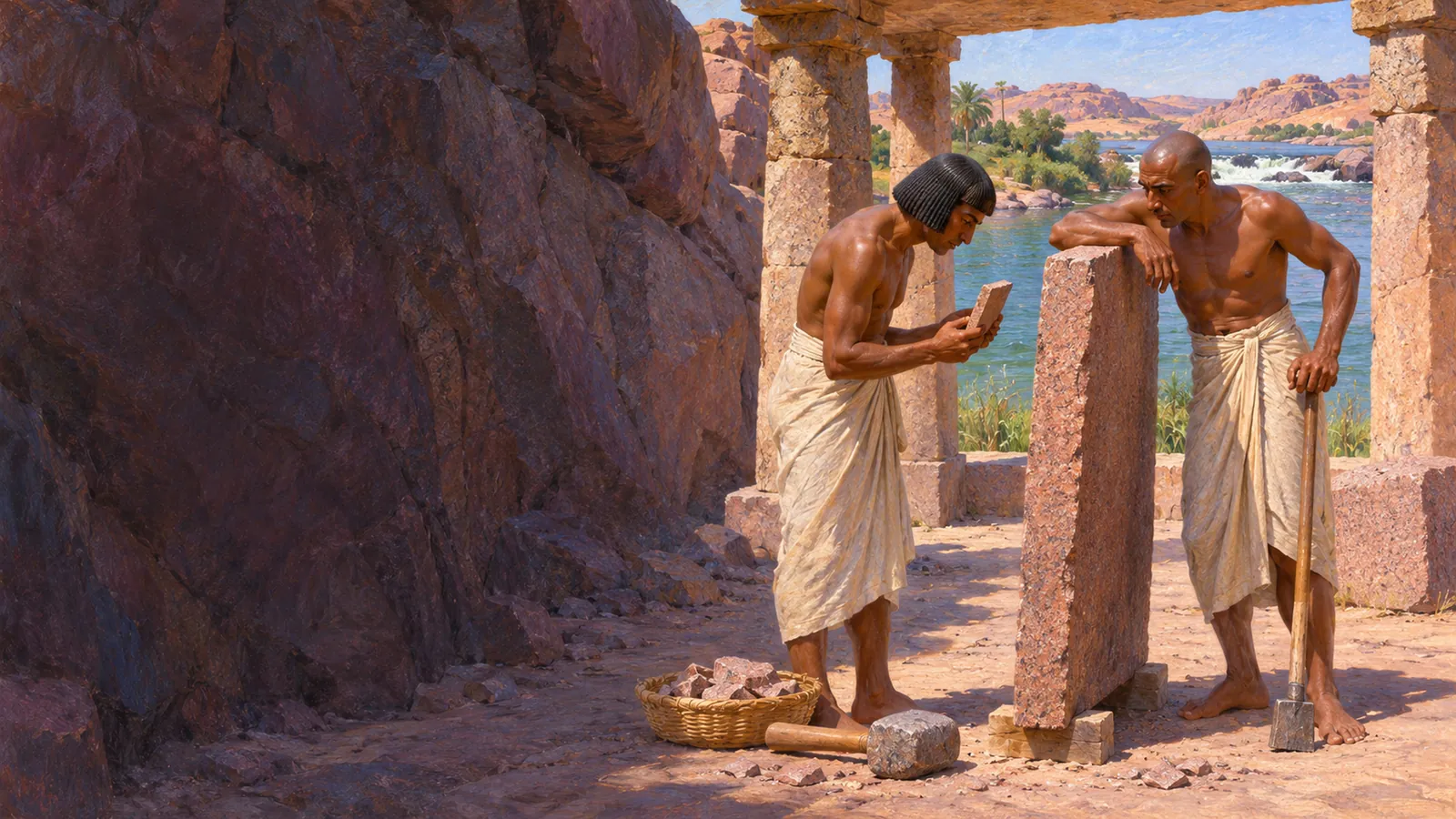
The decree calls for the words to be written twice at the sanctuary, on a stela and on a tablet. It also charges the temple’s chiefs with keeping Djoser’s name there.

The later carvers made this gift speak with Djoser’s authority. What we can still read at Sehel is a dream and a decree. The harvest remains part of Khnum’s promise.
End of chapter 1
All pages





Sources
Editions consulted
- Miriam Lichtheim, Ancient Egyptian Literature III, pp. 94–103
- Lichtheim's translation of the inscription, pages 95–100 excerpt
- IFAO, facsimile and epigraphic fieldwork at Sehel in 2001–2002
- Annie Gasse and Vincent Rondot, Les inscriptions de Séhel, IFAO photographic archive
- Sehel Island rock inscriptions, Egyptian Ministry of Tourism and Antiquities
- Elephantine archaeological project, German Archaeological Institute
- Friedrich Koch’s 1906 photograph of the stela, Institute for the Study of Ancient Cultures
- Paul Barguet, La stèle de la famine à Séhel, National Library of Tunisia record
- Egyptian Museum Cairo, statue of Djoser at Saqqara
- Brooklyn Museum, Khnum (37.682E)
- Rock inscription record TM 144451, Trismegistos
Ancient lines behind each page
- Page 1: Lichtheim, AEL III, pp. 94–95; MoTA, Sehel relief
See source notes for which details are attested. - Page 2: Lichtheim, AEL III, pp. 94–95; IFAO, SEH 542 and 2001–2002 field report
See source notes for which details are attested. - Page 3: Lichtheim, AEL III, pp. 94–95; DAI, Elephantine
See source notes for which details are attested. - Page 4: Lichtheim, AEL III, pp. 95, col. 1
See source notes for which details are attested. - Page 5: Lichtheim, AEL III, pp. 95, col. 1
See source notes for which details are attested. - Page 6: Lichtheim, AEL III, pp. 95–96, cols. 2–3
See source notes for which details are attested. - Page 7: Lichtheim, AEL III, pp. 95–96, cols. 2–4
See source notes for which details are attested. - Page 8: Lichtheim, AEL III, pp. 95–96, cols. 2–4
See source notes for which details are attested. - Page 9: Lichtheim, AEL III, pp. 96, cols. 3–4
See source notes for which details are attested. - Page 10: Lichtheim, AEL III, pp. 94, 96 and n. 5
See source notes for which details are attested. - Page 11: Lichtheim, AEL III, pp. 96, cols. 4–5
See source notes for which details are attested. - Page 12: Lichtheim, AEL III, pp. 96, cols. 5–6
See source notes for which details are attested. - Page 13: Lichtheim, AEL III, pp. 96–97, cols. 7–8
See source notes for which details are attested. - Page 14: Lichtheim, AEL III, pp. 96–97, cols. 7–12
See source notes for which details are attested. - Page 15: Lichtheim, AEL III, pp. 97, cols. 8–9
See source notes for which details are attested. - Page 16: Lichtheim, AEL III, pp. 97, col. 9
See source notes for which details are attested. - Page 17: Lichtheim, AEL III, pp. 97, cols. 9–10
See source notes for which details are attested. - Page 18: Lichtheim, AEL III, pp. 97, cols. 10–11
See source notes for which details are attested. - Page 19: Lichtheim, AEL III, pp. 97, cols. 10–12
See source notes for which details are attested. - Page 20: Lichtheim, AEL III, pp. 97–98, cols. 12–17
See source notes for which details are attested. - Page 21: Lichtheim, AEL III, pp. 97, cols. 13–14
See source notes for which details are attested. - Page 22: Lichtheim, AEL III, pp. 94, 98; MoTA relief description
See source notes for which details are attested. - Page 23: Lichtheim, AEL III, pp. 97–98, cols. 15–18
See source notes for which details are attested. - Page 24: Lichtheim, AEL III, pp. 98, cols. 18–19
See source notes for which details are attested. - Page 25: Lichtheim, AEL III, pp. 98, cols. 18–19
See source notes for which details are attested. - Page 26: Lichtheim, AEL III, pp. 98, col. 19
See source notes for which details are attested. - Page 27: Lichtheim, AEL III, pp. 98–99, cols. 19–21
See source notes for which details are attested. - Page 28: Lichtheim, AEL III, pp. 98–99, cols. 19–21
See source notes for which details are attested. - Page 29: Lichtheim, AEL III, pp. 99, cols. 21–22
See source notes for which details are attested. - Page 30: Lichtheim, AEL III, pp. 99, cols. 21–23
See source notes for which details are attested. - Page 31: Lichtheim, AEL III, pp. 99, col. 22
See source notes for which details are attested. - Page 32: Lichtheim, AEL III, pp. 99, col. 23
See source notes for which details are attested. - Page 33: Lichtheim, AEL III, pp. 99, cols. 23–24 and n. 46
See source notes for which details are attested. - Page 34: Lichtheim, AEL III, pp. 99–100, cols. 24–30
See source notes for which details are attested. - Page 35: Lichtheim, AEL III, pp. 99–100, cols. 25–30
See source notes for which details are attested. - Page 36: Lichtheim, AEL III, pp. 100, cols. 29–31
See source notes for which details are attested. - Page 37: Lichtheim, AEL III, pp. 100, cols. 31–32
See source notes for which details are attested. - Page 38: Lichtheim, AEL III, pp. 94–95, 99–100; IFAO, SEH 542
See source notes for which details are attested.
Illustrations made with AI tools by IL Archive; the text is based on the ancient sources (see the sources at the end of each chapter).