Gilgamesh, Enkidu et le monde souterrain Chapitre 1
L’Arbre d’Uruk
Un vent du sud déracine un arbre au bord de l’Euphrate. Inanna l’emporte à Uruk et demande de l’aide quand trois êtres s’y installent. Gilgamesh donne à Inanna du bois pour un siège et un lit, puis fabrique deux objets pour jouer. Les objets tombent dans le monde souterrain.
SourcesTournez les pages avec les flèches, le clavier ou en balayant l’écran.

L’ARBRE D’URUK
Le récit remonte à ces jours lointains, à ces nuits lointaines, à ces années lointaines.

En ces jours-là, les choses nécessaires apparurent pour la première fois et reçurent les soins qu’il leur fallait.
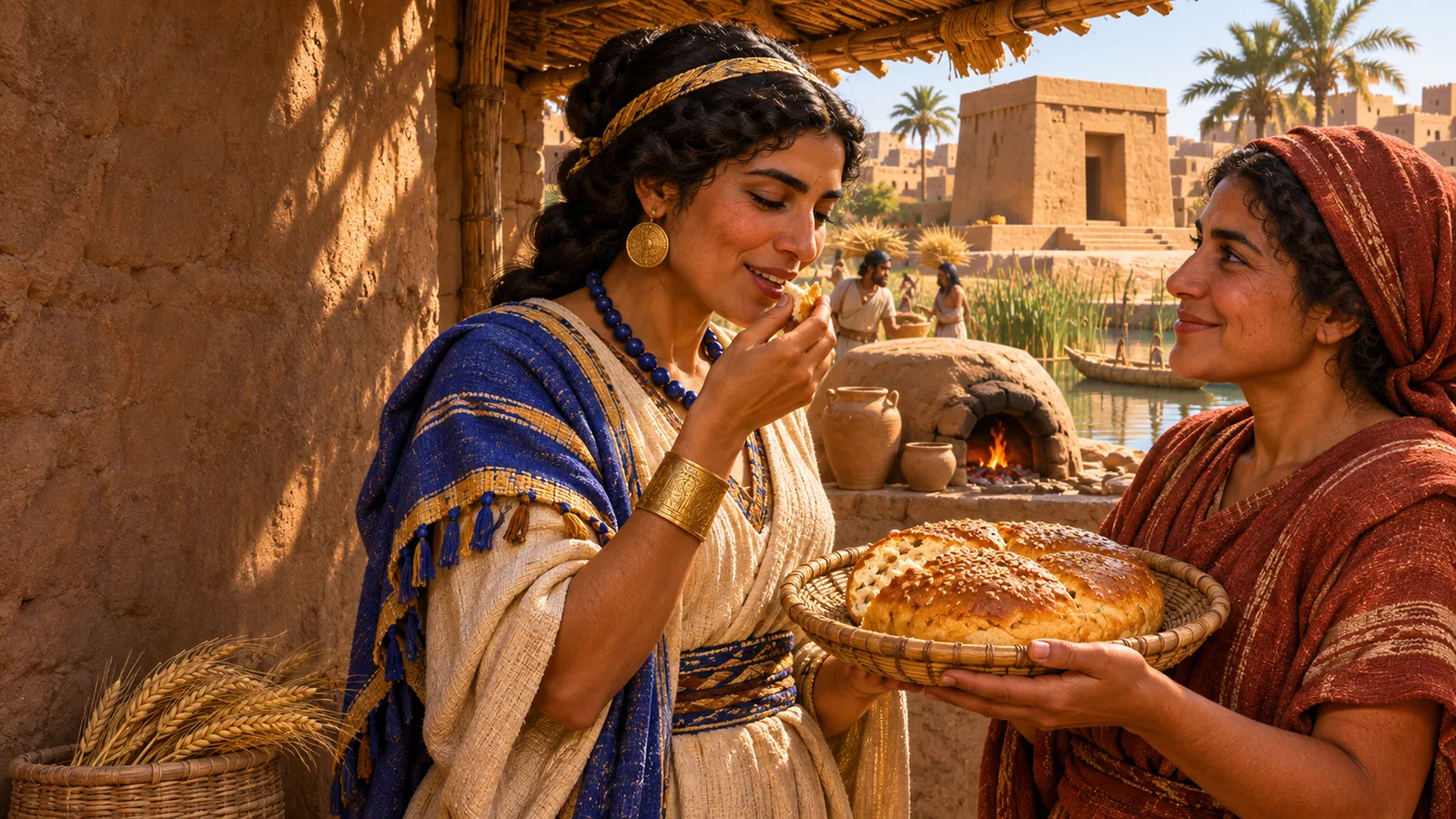
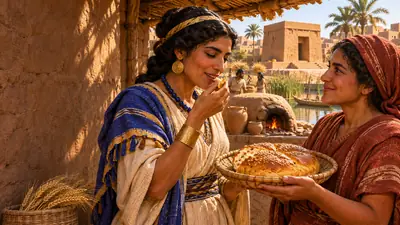
On goûta du pain dans les sanctuaires du pays pour la première fois, dit le poème.

En ces années lointaines, on mit en service les fours du pays, comme le rappelle le poème.

Les cieux furent séparés de la terre, et la terre fut séparée des cieux. La renommée de l’humanité s’établit.
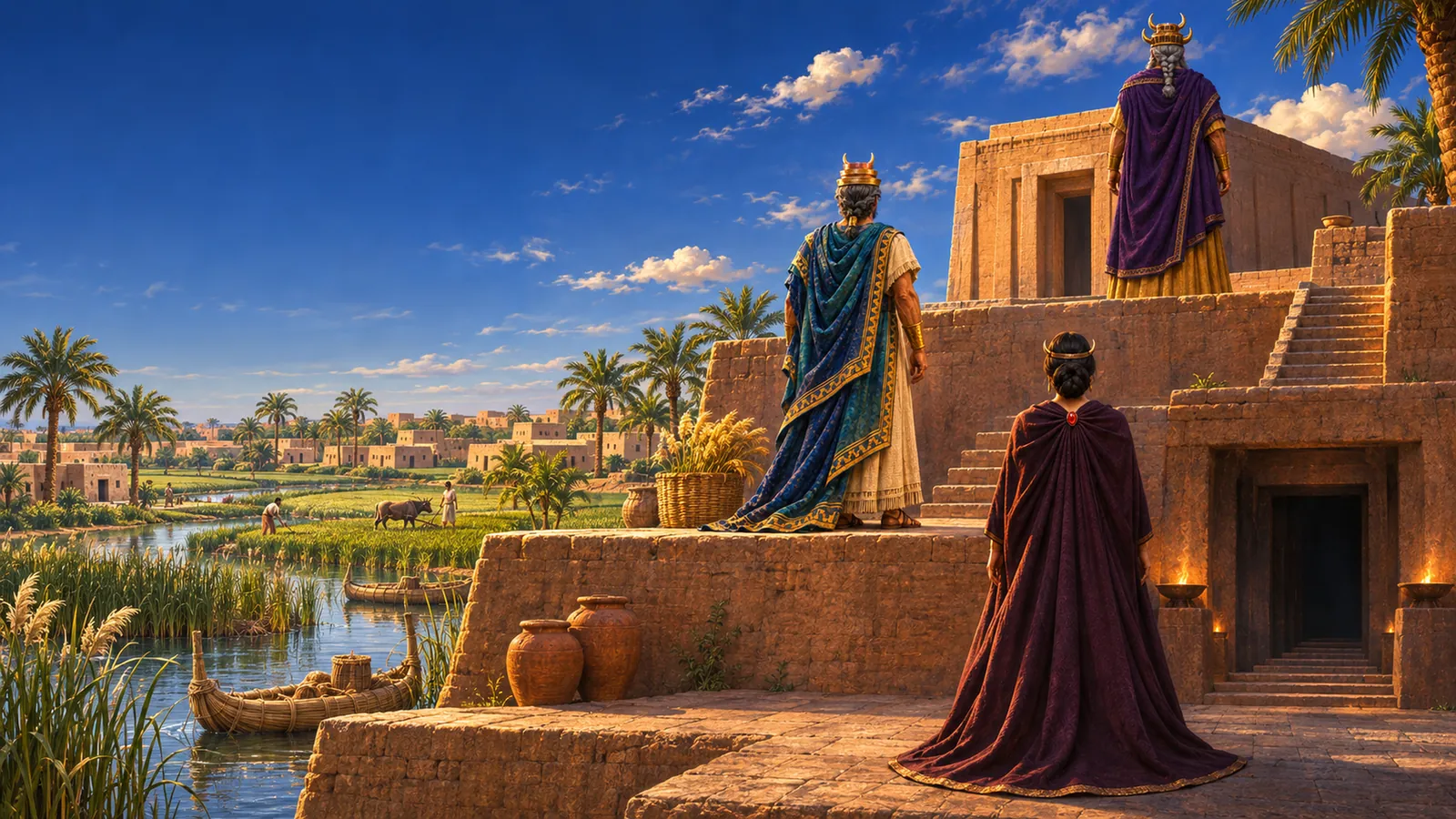
An prit les cieux pour lui, Enlil prit la terre et Ereshkigal reçut le monde souterrain en cadeau.

Le père embarqua pour le monde souterrain. Le poème le nomme Enki au moment de son départ.

Une tempête de petits et de gros grêlons se leva contre Enki. Le poème compare les plus petits à de légers marteaux et les plus gros peut-être à des pierres de catapulte.

La quille de la petite embarcation d’Enki tremblait dans la tempête, comme si des tortues la heurtaient.

Les vagues se dressaient à la proue comme des loups prêts à le dévorer, et attaquaient la poupe comme un lion.

L’ARBRE HALUB
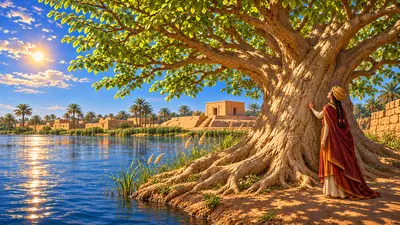
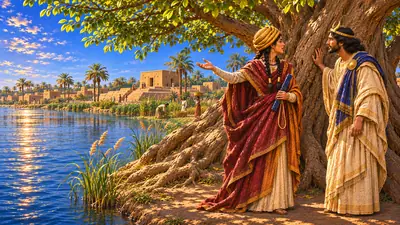
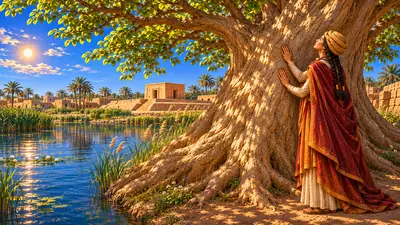
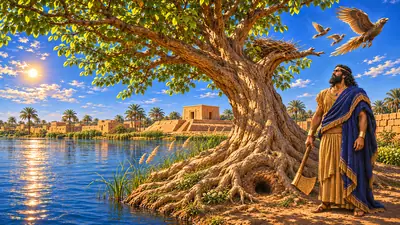
Un seul arbre halub poussait sur la rive de l’Euphrate aux eaux pures, où le fleuve l’arrosait.

Du sud souffla un vent si fort qu’il arracha l’arbre halub à la rive de l’Euphrate.

Le vent du sud dépouilla l’arbre de ses branches. L’Euphrate emporta l’arbre déraciné.
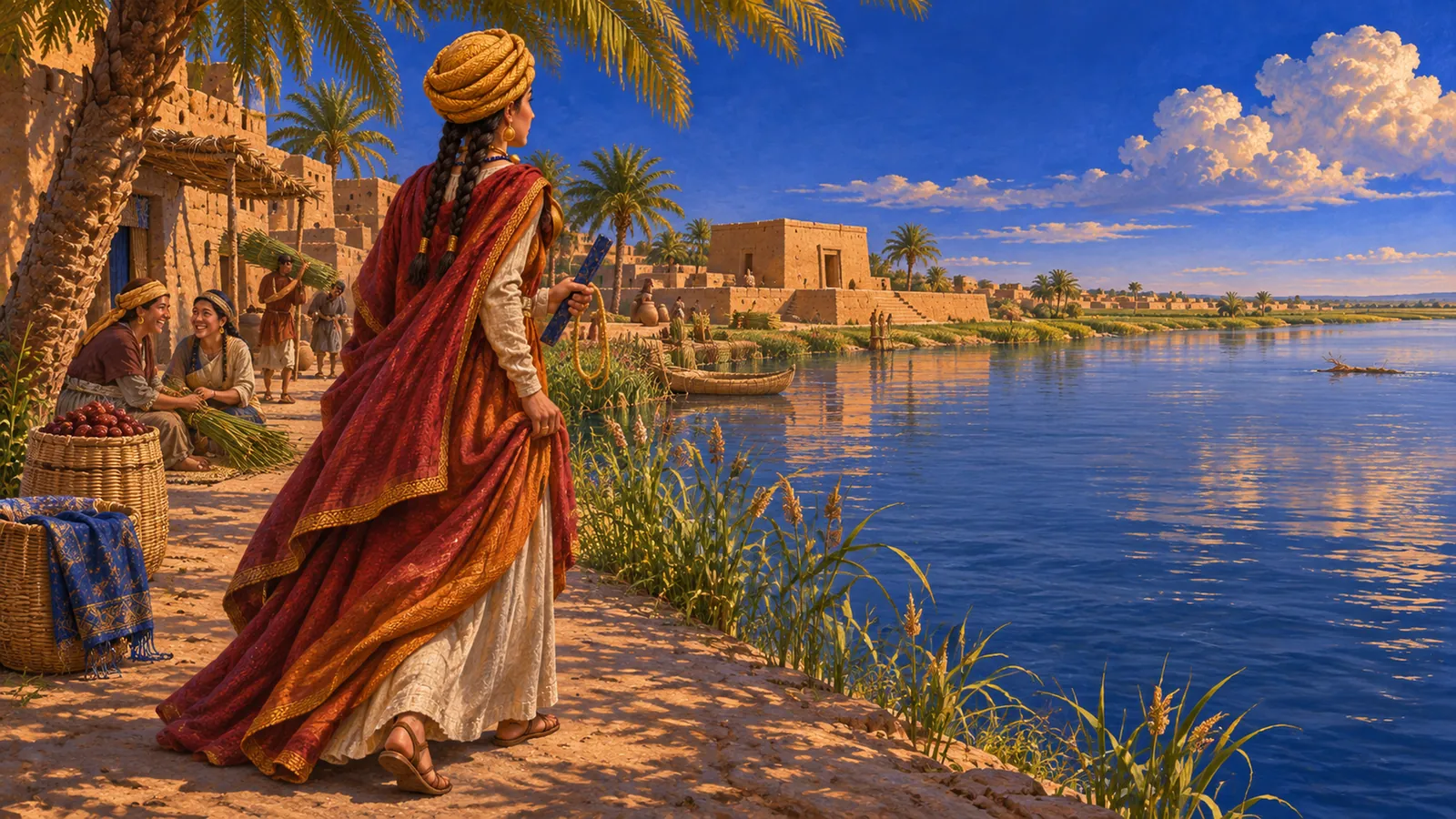
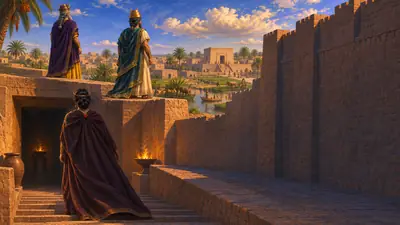
Une femme marchait, une femme attentive aux paroles d’An et aux paroles d’Enlil.
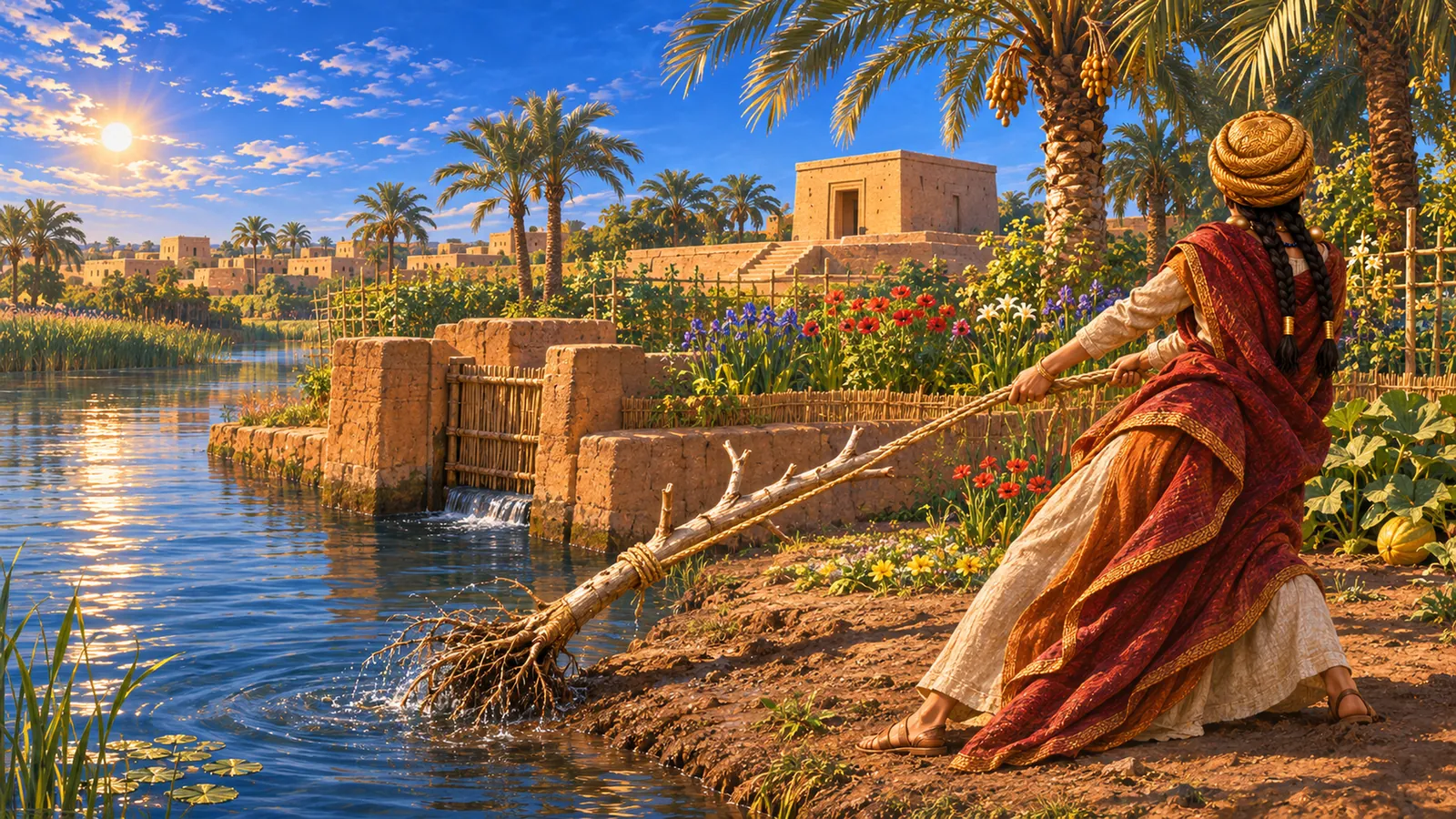
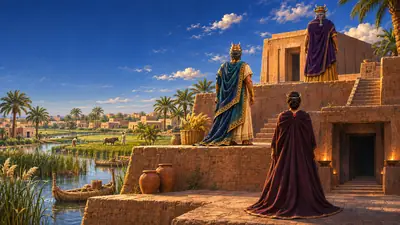
Elle emporta l’arbre dans la ville d’Uruk et l’apporta dans le jardin luxuriant d’Inanna.

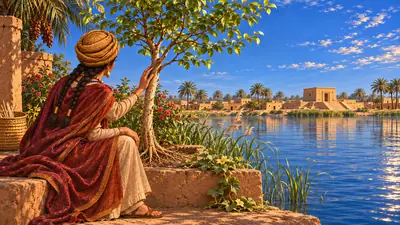
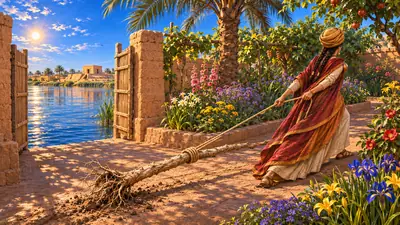
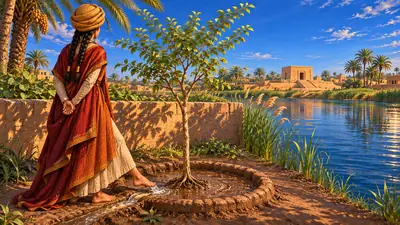
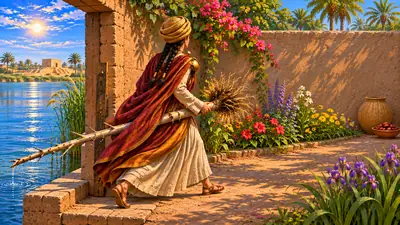
La femme a mis l’arbre halub en terre dans le jardin. Le poème dit qu’elle l’a planté en se servant uniquement de ses pieds.

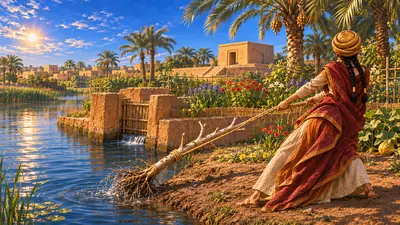
La femme a aussi arrosé l’arbre halub dans le jardin. Pour cela encore, elle s’est servie uniquement de ses pieds.
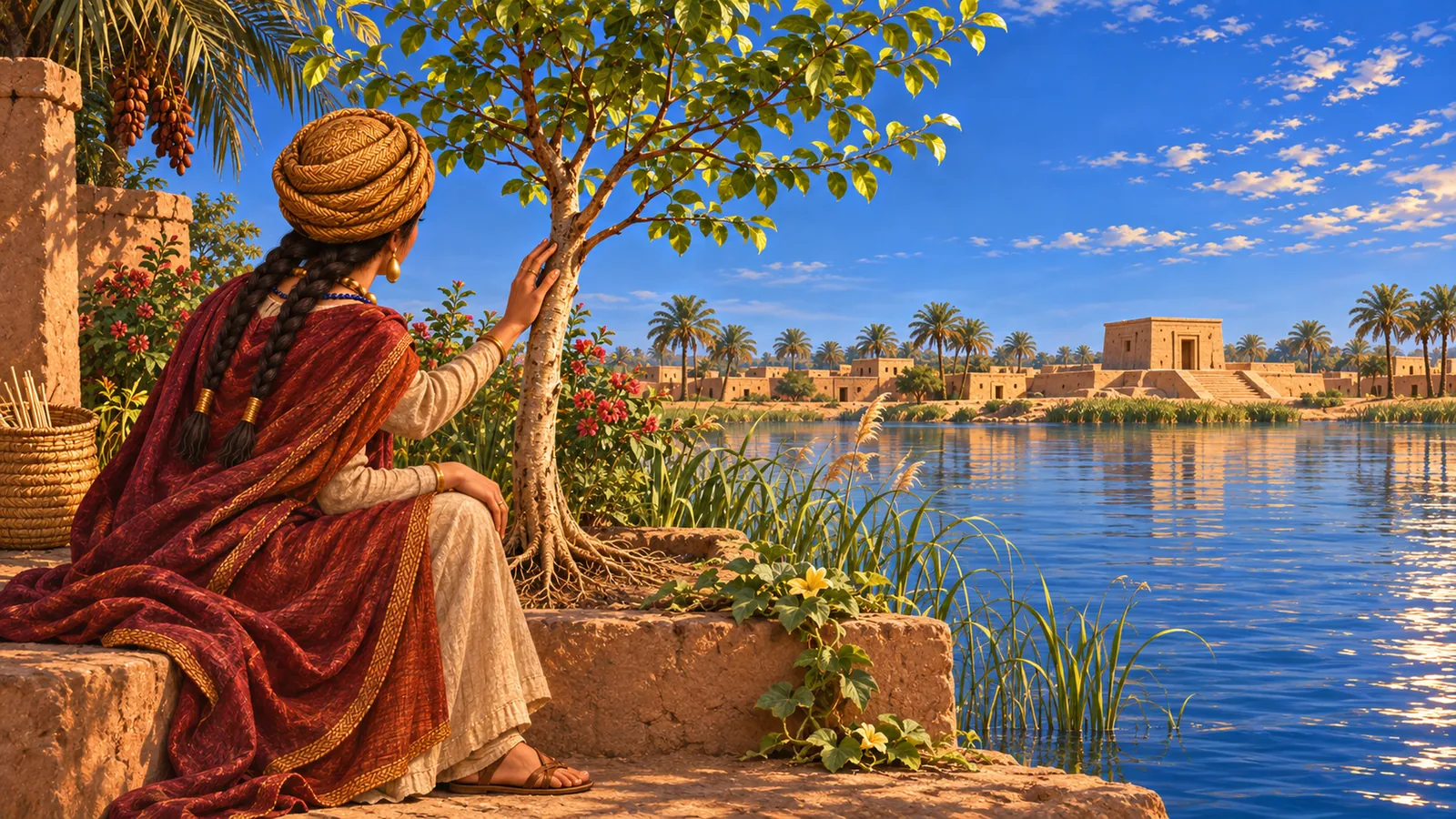
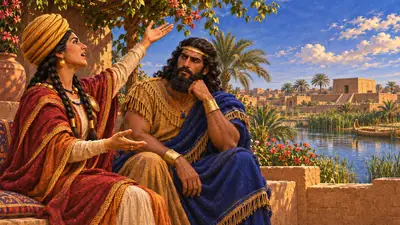
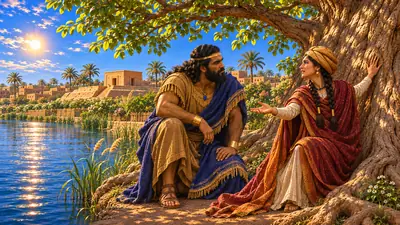
Elle s’est demandé quand l’arbre deviendrait un beau siège où elle pourrait s’asseoir. Elle s’est demandé quand il deviendrait un beau lit où elle pourrait s’allonger.
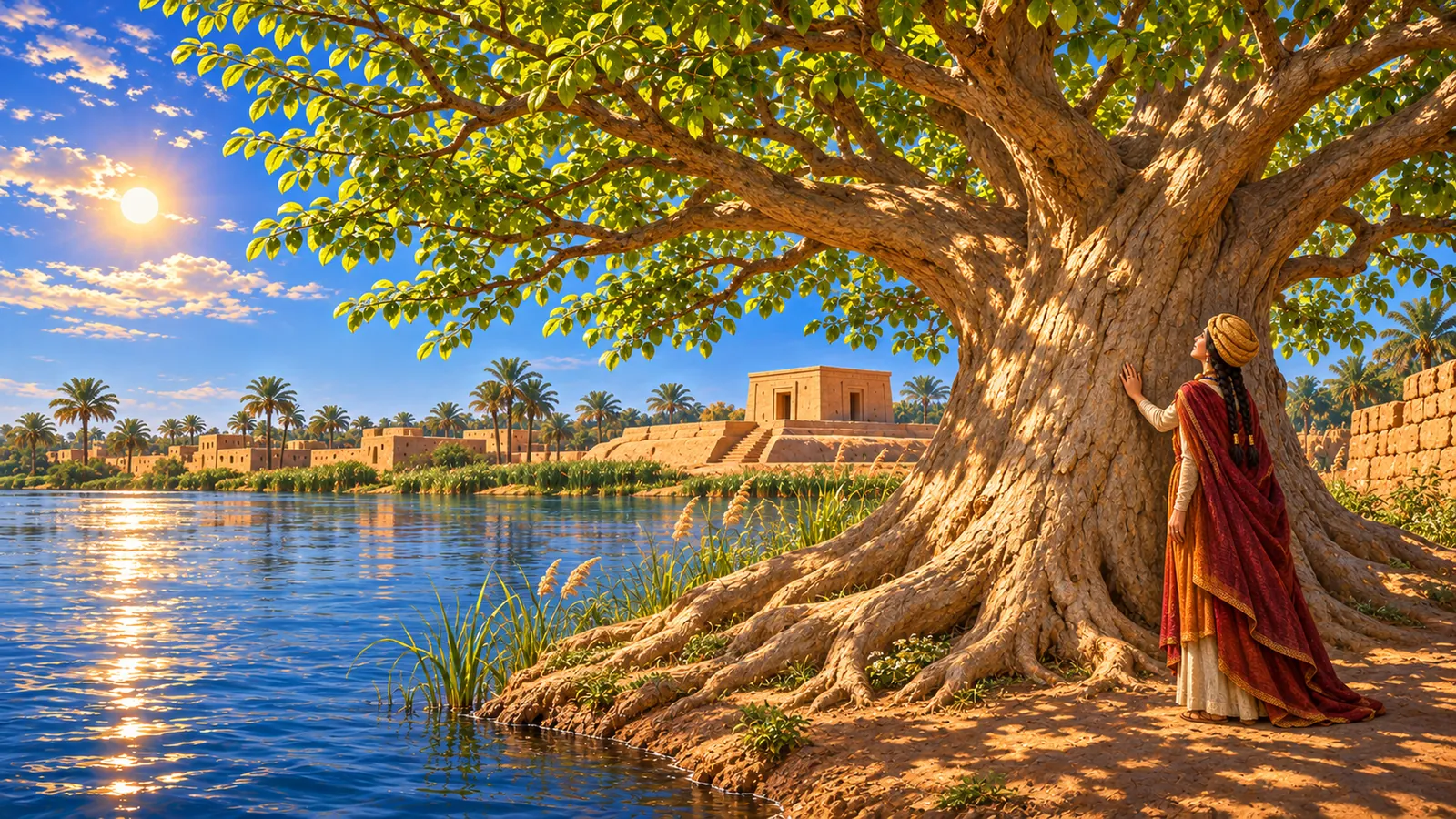
Cinq ans ont passé, puis dix. L’arbre est devenu massif au fil des années, et son écorce est restée intacte.
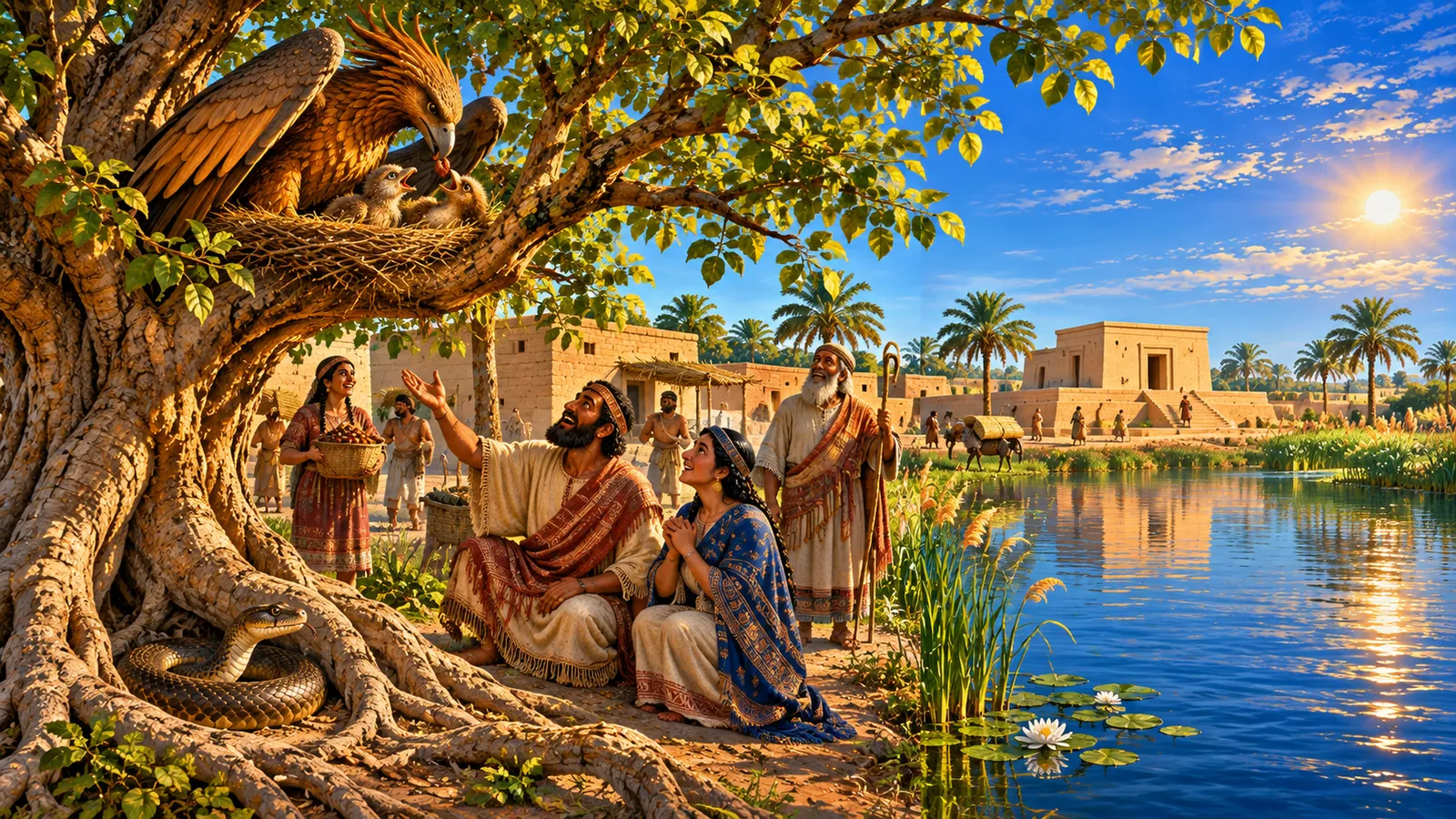
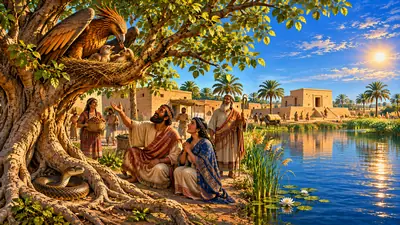
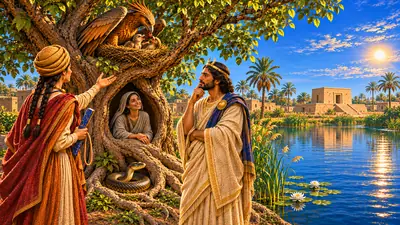
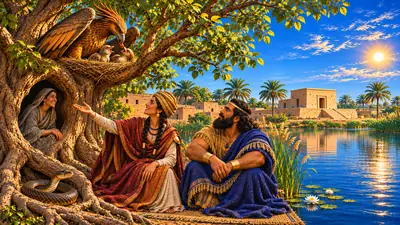
Un serpent sur lequel les incantations étaient sans effet a fait son nid aux racines de l’arbre. Dans ses branches, l’oiseau Anzud a installé ses petits.

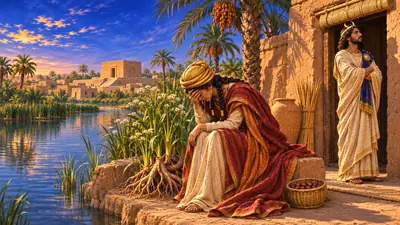
Dans le tronc, une jeune fille fantôme s’est fait une demeure et riait d’un cœur joyeux. Inanna a pleuré.

L’AUBE
L’horizon s’est éclairci et les petits oiseaux se sont mis à crier. Utu avait quitté sa chambre quand sa sœur Inanna lui a parlé.
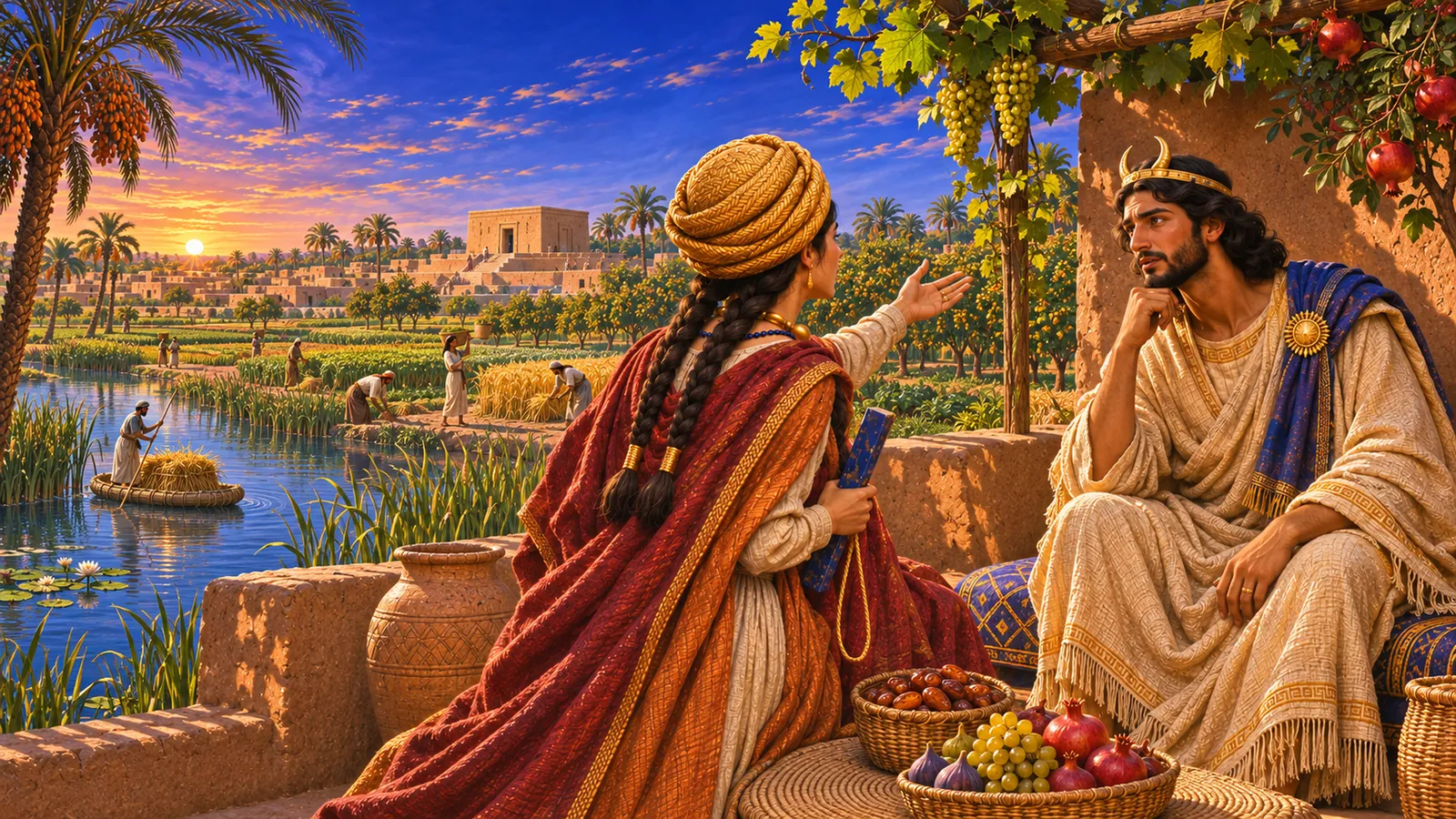
Inanna a ramené son frère aux jours où le destin avait été fixé. En ces jours-là, lui a-t-elle dit, l’abondance débordait dans le pays.
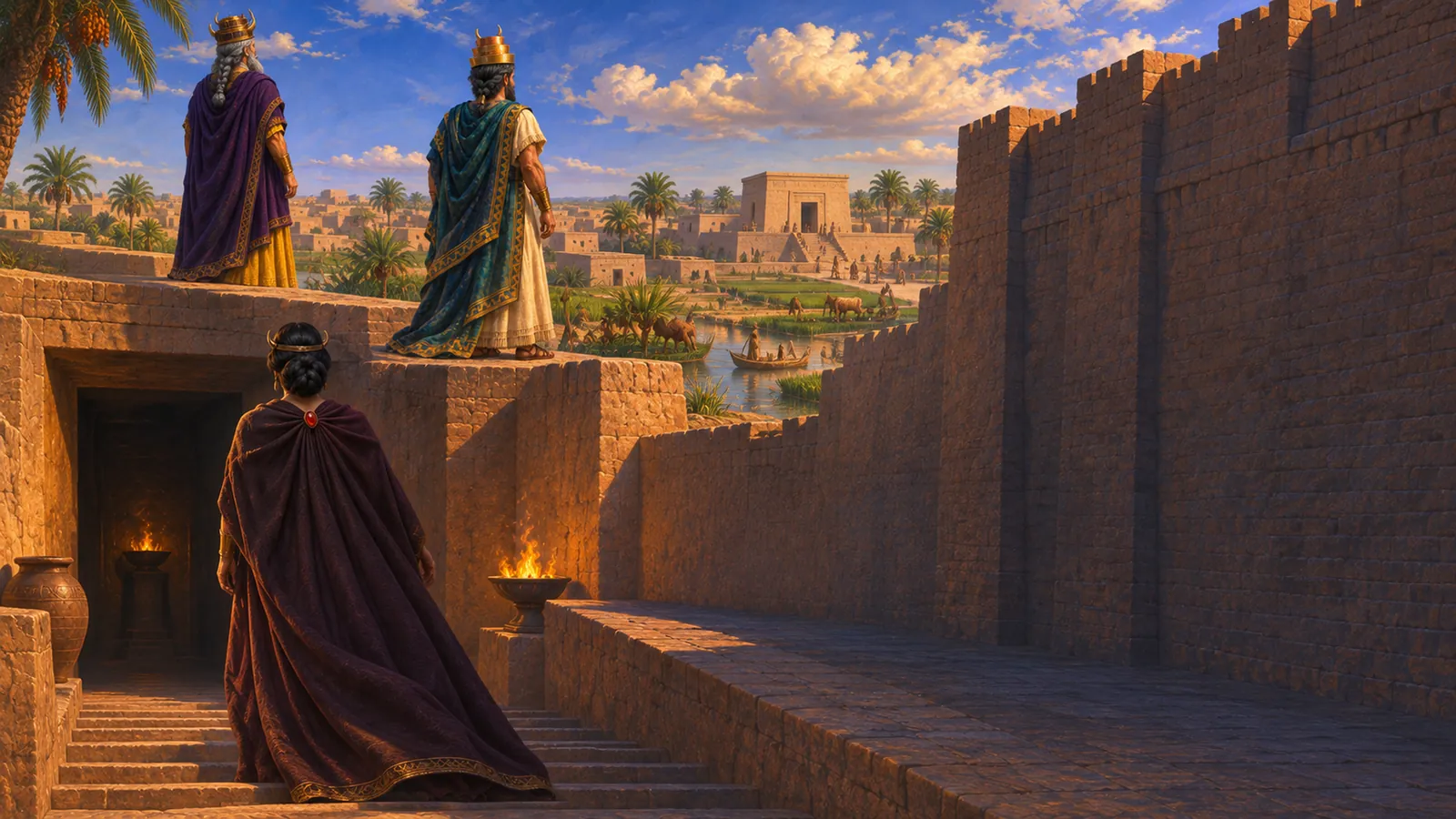
Dans son récit, An avait pris les cieux et Enlil la terre. Le monde souterrain avait été donné en cadeau à Ereshkigal.

Elle a raconté comment Enki avait pris le large pour le monde souterrain. Une averse de petits grêlons s’était levée contre le seigneur, et de gros grêlons contre Enki. Le poème les compare à des marteaux légers et peut-être à des pierres de catapulte.

Elle a dit que la quille de la petite barque tremblait, comme heurtée par des tortues. À la proue, les vagues se sont levées comme des loups pour dévorer le seigneur. À la poupe, elles ont assailli Enki comme un lion.
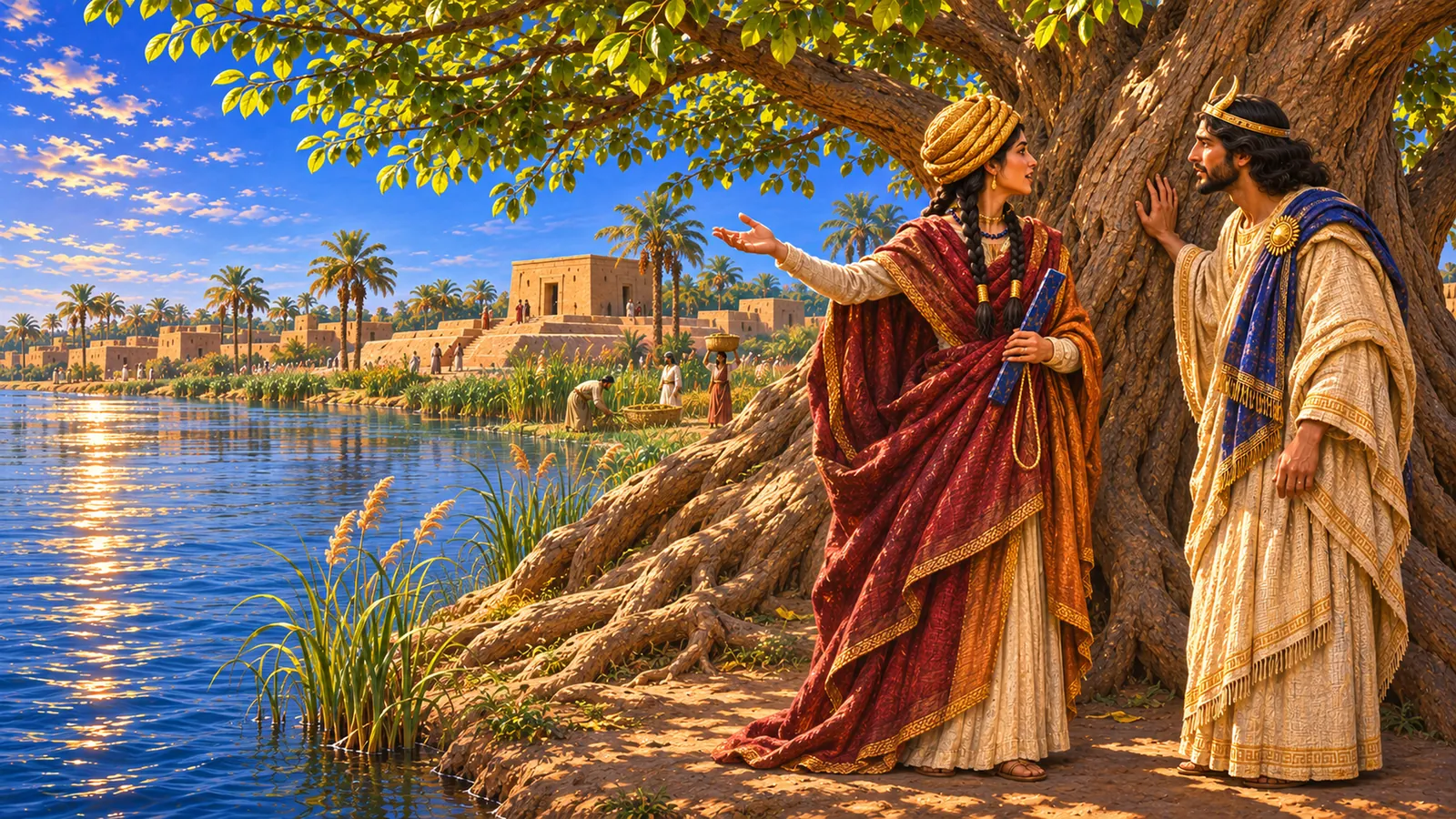
Inanna a rappelé l’unique arbre halub qui poussait sur la rive de l’Euphrate. Elle a dit que l’Euphrate lui-même l’arrosait.

Un vent du sud a déraciné l’arbre et arraché ses branches. Inanna a dit que l’Euphrate l’avait saisi et emporté au loin.
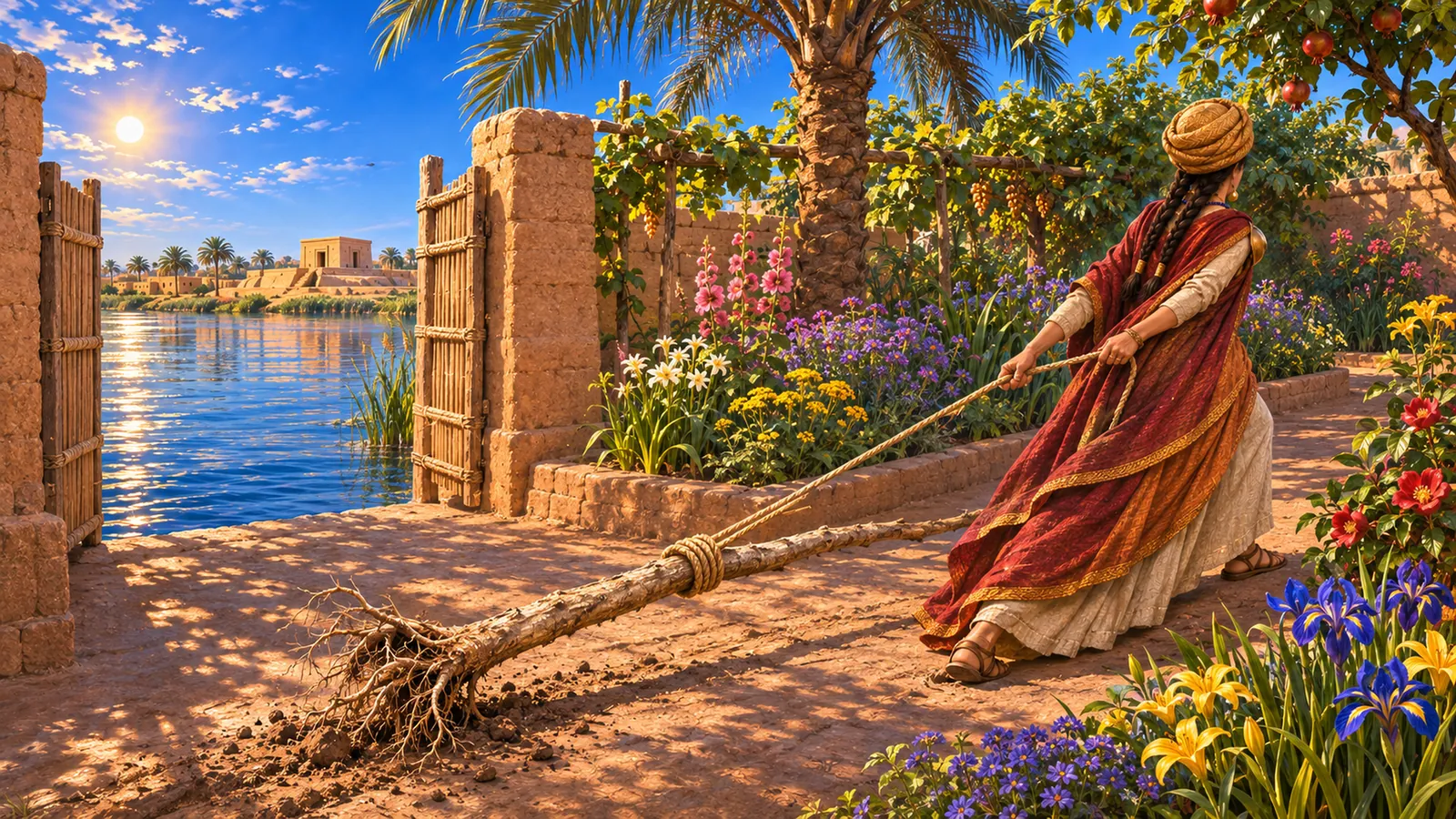
Elle a dit à Utu qu’elle était la femme qui avait respecté les paroles d’An et d’Enlil. Elle avait apporté l’arbre à Uruk, dans son propre jardin luxuriant.
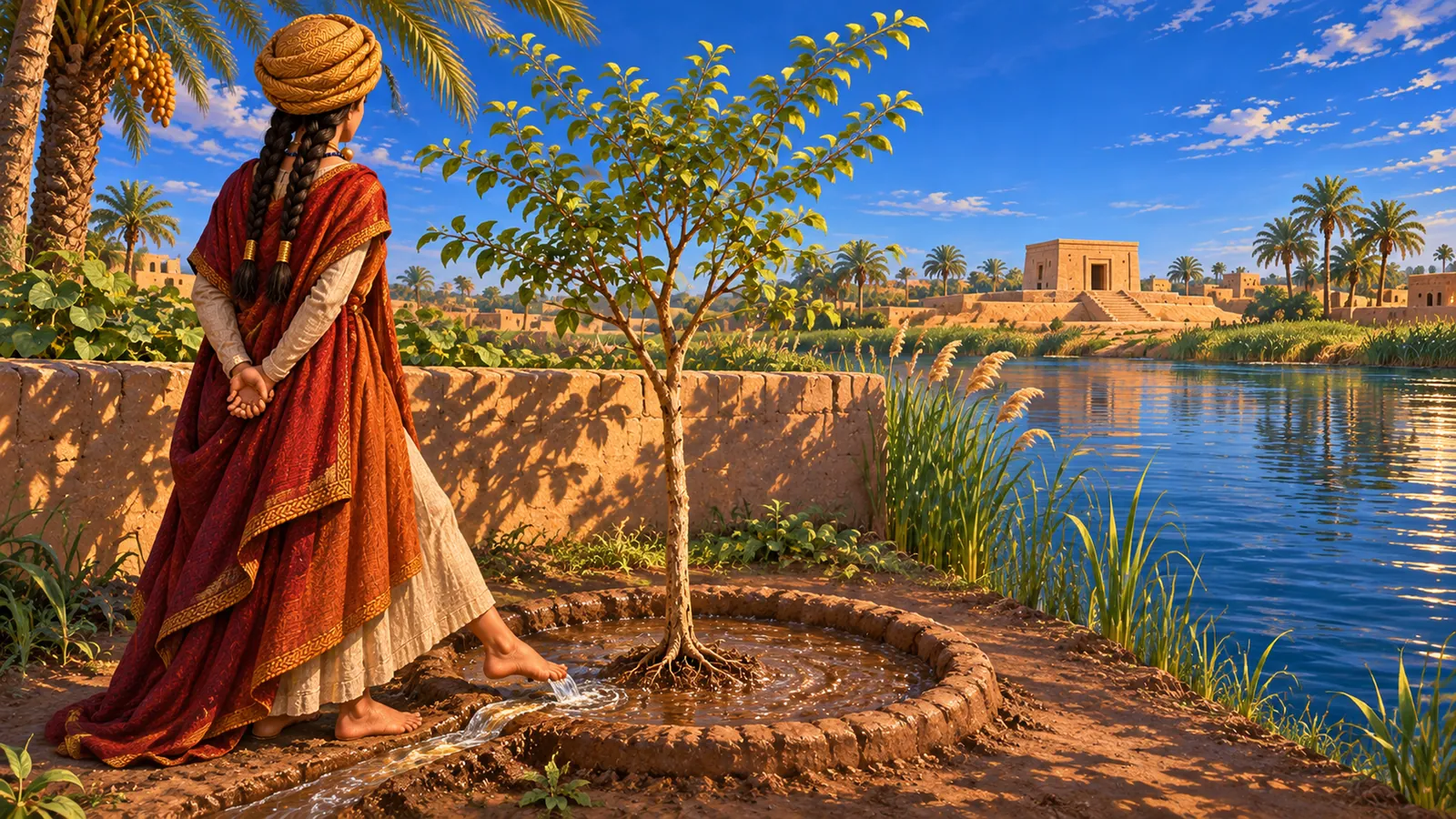
Inanna a dit à Utu qu’elle avait planté et arrosé le halub dans son jardin, chaque fois en se servant uniquement de ses pieds.
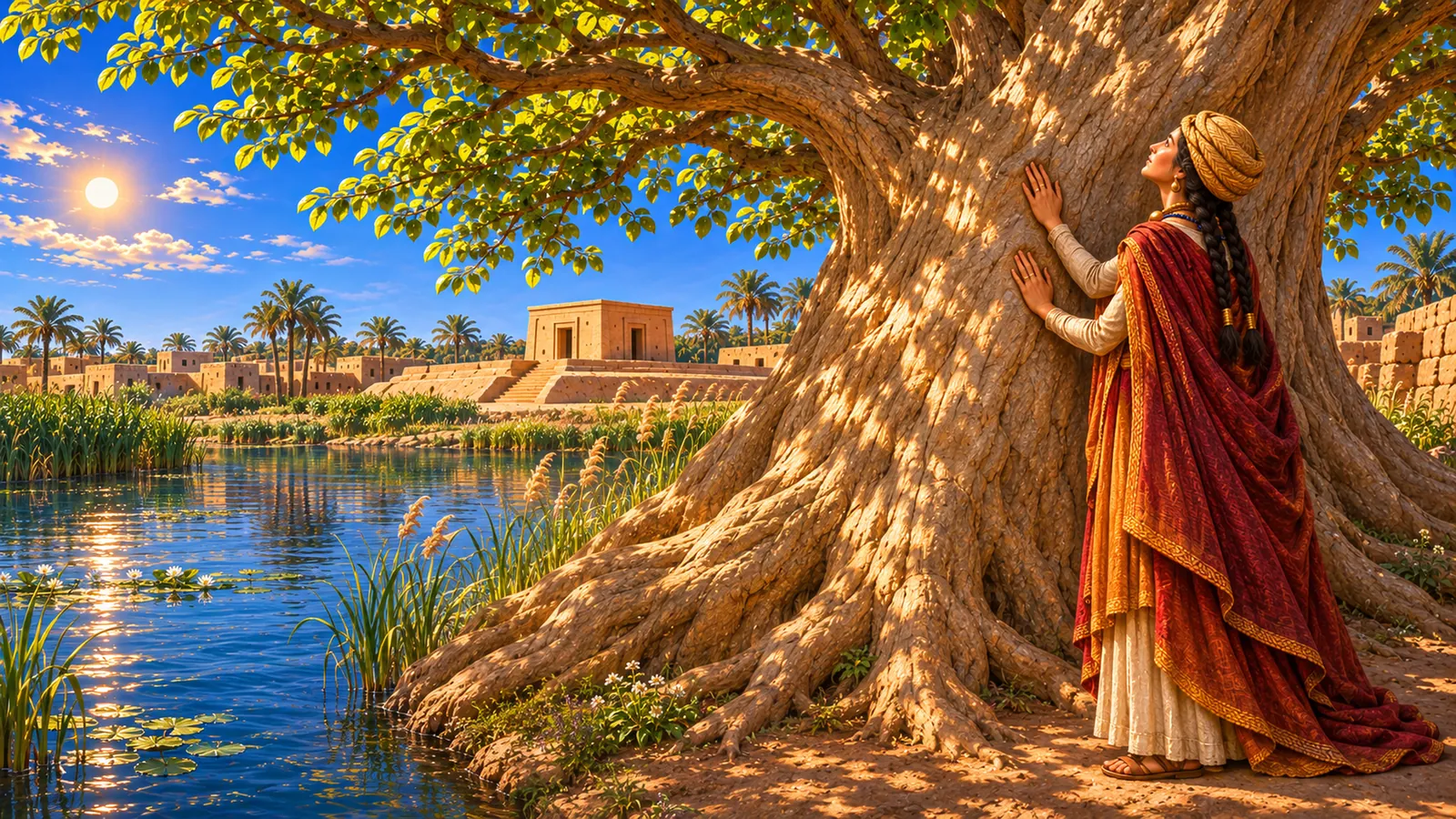
Elle s’est souvenue avoir souhaité un beau siège où s’asseoir et un beau lit où s’allonger. Cinq ans ont passé, puis dix. L’arbre est devenu massif et son écorce est restée intacte.
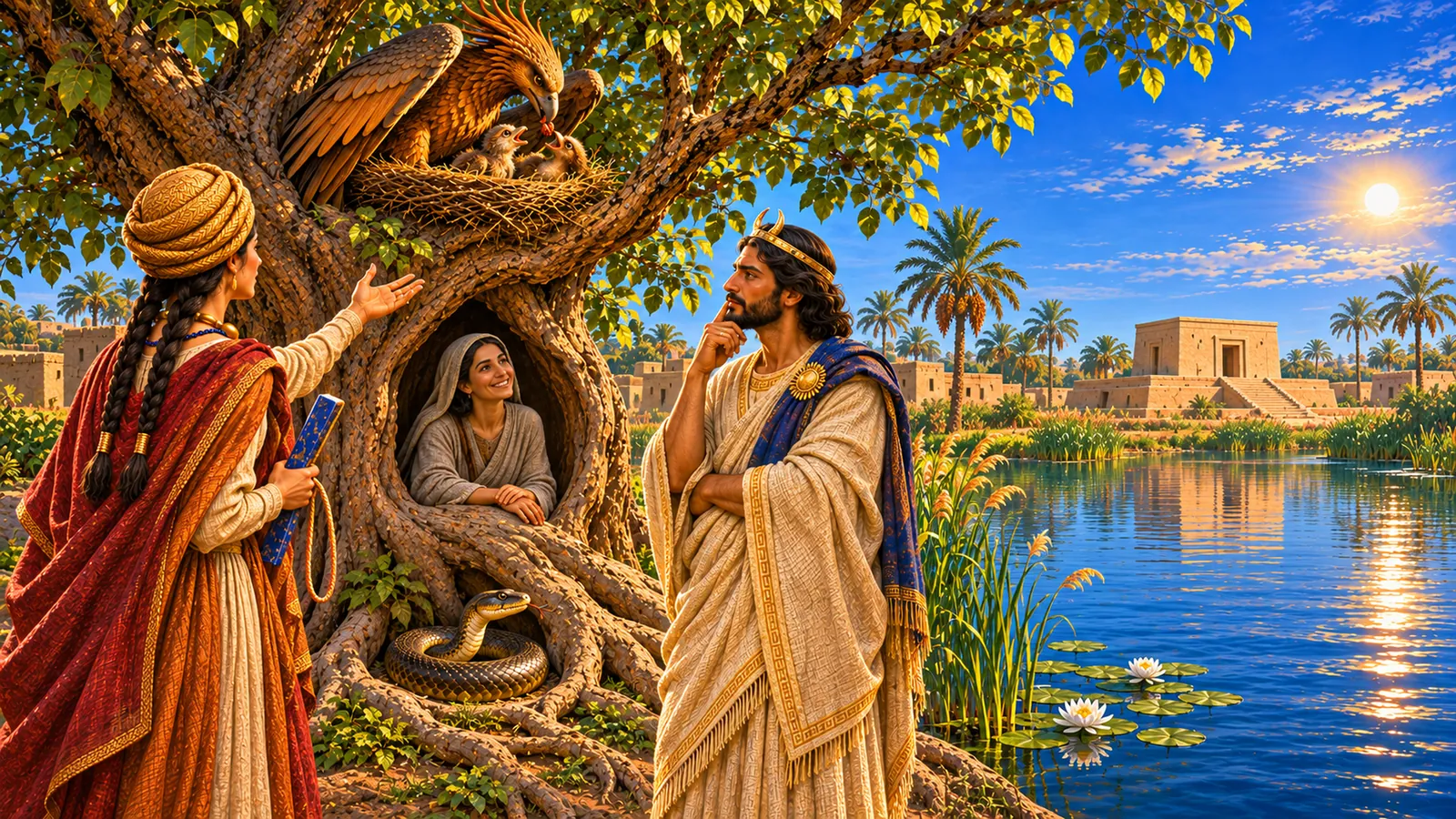
Elle a parlé à Utu du serpent insensible aux incantations près des racines, de l’oiseau Anzud et de ses petits dans les branches, et de la jeune fille fantôme qui avait fait sa demeure dans le tronc et riait d’un cœur joyeux.
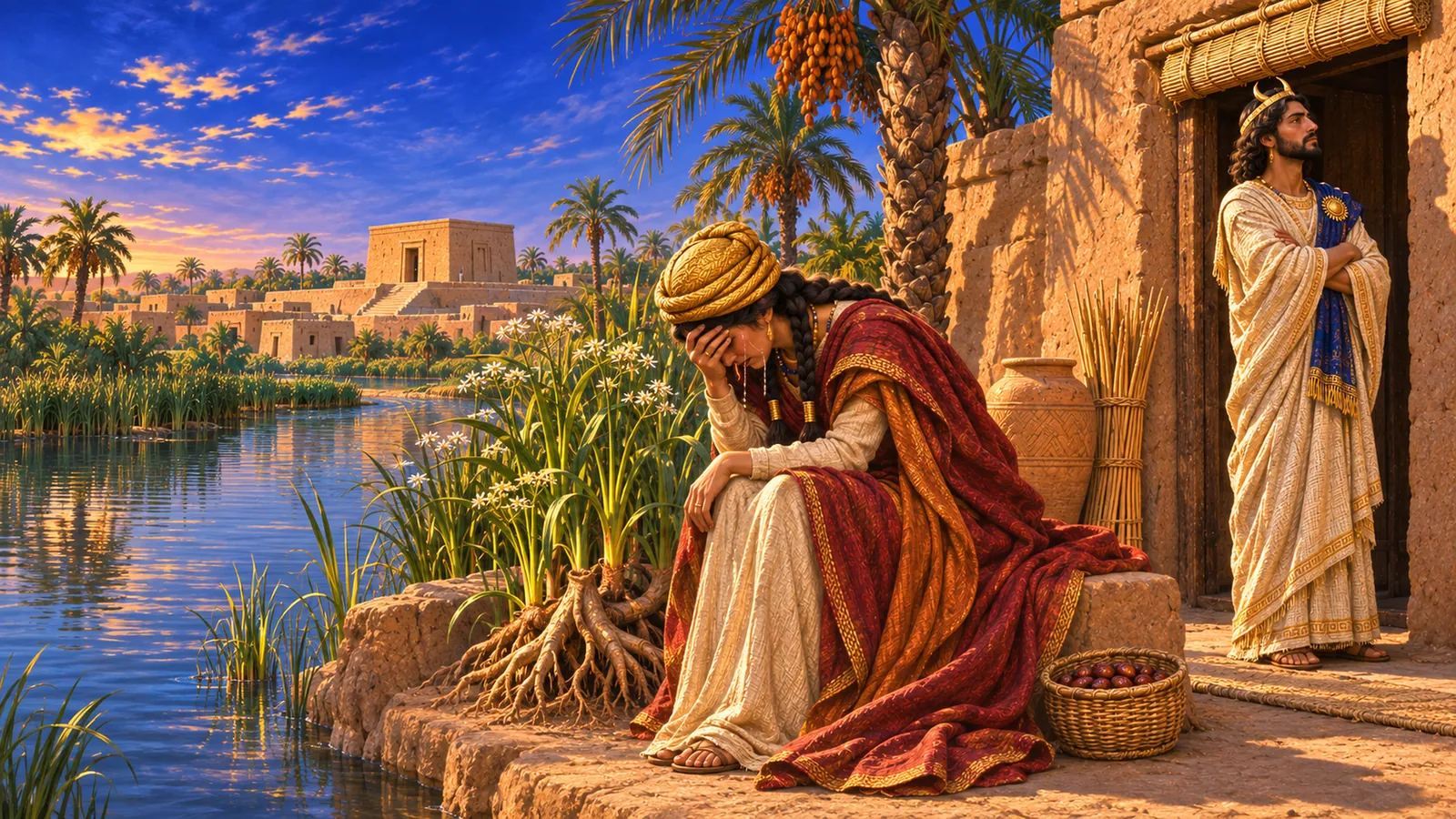
Son récit s’est achevé sur ses propres larmes. Le poème dit que son frère Utu, le jeune guerrier, ne l’a pas soutenue dans cette affaire.
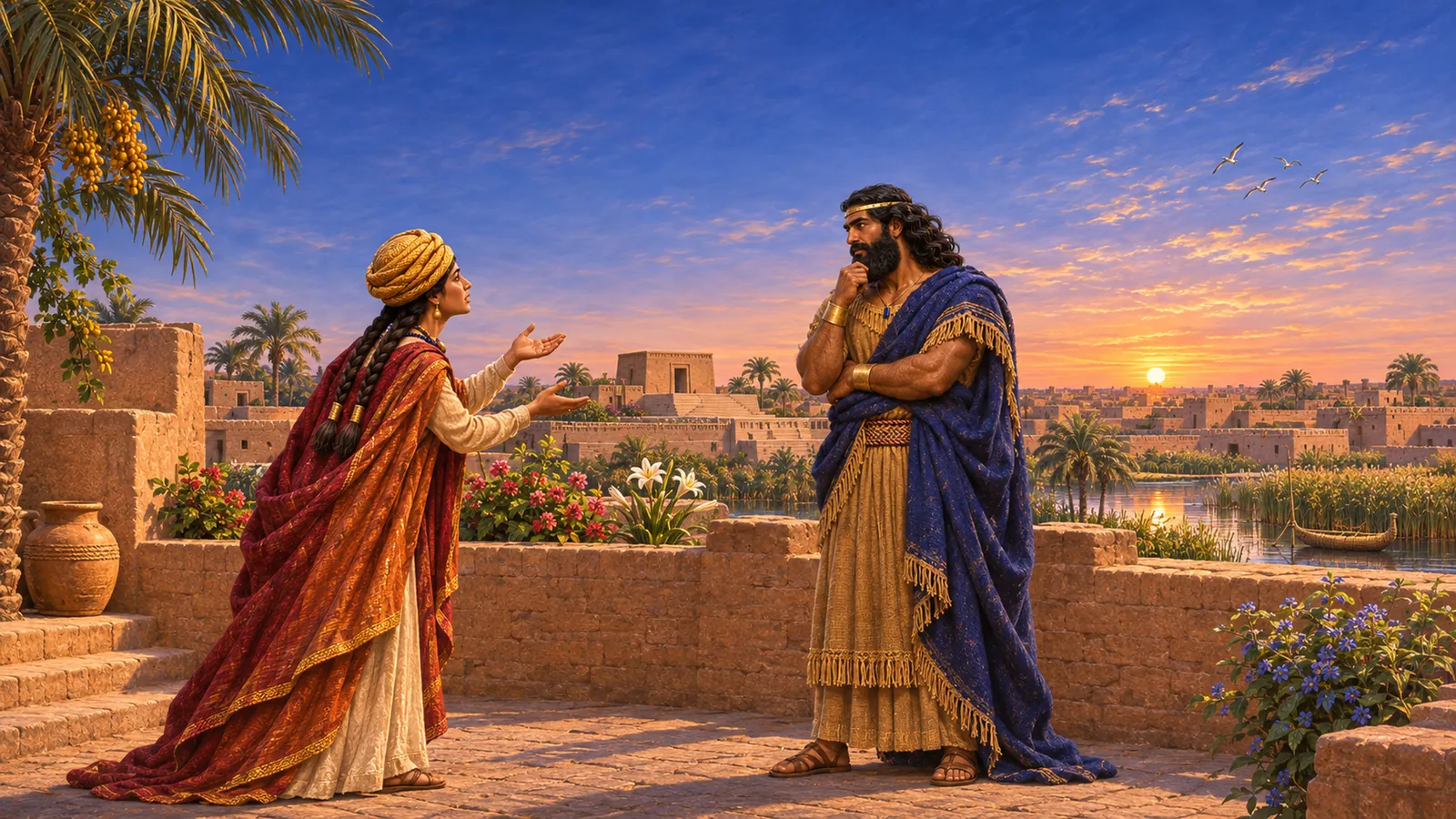
L’APPEL
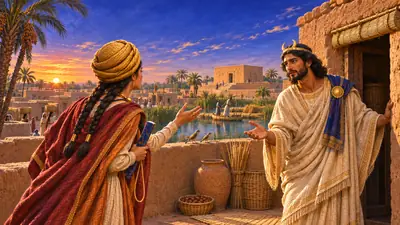
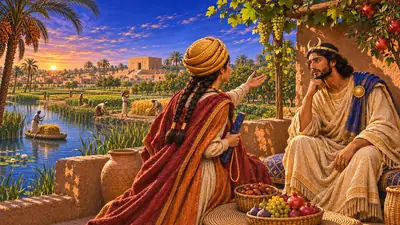
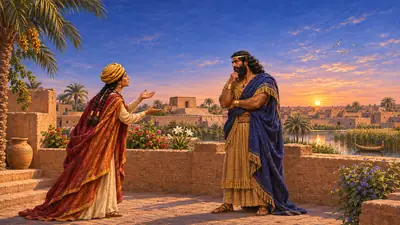
Quand l’aube parut et que les oiseaux commencèrent à crier, Inanna parla au guerrier Gilgamesh. Elle s’adressa à lui comme à son frère.
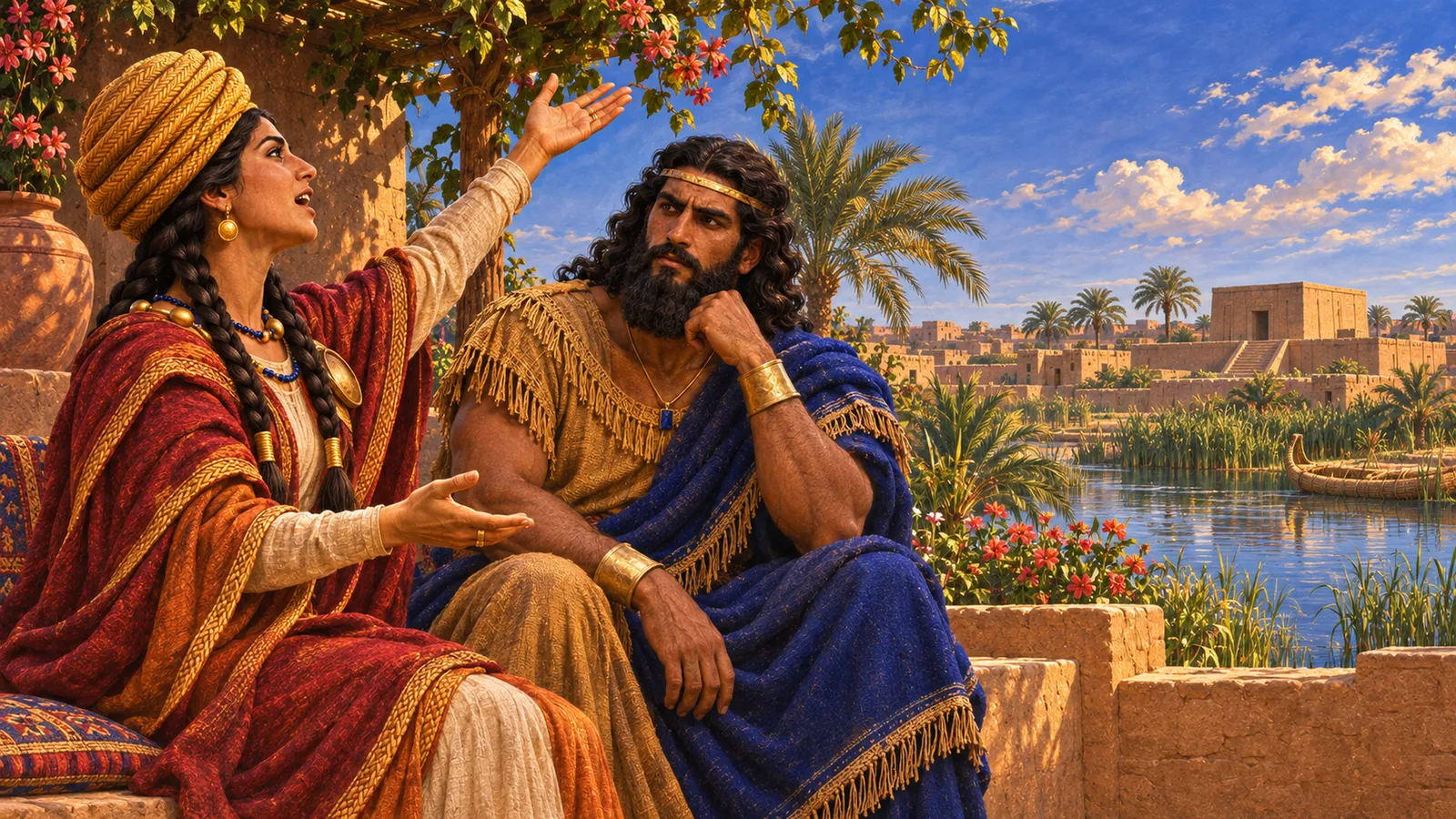
Elle se souvint des jours où les destins furent fixés et où l’abondance régnait dans le pays. An avait pris le ciel, Enlil avait pris la terre et Ereshkigal avait reçu le monde souterrain en cadeau.

Inanna raconta comment Enki prit la mer vers le monde souterrain. Dans son récit, de petits grêlons s’abattirent sur le seigneur et de gros sur Enki. Elle compara les petits grêlons à des marteaux légers.

Elle décrivit la petite embarcation tremblant comme si des tortues heurtaient sa quille. Les vagues de l’avant étaient comme des loups, celles de l’arrière comme un lion.

Inanna se souvint d’un halub qui poussait au bord de l’Euphrate et s’abreuvait à ses eaux. Le vent du sud le déracina et dépouilla ses branches. Le fleuve l’emporta.
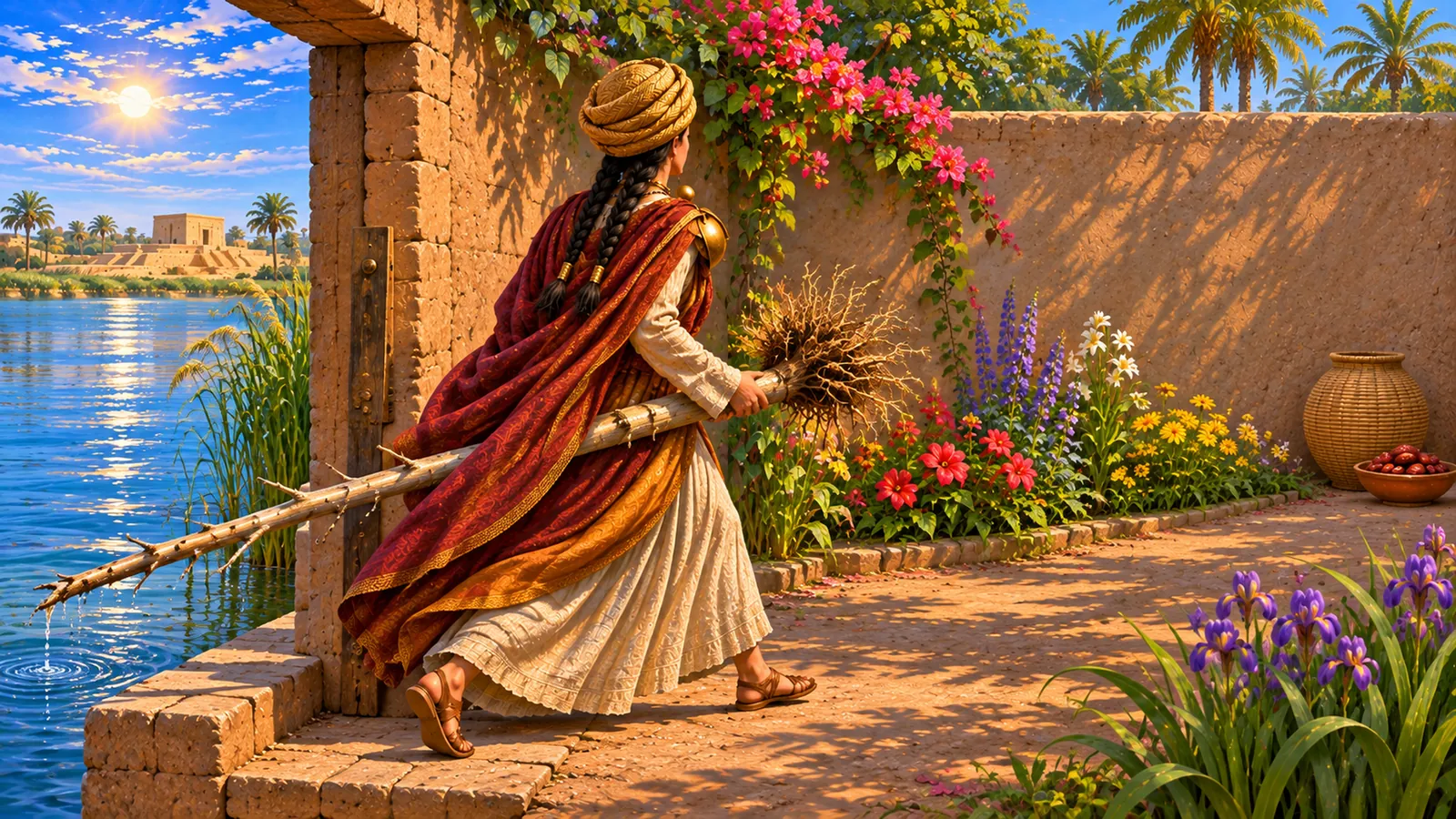
Inanna dit qu’elle marchait dans le respect des paroles d’An et d’Enlil. Elle prit l’arbre et le porta dans son jardin à Uruk.
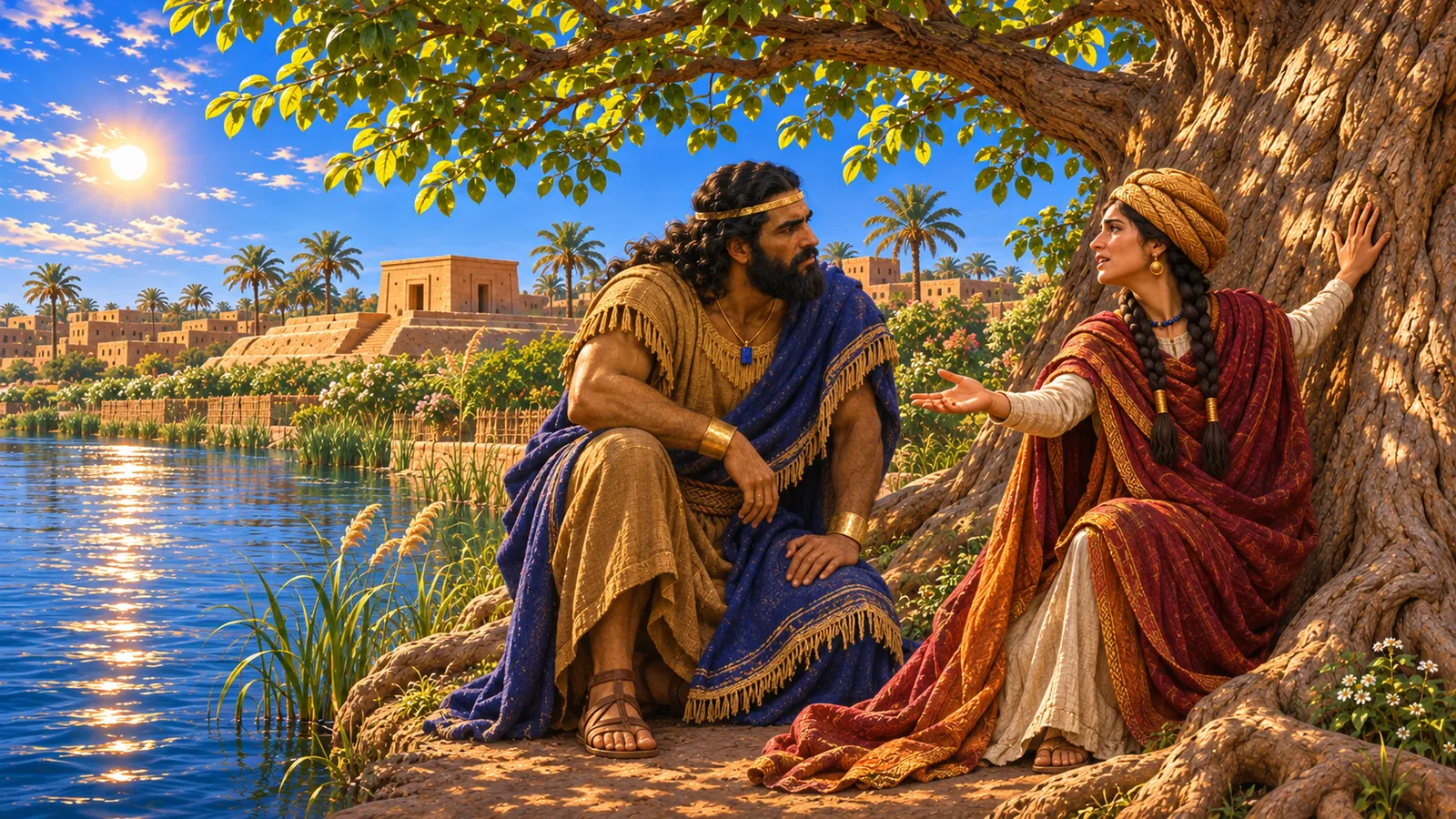
Elle raconta comment elle avait planté et arrosé l’arbre avec ses pieds. Elle avait espéré qu’il lui donnerait un jour un siège et un lit.
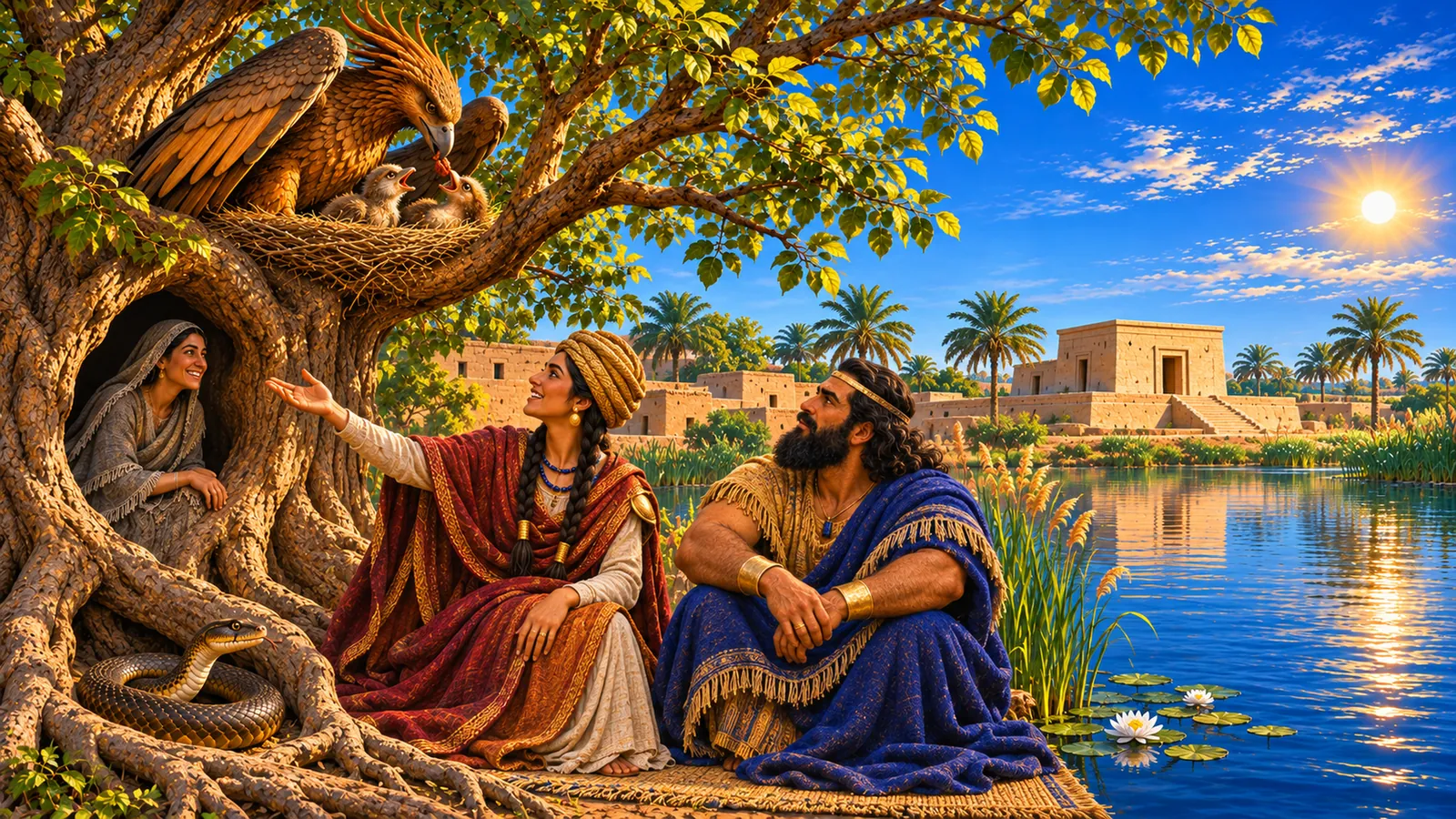
Cinq ans, puis dix ans passèrent, dit-elle, et l’arbre devint immense. Elle rappela le serpent insensible aux incantations à ses racines, l’oiseau Anzud et ses petits dans les branches, et la jeune fille fantôme dans le tronc.
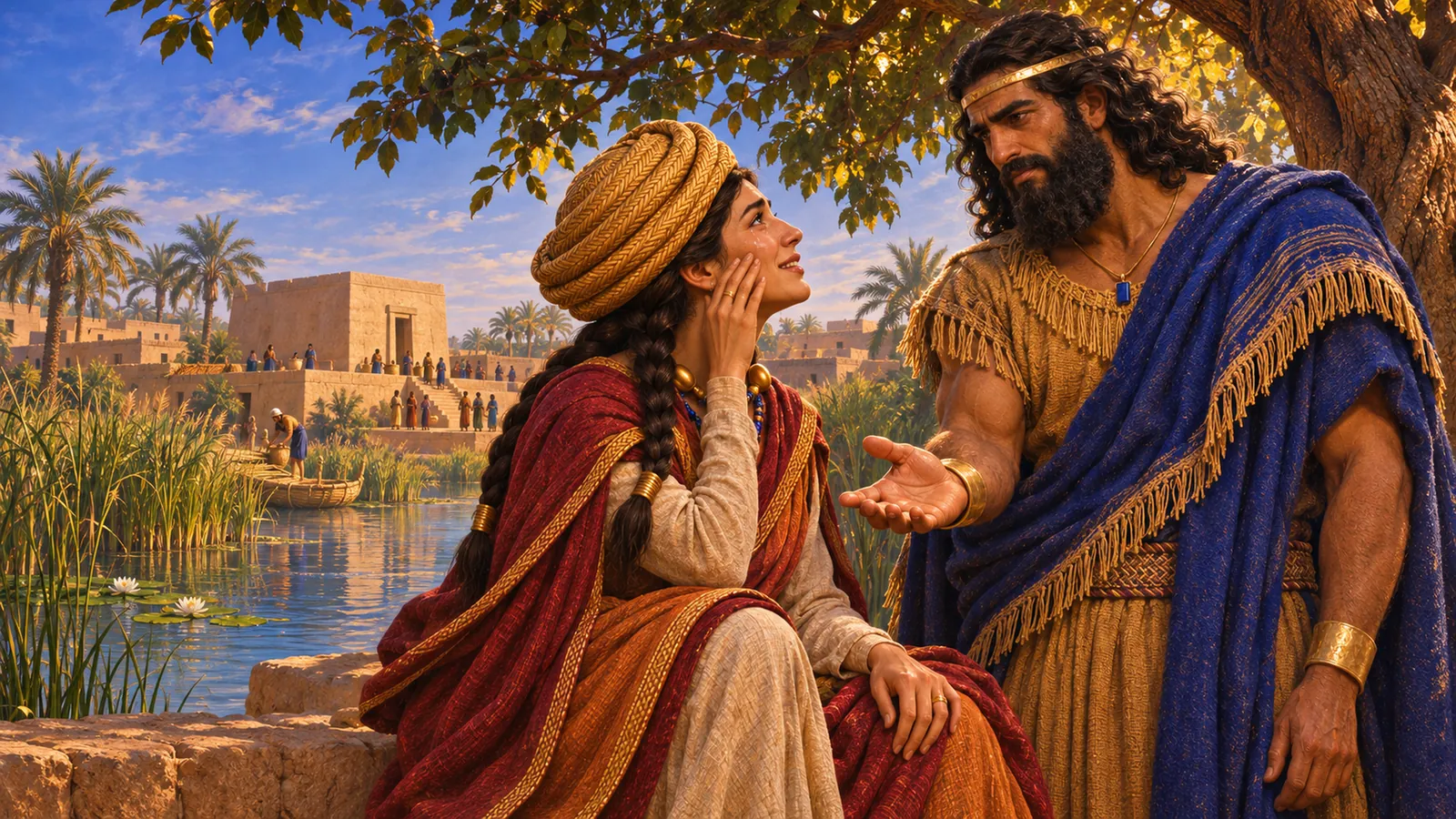
Inanna pleura à la fin de son récit. Après avoir entendu ce que sa sœur lui avait raconté, le guerrier Gilgamesh se rangea à ses côtés.
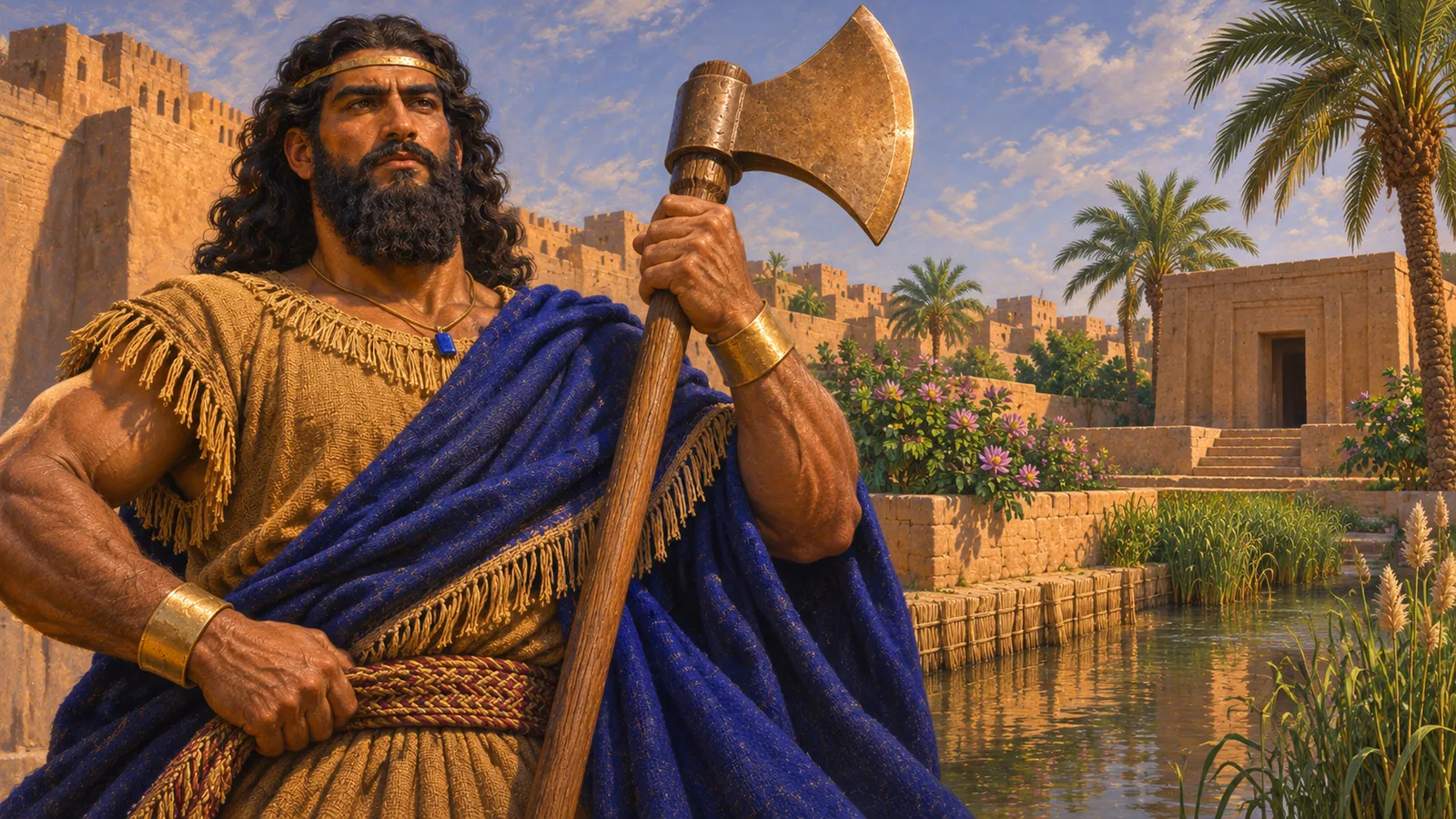
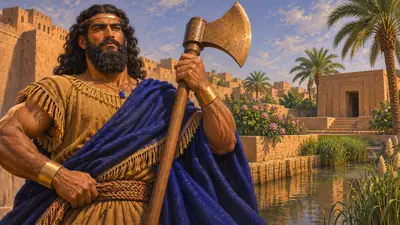
Gilgamesh attacha une lourde ceinture à sa taille. Il prit la hache de bronze dont il se servait lors de ses expéditions. Le poème donne des poids extraordinaires pour les deux objets.
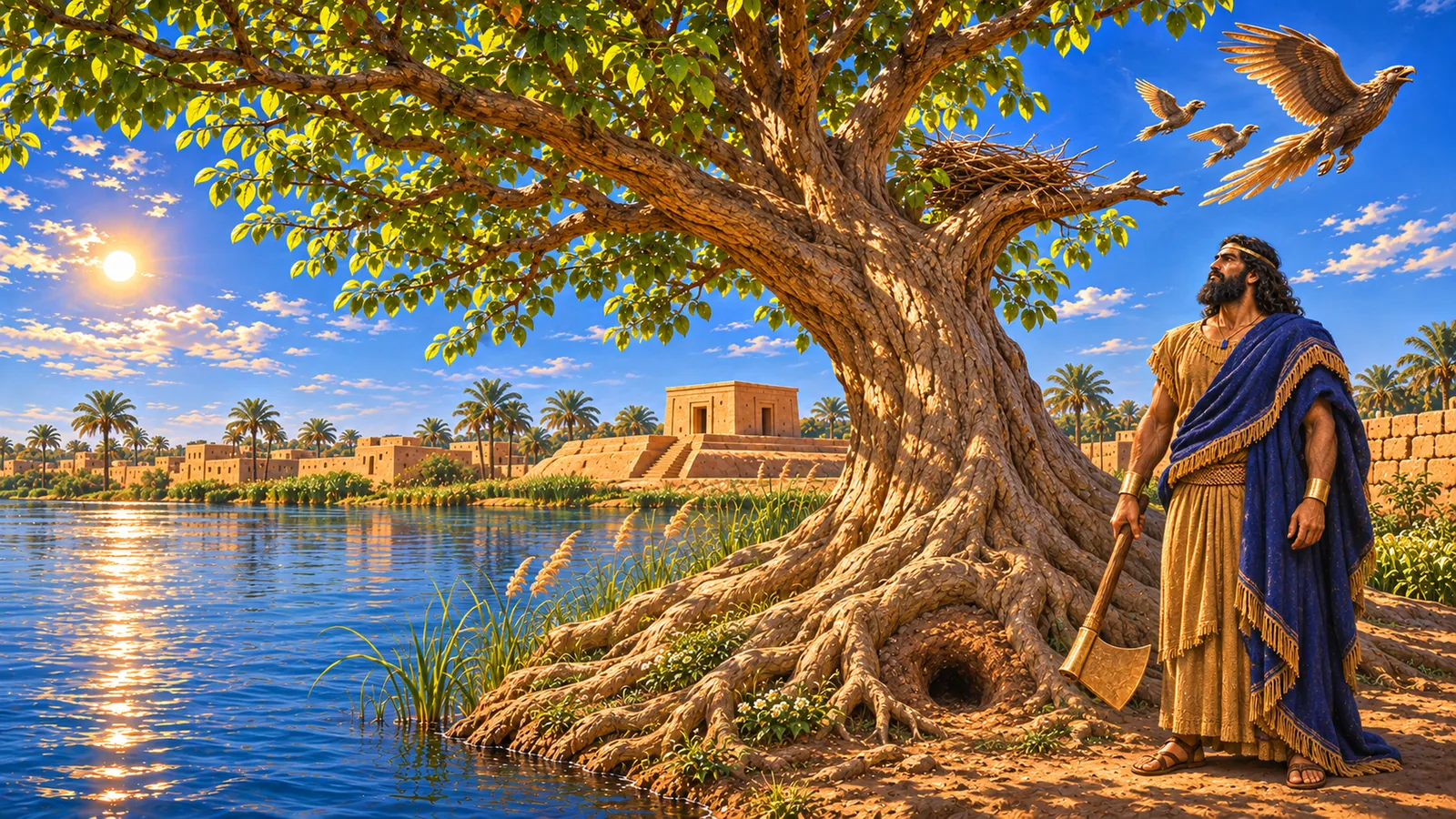
Gilgamesh tua le serpent qui vivait aux racines et restait insensible aux incantations. L’oiseau Anzud prit ses petits dans les branches et partit vers les montagnes.
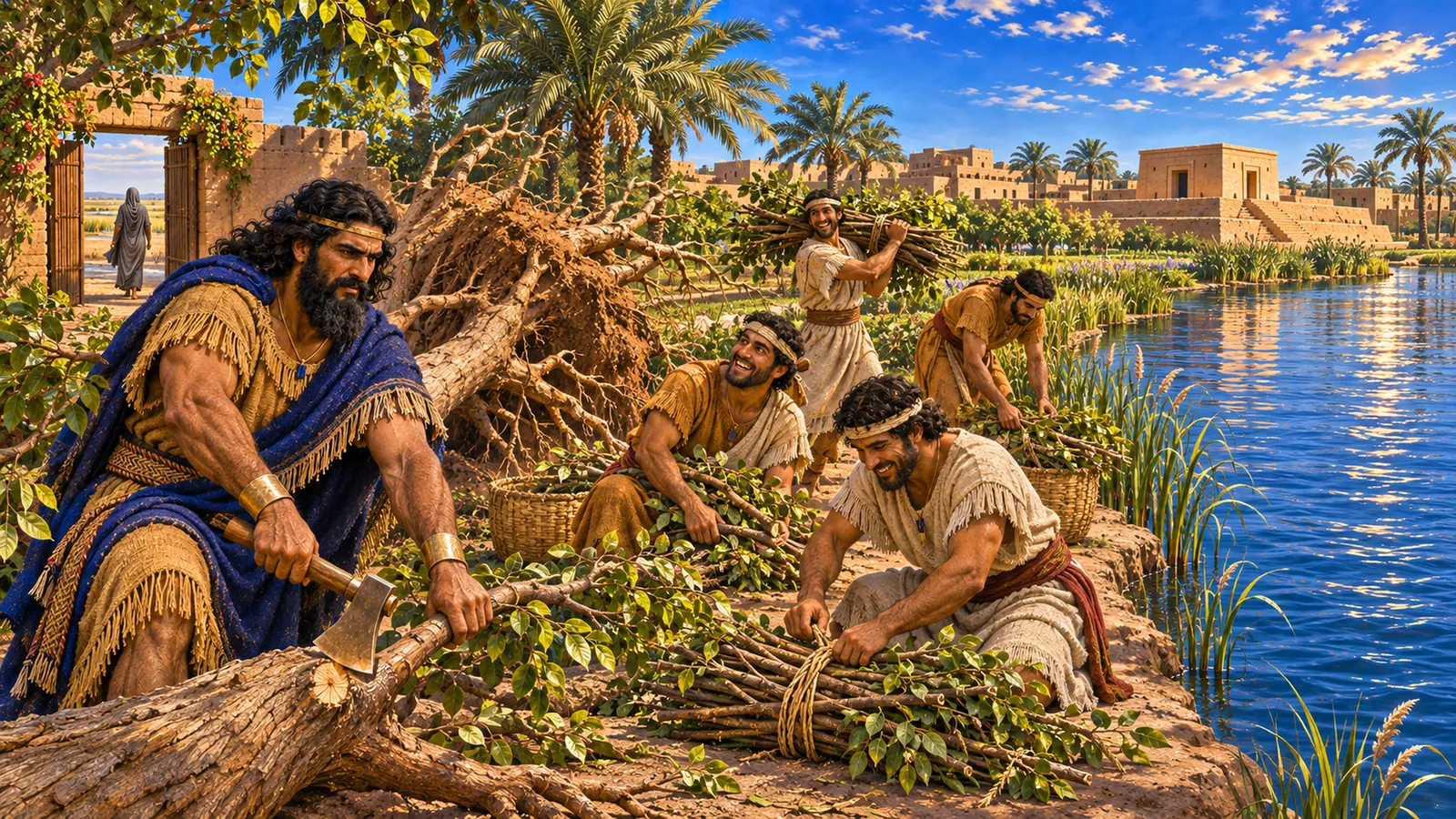
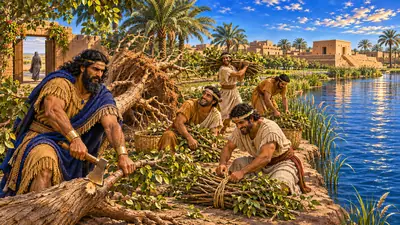
La jeune fille fantôme chercha refuge dans la campagne sauvage. Gilgamesh déracina l’arbre et en détacha les branches. Les jeunes hommes de sa ville coupèrent les branches et les mirent en faisceaux.
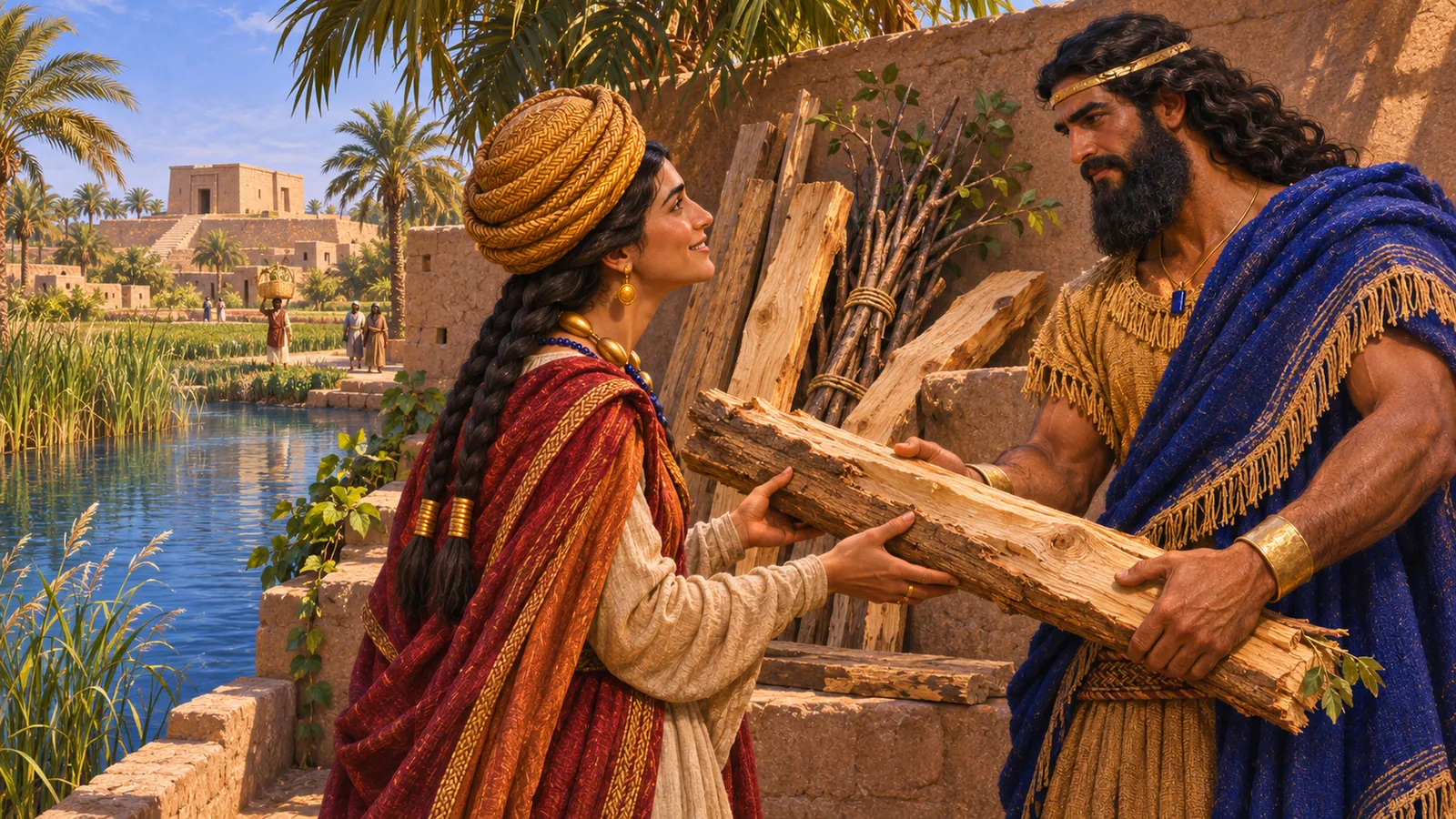
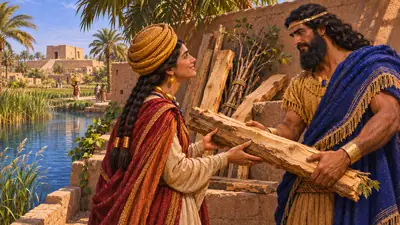
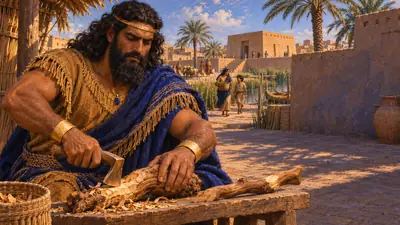
Gilgamesh donna le bois de l’arbre à Inanna pour le siège où elle avait espéré s’asseoir et le lit où elle avait espéré s’allonger.
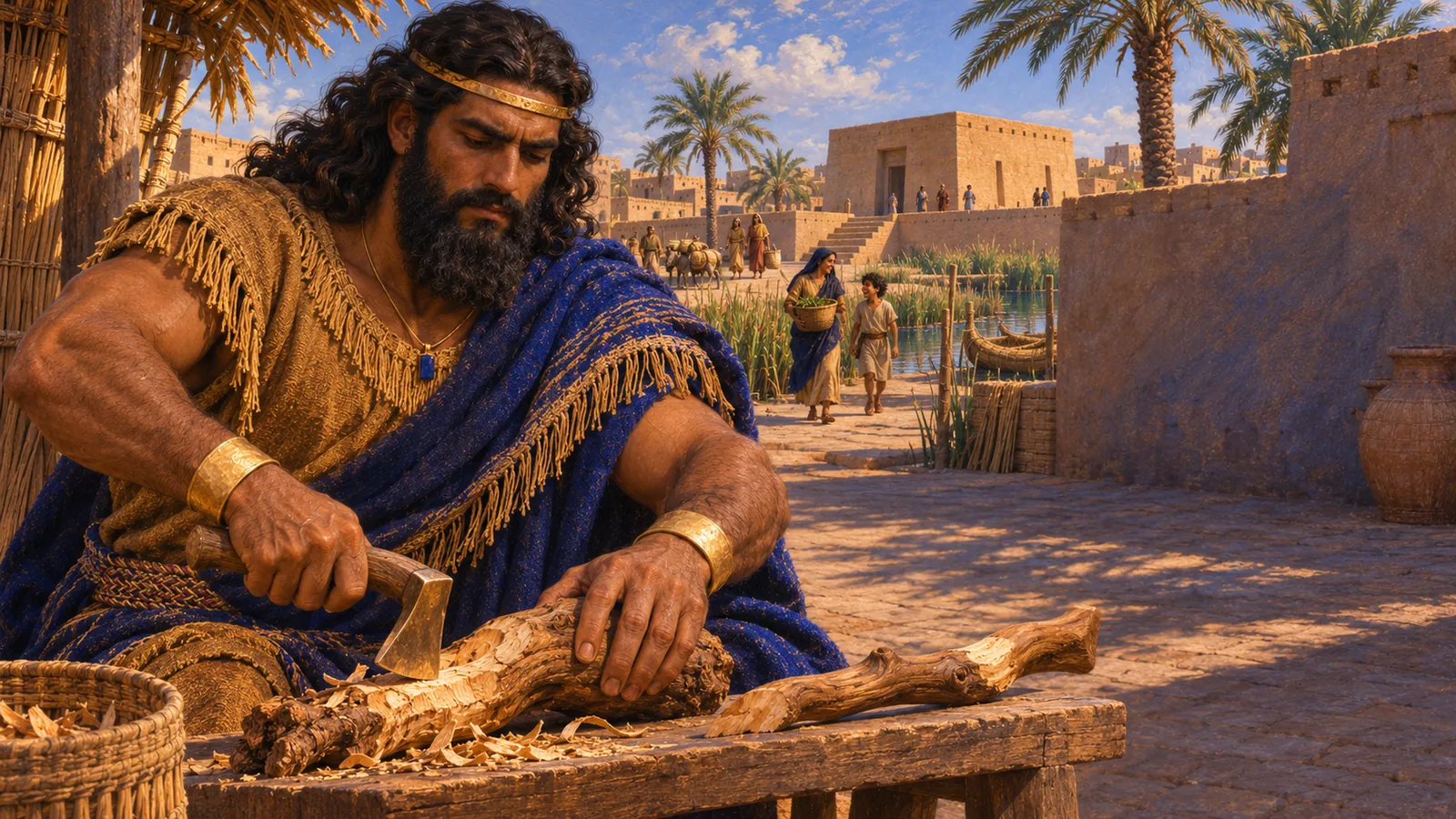
Des racines, Gilgamesh se fit un ellag. Des branches, il fit un ekidma. C’étaient les deux objets avec lesquels il allait jouer.
JEU
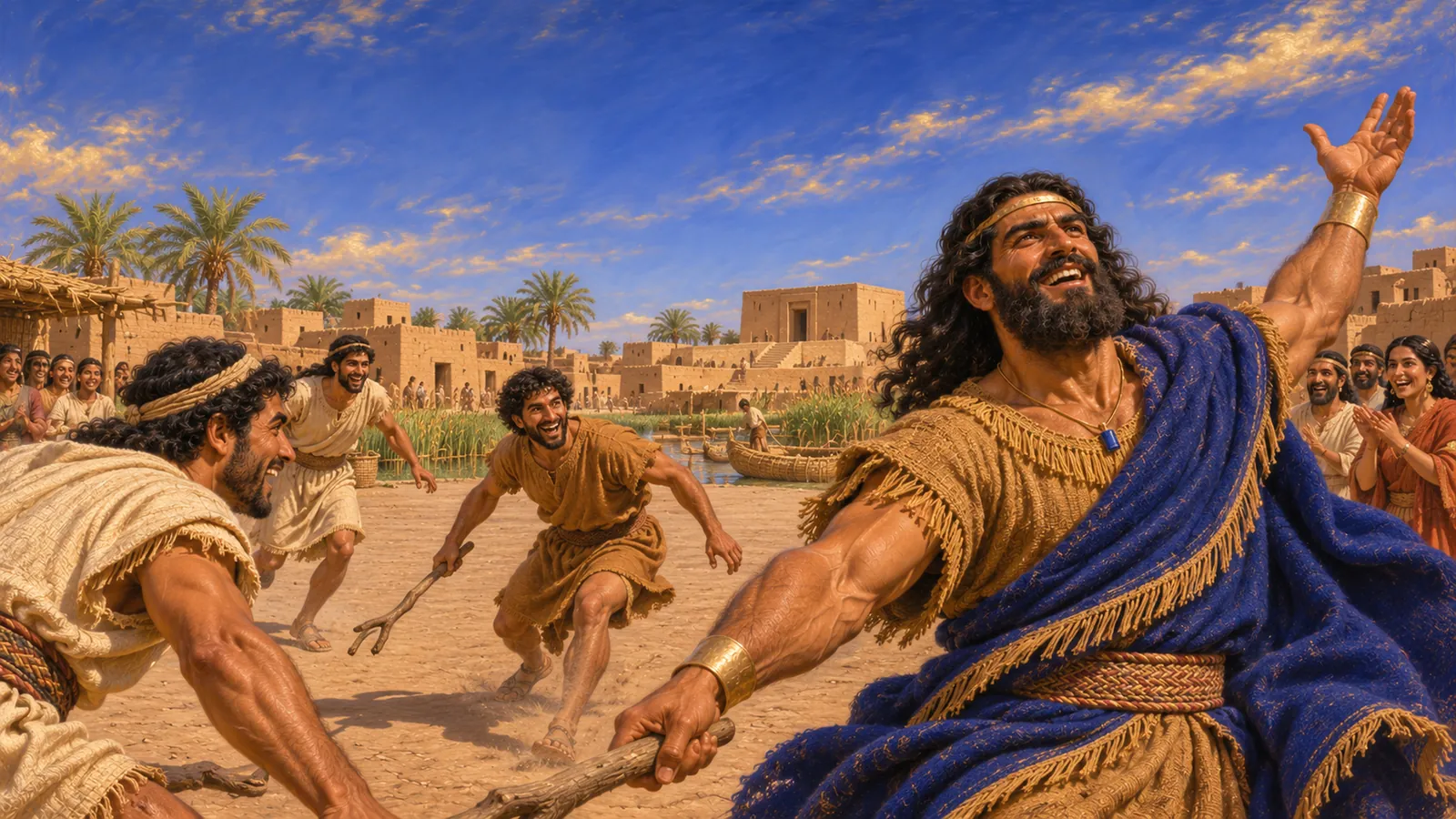
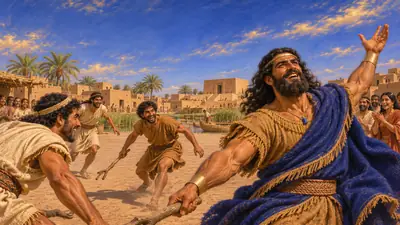
Gilgamesh a joué à l’ellag sur la grande place et s’y est vanté. Il ne voulait jamais arrêter la partie. Dans les manuscrits d’Ur, les jeunes gens de la ville jouent aussi.
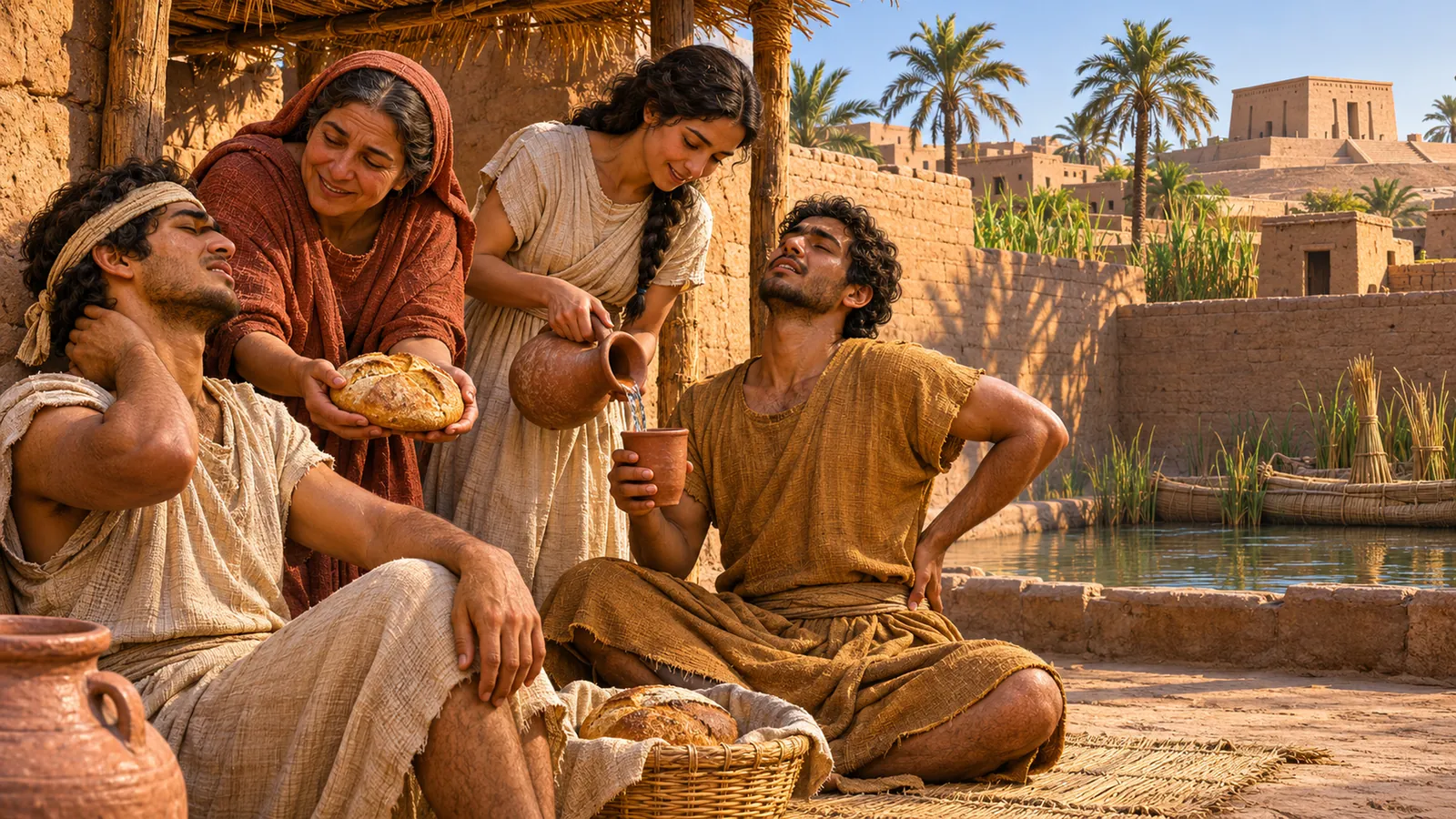
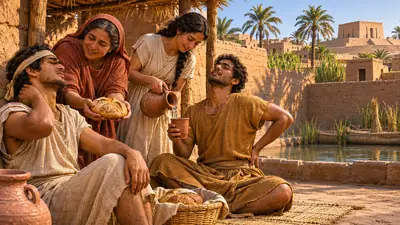
Les joueurs se plaignaient d’avoir mal au cou et aux hanches. Les mères ont apporté du pain à leurs fils et les sœurs ont versé de l’eau à leurs frères.
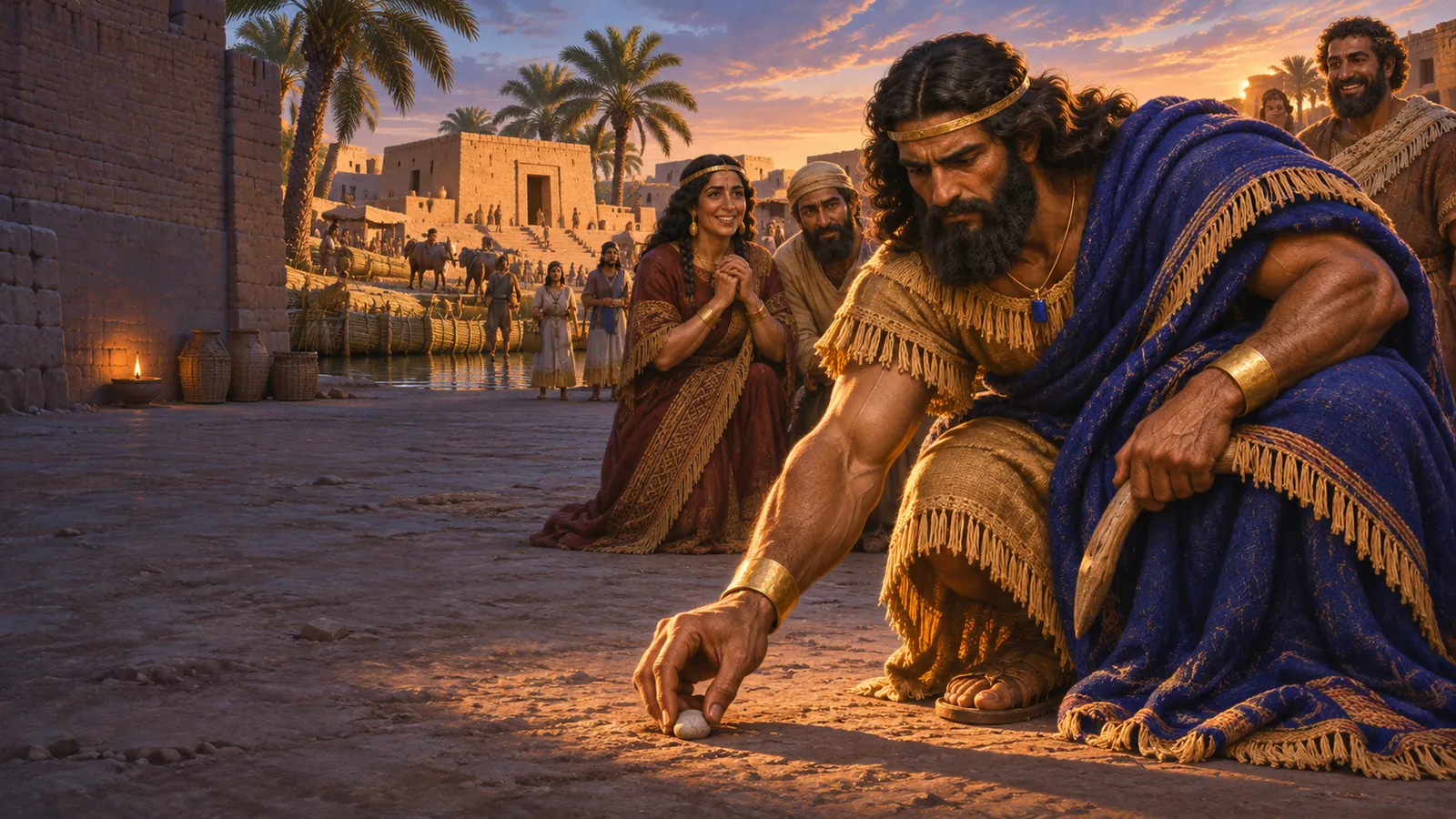
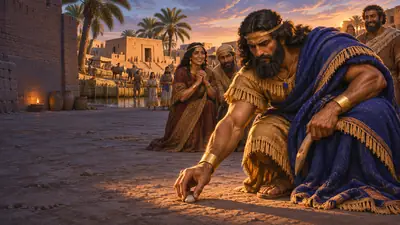
Le soir venu, Gilgamesh a marqué l’endroit où l’ellag avait reposé. Il l’a ramassé et l’a emporté chez lui.
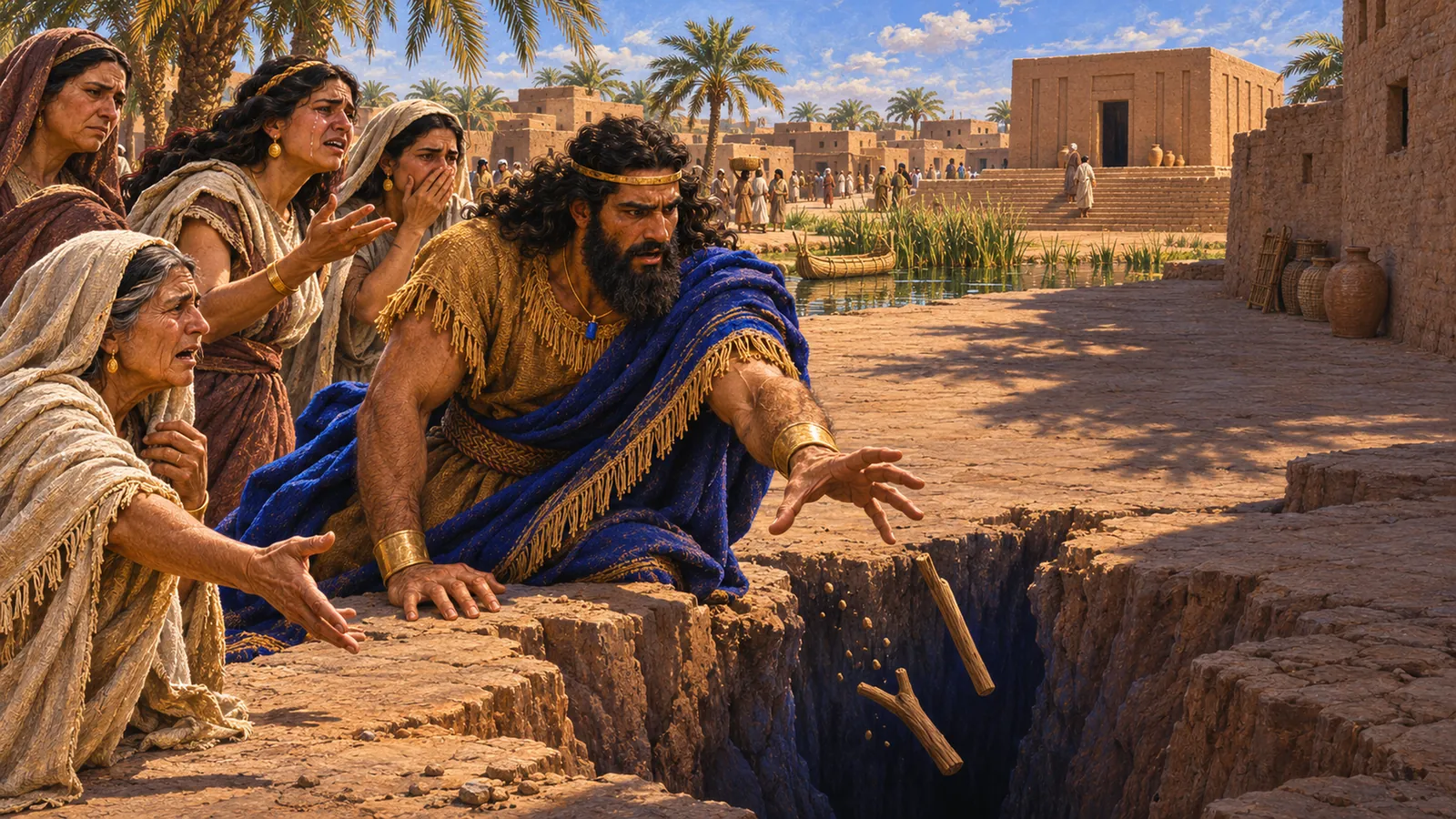
Au matin, les veuves l’ont accusé et les jeunes femmes se sont plaintes. Leurs paroles ont fait tomber son ellag et son ekidma au fond du monde souterrain.
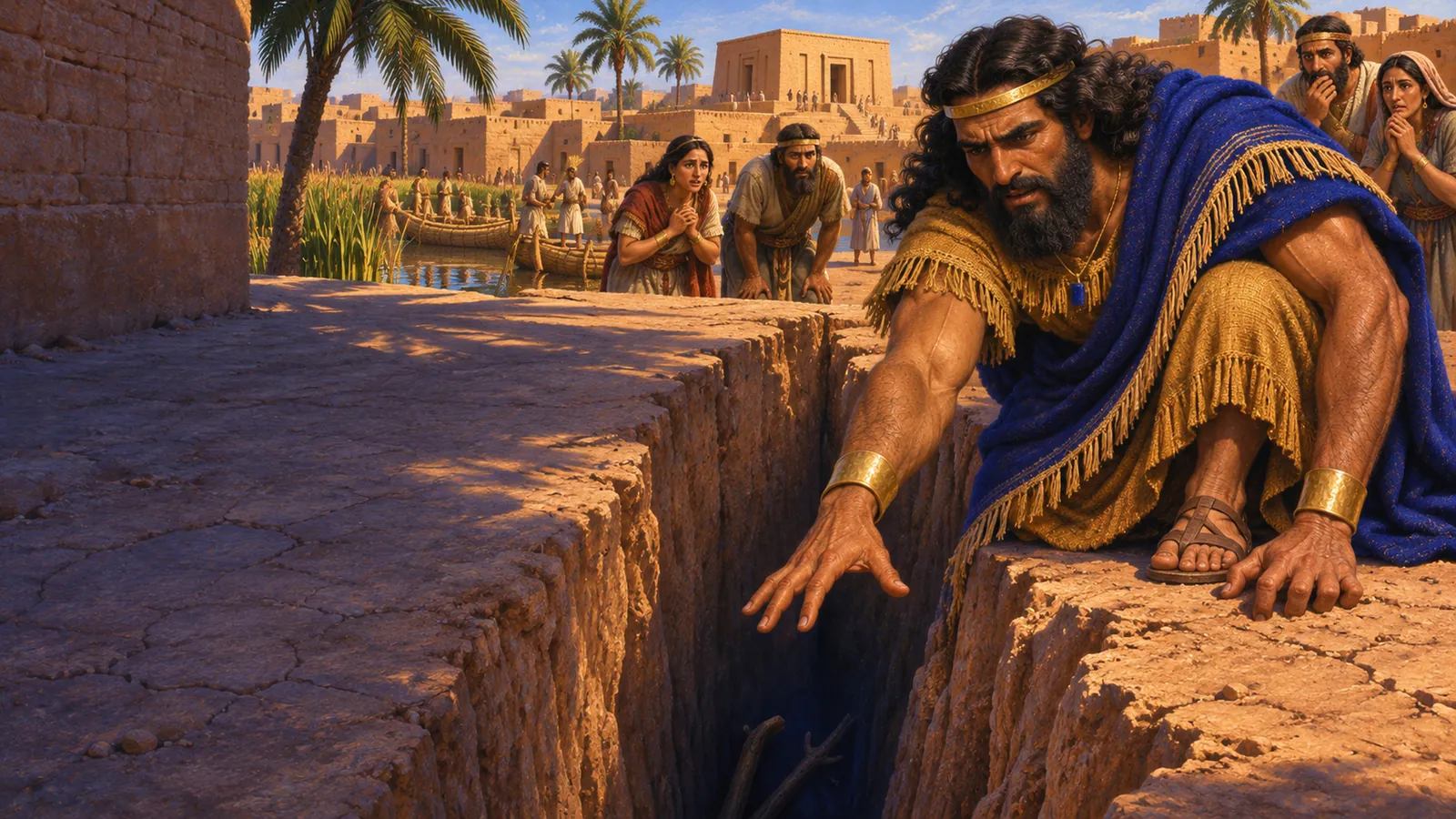
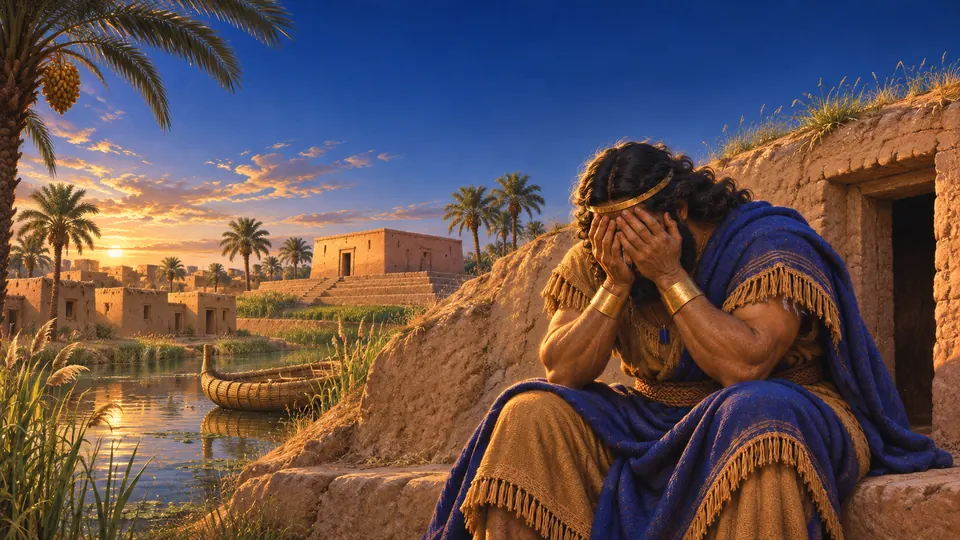
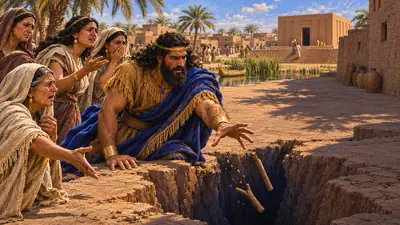
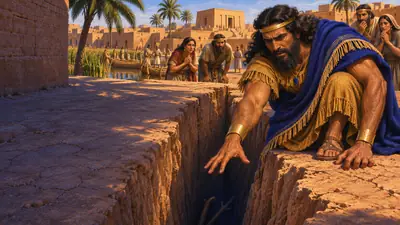
Gilgamesh a essayé d’atteindre les deux objets d’abord avec la main puis avec le pied. Aucune des pièces de jeu n’était à sa portée.
Fin du chapitre 1
Toutes les pages






















Sources
Oxford’s Version A groups lines in its English translation. Page notes identify the events within each printed group and mark readings from individual manuscripts. The names Gilgamesh, Inanna, Ereshkigal and Uruk appear as Gilgamec, Inana, Erec-kigala and Unug in the Oxford translation.
Éditions consultées
Notes sur ce récit
Pages 1–6, Version A 1–26. The retelling condenses the repeated formula and treats the assignments as part of the poem’s ancient account. Oxford prints Erec-kigala for Ereshkigal.
Pages 7–10, Version A 1–26. The repeated departure formula names the father and then Enki. The hail is small and large. The keel, bow and stern respectively carry the turtle, wolf and lion comparisons.
Pages 11–15, Version A 27–35. The poem says halub tree. The retelling preserves that name. The south wind uproots it and strips its branches, and the Euphrates carries it away. In this initial account a woman heeds the words of An and Enlil and brings the tree into Inanna’s garden at Uruk. In the later retelling to Utu the speaker says she was that woman. Oxford prints Unug and Inana.
16–21 · Version A 36–46. The woman plants the tree using her feet on page 16 and waters it using her feet on page 17. Her questions about the chair and bed are on page 18. Page 19 preserves the progression five years, ten years, the growth of the tree and its unsplit bark. Page 20 identifies the snake immune to incantations at the roots and the Anzud bird settling its young in the branches. Page 21 keeps Oxford’s designation of the phantom maid in the trunk, her joyful laugh and Inanna’s crying. The text gives the maid no proper name in this paragraph.
22–26 · Version A 47–69. The dawn formula presents little birds calling, Utu leaving his bedchamber and his sister addressing him. Pages 23–24 give Inanna’s account of destiny, abundance and the allotment of the realms. Page 25 follows her account of Enki setting sail and the small hail against “the lord” and large hail against Enki. Page 26 keeps the comparisons of the keel to a boat butted by turtles, the bow waves to wolves and the stern waves to a lion.
27–29 · Version A 70–78. Page 27 gives the rooted tree on the Euphrates, with the river watering it. Oxford queries the last occurrence of the repeated phrase “a single tree.” Page 28 gives the south wind, stripping of the branches and carrying away by the river. Page 29 gives Inanna’s account of herself as the woman who heeded An and Enlil and brought the tree into her garden in Uruk.
30–33 · Version A 79–90. Page 30 keeps the use of feet for both planting and watering. Oxford’s composite names Inanna in the first-person watering clause. One manuscript reads “the woman.” Pages 31–32 repeat her wishes for chair and bed, the elapsed years, growth and unsplit bark, and the three occupants in root, branches and trunk order. In this passage the quoted account shifts from first person to third person for part of the description. Page 33 places Inanna’s tears at the close of what she tells Utu. The narrative then says Utu did not stand by her in the matter.
Pages 34–37 (Version A 91–113). The dawn formula mentions Utu leaving his bedchamber. Here Inanna addresses Gilgamesh as her brother. She repeats the allotment of the realms and Enki’s voyage. The turtles, wolves and lion belong to the comparisons for the disturbed boat and water.
Pages 38–39 (Version A 114–122). Oxford places a question mark after the repeated phrase “a single tree.” She tells how the south wind uprooted it and stripped its branches, the river carried it away, and she brought it to her garden in Unug, the Sumerian name of Uruk. The term halub is left in the edition’s transliteration.
Pages 40–42 (Version A 123–135). The poem says the bark stayed unbroken after the tree grew. The root, branches and trunk are the homes of the snake, the Anzud bird with its young, and the phantom maid with her joyful laugh. One manuscript has Inanna say in the first person that she cried. In the composite her crying is recounted in the third person. The verse then says Gilgamesh stood by her.
Page 43 (Version A 136–150). The belt has damaged wording, and one manuscript has a break where the main reading describes fastening it. The belt weighs 50 minas, felt by Gilgamesh as 30 shekels. The bronze axe he took on expeditions weighs seven talents and seven minas. The two conspicuous weights belong to the poem’s description.
Pages 44–45 (Version A 136–150). Gilgamesh kills the snake at the roots. The Anzud bird takes its young to the mountains, and the phantom maid seeks refuge in the wilderness. Oxford marks the verb for her leaving the dwelling as uncertain. Gilgamesh uproots the tree and strips its branches. The men of his city cut the branches and bundle them, while one manuscript reads that they pile them up.
Pages 46–47 (Version A 136–150). Gilgamesh gives wood to Inanna for her chair and then for her bed. He makes the ellag from the roots and the ekidma from the branches. The following passage shows him playing, and the edition retains the names of the two implements. Oxford says that the pronunciation of ekidma is unknown. A modern reading aid for the name is only an approximation.
Page 48, ETCSL 1.8.1.4, Version A, lines 151–165. Gilgamesh plays ellag in the broad square and praises himself repeatedly. The Ur manuscripts add the young men playing too. The exact form of the game and its implements is uncertain.
Page 49, lines 151–165. The Oxford translation has a broken phrase involving a team and the widows’ children. The complaints name pain in the neck and hips. Mothers bring bread to sons and sisters pour water for brothers. The retelling keeps the pain and relief and leaves the broken assignment of the players open.
Pages 50–51, lines 151–165. He marks the spot at evening and takes the ellag home. His morning action at the spot is damaged. The widows’ accusation and the young girls’ complaint bring the fall of both objects.
Page 52, lines 151–165. He tries with his hand and his foot and cannot reach the pieces. A manuscript uses “touch” in both clauses, and one adds another fragmentary attempt. Continue at the gate of Ganzer in 166–175. Oxford notes at 136–150 that the correct pronunciation of ekidma is unknown.
Les vers antiques de chaque page
- Page 1: ETCSL 1.8.1.4, Version A, lines 1–26
- Page 2: ETCSL 1.8.1.4, Version A, lines 1–26
- Page 3: ETCSL 1.8.1.4, Version A, lines 1–26
- Page 4: ETCSL 1.8.1.4, Version A, lines 1–26
- Page 5: ETCSL 1.8.1.4, Version A, lines 1–26
- Page 6: ETCSL 1.8.1.4, Version A, lines 1–26
- Page 7: ETCSL 1.8.1.4, Version A, lines 1–26
- Page 8: ETCSL 1.8.1.4, Version A, lines 1–26
- Page 9: ETCSL 1.8.1.4, Version A, lines 1–26
- Page 10: ETCSL 1.8.1.4, Version A, lines 1–26
- Page 11: ETCSL 1.8.1.4, Version A, lines 27–35
- Page 12: ETCSL 1.8.1.4, Version A, lines 27–35
- Page 13: ETCSL 1.8.1.4, Version A, lines 27–35
- Page 14: ETCSL 1.8.1.4, Version A, lines 27–35
- Page 15: ETCSL 1.8.1.4, Version A, lines 27–35
- Page 16: ETCSL 1.8.1.4, Version A, lines 36–46
- Page 17: ETCSL 1.8.1.4, Version A, lines 36–46
The left is unbroken taupe clay with soft shade and no definite line, reflected object or branch. - Page 18: ETCSL 1.8.1.4, Version A, lines 36–46
- Page 19: ETCSL 1.8.1.4, Version A, lines 36–46
- Page 20: ETCSL 1.8.1.4, Version A, lines 36–46
- Page 21: ETCSL 1.8.1.4, Version A, lines 36–46
- Page 22: ETCSL 1.8.1.4, Version A, lines 47–69
- Page 23: ETCSL 1.8.1.4, Version A, lines 47–69
- Page 24: ETCSL 1.8.1.4, Version A, lines 47–69
- Page 25: ETCSL 1.8.1.4, Version A, lines 47–69
- Page 26: ETCSL 1.8.1.4, Version A, lines 47–69
- Page 27: ETCSL 1.8.1.4, Version A, lines 70–78
- Page 28: ETCSL 1.8.1.4, Version A, lines 70–78
- Page 29: ETCSL 1.8.1.4, Version A, lines 70–78
- Page 30: ETCSL 1.8.1.4, Version A, lines 79–90
- Page 31: ETCSL 1.8.1.4, Version A, lines 79–90
Left is the continuous low-contrast clay shade of a near wall, with no boundaries, furniture edges or bark lines. - Page 32: ETCSL 1.8.1.4, Version A, lines 79–90
- Page 33: ETCSL 1.8.1.4, Version A, lines 79–90
- Page 34: ETCSL 1.8.1.4, Version A, lines 91–113
- Page 35: ETCSL 1.8.1.4, Version A, lines 91–113
The right is a single low-contrast stretch of warm blue-grey air and distant ground, with no distinct line crossing it. - Page 36: ETCSL 1.8.1.4, Version A, lines 91–113
- Page 37: ETCSL 1.8.1.4, Version A, lines 91–113
Small broken water swells stay near it on the left. - Page 38: ETCSL 1.8.1.4, Version A, lines 114–122
- Page 39: ETCSL 1.8.1.4, Version A, lines 114–122
A low mudbrick garden wall and a plain open side entrance occupy the far lower-left, with a short curved line of wet ochre path. - Page 40: ETCSL 1.8.1.4, Version A, lines 123–135
- Page 41: ETCSL 1.8.1.4, Version A, lines 123–135
- Page 42: ETCSL 1.8.1.4, Version A, lines 123–135
- Page 43: ETCSL 1.8.1.4, Version A, lines 136–150
- Page 44: ETCSL 1.8.1.4, Version A, lines 136–150
- Page 45: ETCSL 1.8.1.4, Version A, lines 136–150
- Page 46: ETCSL 1.8.1.4, Version A, lines 136–150
- Page 47: ETCSL 1.8.1.4, Version A, lines 136–150
- Page 48: ETCSL 1.8.1.4, Version A, lines 151–165
- Page 49: ETCSL 1.8.1.4, Version A, lines 151–165
- Page 50: ETCSL 1.8.1.4, Version A, lines 151–165
- Page 51: ETCSL 1.8.1.4, Version A, lines 151–165
- Page 52: ETCSL 1.8.1.4, Version A, lines 151–165
Illustrations réalisées par IL Archive avec des outils d’IA ; le texte s’appuie sur les sources antiques (voir les sources à la fin de chaque chapitre).