Sargon et le fleuve Chapitre 1
Le panier et le verger
Dans cet extrait de la légende akkadienne de la naissance, Sargon raconte comment le fleuve l’a porté jusqu’à Aqqi, le puiseur d’eau. Aqqi l’élève comme son fils adoptif et lui confie le travail de son verger. L’épisode suit les sept lignes traduites par Jonathan Valk.
SourcesTournez les pages avec les flèches, le clavier ou en balayant l’écran.
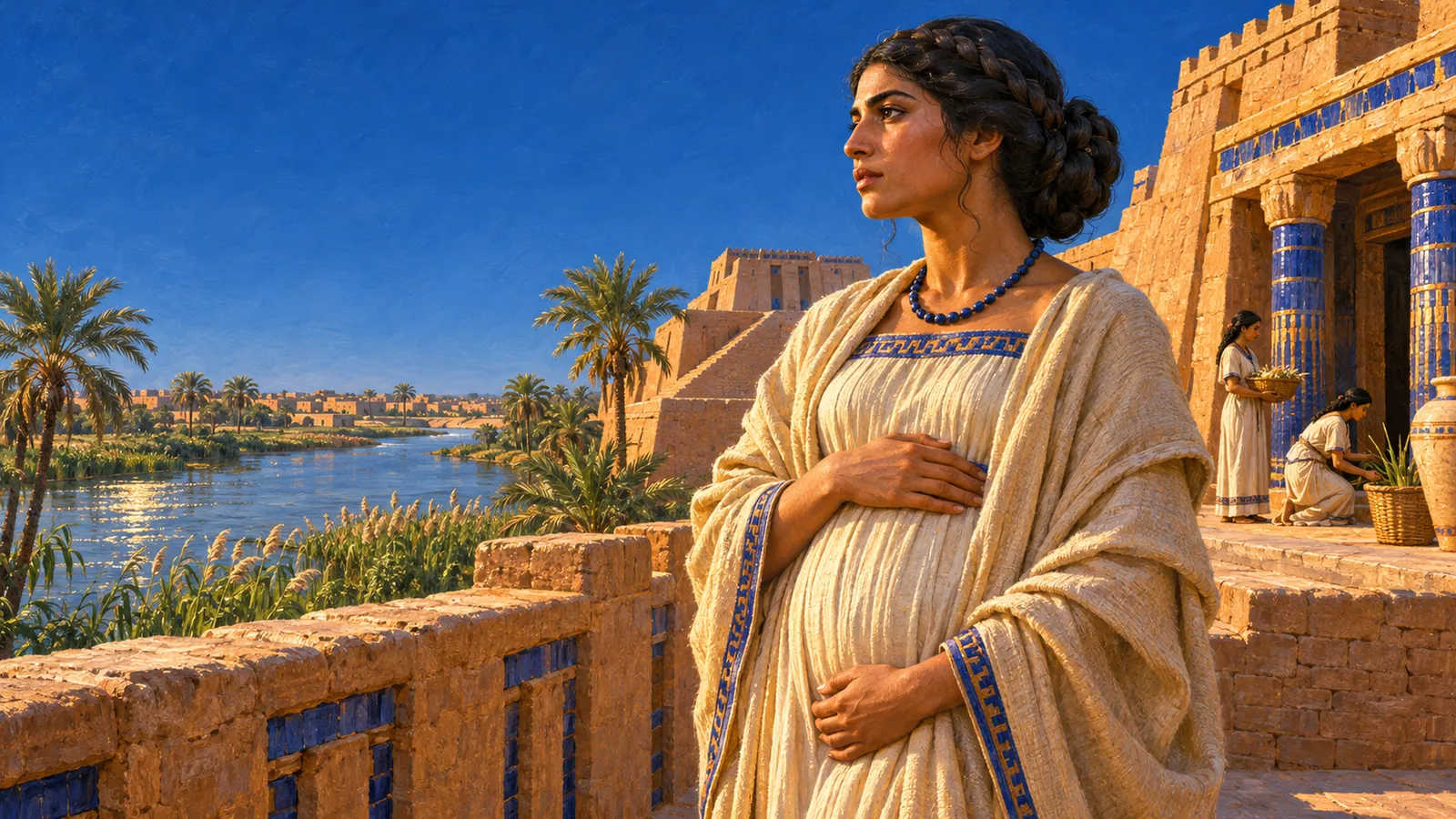
LA LÉGENDE DE LA NAISSANCE
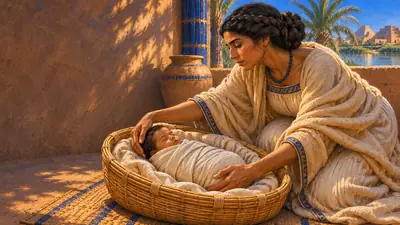
Dans l’extrait de la légende de la naissance de Sargon traduit par Jonathan Valk, Sargon évoque sa propre conception et précise que sa mère était une prêtresse ēn.
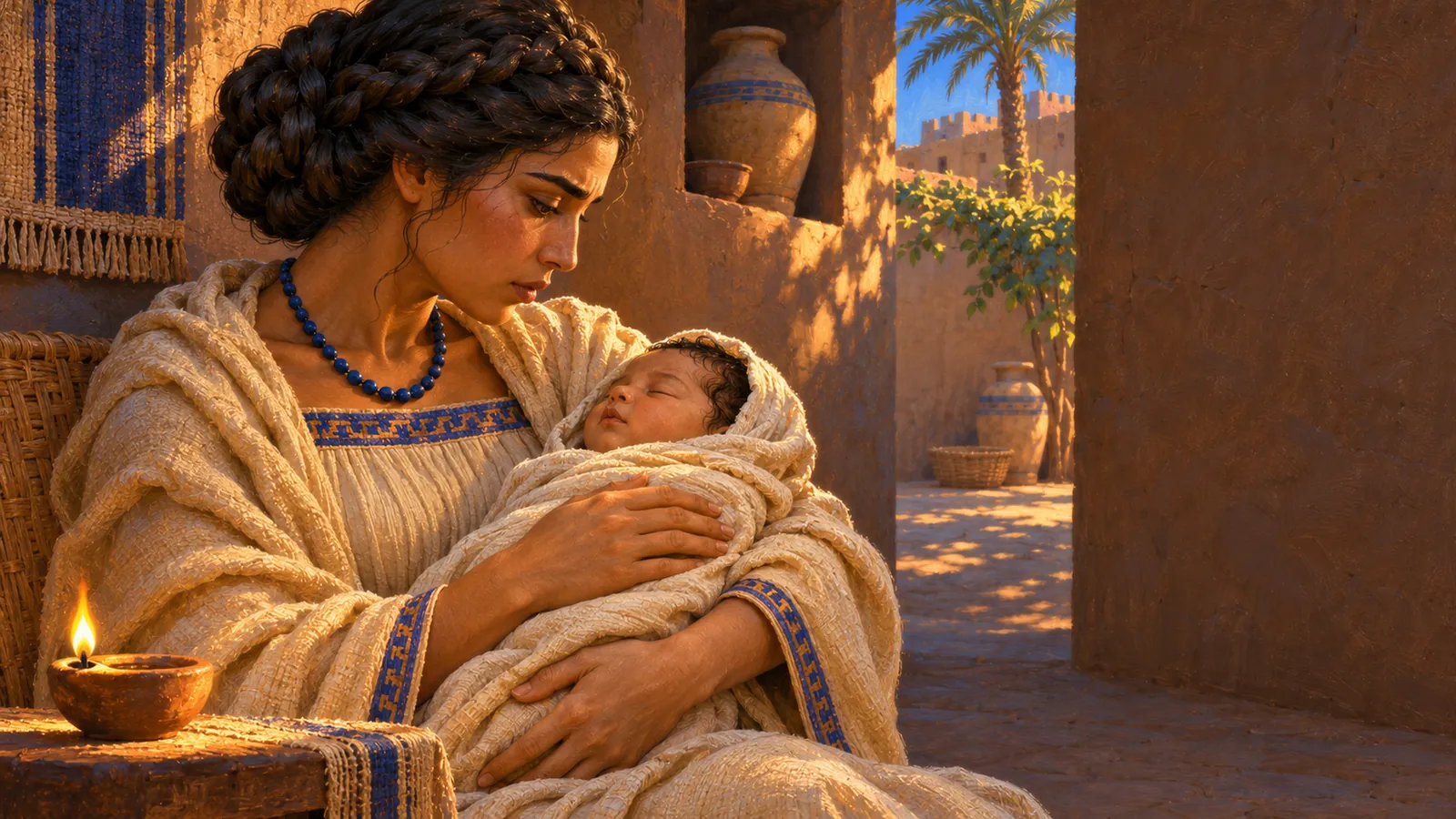
Dans la seconde partie de la première ligne, Sargon dit que sa mère lui a donné naissance en secret.
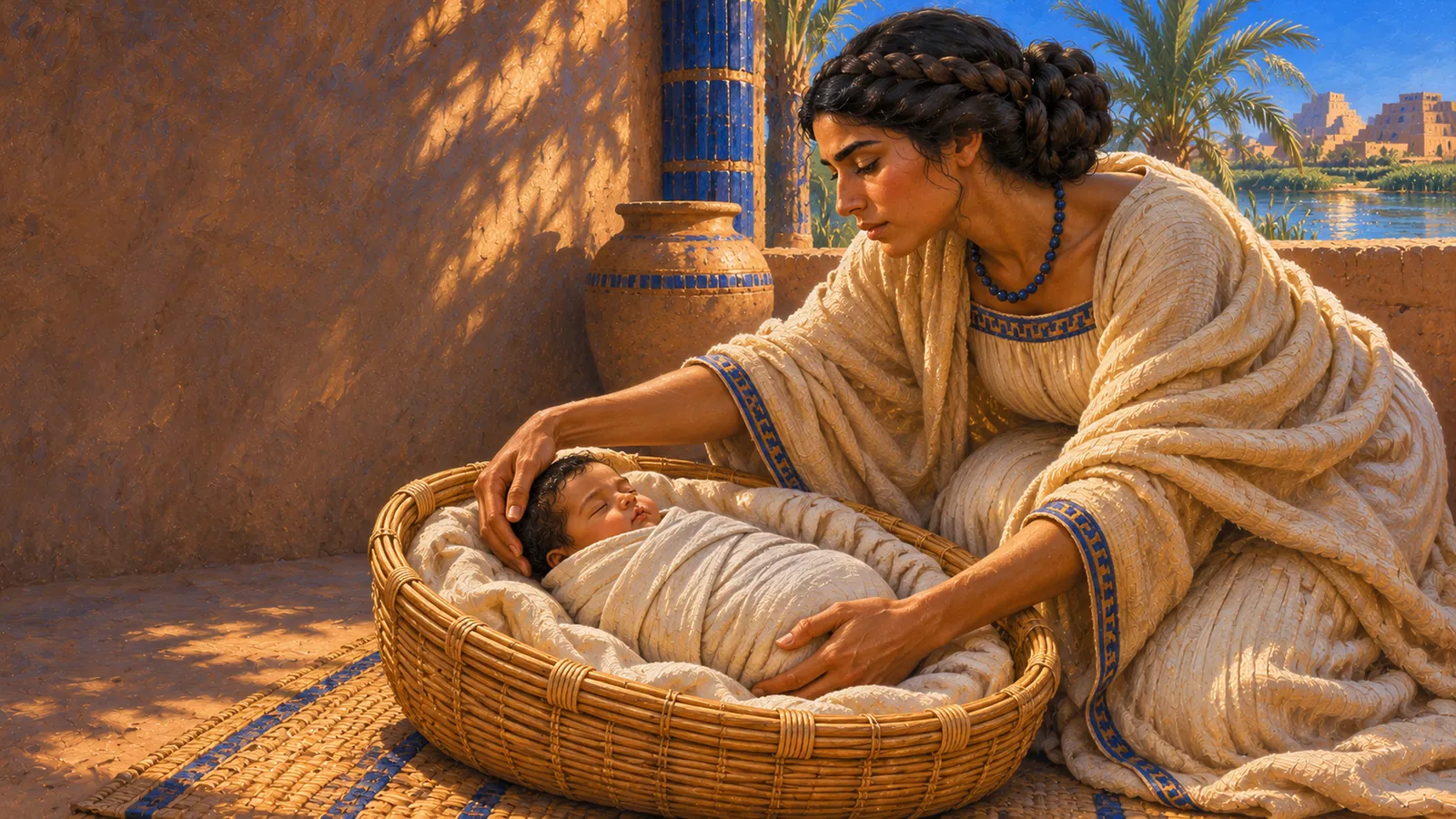
Sargon dit qu’après sa naissance, sa mère l’a placé dans un panier fait de roseaux.
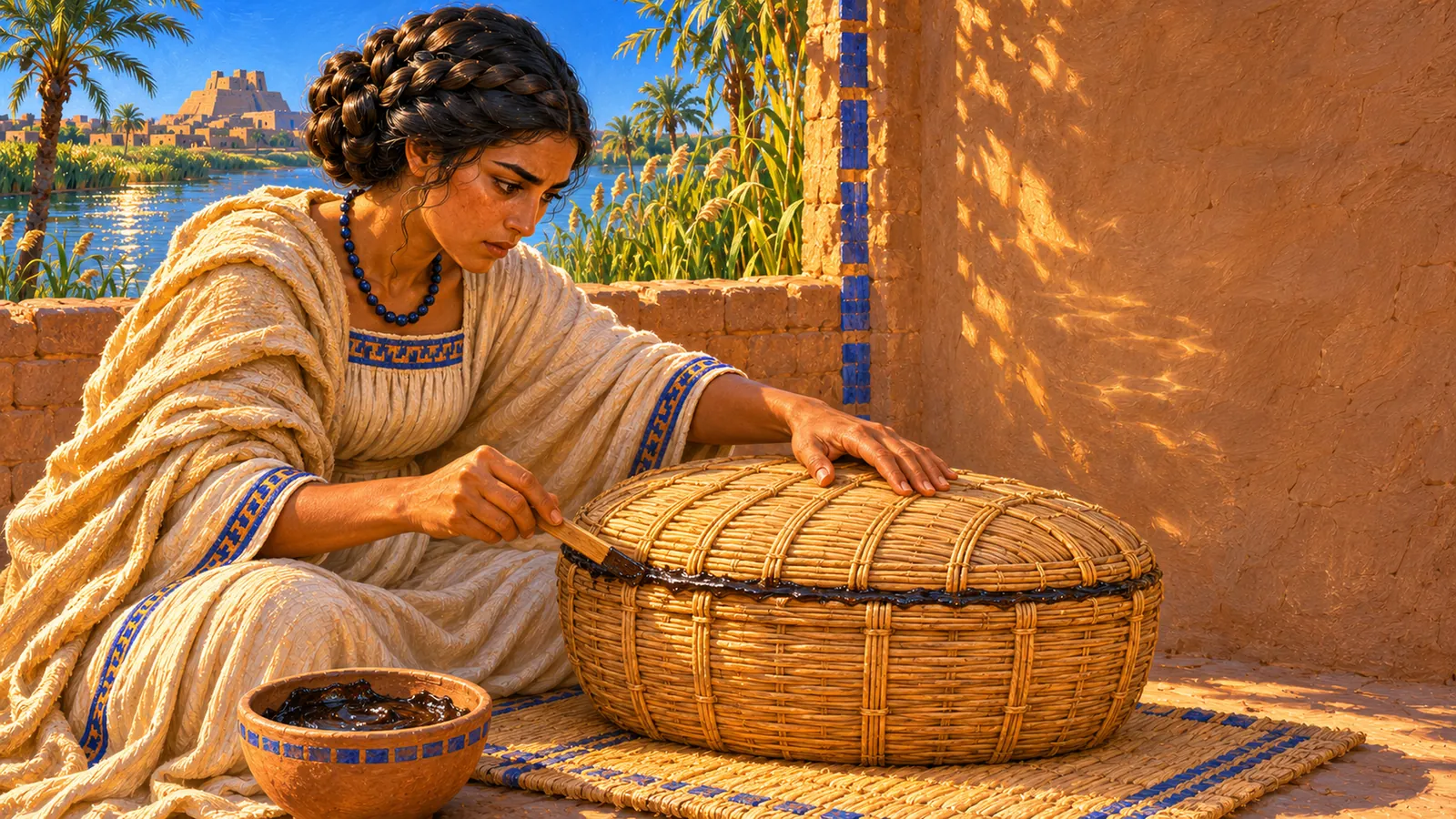
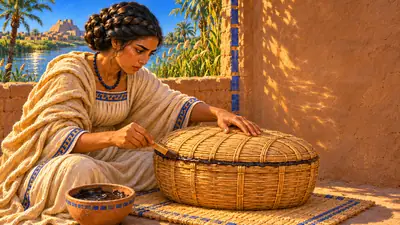
Sargon raconte que sa mère a scellé l’ouverture avec du bitume. Valk précise en note que la formulation à la première personne désigne l’ouverture du panier.
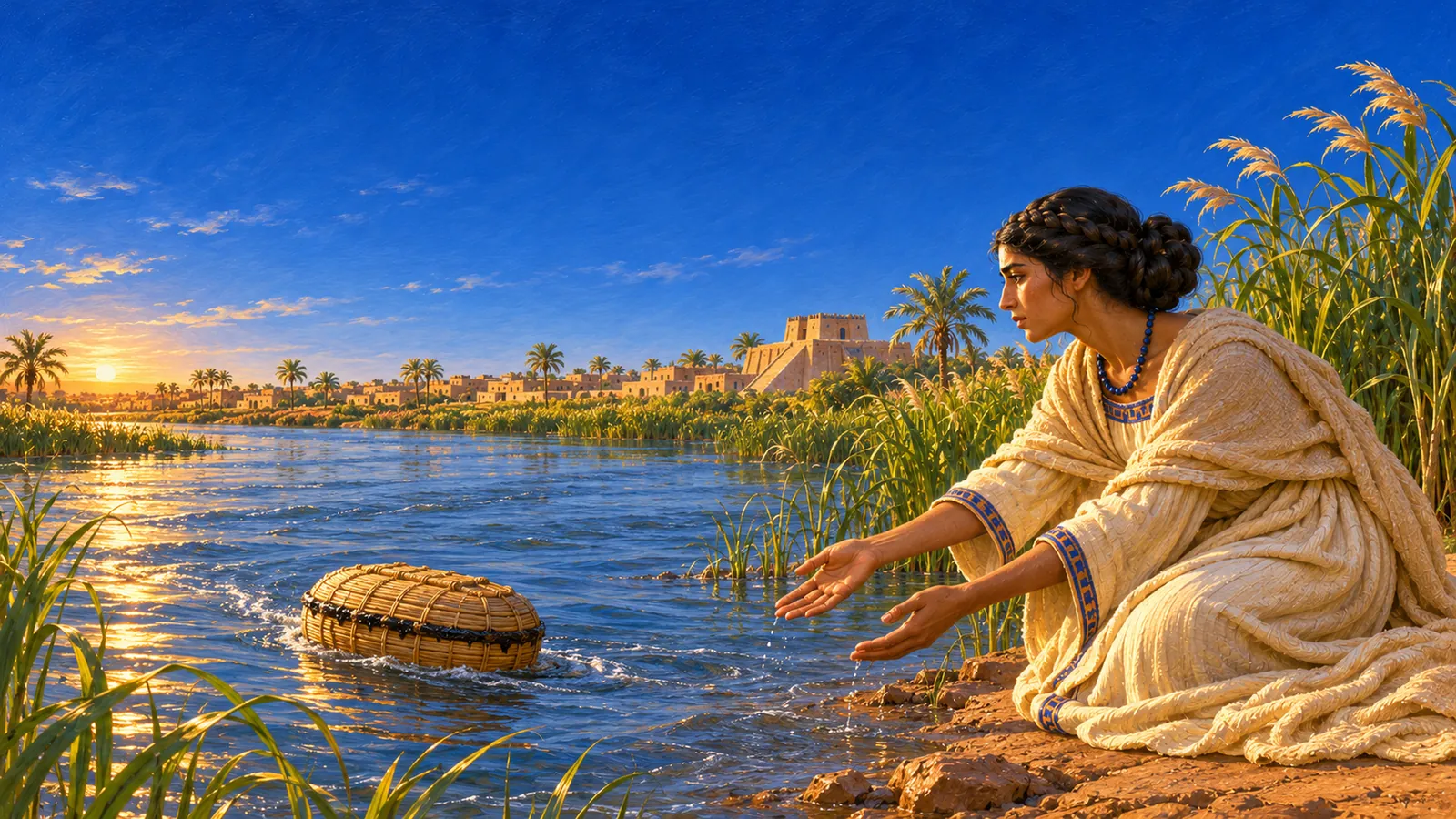
LE FLEUVE
Sargon dit que sa mère l’a déposé dans le fleuve. Dans son récit, il ne pouvait pas sortir de l’eau.
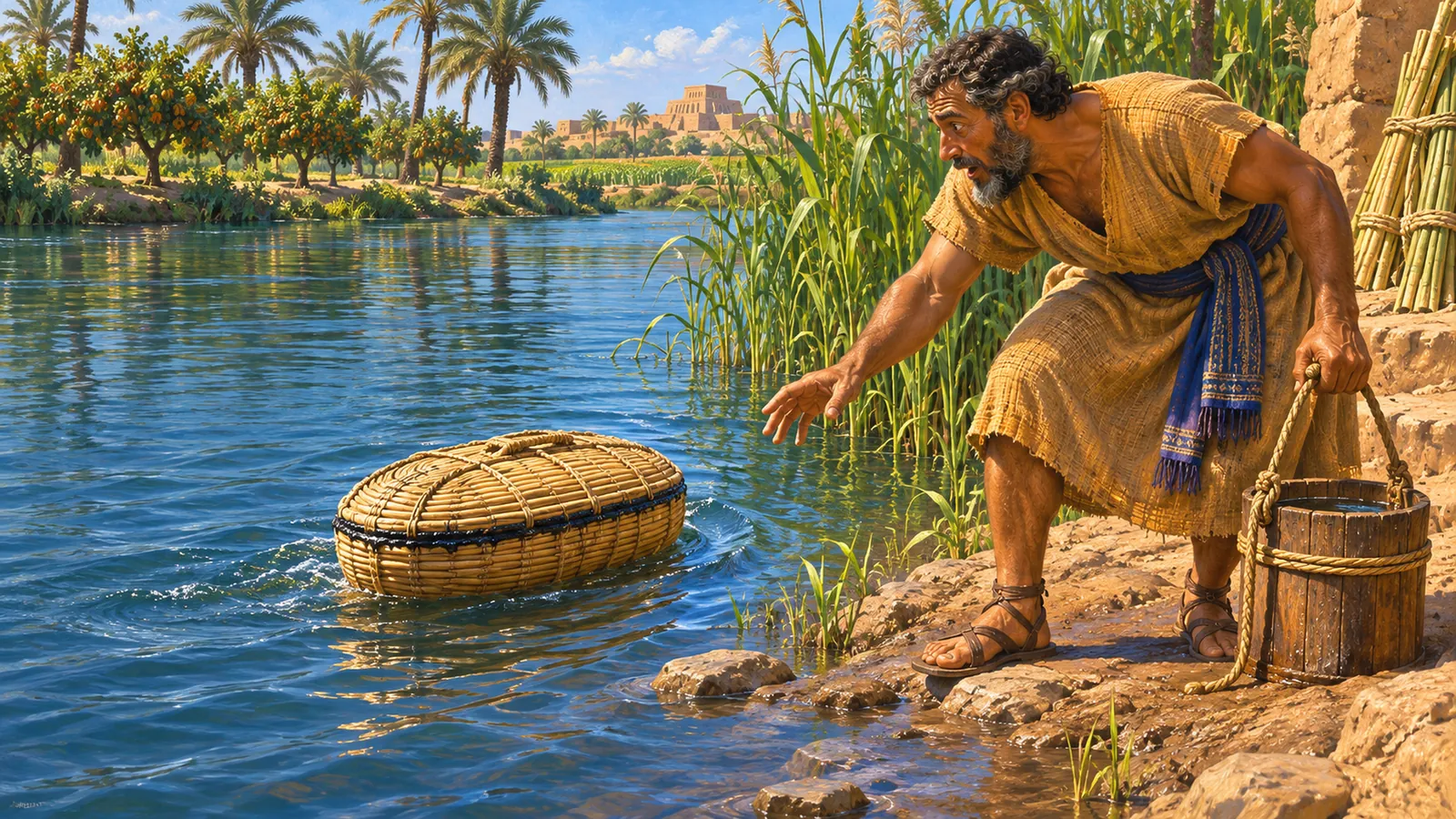
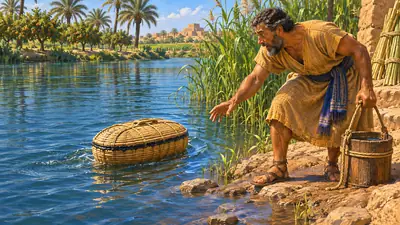
Sargon dit que le fleuve l’a emporté jusqu’à un homme nommé Aqqi, dont le travail était de puiser de l’eau.
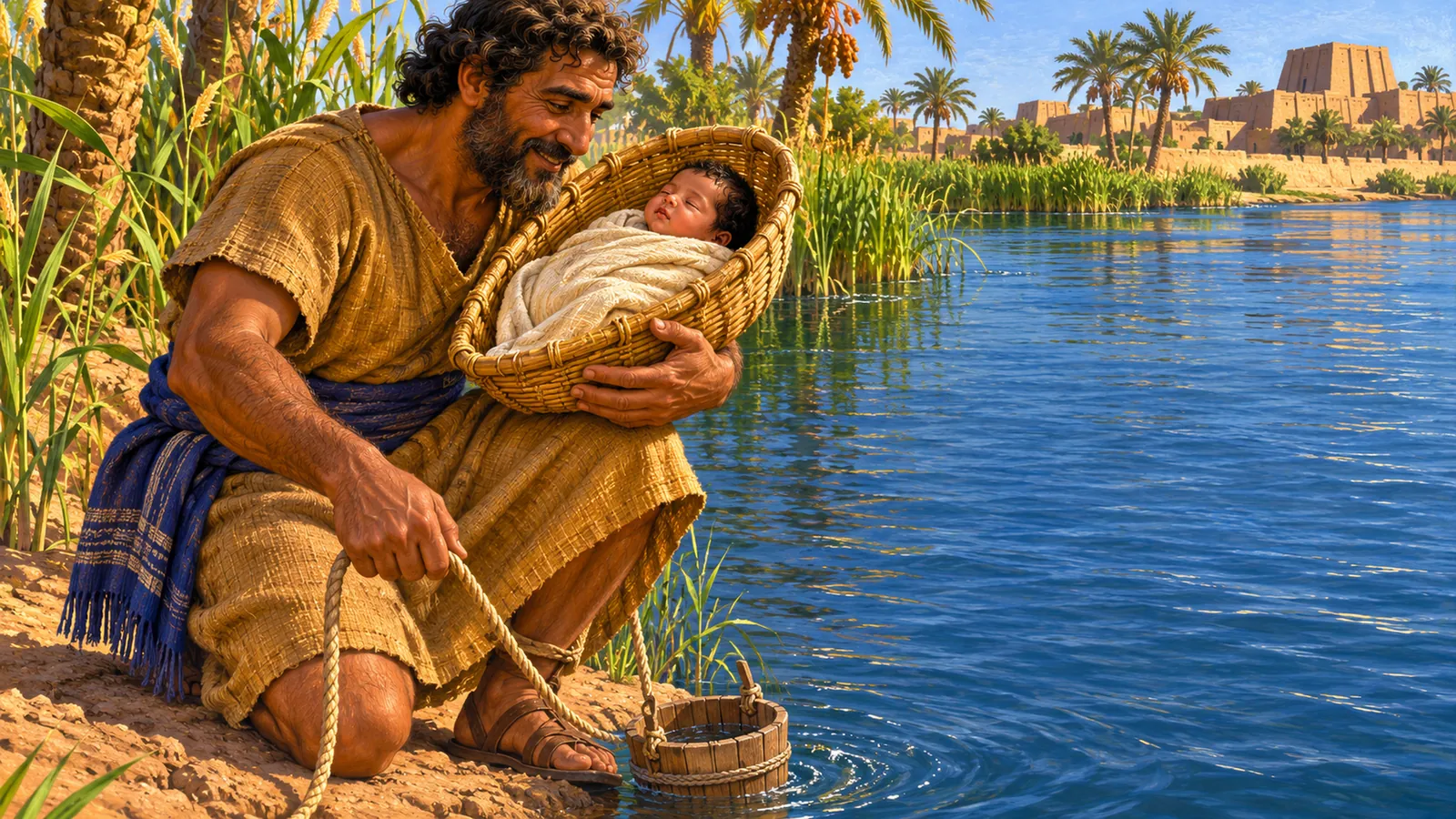
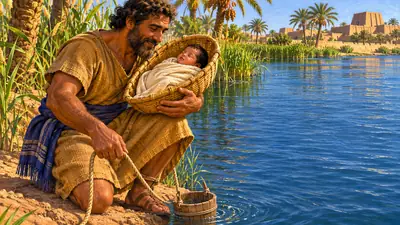
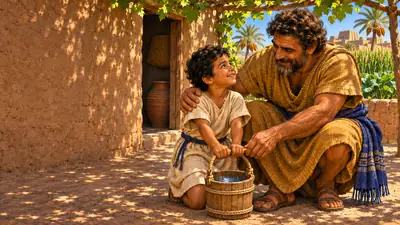
Sargon dit qu’Aqqi l’a soulevé alors qu’il descendait le seau dont il se servait pour puiser l’eau du fleuve.
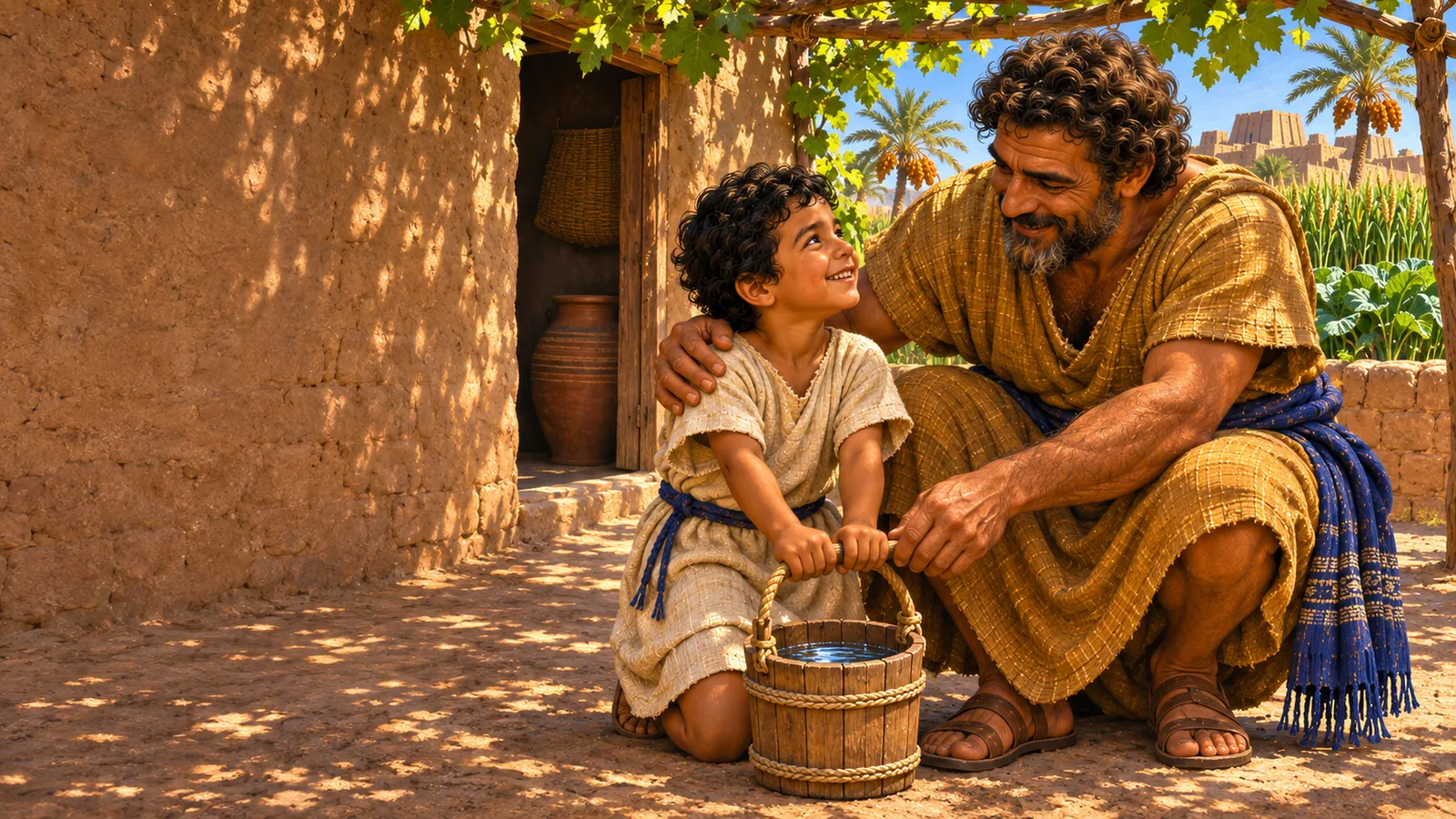
Sargon dit qu’Aqqi, le puiseur d’eau, l’a élevé comme son fils adoptif après l’avoir retiré du fleuve.
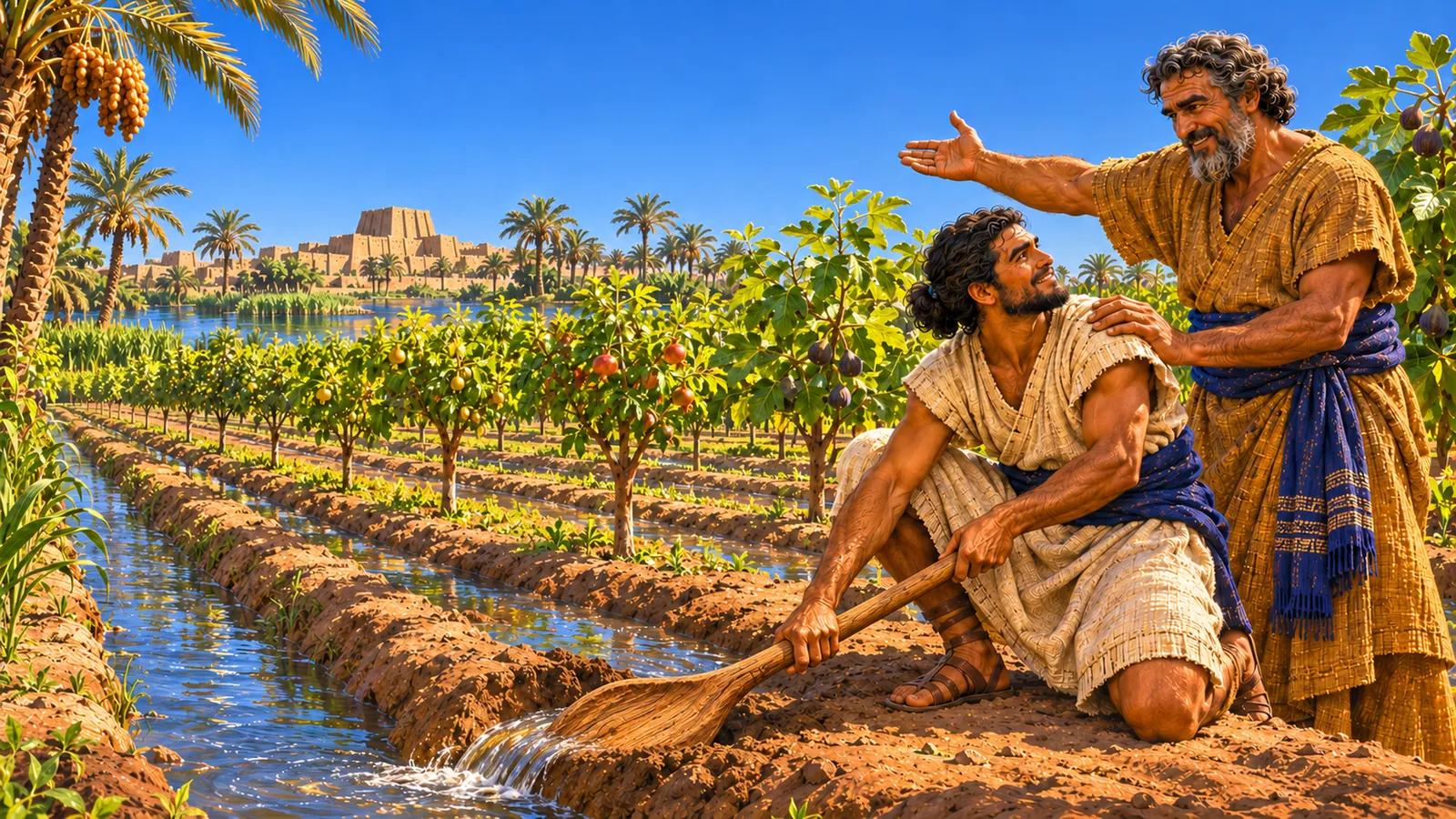
LE VERGER
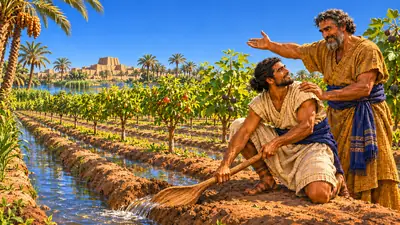
Dans la dernière ligne de l’extrait, Sargon dit qu’Aqqi l’a ensuite chargé de cultiver son verger.
Fin du chapitre 1
Toutes les pages

Sources
738 of the Journal of the Economic and Social History of the Orient 59 (2016). Valk discusses the basket opening in note 161 and lists the editions used in note 162. The quoted selection leads from the secret birth to the orchard assignment. The CDLI record is a separate manuscript reference. The artwork shows unoccupied ancient riverbanks and ordinary work materials.
Éditions consultées
- Jonathan Valk’s article, University of Helsinki institutional copy, p. 738
- Journal of the Economic and Social History of the Orient, Brill
- CDLI object record P365306 for a manuscript witness
Notes sur ce récit
Pages 1–2, line 5. Jonathan Valk prints the Akkadian and an English translation on p. 738 of “They Enjoy Syrup and Ghee at Tables of Silver and Gold: Infant Loss in Ancient Mesopotamia,” *Journal of the Economic and Social History of the Orient* 59 (2016), pp. 695–749. The site reading begins at the first clause of numbered line 5. Sargon speaks in the first person. His mother, an ēn-priestess, conceives him and gives birth to him in secret. The two clauses form two scenes.
Pages 3–4, line 6 and note 161. The line first gives the reed basket and then says the opening is sealed with bitumen. Valk’s note explains that the possessive literally says “my” in the first person and that the word refers to the opening of the basket. The two clauses form two scenes.
Page 5, line 7. The mother sets Sargon in the river, from which he cannot escape in Valk’s translation. The river is unnamed in this excerpt.
Page 6, line 8. Sargon says the river carries him to Aqqi, whom the line calls a water-drawer.
Page 7, line 9. Aqqi lifts Sargon while lowering his bucket in Valk’s translation.
Page 8, line 10. Sargon says that Aqqi raises him as his adopted son.
Page 9, line 11. Aqqi puts Sargon to work as his orchard-cultivator. This is the final numbered line that Valk quotes on this page. His discussion of Ištar and kingship follows the quoted excerpt in surrounding prose and falls outside this reading.
Les vers antiques de chaque page
- Page 1: Valk 2016, p. 738, Sargon Birth Legend, line 5, opening clause
- Page 2: Valk 2016, p. 738, Sargon Birth Legend, line 5, closing clause
- Page 3: Valk 2016, p. 738, Sargon Birth Legend, line 6, first clause
- Page 4: Valk 2016, p. 738, Sargon Birth Legend, line 6, second clause and note 161
- Page 5: Valk 2016, p. 738, Sargon Birth Legend, line 7
- Page 6: Valk 2016, p. 738, Sargon Birth Legend, line 8
- Page 7: Valk 2016, p. 738, Sargon Birth Legend, line 9
- Page 8: Valk 2016, p. 738, Sargon Birth Legend, line 10
- Page 9: Valk 2016, p. 738, Sargon Birth Legend, line 11
Illustrations réalisées par IL Archive avec des outils d’IA ; le texte s’appuie sur les sources antiques (voir les sources à la fin de chaque chapitre).