Entity · Concept
Anthropomorphism
A reference page linking a name, group, or concept to the materials that discuss it.
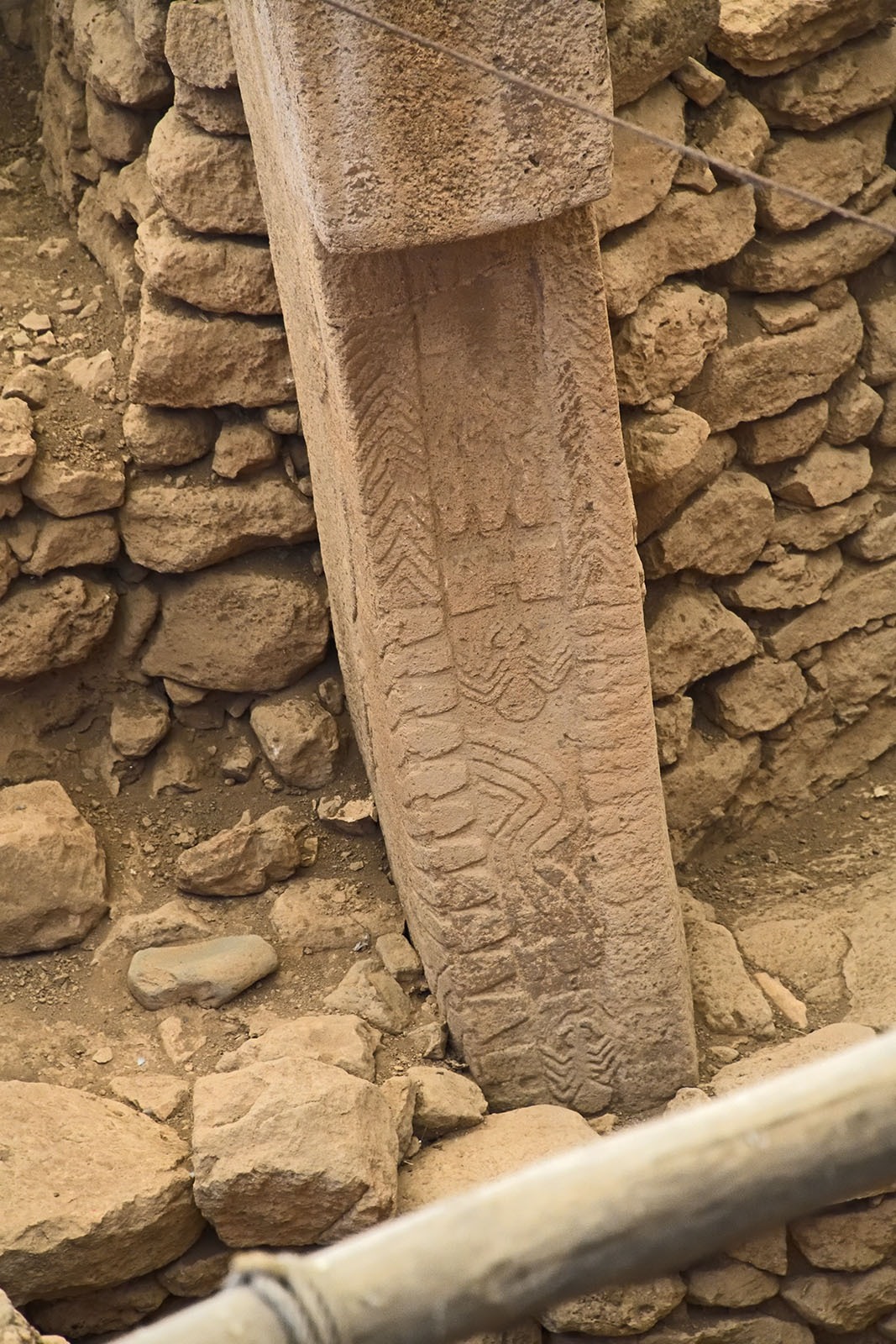
Representing a thing or being with human features, such as arms, hands and dress. The term describes a form, without establishing an ordinary human or divine identity.
Text
What does the term describe?
In archaeological interpretation, a form is called anthropomorphic when it combines human bodily traits, even in an abstract style. Some T-shaped pillars at Göbekli TepeGöbekli TepeA Neolithic site in southeastern Turkey, known for communal buildings and T-shaped pillars; the excavation team describes a settlement with a pronounced ritual component.Glossary · Click to read the explanation, especially 18 and 31 in Building D, bear arms, hands and dress.[1]
The description does not identify the figure. Recognizing a humanlike form differs from identifying a person, ancestor, spirit or god. In studies of religion, the term can also refer to attributing human qualities to other beings, beyond visual representation.
References and notes
- Gil Haklay & Avi Gopher (2020). Geometry and Architectural Planning at Göbekli Tepe, Turkey. Cambridge Archaeological Journal 30(2), 343–357. DOI: 10.1017/S0959774319000660. Description of pillars 18 and 31, arms, hands and dress; building layout and possible roofing. The study does not establish divine identities. Return to the text ↑
Research history
Substantive changes are retained here. Minor copy edits remain in the internal operational log.
-
Substantive record update
Suggest a correction · Suggest a source for this record
Cite this record
IL Archive, «Anthropomorphism», Edition 2, https://ilarchive.com/en/entities/anthropomorphism