Entity
Divine assembly type-scene
A reference page linking a name, group, or concept to the materials that discuss it.
A way to analyse a recurring assembly scene in narrative, while its purpose, speakers and decision vary.
Text
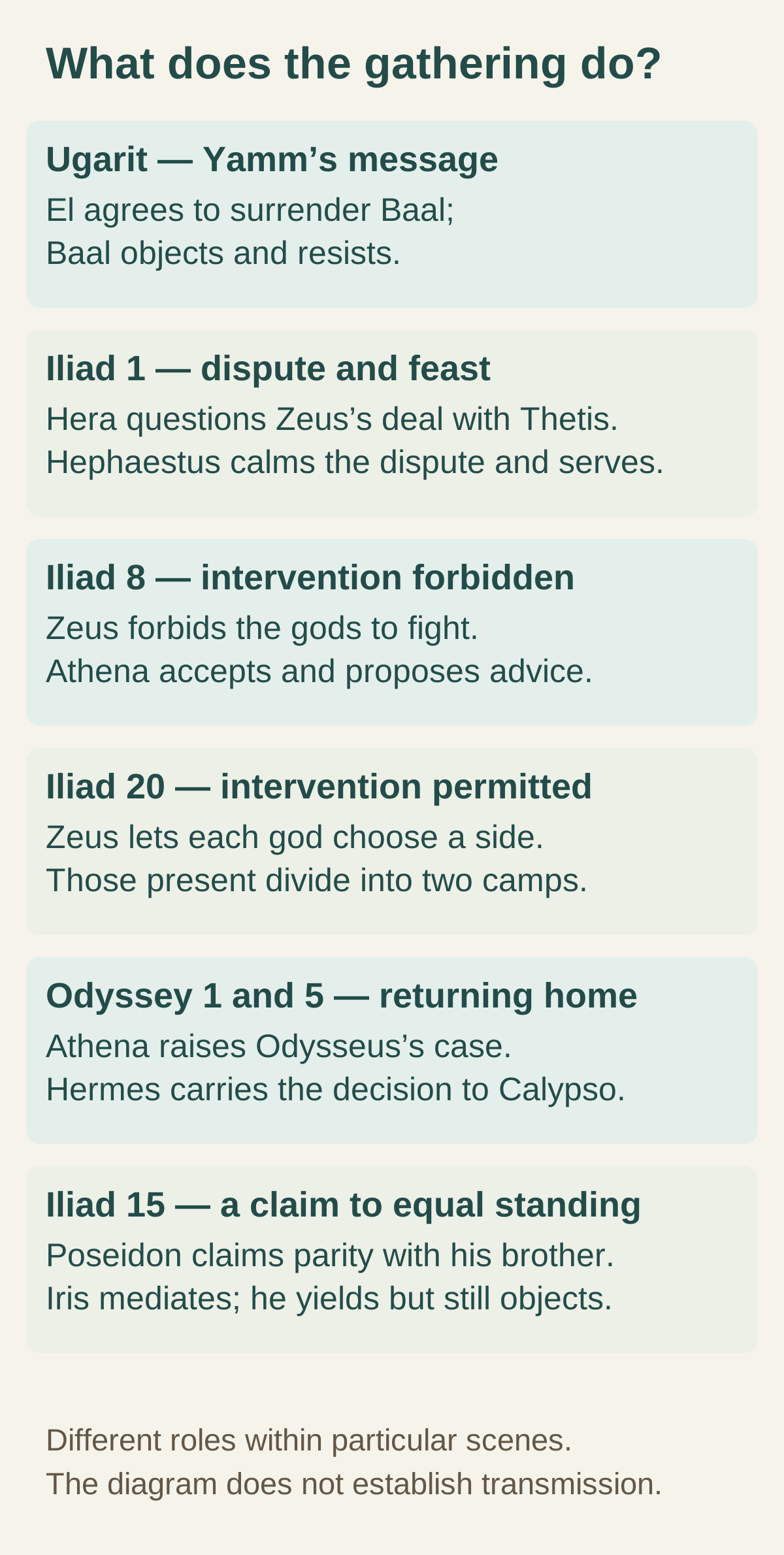
A divine assembly type-scene is a recurring way to build a situation in a story: the gods are summoned, a matter is placed before them, and they speak or receive a decision. Researchers call this arrangement a “type-scene” to compare how each text uses it. A single gathering may combine feasting, family disagreement and the exercise of authority. [9]
The IliadIliadGreek epic attributed to Homer, narrating a phase of the Trojan War.Glossary · Click to read the explanation offers a clear example. The familiar form of this Greek epic is commonly associated with the eighth and early seventh centuries BCE, with older oral roots. At the opening of book 8, ZeusZeusZeus is the sky god and leading deity in many Greek traditions. In the Iliad he presides over divine gatherings while others can still speak and object.Glossary · Click to read the explanation gathers the gods and forbids them to intervene in the war. In book 20, he gathers them again but allows each god to choose a side. The gathering has a similar arrangement, while the decision changes. [2][3][13]
This tool helps trace what the gathering does to the story: who speaks, what is at issue, and what happens afterwards? A historical connection between scenes from different cultures also requires examining the dates of the evidence and routes of contact, alongside their similar arrangement. [9]
References and notes
- Specified opening passage; modern synopsis is not part of the ancient poem. Iliad 8, first seven paragraphs including modern chapter synopsis; council proper first three primary paragraphs Return to the text ↑
- Themis summons, permission and divided sides; no fixed count of twelve. Iliad 20, first seven paragraphs; invocation of council through division of divine sides Return to the text ↑
- Introduction abstract only;32-page chapter unavailable. Ballesteros, Introduction, pp 1–32; DOI 10.1093/9780198924623.003.0001 Return to the text ↑
- Deborah Steiner, Introduction to Homer: Odyssey Books XVII–XVIII; publisher summary only. Summary: oral poetry and eighth–early seventh century BCE formation of the epics. Return to the text ↑
Research history
Substantive changes are retained here. Minor copy edits remain in the internal operational log.
-
Substantive record update
-
Substantive record update
-
Substantive record update
Suggest a correction · Suggest a source for this record
Cite this record
IL Archive, «Divine assembly type-scene», Edition 4, https://ilarchive.com/en/entities/divine-assembly-type-scene