Entity
Enmeduranki
A reference page linking a name, group, or concept to the materials that discuss it.
Primeval king in Mesopotamian wisdom tradition; distinguish from his sage and Enoch.
Text
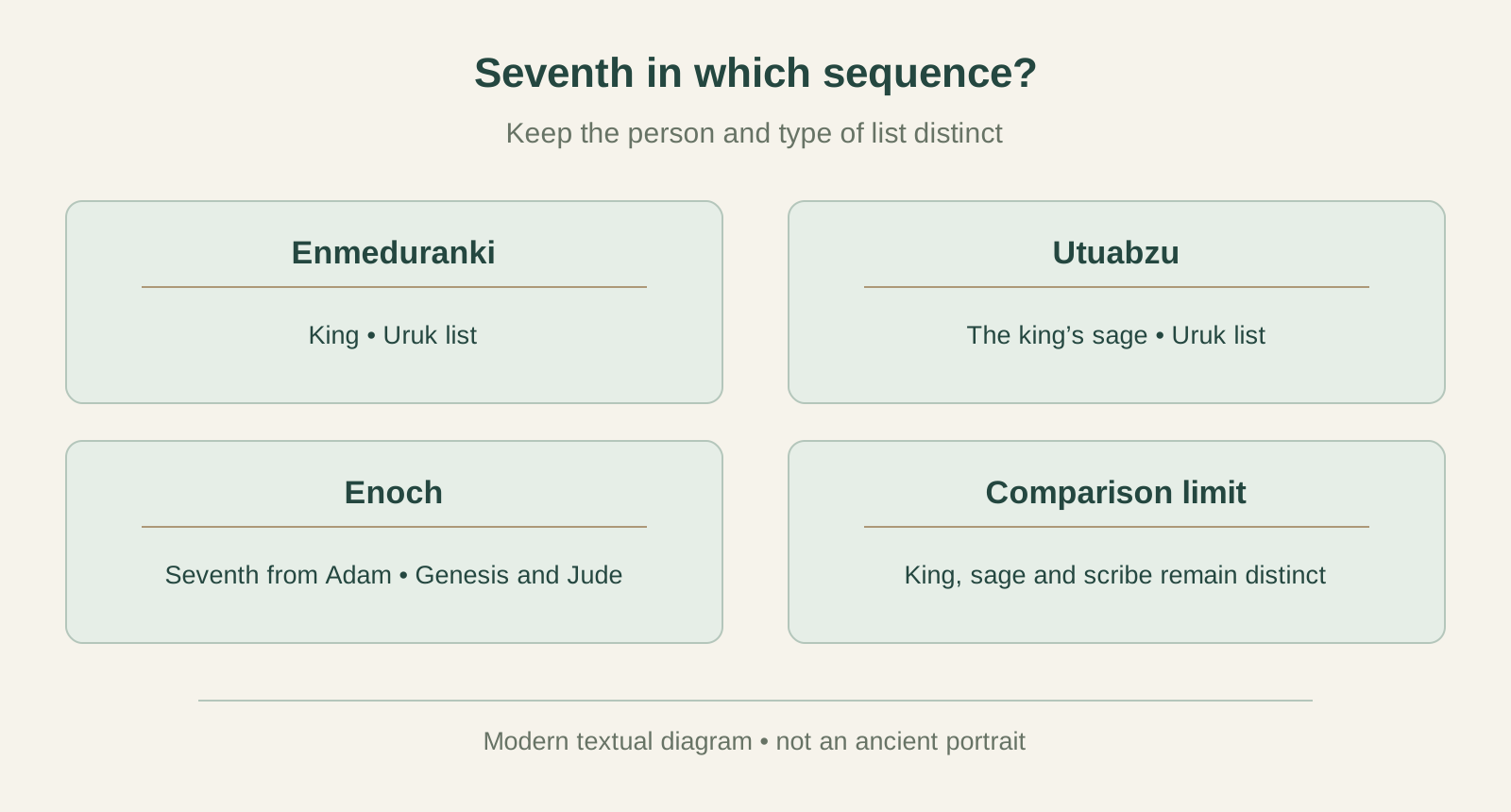
Seventh king in the UrukUrukAncient city at Warka in southern Iraq, a major urban centre around 3200 BCE that preserved early writing and accounting tablets.Glossary · Click to read the explanation list,distinct from his sage Utuabzu. A text describes him receiving divinatory knowledge. Comparison concerns sequence,knowledge and divine relationship; it does not establish Enoch as his other name. Narrative time does not date the tablet or composition. The diagram is modern comparison,not an ancient royal portrait. [3] [4]
References and notes
- Selected219,222–223,229–230,232–234; not whole article. Sophus Helle, JNES 77/2 (2018),219–234 Return to the text ↑
- Selected first five pages; displayed translation after Lambert. Andrei Orlov, Scrinium1 (2005), PartI, The Learned Savant Who Guards the Secrets of the Great Gods Return to the text ↑
Research history
Substantive changes are retained here. Minor copy edits remain in the internal operational log.
-
Substantive record update
Suggest a correction · Suggest a source for this record
Cite this record
IL Archive, «Enmeduranki», Edition 2, https://ilarchive.com/en/entities/enmeduranki