Entity
Gehenna: a place-name and language of punishment
A reference page linking a name, group, or concept to the materials that discuss it.
Term related to the valley of Hinnom; usage changes across Jewish, Christian and Islamic texts and does not equate every afterlife term.
Text
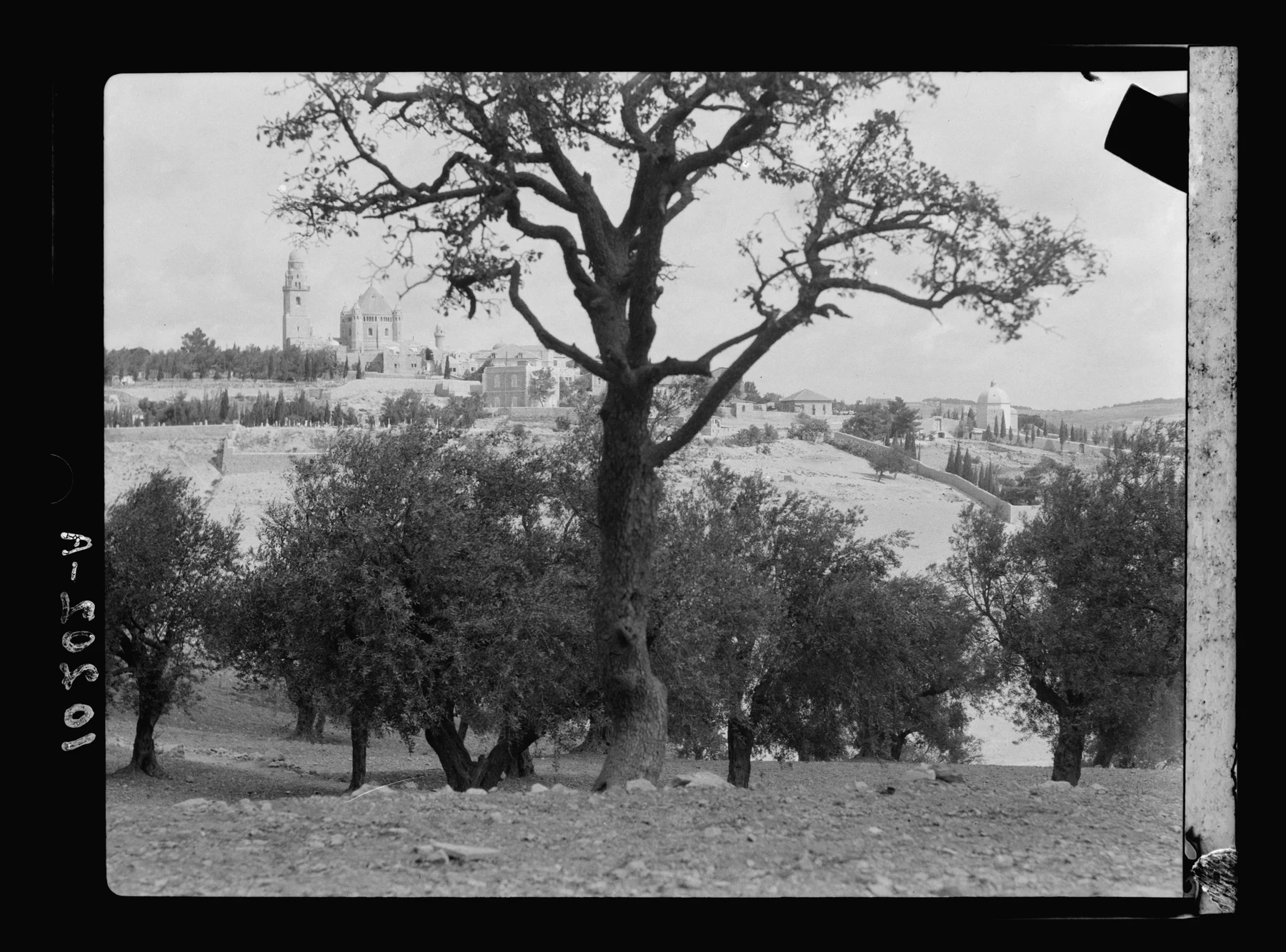
Jeremiah links Hinnom with Tophet and the city’s doom. Mark uses Gehenna in a punishment warning; the QuranQuranCentral text of Islam, used here as evidence of its religious discourse.Glossary · Click to read the explanation uses Jahannam for an eschatological destination. Linguistic kinshipLinguistic relatednessA relationship through shared linguistic ancestry, distinct from direct borrowing or identical beliefs.Glossary · Click to read the explanation alone does not establish identical imagery or transmission routes. Photograph: the valley in 1934–1939, not punishment. [1][13][20][21][26]
References and notes
- All five verses. Jeremiah 7:30–34; KJV (public domain) Return to the text ↑
- Greek and Latin passage; numbering varies. Mark 9:42–50; displayed Greek and Latin; numbering variants Return to the text ↑
- Etymology and selected sections. Mahmoud Omidsalar, Hell ii (2000; updated 2013), etymology and selected sections Return to the text ↑
- Both Arabic verses. Quran 15:43–44; Arabic primary text Return to the text ↑
- Catalogue and original image; modern site photograph. Library of Congress, Mt. Zion from valley of Hinnom, 1934–1939; LC-DIG-matpc-19029 Return to the text ↑
Research history
Substantive changes are retained here. Minor copy edits remain in the internal operational log.
-
Substantive record update
Suggest a correction · Suggest a source for this record
Cite this record
IL Archive, «Gehenna: a place-name and language of punishment», Edition 2, https://ilarchive.com/en/entities/gehenna