Entity · theological_term
Logos
A reference page linking a name, group, or concept to the materials that discuss it.
Greek word for word or discourse, used in John’s language of God and incarnation.
Text
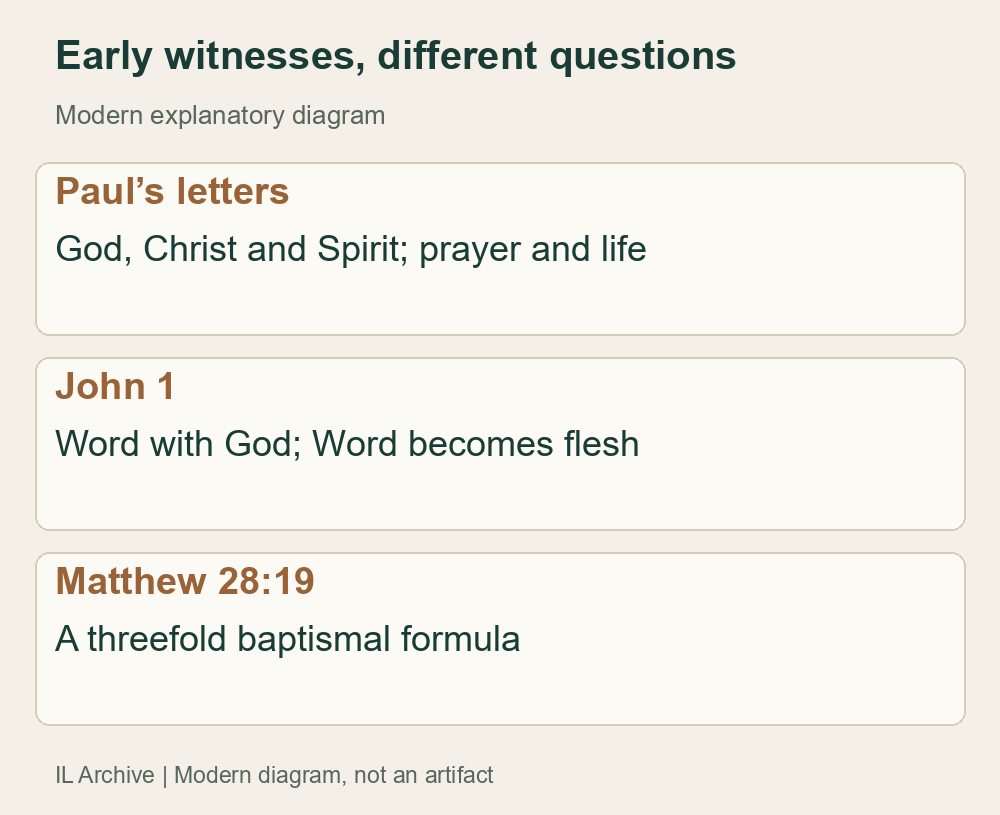
John 1 places the Word with God, gives it divine description and narrates becoming flesh. These statements become central to later Christian interpretation without alone defining later essenceOusia — essenceGreek term for essence or nature, with meanings changing between authors.Glossary · Click to read the explanation and hypostasisHypostasisTerm later used for distinguishing Father, Son and Spirit within one divinity.Glossary · Click to read the explanation. [1]
The word’s multiple uses do not establish borrowing a whole doctrine from one school. The image is a modern textual comparison, not an ancient manuscript.
References and notes
- John 1:1–14, displayed KJV translation. Verses 1–14 read: Word with God, Word divine, incarnation. No later essence/hypostasis definition. Return to the text ↑
Research history
Substantive changes are retained here. Minor copy edits remain in the internal operational log.
-
Substantive record update
-
Substantive record update
Suggest a correction · Suggest a source for this record
Cite this record
IL Archive, «Logos», Edition 3, https://ilarchive.com/en/entities/logos