Entity · Concept
Tetragrammaton
A reference page linking a name, group, or concept to the materials that discuss it.
Designation for YHWH written with four Hebrew letters; it does not settle the earliest pronunciation or etymology.
Text
Writing and meaning
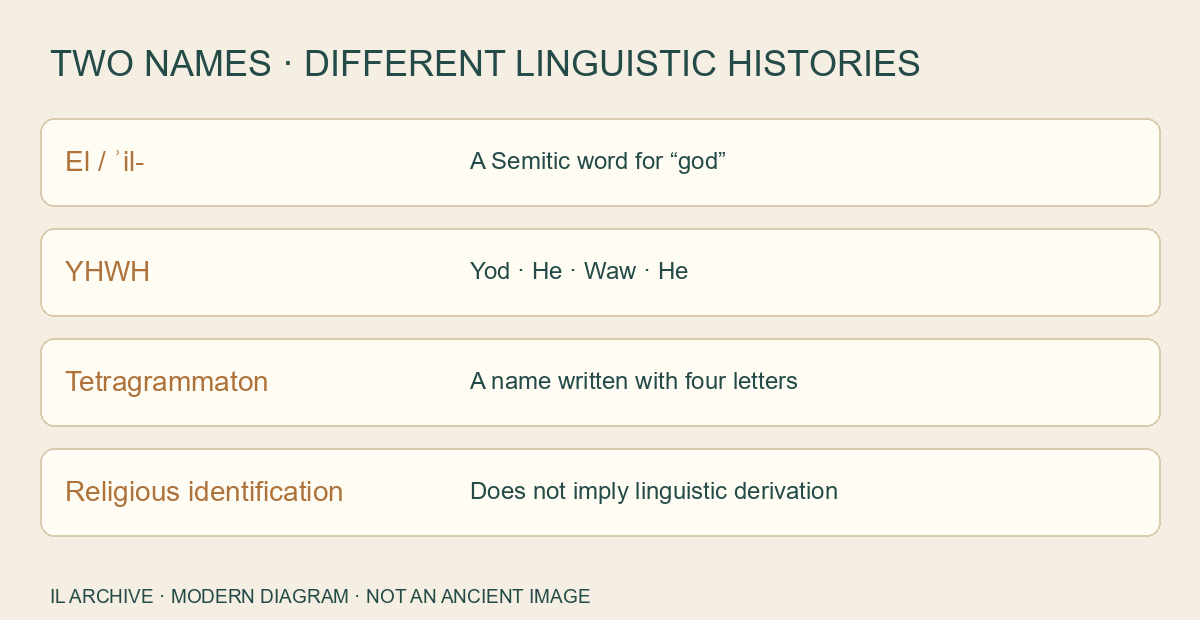
The name is written יהוה and transliterated YHWHYahwehThe divine proper name written YHWH in the Hebrew Bible.Glossary · Click to read the explanation: yod, he, waw, he. Yahweh is a common scholarly form; the first meaning and relationship between long/short forms remain research questions. Exodus’s interpretation alone cannot settle its etymology.
The image is a modern explanatory diagram. The name differs linguistically from El even where later traditions identify the gods. [1][2][3]
References and notes
- Heath D. Dewrell & Andrew M. Garbarino (2023). Names of God in the Hebrew Bible. Oxford Bibliographies. doi:10.1093/obo/9780195393361-0318. Open introductory extract: El as noun or deity, compound El names, convergence and local-manifestation models. Full article and bibliography not read. Return to the text ↑
- Heath D. Dewrell (2022). Yahweh the Destroyer: On the Meaning of יהוה. In Biblical and Ancient Near Eastern Studies in Honor of P. Kyle McCarter Jr., eds. Christopher Rollston, Susanna Garfein & Neal H. Walls. SBL Press. Selected pp. 5–10: debated etymologies, yhwh/yhw/yh/yw forms and caution about deriving divine character from a name; p. 7, Mesha KAI 181.18. P. 5 visually checked. The chapter title is not treated as consensus on “destroyer.” Whole book not read. Return to the text ↑
- Hebrew Bible, Exodus 3:1, 13–15. Mechon-Mamre Hebrew–English text. 3:1 Jethro as priest of Midian and Horeb; 3:13–15 ehyeh and the name’s revelation. Textual interpretation distinguished from first etymology. Return to the text ↑
Research history
Substantive changes are retained here. Minor copy edits remain in the internal operational log.
-
Substantive record update
Suggest a correction · Suggest a source for this record
Cite this record
IL Archive, «Tetragrammaton», Edition 2, https://ilarchive.com/en/entities/tetragrammaton