Entity · Deity
Meskhenet, the Goddess Who Declares a Child's Fate
A reference page linking a name, group, or concept to the materials that discuss it.
- Names
- Meshkenet · Meskhenet · Meskhent · Msḫnt
- Region
- Egypt
Meskhenet is linked with birth bricks and the future a child receives at birth. She declares three newborns kings in the Westcar Papyrus and attends the weighing of the heart in funerary imagery.
Estimated reading time: 5 min Published Last reviewed:
Share article
Text
Introduction
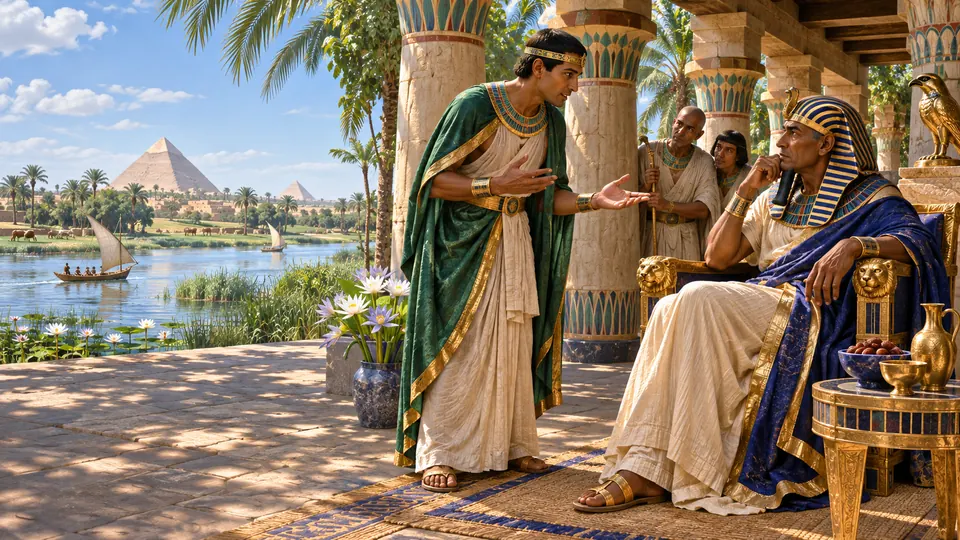
When Reddjedet gives birth to three boys in the Westcar Papyrus, Meskhenet approaches each child and pronounces him a future king. The other gods bring the infants safely into the world and tend to them. Meskhenet tells what they will become. Egyptian texts and pictures connect the goddess with the bricks used at birth, and some funerary scenes bring the same figure into the company of gods who observe the weighing of the heart. [1][2]
The births in the Westcar Papyrus
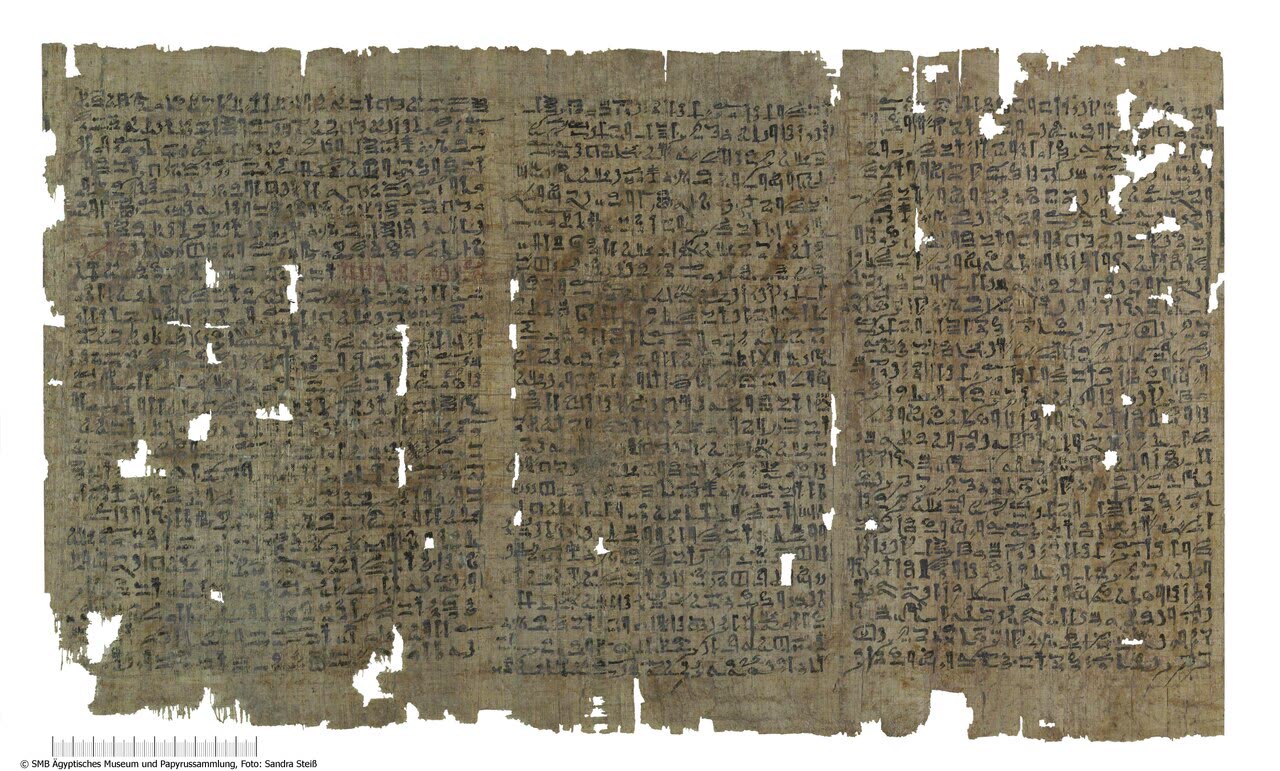
The births are part of a set of tales framed by the court of Khufu. The magician Djedi tells the king that Reddjedet, the wife of a priest of Re, is pregnant with children of the sun god. He predicts that they will hold the highest office in the land. The actual delivery comes later in the manuscript. Berlin's Egyptian Museum dates its surviving copy to Dynasty 17, in the Second Intermediate Period. The story is set far earlier. In the museum's interpretation, the birth narrative gives divine backing to the change of dynasty after the age of the pyramid builders. [1][3]
Re sends Isis, Nephthys, Meskhenet, Heqet and Khnum to help Reddjedet through a difficult labour. The goddesses arrive in the guise of musicians, with Khnum carrying their equipment. In the room, Isis takes a place in front, Nephthys stands behind and Heqet hastens delivery. The first child is washed, his cord is cut and he is placed on a cloth set on bricks. Meskhenet steps forward and declares that he will rule the whole land. Khnum gives his body health. The account repeats the prophecy for the other two sons, giving all three the same assurance of kingship. [1]
The story also gives the babies signs of divinity, including golden limbs and lapis-lazuli headgear. The gods make three crowns and hide them in a sack of barley, which they leave at the house. When a servant later hears the sounds of a royal celebration coming from the sack, those sounds give the household another sign of the destiny spoken in the birth room. The crowns and the secret of the sack belong to the story's account of succession. The bricks, washing and cutting of the cord also give the passage details from the world of birth and care. [1][2]
A brick from a house at Abydos
A decorated mud brick excavated at South Abydos gives physical evidence for a class of object long known from texts. It came from the residential part of a mayor's house in a Middle Kingdom settlement associated with the mortuary complex of Senwosret III. The sides and base preserve painted decoration, while the top has crumbled away. The main scene shows a mother with a newborn and attendants. Other figures on the brick belong to imagery the excavators connect with protection at birth. Seal impressions from the house suggest a possible association with a woman named Renseneb, whom the excavators identify as a king's daughter. [4]
A birth brick could play a practical role during labour, and placing a child on bricks appears in the Westcar account. The Abydos find also shows why the objects attracted attention as surfaces for protective imagery. Josef Wegner considered whether repeated use underfoot could explain the missing top. A single surviving object leaves the layout of the other supports open. Later scholarship has discussed sets of four and texts that speak of four Meskhenets. The excavated decoration gives evidence of the object's ritualRitualAn organised or distinguished practice meaningful to a community; it may leave traces, but its form alone does not reveal an associated doctrine.Glossary · Click to read the explanation associations even where the arrangement of the original equipment has to be reconstructed. [2][4][5]
The fate of kings and scribes
Meskhenet's appearance after a royal birth has parallels in the New Kingdom reliefs showing the divine births of Hatshepsut and Amenhotep III. In these accounts the goddess speaks to the status the child is destined to hold. The Teaching of Khety brings her into a different social setting. The father urges his son to take up writing, describing the good fortune attached to the profession. In James Hoch's translation, Meskhenet ordains the scribe and gives him standing at court. The passage applies the language of a destiny conferred at birth to a position that a student still has to train for. [2][6]
Near the balance
The birth goddess also appears in some illustrations associated with Spell 125 of the Book of the Dead. The papyrus of Ani shows Anubis attending the scale as Ani's heart is weighed against the feather of MaatMaatAn Egyptian principle of truth, justice, and right order, also embodied by the ostrich-feather goddess Maat; differently expressed in rule, ritual, and funerary judgment.Glossary · Click to read the explanation. Meskhenet, Renenutet and Shai stand beside the balance, with a separate human-headed brick above them. Nicholas Picardo reads the latter as combining the associations of the three deities in one figure. Other papyri give some of these deities the form of a brick themselves, so the shape alone does not establish which figure a painter meant. [2][7][8]
Meskhenet attends the weighing while Anubis does the weighing and Thoth records the result. Ann Macy Roth and Catharine Roehrig read the presence of the birth deities as a reference to the position and span of life originally allotted to the deceased. Picardo also relates their presence to the uncertainty of achieving a second birth into the afterlife. The comparison with Westcar shows how differently the same association could be used. A child enters a world in which he has a future to fulfil. In a funerary scene, the gods of birth and destiny look on as a life already lived is weighed. [1][2][7][8]
References and notes (8)
- Bibliotheca Alexandrina, The Westcar Papyrus Read the English translation of Djedi's prophecy and Reddjedet's delivery, including the three pronouncements and the crowns in the barley. Return to the text ↑
- Ann Macy Roth and Catharine H. Roehrig, Magical Bricks and the Bricks of Birth Read pp. 129–137 on birth bricks, the royal birth scenes, destiny, the Teaching of Khety and the judgment vignettes. Return to the text ↑
- Staatliche Museen zu Berlin, Papyrus Westcar, P 3033 Columns X–XII Read the dating, surviving columns and the museum's interpretation of the royal succession narrative. Return to the text ↑
- University of Pennsylvania, Penn Museum Archaeologists Uncover a Birth Brick Read the findspot, painted decoration, condition, excavator's use interpretation and proposed connection to Renseneb. Return to the text ↑
- Ulrike Steinert, Cows, Women and Wombs Read the notes on the Abydos evidence, Wegner's reconstruction and the multiple Meskhenets. Return to the text ↑
- James E. Hoch, The Teaching of Dua-Kheti Read the closing passage identifying Meskhenet as the goddess who ordains the scribe. Return to the text ↑
- Nicholas S. Picardo, “Semantic Homicide” and the So-called Reserve Heads Read pp. 248–249 on Meskhenet, birth bricks, rebirth and the identification of the figures in the Papyrus of Ani. Return to the text ↑
- British Museum, Papyrus from the Book of the Dead of Ani Read the museum's description of the weighing scene, its participants and the roles of Anubis and Thoth. Return to the text ↑
Suggest a correction · Suggest a source for this record
Cite this record
IL Archive, «Meskhenet, the Goddess Who Declares a Child's Fate», https://ilarchive.com/en/entities/meskhenet