Person
Pyrrha in Deucalion’s flood story
Greek figure surviving with Deucalion and associated with humanity’s renewal from stones.
Last reviewed:
Text
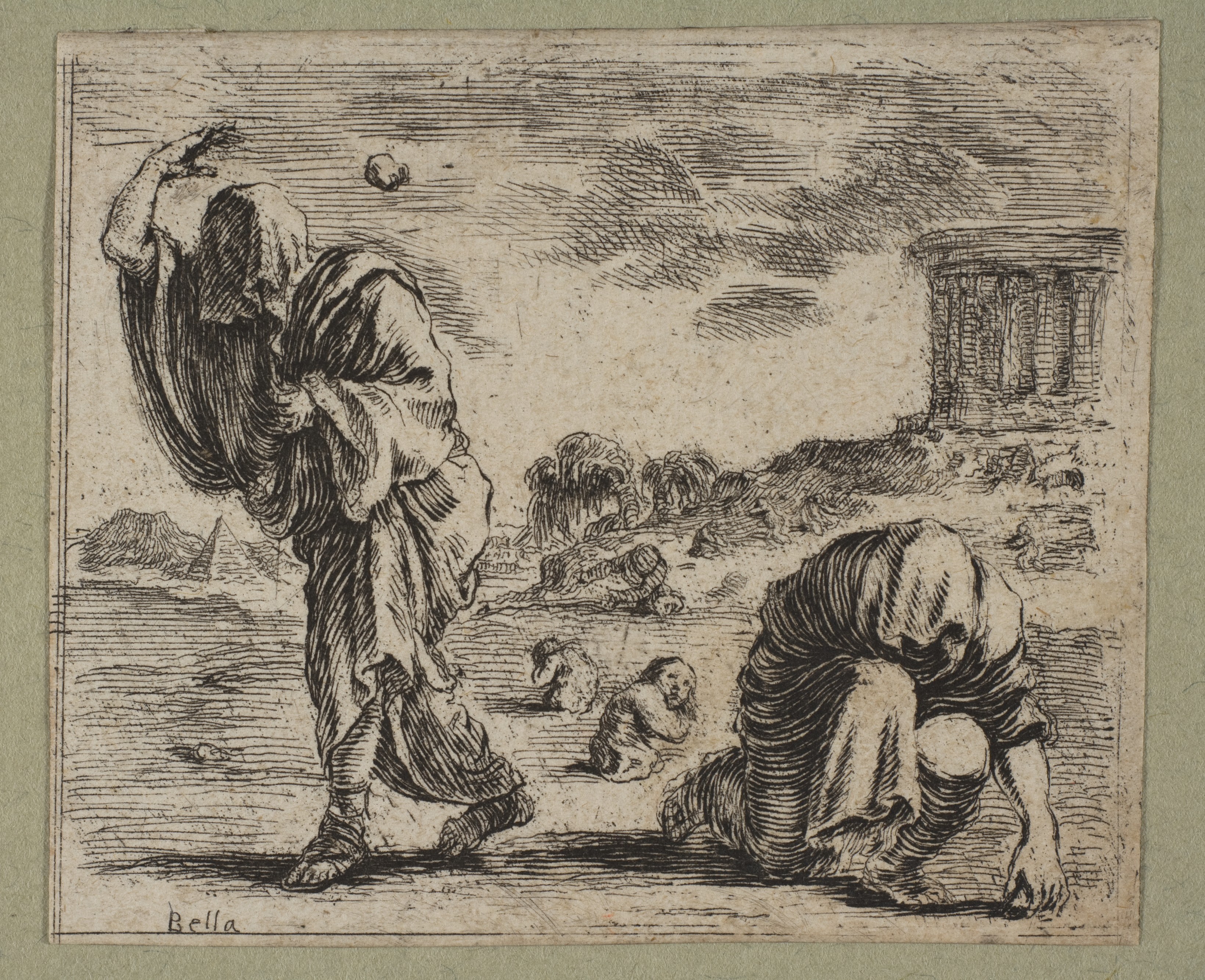
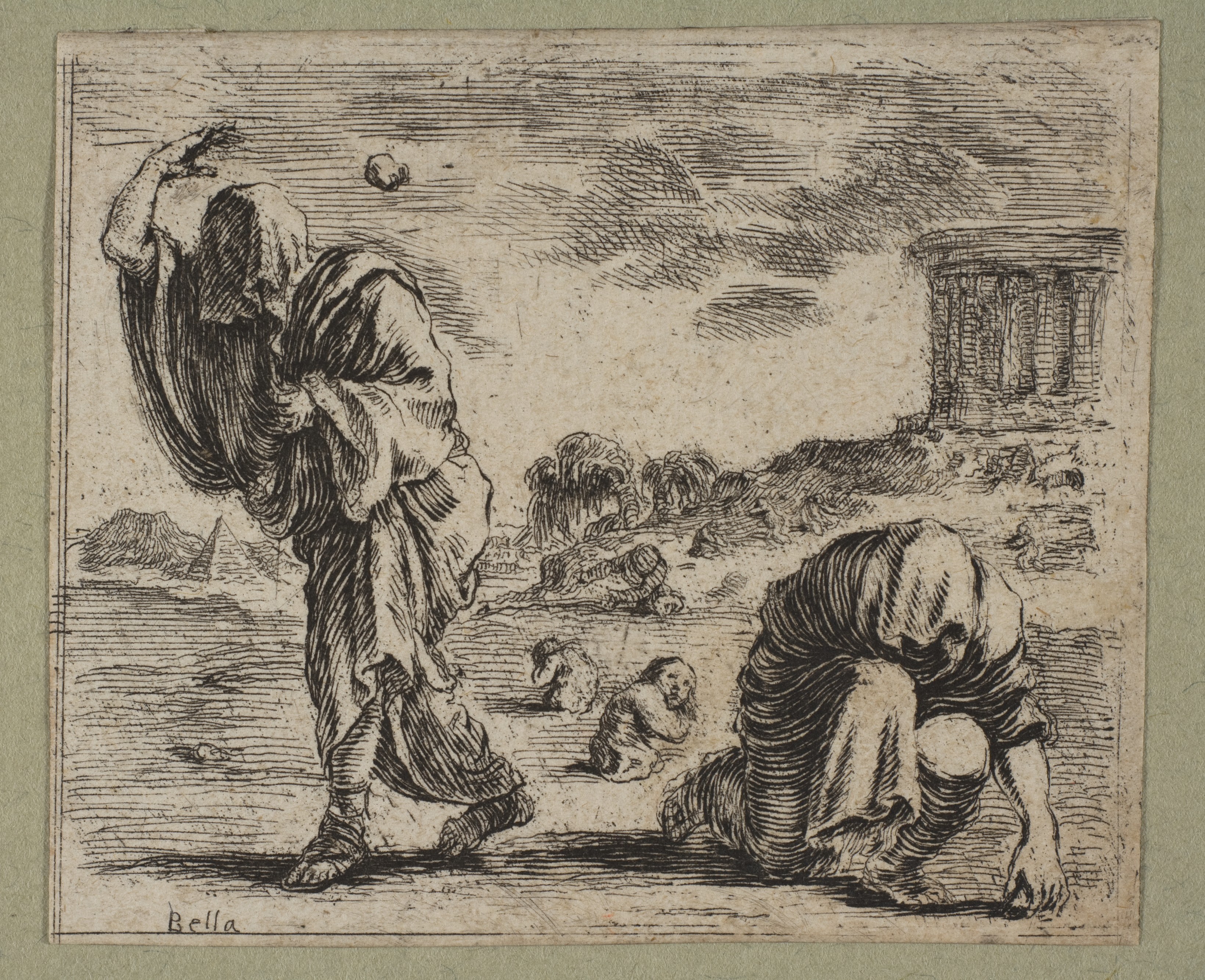
Pyrrha is a figure in Greek flood narratives, associated with DeucalionDeucalion in Greek Flood TraditionsDeucalion and Pyrrha in Greek and Latin flood accounts: genealogy, survival, stone-born people, local traditions and Near Eastern parallels, with attention to variant sources and dates.Glossary · Click to read the explanation and HellenHellen, Greek genealogical figureFigure associated with Greek genealogies, presented as Deucalion and Pyrrha’s son.Glossary · Click to read the explanation in the Catalogue of WomenHesiodic Catalogue of WomenGreek genealogical poem, mostly lost, whose fragments preserve Deucalion’s family and Greek lineages.Glossary · Click to read the explanation. PindarPindar, Greek lyric poetGreek poet, about 518–438 BCE, linking athletic victories with gods, genealogies and cities.Glossary · Click to read the explanation places the couple’s descent from ParnassusMount ParnassusMountain massif in central Greece near Delphi, associated with Deucalion and Pyrrha’s survival.Glossary · Click to read the explanation before the emergence of stone-born peopleStone-born People in Deucalion’s StoryMythic people arising from stones after the flood of Deucalion and Pyrrha. Pindar names the stone-born lineage; Ovid and Pseudo-Apollodorus recount stone throwing in different forms.Glossary · Click to read the explanation. [1][2]
In the LibraryBibliotheca, Greek mythographic collectionGreek work by an unknown author, probably late first or second century CE, organizing divine and heroic genealogies.Glossary · Click to read the explanation she survives with Deucalion in a chest, then her stones become women. OvidOvidOvid was a Roman poet writing in Latin, who lived from 43 BCE to about 17 CE. His best-known works include the Metamorphoses.Glossary · Click to read the explanation shows her hesitation at ThemisThemisGreek goddess instructed in the Iliad to gather the gods for a meeting with Zeus.Glossary · Click to read the explanation’s command to cast the “great mother’s bones,” before stones are understood as Earth’s bones. These are literary roles, not a documented historical biography. [3][4]
References and notes
- Hesiodic Catalogue of Women, Evelyn-White fragments 1–5, 1914: surviving English quotations, not the whole lost work. Hesiodic Catalogue of Women, Evelyn-White fragments 1–5, 1914: surviving English quotations, not the whole lost work. Return to the text ↑
- Pindar, Olympian 9, Paley translation: complete ode, particularly 40–56. The old heading’s 456 BCE date is not adopted. Pindar, Olympian 9, Paley translation: complete ode, particularly 40–56. The old heading’s 456 BCE date is not adopted. Return to the text ↑
- Pseudo-Apollodorus, Library 1.7.2, Greek and James George Frazer’s 1921 English translation: complete section. Pseudo-Apollodorus, Library 1.7.2, Greek and James George Frazer’s 1921 English translation: complete section. Return to the text ↑
- Ovid, Metamorphoses 1.163–415, Brookes More translation, 1922: Lycaon, flood, oracle and stones, not the entire poem. Ovid, Metamorphoses 1.163–415, Brookes More translation, 1922: Lycaon, flood, oracle and stones, not the entire poem. Return to the text ↑
Suggest a correction · Suggest a source for this record
Cite this record
IL Archive, «Pyrrha in Deucalion’s flood story», https://ilarchive.com/en/people/pyrrha-deucalion-flood
Continue reading