Person
Pindar, Greek lyric poet
Greek poet, about 518–438 BCE, linking athletic victories with gods, genealogies and cities.
Last reviewed:
Text
Pindar was a Greek lyric poet, about 518–438 BCE, known for odes celebrating athletic victors. His poetry joins sporting achievement with divine favour, genealogy and communities’ origins. [1]
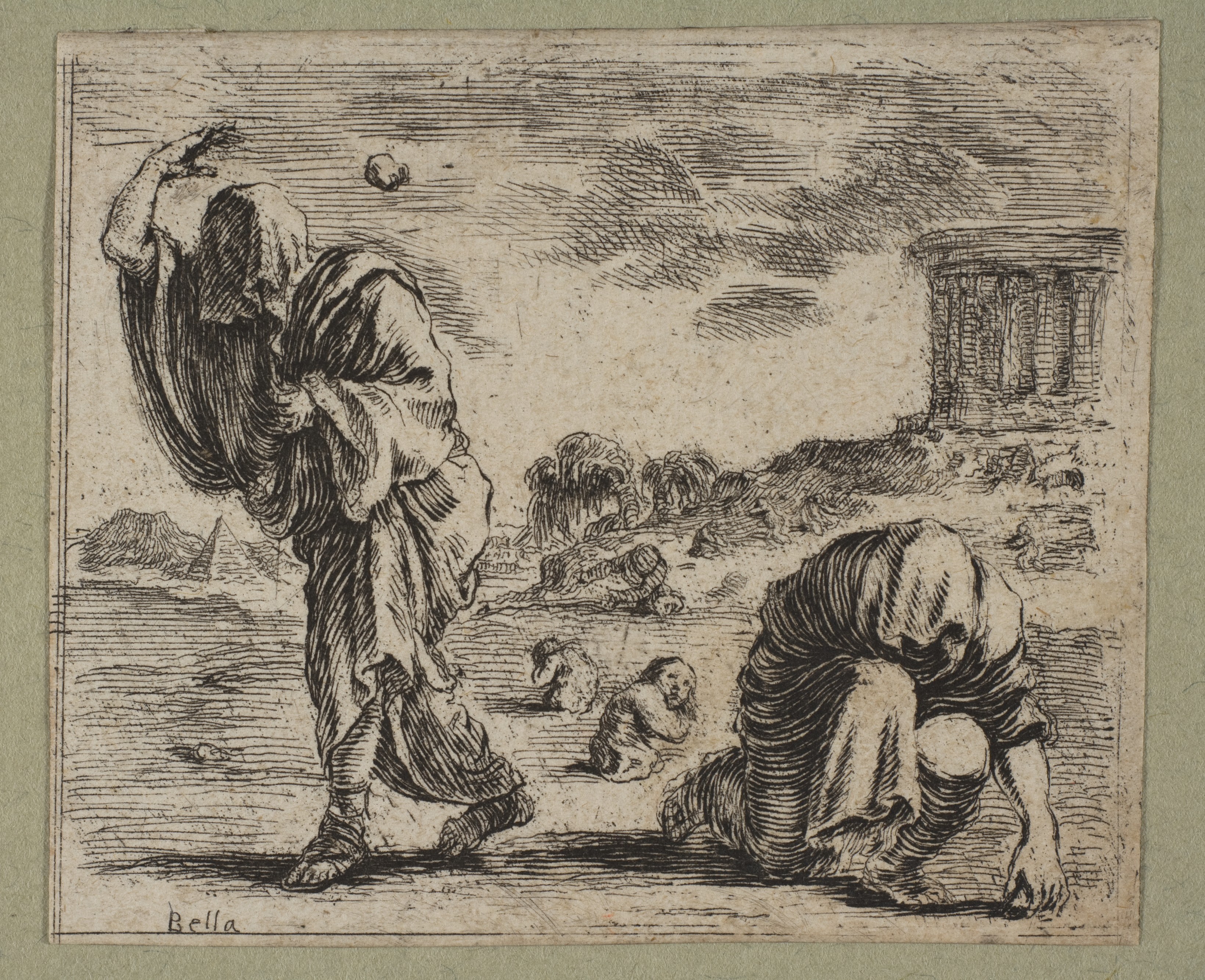
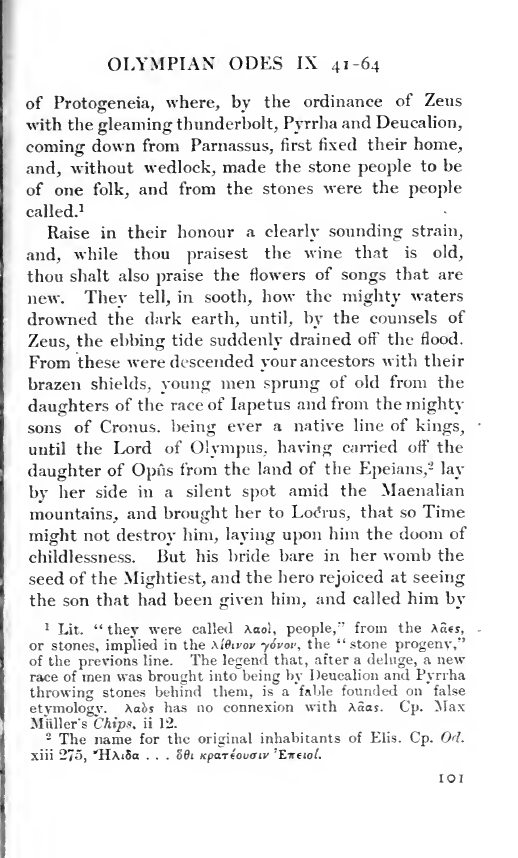
Olympian 9 connects the people of OpusOpus, ancient Locrian cityAncient Greek city linked with Deucalion’s genealogies and Pindar’s ninth ode, near present-day Atalanti.Glossary · Click to read the explanation with DeucalionDeucalion in Greek Flood TraditionsDeucalion and Pyrrha in Greek and Latin flood accounts: genealogy, survival, stone-born people, local traditions and Near Eastern parallels, with attention to variant sources and dates.Glossary · Click to read the explanation, PyrrhaPyrrha in Deucalion’s flood storyGreek figure surviving with Deucalion and associated with humanity’s renewal from stones.Glossary · Click to read the explanation and stone-born humanity, then mentions a flood and recession through ZeusZeusZeus is the sky god and leading deity in many Greek traditions. In the Iliad he presides over divine gatherings while others can still speak and object.Glossary · Click to read the explanation’s skill. It is a clear fifth-century BCE witness, considered alongside possibly earlier dramatic fragments. [2][3]
References and notes
- Harvard University Press, William H. Race’s 1997 Pindar edition: poet and dating description, not the complete edition. Harvard University Press, William H. Race’s 1997 Pindar edition: poet and dating description, not the complete edition. Return to the text ↑
- Pindar, Olympian 9, Paley translation: complete ode, particularly 40–56. The old heading’s 456 BCE date is not adopted. Pindar, Olympian 9, Paley translation: complete ode, particularly 40–56. The old heading’s 456 BCE date is not adopted. Return to the text ↑
- Dustin W. Dixon, Myth-making in Greek and Roman Comedy, Boston University PhD, 2015, pp. 128–135, PDF pages 139–146, and early-career discussion p. 54: selected reading, not the entire thesis. Dustin W. Dixon, Myth-making in Greek and Roman Comedy, Boston University PhD, 2015, pp. 128–135, PDF pages 139–146, and early-career discussion p. 54: selected reading, not the entire thesis. Return to the text ↑
Suggest a correction · Suggest a source for this record
Cite this record
IL Archive, «Pindar, Greek lyric poet», https://ilarchive.com/en/people/pindar-greek-lyric-poet
Continue reading