Site
Opus, ancient Locrian city
Ancient Greek city linked with Deucalion’s genealogies and Pindar’s ninth ode, near present-day Atalanti.
Last reviewed:
Text
Opus was a city of Locris, north of Boeotia in central Greece. PindarPindar, Greek lyric poetGreek poet, about 518–438 BCE, linking athletic victories with gods, genealogies and cities.Glossary · Click to read the explanation’s Olympian 9 celebrates it as the victor’s city and connects its people with DeucalionDeucalion in Greek Flood TraditionsDeucalion and Pyrrha in Greek and Latin flood accounts: genealogy, survival, stone-born people, local traditions and Near Eastern parallels, with attention to variant sources and dates.Glossary · Click to read the explanation, PyrrhaPyrrha in Deucalion’s flood storyGreek figure surviving with Deucalion and associated with humanity’s renewal from stones.Glossary · Click to read the explanation and stone-born humanity. [1][2]
Today the Archaeological Collection of Atalanti displays finds from Opus’s cemeteries and the surrounding region. This connects the ancient name with geographical and archaeological context, without making the flood a demonstrated archaeological event. [3]
References and notes
- Pindar, Olympian 9, Paley translation: complete ode, particularly 40–56. The old heading’s 456 BCE date is not adopted. Pindar, Olympian 9, Paley translation: complete ode, particularly 40–56. The old heading’s 456 BCE date is not adopted. Return to the text ↑
- Pindar, John Sandys translation, 1915, Olympian 9 introduction pp. 94–95, PDF pages 150–151: Opus geography and ode context only. Pindar, John Sandys translation, 1915, Olympian 9 introduction pp. 94–95, PDF pages 150–151: Opus geography and ode context only. Return to the text ↑
- Hellenic Heritage, Archaeological Collection of Atalanti: Opus finds and museum location. Hellenic Heritage, Archaeological Collection of Atalanti: Opus finds and museum location. Return to the text ↑
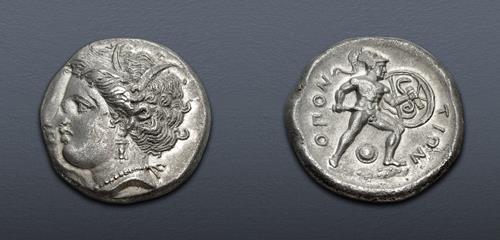
- CNG132 lot275, stater of the Opus mint, about 370–360 BCE: coin description and date. CNG132 lot275, stater of the Opus mint, about 370–360 BCE: coin description and date. Return to the text ↑
Suggest a correction · Suggest a source for this record
Cite this record
IL Archive, «Opus, ancient Locrian city», https://ilarchive.com/en/sites/opus-opuntian-locris
Continue reading