Site
Sultantepe (Huzirina)
- Names
- Huzirina · Sultantepe Höyüğü · Ḫuzirina
- Region
- Mesopotamia
This mound near Şanlıurfa yielded hundreds of Neo-Assyrian tablets and fragments. Their stories, rituals and scribal notices document scholarly life in the province of Harran.
Estimated reading time: 4 min Published Last reviewed:
Share article
Text
Introduction
Sultantepe is an archaeological mound in southeastern TürkiyeTurkeyTurkey is a modern country including Anatolia and territory in southeastern EuropeGlossary · Click to read the explanation near Şanlıurfa, commonly identified with ancient Huzirina. In 1951 and 1952 a joint British and Turkish expedition uncovered clay tablets from the Neo-Assyrian period. The tablets include works of literature, prayer and ritualRitualAn organised or distinguished practice meaningful to a community; it may leave traces, but its form alone does not reveal an associated doctrine.Glossary · Click to read the explanation. Some conclude with a scribe’s name, a date or an instruction about who could use the tablet. These details show how a scholarly collection took shape in a provincial town. [1] [2] [3]
The mound and the discovery
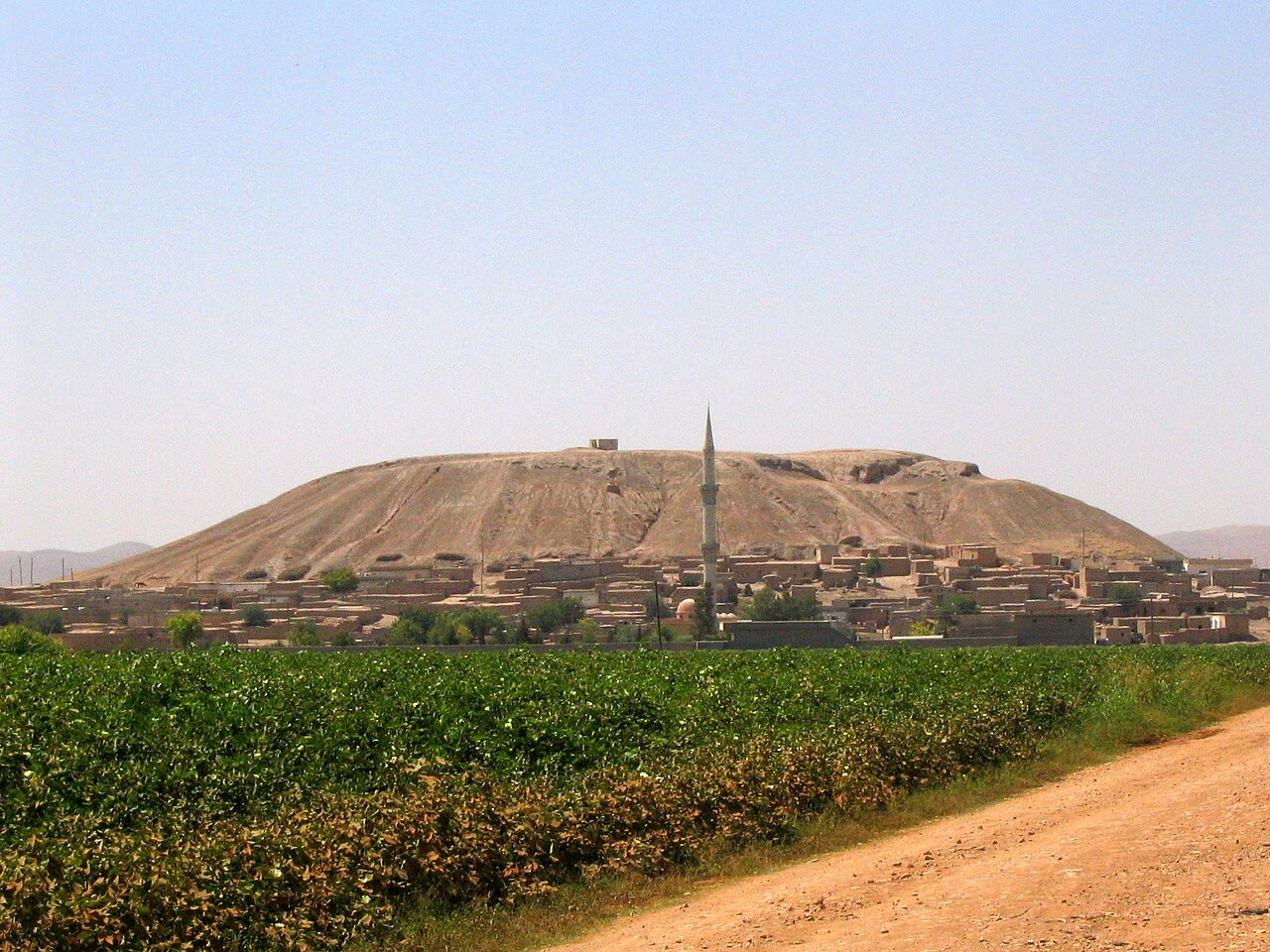
A 1950 survey of the region around Harran led the British Institute at Ankara and the Turkish Antiquities Department to include Sultantepe in their plans for the next season. The 1951 expedition worked at Sultantepe in May and June. In its project summary the institute records an entrance to the citadel, an Assyrian building and the hoard of tablets. Soundings followed in 1952. The mound rises above a modern village, as the photograph shows. Its height and the presence of building remains on different levels matter when relating individual finds to the architecture. [1] [2] [4]
Oliver Gurney first examined the tablets at the Archaeological Museum in Ankara. He reports that the early finds came from a large pile in the excavation’s sounding F. Much of the clay was unbaked, so some tablets could be carefully brushed as they dried, while others required further treatment before the writing could be studied. Gurney noted similarities to the script and appearance of tablets from NinevehNineveh and KuyunjikNineveh is an ancient Assyrian city near Mosul in northern Iraq; Kuyunjik is one of its archaeological moundsGlossary · Click to read the explanation and recognized a large number of religious and lexical texts. The pile’s location and the scribes’ statements at the ends of tablets offered ways to work out what sort of group the excavators had found. [2]
The nearby building and the tablet pile are archaeological observations. How the group was stored and used before it reached that location calls for interpretation. Eleanor Robson describes a school run by members of the Nur-Shamash priestly family, with tablets written by relatives and their apprentices. She interprets the deposition as a decision to hide the tablets when the last occupants left, with the possibility of later retrieval. Her study identifies nearly four hundred tablets in the collection and around sixty surviving colophons. The collection is often called a library, while its ownership and teaching practices are reconstructed from individual records and the find context. [2] [3] [4]
What the scribes wrote about their work
A colophon on the principal Sultantepe manuscript of the Poor Man of Nippur identifies Nabu-rehtu-usur as the apprentice who copied it for Qurdi-Nergal to read. It says the text was checked against a source, dates the copy to the twenty-first day of Addaru in the eponym year of Hanani, and calls on the authority of EaEnkiMesopotamian deity also known as Ea, linked with Eridu and the Abzu (deep fresh waters), wisdom, incantations, and narratives of creation and cosmic order. Later written attestations do not identify the deity of Eridu’s earliest layers.Glossary · Click to read the explanation and Nabu against the loss of the tablet and dispersal of the collection. Robson gives 701 BCE for the Assyrian eponym year. Giorgio Paolo Campi gives 701/700 BCE for the dated copy and discusses the relation between the apprentice, the official named as his teacher, and Qurdi-Nergal. The date belongs to a surviving manuscript. The date of the composition remains a separate problem. [3] [5] [6]
The same story is also represented by fragments from Nineveh and an excerpt on a school tablet from Nippur. Its plot follows the hungry Gimil-Ninurta and his encounters with Nippur’s mayor. The fuller Sultantepe witness is catalogued as CDLI P338355 (STT 38). Its setting in the story and its findspot are two distinct labels. A copy read in a town near Harran preserves a story about the civic world of Nippur farther south. [5] [6]
One line in the poem of Erra
The Sultantepe tablet STT 16, CDLI P338333, carries part of the first tablet of the poem of Erra and Ishum. Its importance can be seen in one line. Yoram Cohen identifies it as the sole witness for line 118, the end of a speech in which Erra describes his own qualities. The sign traces are damaged. Cohen proposes a reading referring to Emeslam, Erra’s dwelling in Kutha, and compares similar lines elsewhere in the poem. His reading makes the surviving marks on this particular fragment part of the evidence for interpreting the speech. [7] [8]
A prayer in two forms
The mound yielded two partial witnesses to a composition of prayer and praise connected with the city and god Assur. Frances Reynolds compares STT 87, a slim tablet with a single writing column bisected by a double ruling, with STT 371, a shorter, wider tablet containing extracts. The texts overlap and differ. In STT 87 some of the ruled space and layout help reveal the structure of the poetry. STT 371 is consistent with a school excerpt. Comparing them shows that a single composition could be written out in quite different formats within the same community. [9]
The dated Sultantepe tablets extend from the late eighth into the late seventh century BCE. Colophons point beyond the mound as well. Robson notes copies made from manuscripts associated with BabylonBabylonBabylon is an ancient city in central present-day Iraq, south of BaghdadGlossary · Click to read the explanation and the temple of Gula at Assur. Named readers, teachers and source tablets help explain how the people at Sultantepe maintained access to compositions circulating well beyond their own province. [3] [9]
References and notes (9)
- British Institute at Ankara, Sultantepe Survey Project summary, 1950 survey and first field season Return to the text ↑
- Oliver R. Gurney, The Sultantepe Tablets: A Preliminary Note Opening report on the 1951 finds, recovery context and colophons Return to the text ↑
- Eleanor Robson, Do Not Disperse the Collection! pp. 14–17, collection, scribal colophons and circulation Return to the text ↑
- Sultantepe, Wikipedia (summarising Lloyd and Gökçe, Anatolian Studies 3, 1953) Tablet pile, Assyrian gateway column-bases, wall-ends, height of the mound Return to the text ↑
- Giorgio Paolo Campi, The Tale of the Poor Man of Nippur between Mesopotamian and Biblical Wisdom pp. 70–76, witnesses, colophon, debated composition date and plot Return to the text ↑
- Cuneiform Digital Library Initiative, P338355 STT 1, 38, excavation number, text, measurements and current collection Return to the text ↑
- Cuneiform Digital Library Initiative, P338333 STT 1, 16, archaeological provenance and three excavation numbers Return to the text ↑
- Yoram Cohen, The (E)meslam in ‘The Epic of Erra’, Tablet I, Line 118 N.A.B.U. 2013/1, no. 10, pp. 14–15, unique witness and restoration Return to the text ↑
- Frances Reynolds, Prayer and Praise in the City of Assur Manuscript sources, tablet formats, dates and transmission Return to the text ↑
Suggest a correction · Suggest a source for this record
Cite this record
IL Archive, «Sultantepe (Huzirina)», https://ilarchive.com/en/sites/sultantepe