Site
Yeni Mahalle (Neolithic Urfa settlement)
- Names
- Balıklıgöl Höyüğü · Urfa-Yeni Mahalle · Urfa-Yeni Yol
A Pre-Pottery Neolithic settlement in Şanlıurfa’s Yeni Mahalle neighbourhood. A section was investigated in 1997 after the chance discovery of Urfa Man in 1993; its dates do not independently date the sculpture.
Estimated reading time: 2 min Published Last reviewed:
Share article
Text
Introduction
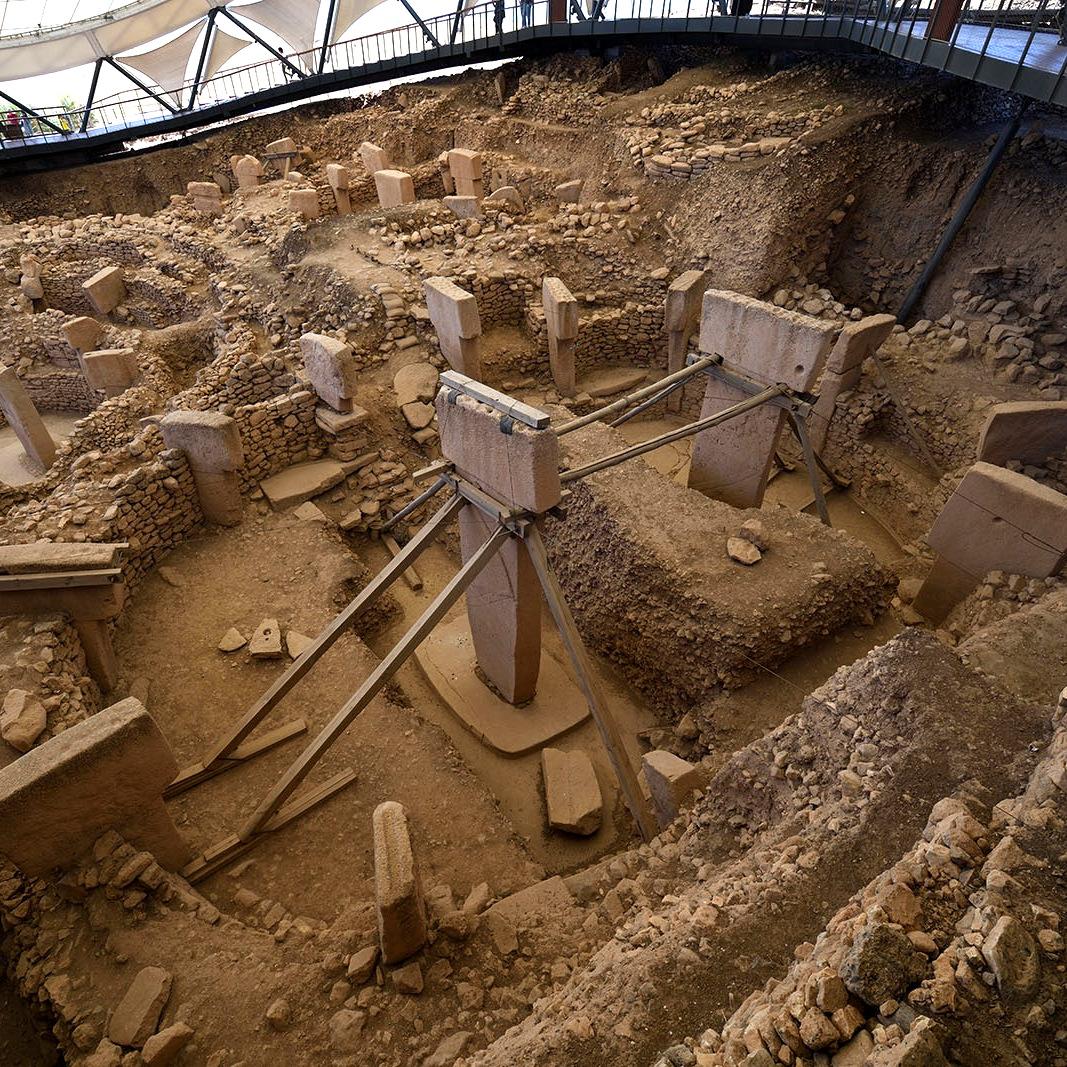
Yeni Mahalle is a neighbourhood in modern ŞanlıurfaŞanlıurfaA modern city in southeastern Turkey, near Göbekli Tepe, whose museum displays Urfa Man.Glossary · Click to read the explanation where remains of a Pre-Pottery NeolithicPre-Pottery NeolithicA regional archaeological framework for early settlement, cultivation and animal management in Southwest Asia before the local spread of pottery vessels; its dates and trajectories vary and it implies no common religion.Glossary · Click to read the explanation settlement were identified near Balıklıgöl. This entry identifies the archaeological place itself. It is neither another name for Göbekli TepeGöbekli TepePre-Pottery Neolithic site near Şanlıurfa with T-shaped pillars and communal buildings. Evidence documents habitation and collective activities alongside a ritual component; the figures’ names are unknown.Glossary · Click to read the explanation nor merely the name of a museum housing finds from the region.[1][2]
Location and recorded evidence
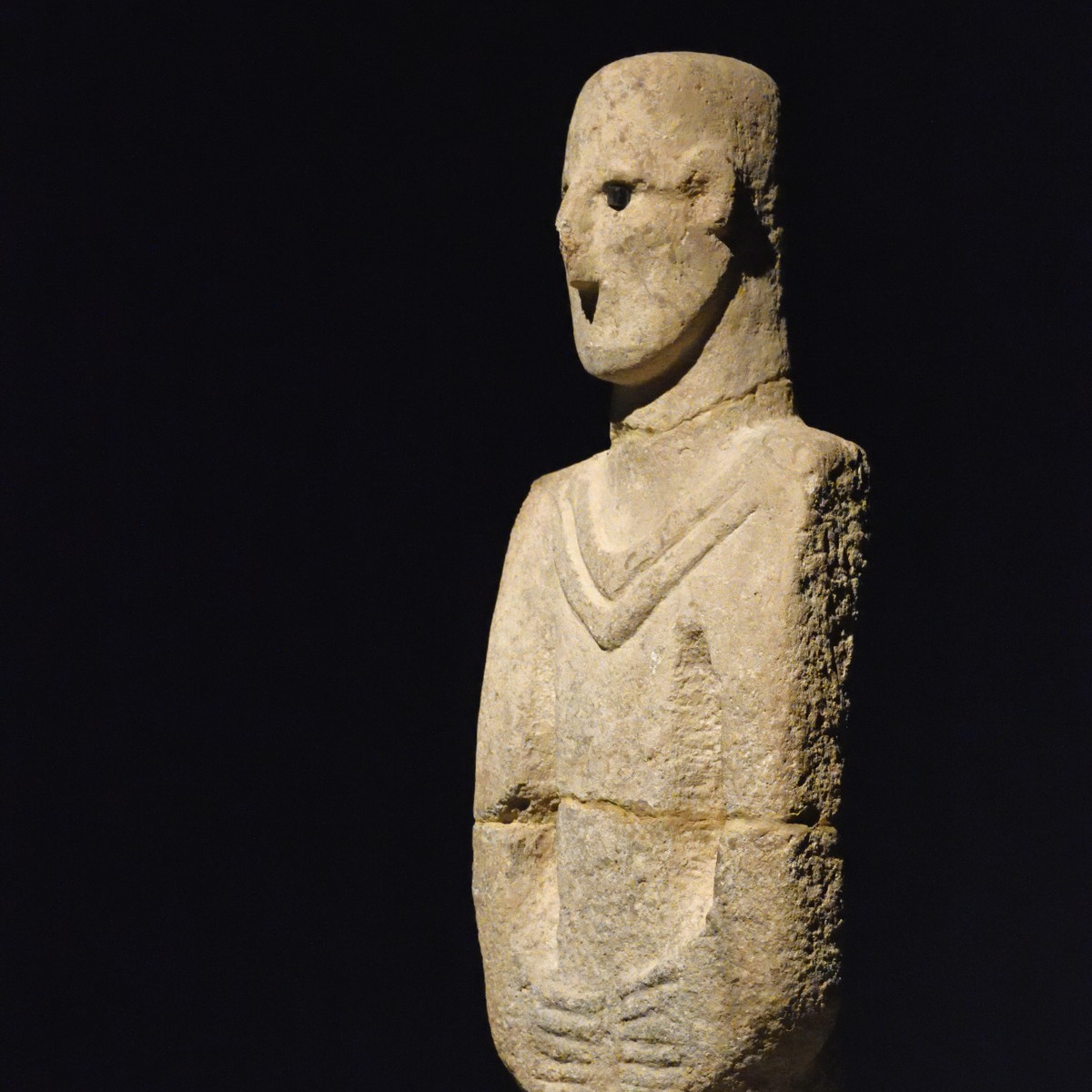
Building works in 1993 brought to light the limestone statue known as Urfa ManUrfa ManAn Early Neolithic limestone human figure discovered in 1993 at Yeni Mahalle, Şanlıurfa, with obsidian-accented eyes and hands at the groin, but no carved mouth or separate legs. Its precise find context, independent date and purpose are unknown.Glossary · Click to read the explanation at Yeni Mahalle. Its extraction was not a controlled archaeological excavation that documented the layer in which the sculpture stood. In 1997 a local team investigated an exposed section of the settlement, after extensive modern development had damaged the area, recording stone tools and portions of polished flooring. Published discussions put the statue's findspot approximately one hundred metres from this archaeological section.[1][2]
Chronology and significance
Bahattin Çelik reported radiocarbon dating of the settlement to approximately 9400–8600 BCE in a book published in 2008. The sources consulted here do not provide original laboratory results that directly associate dated samples with the statue. The chronology of the settlement therefore needs to be kept separate from an independent date for carving the sculpture.[3]
Some surviving traces have been interpreted as evidence for buildings with special uses, but the statue's original position and purpose remain unknown. The accompanying picture is a modern AI-generated conceptual illustration, evoking a city, water and archaeological layers; it is not a photograph of the settlement, an accurate map or a scholarly reconstruction.
References and notes
- Oliver Dietrich, “The ‘Urfa Man’,” The Tepe Telegrams (Göbekli Tepe research team), 14 October 2016. Full article, especially paragraphs 1–6; author’s 21 December 2016 reply concerning the single recorded pillar. Return to the text ↑
- Bahattin Çelik, “An Early Neolithic Settlement in the Center of Şanlıurfa, Turkey,” Neo-Lithics 2/3 (2000), 4–6. Printed pp. 4–6: the 1993 chance discovery, 1997 section, lithics and flooring, and the author’s interpretation. Return to the text ↑
- Bahattin Çelik, Arkeoloji’de Urfa, Şanlıurfa Provincial Directorate of Culture and Tourism, Istanbul, 2008, section “Urfa-Yeni Mahalle (Balıklıgöl Höyüğü).” Yeni Mahalle section, printed p. 15 (PDF page 43 counting from the cover); the author reports 9400–8600 BCE for the settlement. Original laboratory data and the entire book were not examined. Return to the text ↑
Suggest a correction · Suggest a source for this record
Cite this record
IL Archive, «Yeni Mahalle (Neolithic Urfa settlement)», https://ilarchive.com/en/sites/urfa-yeni-mahalle-neolithic-settlement
Continue reading