Gudea Builds the Temple Chapter 2
The House Awakens
Ningirsu and Bau enter the finished Eninnu. Gudea appoints its household and marks the occasion with justice and a feast.
SourcesTurn the pages with the arrows, the arrow keys or a swipe.
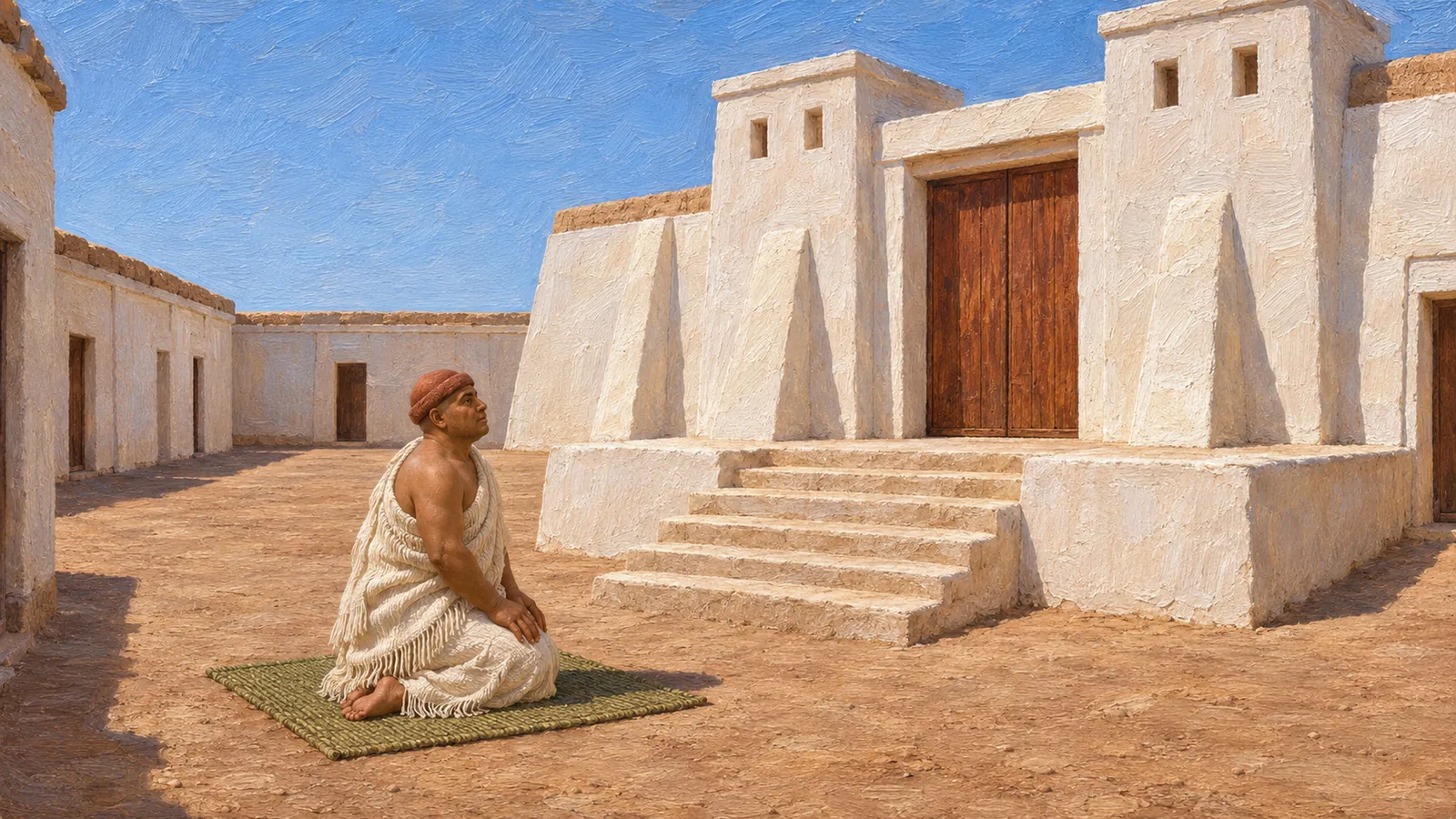
ENINNU
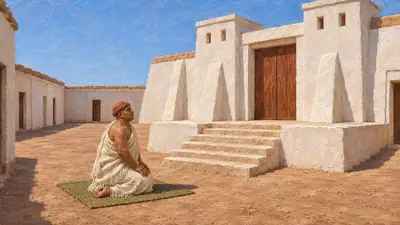
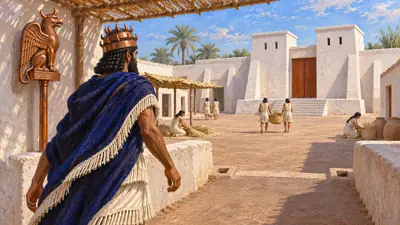
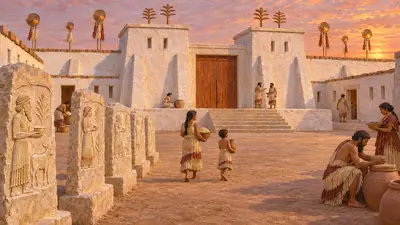
The completed Eninnu stood before the people. Gudea bowed before the Anuna gods and asked them to speak for him. He was ready to bring his lord into the house.
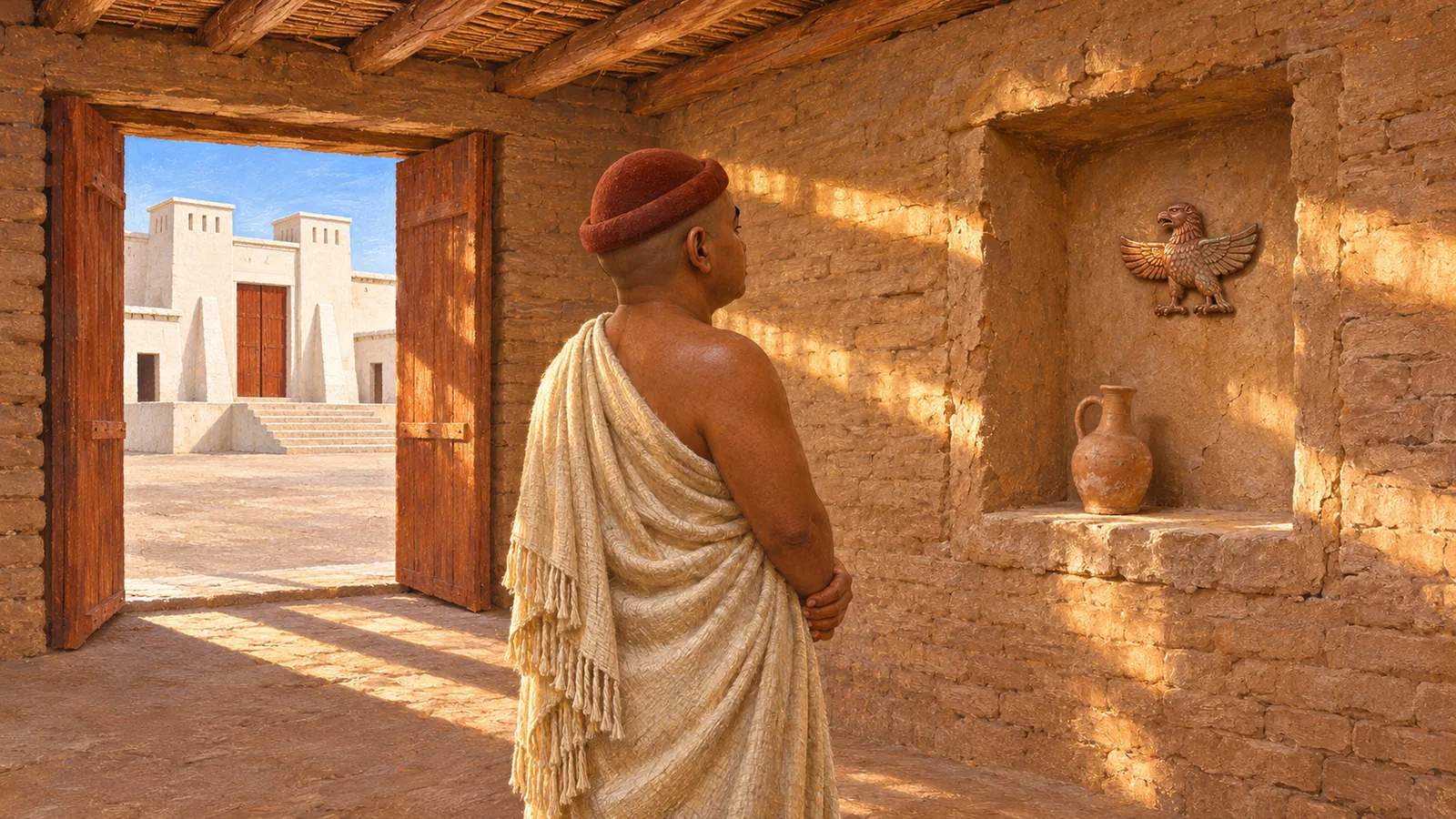
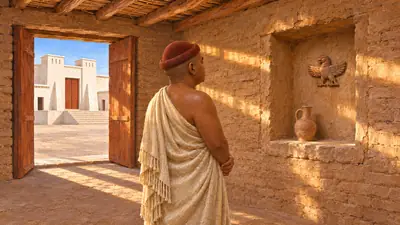
Gudea brought gifts to Ningirsu’s old dwelling. Then he invited Ningirsu into the house he had built, and asked Bau to take up her own quarters.
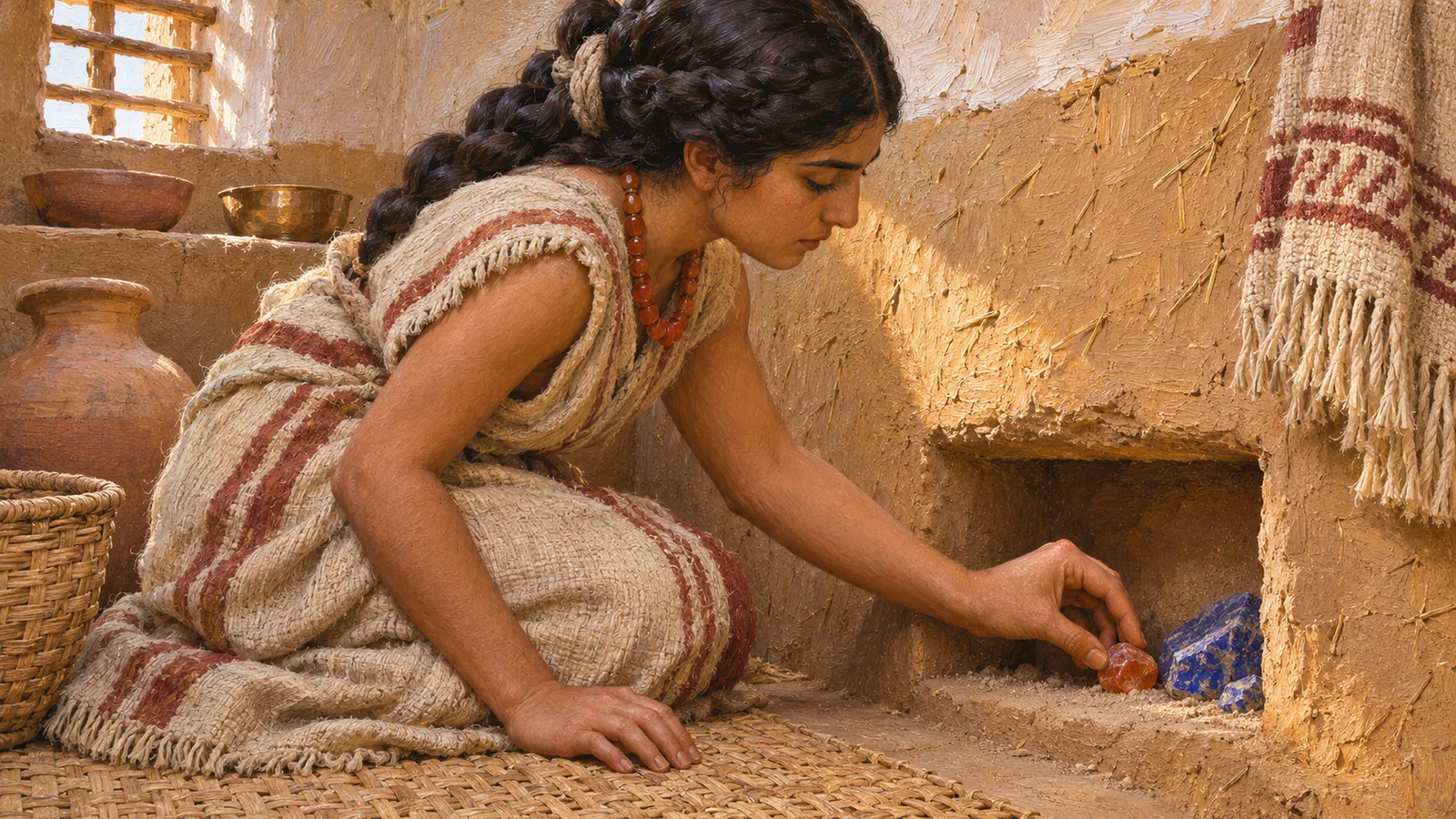
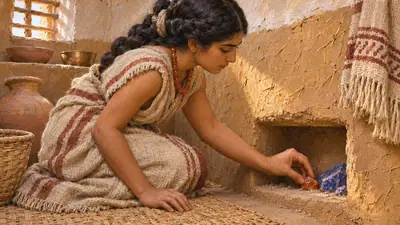
Three days into the new year, Ningirsu comes from Eridu and moonlight spreads over the land. Gudea touches the corners with precious paste and sprinkles the floor with oil.
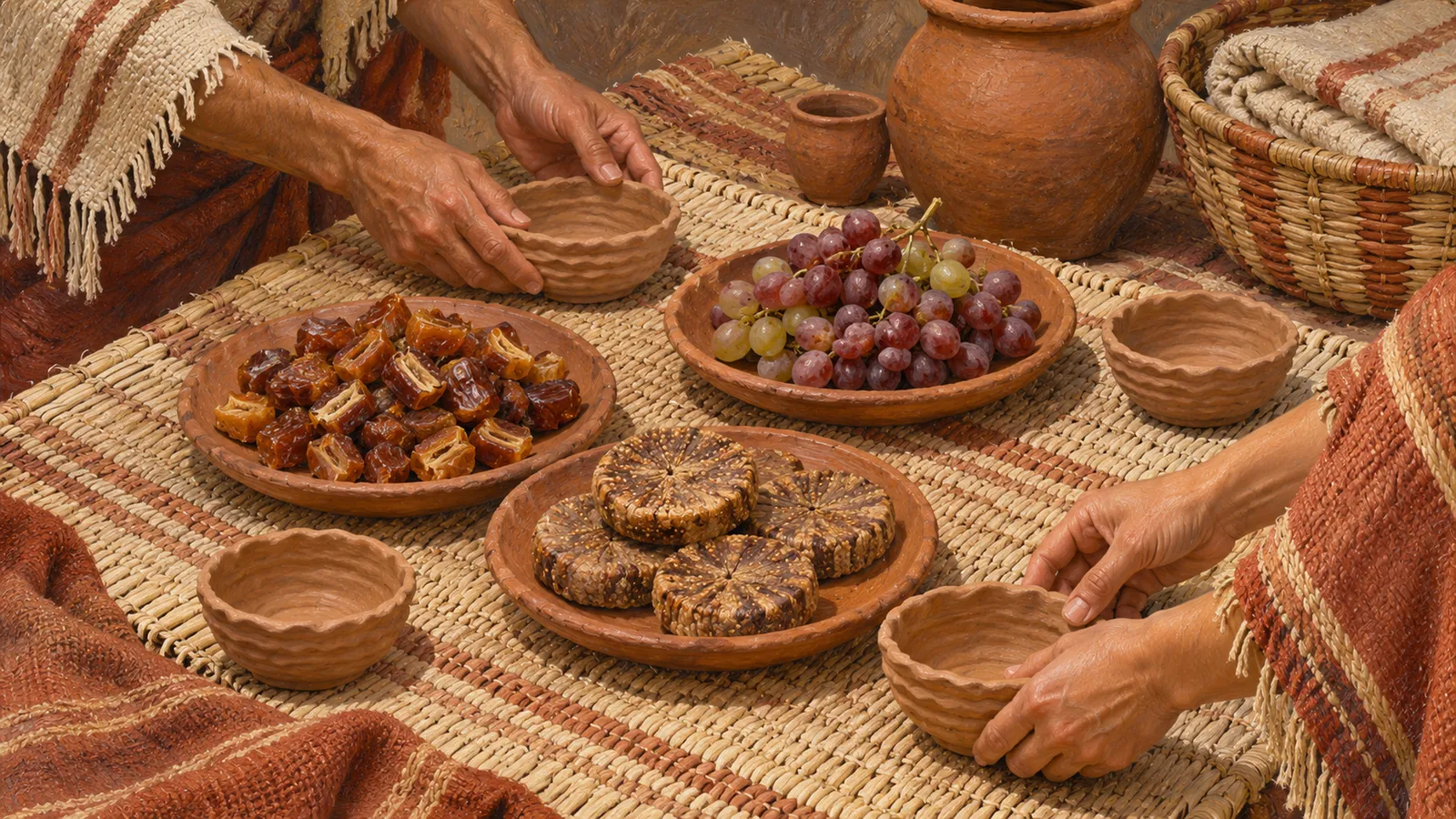
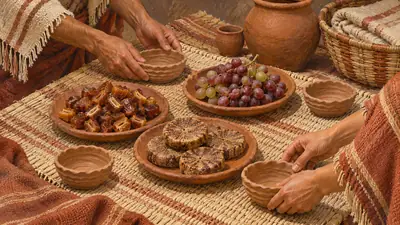
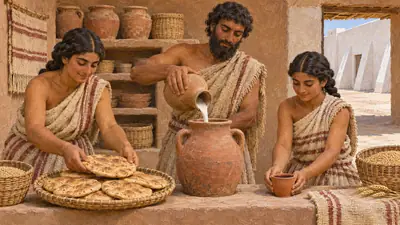
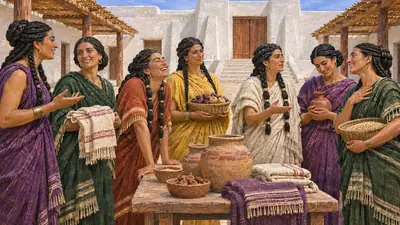
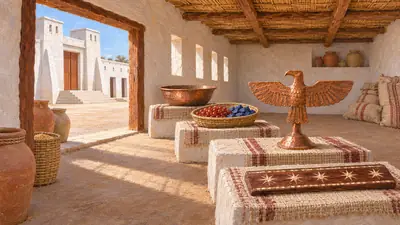
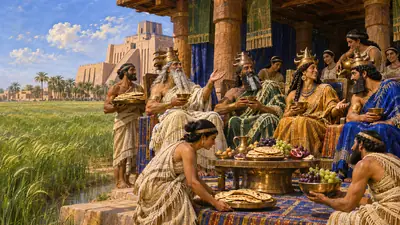
The food is set out for the gods. There is syrup, sour milk, small grapes and dates, with fig cakes topped with cheese and prepared without fire.
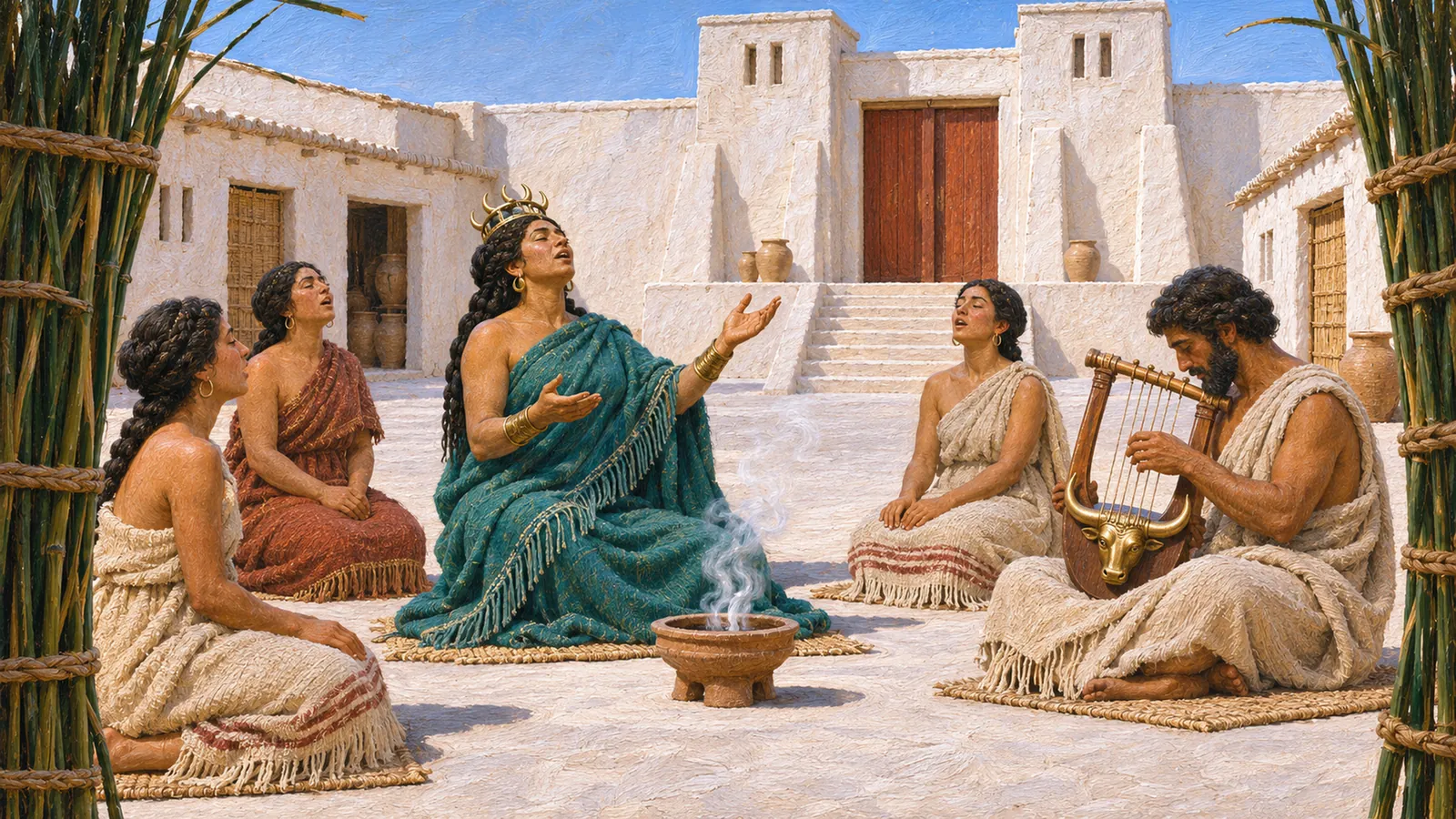
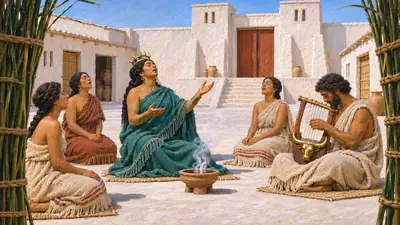
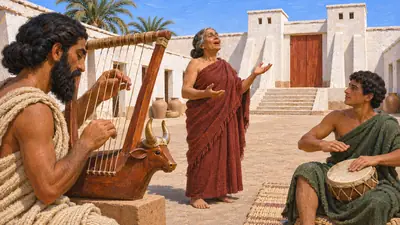
From early morning Gudea prepared the meal. Enki gave an oracle, Nindub filled the sanctuary with incense, and Nanshe sang sacred songs for the house.
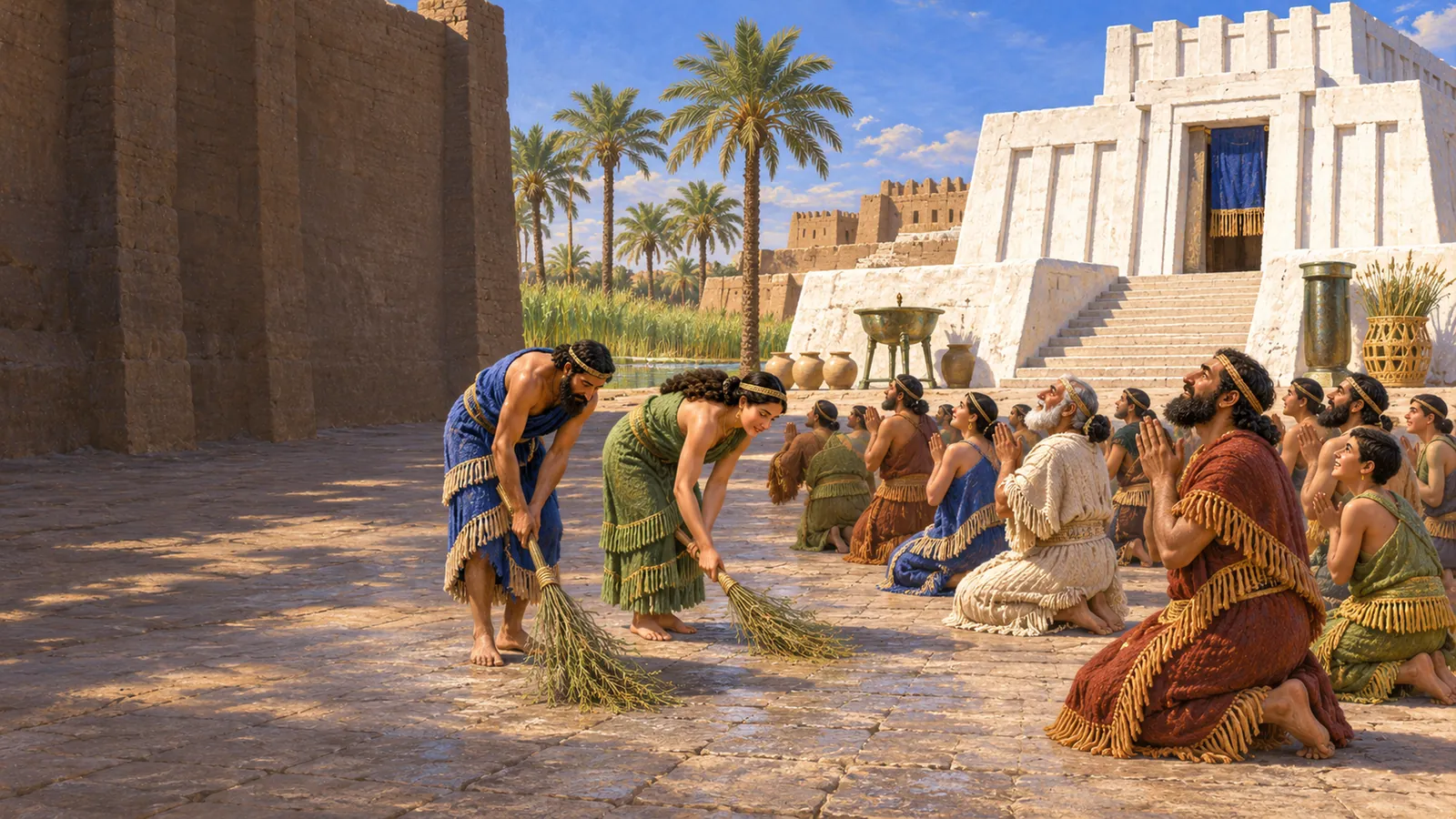
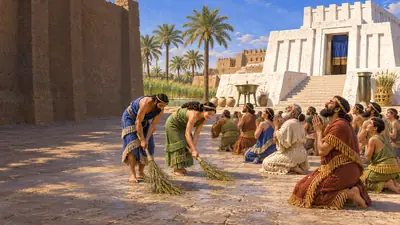
The attendants cleaned Eninnu with tamarisk brooms. Gudea had the city kneel. Even the animals on the steppe lay still in the poem’s telling.
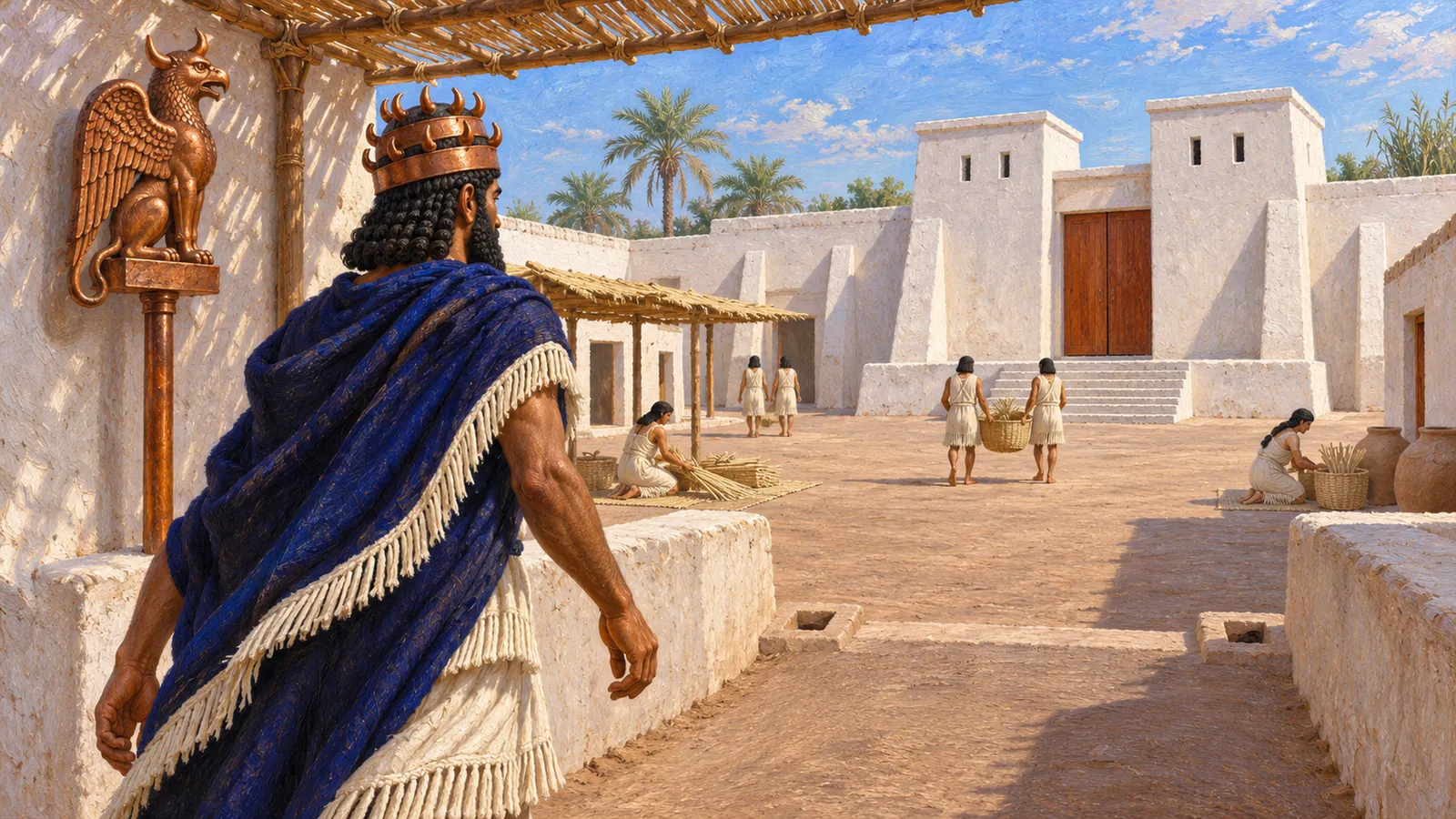
At last Ningirsu entered his house. The poem hears a storm in his stride and compares his appearance to the sun rising over the land of Lagash.
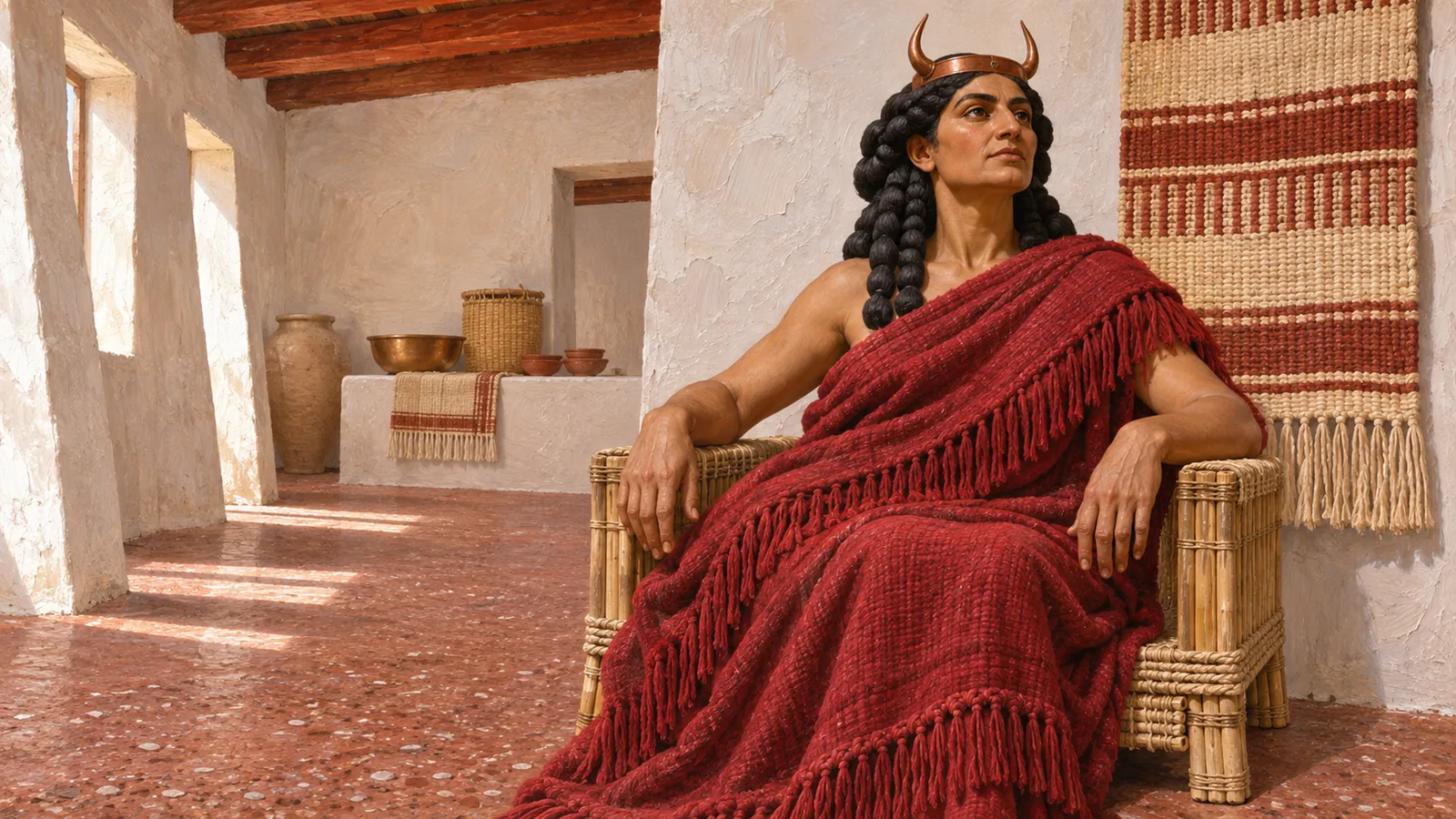
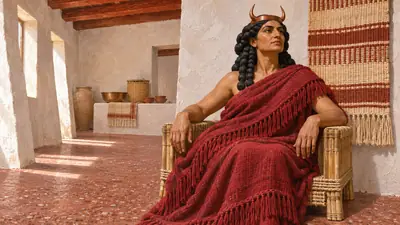
Bau entered her own rooms and took possession of them. Her arrival was like the Tigris in flood. To Lagash it meant plenty, like a green garden bearing fruit.
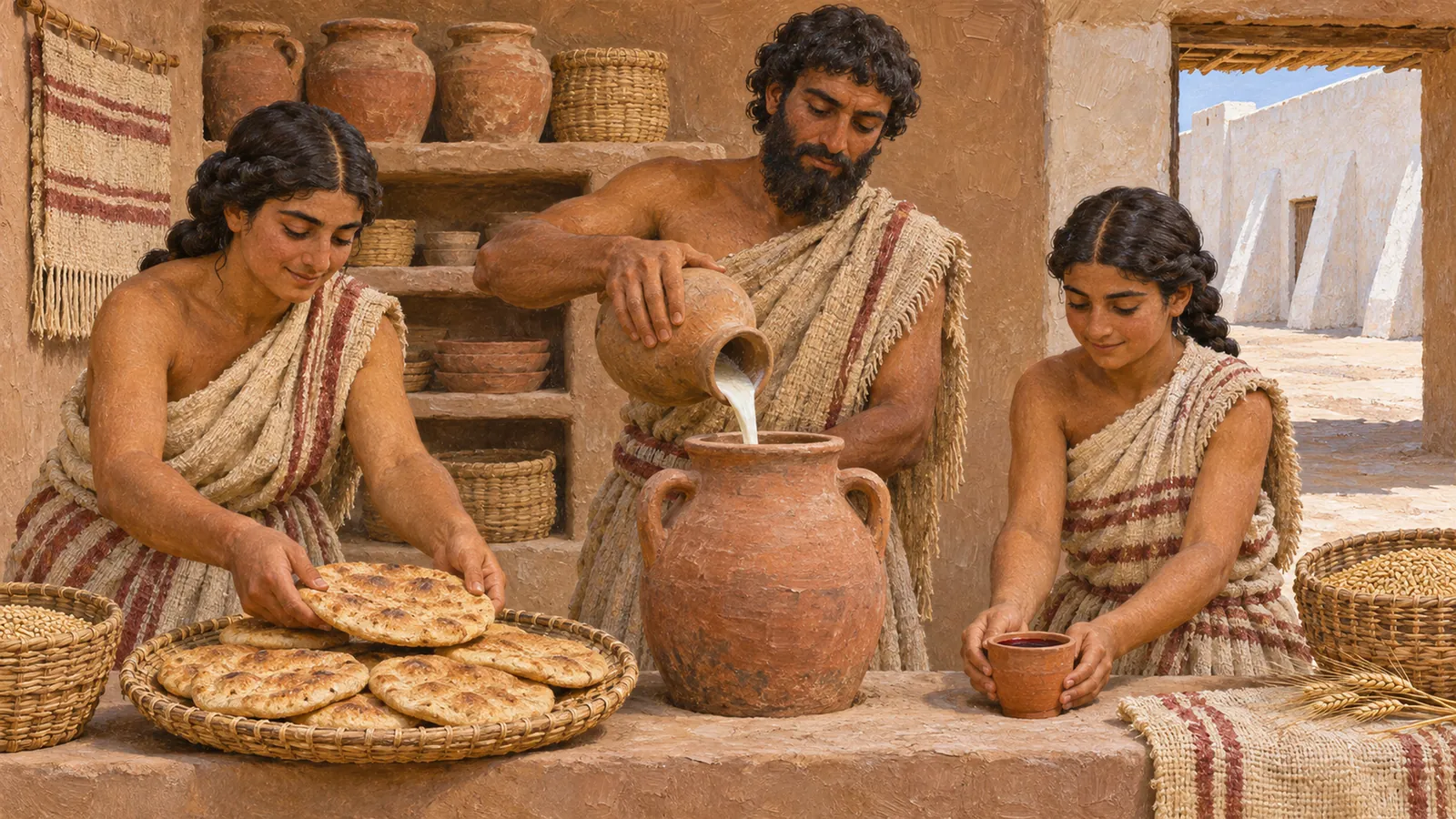
Oxen and sheep came to the house, and bowls of wine stood in the open air. Ningirsu was served fresh bread and milk, by day and by night.
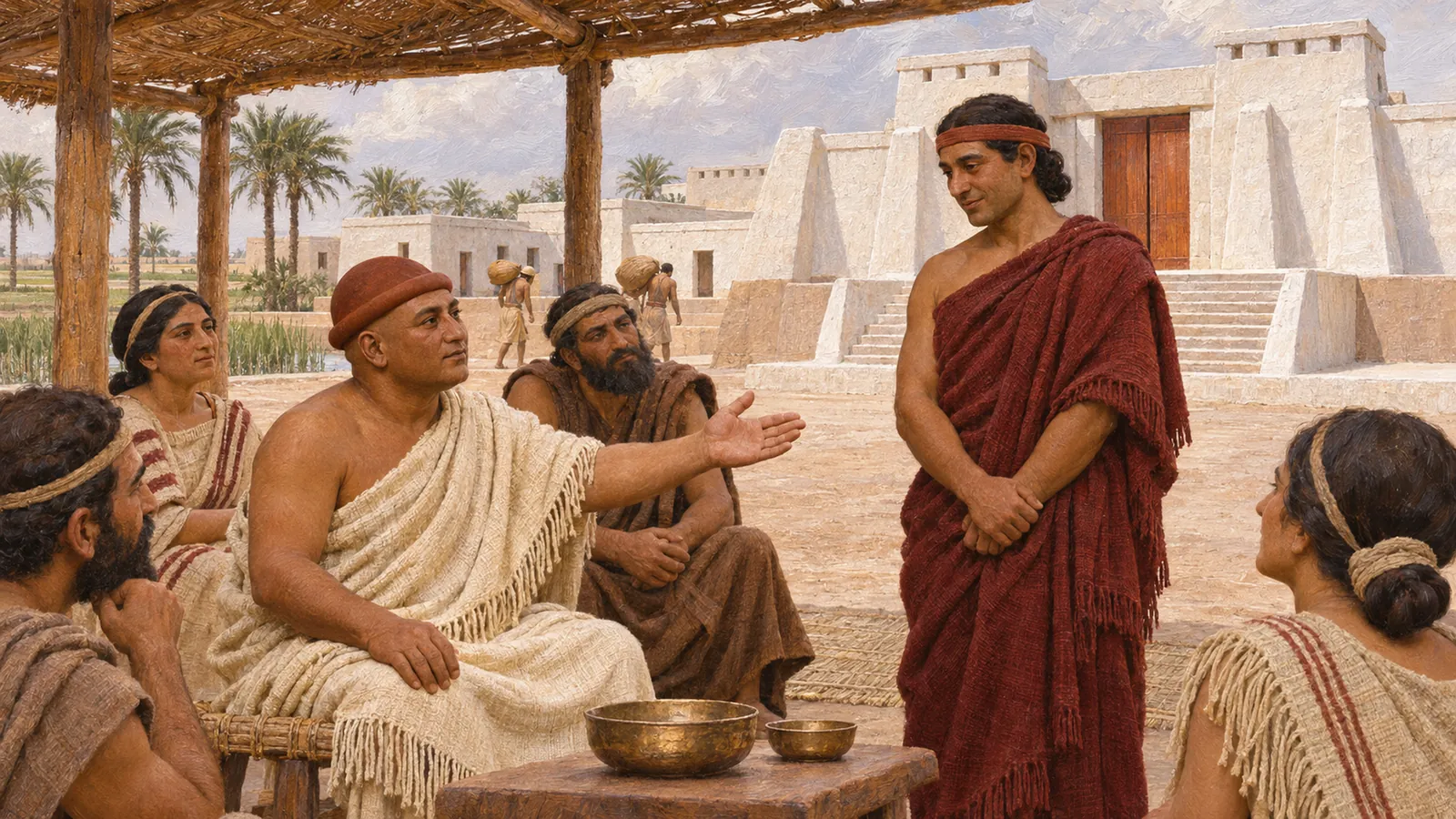
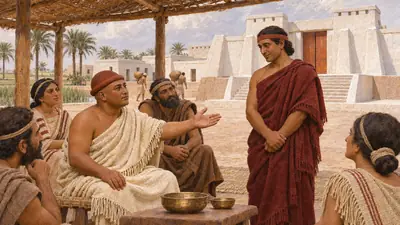
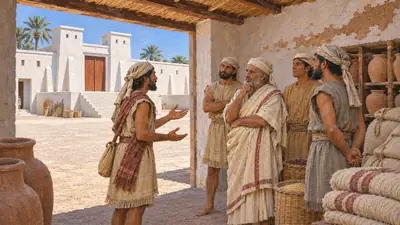
Gudea presented Ig-alim, the chief bailiff of Girsu. He was to keep the house safe, guide those who acted justly and appoint the people who served in its court.
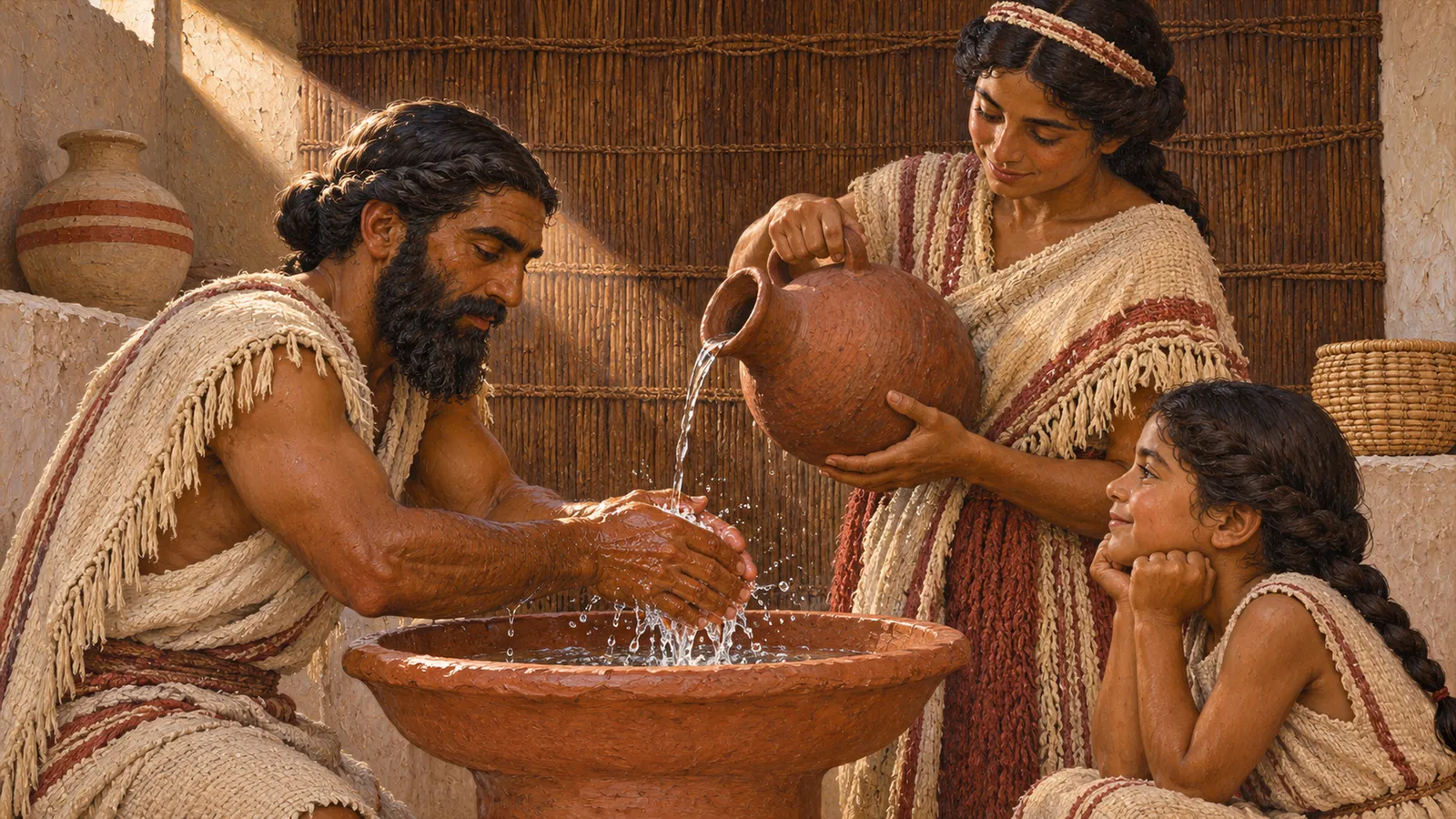
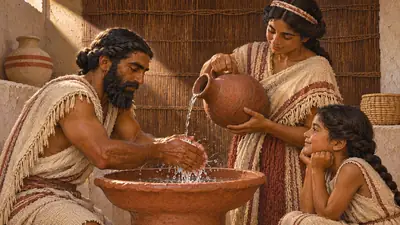
Next came Shul-shaga, lord of the washing rites. He was to keep the rooms clean and make sure that food and drink were always ready for Ningirsu.
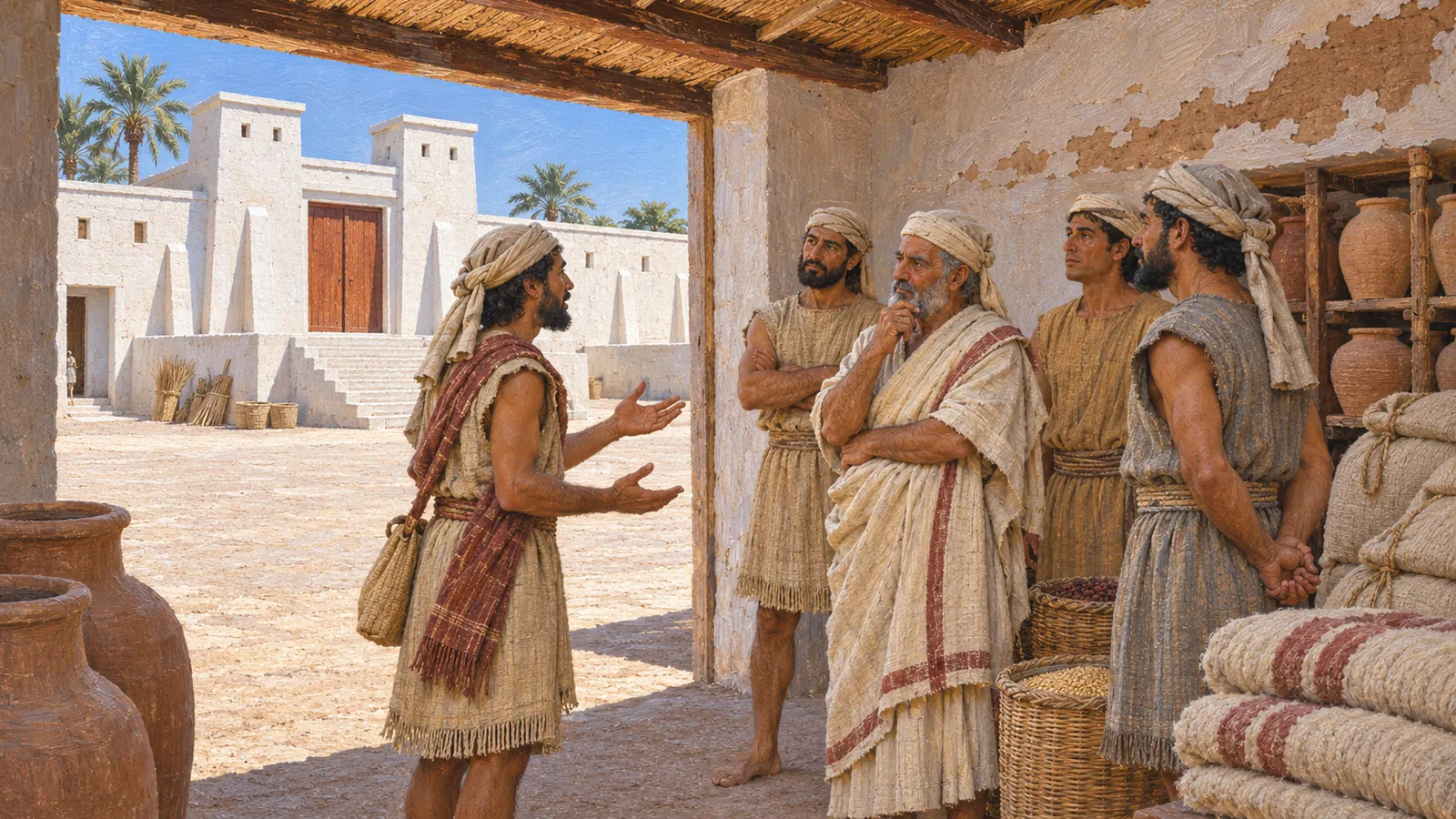
Gudea appoints Ningirsu’s generals, then Lugal-sisa to pray for Lagash and keep the city’s throne secure. Shakkan is appointed to carry word to the lord in his hall.
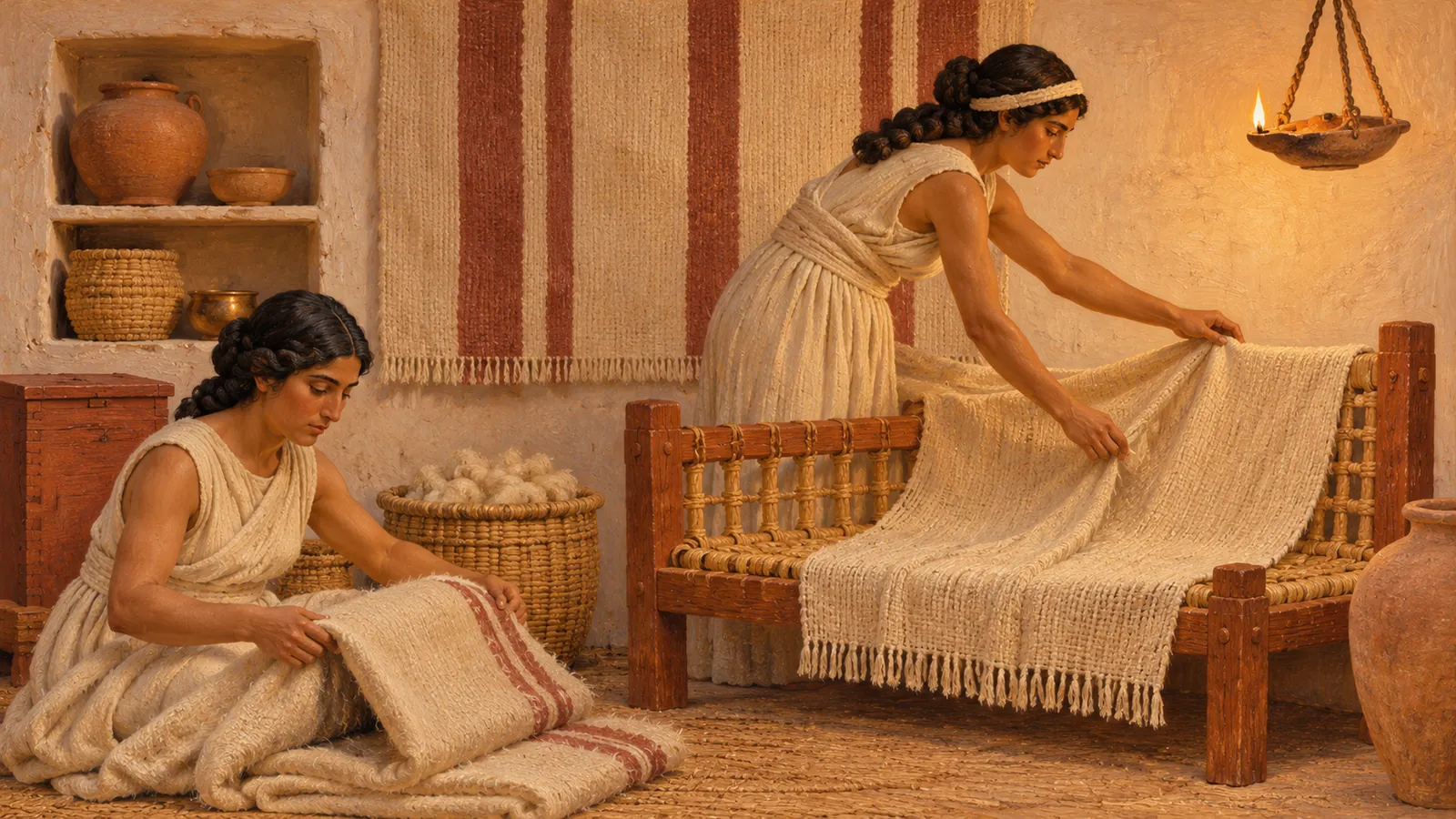
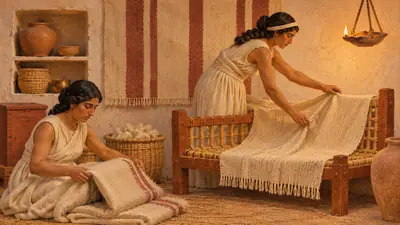
Kinda-zid is given charge of the bedchamber. He will see that Ningirsu can wash and that fresh herbs are scattered on his bed to make his sleep sweet.
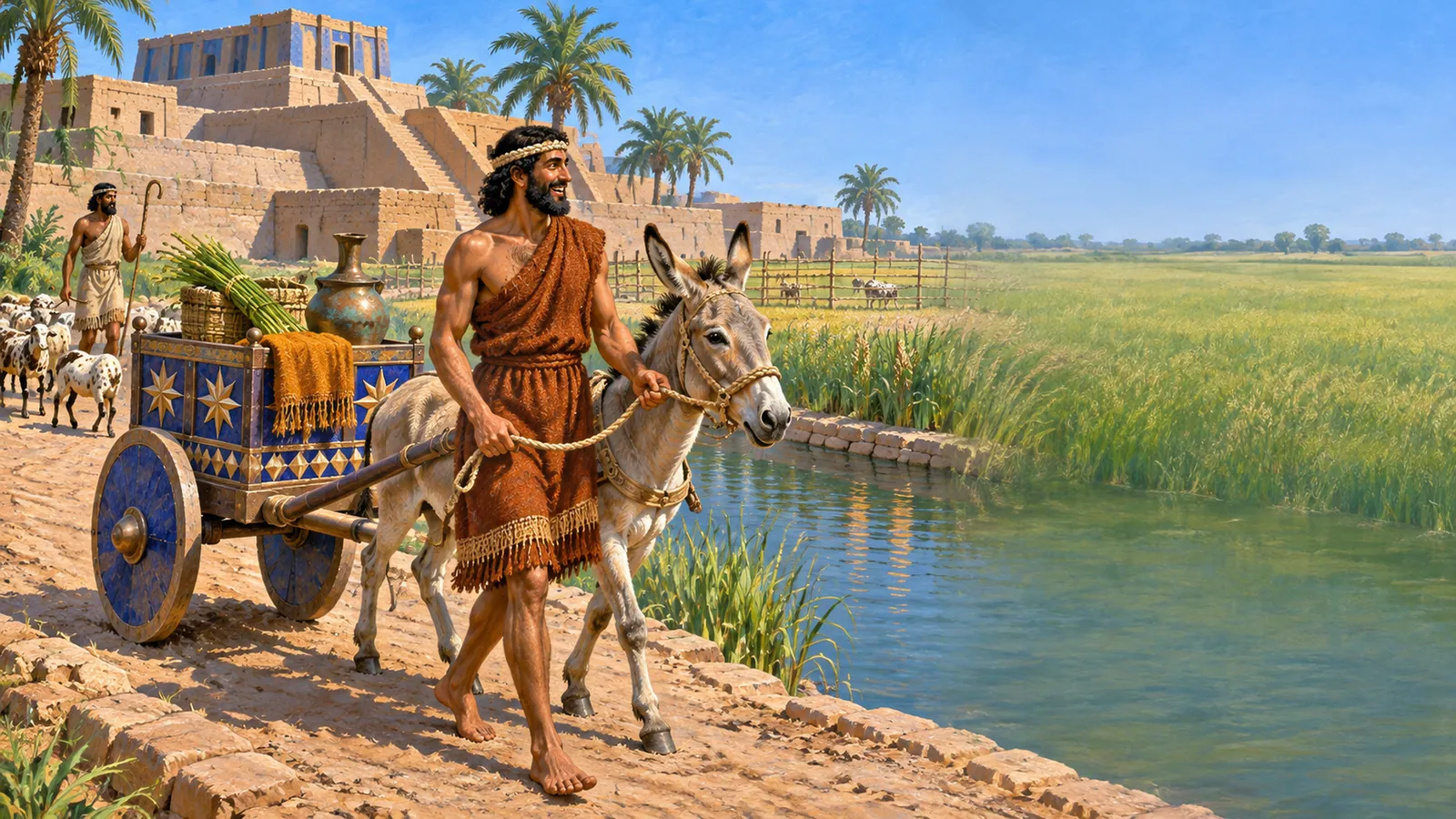
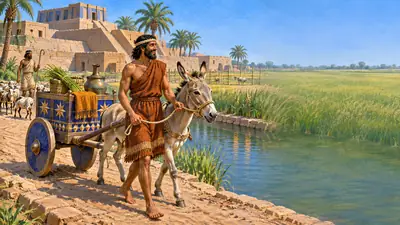
A keeper was appointed to harness the donkey to the star-decorated chariot. A herdsman would see that milk and cream never failed in the shrine.
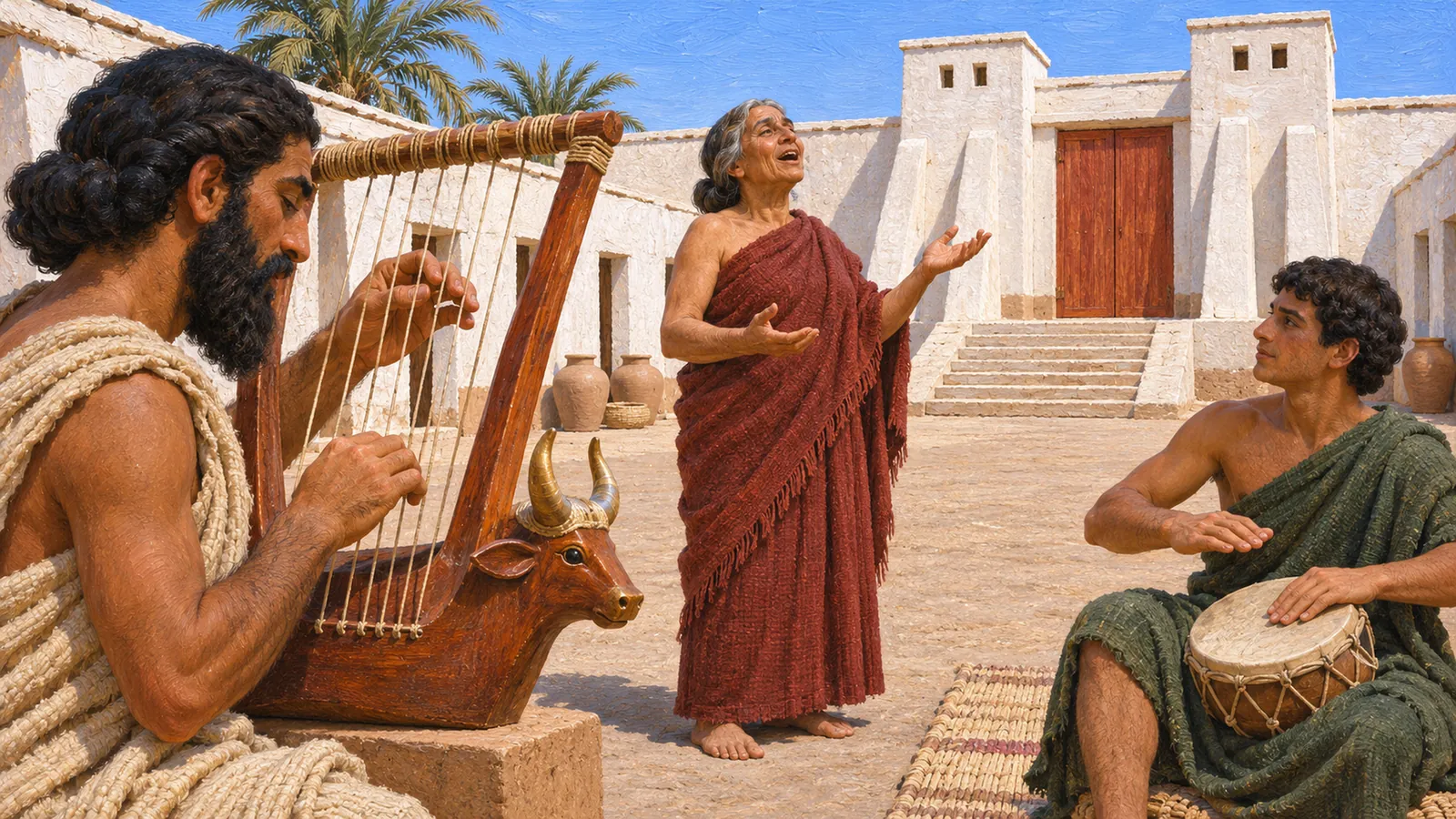
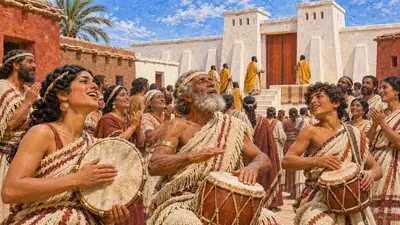
The musician Ushumgal-kalama was to fill the courtyard with joy. Gudea also presented a drum whose task was to soothe hearts and dry tears.
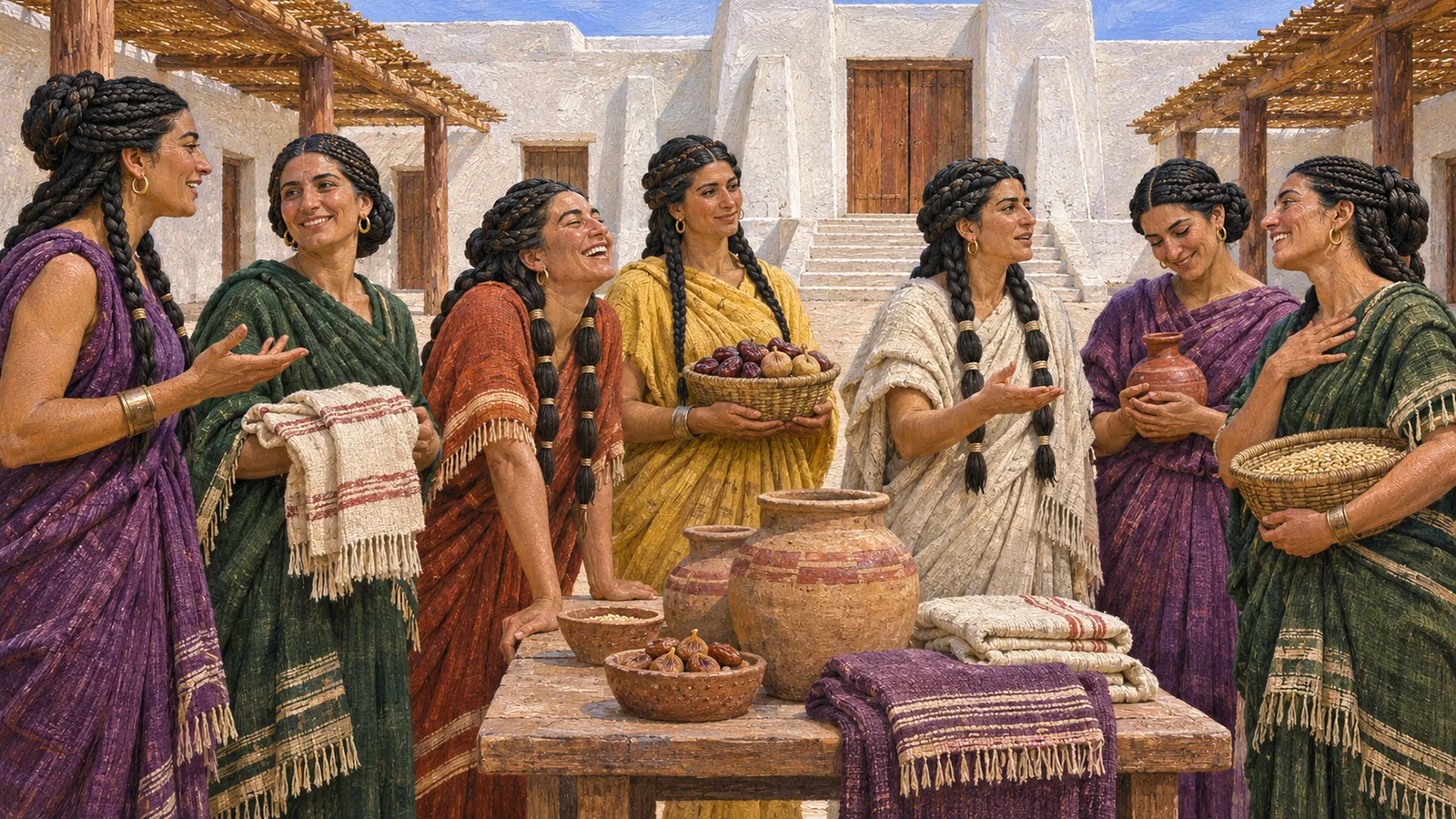
The seven daughters of Bau and Ningirsu came before their father. The poem calls them bringers of abundance. They spoke in support of Gudea.
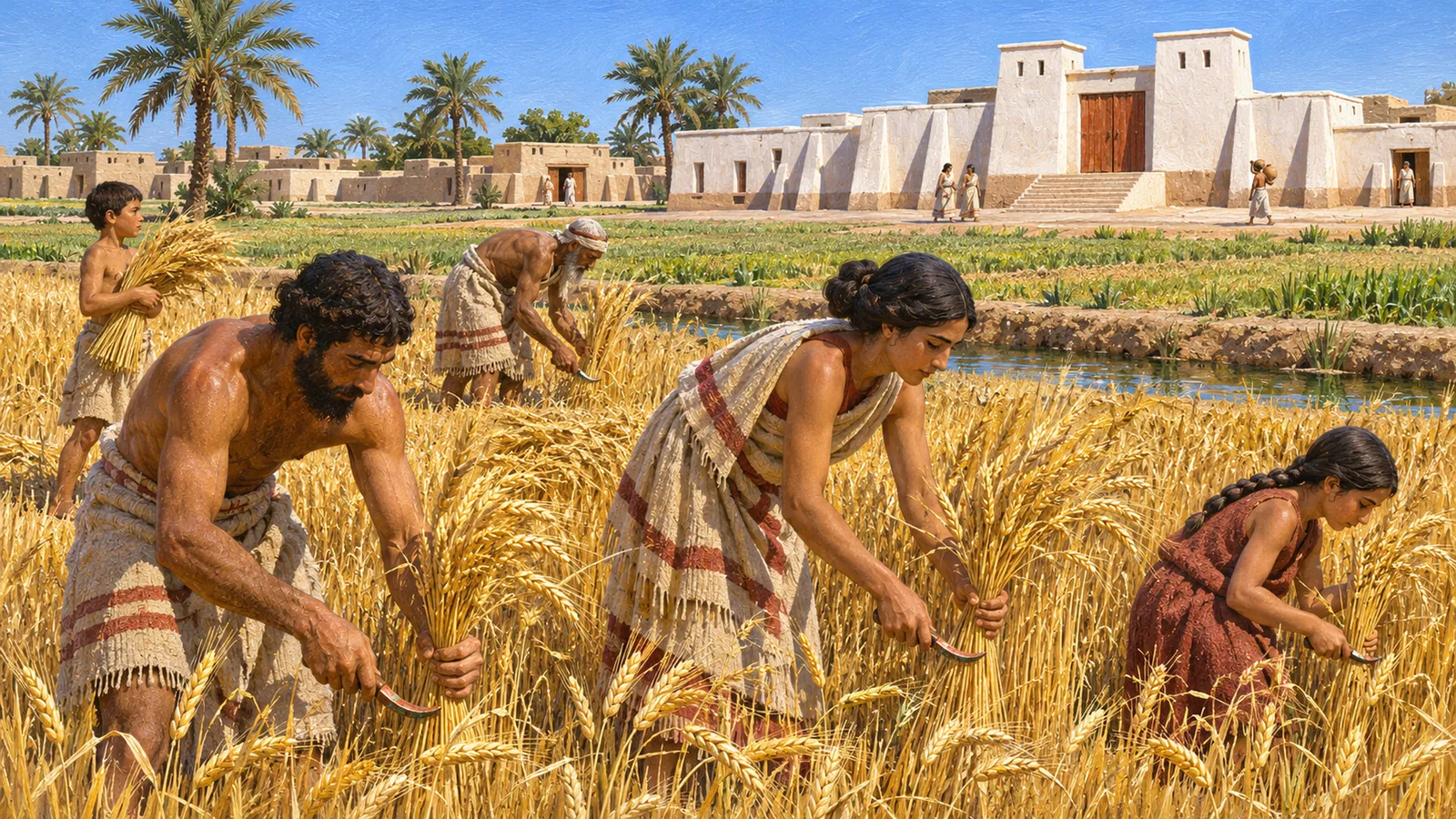
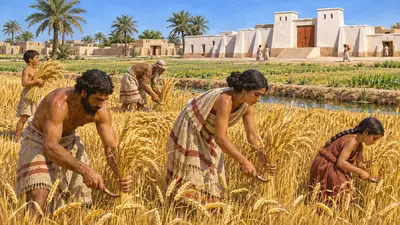
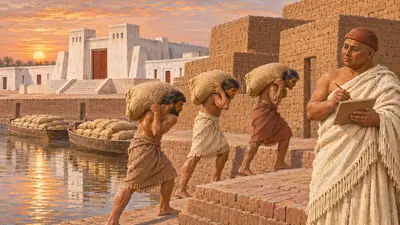
The divine farmer was charged with keeping the ditches full and the fields fertile. Wheat, emmer and pulses would rise from the furrows and fill the grain heaps of Lagash.
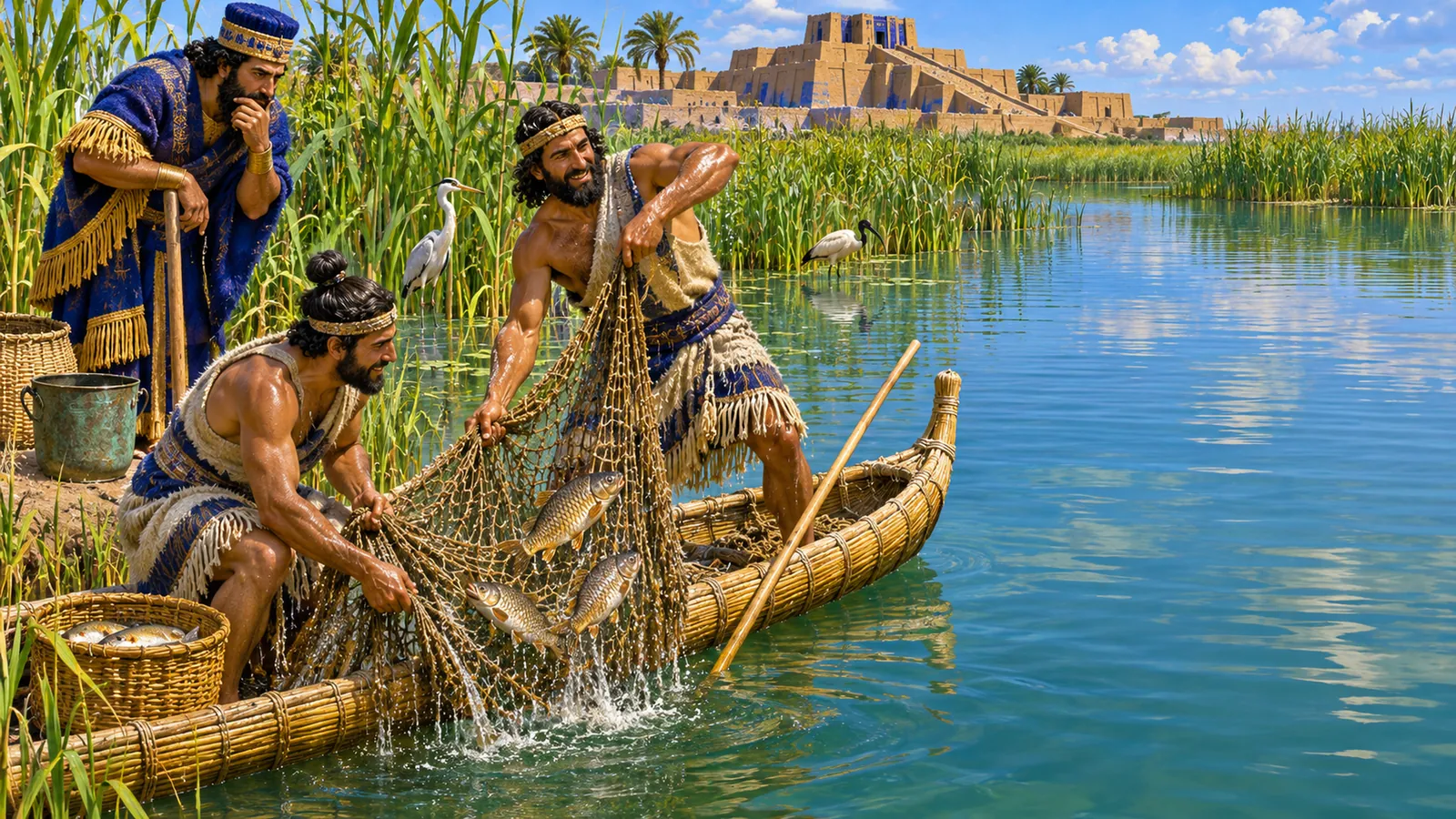
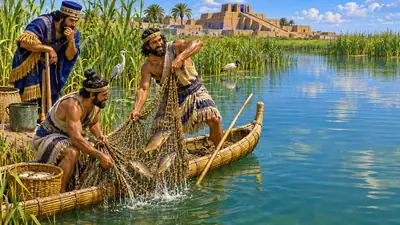
Lama is set over the fisheries. Her messenger must report how many carp and perch the marshes yield and how many new shoots rise in the green reedbeds.
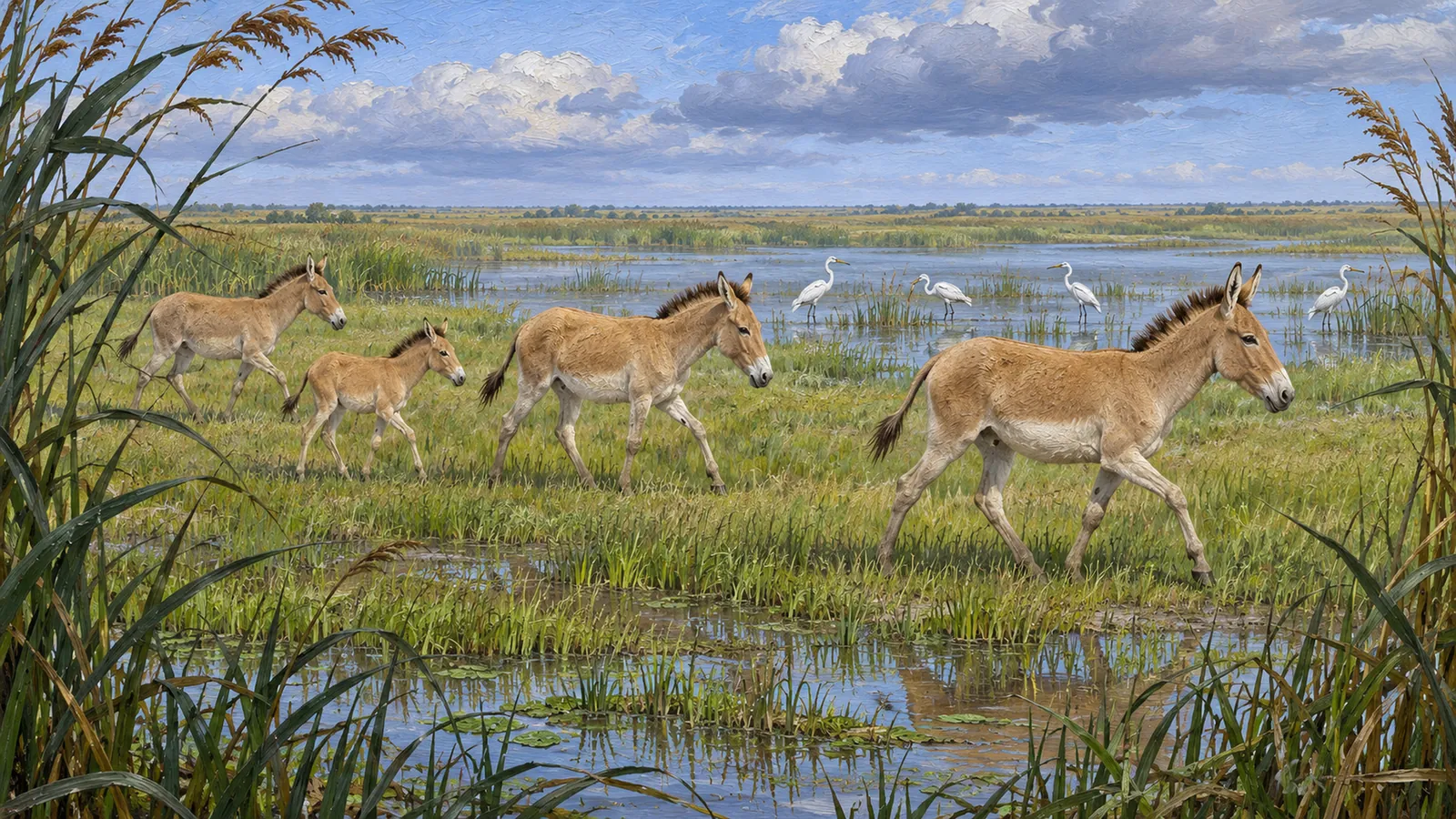
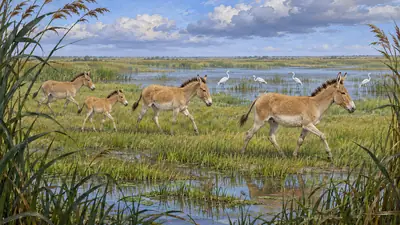
The next steward must tend the open country, where birds need places to nest and wild herds must thrive. Another official is charged with settlements and guardhouses.
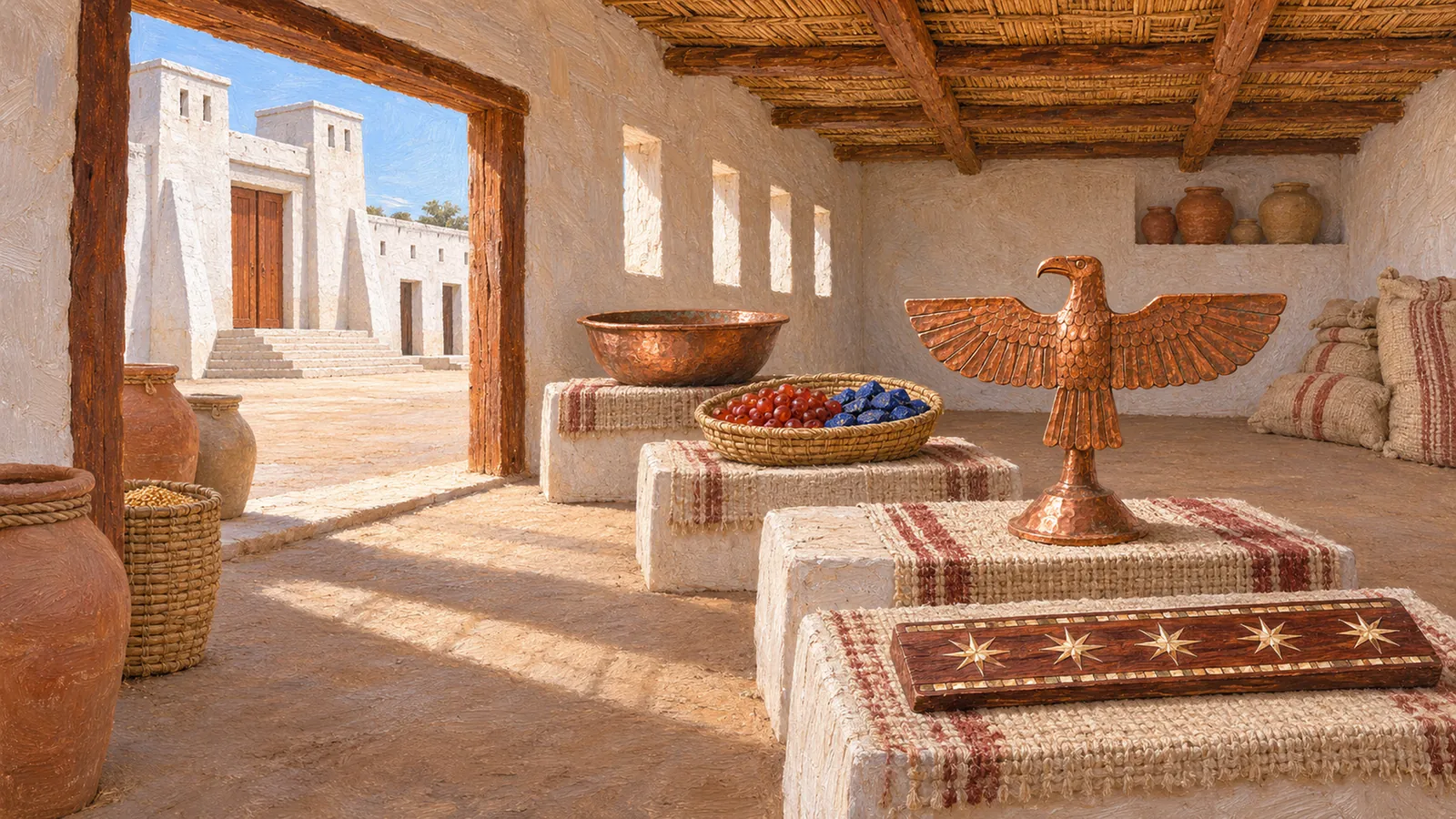
Gudea gave the house a ceremonial chariot, standards, and Ningirsu’s weapons. He added bright copper vessels, tin, silver, lapis lazuli and red carnelian from Meluhha.
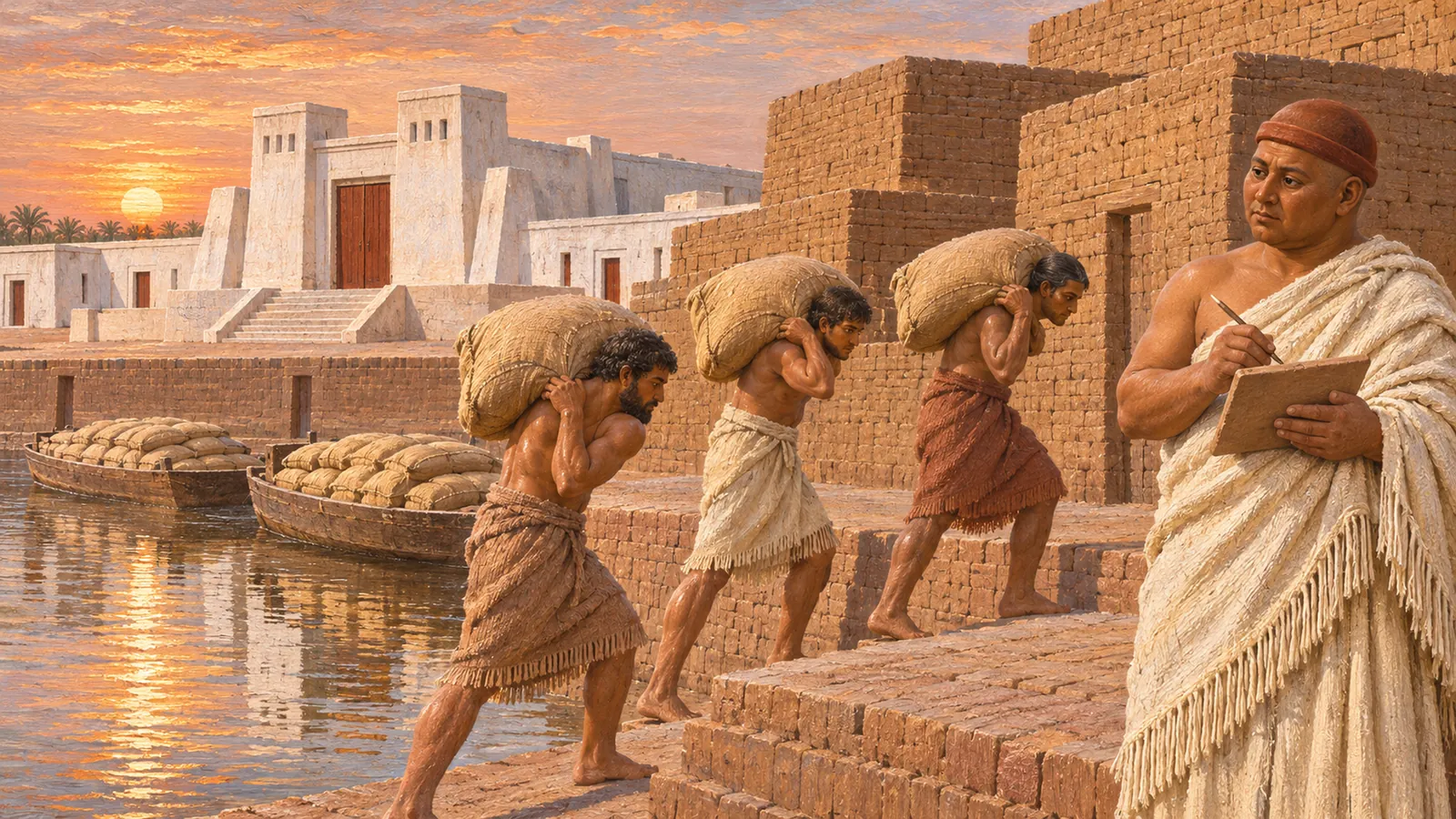
With his duties before him, Gudea entered the temple in person. He was to look after the waterways, grain boats, herds and fields, and see that the courtyard rang with music.
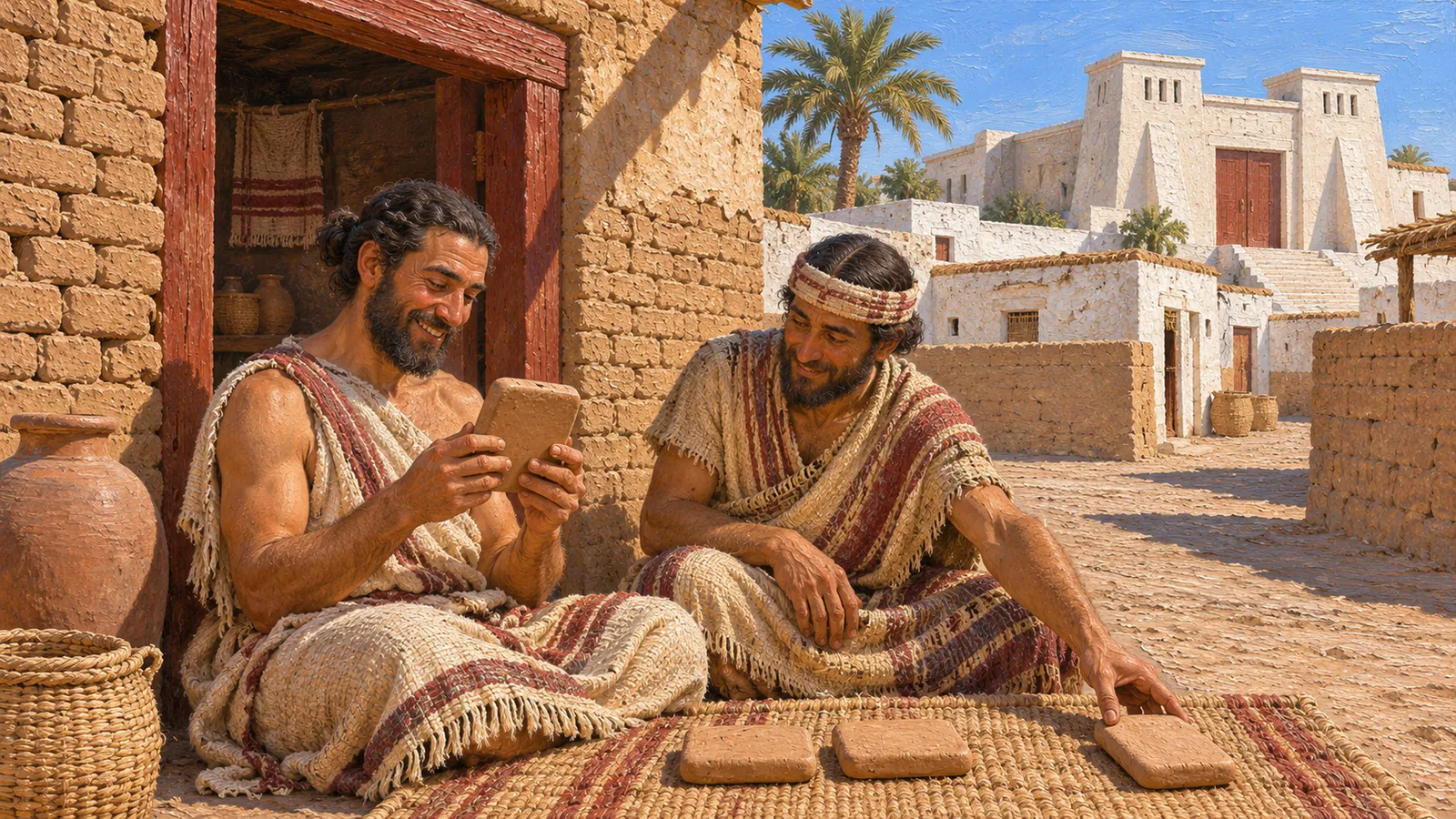
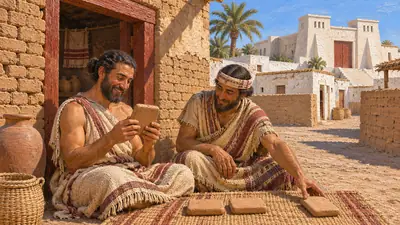
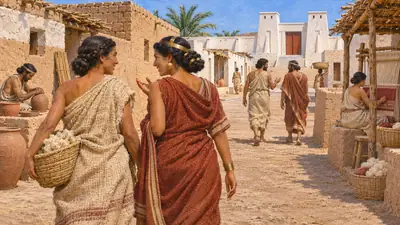
With the temple complete, Gudea sees that its dairy has cream and its kitchens have bread. Then he remits debts, lifting a burden from the people during the festival.
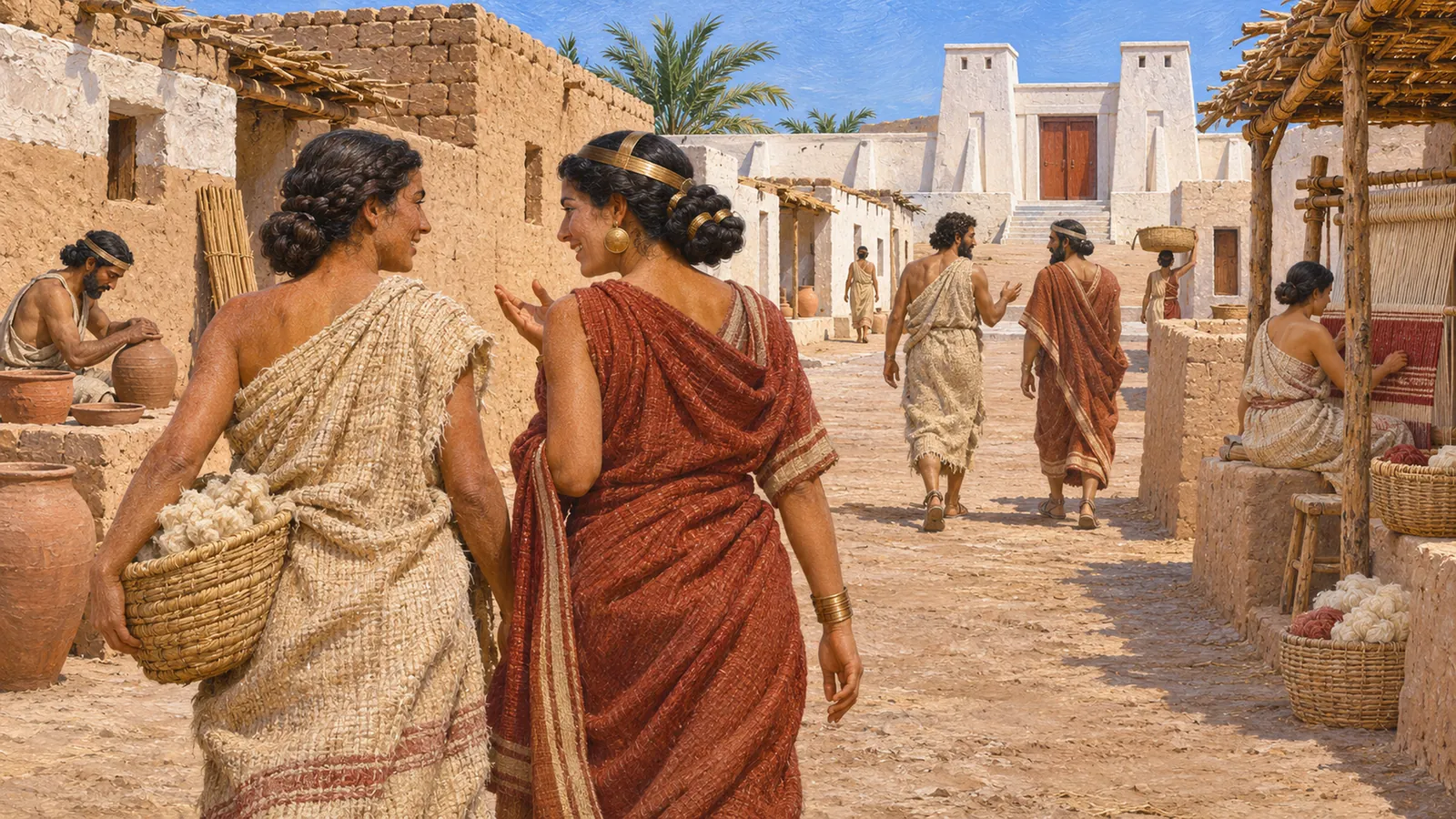
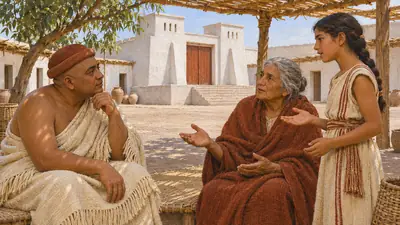
For seven days an enslaved woman may stand equal to her mistress and an enslaved man walk beside his master. The ritually excluded still sleep at the city’s edge.
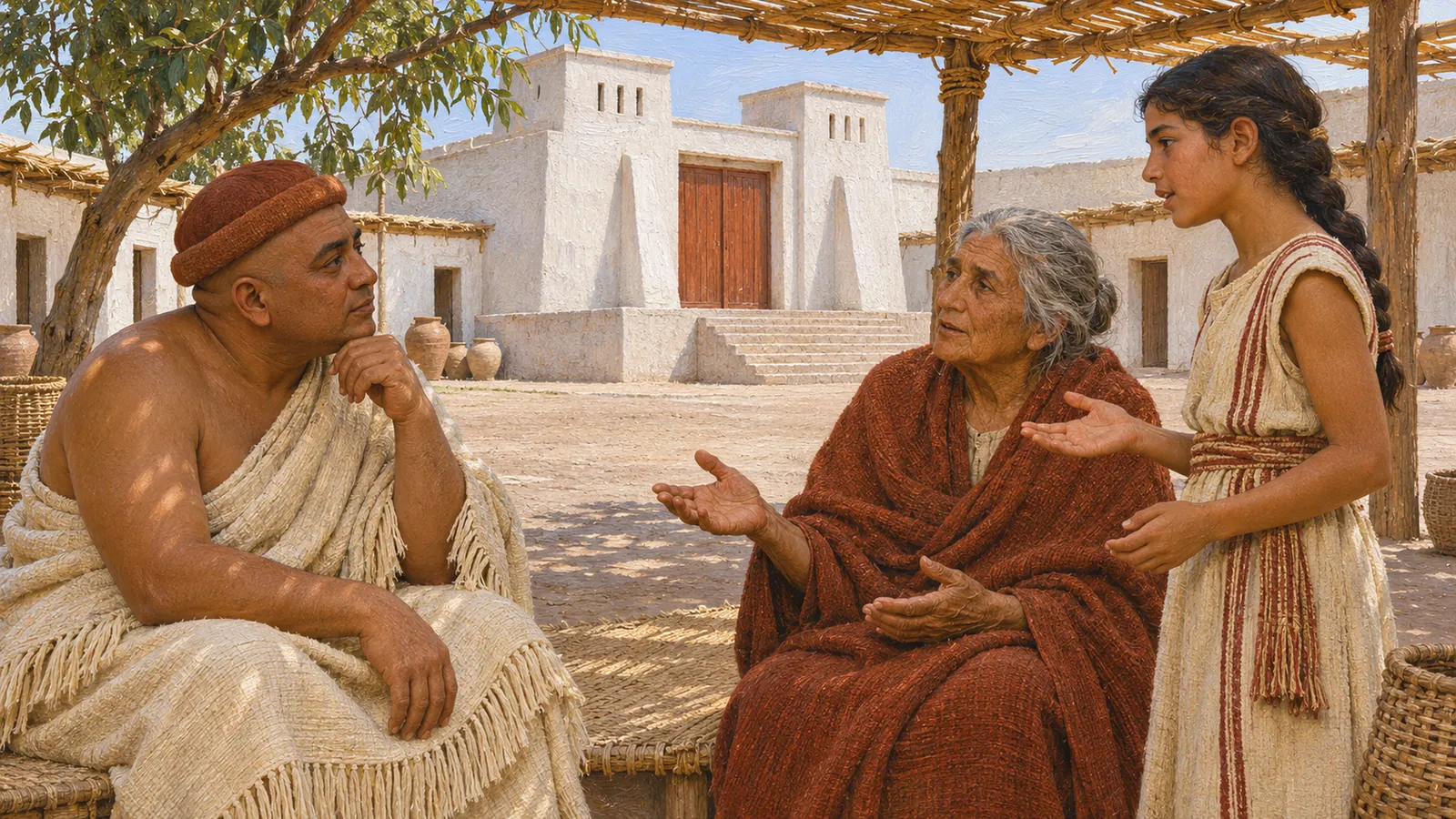
Gudea protected orphans against the rich and widows against the powerful. In a family without a son, he gave the daughter the right to inherit.
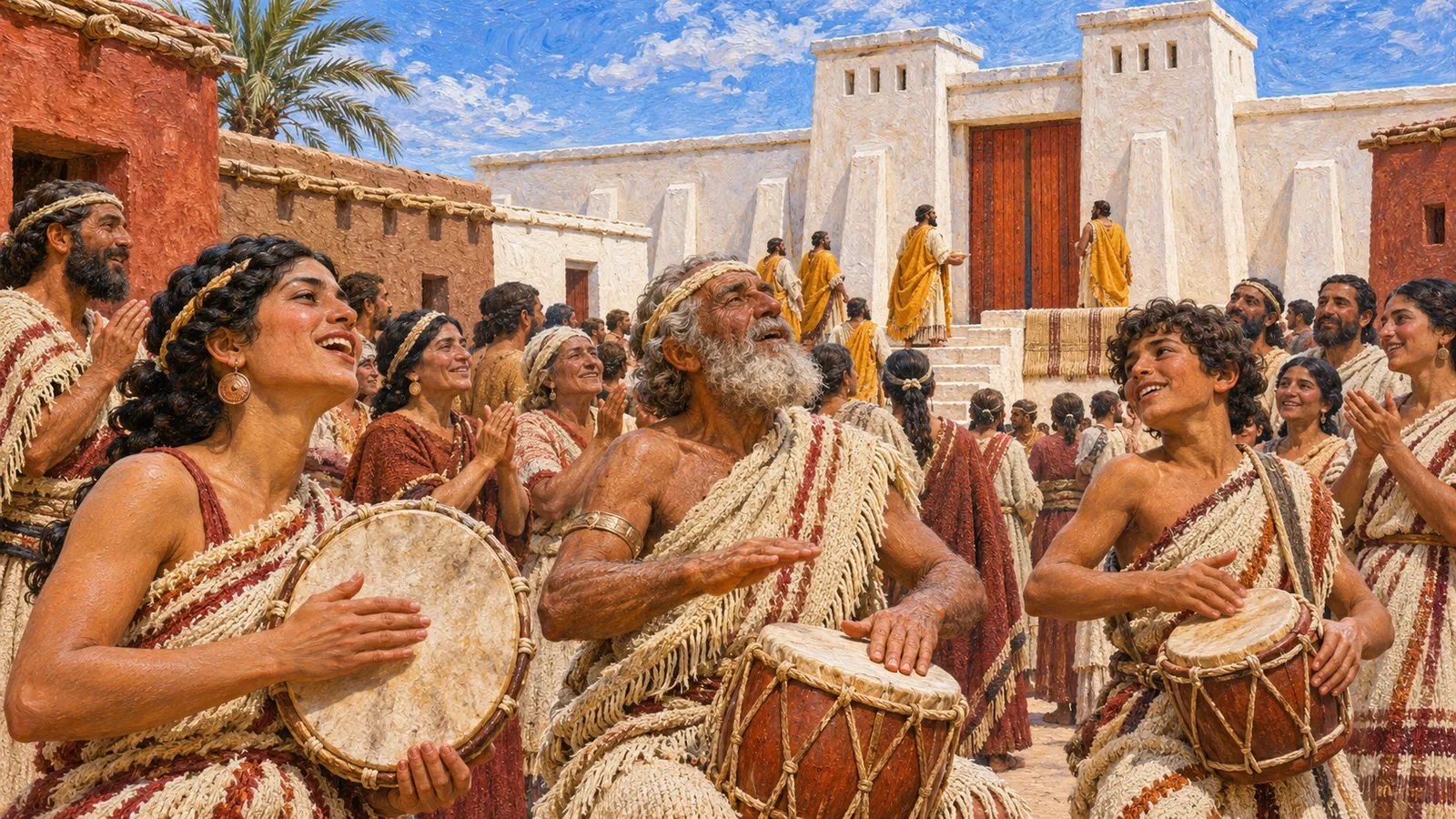
Gudea offers oxen and young goats for the dedication and sets bowls of wine in the open air. Drums sound like a storm as the city looks up to him.
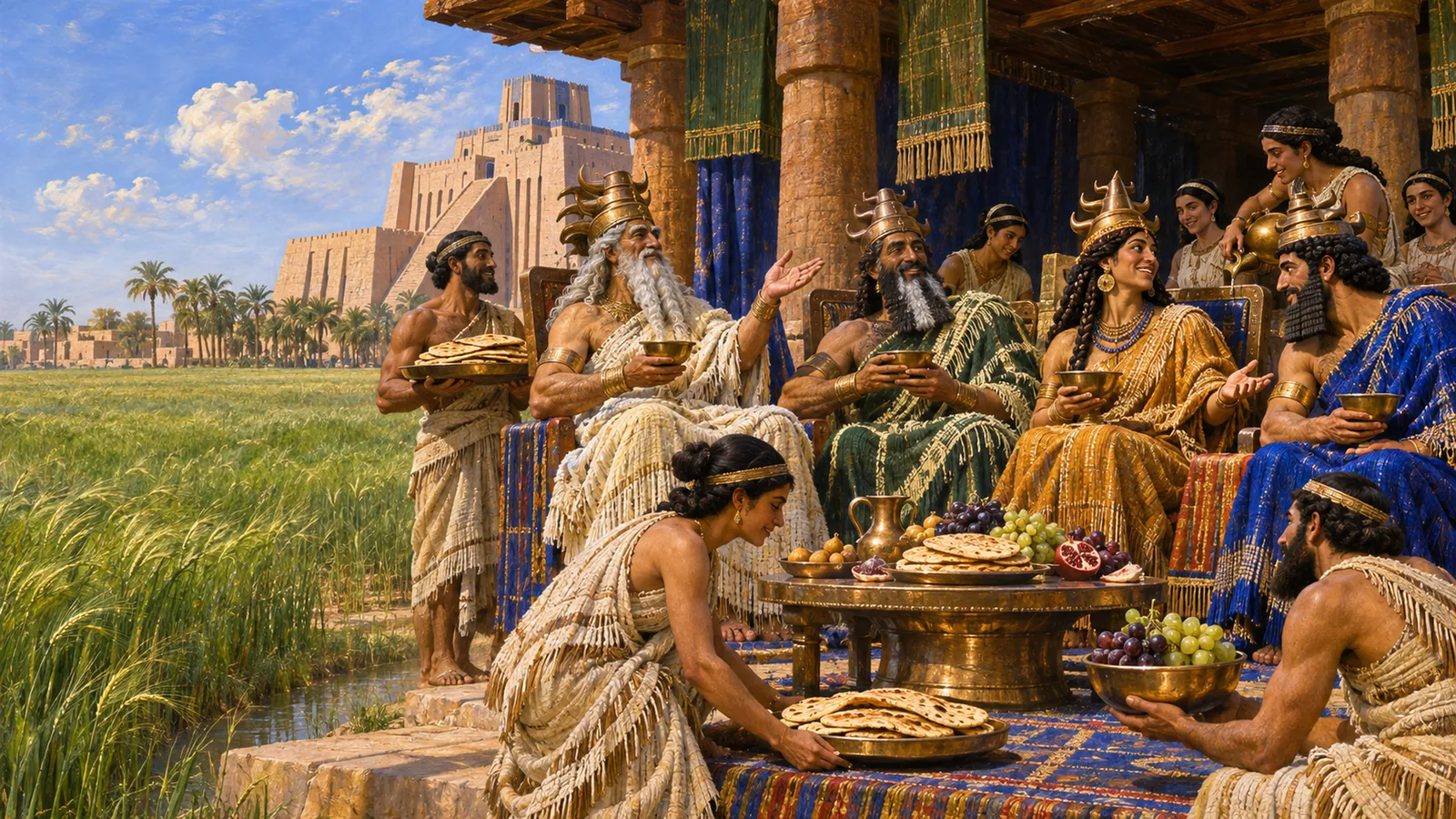
The people of Lagash see the land produce barley. Gudea lays out a great meal for Ningirsu in the new house. An sits first, then Enlil and Ninmah.
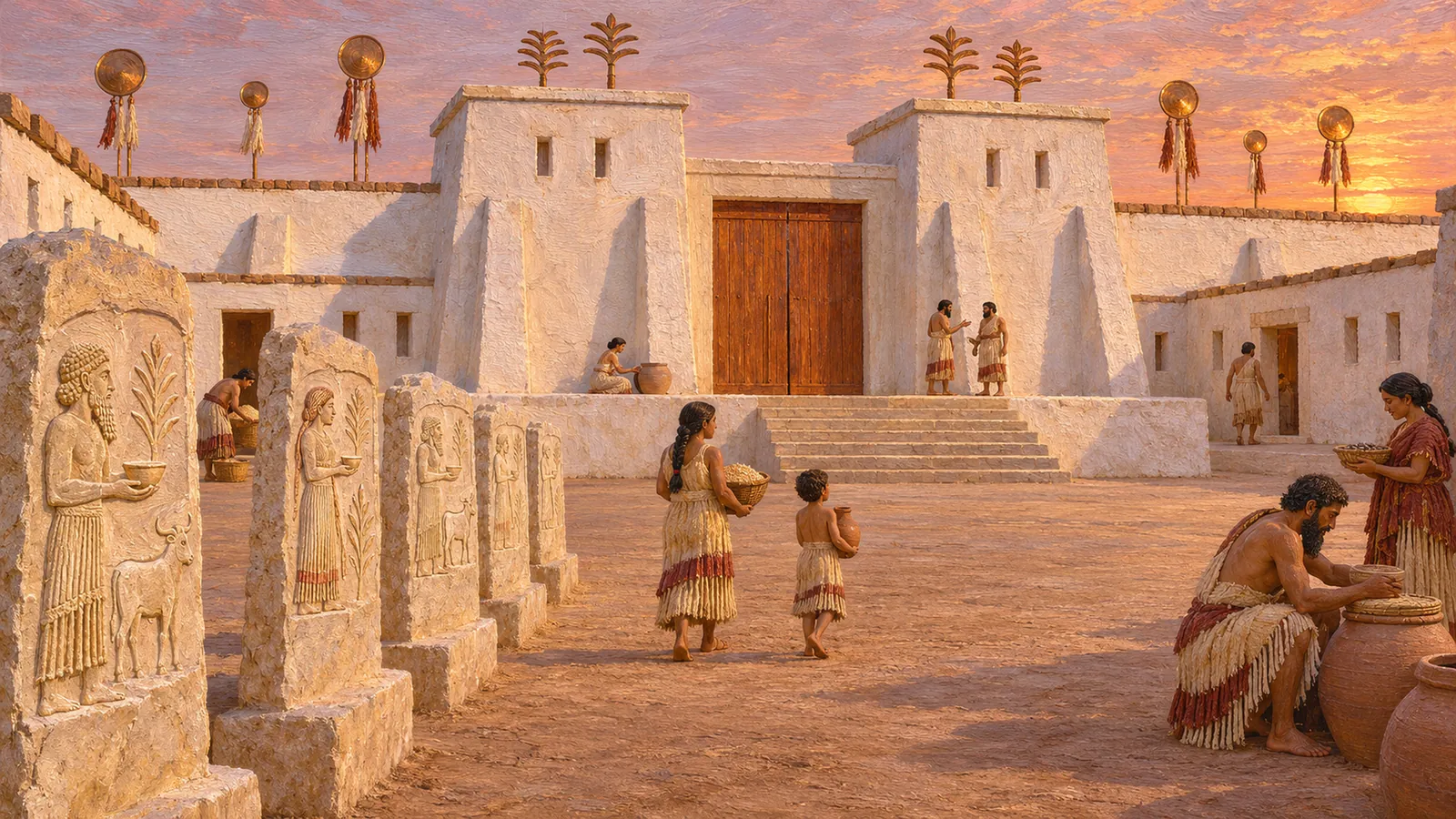
The owner rejoices over Eninnu and calls for a good fate for its brickwork. The words come back more than once, with gaps where parts of the cylinder are damaged.
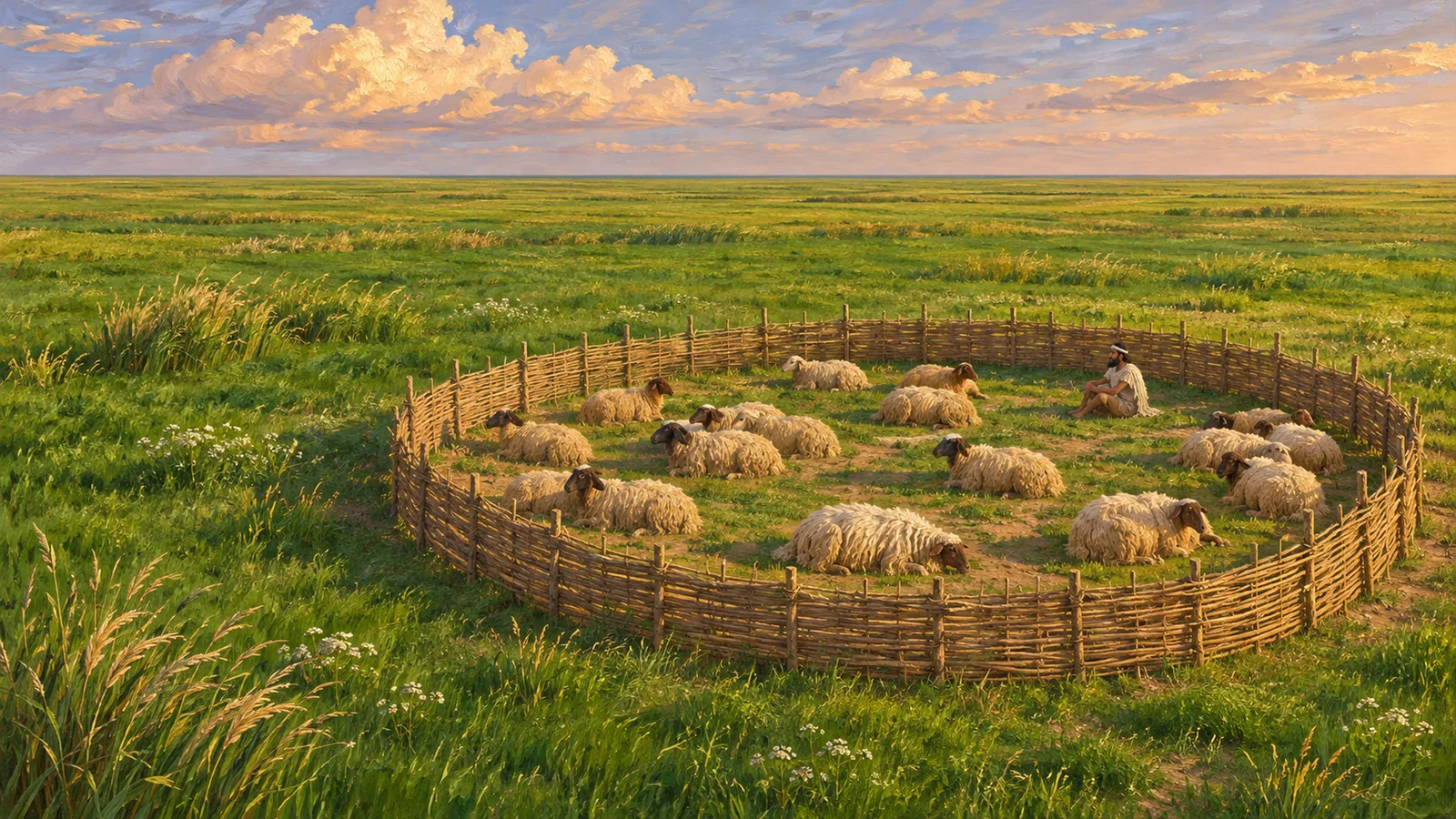
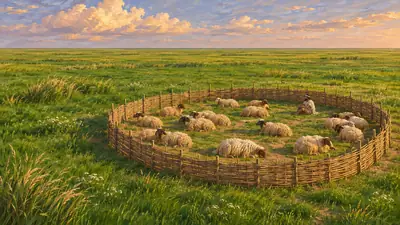
In the surviving blessing, cow pens will rise and sheepfolds be renewed. People will rest in safety and Gudea will enjoy long life. The hymn ends by praising Ningirsu.
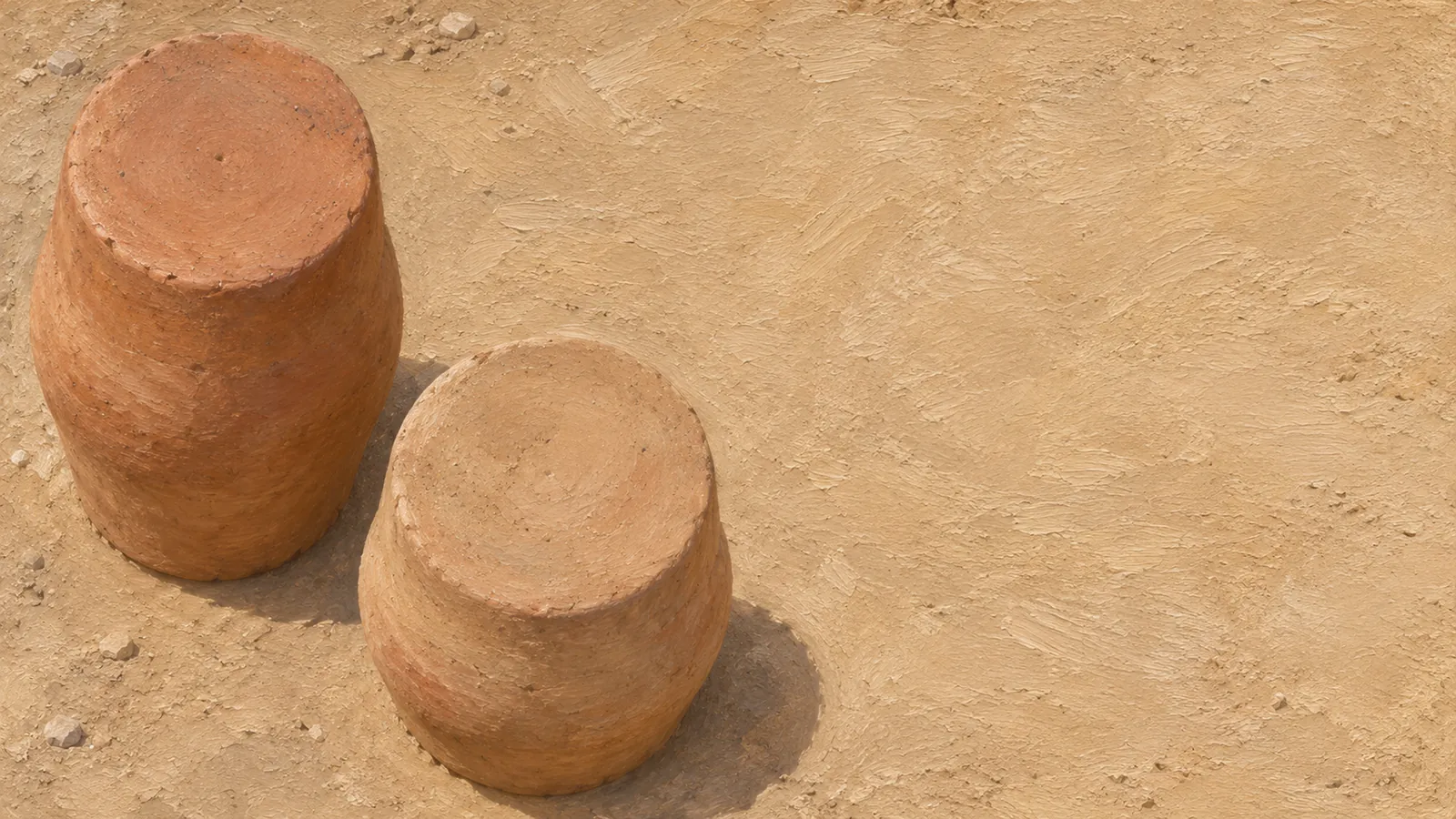
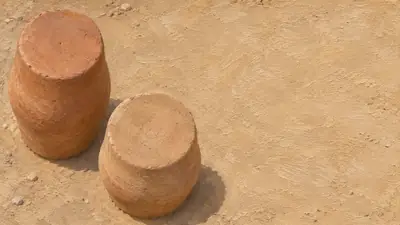
Two great cylinders of baked clay carried the story through the centuries. Unearthed at Tello in eighteen seventy-seven, the first holds the building and the second the dedication and feast.
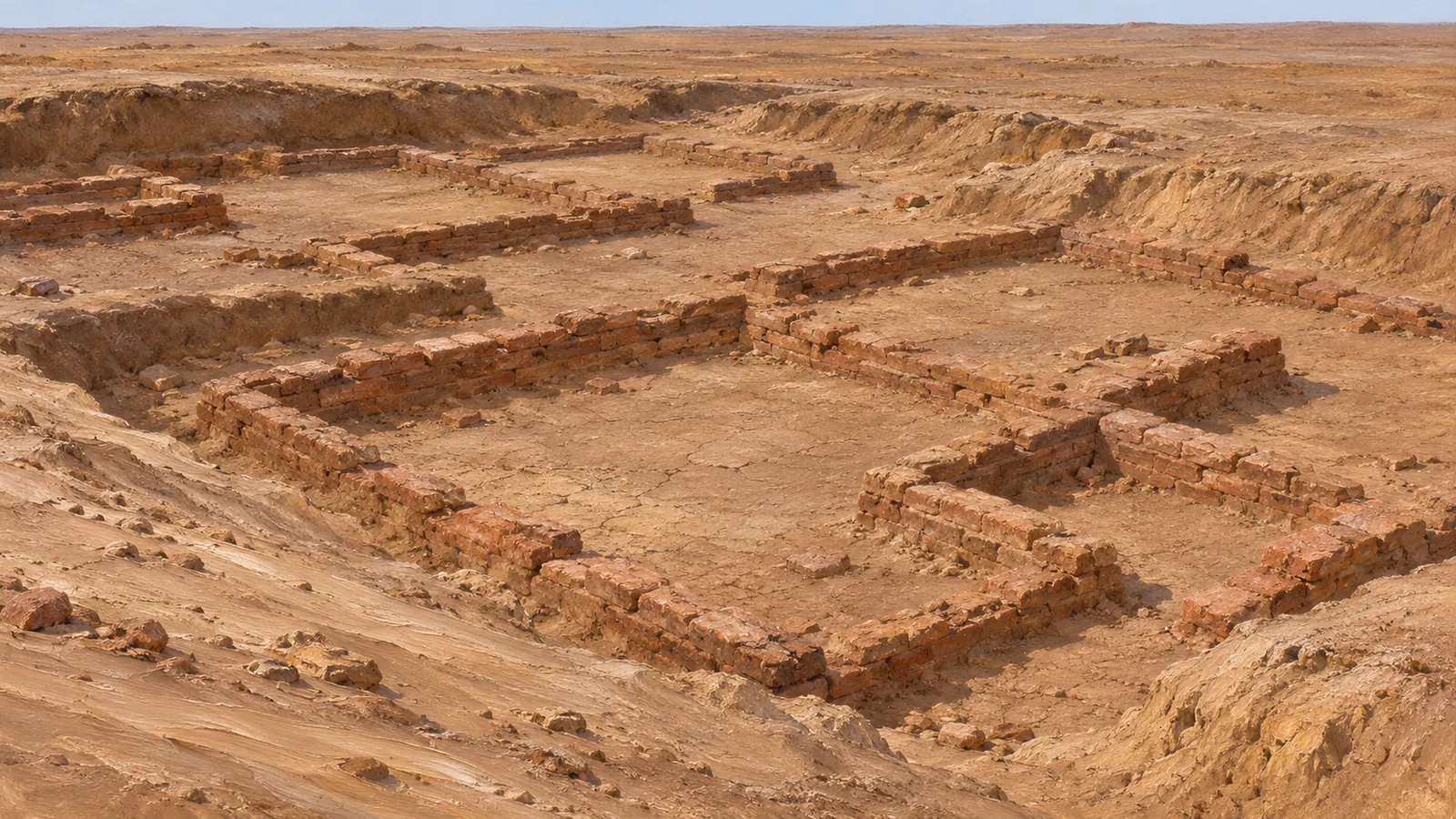
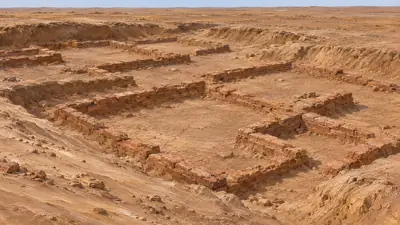
At Tello, excavators also traced the ground plan of the building Gudea dedicated to Ningirsu. The surviving mudbrick walls give a shape on the ground to the house of the poem.
End of chapter 2
All pages
Sources
Editions consulted
- Electronic Text Corpus of Sumerian Literature, Oxford, translation 2.1.7
- Electronic Text Corpus of Sumerian Royal Inscriptions, ORACC Q000377
- Musée du Louvre, Cylinder B of Gudea, MNB 1511
- Sébastien Rey, *The Temple of Ningirsu*, Girsu Project excavation report
Ancient lines behind each page
- Page 1: Gudea Cylinder B, ETCSL 2.1.7, lines 815–841
- Page 2: Gudea Cylinder B, ETCSL 2.1.7, lines 842–862
- Page 3: Gudea Cylinder B, ETCSL 2.1.7, lines 863–882
- Page 4: Gudea Cylinder B, ETCSL 2.1.7, lines 872–882
- Page 5: Gudea Cylinder B, ETCSL 2.1.7, lines 883–891
- Page 6: Gudea Cylinder B, ETCSL 2.1.7, lines 892–909
- Page 7: Gudea Cylinder B, ETCSL 2.1.7, lines 910–918
- Page 8: Gudea Cylinder B, ETCSL 2.1.7, lines 919–928
- Page 9: Gudea Cylinder B, ETCSL 2.1.7, lines 929–943
- Page 10: Gudea Cylinder B, ETCSL 2.1.7, lines 944–956
- Page 11: Gudea Cylinder B, ETCSL 2.1.7, lines 957–970
- Page 12: Gudea Cylinder B, ETCSL 2.1.7, lines 971–1014
- Page 13: Gudea Cylinder B, ETCSL 2.1.7, lines 1015–1023
- Page 14: Gudea Cylinder B, ETCSL 2.1.7, lines 1024–1040
- Page 15: Gudea Cylinder B, ETCSL 2.1.7, lines 1041–1057
- Page 16: Gudea Cylinder B, ETCSL 2.1.7, lines 1058–1069
- Page 17: Gudea Cylinder B, ETCSL 2.1.7, lines 1070–1081
- Page 18: Gudea Cylinder B, ETCSL 2.1.7, lines 1082–1087
- Page 19: Gudea Cylinder B, ETCSL 2.1.7, lines 1088–1106
- Page 20: Gudea Cylinder B, ETCSL 2.1.7, lines 1118–1154
- Page 21: Gudea Cylinder B, ETCSL 2.1.7, lines 1155–1202
- Page 22: Gudea Cylinder B, ETCSL 2.1.7, lines 1211–1215
- Page 23: Gudea Cylinder B, ETCSL 2.1.7, lines 1216–1223
- Page 24: Gudea Cylinder B, ETCSL 2.1.7, lines 1224–1231
- Page 25: Gudea Cylinder B, ETCSL 2.1.7, lines 1232–1247
- Page 26: Gudea Cylinder B, ETCSL 2.1.7, lines 1254–1263
- Page 27: Gudea Cylinder B, ETCSL 2.1.7, lines 1276–1320
- Page 28: Gudea Cylinder B, ETCSL 2.1.7, lines 1321–1363
- Page 29: Louvre MNB 1511 and MNB 1512
- Page 30: Rey, The Temple of Ningirsu, 2024, excavation of Tell A
Illustrations made with AI tools by IL Archive; the text is based on the ancient sources (see the sources at the end of each chapter).