Isis and Osiris Chapter 1
The Five Added Days
Plutarch’s retelling begins with five days added to the year and the births celebrated on them. Osiris becomes king and teaches people to cultivate the land. After Set’s plot carries a chest out to sea, Isis searches for it.
SourcesTurn the pages with the arrows, the arrow keys or a swipe.
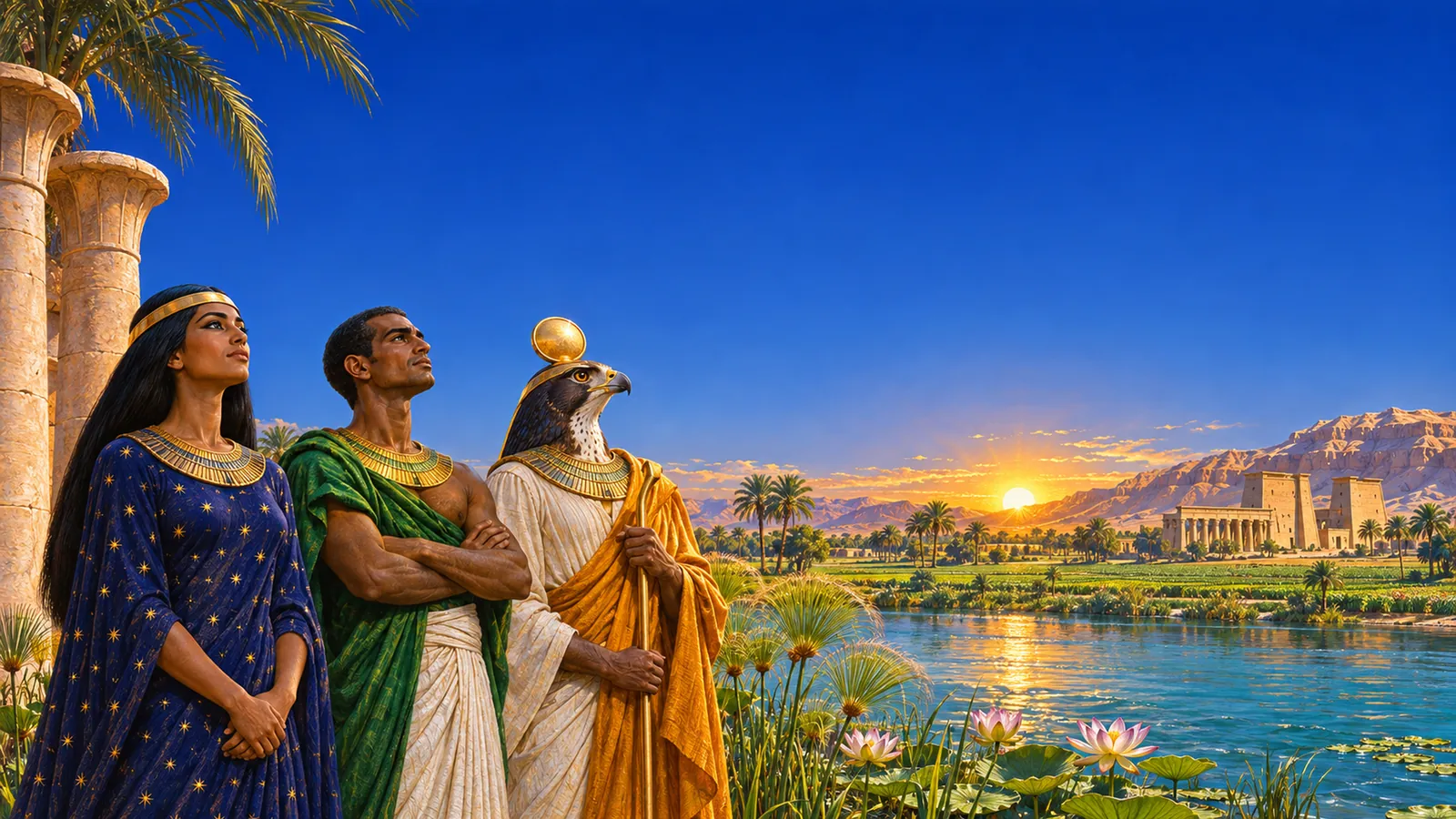
FIVE DAYS
In Plutarch’s retelling of an Egyptian myth, five days were added to the year. The story that explains them begins with Nut, Geb and the sun god Ra.
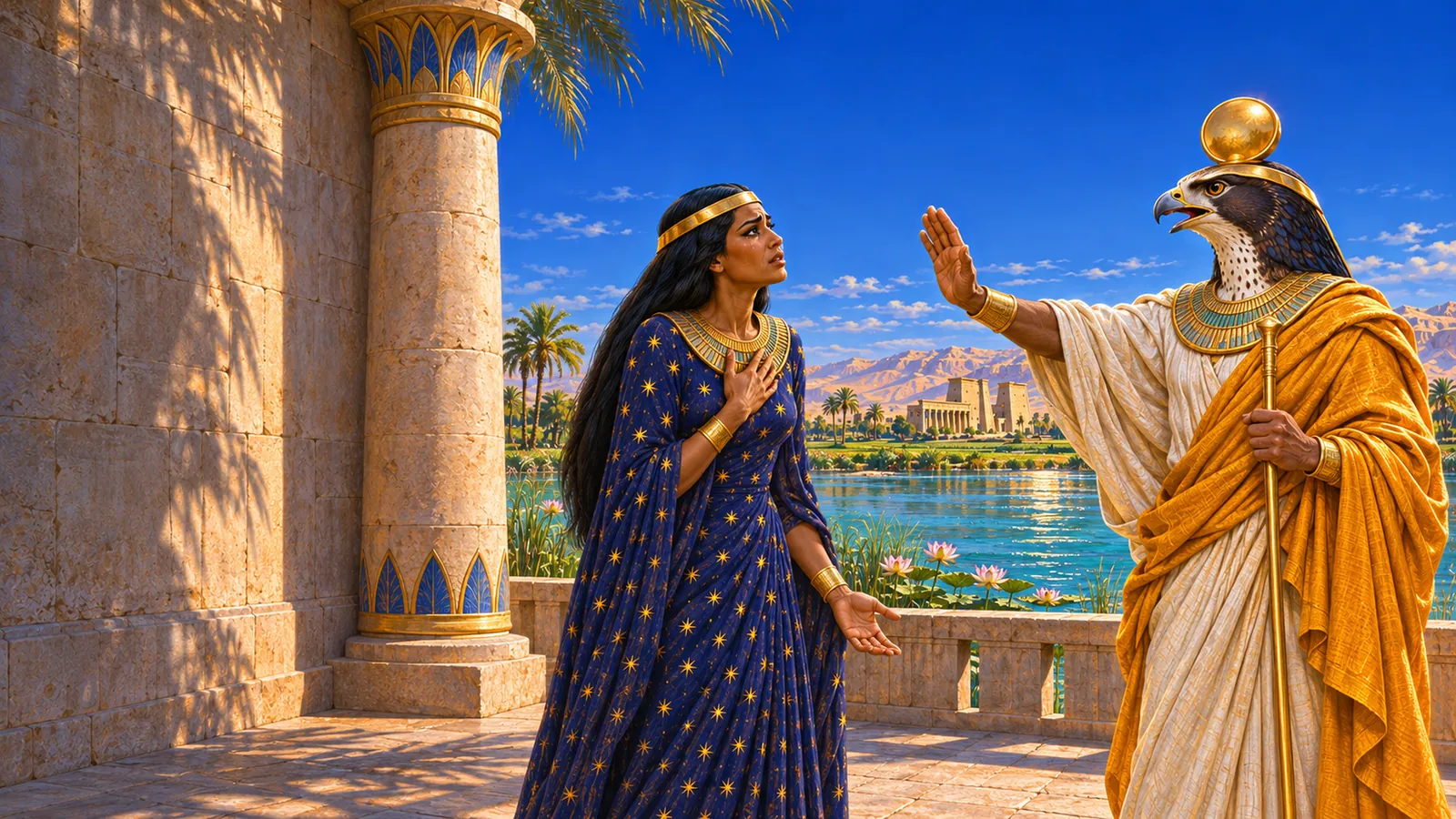
Ra discovered that Nut and Geb had been together in secret. He cursed Nut so that she could not give birth in any month or year.
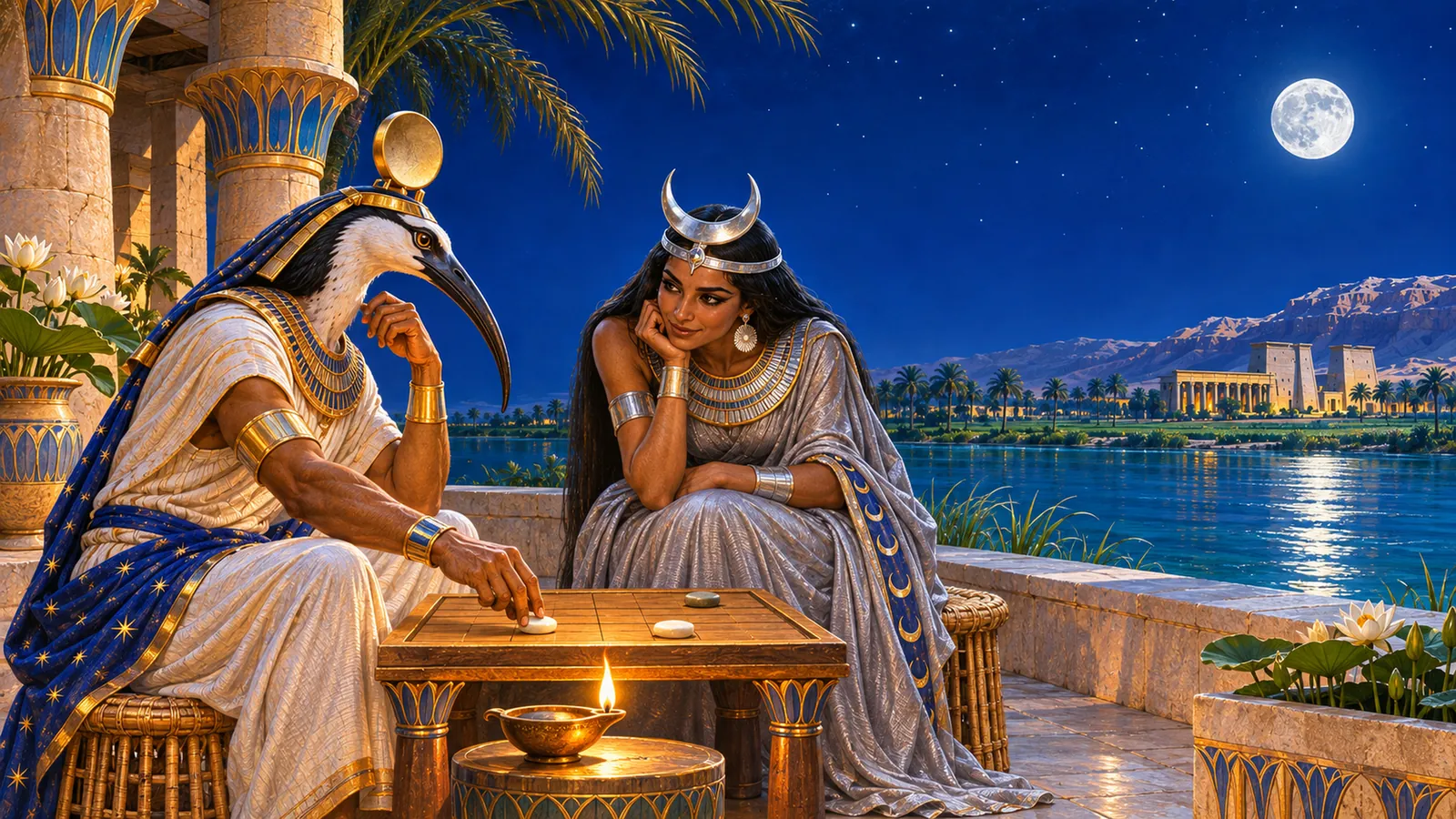
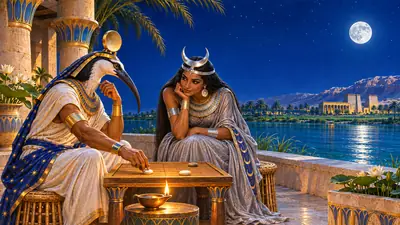
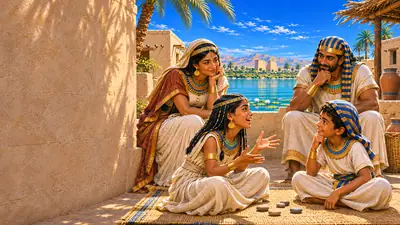
Thoth, who loved Nut, came to her aid. He played a board game with the Moon.
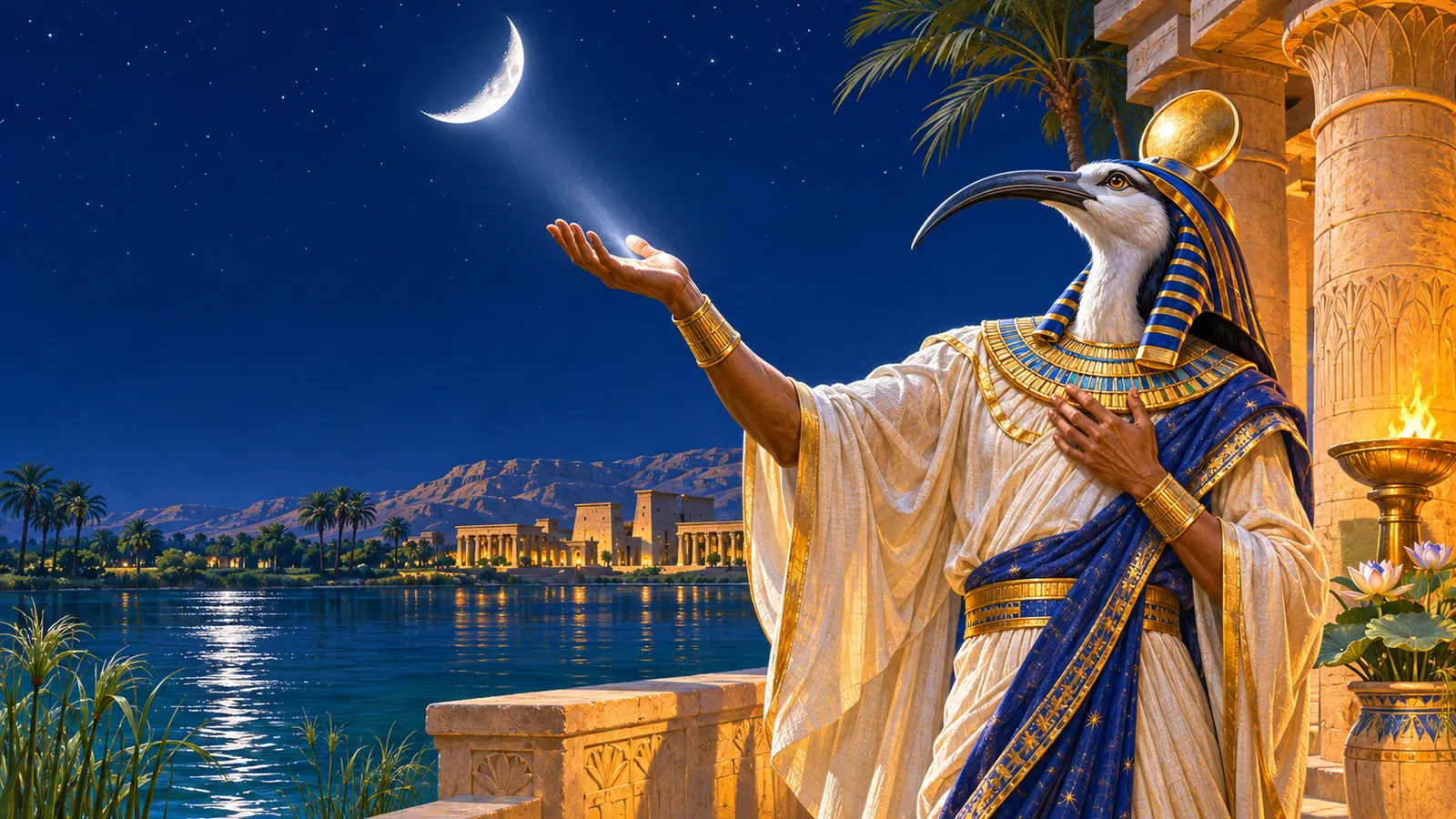
The story says Thoth won a seventieth part of each of the Moon’s periods of light.
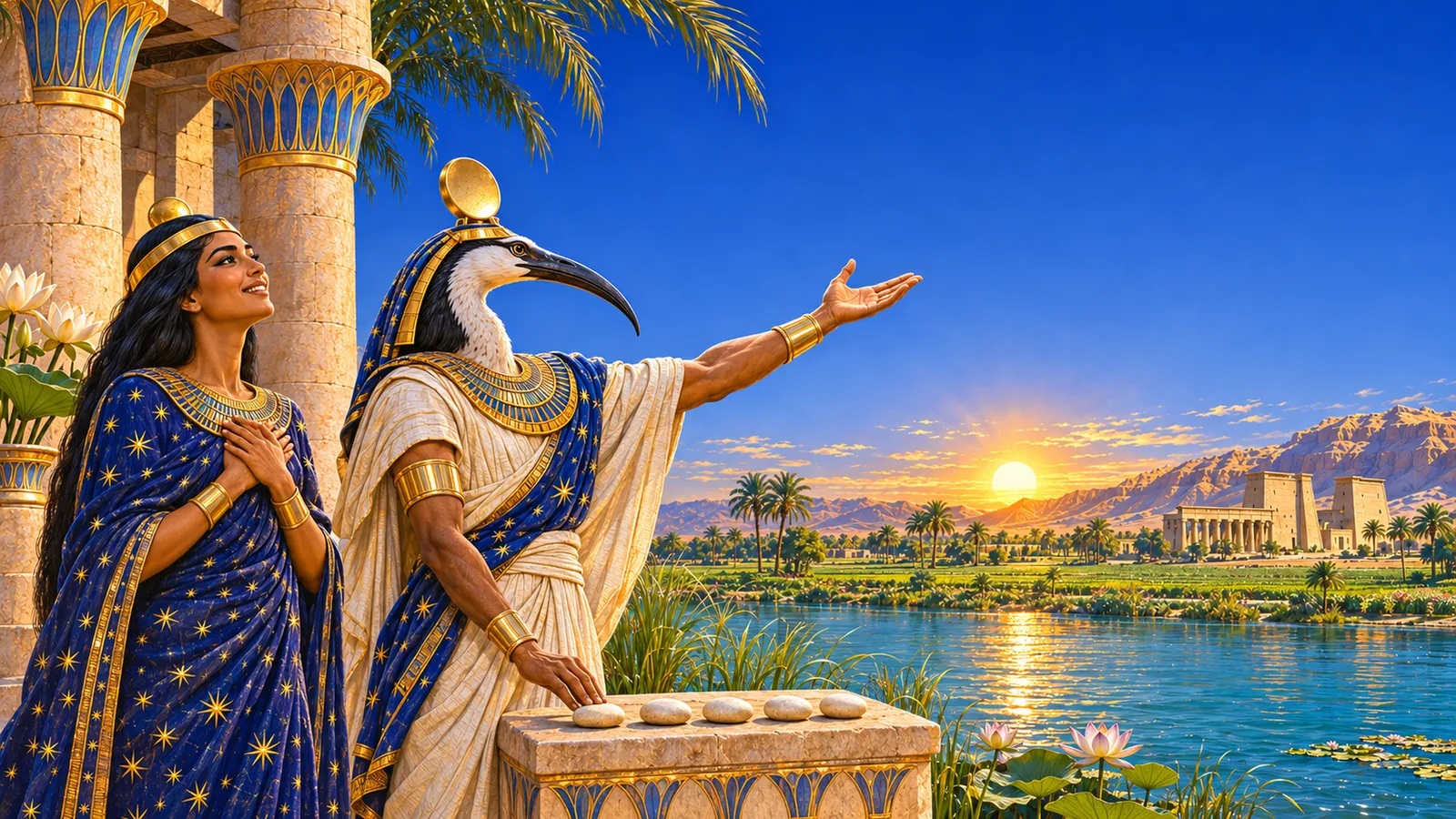
Thoth gathered the portions into five days and added them to the old year. According to the story, that year had lasted three hundred and sixty days.
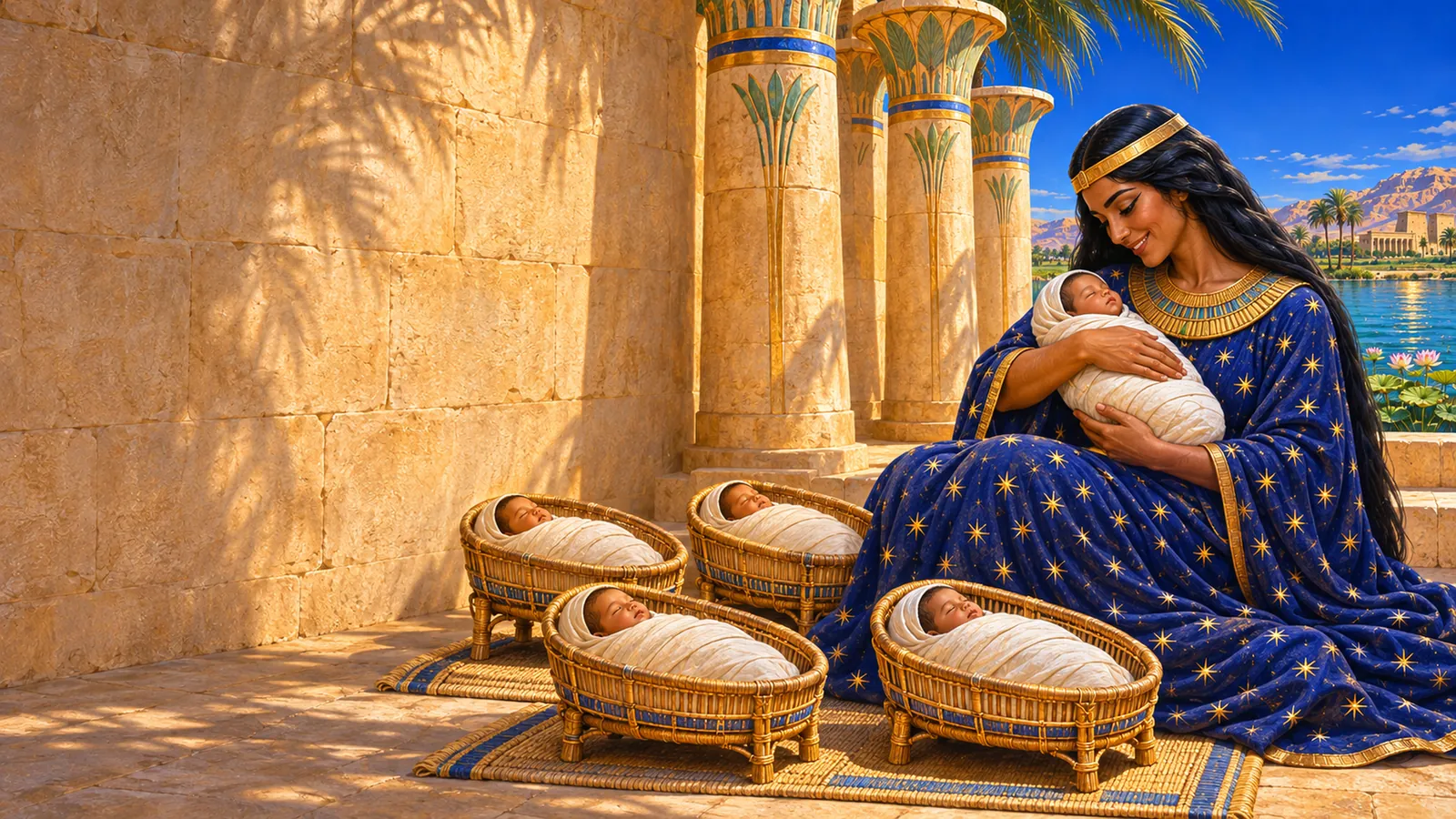
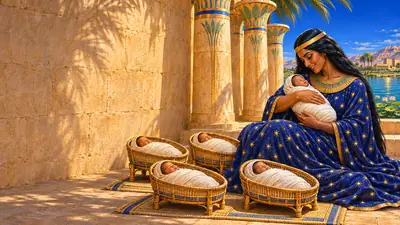
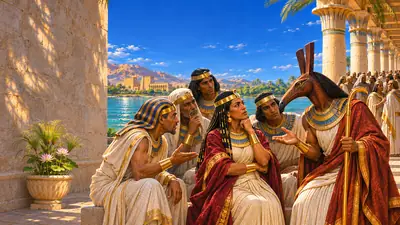
In Plutarch’s account, Egyptians marked these five additional days as the birthdays of their gods. He tells of the births in order.
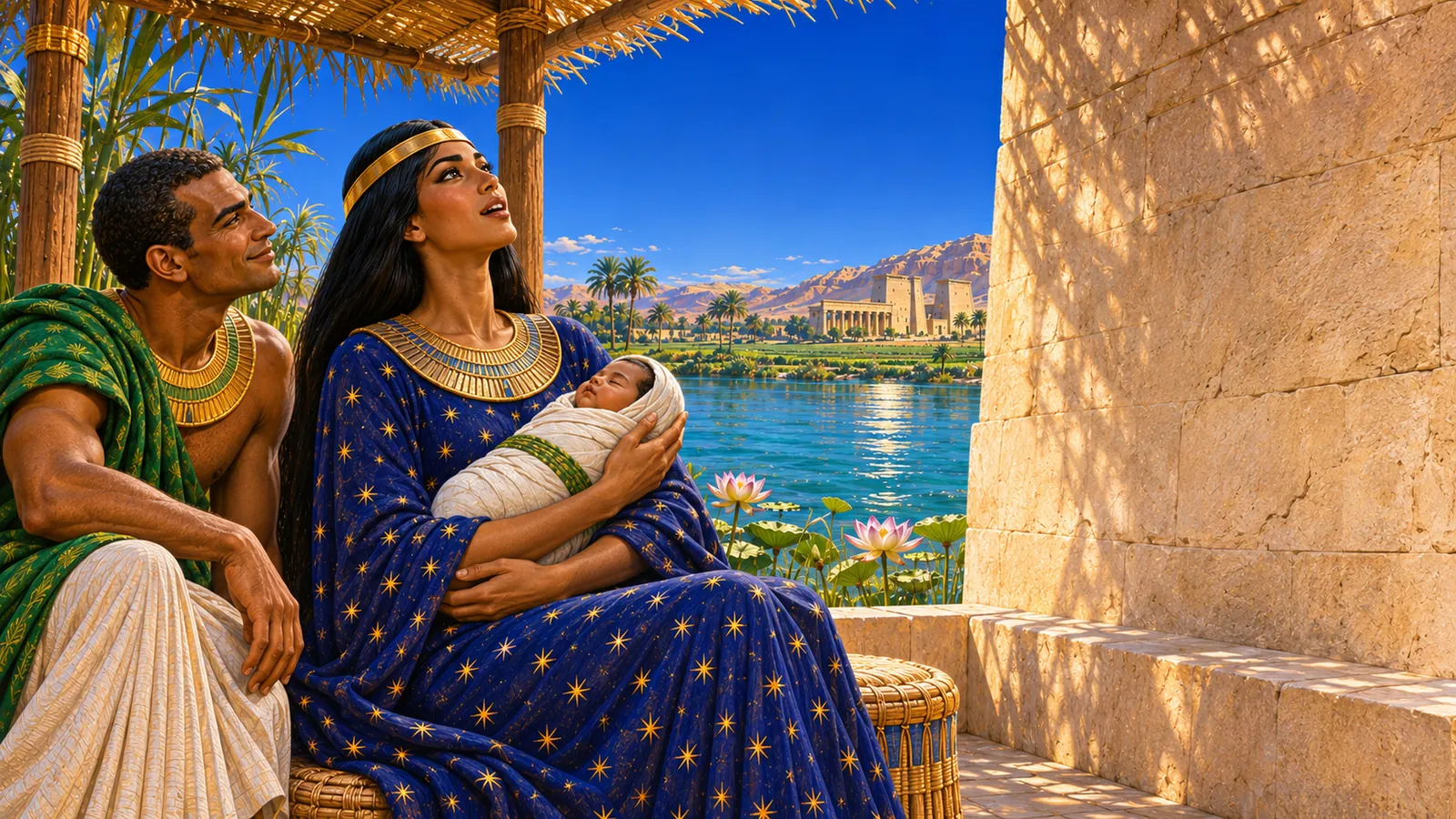
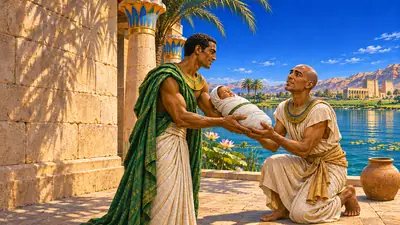
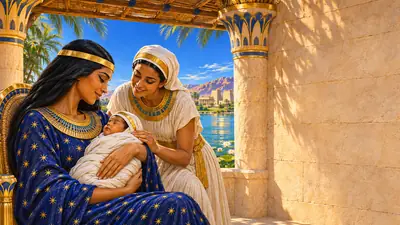
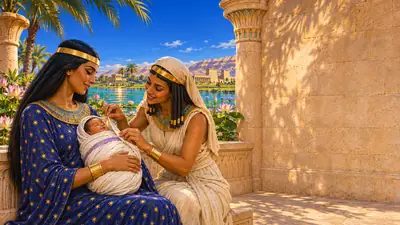
On the first added day, Osiris was born. As he entered the world, a voice announced the birth of the lord of all the earth.
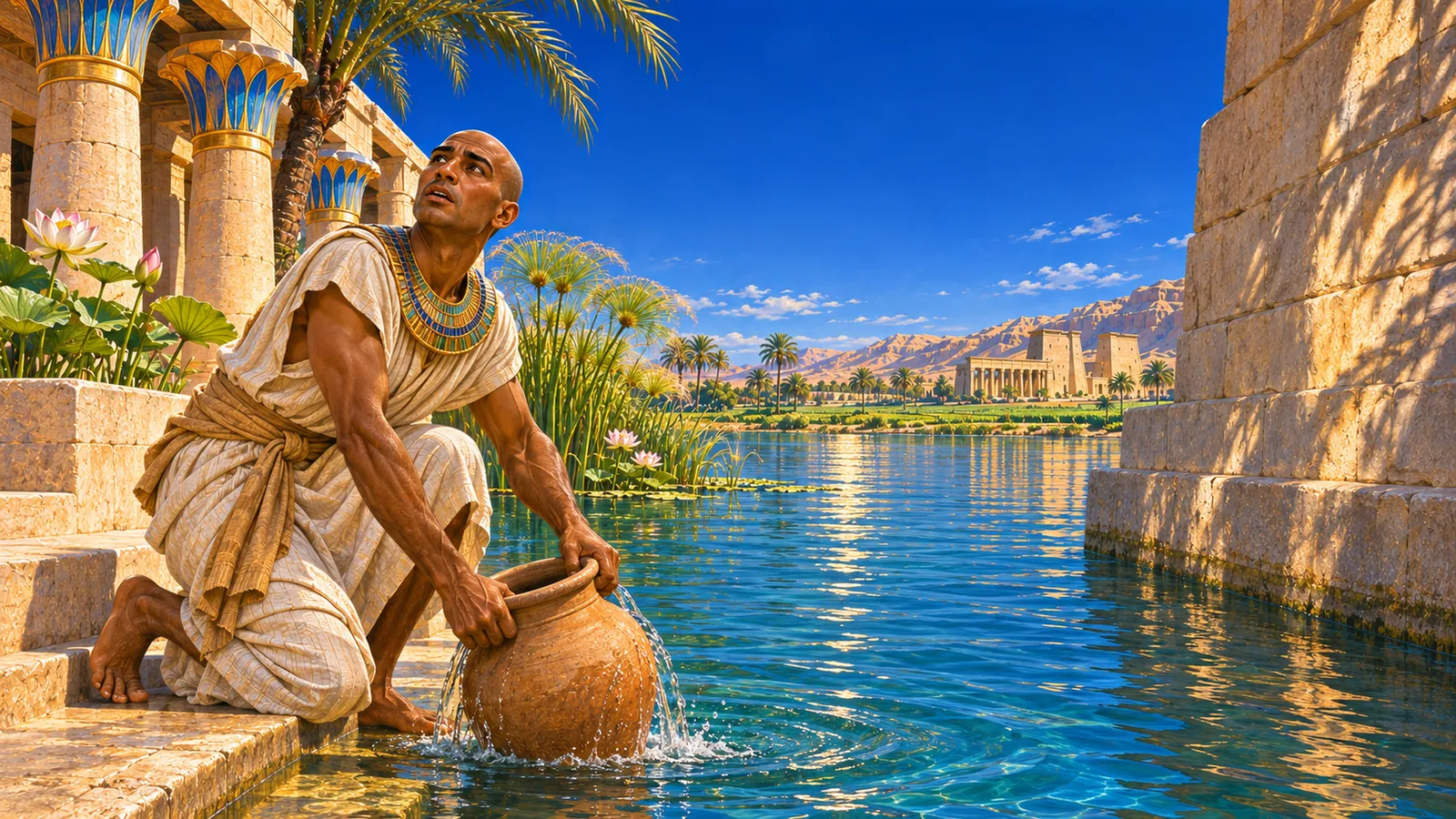
In another version of the announcement, a man named Pamyles was fetching water at a temple in Thebes. There he heard a voice.
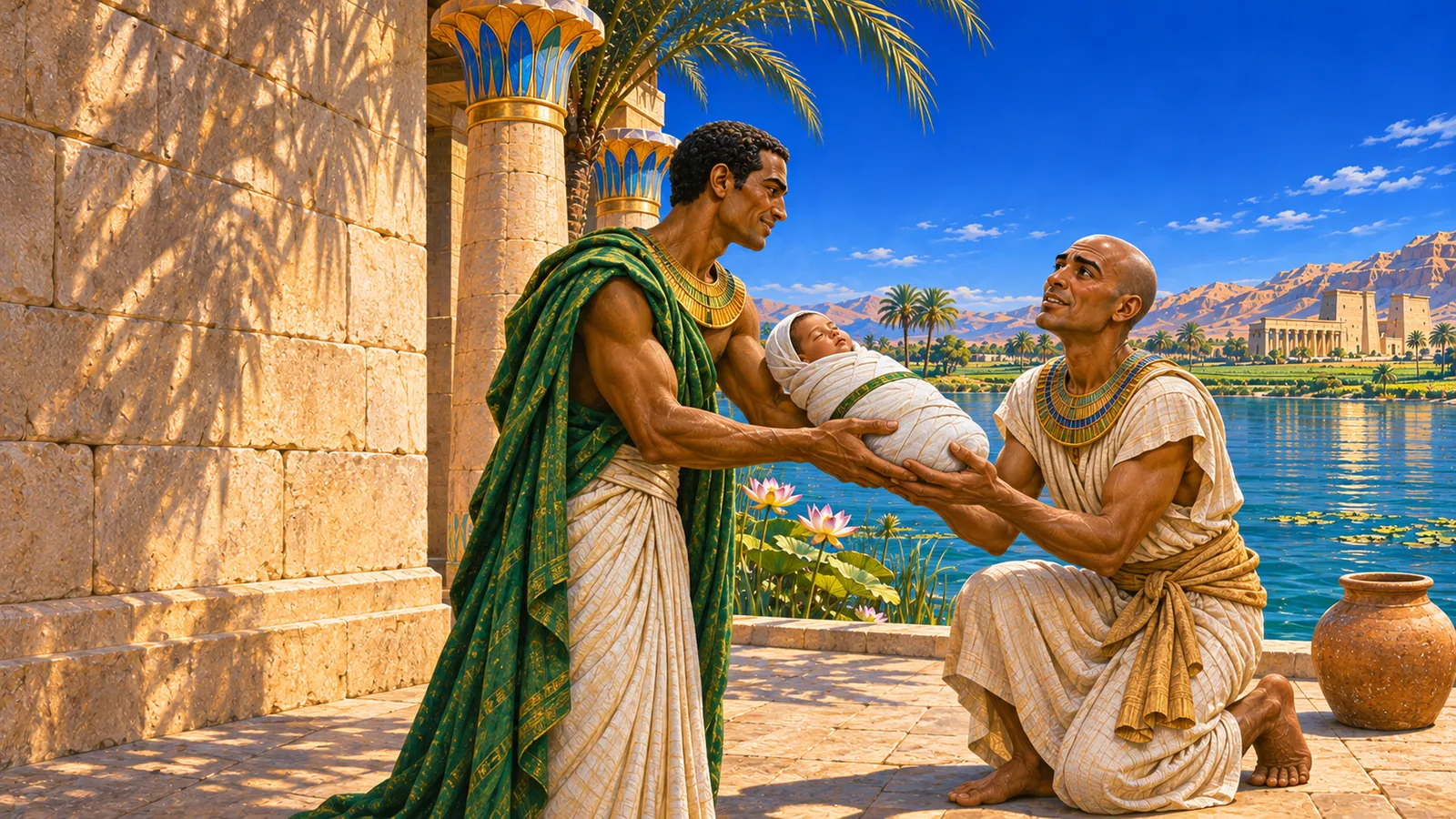
The voice told Pamyles to announce that Osiris had been born. Geb entrusted him with raising the child, and a festival called the Pamylia commemorated the event.
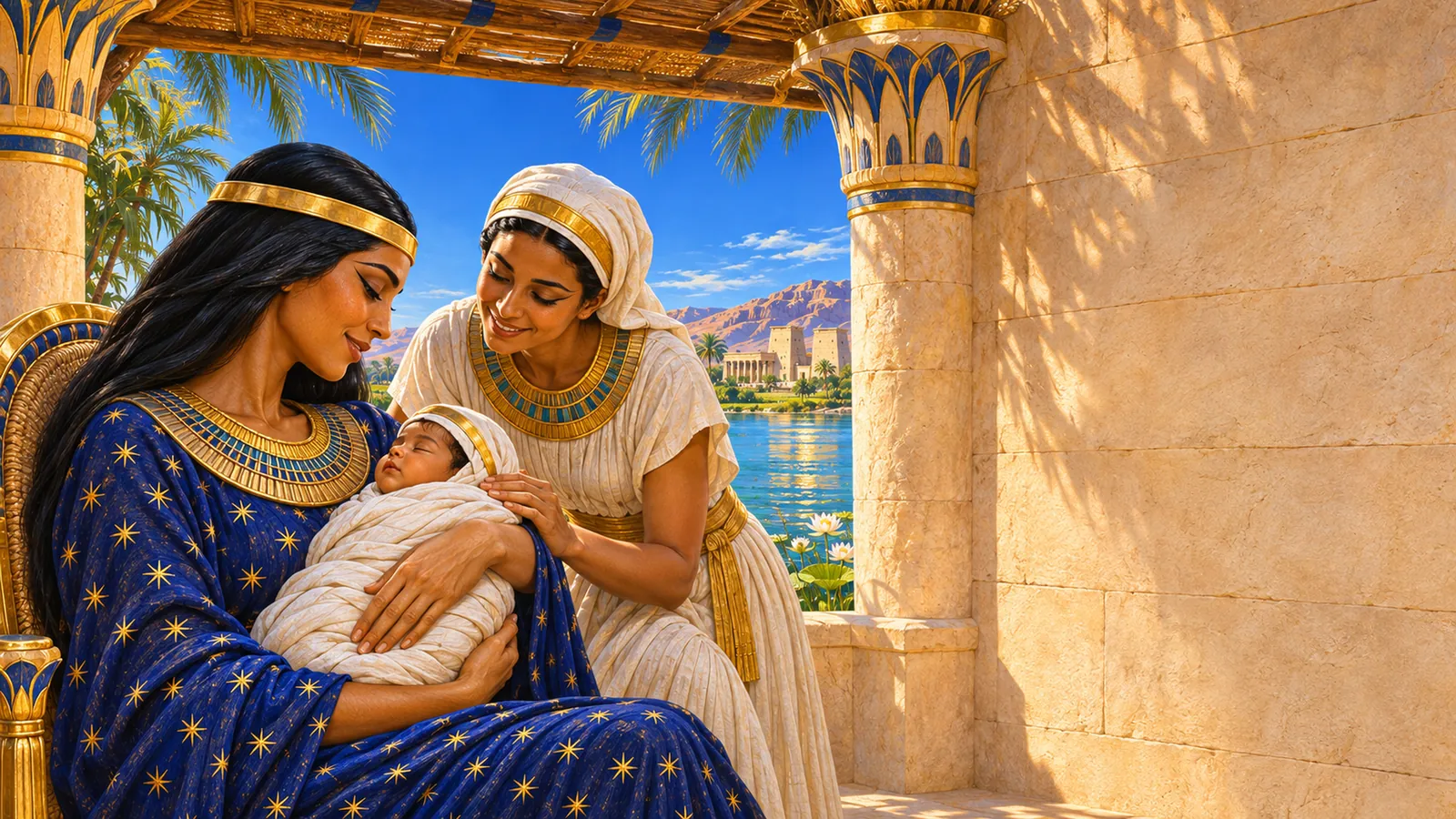
On the second added day, Aroueris was born. Plutarch also gives him the name Horus the Elder.
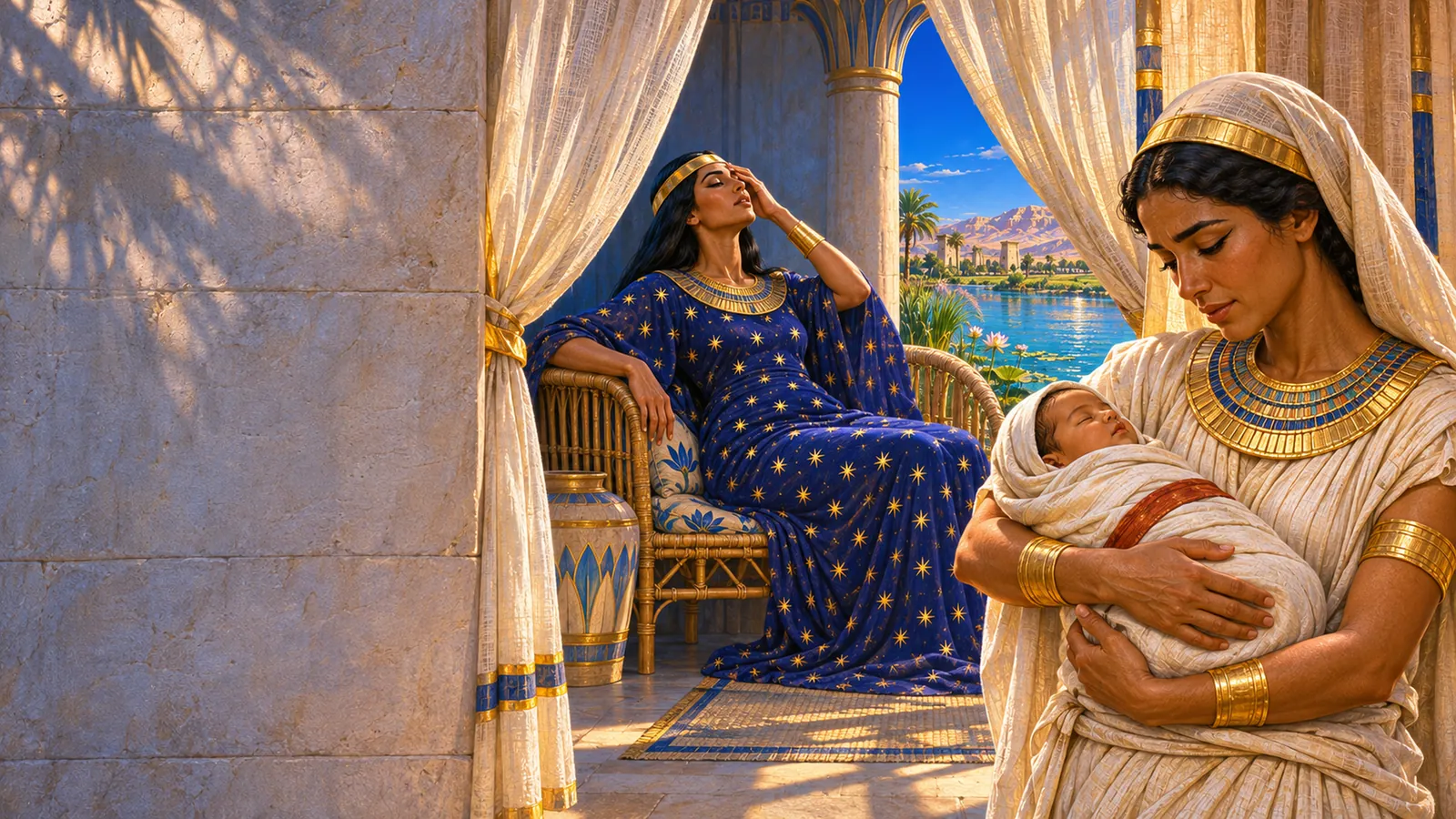
On the third added day, Set was born. Plutarch says he forced his way out through a wound he made in his mother’s side.
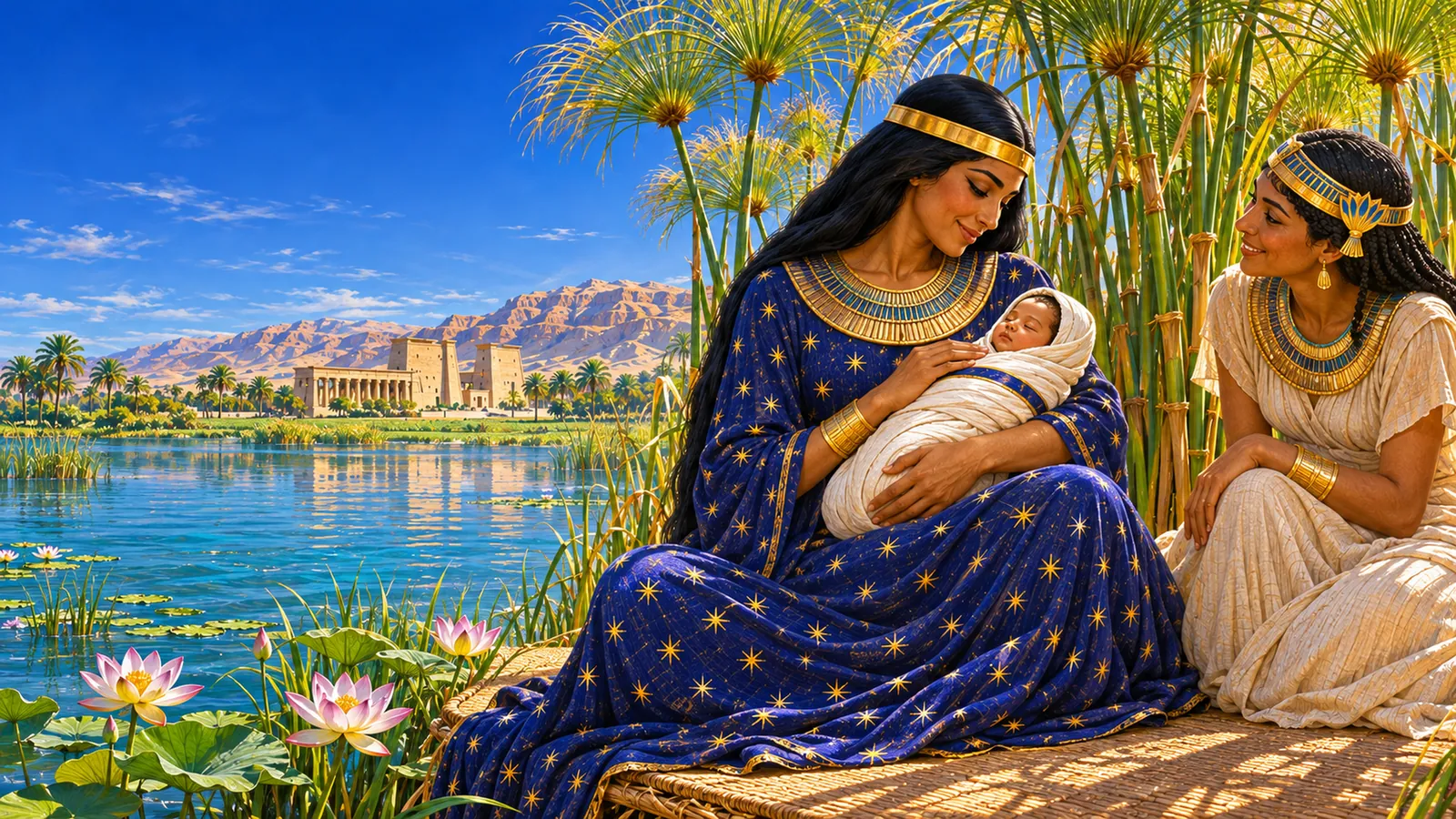
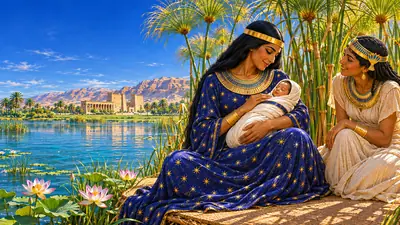
On the fourth of the five days added to the year, Isis was born in the marshes of Egypt.
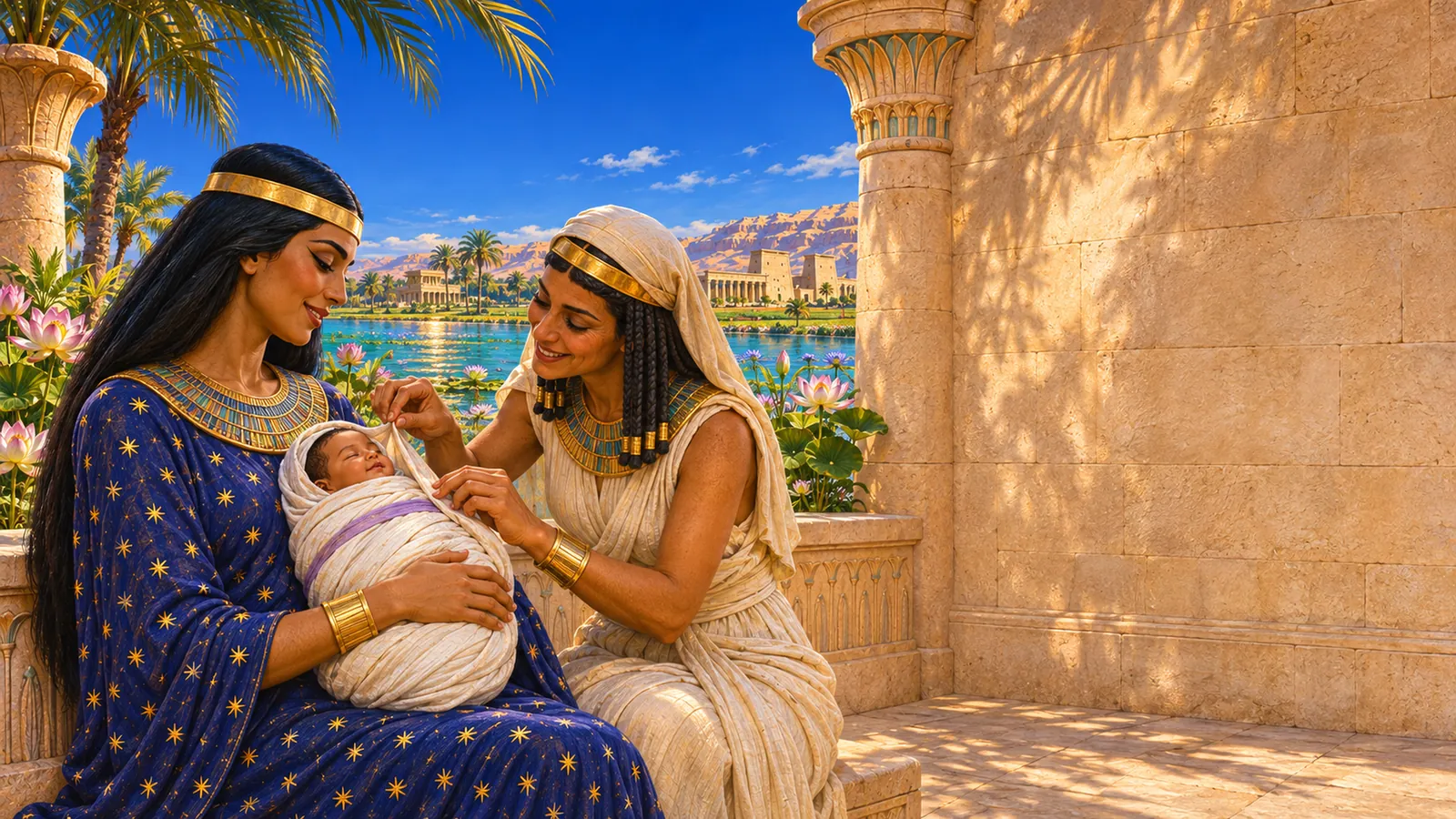
Nephthys was born on the fifth and last added day, completing the series of birthdays in Plutarch’s account.
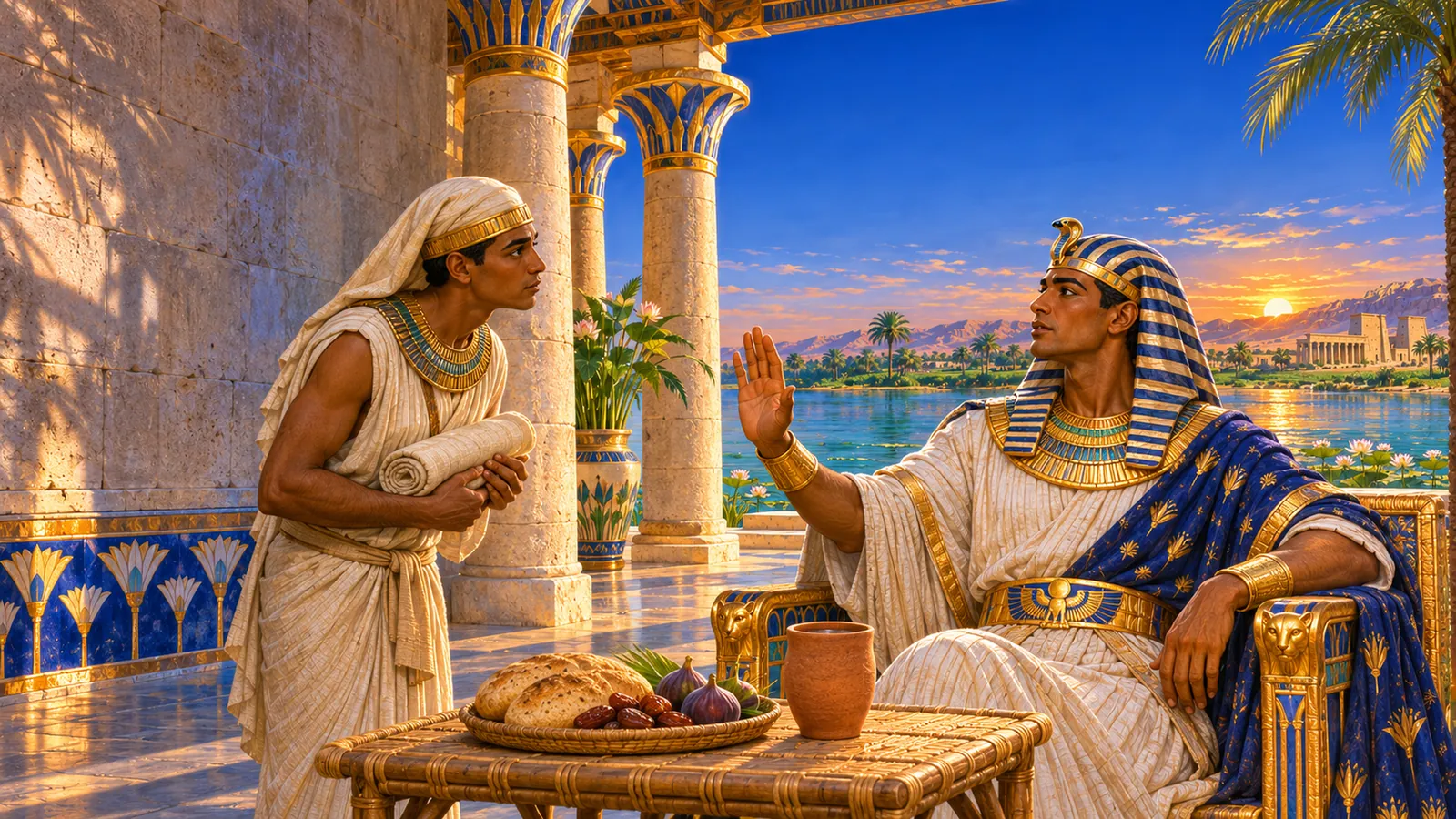
In one genealogy, Ra fathered Osiris and Horus the Elder, Thoth fathered Isis, and Geb fathered Set and Nephthys. Kings considered Set’s day unlucky and set aside business, food and drink until evening.
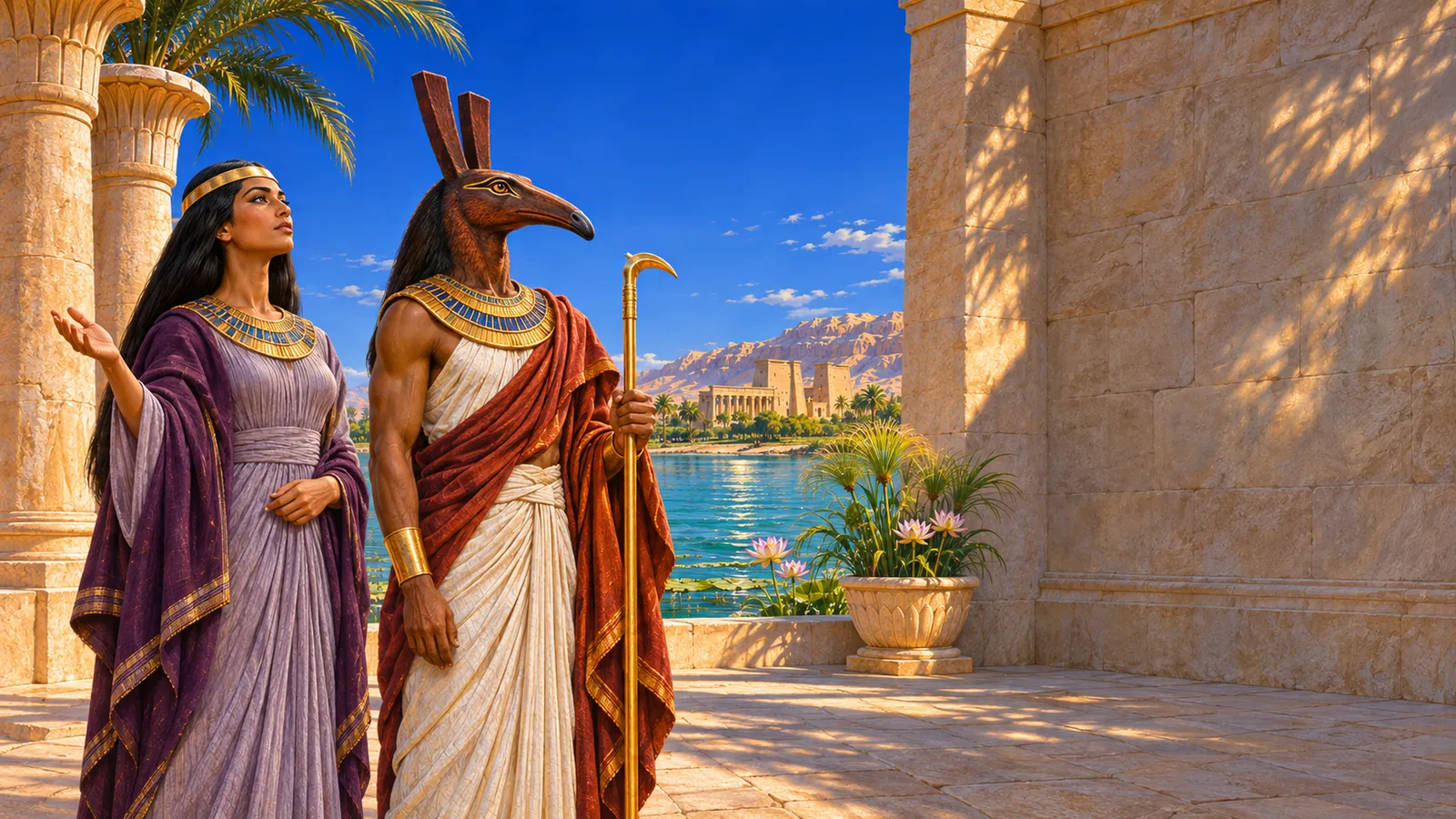
Plutarch says Set married Nephthys. He also gives an account in which Isis and Osiris were joined before they were born, and their child was Horus the Elder.
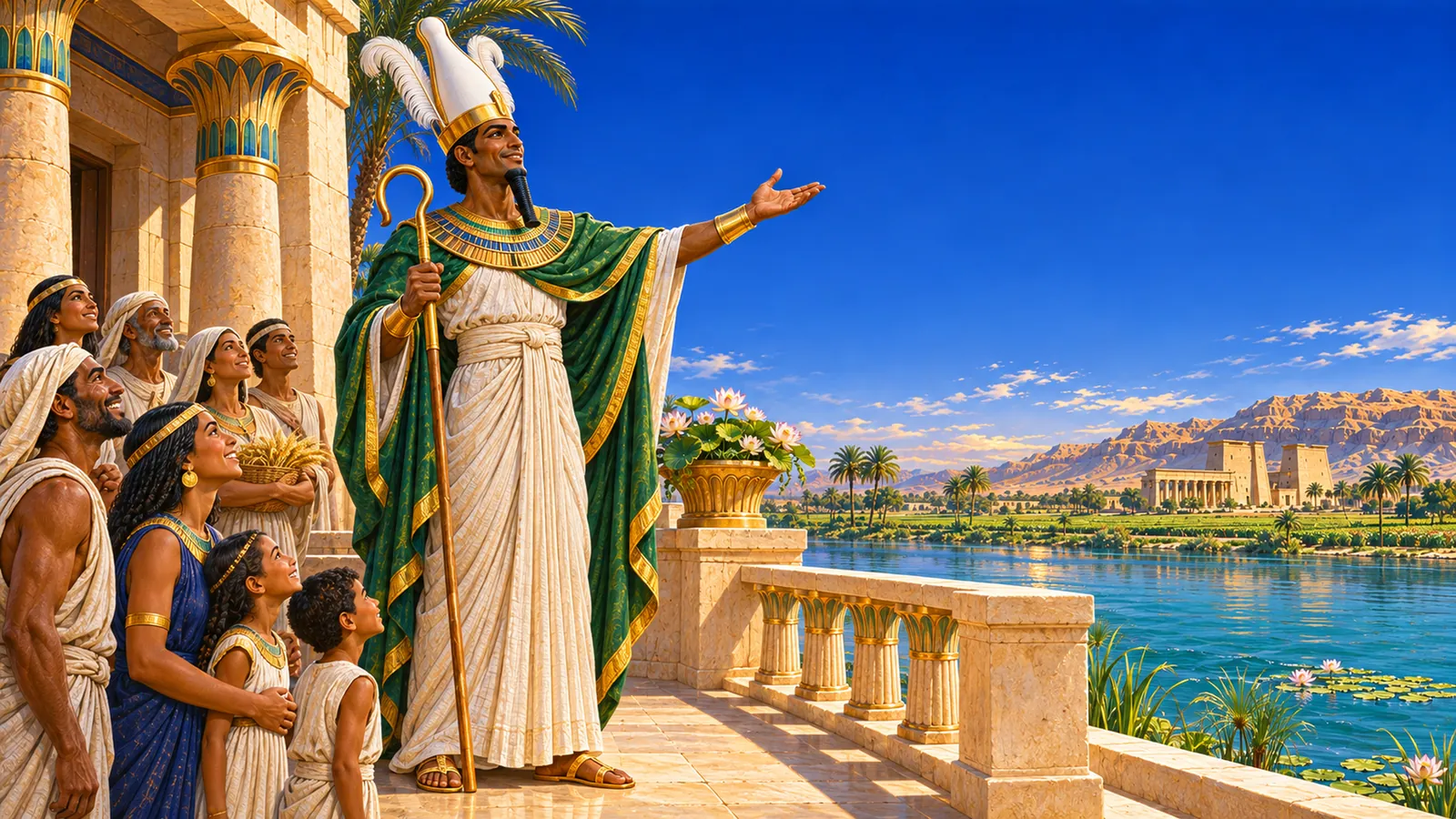
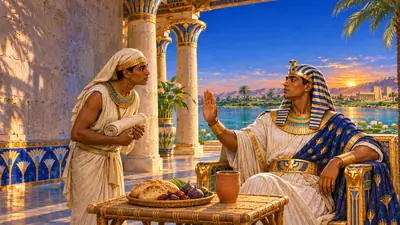
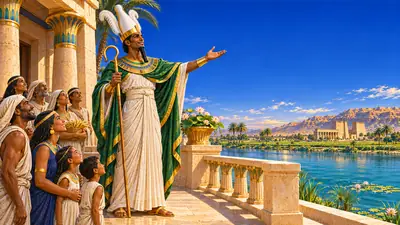
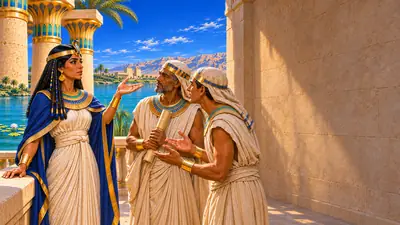
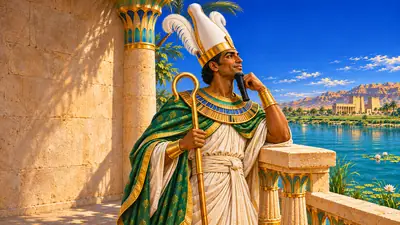
In Plutarch’s telling, Osiris became king of Egypt. The story says he set about changing the way his people lived.
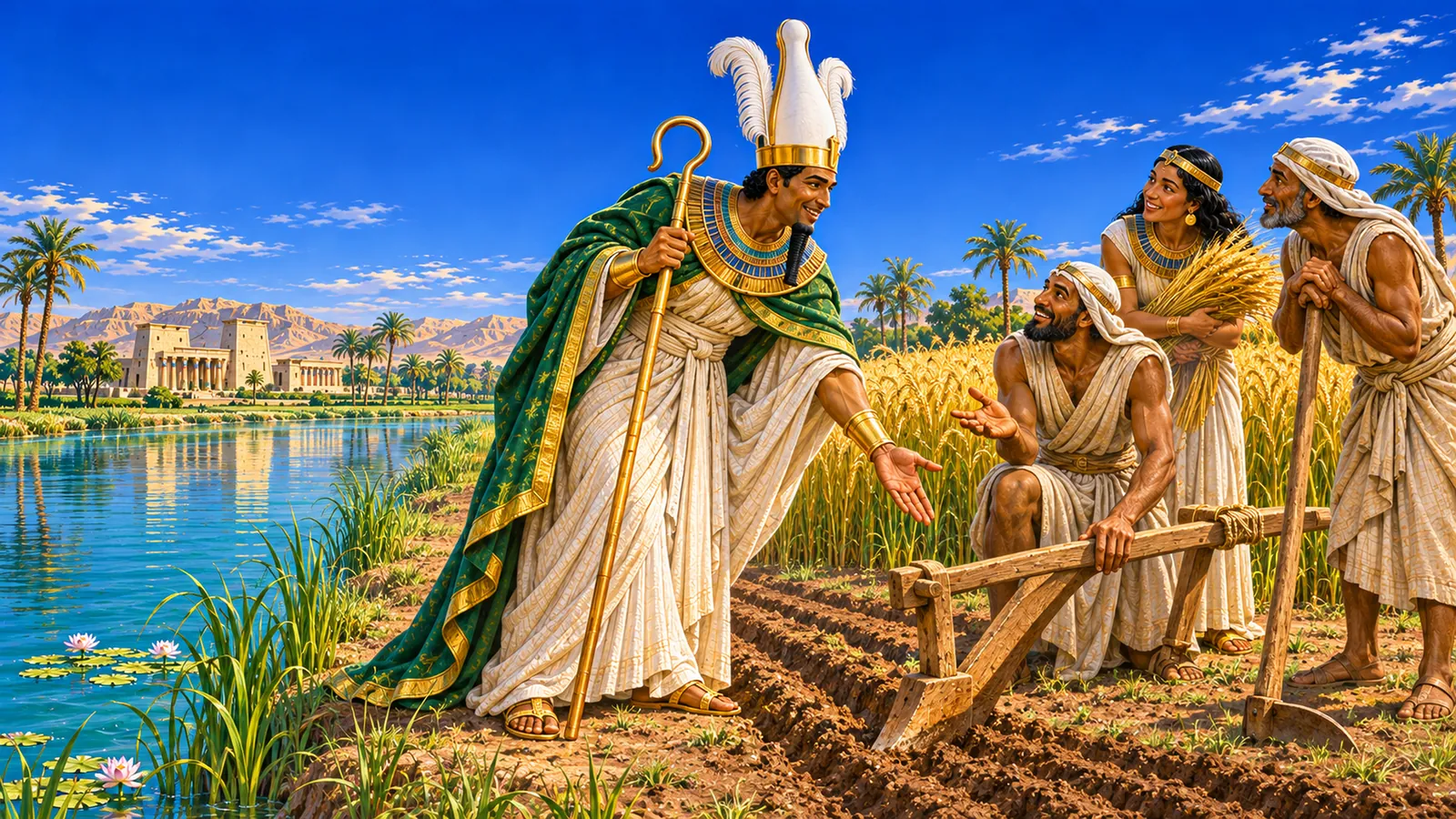
EGYPT
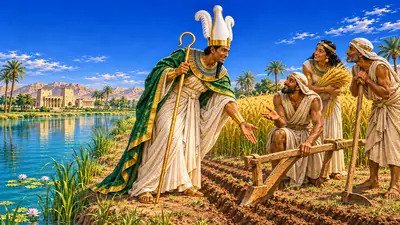
The story says Osiris taught his people to cultivate the land and grow better crops. He gave them laws to live by and taught them how to honour the gods.
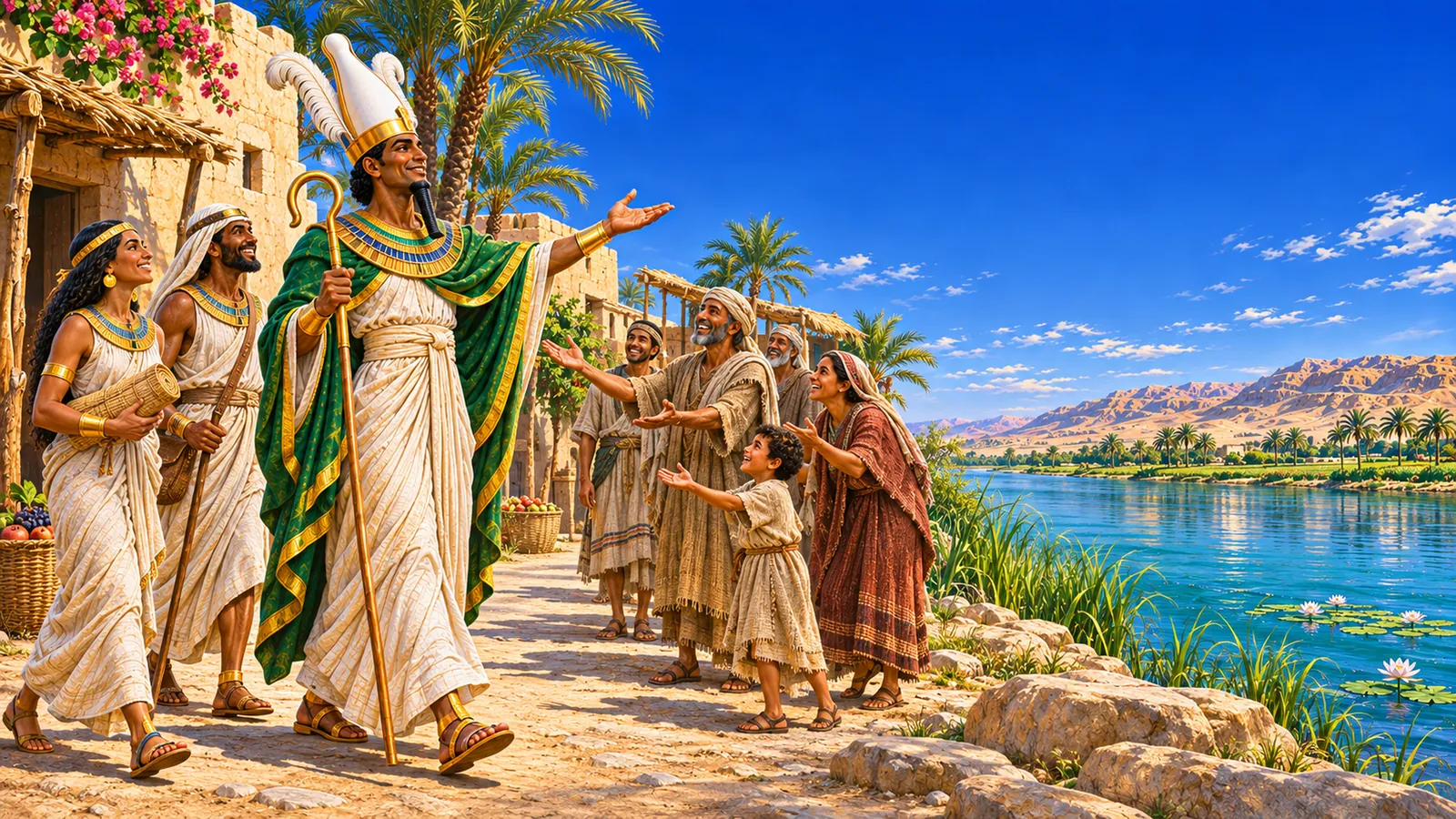
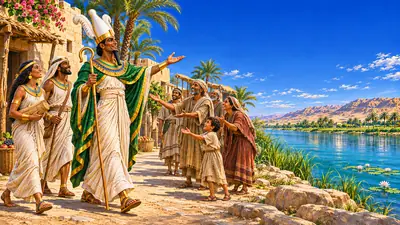
In the story, Osiris travelled beyond Egypt. He wanted people in the lands he visited to follow the ways he had taught at home.
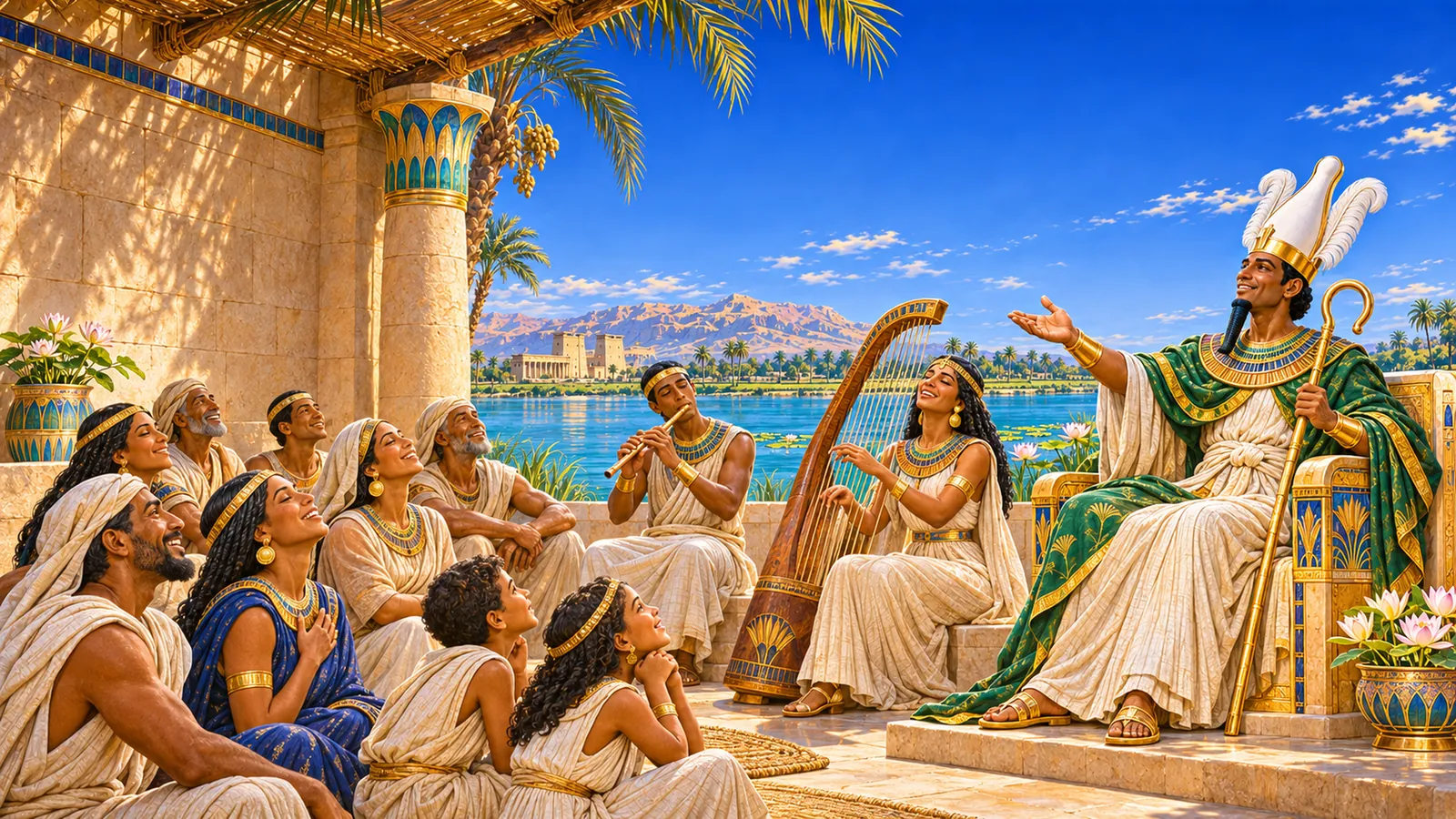
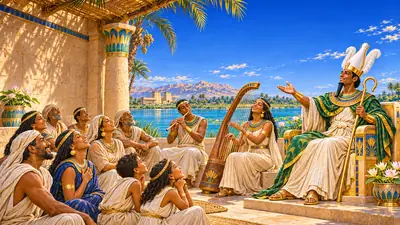
Plutarch says Osiris persuaded people by giving them his reasons in hymns and songs with music. He did not compel them by force of arms.
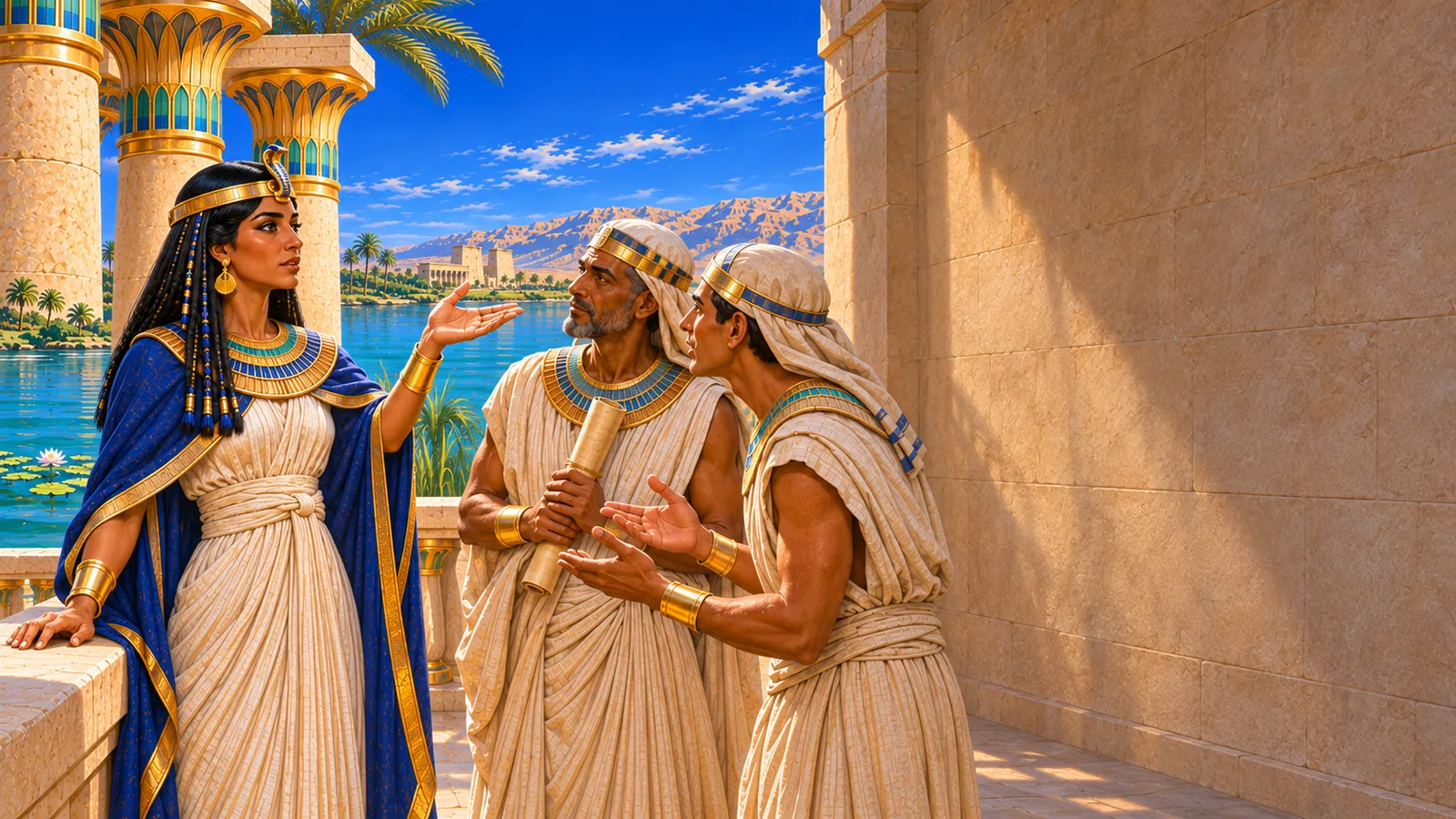
While Osiris was away, Isis governed and remained on her guard. Set found no opportunity to act while she kept watch.
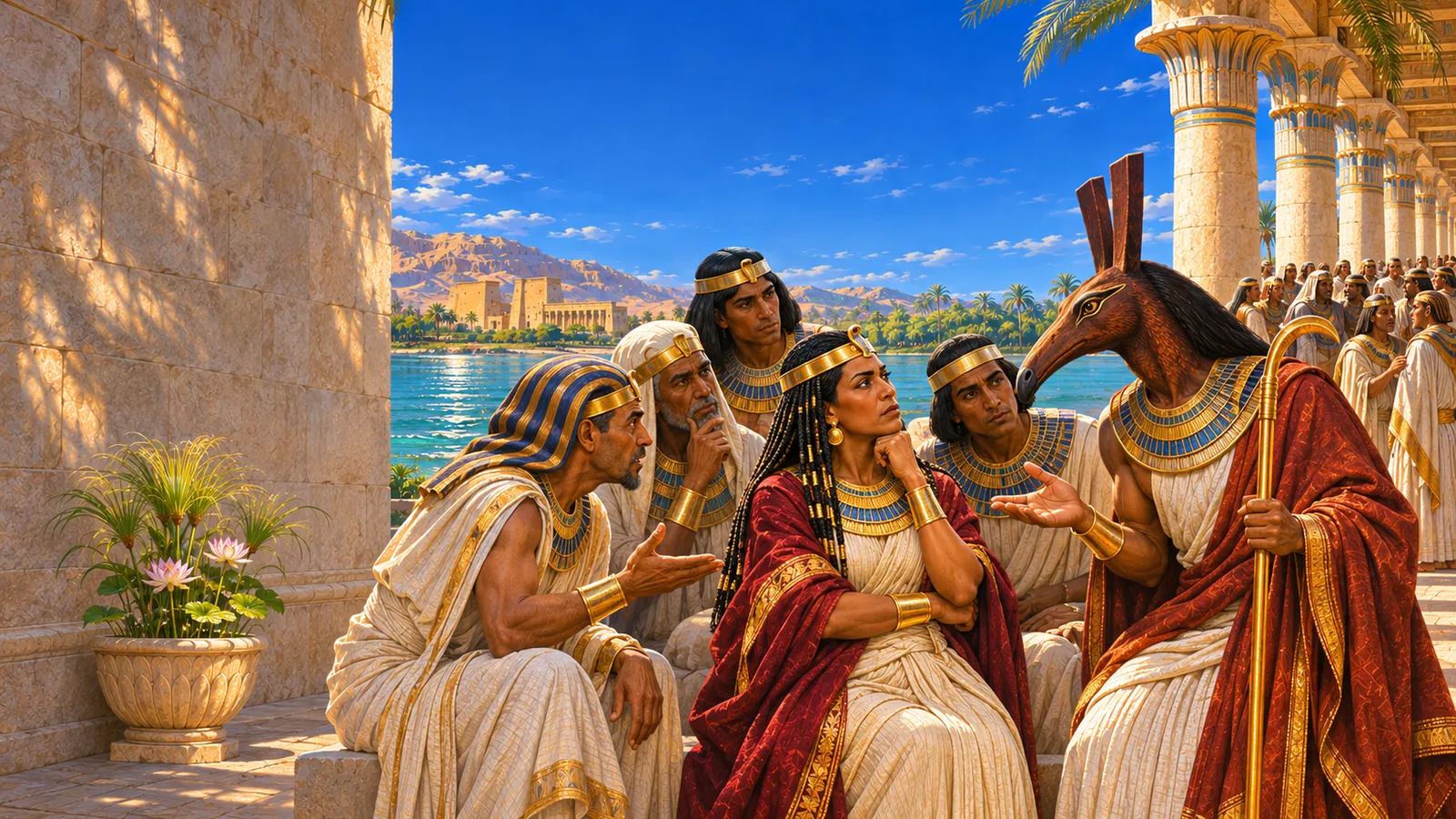
After Osiris returned, Set persuaded seventy-two other people to join his plot. A queen called Aso, who was in Egypt at the time, joined too.
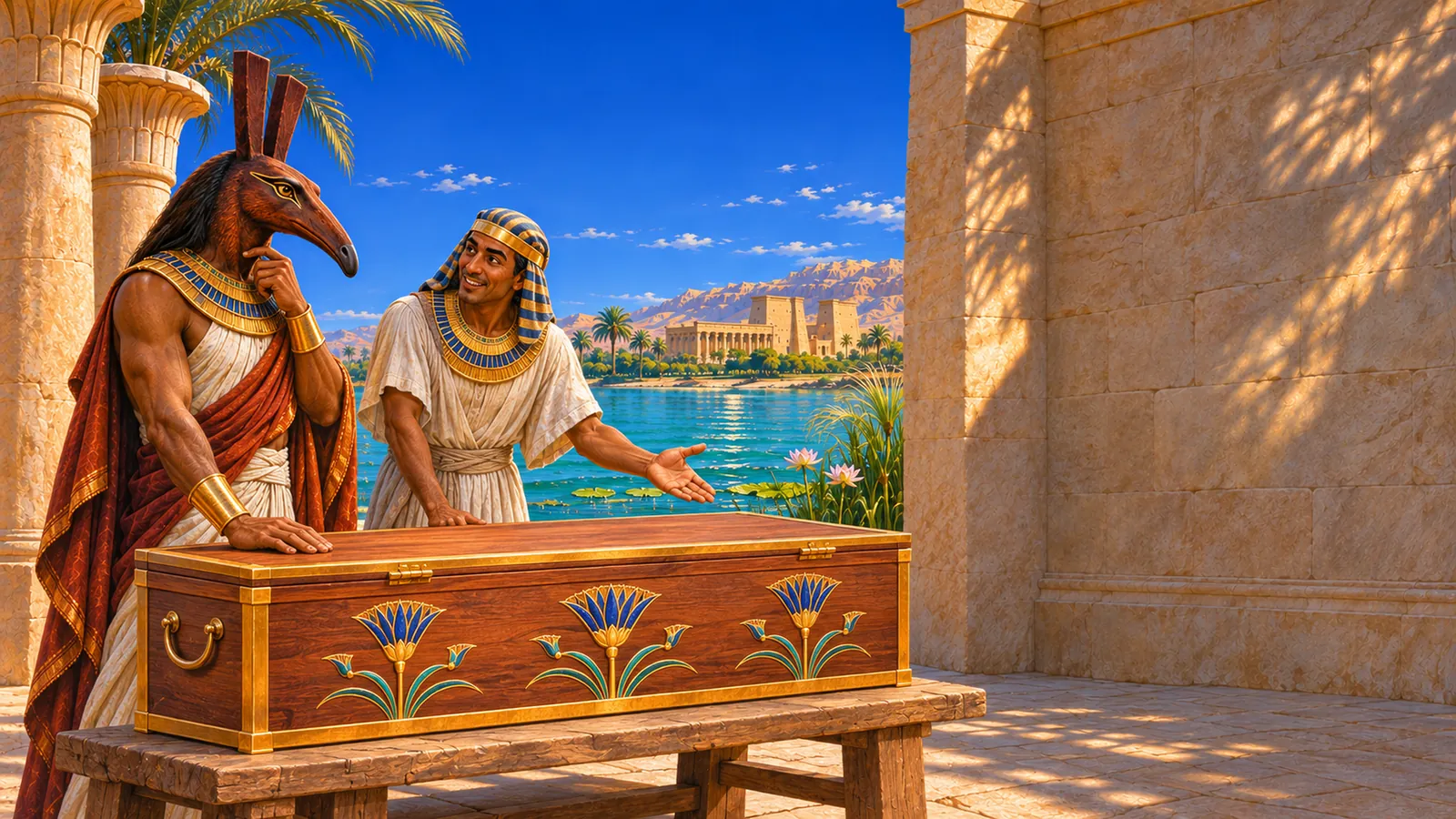
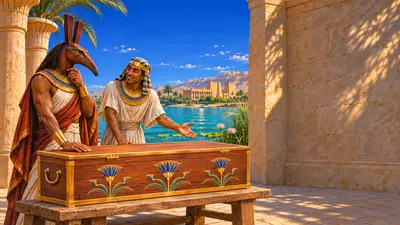
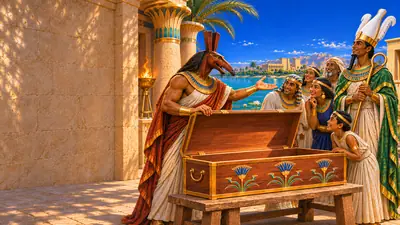
Set’s plot centred on a finely decorated chest. In Plutarch’s account, Set had it made to fit Osiris.
THE CHEST
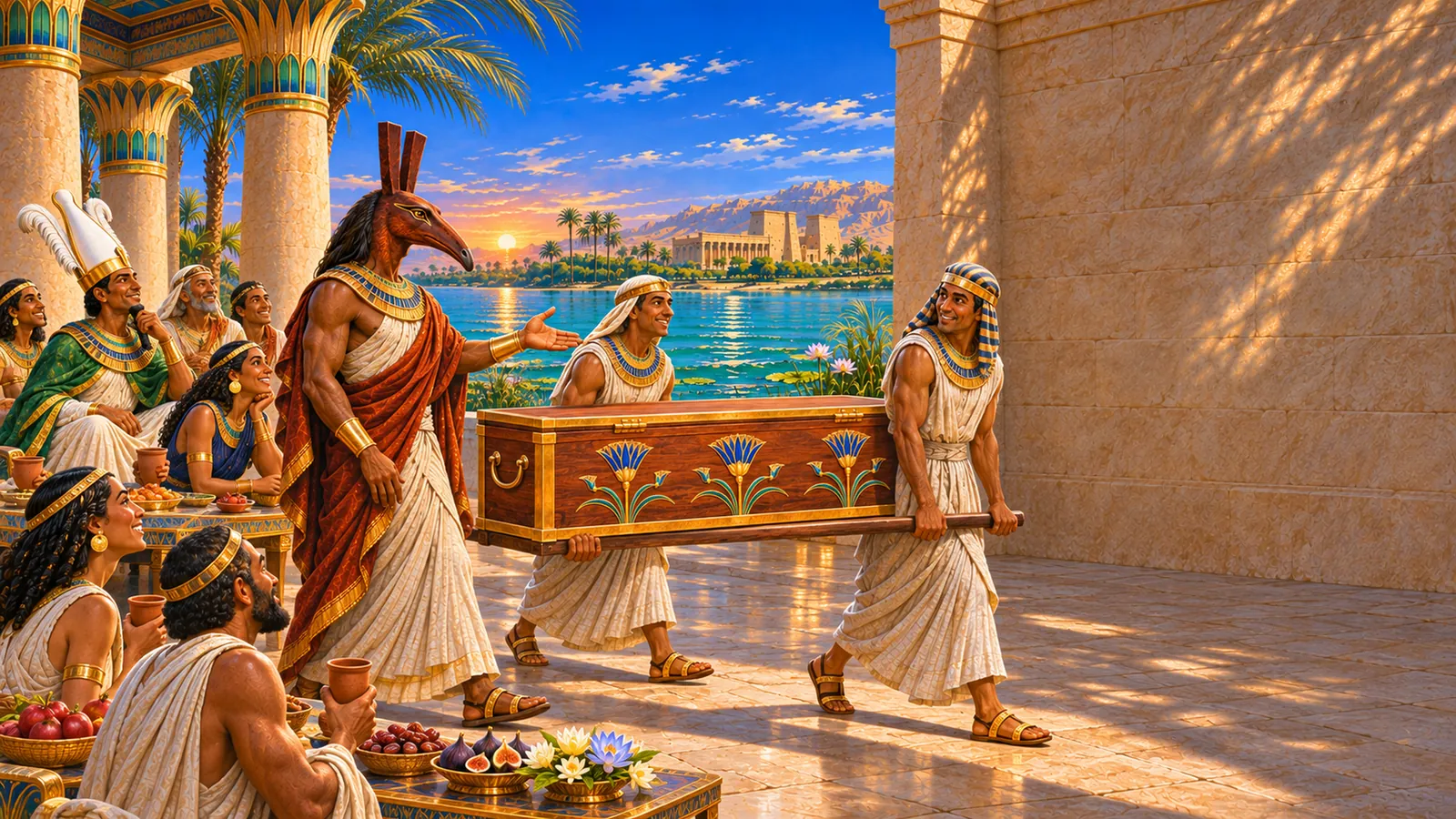
Set brought the chest into the room where he held the banquet. The guests admired it when they saw it there.
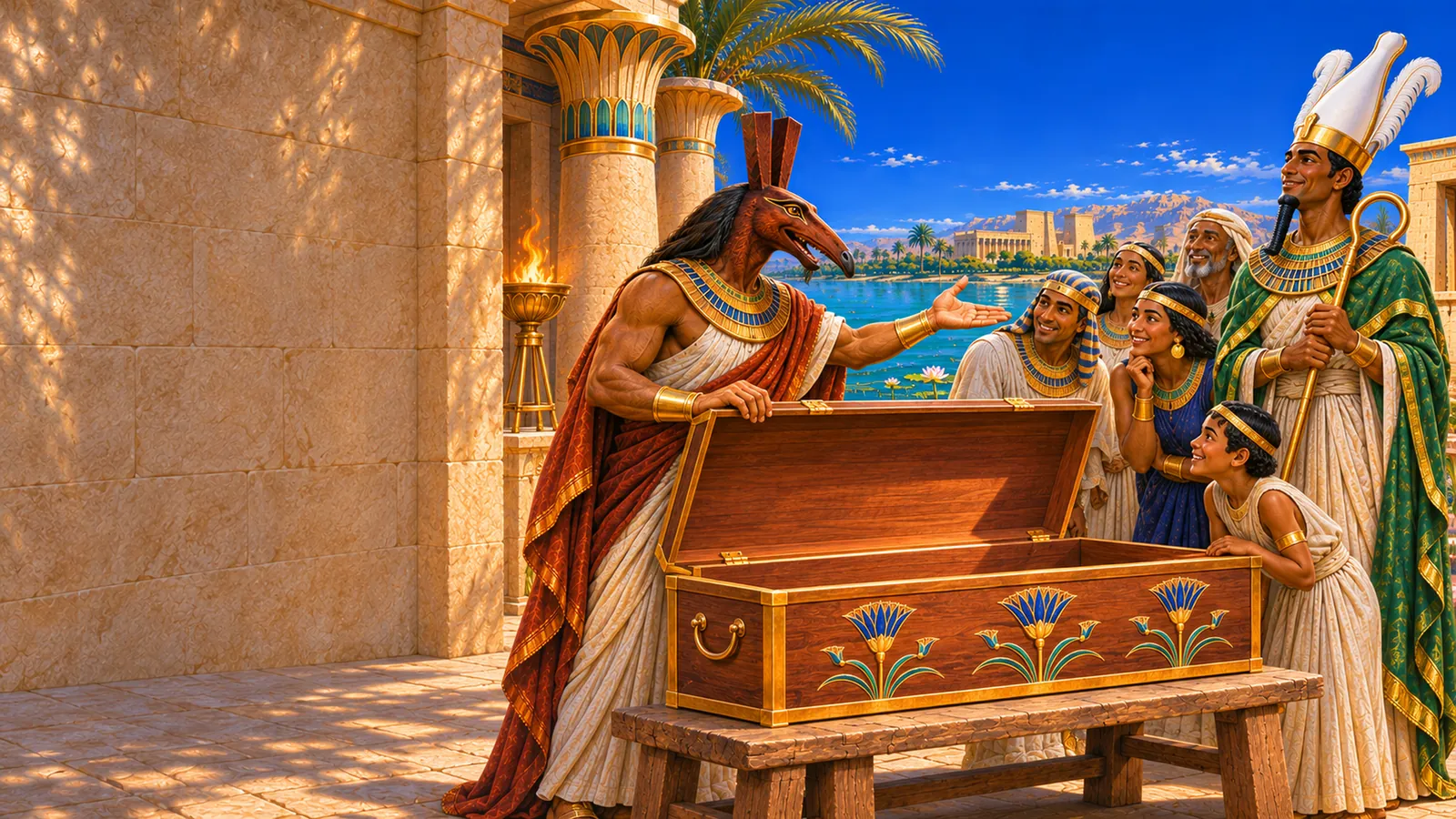
Set spoke as though he were making a joke. He promised to give the chest to any guest it fitted.
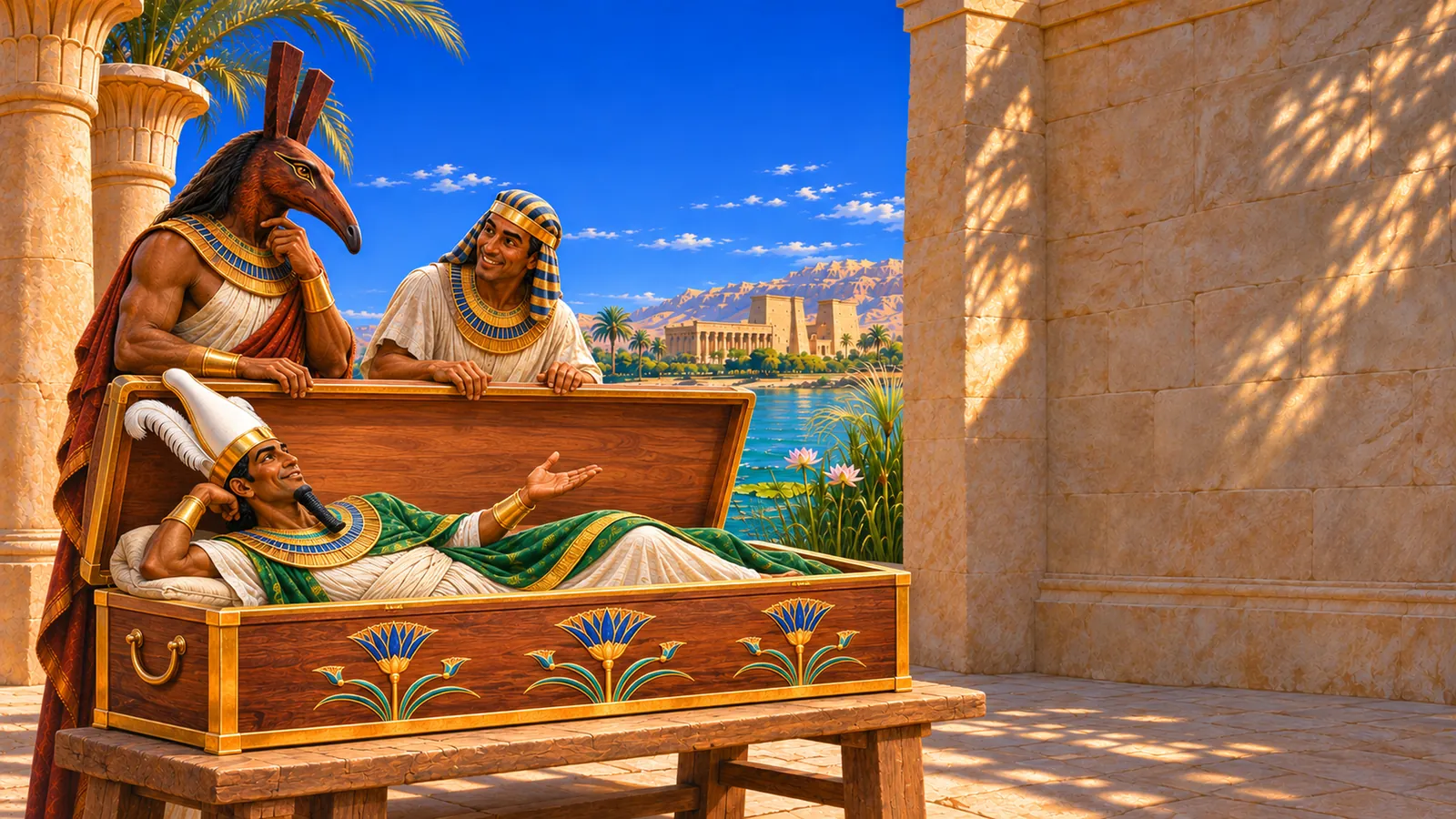
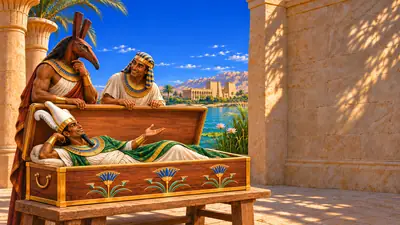
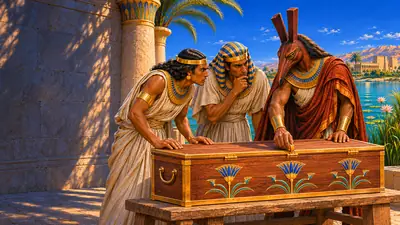
The guests tried the chest one by one, but it fitted none of them. When his turn came, Osiris lay down inside.
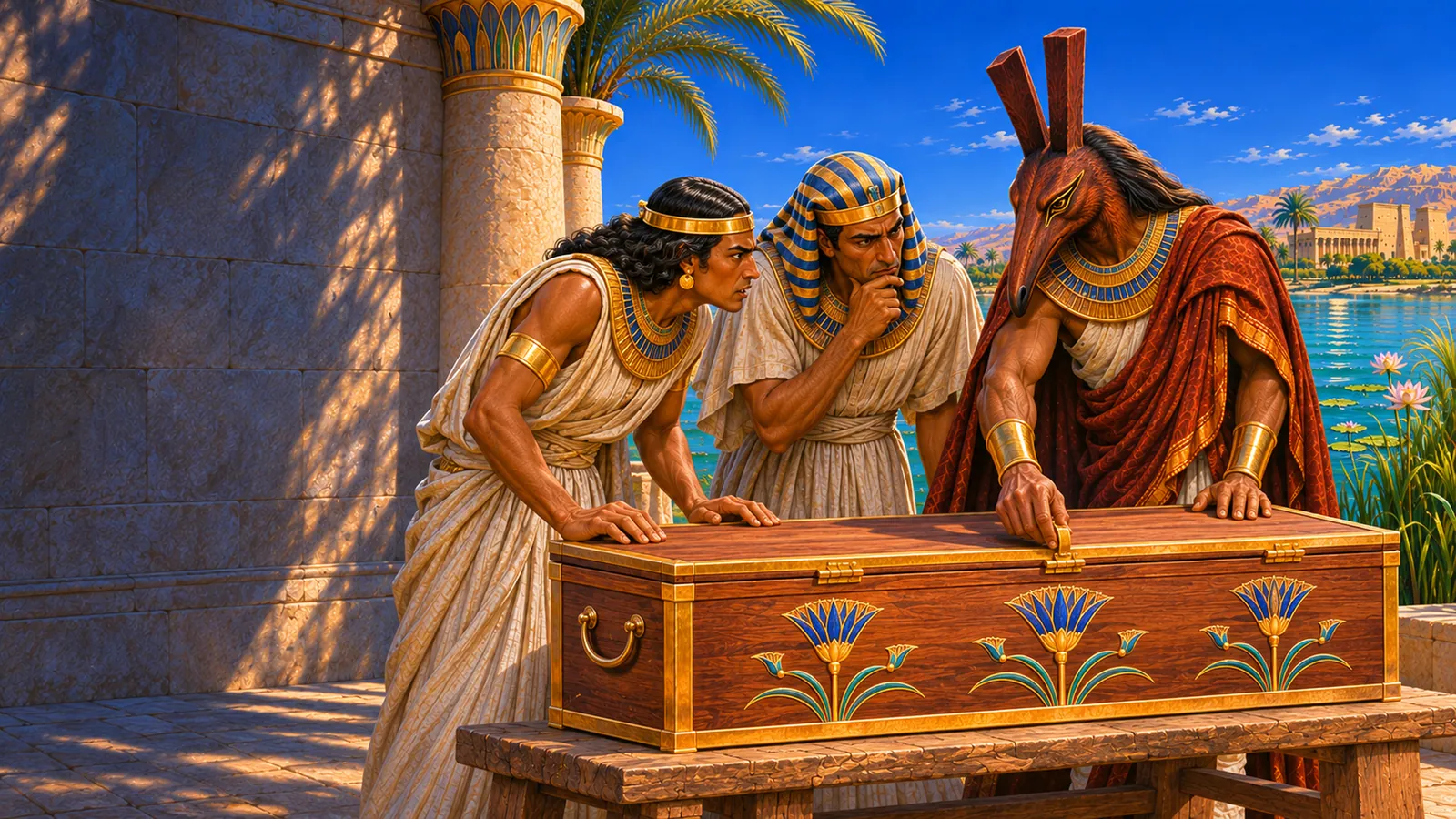
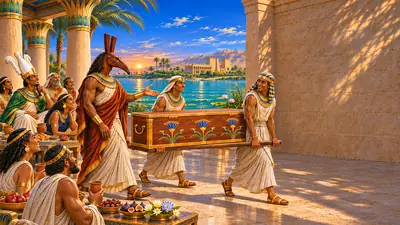
In Plutarch’s account, the people who had joined the plot shut the chest with Osiris inside. He was trapped.
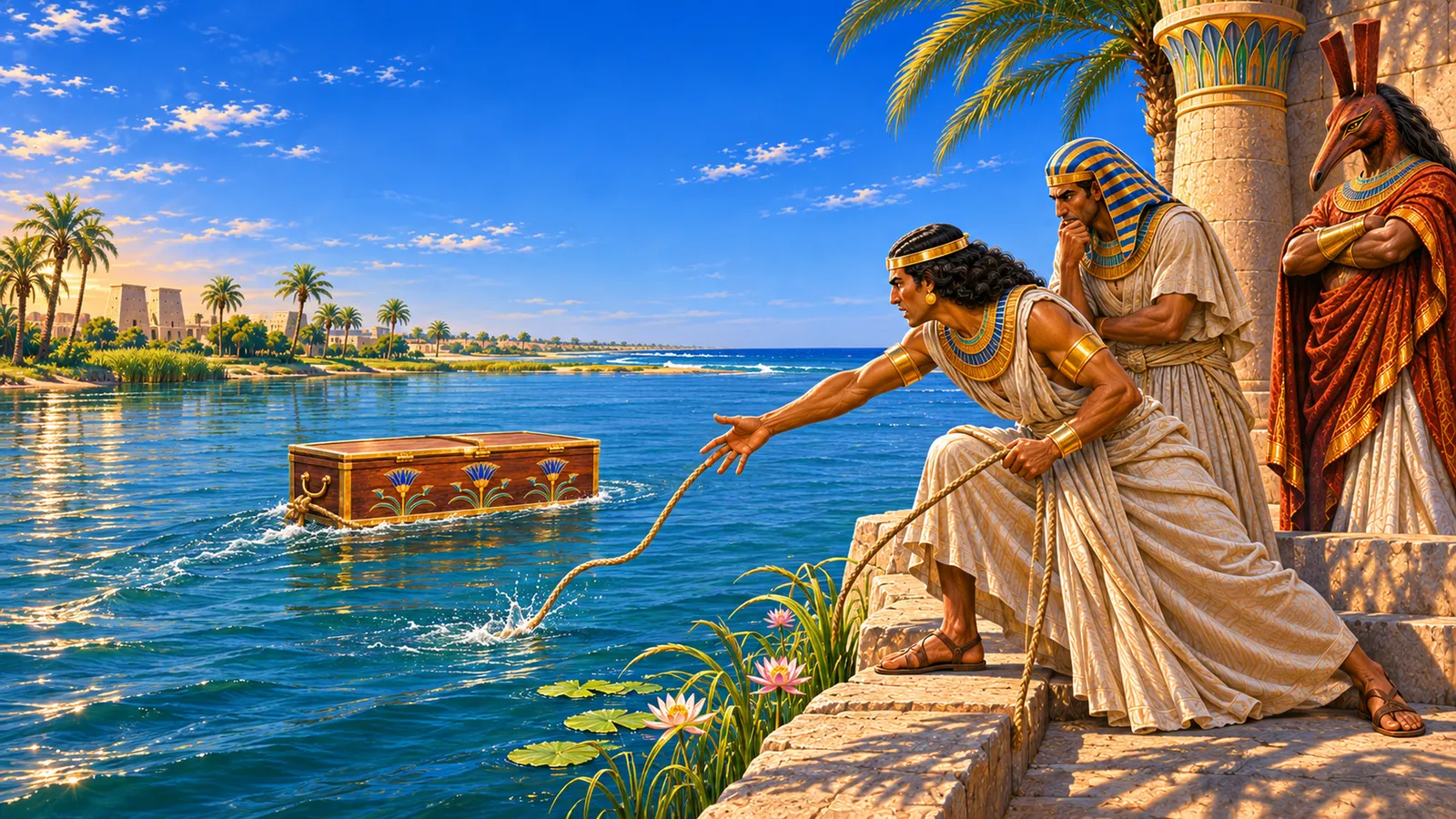
They carried the closed chest to the Nile. In the story, it was sent out to sea through the Tanaitic mouth of the river.
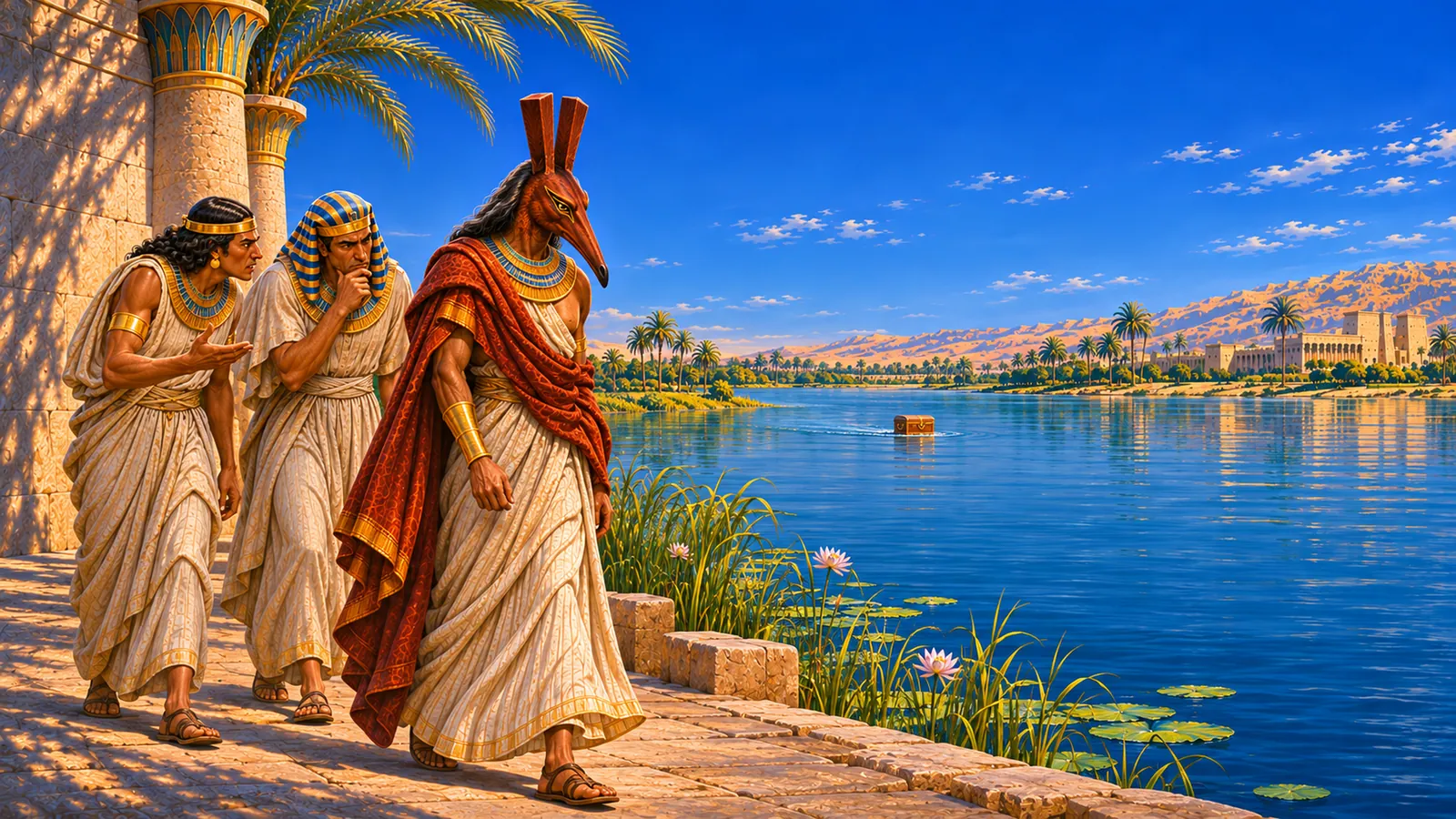
Plutarch links the story to the aversion he says was felt for that mouth of the Nile. He places the event on the seventeenth day of Athyr.
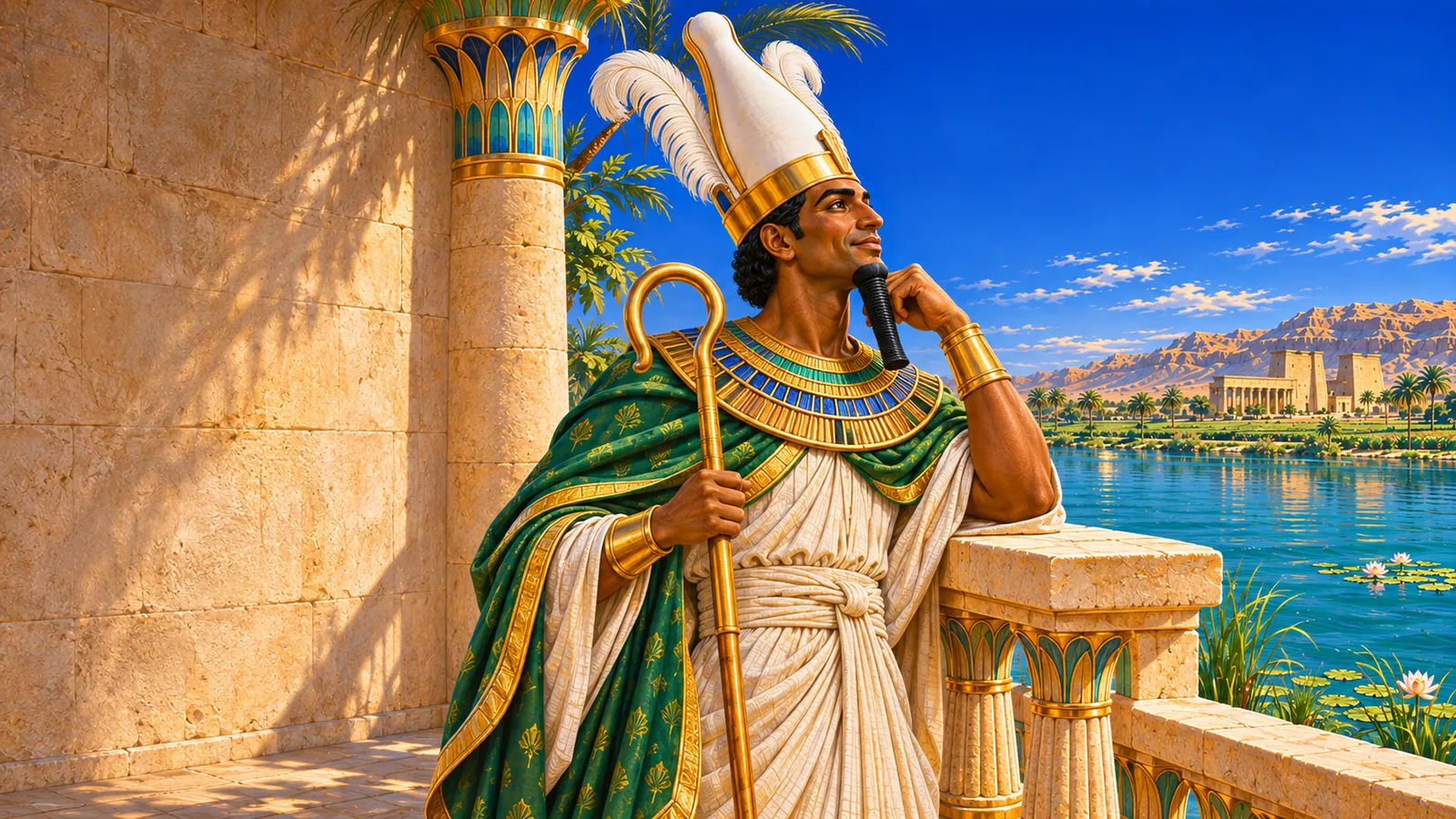
Some placed the event in the twenty-eighth year of Osiris’s reign. Others said he himself was twenty-eight years old when it happened.
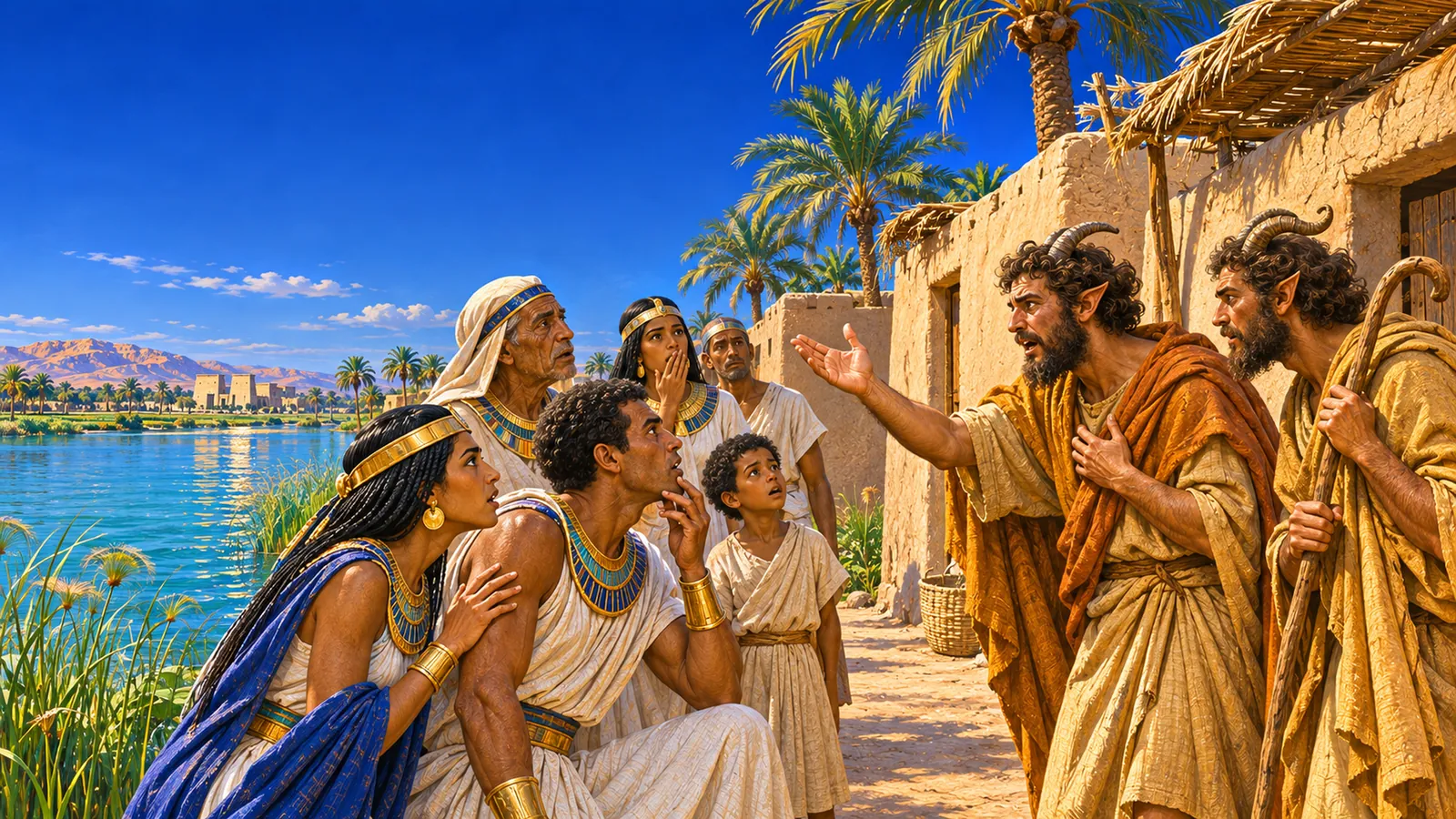
Around Chemmis, the beings Plutarch calls Pans and Satyrs first heard what had happened to Osiris. They went on to tell the people.
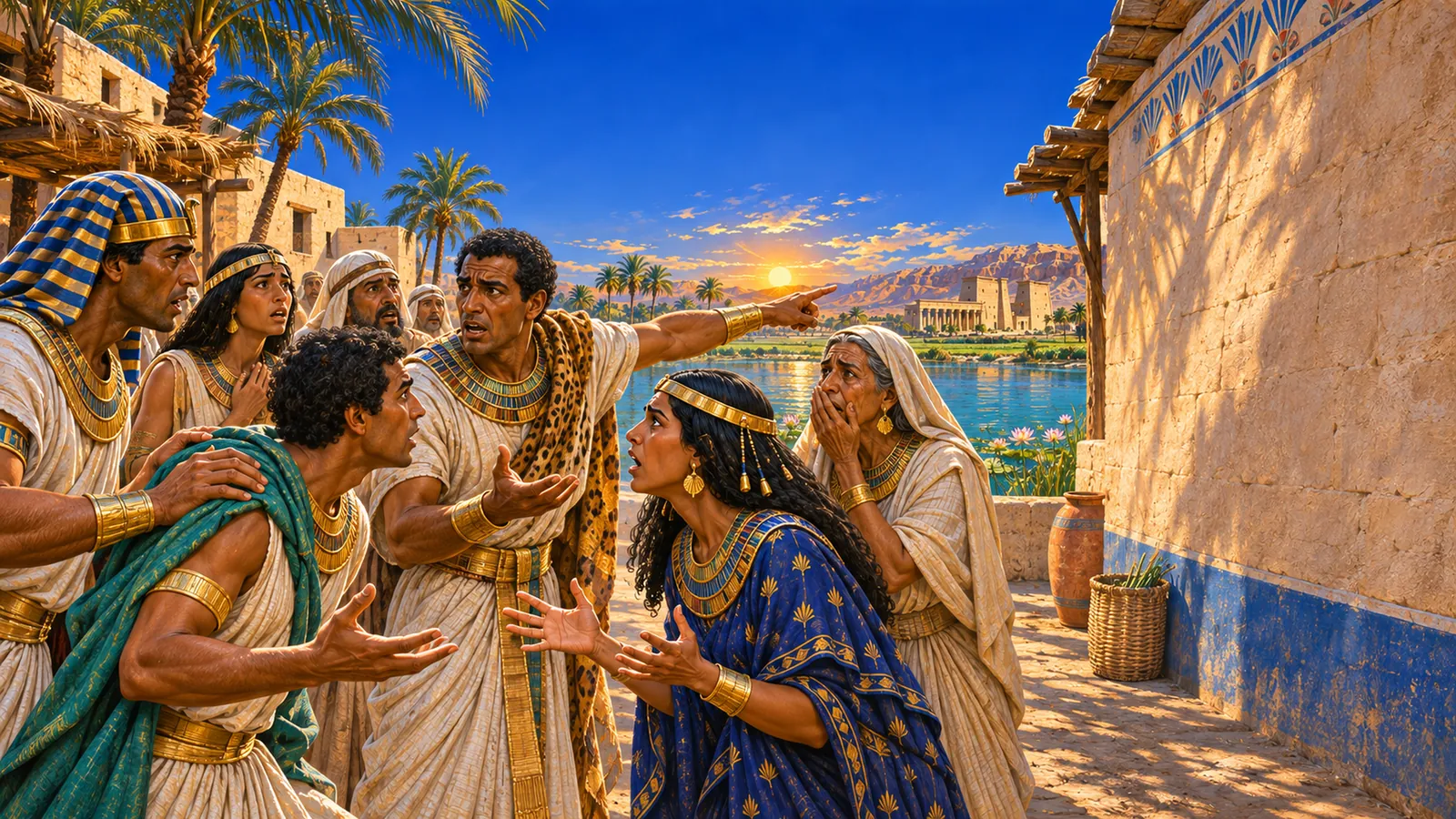
NEWS
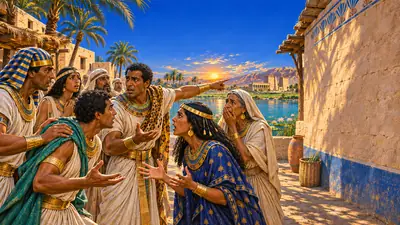
When the news reached the people, fear spread all at once. Plutarch tells this part of the story to explain the name for a sudden panic.
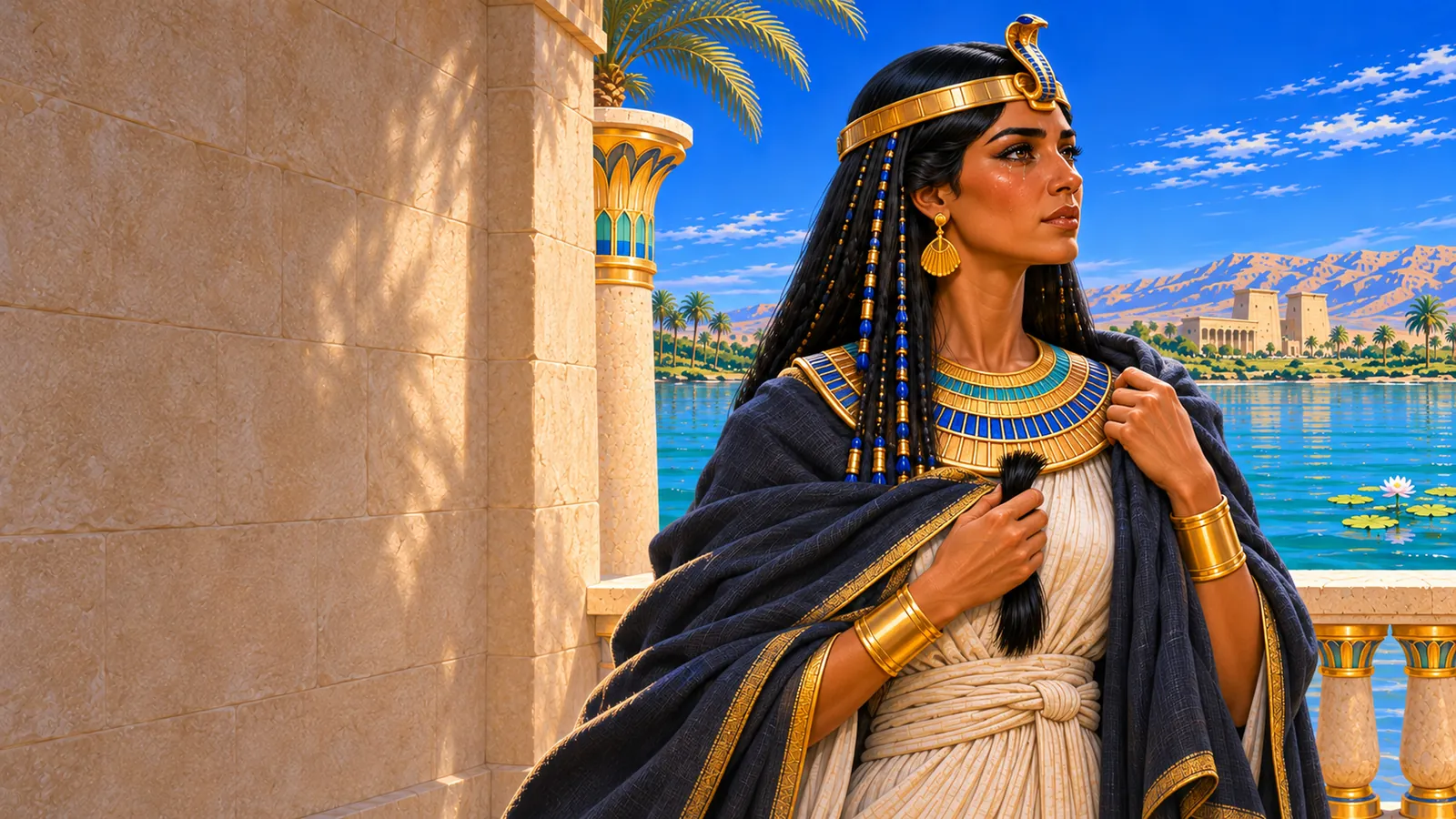
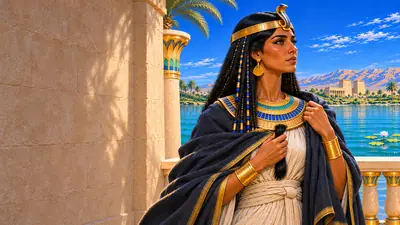
As soon as Isis heard the report, she cut off a lock of her hair. There on the spot, she put on her mourning clothes.

The story associates the place where Isis began mourning with the name Koptis. Some interpreted that name as mourning, while others understood it as deprivation.
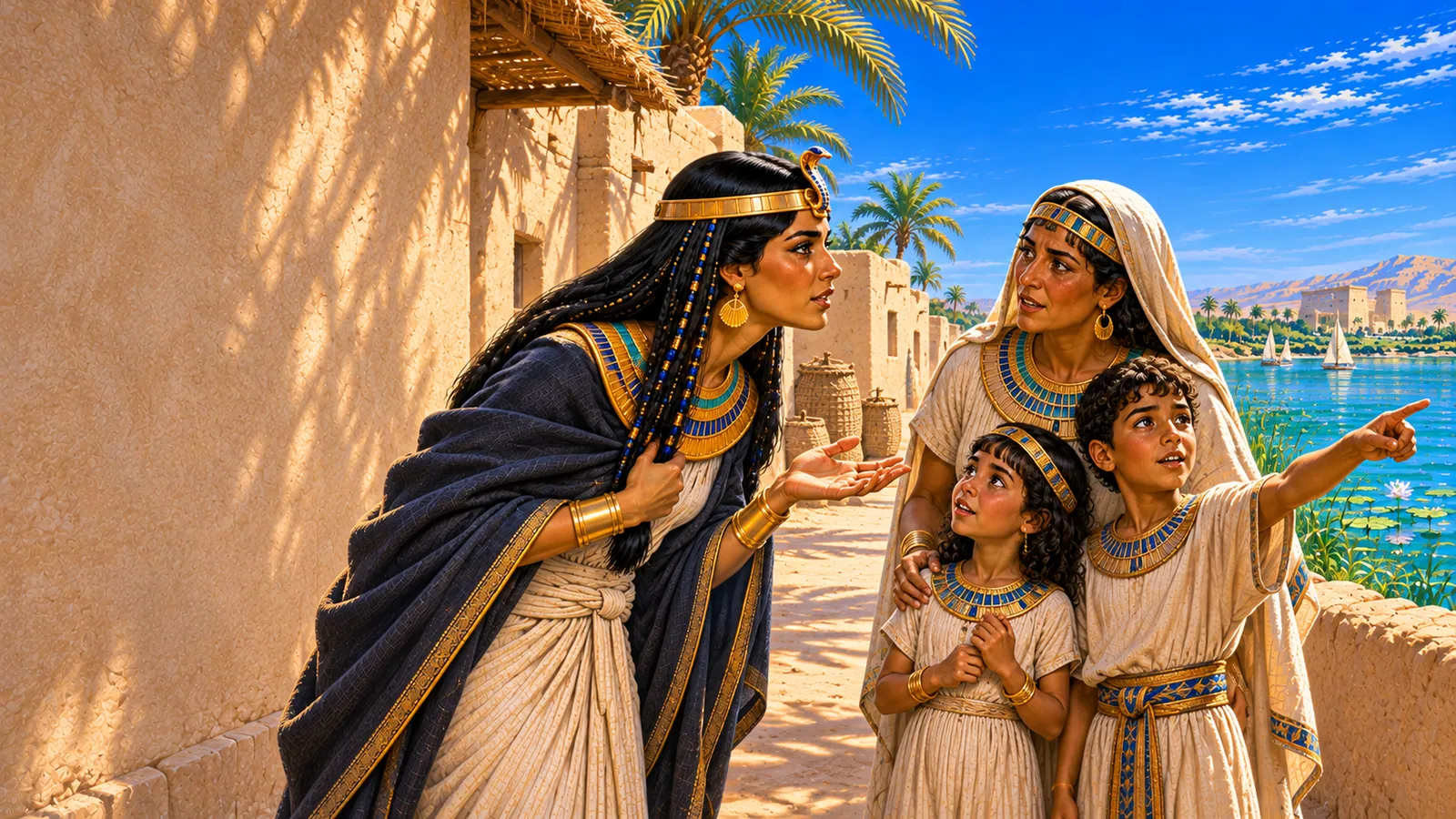
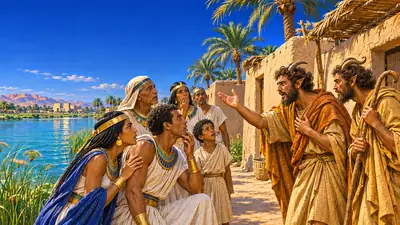
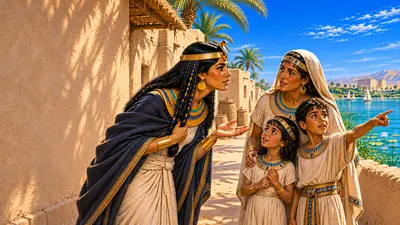
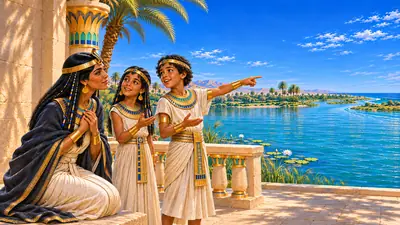
Isis went from place to place, anxious for any word of the chest. She asked everyone she met, including some children, whether they had seen it.
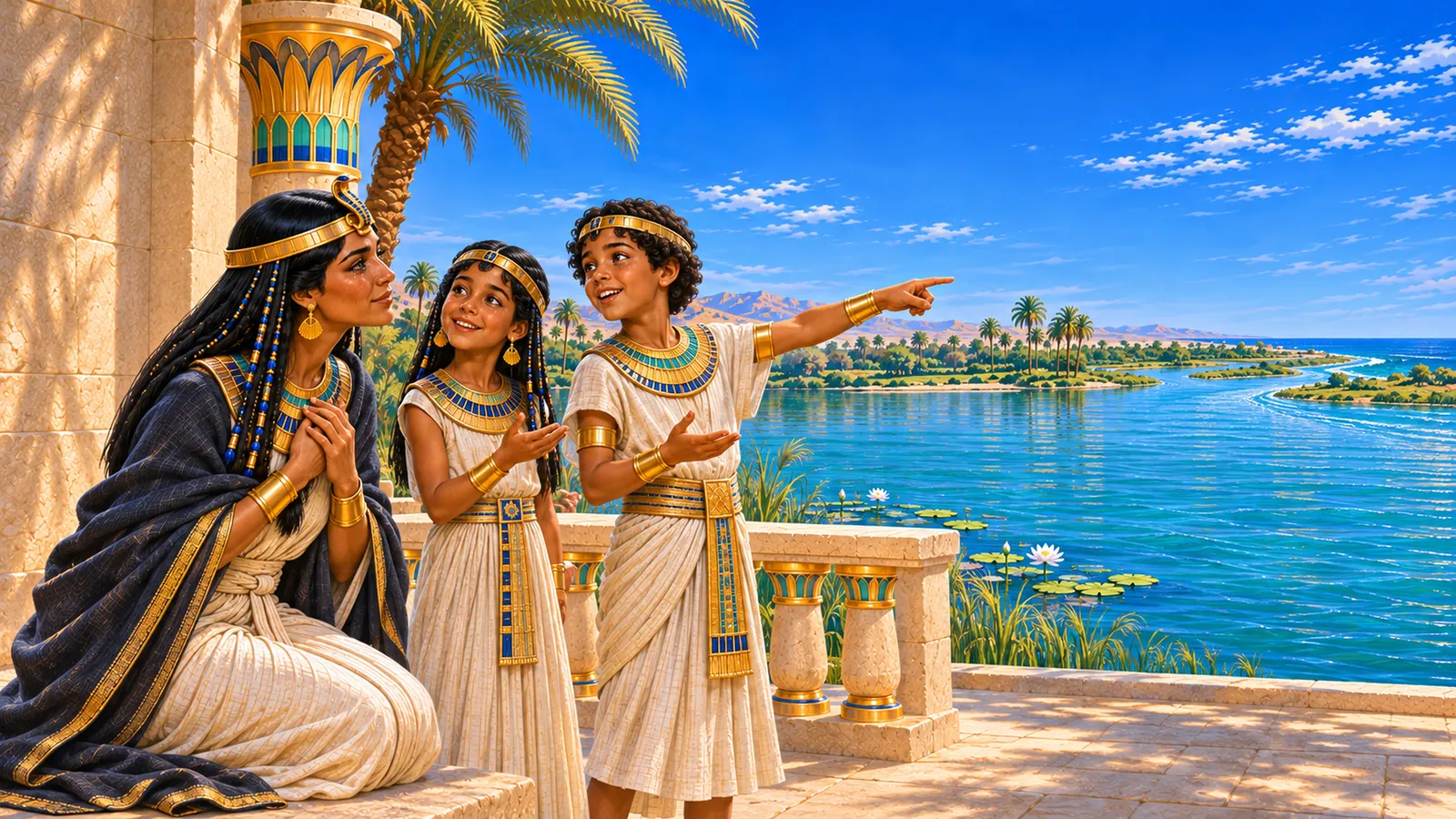
The children had seen how the chest was taken away. They told Isis through which mouth of the Nile it had been carried into the sea.
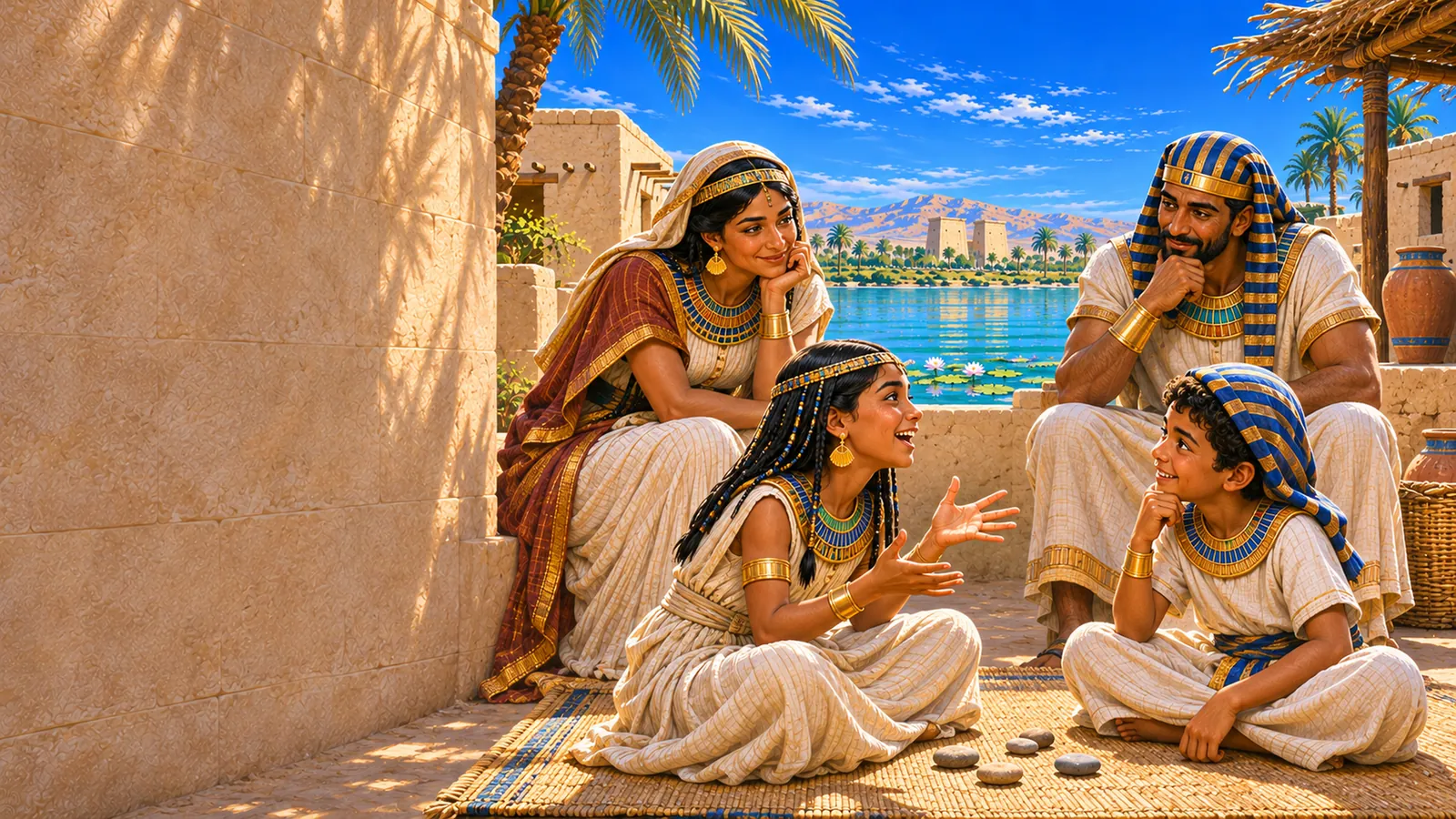
The account uses the children’s answer to explain a custom. It says people listened for omens in what children happened to say during play.
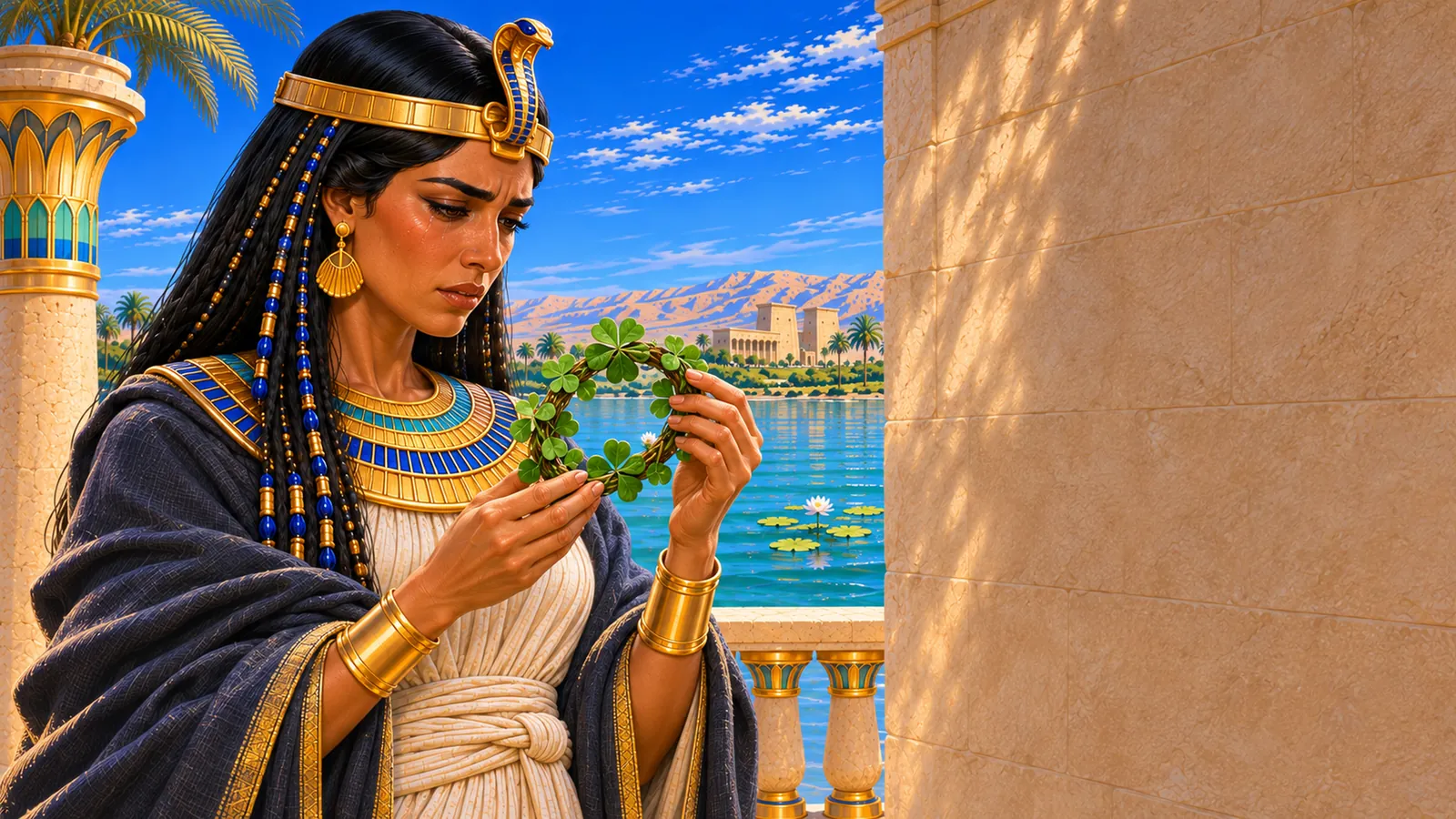
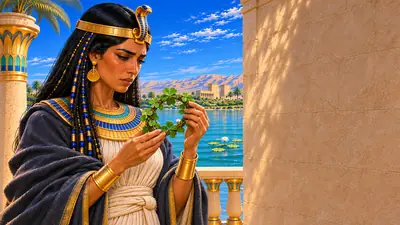
Isis learned that Nephthys had deceived Osiris, who had slept with her thinking she was Isis. A clover wreath he had left with Nephthys helped Isis understand what had happened.
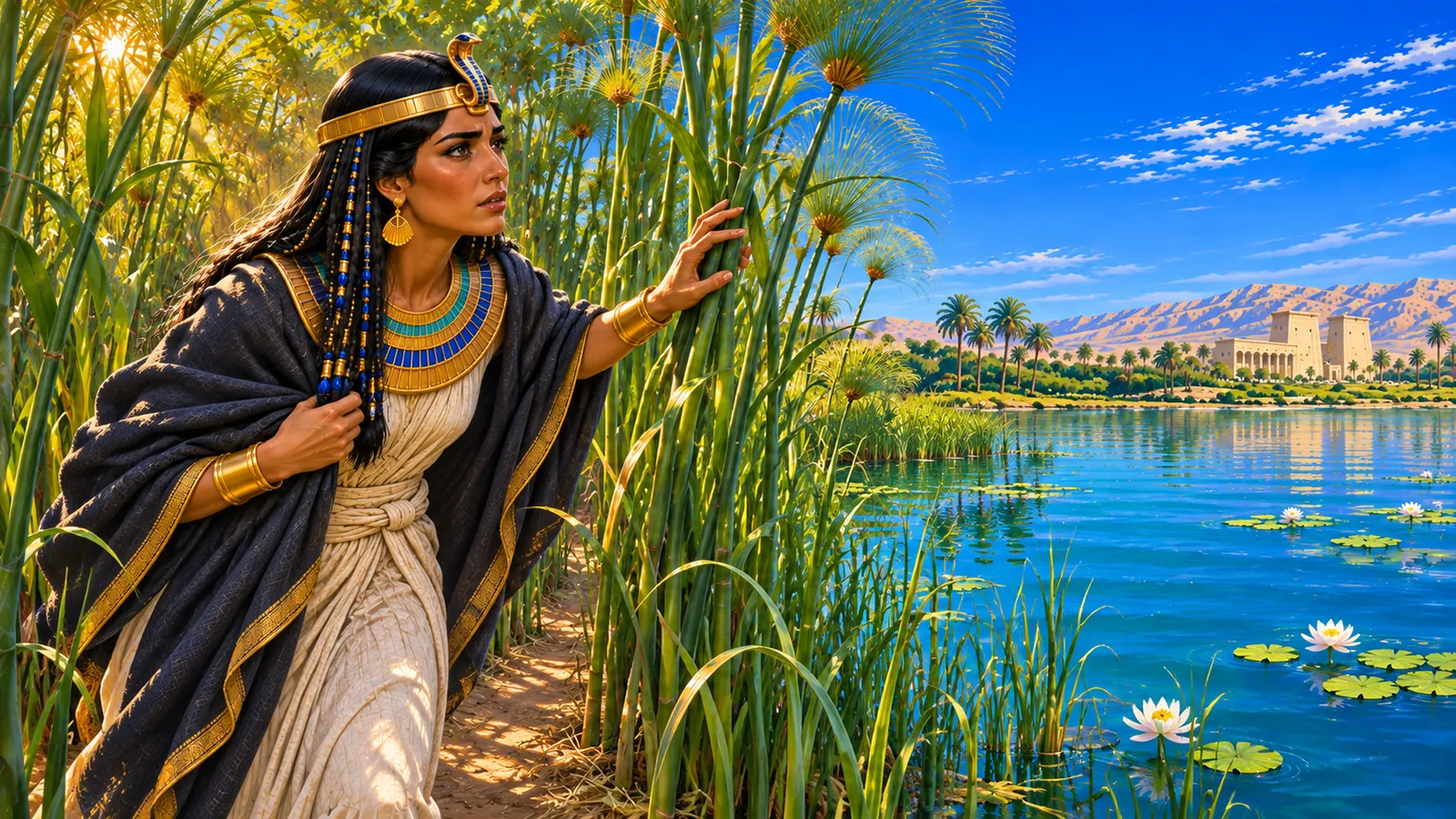
Nephthys feared Set’s anger and had abandoned the child as soon as he was born. Isis now set out to find him.
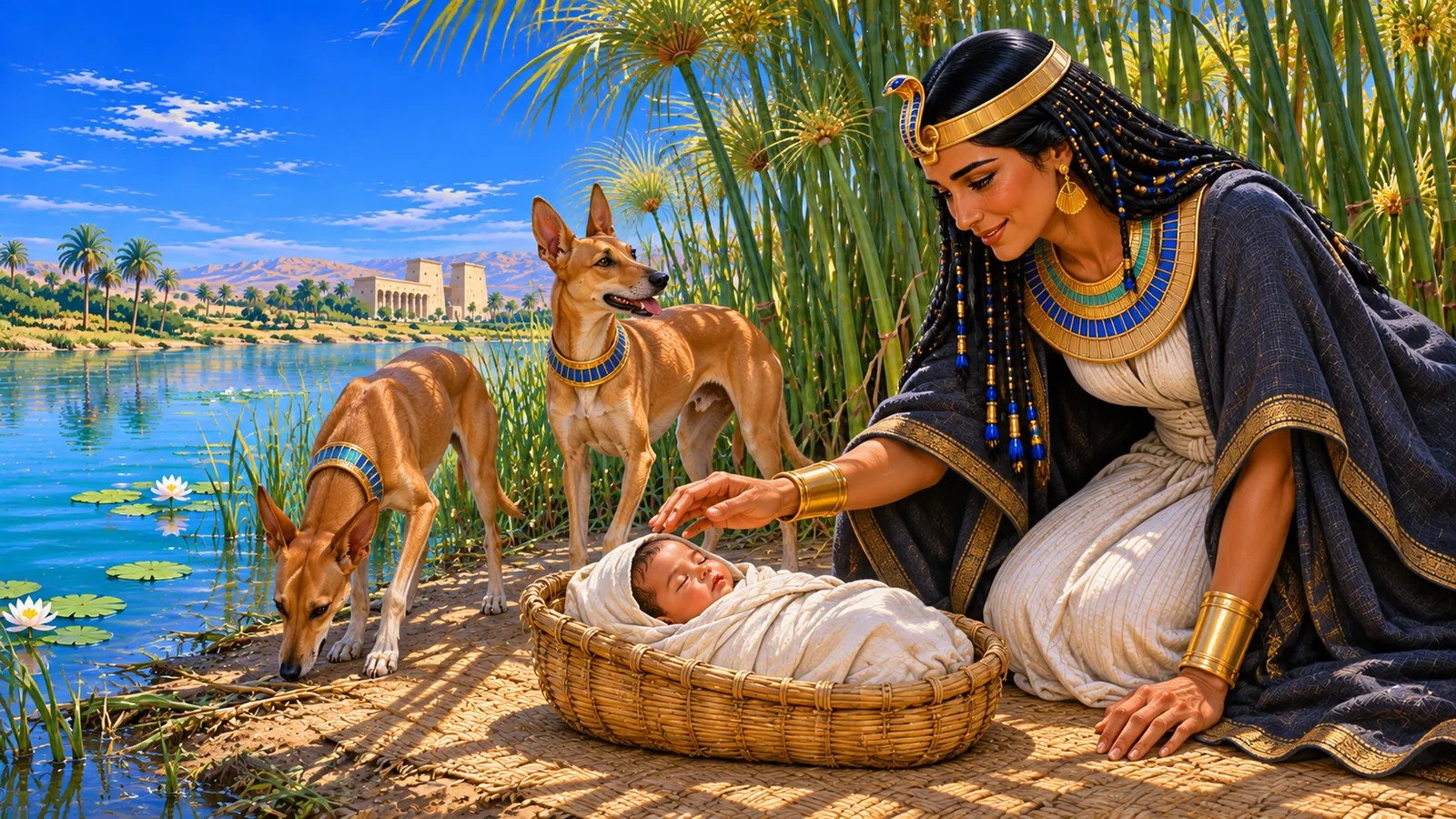
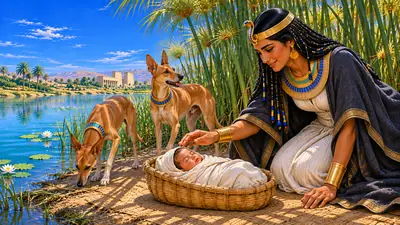
The search was difficult. At last some dogs led Isis to the place where the child had been left, and she found him there.
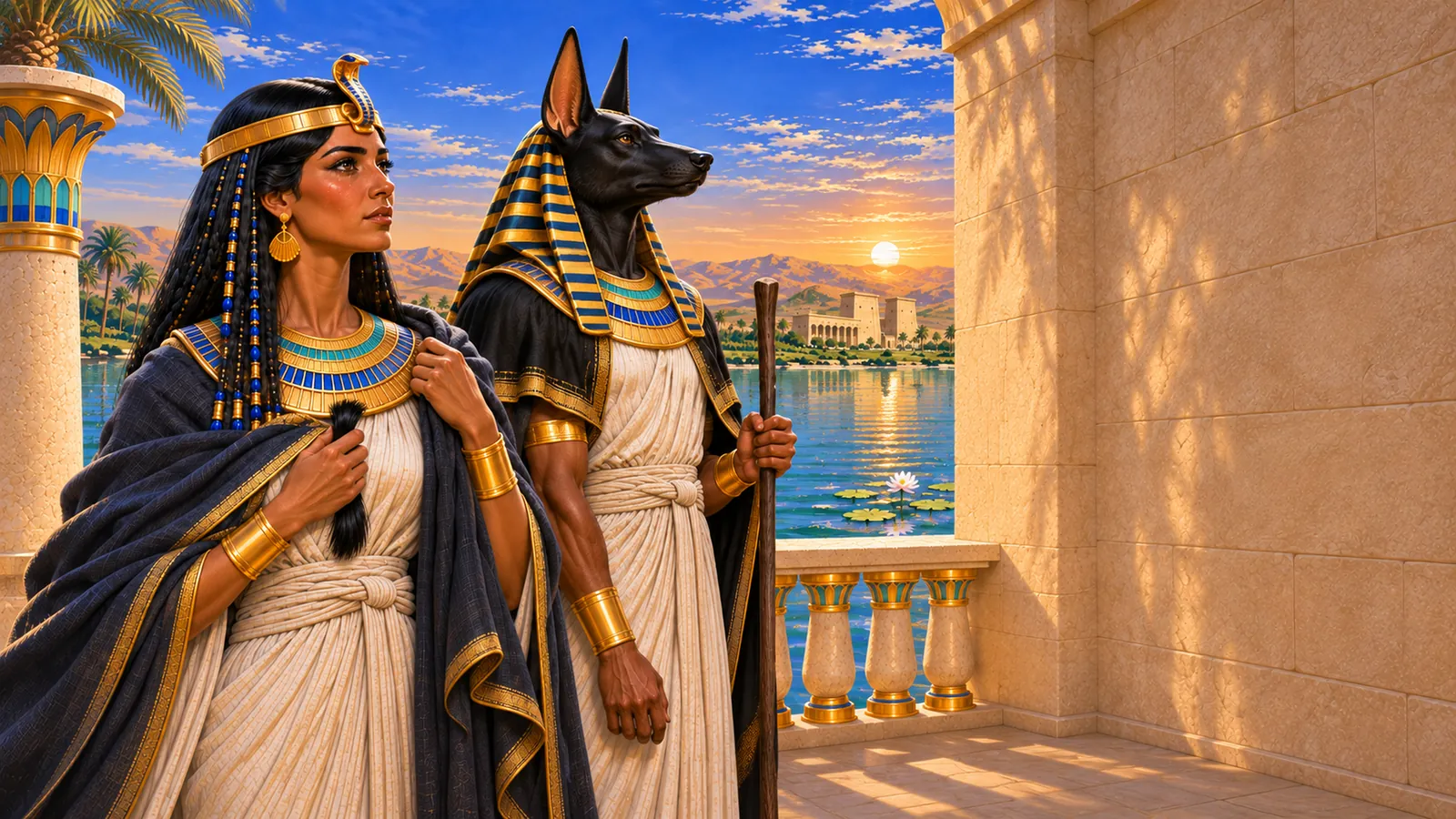
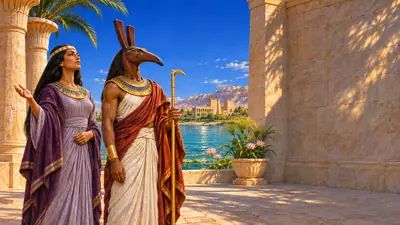
Isis took the child in and raised him. In time, he came to stay at her side as her constant guard and attendant.

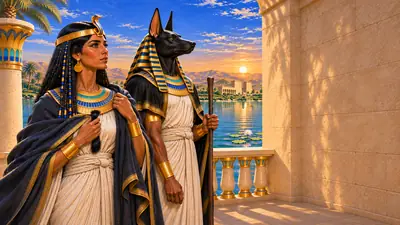
The tale calls this guardian Anubis. It says he watches over the gods as a dog watches over the people in its care.

AT SEA
The search for the chest took Isis far from the place where she began. The sea had already carried it to a coast the storyteller calls Byblos.
End of chapter 1

All pages












Sources
Page notes give line positions in the published Project Gutenberg HTML. The name Byblos follows the narrative. The location remains uncertain in these sources.
Editions consulted
- E. A. Wallis Budge, Egyptian Ideas of the Future Life, third edition, 1908, Chapter II
- Plutarch’s narrative in Samuel Squire’s translation as quoted in Chapter II
- Budge’s footnote for Samuel Squire’s Cambridge edition, 1744
- Budge’s note on the name Byblos
Notes on this retelling
**Edition.** Plutarch’s *On Isis and Osiris*, Samuel Squire’s Cambridge translation (1744), as quoted in E. A. Wallis Budge’s *Egyptian Ideas of the Future Life*, third edition (1908), chapter II. The introduction at raw HTML 1148–1158 identifies Plutarch and Squire, whose edition is specified in note 42. The local raw HTML lines below are verification locators. [Budge 1908, Project Gutenberg ebook 11277](https://www.gutenberg.org/ebooks/11277)
**P01, 1148–1158 and 1162–1167.** The opening frames the events as Plutarch’s retelling. The five days are the result of the game at 1171–1175. This page introduces the story’s premise in advance of those events.
**P02, 1162–1168.** Squire says that Rhea was with Saturn in secret, that the Sun discovered her, and that he cursed her to give birth in no month or year. Budge’s notes 43–45 identify Rhea with Nut, Saturn with Seb (Geb), and the Sun with Ra.
**P03, 1168–1171.** Squire’s Mercury loves Nut and plays with the Moon in return for favors she has granted him. Squire’s “plays at tables” is presented as a board game. The story gives no board design or rules in this passage.
This is what Plutarch reports about the custom.
**P07, 1176–1178.** Osiris is born on the first day.
**P08, 1179–1182.** An explicitly different account says that Pamyles heard the announcement while fetching water from the temple of Jupiter at Thebes. The spoken version names the city and leaves the Greek temple designation in this note.
Geb entrusts the child’s upbringing to him. Plutarch says the Pamylia commemorated this event and compares it to the Greek Phalliphoria or Priapeia.
**P10, 1186–1188.** Aroueris is born on day two. Budge’s note 46 gives Hera-ur, Horus the Elder. Squire also records Apollo as a name some give him.
**P11, 1188–1192 and note 47.** Squire calls the third child Typho, whom Budge identifies as Set.
**P12, 1192–1194.** Isis is born on the fourth added day in the marshes of Egypt.
**P13, 1193–1194.** Squire says Nepthys is born on the last day. The edition gives Teleute and Aphrodite as names used by some and Nike as one used by others. Those names remain in this note.
**P14, 1195–1201.** One reported genealogy assigns the first two children to the Sun (Ra), Isis to Mercury (Thoth), and Typho (Set) and Nephthys to Saturn (Geb). The next page retains the reported variant fatherhood of Horus the Elder without joining it to this genealogy.
Page 15 (Budge 1908, chapter II, raw HTML 1201–1205). Squire writes Typho and Nepthys for Set and Nephthys. He says they married. He then recounts the pre-birth union of Isis and Osiris, naming Aroueris, or the elder Orus, as their child. This is a different genealogy from the account in lines 1195–1197. Horus the Elder is the presentation name here.
Page 16 (1207–1209). Osiris has become king of Egypt and undertakes to change the way his people live. Squire’s English describes their previous way of life as “indigent and barbarous.” Those terms belong to the older account.
Page 17 (1209–1212). Osiris teaches cultivation and improving crops, gives laws to govern conduct, and instructs his people about reverence and worship due to the gods.
Pages 18–19 (1212–1218). Osiris travels beyond Egypt in the story. Squire says he persuades people through reasoning communicated in hymns and songs with musical instruments. The text expressly distinguishes his persuasion from compulsion by force of arms.
Page 20 (1219–1222). Isis governs vigilantly while Osiris is absent. Squire says this leaves Typho no opportunity to change anything in the state.
Page 21 (1222–1225). After Osiris returns, Typho persuades seventy-two other people to join the plot and also has the help of Aso, a queen then in Egypt. Squire calls her “a certain queen of Ethiopia.” The place label belongs to the older rendering.
Page 22 (1225–1229). Squire describes its fine appearance and ornament.
Page 23 (1229–1230). In his banqueting room Set presents the chest, and those present admire it.
Pages 24–25 (1230–1234). The guests try one after another. Osiris lies down last.
Page 26 (1234–1236). The conspirators close the chest with Osiris inside and trap him.
Page 27 (1236–1238). This retelling uses Tanaitic.
Page 28 (1238–1242). The date in the narrative is the seventeenth of Athyr. The ordinal is on line 1241 and the month starts line 1242. The following page gives the two accounts involving the number twenty-eight.
### Pages 29–42 · The news and the search
Ancient lines behind each page
- Page 1: Plutarch, Squire 1744 in Budge 1908, chapter II, HTML 1148–1158, 1162–1167
The whole upper text field is calm deep blue-violet morning sky, still one continuous soft tone. - Page 2: Plutarch, Squire 1744 in Budge 1908, chapter II, HTML 1162–1168
- Page 3: Plutarch, Squire 1744 in Budge 1908, chapter II, HTML 1168–1171
- Page 4: Plutarch, Squire 1744 in Budge 1908, chapter II, HTML 1170–1173
- Page 5: Plutarch, Squire 1744 in Budge 1908, chapter II, HTML 1172–1175
- Page 6: Plutarch, Squire 1744 in Budge 1908, chapter II, HTML 1174–1176
- Page 7: Plutarch, Squire 1744 in Budge 1908, chapter II, HTML 1176–1178
- Page 8: Plutarch, Squire 1744 in Budge 1908, chapter II, HTML 1179–1182
- Page 9: Plutarch, Squire 1744 in Budge 1908, chapter II, HTML 1182–1185
- Page 10: Plutarch, Squire 1744 in Budge 1908, chapter II, HTML 1186–1188
- Page 11: Plutarch, Squire 1744 in Budge 1908, chapter II, HTML 1188–1192
- Page 12: Plutarch, Squire 1744 in Budge 1908, chapter II, HTML 1192–1194
- Page 13: Plutarch, Squire 1744 in Budge 1908, chapter II, HTML 1193–1194
- Page 14: Plutarch, Squire 1744 in Budge 1908, chapter II, HTML 1195–1201
- Page 15: Plutarch, Squire 1744 in Budge 1908, chapter II, HTML 1201–1205
The entire right text field is unbroken blue-brown shade on bare plaster. - Page 16: Plutarch, Squire 1744 in Budge 1908, chapter II, HTML 1207–1209
- Page 17: Plutarch, Squire 1744 in Budge 1908, chapter II, HTML 1209–1212
- Page 18: Plutarch, Squire 1744 in Budge 1908, chapter II, HTML 1212–1214
- Page 19: Plutarch, Squire 1744 in Budge 1908, chapter II, HTML 1214–1218
- Page 20: Plutarch, Squire 1744 in Budge 1908, chapter II, HTML 1219–1222
- Page 21: Plutarch, Squire 1744 in Budge 1908, chapter II, HTML 1222–1225
- Page 22: Plutarch, Squire 1744 in Budge 1908, chapter II, HTML 1225–1229
Treat it as a close still-life fragment. - Page 23: Plutarch, Squire 1744 in Budge 1908, chapter II, HTML 1229–1230
- Page 24: Plutarch, Squire 1744 in Budge 1908, chapter II, HTML 1230–1232
- Page 25: Plutarch, Squire 1744 in Budge 1908, chapter II, HTML 1232–1234
- Page 26: Plutarch, Squire 1744 in Budge 1908, chapter II, HTML 1234–1236
- Page 27: Plutarch, Squire 1744 in Budge 1908, chapter II, HTML 1236–1238
The whole right text rectangle is soft uniform slate-teal water and air with no distinct horizon or foam. - Page 28: Plutarch, Squire 1744 in Budge 1908, chapter II, HTML 1238–1242
- Page 29: Plutarch, Squire 1744 as printed by Budge 1908, Chapter II, HTML lines 1241–1244
- Page 30: Plutarch, Squire 1744 as printed by Budge 1908, Chapter II, HTML lines 1246–1249
- Page 31: Plutarch, Squire 1744 as printed by Budge 1908, Chapter II, HTML lines 1248–1251
- Page 32: Plutarch, Squire 1744 as printed by Budge 1908, Chapter II, HTML lines 1251–1255
- Page 33: Plutarch, Squire 1744 as printed by Budge 1908, Chapter II, HTML lines 1254–1257
- Page 34: Plutarch, Squire 1744 as printed by Budge 1908, Chapter II, HTML lines 1256–1260
- Page 35: Plutarch, Squire 1744 as printed by Budge 1908, Chapter II, HTML lines 1260–1262
The entire right half is smooth water in softly graded blue dusk, with no hard horizon line or reflections there. - Page 36: Plutarch, Squire 1744 as printed by Budge 1908, Chapter II, HTML lines 1263–1267
- Page 37: Plutarch, Squire 1744 as printed by Budge 1908, Chapter II, HTML lines 1267–1272
- Page 38: Plutarch, Squire 1744 as printed by Budge 1908, Chapter II, HTML lines 1272–1276
- Page 39: Plutarch, Squire 1744 as printed by Budge 1908, Chapter II, HTML lines 1275–1278
- Page 40: Plutarch, Squire 1744 as printed by Budge 1908, Chapter II, HTML lines 1277–1279
- Page 41: Plutarch, Squire 1744 as printed by Budge 1908, Chapter II, HTML lines 1278–1279
- Page 42: Plutarch, Squire 1744 as printed by Budge 1908, Chapter II, HTML lines 1257–1262, 1282–1285
Illustrations made with AI tools by IL Archive; the text is based on the ancient sources (see the sources at the end of each chapter).