Isis and Osiris Chapter 2
The Pillar at Byblos
The sea carries the chest to a coast called Byblos, where a tamarisk grows around it. Its trunk becomes a pillar in the royal house. Isis follows the story to a fountain, enters the court and asks for the pillar. The account preserves several versions of what follows.
SourcesTurn the pages with the arrows, the arrow keys or a swipe.
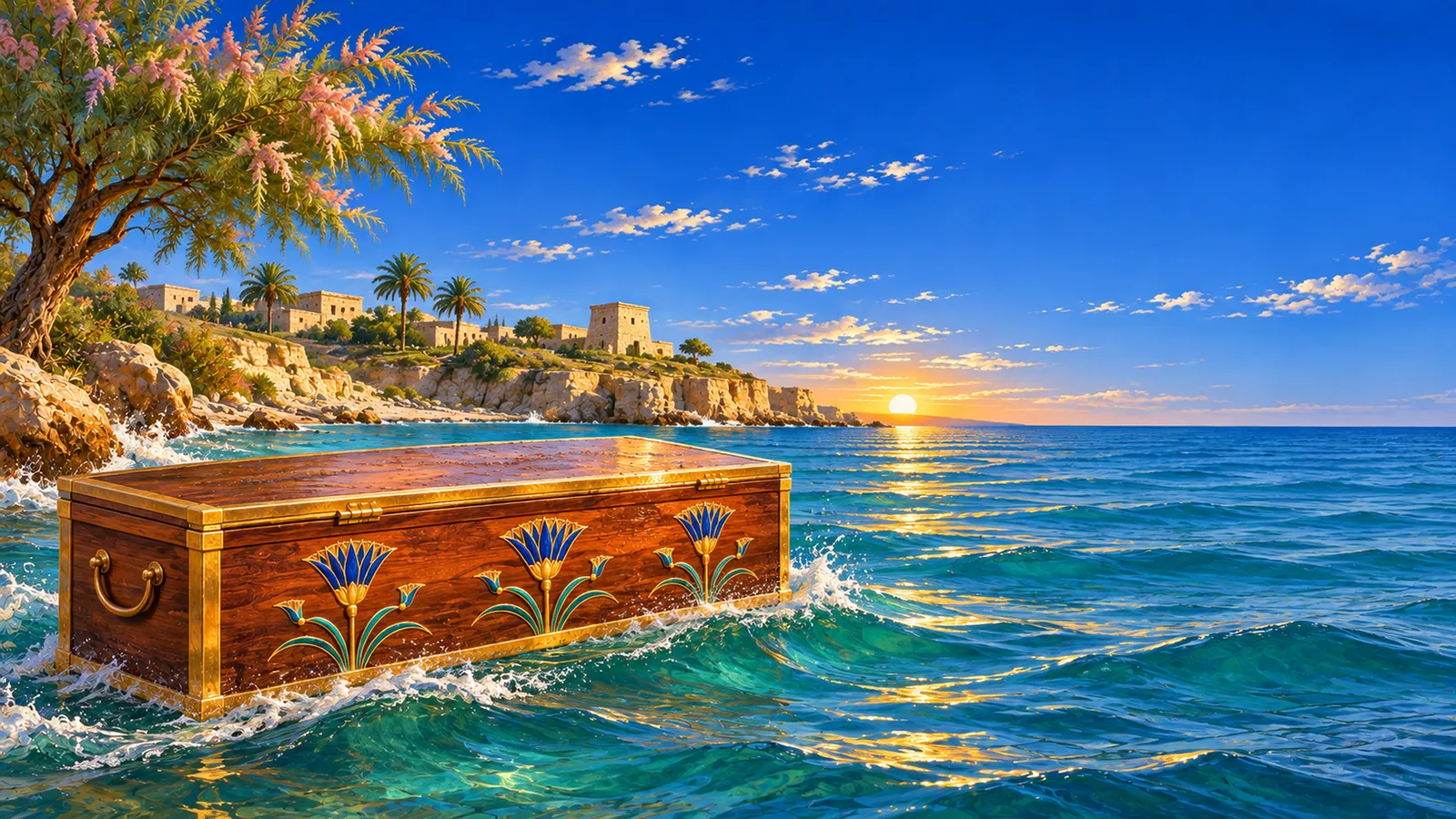
THE COAST
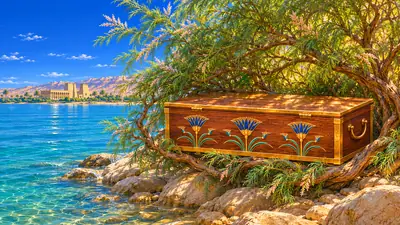
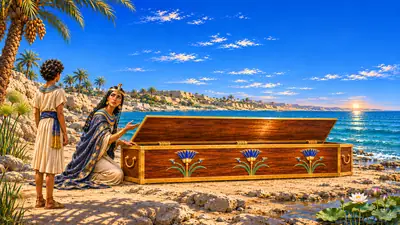
The sea carried the chest on its waves. In the old account, it reached a coastal place called Byblos.
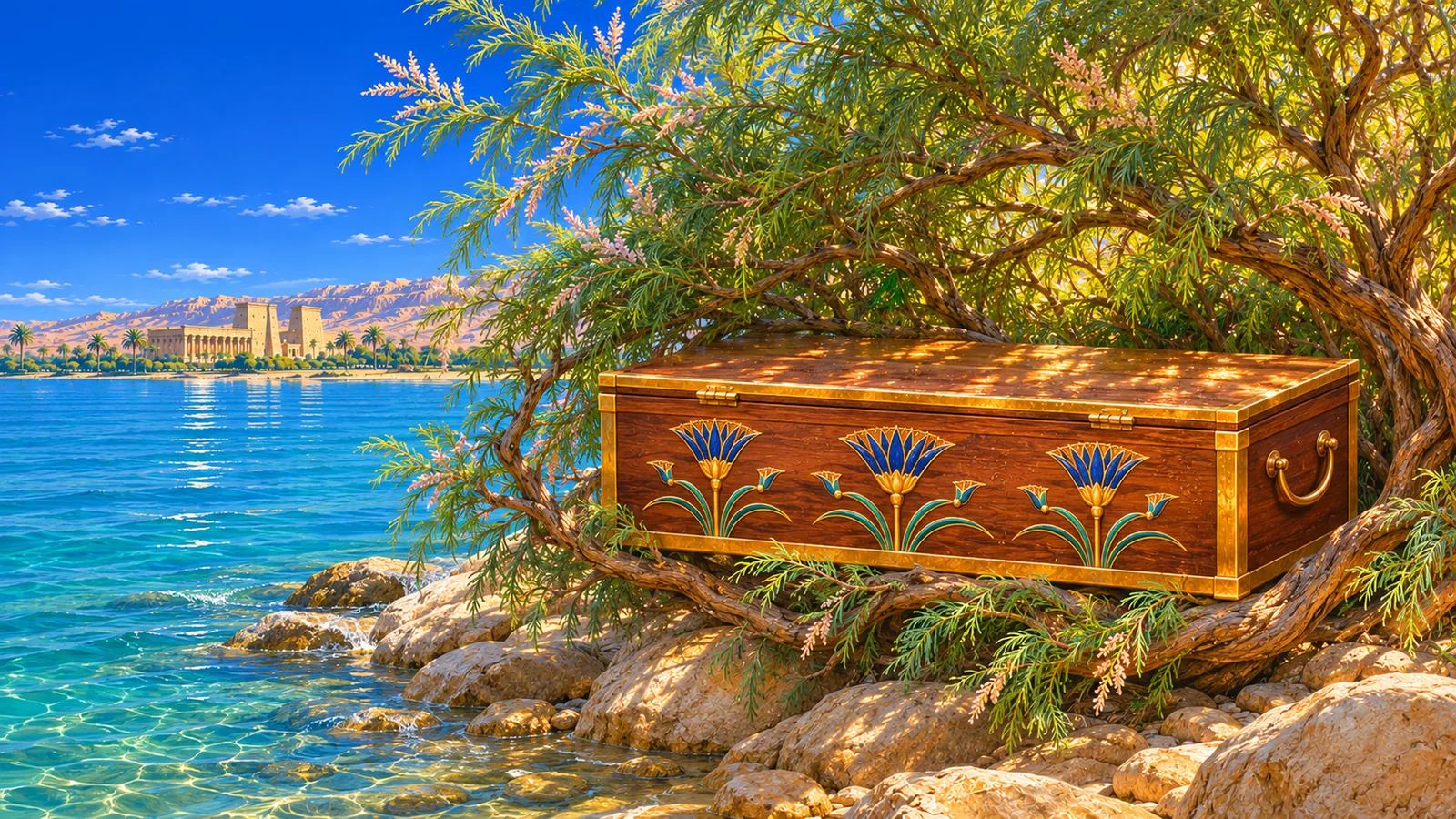
There the chest came to rest among the branches of a tamarisk bush. The old account says it lodged there gently.

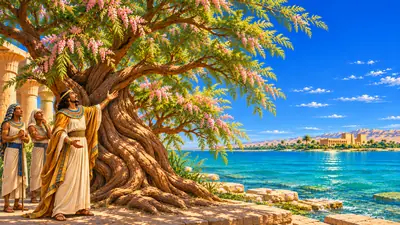
In a short time the tamarisk grew into a large and beautiful tree. Its branches grew around the chest.

The tree enclosed the chest on every side. The story says that the chest disappeared from view within the trunk.
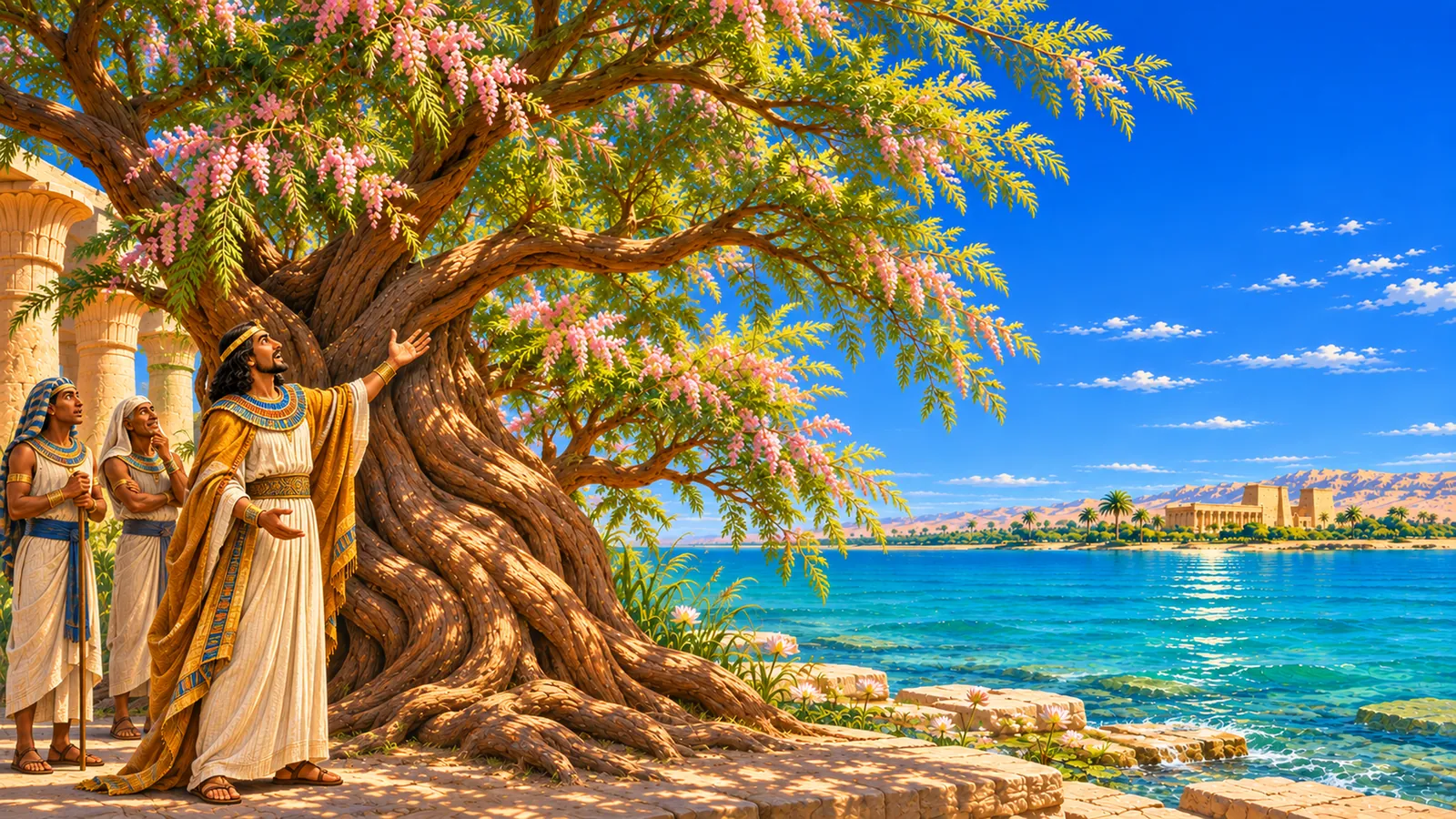
The king of the country saw the tamarisk and marveled at how unusually large it had grown.
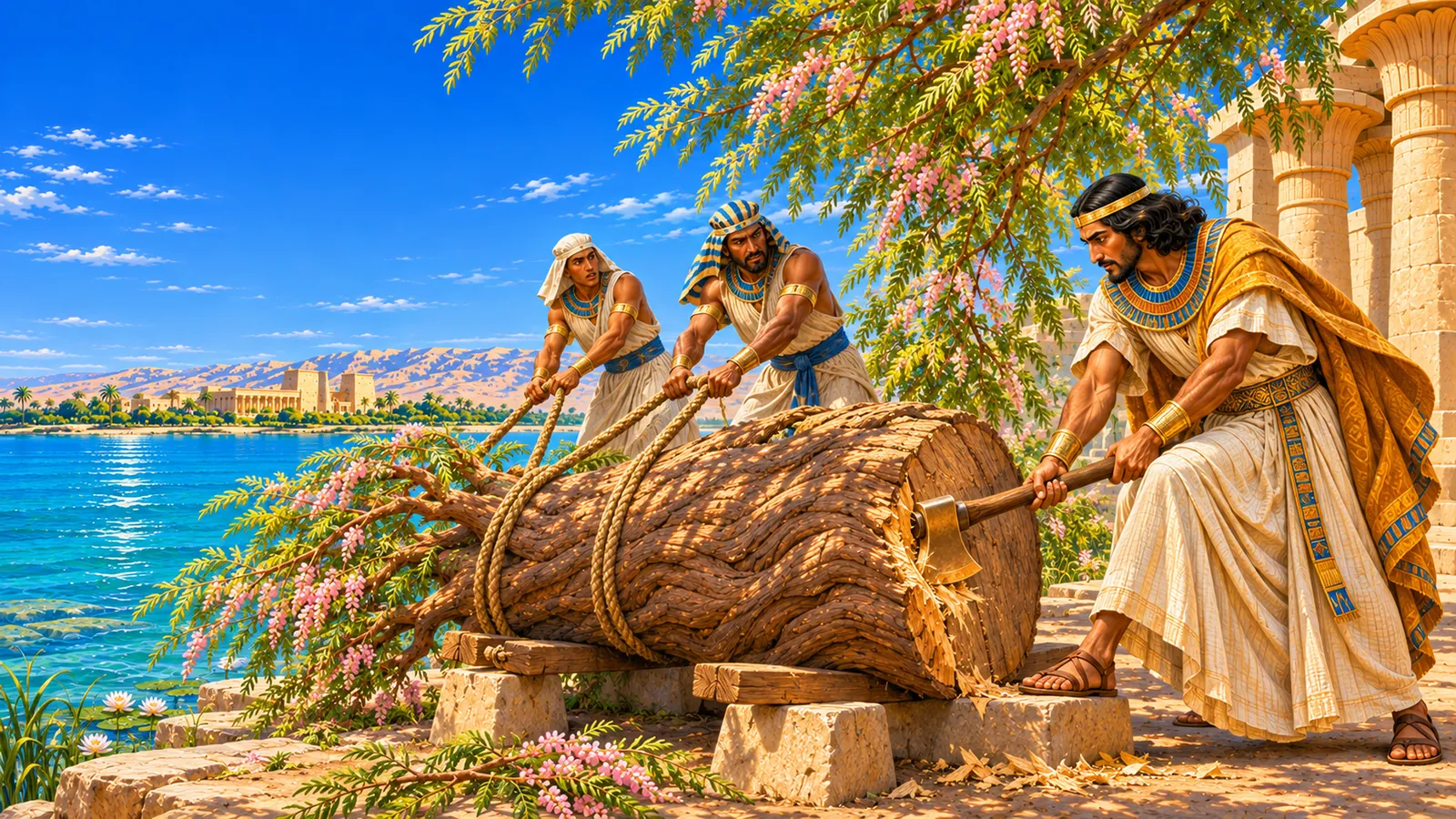
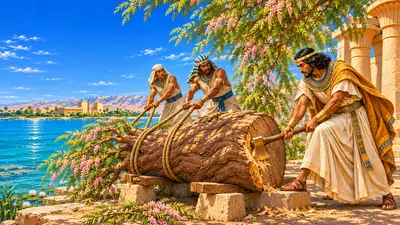
The king cut down the tree. He took the section of trunk with the chest still hidden inside.
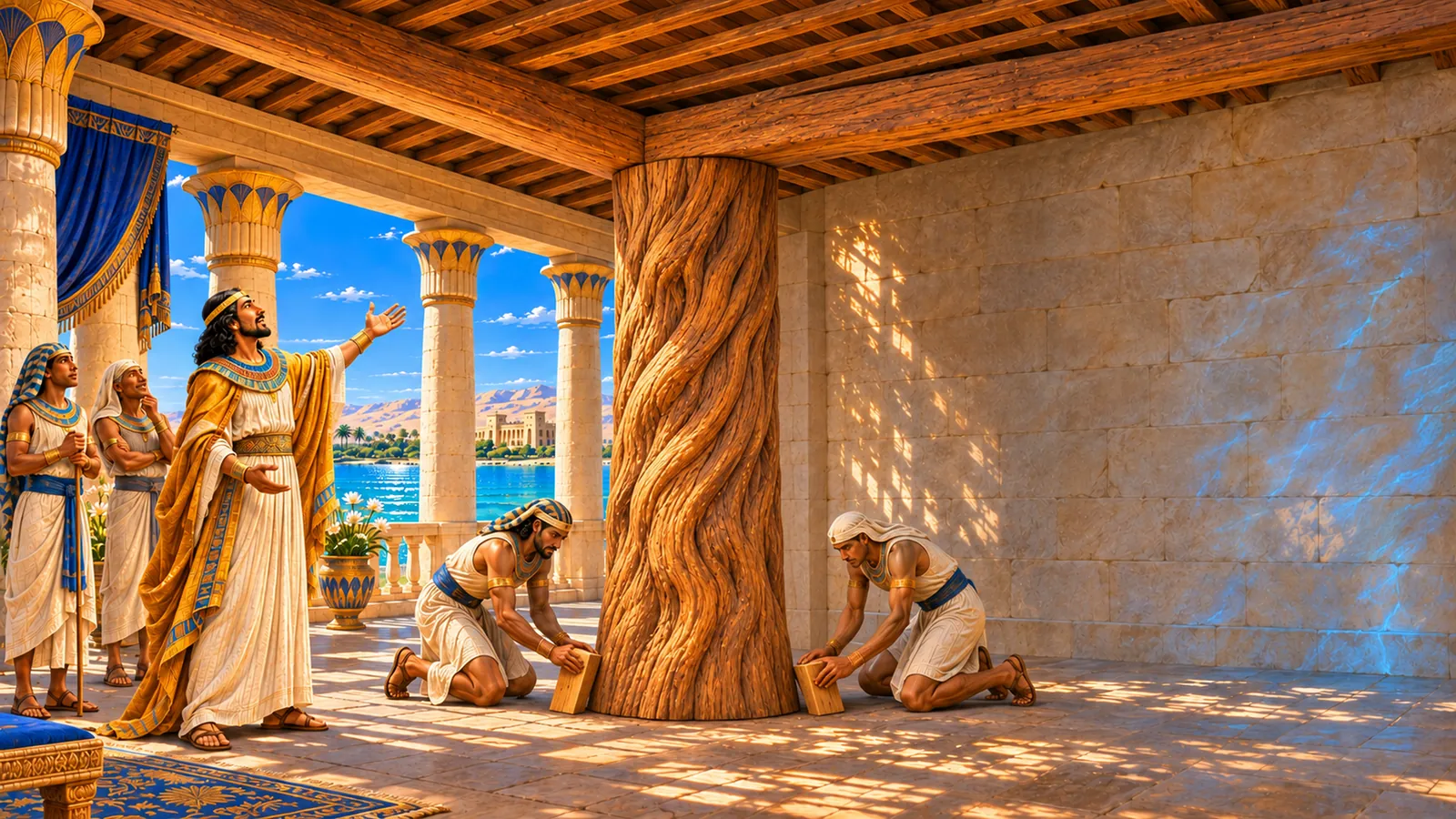
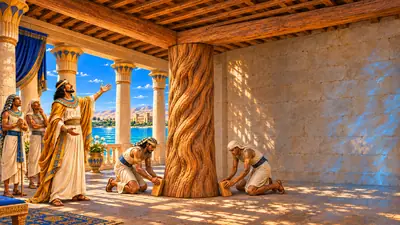
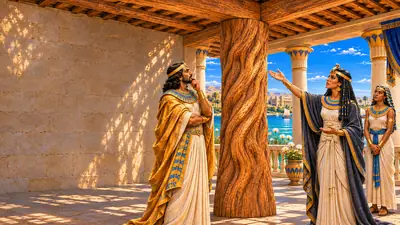
The king made a pillar from that part of the trunk. Standing upright, it supported the roof of his house.
THE REPORT
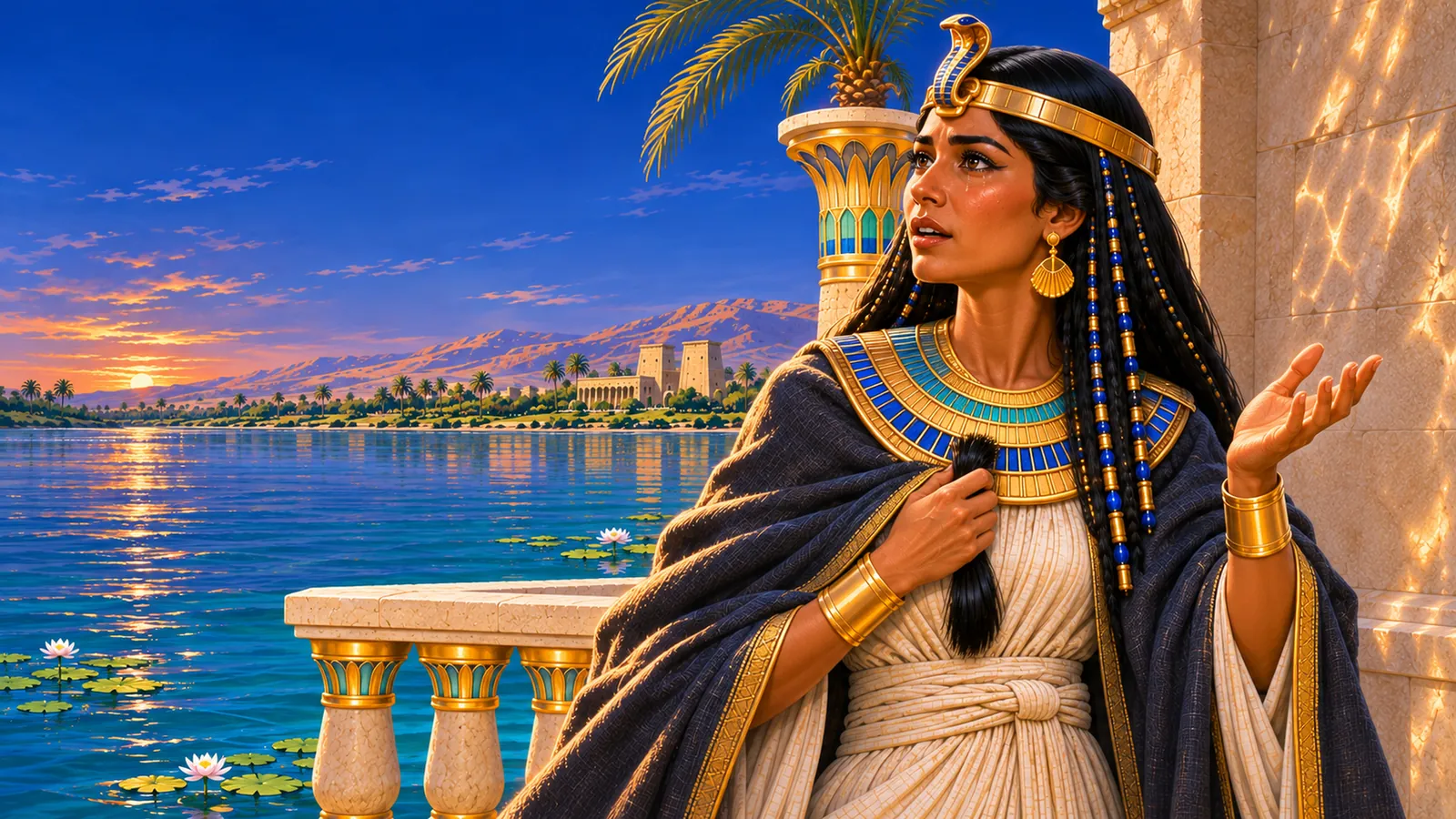
Spirits, in this telling, brought Isis the report about the tree and the chest. The storyteller describes this as an extraordinary way for the news to reach her.
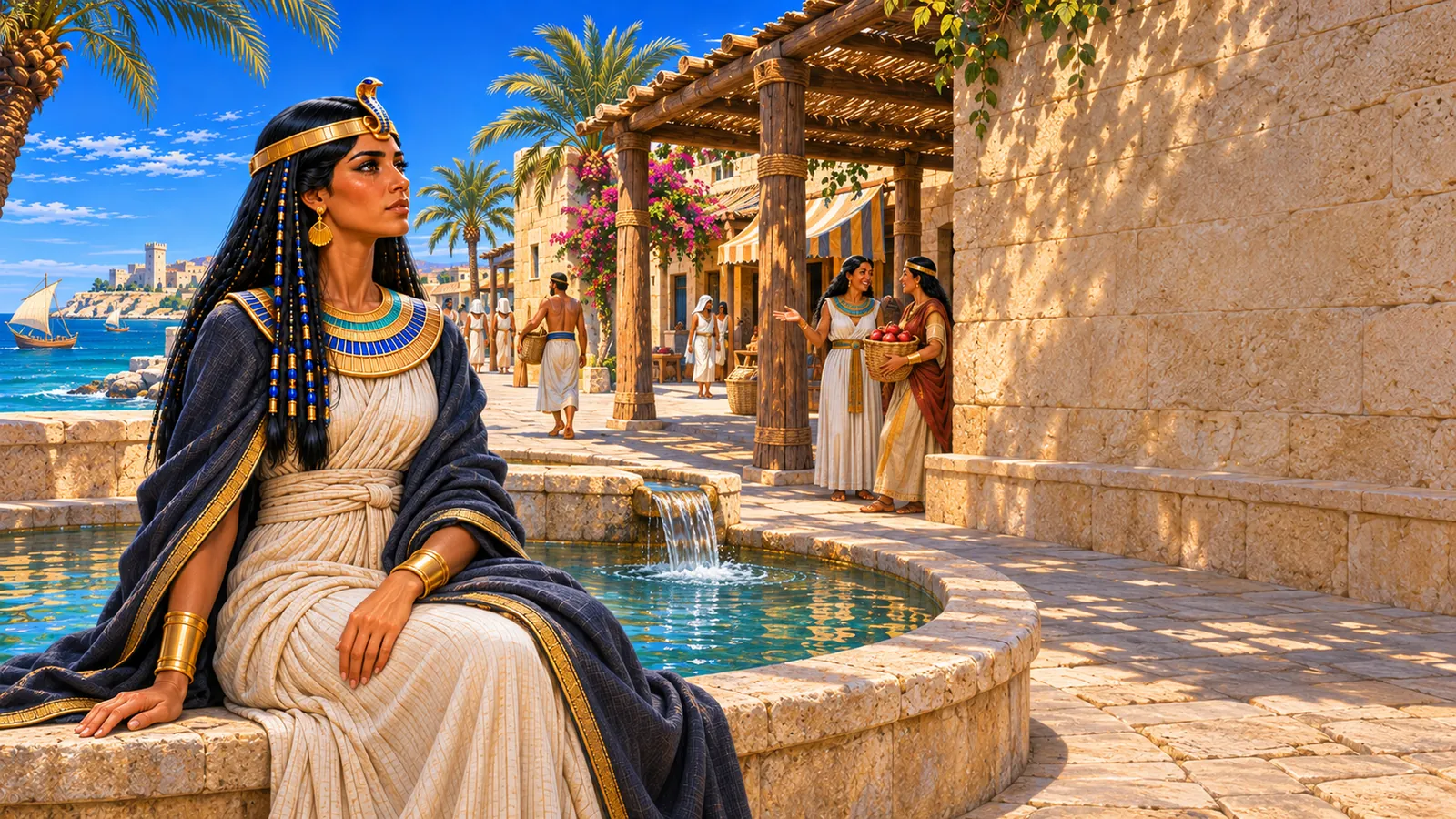
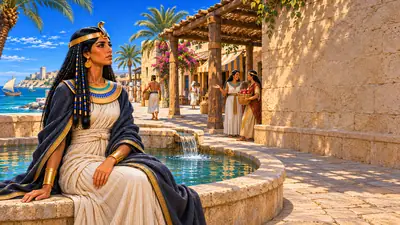
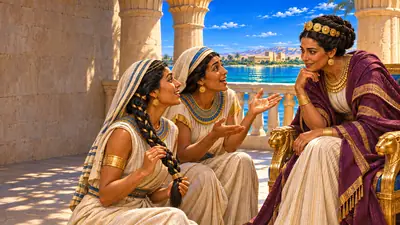
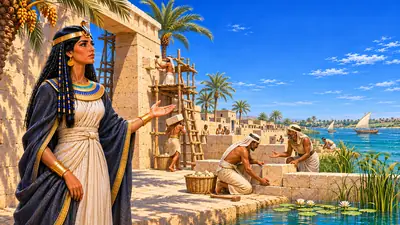
Isis went at once to Byblos. When she arrived, she sat down beside a fountain.
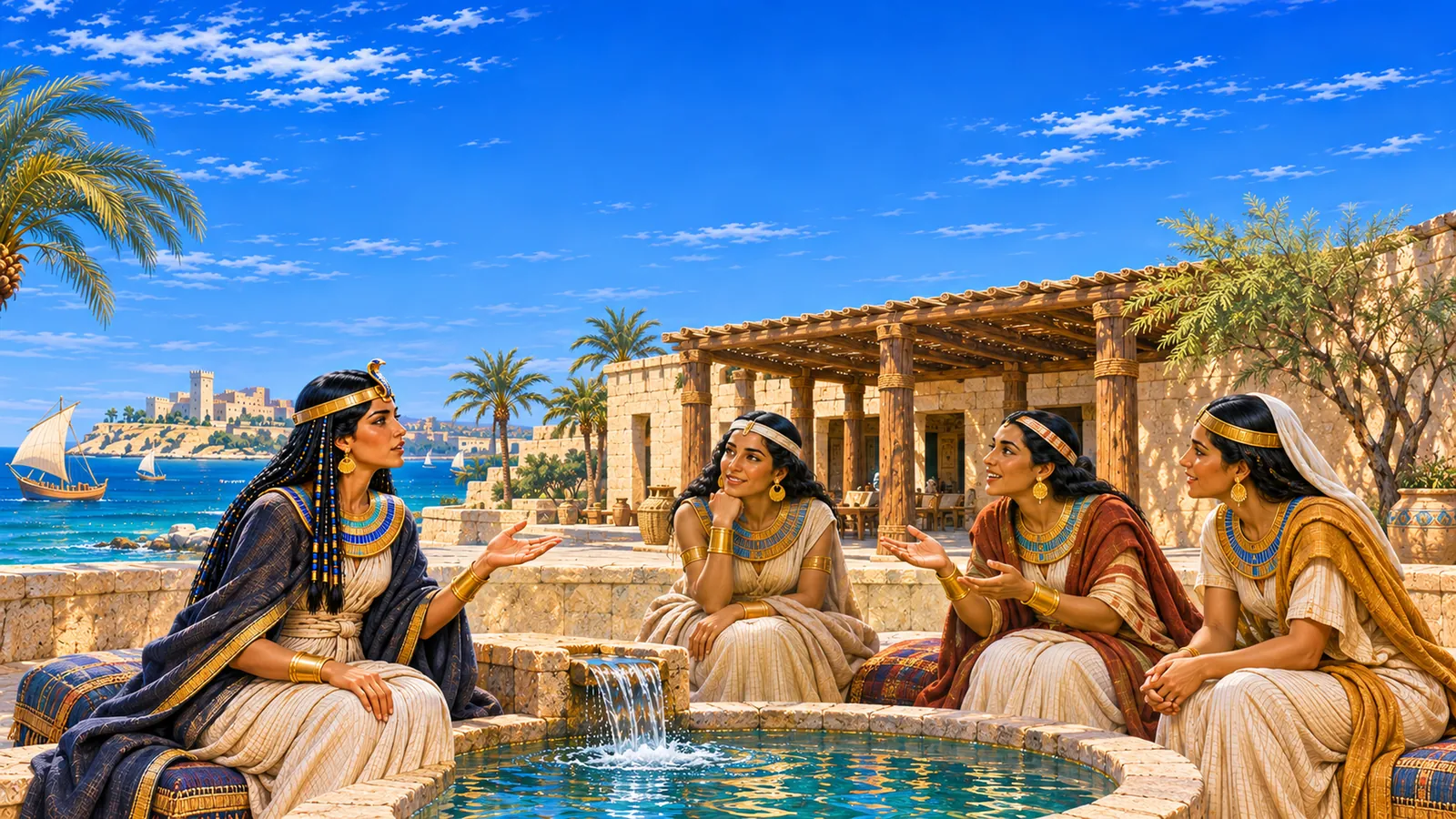
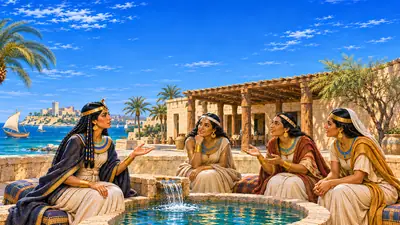
Isis refused to speak to anyone except the women who attended the queen. They happened to be beside the fountain.
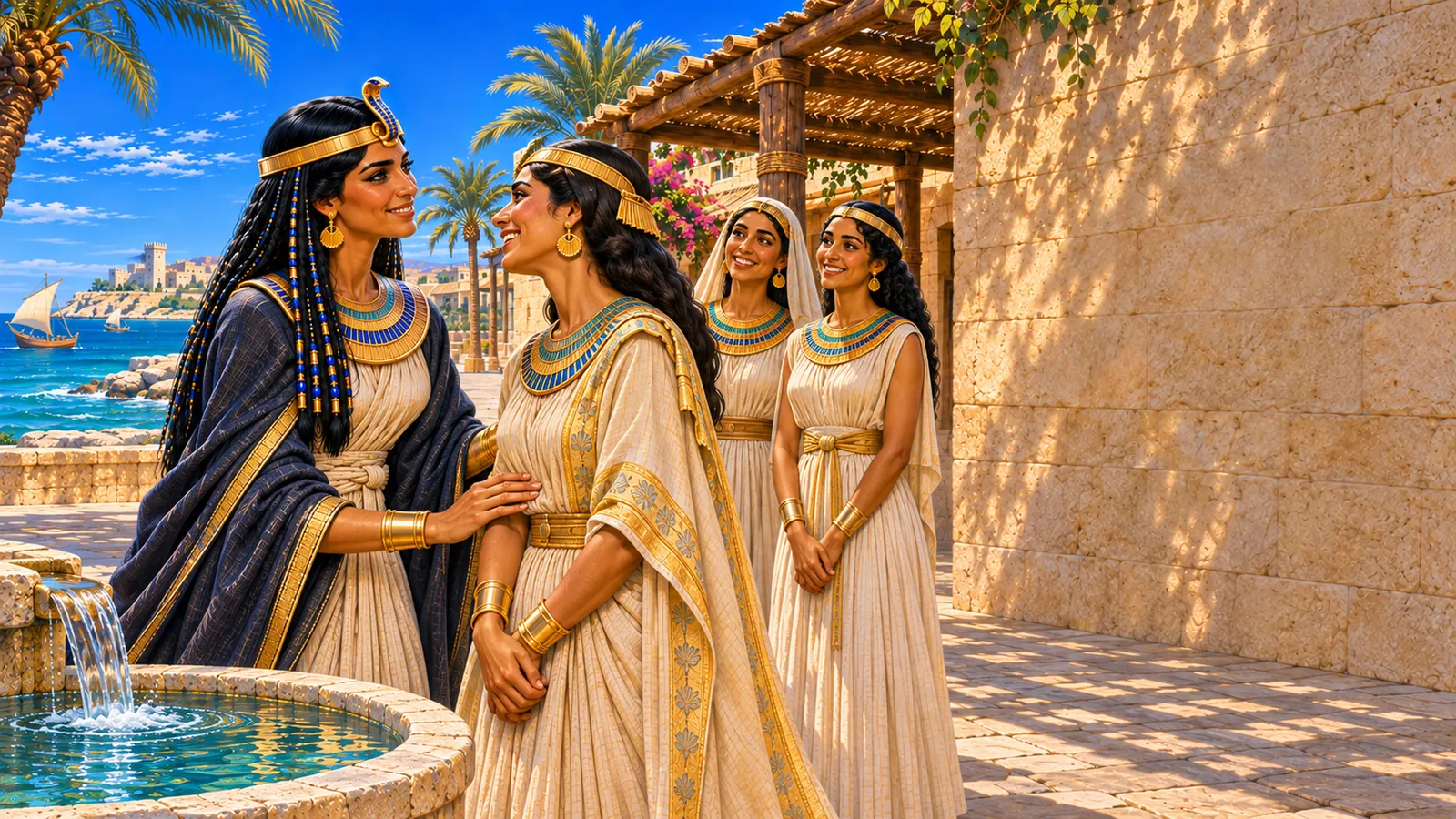
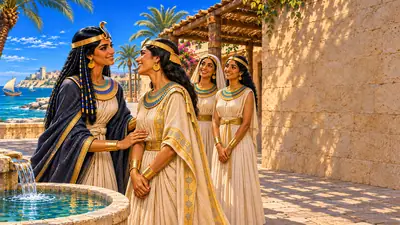
Isis warmly greeted the women who served the queen. The account says she treated them with the greatest kindness.
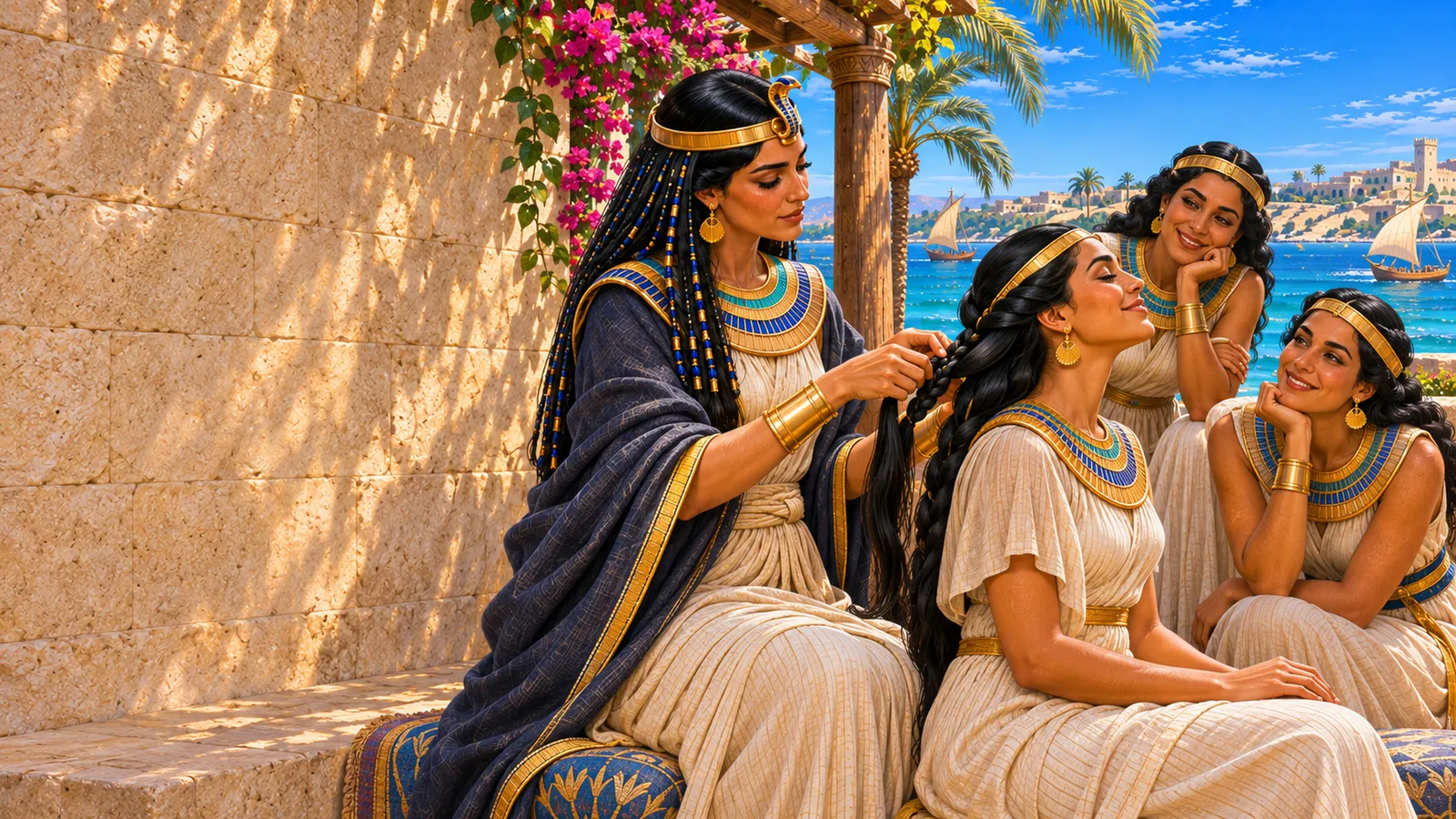
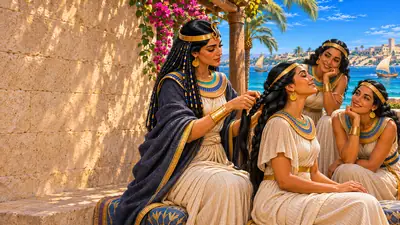
Isis braided their hair. In the story, some of her own fragrance passed to the women as she did so.
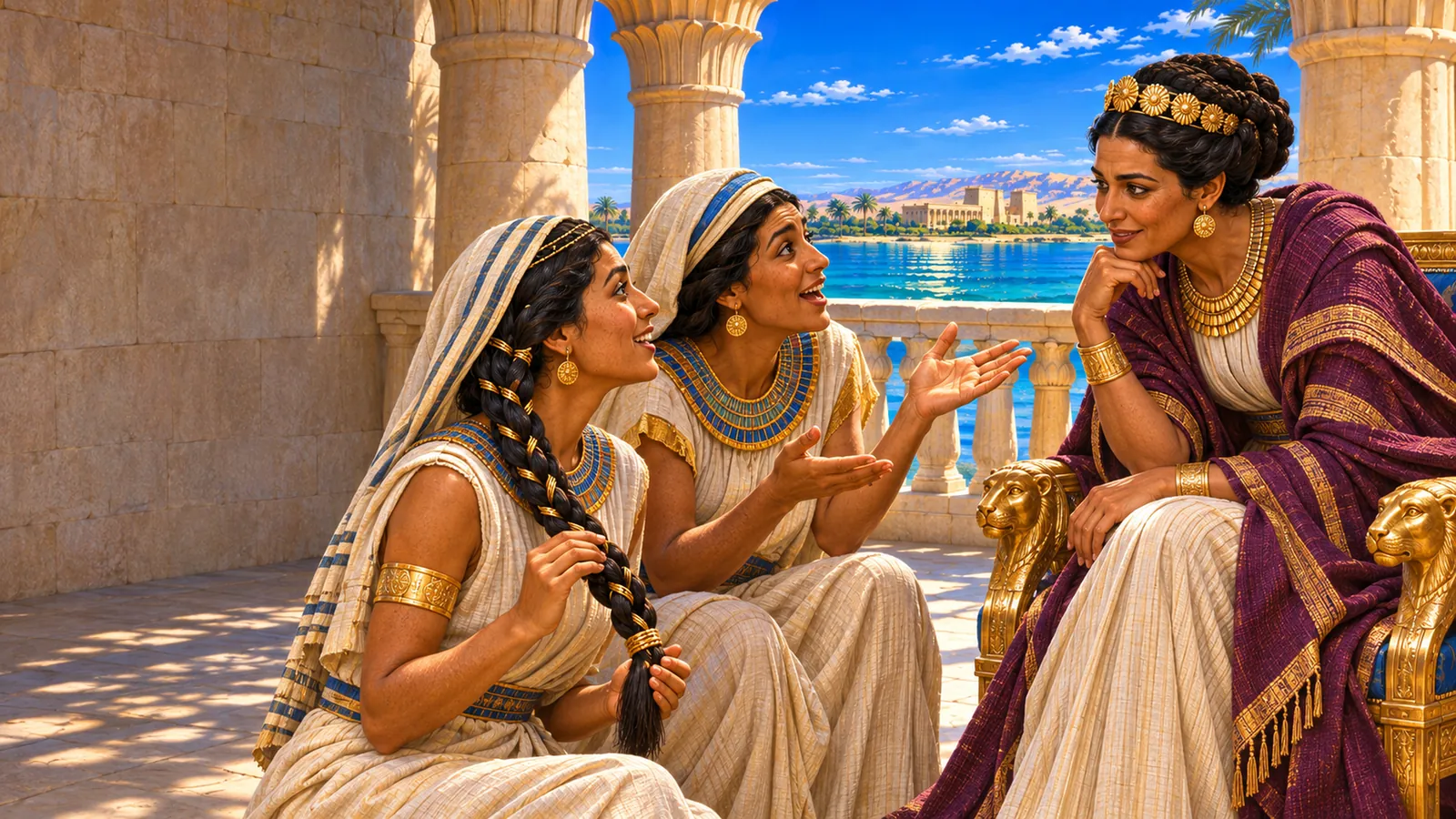
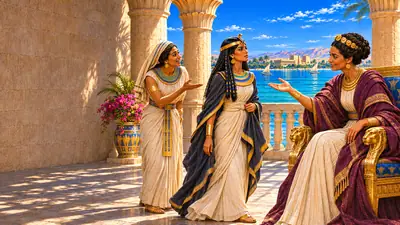
The queen learned that a stranger had passed some of her own fragrance to the women. She wanted very much to see her.
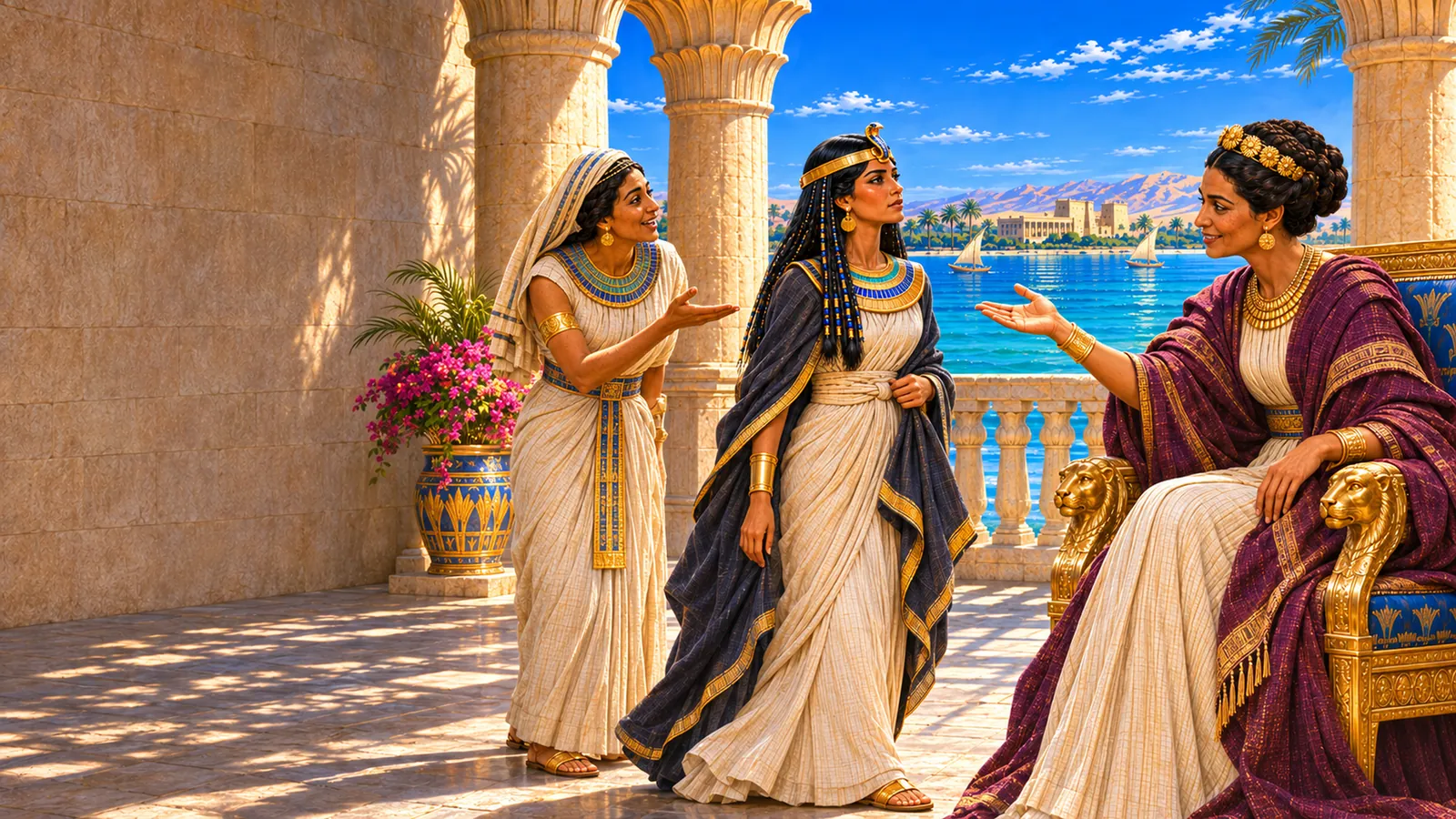
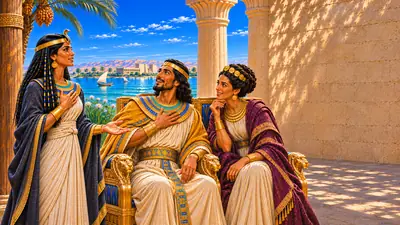
The queen sent for the stranger from the fountain. She summoned her to court so they could meet.
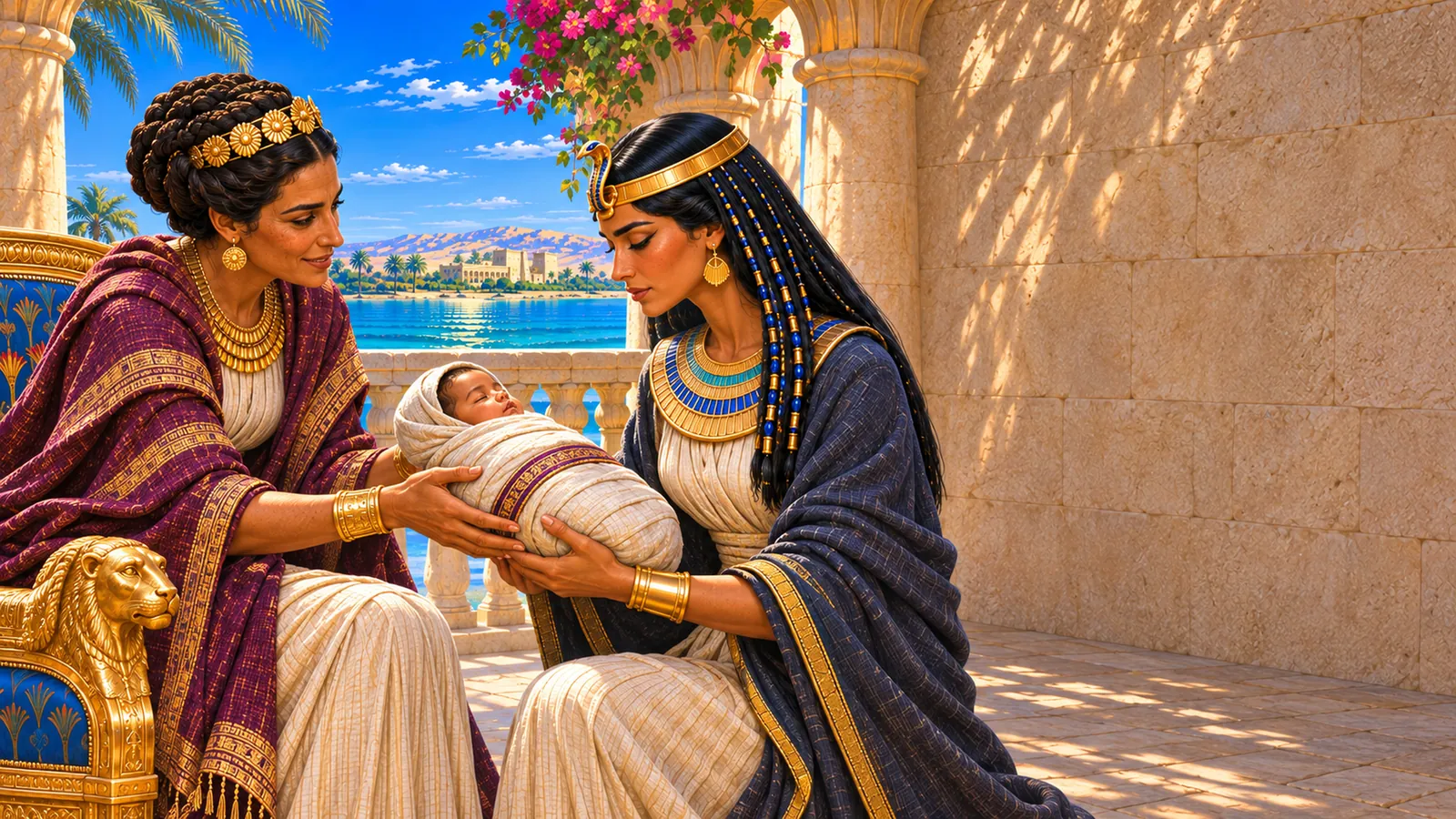
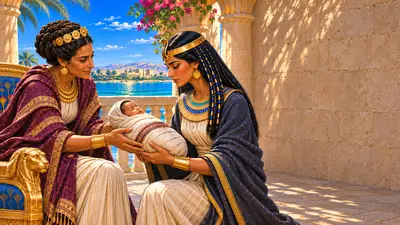
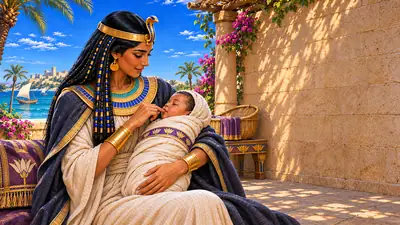
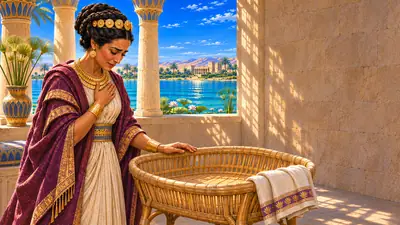
After getting to know the visitor, the queen entrusted her with the care of one of her sons. Isis became his nurse.
THE COURT
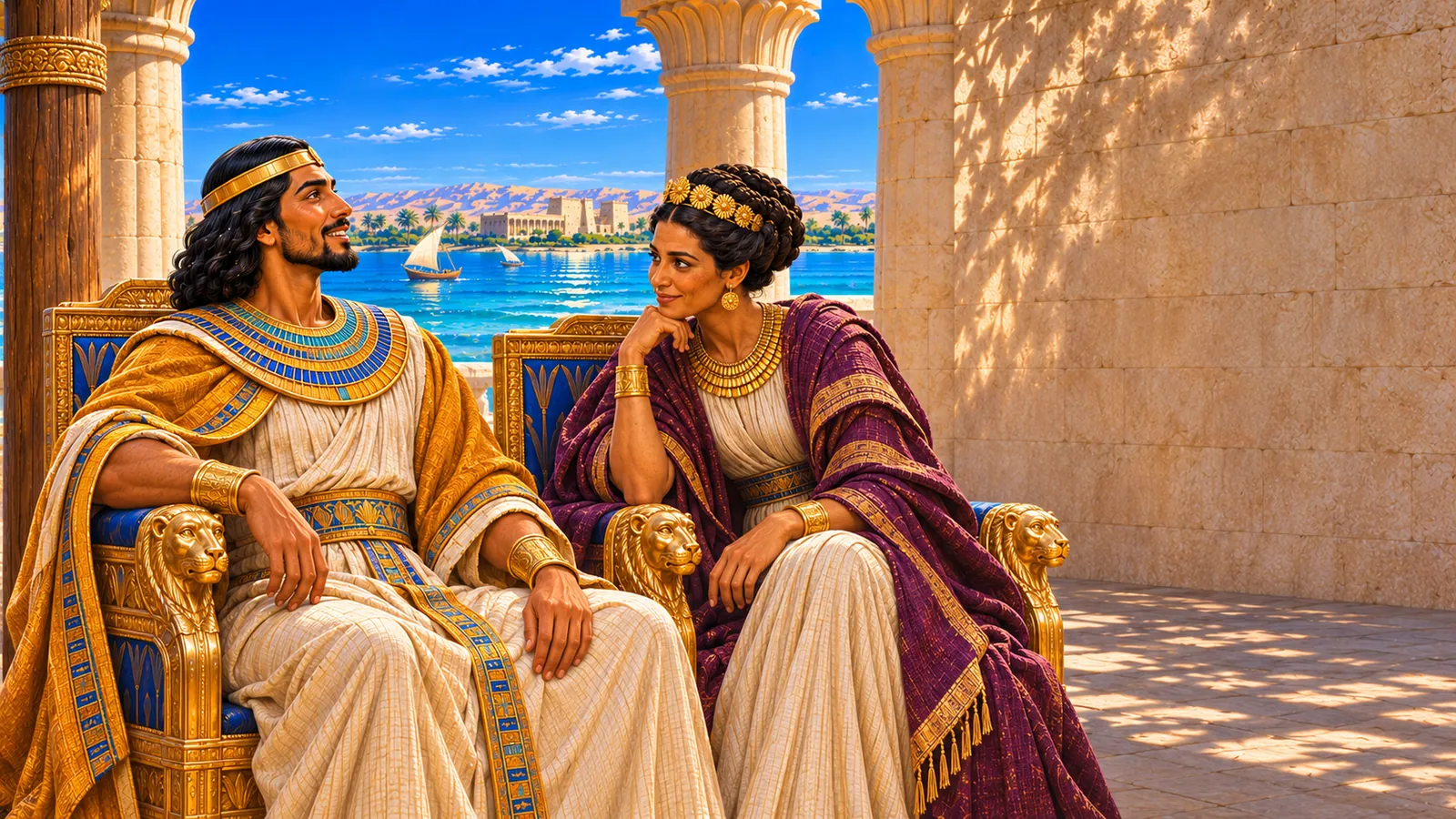
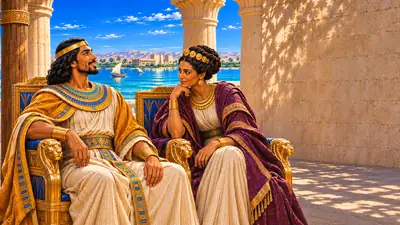
The king at Byblos was called Meloarthus. The queen is called Astarte in one account and Saosis in another. Some call her Nemanoun, which the text pairs with the Greek name Athenais.
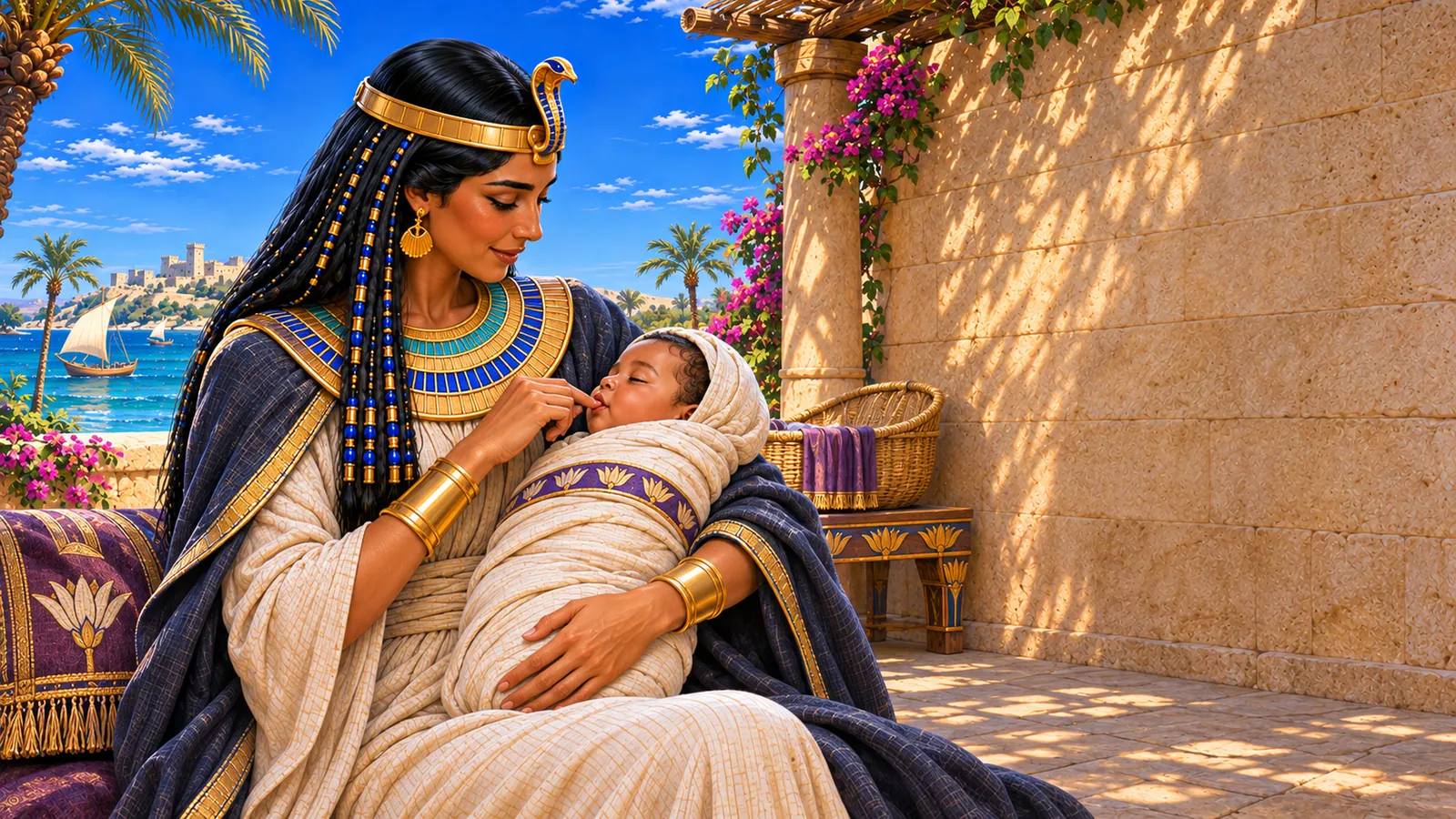
In the tale, Isis feeds the child in an unusual way. Squire’s translation says she lets him suck her finger.
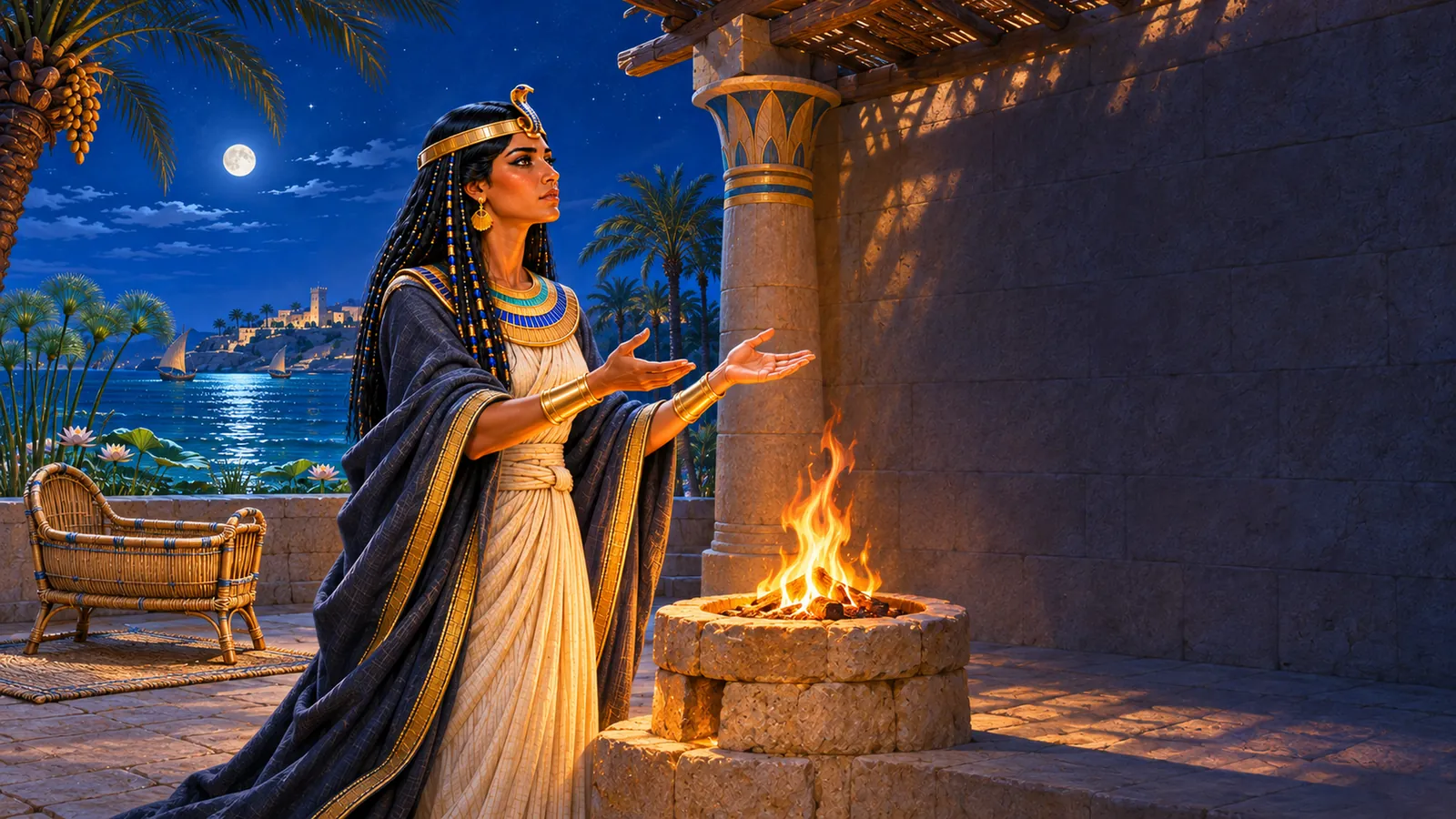
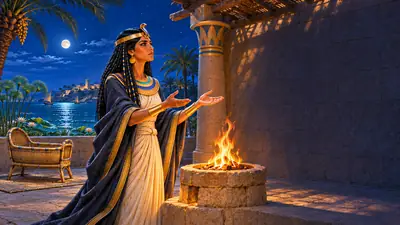
Plutarch says Isis put the child in a fire at night. In the myth she meant to remove what was mortal in him.
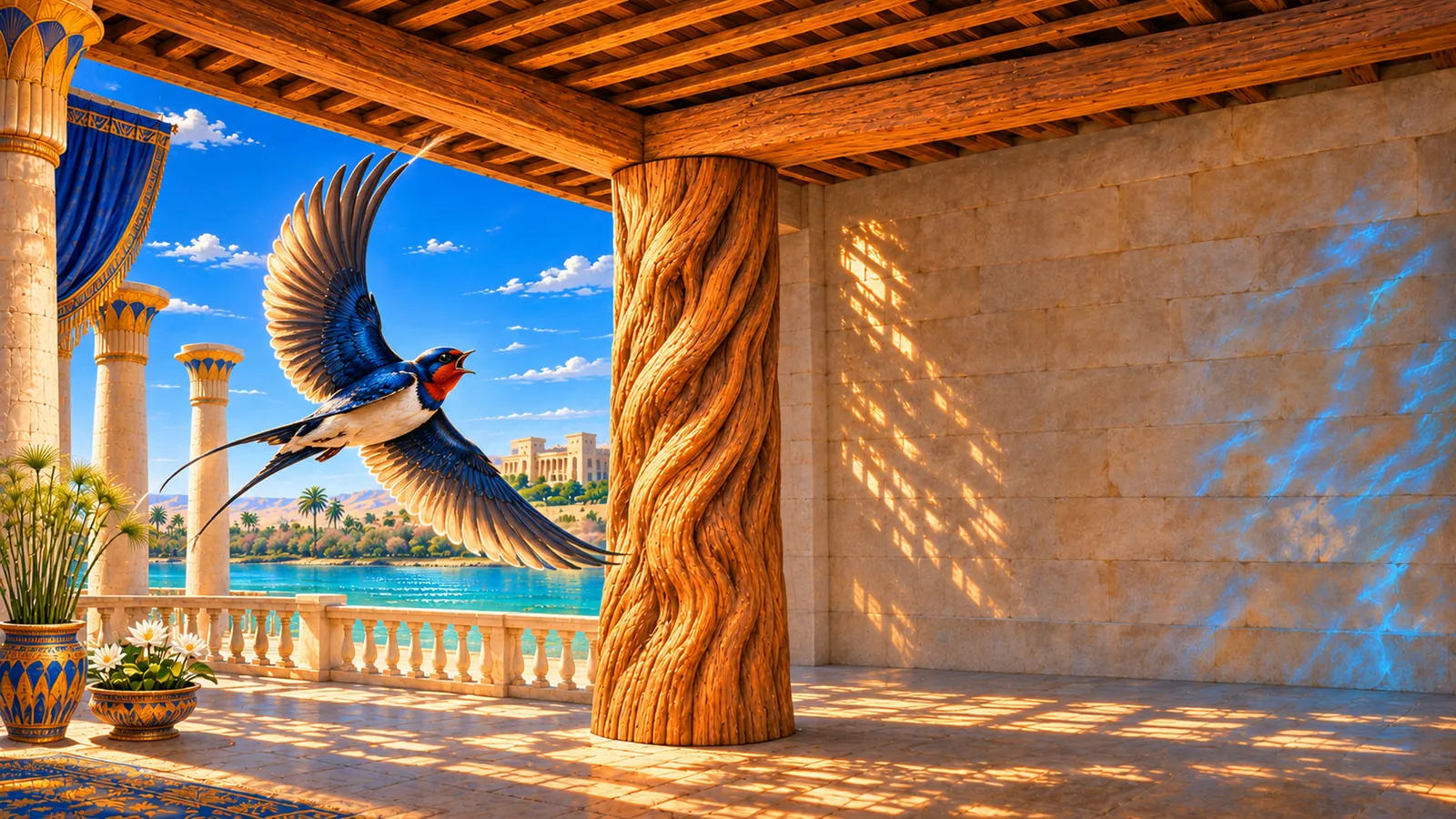
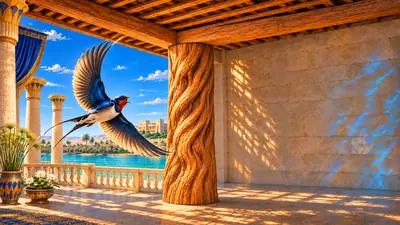
The story says Isis became a swallow and circled the pillar, lamenting what had happened to her.
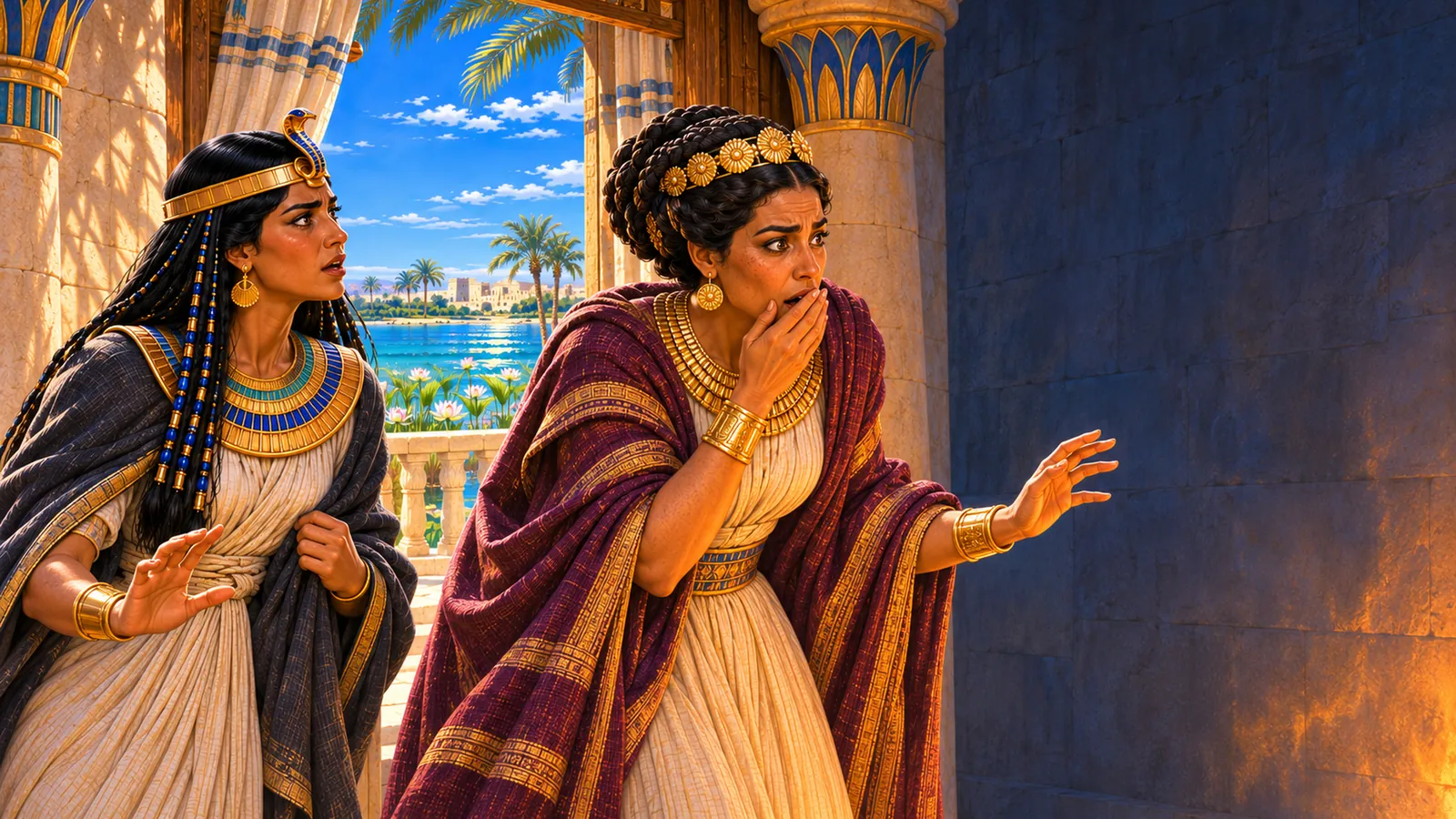
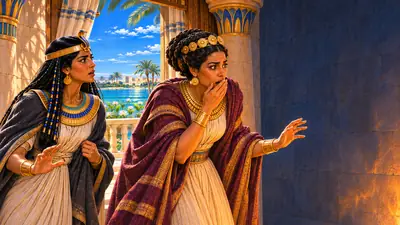
After this had gone on for some time, the queen watched Isis. In Plutarch’s account she saw the child in the fire.
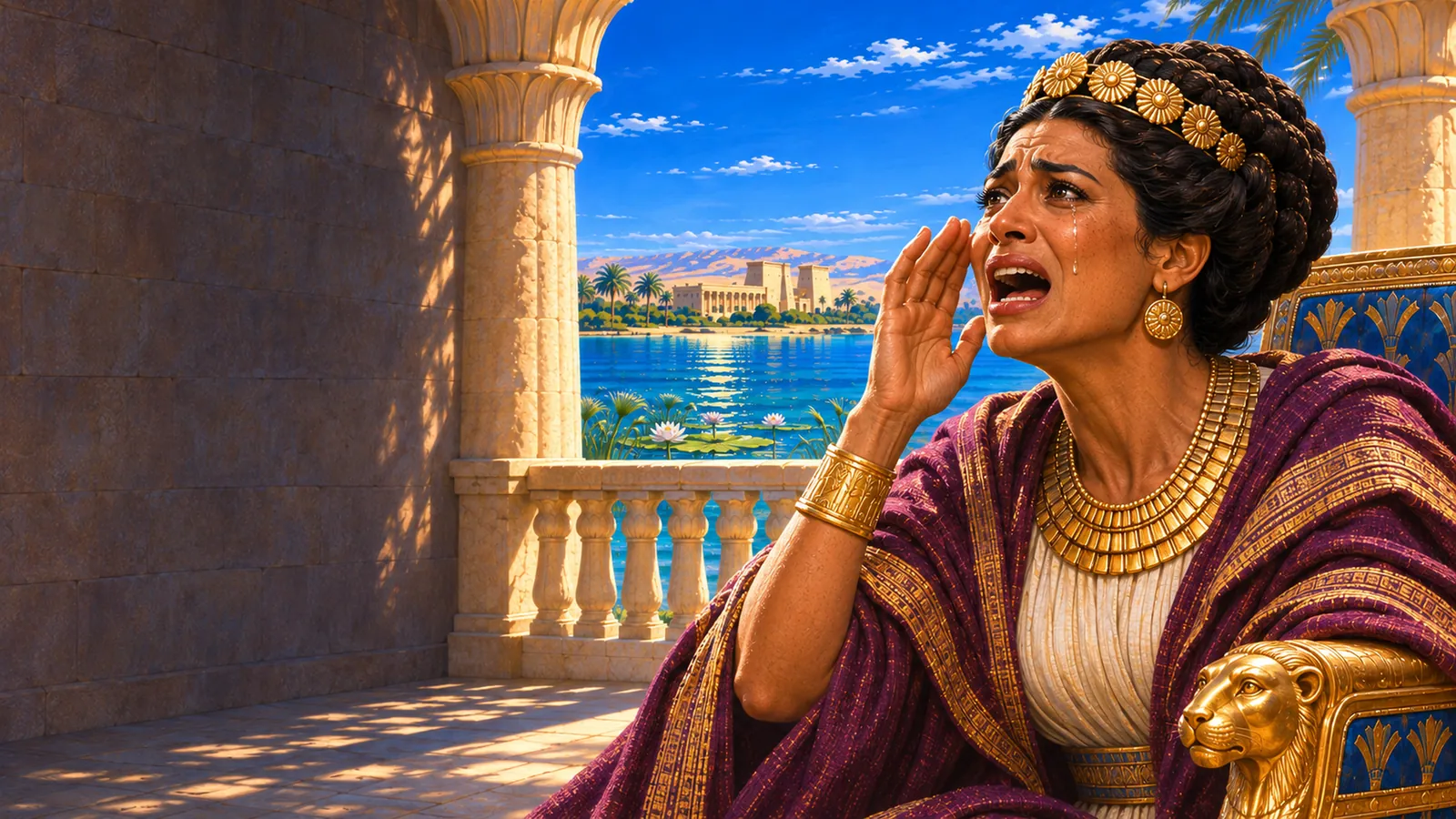
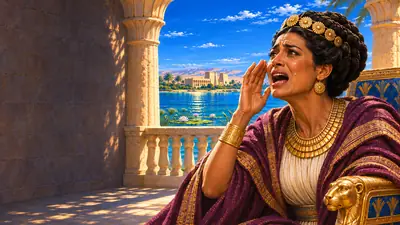
The queen cried out when she saw him. In Plutarch’s telling, her cry cost the child the immortality he would otherwise have received.
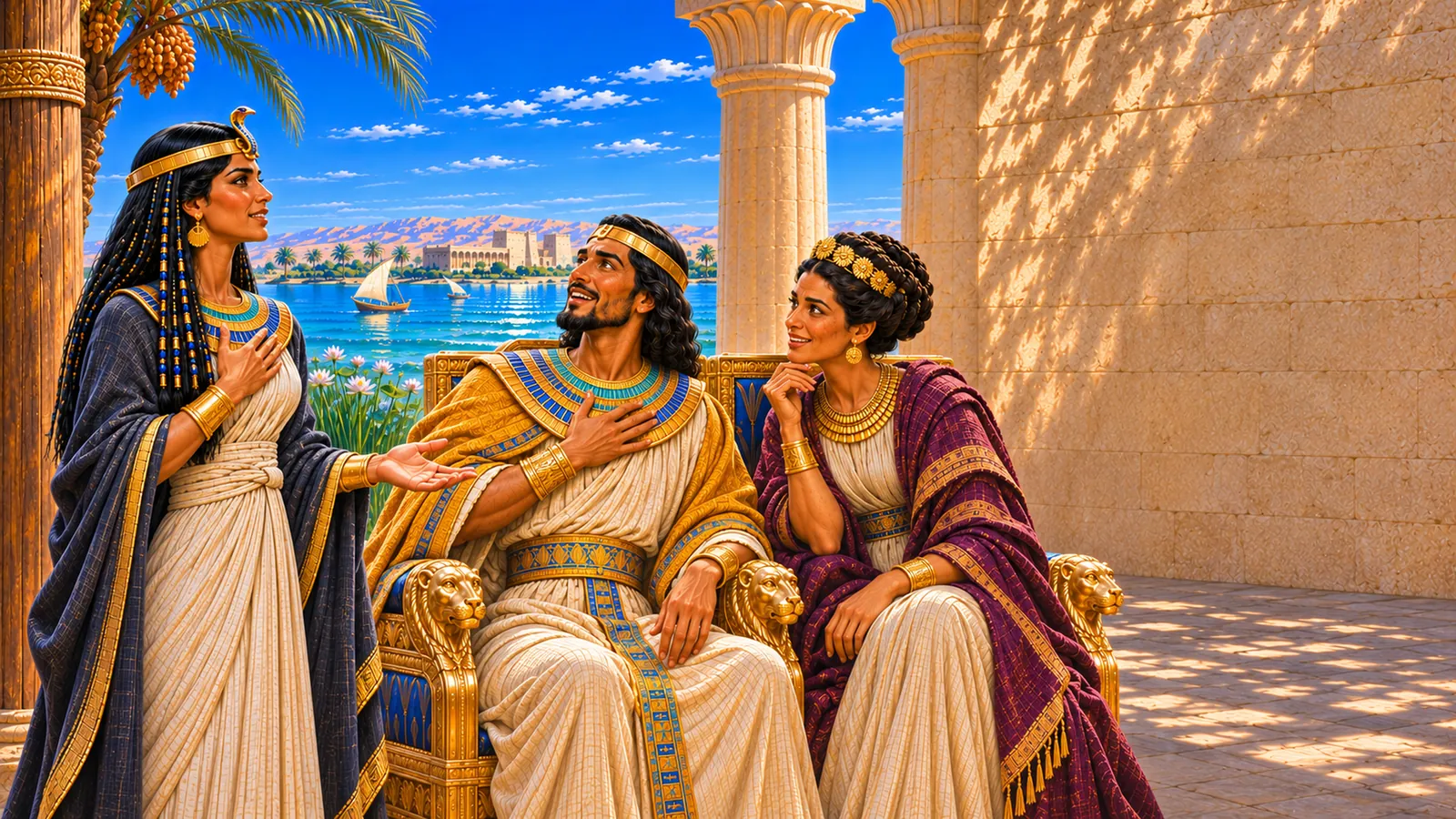
Isis then made her identity known. Until this point in the story she had served at court as the child’s nurse.
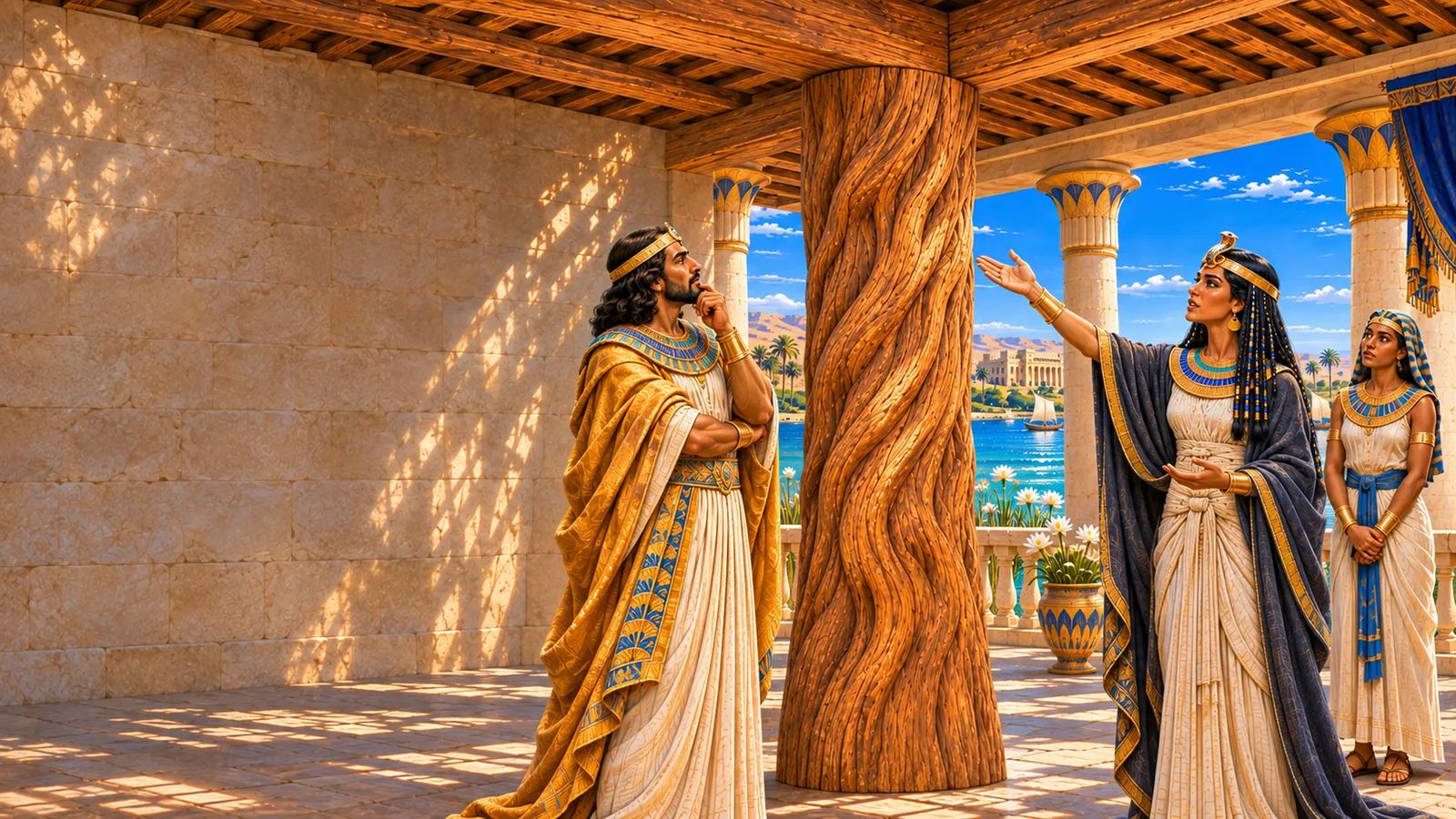
THE PILLAR
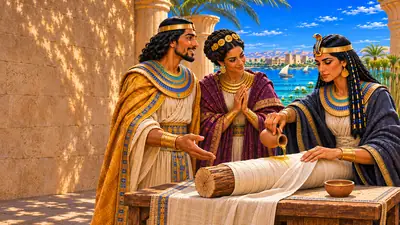
Isis asked to be given the pillar that held up the roof of the king’s house.
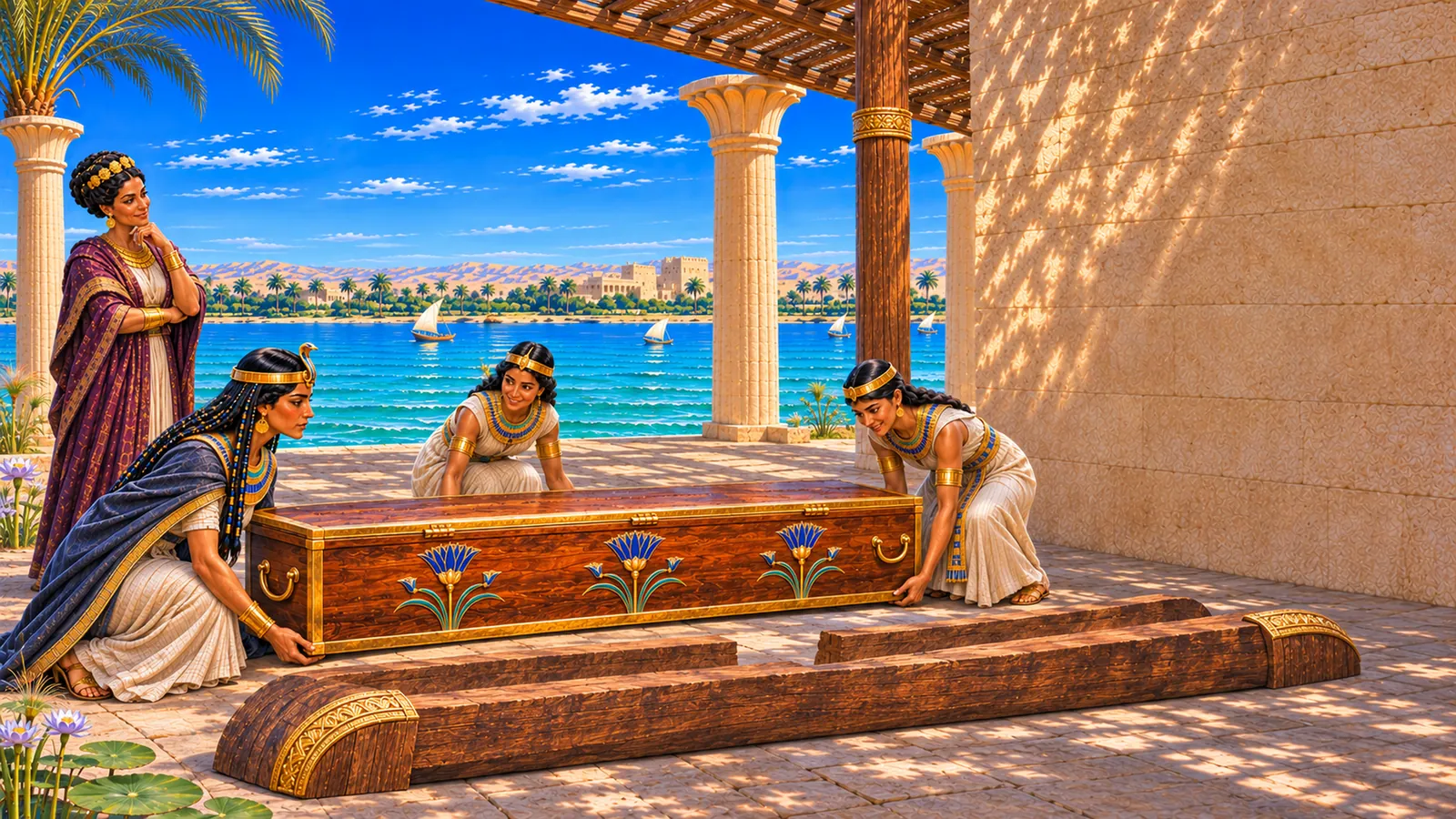
Isis opened the pillar and took out what she had come to recover. The chest had been concealed within the trunk.
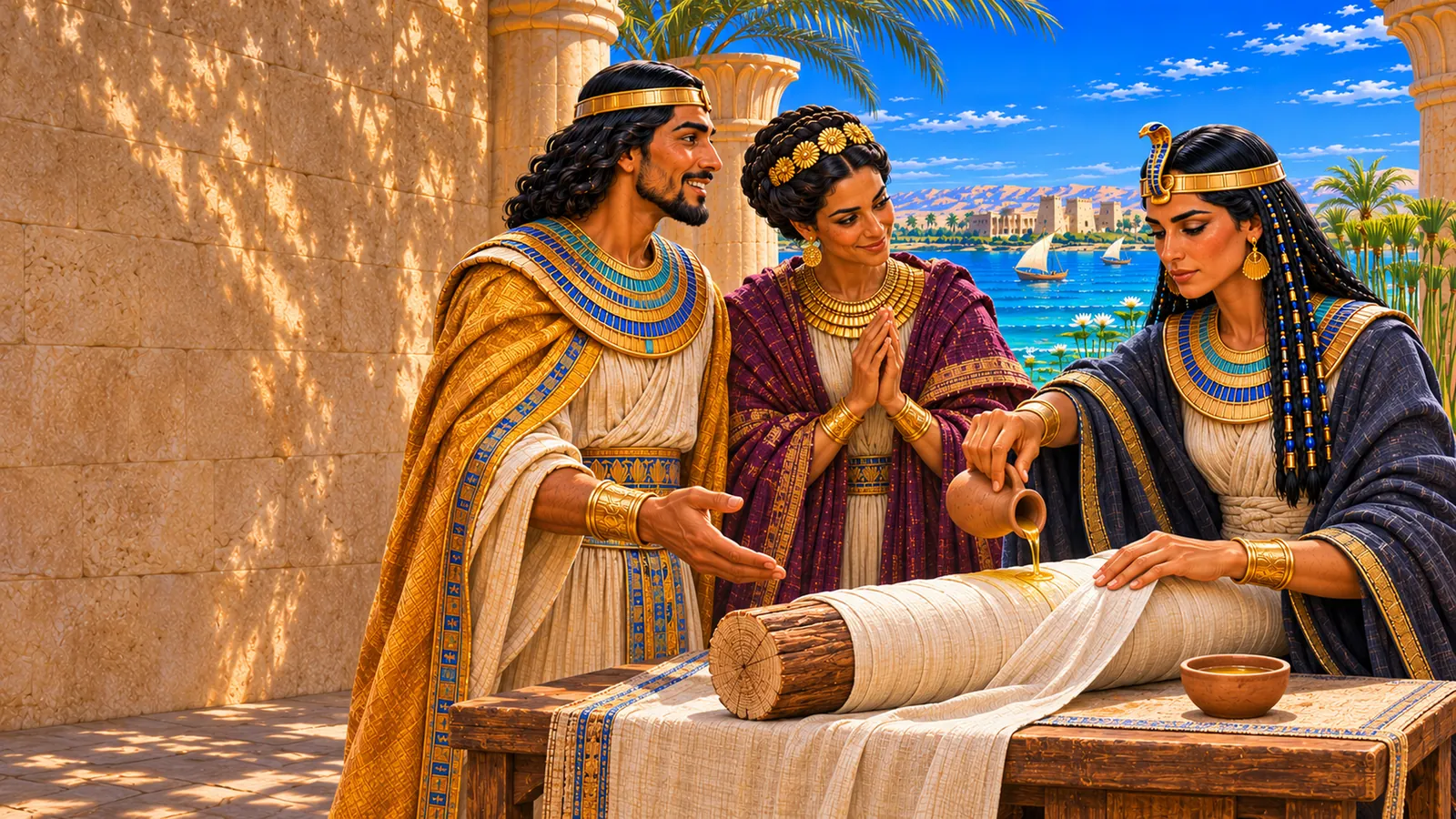
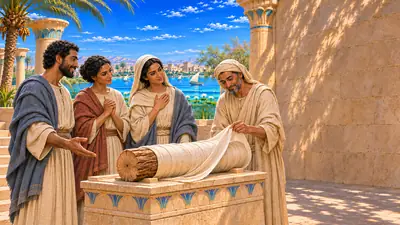
She wrapped the remaining wood in fine linen and anointed it with scented oil. She gave it back to the king and queen.
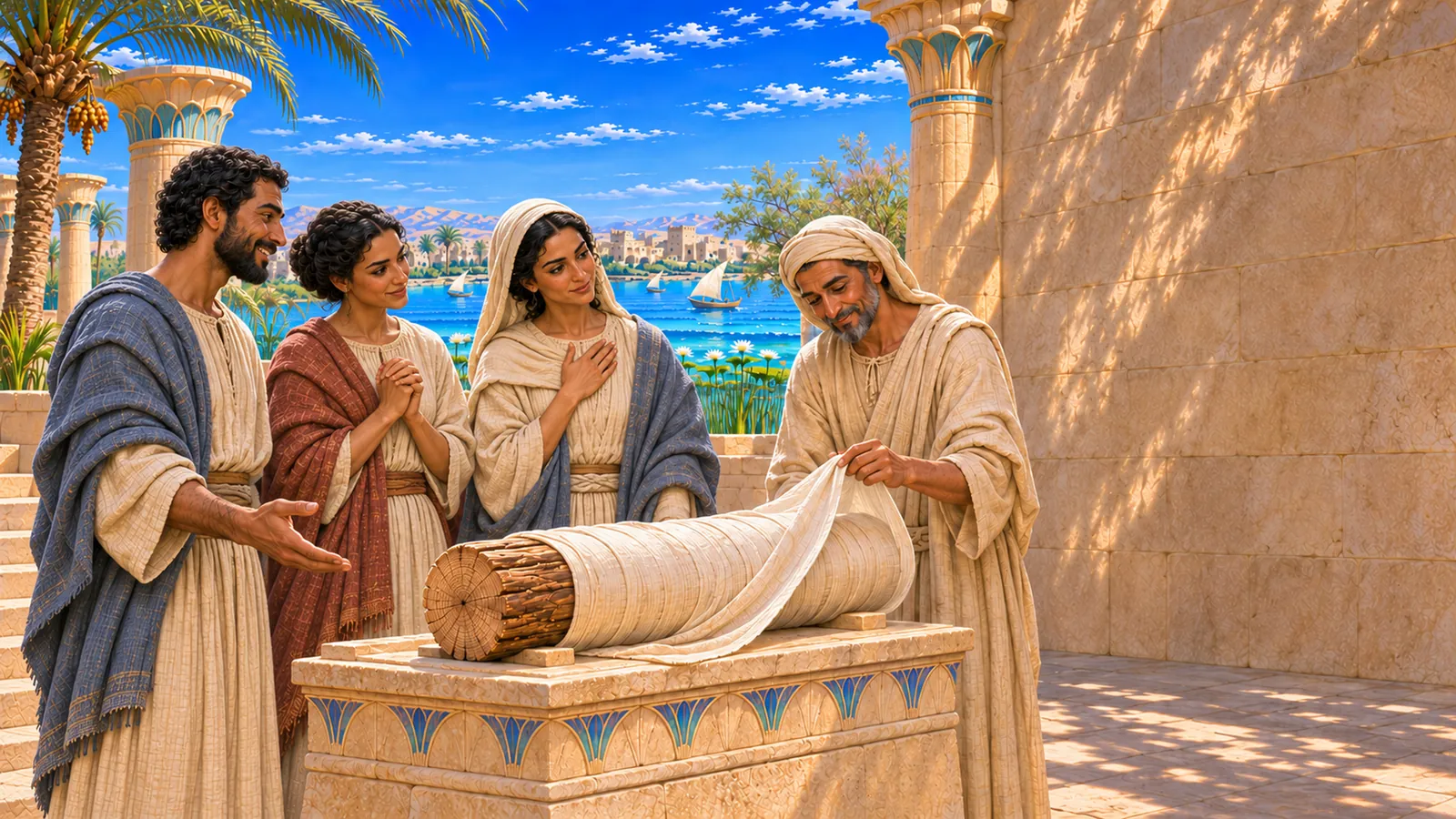
Plutarch says that in his time the wood was kept at a temple of Isis. He says people in the place he calls Byblos honoured it there.
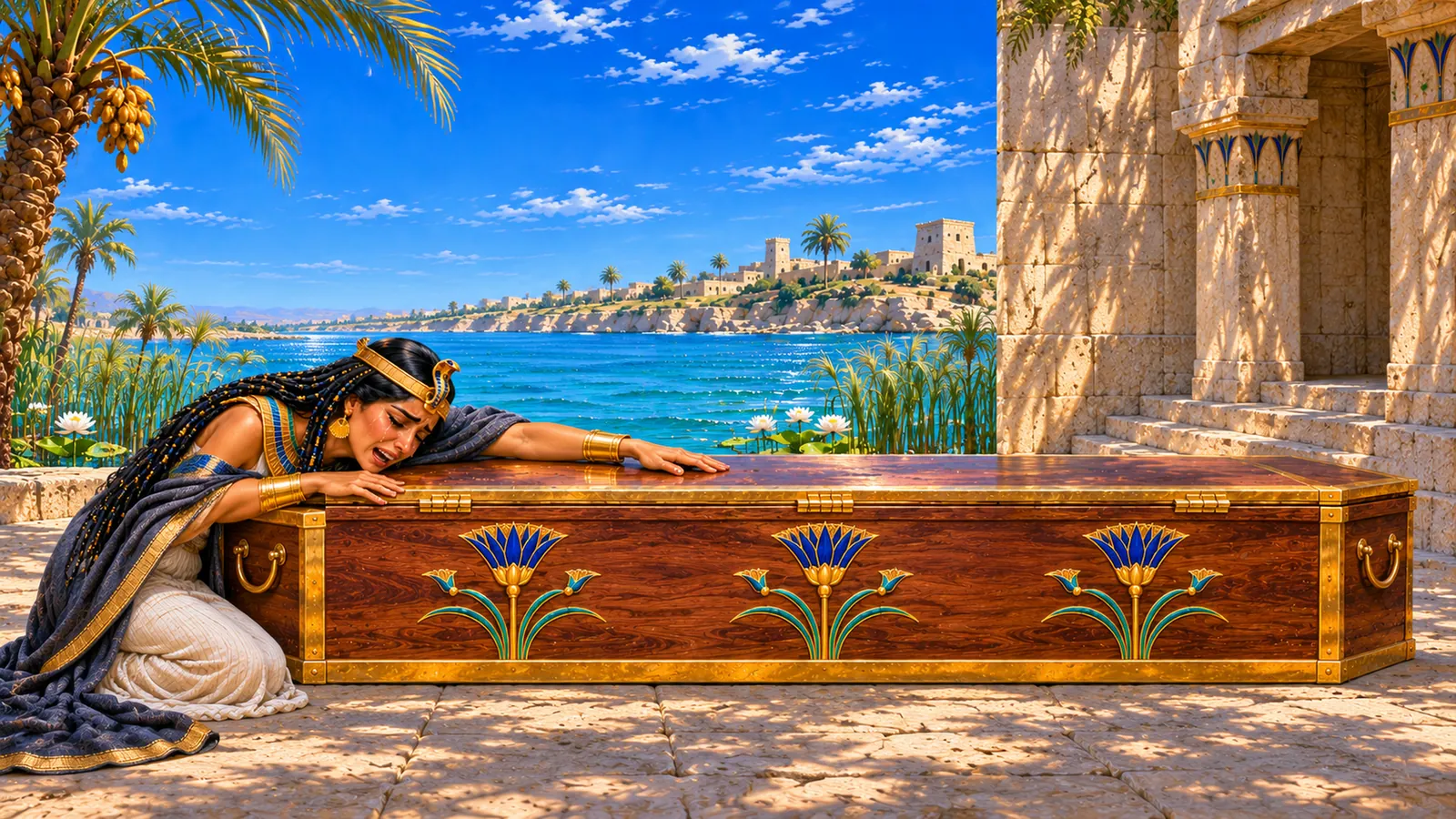
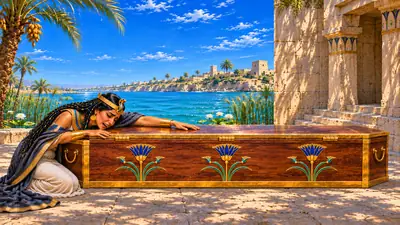
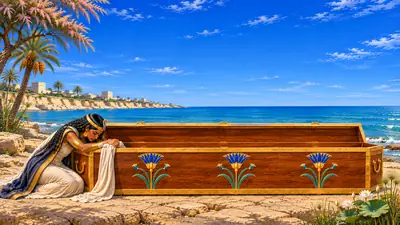
When the wood had been given back, the story says Isis threw herself upon the chest and gave a loud lament.
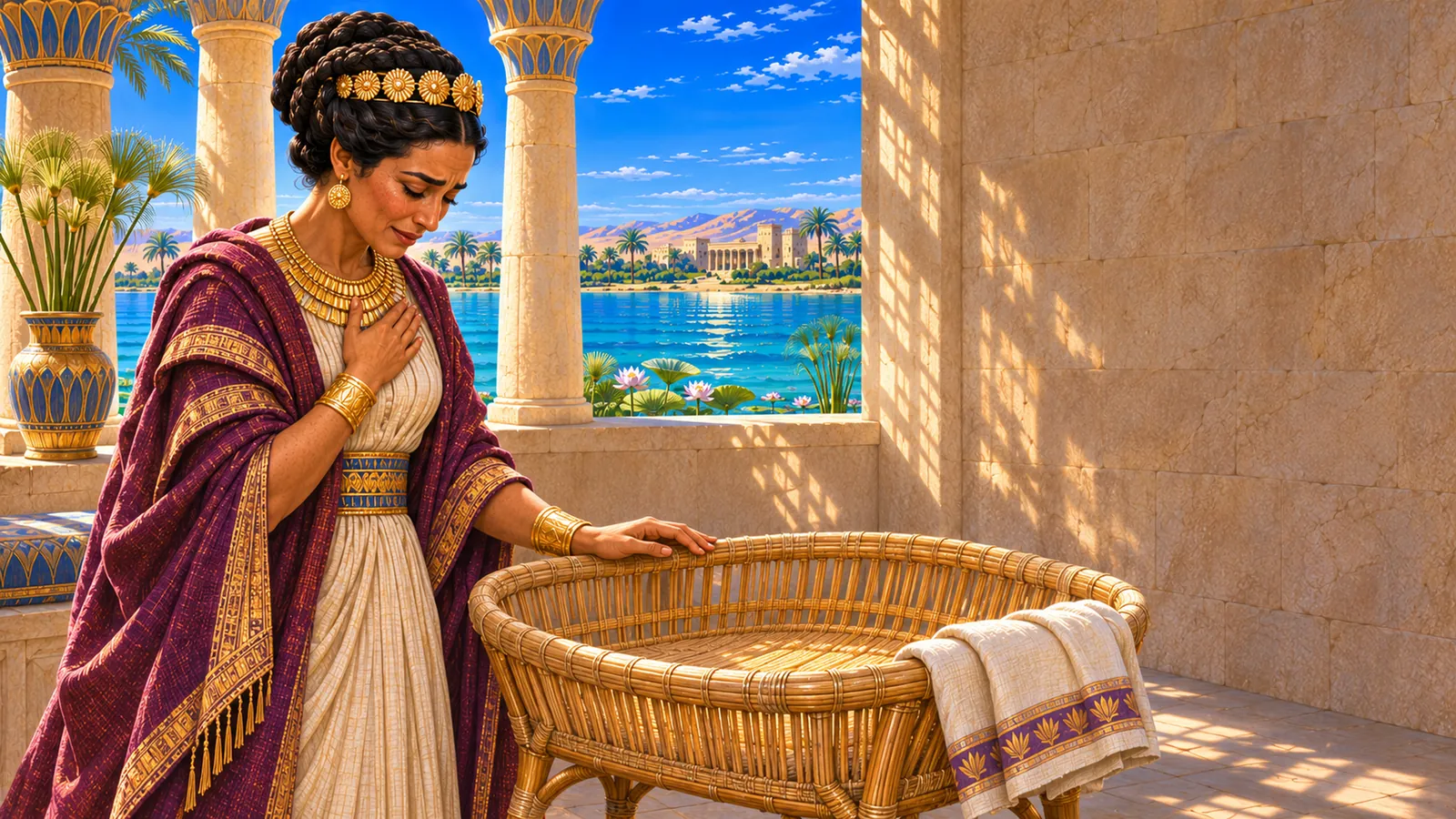
Plutarch says the younger of the king’s sons heard Isis lament. In this version, the cry frightened him to death.
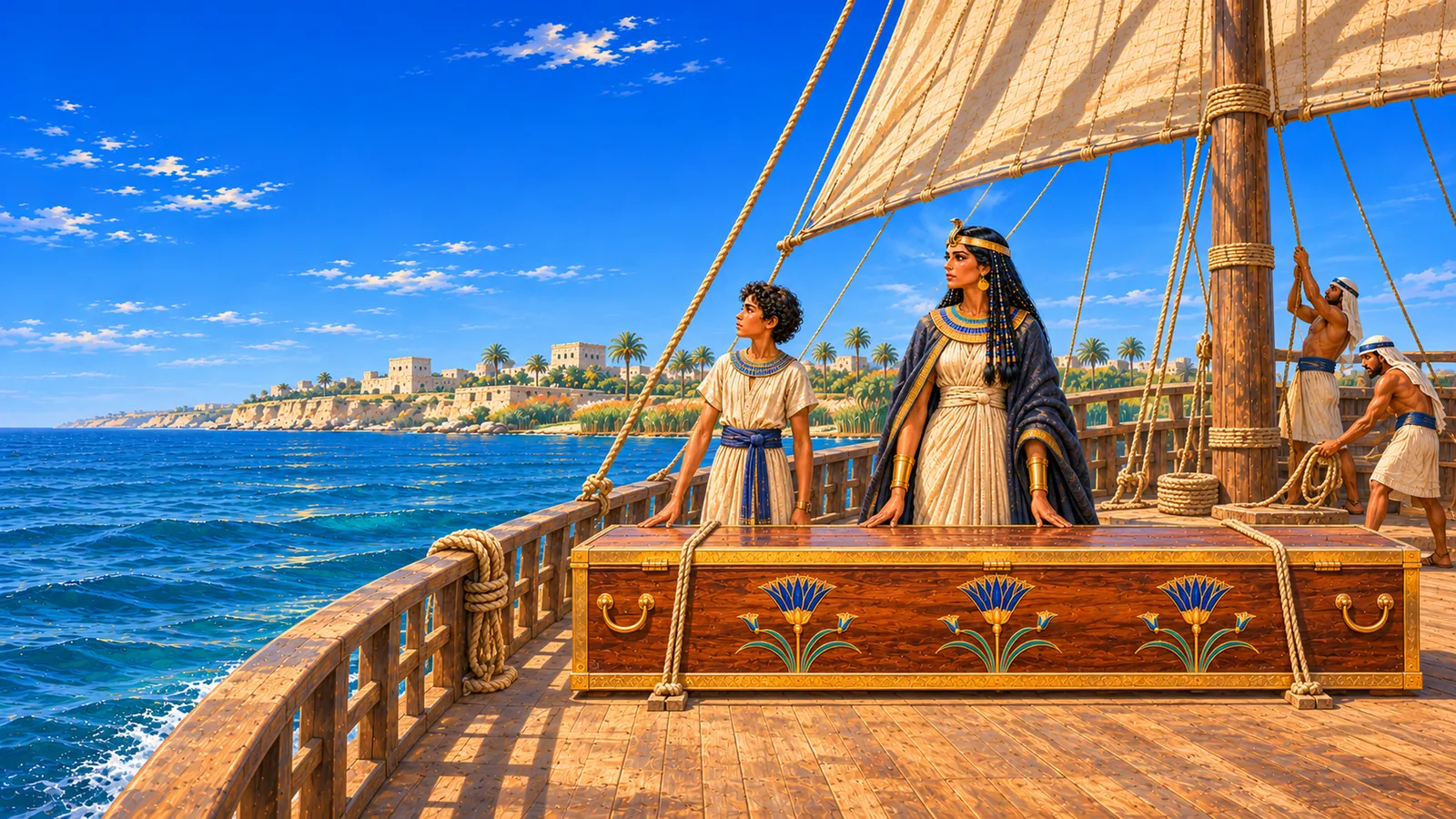
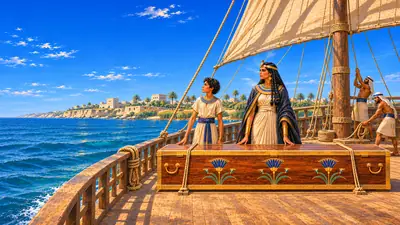
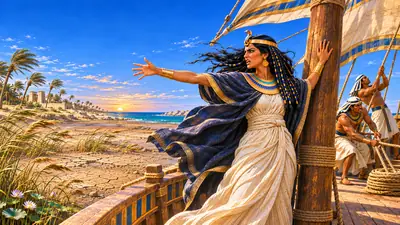
Isis took the elder son of the king with her. With the chest aboard, they set sail for Egypt.
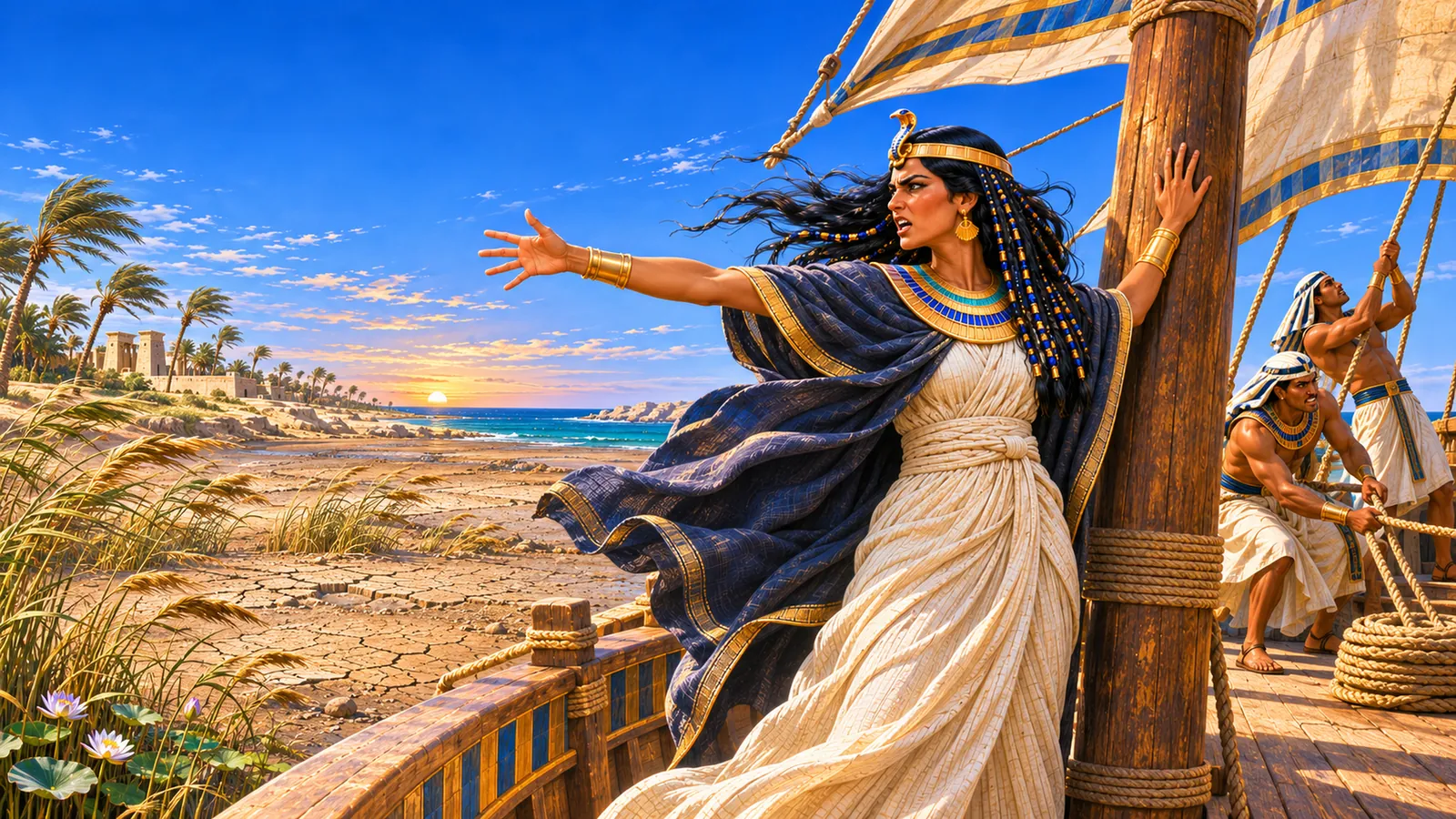
Morning came, and a harsh, sharp wind blew from the Phaedrus River. Angered by it, Isis dried up the river’s current, the story says.
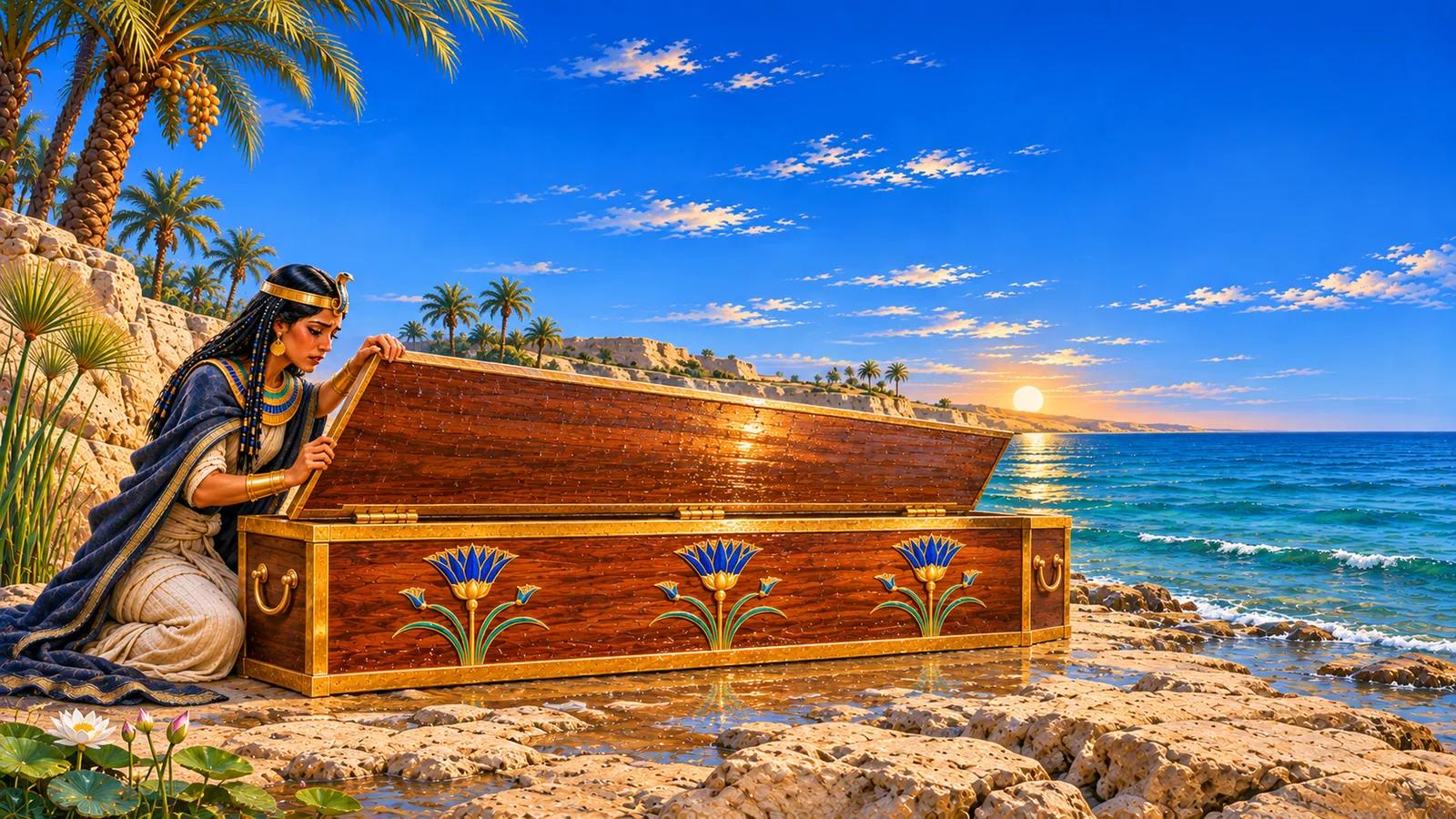
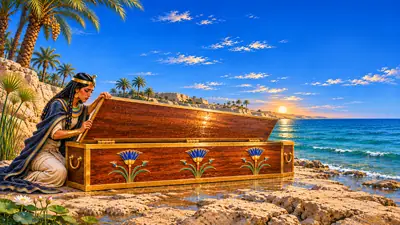
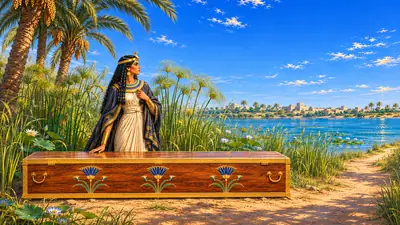
When Isis reached a deserted place, she believed she was alone. There she finally opened the chest she had brought across the water.
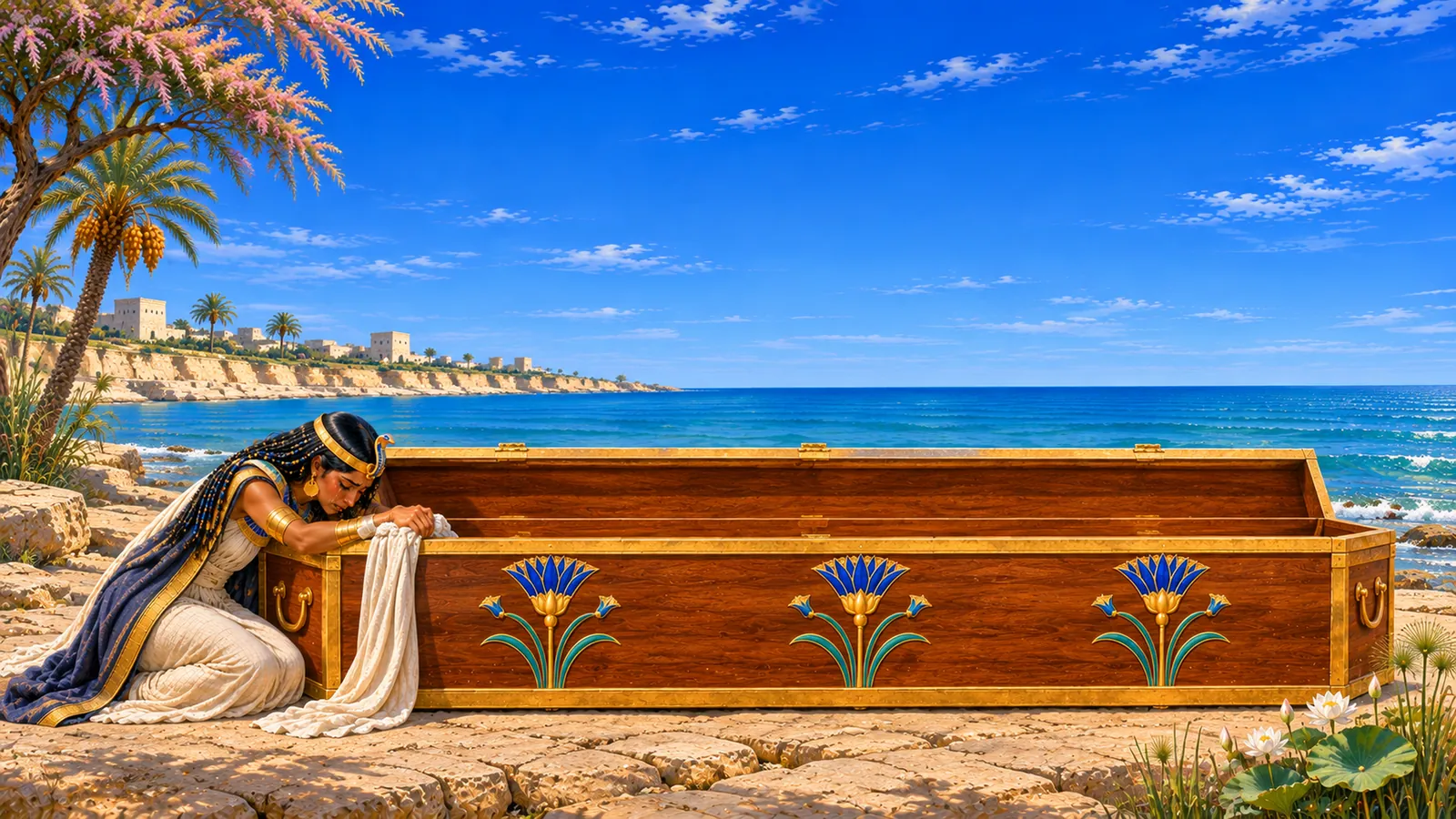
Isis put her face to the face of her dead husband. She embraced Osiris and wept bitterly.
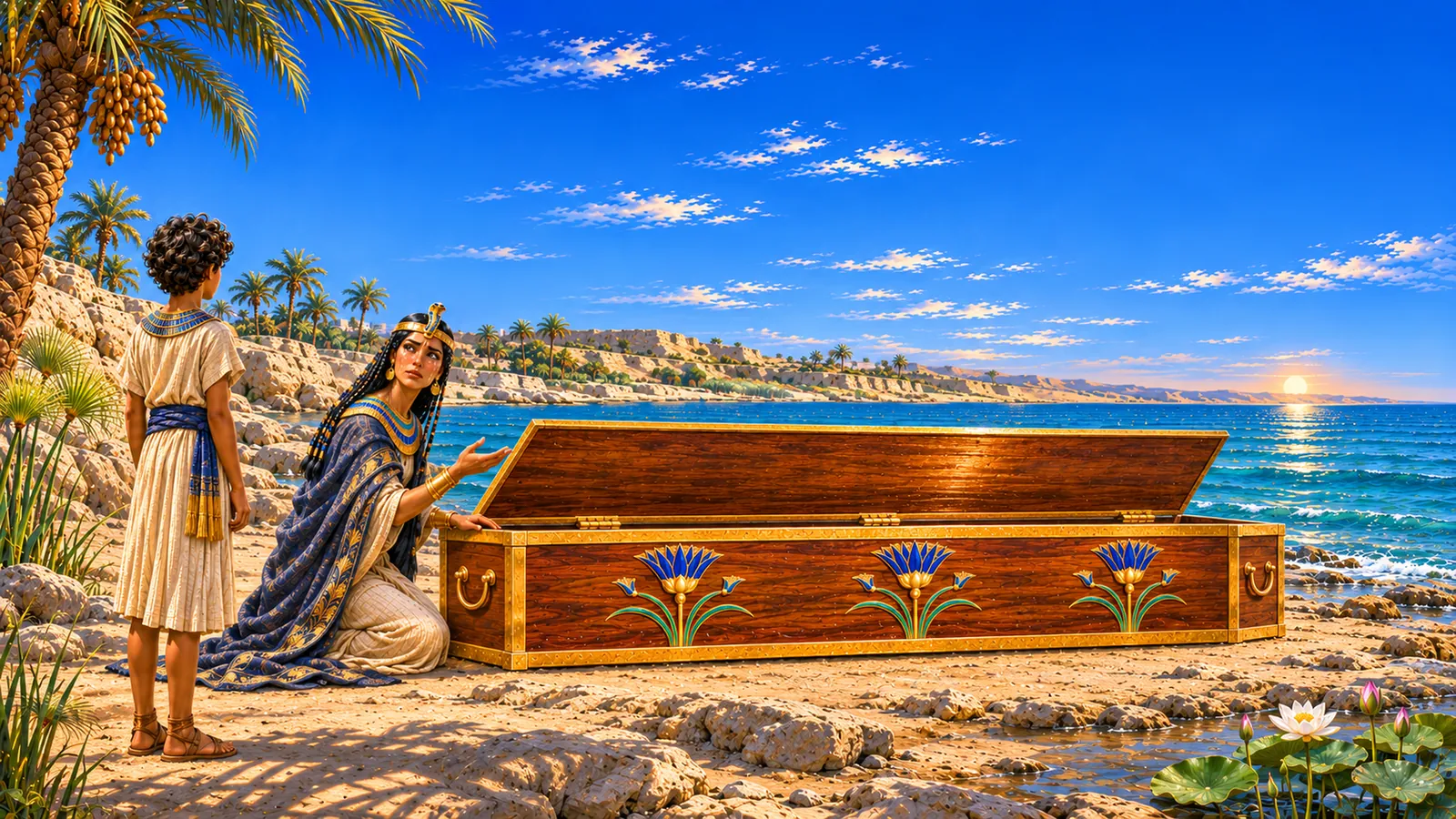
A boy had followed her silently and seen what had caused her grief. The story says that when Isis turned on him in anger, he died of fright.
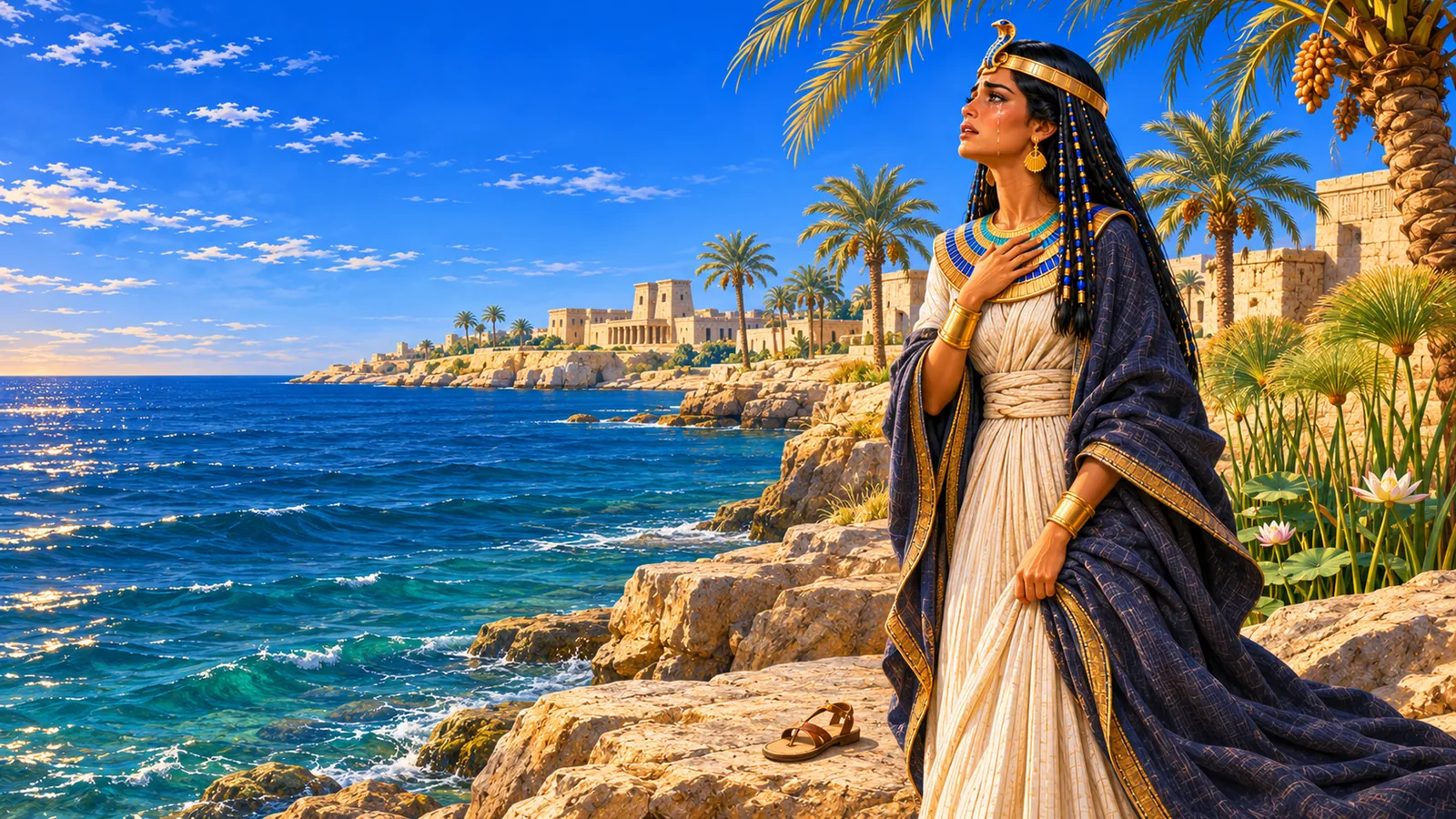
Others told it differently. They said the boy died when he fell into the sea, and that he was later greatly honoured on Isis’s account.
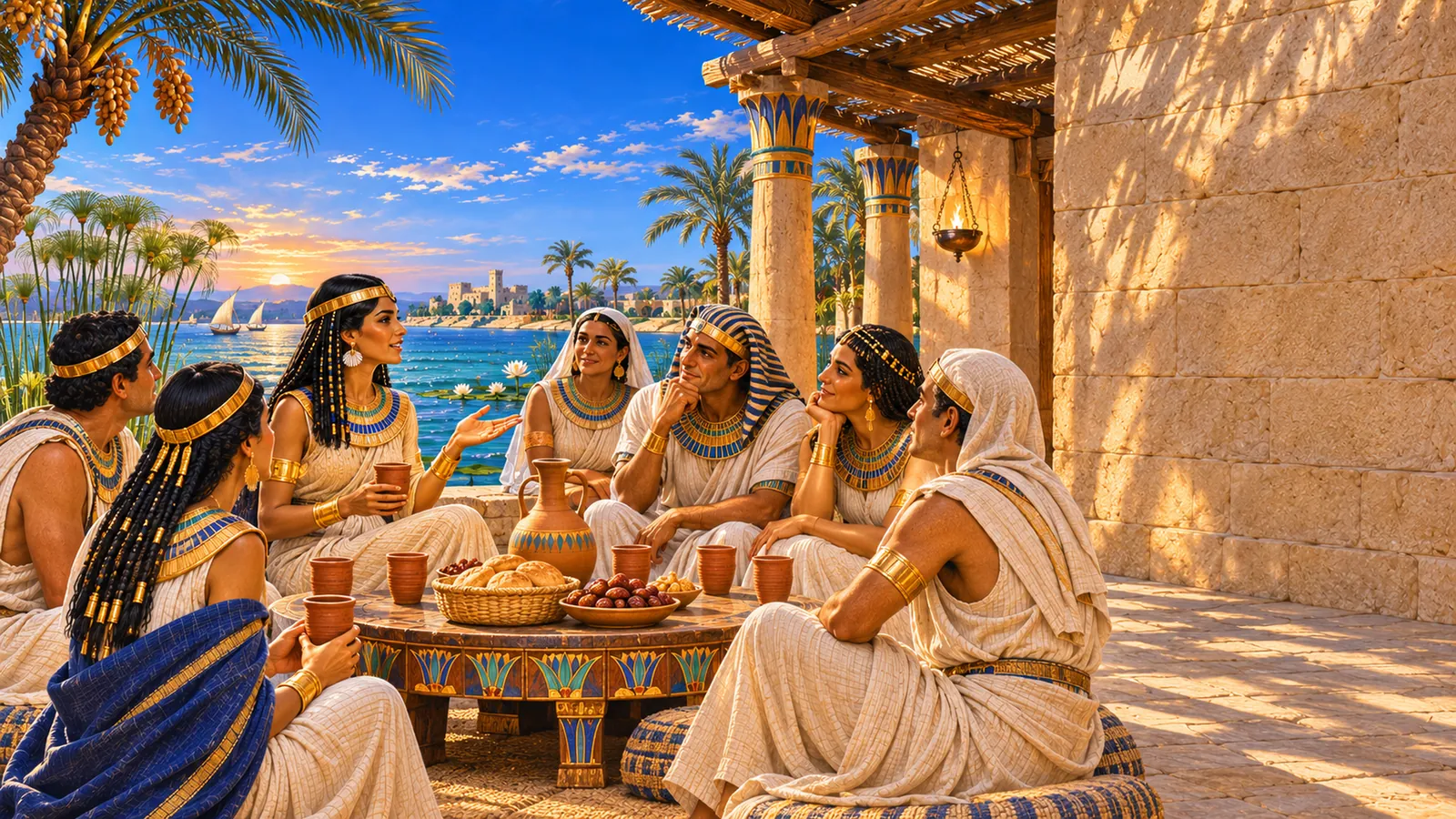
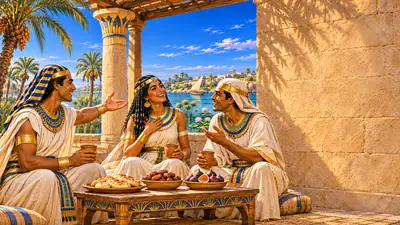
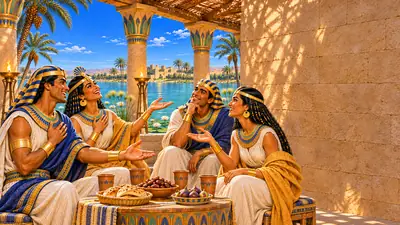
In this telling the boy is Maneros. It connects him with the name that, according to Plutarch, people so often called upon at Egyptian banquets.
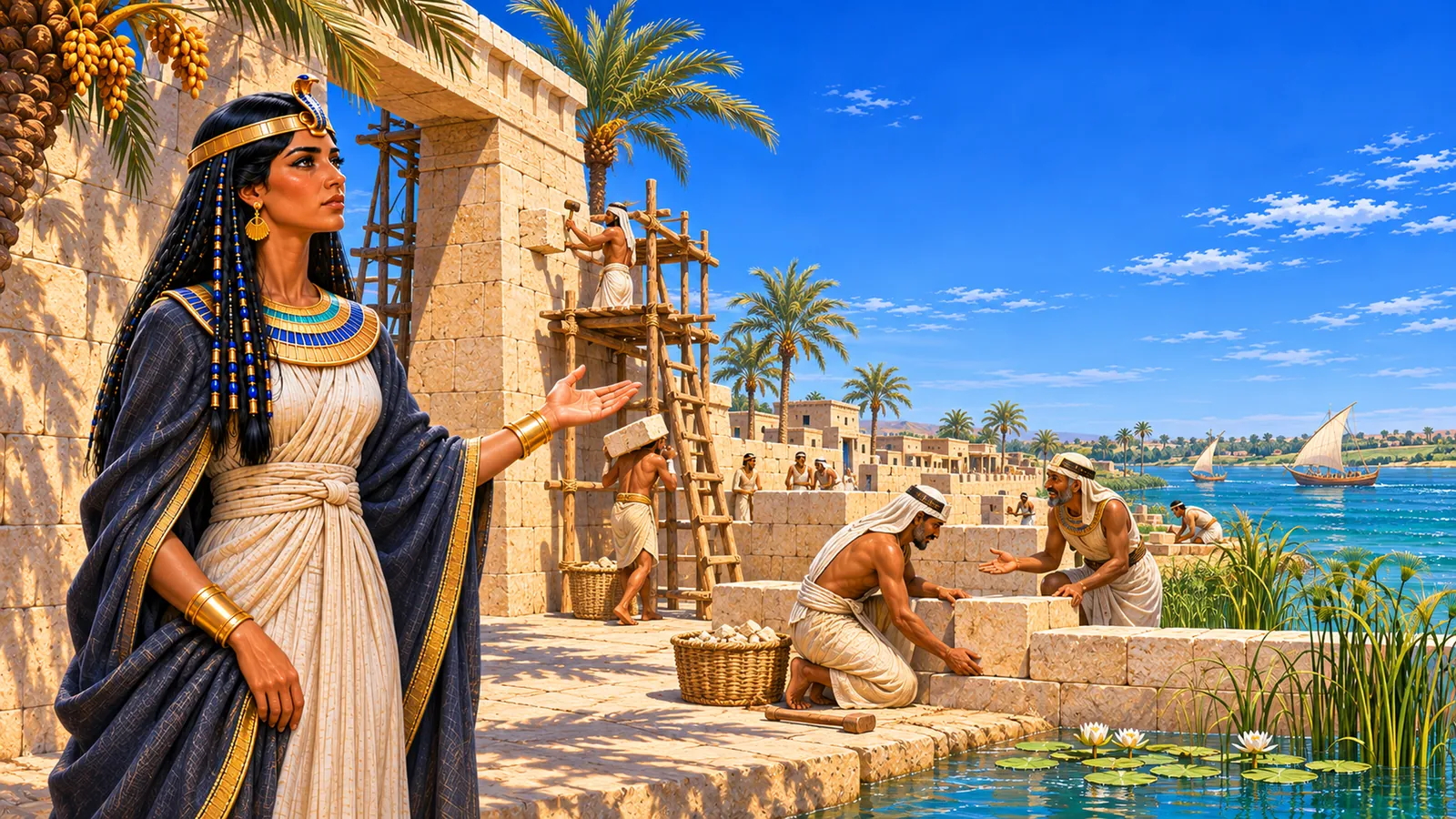
Other people rejected that account and gave the child the name Palaestinus or Pelusius. They said that Isis founded a city bearing his name in his memory.
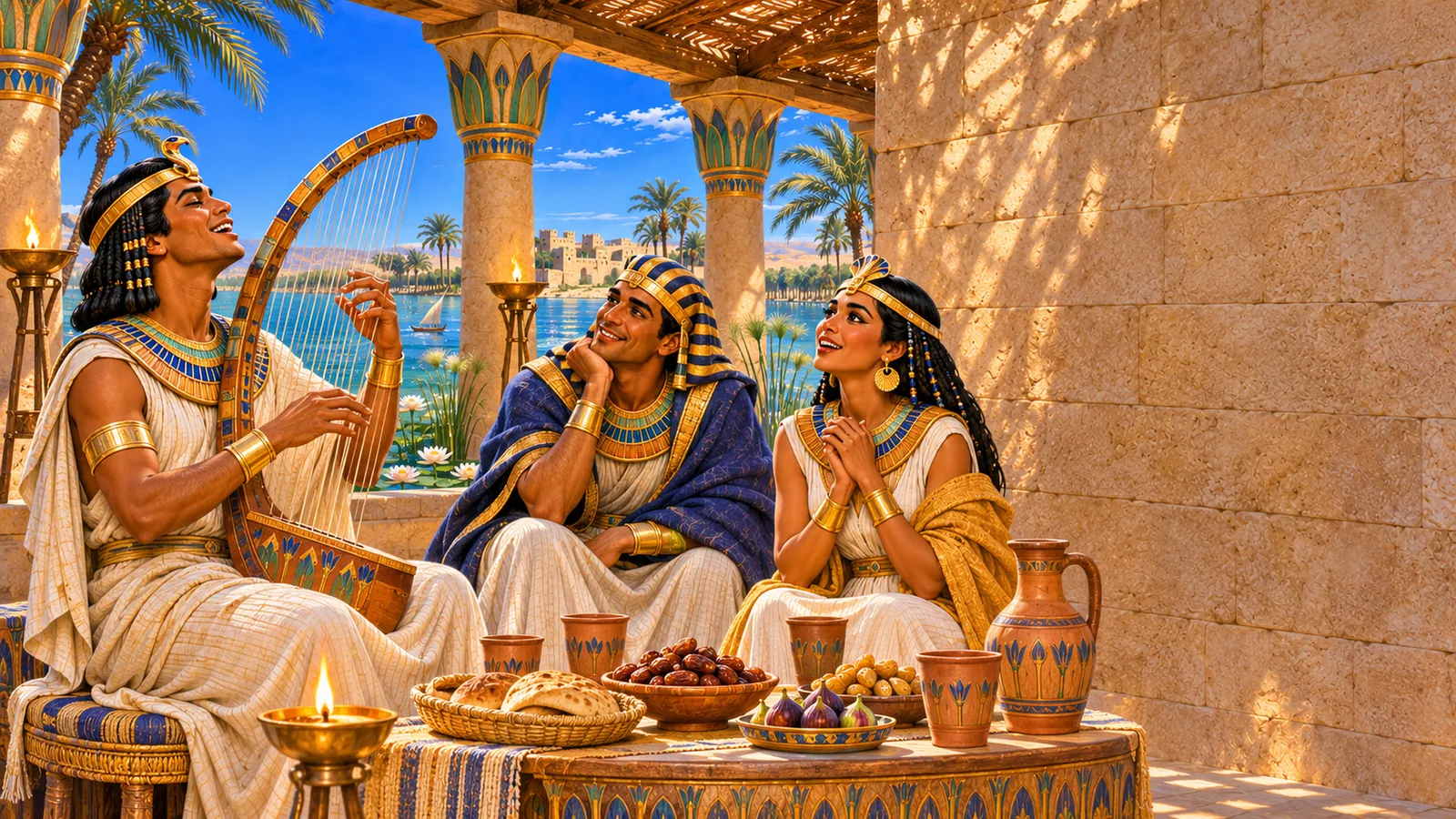
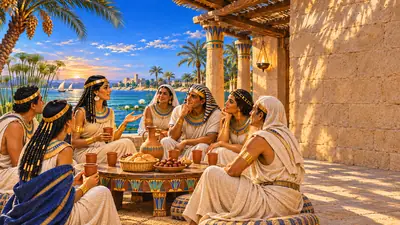
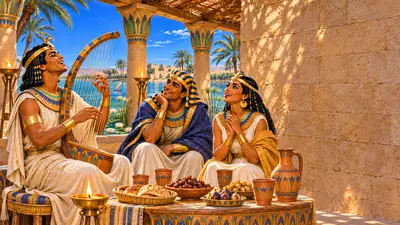
Those who gave the boy a different name offered another reason for honouring Maneros at feasts. They said he was the first to make music.
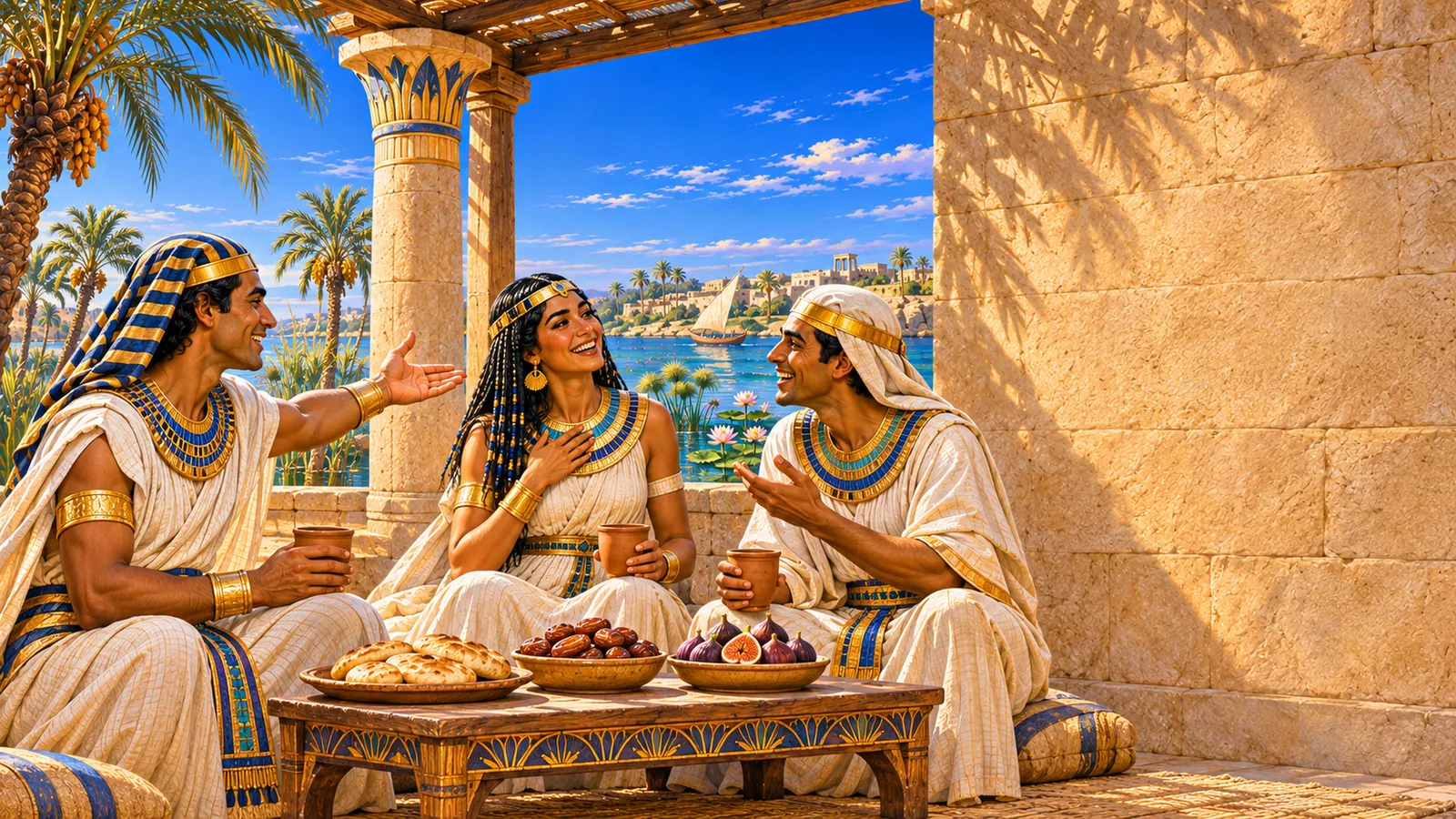
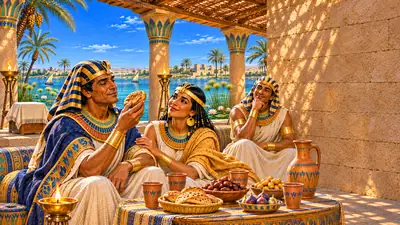
Still others said Maneros was a customary greeting exchanged at formal banquets. In their telling the word was a phrase used among guests.
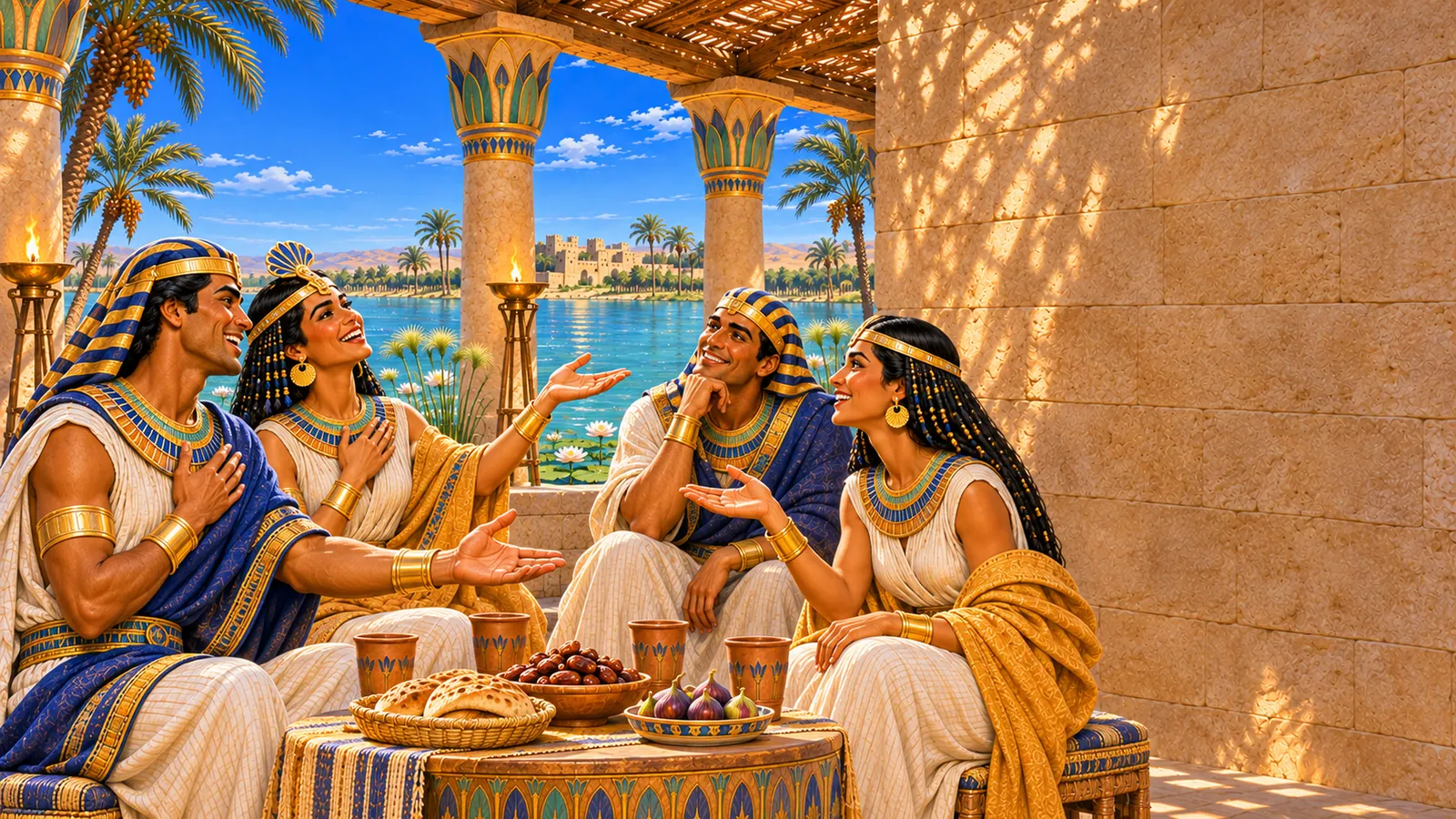
In this explanation the greeting conveyed a wish. The guests hoped that what they were about to share would bring them fortune and happiness.
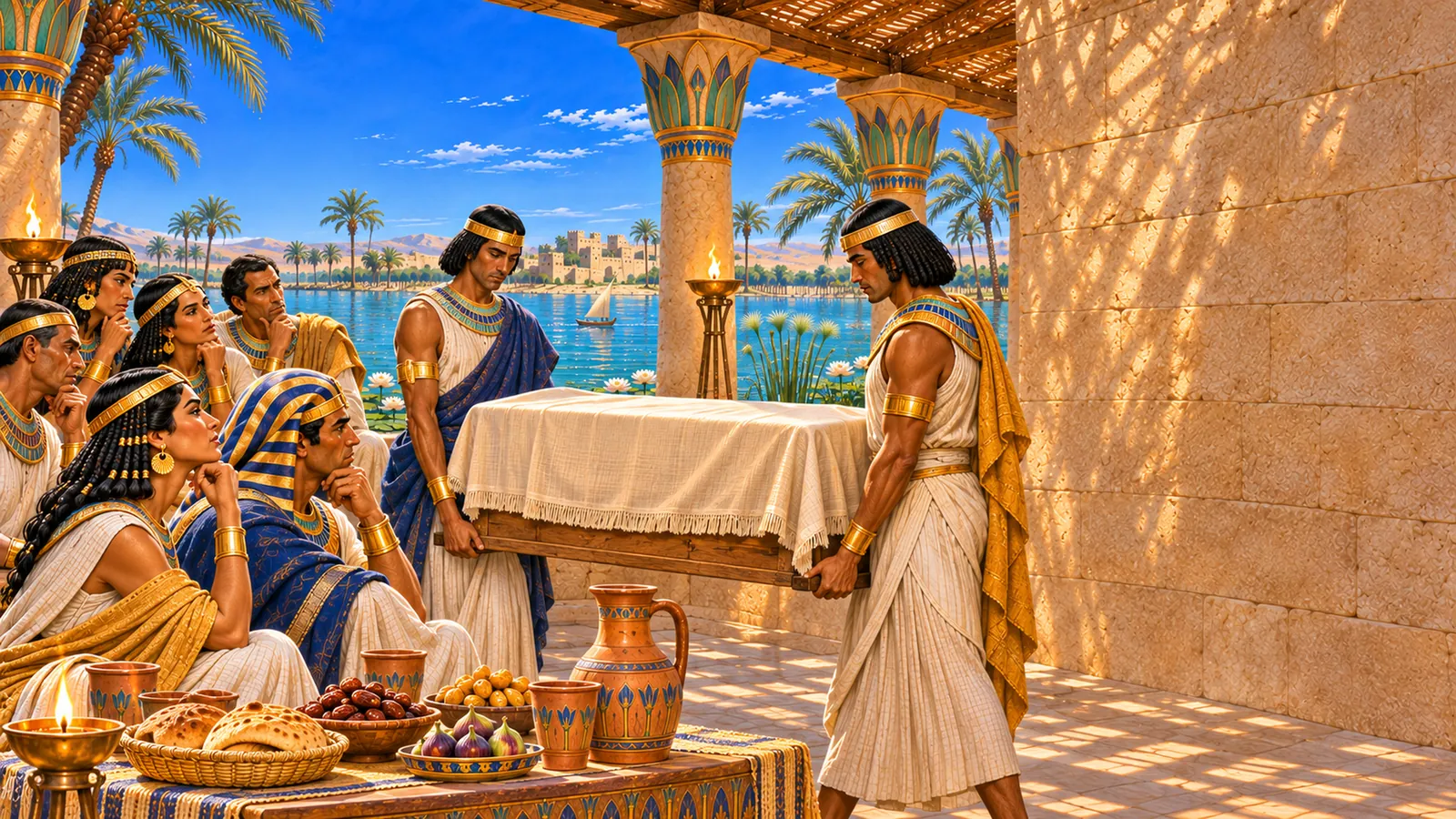
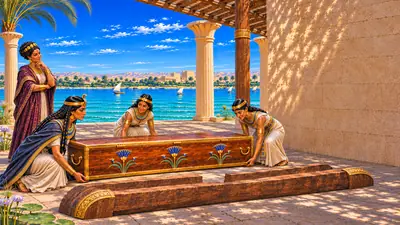
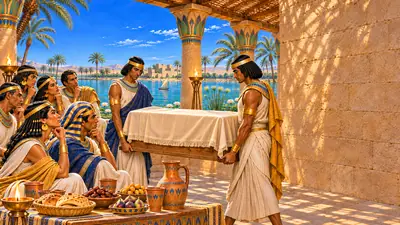
Plutarch also tells of a human skeleton that was carried around in a box and shown to all the guests at a banquet.
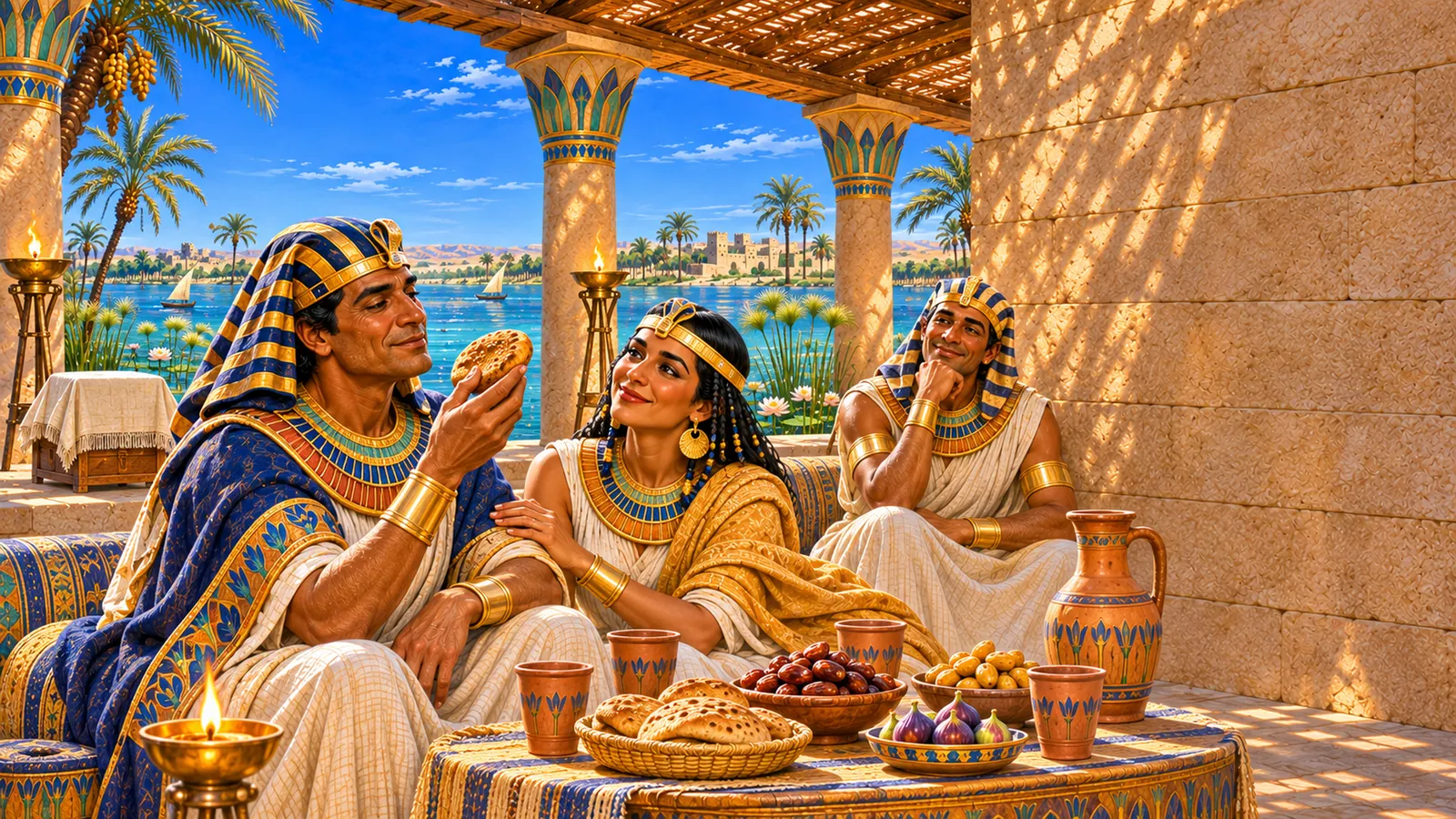
Some connected this practice to the misfortunes of Osiris. Others said its purpose was to remind the guests of their mortality and urge them to enjoy the good things before them.
HIDDEN
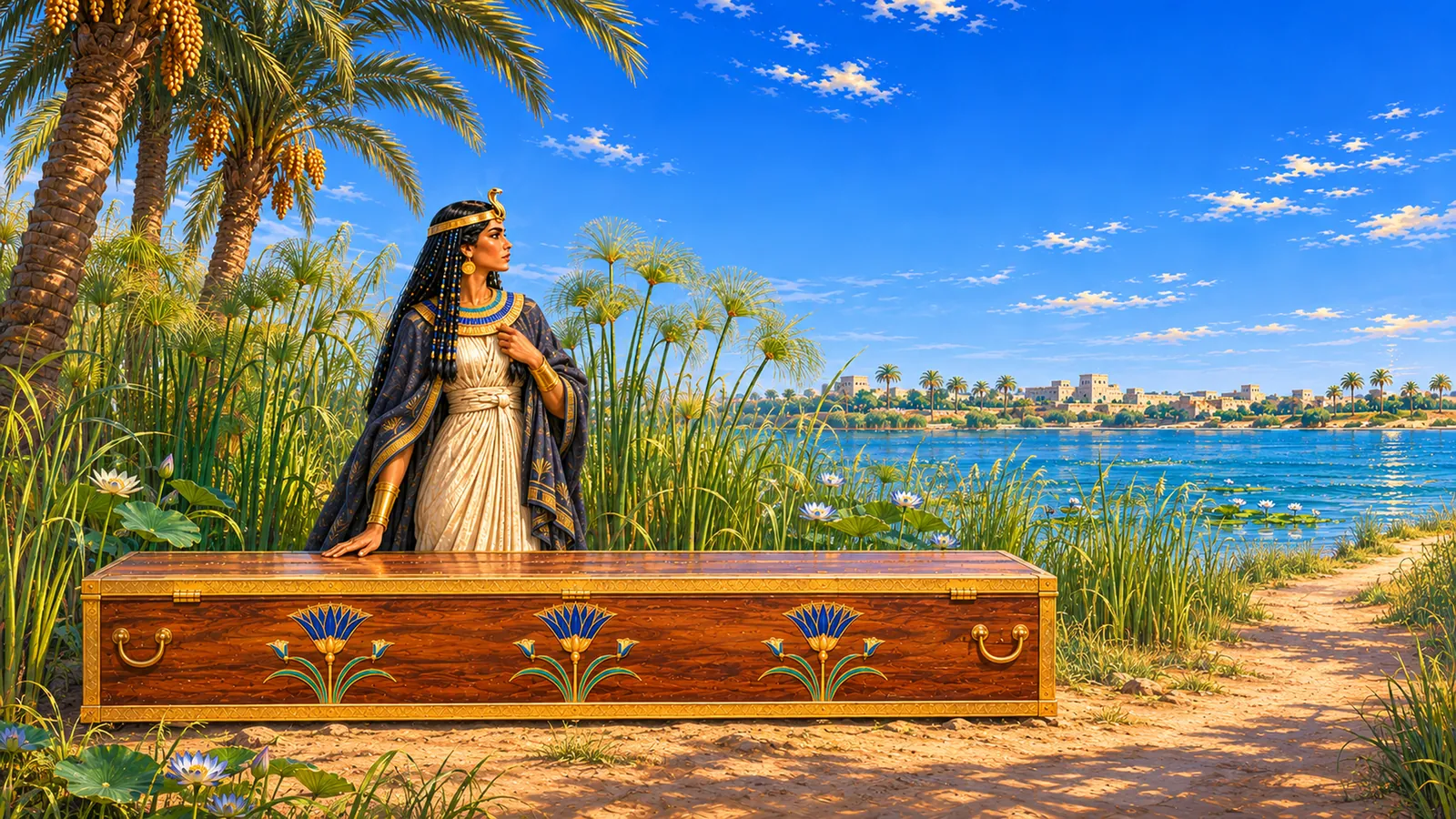
The account returns to the chest. Isis puts it somewhere seldom visited, intending to see her son Horus, who is being brought up at Butus.
End of chapter 2

All pages





Sources
Line positions in the page notes refer to the Project Gutenberg HTML of Budge’s edition. The source gives several names for the queen at Byblos.
Editions consulted
- E. A. Wallis Budge, Egyptian Ideas of the Future Life, third edition, 1908, Chapter II
- Plutarch’s narrative in Samuel Squire’s translation as quoted in Chapter II
- Budge’s footnote on the name Byblos
- Budge’s footnote on Maneros
- Budge, Egyptian Ideas of the Future Life, Gutenberg ebook 11277
Notes on this retelling
Plutarch in Samuel Squire’s 1744 translation as quoted by E. A. Wallis Budge, *Egyptian Ideas of the Future Life*, third edition (1908), chapter II. Numbers refer to physical lines in the locally cached Gutenberg HTML. The title pages are 1, “The Coast,” and 8, “The Report.” Stings are on pages 3 and 8.
The text spells the place Byblos.
Page 15 (Squire 1744 in Budge 1908, chapter II, HTML 1301–1303). After getting to know the visitor, the queen appoints her as nurse to one of her sons. The passage leaves the nursed son unnamed.
Page 16 (1303–1306). Squire calls the king at Byblos Meloarthus. Astarte, Saosis and Nemanoun are given as names of the queen. The text pairs Nemanoun with the Greek name Athenais. Byblos is the story’s place name. Budge’s footnote 51 locates it in the papyrus swamps of the Egyptian Delta. The location remains uncertain.
Page 17 (1308–1309). In Squire’s translation, Isis feeds the child by letting him suck her finger in place of ordinary nursing.
Pages 18–19 (1309–1311). The account says Isis puts the child into fire at night in an attempt to remove his mortal part. It also says she changes into a swallow, circles the pillar and laments her fate.
Pages 20–21 (1312–1315). The queen watches and sees the child in the fire. She cries out. The myth says her cry deprives him of the immortality he would otherwise have received.
Pages 22–23 (1315–1317). Isis makes her identity known and asks to be given the pillar that supports the roof.
Page 24 (1317–1318). Isis takes the pillar down, opens it and removes what Squire calls “what she wanted.” In 1285–1291 the trunk enclosed the chest before it was made into a pillar. The chest is named again in the lament at 1322–1324.
Page 25 (1318–1320). Isis wraps the remaining wood in fine linen, applies perfumed oil to it and returns it to the king and queen.
Page 26 (1320–1322). The old account says the wood was preserved and worshipped at a temple of Isis in Byblos “to this day.” The time reference belongs to the teller’s claim.
Pages 27–28 (1322–1325). Isis falls upon the chest and laments aloud. In this telling the king’s younger son hears her and dies of fright. This passage identifies him as the younger son. Earlier it calls the child entrusted to Isis one of the queen’s sons. The elder son appears in the following sentence, and later pages record other accounts of a boy’s death.
### Pages 29–42 · The return across the sea
Ancient lines behind each page
- Page 1: Plutarch, Squire 1744 in Budge 1908, chapter II, HTML 1282–1285
- Page 2: Plutarch, Squire 1744 in Budge 1908, chapter II, HTML 1285–1287
Left is desaturated matte gray-green water and naturally soft shade, with no ripples, shore line or distinct objects in the box. - Page 3: Plutarch, Squire 1744 in Budge 1908, chapter II, HTML 1286–1288
- Page 4: Plutarch, Squire 1744 in Budge 1908, chapter II, HTML 1287–1288
- Page 5: Plutarch, Squire 1744 in Budge 1908, chapter II, HTML 1288–1289
- Page 6: Plutarch, Squire 1744 in Budge 1908, chapter II, HTML 1289–1291
- Page 7: Plutarch, Squire 1744 in Budge 1908, chapter II, HTML 1290–1291
- Page 8: Plutarch, Squire 1744 in Budge 1908, chapter II, HTML 1291–1293
- Page 9: Plutarch, Squire 1744 in Budge 1908, chapter II, HTML 1292–1294
- Page 10: Plutarch, Squire 1744 in Budge 1908, chapter II, HTML 1293–1295
- Page 11: Plutarch, Squire 1744 in Budge 1908, chapter II, HTML 1295–1296
- Page 12: Plutarch, Squire 1744 in Budge 1908, chapter II, HTML 1296–1298
- Page 13: Plutarch, Squire 1744 in Budge 1908, chapter II, HTML 1298–1301
- Page 14: Plutarch, Squire 1744 in Budge 1908, chapter II, HTML 1300–1302
- Page 15: Plutarch, Squire 1744 in Budge 1908, chapter II, HTML 1301–1303
- Page 16: Plutarch, Squire 1744 in Budge 1908, chapter II, HTML 1303–1306
- Page 17: Plutarch, Squire 1744 in Budge 1908, chapter II, HTML 1308–1309
- Page 18: Plutarch, Squire 1744 in Budge 1908, chapter II, HTML 1309–1310
- Page 19: Plutarch, Squire 1744 in Budge 1908, chapter II, HTML 1310–1311
- Page 20: Plutarch, Squire 1744 in Budge 1908, chapter II, HTML 1312–1313
- Page 21: Plutarch, Squire 1744 in Budge 1908, chapter II, HTML 1313–1315
- Page 22: Plutarch, Squire 1744 in Budge 1908, chapter II, HTML 1315–1316
- Page 23: Plutarch, Squire 1744 in Budge 1908, chapter II, HTML 1316–1317
- Page 24: Plutarch, Squire 1744 in Budge 1908, chapter II, HTML 1317–1318
- Page 25: Plutarch, Squire 1744 in Budge 1908, chapter II, HTML 1318–1320
- Page 26: Plutarch, Squire 1744 in Budge 1908, chapter II, HTML 1320–1322
At far lower right, show only the shallow opening of a low ordinary limestone recess and one matte dark wood fragment on a simple shelf. - Page 27: Plutarch, Squire 1744 in Budge 1908, chapter II, HTML 1322–1324
- Page 28: Plutarch, Squire 1744 in Budge 1908, chapter II, HTML 1324–1325
- Page 29: Plutarch, Squire 1744 as printed by Budge 1908, Chapter II, HTML lines 1325–1326
- Page 30: Plutarch, Squire 1744 as printed by Budge 1908, Chapter II, HTML lines 1326–1328
- Page 31: Plutarch, Squire 1744 as printed by Budge 1908, Chapter II, HTML lines 1330–1332
- Page 32: Plutarch, Squire 1744 as printed by Budge 1908, Chapter II, HTML lines 1331–1333
- Page 33: Plutarch, Squire 1744 as printed by Budge 1908, Chapter II, HTML lines 1333–1336
Right side solid near wall in quiet slate shade, no water line or object in it. - Page 34: Plutarch, Squire 1744 as printed by Budge 1908, Chapter II, HTML lines 1336–1339
- Page 35: Plutarch, Squire 1744 as printed by Budge 1908, Chapter II, HTML lines 1339–1341
- Page 36: Plutarch, Squire 1744 as printed by Budge 1908, Chapter II, HTML lines 1342–1344
- Page 37: Plutarch, Squire 1744 as printed by Budge 1908, Chapter II, HTML lines 1344–1346
- Page 38: Plutarch, Squire 1744 as printed by Budge 1908, Chapter II, HTML lines 1346–1349
- Page 39: Plutarch, Squire 1744 as printed by Budge 1908, Chapter II, HTML lines 1349–1352
- Page 40: Plutarch, Squire 1744 as printed by Budge 1908, Chapter II, HTML lines 1352–1355
- Page 41: Plutarch, Squire 1744 as printed by Budge 1908, Chapter II, HTML lines 1353–1359
- Page 42: Plutarch, Squire 1744 as printed by Budge 1908, Chapter II, HTML lines 1359–1364
Illustrations made with AI tools by IL Archive; the text is based on the ancient sources (see the sources at the end of each chapter).