Isis and Osiris Chapter 3
The River of Reeds
Isis returns to the marshes when she learns what Set has done. Plutarch’s account gives two explanations for the tombs of Osiris. Horus confronts Set, and Thoth helps answer the challenge to his parentage. The final words turn to the birth of Harpocrates.
SourcesTurn the pages with the arrows, the arrow keys or a swipe.

THE MARSH
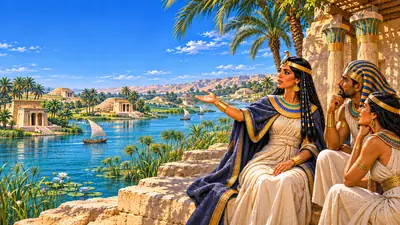
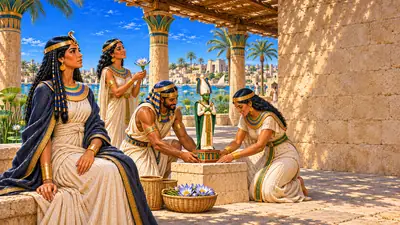
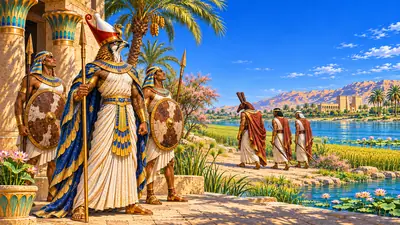
Back in Egypt, Isis intended to visit her son Horus. The account says that he was being brought up at Butus.

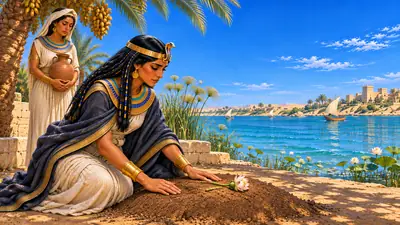
Before going to see her son, Isis put the chest away. She chose a remote place that people rarely visited.
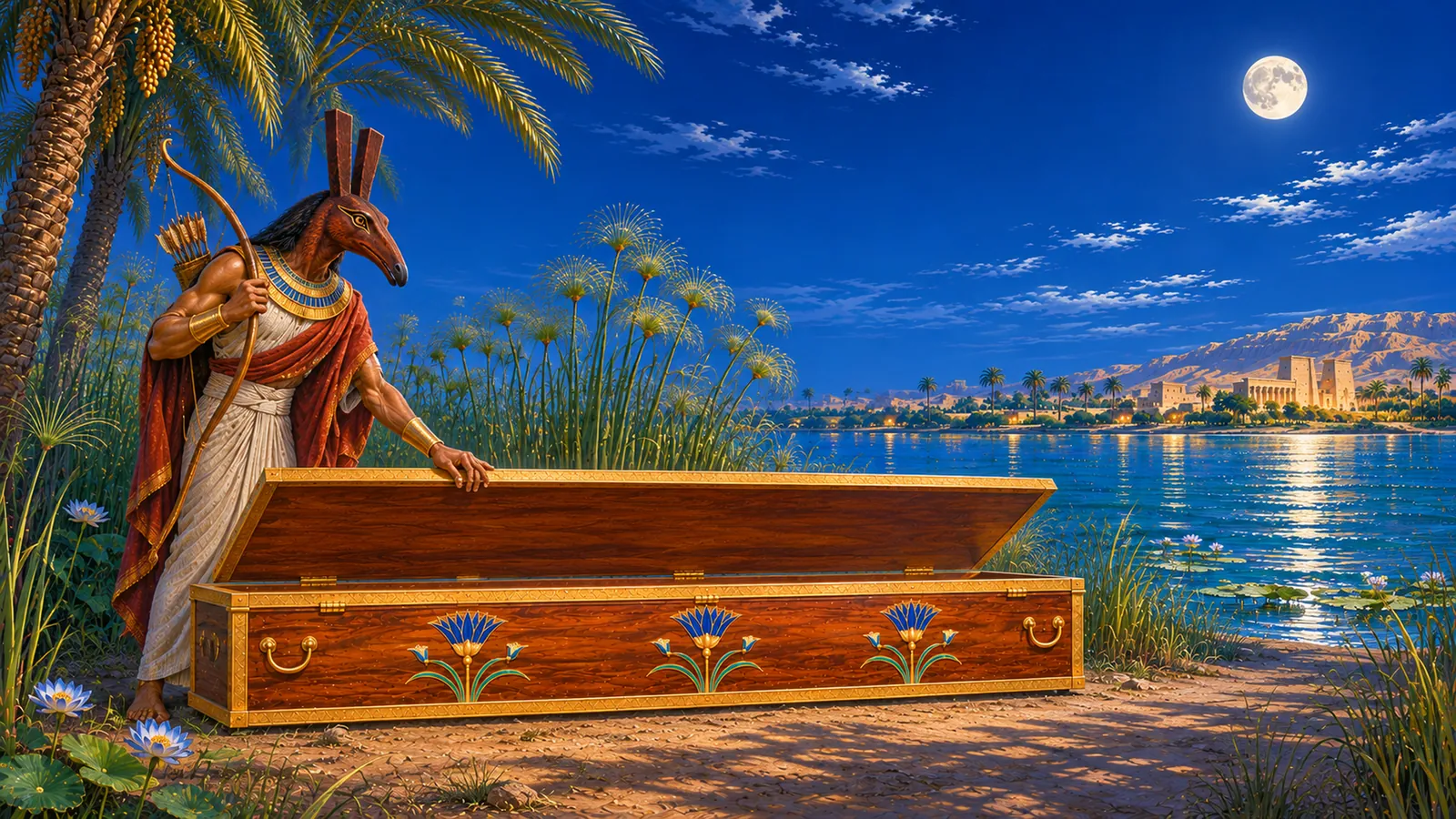
Set was hunting one night by the light of the moon. He came upon the chest by chance and recognised the body inside.
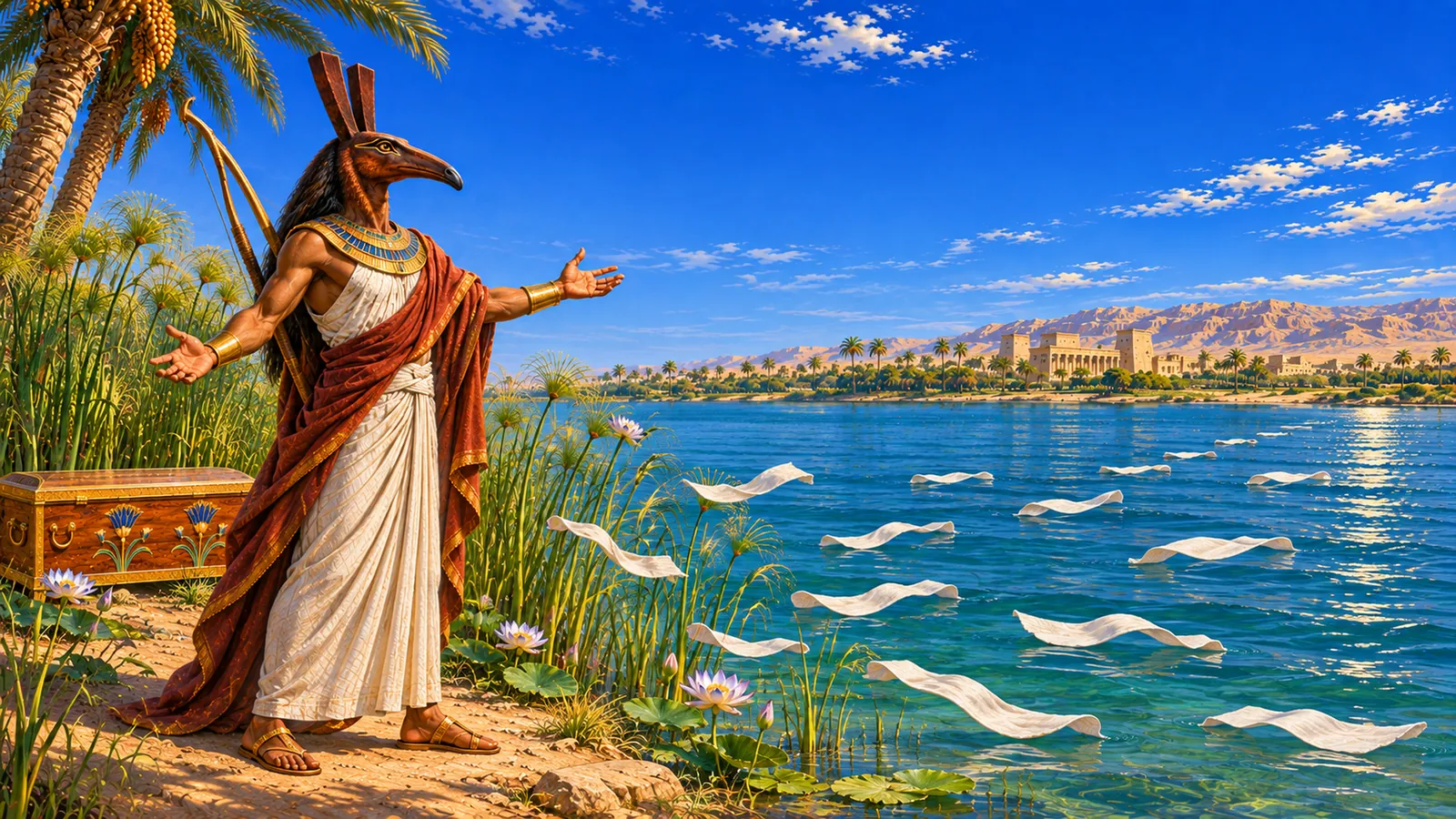
Set recognised Osiris inside the chest. The story says he tore the body into fourteen pieces and scattered them in different parts of the country.
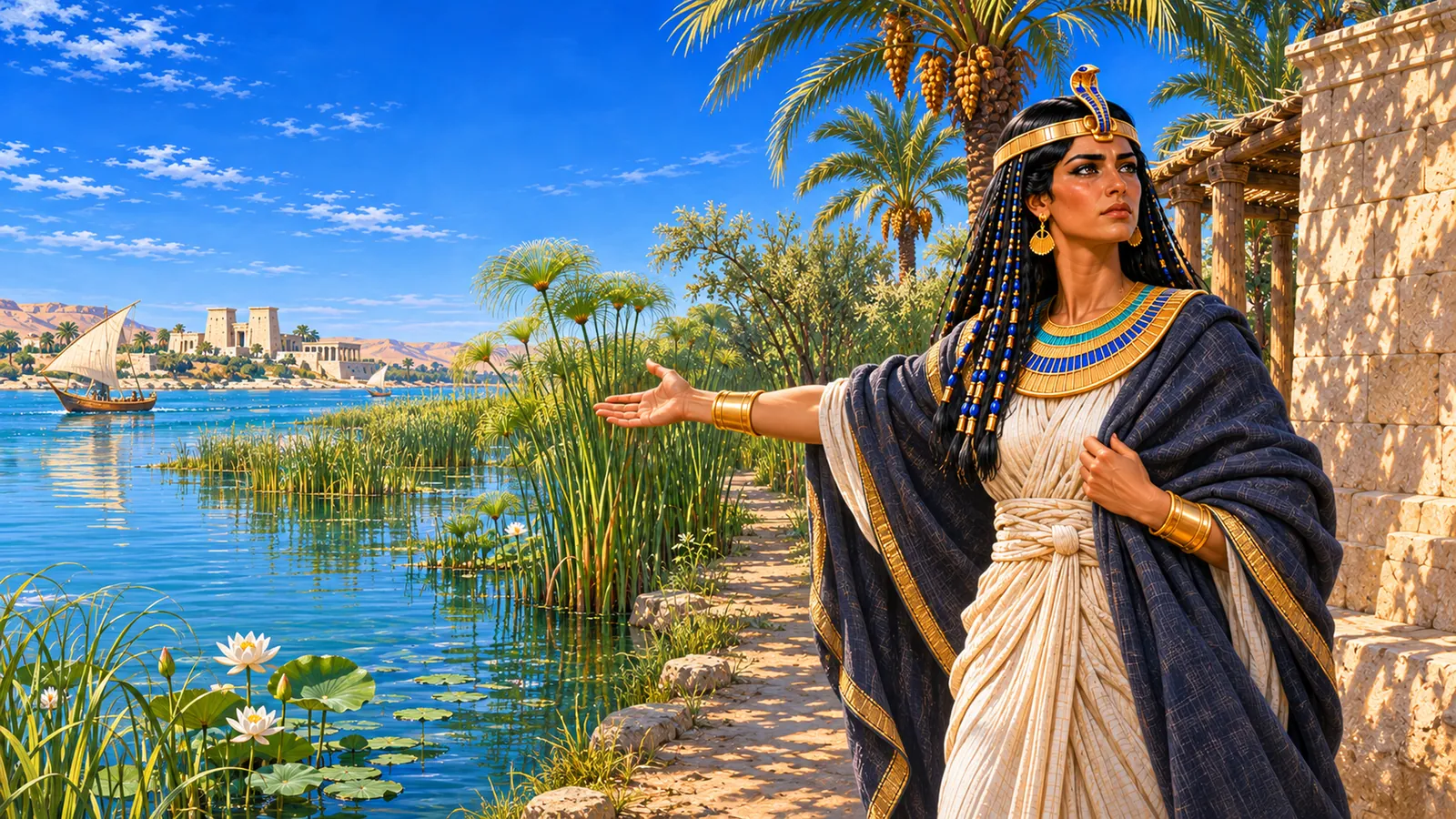
Isis was told what had happened to Osiris’s body. She set out again, this time to find the pieces that Set had scattered.
THE BOAT
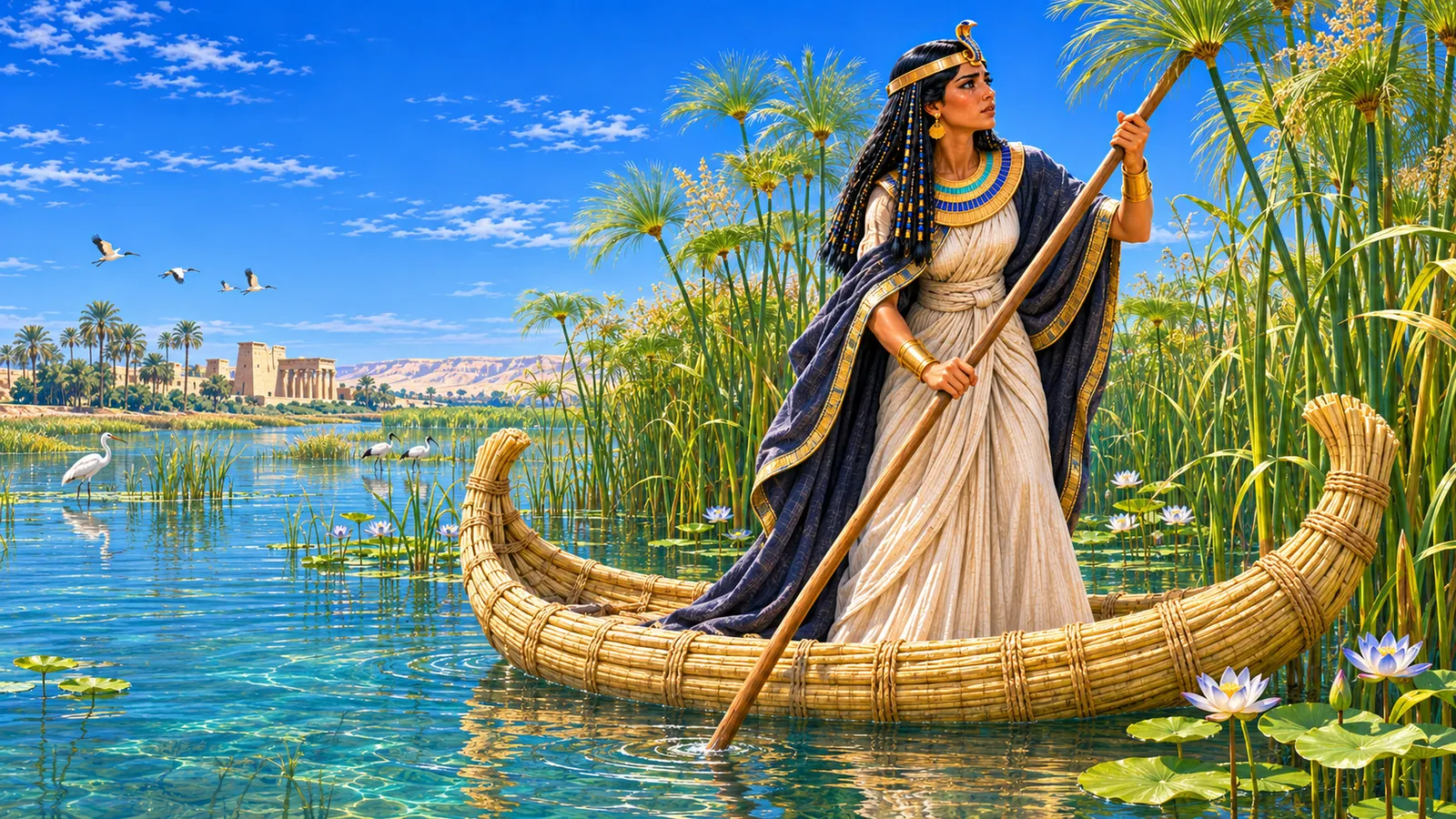
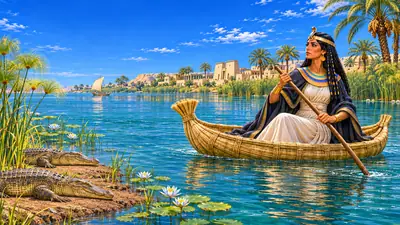
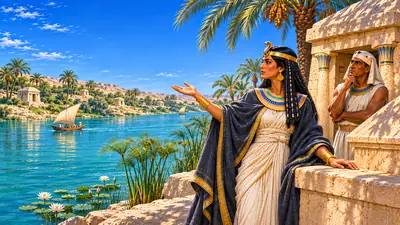
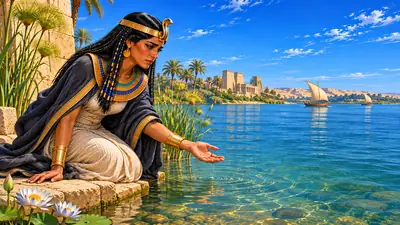
Isis made her way in a boat of papyrus reeds. The boat let her pass more easily through the low and marshy stretches of the country.
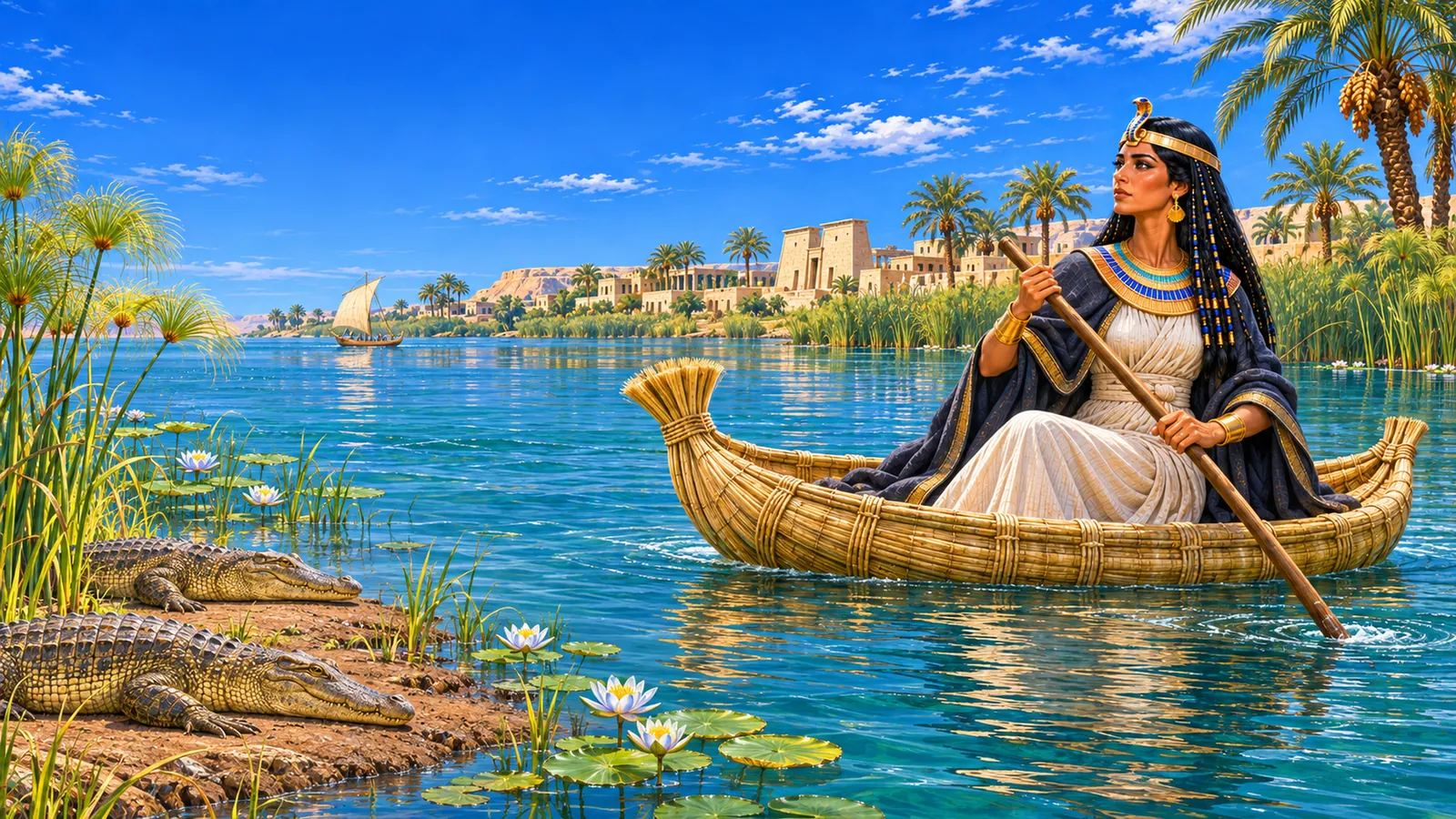
The account says crocodiles spare those who travel in such boats. It gives two explanations: fear of Isis’s anger, or respect for the kind of boat that once carried her.
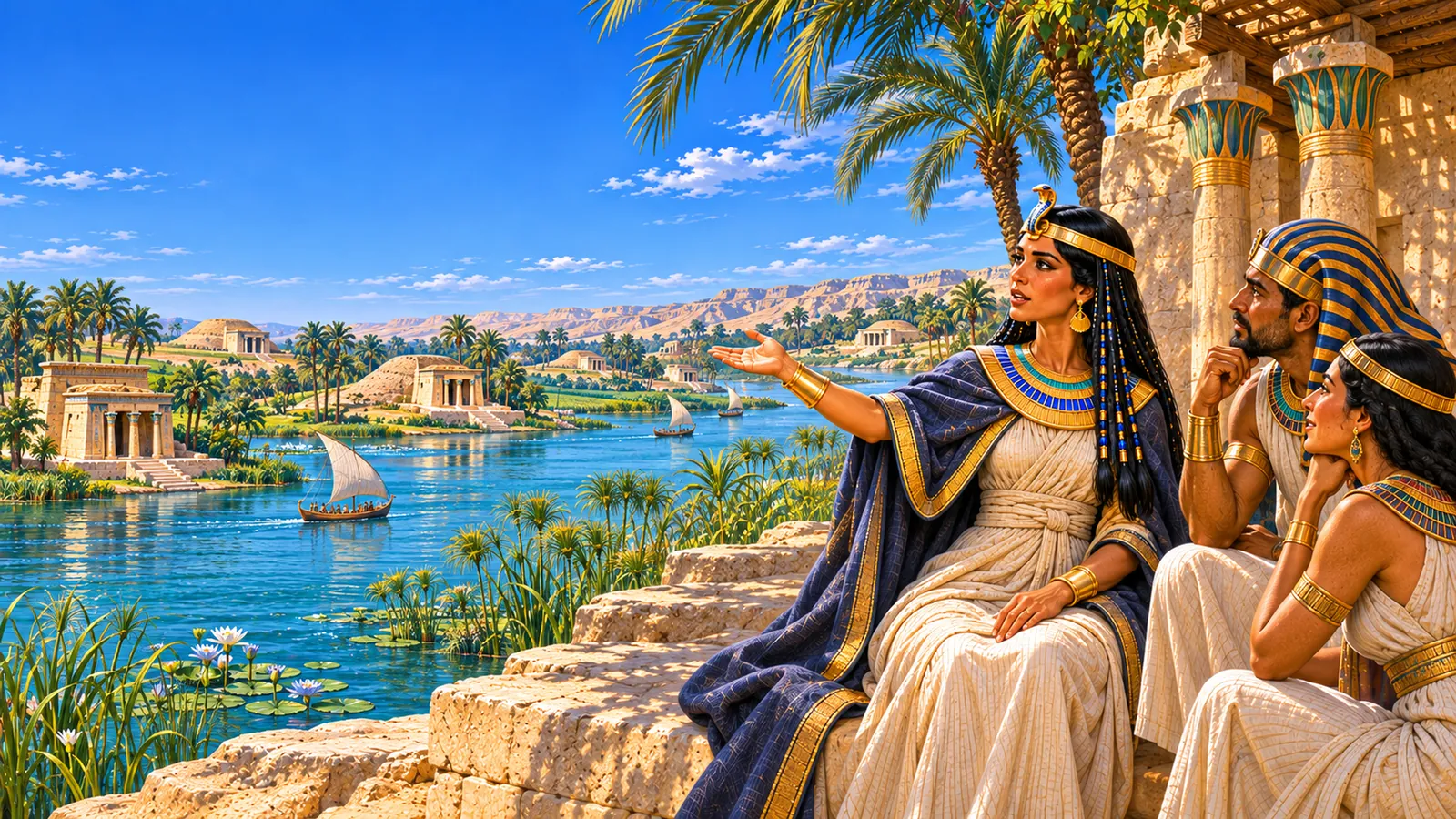
The old account connects Isis’s search with the many places shown in Egypt as tombs of Osiris. It goes on to tell why there were so many.
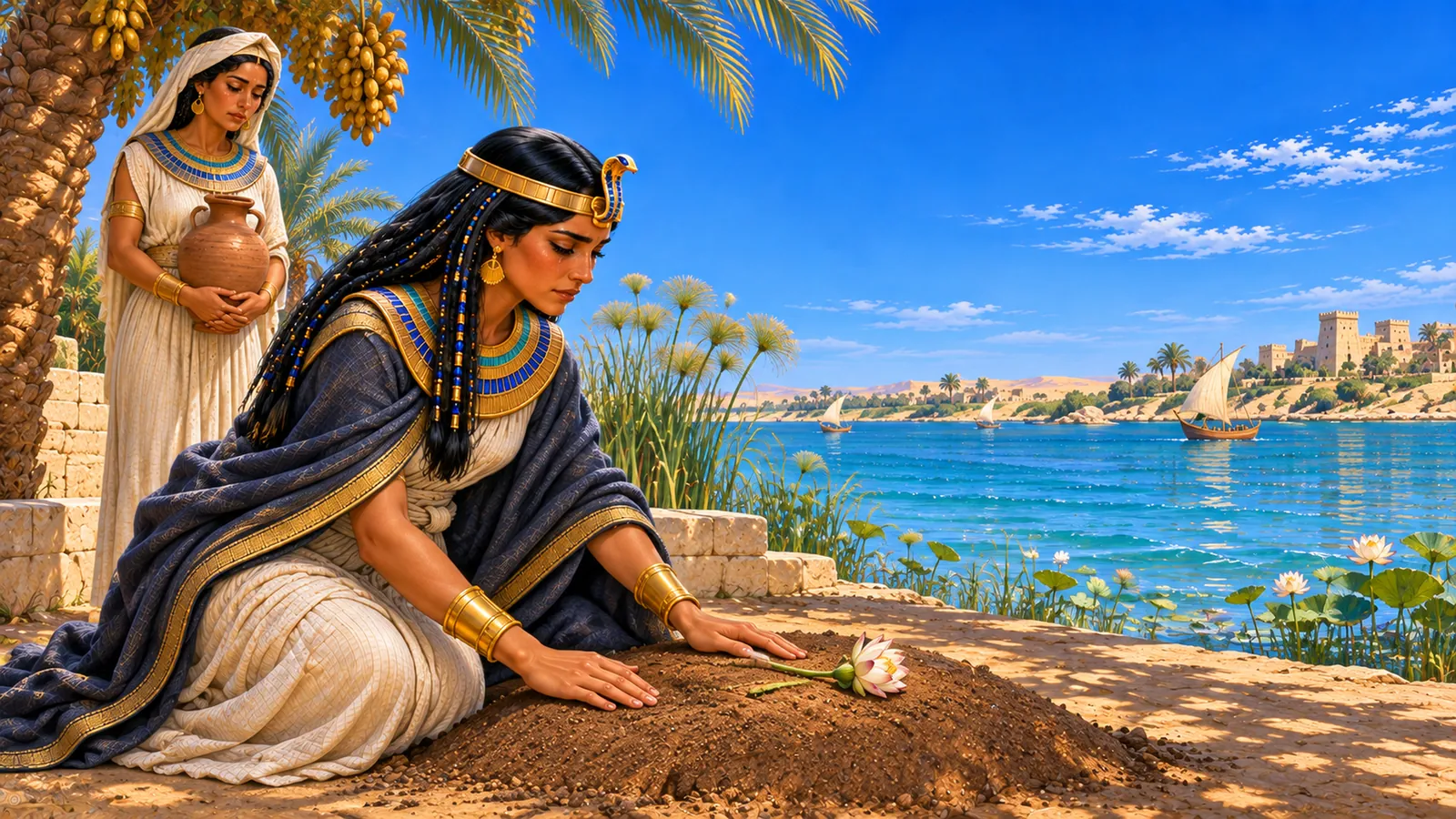
In the first explanation, Isis buried the pieces of Osiris in different places. Whenever she found one, she buried it where she had found it.
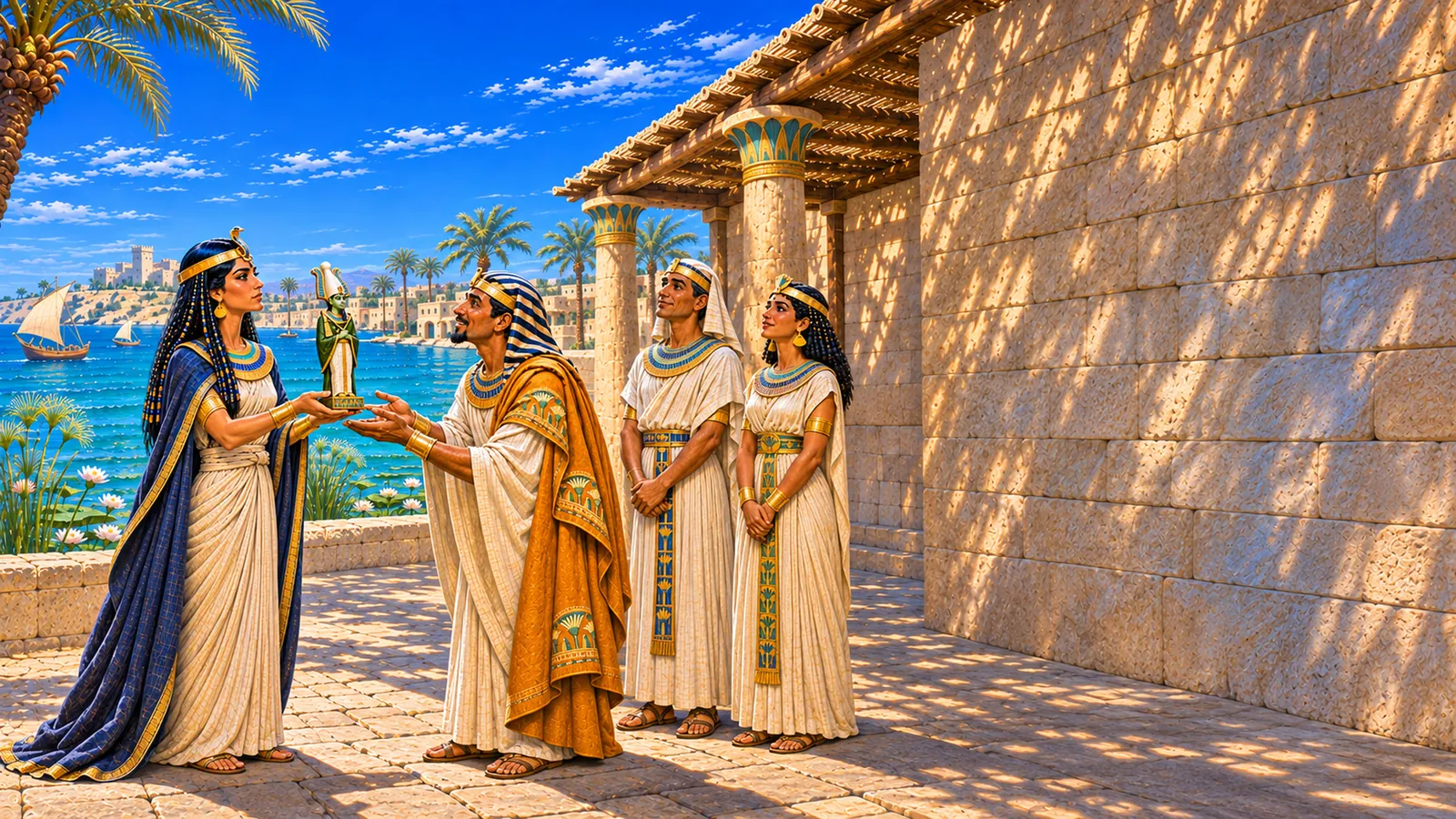
Others disputed that explanation. They said Isis had given different cities likenesses of Osiris that the cities took for his actual body.
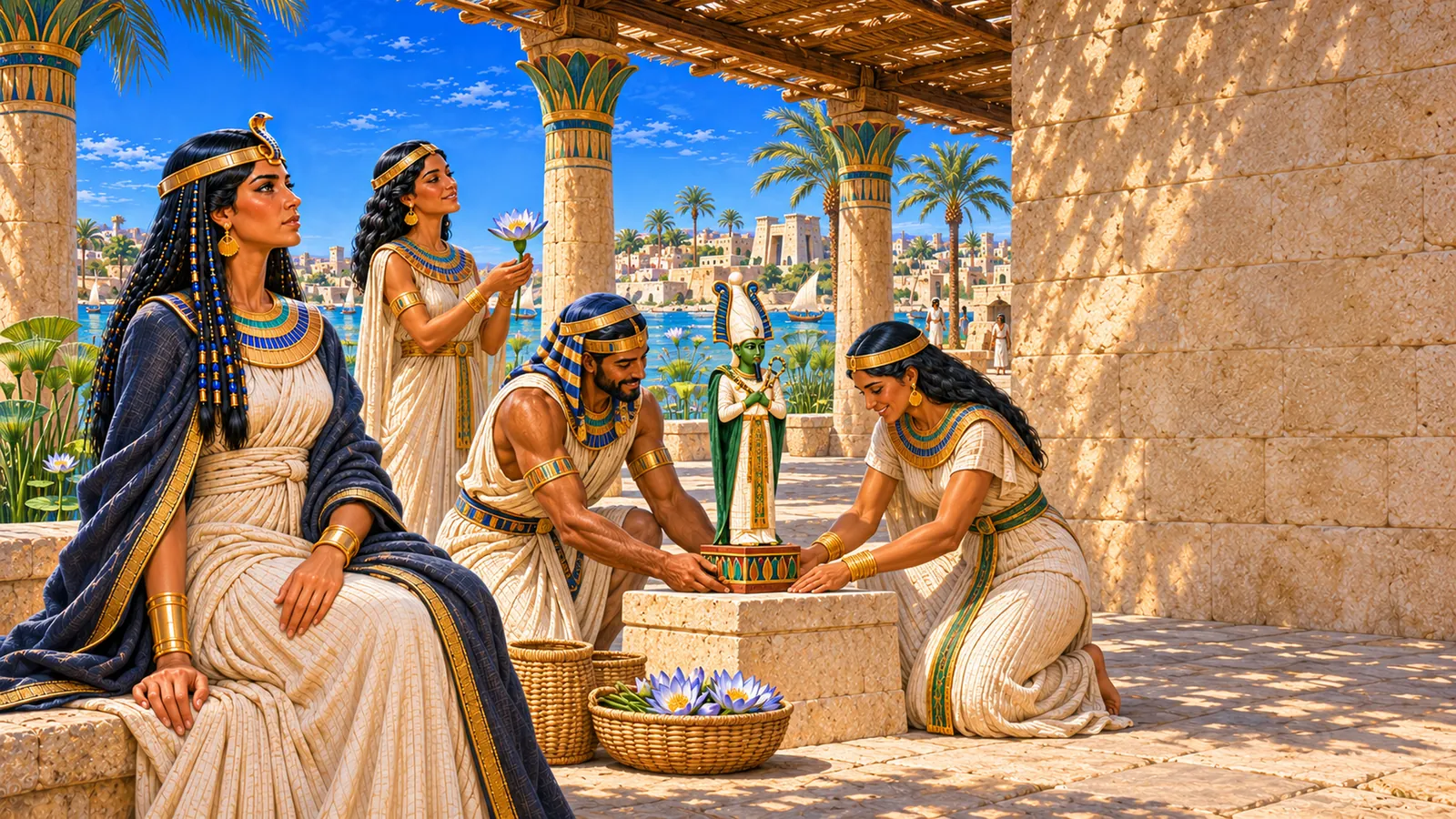
Those who told it this way gave two reasons for the likenesses. The first was to extend the honours people paid to Osiris’s memory.
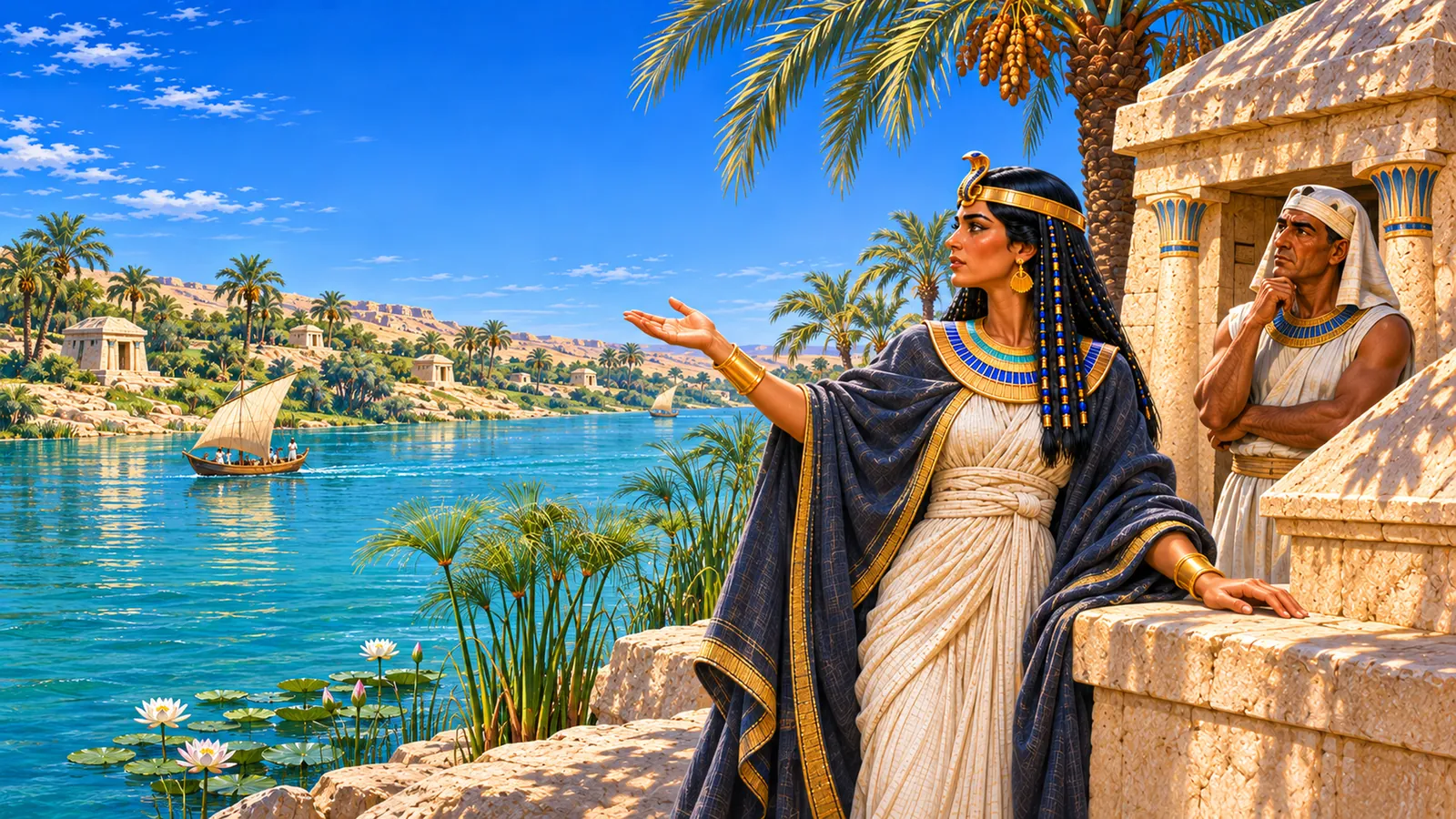
The second reason concerned Set. If he defeated Horus in the coming war, the multitude of tombs might keep him from finding the true one.
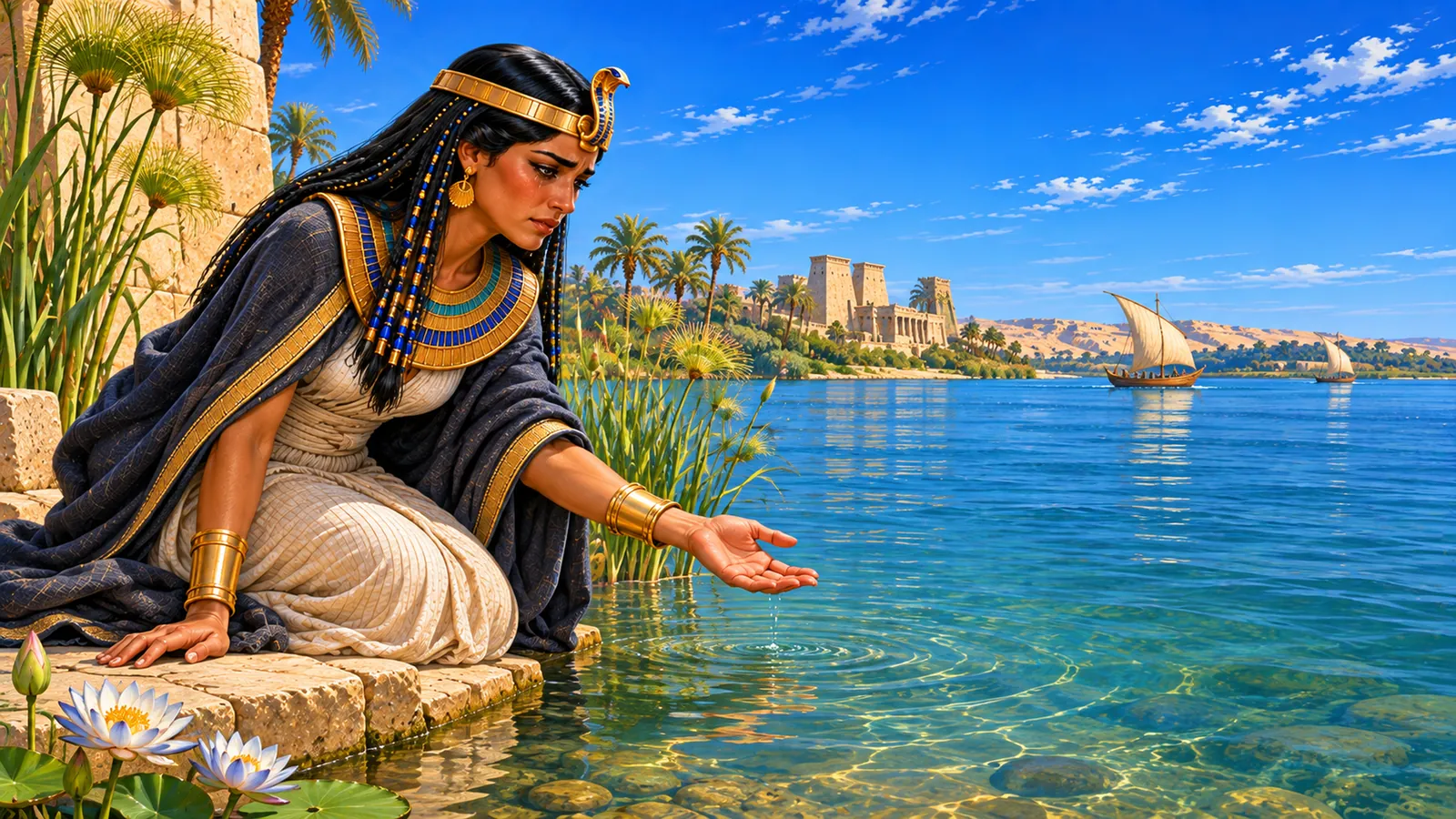
One part Isis could never recover. The account says that Osiris’s penis had been thrown into the Nile and eaten by three fish.

Squire’s translation names the fish Lepidotus, Phagrus and Oxyrynchus. The story gives what happened in the Nile as a reason why the Egyptians especially avoided those fish.
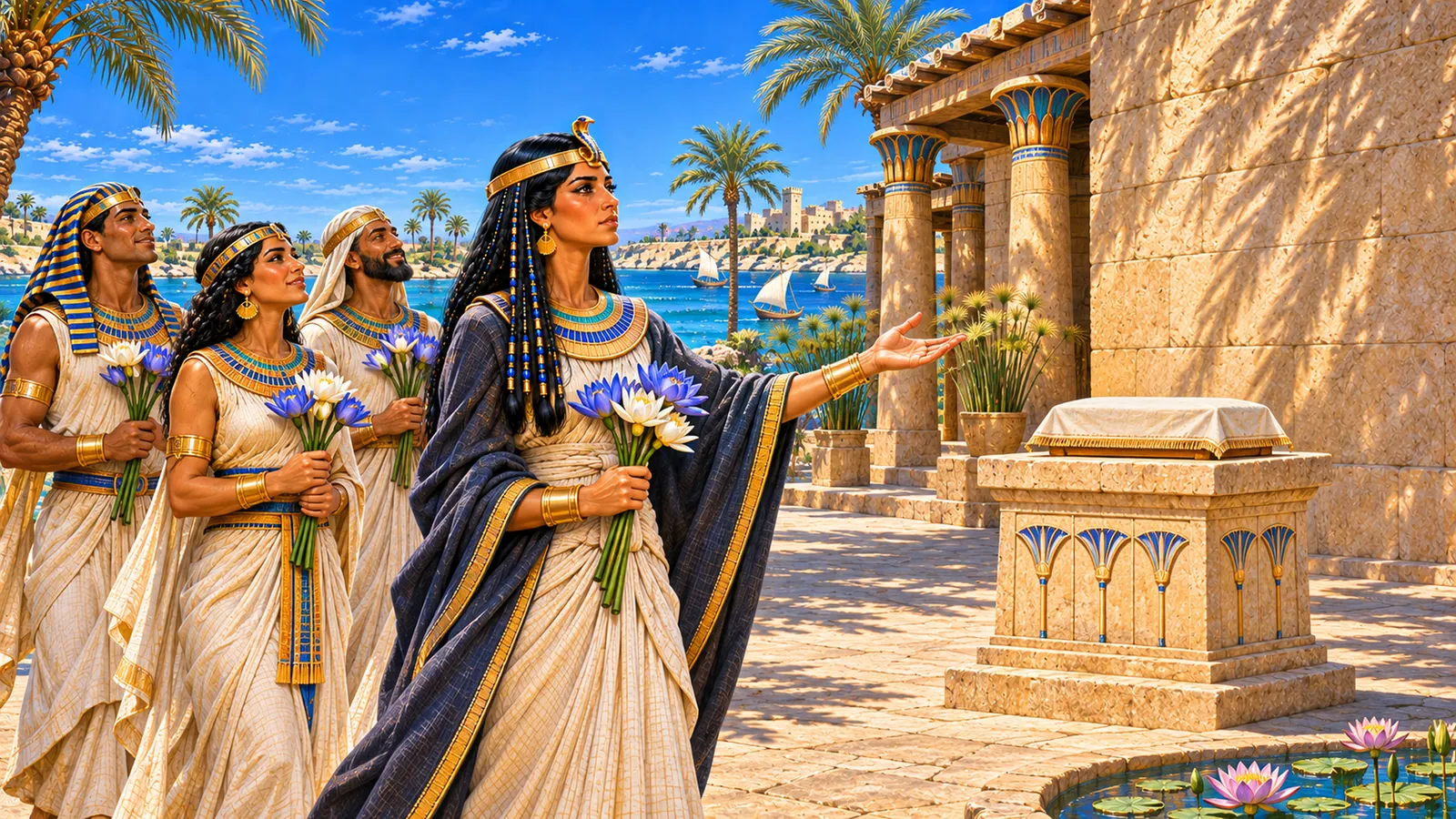
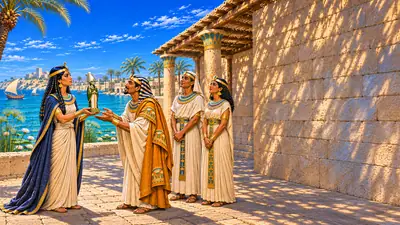
Plutarch says Isis consecrated a likeness of Osiris’s missing penis and instituted a festival in its memory.
FROM BEYOND
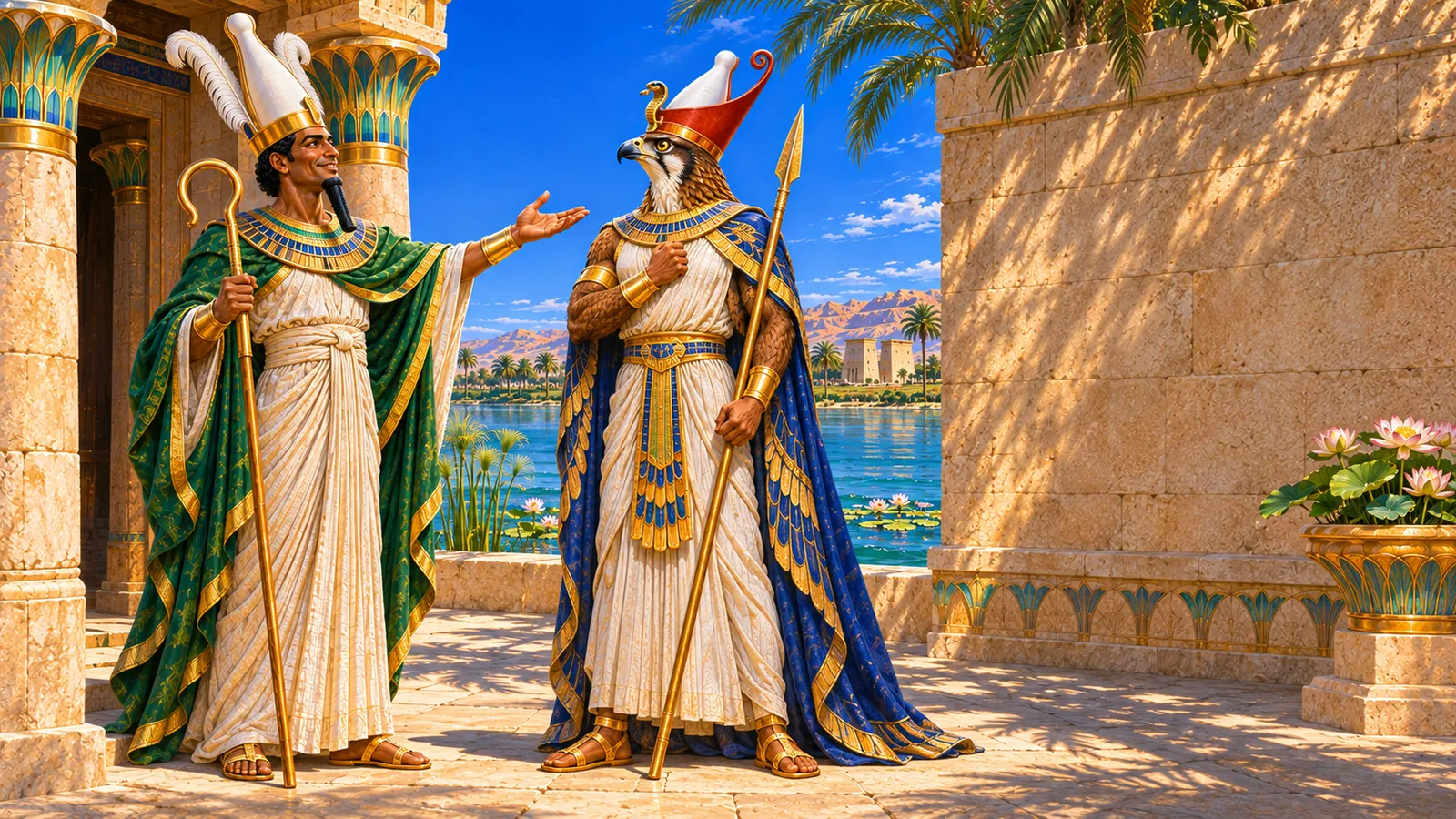
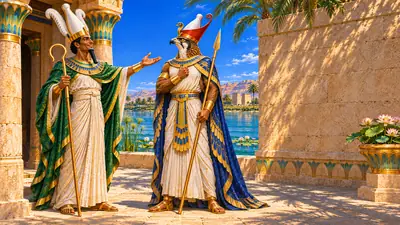
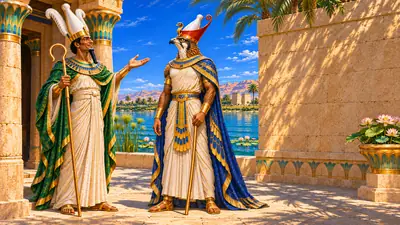
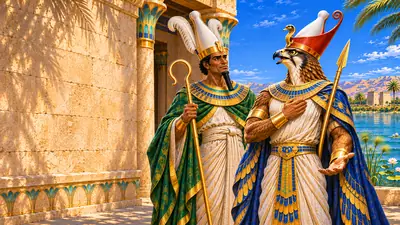
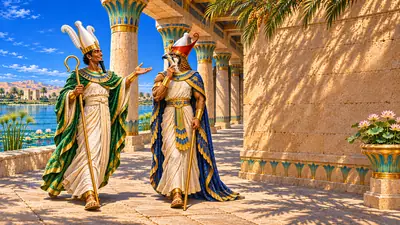
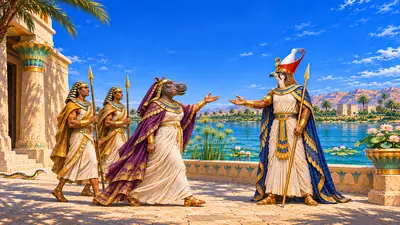
In Plutarch’s account, Osiris appeared to his son Horus from the other world. He encouraged him and prepared him for the coming battle.
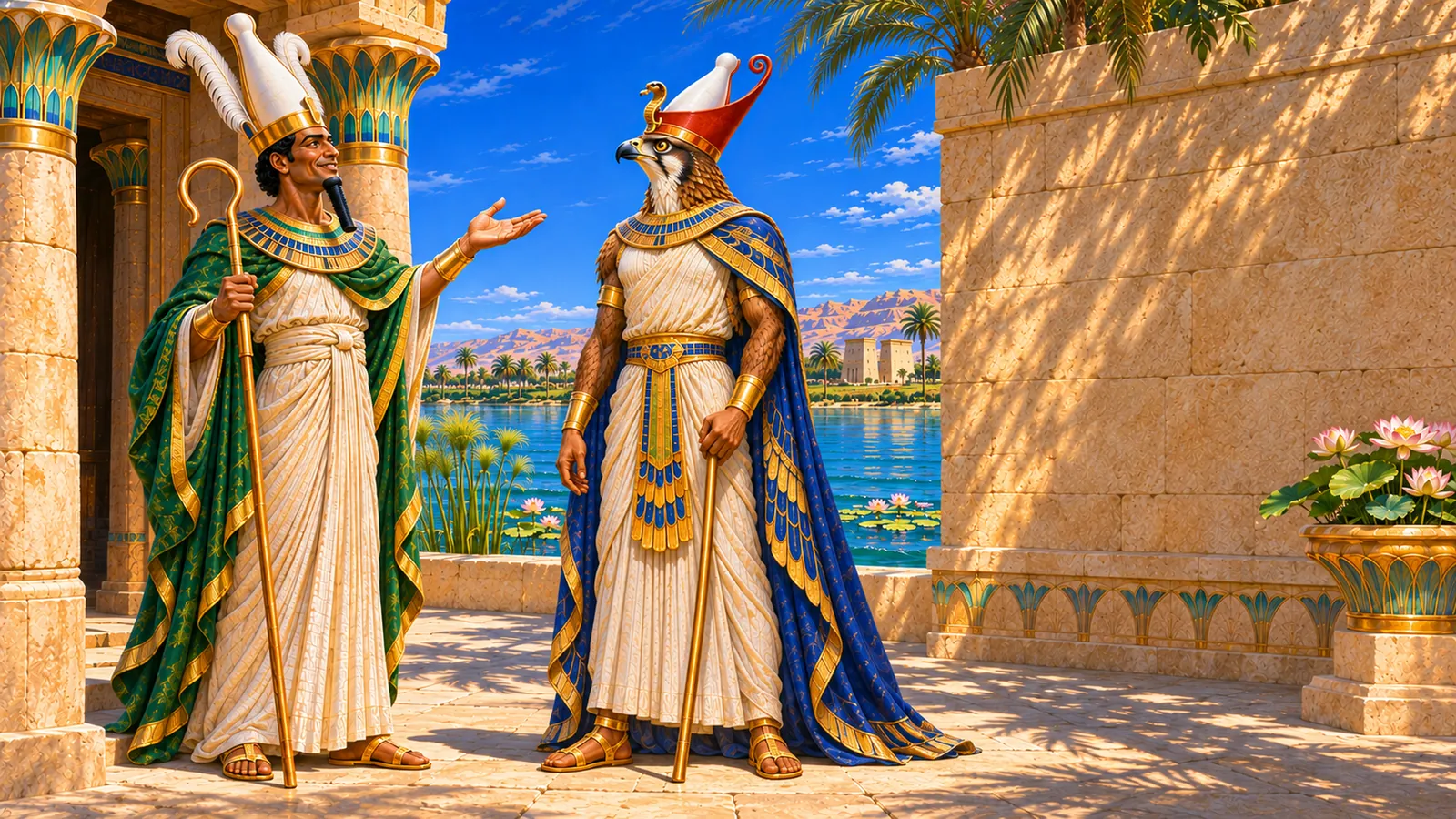
Osiris asked Horus what he thought was the most glorious deed a person could perform.
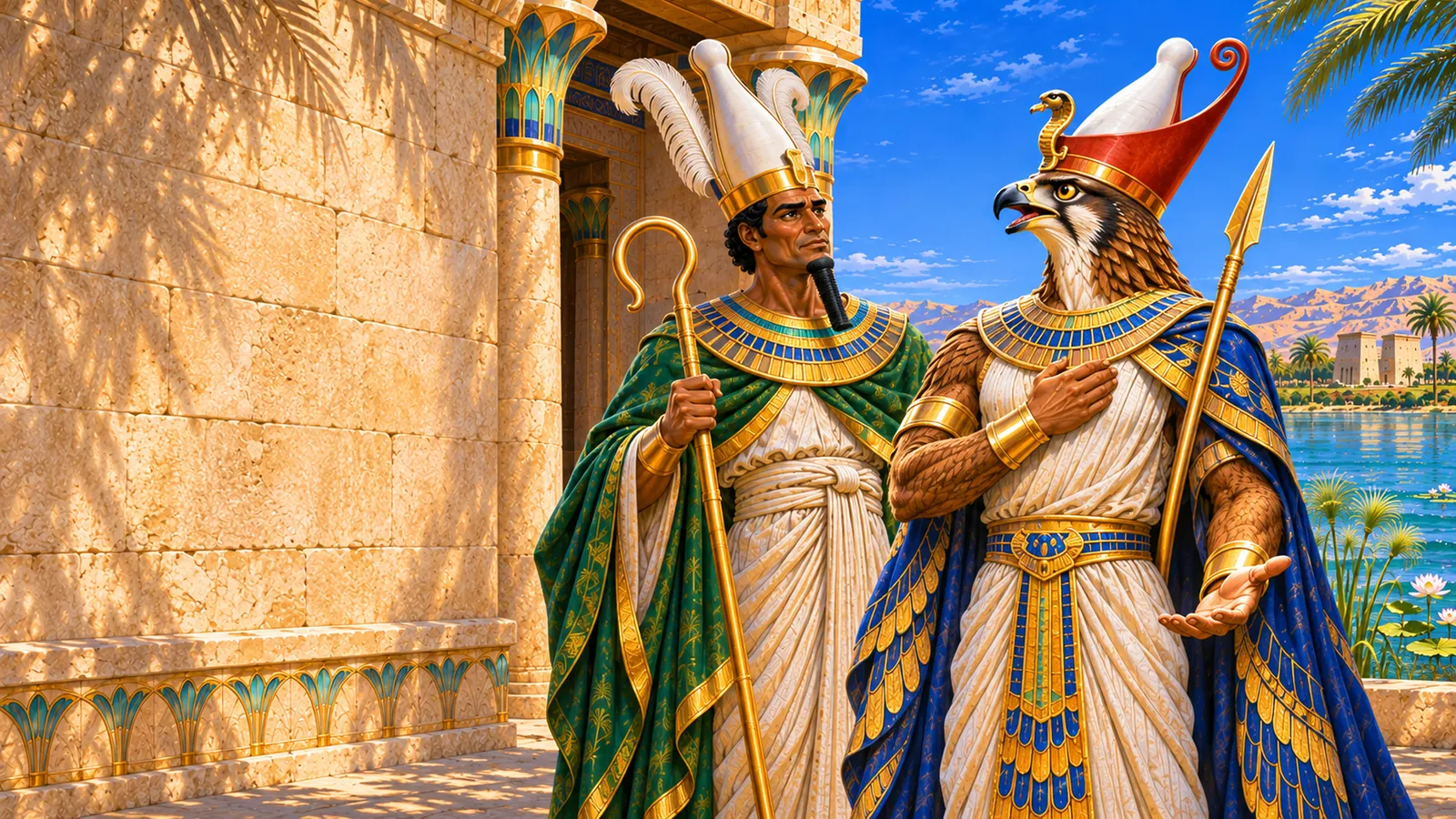
Horus answered that the most glorious deed would be to avenge the wrongs done to his father and mother.
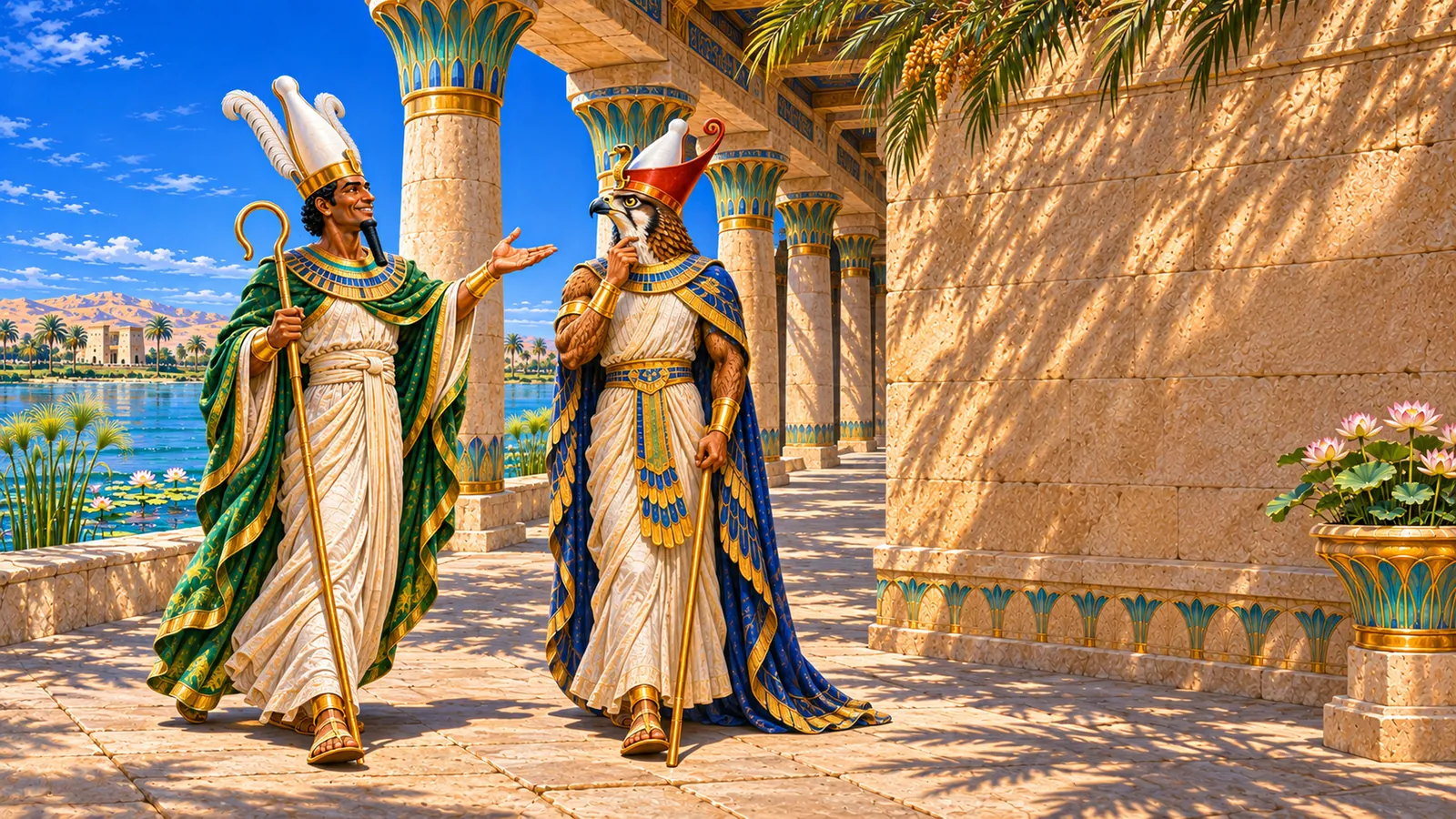
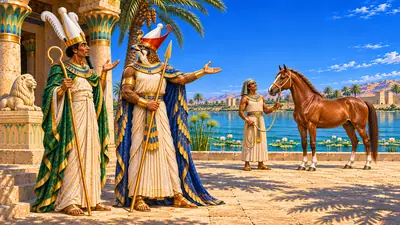
Osiris then asked Horus which animal he thought a soldier would find most useful in battle.
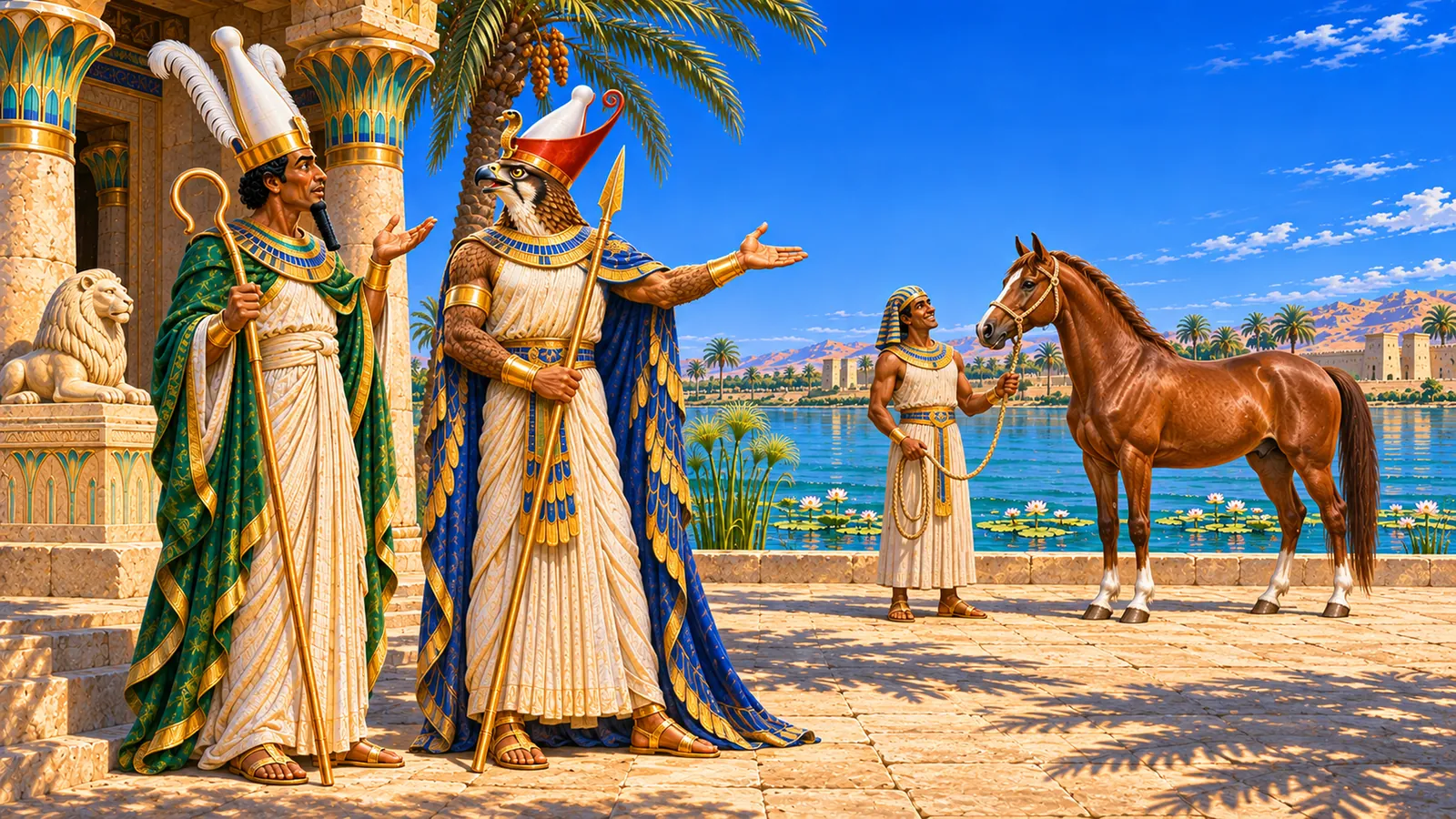
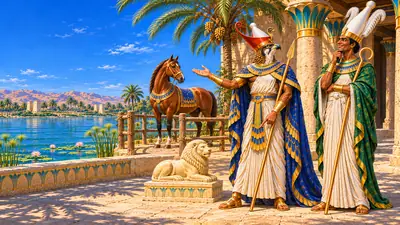
Horus answered that the horse would be most useful. Osiris was surprised and asked why Horus preferred it to a lion.
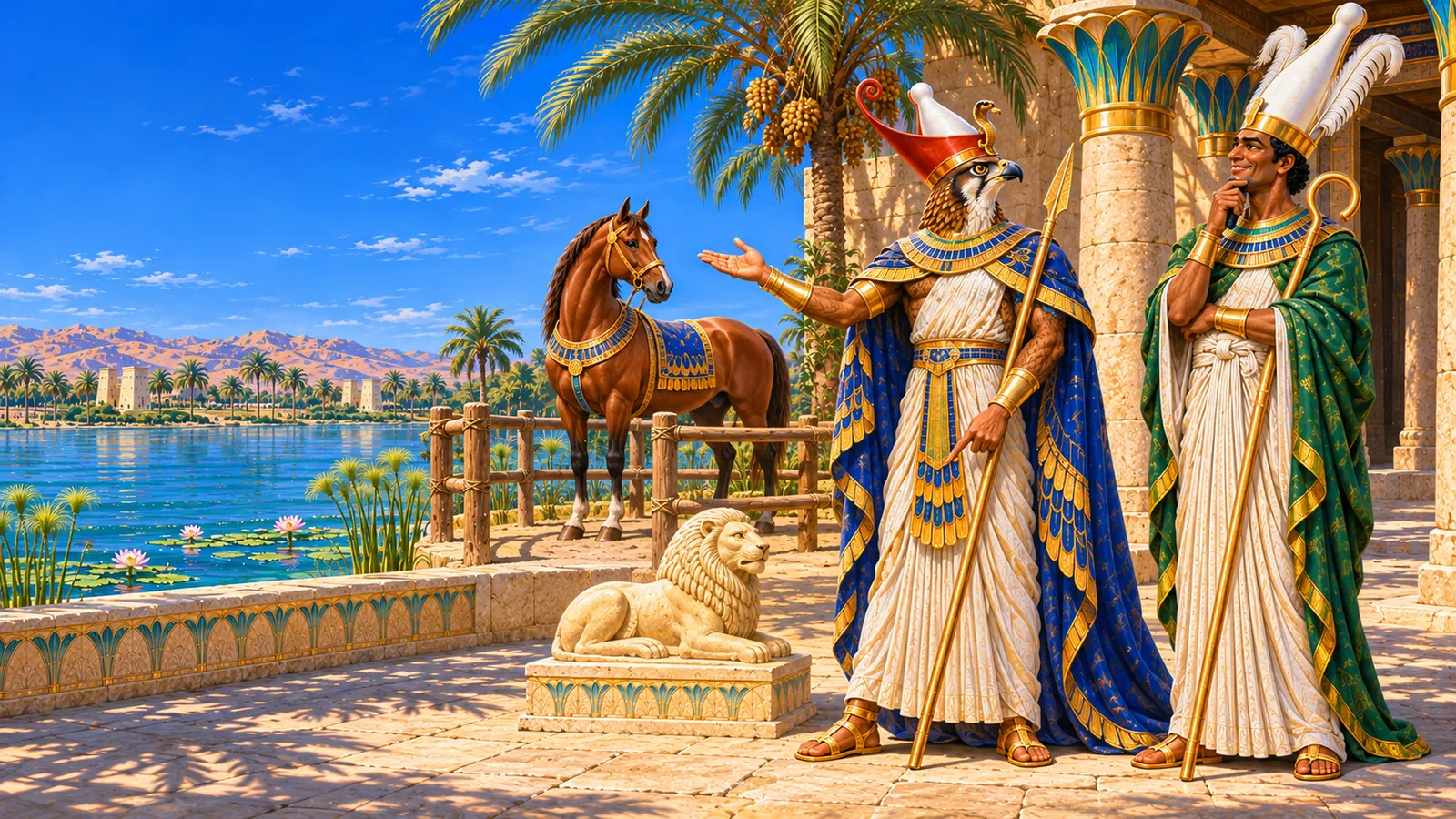
Horus said a lion was of greater help to someone in need. He thought a horse was more useful for following a fleeing opponent.
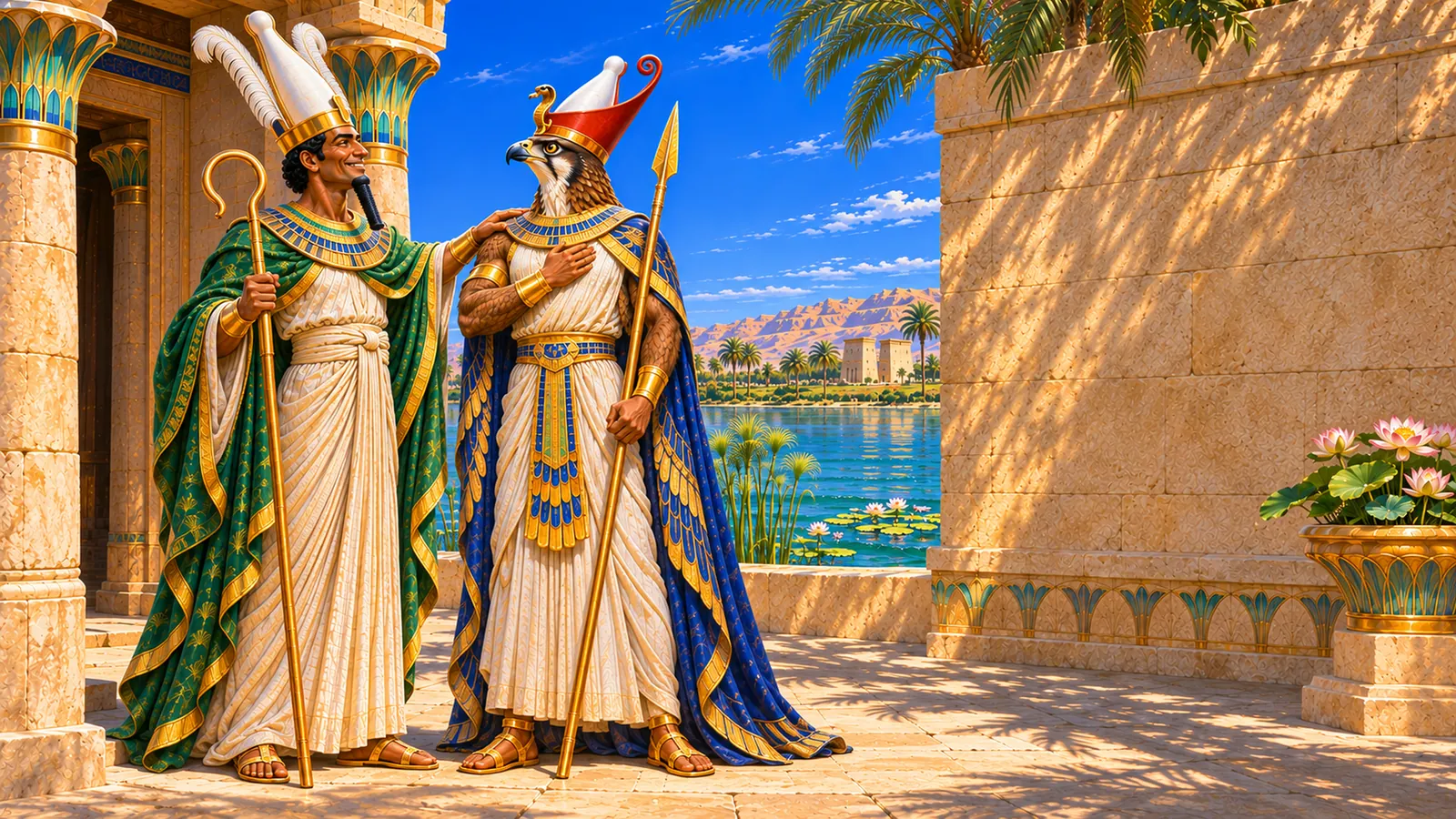
Osiris was pleased with Horus’s answers. In the story they showed him that his son was ready to face his enemy.
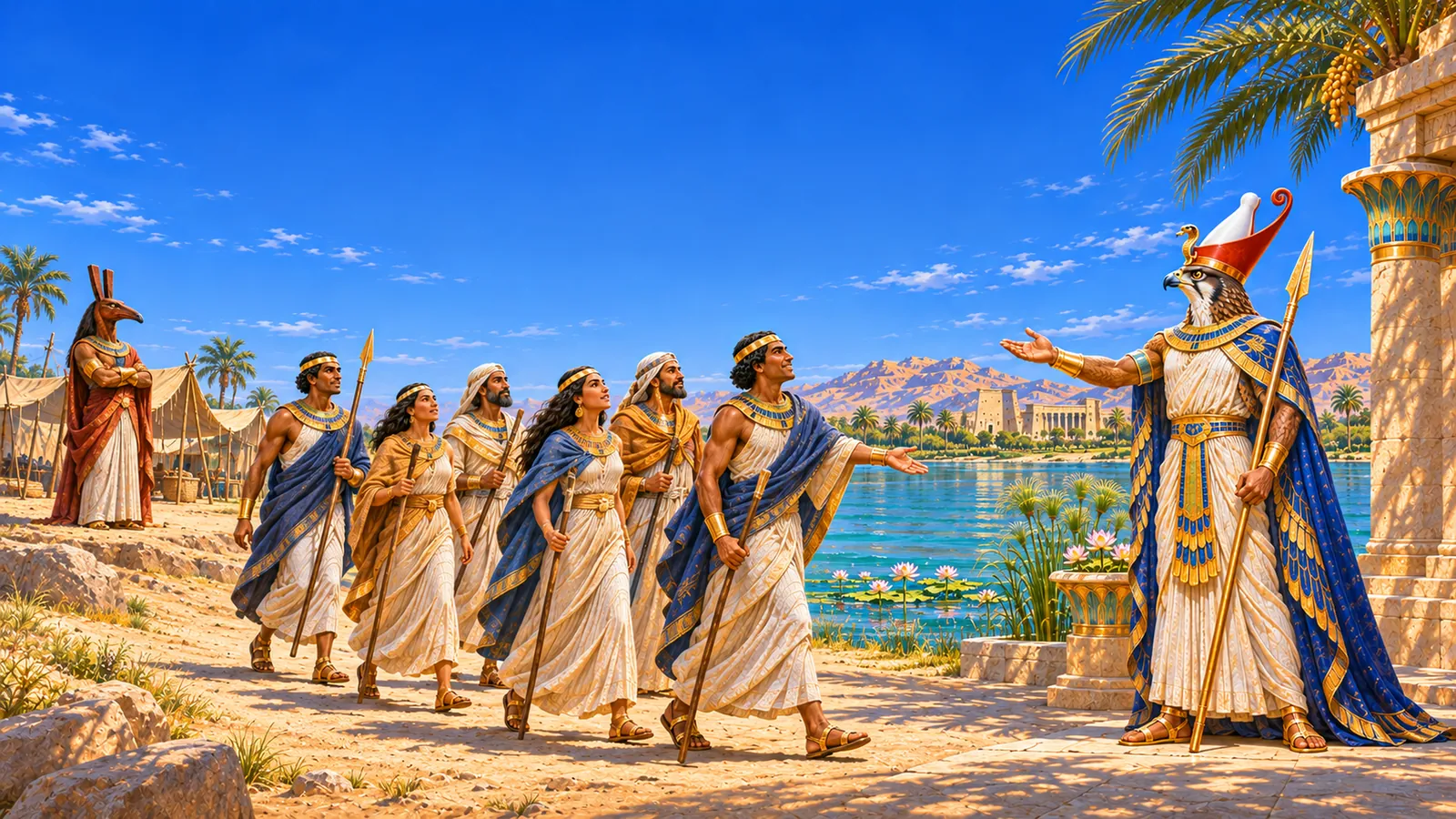
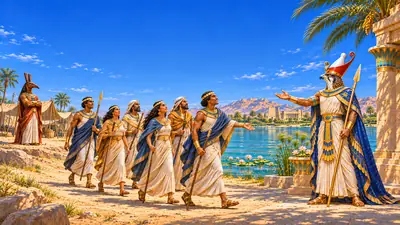
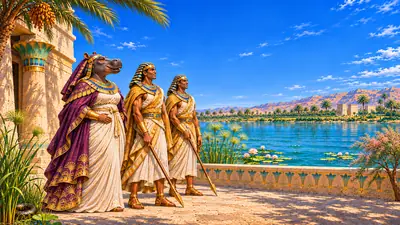
Plutarch also tells of a great number of people who kept leaving Set’s side in the conflict.
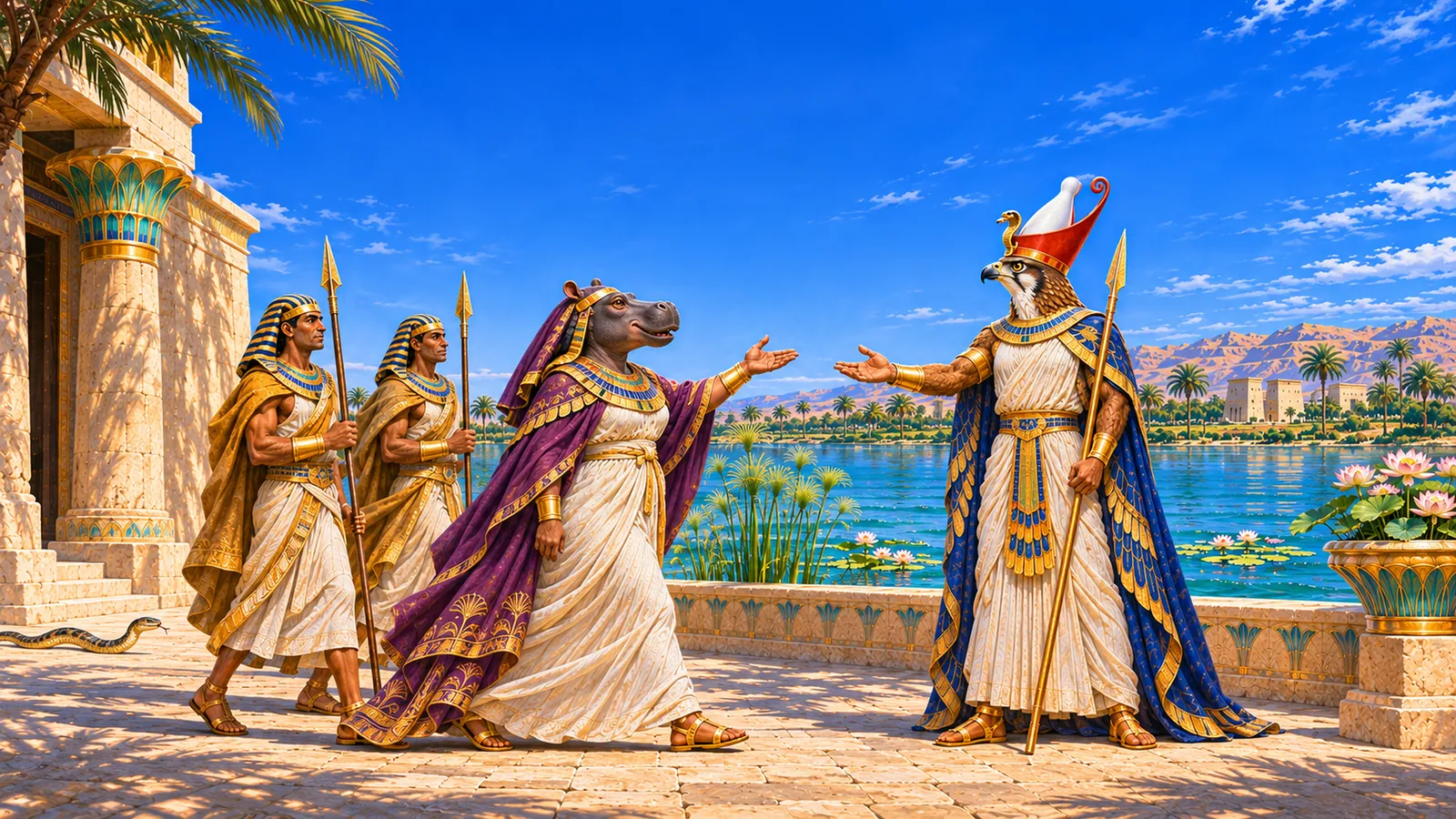
Among those who left Set was his consort Thueris. In Plutarch’s telling, a serpent pursued her as she went over to Horus.
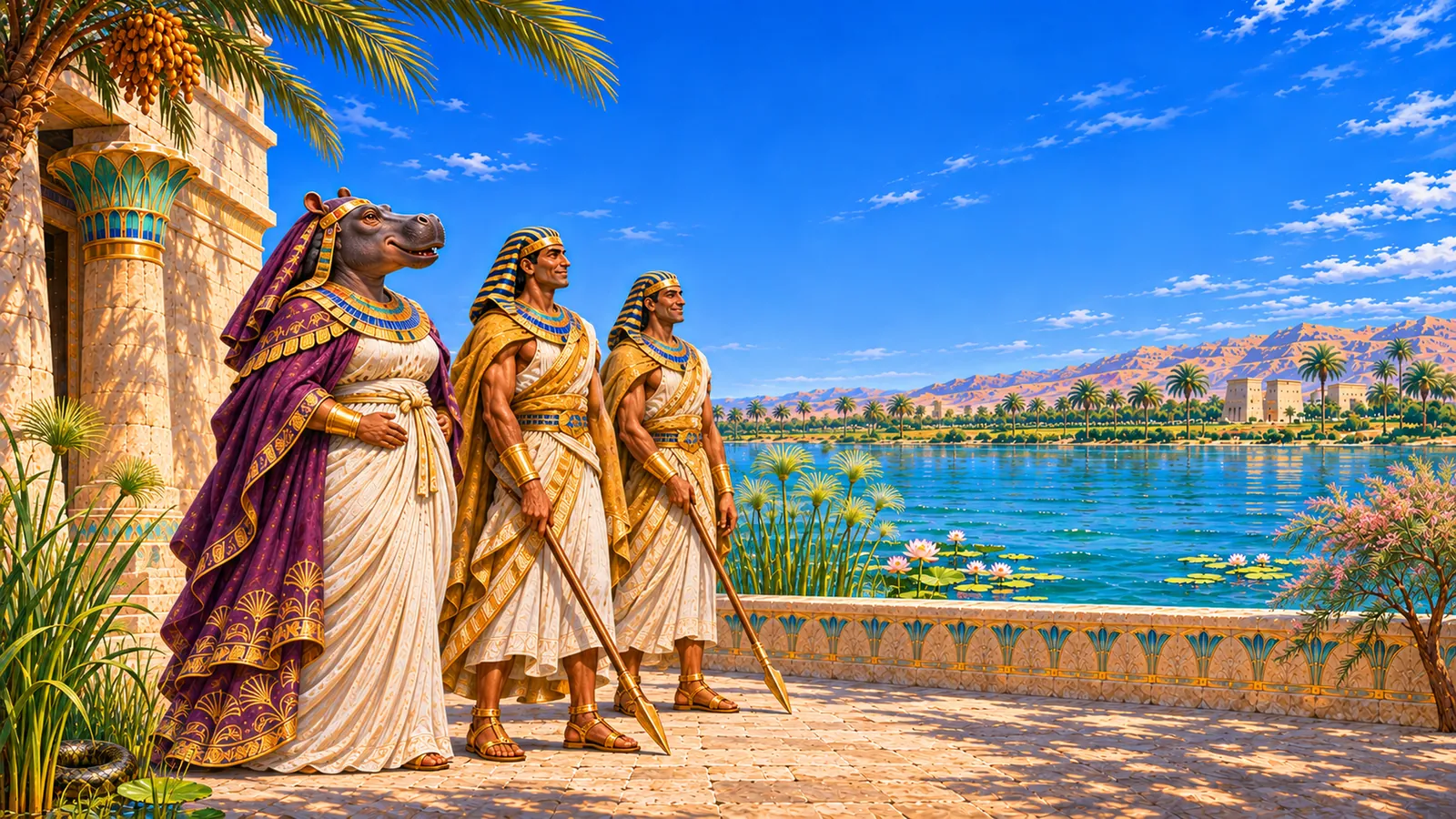
The account says that the soldiers accompanying Thueris killed the serpent that had pursued her.
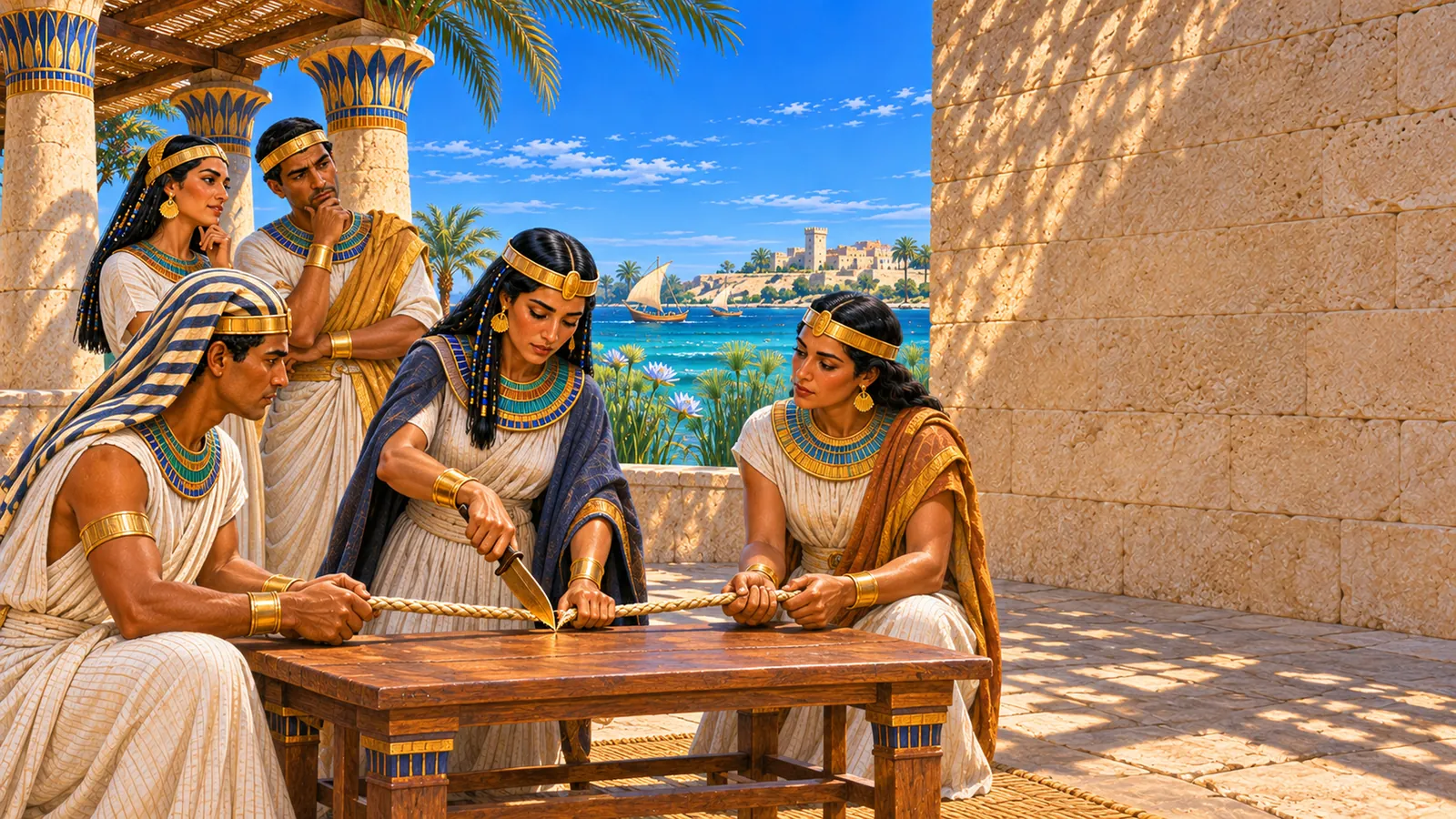
Plutarch links that event to a cord cut during certain gatherings. He says it was done in memory of the serpent’s death.
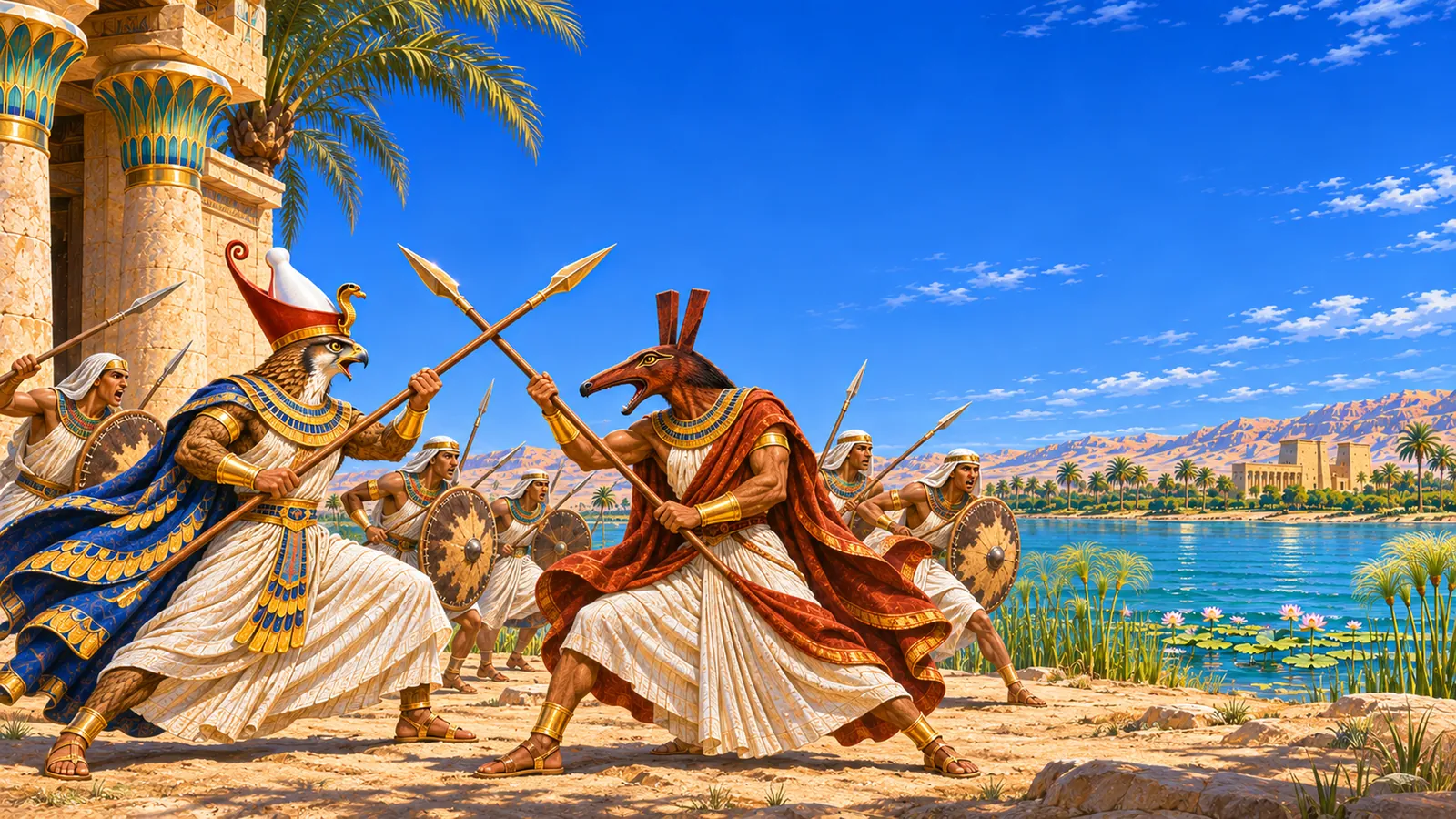
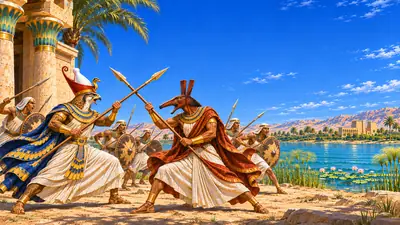
There was a battle between Horus and Set. In Plutarch’s account the fighting went on for many days.
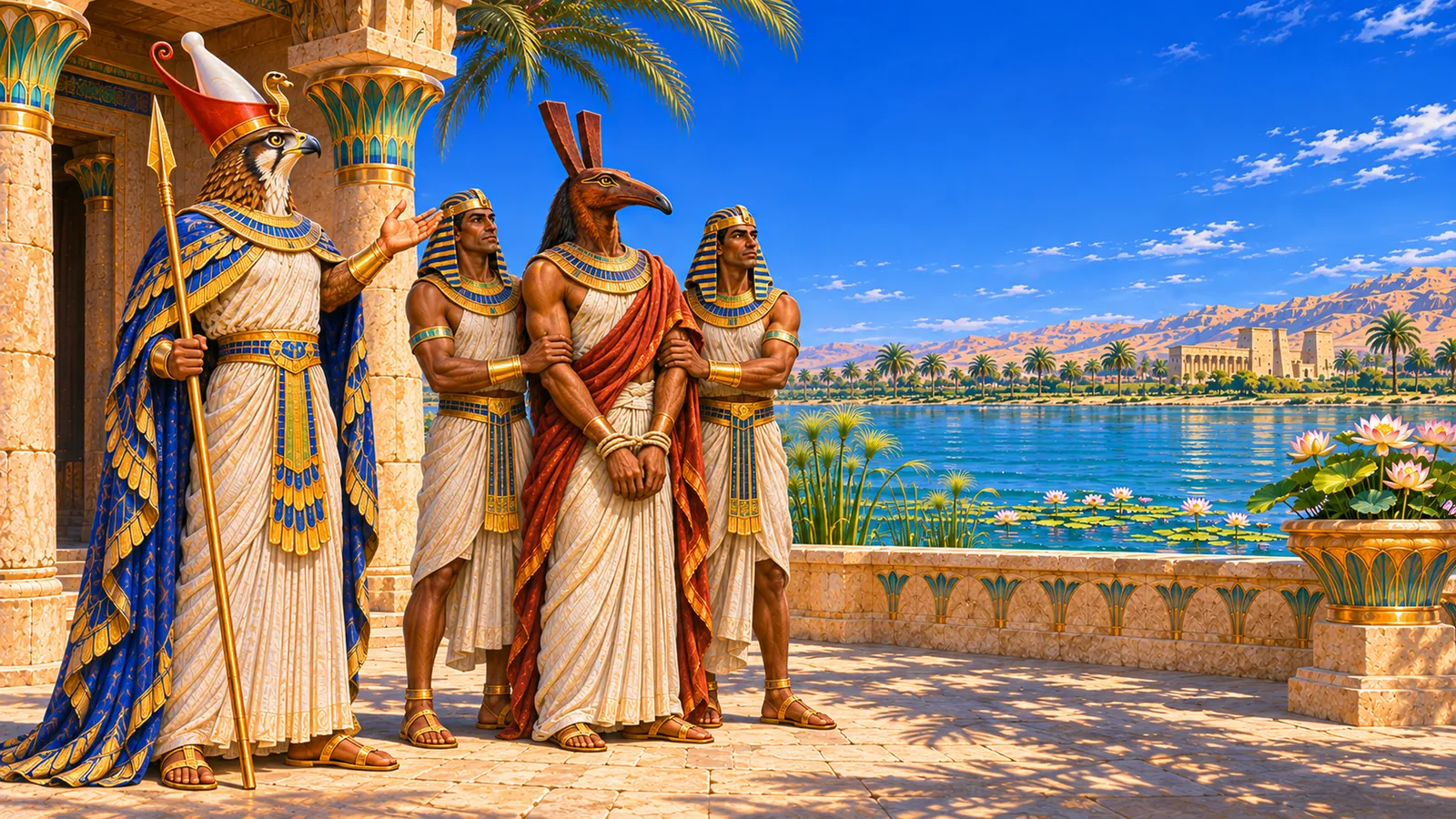
VICTORY
By the end of the battle, Plutarch says victory had gone to Horus and Set had been taken prisoner.
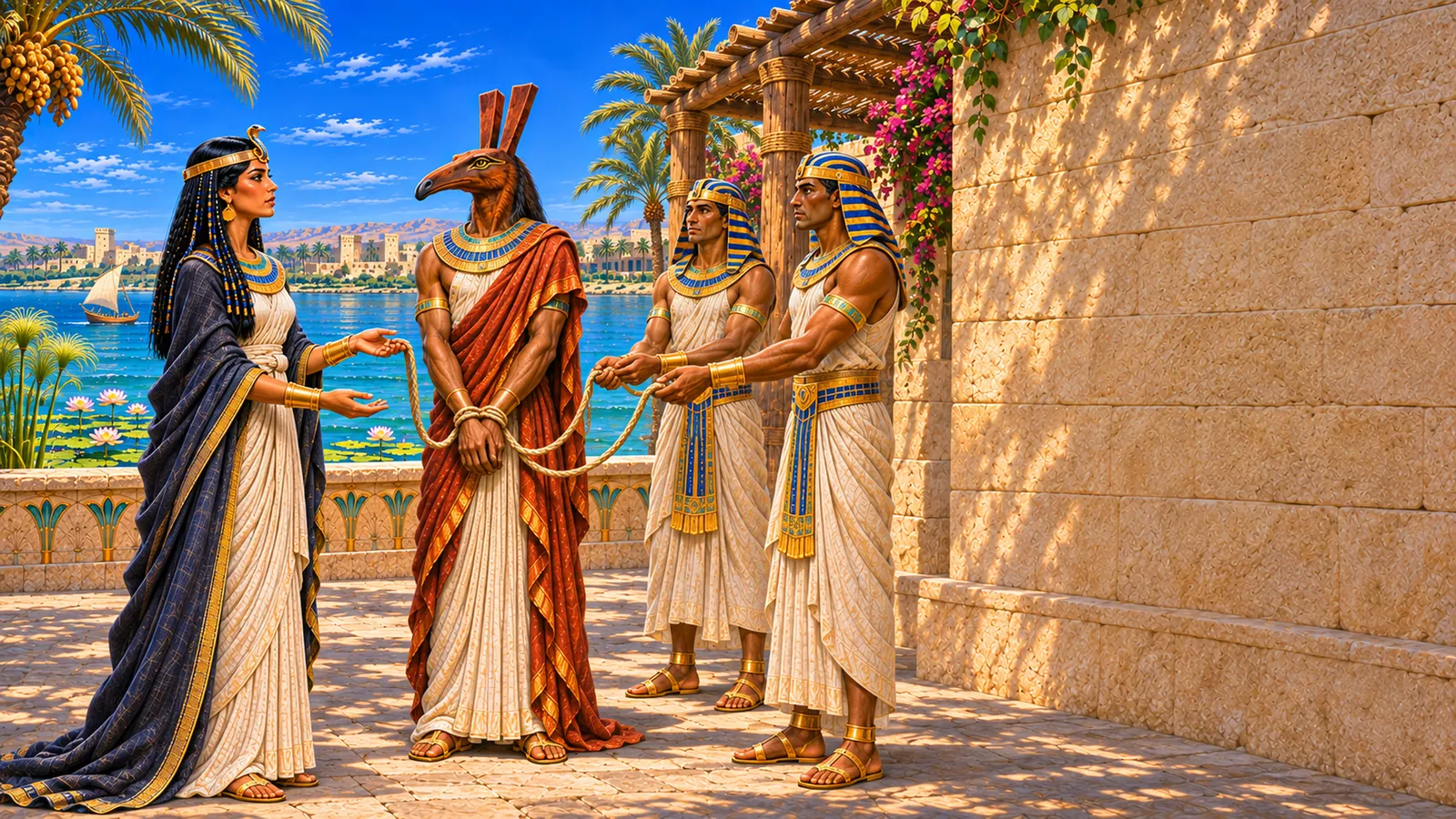
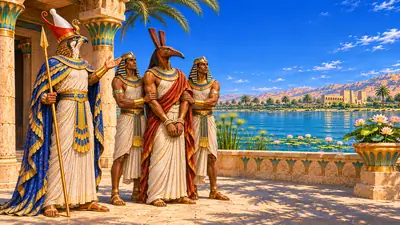
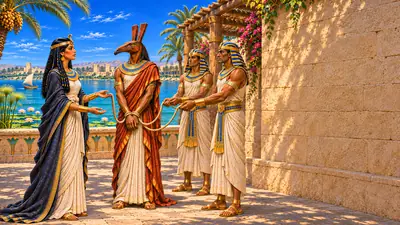
Set had been captured at the end of the battle. The story says that his captors handed him into Isis’s custody.
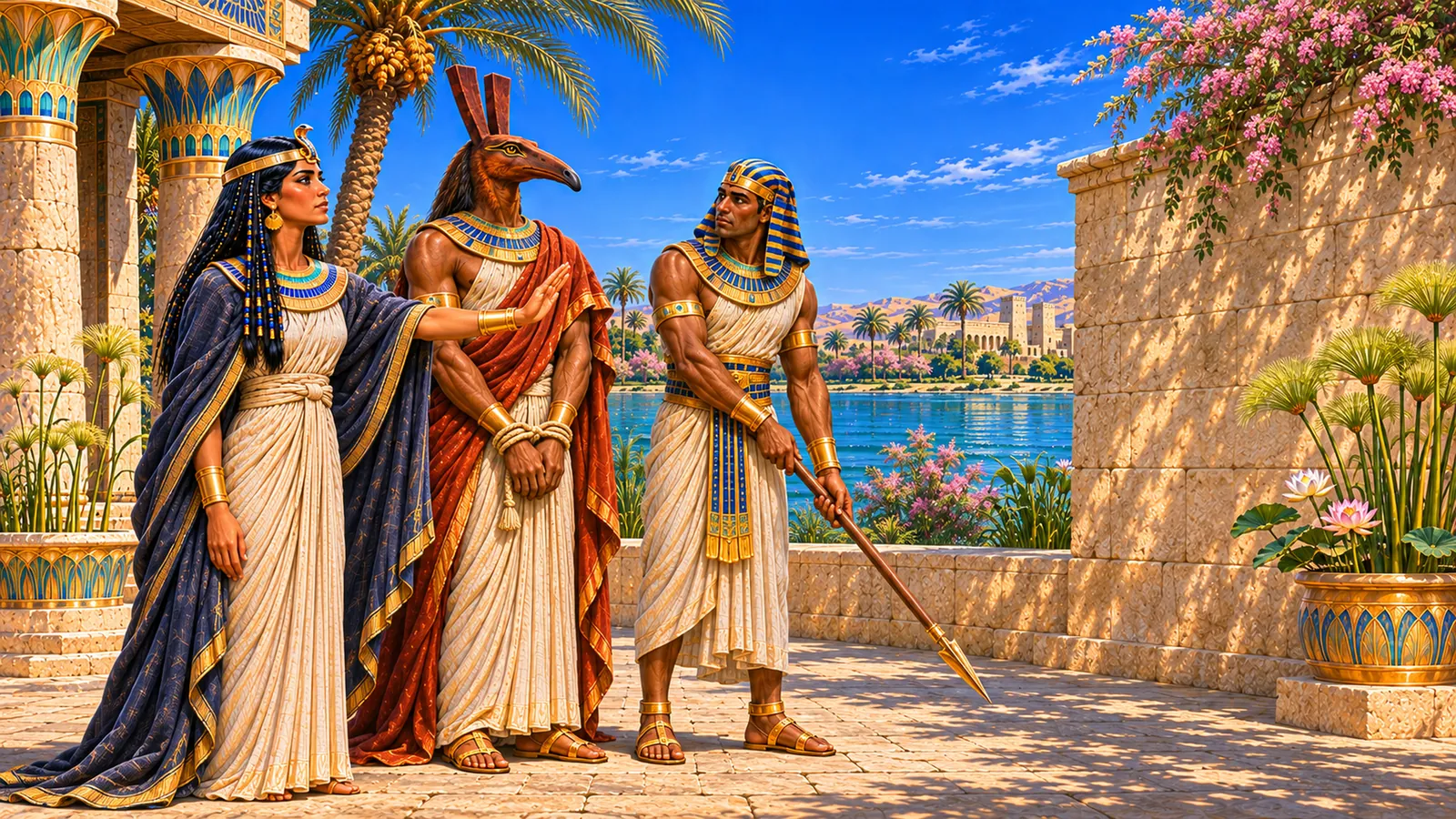
Set was now in Isis’s custody. Though she held him prisoner, the story says she did not put him to death.
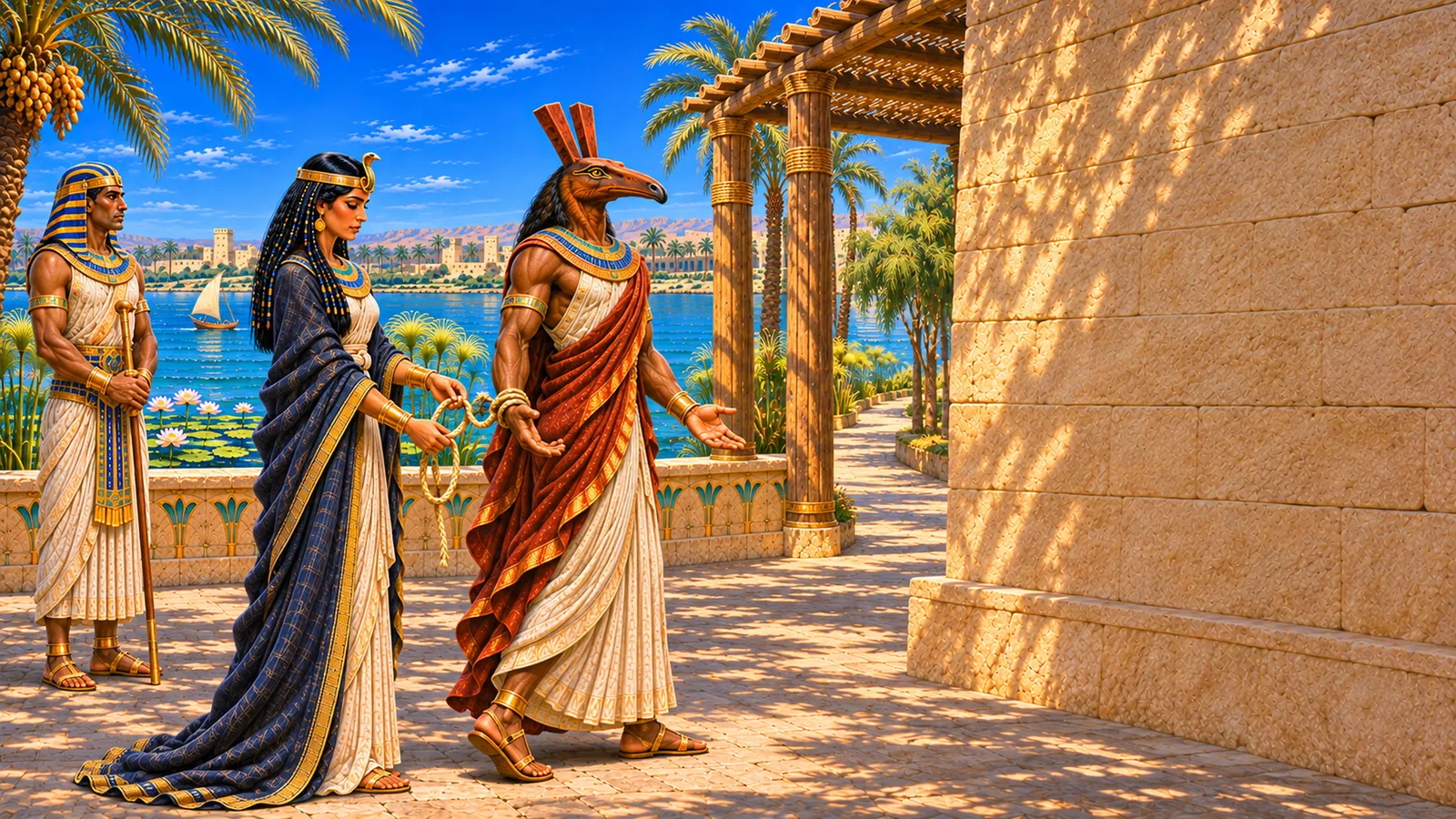
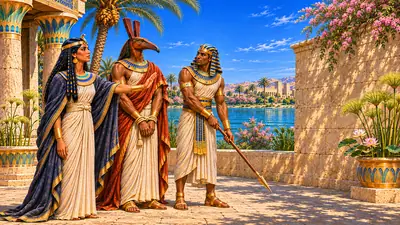
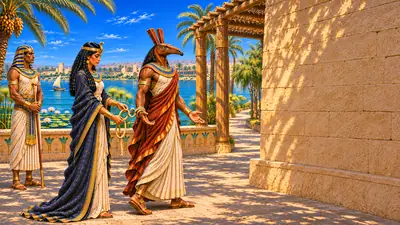
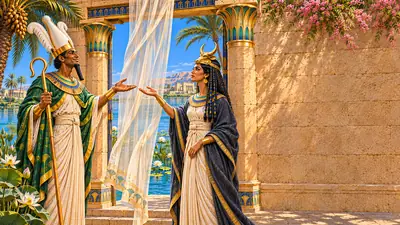
Isis went further than sparing his life. She released Set from his bonds and allowed him to go free.
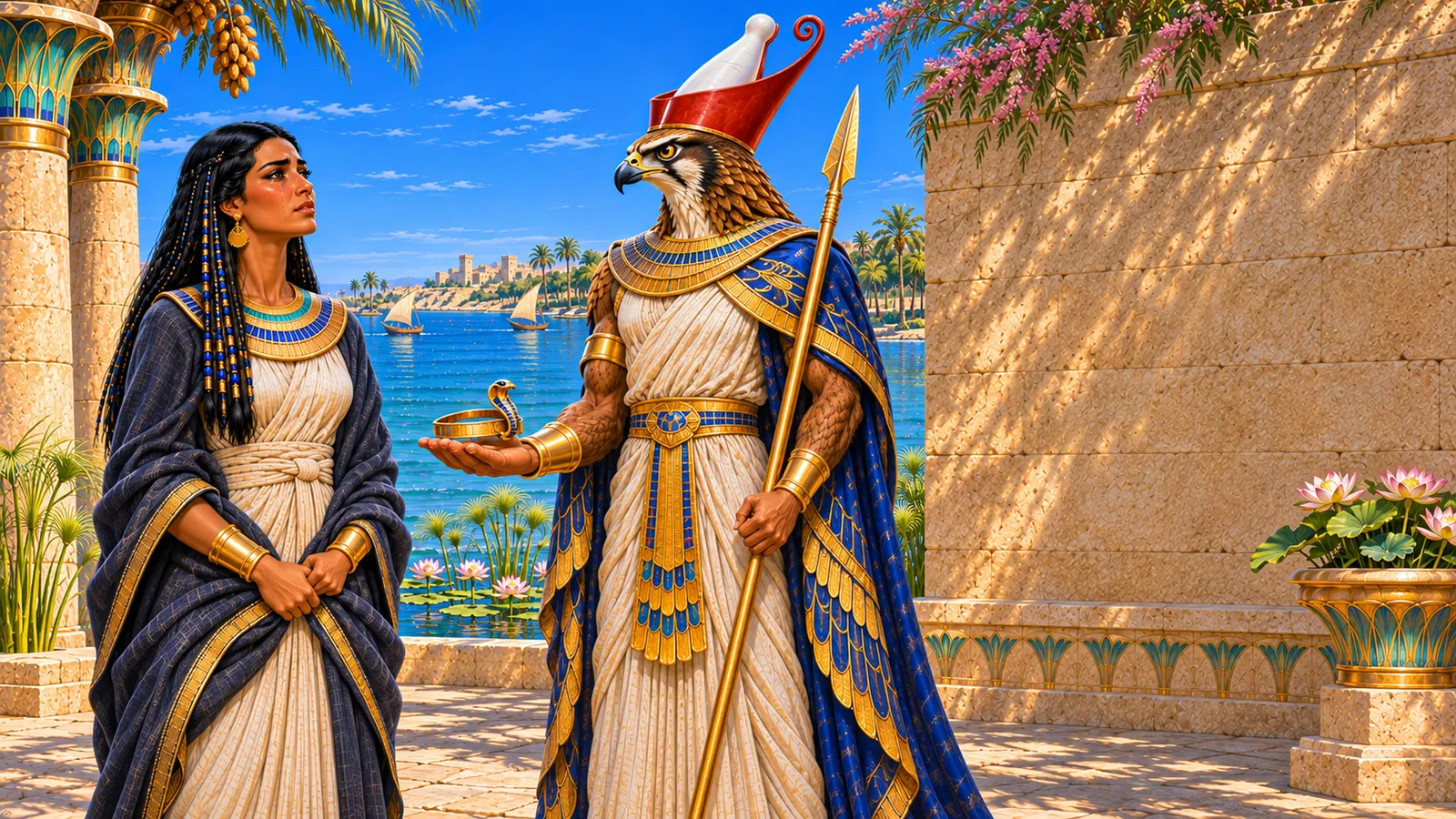
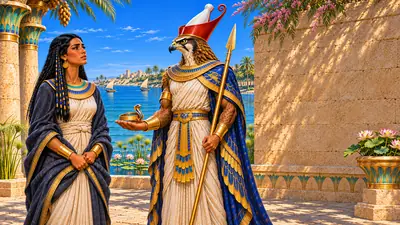
The release so enraged Horus that he laid hands on his mother. He pulled away the royal emblem she was wearing.
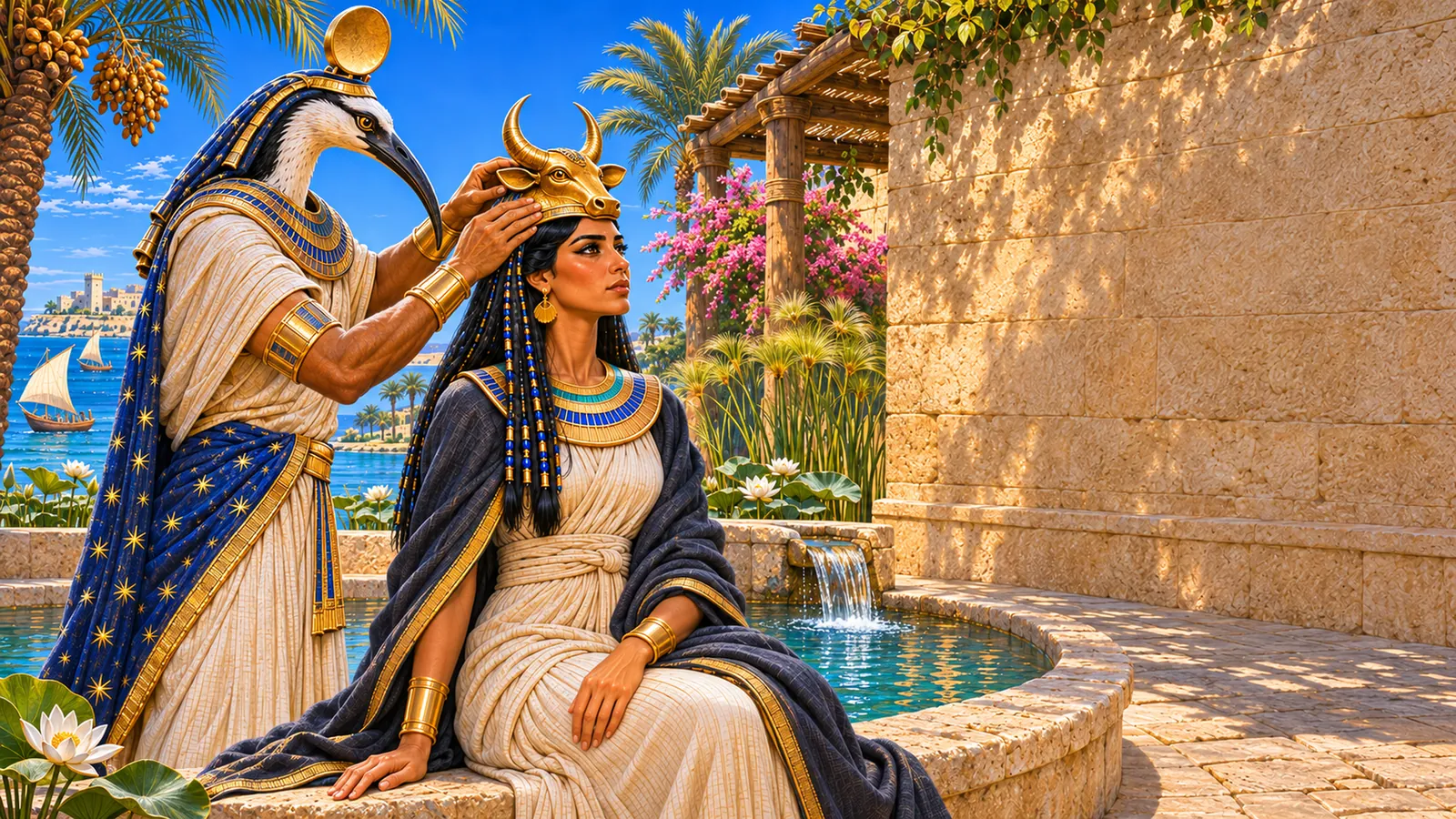
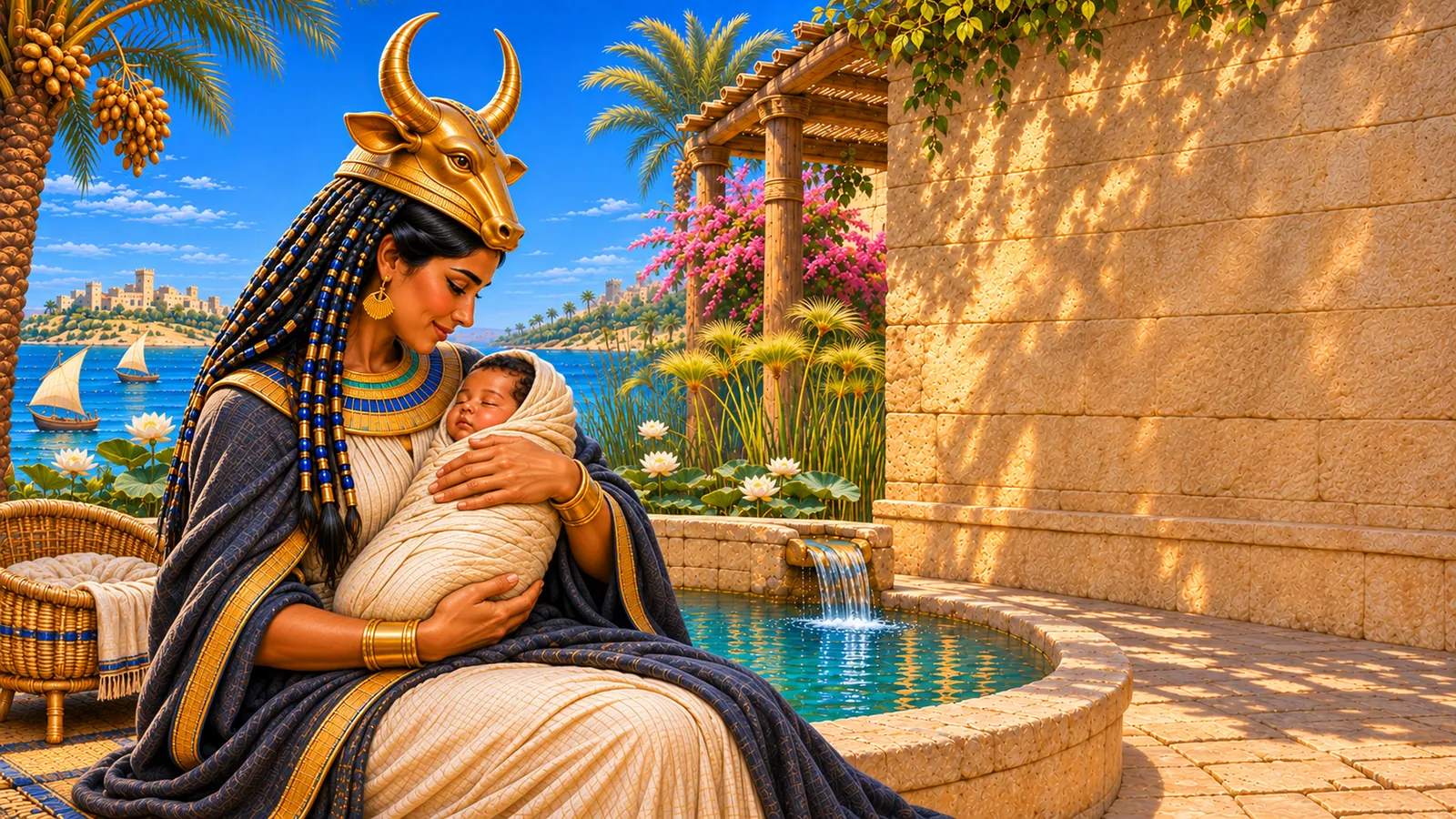
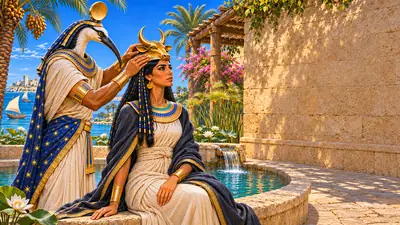
Thoth put another headdress in place of the royal emblem. The account describes it as a helmet in the shape of an ox’s head.
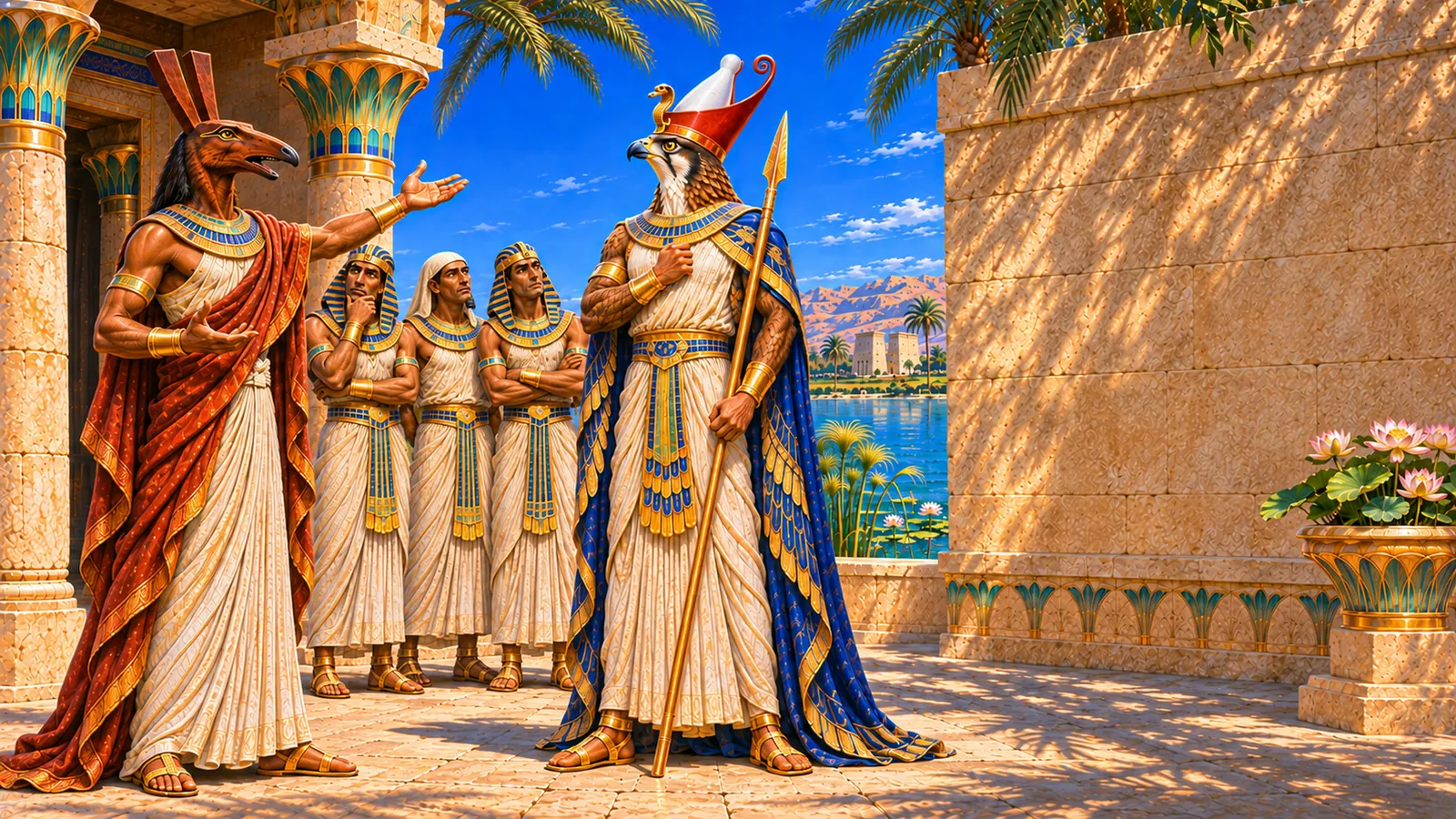
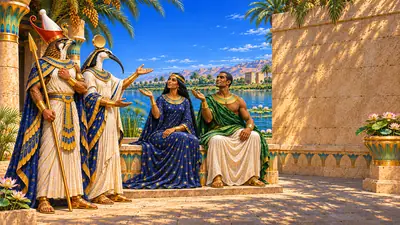
Set now turned to an accusation. In public, he claimed that Horus was an illegitimate child.
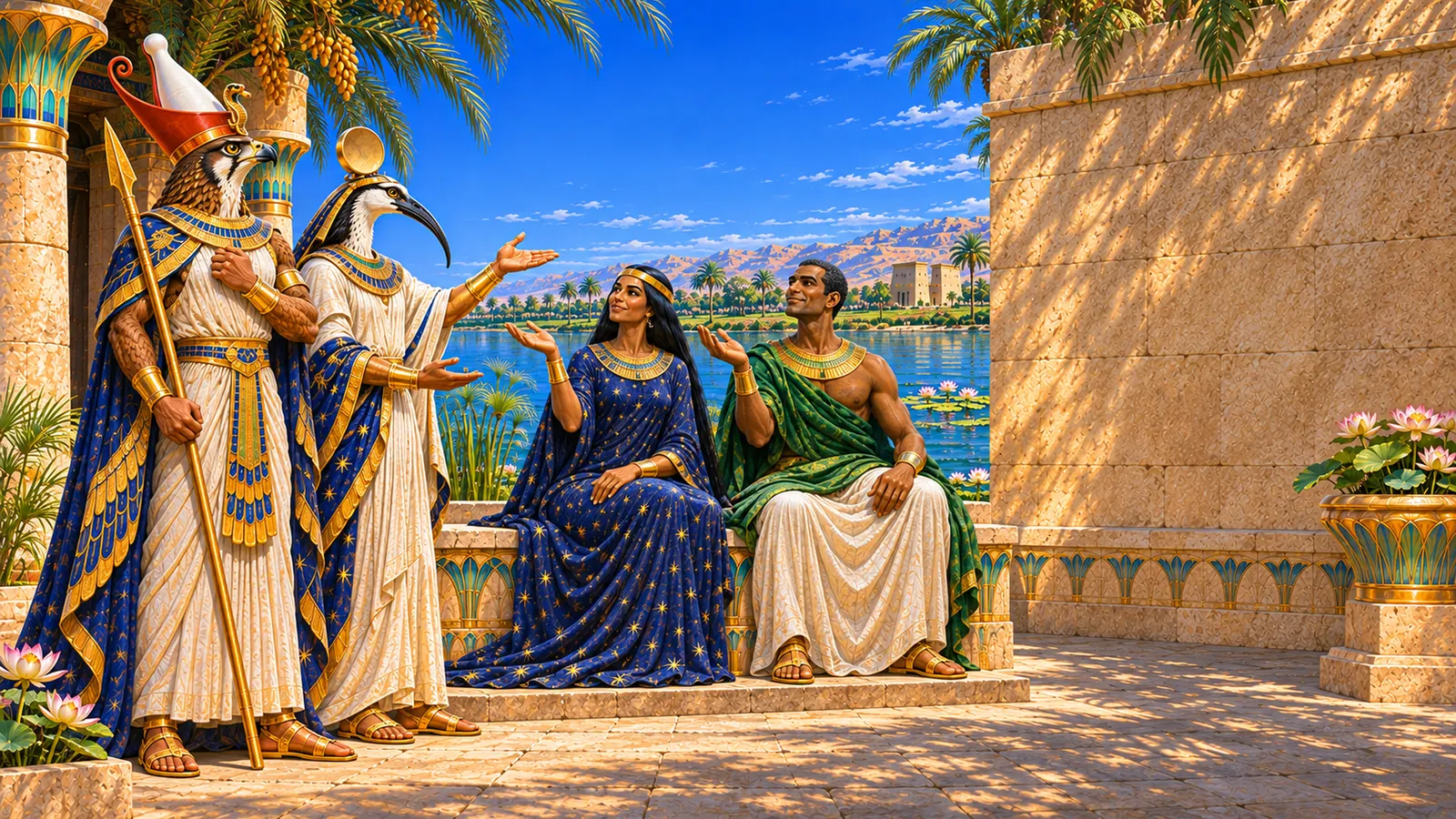
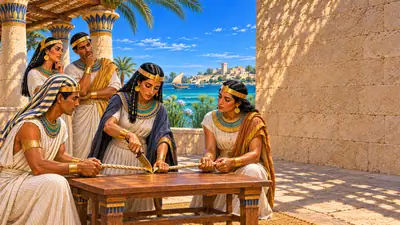
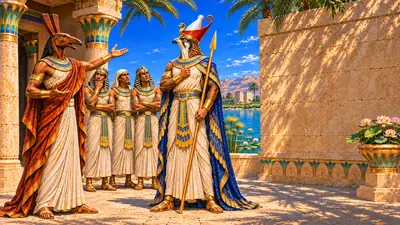
Thoth helped Horus answer the challenge. In the telling, the gods themselves rendered judgment and established that Horus was legitimate.
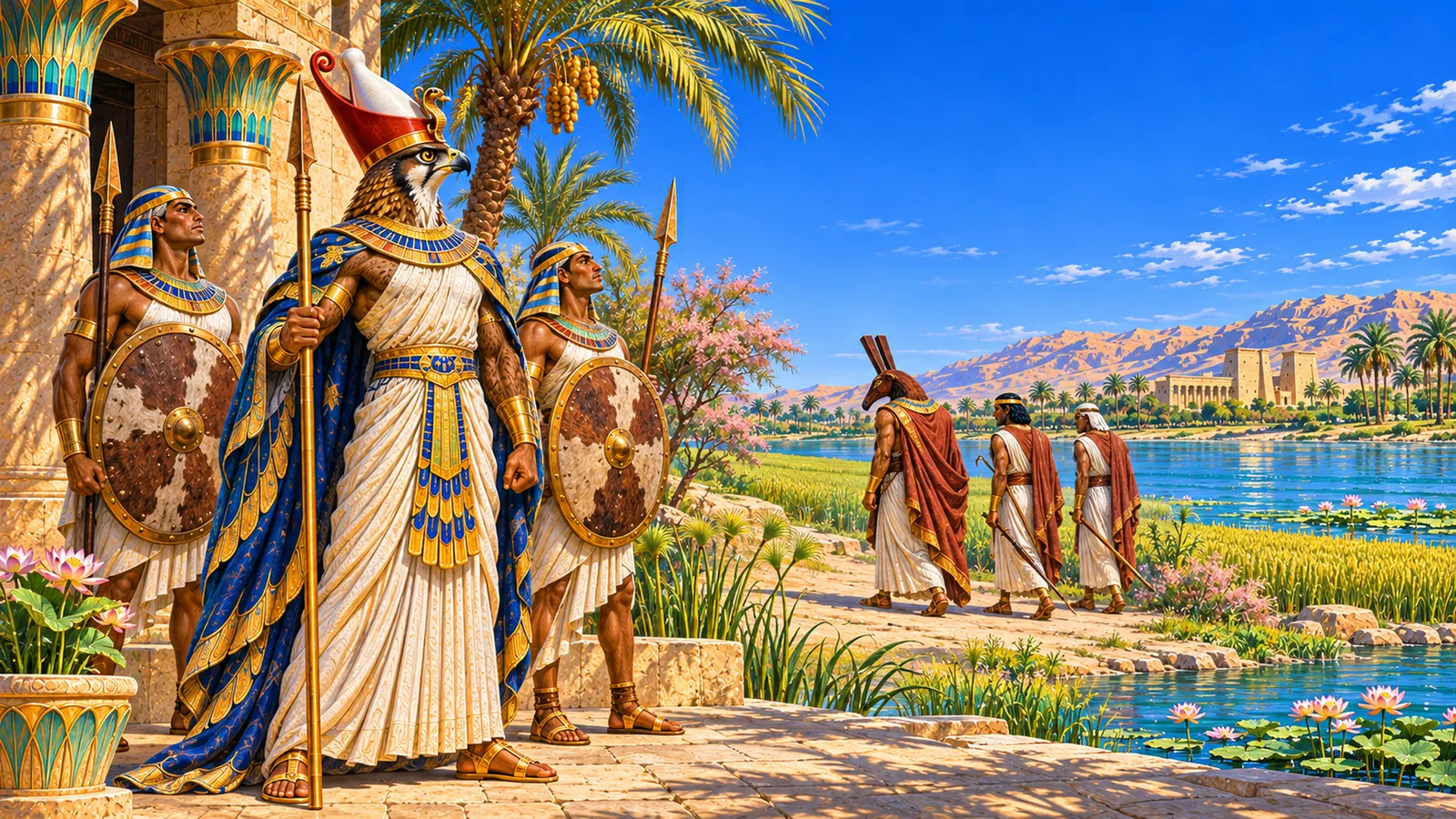
There were two more battles after the judgment. In both of them, the old account says, Set had the worse of it.
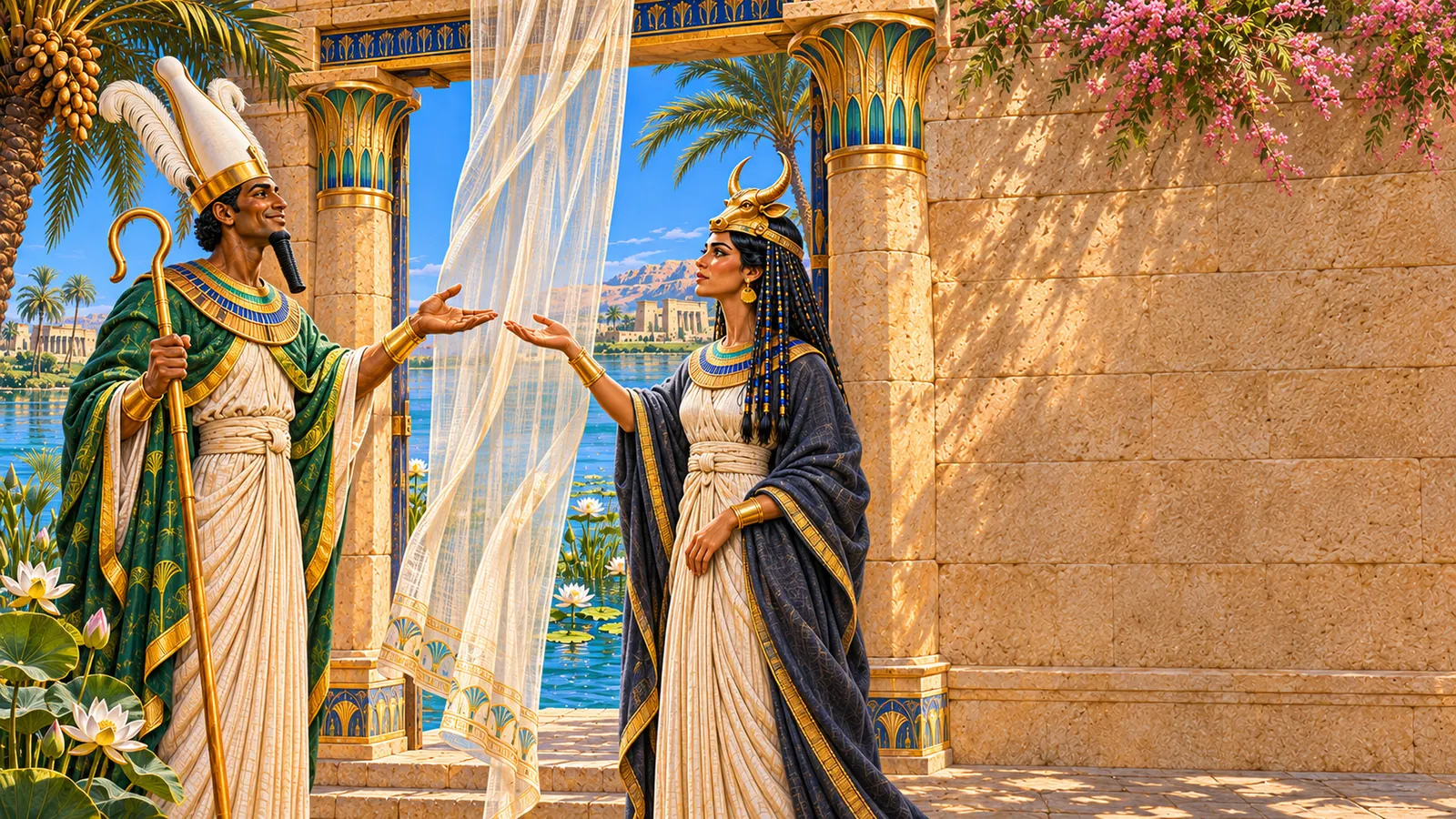
In the closing tradition, Isis is said to have slept with Osiris after his death. The story then turns to their child.
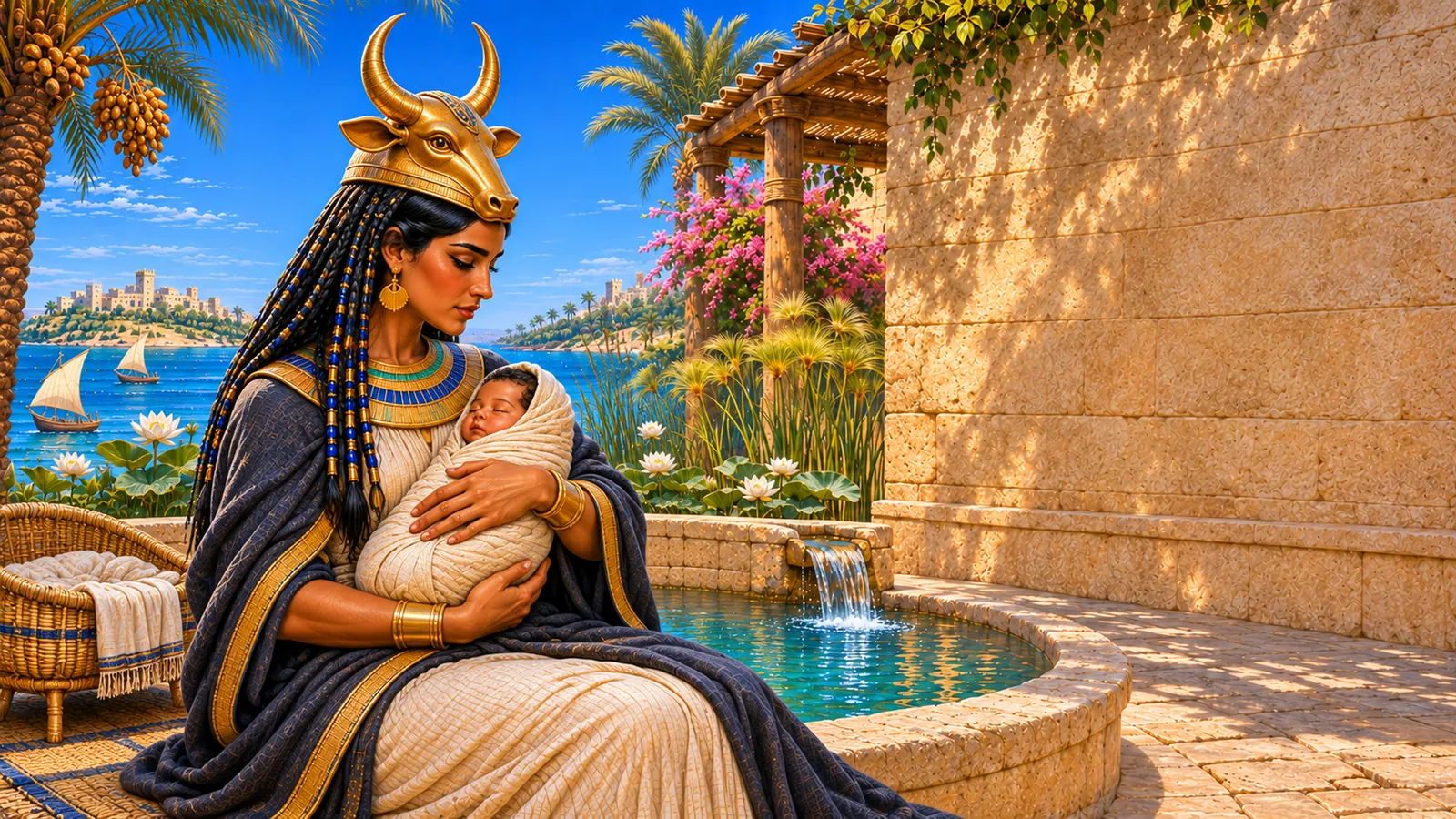
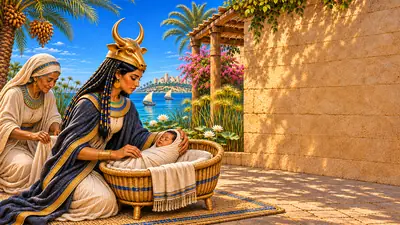
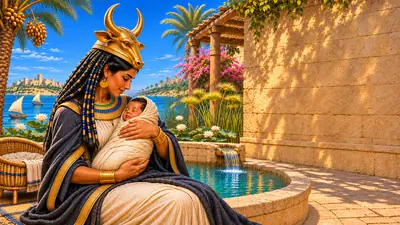
The account says that a child was born to Isis from this union. The name it gives him is Harpocrates.
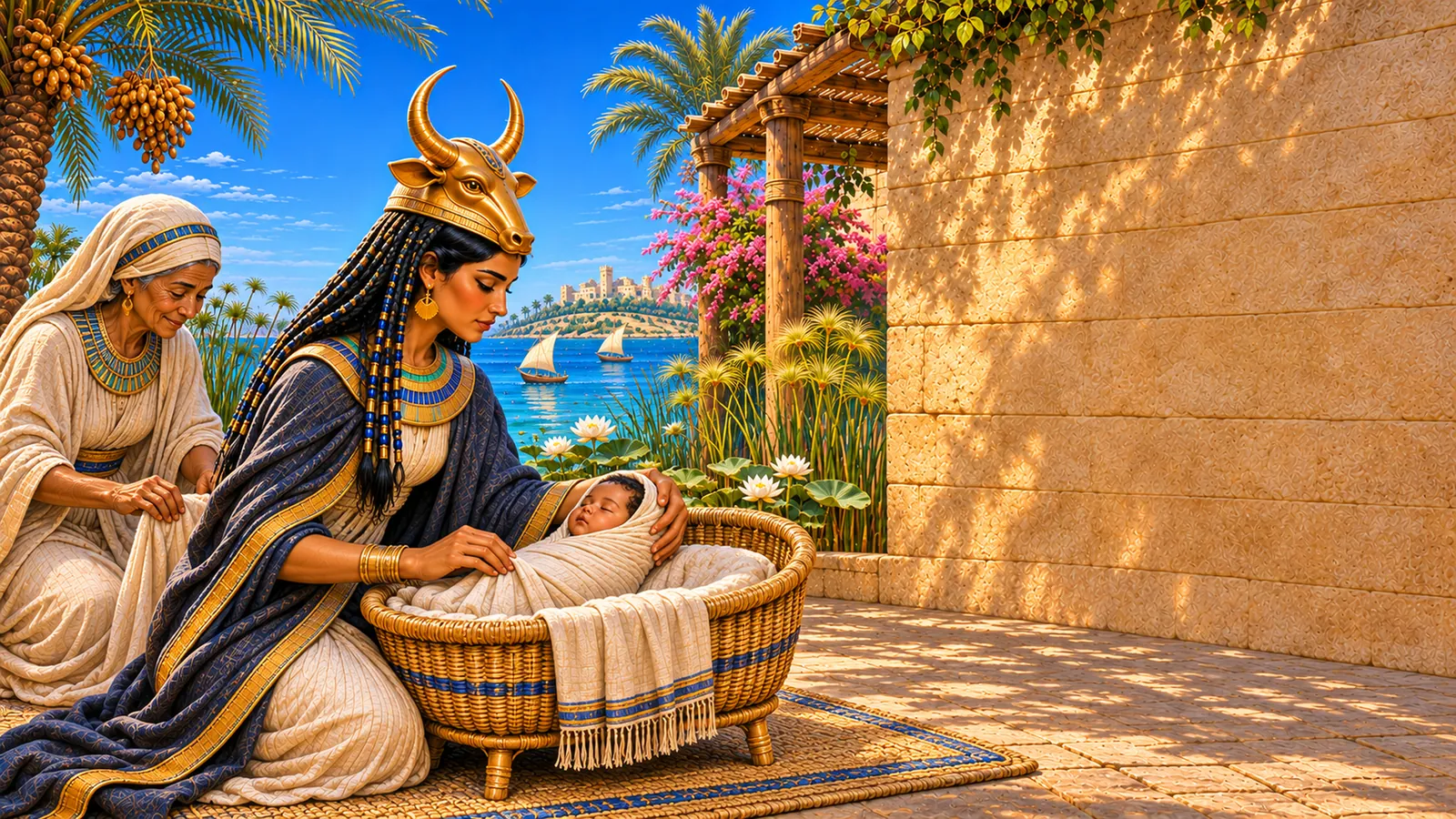
The account remembers the circumstances of this last birth. It says that Harpocrates came into the world before his time.
A NEW BIRTH
The teller ends by saying that Harpocrates was born with an impairment affecting his lower limbs. These are the closing words of this account.
End of chapter 3
All pages





Sources
Line positions in the page notes refer to the Project Gutenberg HTML of Budge’s edition. Literary claims about the safety of reed boats are part of the tale.
Editions consulted
- E. A. Wallis Budge, Egyptian Ideas of the Future Life, third edition, 1908, Chapter II
- Plutarch’s narrative in Samuel Squire’s translation, as quoted in Chapter II
- Budge’s note on the horse in Plutarch’s retelling
Notes on this retelling
### Pages 01–14 · The return to the marshes
Page 15 (Squire 1744 in Budge 1908, chapter II, HTML 1393–1396). He calls the likeness a “Phallus” and reports that the festival was still observed in the teller’s time.
Page 16 (1398–1400). Osiris appears to his son Orus, rendered Horus here, from the other world. He encourages his son for battle and, in Squire’s words, instructs him “in the exercise of arms.”
Pages 17–18 (1400–1403). Osiris asks what action would be most glorious. The cached wording has Orua at line 1402, with Orus in the surrounding dialogue.
Pages 19–20 (1403–1406). Osiris asks which animal would be most useful to a soldier. Horus names the horse. Osiris asks with surprise why he prefers it to the lion.
Pages 21–22 (1406–1412). Horus says the lion offers greater aid to a person needing help and the horse is more useful in pursuit. Osiris is pleased because he takes the answers as signs of readiness. Budge adds a separate chronological comment about the horse in footnote 53.
Pages 23–24 (1412–1415). The teller describes many people leaving Typho’s side. Thueris is among them. Squire calls her Typho’s concubine. In the account, a serpent pursues her when she goes over to Orus.
Pages 25–26 (1414–1417). The soldiers accompanying Thueris kill the serpent. Plutarch connects the event with a cord cut at assemblies as a remembrance.
Pages 27–28 (1417–1419). The first battle between Horus and Set continues for many days. Victory ultimately goes to Horus, and Set is taken prisoner. The next source lines concern what Isis does after Set is placed in her custody.
### Pages 29–40 · Isis, the judgment, and the last birth
Ancient lines behind each page
- Page 1: Plutarch, Squire 1744 as printed by Budge 1908, Chapter II, HTML lines 1362–1364
- Page 2: Plutarch, Squire 1744 as printed by Budge 1908, Chapter II, HTML lines 1363–1364
- Page 3: Plutarch, Squire 1744 as printed by Budge 1908, Chapter II, HTML lines 1364–1366
- Page 4: Plutarch, Squire 1744 as printed by Budge 1908, Chapter II, HTML lines 1365–1367
- Page 5: Plutarch, Squire 1744 as printed by Budge 1908, Chapter II, HTML lines 1368–1370
- Page 6: Plutarch, Squire 1744 as printed by Budge 1908, Chapter II, HTML lines 1369–1371
- Page 7: Plutarch, Squire 1744 as printed by Budge 1908, Chapter II, HTML lines 1371–1374
- Page 8: Plutarch, Squire 1744 as printed by Budge 1908, Chapter II, HTML lines 1374–1377
- Page 9: Plutarch, Squire 1744 as printed by Budge 1908, Chapter II, HTML lines 1376–1378
- Page 10: Plutarch, Squire 1744 as printed by Budge 1908, Chapter II, HTML lines 1378–1382
- Page 11: Plutarch, Squire 1744 as printed by Budge 1908, Chapter II, HTML lines 1381–1384
- Page 12: Plutarch, Squire 1744 as printed by Budge 1908, Chapter II, HTML lines 1384–1387
- Page 13: Plutarch, Squire 1744 as printed by Budge 1908, Chapter II, HTML lines 1387–1391
- Page 14: Plutarch, Squire 1744 as printed by Budge 1908, Chapter II, HTML lines 1390–1393
- Page 15: Plutarch, Squire 1744 in Budge 1908, chapter II, HTML 1393–1396
- Page 16: Plutarch, Squire 1744 in Budge 1908, chapter II, HTML 1398–1400
- Page 17: Plutarch, Squire 1744 in Budge 1908, chapter II, HTML 1400–1401
- Page 18: Plutarch, Squire 1744 in Budge 1908, chapter II, HTML 1401–1403
- Page 19: Plutarch, Squire 1744 in Budge 1908, chapter II, HTML 1403–1404
- Page 20: Plutarch, Squire 1744 in Budge 1908, chapter II, HTML 1404–1406
- Page 21: Plutarch, Squire 1744 in Budge 1908, chapter II, HTML 1406–1410
- Page 22: Plutarch, Squire 1744 in Budge 1908, chapter II, HTML 1410–1412
- Page 23: Plutarch, Squire 1744 in Budge 1908, chapter II, HTML 1412–1414
- Page 24: Plutarch, Squire 1744 in Budge 1908, chapter II, HTML 1413–1415
- Page 25: Plutarch, Squire 1744 in Budge 1908, chapter II, HTML 1414–1416
- Page 26: Plutarch, Squire 1744 in Budge 1908, chapter II, HTML 1415–1417
- Page 27: Plutarch, Squire 1744 in Budge 1908, chapter II, HTML 1417–1419
- Page 28: Plutarch, Squire 1744 in Budge 1908, chapter II, HTML 1418–1419
- Page 29: Plutarch, Squire 1744 as printed by Budge 1908, Chapter II, HTML lines 1419–1420
- Page 30: Plutarch, Squire 1744 as printed by Budge 1908, Chapter II, HTML lines 1419–1421
- Page 31: Plutarch, Squire 1744 as printed by Budge 1908, Chapter II, HTML lines 1420–1421
- Page 32: Plutarch, Squire 1744 as printed by Budge 1908, Chapter II, HTML lines 1422–1424
- Page 33: Plutarch, Squire 1744 as printed by Budge 1908, Chapter II, HTML lines 1423–1425
Broken reflected sunlight picks out a thin copper edge of floor; right side ancient matte lapis plaster uninterrupted. - Page 34: Plutarch, Squire 1744 as printed by Budge 1908, Chapter II, HTML lines 1425–1426
- Page 35: Plutarch, Squire 1744 as printed by Budge 1908, Chapter II, HTML lines 1426–1427
- Page 36: Plutarch, Squire 1744 as printed by Budge 1908, Chapter II, HTML lines 1427–1429
- Page 37: Plutarch, Squire 1744 as printed by Budge 1908, Chapter II, HTML lines 1429–1430
- Page 38: Plutarch, Squire 1744 as printed by Budge 1908, Chapter II, HTML lines 1430–1431
- Page 39: Plutarch, Squire 1744 as printed by Budge 1908, Chapter II, HTML lines 1431–1432
- Page 40: Plutarch, Squire 1744 as printed by Budge 1908, Chapter II, HTML lines 1431–1432
Illustrations made with AI tools by IL Archive; the text is based on the ancient sources (see the sources at the end of each chapter).