The Last King of Ur Chapter 1
Grain for Ur
The grain waits at Isin while Ishbi-Erra asks for boats. Ibbi-Sin challenges his price, and the governor of Kazallu reports new demands. A later account and a poem remember what happened when the kingdom of Ur fell.
SourcesTurn the pages with the arrows, the arrow keys or a swipe.
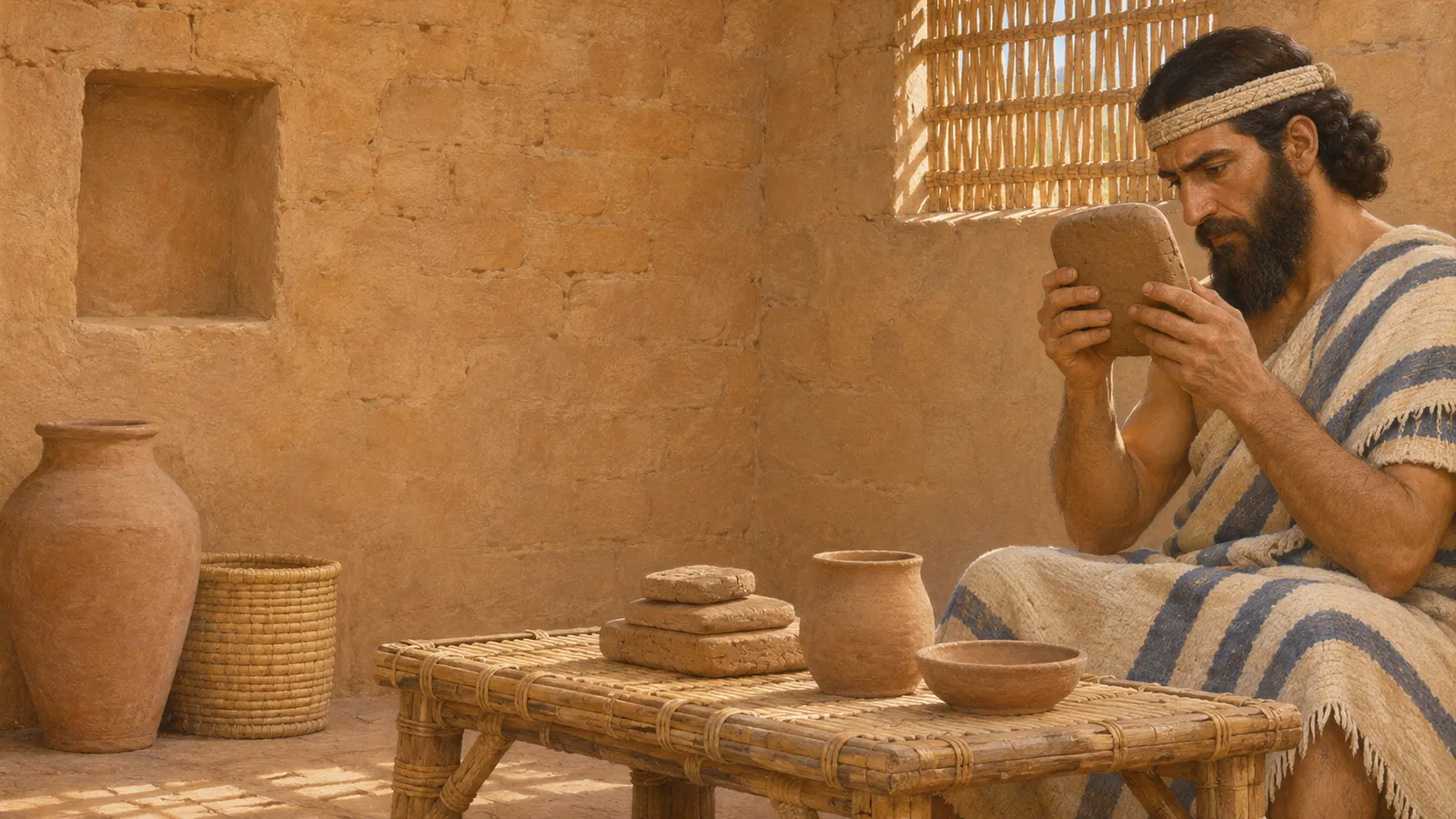
UR
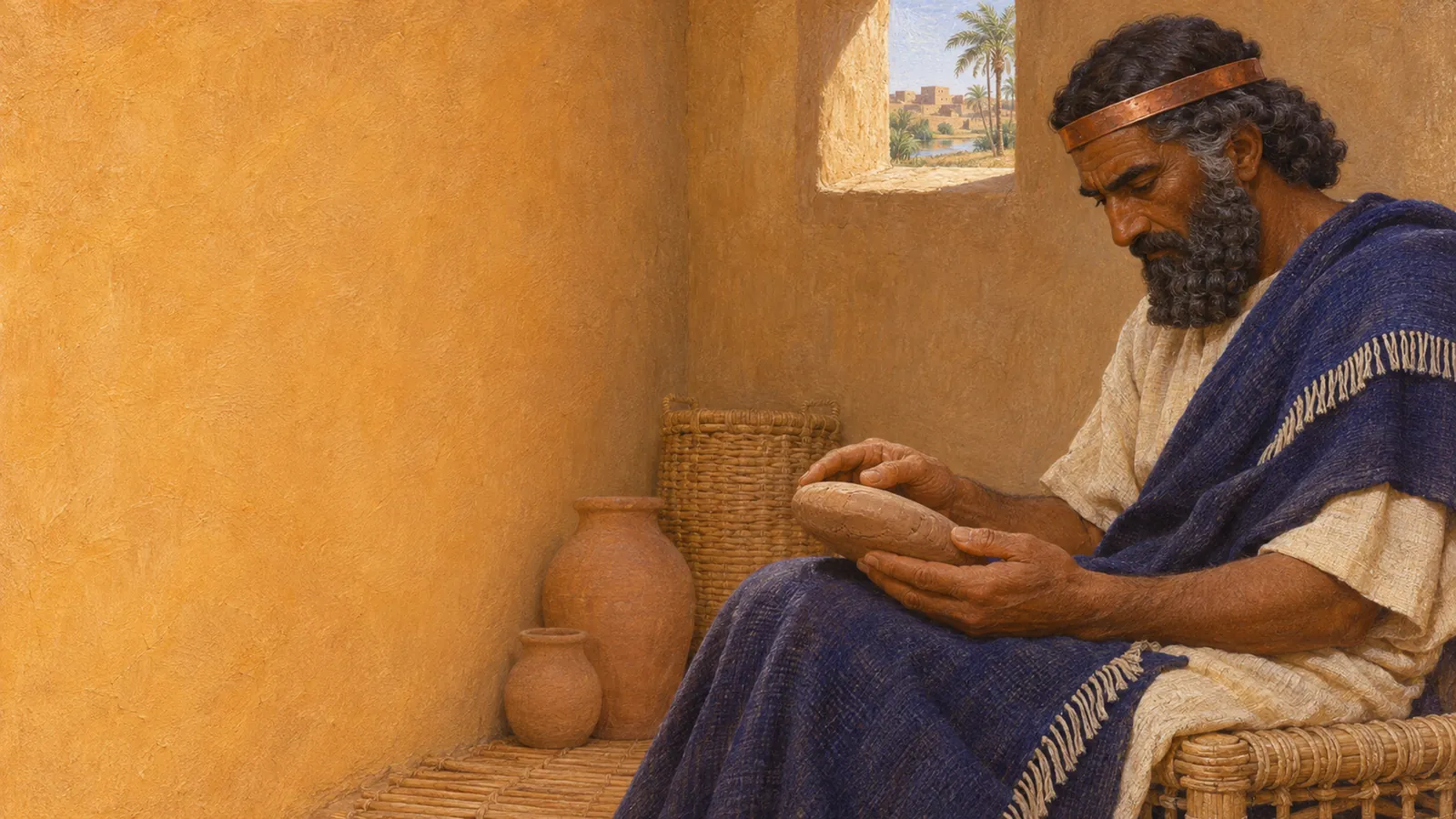
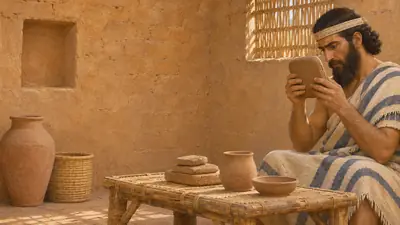
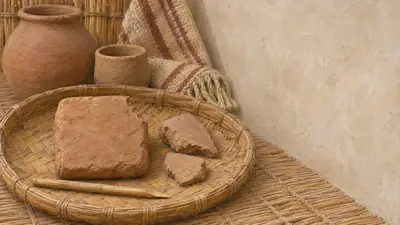
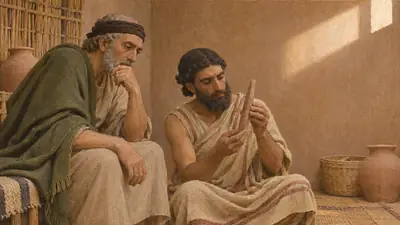
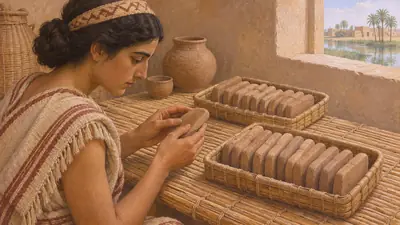
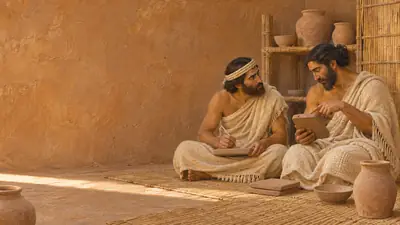
Long after the kings of Ur, scribes copied letters written in their names. One clay tablet from the Old Babylonian period preserves parts of all four letters told here.
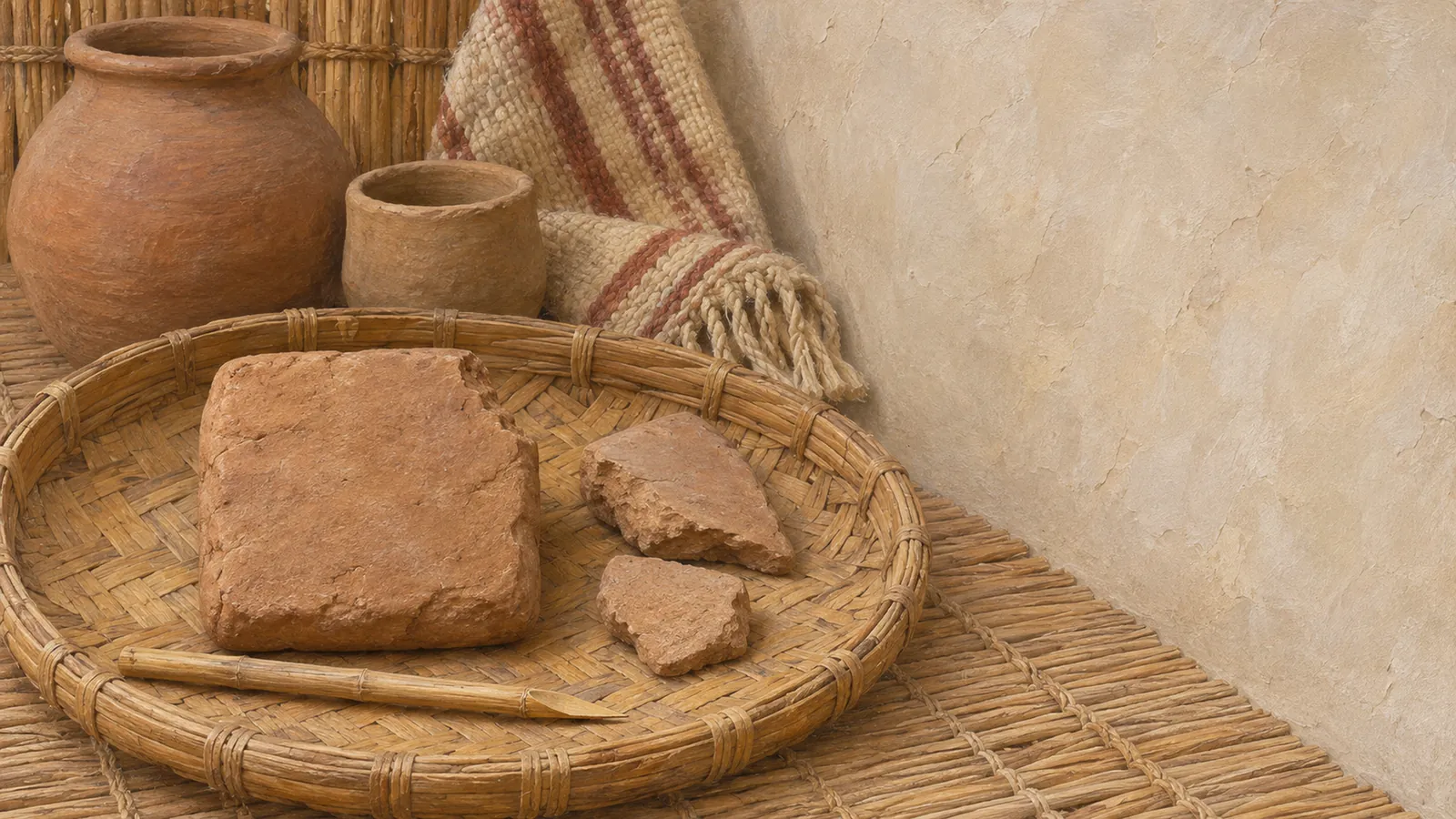
Its findspot is uncertain. The tablet is now in Chicago. Scholars identify passages from each of the four texts on the same piece of clay, with the king’s voice heard twice.
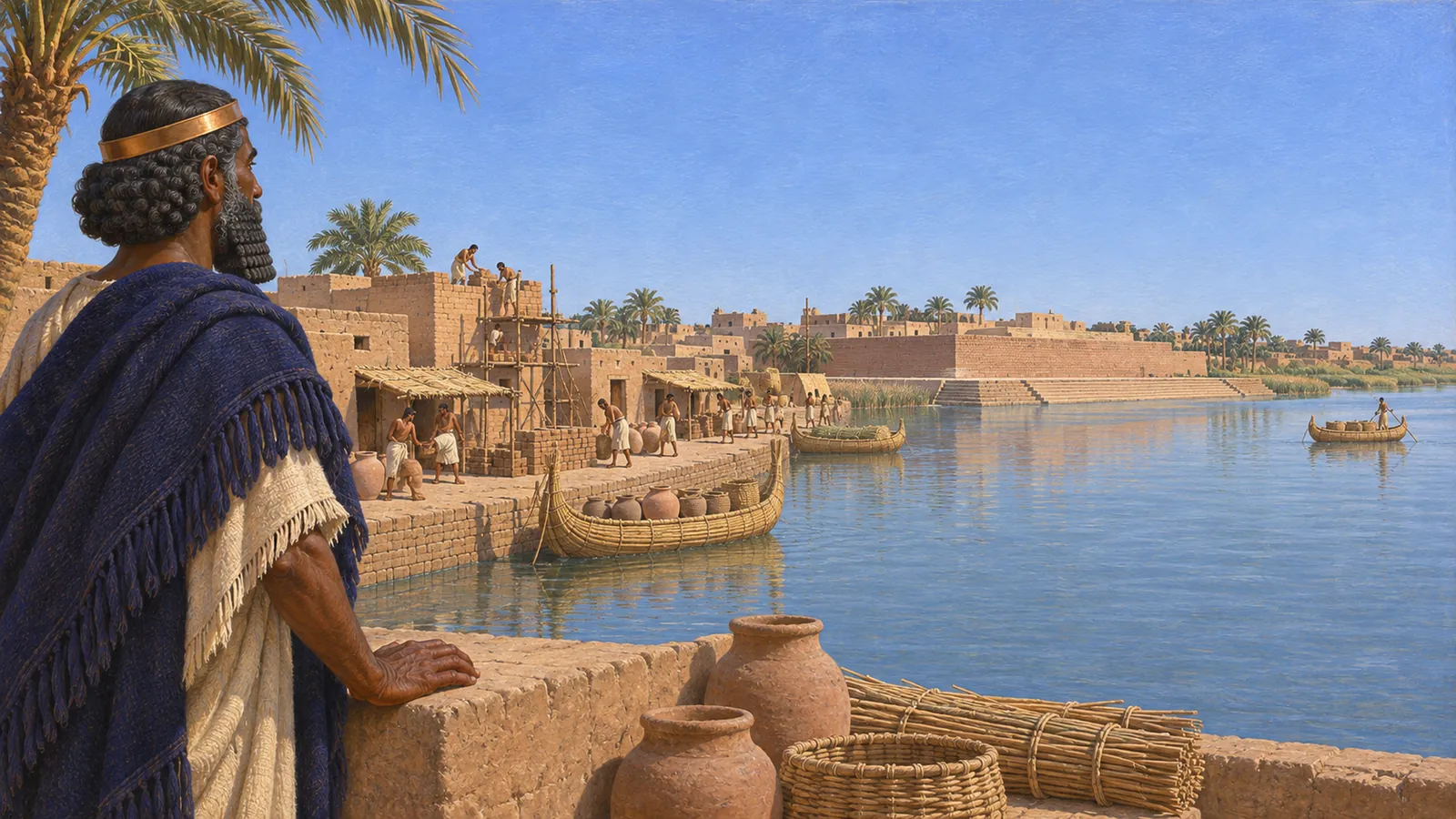
Ibbi-Sin was the last king of the Third Dynasty of Ur. Around the turn of the second millennium BCE, his kingdom faced growing pressures. The letters imagine how those pressures sounded at court.
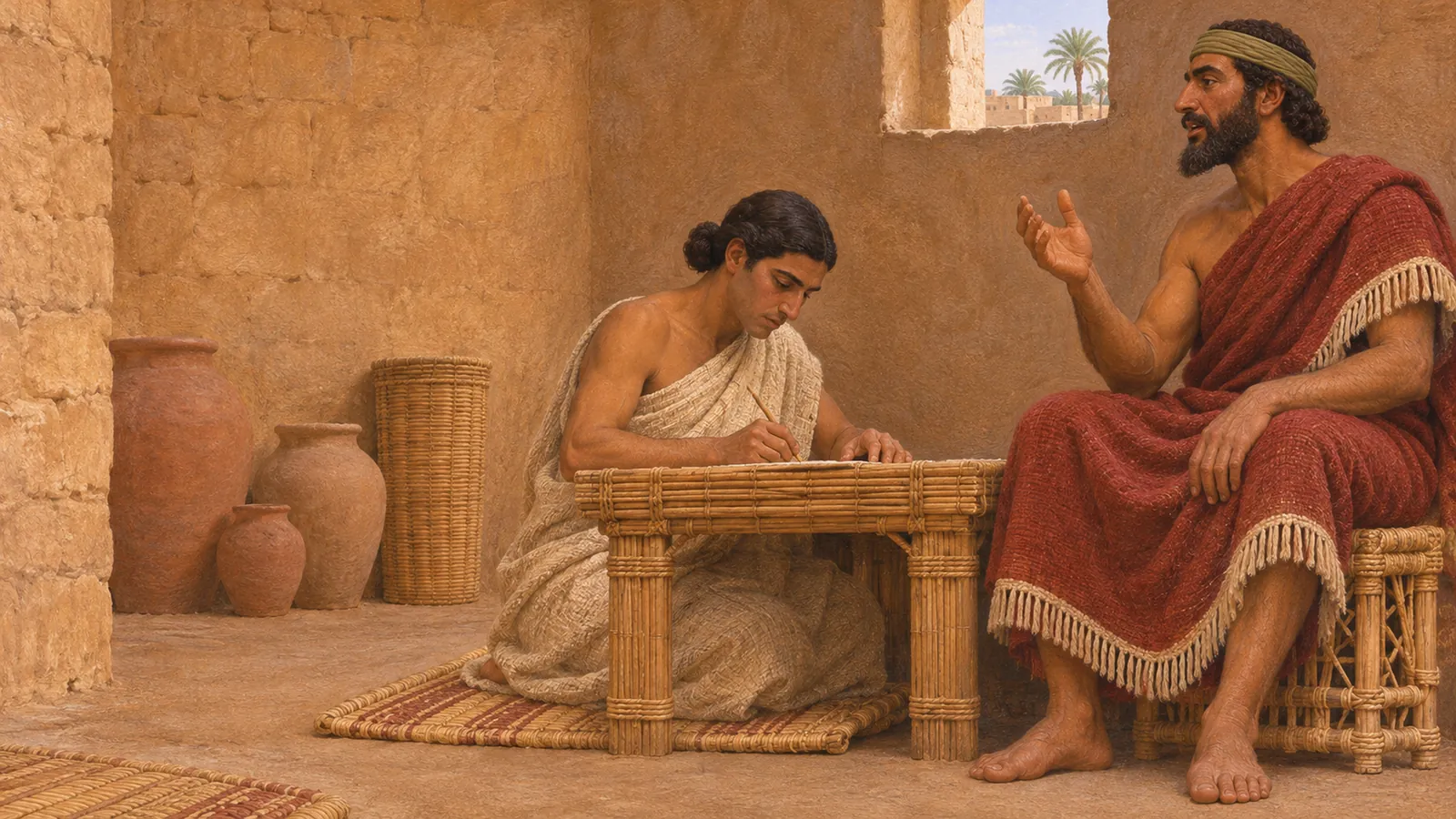
GRAIN
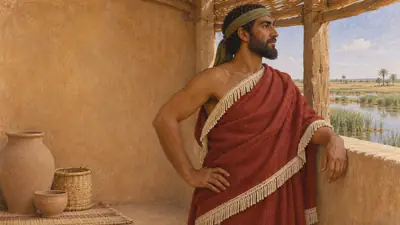
The first letter concerns grain. Ishbi-Erra addresses Ibbi-Sin with the words of a servant to his lord. By the end of the letter the subordinate will ask for charge of two cities.
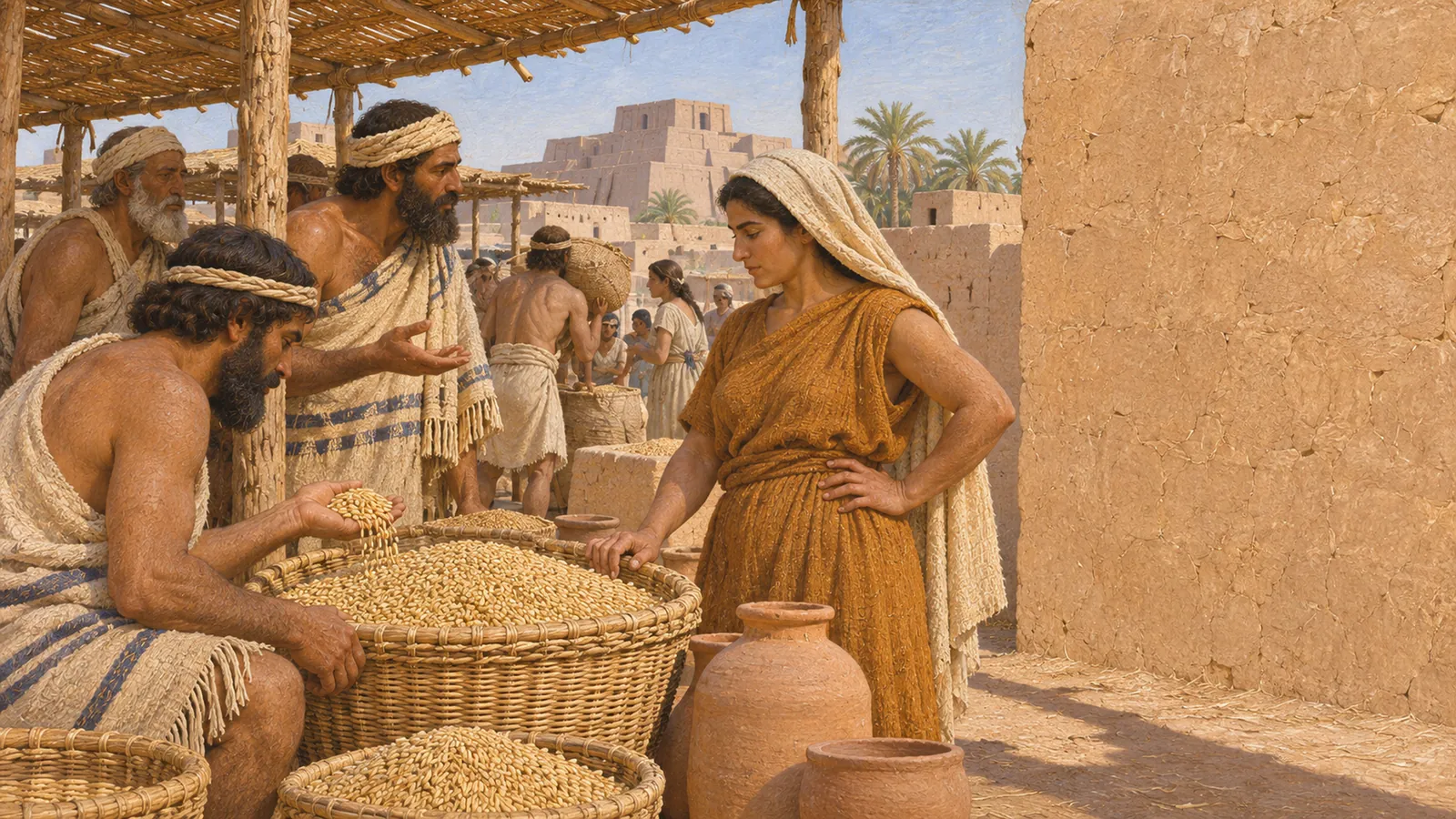
Ishbi-Erra reminds the king that he sent him to buy grain around Isin and Kazallu. The transaction will soon be described in two different ways by the two men.
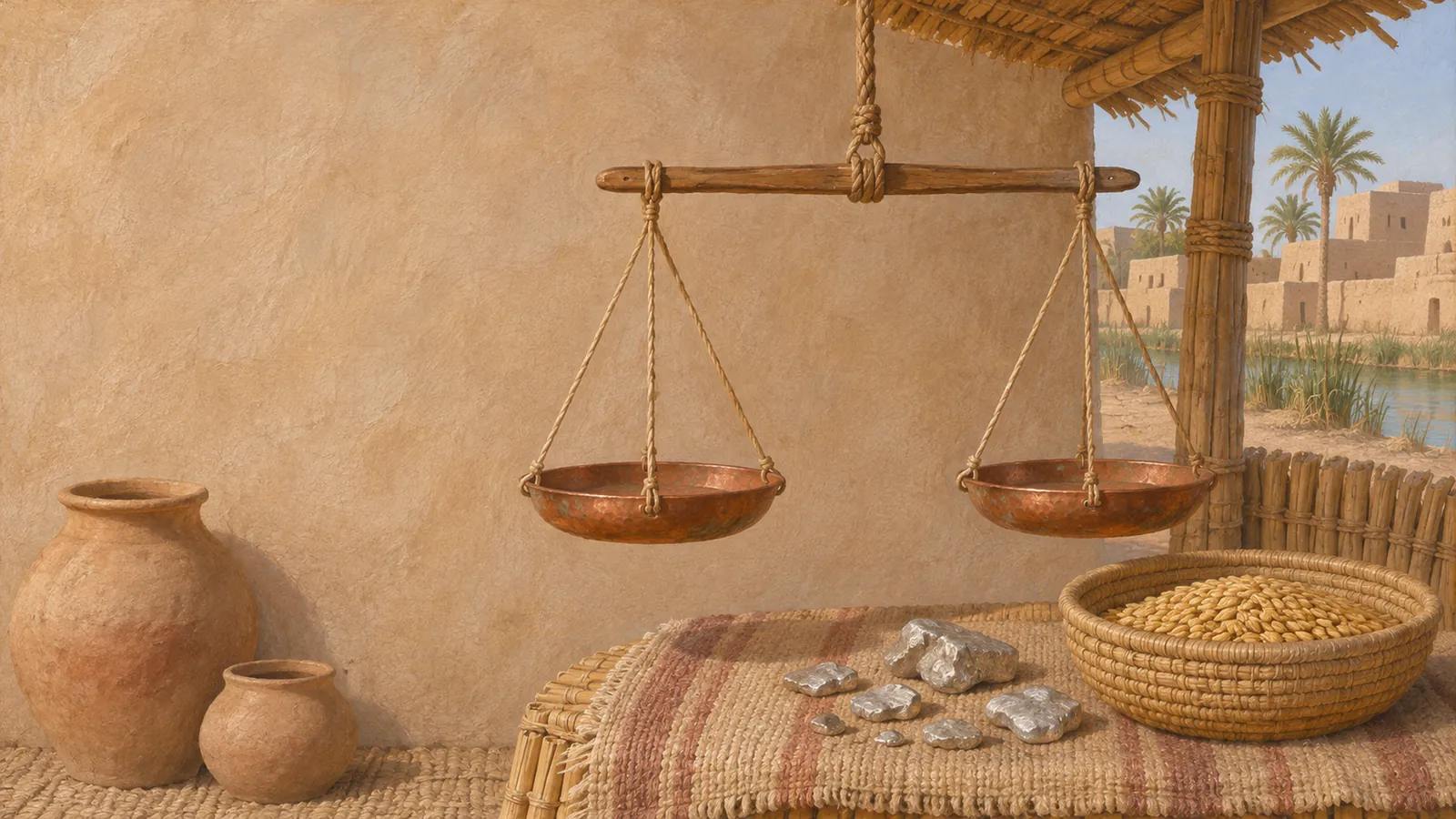
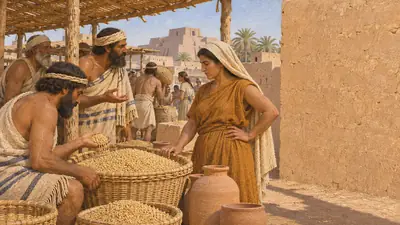
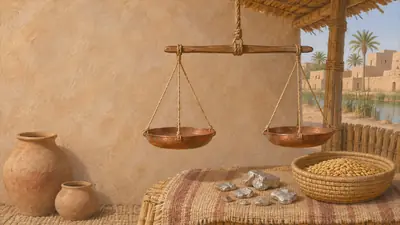
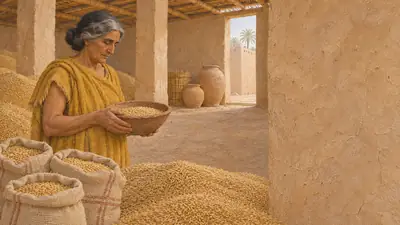
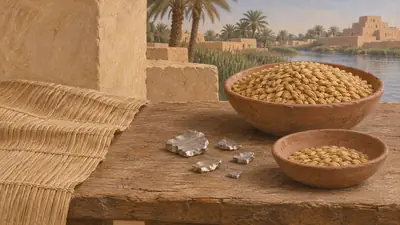
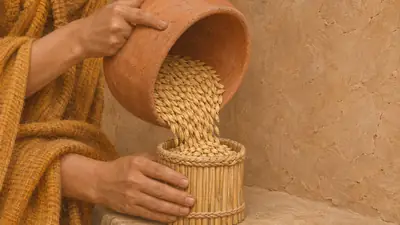
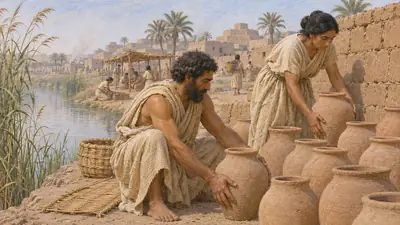
Ishbi-Erra reports that one shekel of silver bought one gur, a measure of grain. He says twenty talents of silver went into the purchase.
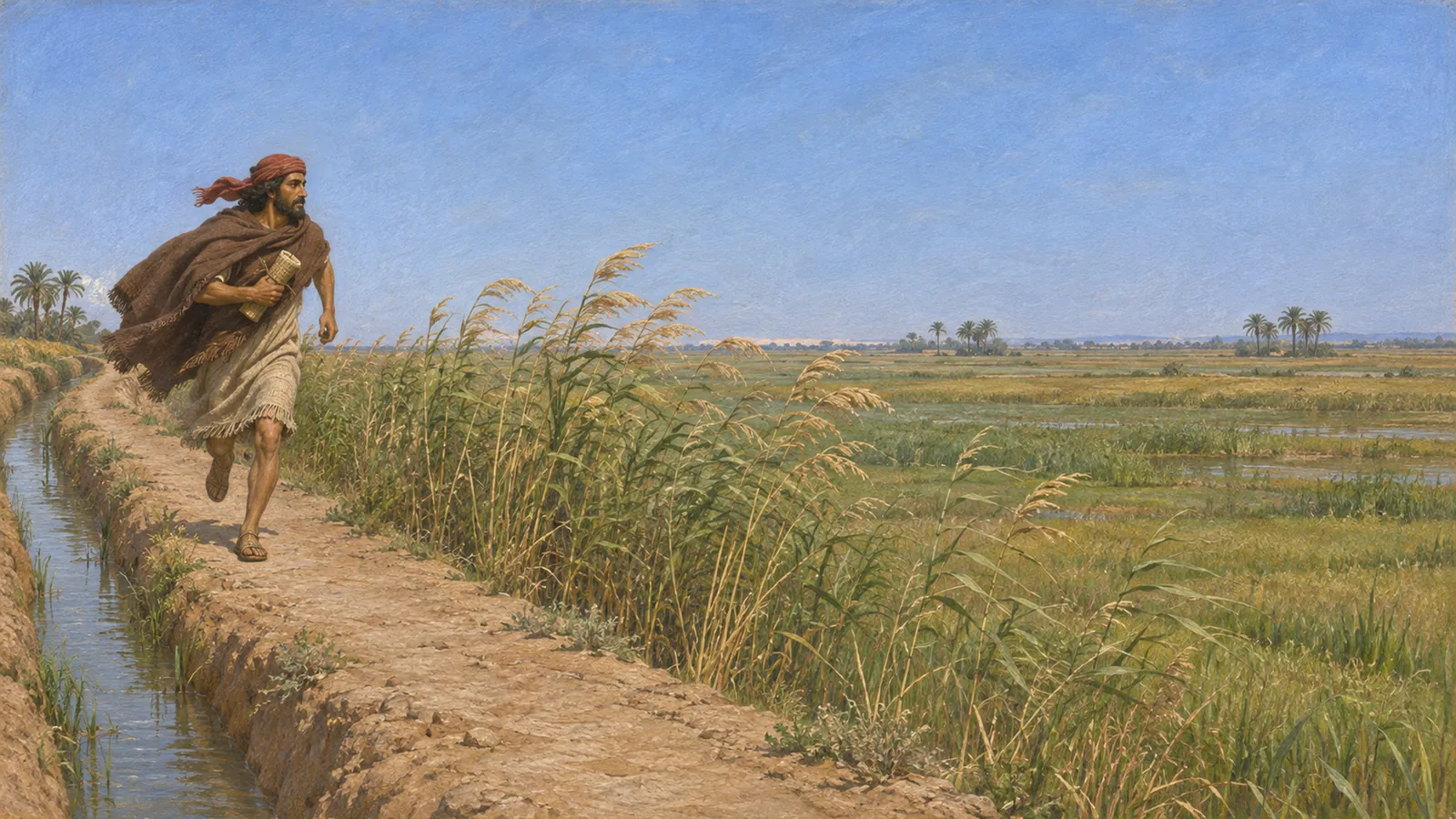
Ishbi-Erra says he received troubling news. Groups the letter calls hostile Amorites had entered the king’s territory. He uses that report to explain why the grain went to Isin.
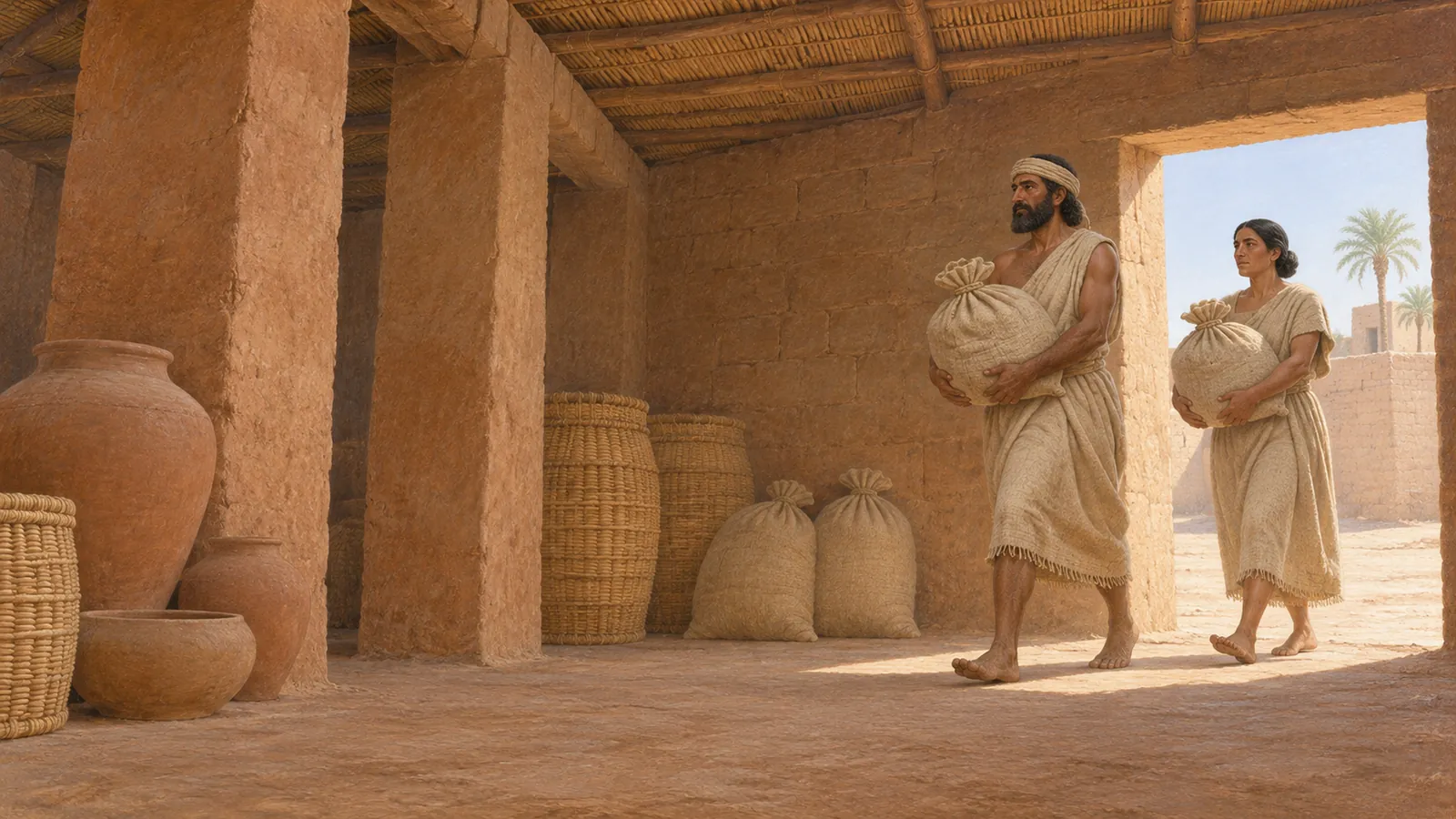
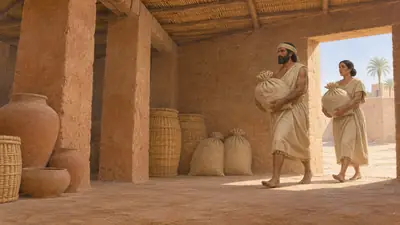
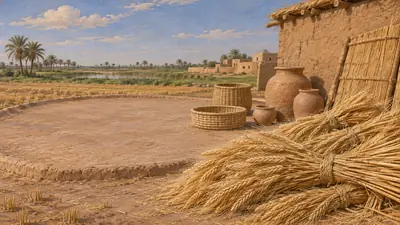
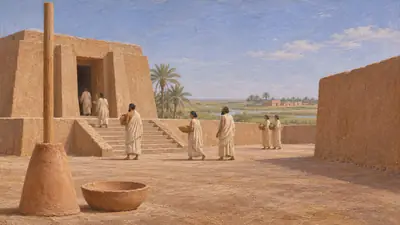
Ishbi-Erra reports that he took the whole purchase to Isin. He gives its size as seventy-two thousand gur. Those are the sender’s figures, preserved by the later scribes.
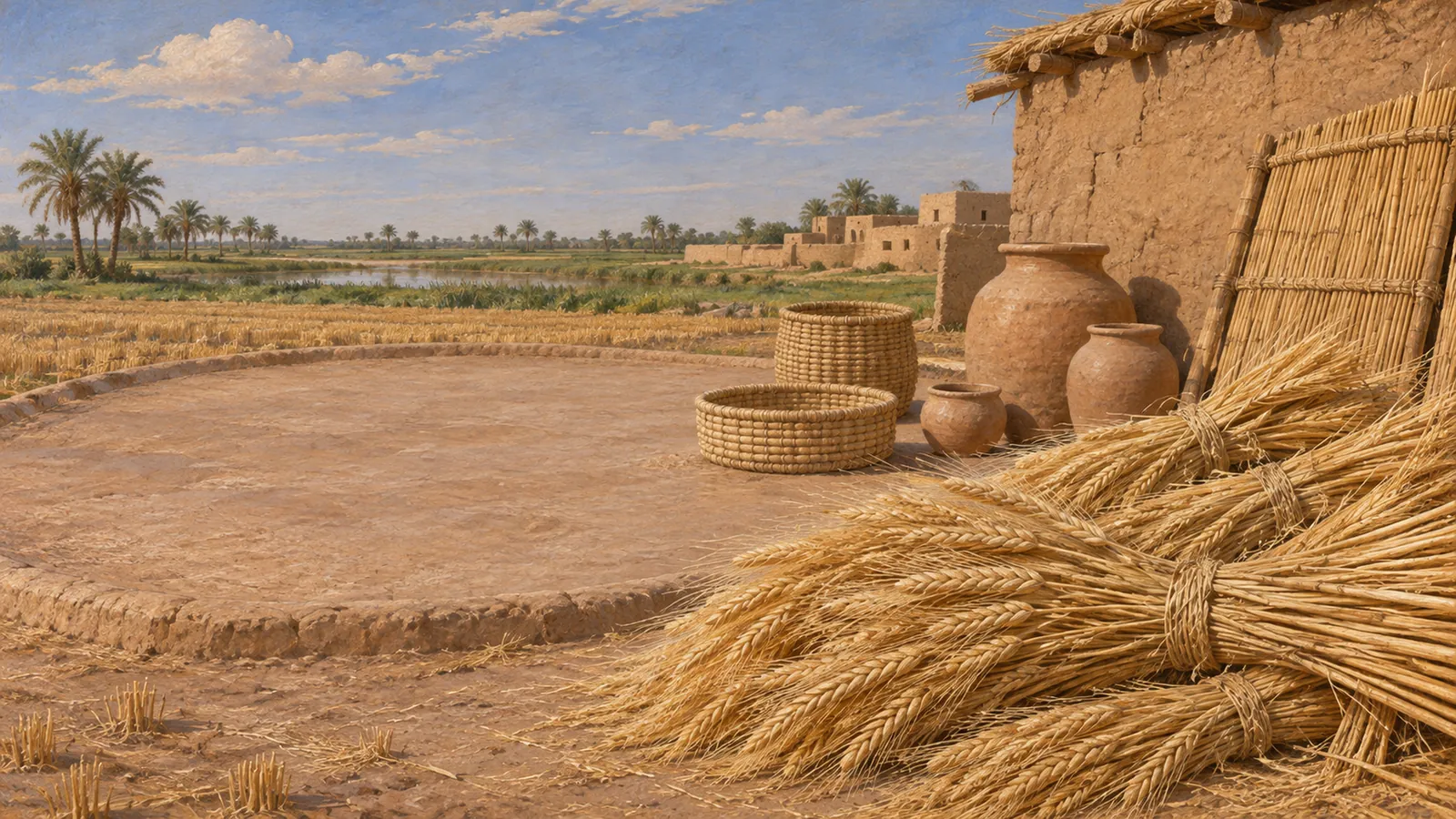
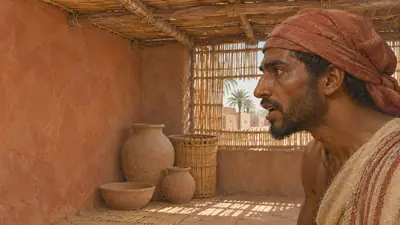
The writer says the people coming into the land are stronger than he is. Their presence, in his account, keeps him from turning the grain over for threshing.
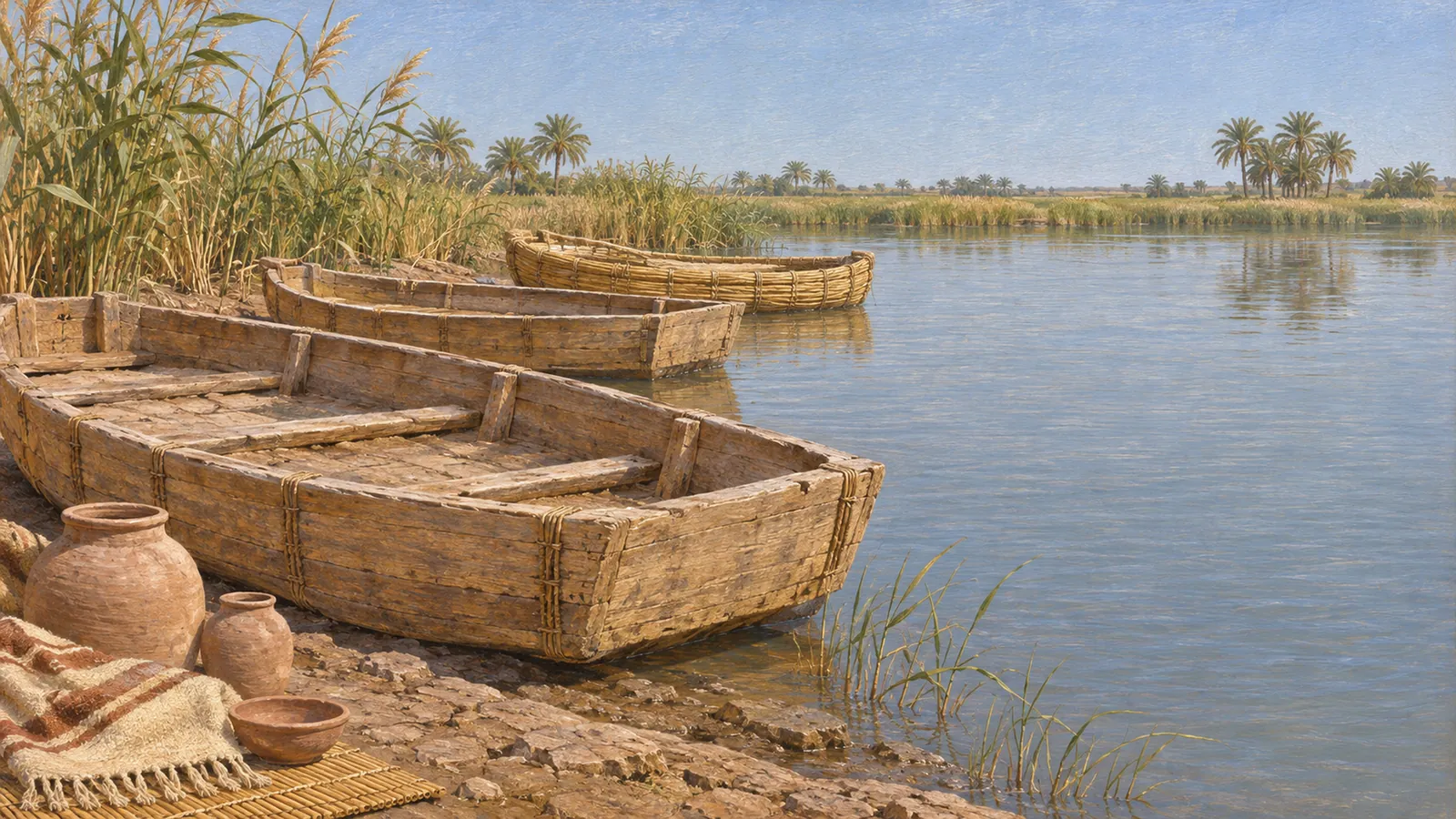
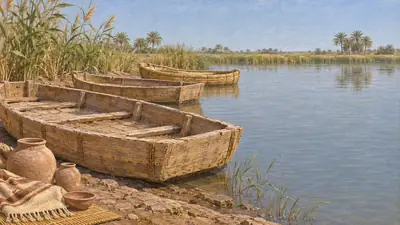
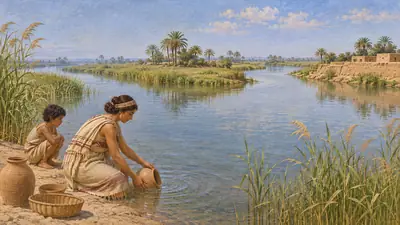
He asks Ibbi-Sin to ready six hundred barges of one hundred and twenty gur each. Alongside these figures the letter gives further boat details, parts of which are damaged or difficult to read.
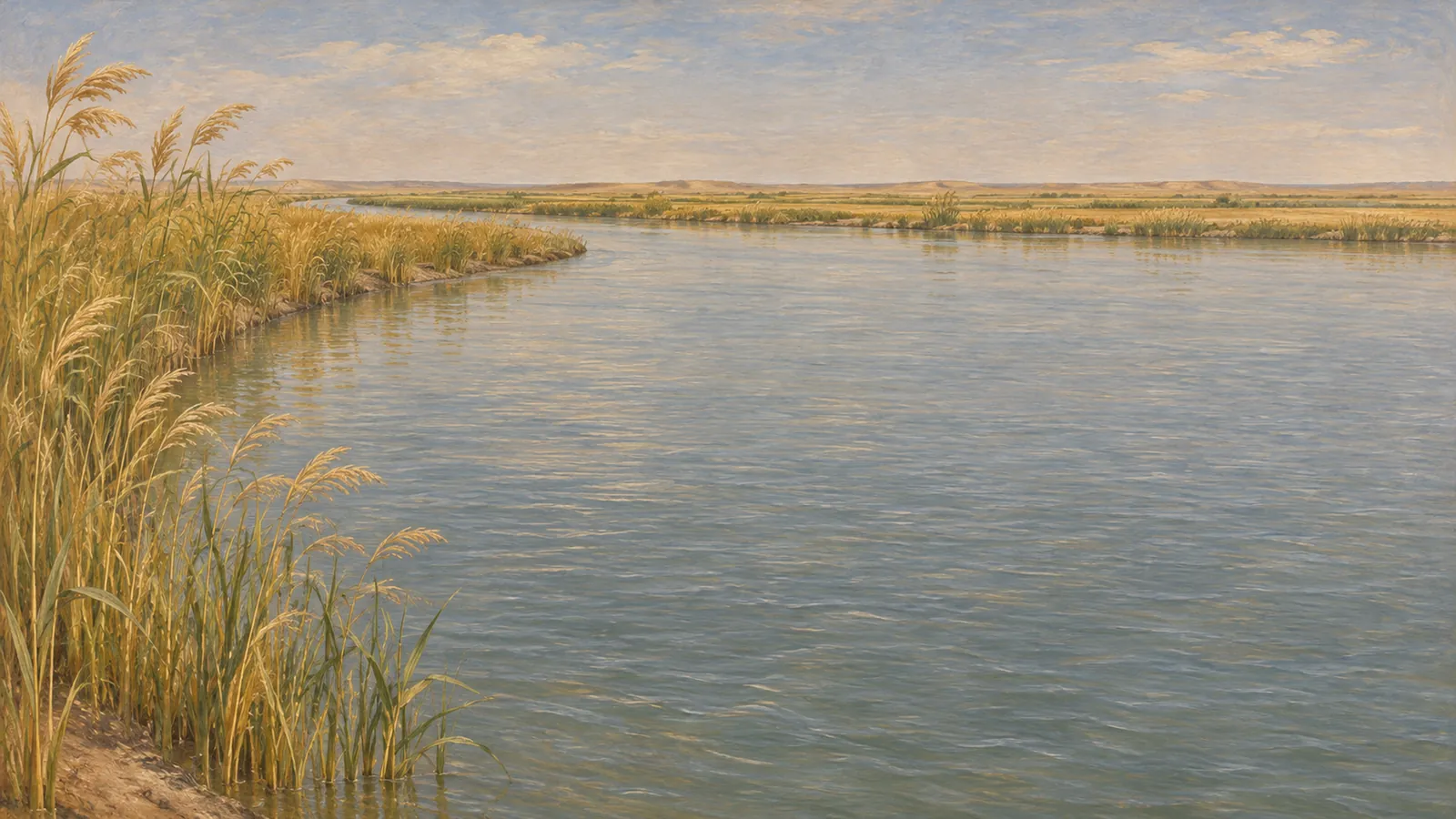
The letter names the Kura and Palishtum as waters along which the boats should come. Ishbi-Erra offers to meet them. The surviving text leaves the shipment at the stage of a proposal.
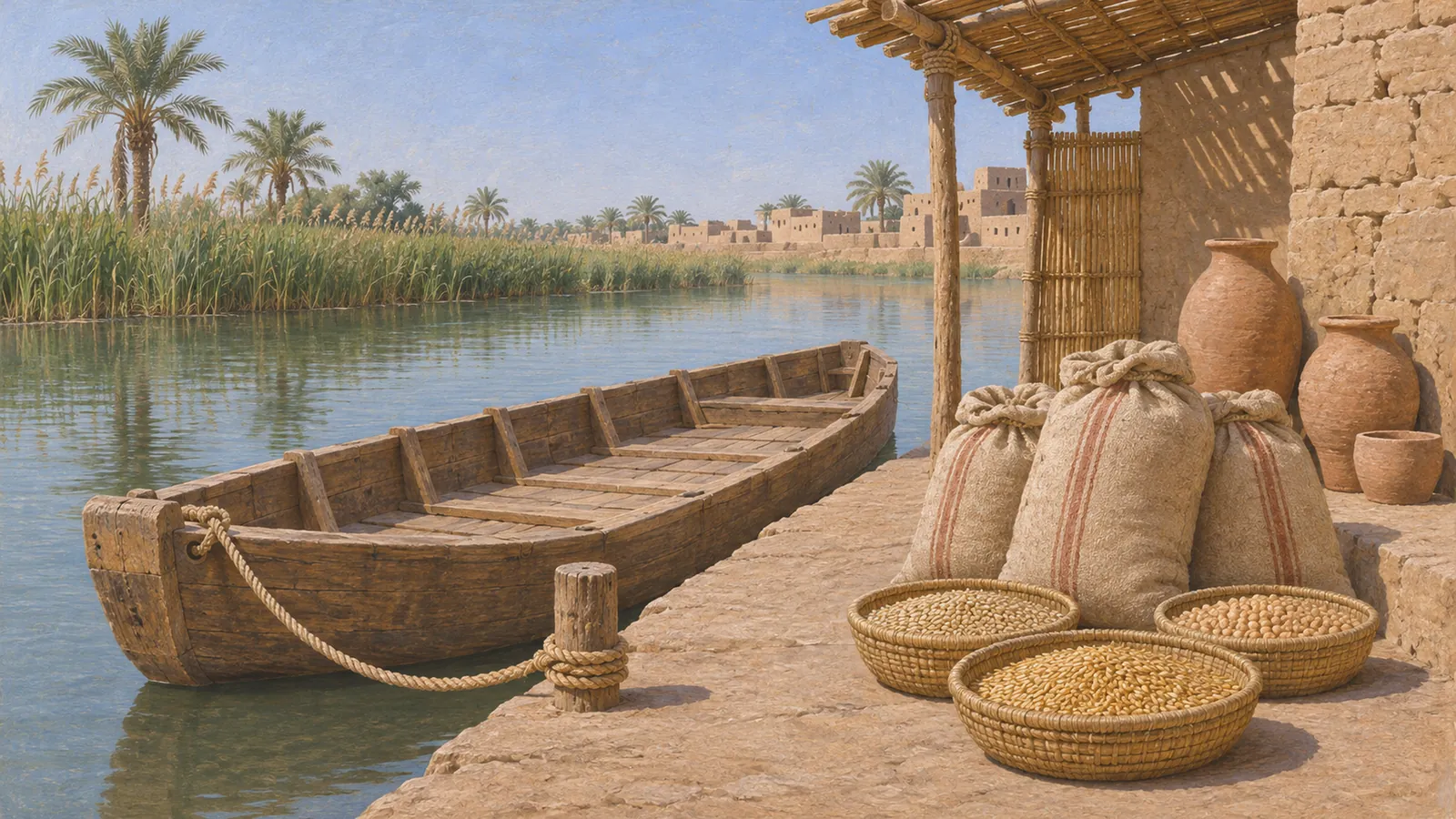
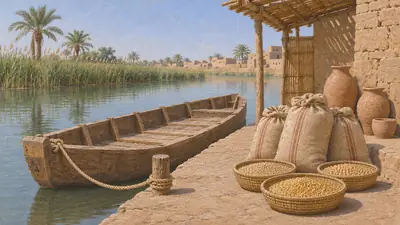
Ishbi-Erra offers to take charge of the mooring place once the boats arrive. He says the grain should be loaded there and offers to bring more if the king runs short.
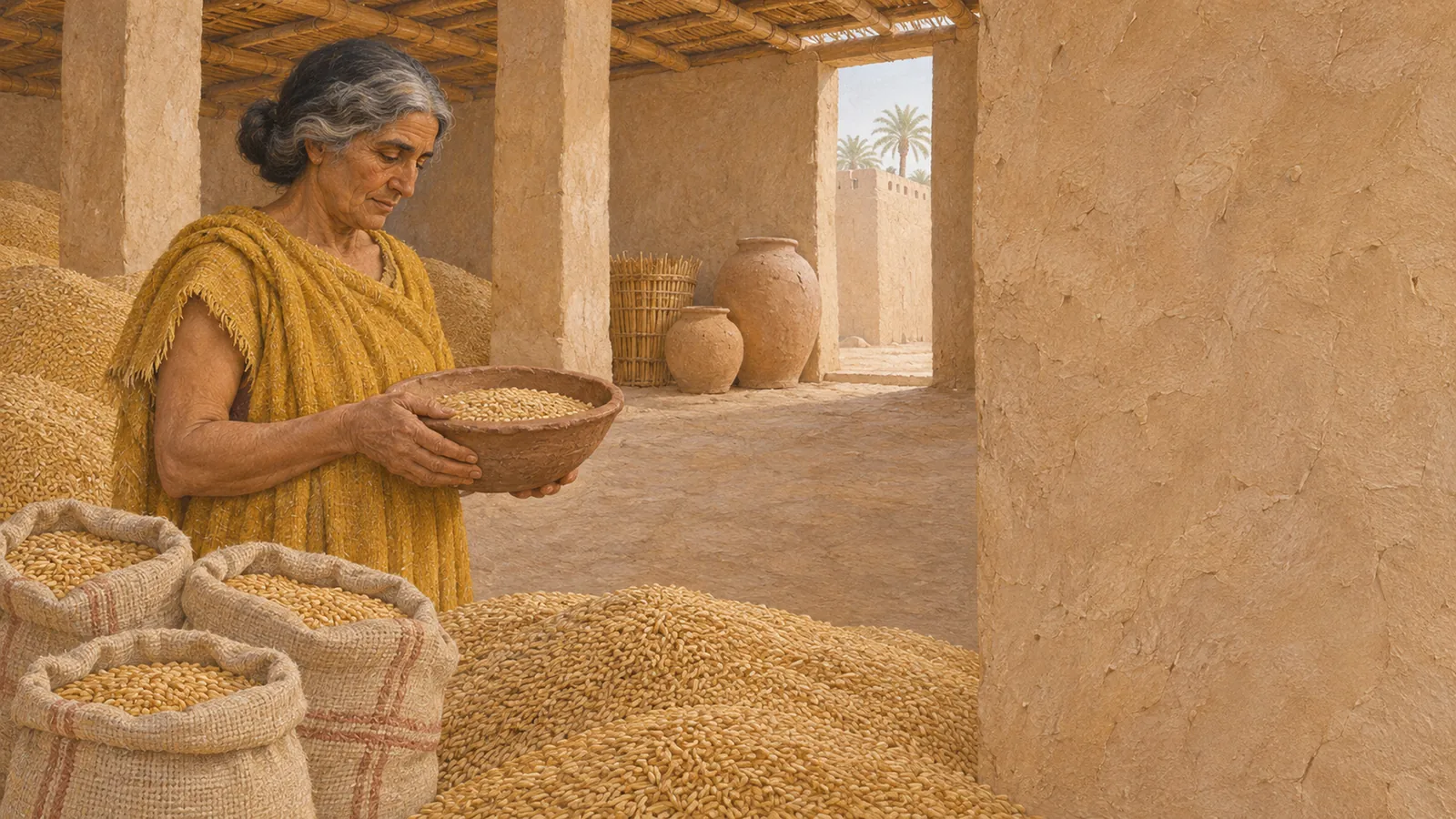
Elam is also on the king’s mind, according to the letter. Ishbi-Erra urges him to hold firm and claims his grain could supply the palace and its cities for fifteen years.
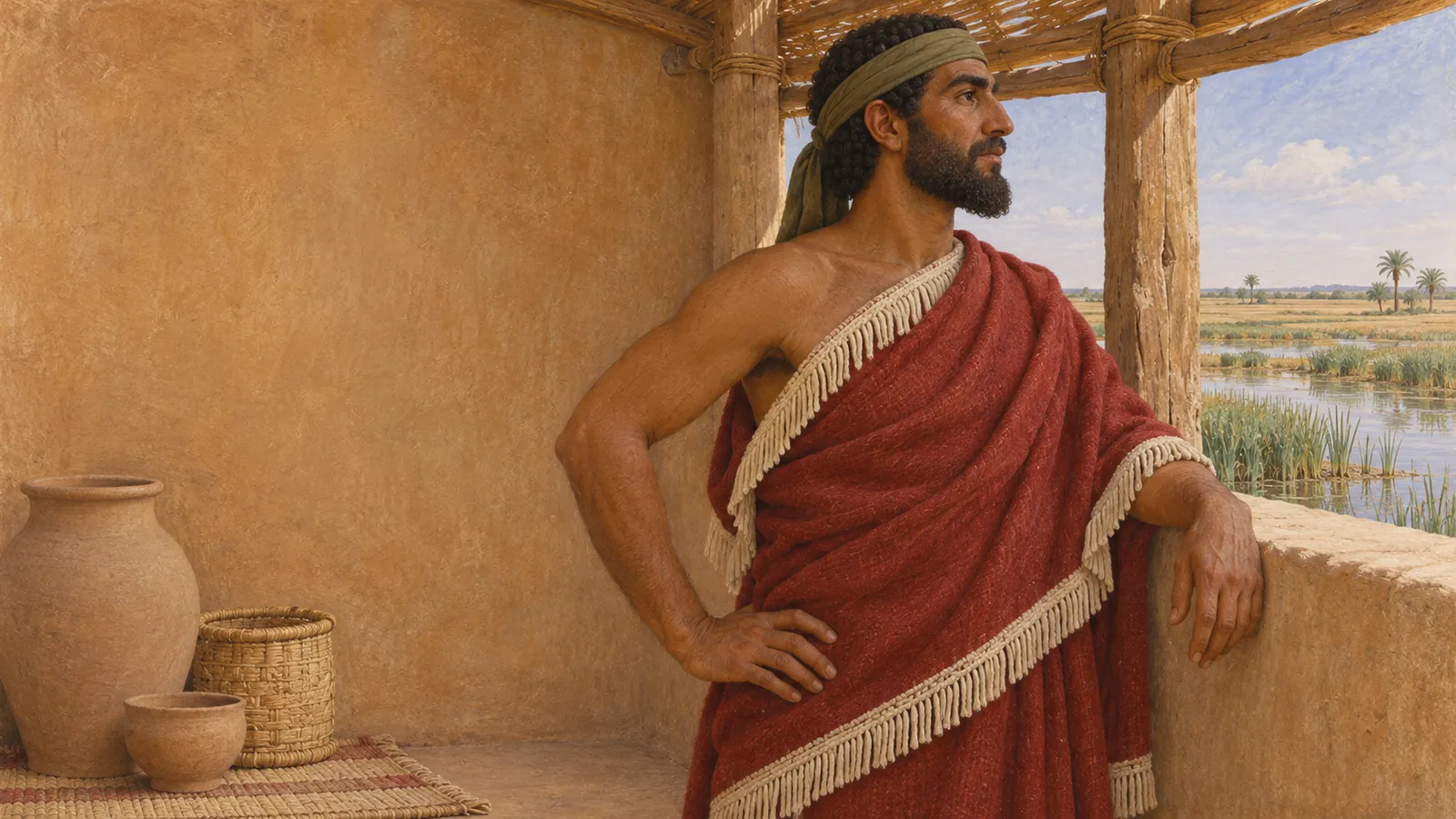
Ishbi-Erra asks for responsibility for Isin and Nippur. In one manuscript the wording becomes a question. The custody of two cities now stands beside the request for boats and grain.
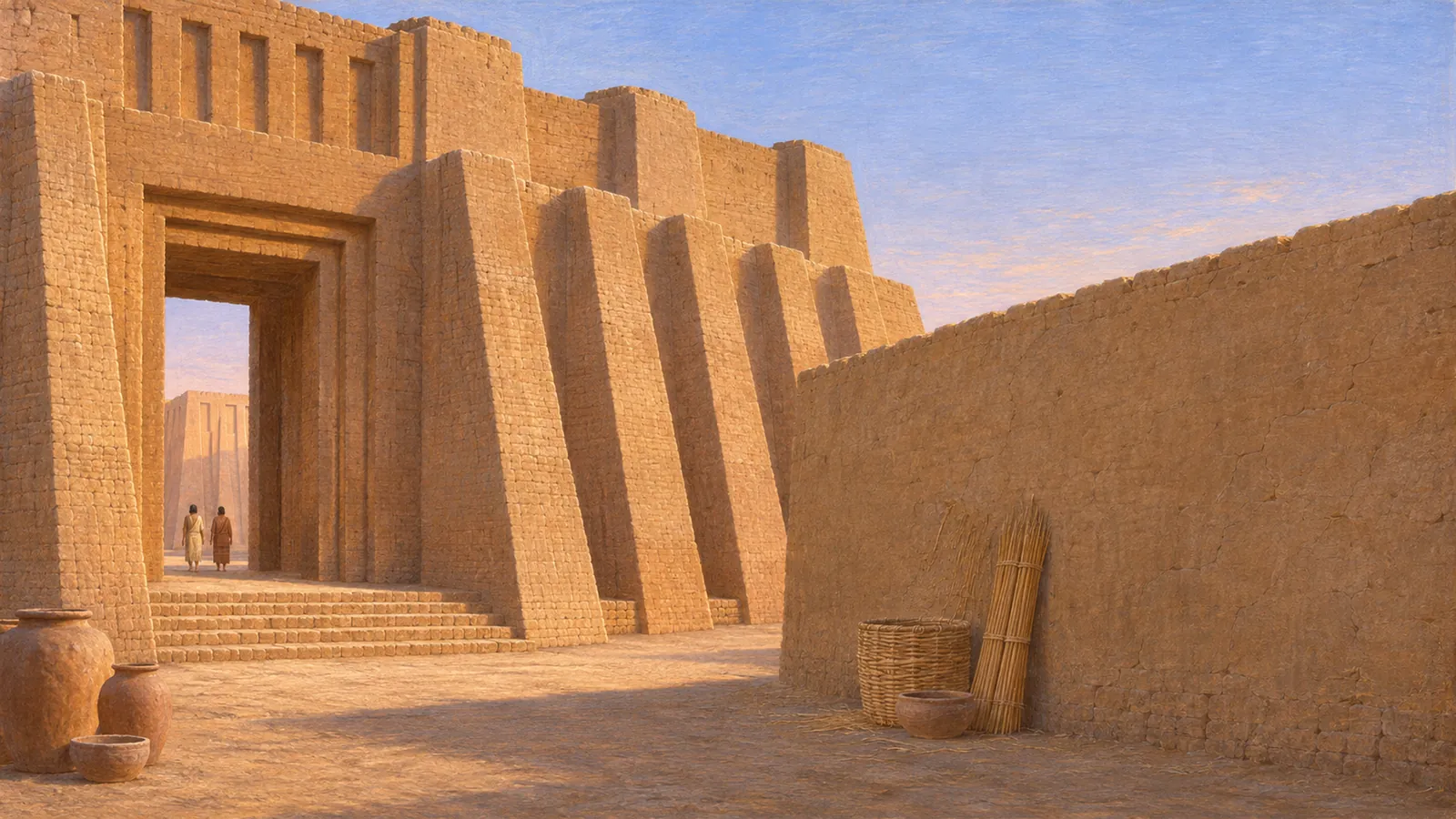
Some copies end with the request to guard the cities. A longer version praises Ur and its sanctuary. It looks beyond Isin to the fate of the city where Ibbi-Sin rules.
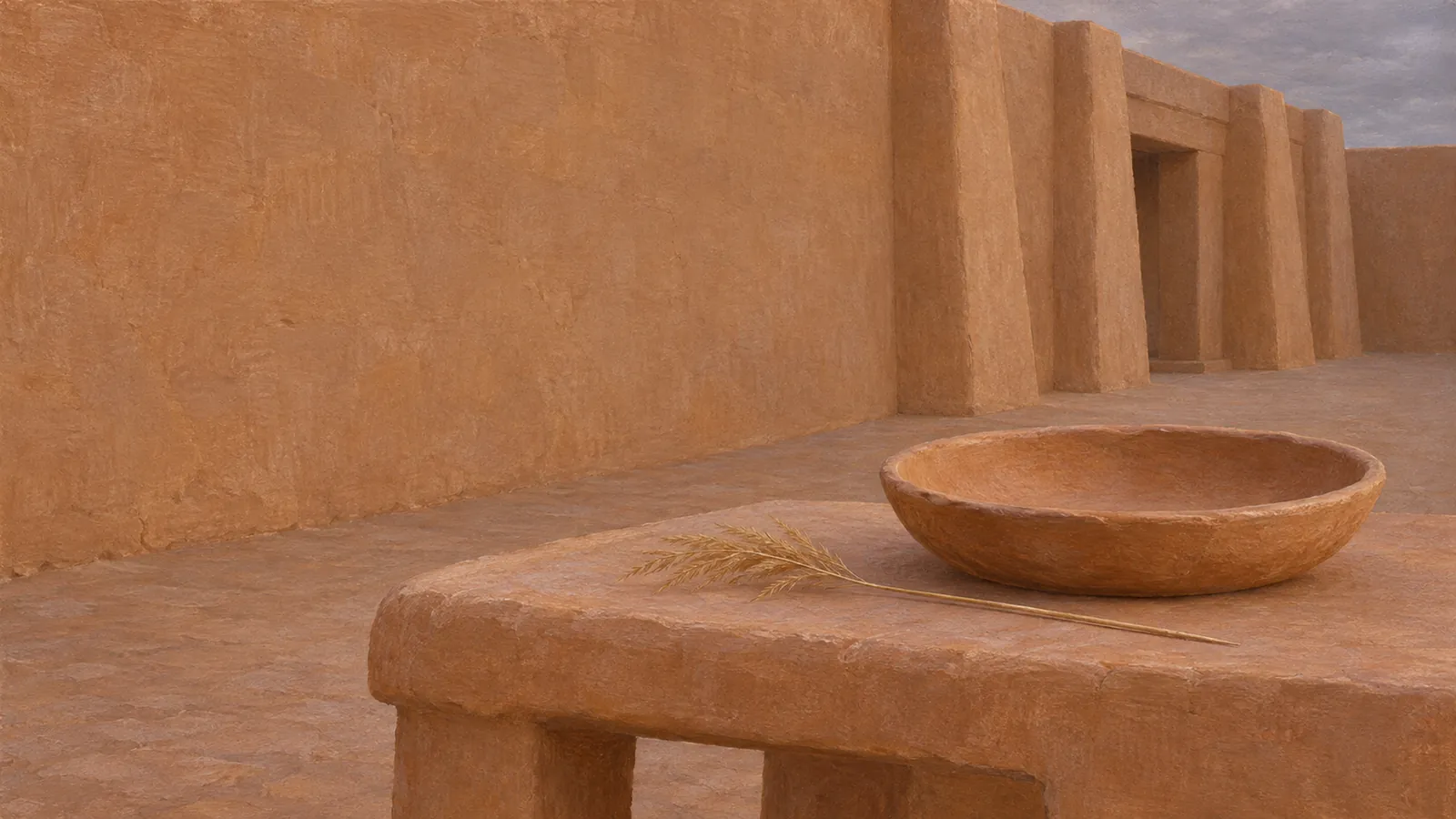
In the longer letter Ishbi-Erra says Elam will leave the shrine of Nanna untouched. He assures his lord that his kingship at Ur will last as long as he lives.
THE REPLY
Ibbi-Sin’s literary reply begins with an accusation that Ishbi-Erra has changed his word. The king speaks of Enlil’s anger, of Sin the moon god, and of Ur in danger.
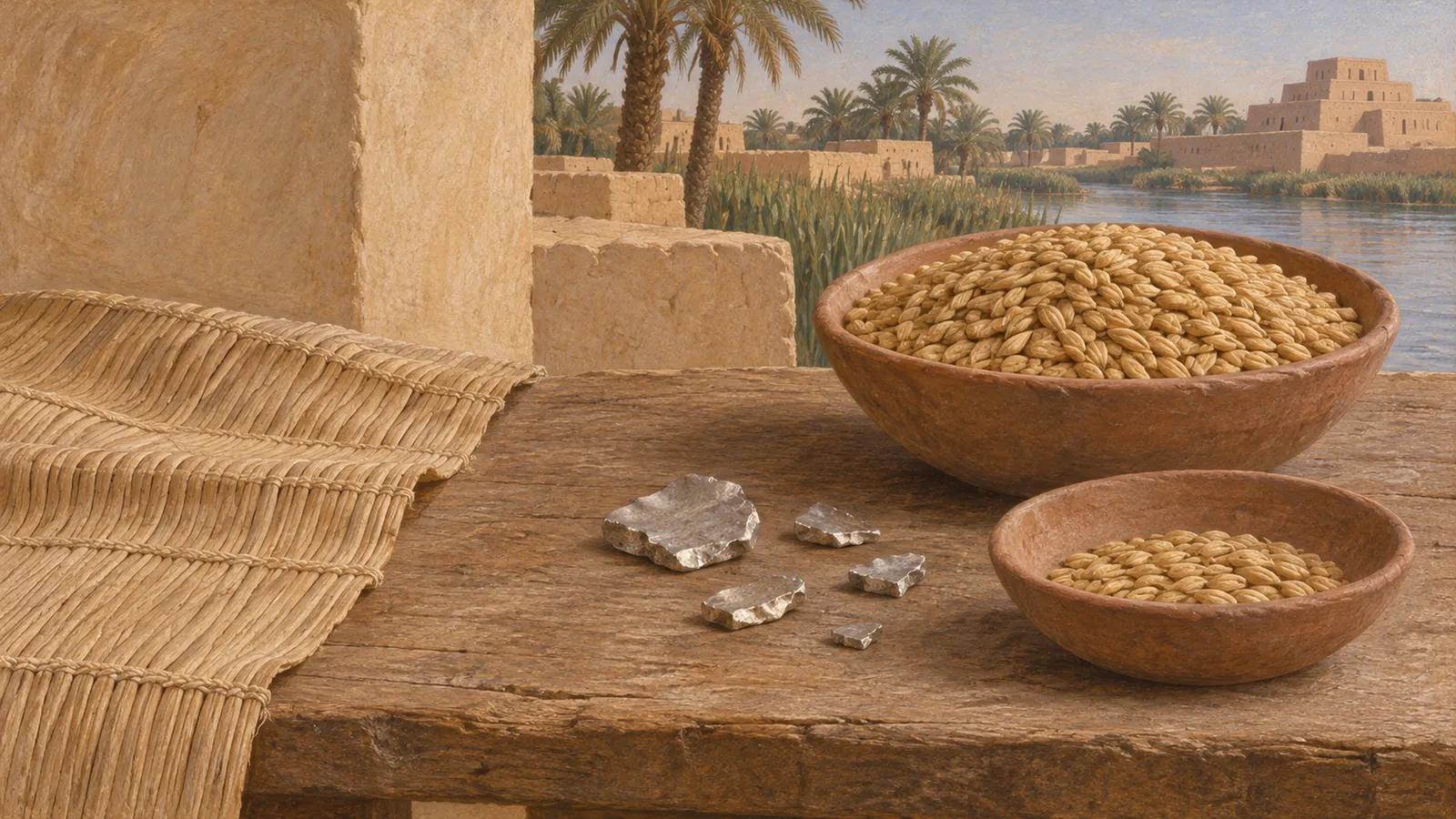
Ibbi-Sin recalls the twenty talents. He accuses Ishbi-Erra of paying a shekel for two gur and charging him a shekel for only one. The numbers now stand at the centre of a dispute.
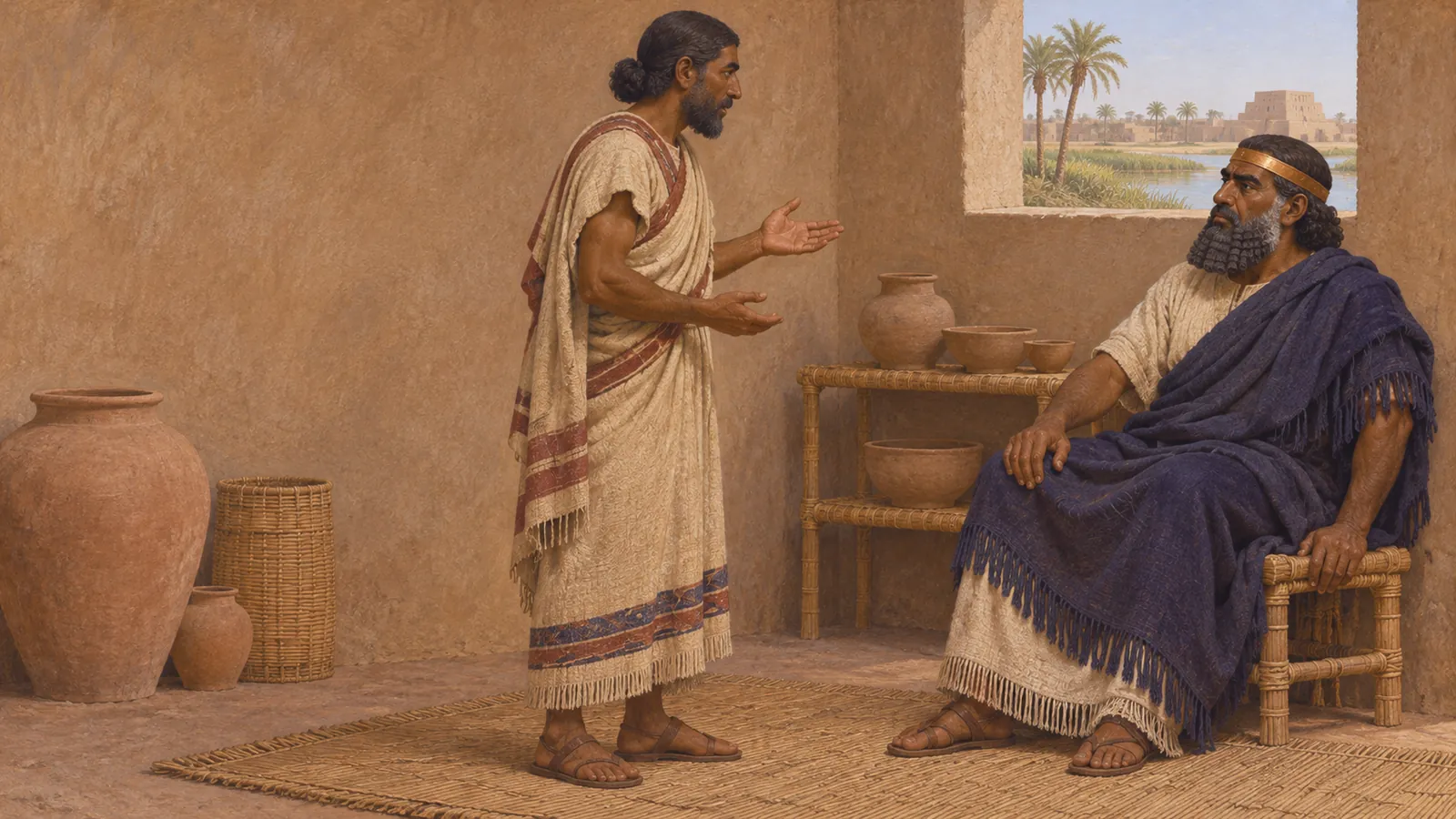
Ibbi-Sin asks how people the letters call hostile Amorites entered his land. He puts the question to Ishbi-Erra and names the commander of a fortress.
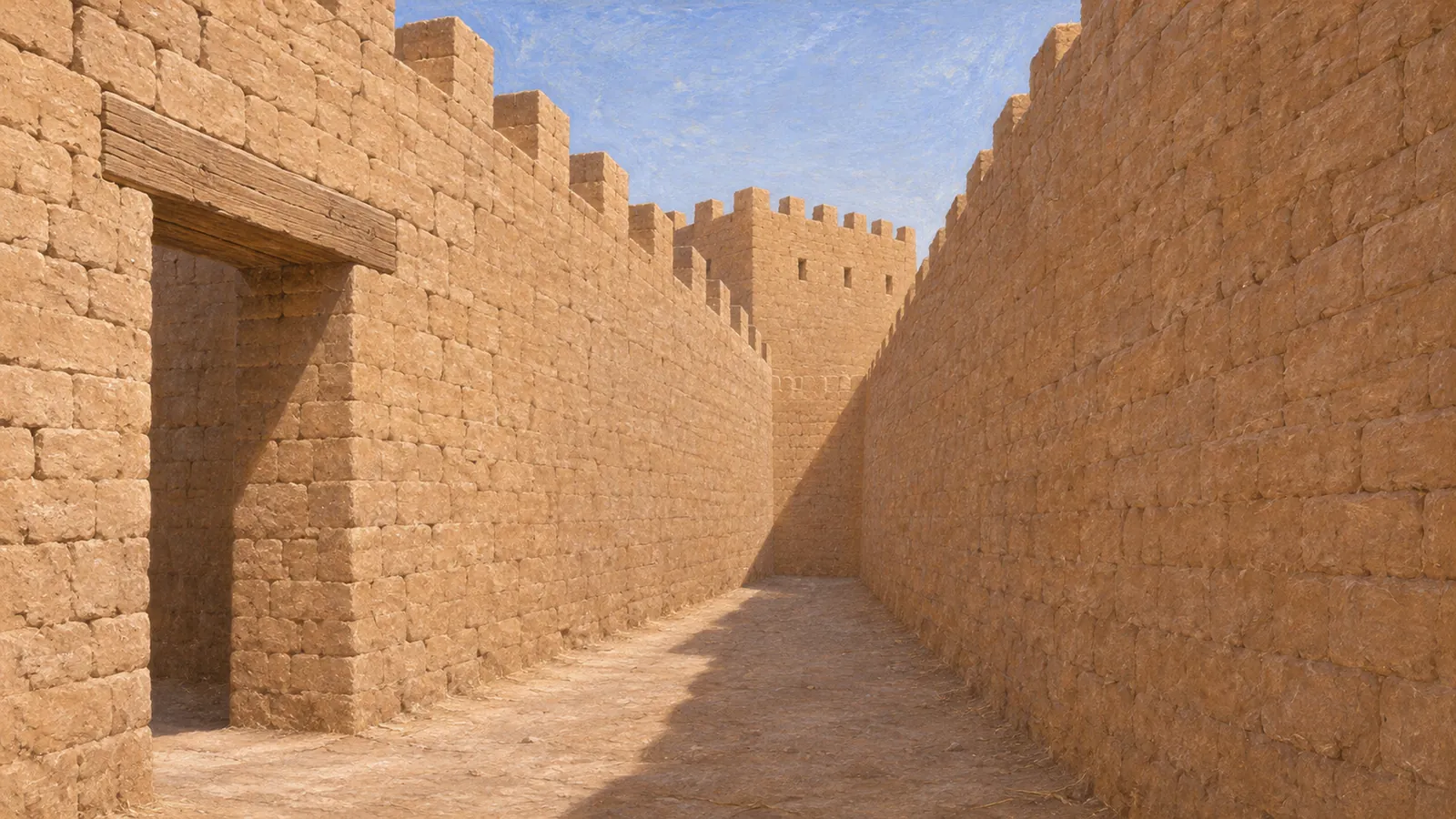
The king names the fortress Igi-hursaga and complains that he has heard too little about its commander’s response. The letter ends with blame and a question about why he failed to act.
KAZALLU
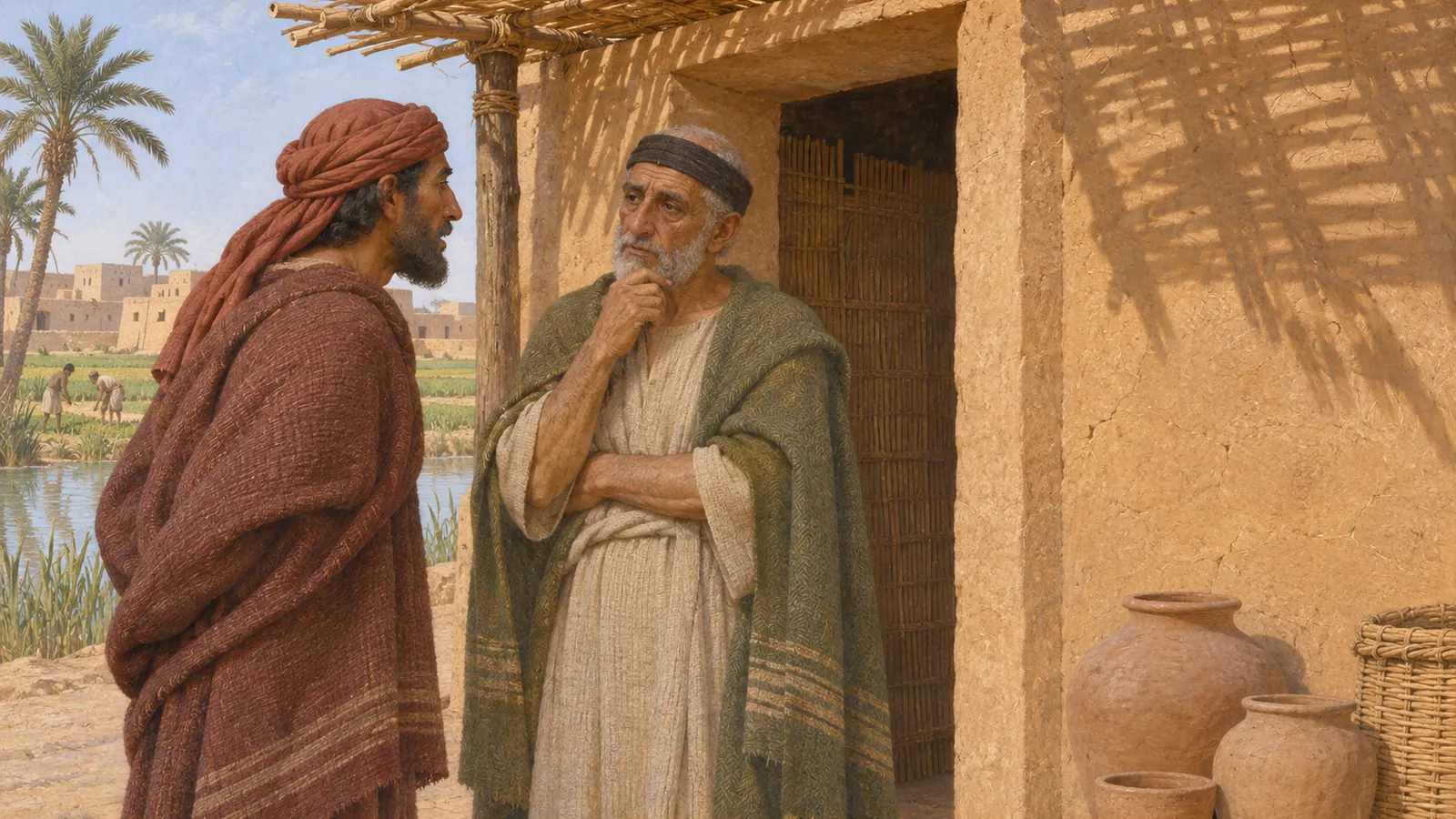
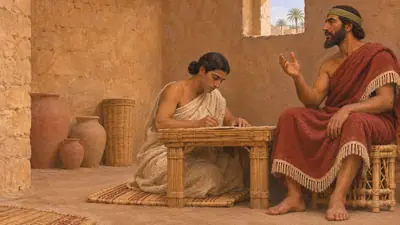
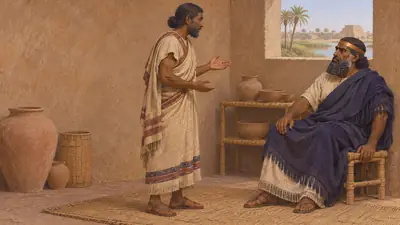
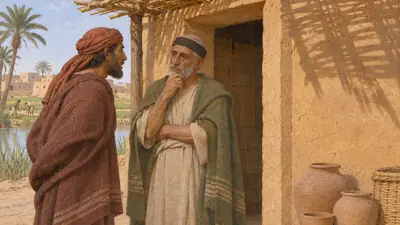
The next letter is from the governor of Kazallu. He tells Ibbi-Sin that an envoy came to him on Ishbi-Erra’s behalf. He reports the rival’s claims in the envoy’s words.
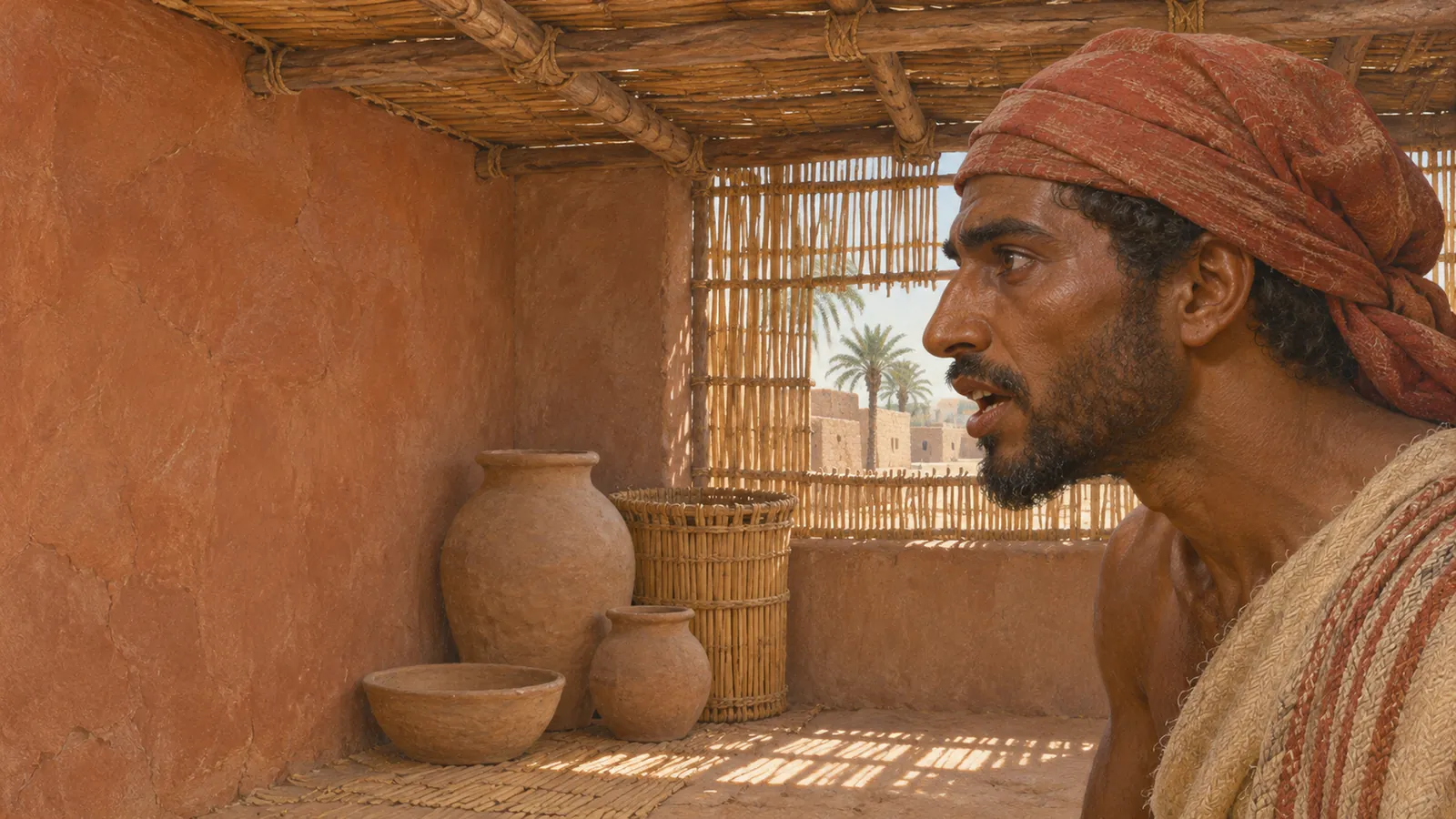
According to the envoy, Ishbi-Erra claims that Enlil has granted him the right to shepherd the land. He talks of making Isin Enlil’s storehouse and swears he will get hold of Kazallu.
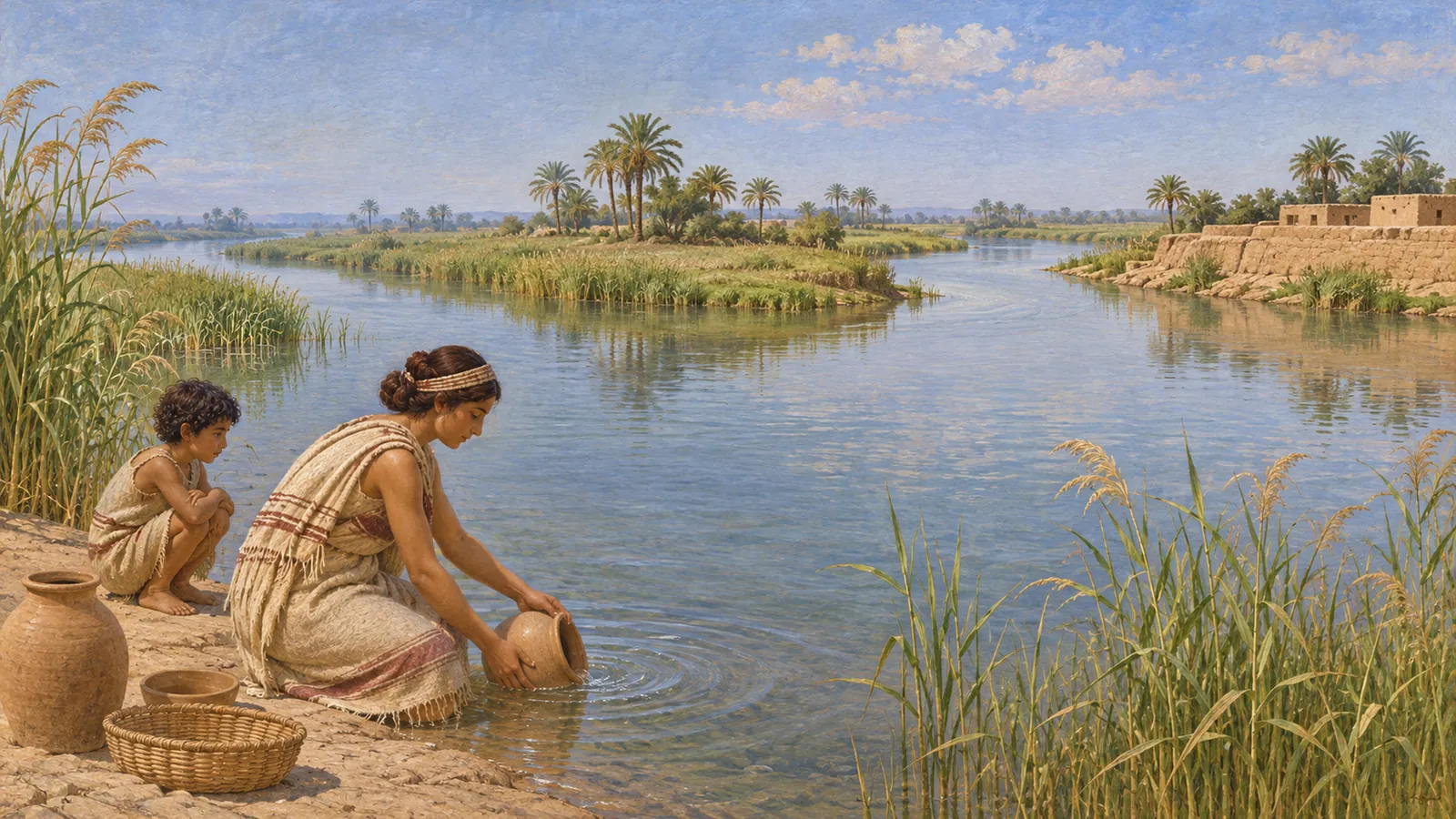
In the envoy’s speech the claim stretches from the province of Hamazi toward the sea of Magan. It names rivers and canals and demands that the cities come before Ninisina of Isin.
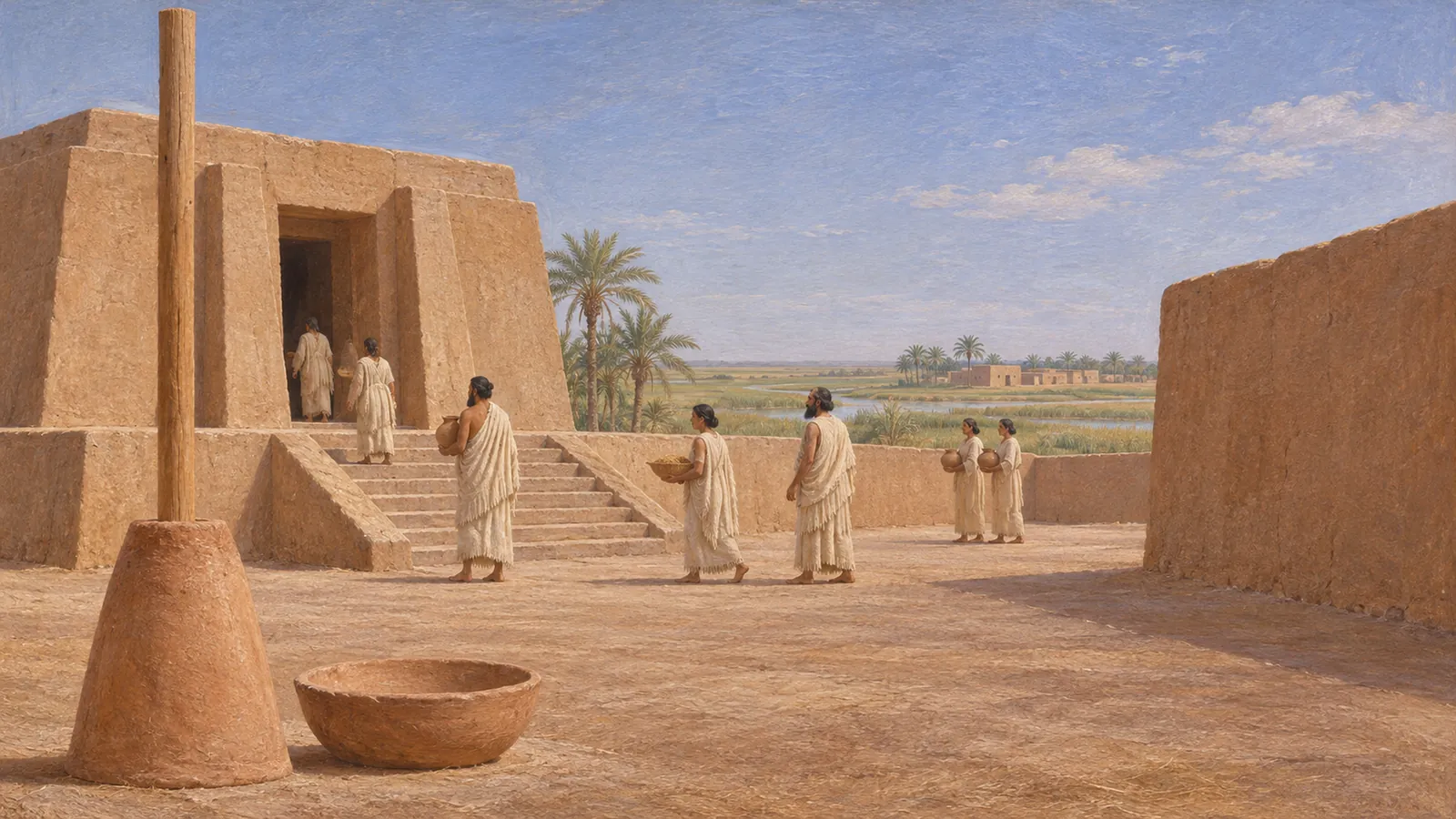
Ishbi-Erra wants a part in the festivals of the claimed cities. He speaks of installing his statues, emblems and priests, and of prayers at Enlil’s sanctuary in Nippur and Nanna’s shrine at Ur.
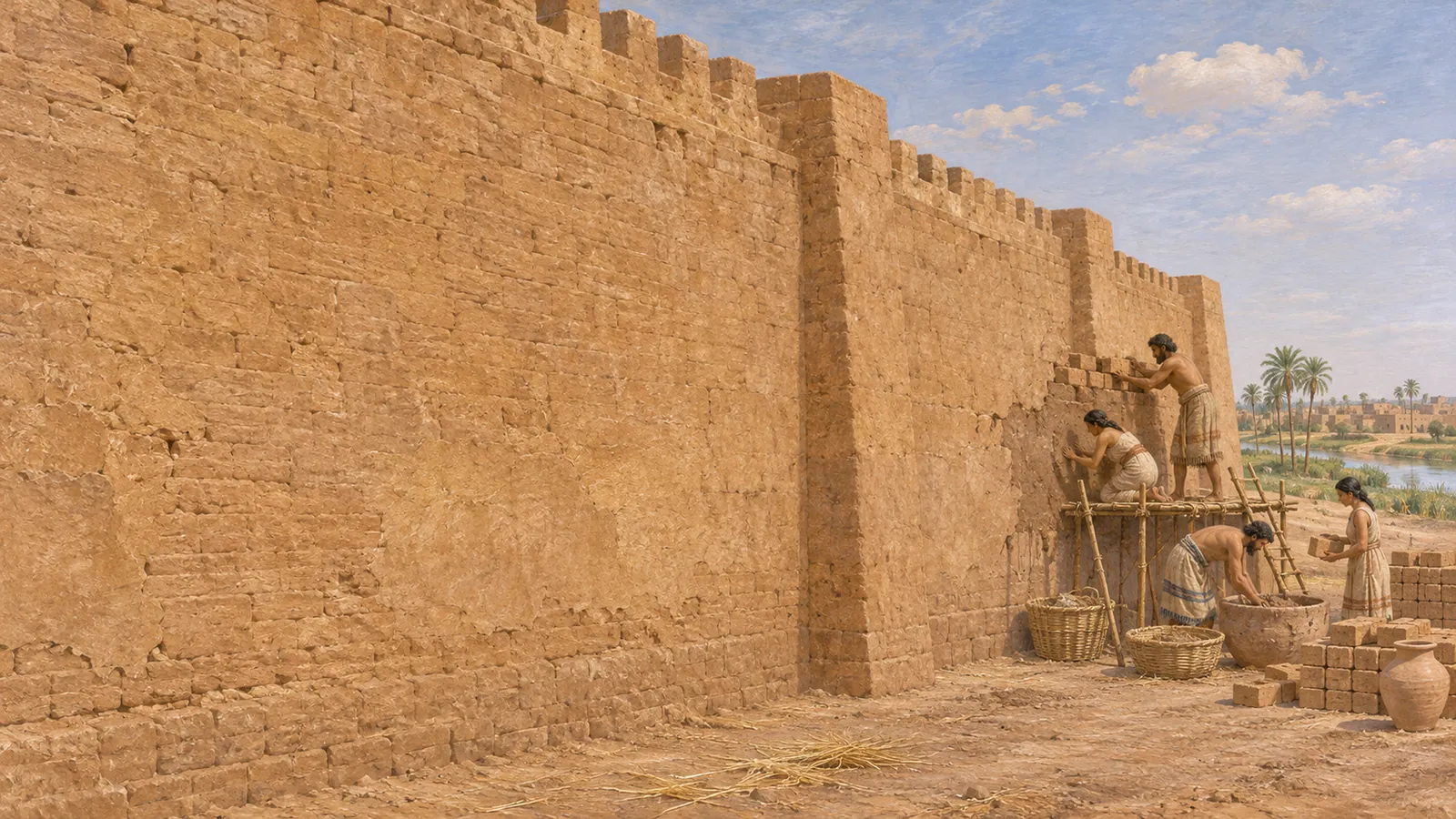
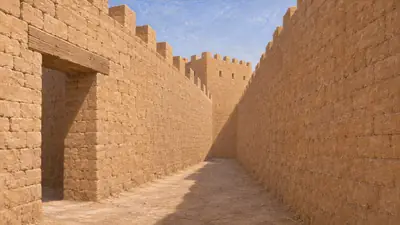
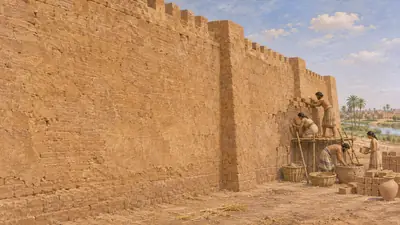
The governor says Ishbi-Erra rebuilt the fortification of Isin and gave it the name he had announced. One of Ishbi-Erra’s own year names also commemorates the construction of Isin’s great wall.
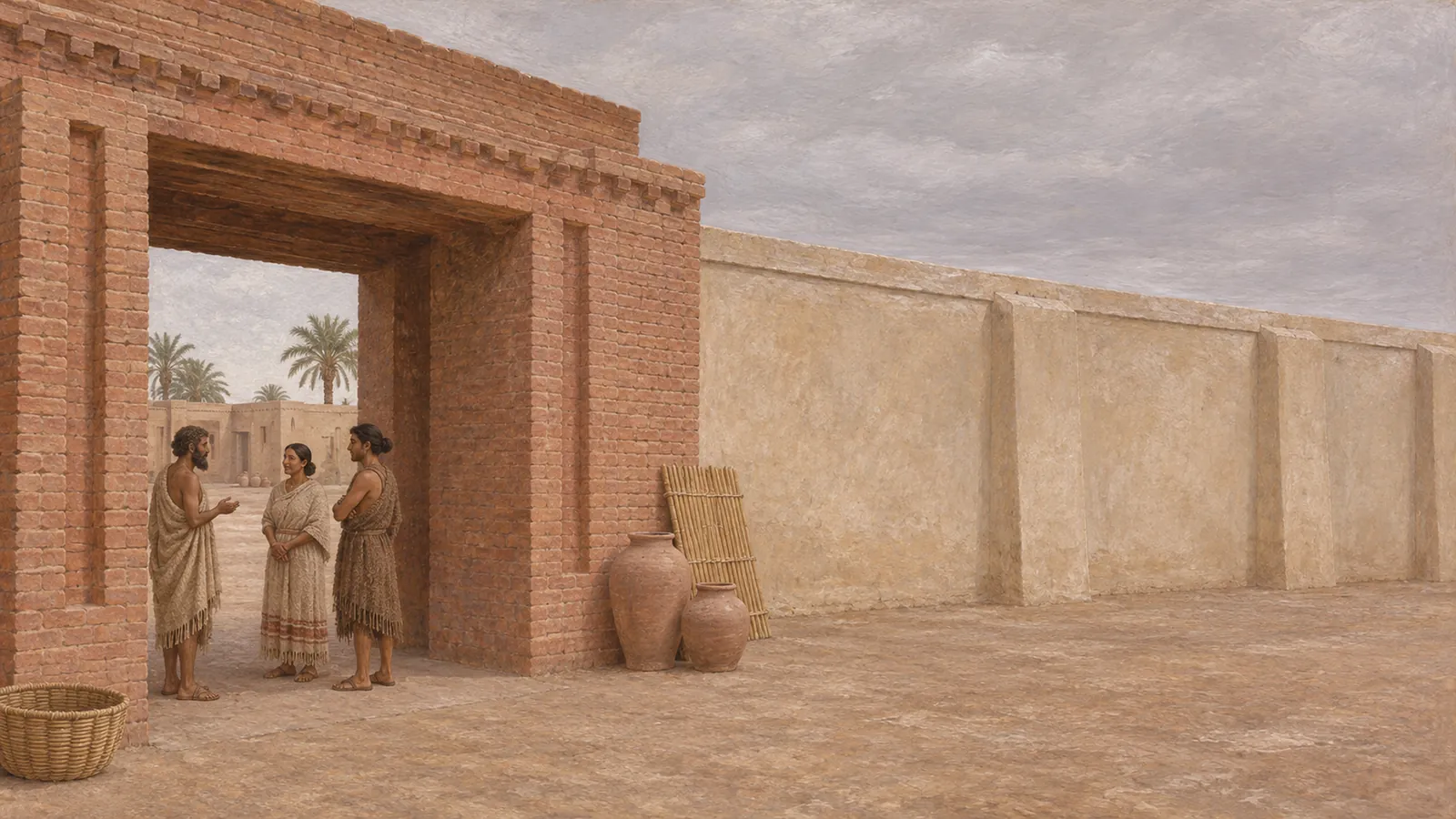
The governor goes on to report that Ishbi-Erra has taken Nippur, placed men there and seized its chief administrator. The cities named in the grain letter have become places of contention.
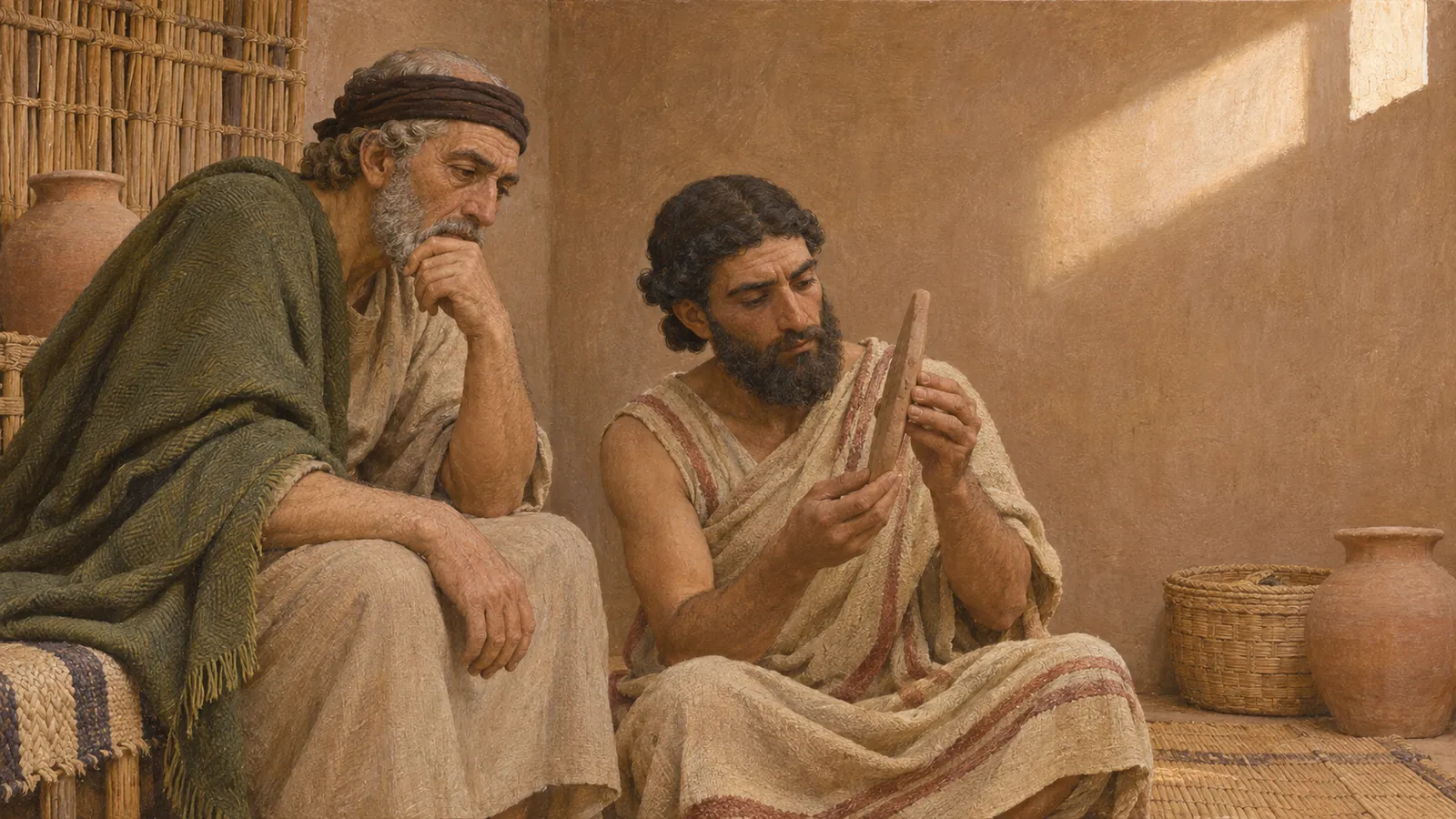
The governor’s report lists gains involving several cities and their rulers. He repeats the names of the watercourses the envoy mentioned earlier, turning Ishbi-Erra’s claims into a report of what he says has happened.
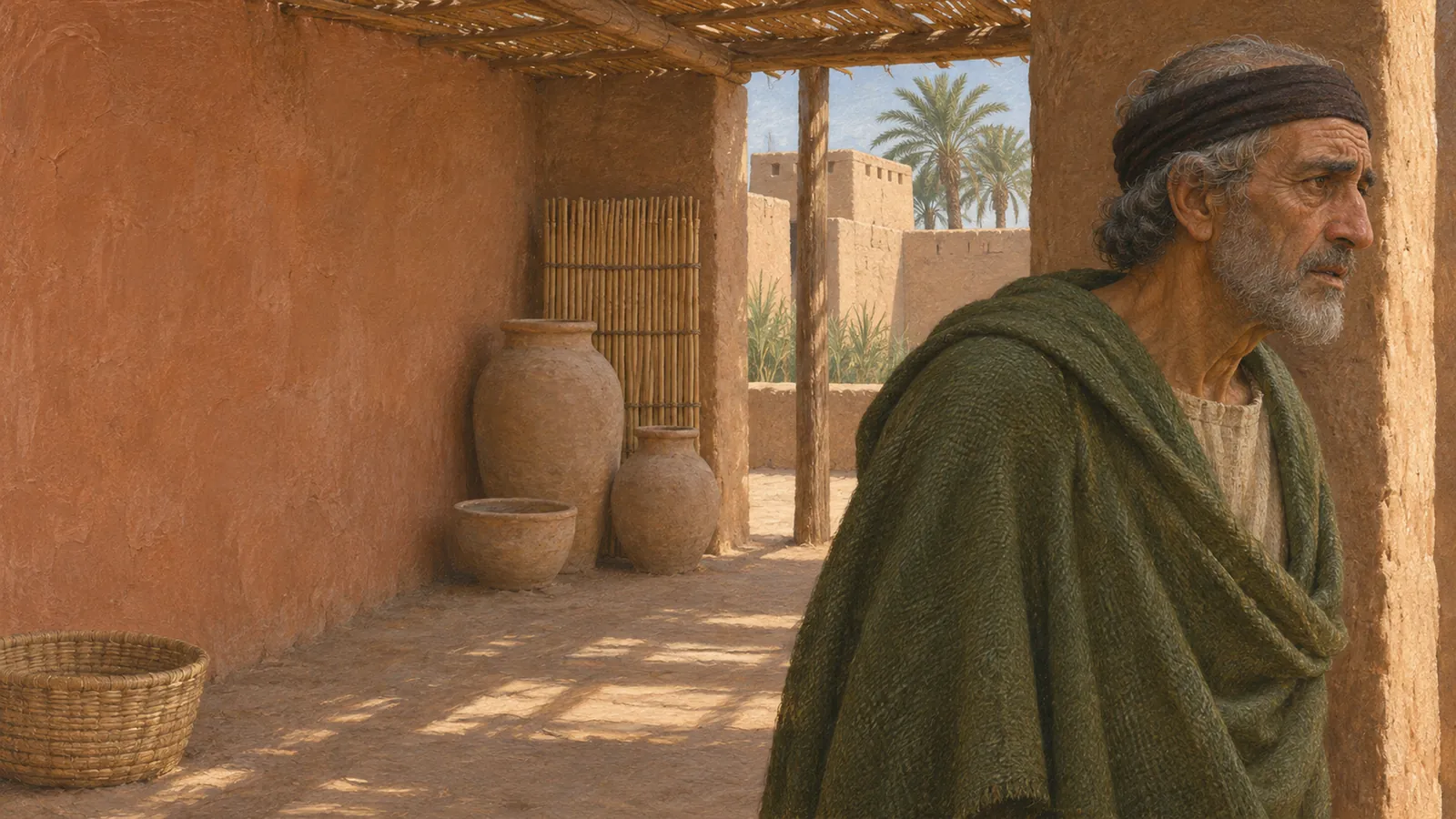
The governor says Ishbi-Erra now has his eye on Kazallu. With no ally to turn to, he asks the king to receive him if he has to leave his city.
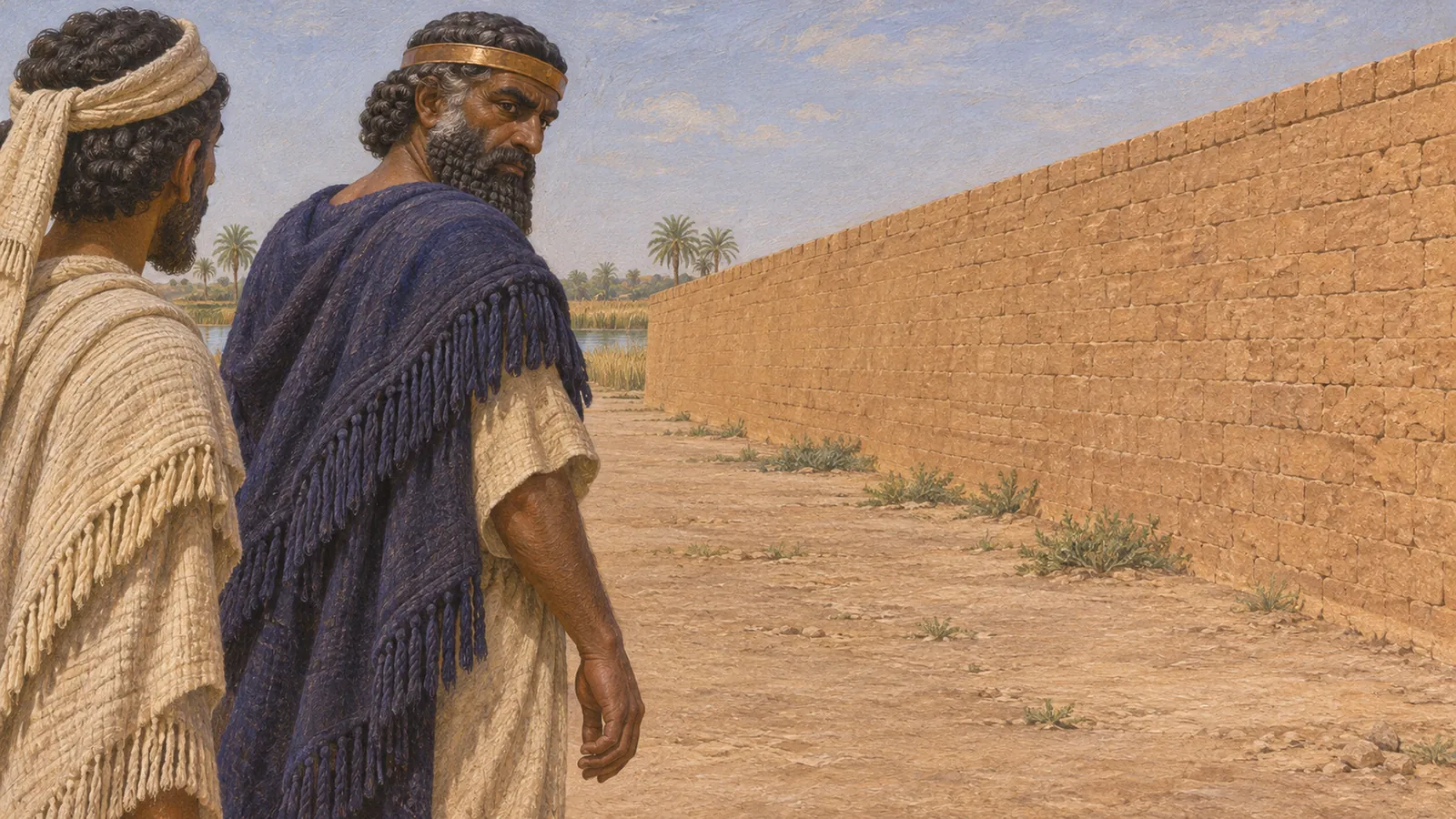
Ibbi-Sin repeats the plea and reproaches the governor for seeking refuge. In the longer reply he presses him to remain with Kazallu and keep it from falling into Ishbi-Erra’s hands.
The reply describes Sumer and its divine assembly as scattered. The king expects other governors to change sides. A second version of the reply survives with gaps in this part of the argument.
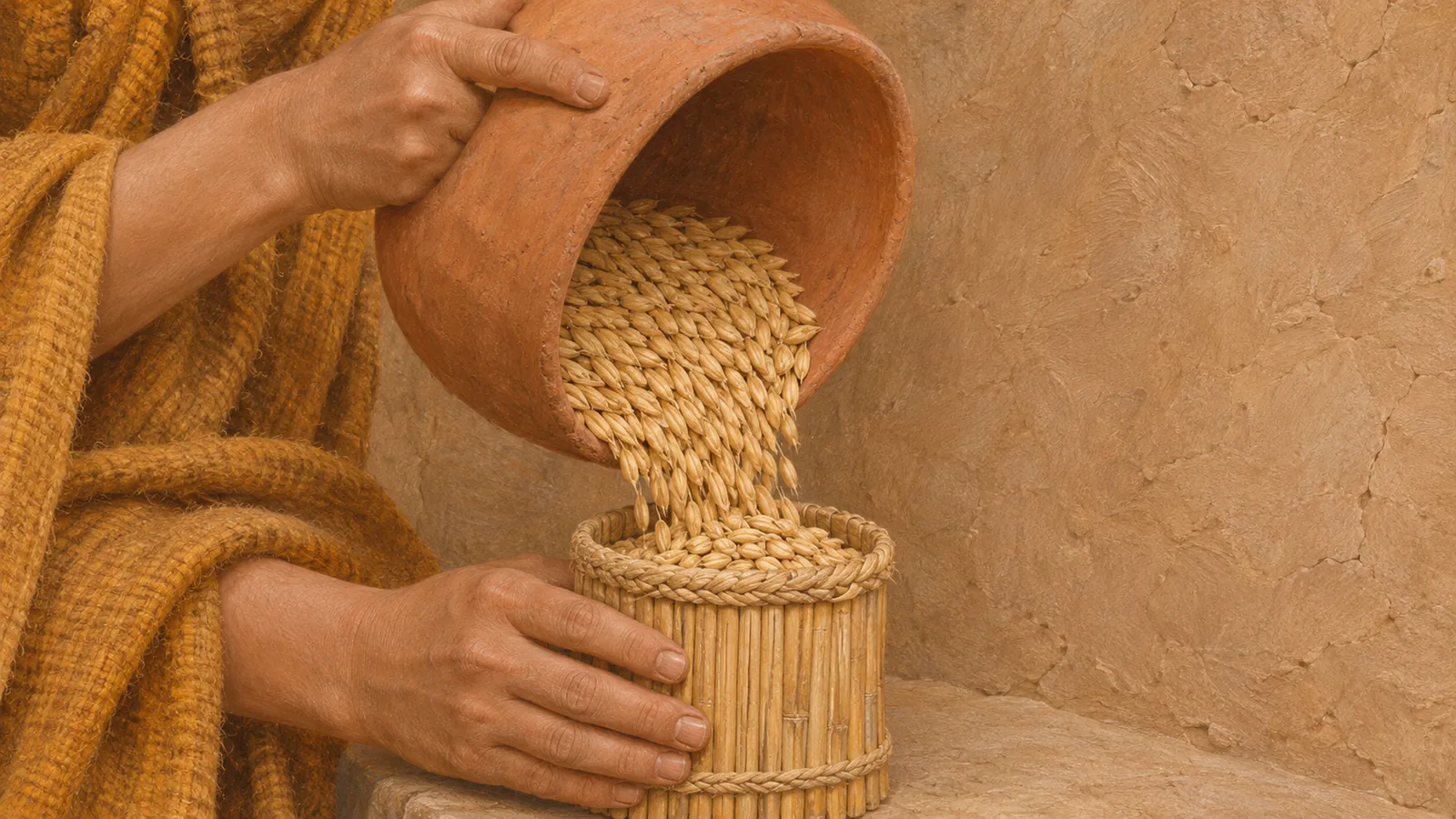
In one form of the reply, Enlil is made to say that Ishbi-Erra will measure out Sumer like grain. A phrase about counting now describes the fate of an entire land.
THE RECORDS
Contemporary accounts give a different kind of evidence. In several cities, dates stop using Ibbi-Sin’s year names. At Isin and Nippur, dates in Ishbi-Erra’s name begin to appear.
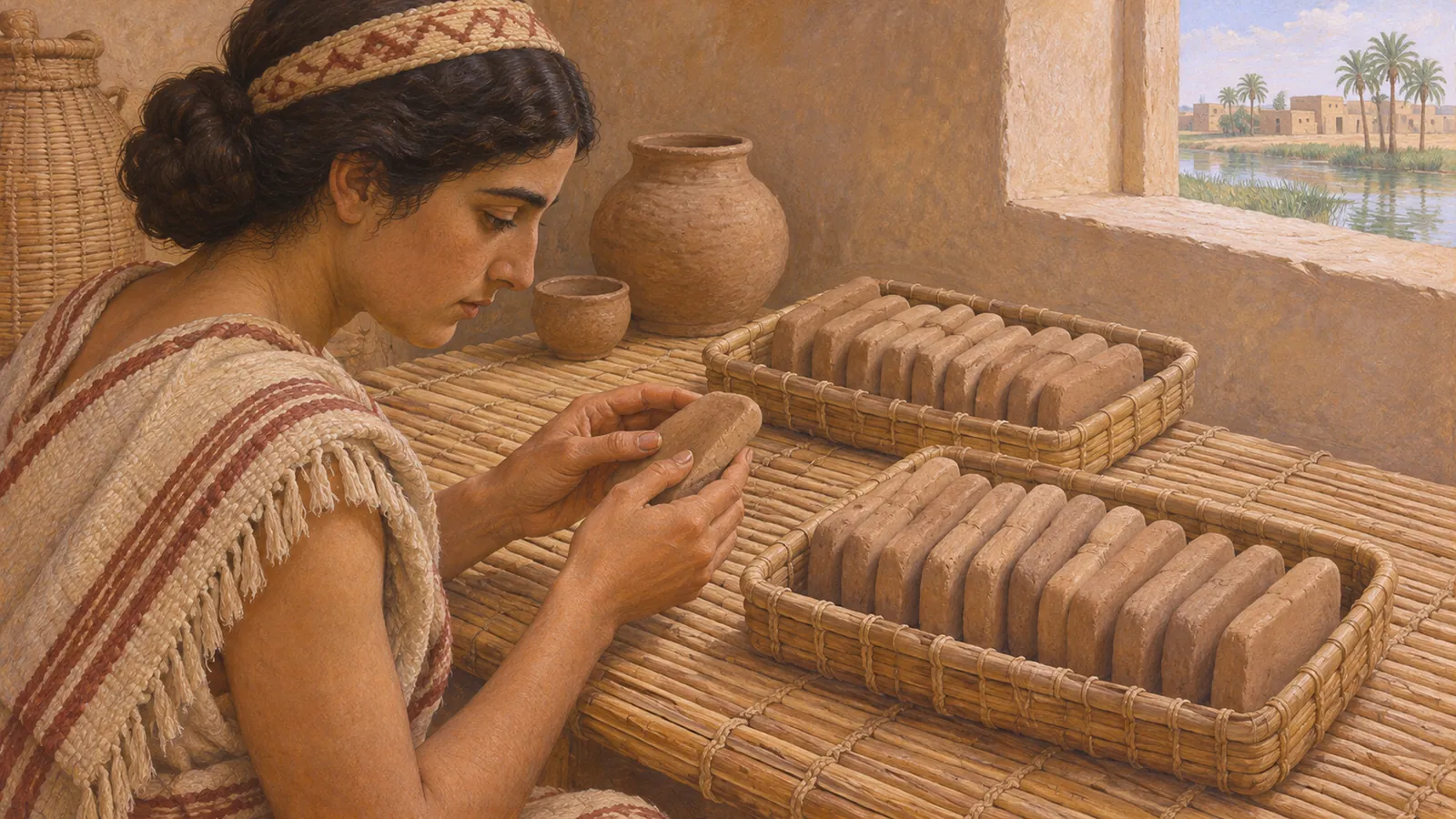
Isin’s scribes dated years by events chosen under their own ruler. One year name recalls a priestess taking office. Another commemorates a victory over armies from the east. The formulas trace a change of authority.
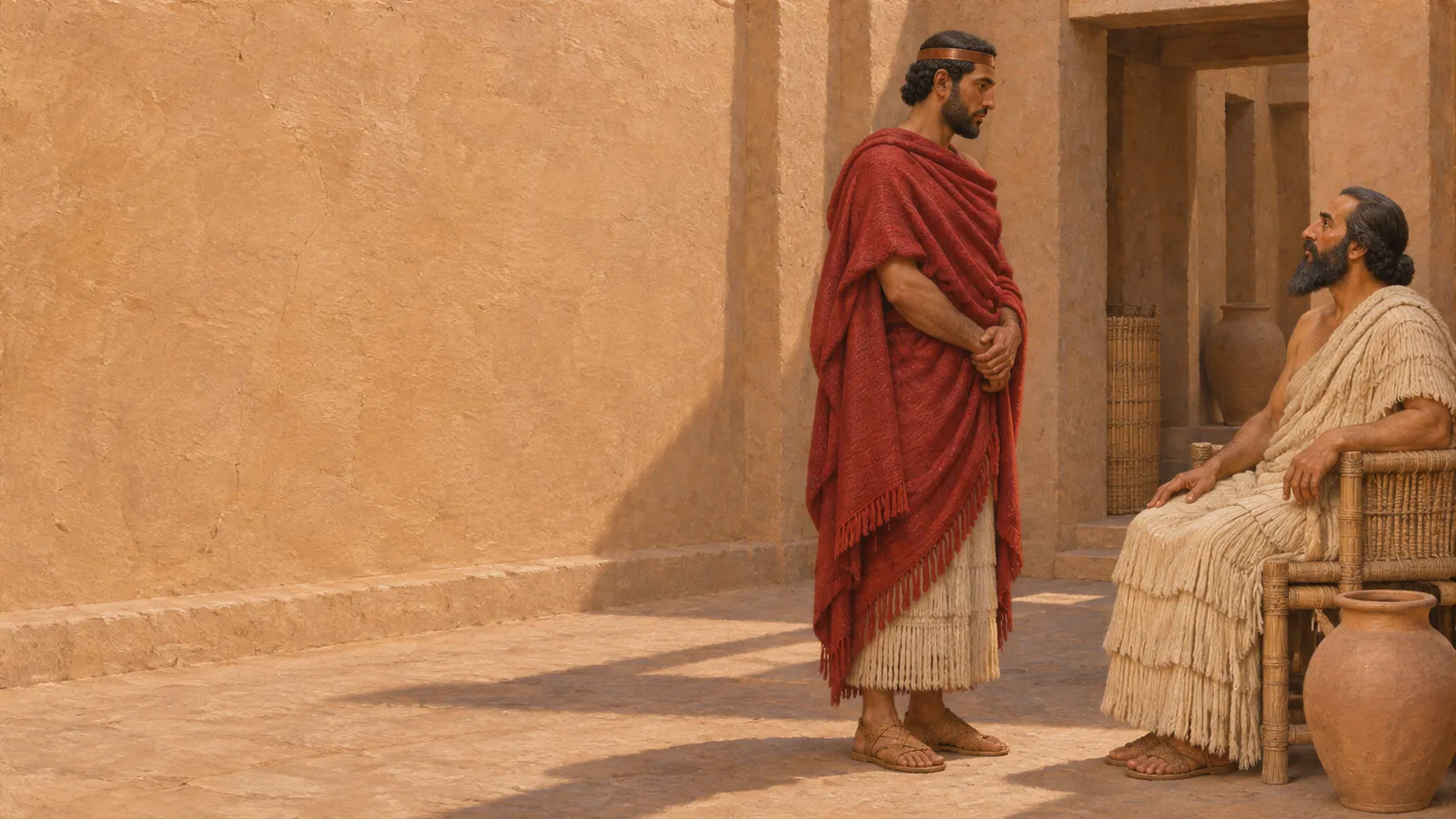
Ishbi-Erra became an independent ruler at Isin and founded a new dynasty there. His rise and Ur’s loss of authority can be traced, though the exact timing remains open.
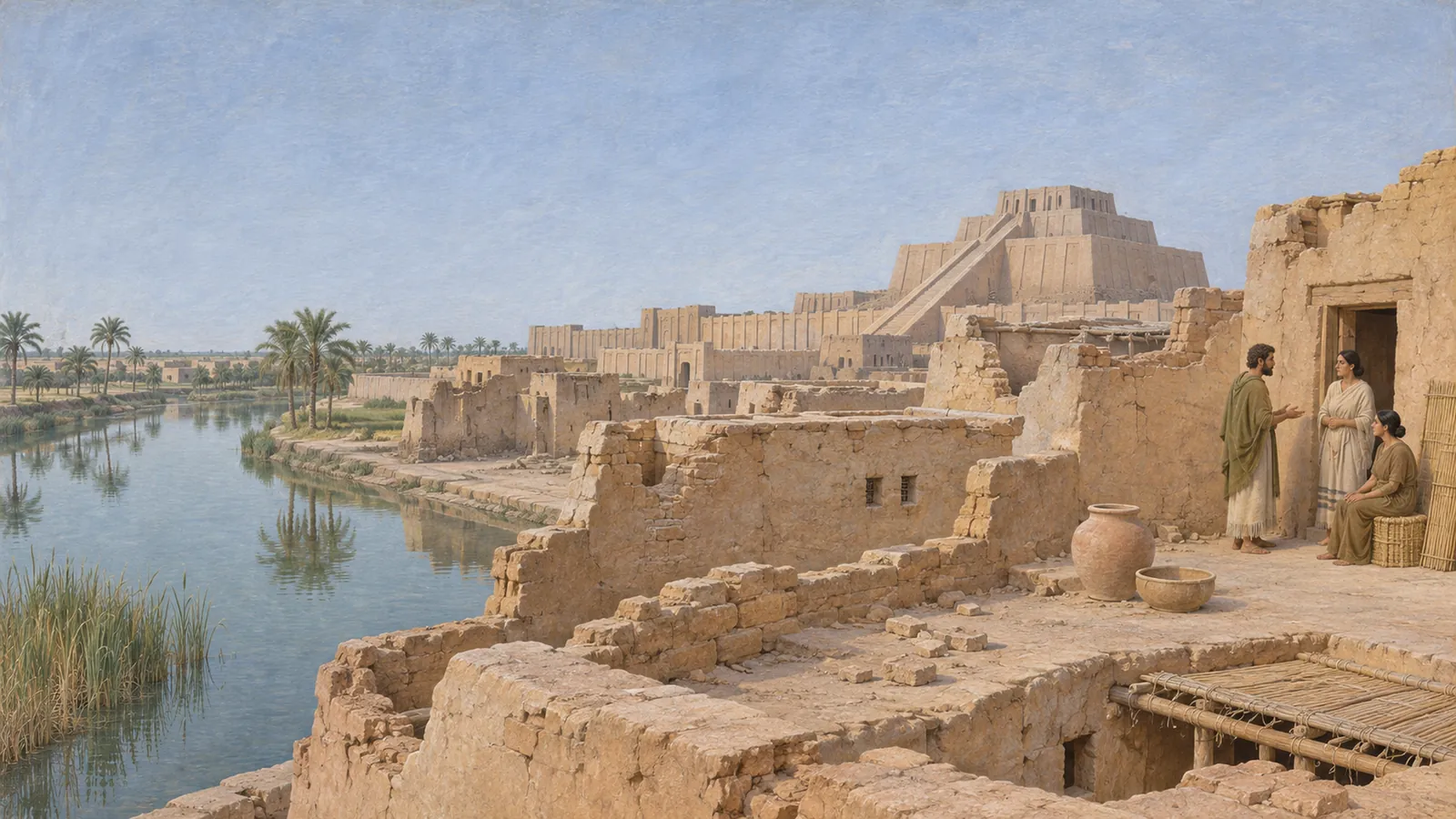
Forces associated with Elam and Shimashki brought the kingdom of Ur down around 2000 BCE. The letters and the dated records illuminate different parts of that period, and the exact sequence remains uncertain.
THE LAMENT
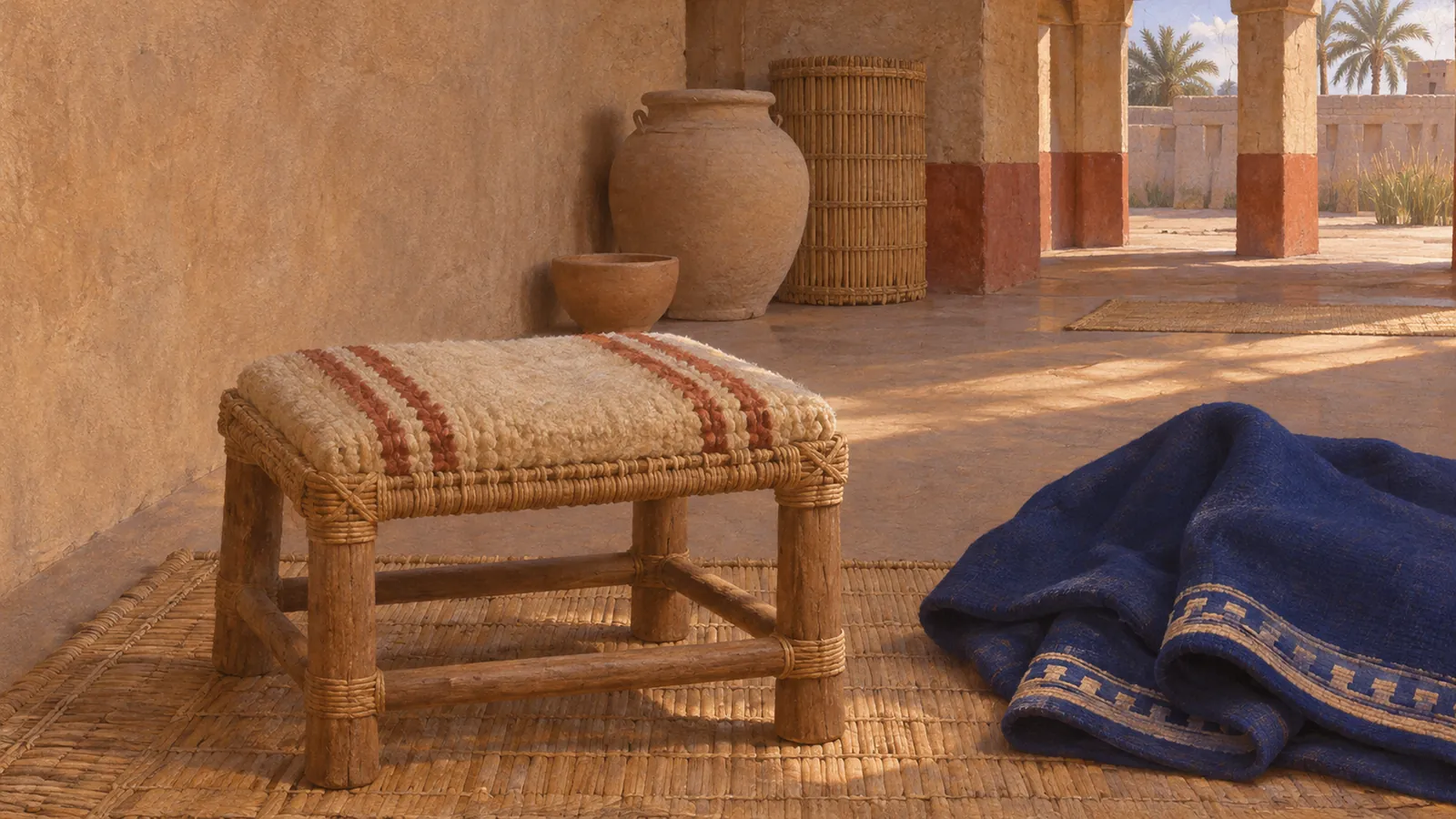
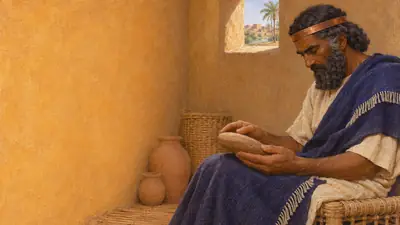
A separate poem, the Lament for Sumer and Ur, describes the king in his palace. Ibbi-Sin sits in anguish in E-namtila. The poet gives a private place to a public loss.
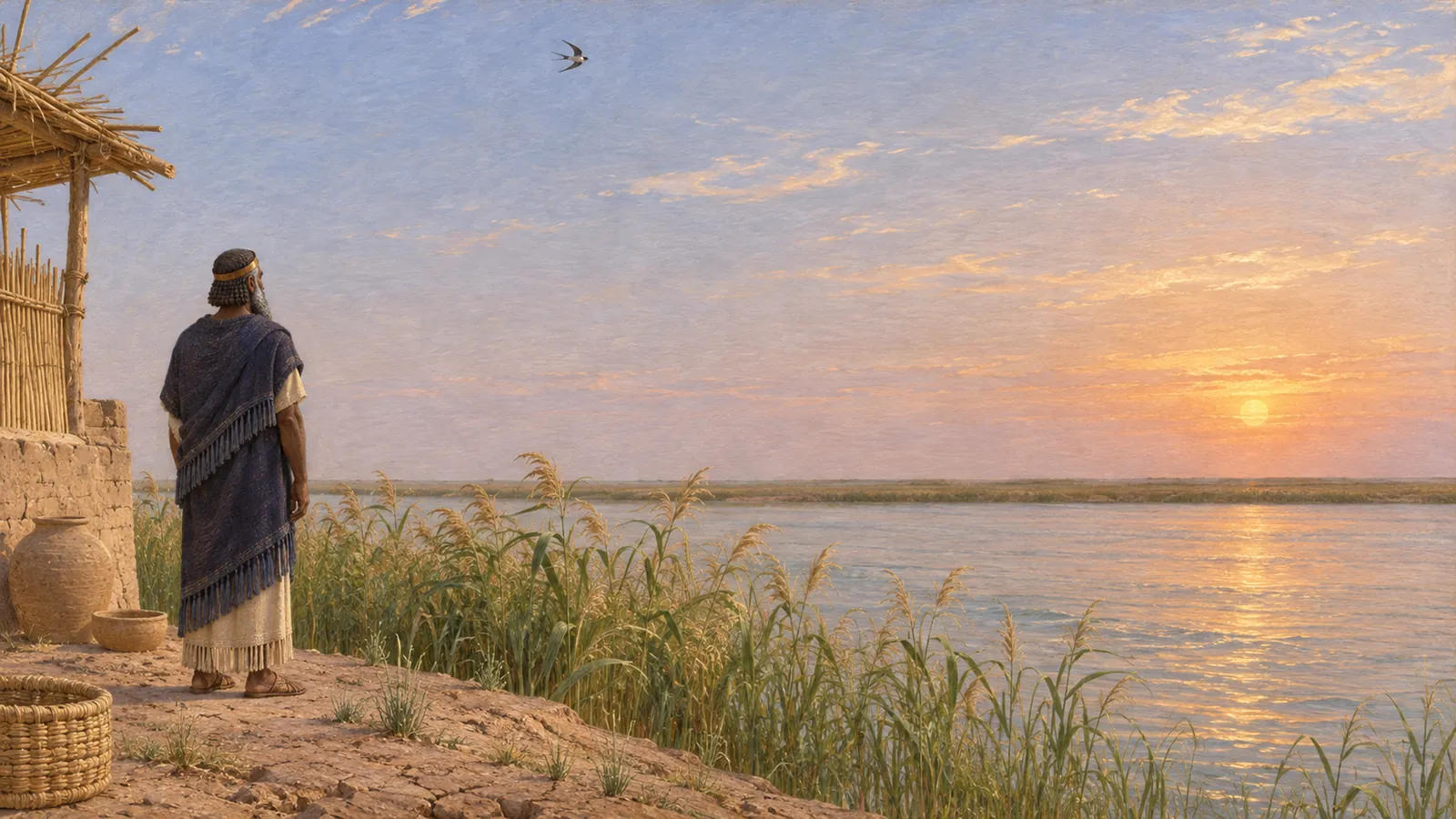
The same lament remembers Ibbi-Sin being taken captive to Elam. It places the loss of his city in a poem about homes, fields and the kingship of Ur.
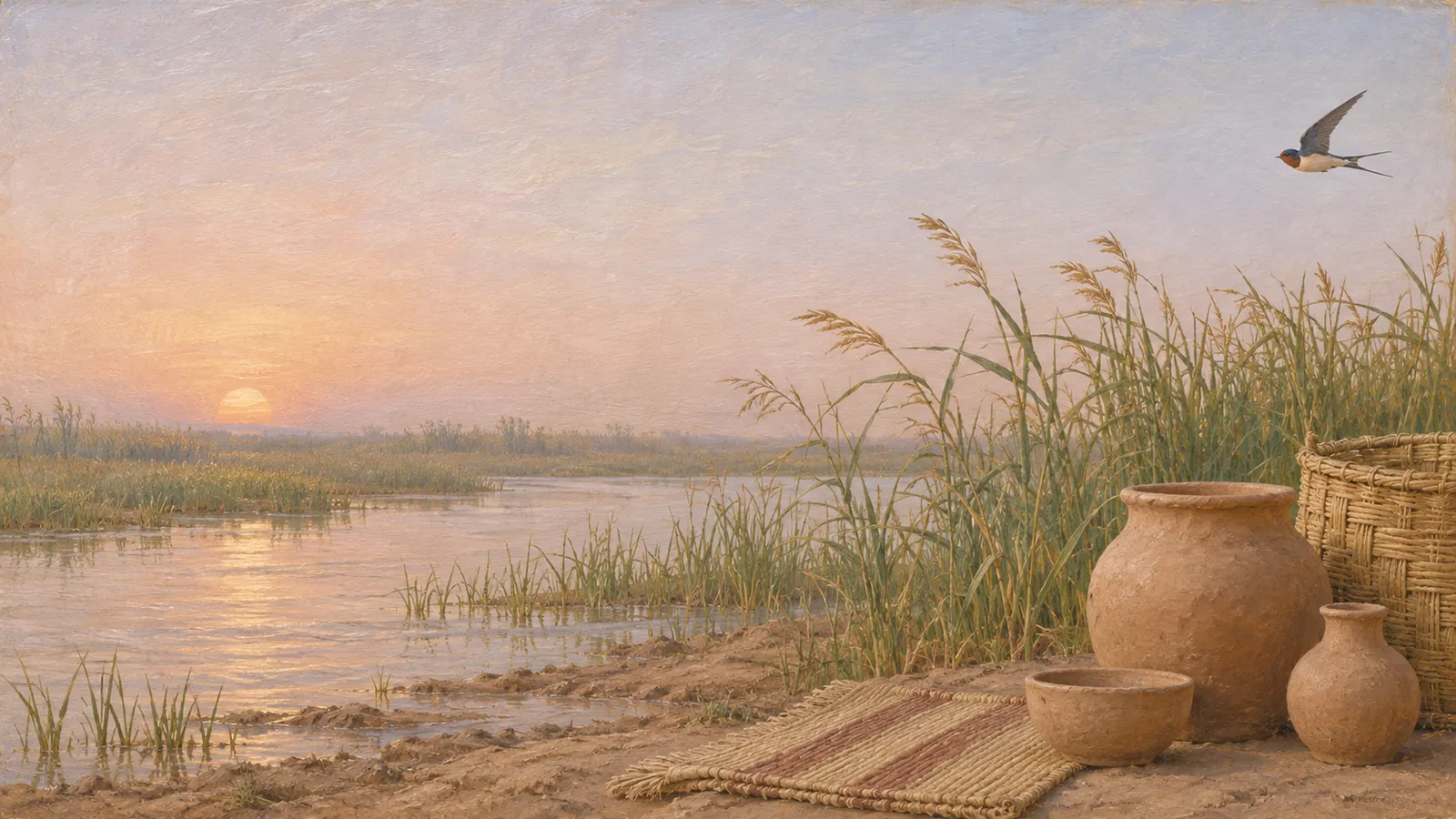
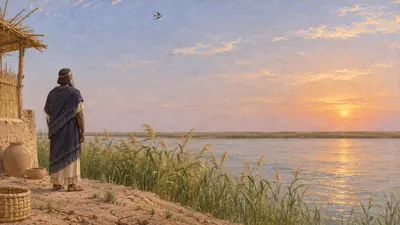
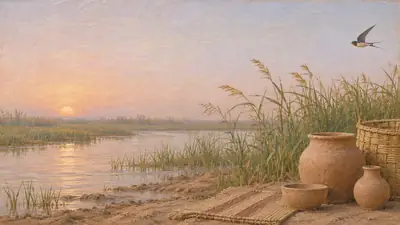
To describe the king’s absence the lament pictures a swallow flying from its home. The bird never returns. The image belongs to the poem’s memory of Ur and its last king.
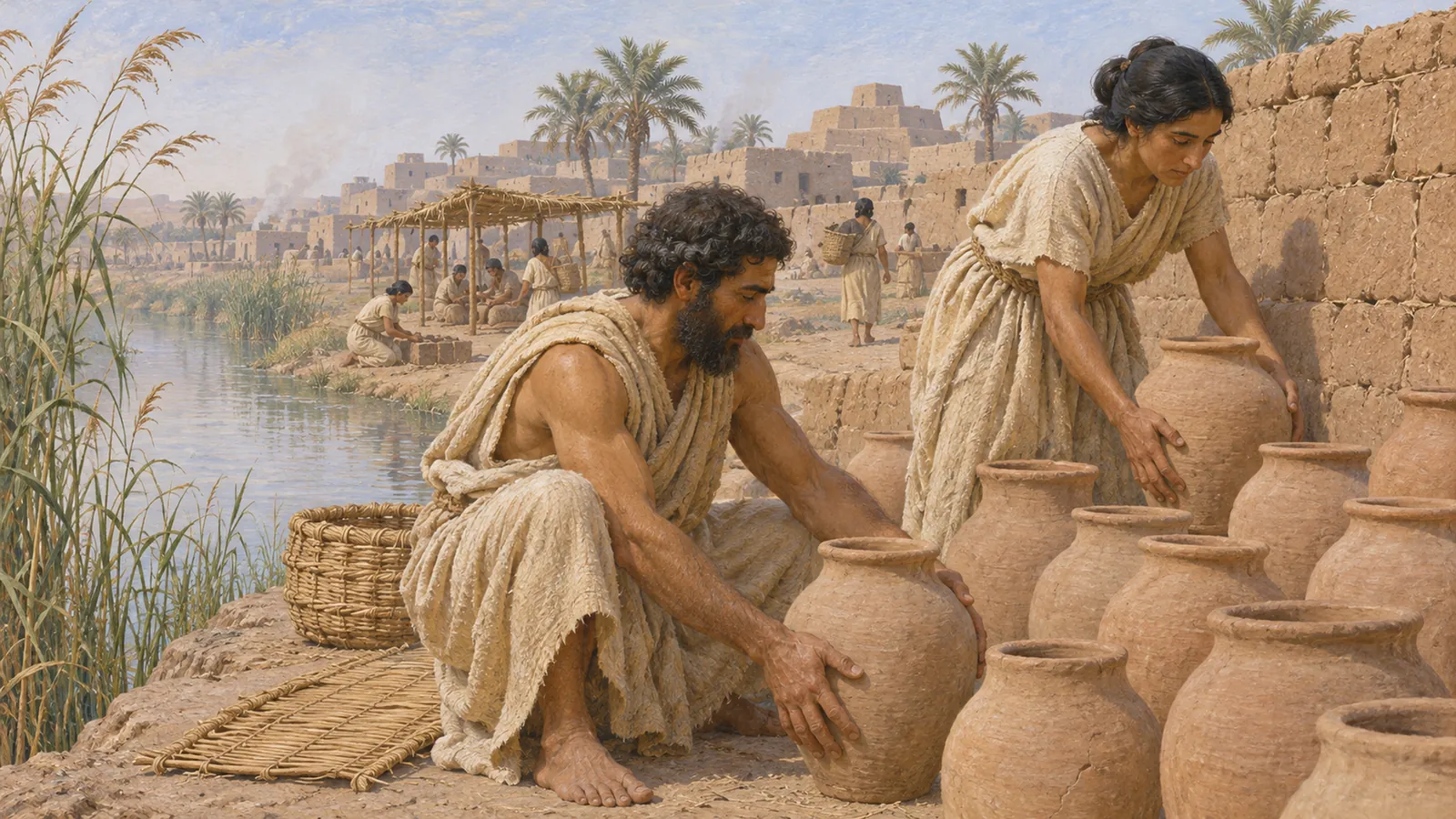
A later year name under Ishbi-Erra commemorates expelling Elamites who were in Ur. The city’s history continued after its dynasty, and its fate still entered the records kept under the kings of Isin.
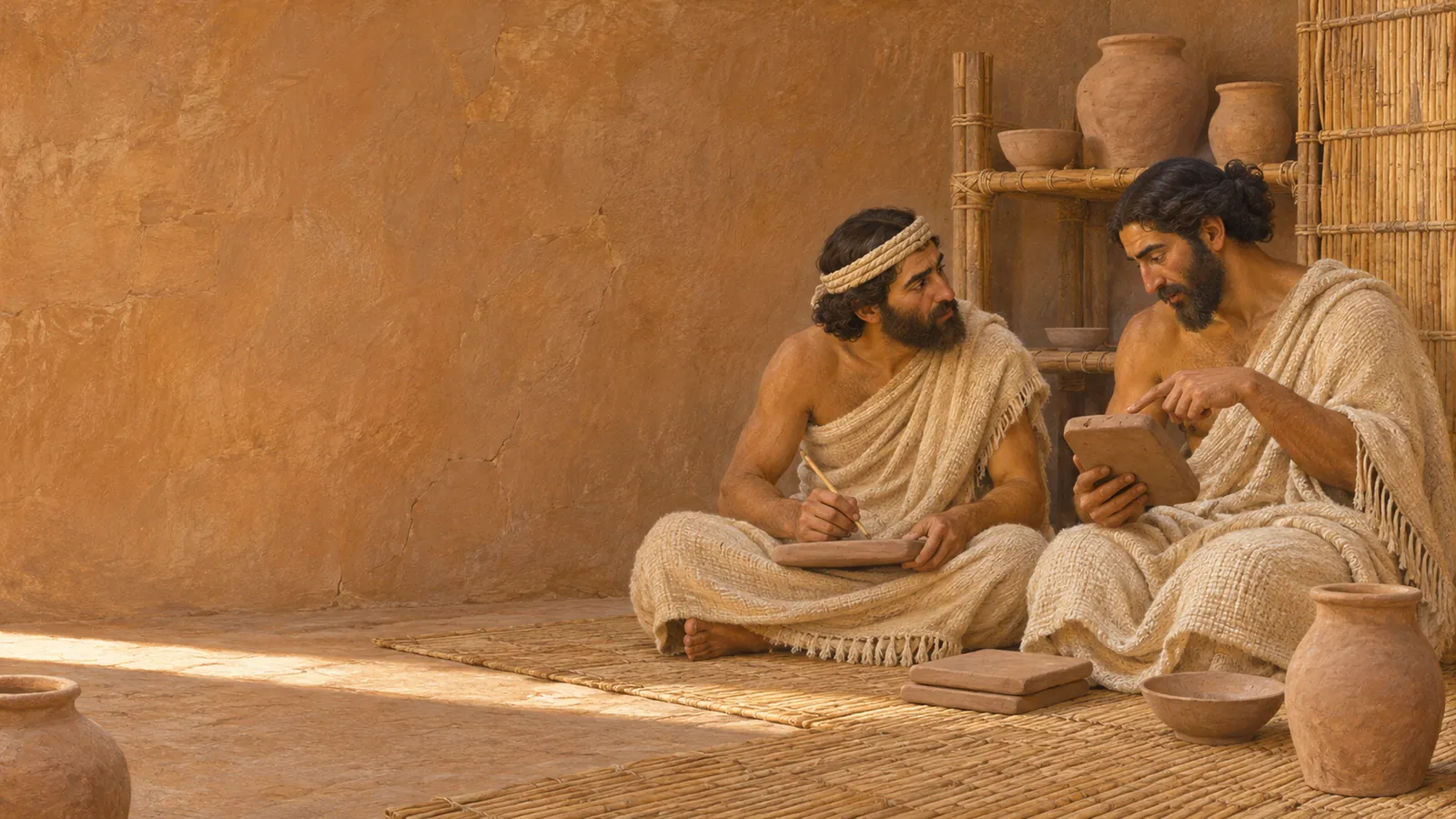
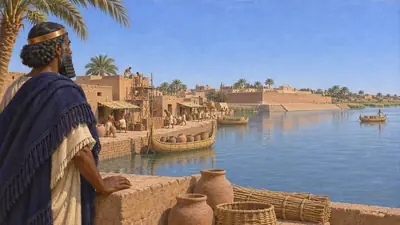
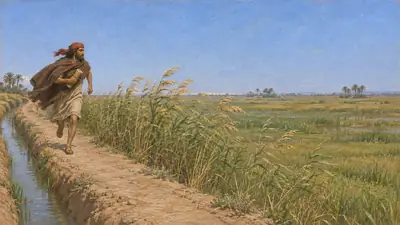
Later scribes kept copying the letters. They left scenes of grain weighed, boats requested and messages carried between cities. The words survived alongside songs and accounts that remembered Ur in other ways.
End of chapter 1
All pages
Sources
Editions consulted
- Piotr Michalowski, The Correspondence of the Kings of Ur, chapters 9 and 21–24
- CDLI P357156, Old Babylonian tablet with four letters
- Oxford ETCSL 3.1.17, Ishbi-Erra’s grain letter
- Oxford ETCSL 3.1.18, Ibbi-Sin’s response
- Oxford ETCSL 3.1.19, the governor’s report
- Oxford ETCSL 3.1.20, the king’s reply in two versions
- CDLI, Ishbi-Erra year names
- Oxford ETCSL 2.2.3, Lament for Sumer and Ur
Ancient lines behind each page
- Page 1: P357156; Michalowski, pp. 43–48
- Page 2: CDLI P357156; Michalowski, chs. 21–24
- Page 3: Michalowski, ch. 9; historical context
- Page 4: Michalowski ch. 21, ll. 1–4; ETCSL 3.1.17, ll. 1–4
- Page 5: Michalowski ch. 21, ll. 3–4; ETCSL 3.1.17, ll. 3–6
- Page 6: Michalowski ch. 21, ll. 5–6; ETCSL 3.1.17, ll. 5–6
- Page 7: Michalowski ch. 21, l. 7; ETCSL 3.1.17, ll. 7–12
- Page 8: Michalowski ch. 21, ll. 8–12; ETCSL 3.1.17, ll. 7–12
- Page 9: ETCSL 3.1.17, 7–12
- Page 10: Michalowski ch. 21, ll. 13–17; ETCSL 3.1.17, ll. 13–16
- Page 11: ETCSL 3.1.17, 17–21
- Page 12: Michalowski ch. 21, ll. 16–22; ETCSL 3.1.17, ll. 17–23
- Page 13: Michalowski ch. 21, ll. 23–28; ETCSL 3.1.17, ll. 24–30
- Page 14: Michalowski ch. 21, ll. 29–30; ETCSL 3.1.17, ll. 31–33
- Page 15: Michalowski ch. 21, Part B; ETCSL 3.1.17, ll. 34–58
- Page 16: ETCSL 3.1.17, 38–55
- Page 17: Michalowski ch. 22, B ll. 1–10; ETCSL 3.1.18, ll. 1–10
- Page 18: Michalowski ch. 22, A ll. 5–7 and B ll. 11–13; ETCSL 3.1.18, ll. 11–13
- Page 19: Michalowski ch. 22, B ll. 14–18; ETCSL 3.1.18, ll. 14–18
Manuscript witnesses differ in detail. - Page 20: ETCSL 3.1.18, 14–18
- Page 21: Michalowski ch. 23, ll. 1–6; ETCSL 3.1.19, ll. 1–6
- Page 22: Michalowski ch. 23, ll. 6–28; ETCSL 3.1.19, ll. 7–29
- Page 23: ETCSL 3.1.19, 7–14
- Page 24: ETCSL 3.1.19, 18–25
- Page 25: ETCSL 3.1.19, 26–32; CDLI, Ishbi-Erra year 12
- Page 26: ETCSL 3.1.19, 33–34
- Page 27: Michalowski ch. 23, ll. 29–51; ETCSL 3.1.19, ll. 30–53
- Page 28: ETCSL 3.1.19, 43–53
- Page 29: Michalowski ch. 24; ETCSL 3.1.20 A, ll. 6–19
- Page 30: ETCSL 3.1.20, A 20–28 and B 14–23
- Page 31: Michalowski ch. 24; ETCSL 3.1.20 A, ll. 20–34
- Page 32: Michalowski, pp. 175–205; historical evidence of year names
- Page 33: Michalowski, ch. 9, pp. 181–205; CDLI, Ishbi-Erra year names 11, 16
- Page 34: Michalowski, ch. 9, esp. pp. 202–203; historical evidence
- Page 35: Michalowski, pp. 202–203; historical aftermath
- Page 36: ETCSL 2.2.3, 104–111
- Page 37: Lament for Sumer and Ur, ll. 31–37; Michalowski, pp. 201–203
- Page 38: ETCSL 2.2.3, 31–37
- Page 39: CDLI, Ishbi-Erra year names 27–28
- Page 40: P357156; P473730; Michalowski, chs. 2 and 9
Illustrations made with AI tools by IL Archive; the text is based on the ancient sources (see the sources at the end of each chapter).