The Shipwrecked Sailor Chapter 1
The Shipwrecked Sailor
At a safe landing, a sailor tells his expedition leader how an earlier voyage left him alone on an island. A speaking serpent offers him hope of returning home, and his experience becomes advice for the leader.
SourcesTurn the pages with the arrows, the arrow keys or a swipe.
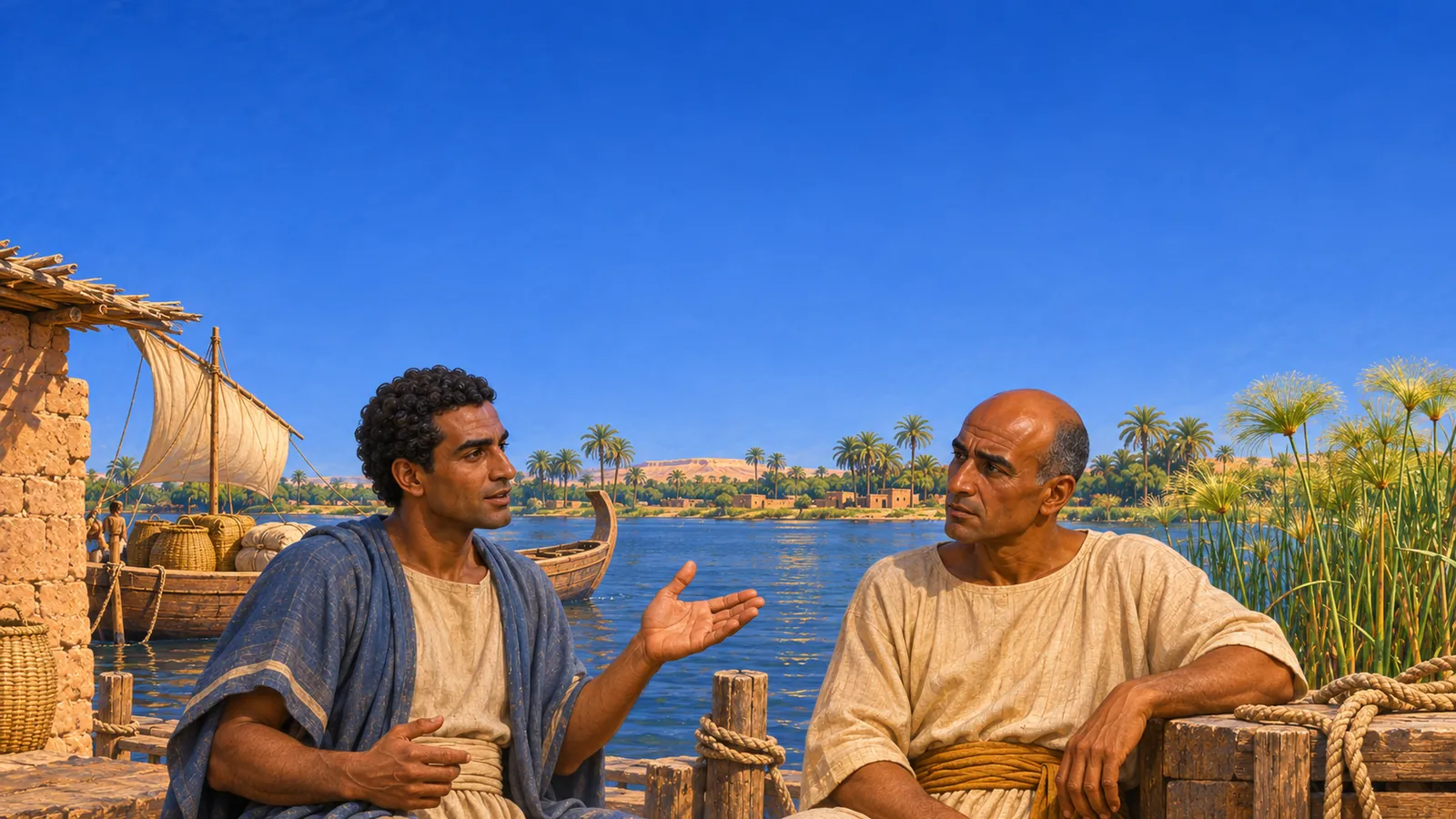
THE SHIPWRECKED SAILOR
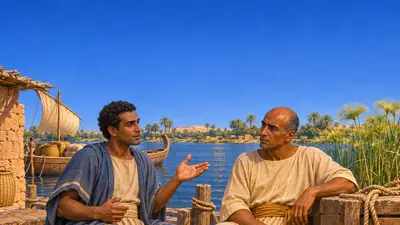
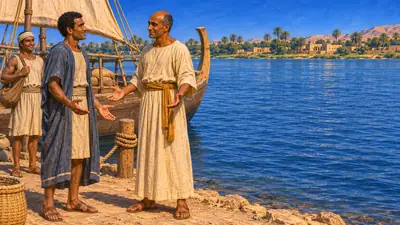
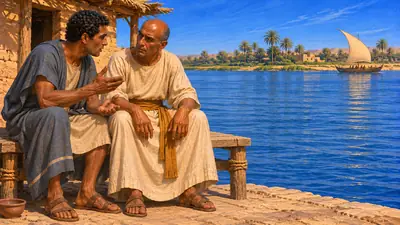
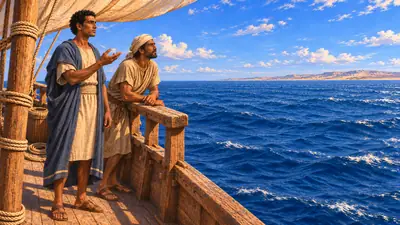
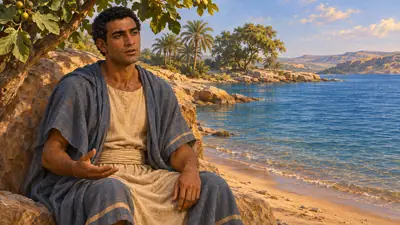
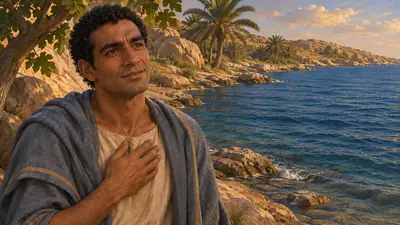
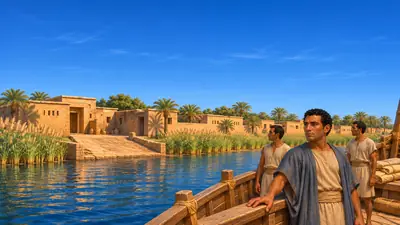
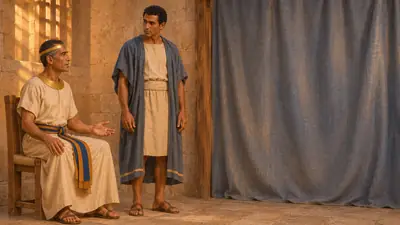
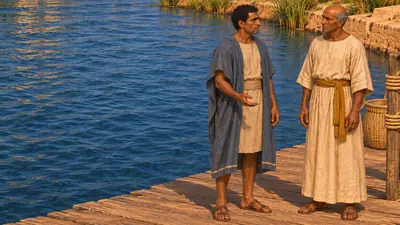
The surviving story opens with a sailor addressing his expedition leader. He asks the leader to take heart because they have reached home.
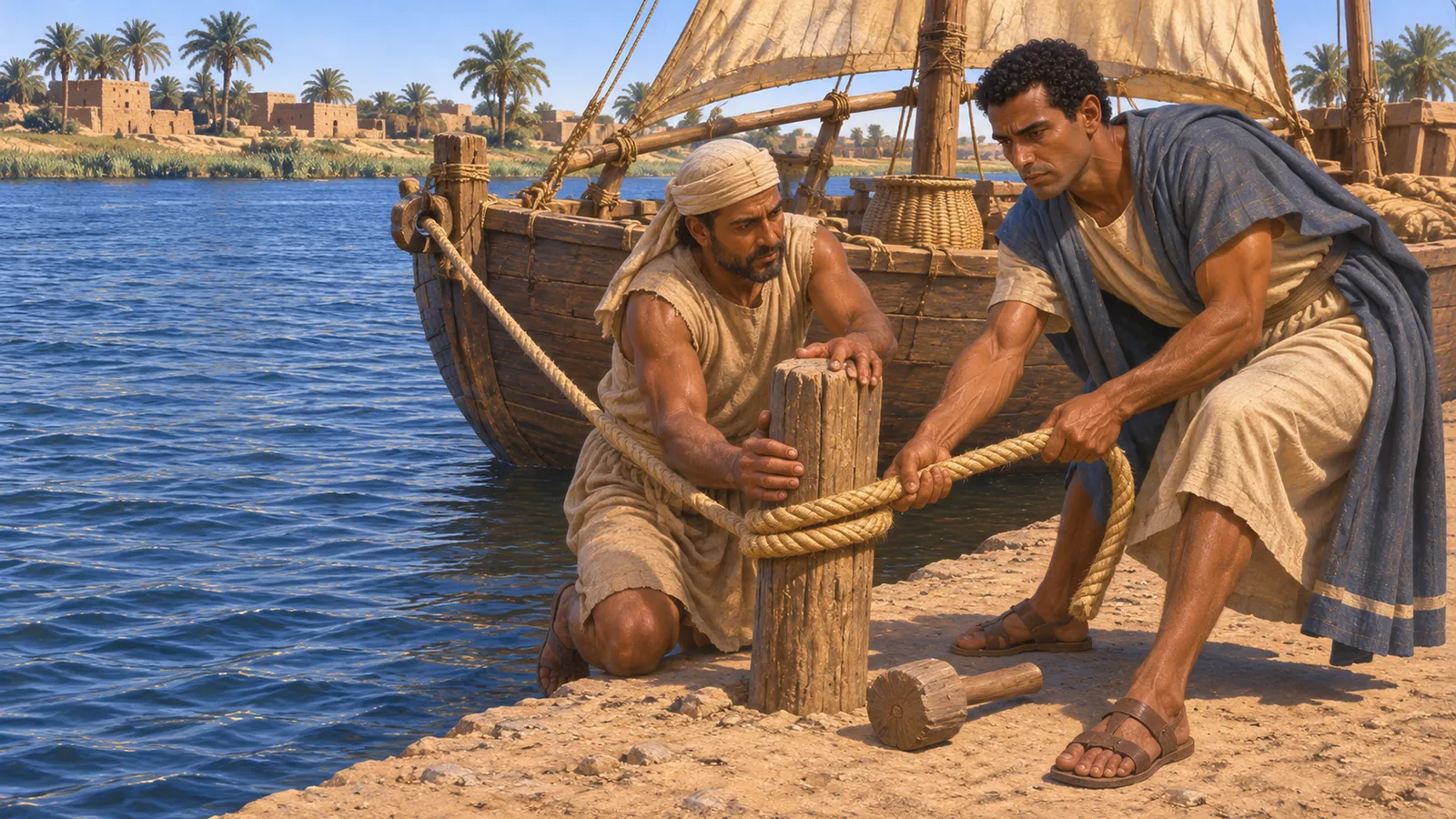
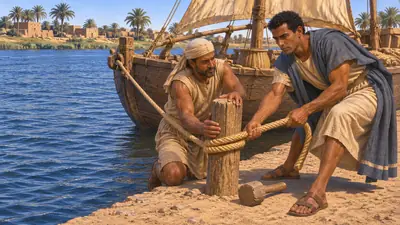
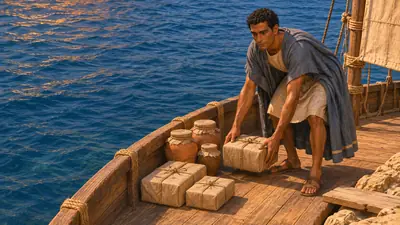
The sailor points to the signs of safe arrival. The crew drives in the mooring post and passes the bow line ashore.
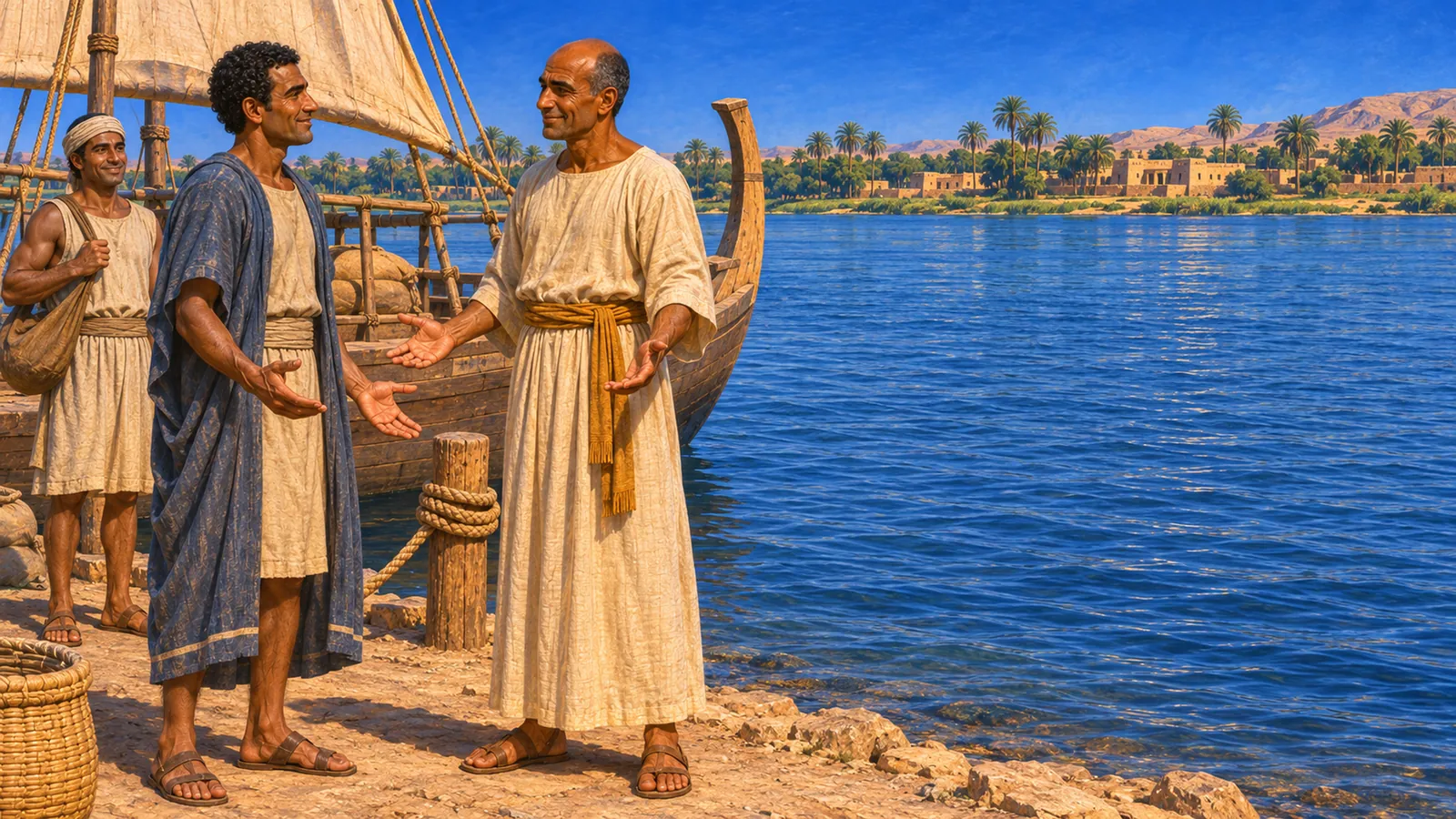
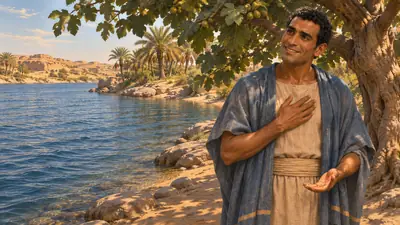
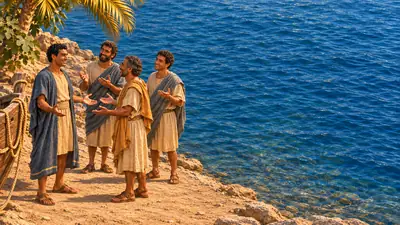
The crew gives thanks and greets one another. The sailor reminds his leader that the whole expedition has come back safely.
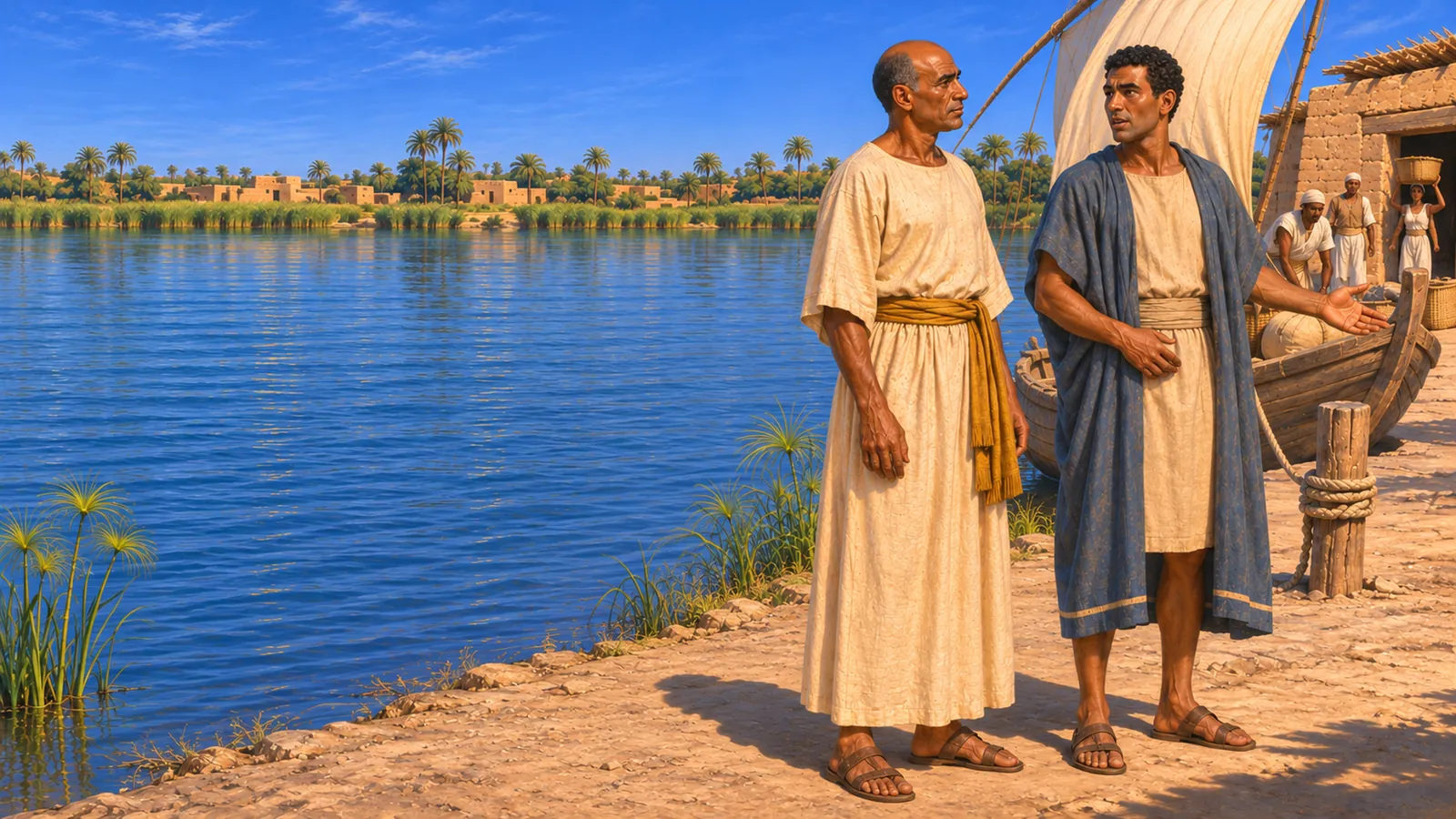
The sailor recalls leaving Wawat behind and passing Senmwt. These names belong to the journey that has just brought the expedition back to Egypt.
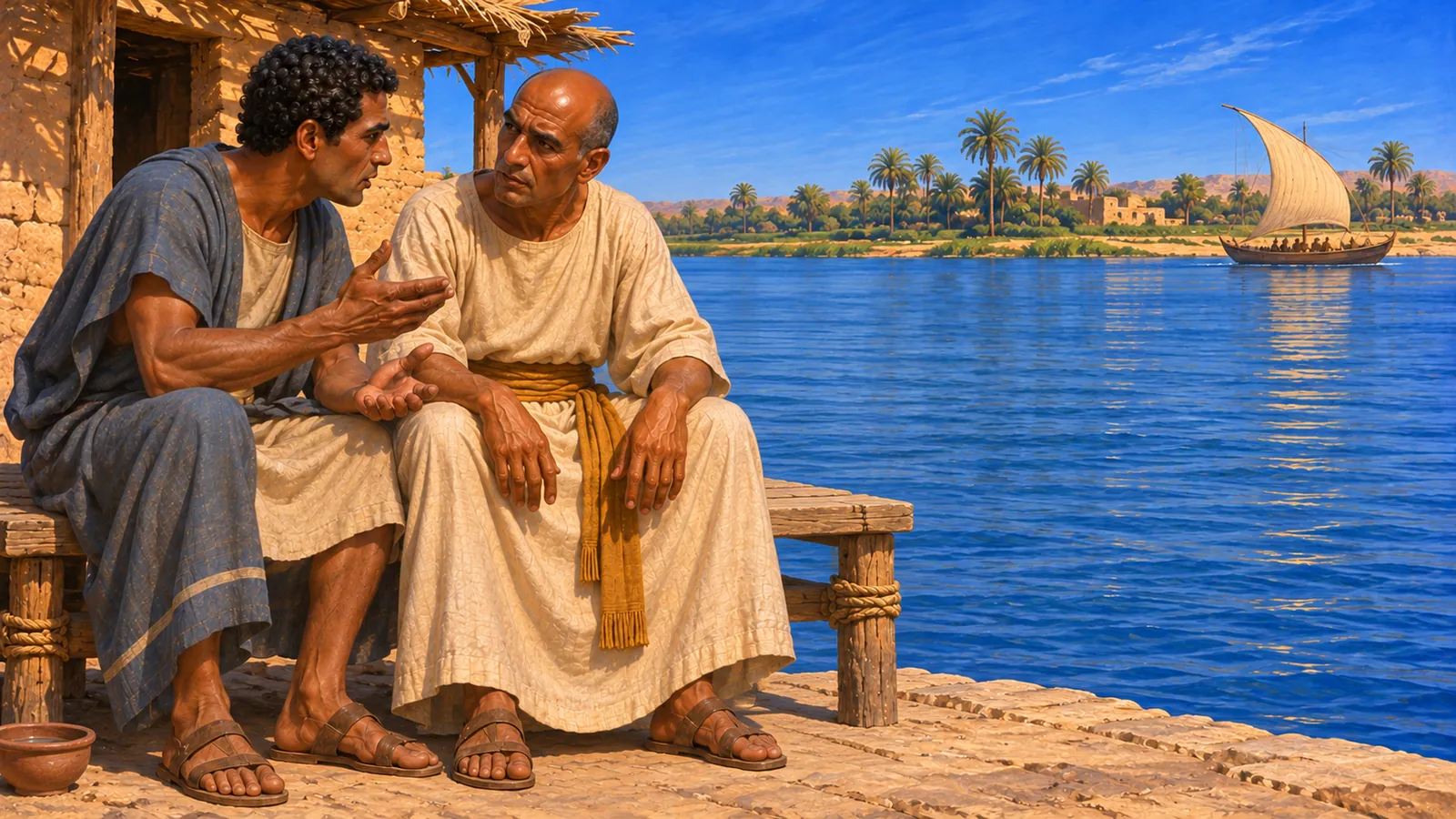
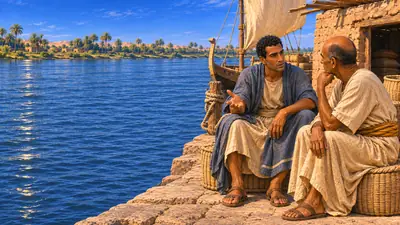
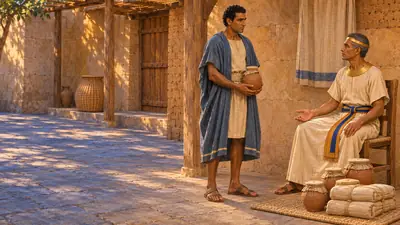
The sailor advises his leader to wash his fingers and keep his composure. Soon the leader will be asked to speak before the king.
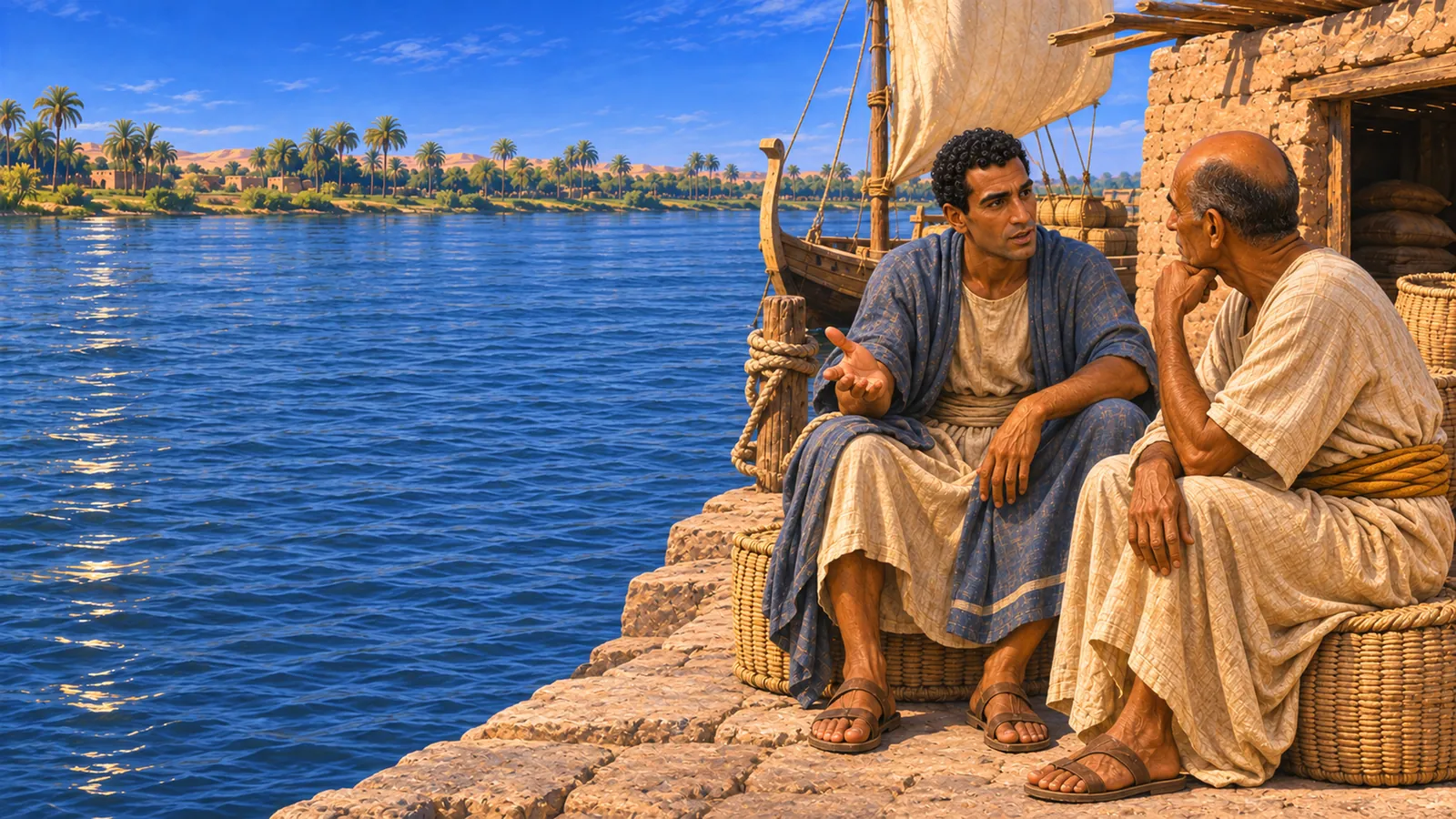
AN EARLIER VOYAGE
The sailor says that knowing how to speak can protect a person. Then he offers to tell his leader about something that happened to him on a previous journey.
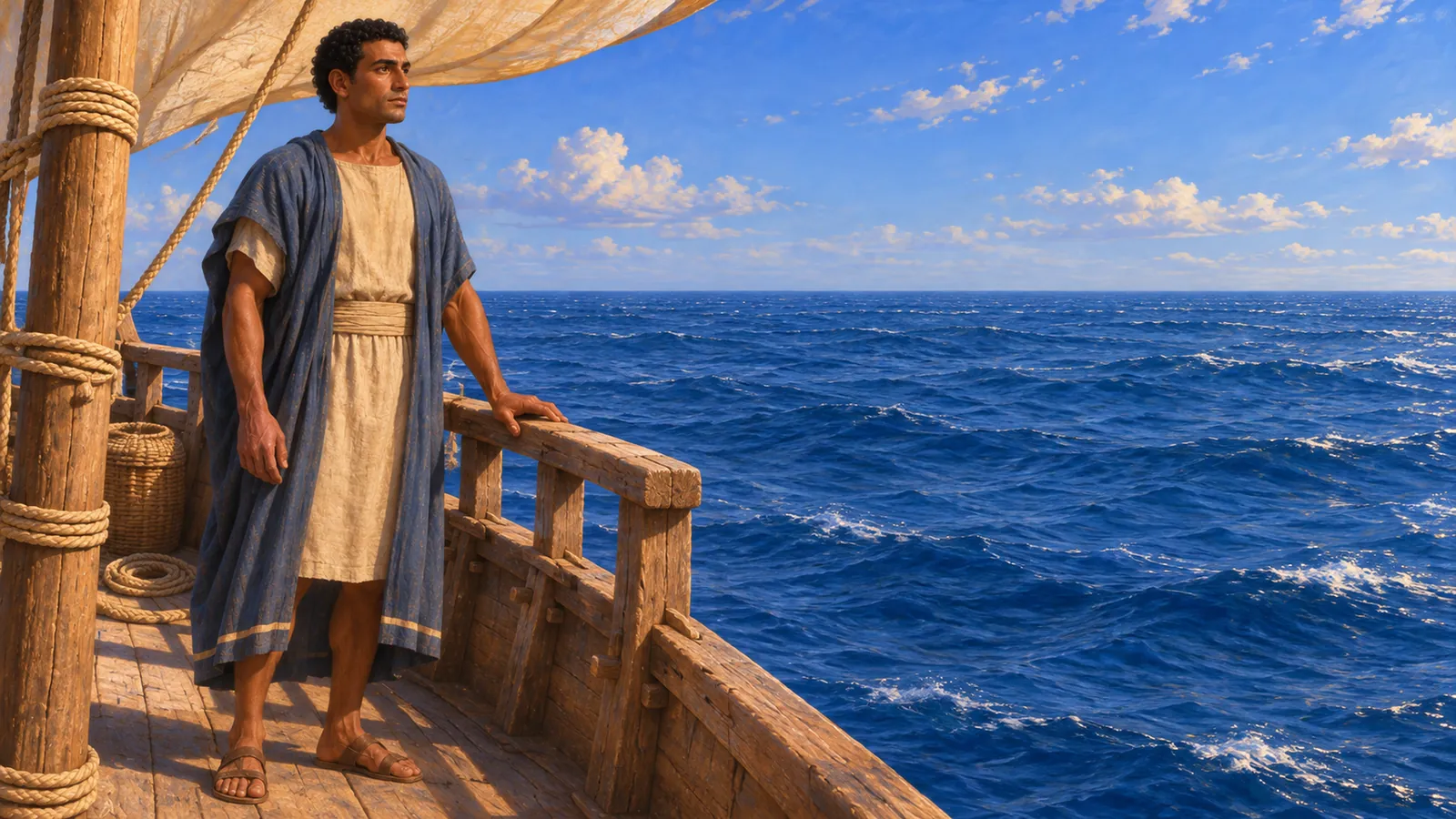
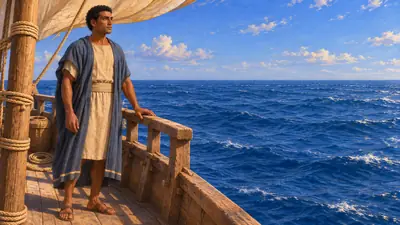
The sailor begins his account of the earlier journey. He says that he was sent to the ruler’s mines and traveled there by sea.
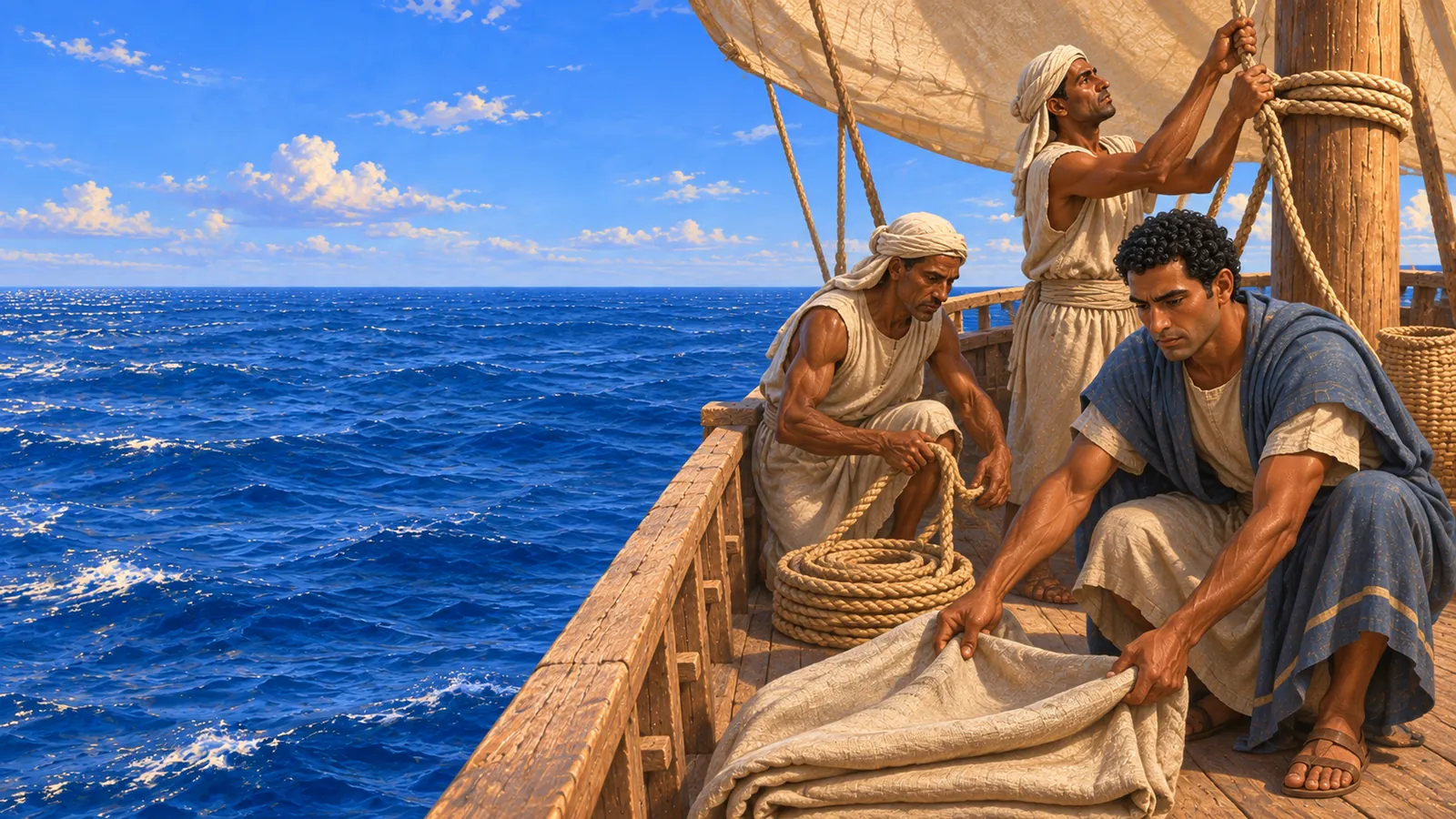
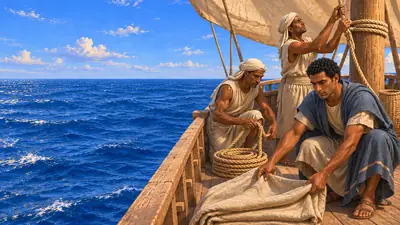
The sailor remembers a ship a hundred and twenty cubits long and forty wide. It carried a hundred and twenty sailors chosen from among Egypt’s crews.
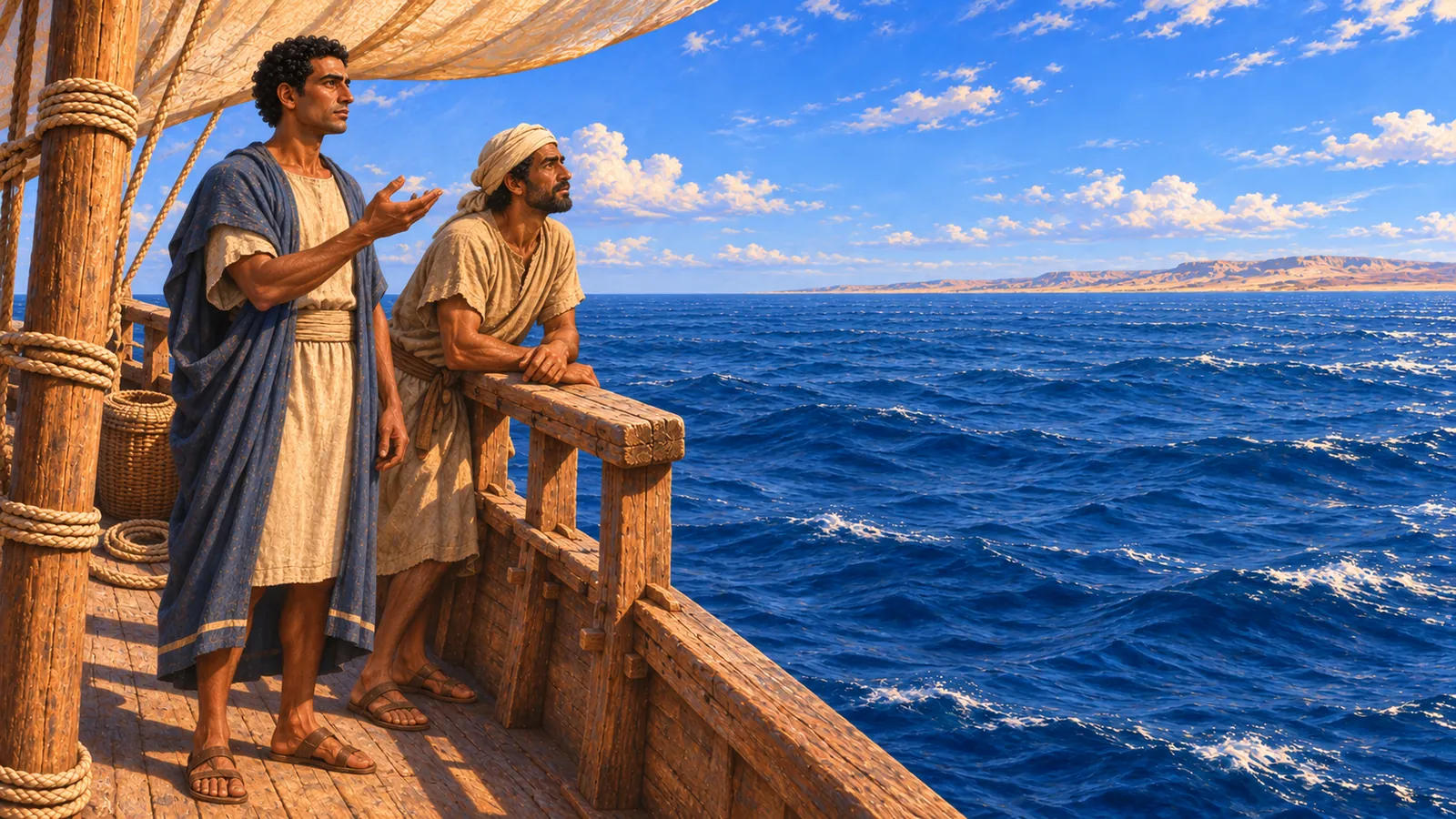
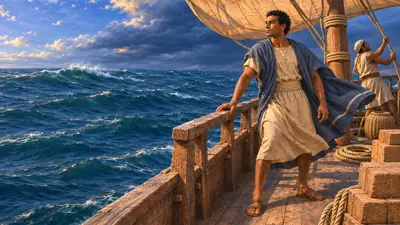
In the sailor’s account, the crew knew how to watch the sky and the land. They could tell when bad weather was on its way.
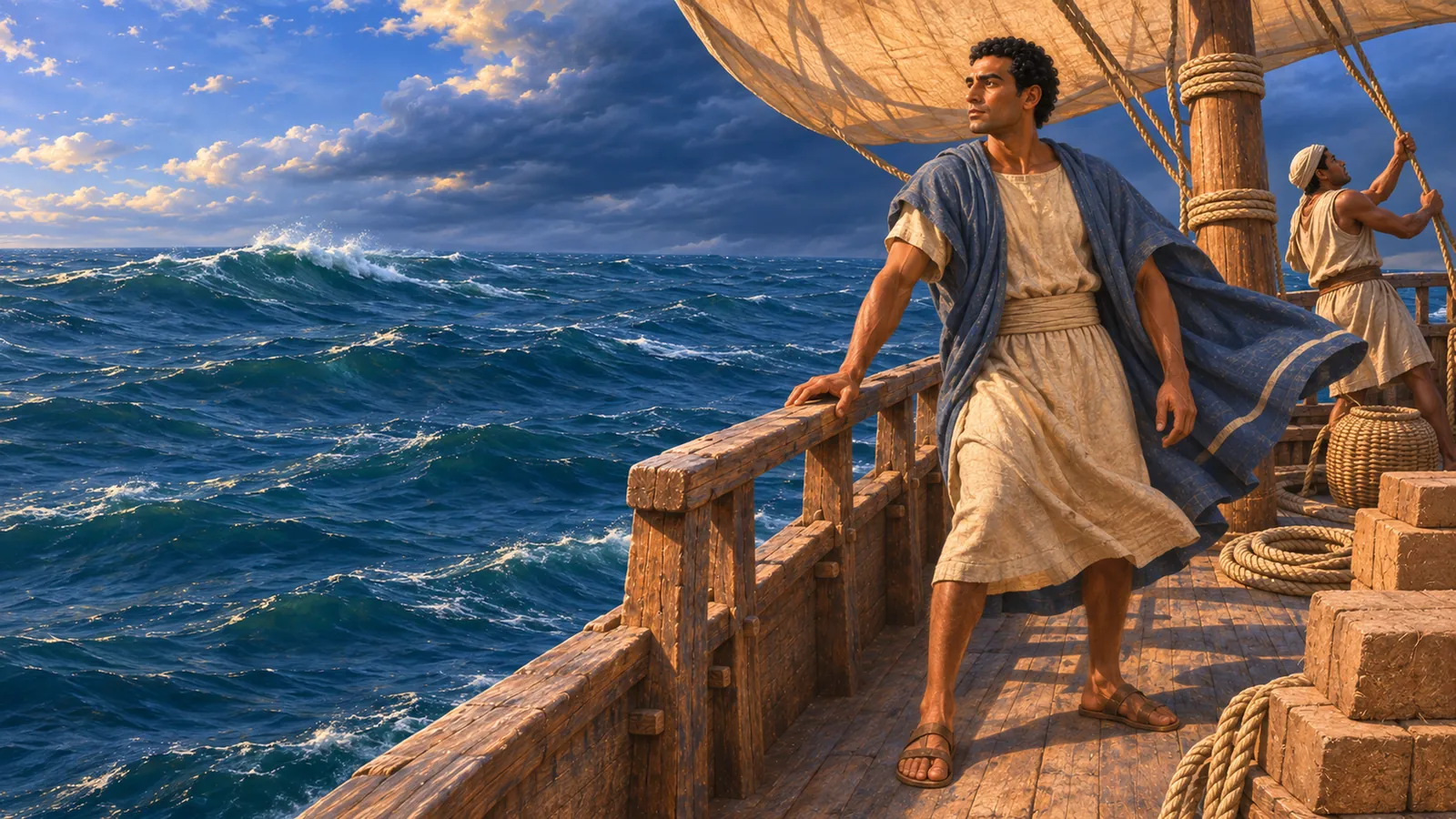
Before the ship can reach land, wind rises on the open sea. The sailor remembers a high wave that came with the storm.

The sailor holds on to a piece of floating wood. The ship is wrecked, and none of the other sailors survive.

THE ISLAND
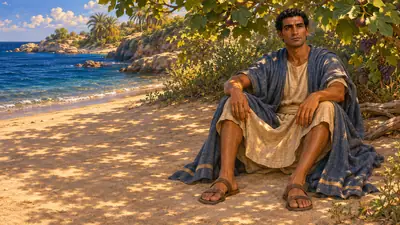
A wave brings the sailor to an island. He finds himself alone there and says his own heart was his only companion.
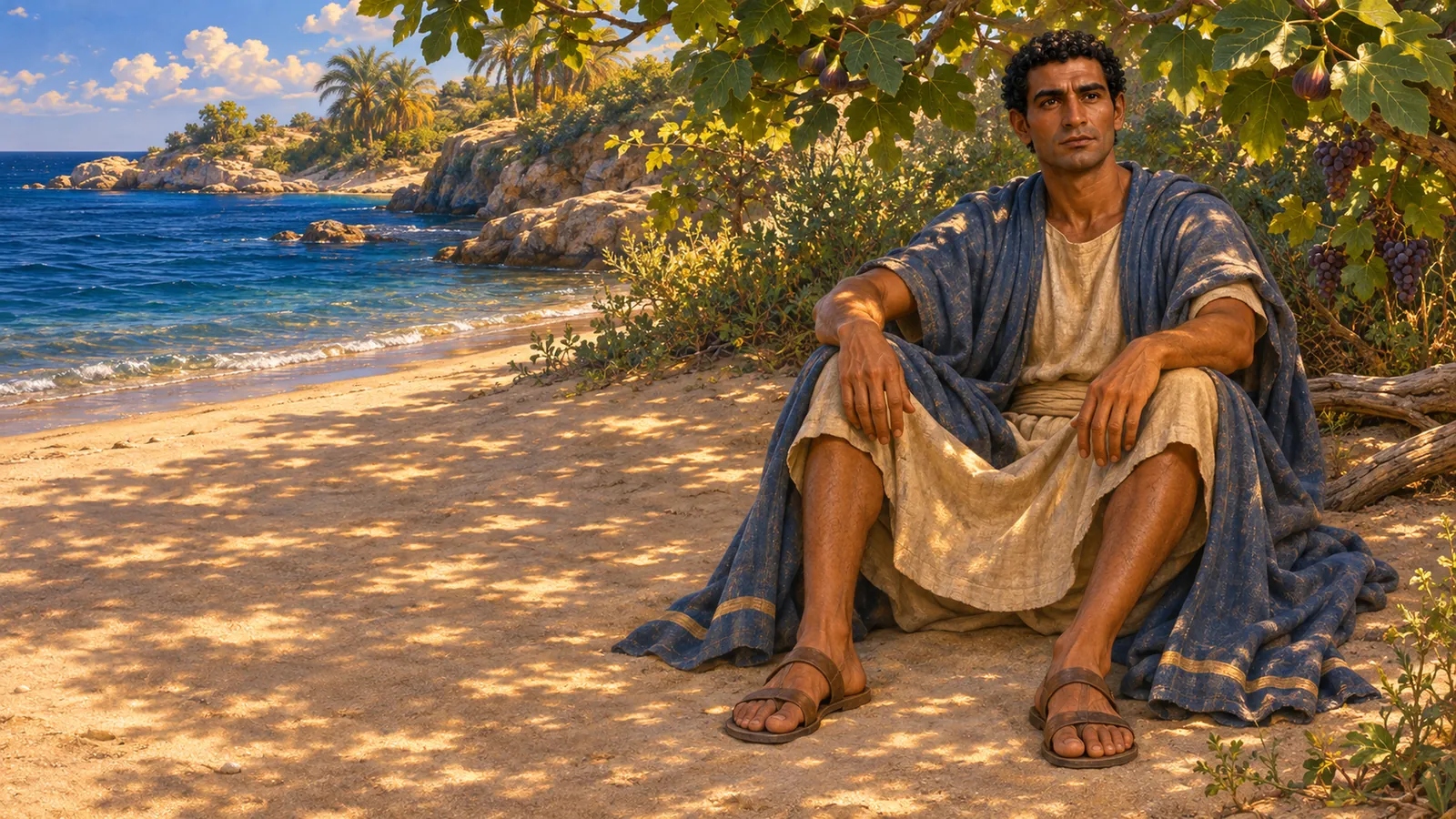
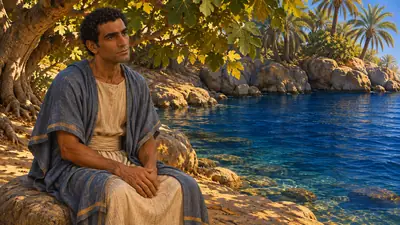
The sailor rests in a sheltered patch of shade. He remembers lying there alone among the wood and brush of the island.
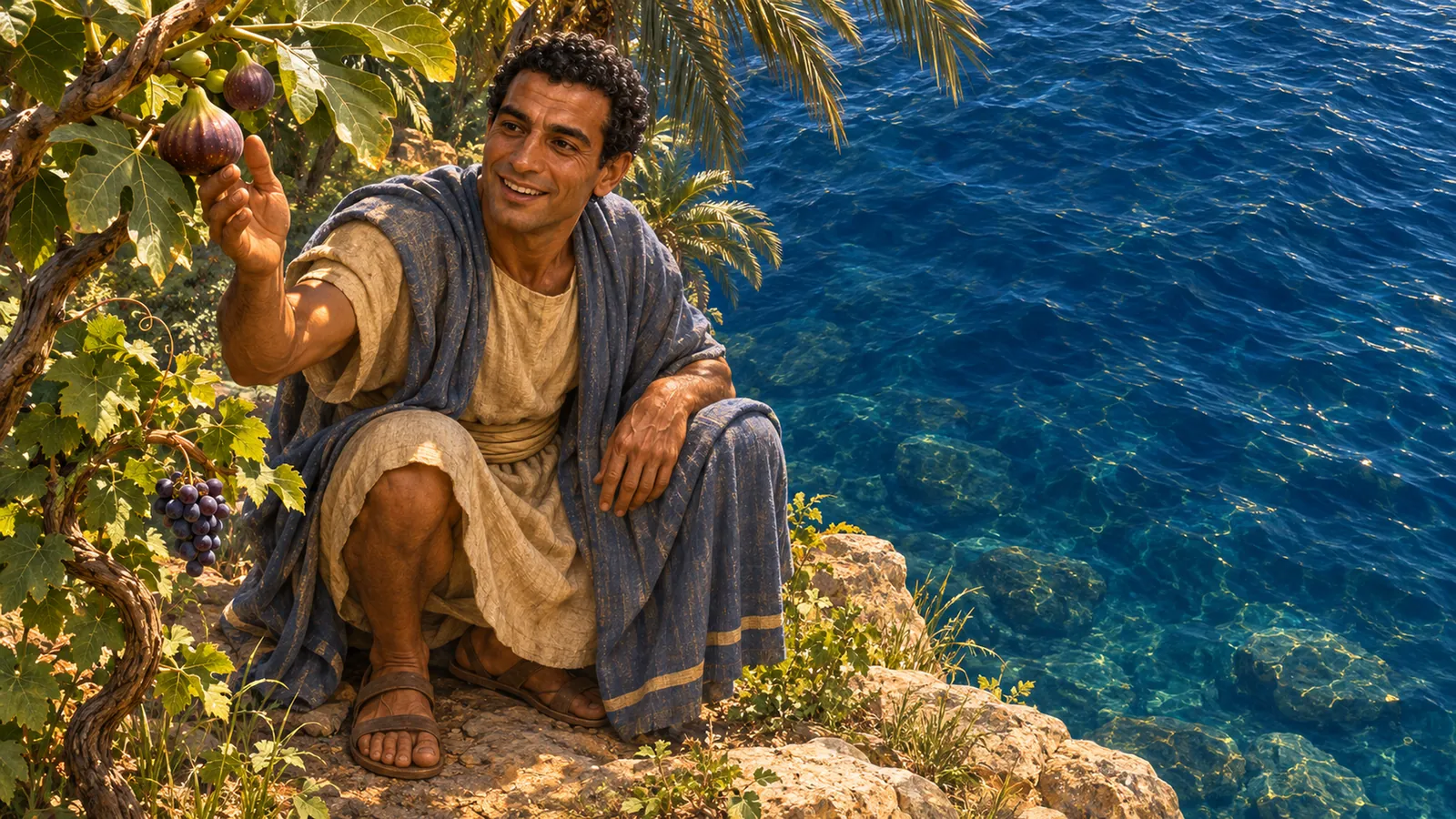
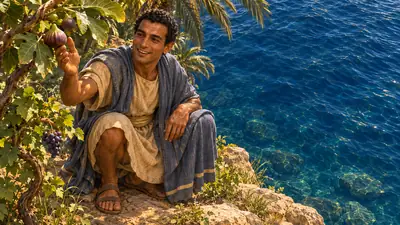
When the sailor gets up to look for food, he discovers figs and grapes. He sees other plants growing there and describes them with delight.

The sailor goes on to describe more food on the island, including fruit, fish and birds. To him, it seems that the place lacks nothing.
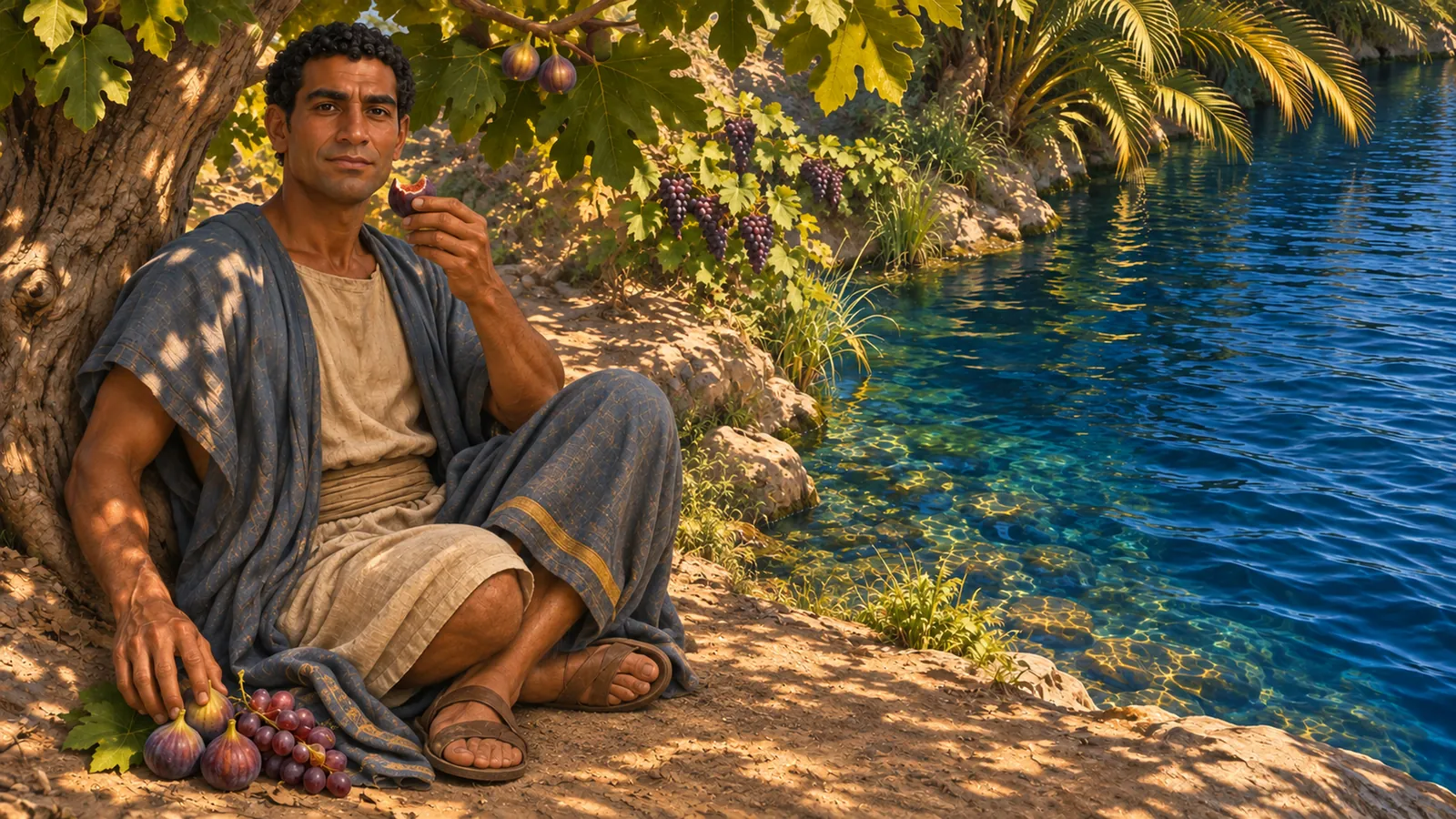
The sailor has enough to eat at last. He says he put the rest on the ground because it was too much to carry.
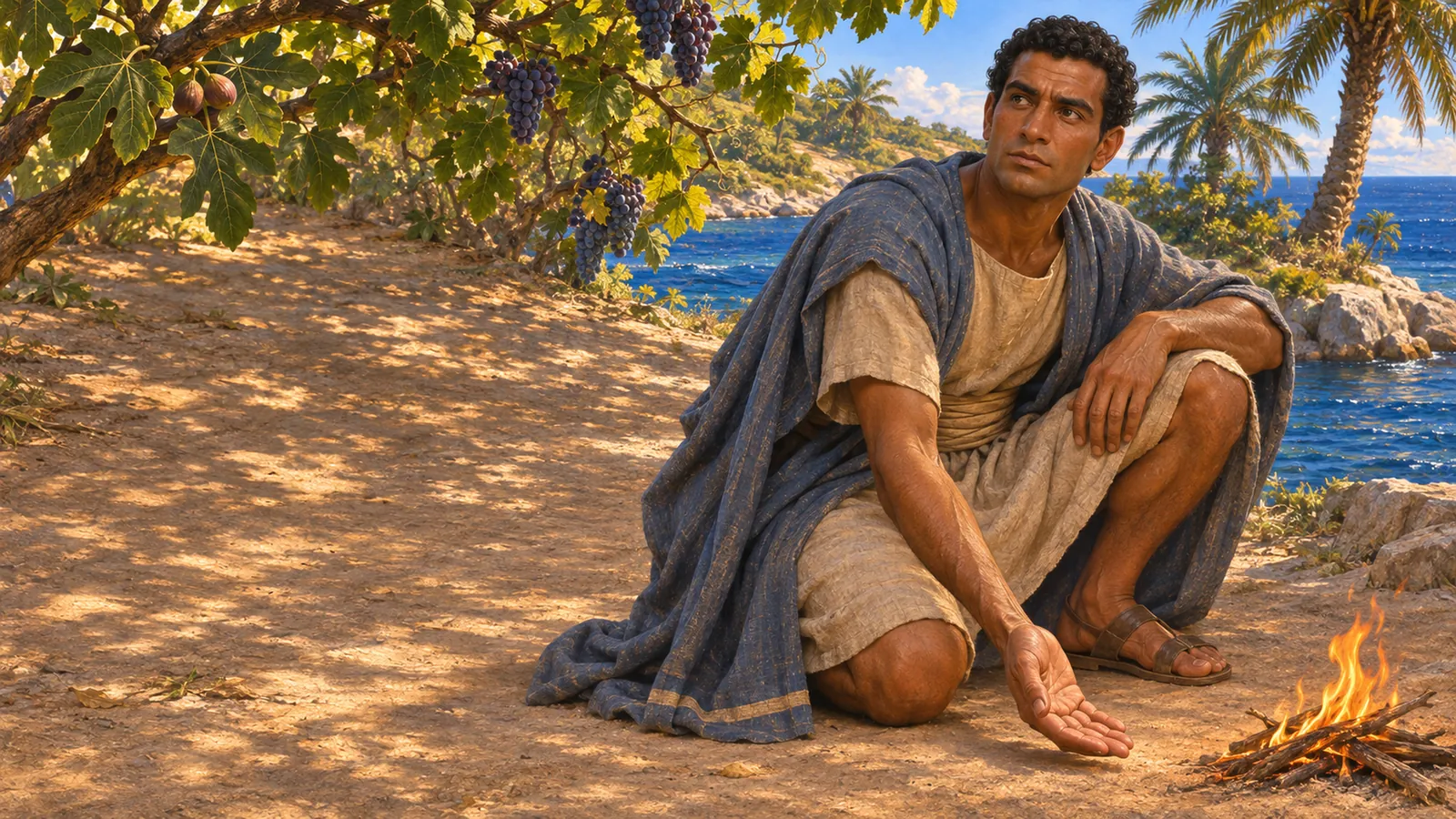
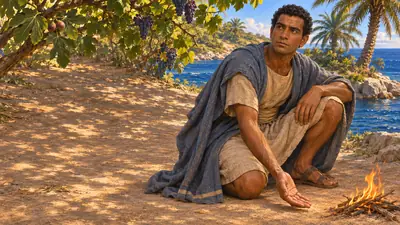
After he finds food, the sailor lights a fire and makes an offering to the gods. Then he hears a sound.
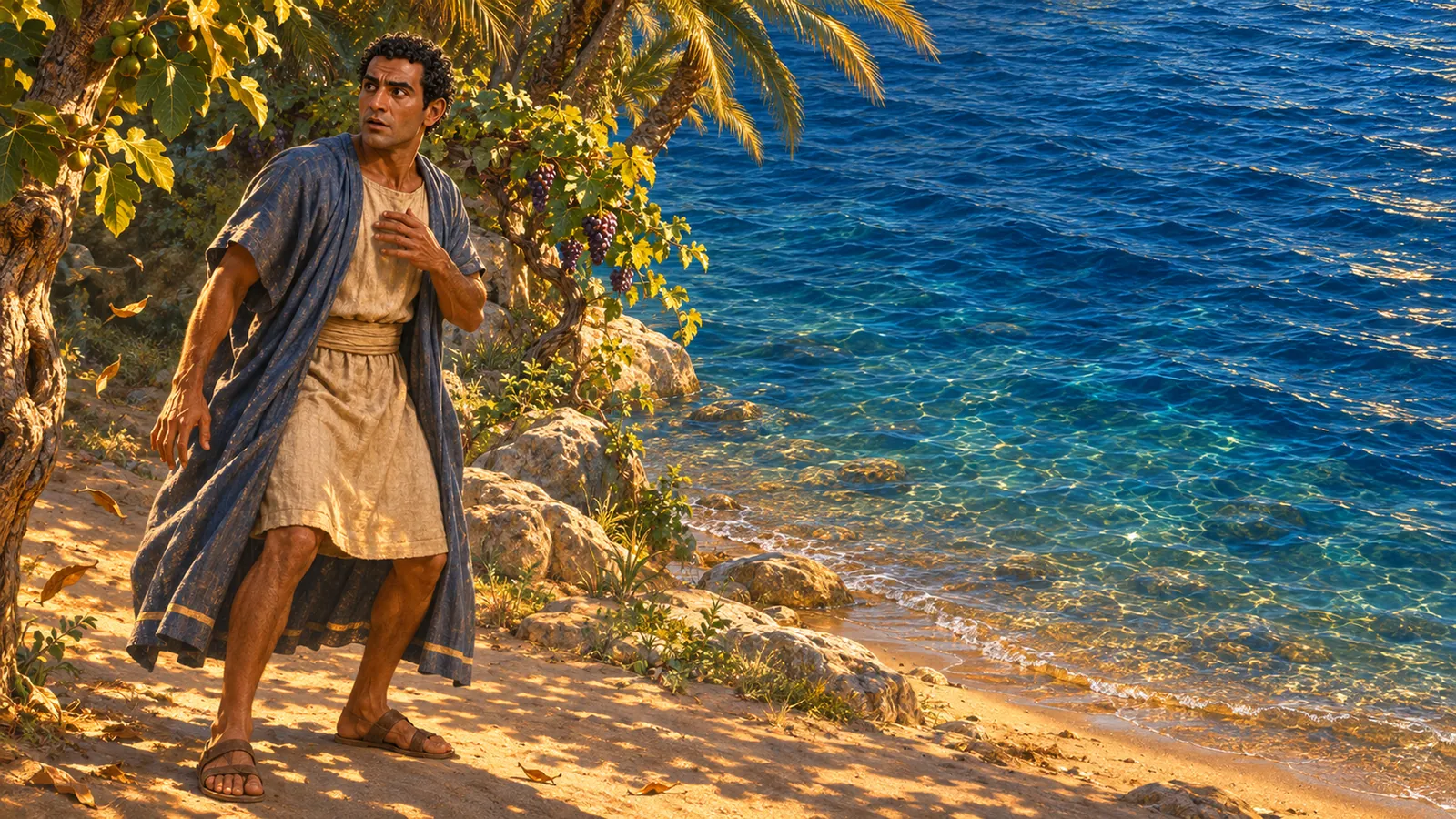
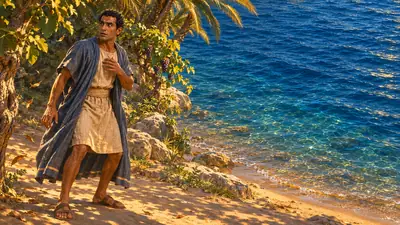
The sailor hears a roar and at first thinks it is a wave. Then the trees and the ground around him begin to shake.
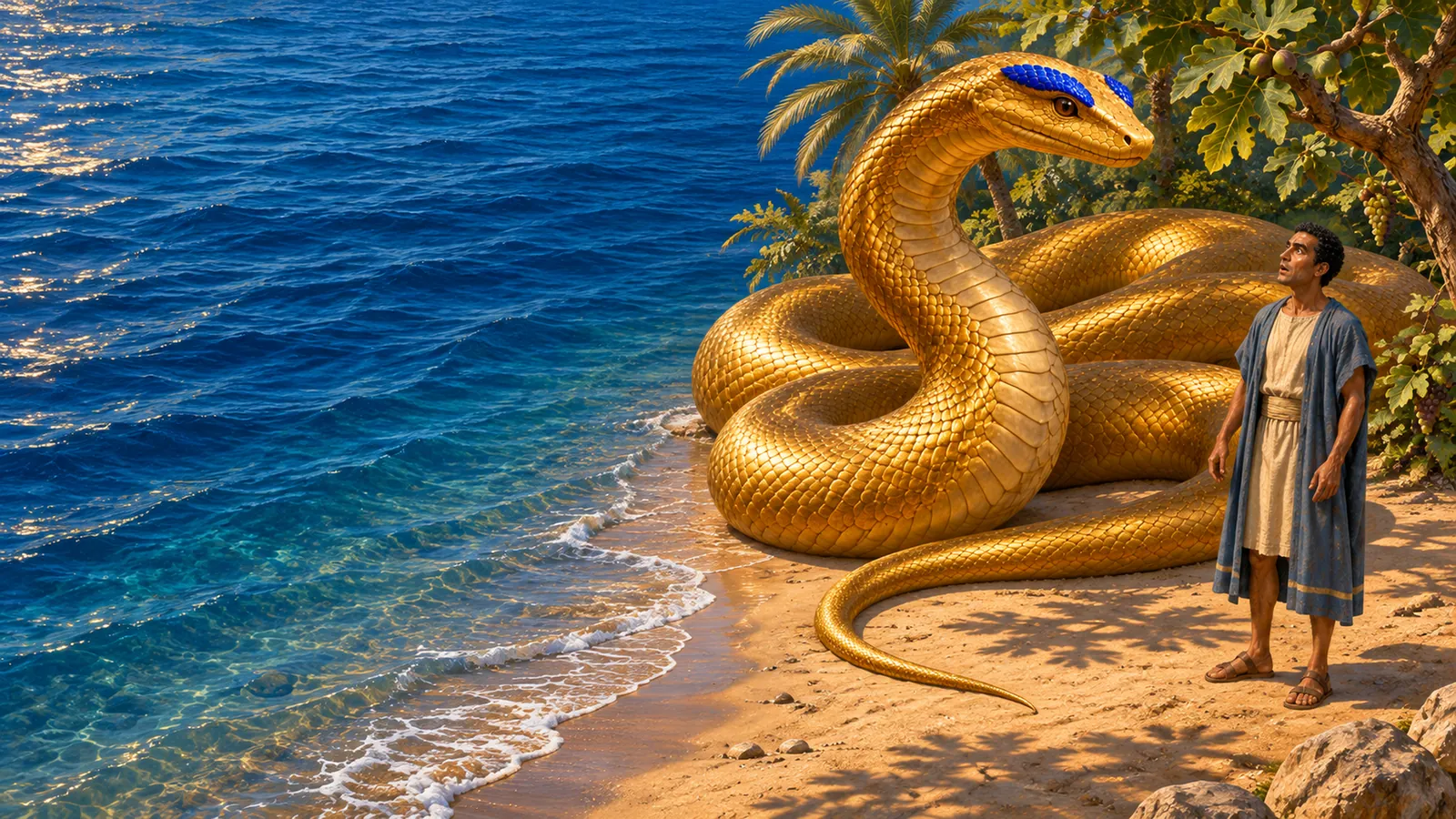
THE SERPENT
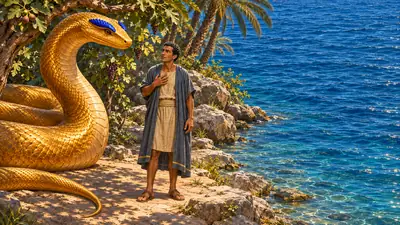
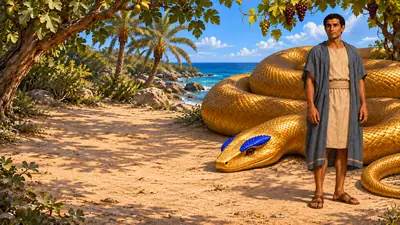
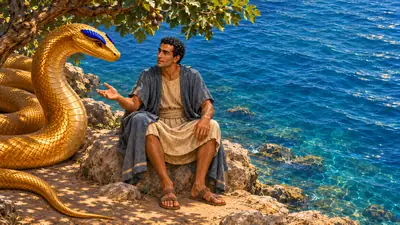
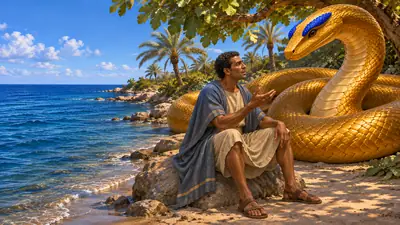
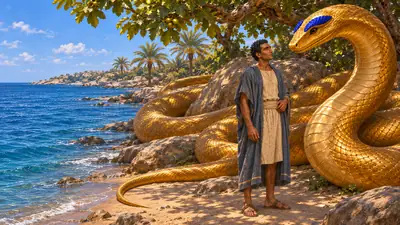
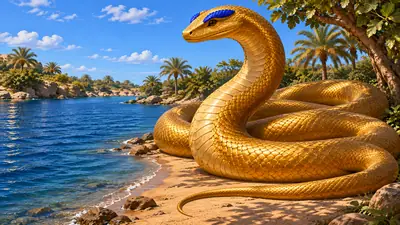
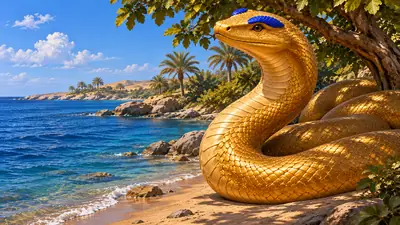
The sailor sees a great serpent come near. In his telling its body gleams like gold, and its brows are the color of lapis lazuli.
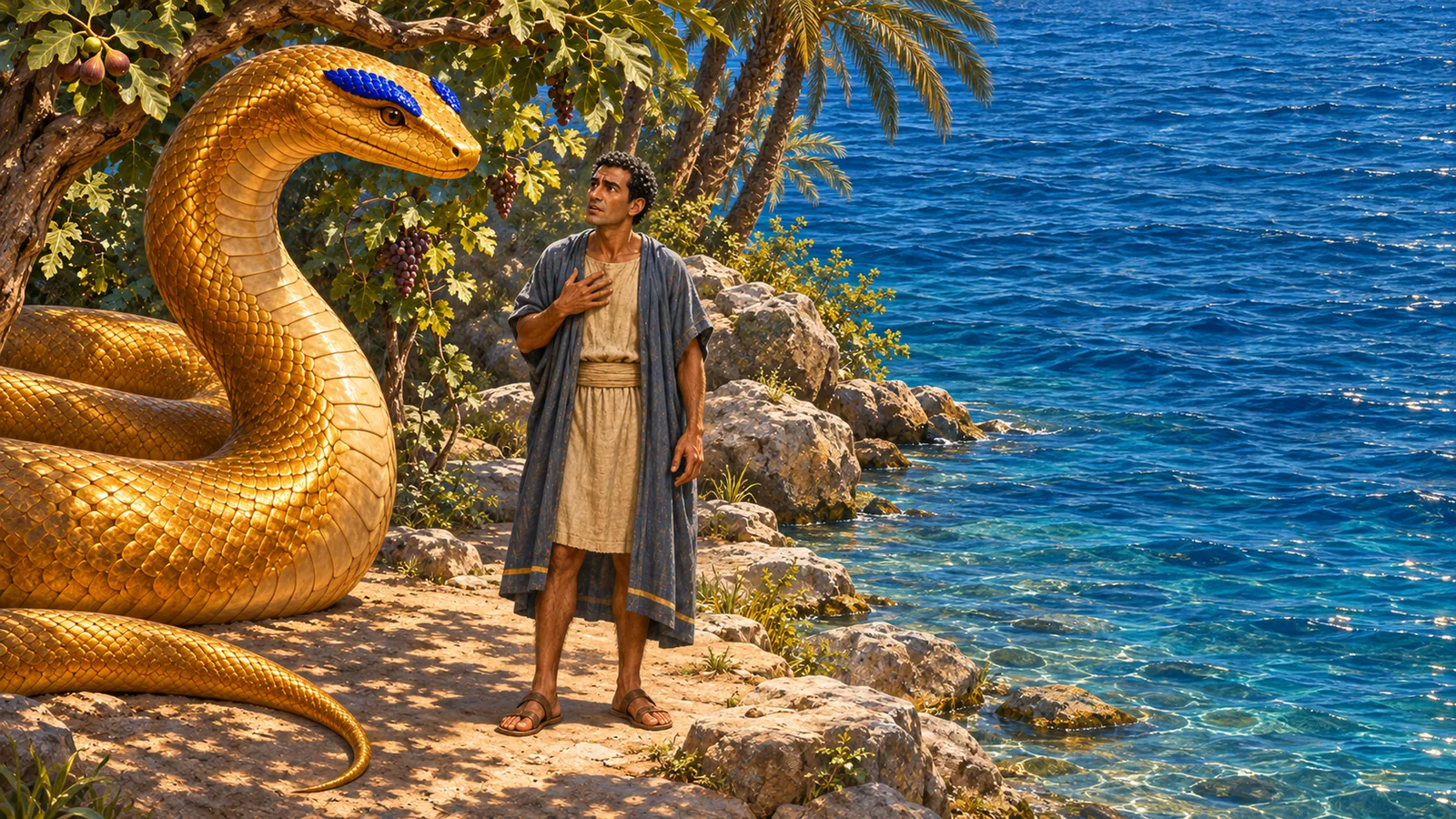
The serpent asks again who brought him to the island and threatens to burn him to ashes if he does not answer. The sailor struggles to speak.
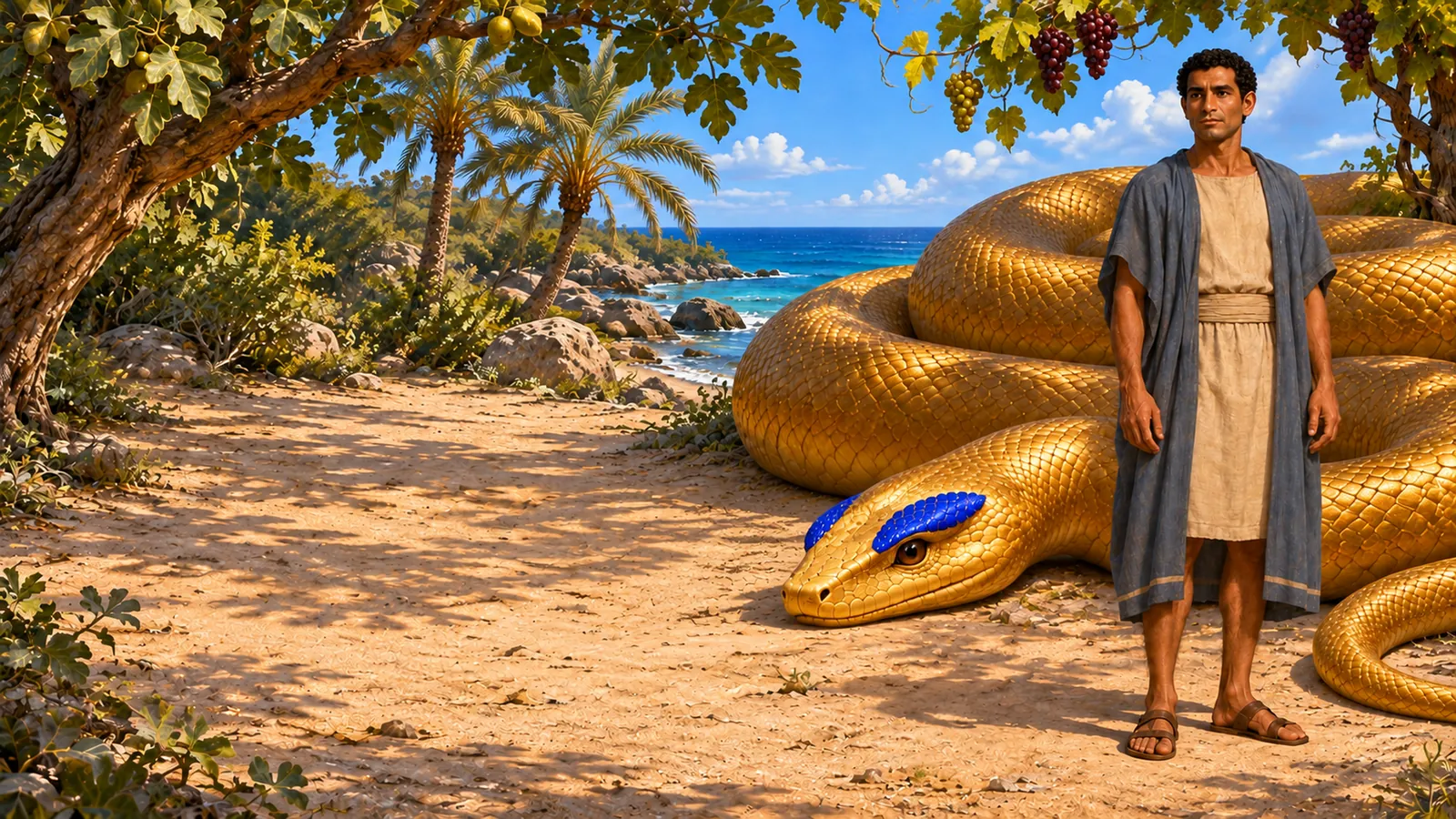
The serpent carries the sailor in its mouth to its resting place and sets him down unharmed.
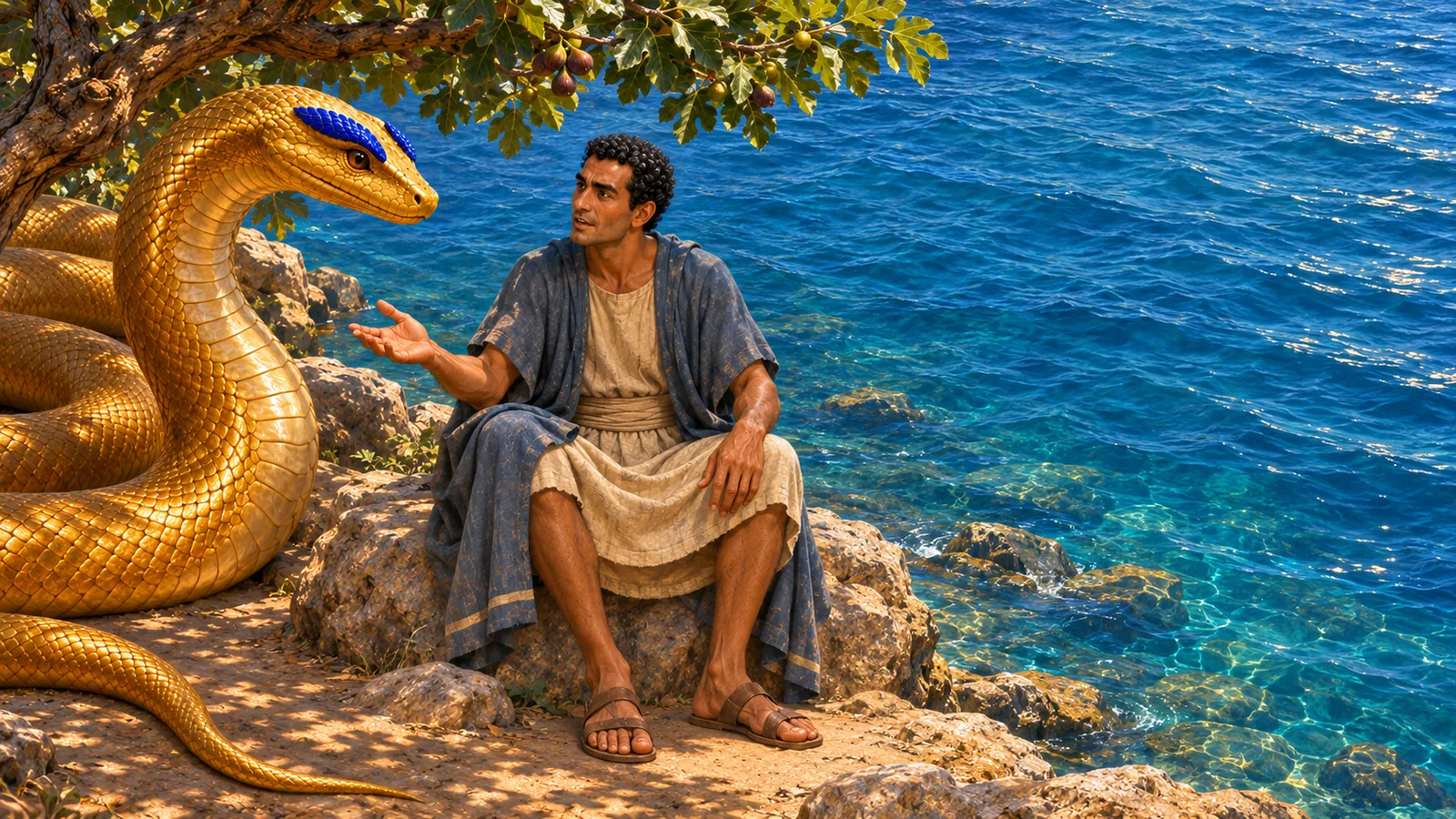
At the resting place the serpent again asks who brought him there. This time the sailor is able to reply and begins to give his account.
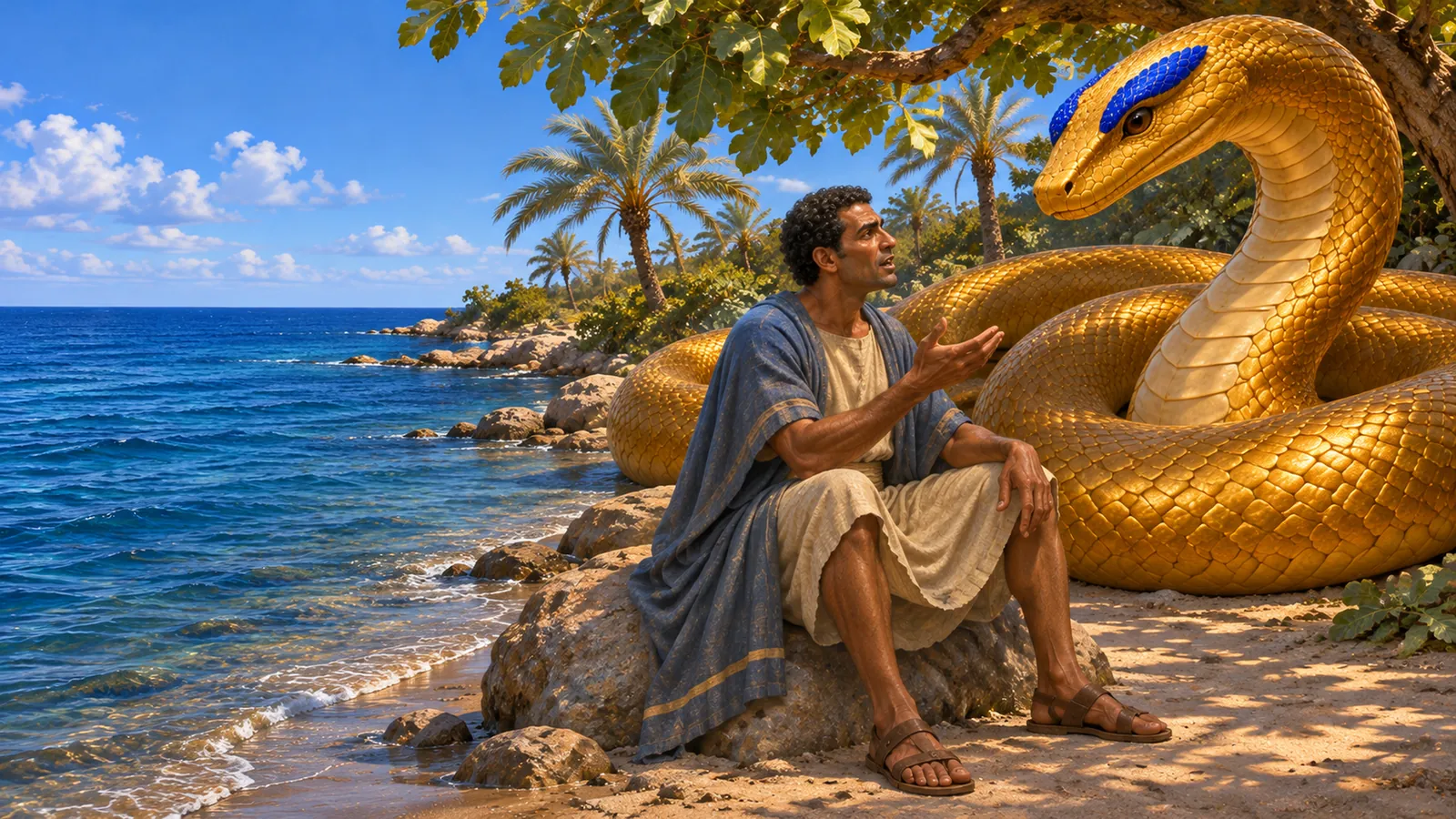
The sailor tells the serpent why he put to sea. He was bound for the king’s mines with a crew of seasoned Egyptian sailors.
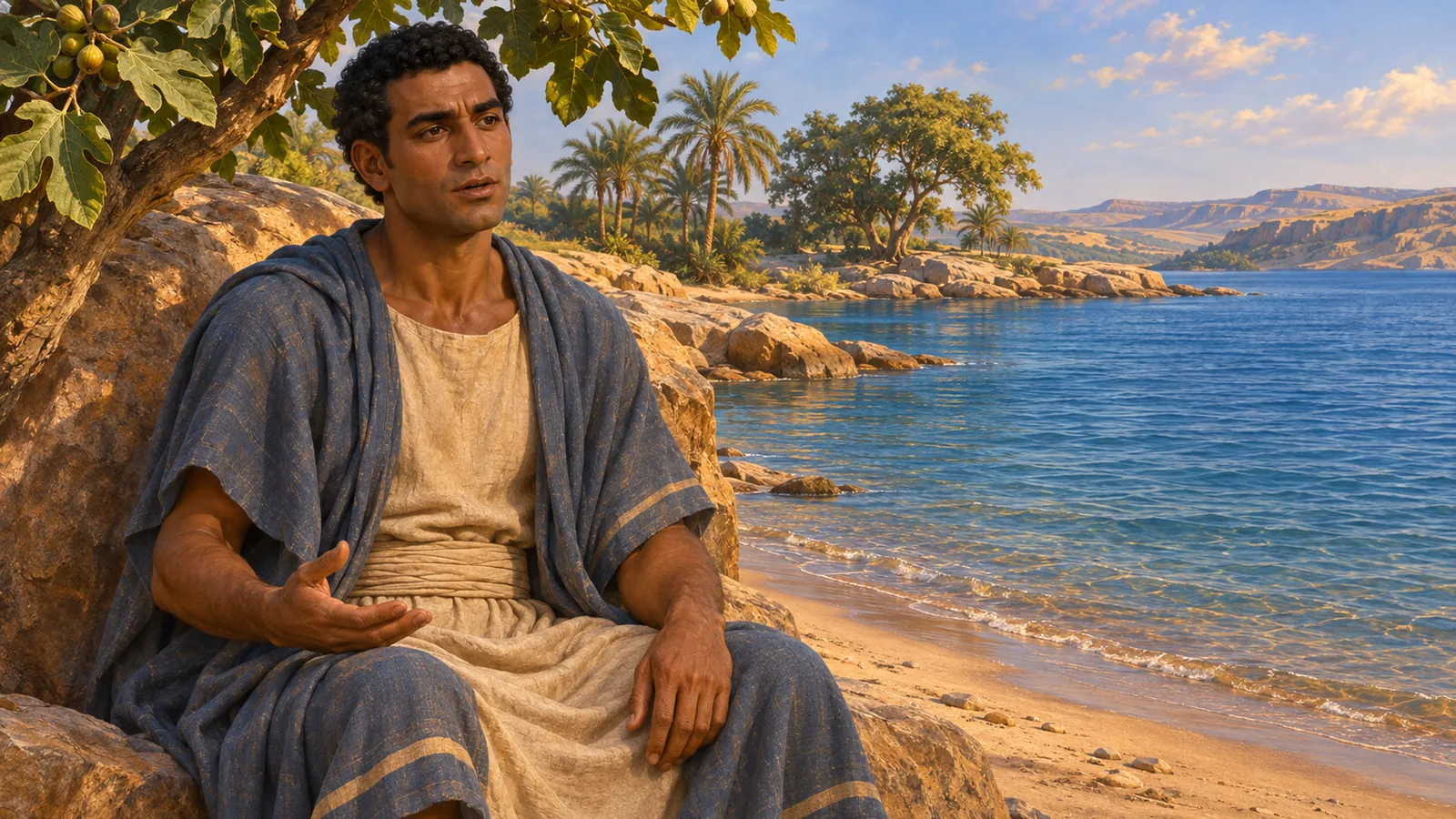
He tells how the wind rose before they reached land. He clung to a piece of wood, and the sea set him down here alone.
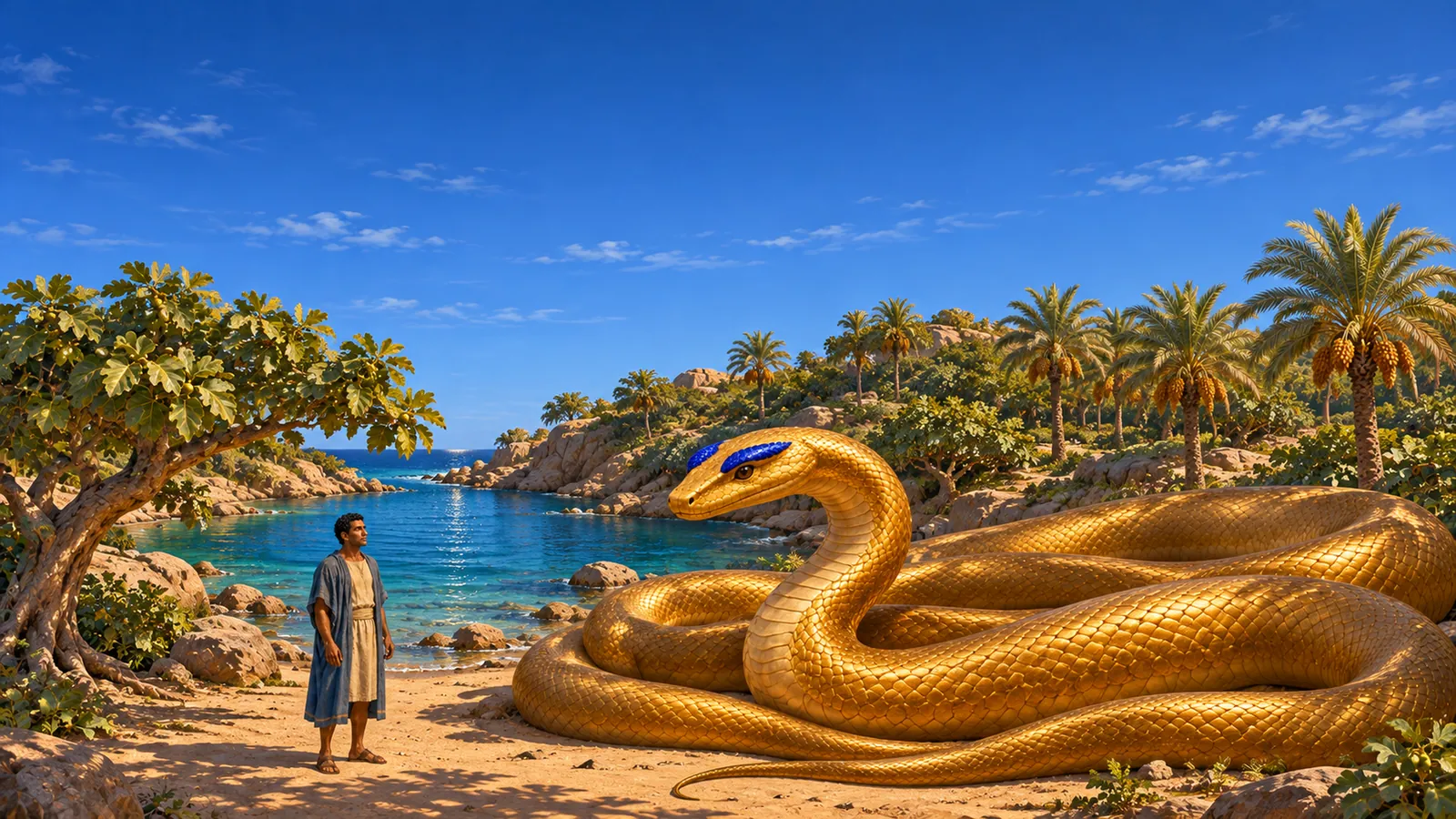
ISLAND OF THE KA
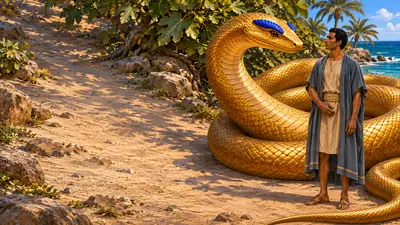
The serpent tells him to take heart. He has reached the Island of the Ka, where he will find everything he needs.
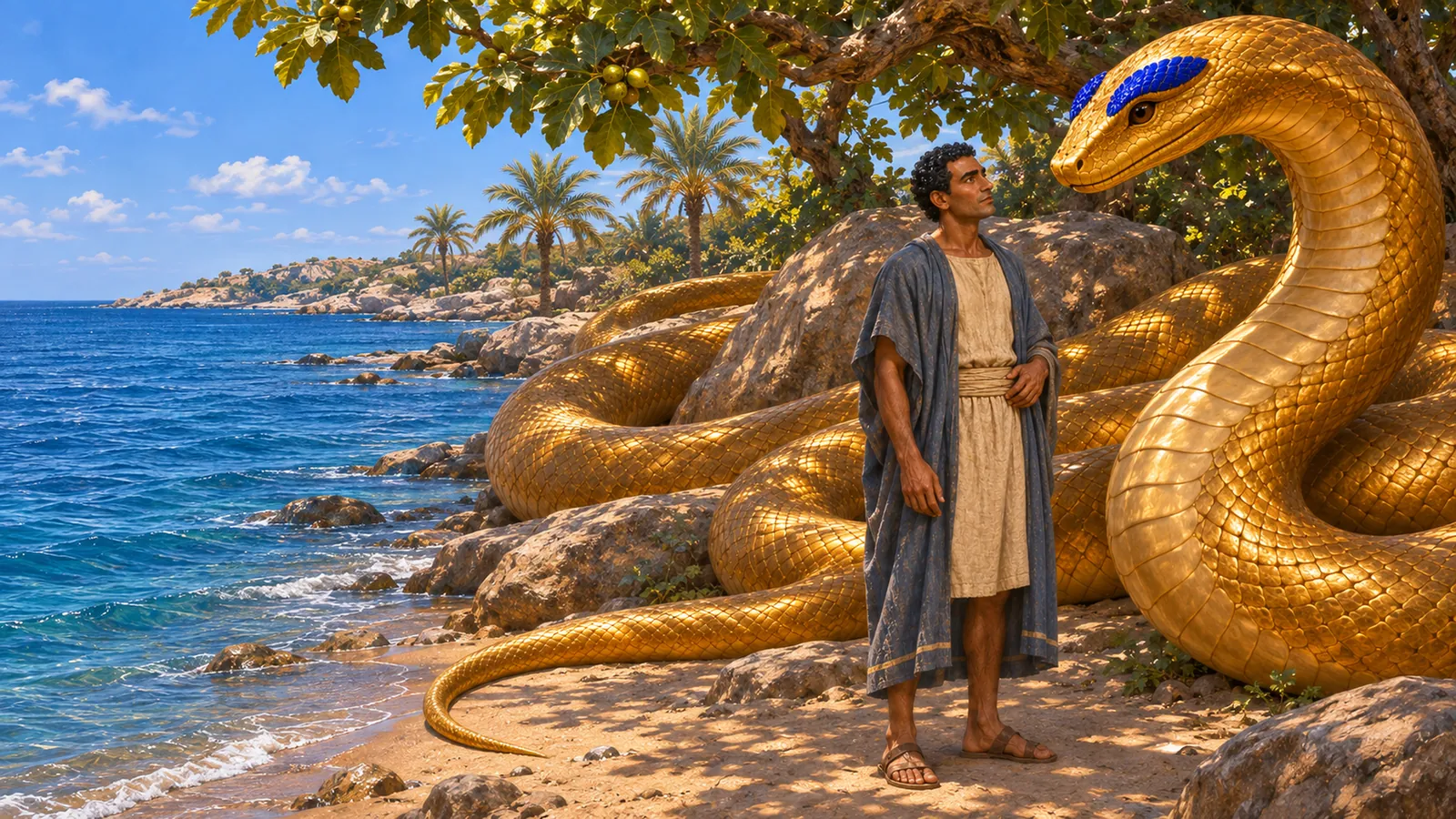
Four months is how long the serpent says he will stay on the island. Then a ship will come with men he knows.
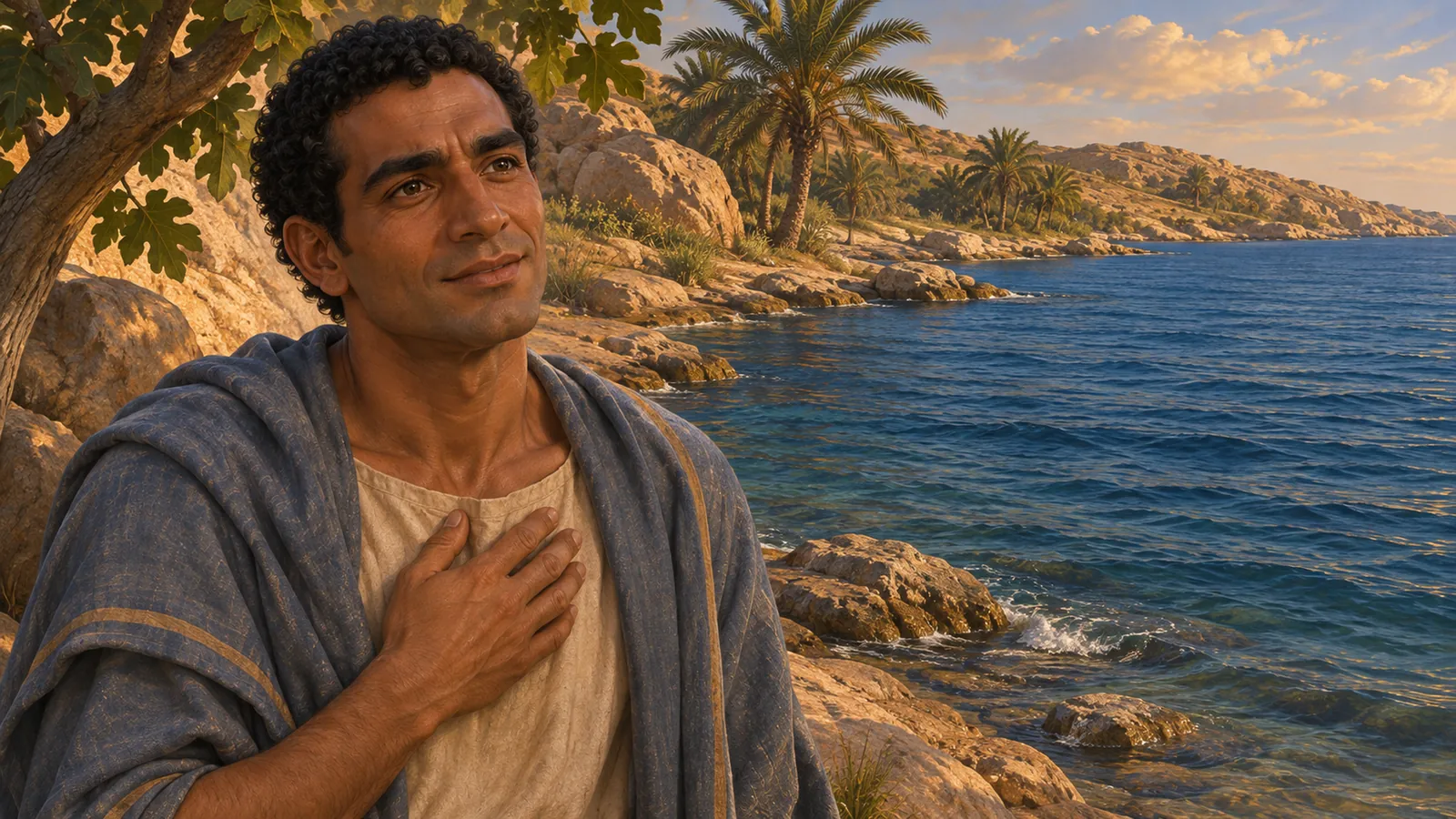
The serpent says the sailor will go home. Once his troubles are behind him, there will be pleasure in telling the story of what he went through.
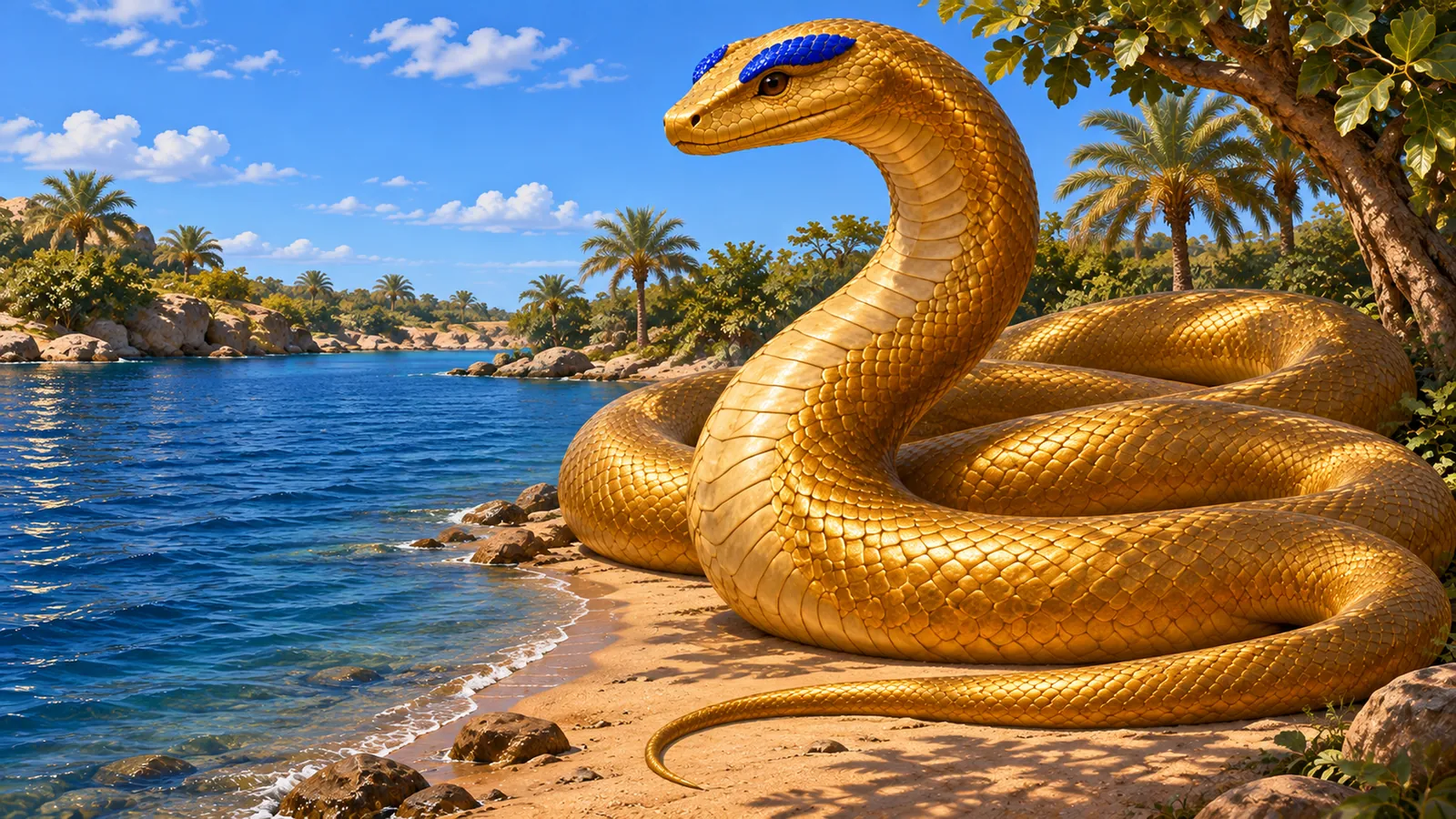
Now the serpent begins a story of its own. It remembers the days when it lived here on the island with its family.
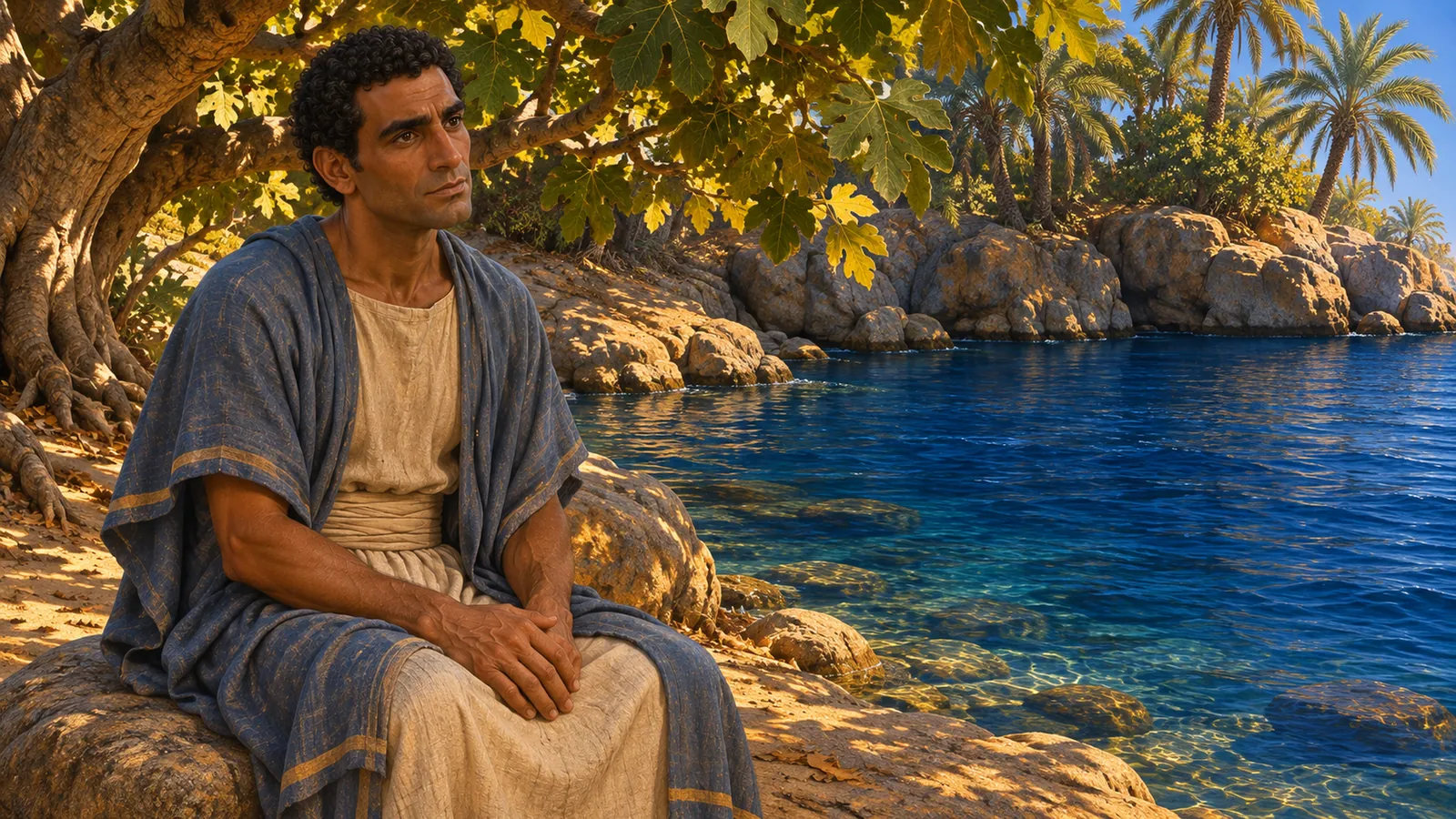
The serpent says that a falling star started a fire while it was away, killing its family. It urges the sailor to be brave and look forward to seeing his children and home again.
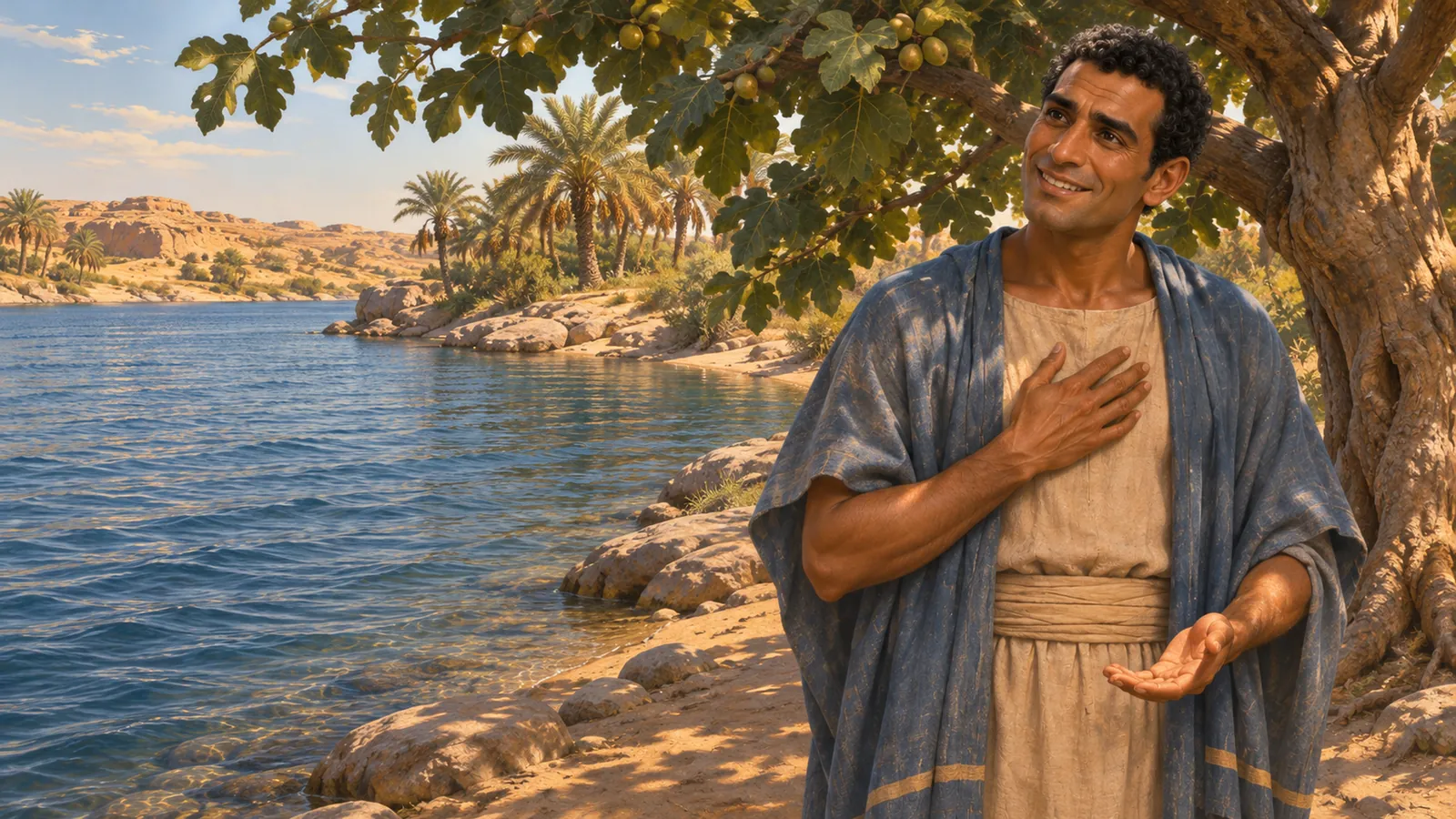
The sailor thanks his host and promises to tell the king what he has seen. When he gets home, he says, he will send fine aromatics.
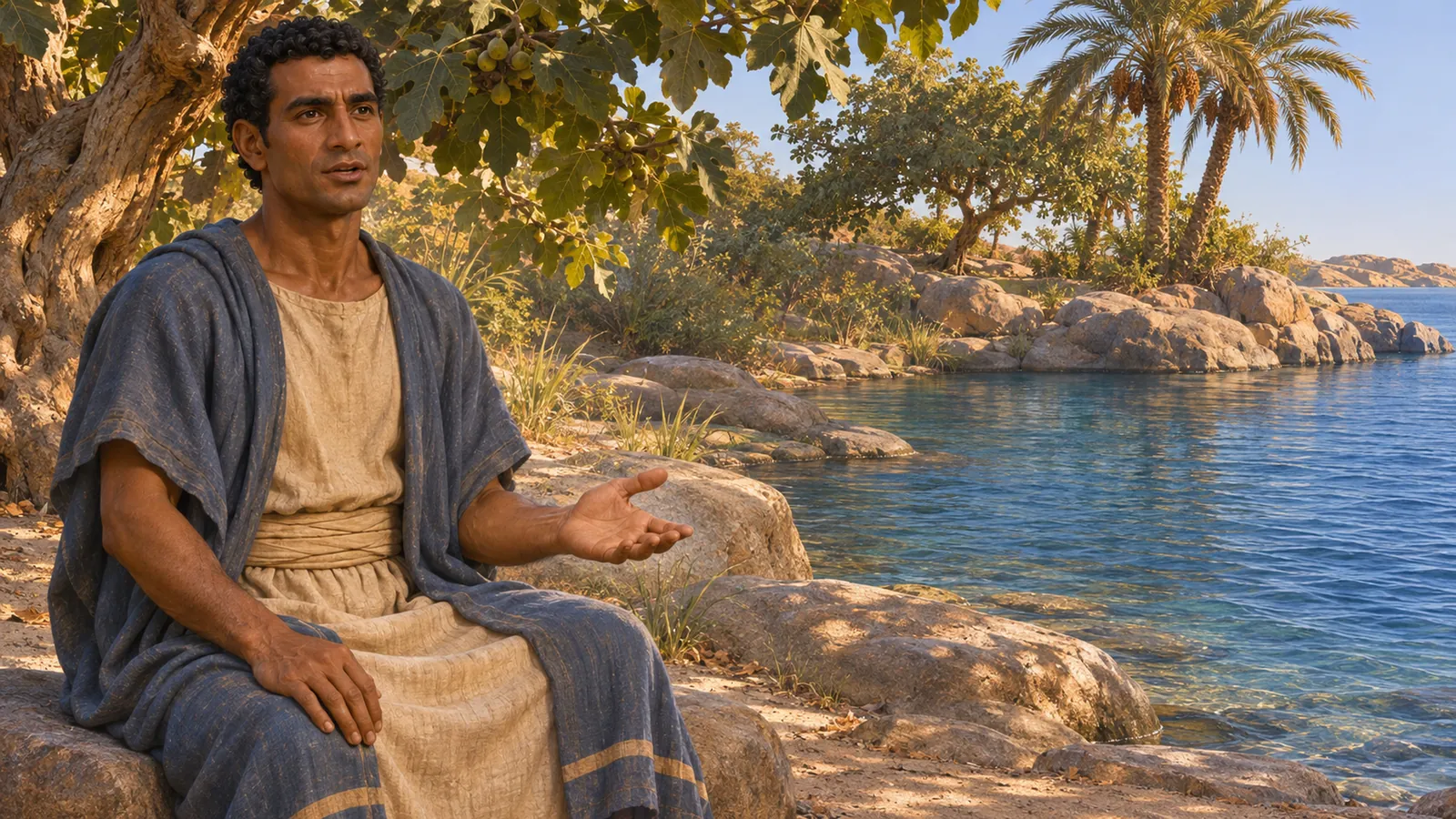
The sailor promises to praise the serpent in Egypt and to sacrifice cattle and birds in its honor. He also promises ships laden with Egyptian goods.
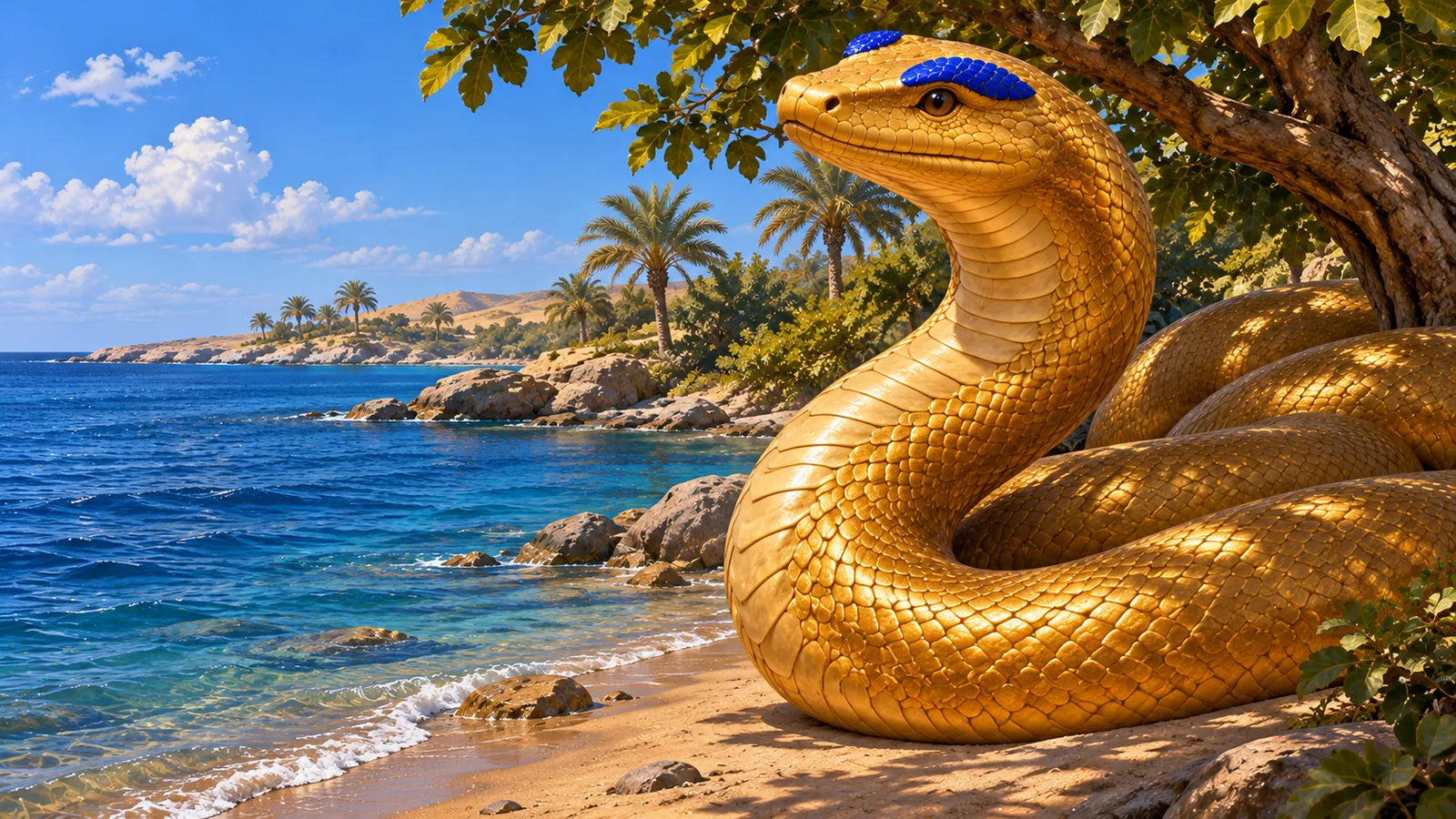
The serpent laughs at his offer. It says it is the ruler of Punt and already has the fragrant goods the sailor has promised to send.
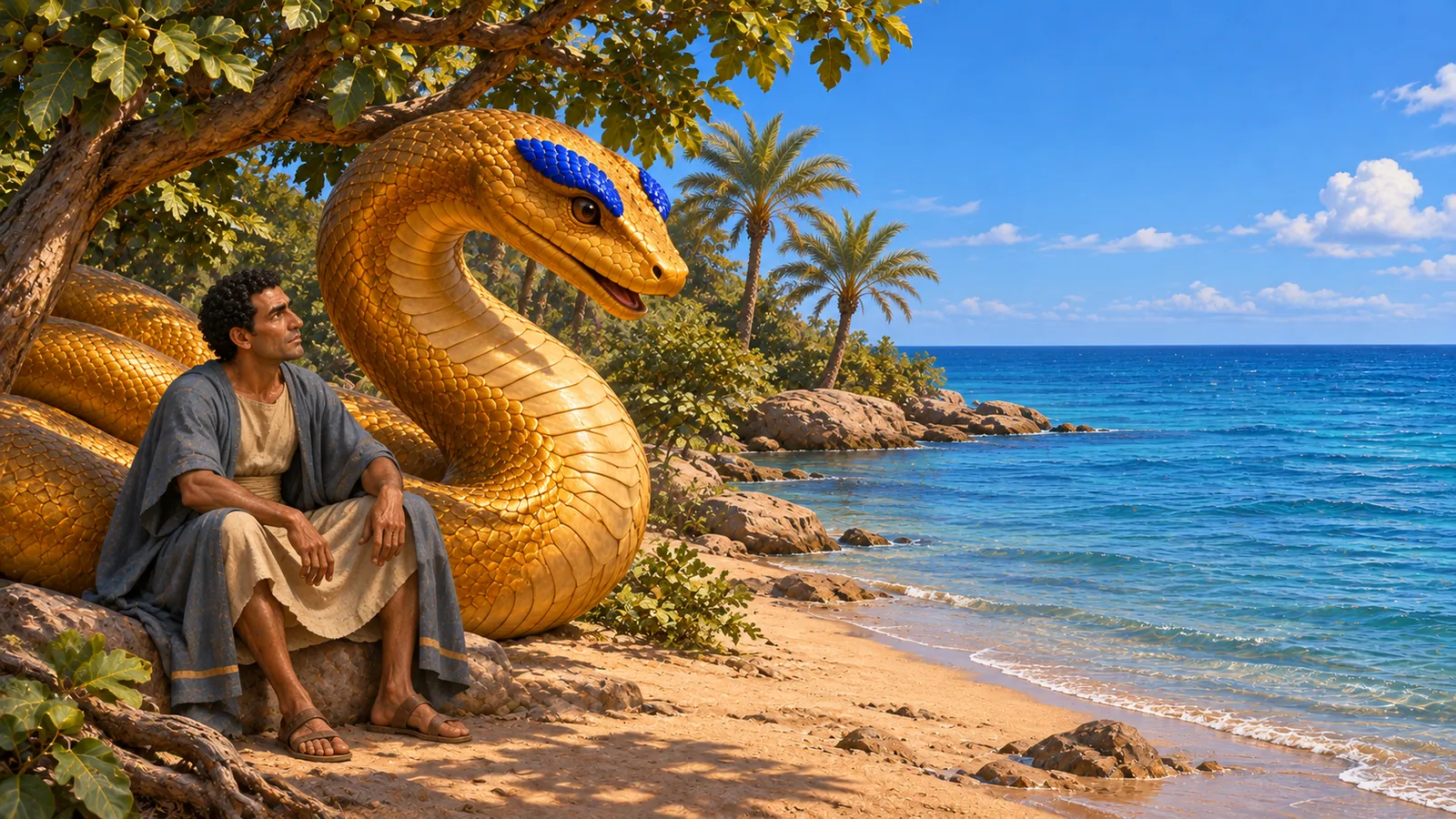
The serpent says that after the sailor has gone, he will never see this island again. The place where they are speaking will become waves.
A SHIP AT LAST
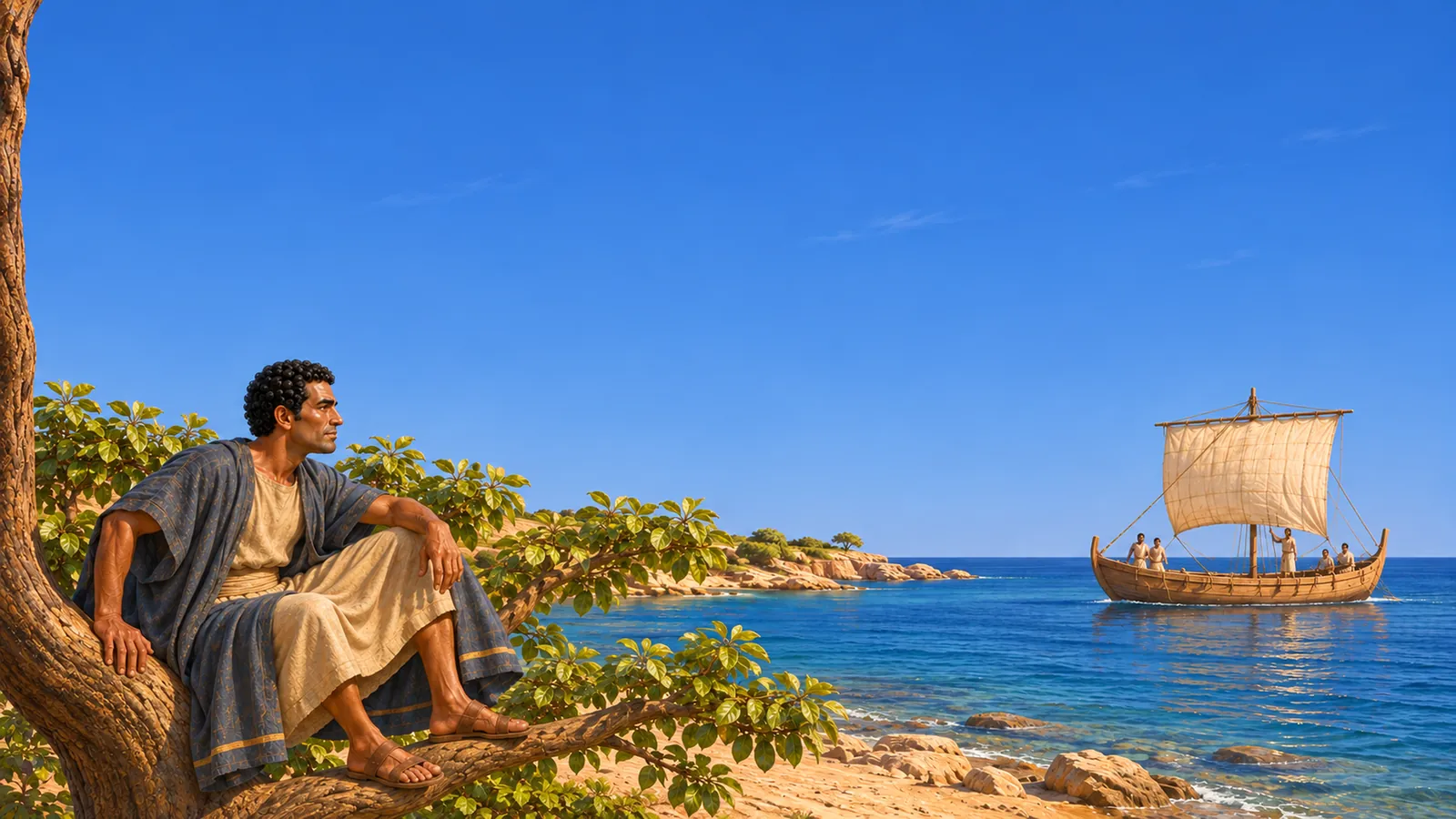
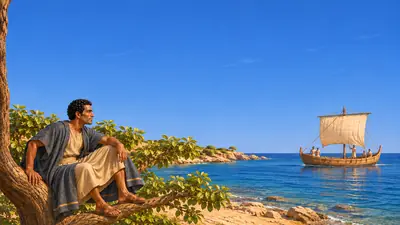
A ship comes into view. The sailor climbs a tree to look, and from his perch he recognizes the men aboard as people he knows.
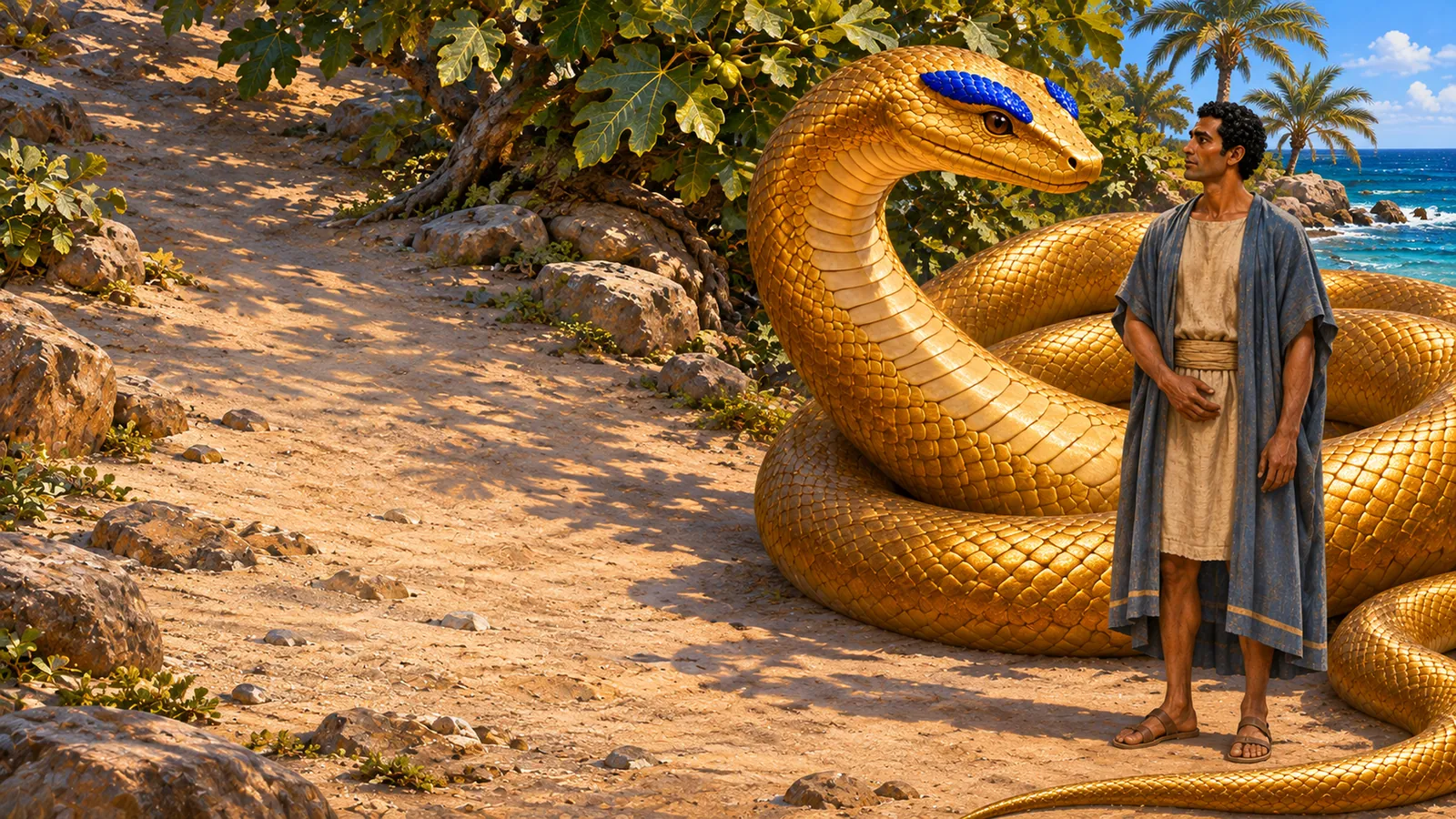
The serpent already knows the ship has come. It bids the sailor go home to his children and asks him to remember it kindly.
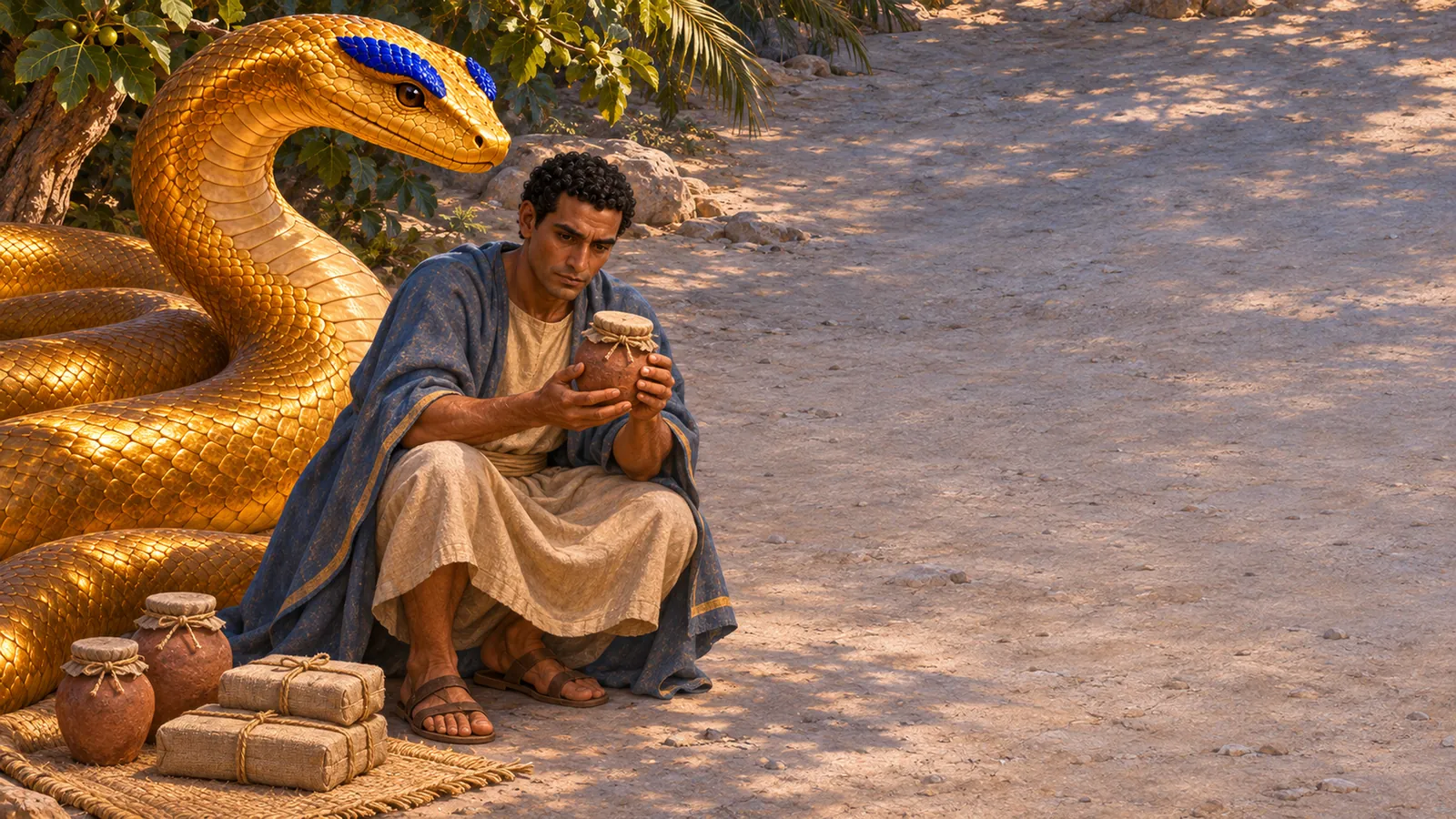
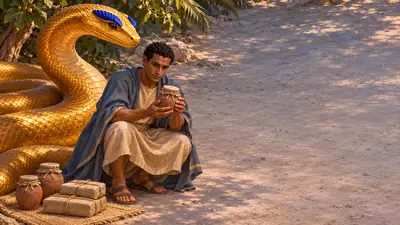
Now it is the serpent who gives the sailor parting gifts. Among the goods he receives are fragrant substances and pigments to take home.
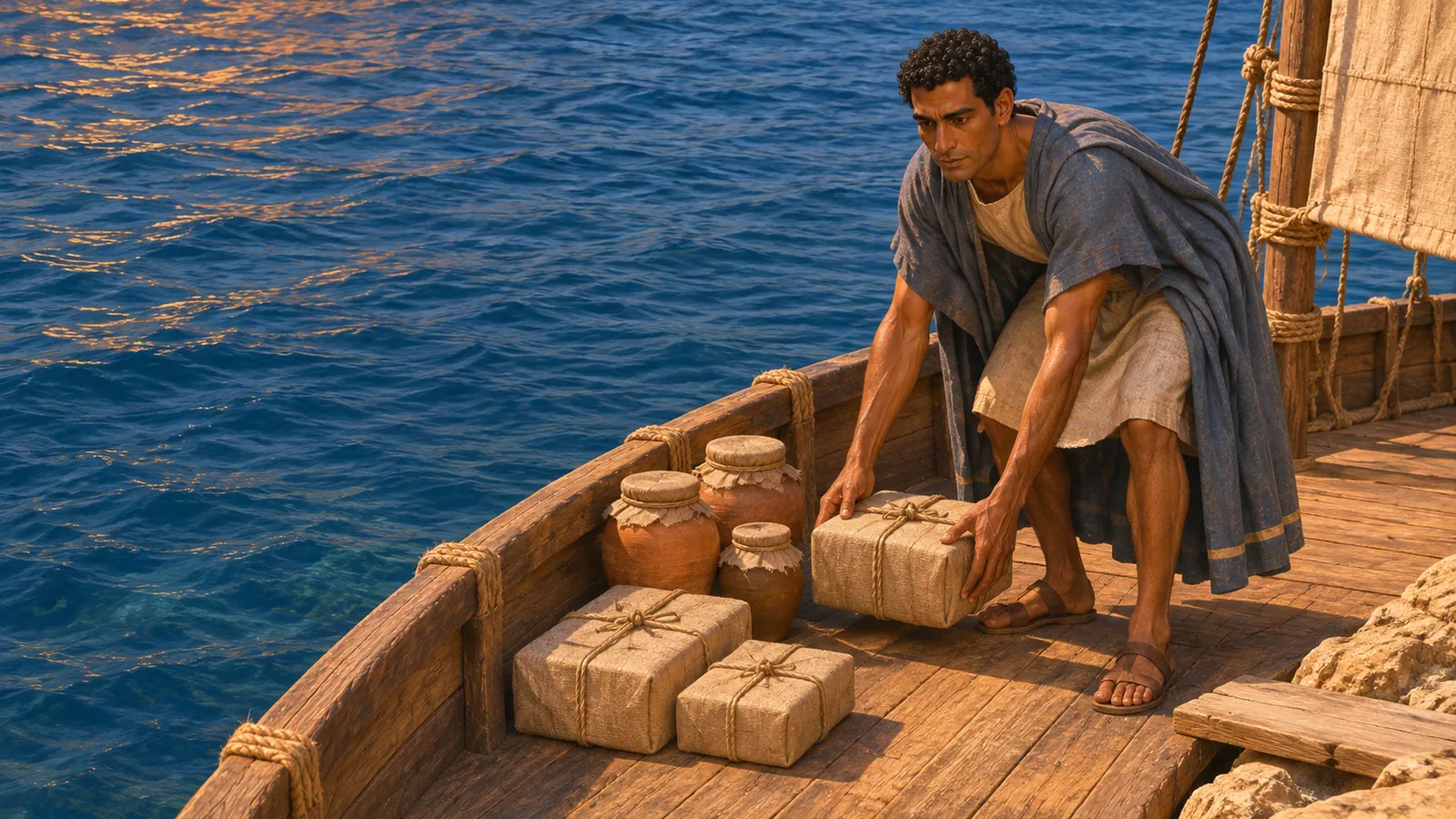
The sailor loads his gifts aboard the ship. The serpent tells him the voyage home will take two months and that he will see his children again.
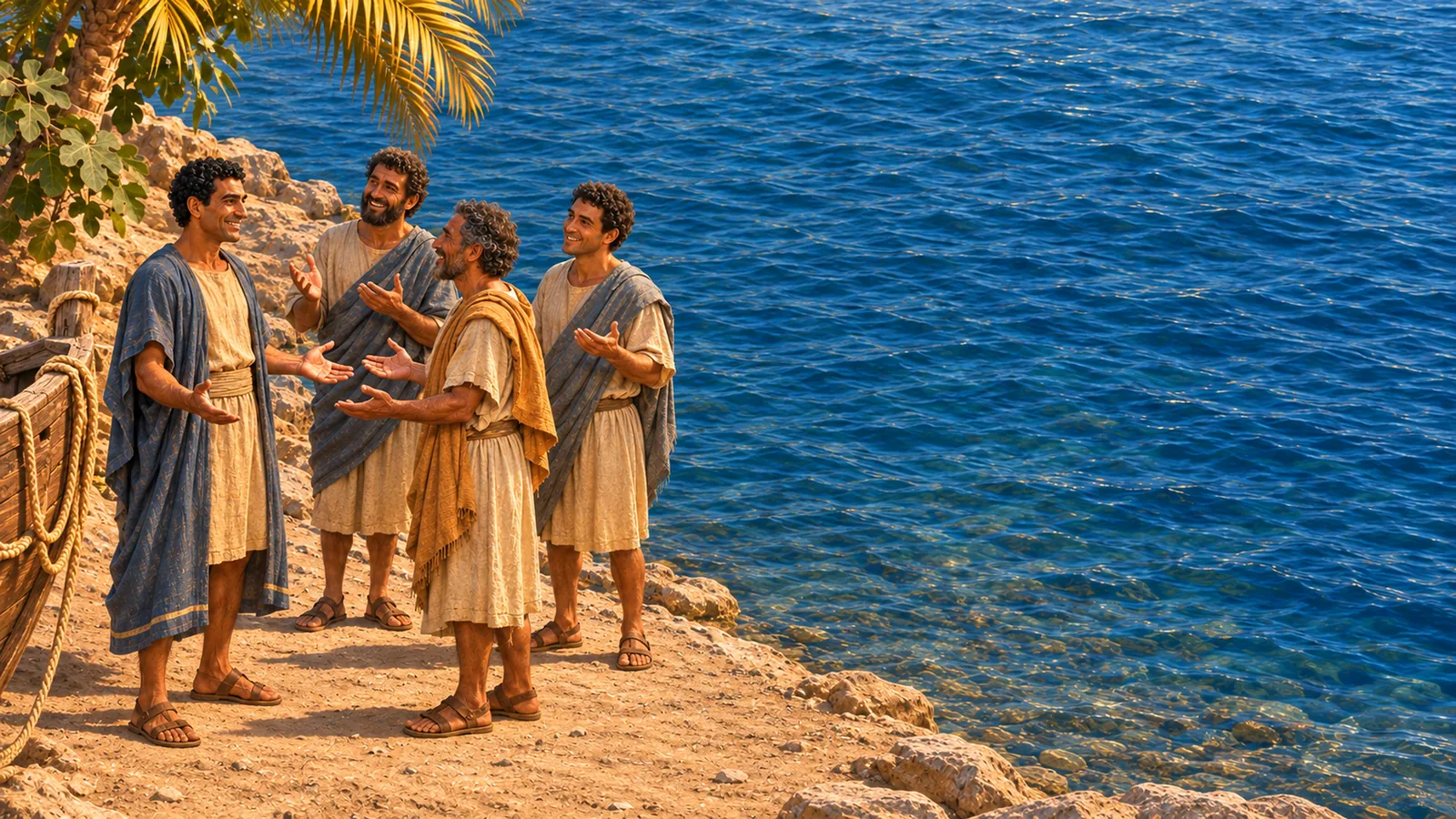
The sailor goes down to the shore. He greets the men who have come for him, and together they give thanks before the voyage home.
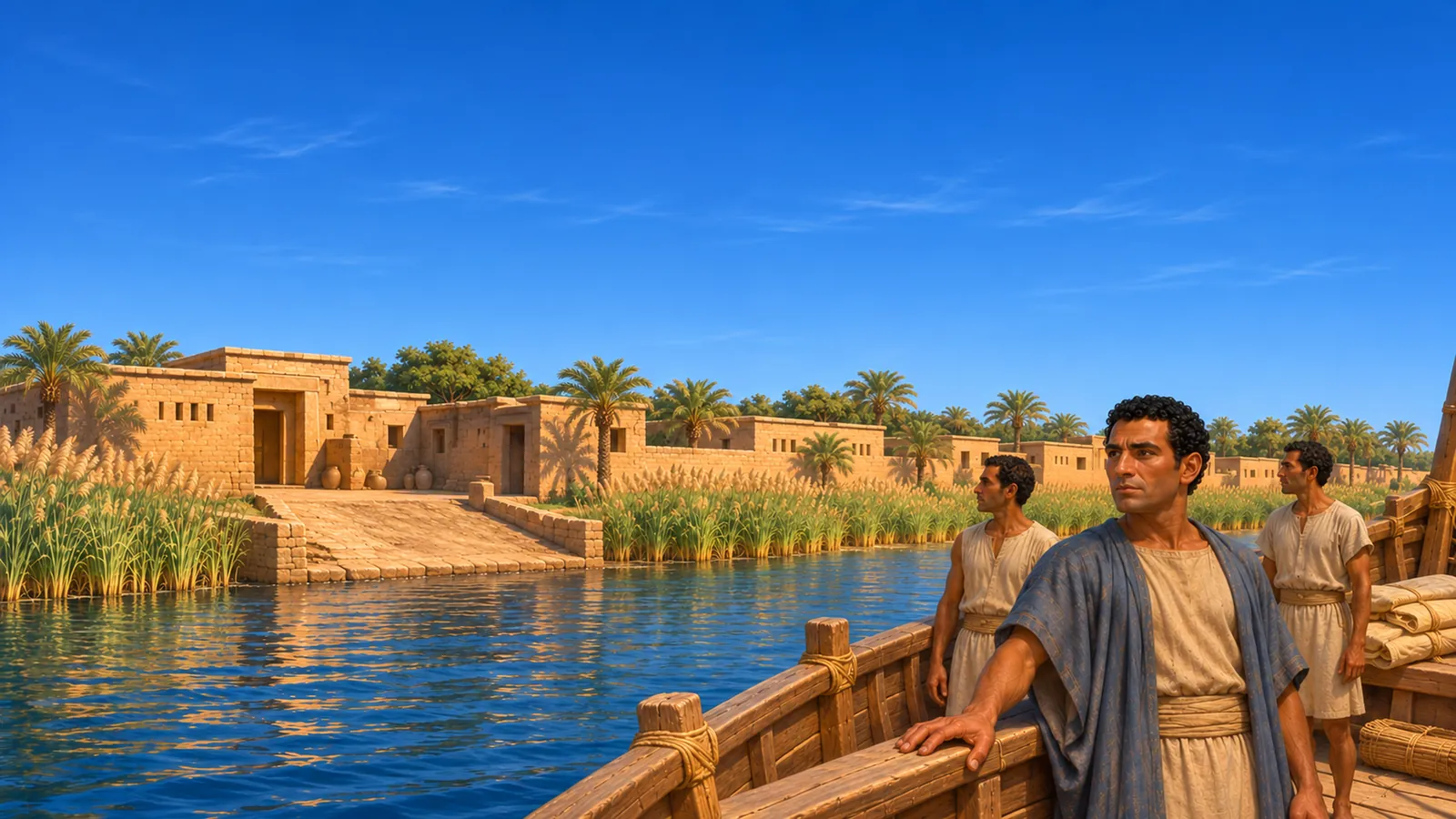
The ship reaches the royal residence in two months, just as the serpent foretold. The sailor has come back from the sea to Egypt.
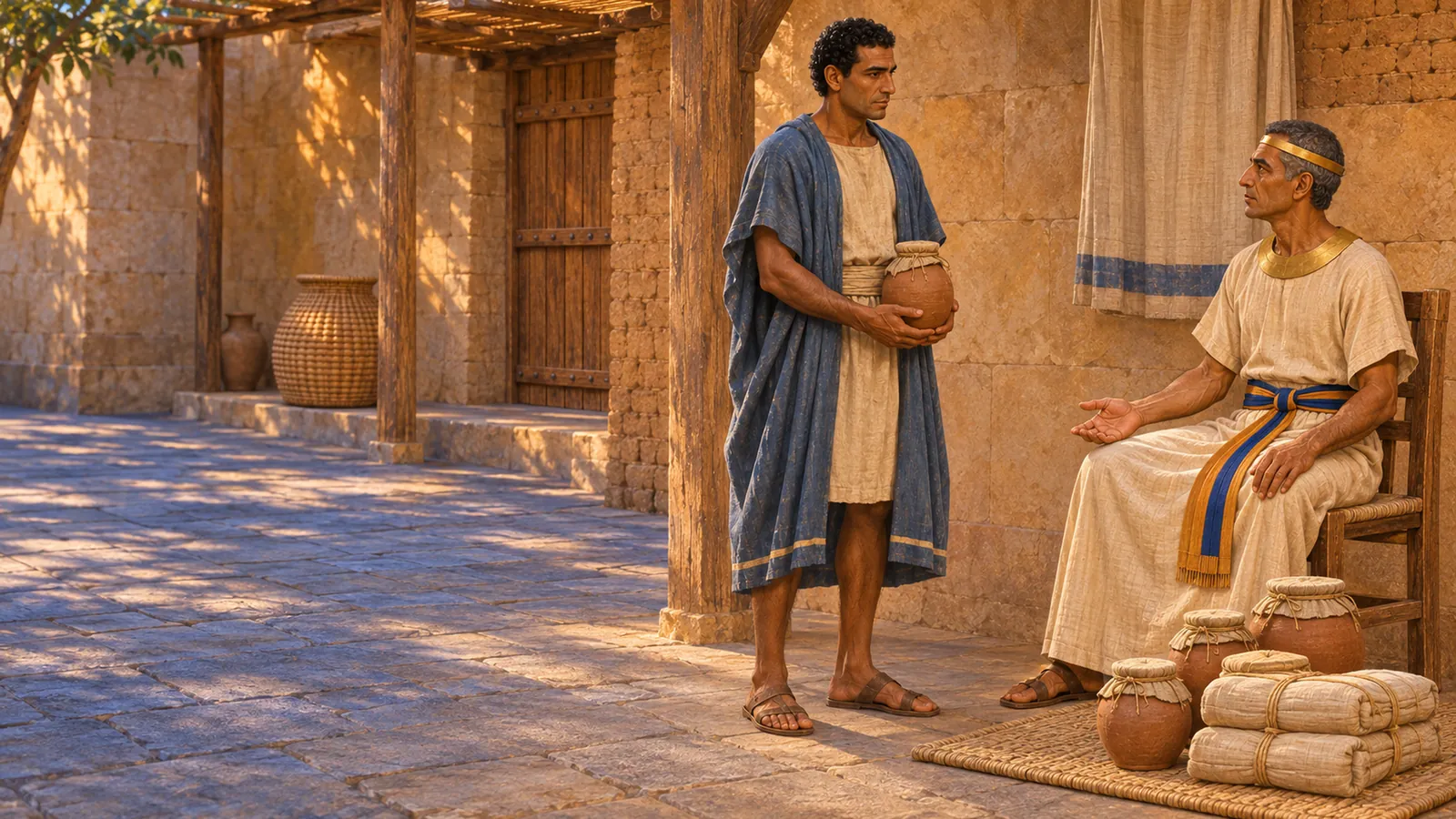
The sailor comes before the king and presents what he brought back. The gifts from the island have reached the court with him.
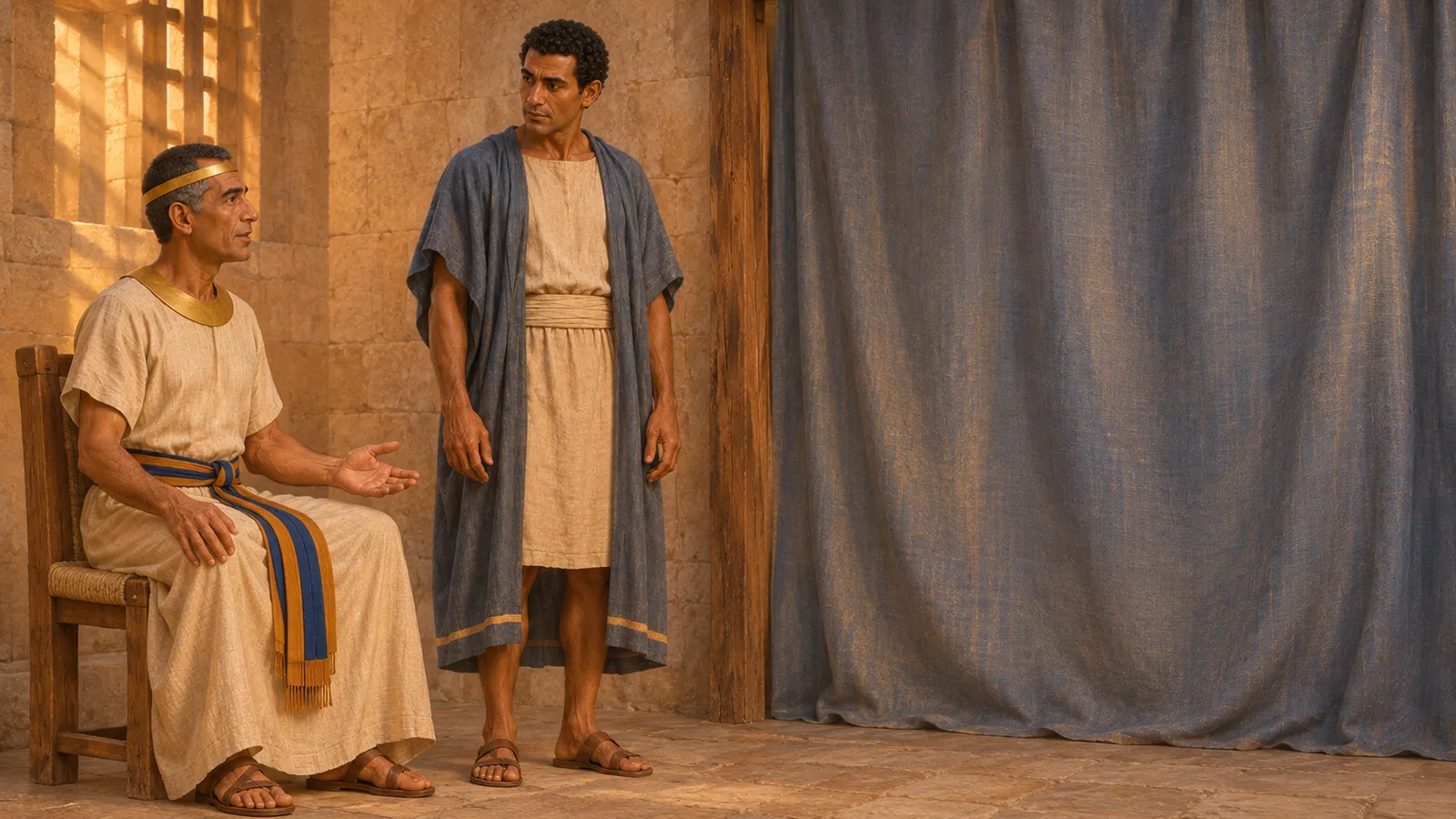
The sailor says that the king made him a follower and gave him a reward. This is how his own account of the earlier voyage comes to a close.
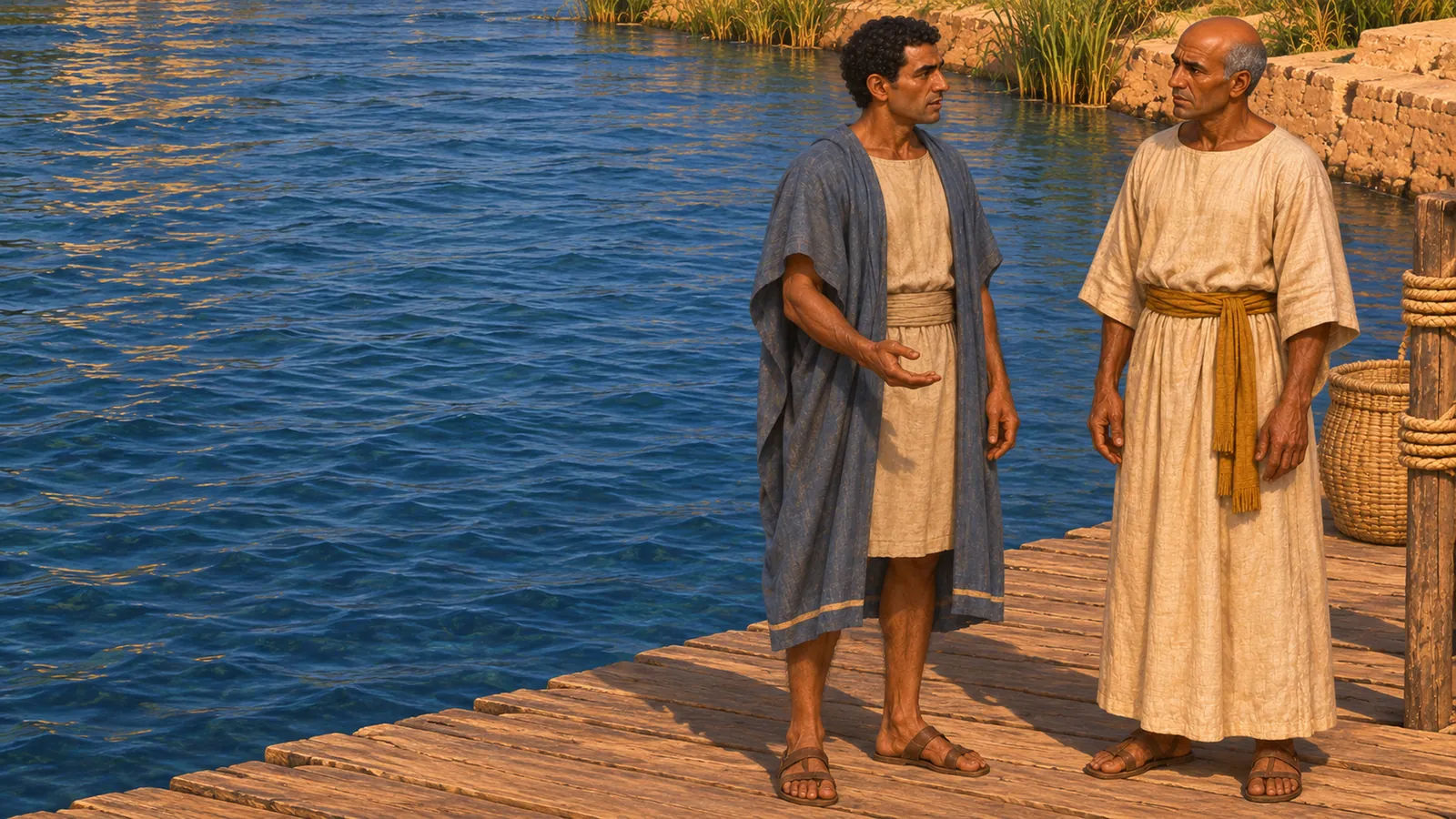
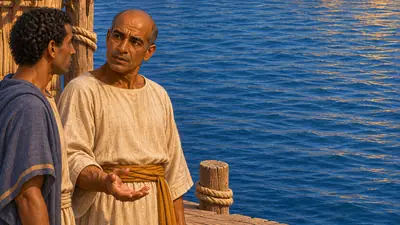
Back at the landing, the sailor has finished telling of his voyage. He asks his expedition leader to listen to the advice he has given him.
THE REPLY
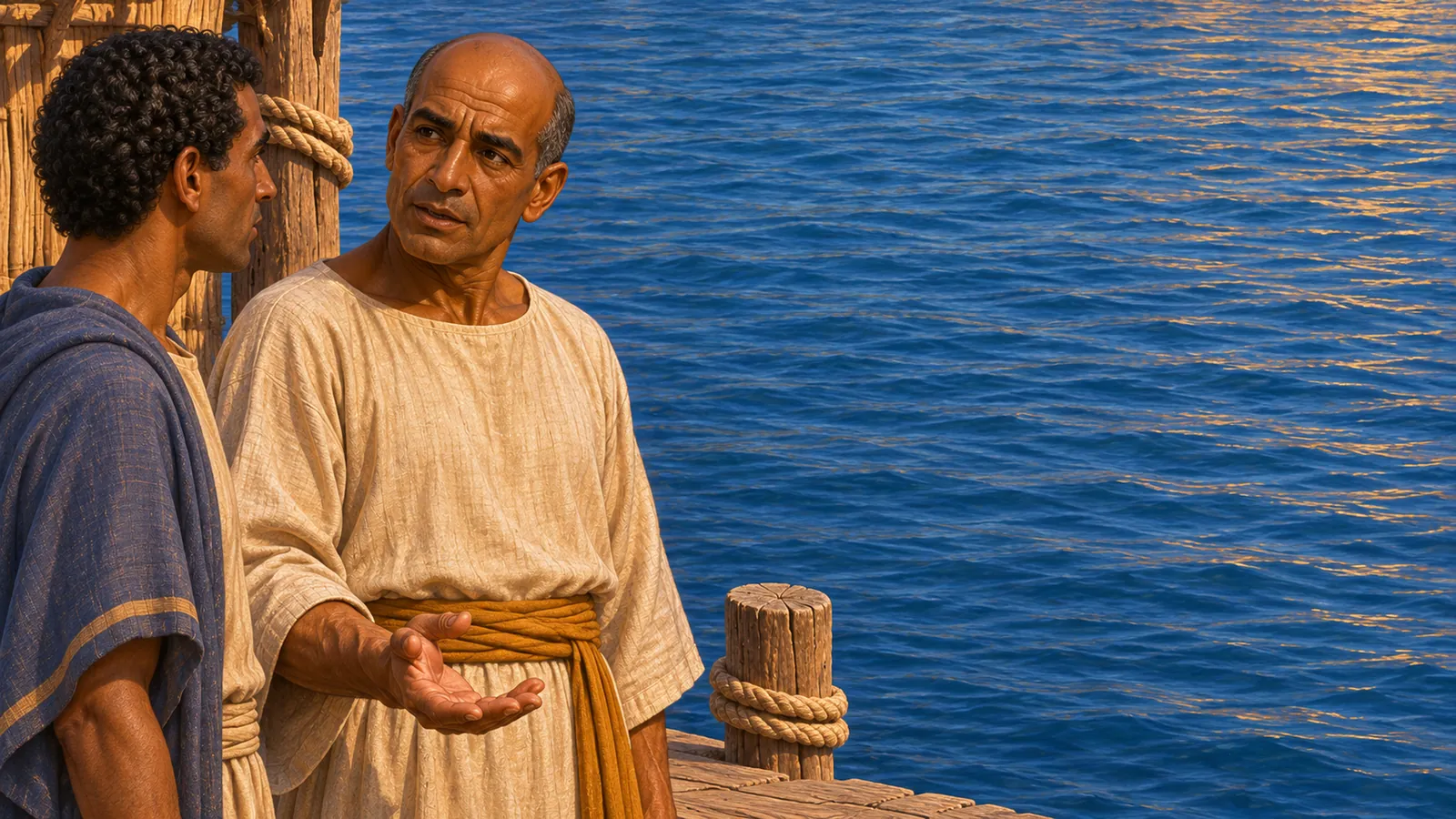
The expedition leader asks who would give water to a bird on the morning it is to be slaughtered. His reply ends their conversation.
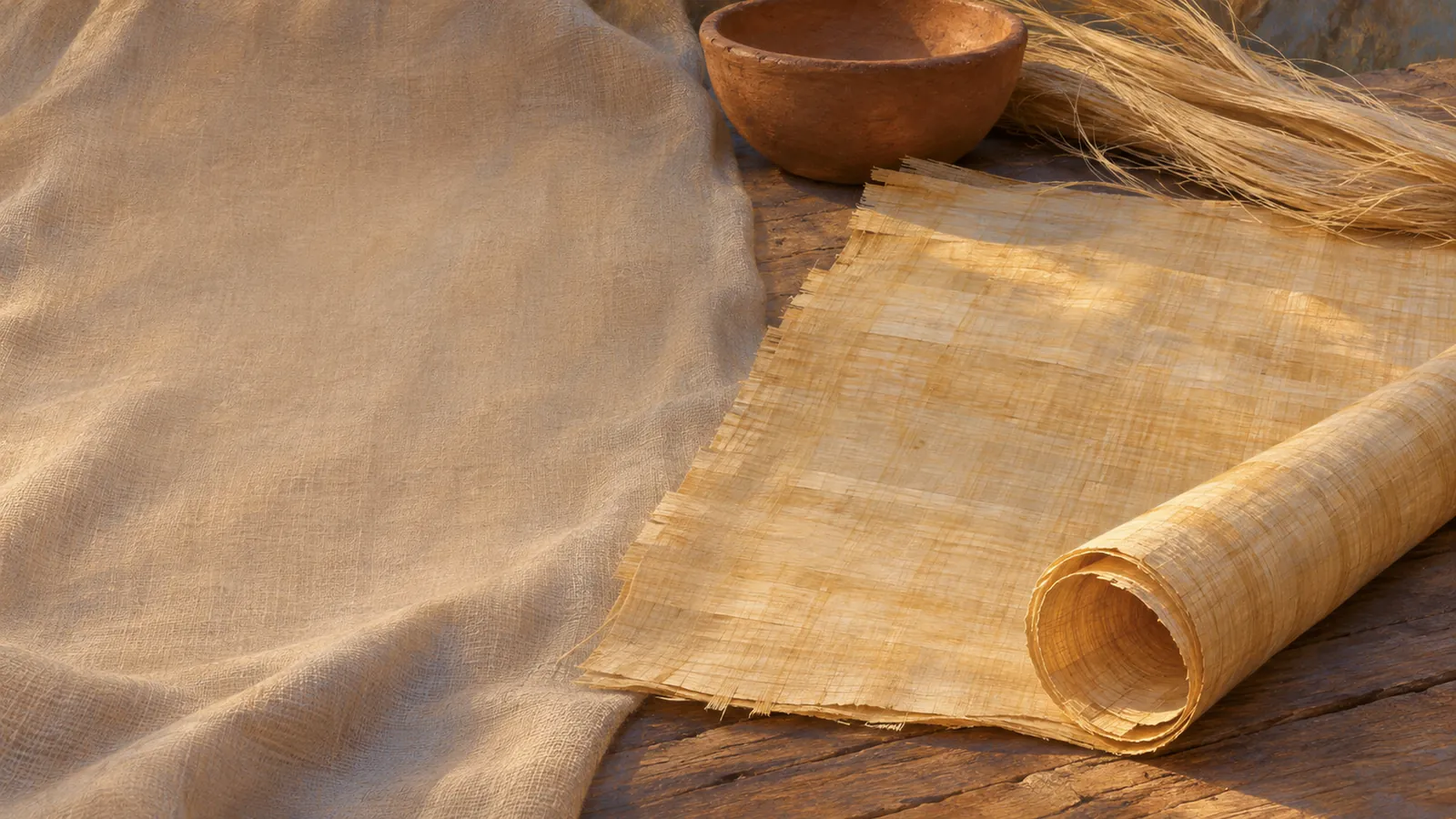
After that last reply comes the scribe’s closing note. It marks the completion of the copy in the only papyrus on which the story survives today.
End of chapter 1
All pages









Sources
The notes below refer to the papyrus units in that edition.
Editions consulted
- Ronaldo G. Gurgel Pereira and Thais Rocha da Silva, 2023, numbered Middle Egyptian text, Portuguese translation and commentary
- Universidade de São Paulo, journal record for the Pereira and Silva edition
- Peter Dils and Heinz Felber, Thesaurus Linguae Aegyptiae, manuscript and edition metadata
- James P. Allen, Cambridge University Press, manuscript introduction and opening passage
- UCL Digital Egypt, manuscript summary
Notes on this retelling
On pages 11 and 24, the sailor describes the wreck and says none of the others survived (Pereira and Silva 2023, units 36–39 and 101–110). The retelling states the deaths once and condenses the second account to the sailor’s arrival alone.
On page 17, the sailor makes a fire with a fire drill and offers to the gods (Pereira and Silva 2023, units 54–56). The retelling condenses the preparations to kindling the fire and making the offering.
On page 20, the serpent threatens to reduce the sailor to ashes and make him disappear if he delays answering (Pereira and Silva 2023, units 69–76). The retelling condenses the warning to its threat of burning.
On page 21, after threatening to turn the sailor to ashes, the serpent takes him in its mouth to its resting place and sets him down unharmed (Pereira and Silva 2023, Papyrus Hermitage 1115, units 69–80).
On page 29, the serpent counts seventy-five serpents and mentions its little daughter. It says a falling star caused the fire that killed its kin and that it found their bodies together (Pereira and Silva 2023, Papyrus Hermitage 1115, units 125–136).
On page 31, the sailor promises cattle as burnt offerings and birds whose necks he will wring, along with ships laden with Egyptian goods (Pereira and Silva 2023, units 143–148). The retelling gives the proposed killing of the animals as a promise of sacrifice.
On page 36, the serpent’s gifts include aromatics, pigments and animal goods (Pereira and Silva 2023, units 161–165). The retelling names the aromatics and pigments as examples from the longer list.
On page 43, the expedition leader dismisses the sailor’s advice with a question about giving water to a bird on the morning of its slaughter (Pereira and Silva 2023, units 183–186a). The retelling condenses the reply to his question.
Ancient lines behind each page
- Page 1: P. Hermitage 1115, 1–3 (Pereira and Silva 2023)
- Page 2: P. Hermitage 1115, 3–5 (Pereira and Silva 2023)
- Page 3: P. Hermitage 1115, 5–8 (Pereira and Silva 2023)
- Page 4: P. Hermitage 1115, 8–11 (Pereira and Silva 2023)
- Page 5: P. Hermitage 1115, 12–16 (Pereira and Silva 2023)
- Page 6: P. Hermitage 1115, 17–22 (Pereira and Silva 2023)
- Page 7: P. Hermitage 1115, 22–25 (Pereira and Silva 2023)
- Page 8: P. Hermitage 1115, 25–28 (Pereira and Silva 2023)
- Page 9: P. Hermitage 1115, 29–32 (Pereira and Silva 2023)
- Page 10: P. Hermitage 1115, 32–36 (Pereira and Silva 2023)
- Page 11: P. Hermitage 1115, 36–39 (Pereira and Silva 2023)
- Page 12: P. Hermitage 1115, 39–42 (Pereira and Silva 2023)
- Page 13: P. Hermitage 1115, 42–45 (Pereira and Silva 2023)
- Page 14: P. Hermitage 1115, 45–49 (Pereira and Silva 2023)
- Page 15: P. Hermitage 1115, 49–52 (Pereira and Silva 2023)
- Page 16: P. Hermitage 1115, 53–54 (Pereira and Silva 2023)
- Page 17: P. Hermitage 1115, 54–56 (Pereira and Silva 2023)
- Page 18: P. Hermitage 1115, 56–60 (Pereira and Silva 2023)
- Page 19: P. Hermitage 1115, 60–68 (Pereira and Silva 2023)
- Page 20: P. Hermitage 1115, 69–76 (Pereira and Silva 2023)
- Page 21: P. Hermitage 1115, 76–80 (Pereira and Silva 2023)
- Page 22: P. Hermitage 1115, 81–88 (Pereira and Silva 2023)
- Page 23: P. Hermitage 1115, 89–101 (Pereira and Silva 2023)
- Page 24: P. Hermitage 1115, 101–110 (Pereira and Silva 2023)
- Page 25: P. Hermitage 1115, 111–116 (Pereira and Silva 2023)
- Page 26: P. Hermitage 1115, 117–121 (Pereira and Silva 2023)
- Page 27: P. Hermitage 1115, 122–124 (Pereira and Silva 2023)
- Page 28: P. Hermitage 1115, 124–129 (Pereira and Silva 2023)
- Page 29: P. Hermitage 1115, 129–136 (Pereira and Silva 2023)
- Page 30: P. Hermitage 1115, 137–143 (Pereira and Silva 2023)
- Page 31: P. Hermitage 1115, 143–148 (Pereira and Silva 2023)
- Page 32: P. Hermitage 1115, 149–152 (Pereira and Silva 2023)
- Page 33: P. Hermitage 1115, 153–154a (Pereira and Silva 2023)
- Page 34: P. Hermitage 1115, 154b–156 (Pereira and Silva 2023)
- Page 35: P. Hermitage 1115, 157–160 (Pereira and Silva 2023)
- Page 36: P. Hermitage 1115, 161–165 (Pereira and Silva 2023)
- Page 37: P. Hermitage 1115, 166–169a (Pereira and Silva 2023)
- Page 38: P. Hermitage 1115, 169b–172 (Pereira and Silva 2023)
- Page 39: P. Hermitage 1115, 172–174 (Pereira and Silva 2023)
- Page 40: P. Hermitage 1115, 174–176 (Pereira and Silva 2023)
- Page 41: P. Hermitage 1115, 177–179a (Pereira and Silva 2023)
- Page 42: P. Hermitage 1115, 179b–182 (Pereira and Silva 2023)
- Page 43: P. Hermitage 1115, 183–186a (Pereira and Silva 2023)
- Page 44: P. Hermitage 1115, 186b–189 (Pereira and Silva 2023)
Illustrations made with AI tools by IL Archive; the text is based on the ancient sources (see the sources at the end of each chapter).