Unis and the Sky Boats Chapter 1
Leaving the Akhet
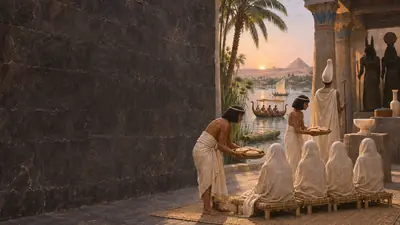
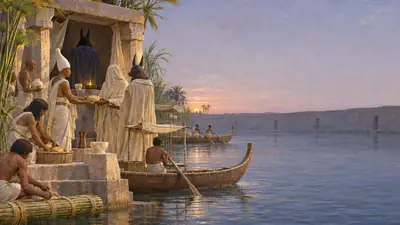
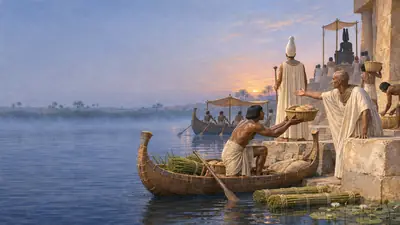
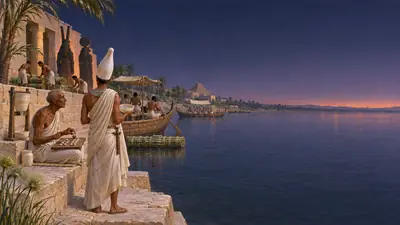
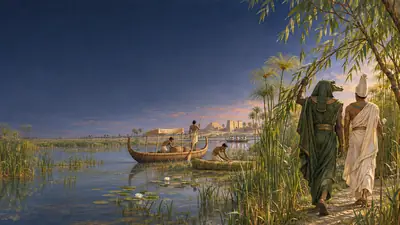
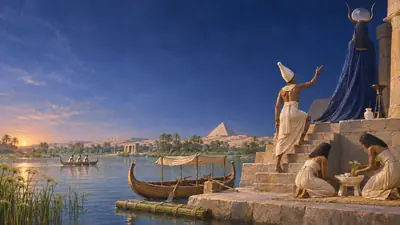
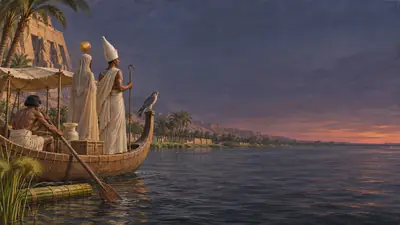
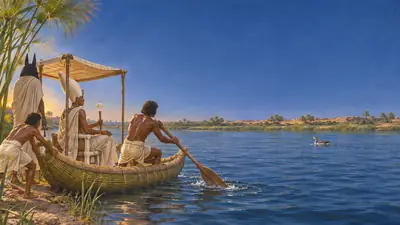
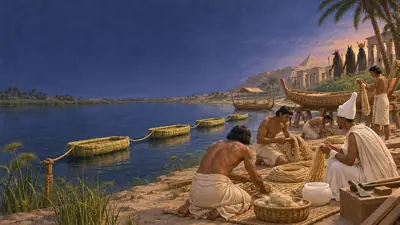
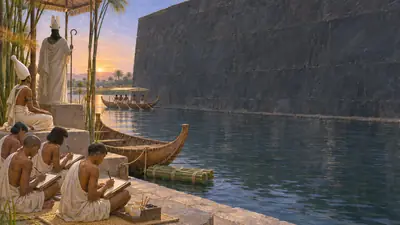
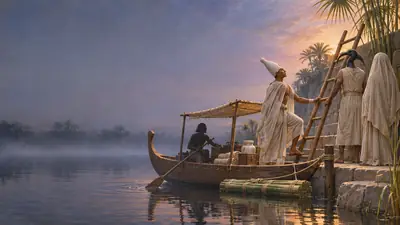
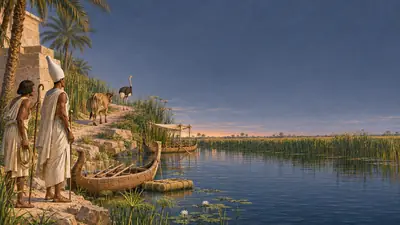
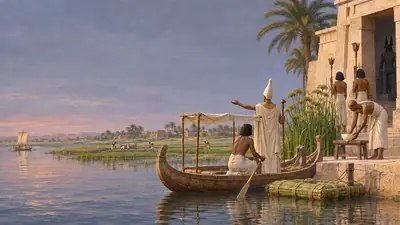
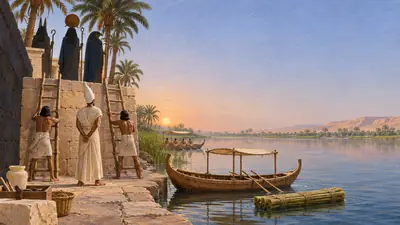
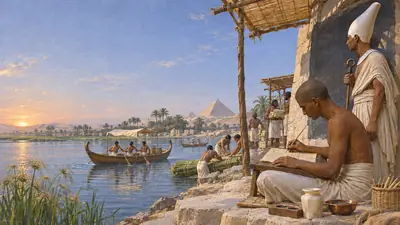
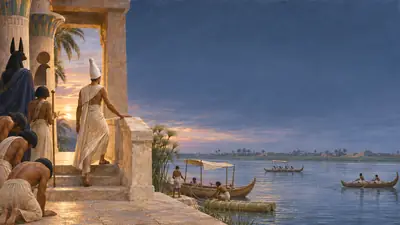
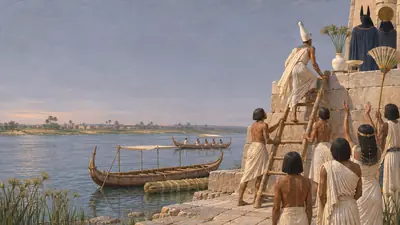
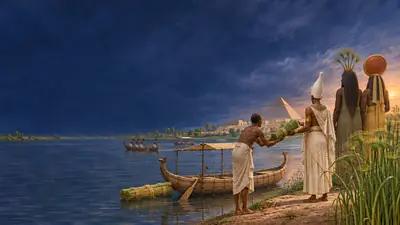
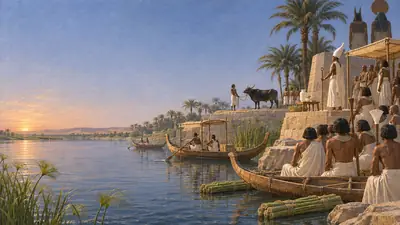
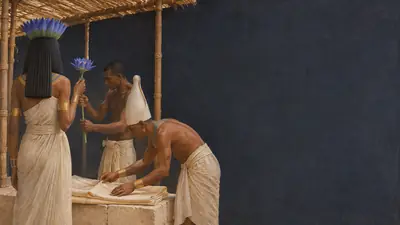
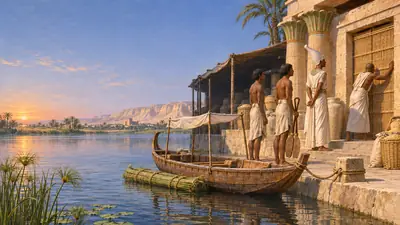
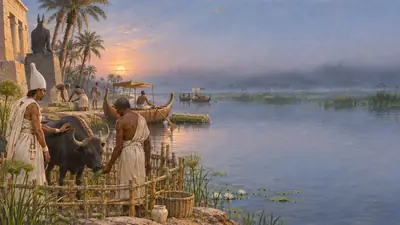
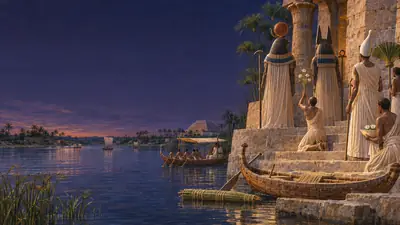
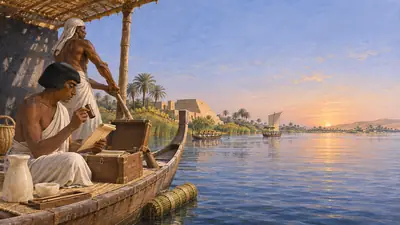
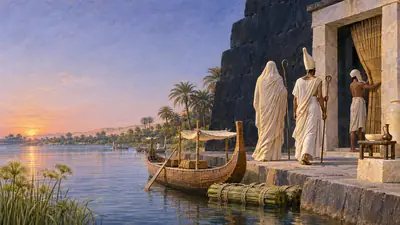
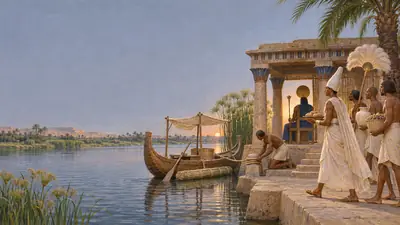
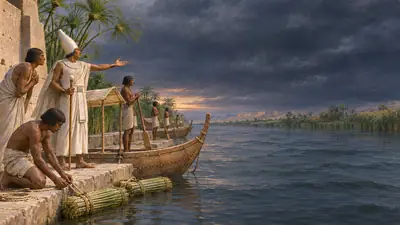
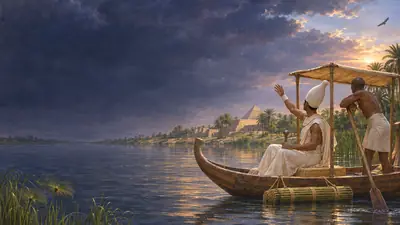
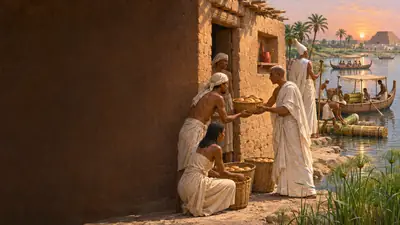
The funerary spells in the Pyramid of Unis open with the spirit asking a ferryman for a boat. The speaker asks for reed craft to cross the waters and speaks of ladders to the sky. The final spell says the bread has flown toward the enclosures of the one associated with the Red Crown.
SourcesTurn the pages with the arrows, the arrow keys or a swipe.
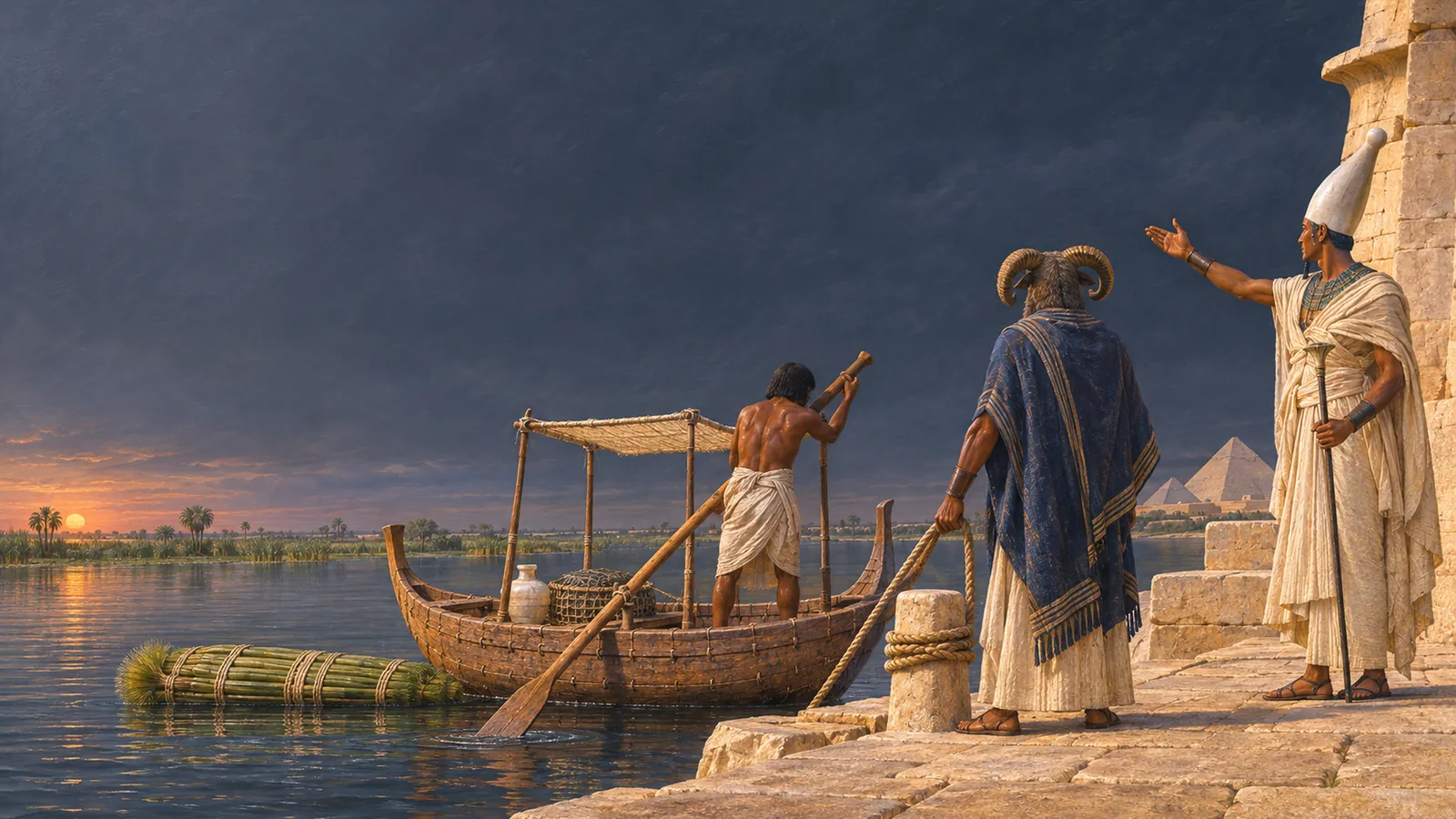
THE FERRYMAN
The Pyramid Texts of Unis preserve this appeal for a boat. The speaker addresses a being of the underworld from Nezat and a ferryman whose craft is linked to Khnum.
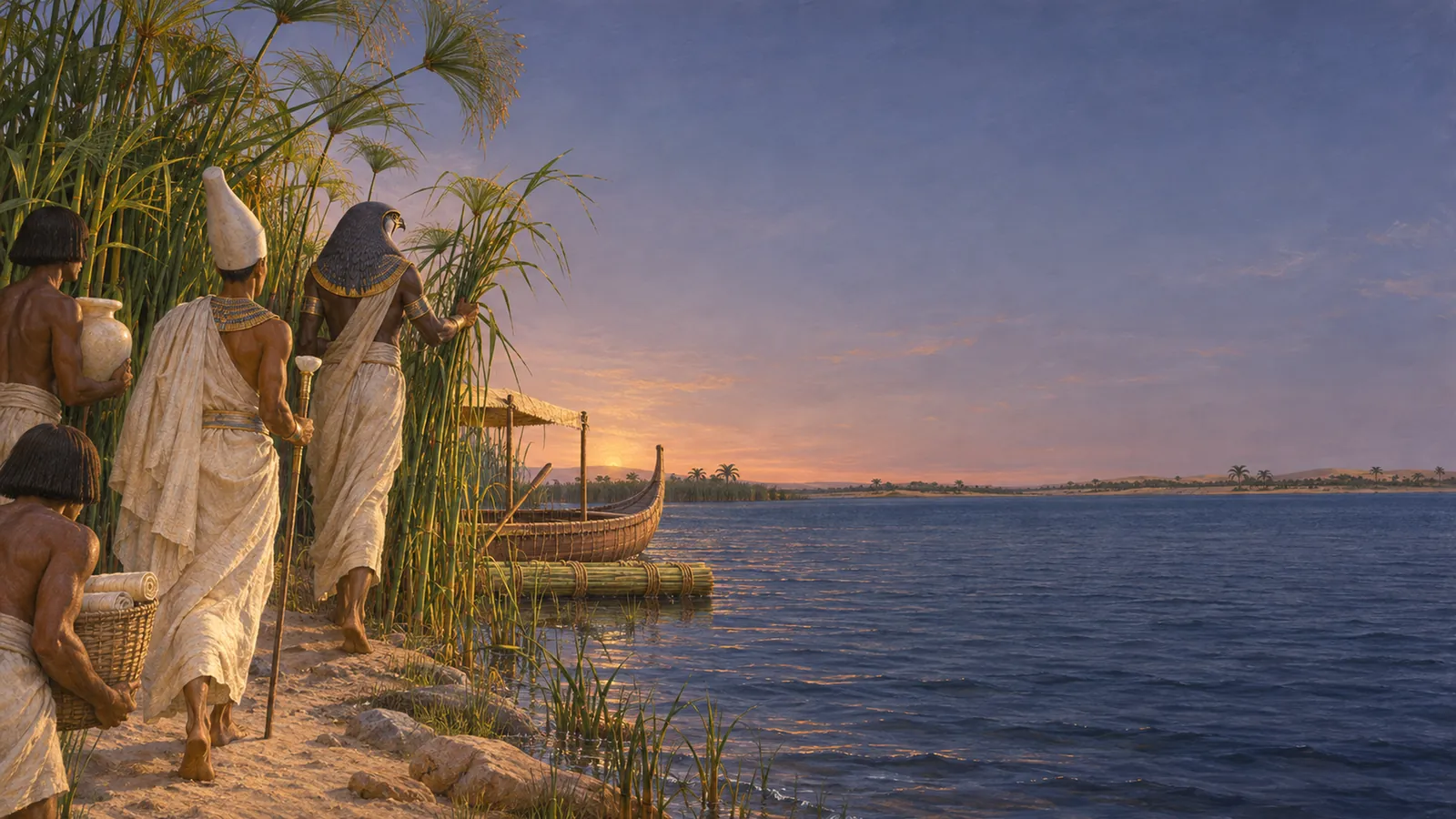
The speaker names himself Sokar of Rasetjau. He says he is heading to Sokar, lord of Spread Lake, and calls on the two he addressed to fetch the stretches of desert.
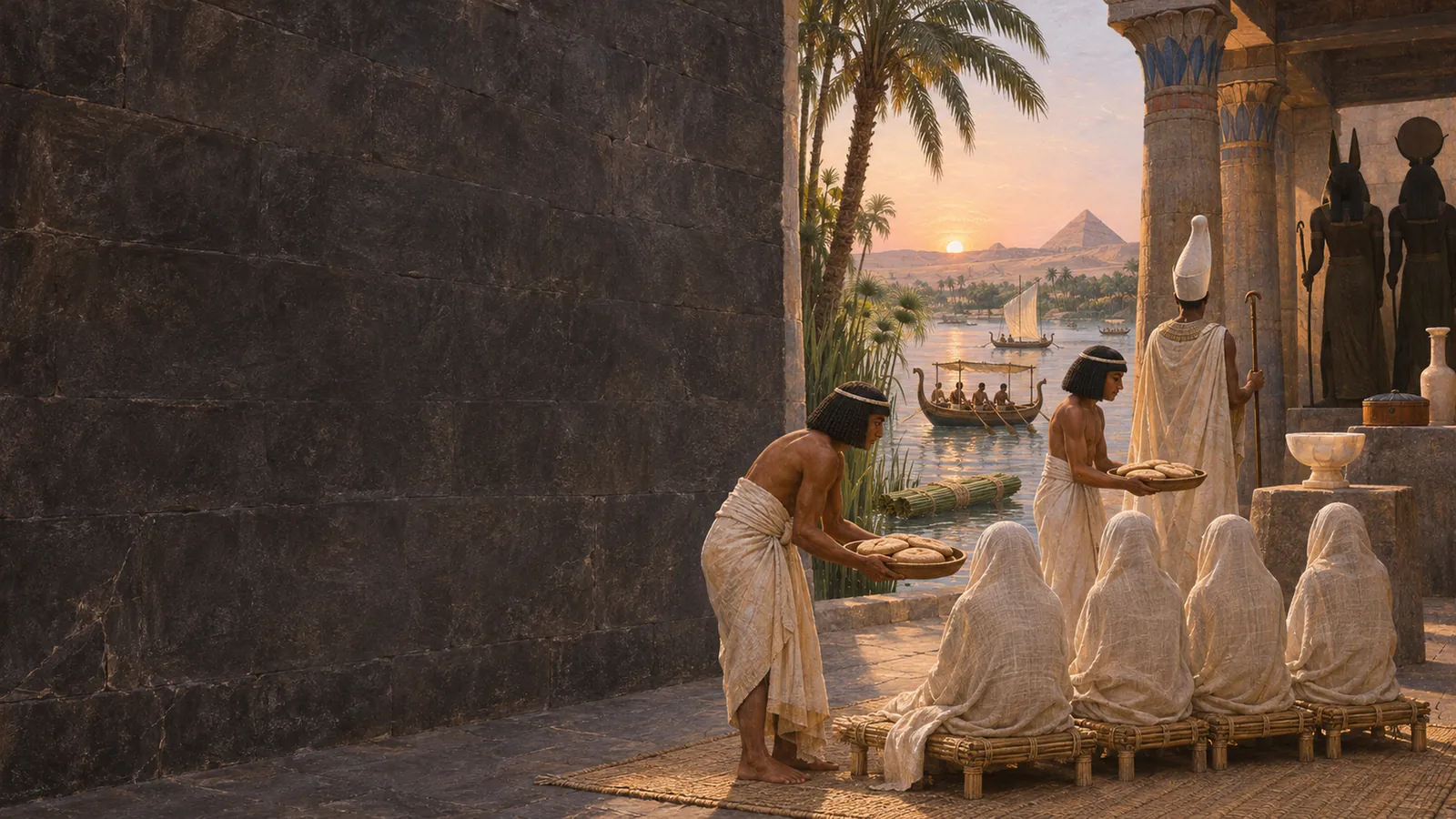
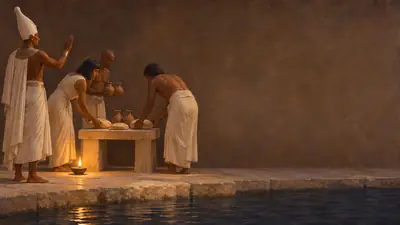
The recitation gives bread first to Nu and Undersky, then to Amun and Amaunet. It describes each pair as having joined the gods to their shadow.
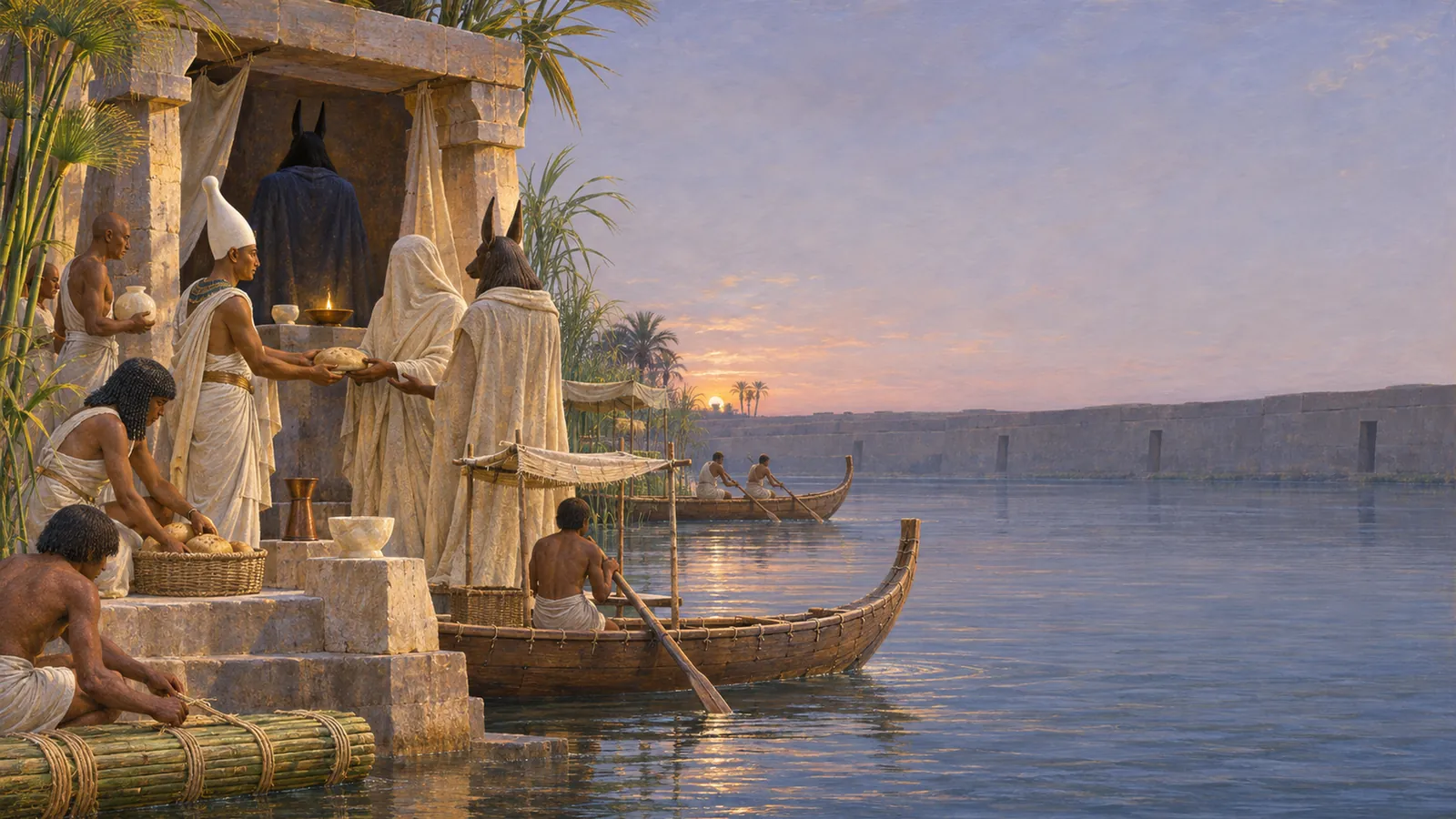
The speaker gives bread to Atum and Dual-Lion. The passage names Shu and Tefnut within a sequence about giving rise to the gods and setting them in place.
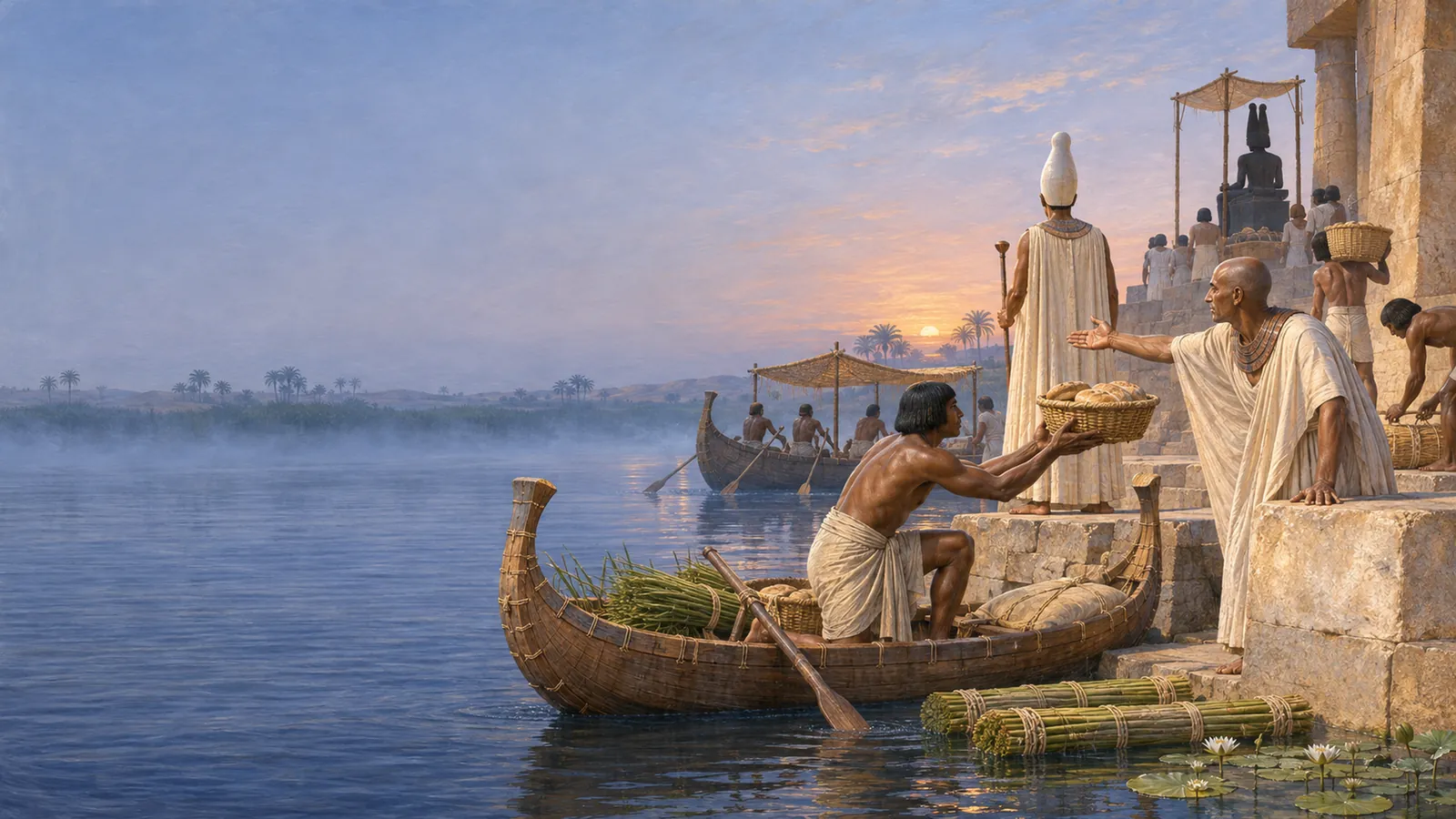
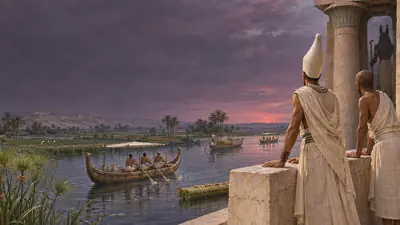
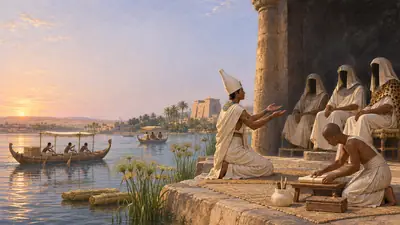
The speaker asks the recipients to tell their father that he has brought them bread and given them what is theirs. He asks them to allow him to cross to their father at the Akhet.
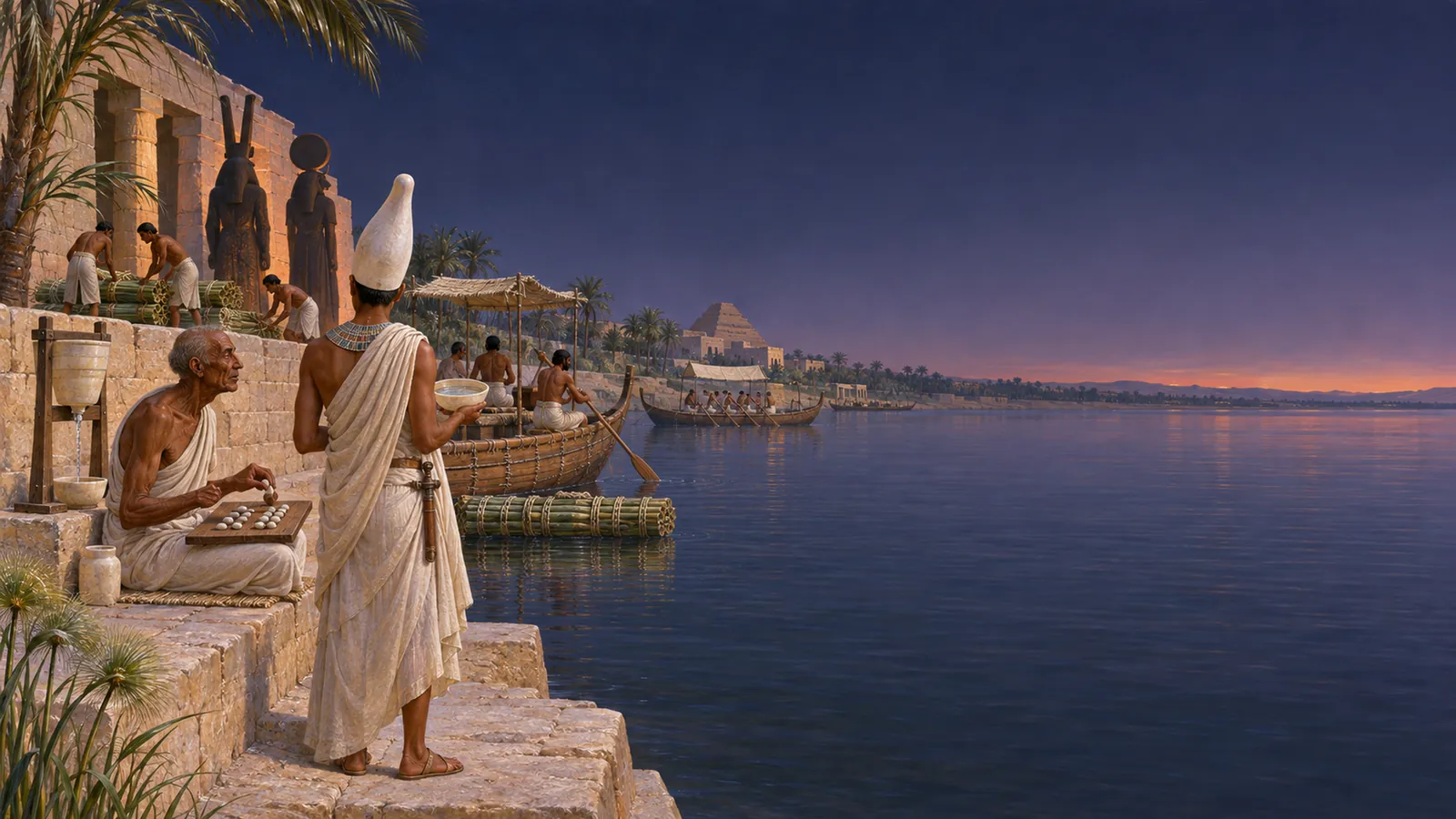
The speaker says he knows the one he is going to meet. He gives the name Continual and calls him the lord of the year.
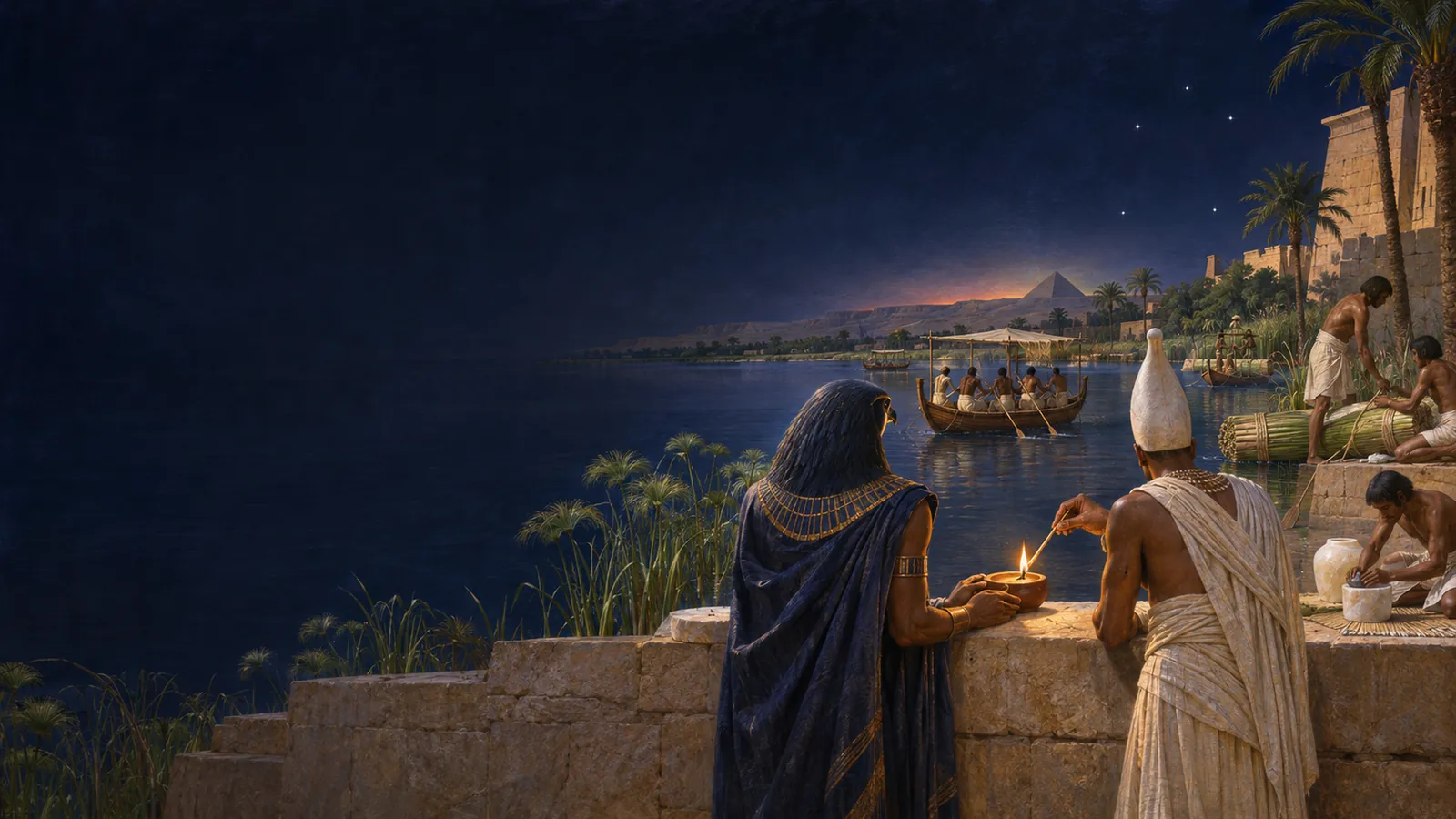
The spell places Horus beneath the stars and describes his arms as a weapon. He brings the sun to life each day, and the speaker calls on him to give him life as well.
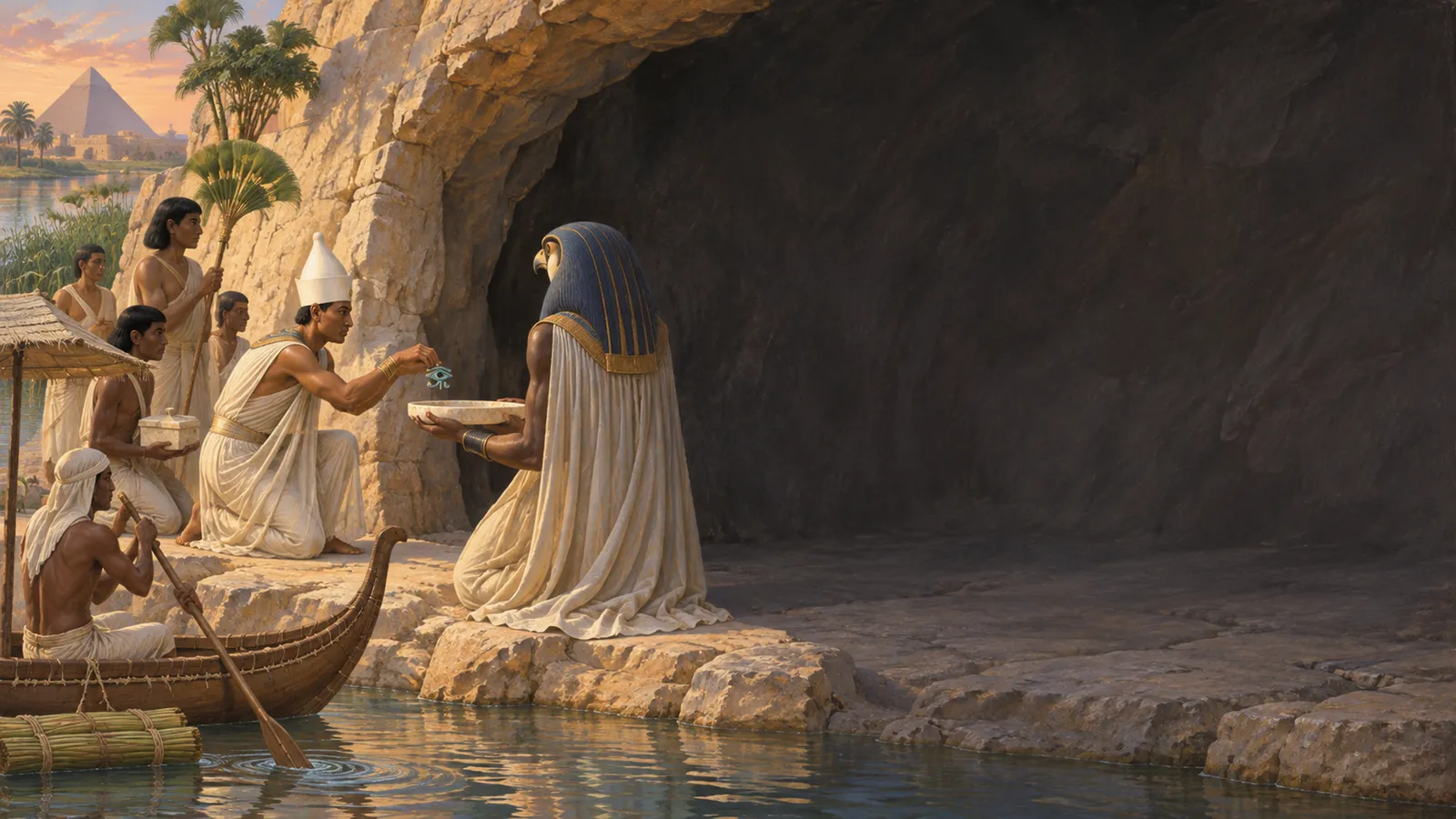
The speaker greets Horus of Shat, Horus of Shezmet and Horus of the east. He says he brought Horus’s great eastern eye from a cavern.
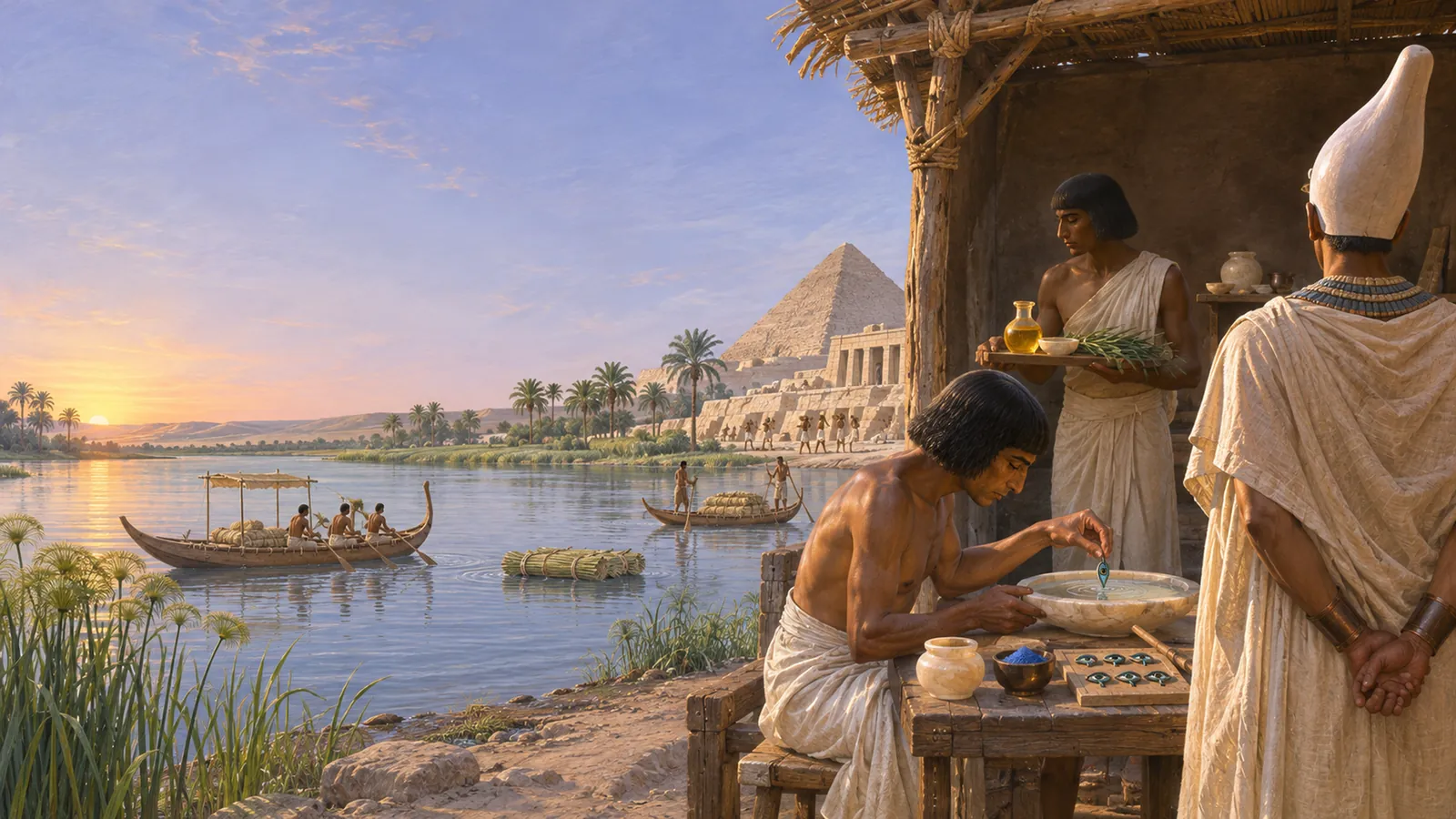
The spell associates the eye with water, blood and vapour, then asks Horus to regain strength through forms such as the sun, oil, willow and faience.
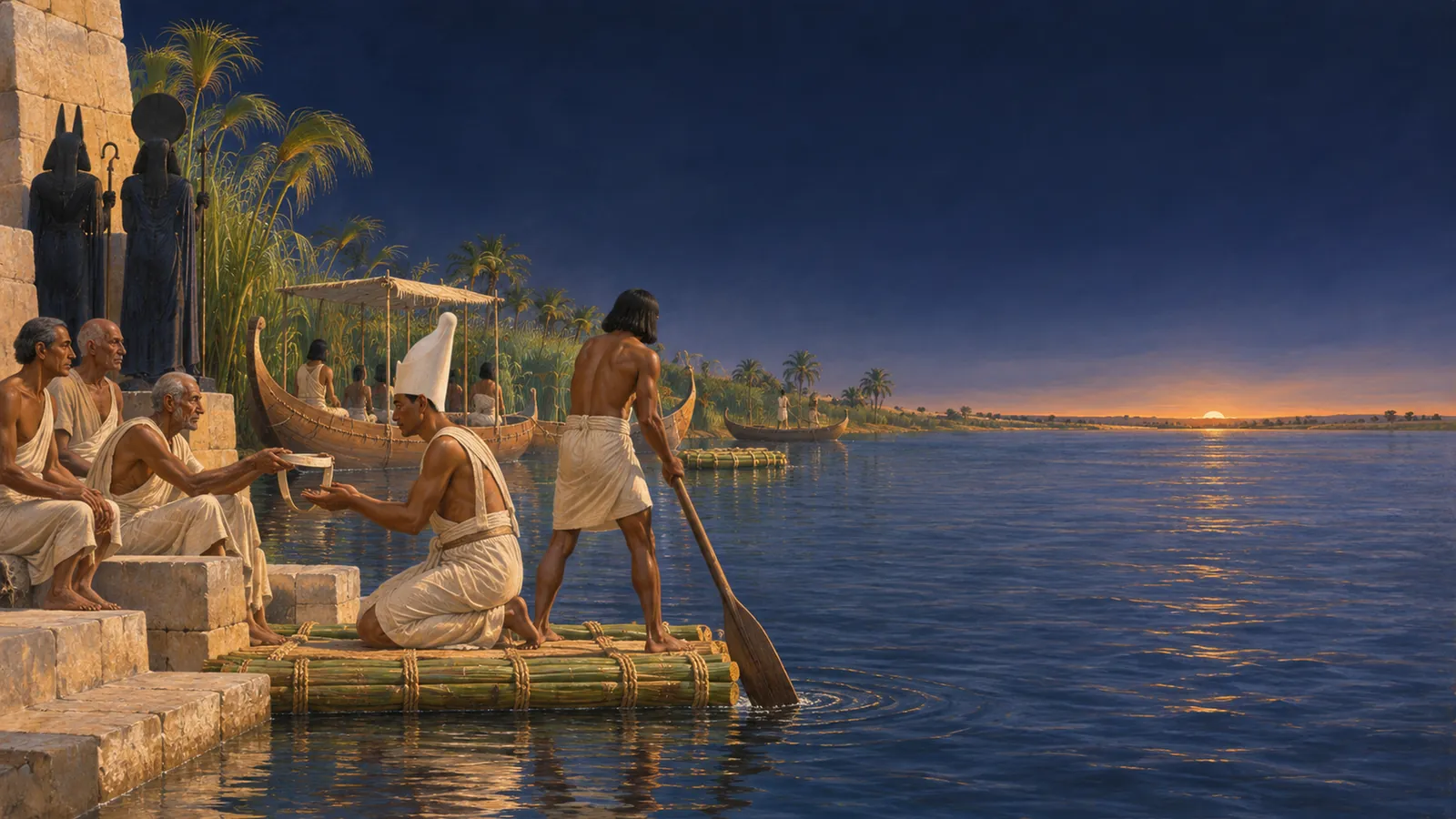
The speaker calls on the great one of the reed float to rise as Paths-Parter and leave the Akhet. The spell tells him to take a crown from the elders and foremost of Libya.
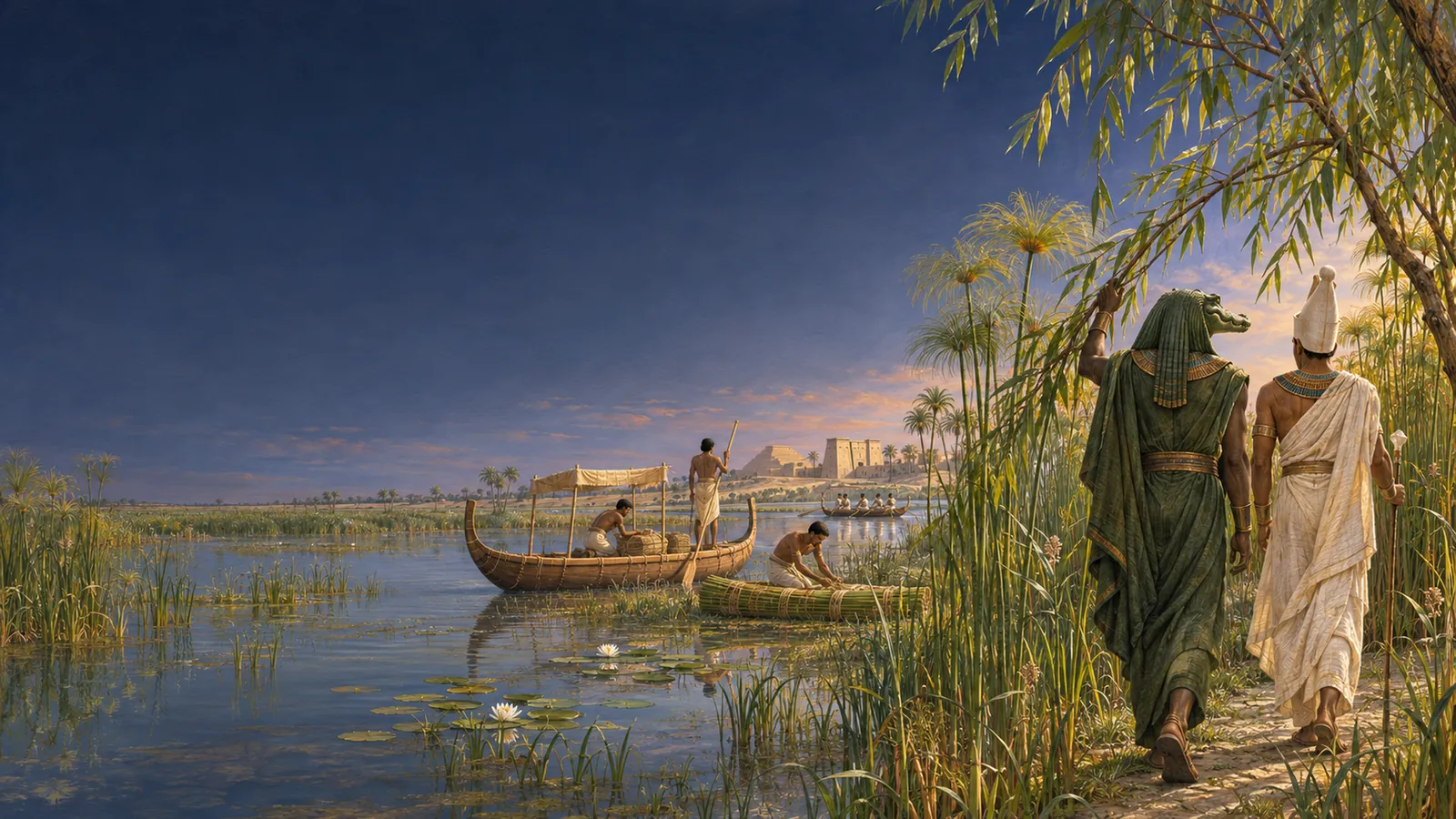
The spell addresses Sobek of Bakhu as he travels through his fields and mangroves. The speaker asks Sobek to bring his ka up beside him through the same kind of rising passage.
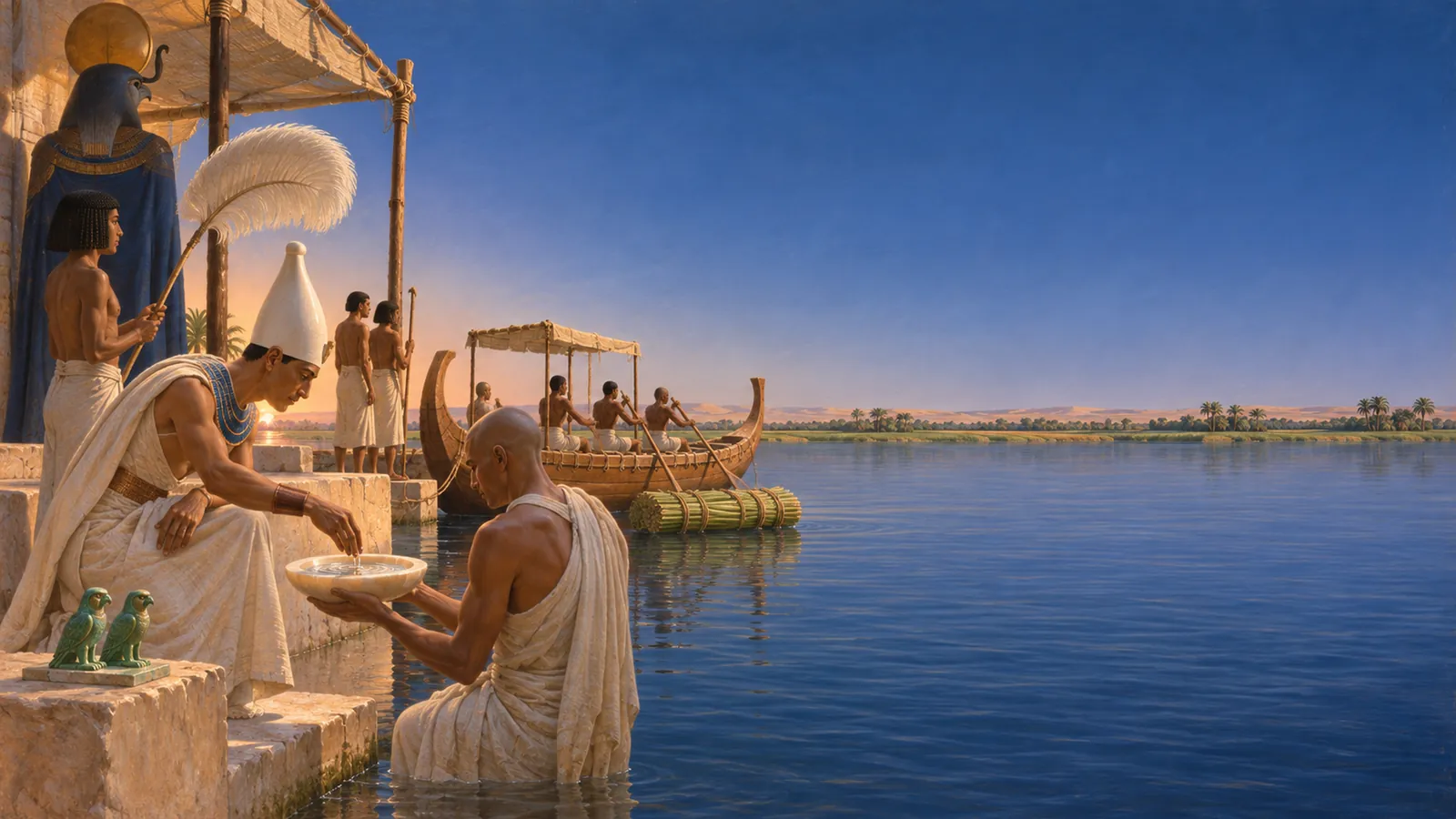
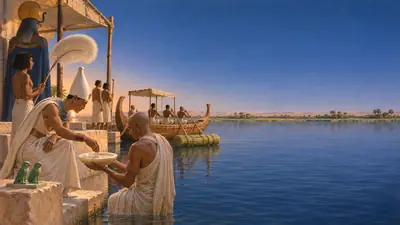
The speaker asks to be cleansed and made bright in the Jackal’s lake. The closing rubric specifies four recitations and a pair of green falcons.
SOTHIS
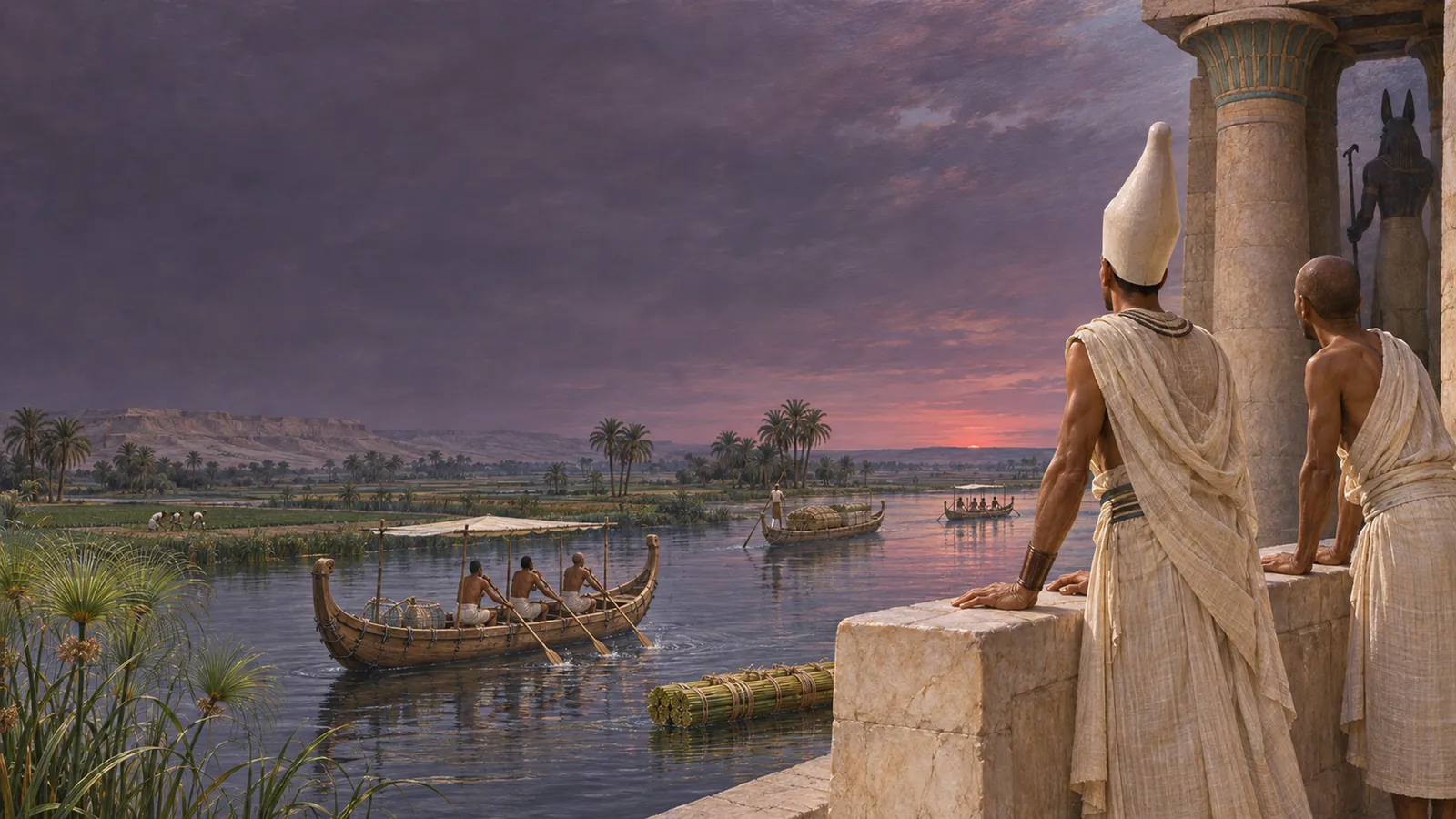
In the spell, the sky is said to bleed as Sothis lives. Allen explains this as an image of the red sky at dawn.
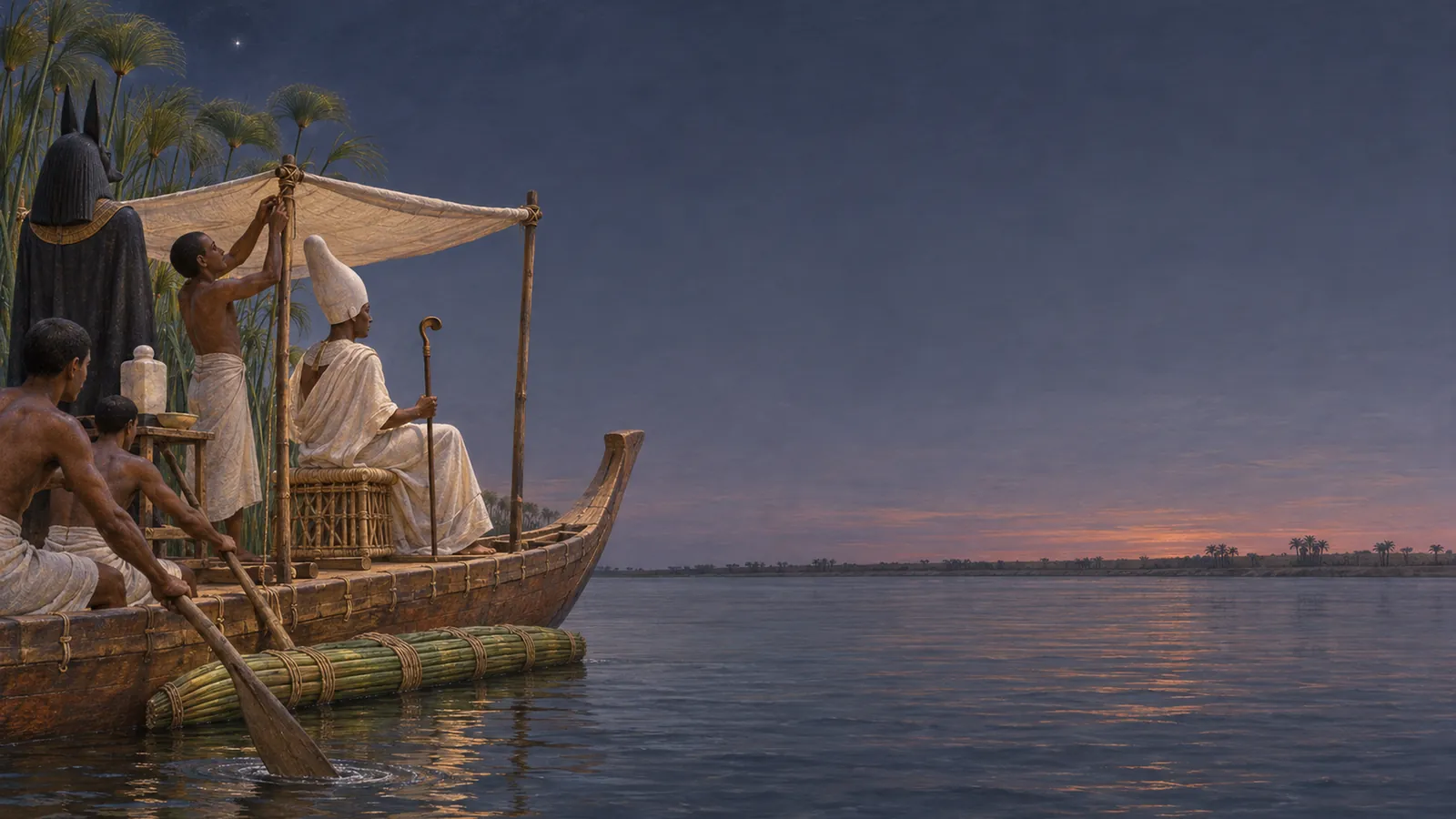
The speaker calls himself Sothis’s living son. He says his home for the sky will not perish and his seat for the earth will have no end.
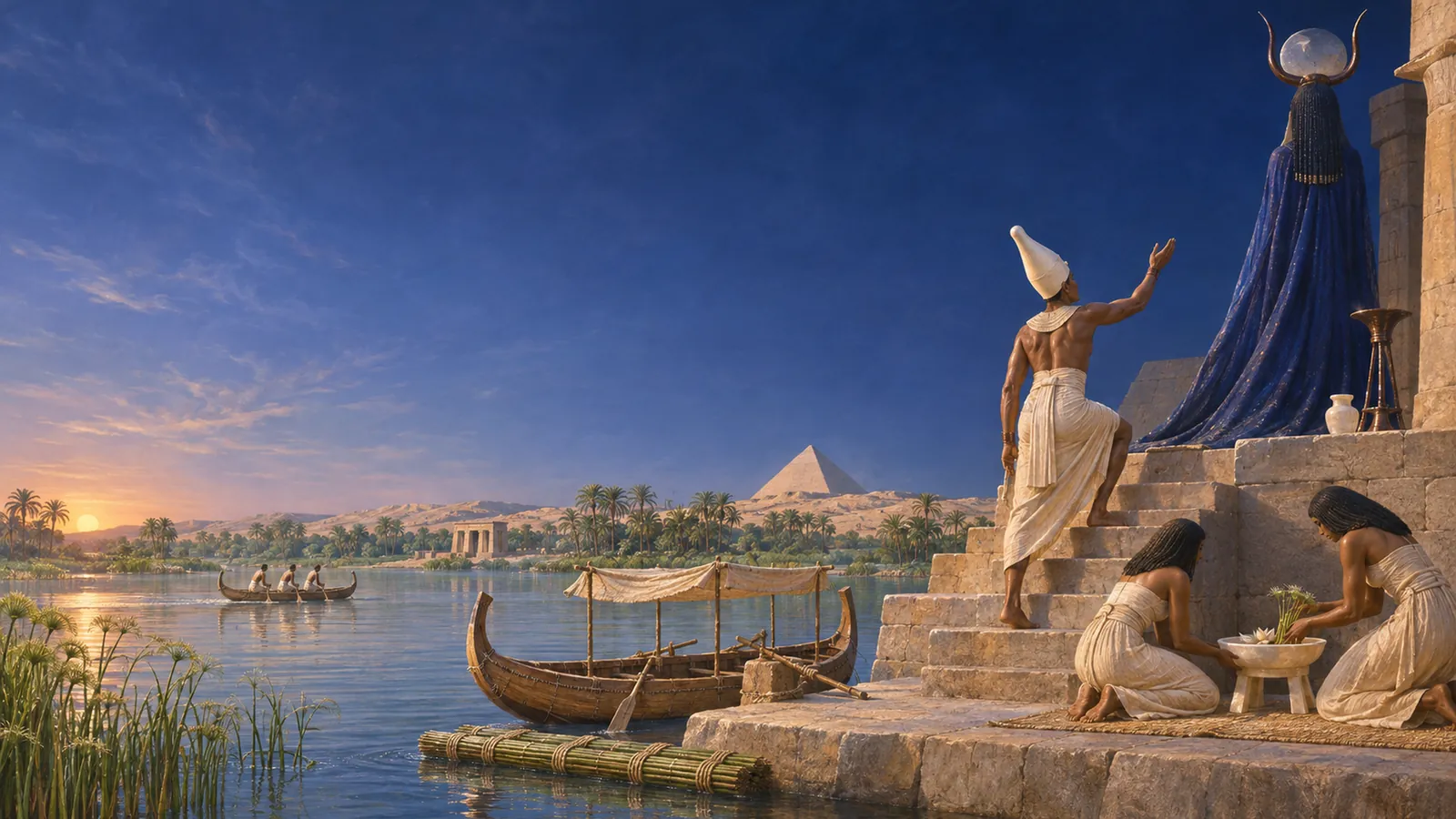
In the spell, Sothis carries the speaker up to join the gods, and Nut holds out her arms to him. Two foremost bas of Heliopolis kneel near the sun.
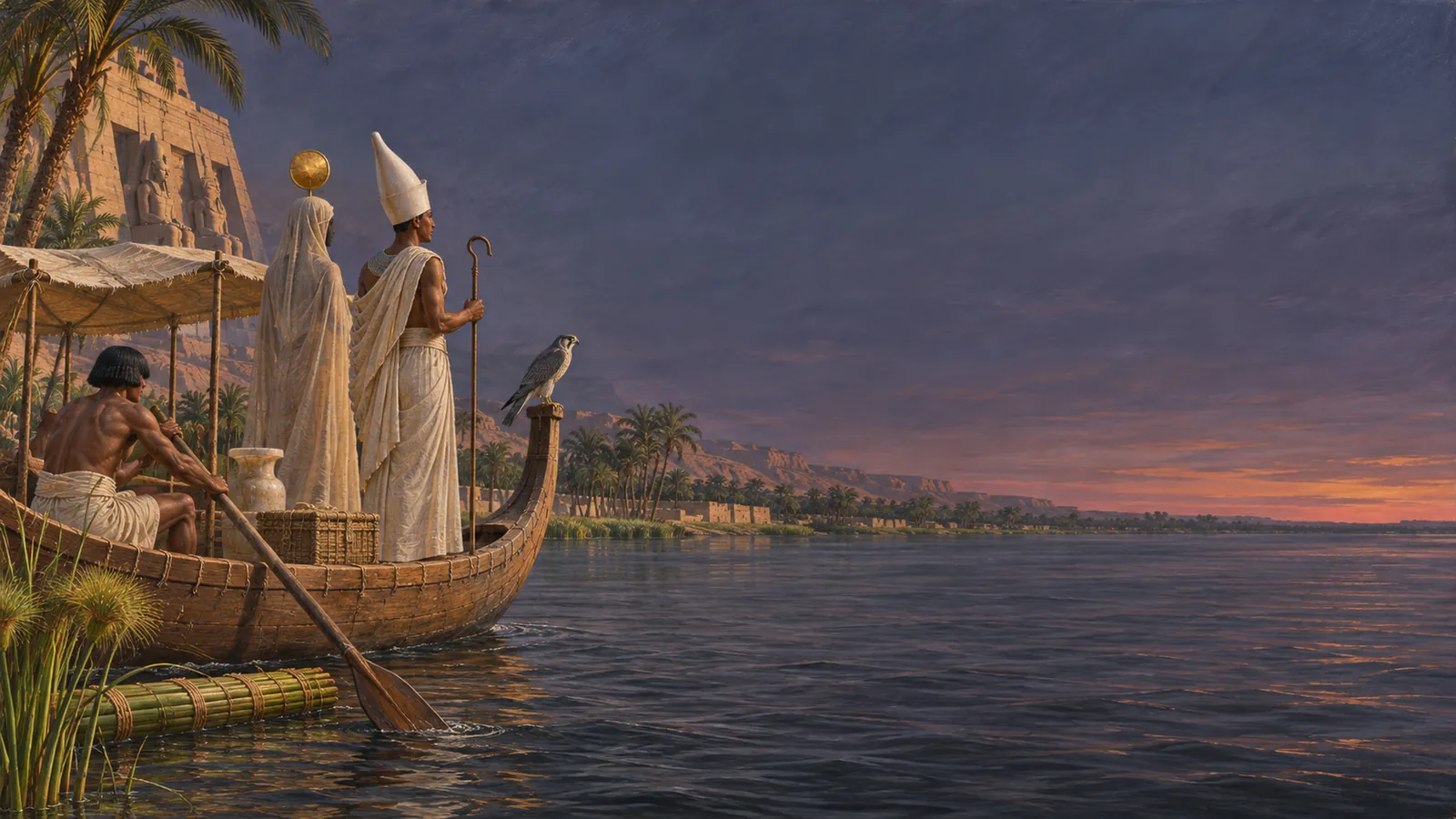
The speaker claims a place beside the sun and says he will yield it to no one. He credits the sun with his ascent and describes himself with a falcon’s face, a bird’s wings and talons.
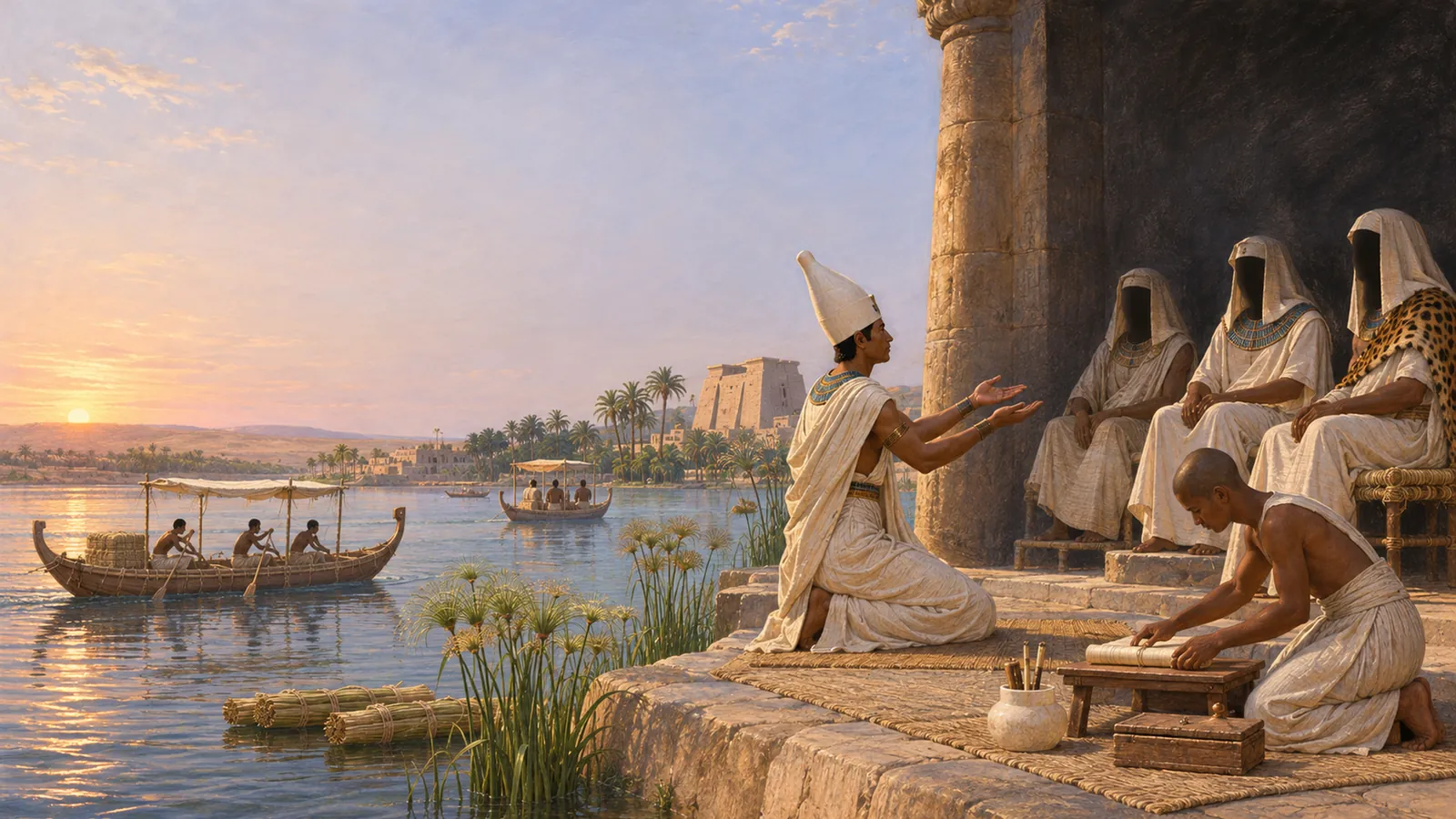
The speaker says there is no case against him on earth and that the gods in the sky have found no guilt in him. He declares that he has cleared the case against his ascent.
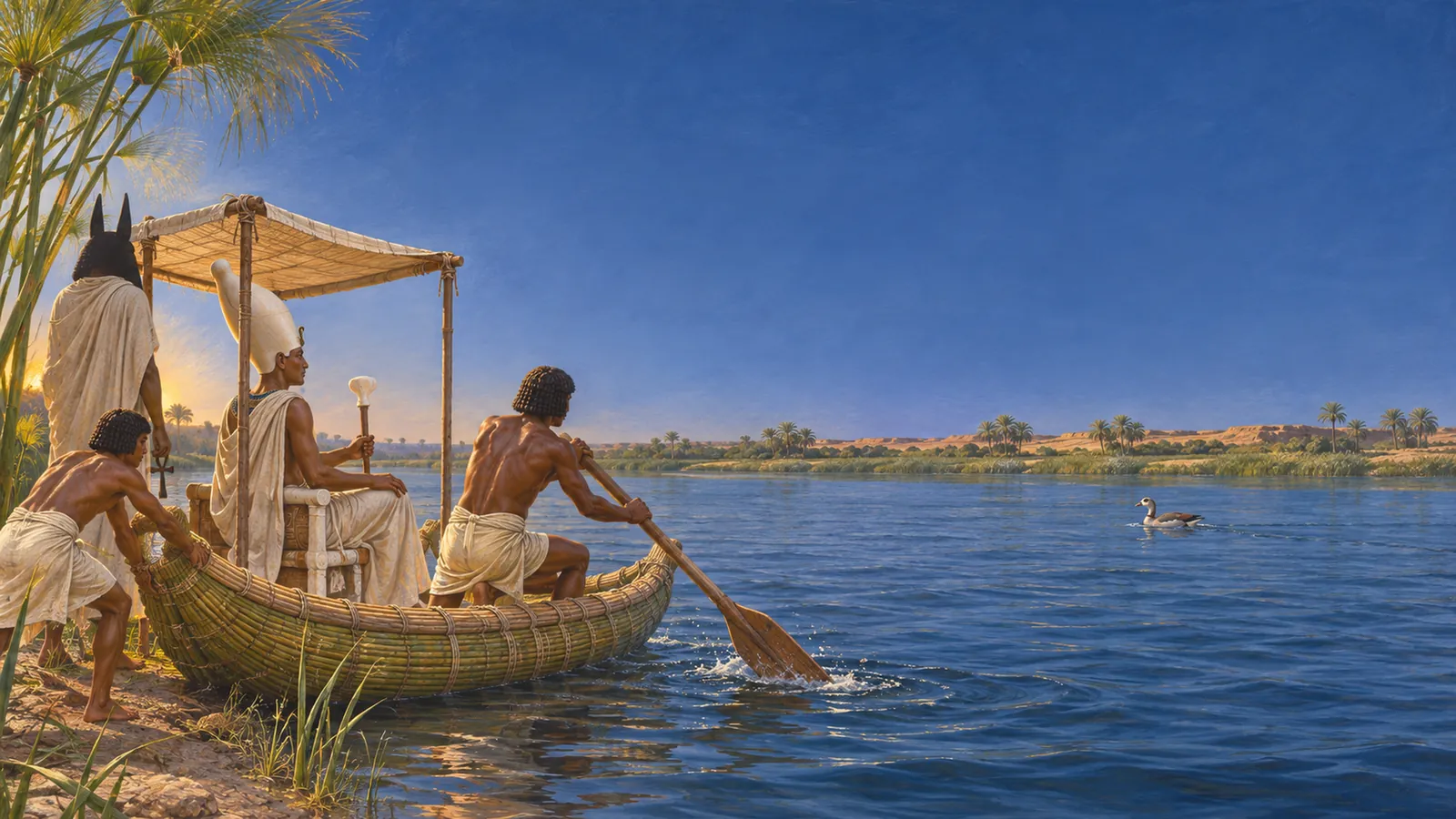
Paths-Parter carries the speaker into the sky among the gods. The speaker compares himself to a Nile goose and a kite, then tells the people that he is flying away from them.
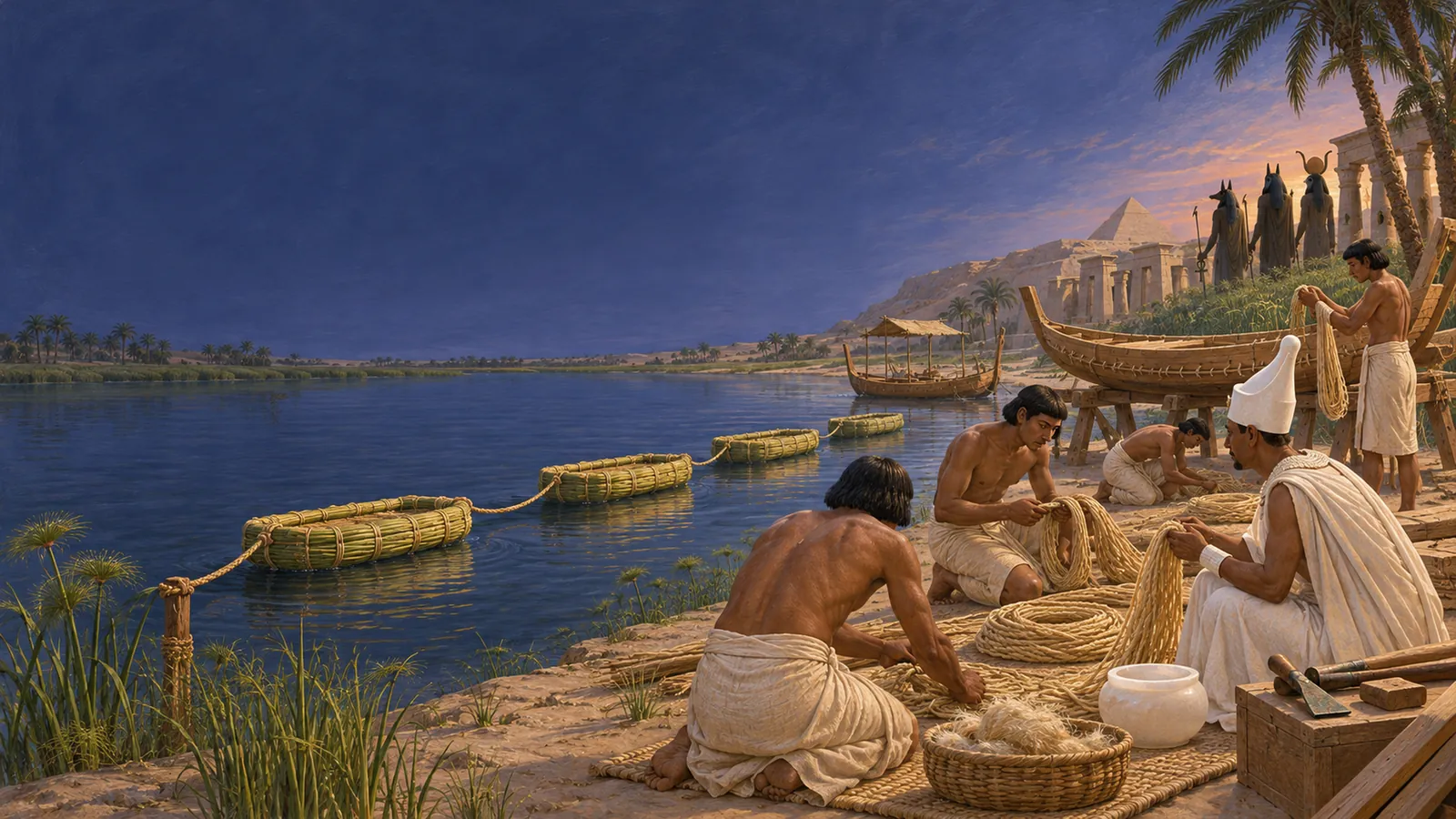
The speaker calls to the gods of all four directions. He asks for the four clean reed floats they had set out for Osiris when he crossed to the Cool Waters with his son Horus.
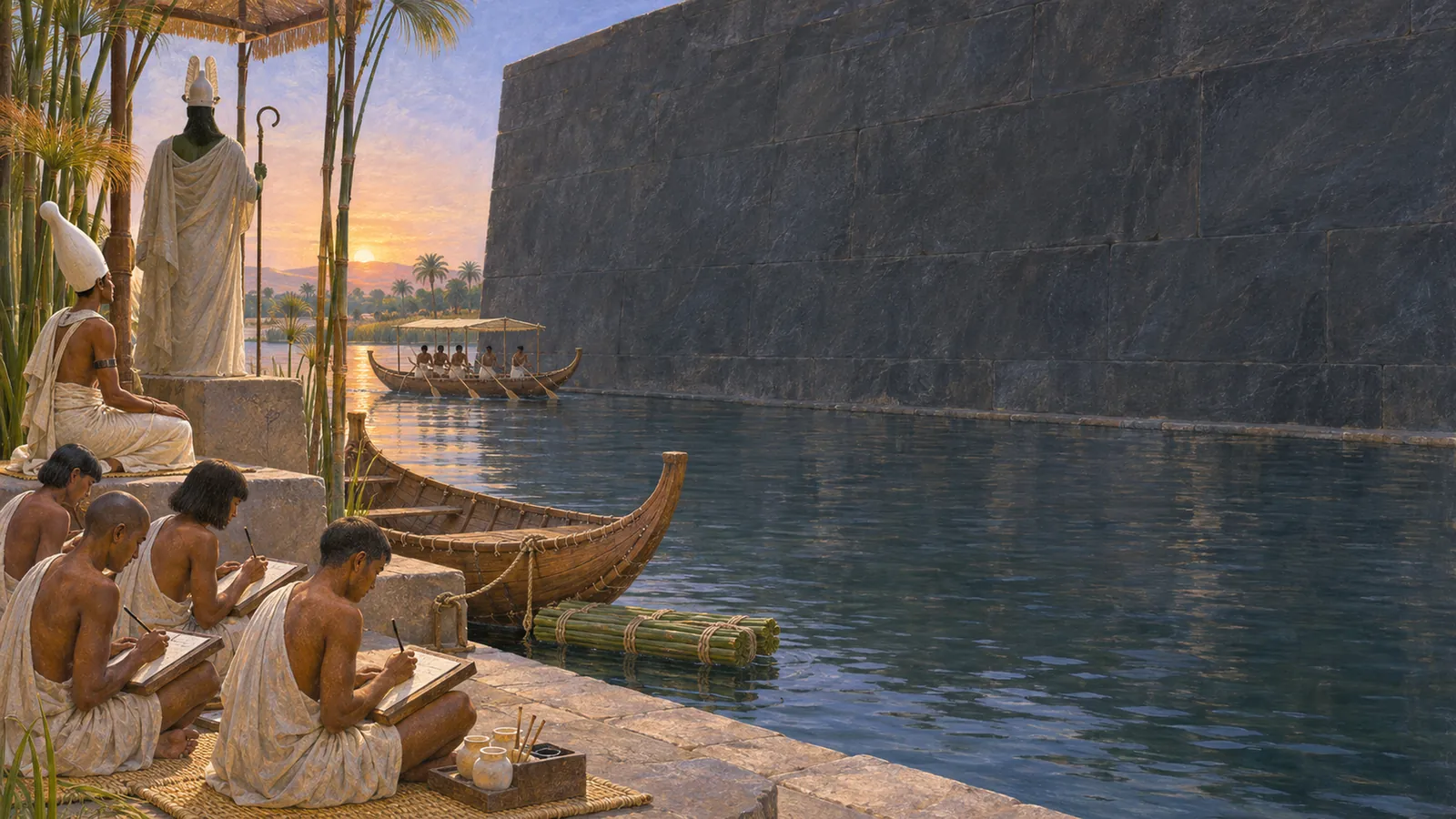
In the gods’ reply, he is Horus, son of Osiris, and also Hathor’s son and Geb’s offspring. Osiris orders him to appear as a second Horus. Four akhs in Heliopolis put the decree in writing.
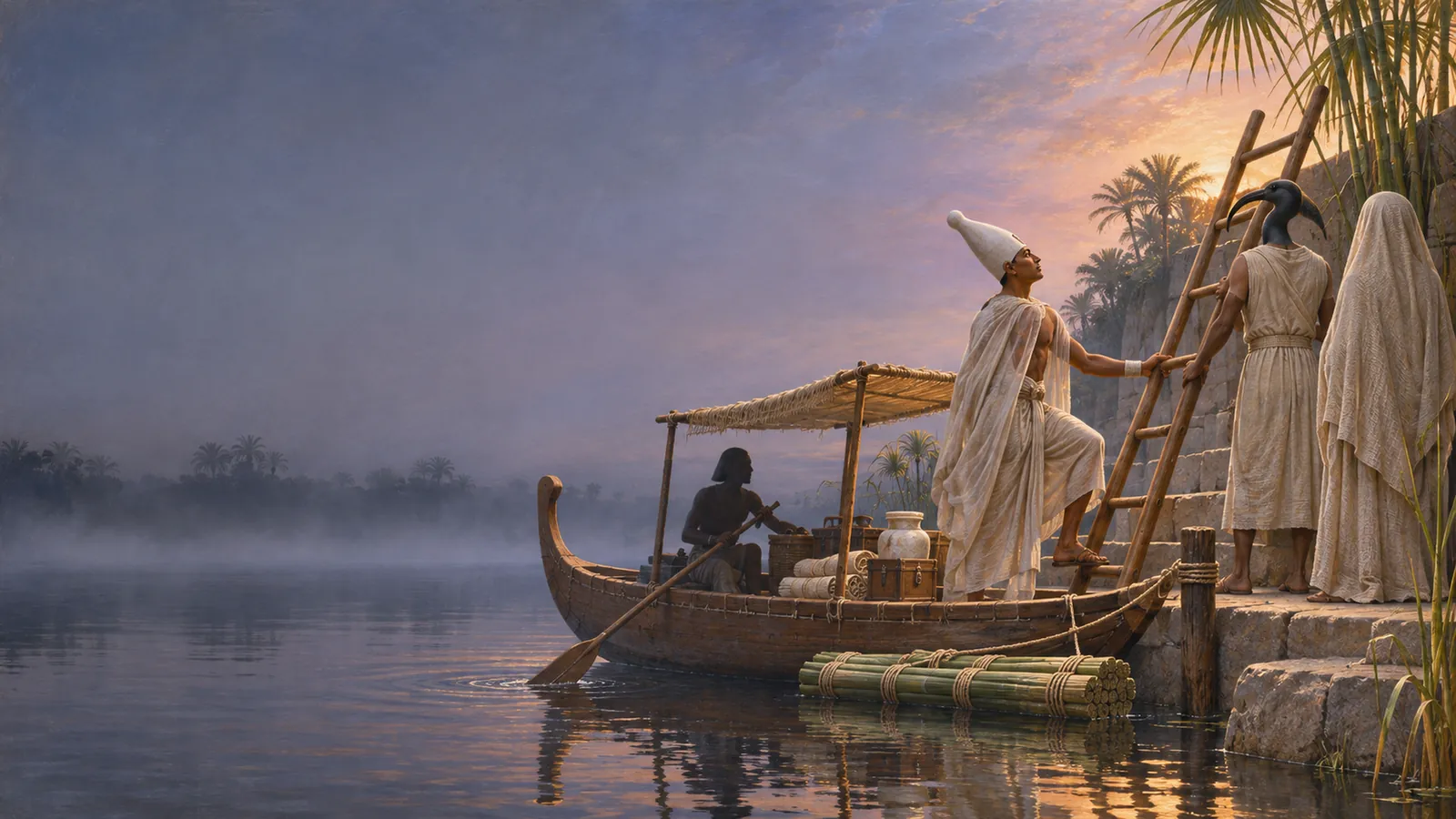
THE LADDER
At the sky’s Looking Waters he greets Anubis’s daughter. The spell links her with Thoth at the ladder’s uprights, and the speaker asks her to open a path so he can pass.
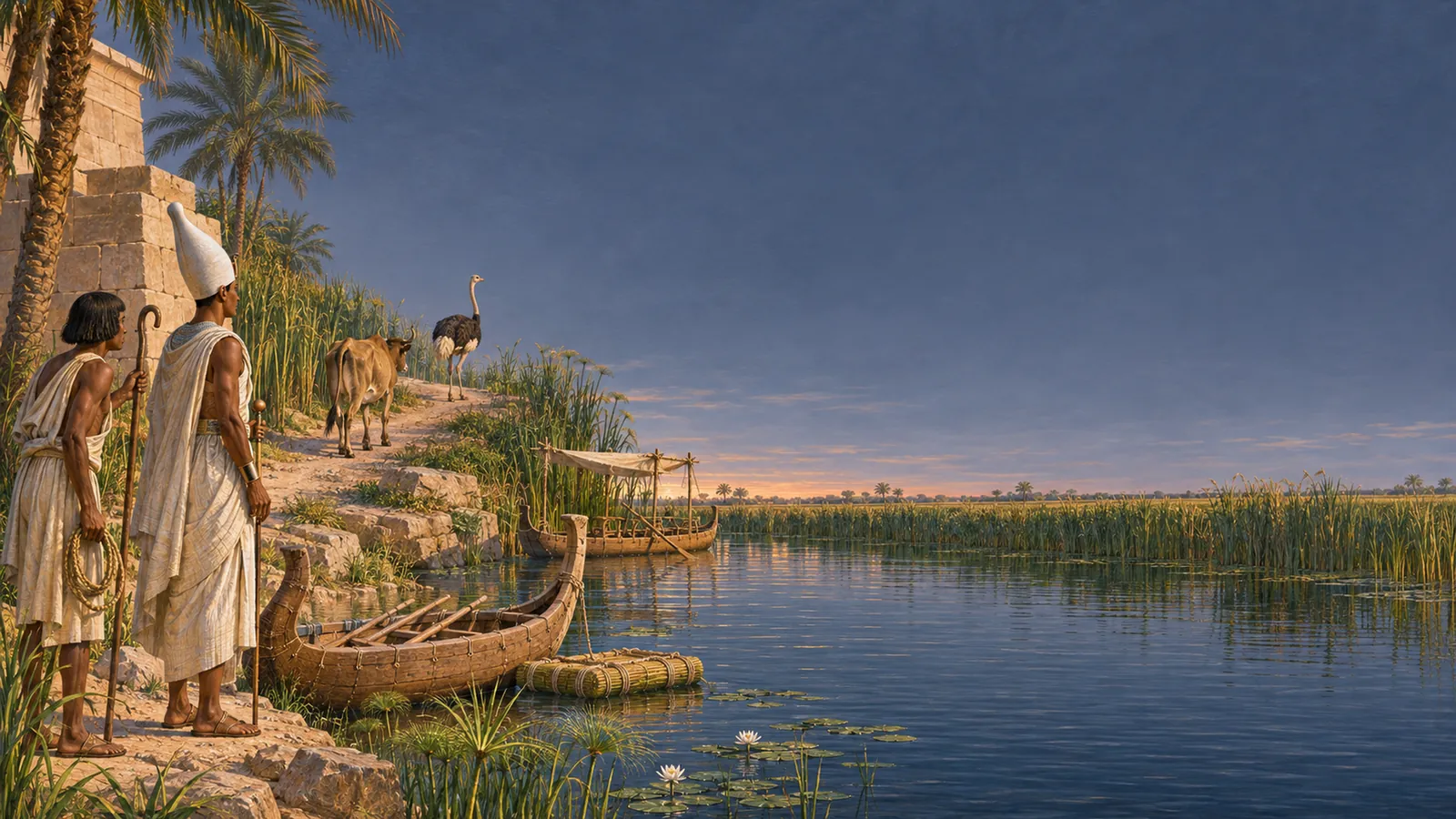
At the Winding Canal, the speaker asks an ostrich to let him pass. He then addresses the sun’s steer, whose four horns face the four directions, and asks it to lower the western one.
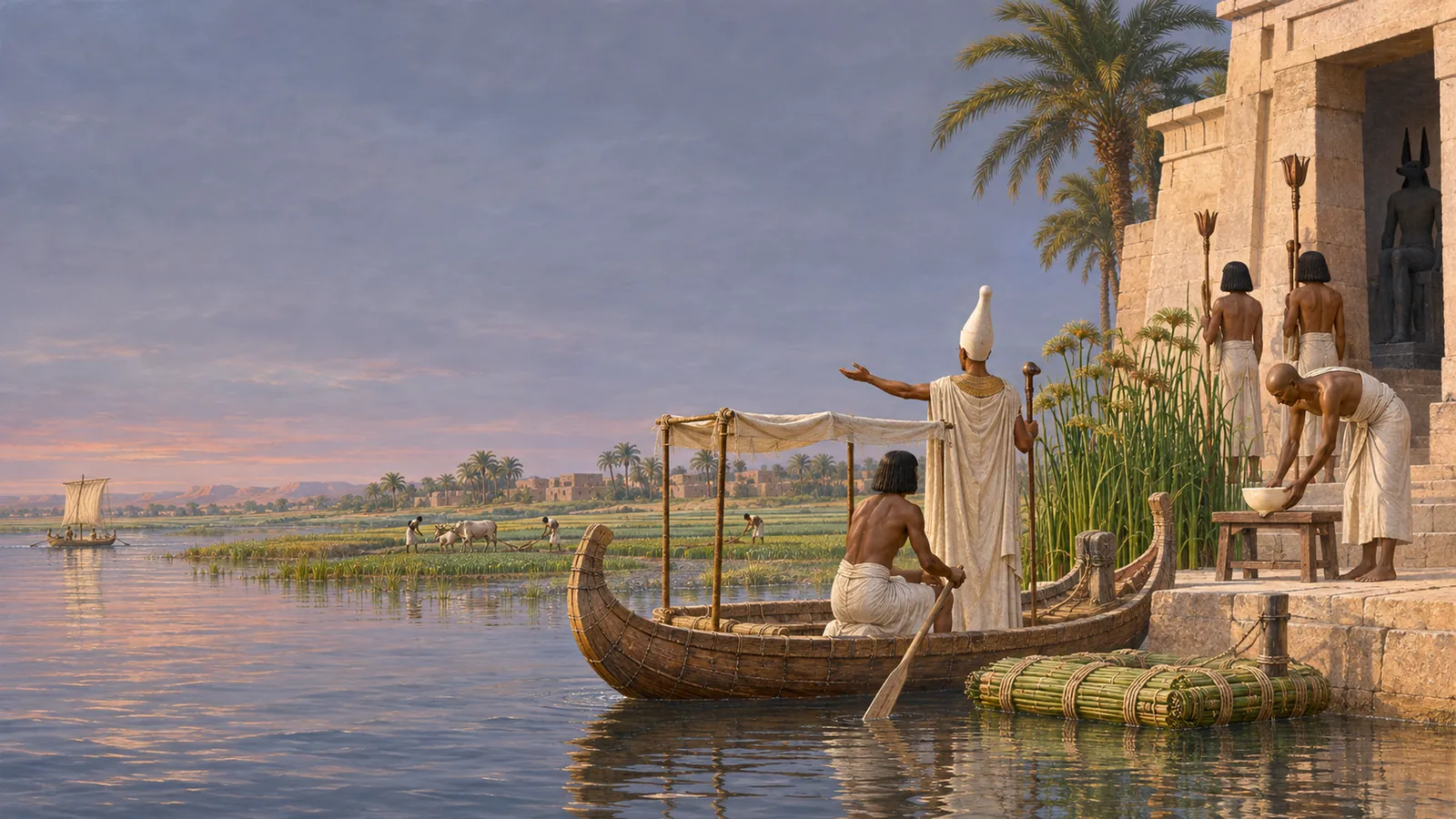
Asked if he is a pure westerner, the speaker replies that he comes from Falcon-Town. He then salutes the Field of Rest and claims its pure growth as his own.
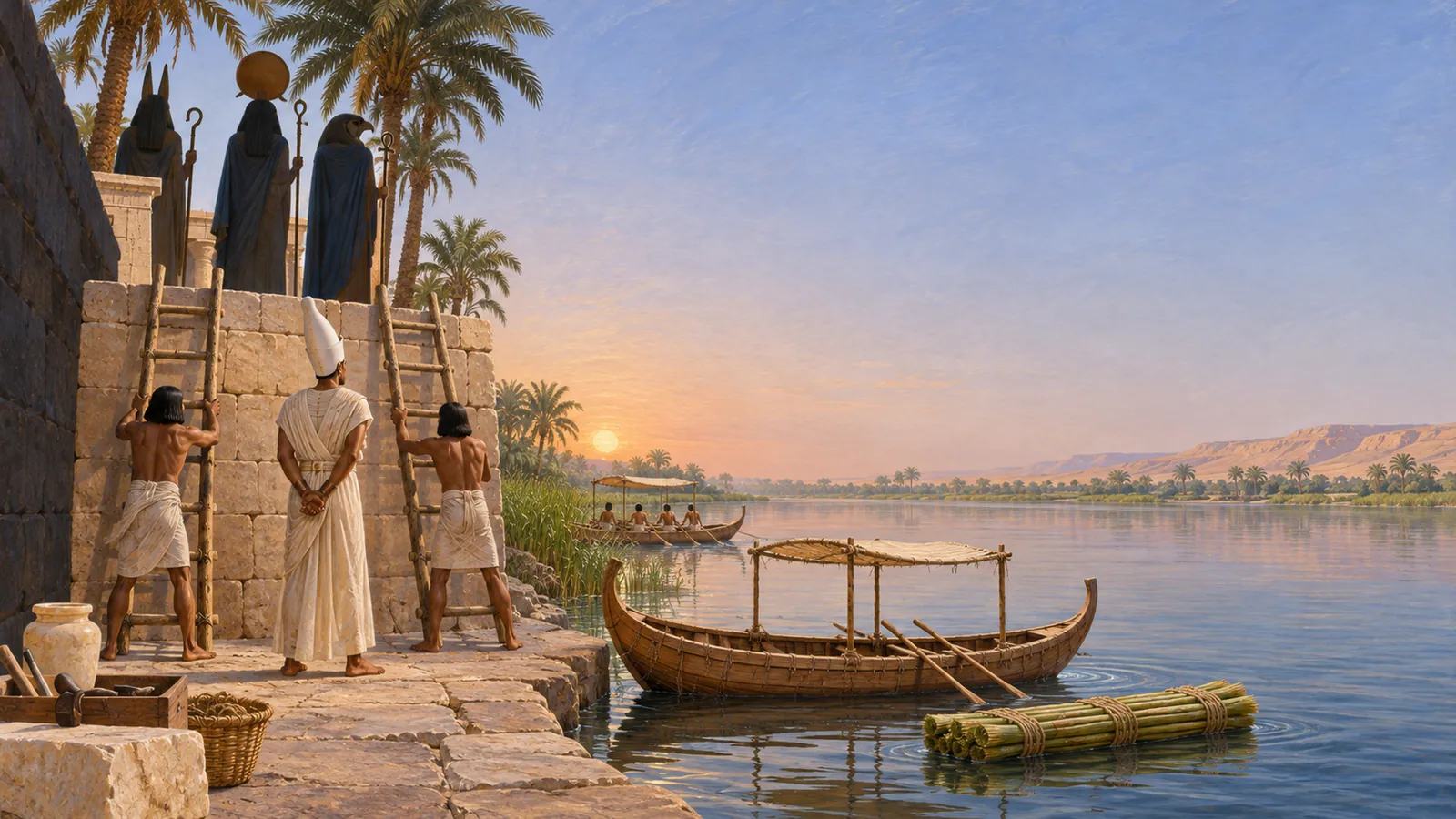
The sun secured one ladder in front of Osiris, and Horus secured another in front of his father. With a ladder on either side, the speaker says that he is between the two.
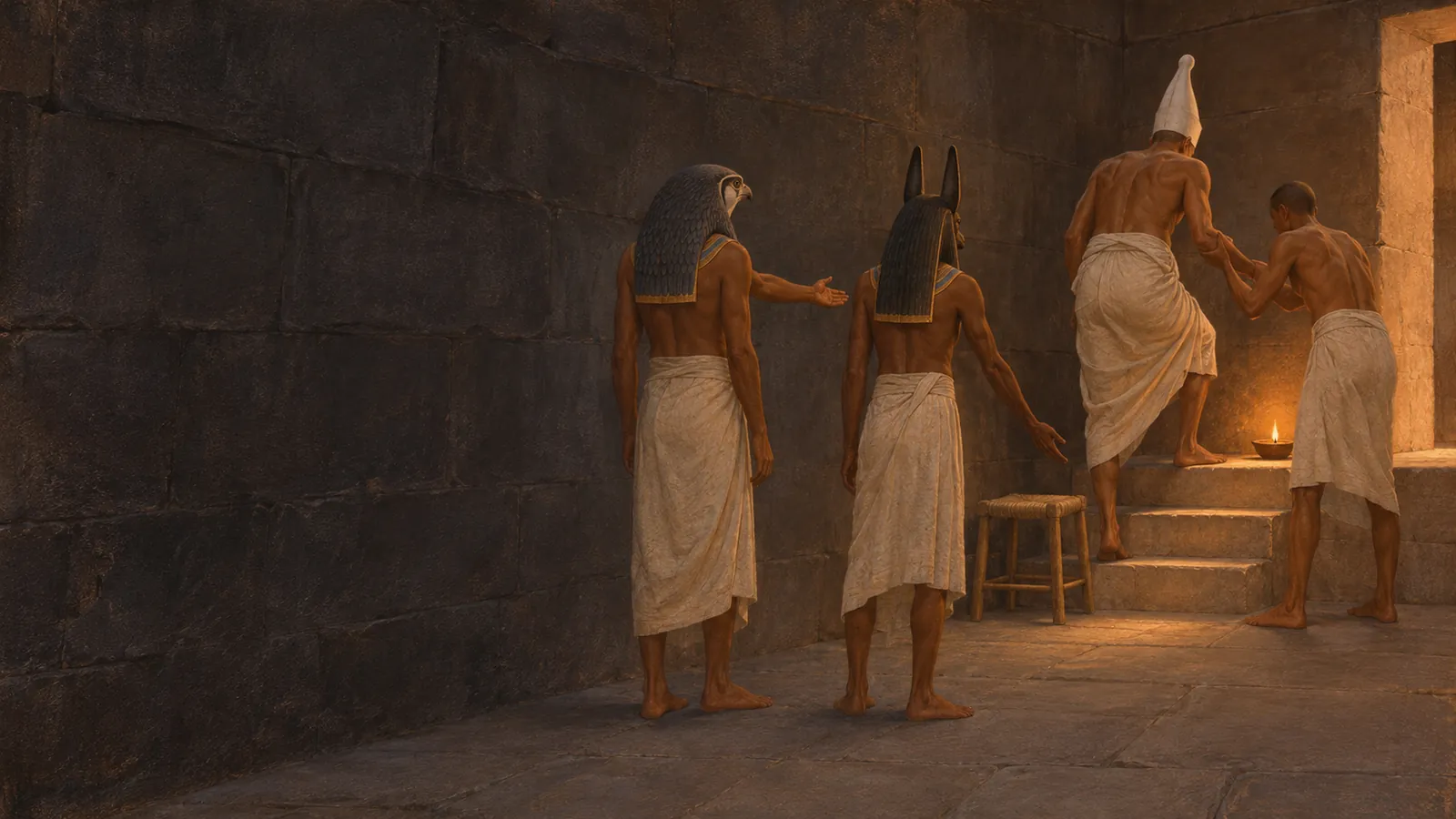
Asked if he is a god of pure places, he says he came from a pure place. Horus tells him to rise, Seth tells him to sit, and the sun asks that his arm be received.
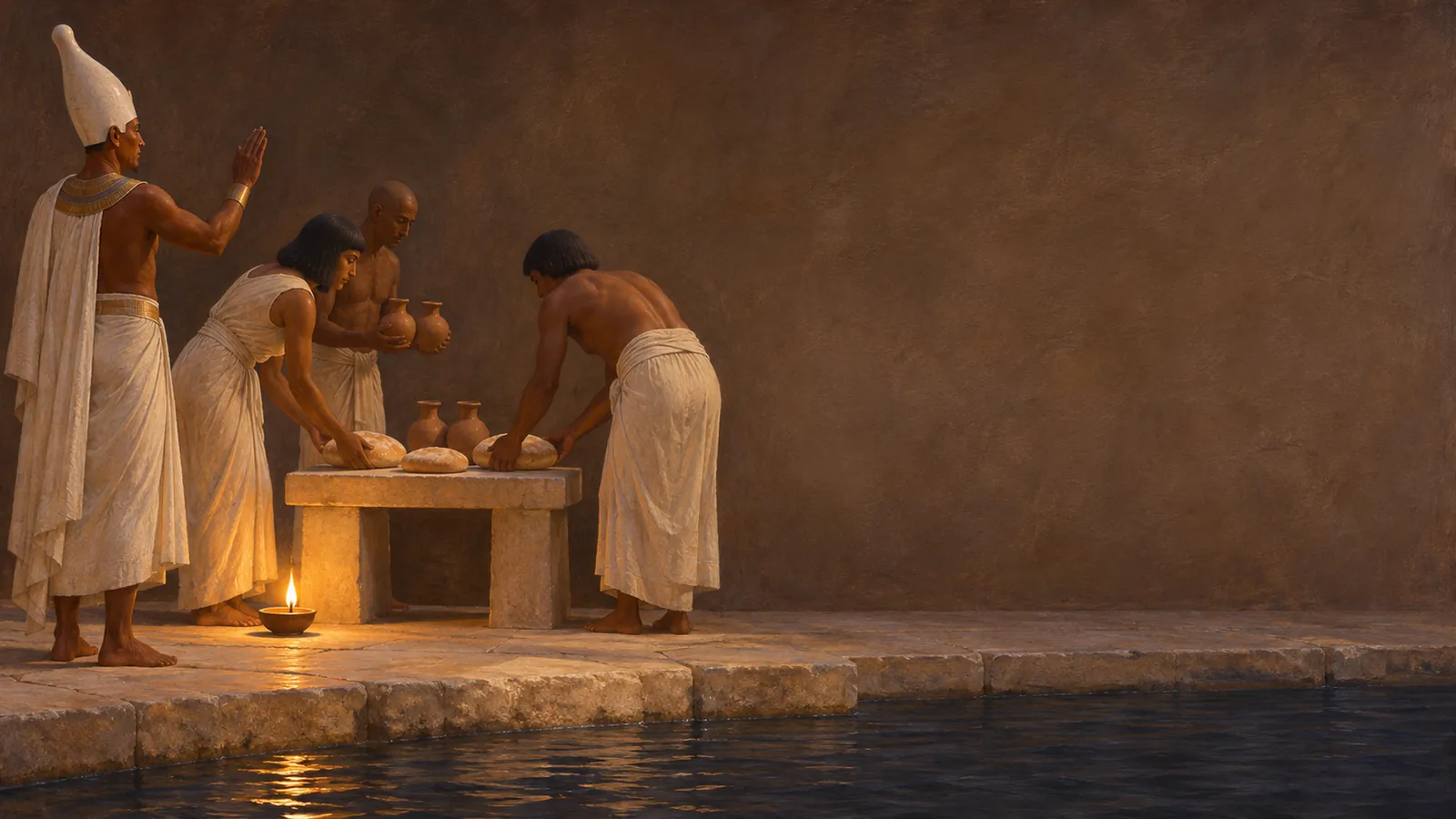
The spell directs the akh to the sky and the body to the earth. Then it names a thousand portions each of bread and beer from the offering table of the Foremost of Westerners.
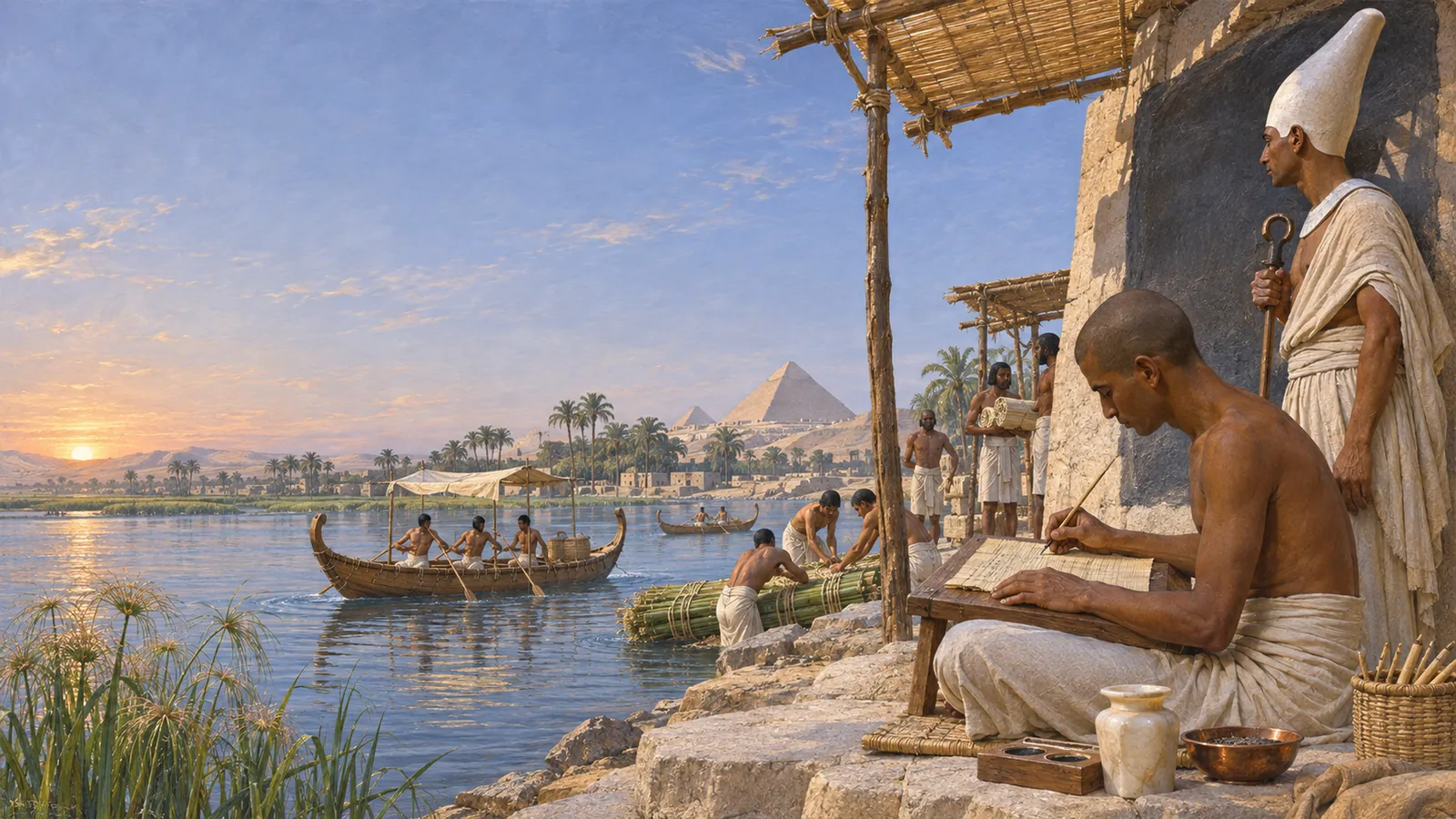
The speaker says an heir is left in need without something in writing. He adds that he uses his larger finger to write and leaves his little finger unused.
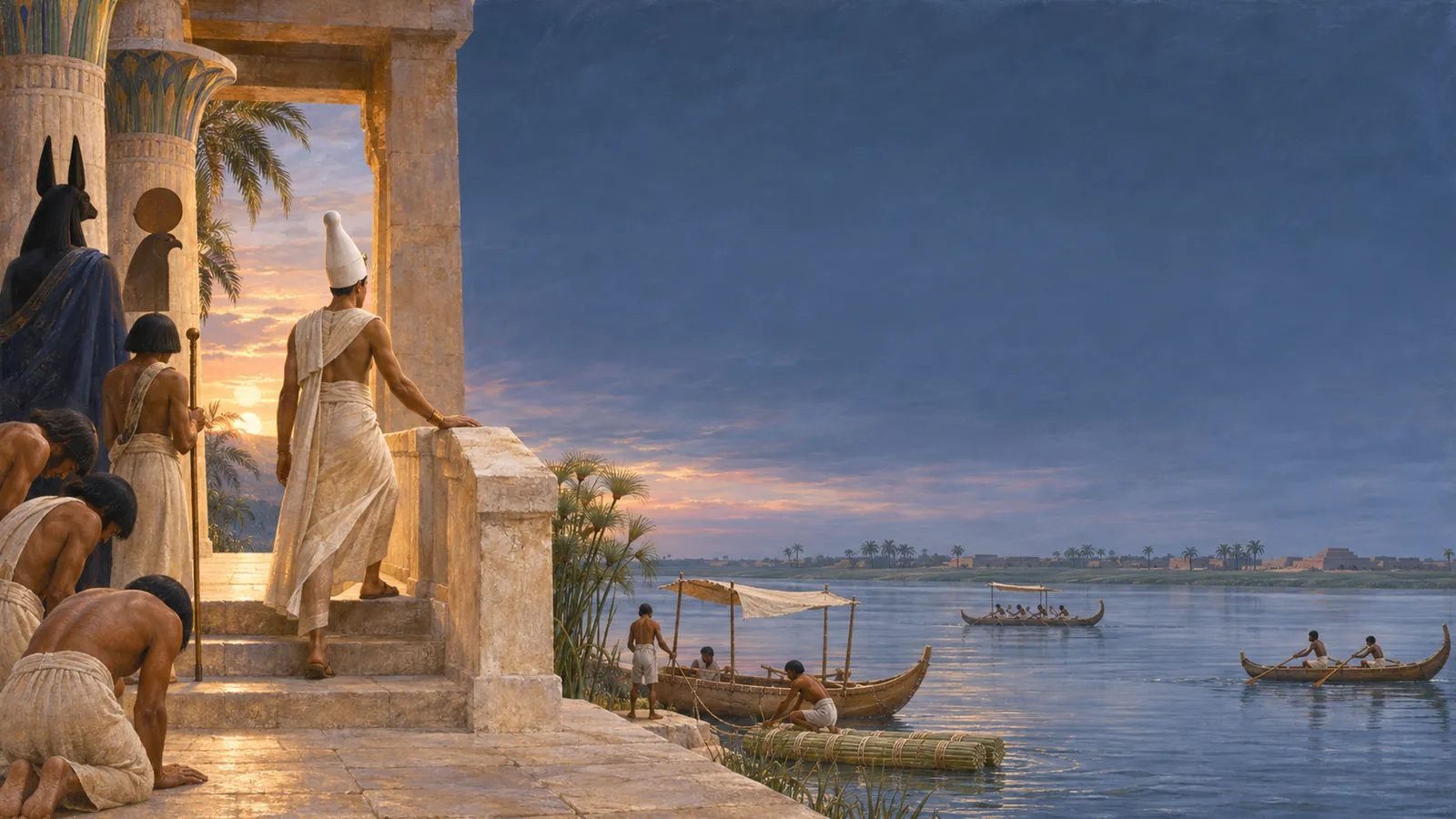
The gods acclaim the sight of the father going out toward the sky. They describe his majesty above him, his fierceness at his sides and his magic at his feet. They say Geb has acted for him.
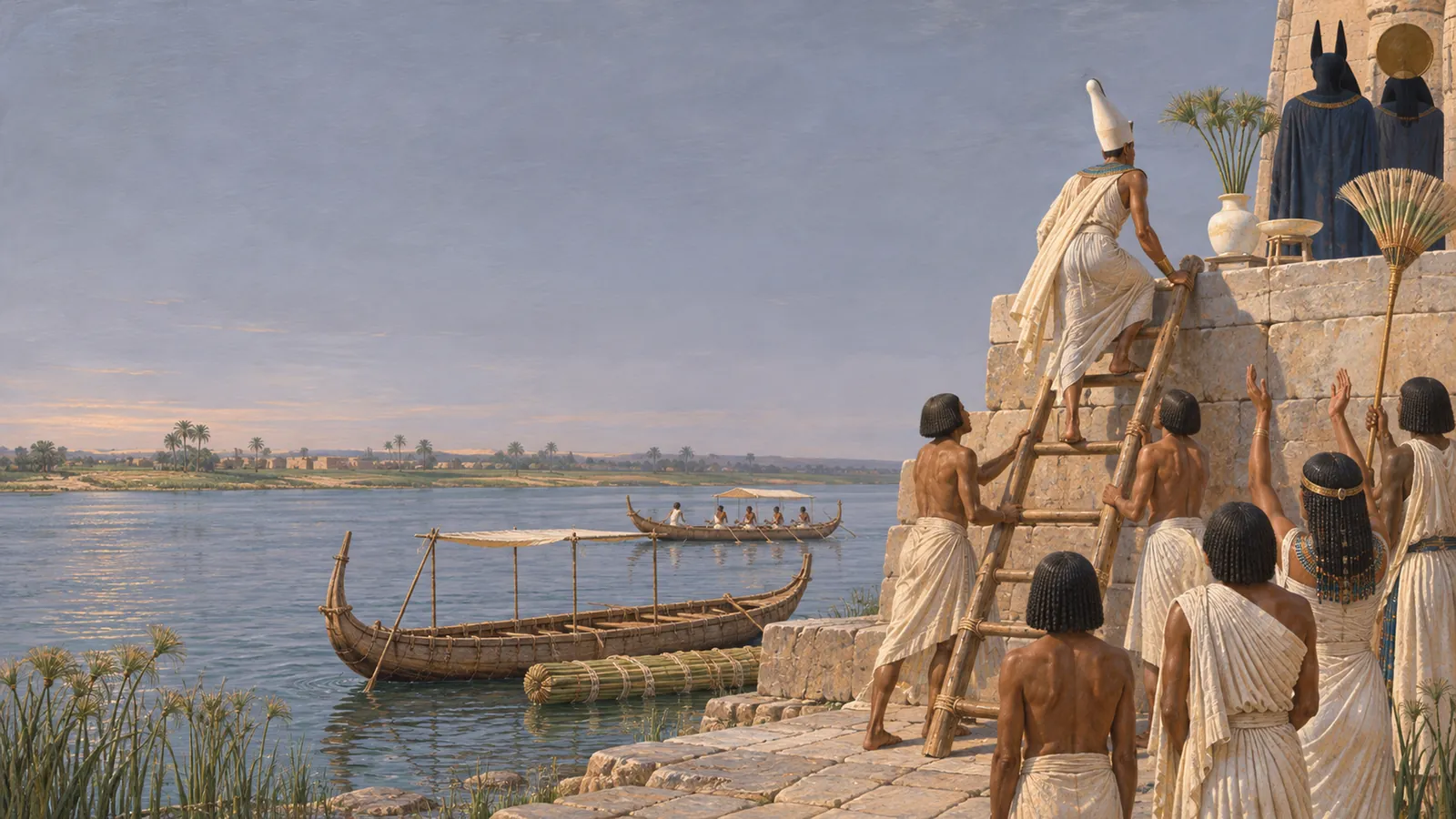
The spirits of Pe and Nekhen come with the gods of sky and earth to carry the speaker. He is to ascend the sky in the form of a ladder.
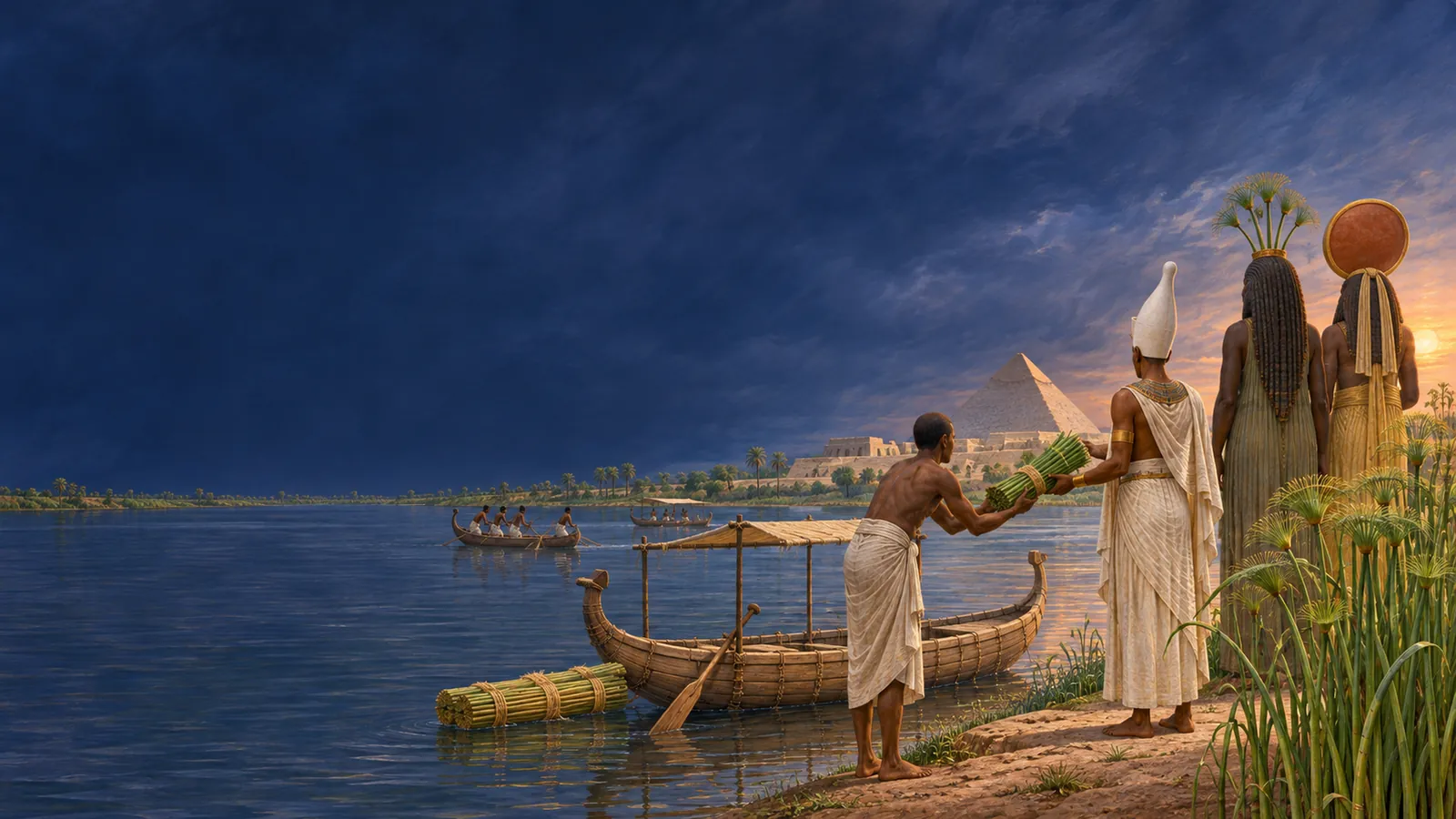
SKY AND EARTH
Atum declares that sky and earth are given to the speaker. Geb says the mounds and the Field of Reeds will honour him as the Morning God, like Sobek beneath the mangroves.
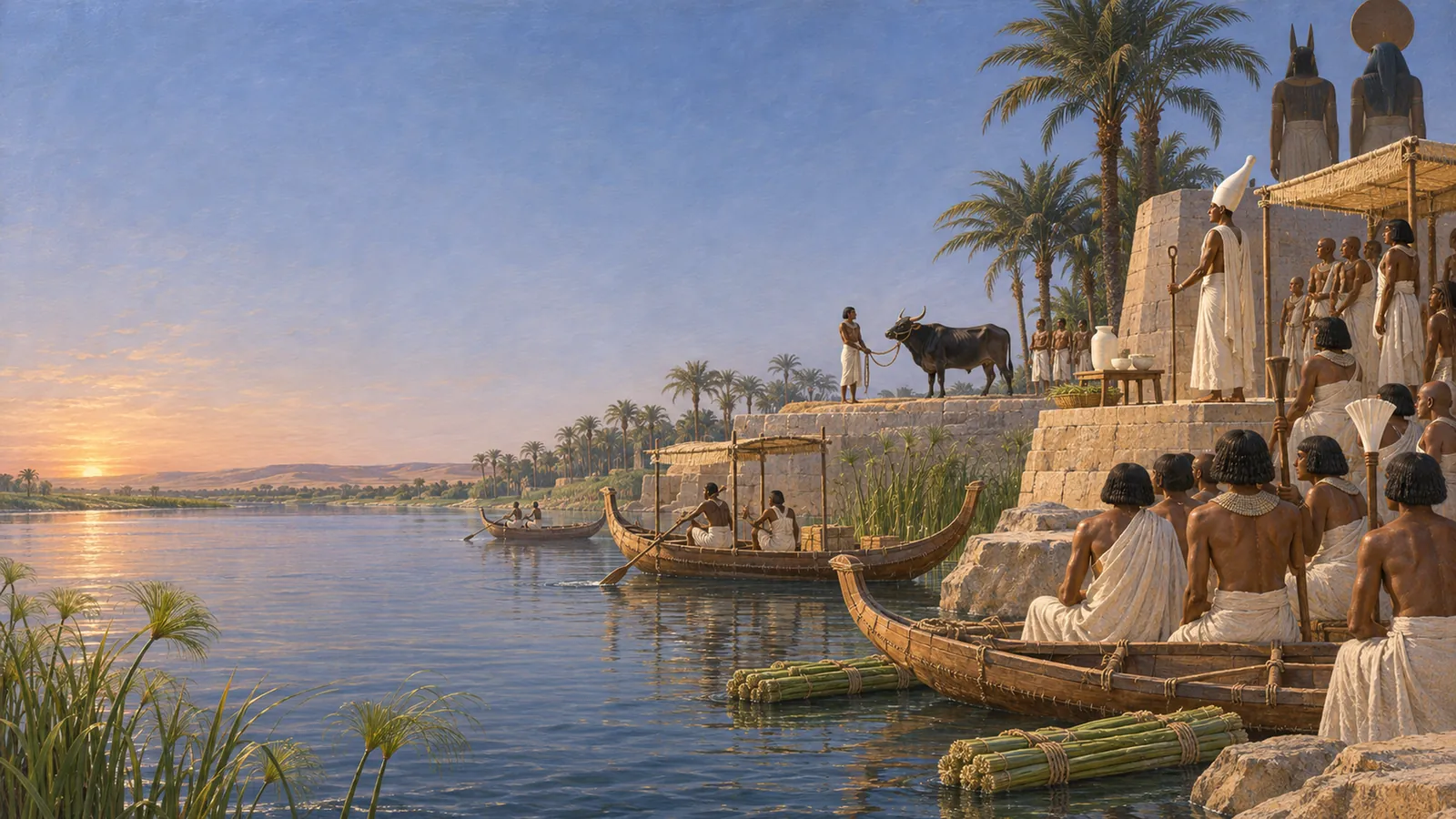
Geb asks whether Seth killed him thinking he would die. Then he declares the speaker more enduring than Seth in the likeness of a wild bull and bids him stand at the head of the akhs.
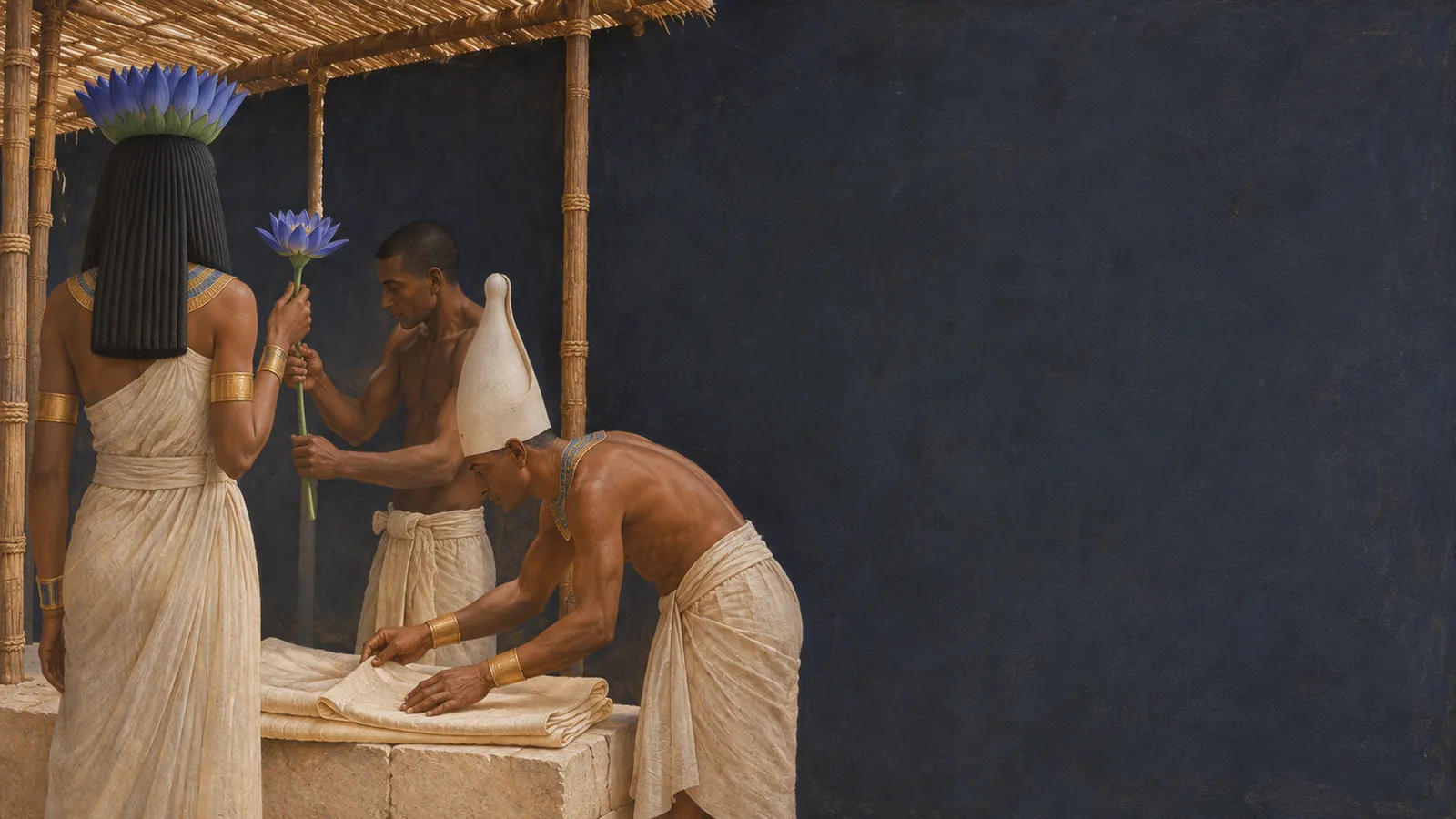
The speaker says his parents are from Heliopolis, and that he was born there. He names himself Nefertem without equal, and heir of his father Geb.
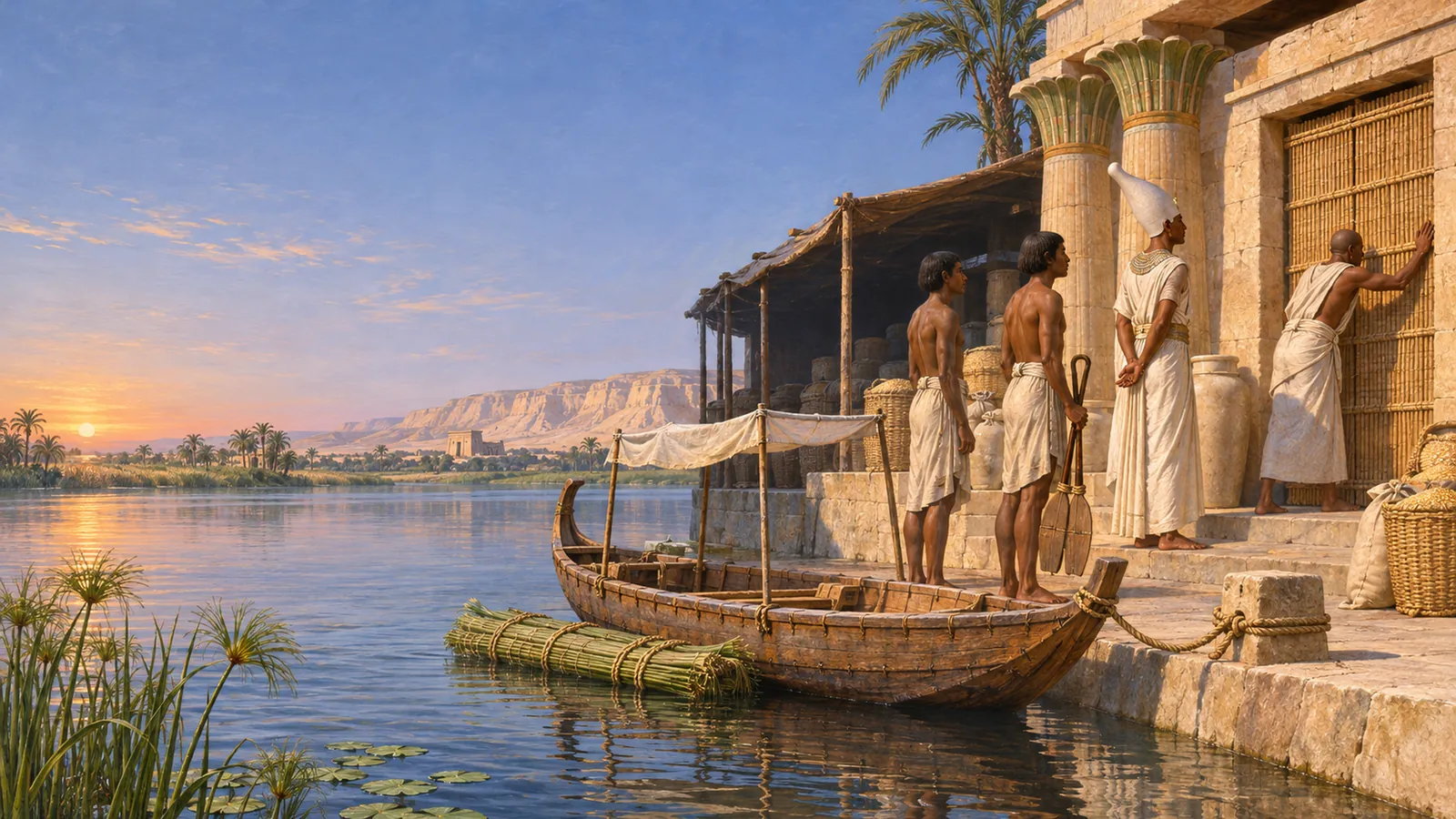
The reciter warns any god who opposes him while he turns to the Sun. That god will receive no food, and the day boat, the night boat and the storehouse will be closed to him.
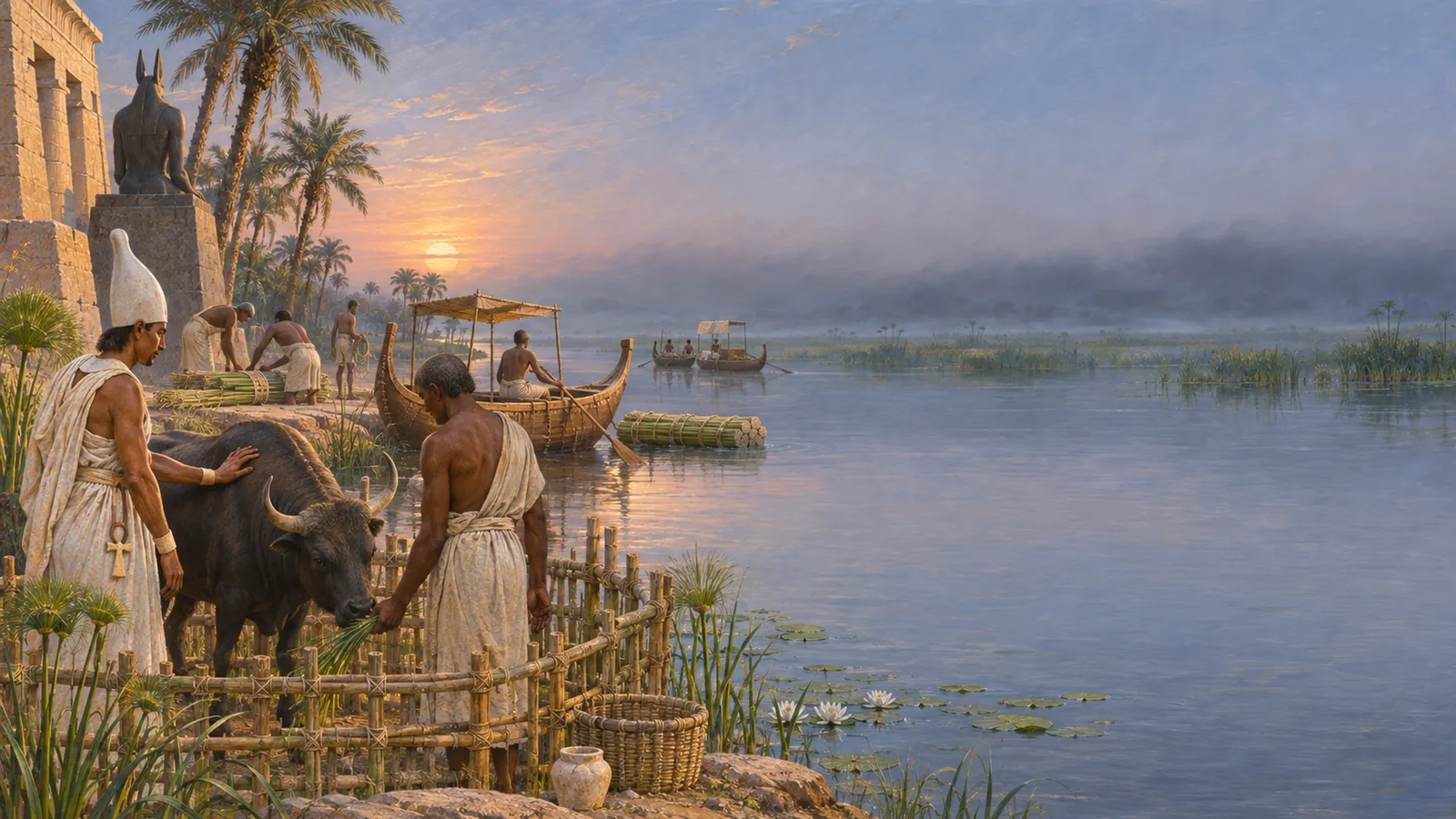
The speaker calls himself a wild bull from Heliopolis. Then he addresses a wild bull, saying he gave it birth and can give it birth again.
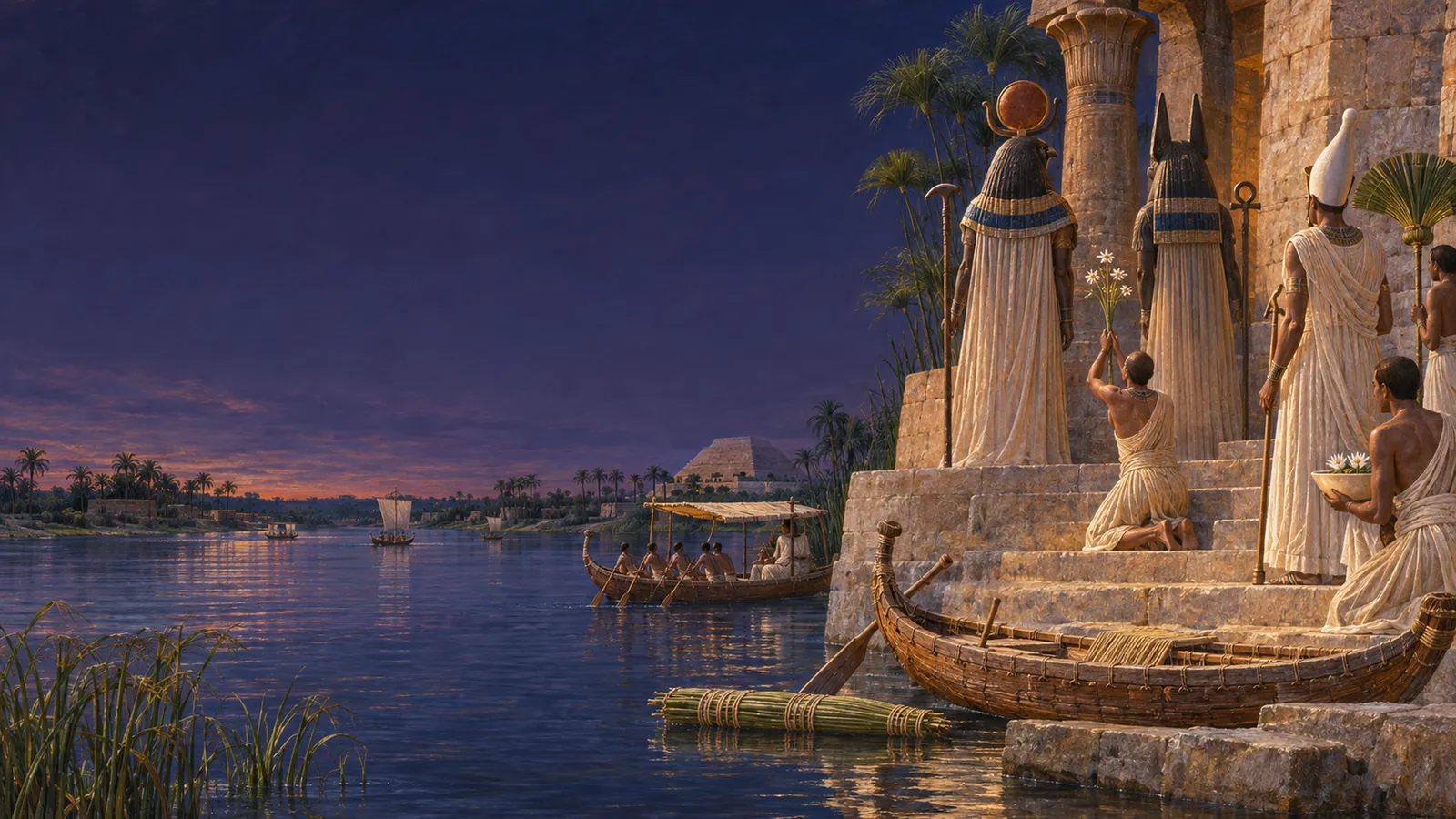
The speaker greets Horus and Seth in their mounds, the reed in the Field of Reeds and the reconciled pair. He compares the way he looks at them with several encounters of the gods.
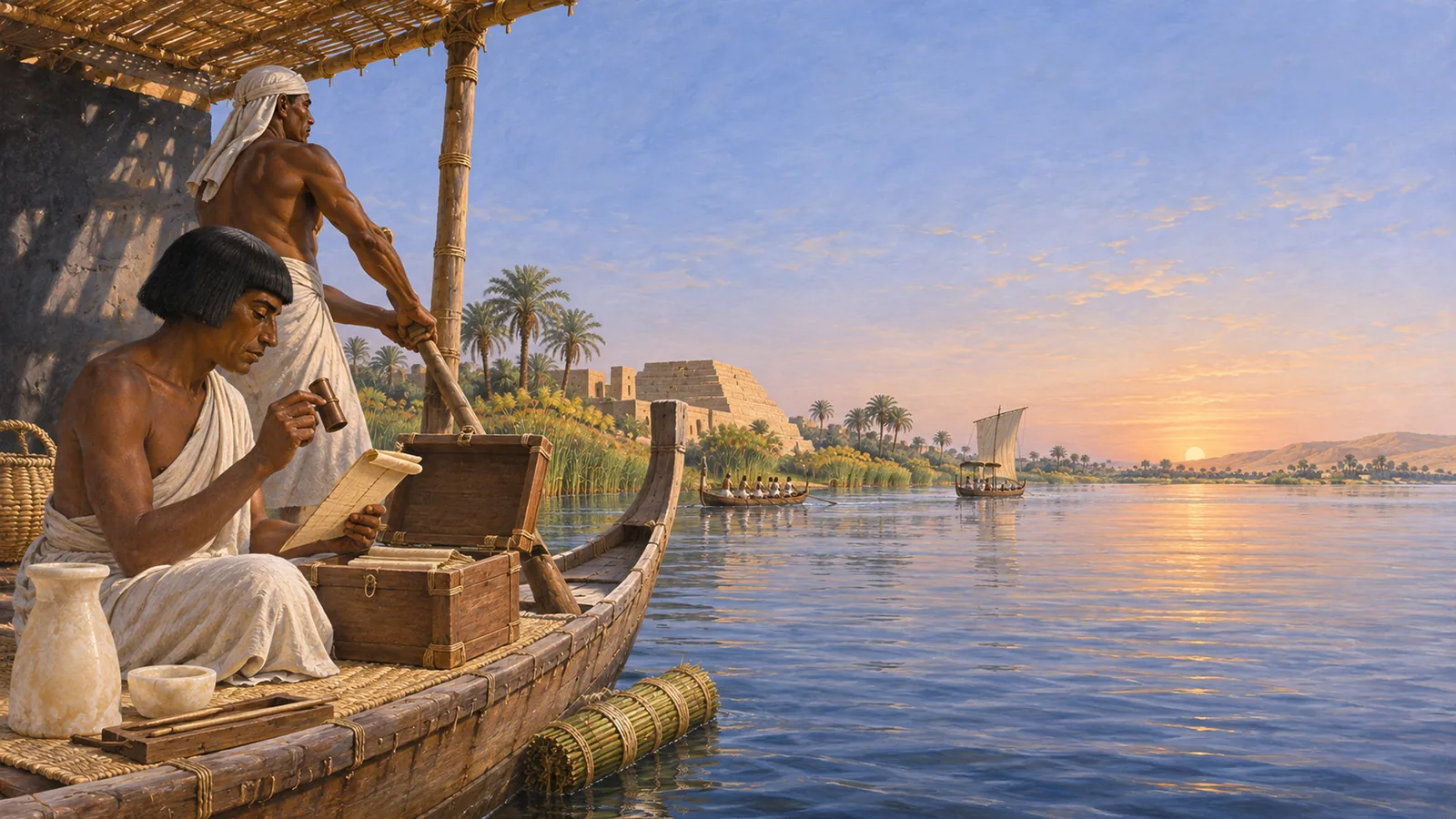
The speaker calls himself the gods’ accountant in the enclosure of the Sun. He says the one at the bow bore him, and now he attends the Sun, opens his chests and decrees, seals documents and sends messengers.
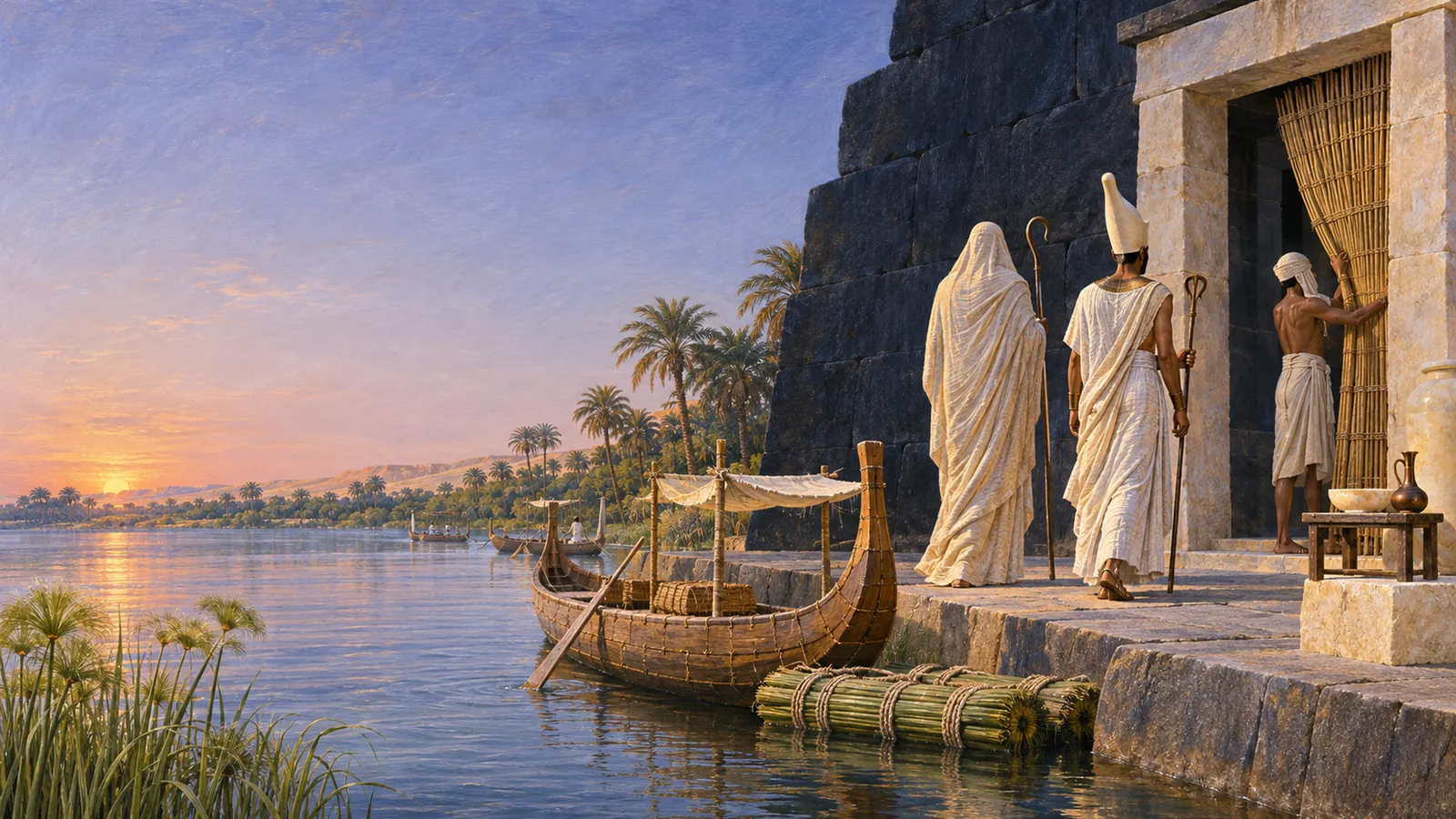
The speaker says that any curse, insult, blow or barrier raised against him will also fall on Atum. He speaks as Horus, following his father Osiris.
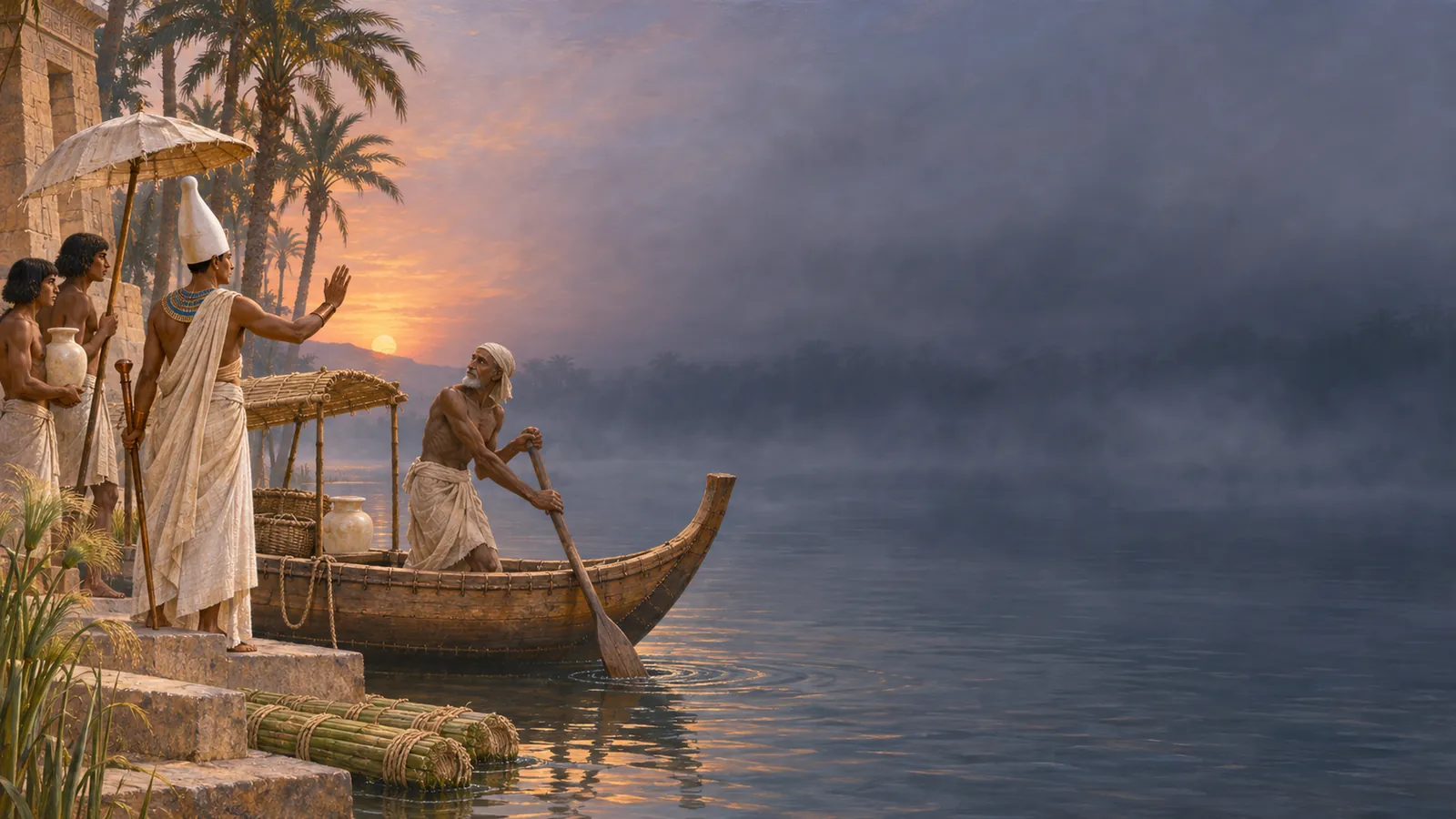
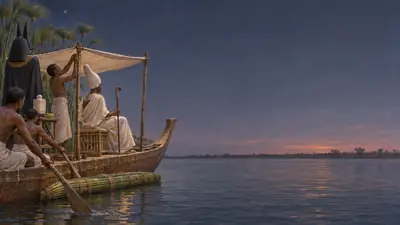
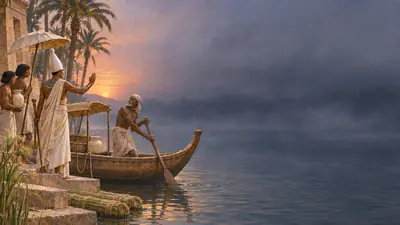
The speaker asks the ferryman who faces both ways for a vessel. When asked which one, he names the boat that reaches land each time it flies.
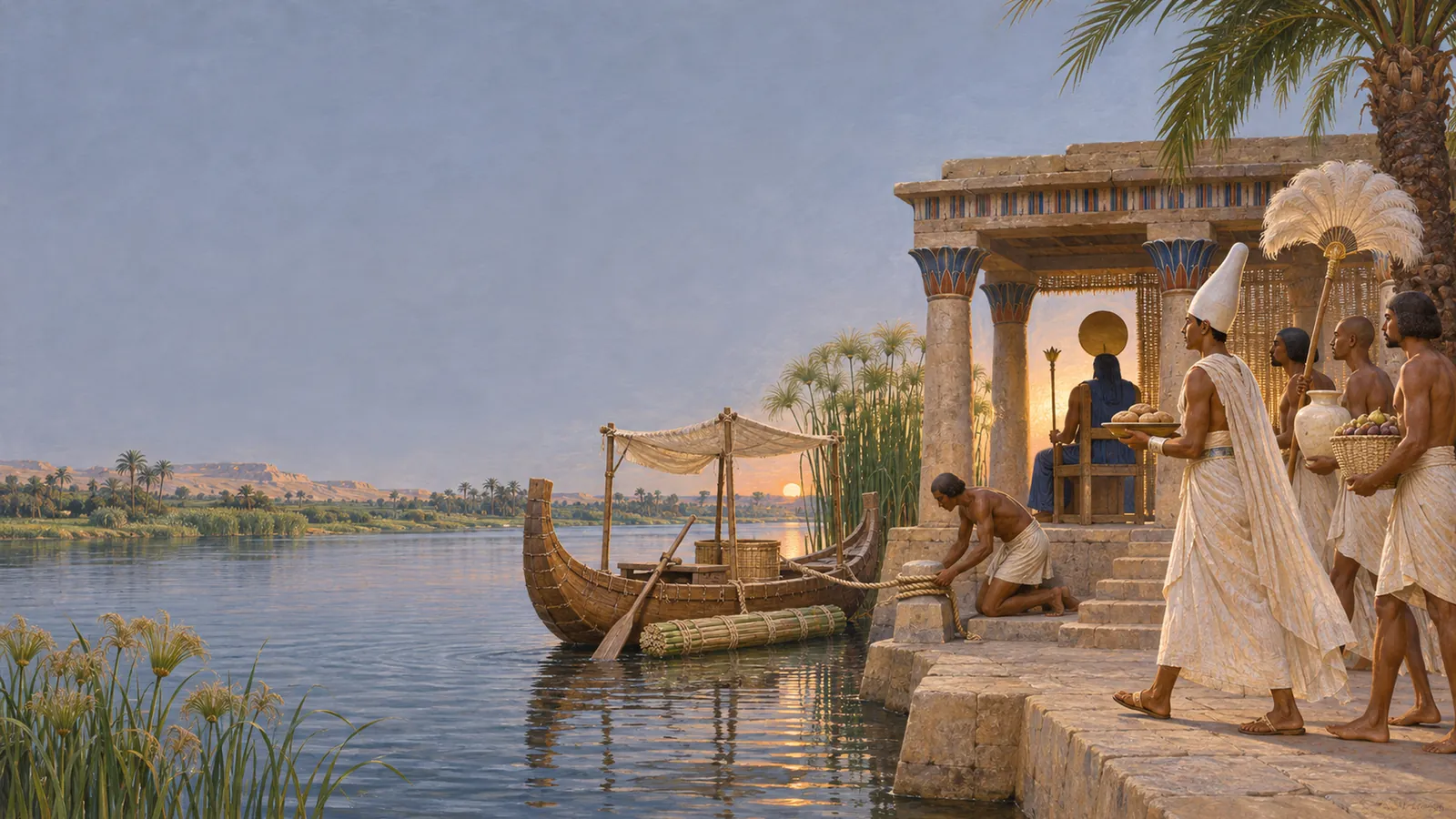
He calls to the Sun to recognise him. He remembers the offering as he speaks of the opening of the Akhet for the day boat, and of the pavilion high above where the Sun boards the night boat.
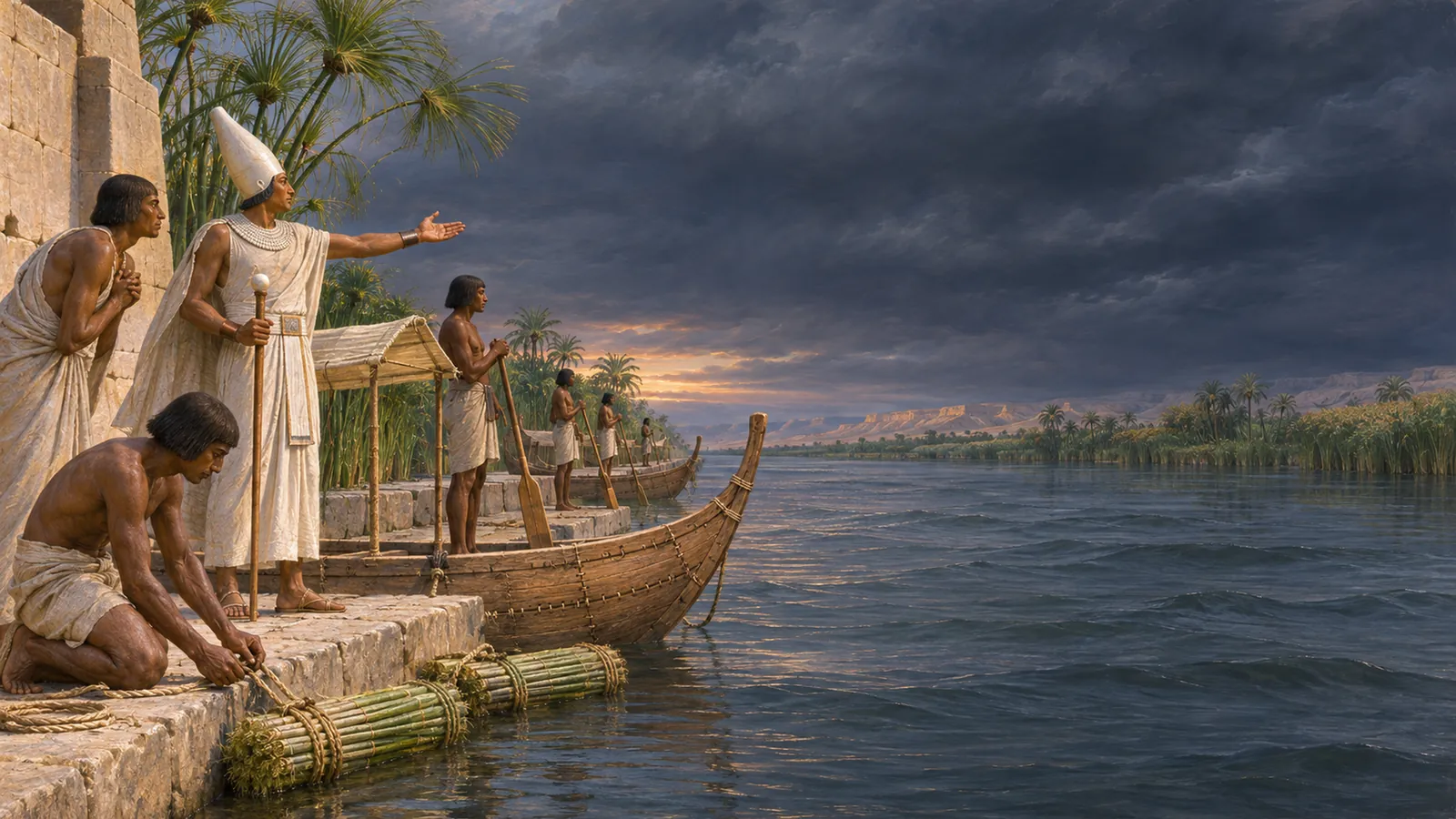
He asks the Sun to commend him to the four who look both ways. The rubric calls for four recitations without pause. He seeks leave to approach and speak of the great flood.
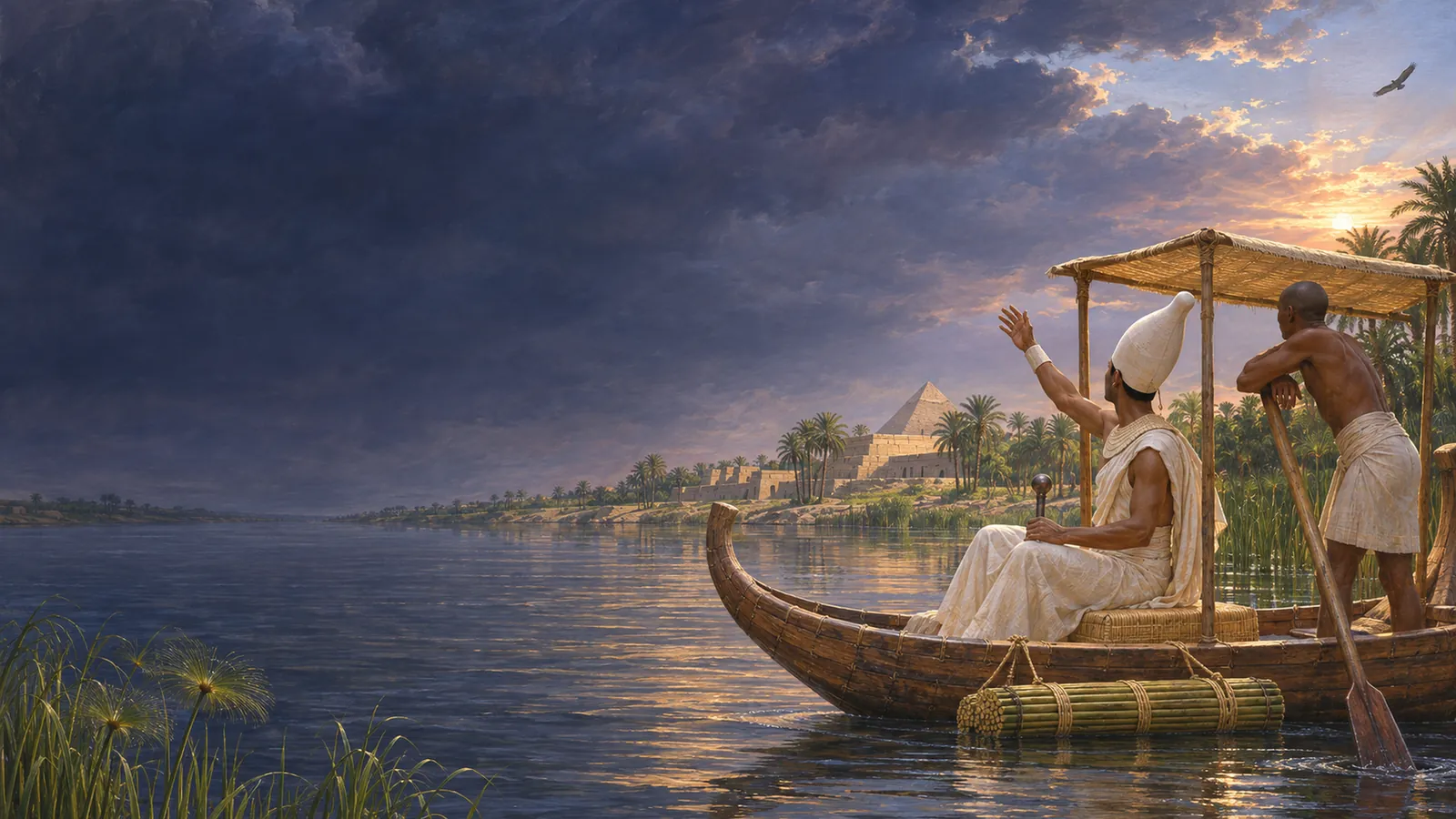
He says darkness or failing to hear does not take away his faculties. Take him along and he will scatter the flood, clouds and hail. Set on the vulture’s body, he will give praise after praise.
THE FLYING BREAD
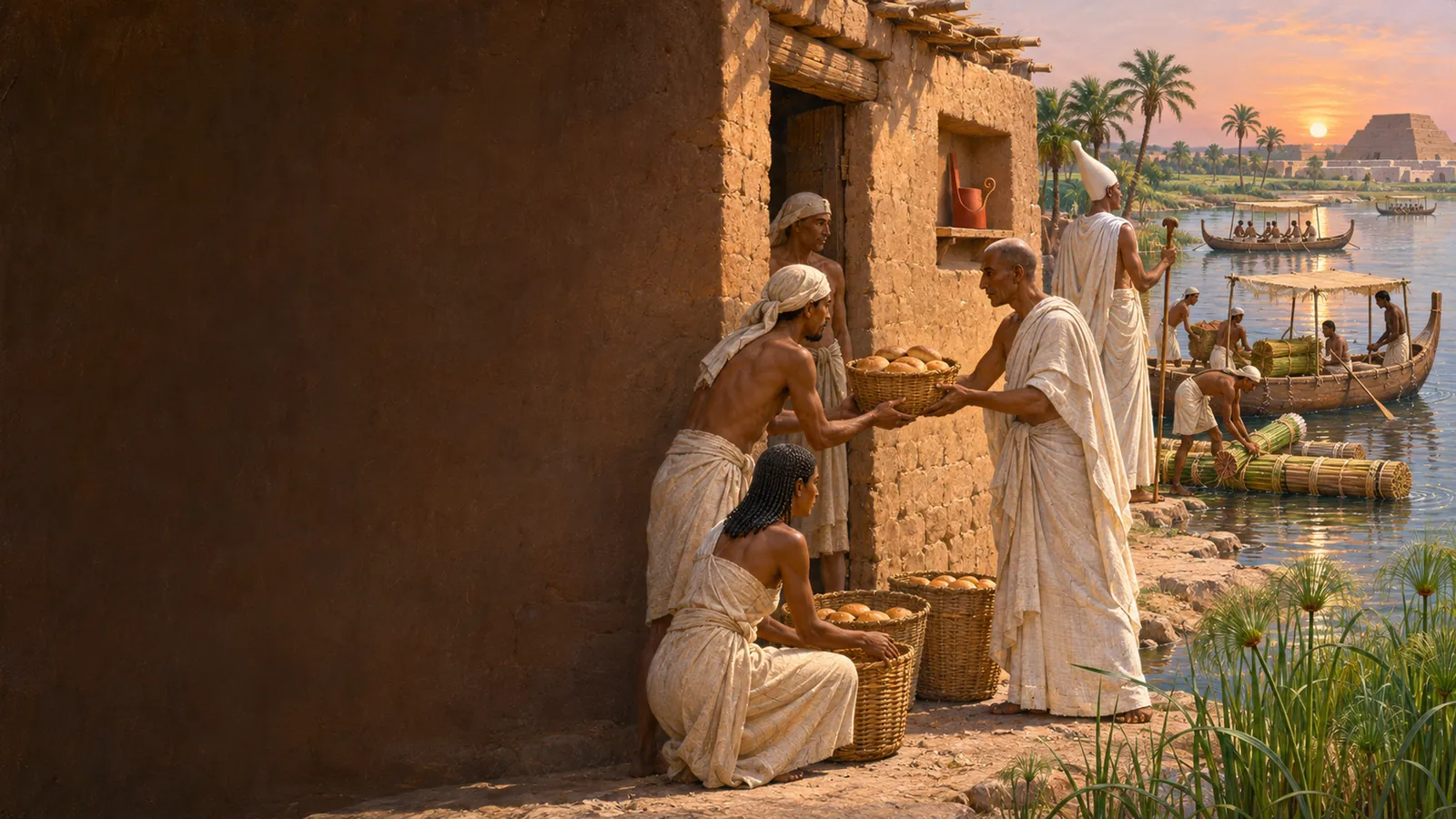
In the last words of this sequence, the bread is said to have flown toward the enclosures of the one associated with the Red Crown.
End of chapter 1
All pages
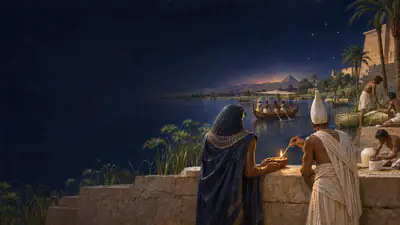
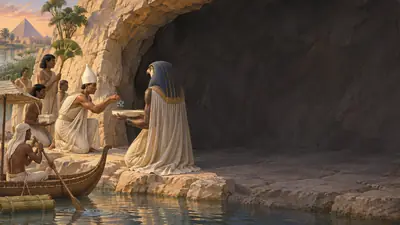
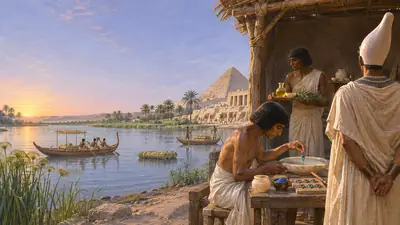
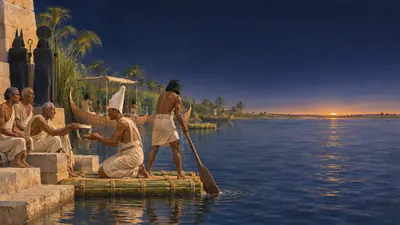
Sources
The page notes use the book’s printed page numbering. The decorated corridor sequence beginning with PT 313 is a separate section.
Editions consulted
- James P. Allen, The Ancient Egyptian Pyramid Texts, second edition, SBL Press, 2015
- Allen, Unis, Spells for Leaving the Akhet, from PT 300, printed page 59
- Allen, Unis, the close of PT 312, printed page 63
- Allen, Unis’s pyramid and the transmission of the spells, printed pages 17–18
Notes on this retelling
Pages 01–02 (Allen, The Ancient Egyptian Pyramid Texts, 2nd ed., 2015, Unis, PT 300, p. 59). The recitation addresses the netherworlder of Nezat and separately the ferryman of a craft Khnum made. Allen leaves the craft term jqht untranslated and supplies “ferryboat” in parentheses when the speaker requests it. The speaker names himself Sokar of Rasetjau while announcing that he is going to Sokar, lord of Spread Lake. The short last appeal asks the two addressed to get stretches of desert. Nezat, Rasetjau and Spread Lake mark places within the recitation.
Pages 03–04 (PT 301, p. 59). Nu and Undersky come first, followed by Amun and Amaunet, then Atum and Dual-Lion. The next line about making their two gods and their own body gives Shu and Tefnut as the identification, followed by several expressions for bringing the gods into being. Nu here follows Allen’s edition spelling and refers to the Egyptian primordial waters, whose catalogue entry uses Nun.
Pages 05–06 (PT 301, p. 59). The loaves and the satisfaction they bring lead to the appeal for passage to the addressed pairs’ father at the Akhet. The speaker says he knows him, repeats the name Continual and names him lord of the year. The following invocation addresses Horus.
Pages 07–08 (PT 301, p. 59). Horus’s arms are described as a weapon in the line on the starry sky. The appeal connects Horus bringing life to the sun every day with the reciter’s own daily life. The speaker names Horus of Shat, of Shezmet and of the east, then says he retrieved the eastern eye from a cavern.
Page 09 (PT 301, p. 59). Allen’s translation gives water, gore and vapour in the three short clauses about the eye and being made well. Allen places the repeated verb “receive” in parentheses in the water clause. Further forms name the god’s shawl, the Sun, fine oil, willow, faience and the jubilation oil of Renenutet.
Page 10 (PT 301, p. 59). The great one of the reed float is called to rise as Paths-Parter, effective and emerging from the Akhet. Allen’s line associates the crown with elders and foremost foreigners of Libya, using his English geographic label in an ancient textual context.
Pages 11–12 (PT 301, p. 60). Sobek of Bakhu courses through his fields and mangroves and smells the fumes of Shezmet. The speaker asks for his ka to ascend along with him. In the next appeal the speaker asks to be made clean and bright in the Jackal’s lake, where the gods are cleansed, then addresses Horus as lord of malachite. The printed rubric gives four recitations and a pair of green falcons. The edition supplies no physical identification for those falcons here.
Pages 13–14 (PT 302, p. 60). Allen explains it as the red dawn sky (note 72, p. 67). The speaker then claims an enduring home for the sky and a seat for the earth that will endure.
Pages 15–18 (Allen, The Ancient Egyptian Pyramid Texts, 2nd ed., 2015, Unis, PT 302, p. 60). Sothis carries the first-person speaker among the gods. Nut offers her arms, and the two foremost bas of Heliopolis, who have spent the night mourning the god, kneel near the sun. He says no case or guilty judgment stands against him and that he cleared the case against his ascent.
Pages 19–20 (PT 303, p. 60). The invocation names the four directions and asks for the four clean reed floats prepared when Osiris crossed to the Cool Waters with Horus. That passage adds that Osiris was to foster his son and have him appear as the great god there. The reply identifies the reciter as Horus, Osiris’s son, then as the senior god and Hathor’s son, and as Geb’s offspring. Allen supplies the speech tag identifying the gods. Osiris commands the second-Horus appearance and four akhs in Heliopolis record it in a title for the two great gods of the Cool Waters.
Page 21 (PT 304, p. 60). The greeting joins Anubis’s daughter, Thoth and the uprights of the ladder in the sky’s Looking Waters. Allen says Thoth endowed her. His note 73 (p. 67) reports a later Middle Kingdom title referring to tying a ladder in the necropolis for this spell and PT 305. That later title is evidence from another witness.
Pages 22–23 (PT 304, p. 61). The addresses turn to the ostrich at the Winding Canal and the sun’s steer. The four horns point west, east, south and north. The speaker asks for the western one to bend. Allen supplies the questioning speech tag in parentheses and leaves the questioner unidentified. The reply names Falcon-Town, followed by a greeting to the Field of Rest and the growth the speaker claims as his own.
Pages 24–25 (PT 305, p. 61). The sun and Horus each tie a ladder before Osiris, with a ladder on either side of the speaker. The second clause connects the ladder with going to his akh. The responses remain in sequence. Horus says to stand, Seth says to sit, and the sun says his arm should be received. The telling keeps those voices distinct.
Pages 26–27 (PT 305, p. 61). The formula sends the akh to the sky and the corpse to the earth, then names a thousand of bread and a thousand of beer from the offering table of the Foremost of Westerners. The closing lines describe an heir’s need for writing and contrast the larger and little fingers. Allen reads the document as an inheritance deed in note 74 (p. 67), where he also explains the ritual association of the little finger with curses. The spell names the larger finger without identifying it as the thumb.
Page 28 (PT 306, p. 61). The gods acclaim the departure skyward of the god, whom they call father, and speak of his majesty, fierceness and magic. Their praise precedes the separate lines about those arriving to carry him on page 29.
### The sky ladder and the ferryman
Ancient lines behind each page
- Page 1: Allen, The Ancient Egyptian Pyramid Texts, 2nd ed. (2015), Unis, PT 300, p. 59
- Page 2: Allen, The Ancient Egyptian Pyramid Texts, 2nd ed. (2015), Unis, PT 300, p. 59
- Page 3: Allen, The Ancient Egyptian Pyramid Texts, 2nd ed. (2015), Unis, PT 301, p. 59
- Page 4: Allen, The Ancient Egyptian Pyramid Texts, 2nd ed. (2015), Unis, PT 301, p. 59
- Page 5: Allen, The Ancient Egyptian Pyramid Texts, 2nd ed. (2015), Unis, PT 301, p. 59
- Page 6: Allen, The Ancient Egyptian Pyramid Texts, 2nd ed. (2015), Unis, PT 301, p. 59
- Page 7: Allen, The Ancient Egyptian Pyramid Texts, 2nd ed. (2015), Unis, PT 301, p. 59
- Page 8: Allen, The Ancient Egyptian Pyramid Texts, 2nd ed. (2015), Unis, PT 301, p. 59
- Page 9: Allen, The Ancient Egyptian Pyramid Texts, 2nd ed. (2015), Unis, PT 301, p. 59
- Page 10: Allen, The Ancient Egyptian Pyramid Texts, 2nd ed. (2015), Unis, PT 301, p. 59
- Page 11: Allen, The Ancient Egyptian Pyramid Texts, 2nd ed. (2015), Unis, PT 301, p. 60
- Page 12: Allen, The Ancient Egyptian Pyramid Texts, 2nd ed. (2015), Unis, PT 301, p. 60
- Page 13: Allen, The Ancient Egyptian Pyramid Texts, 2nd ed. (2015), Unis, PT 302, p. 60
- Page 14: Allen, The Ancient Egyptian Pyramid Texts, 2nd ed. (2015), Unis, PT 302, p. 60
- Page 15: Allen, The Ancient Egyptian Pyramid Texts, 2nd ed. (2015), Unis, PT 302, p. 60
- Page 16: Allen, The Ancient Egyptian Pyramid Texts, 2nd ed. (2015), Unis, PT 302, p. 60
- Page 17: Allen, The Ancient Egyptian Pyramid Texts, 2nd ed. (2015), Unis, PT 302, p. 60
- Page 18: Allen, The Ancient Egyptian Pyramid Texts, 2nd ed. (2015), Unis, PT 302, p. 60
- Page 19: Allen, The Ancient Egyptian Pyramid Texts, 2nd ed. (2015), Unis, PT 303, p. 60
- Page 20: Allen, The Ancient Egyptian Pyramid Texts, 2nd ed. (2015), Unis, PT 303, p. 60
- Page 21: Allen, The Ancient Egyptian Pyramid Texts, 2nd ed. (2015), Unis, PT 304, p. 60
- Page 22: Allen, The Ancient Egyptian Pyramid Texts, 2nd ed. (2015), Unis, PT 304, p. 61
- Page 23: Allen, The Ancient Egyptian Pyramid Texts, 2nd ed. (2015), Unis, PT 304, p. 61
- Page 24: Allen, The Ancient Egyptian Pyramid Texts, 2nd ed. (2015), Unis, PT 305, p. 61
- Page 25: Allen, The Ancient Egyptian Pyramid Texts, 2nd ed. (2015), Unis, PT 305, p. 61
- Page 26: Allen, The Ancient Egyptian Pyramid Texts, 2nd ed. (2015), Unis, PT 305, p. 61
- Page 27: Allen, The Ancient Egyptian Pyramid Texts, 2nd ed. (2015), Unis, PT 305, p. 61
- Page 28: Allen, The Ancient Egyptian Pyramid Texts, 2nd ed. (2015), Unis, PT 306, p. 61
- Page 29: Allen 2015, The Ancient Egyptian Pyramid Texts, Unis PT 306, p. 61
- Page 30: Allen 2015, The Ancient Egyptian Pyramid Texts, Unis PT 306, p. 61
- Page 31: Allen 2015, The Ancient Egyptian Pyramid Texts, Unis PT 306, p. 61
- Page 32: Allen 2015, The Ancient Egyptian Pyramid Texts, Unis PT 307, p. 62
- Page 33: Allen 2015, The Ancient Egyptian Pyramid Texts, Unis PT 307, p. 62
- Page 34: Allen 2015, The Ancient Egyptian Pyramid Texts, Unis PT 307, p. 62
- Page 35: Allen 2015, The Ancient Egyptian Pyramid Texts, Unis PT 308, p. 62
- Page 36: Allen 2015, The Ancient Egyptian Pyramid Texts, Unis PT 309, p. 62
- Page 37: Allen 2015, The Ancient Egyptian Pyramid Texts, Unis PT 310, pp. 62–63
- Page 38: Allen 2015, The Ancient Egyptian Pyramid Texts, Unis PT 310, p. 63
- Page 39: Allen 2015, The Ancient Egyptian Pyramid Texts, Unis PT 311, p. 63
- Page 40: Allen 2015, The Ancient Egyptian Pyramid Texts, Unis PT 311, p. 63
- Page 41: Allen 2015, The Ancient Egyptian Pyramid Texts, Unis PT 311, p. 63
- Page 42: Allen 2015, The Ancient Egyptian Pyramid Texts, Unis PT 312, p. 63
Illustrations made with AI tools by IL Archive; the text is based on the ancient sources (see the sources at the end of each chapter).