The Wandering of Marduk Chapter 1
The road back to Babylon
Marduk recounts three journeys. He imagines a renewed Esagil, a gilded barge and a land whose households and fields flourish again. The story follows the fragmented clay from the god’s speech through an unnamed king’s promise to the copyist’s closing words.
SourcesTurn the pages with the arrows, the arrow keys or a swipe.
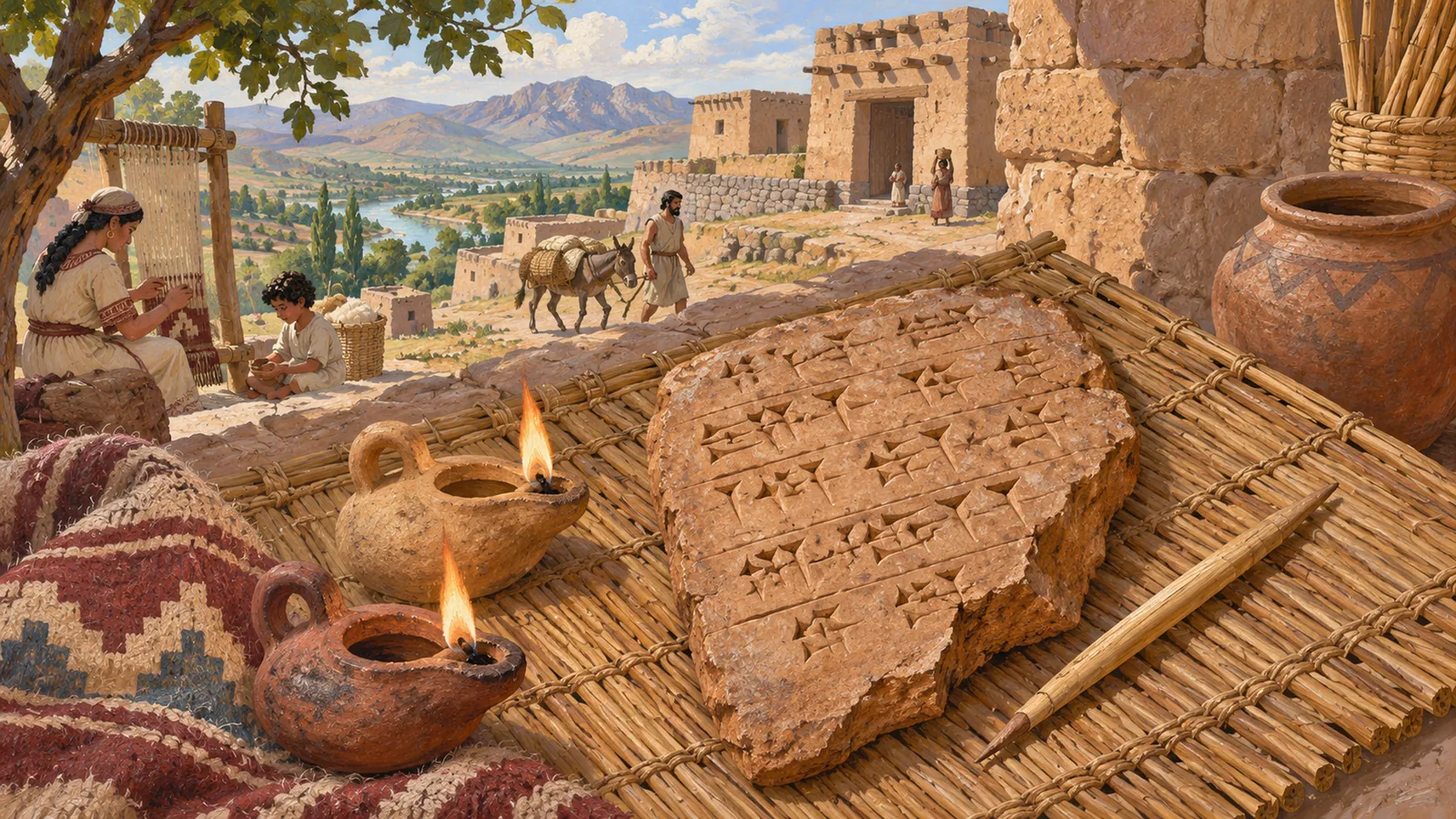
THE WANDERING
The clay is broken along its edges, but a voice still speaks. Marduk calls on the gods to hear him and girds himself before he tells where he went.
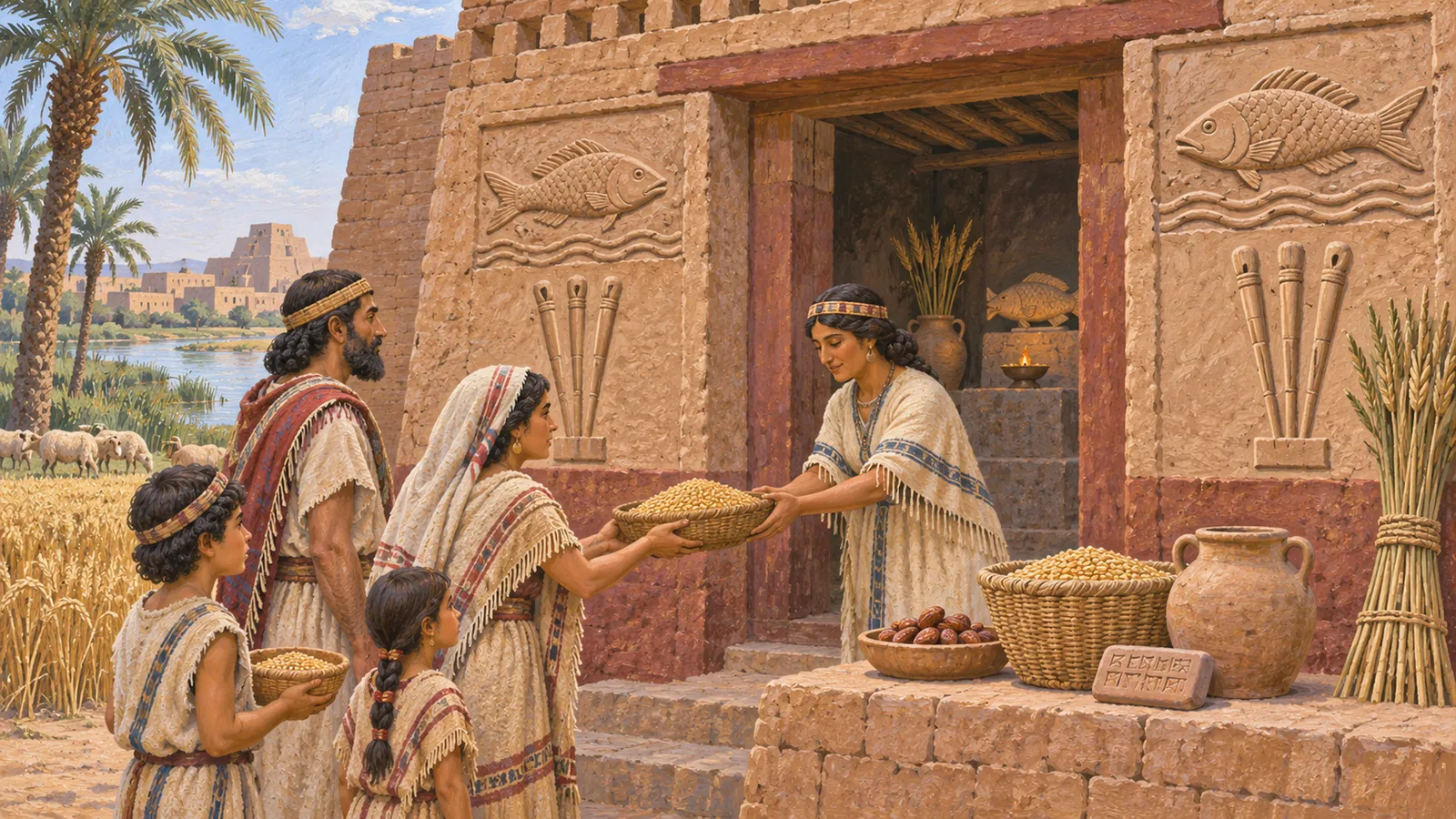
Among those he calls are Ea and Nabu, whom the poem addresses by other names. They belong to a company that knows secrets and hears what Marduk is about to say.
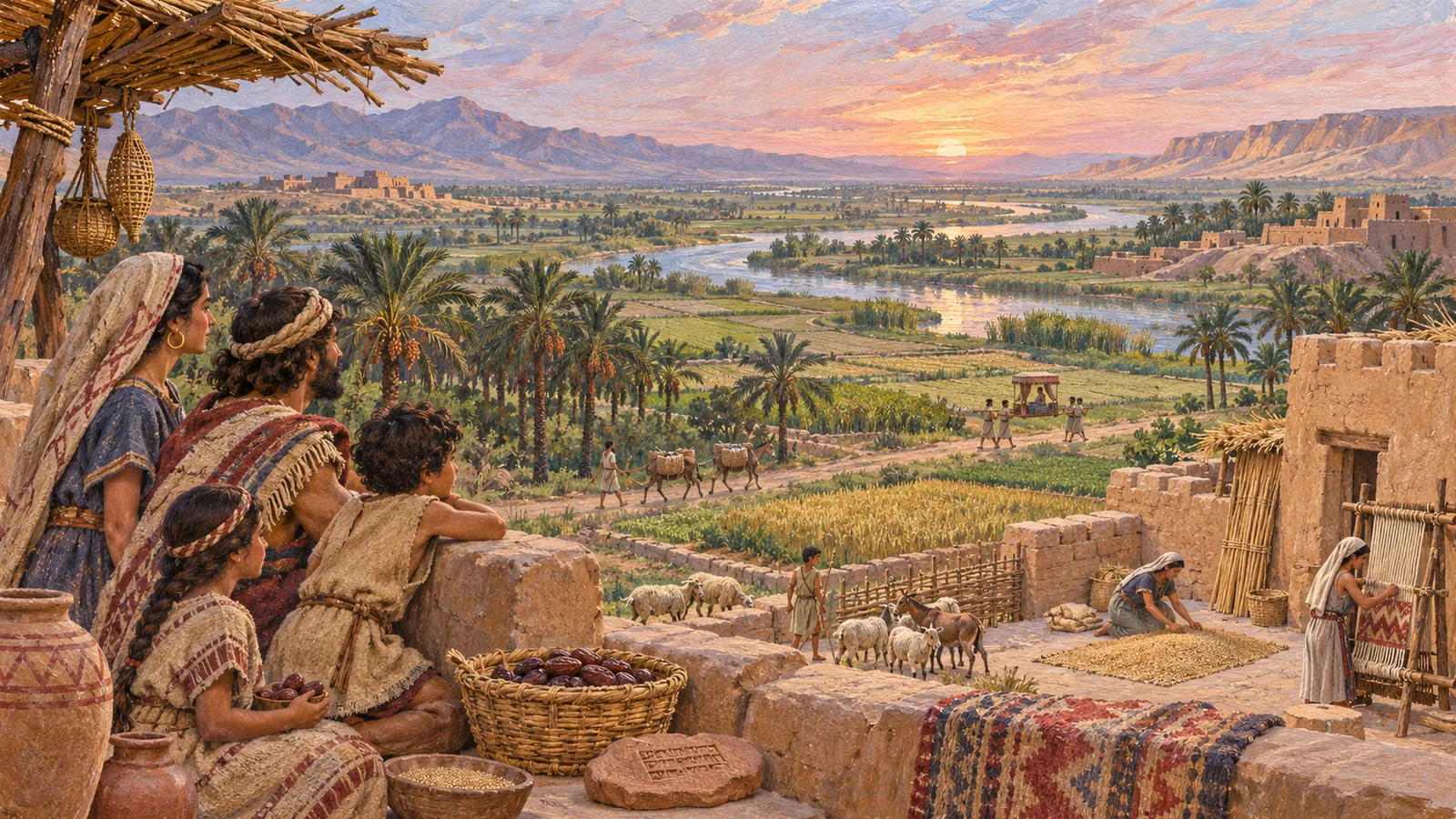
He gives himself a charge as wide as the horizon. He watches the mountains and the lands from sunrise to sunset and can decide where his own image will stand.
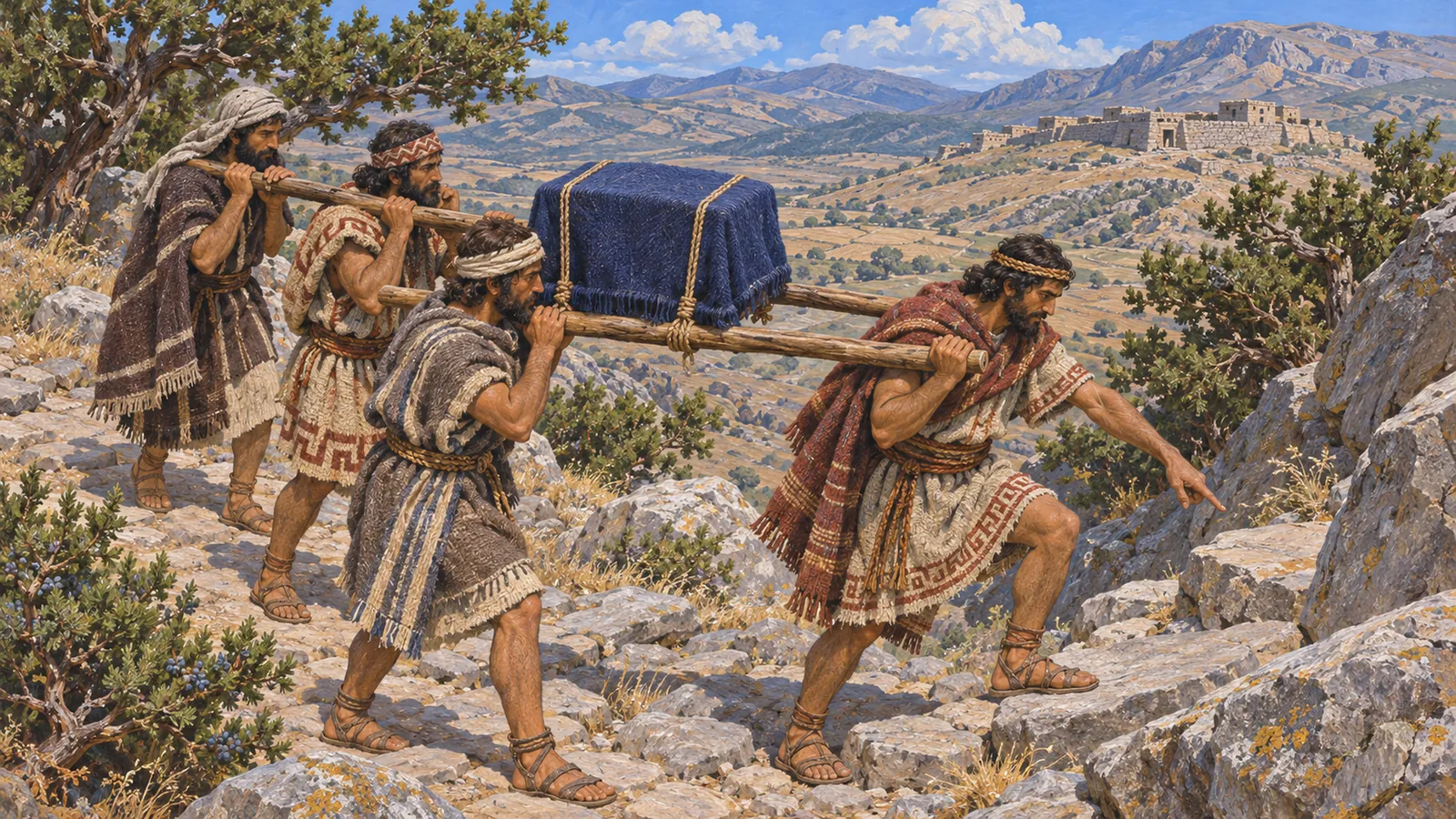
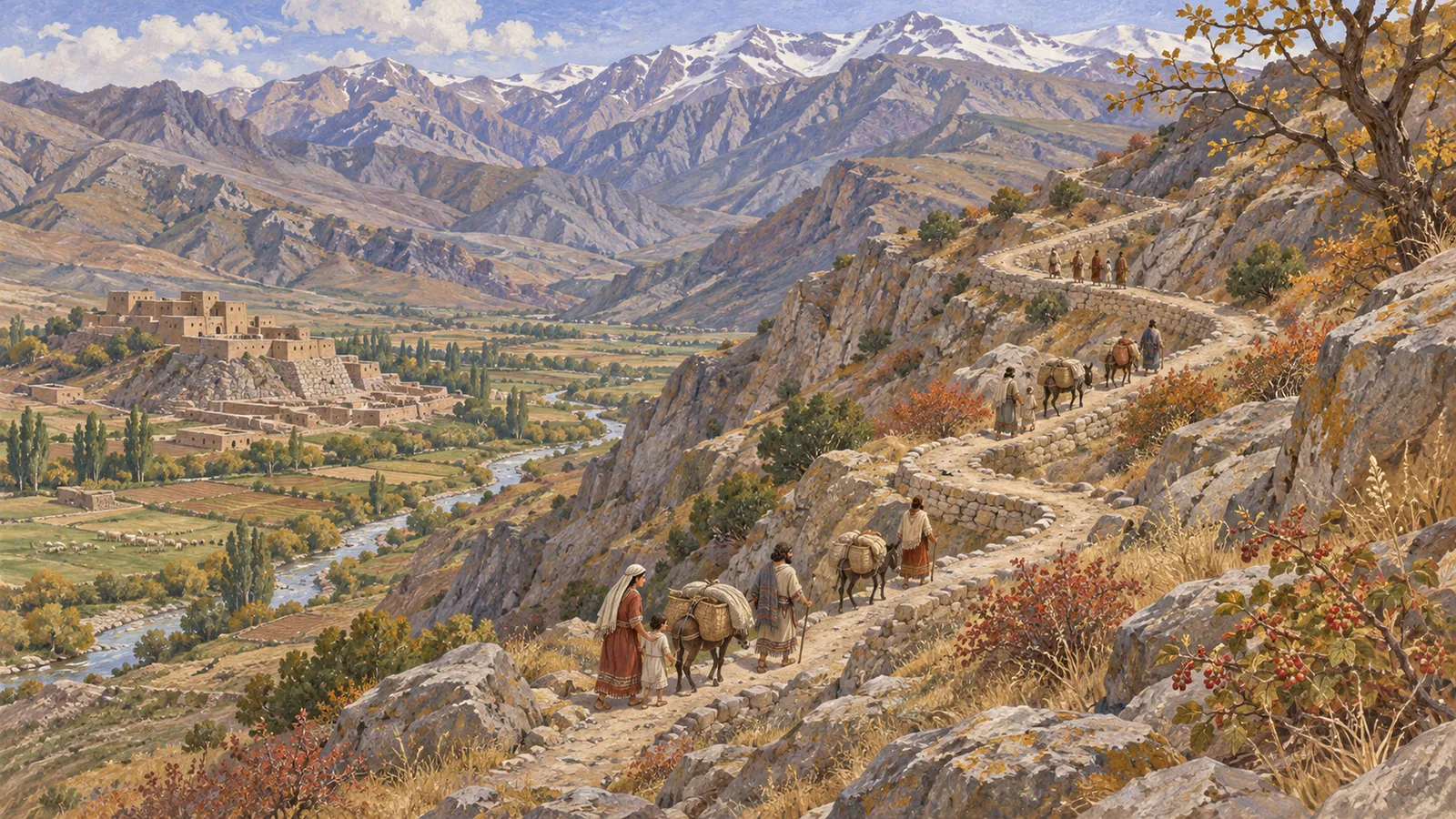
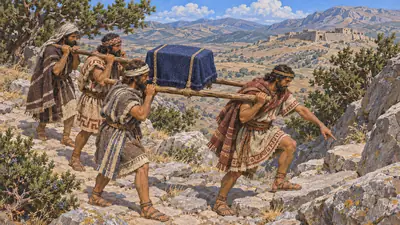
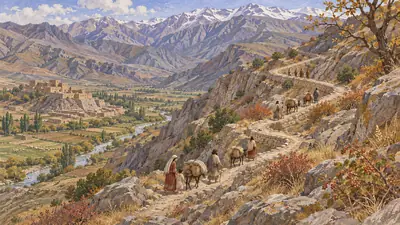
The first country he names is Hatti. As the carriers climb into the Anatolian uplands, the low plain gives way to stone slopes and a pass where one man helps another find his footing.
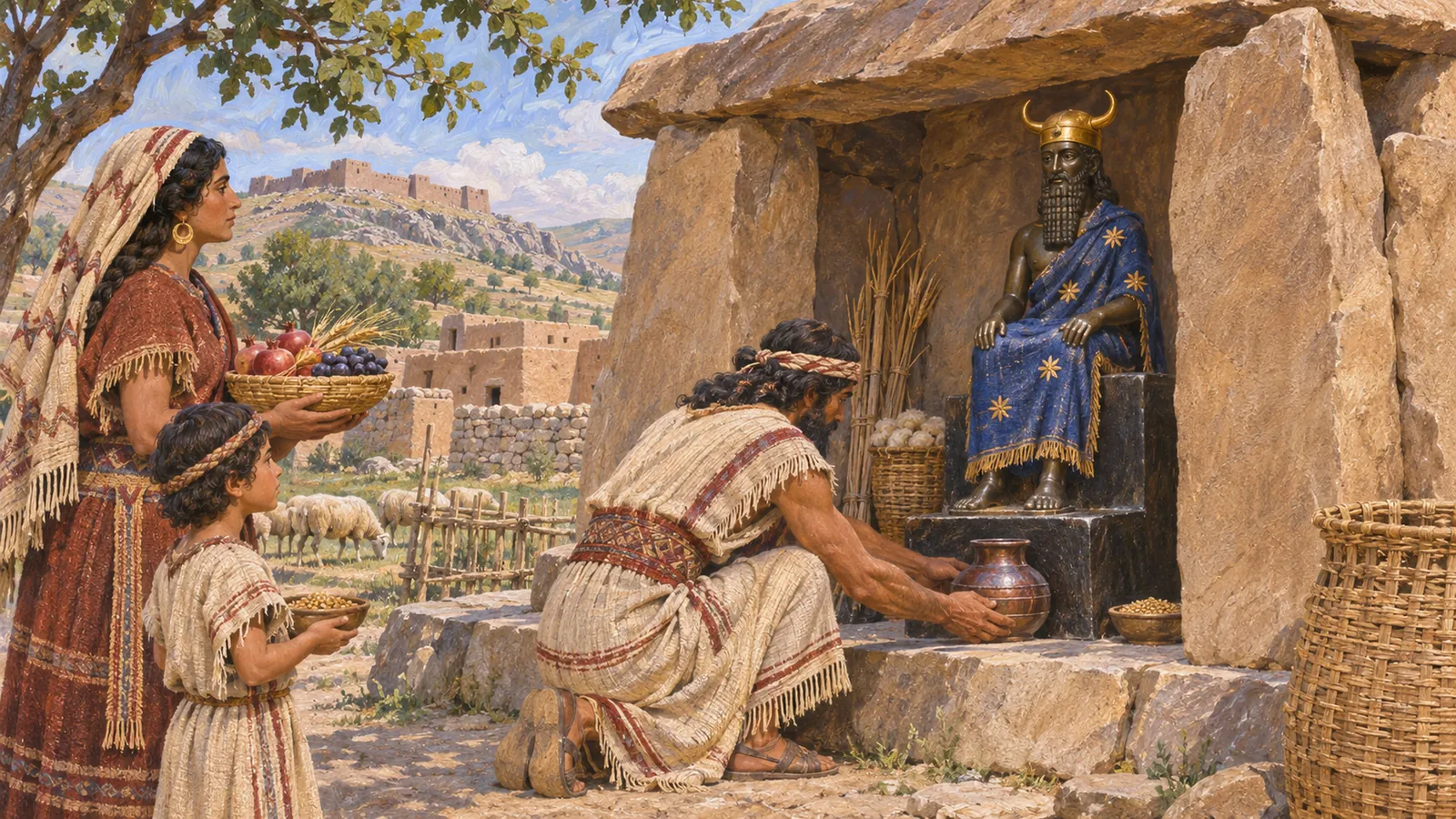
Marduk looks over the country and establishes a sacred seat there. The poem measures his time away in years, and the journey pauses while the visiting god has a place of his own.
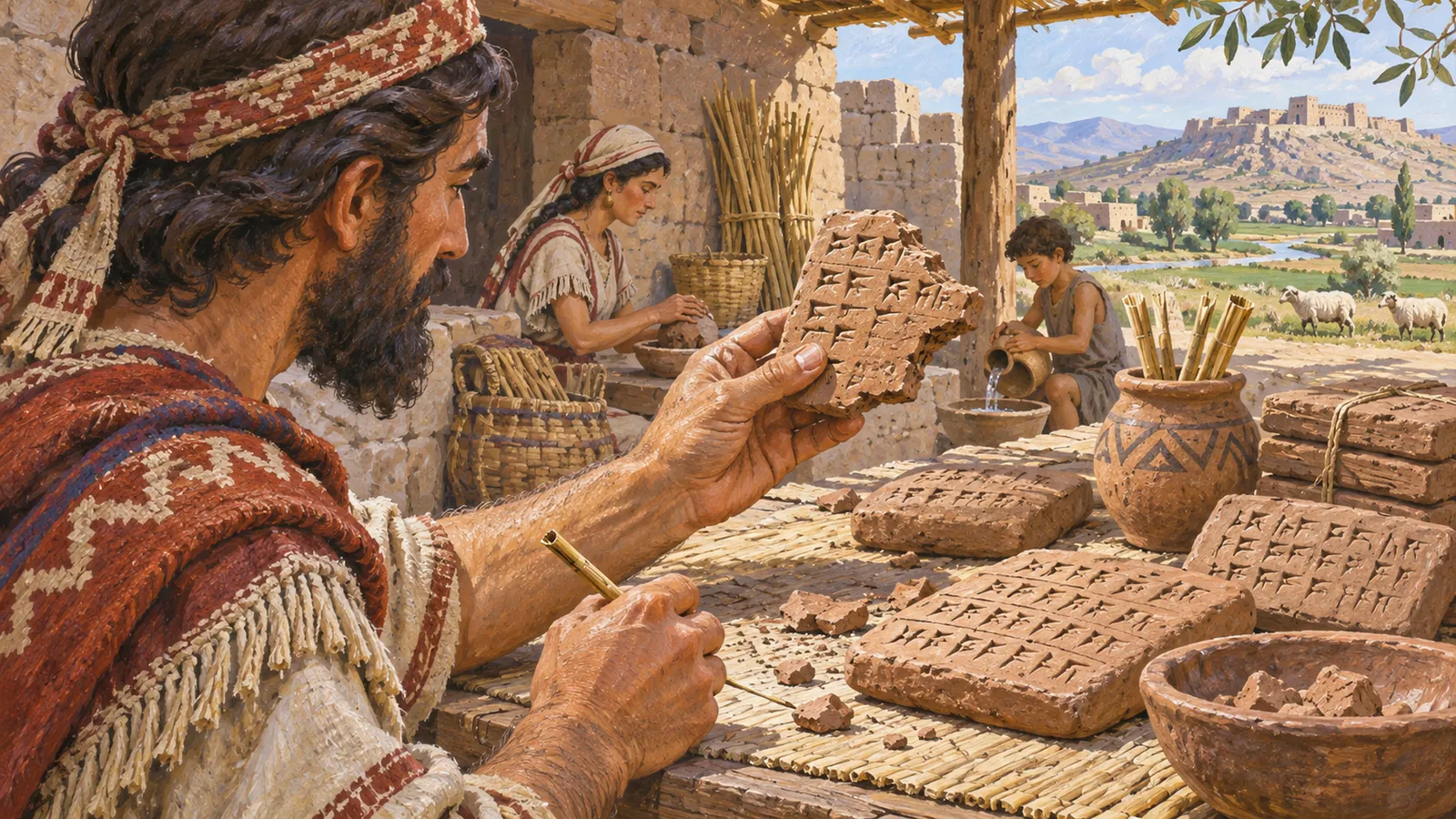
The signs that give the length of his stay have worn down. One reading gives twenty-four years. Another makes the number longer. The surviving clay leaves the question open.
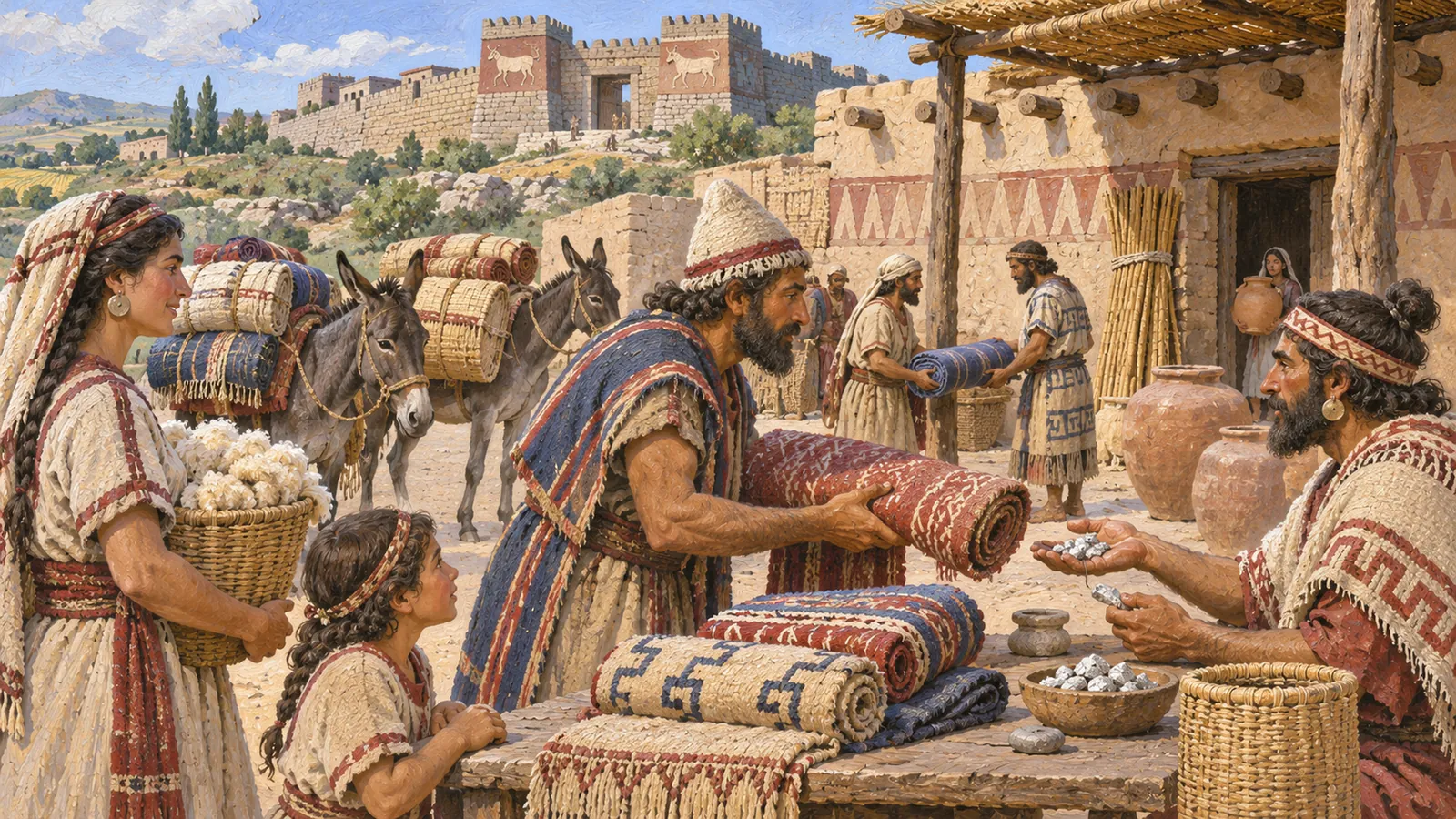
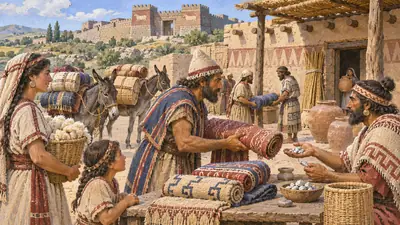
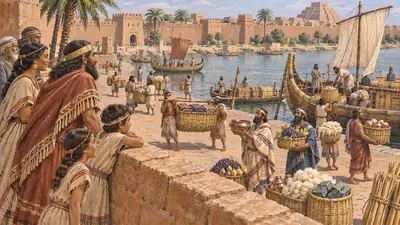
The god says that he established caravans of Babylonians in Hatti. Silver and goods enter the account alongside Sippar, Nippur, and Babylon, though the damaged passage makes the reckoning hard to follow.
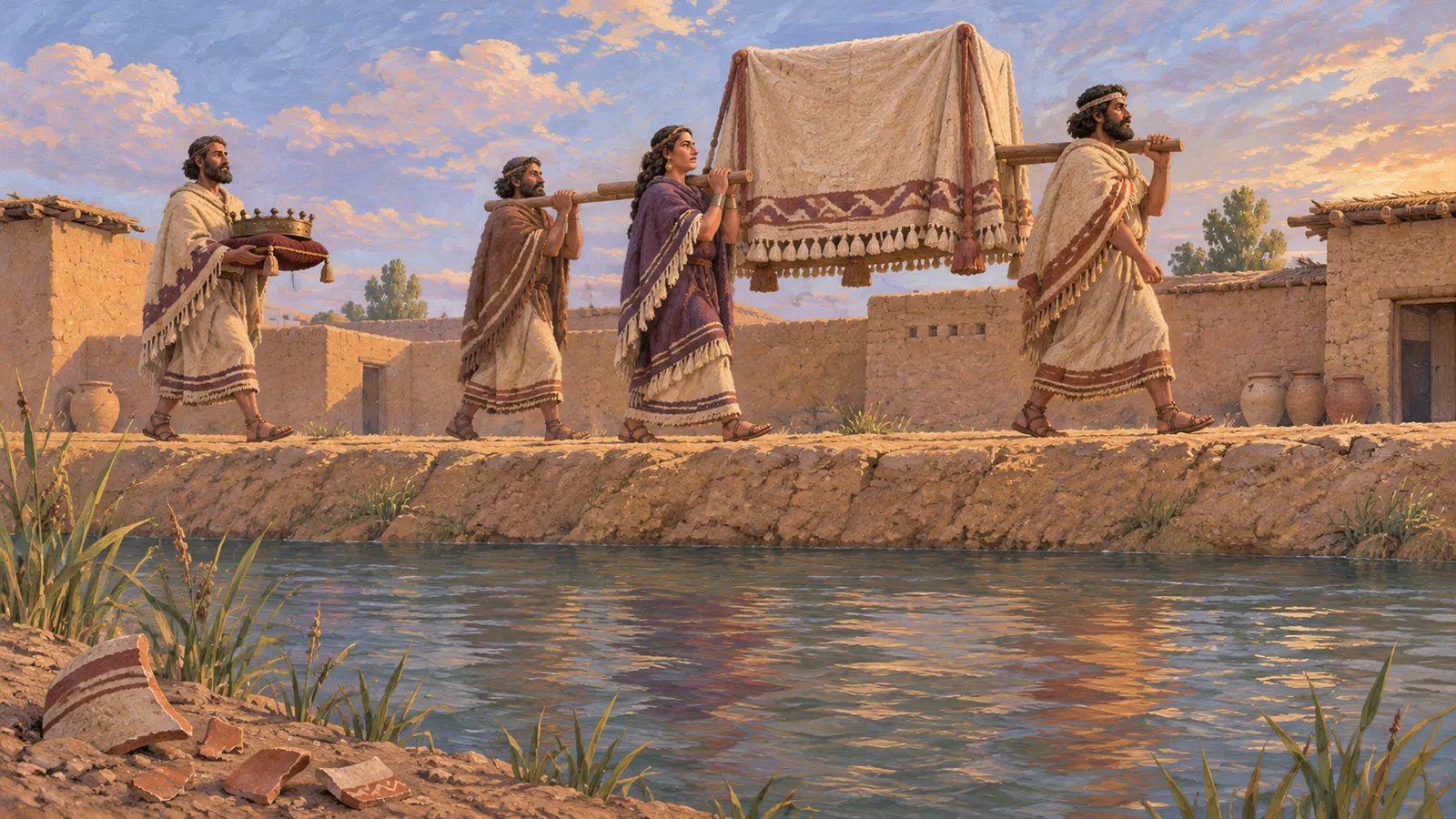
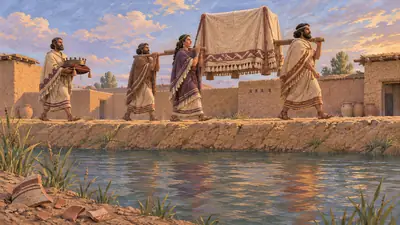
A crowd gathers, and parts of a procession come into view. A crown, a crafted image, and water all survive as separate details. Then the tablet breaks again before the account of the return comes clear.
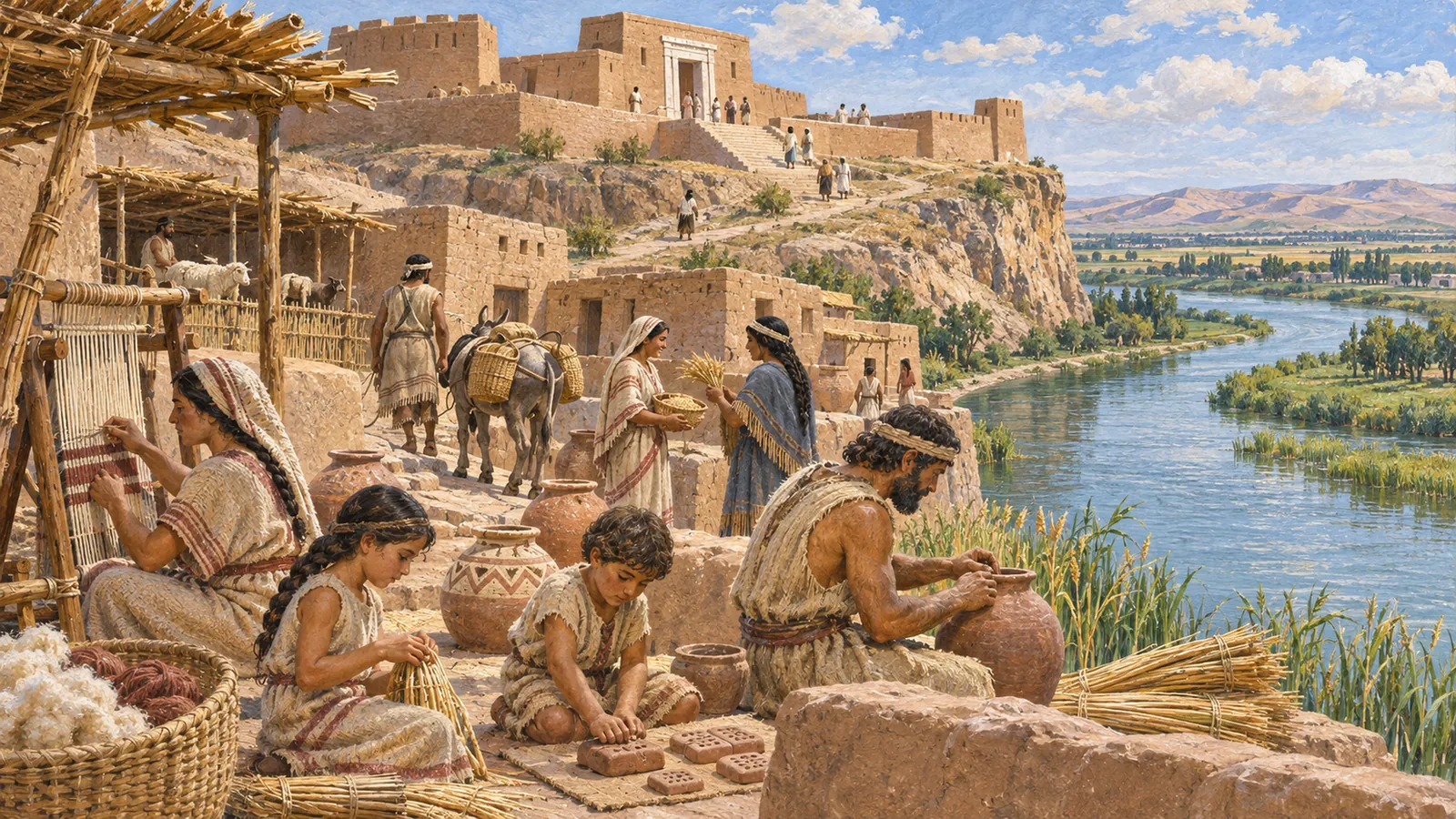
Marduk names his next stop as Assur, also called Baltil. The city pleases him. High over the Tigris, the poem gives its sanctuaries a brightness like that of shining stone.
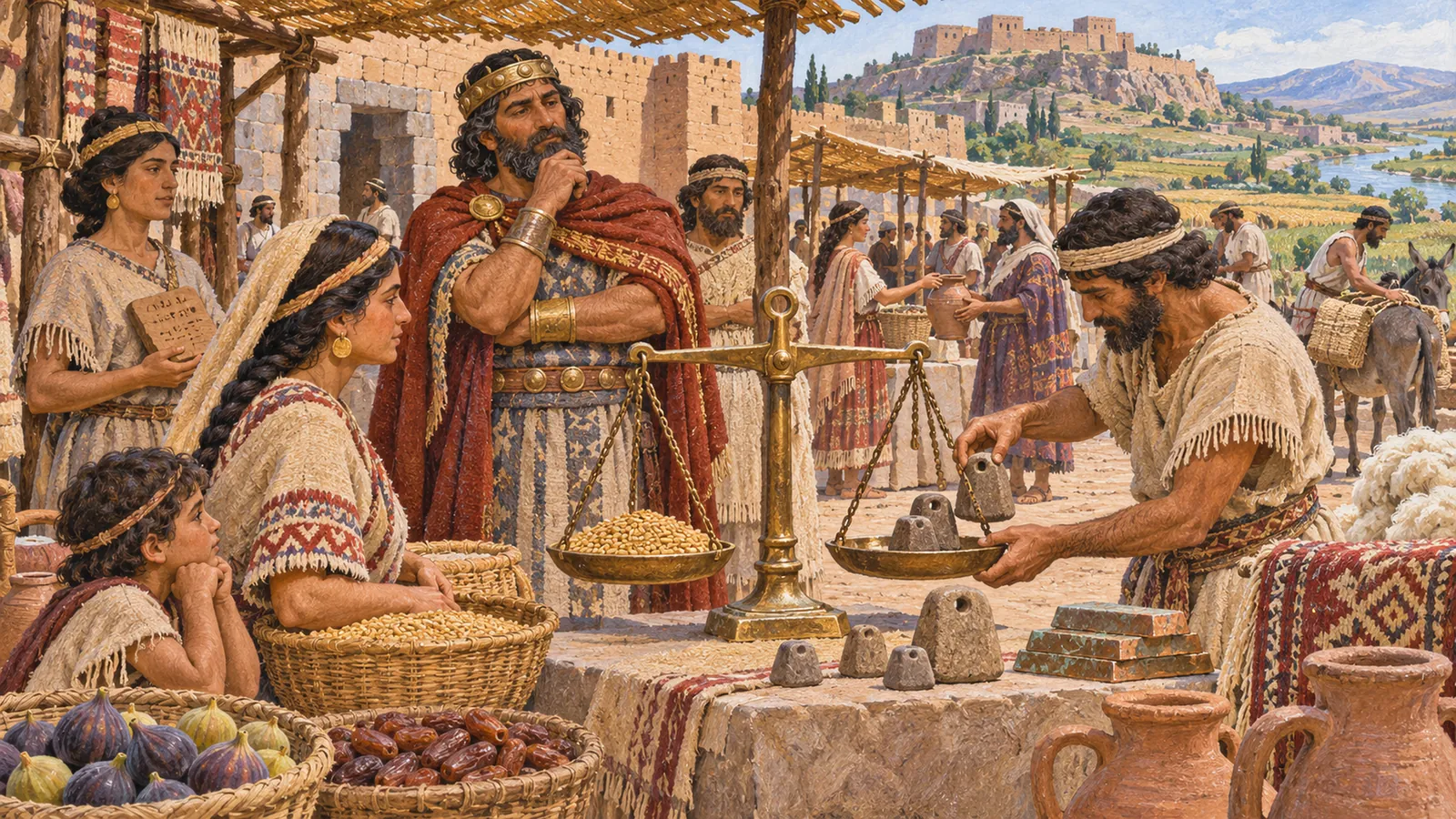
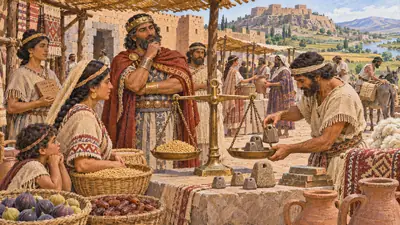
He blesses Assur and speaks of granting destinies. The words around the recipient have suffered damage, but the image of truthful scales remains. A measure could be checked in the open.
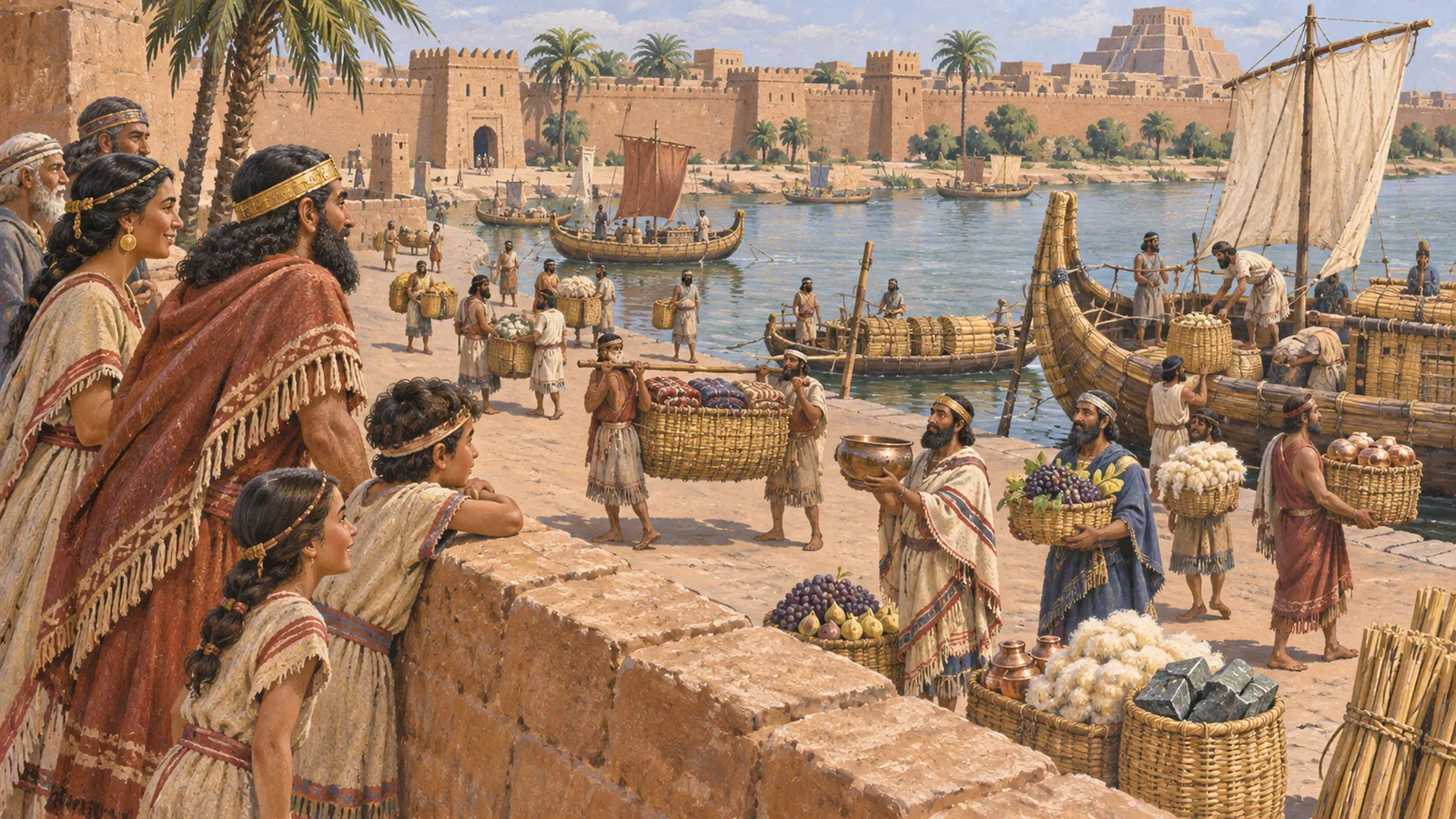
Marduk returns again. In his telling, people of many lands bring gifts and join in building. He asks who else has walked his road, and then names a third destination.
ELAM
The last outward road runs toward Elam. Marduk says he chose to go and called other gods with him. The view from the eastern foothills lets the valley fall away behind the travelers.
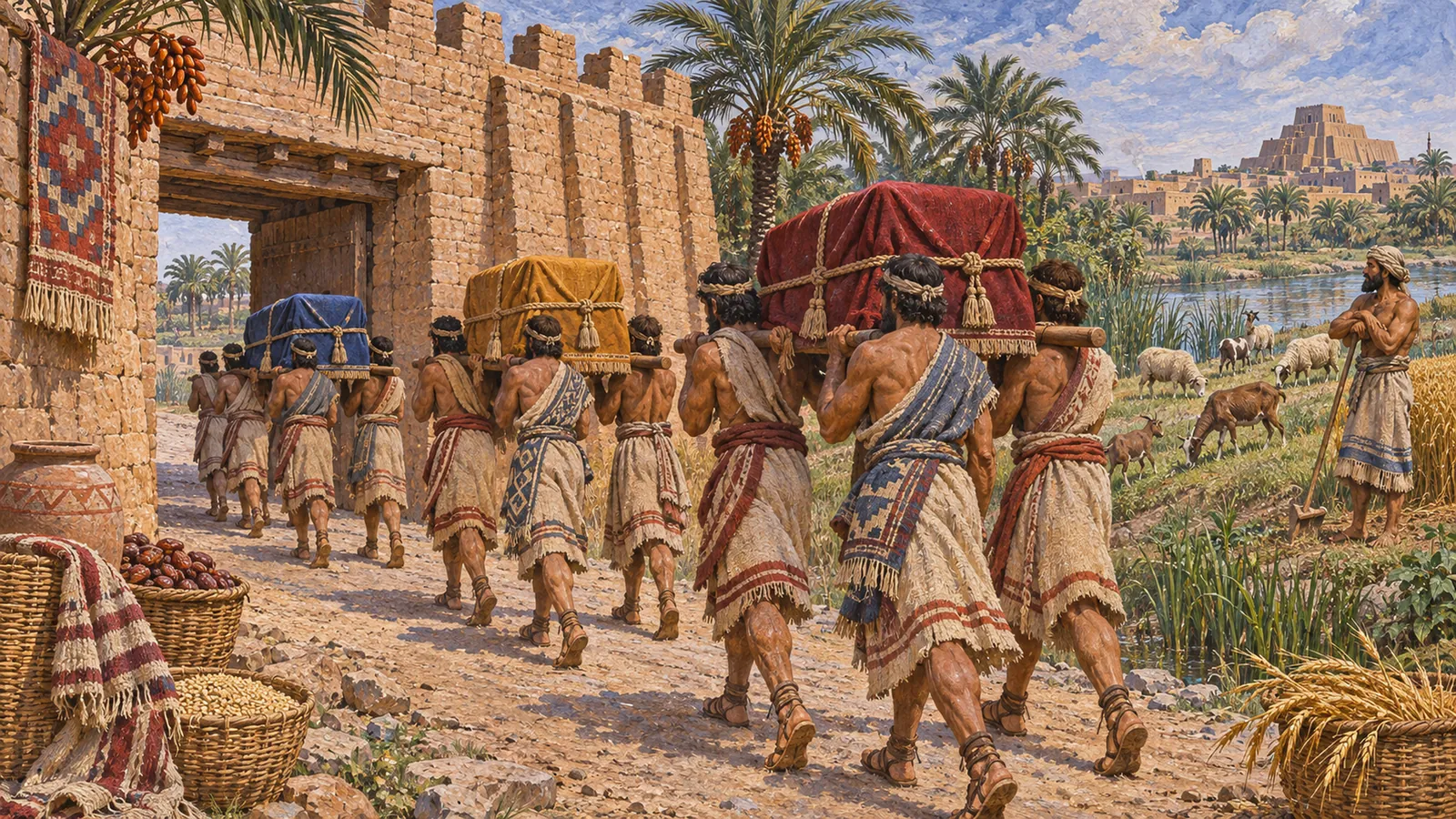
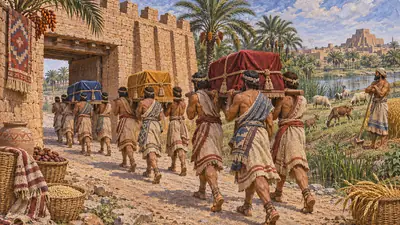
The traveling company carries more than one shrine. As it disappears from view, the poem follows the effect of Marduk's decision in the places the gods have left behind.
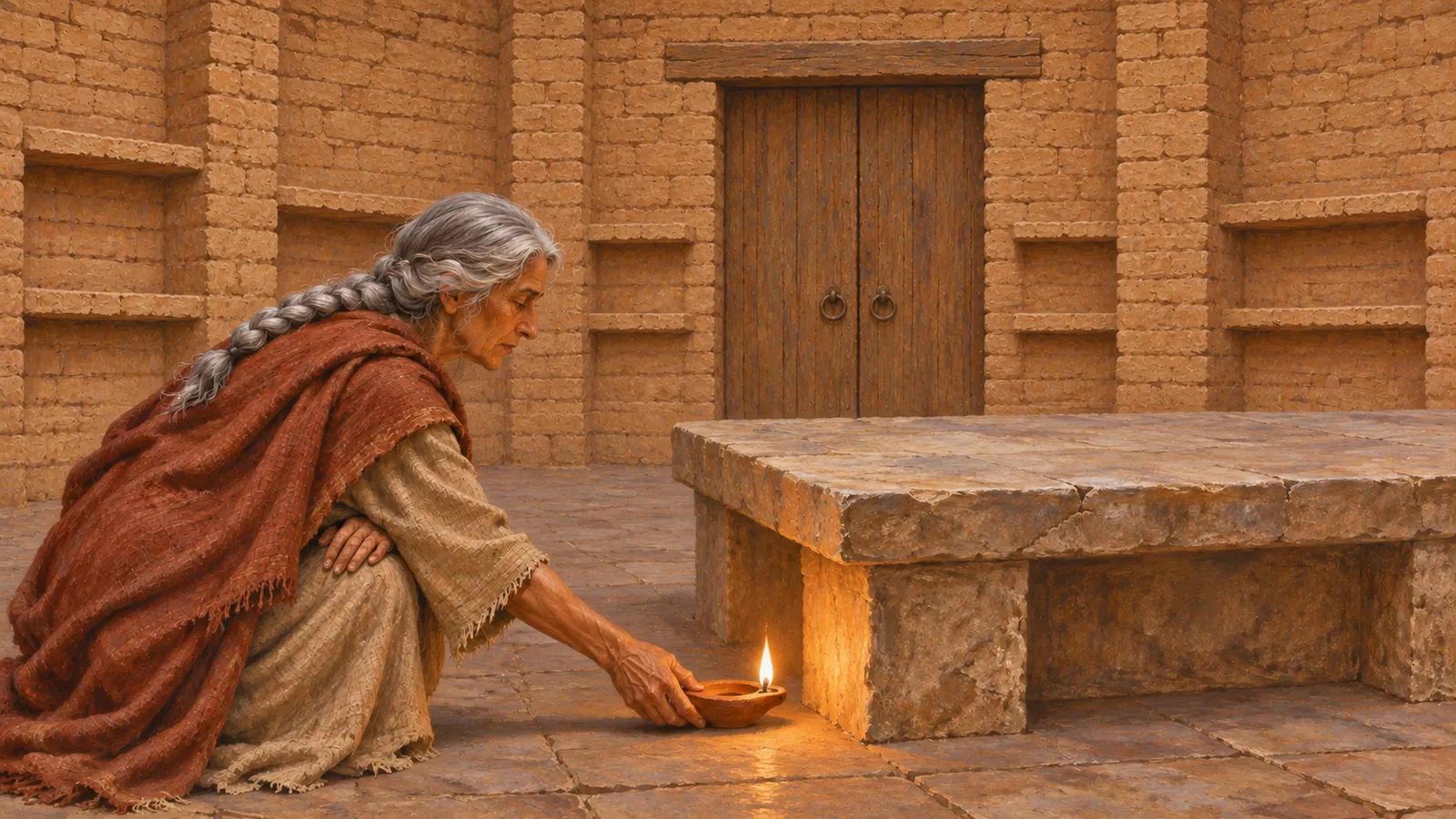
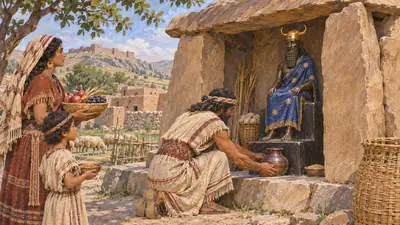
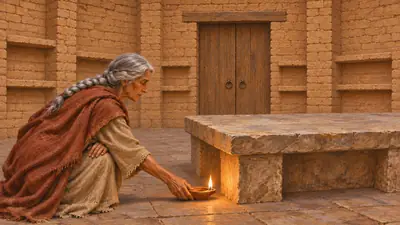
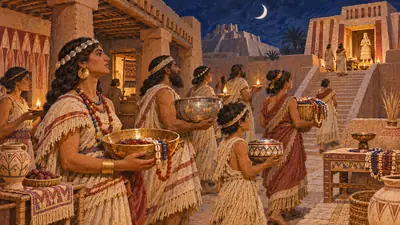
Marduk says that he stopped the offerings. The attendant brings her lamp to the platform anyway. Its light reaches the bare surface and the dark floor where people used to wait.
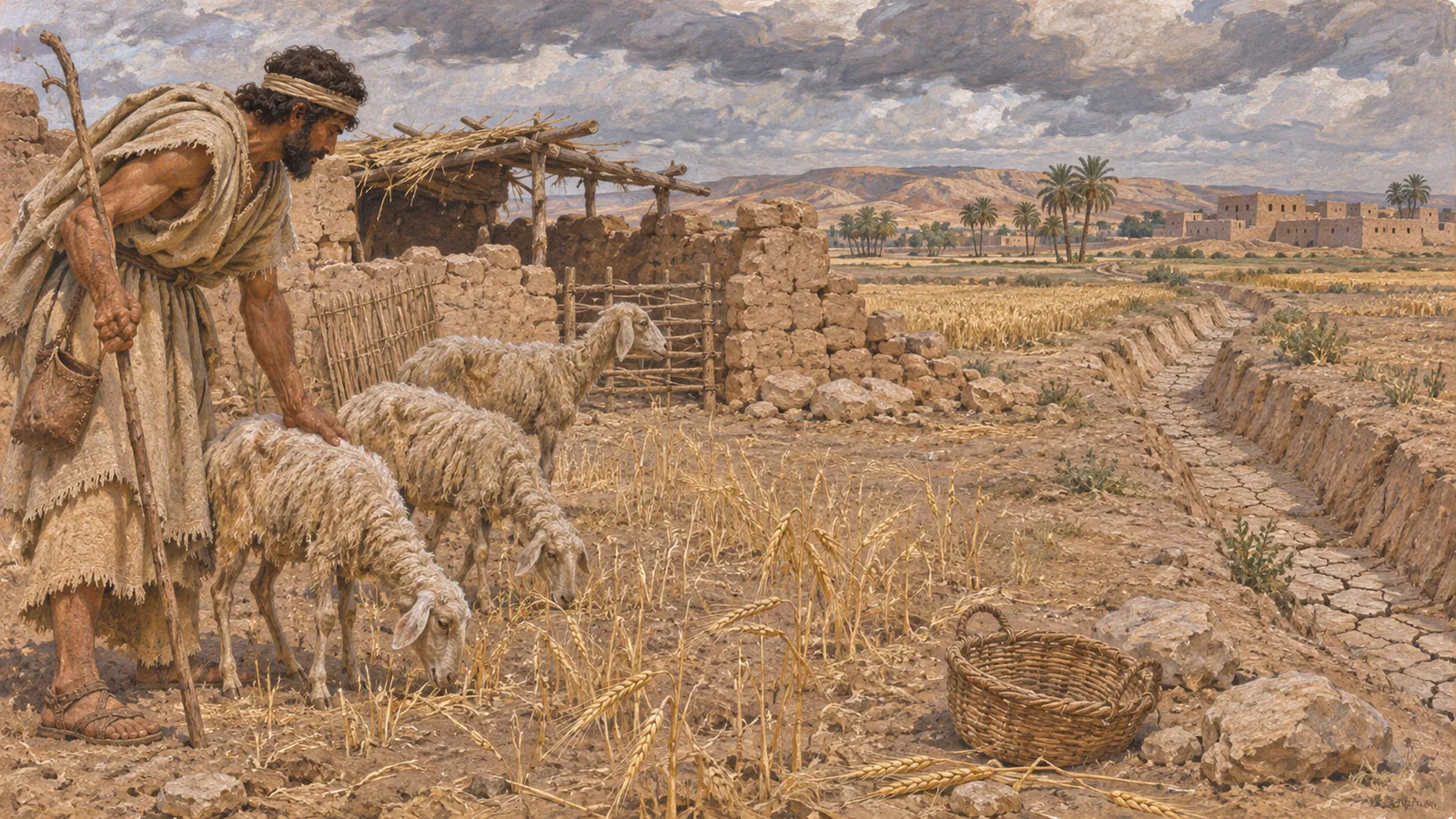
He raises the powers of the herds and grain to the sky. The poem gives them names, Shakkan and Nisaba. For the people who depend on both, the loss soon becomes visible.
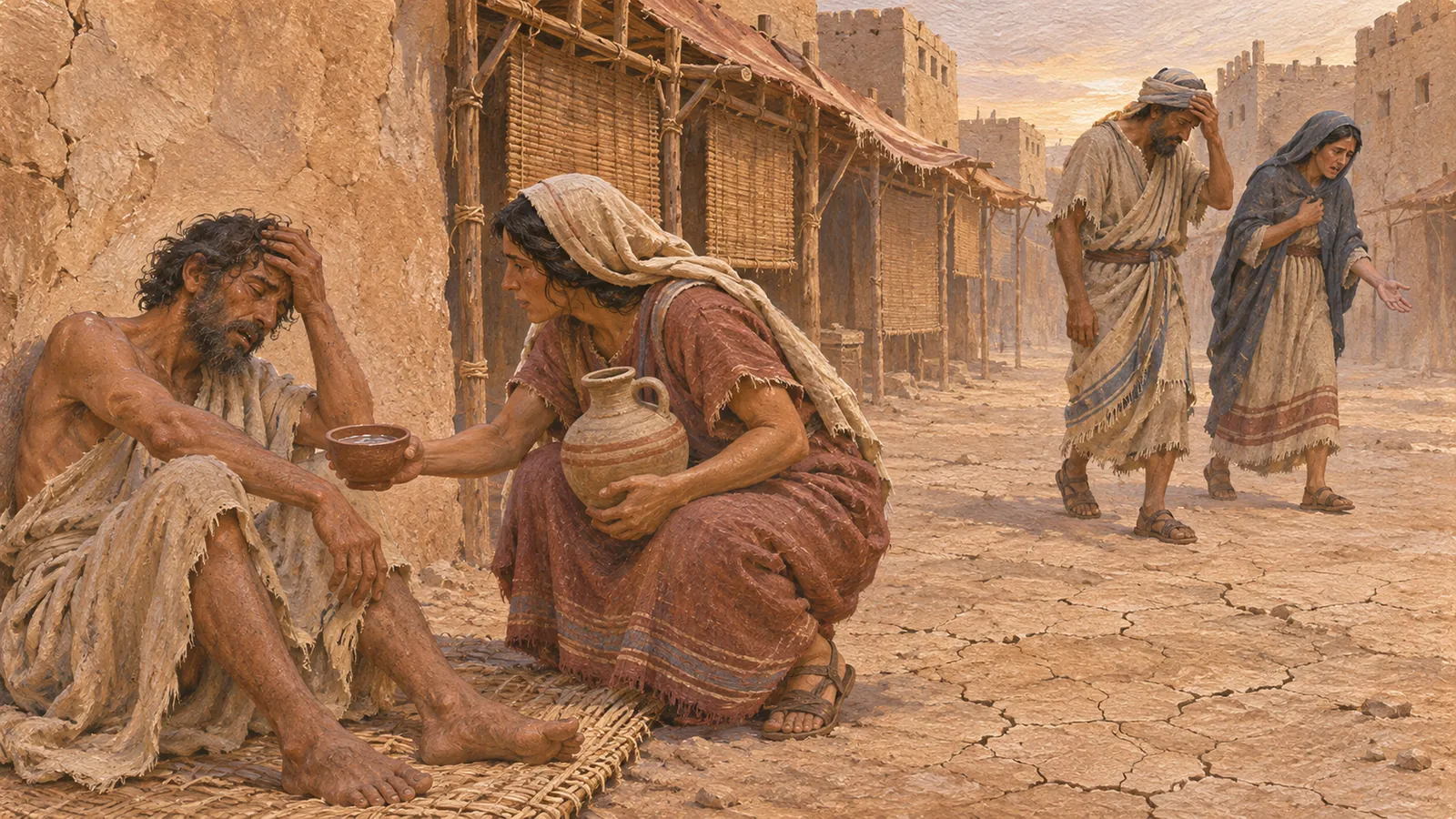
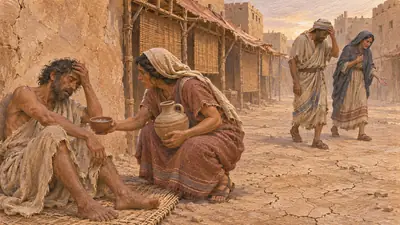
Sickness runs through the land. The strong turn against the weak, old ties between neighbors and kin break, and authority passes into hands the poet calls unfit to hold it.
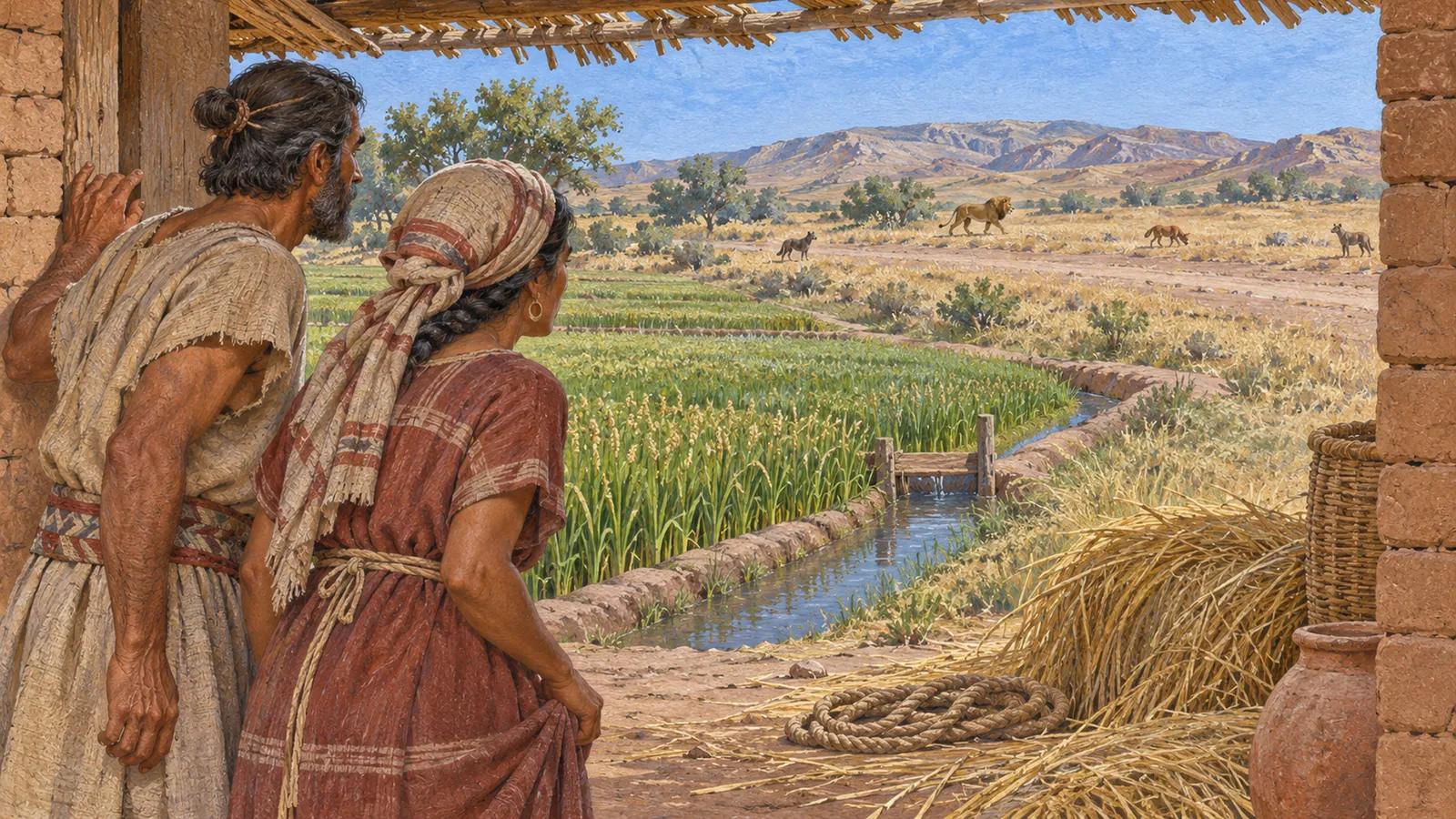
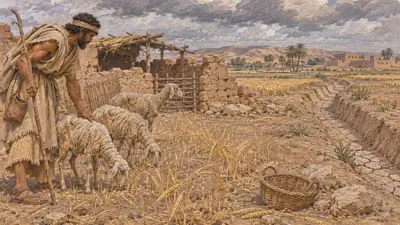
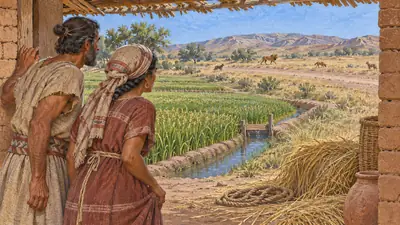
Lions and dangerous dogs make the roads hard to use. People listen from their walls and stay close to home, as fields and settlements grow harder to reach.
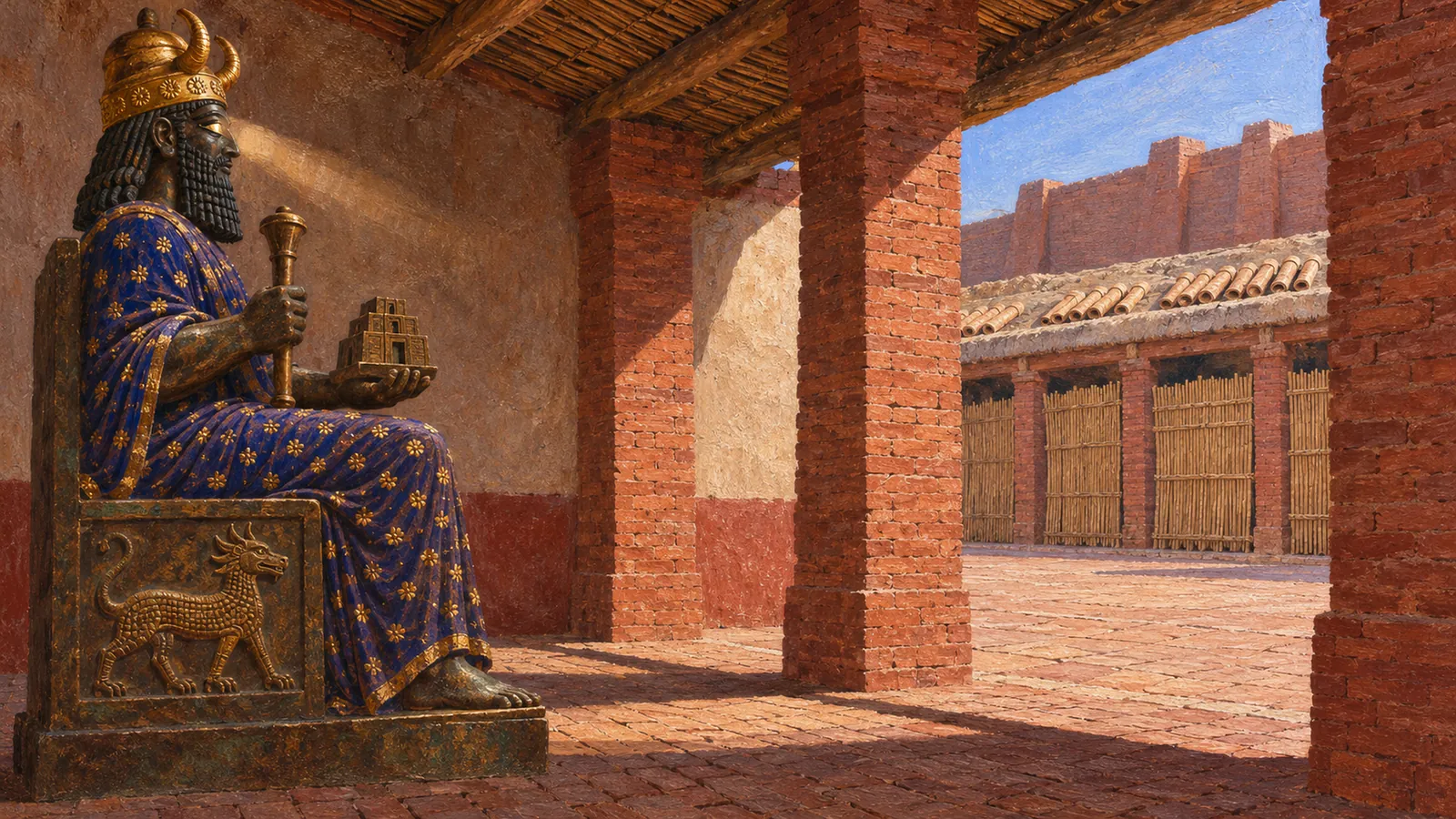
When the years have run their course, Marduk says what he wants above all. He longs for Babylon and for Esagil, his temple there. Once more he asks the lands to bring gifts and build.
THE RETURN
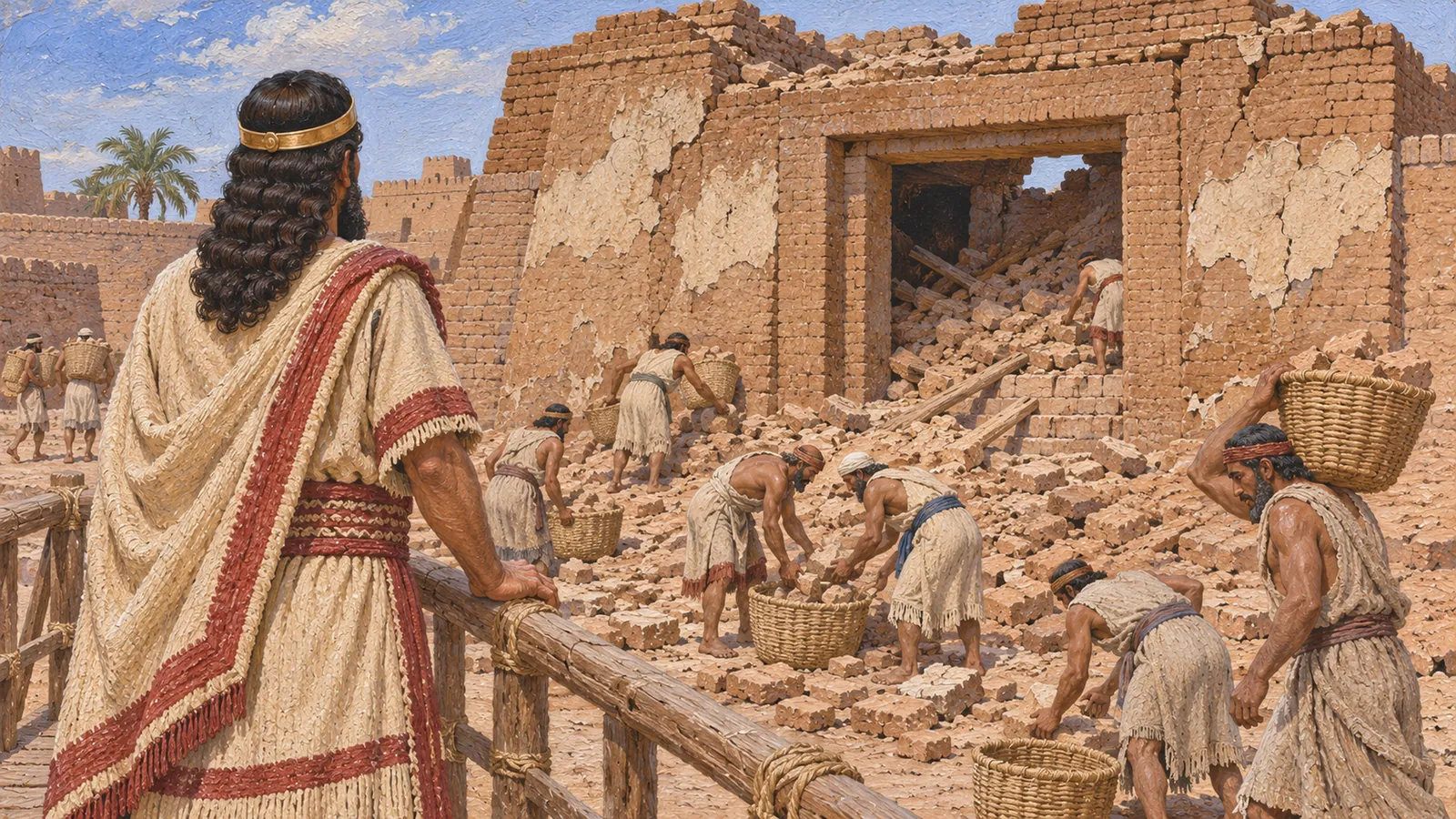
A king will rise to repair Esagil. The poem leaves him unnamed. It remembers his work through the temple's imagined future, when ritual and ordinary life both have room to begin again.
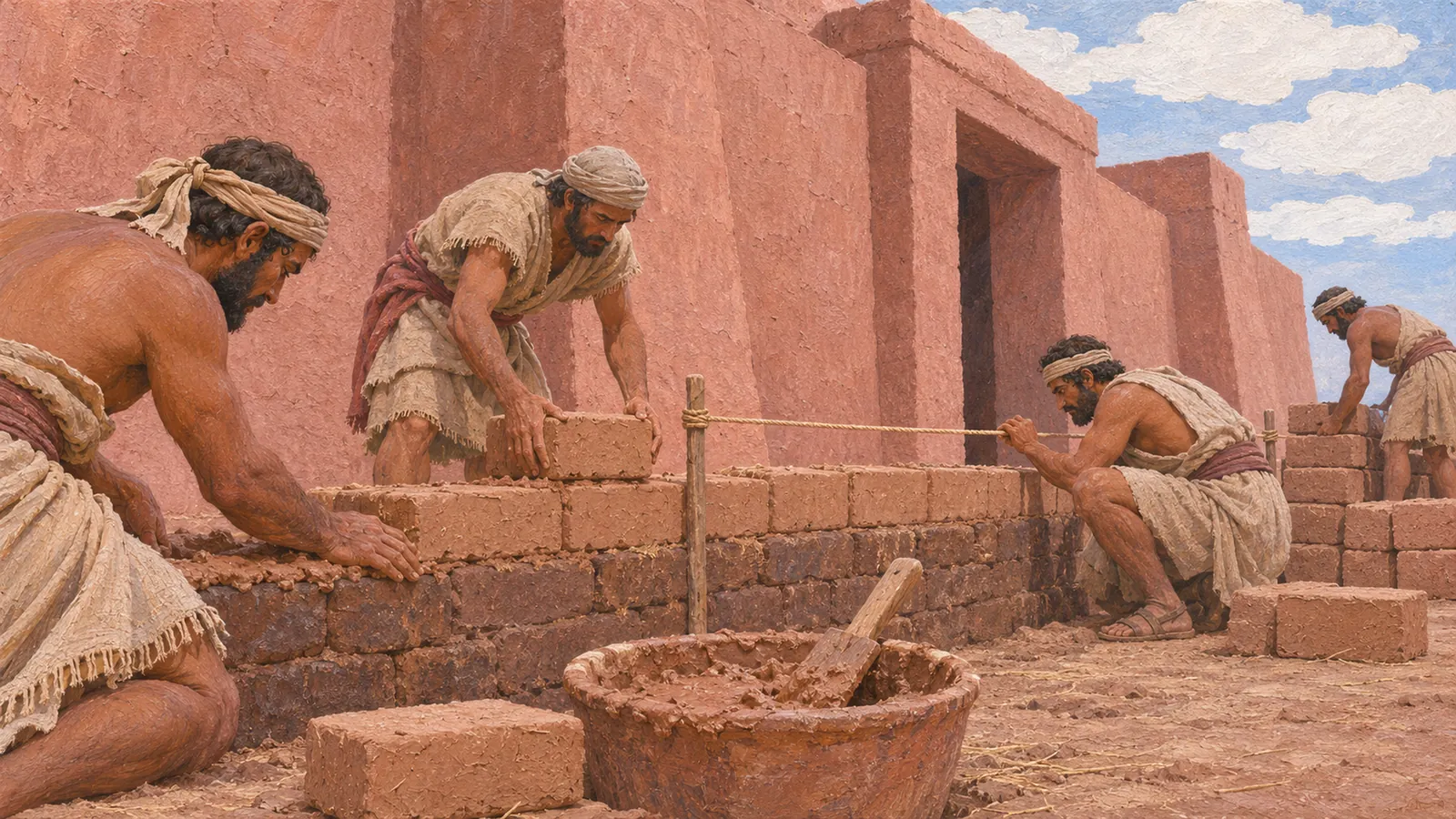
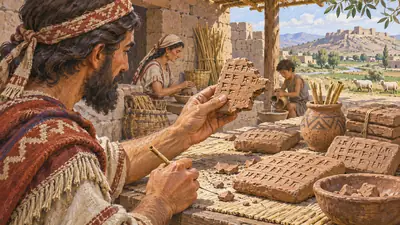
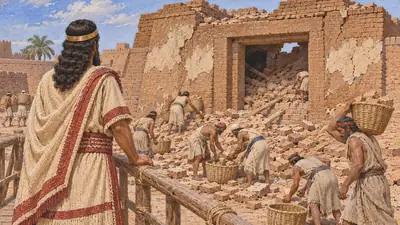
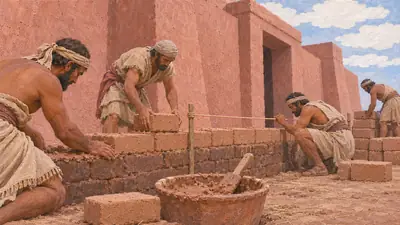
Heaven and earth frame the divine design for the restored temple. Below the sky, builders sort broken brick from sound brick and set the first new courses on the old foundation.
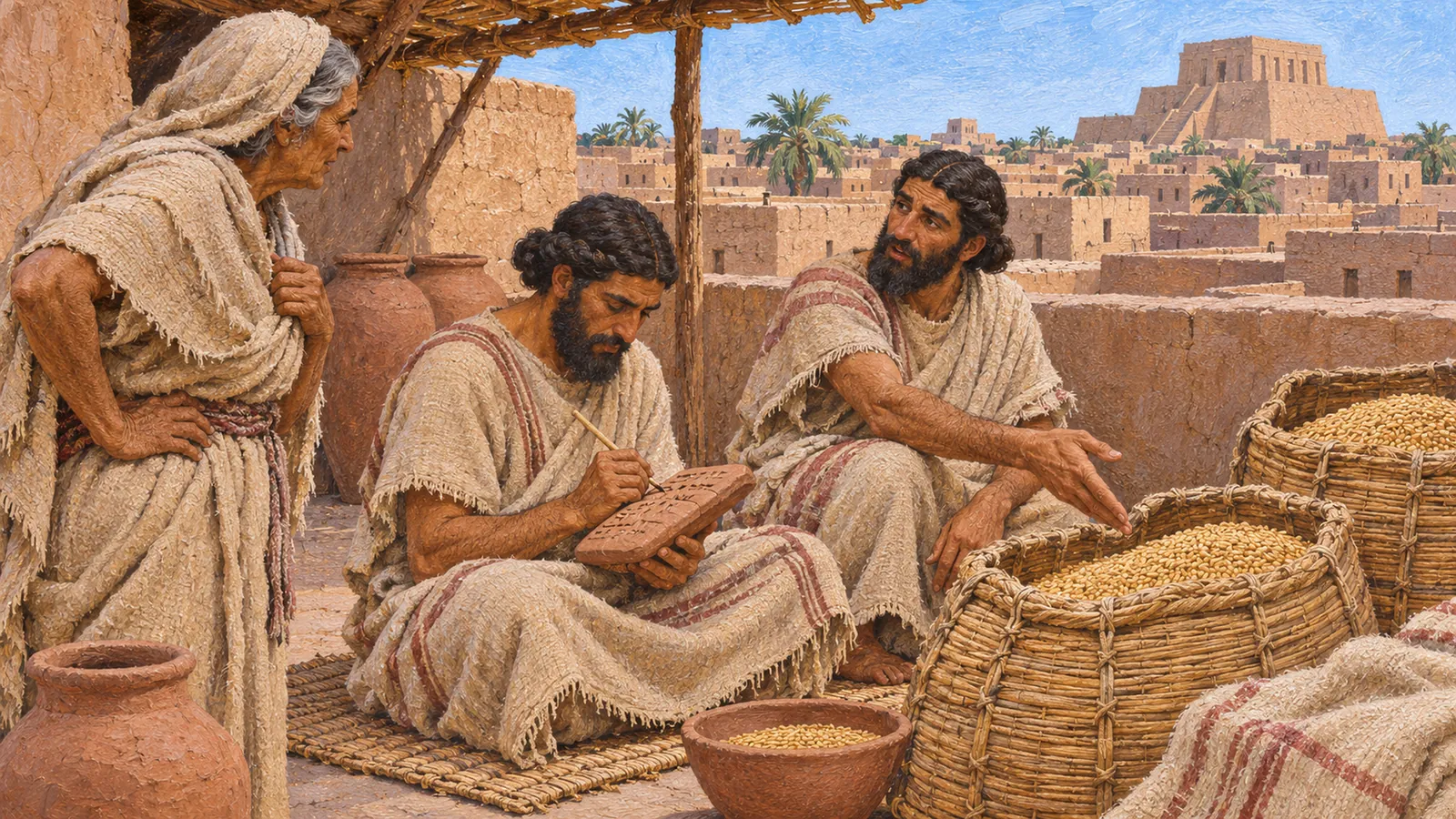
The poem says the king doubles the temple's height and grants tax relief. One promise changes what people see above the city. The other changes what a household owes.
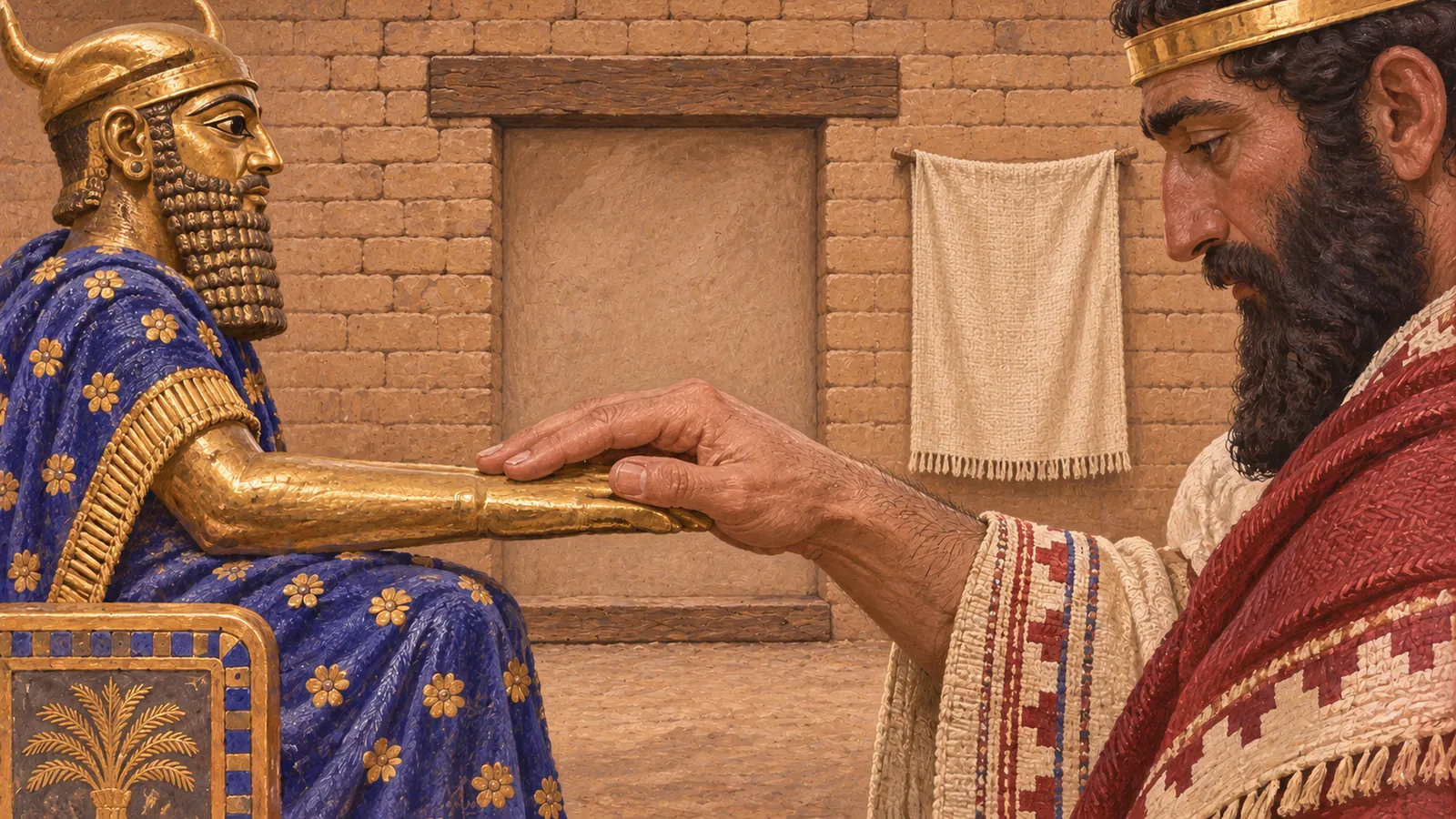
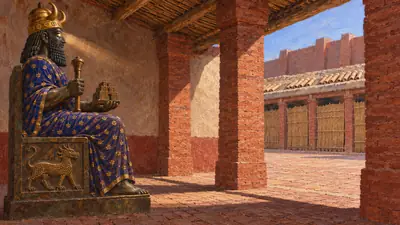
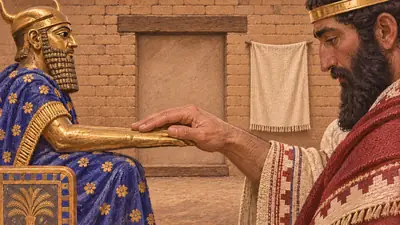
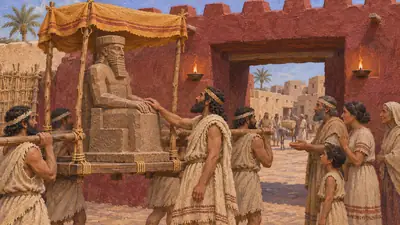
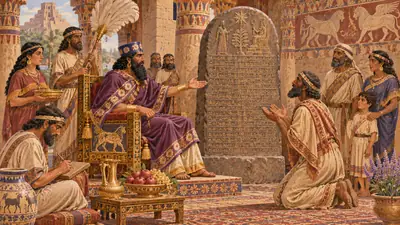
The ruler takes Marduk by the hand and brings him to the temple meant to hold him forever. The poem dwells on this gesture as the moment when the missing god is received again.
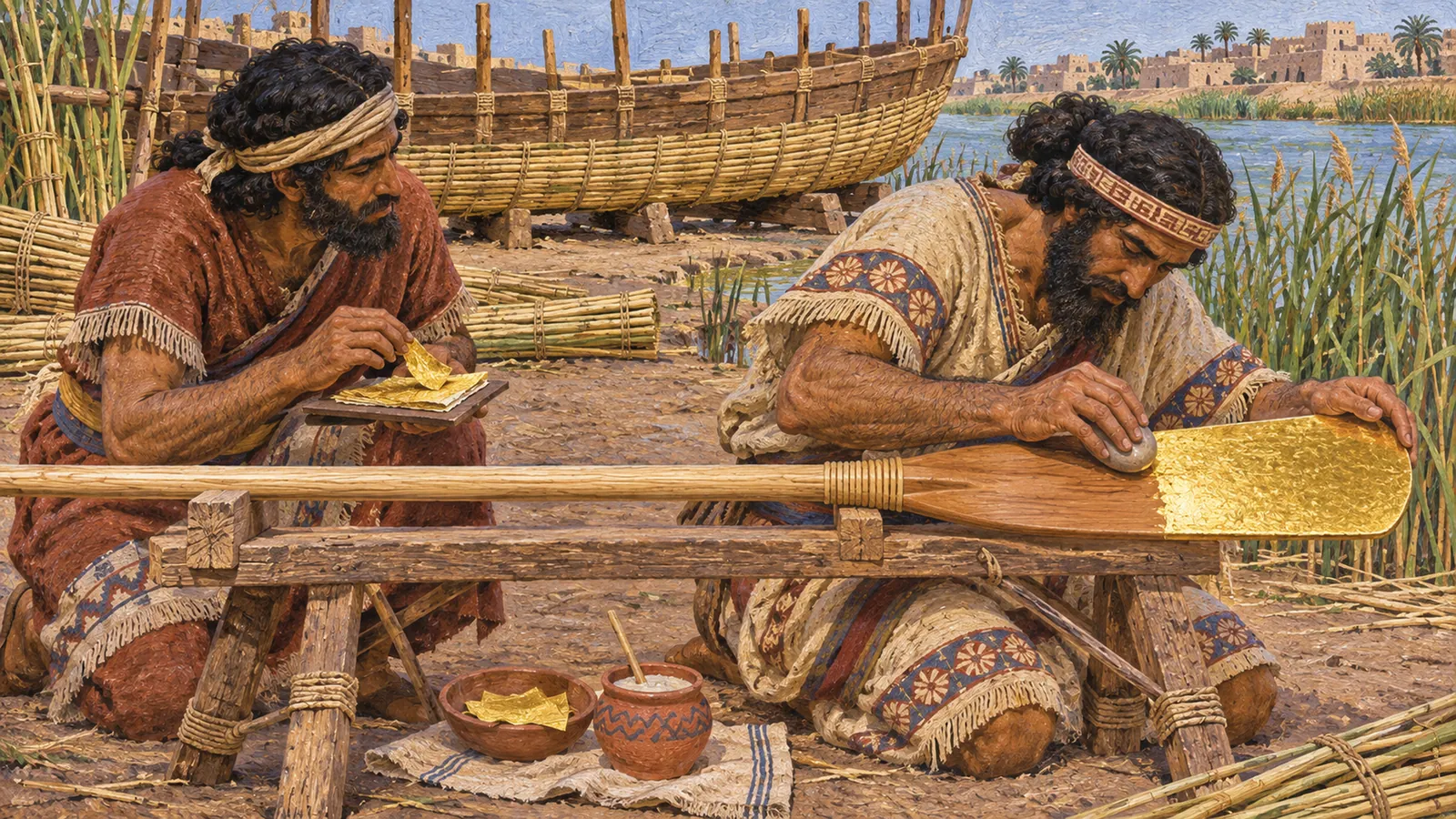
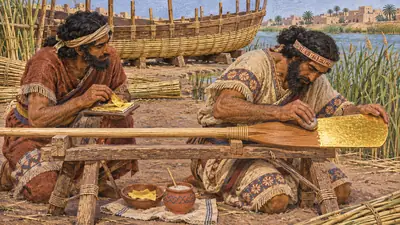
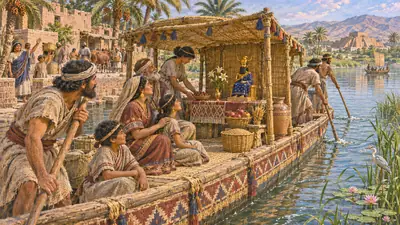
A barge is made ready for the god. Even its steering gear receives gold, and boatmen come aboard. Their work gives the procession a way to continue where streets give out.
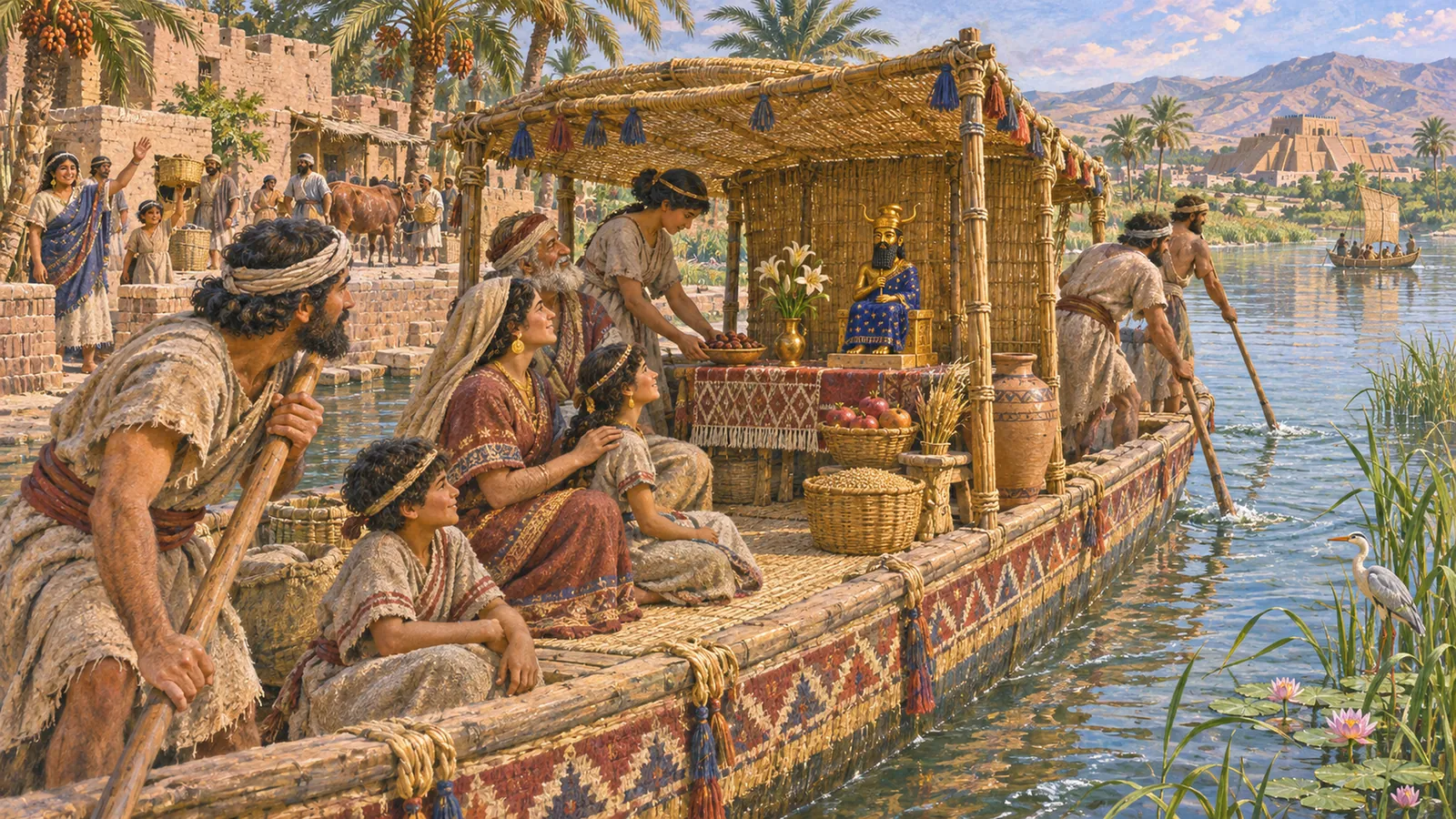
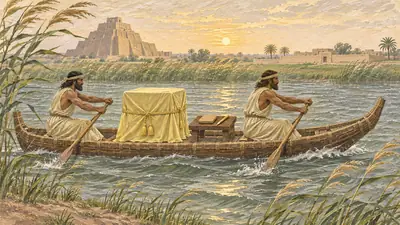
The rowers take their stations and the steering oar shifts in the water. The boat crews now have charge of the image. A damaged stretch of the poem interrupts the journey.
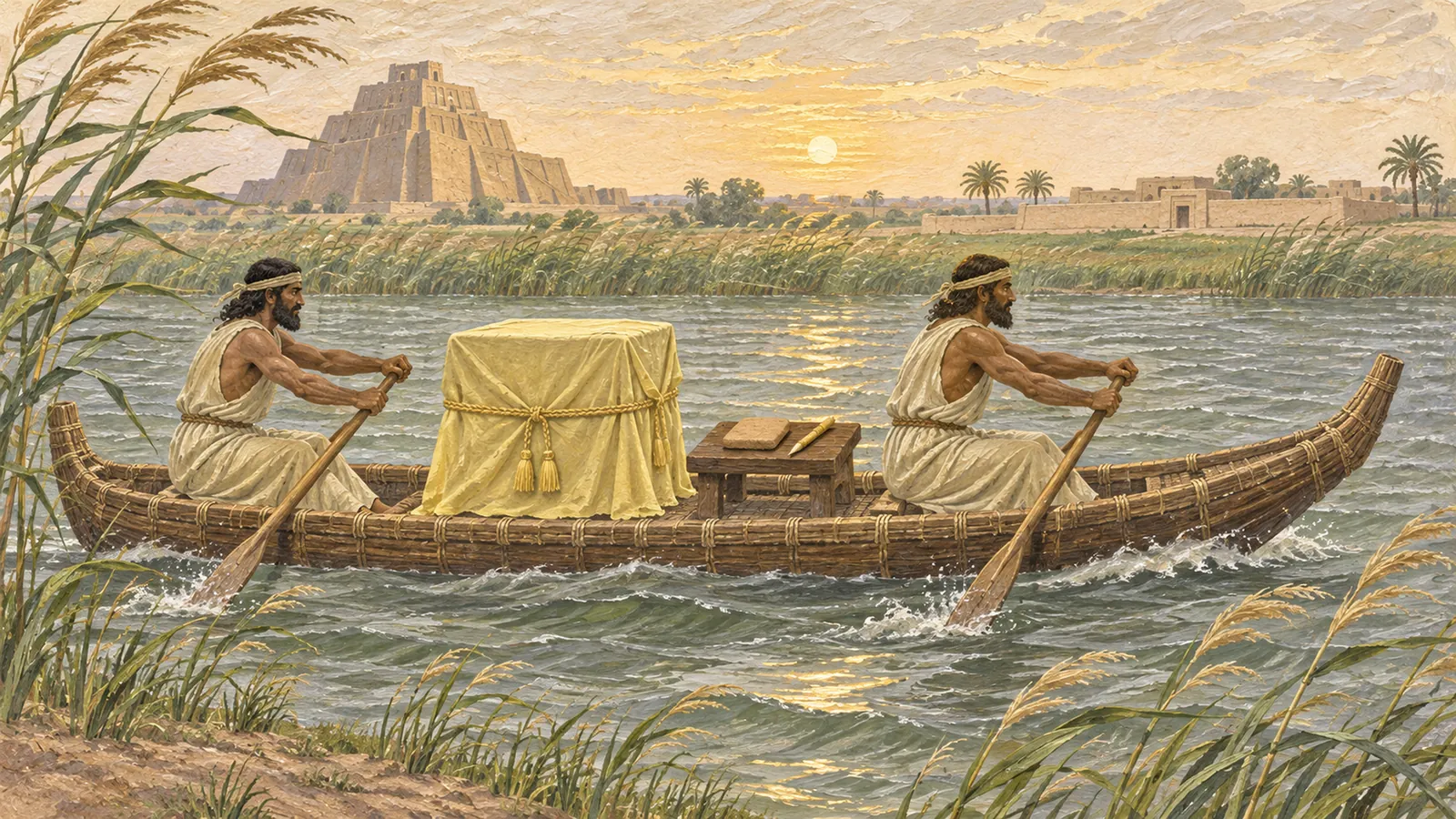
Another barge appears in a passage that echoes the first. Nabu, Borsippa, and his temple Ezida can be made out in the damaged lines. The two boats give the homecoming a wider reach.
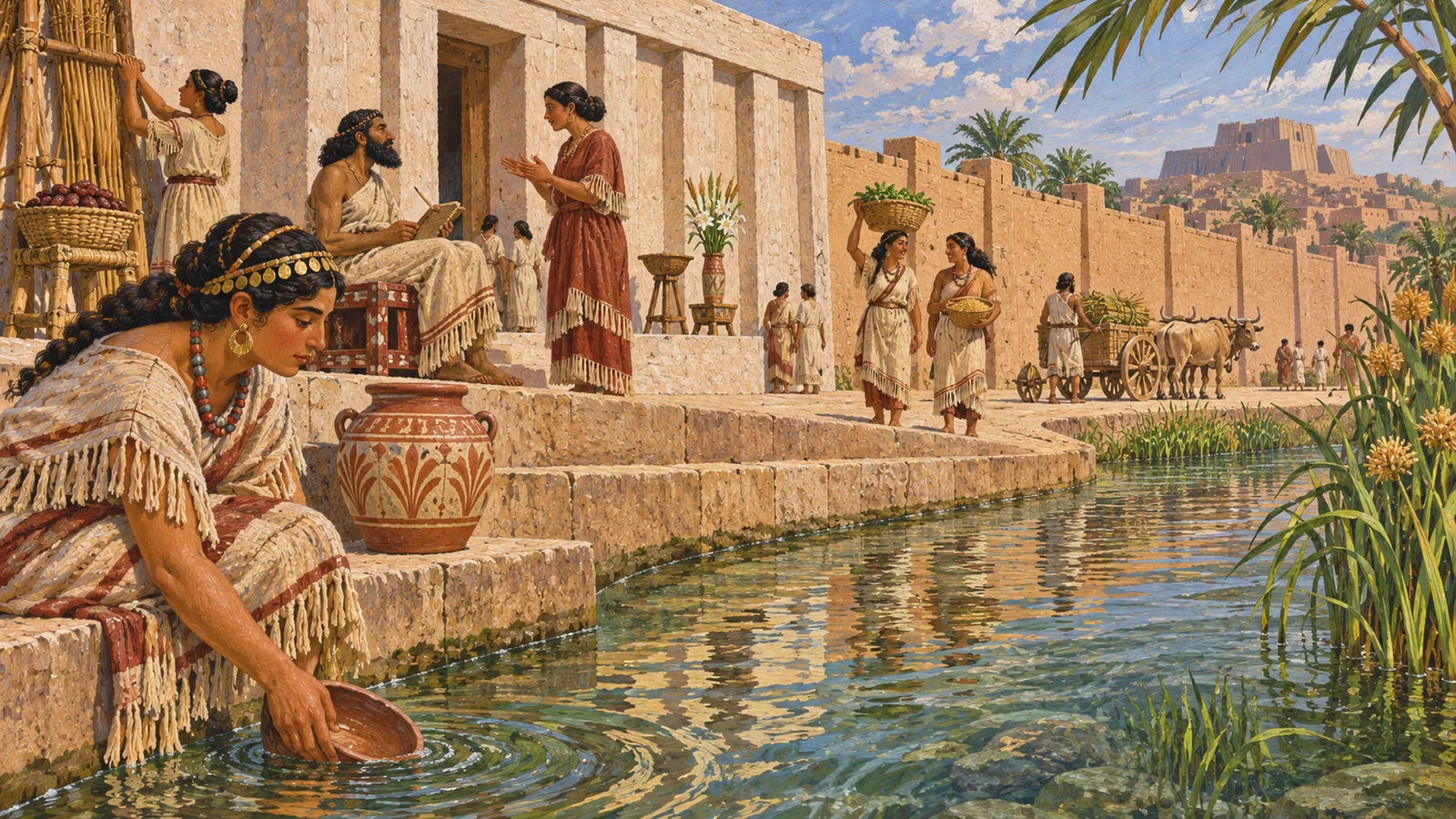
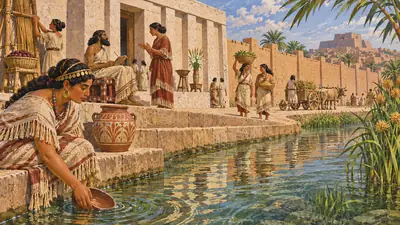
Eanna enters the account next. The canal and pure water survive amid missing words. Water, already carrying the boats, appears again as part of the life of a sanctuary.
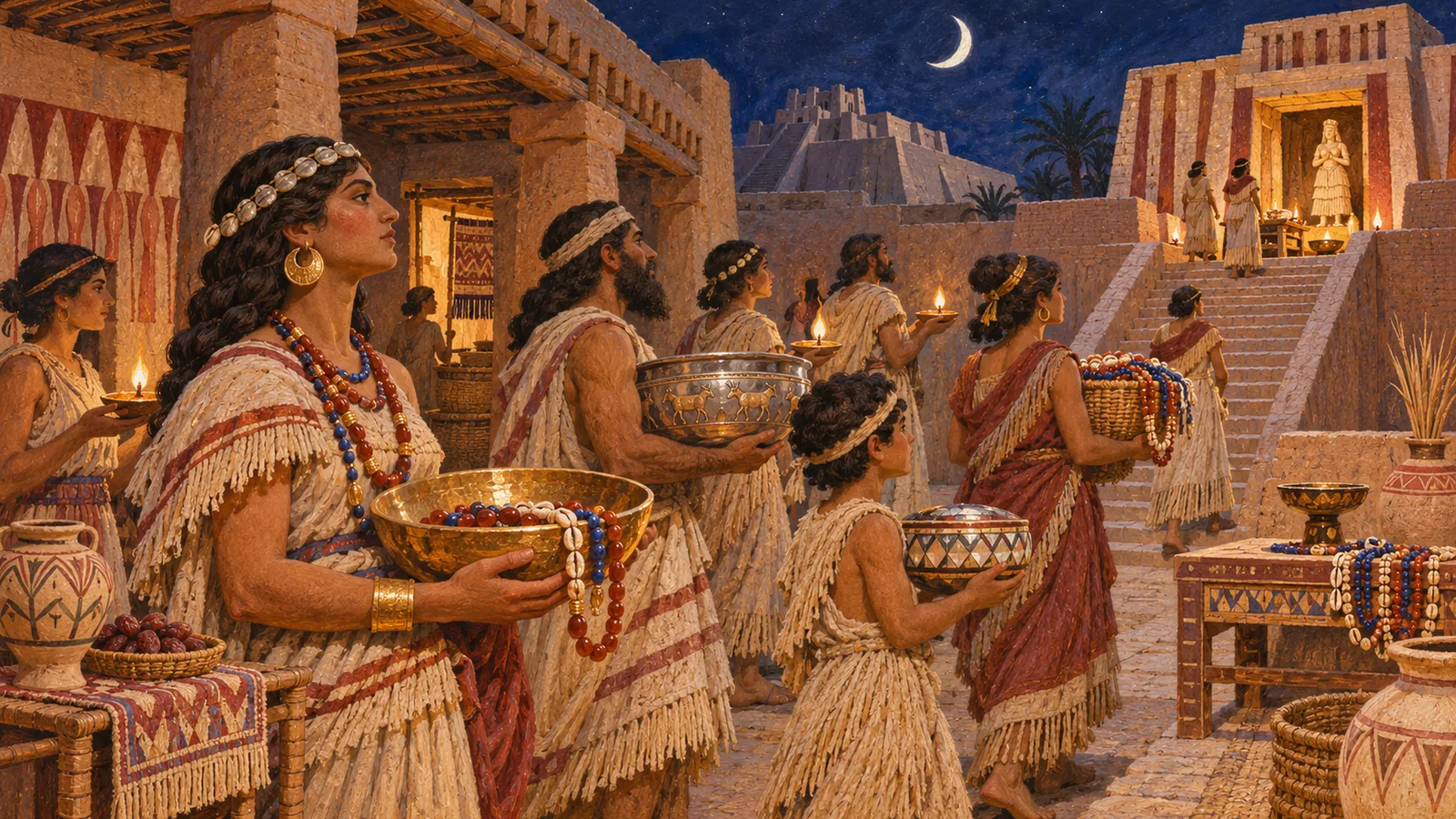
In another surviving piece, a sanctuary of the moon god gleams. Ningal appears by name too. The poet pictures brightness and precious goods spreading to sacred places beyond Babylon.
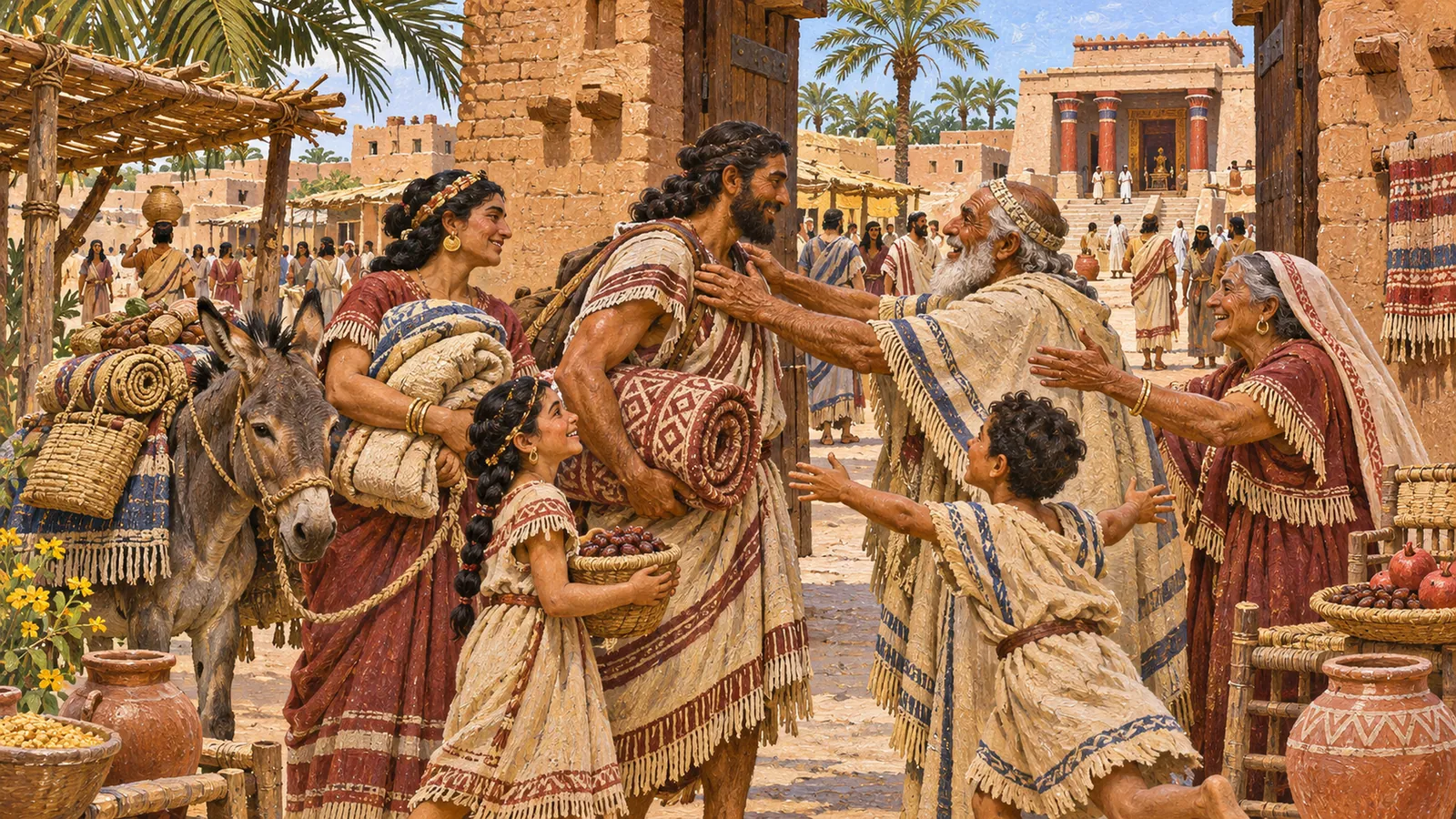
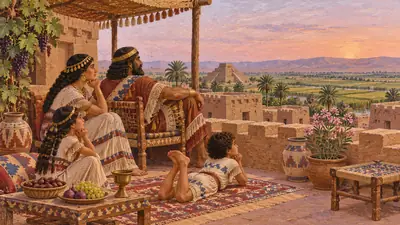
People who had scattered come together again. Egalmah and other sanctuaries shine in the poem, and pastures and foundations reappear in the surviving lines. The return now reaches streets far from Esagil.
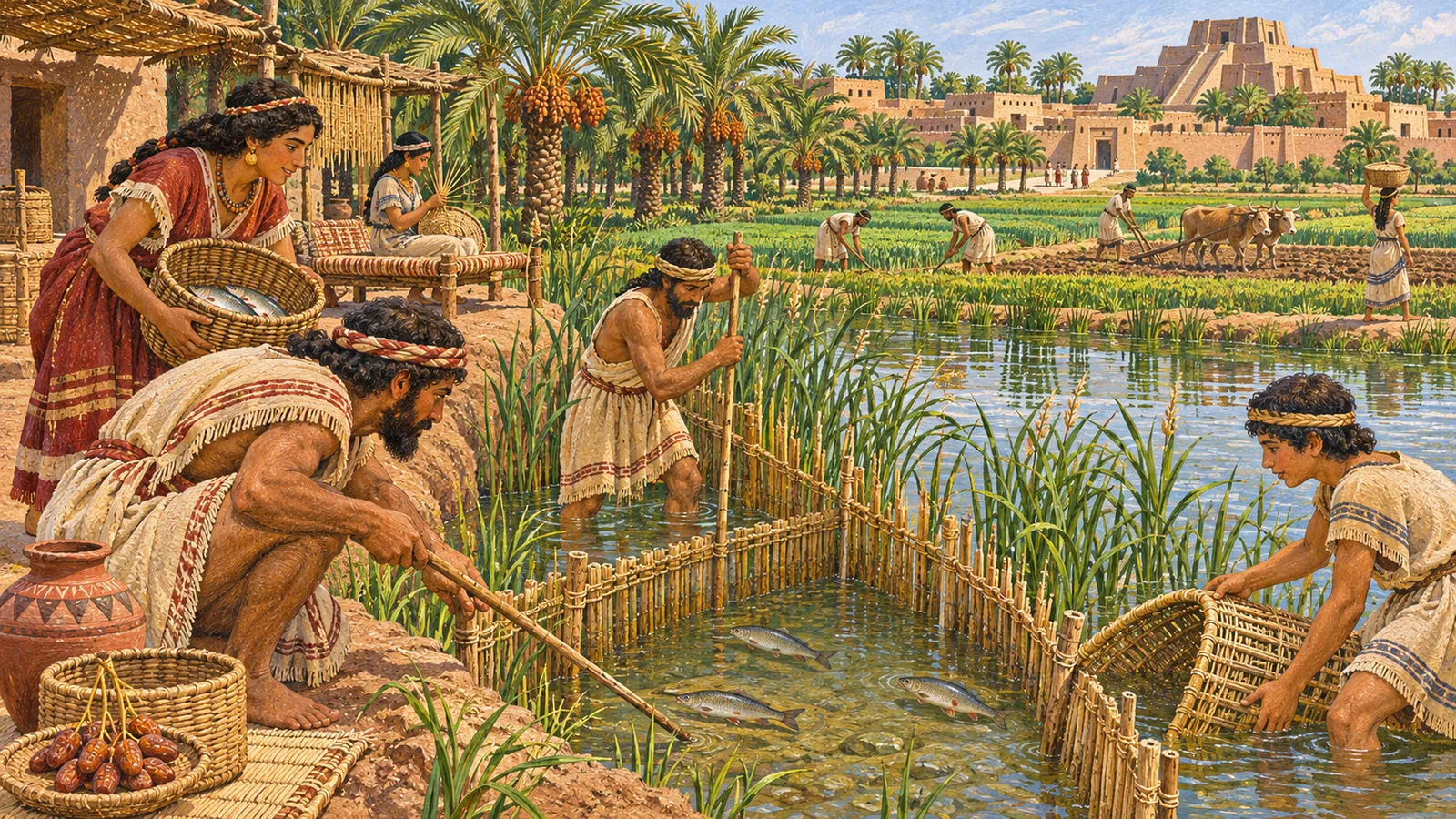
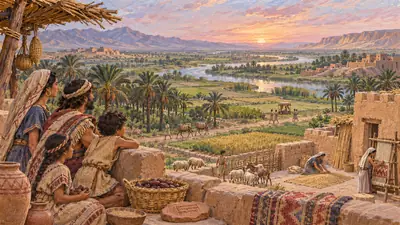
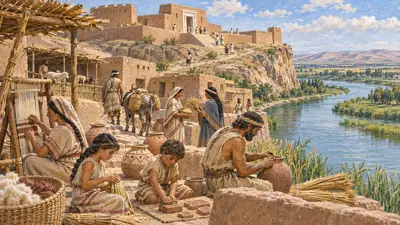
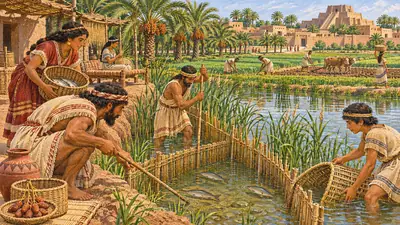
The poet names Ningirsu and sees waterways fill with fish. Meadows and fields yield from one season into the next. The return of food is as much a part of the promise as gold on a barge.
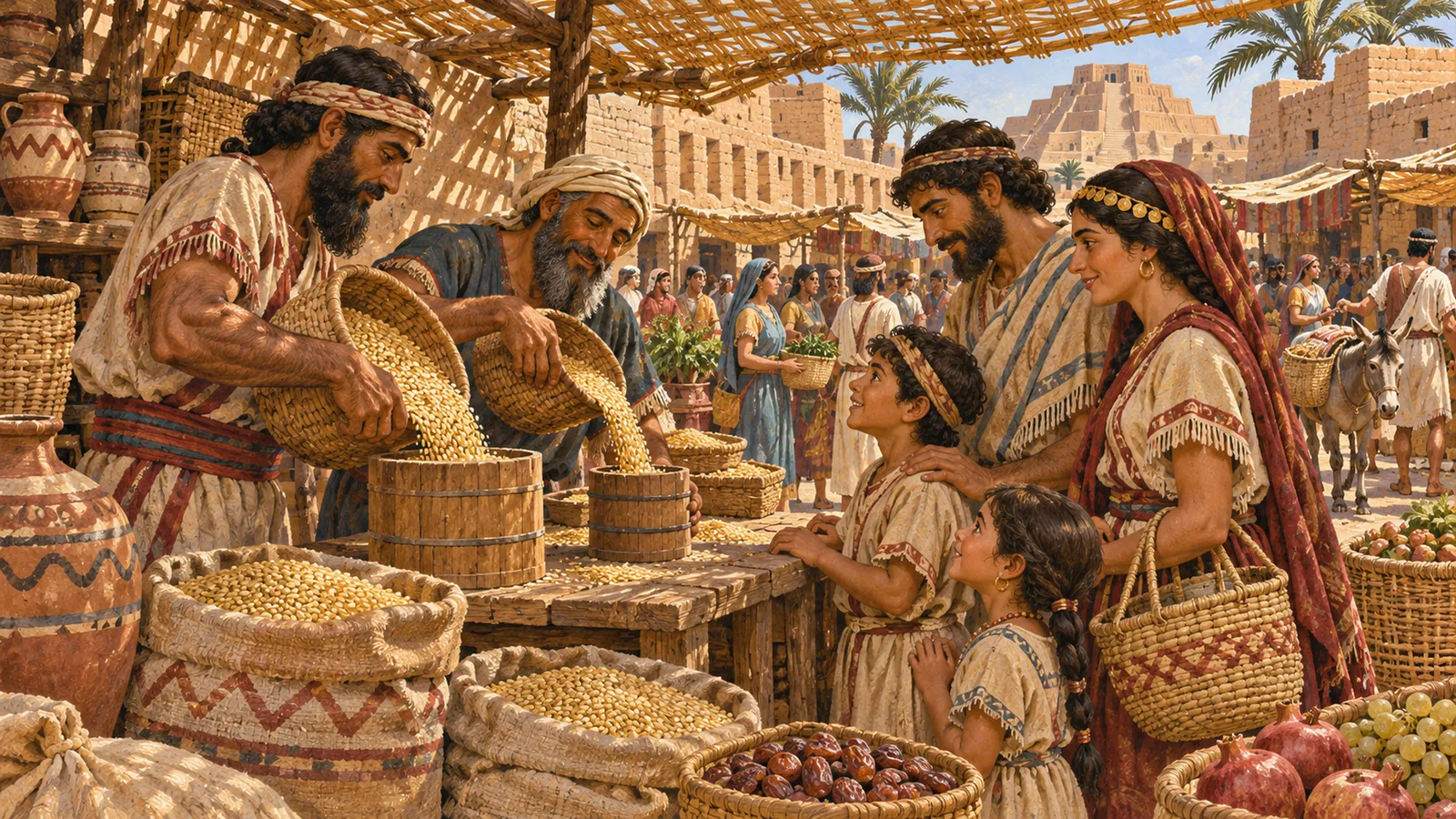
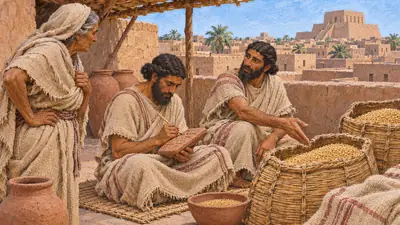
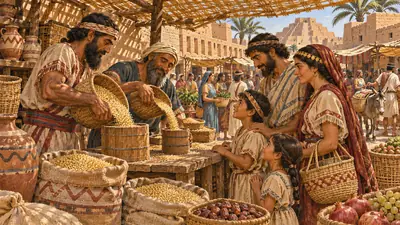
Prices become fair again, and the troubles that seemed fixed begin to clear. A seller and a buyer can agree over a measure of barley and both go home with enough.
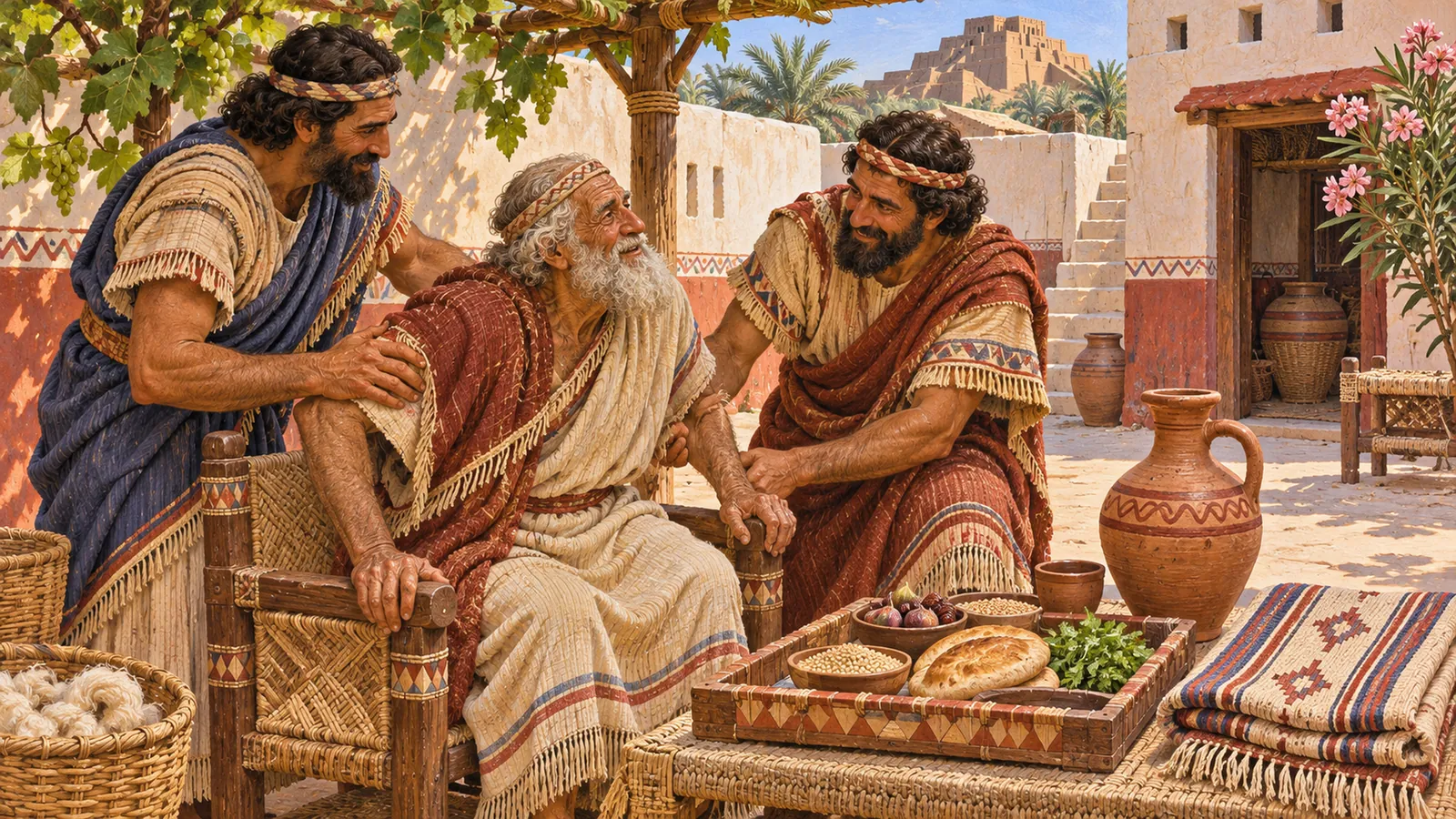
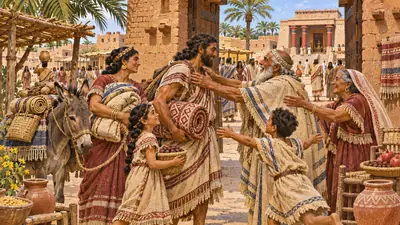
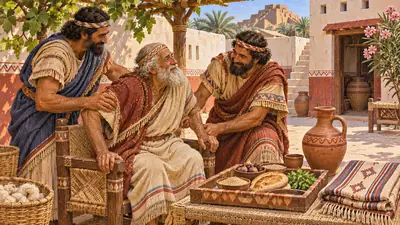
A brother looks on his brother with compassion and a son respects his father. In the damaged lines, other family bonds come into view. The city mends in the courtyards where people live.
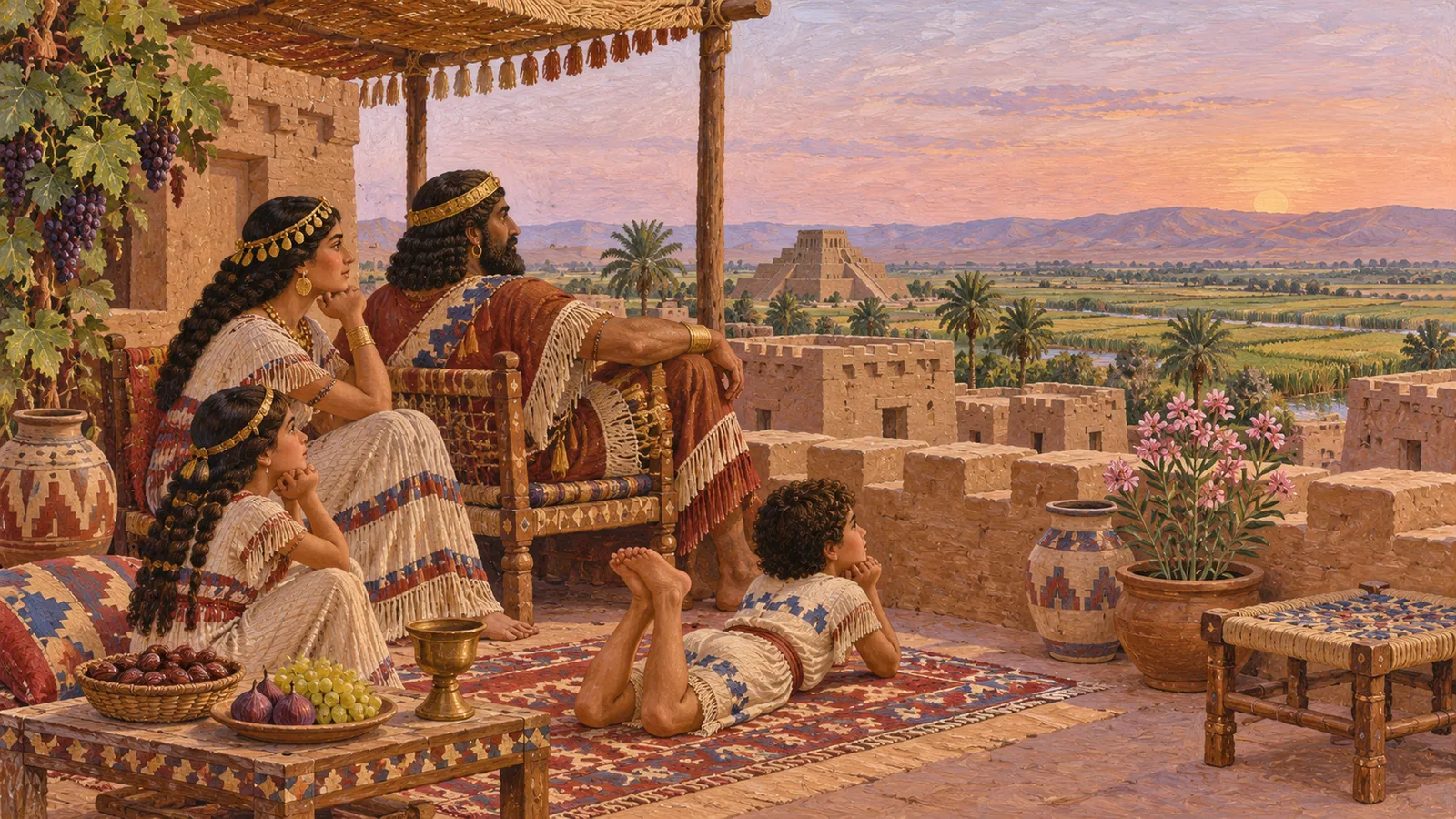
Marduk says he will be at peace with the king who triumphs over Elam. The lines wish safety for that king's family. The promise still belongs to the unnamed ruler the poem imagines.
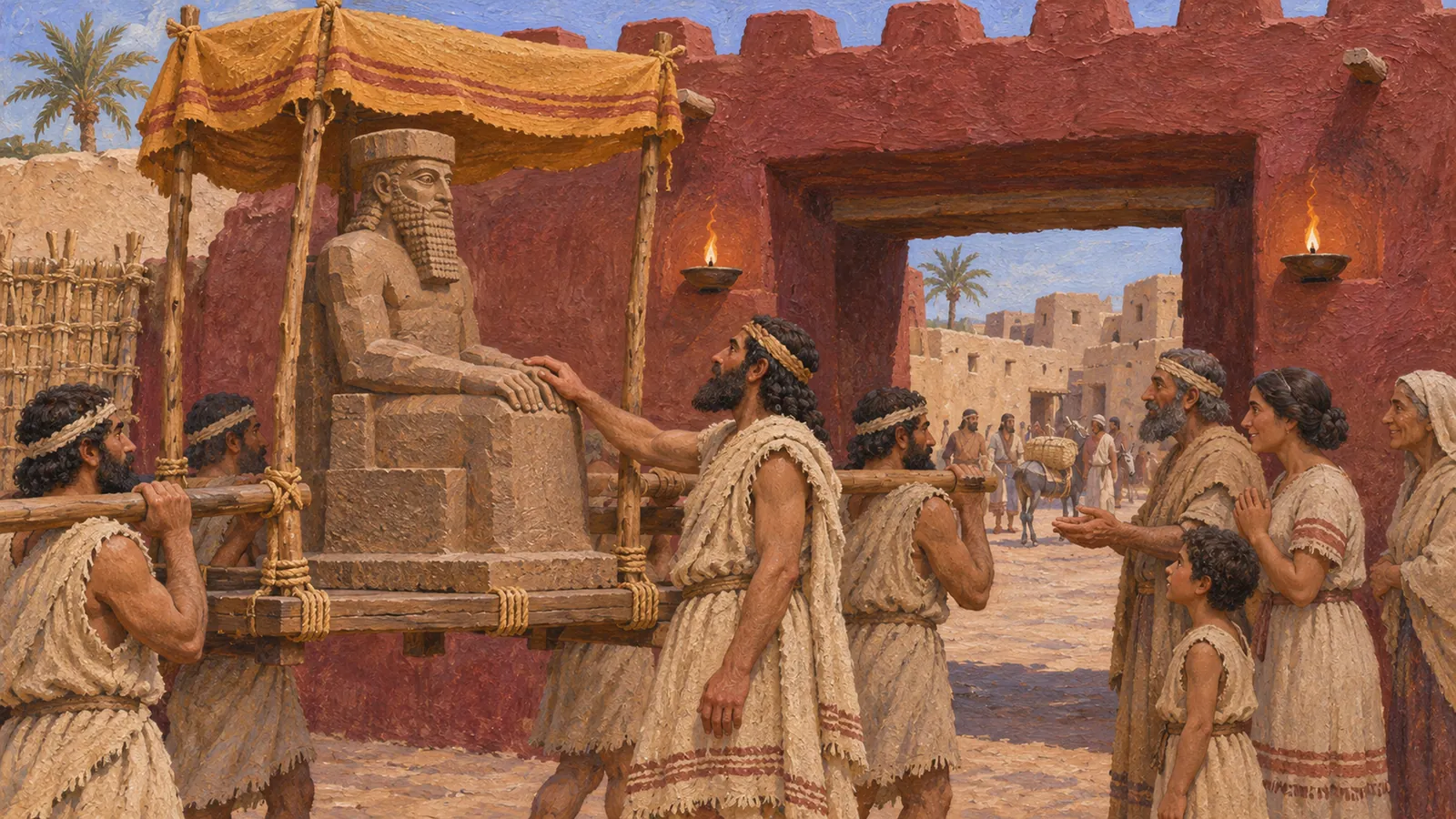
Marduk is one of the gods to be led home. The great lord of Der is also taken by the hand and returned to his own city and temple, Ugalkalama.
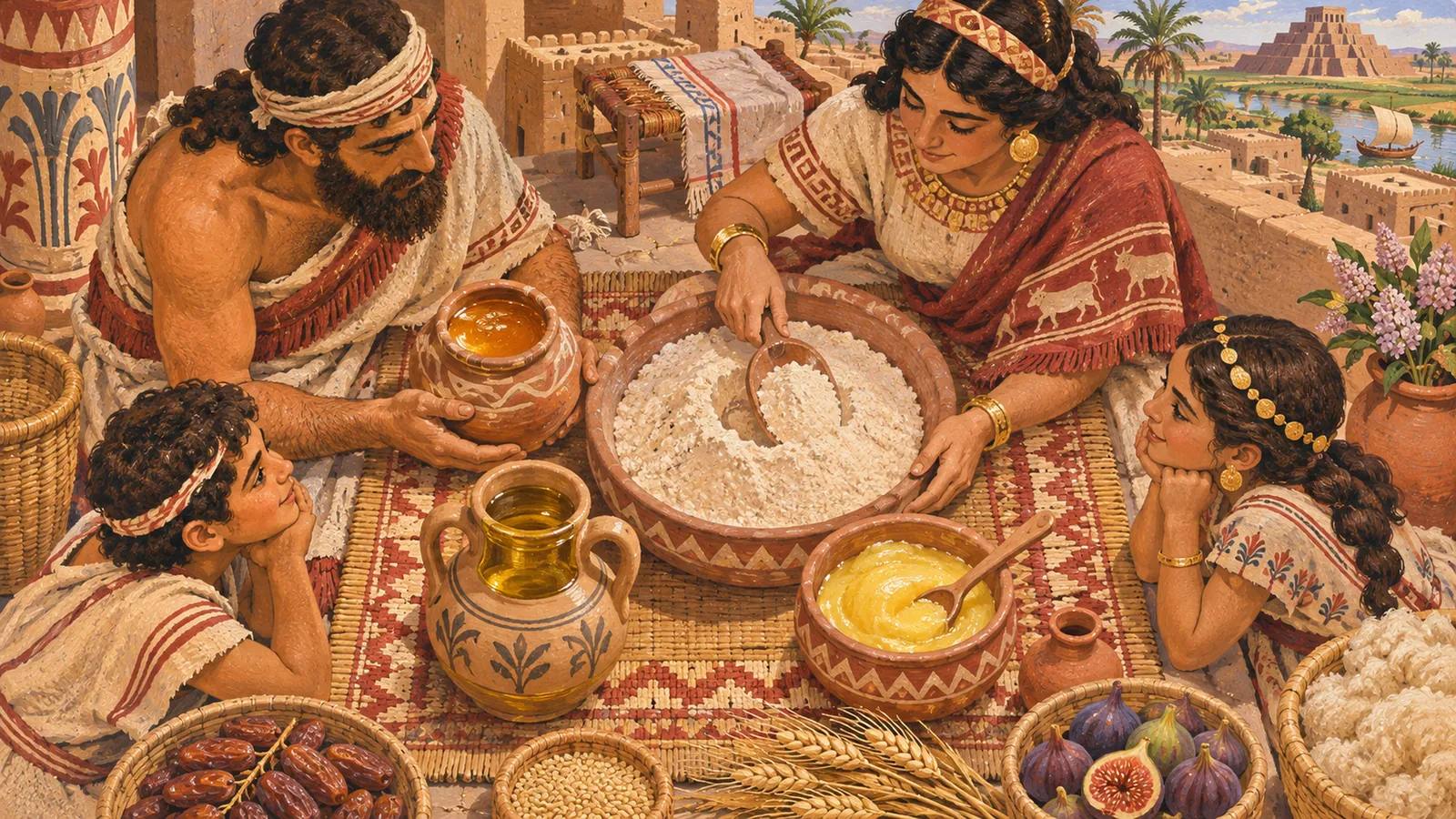
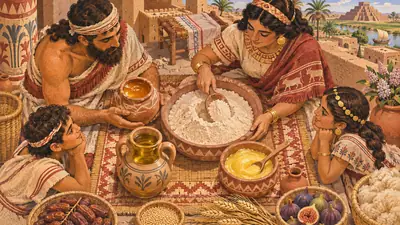
The last column sets out portions of food. Flour, honey, clarified butter, and oil survive in the broken list. Its promises extend from the month and year down to the single day.
THE INSCRIPTIONS
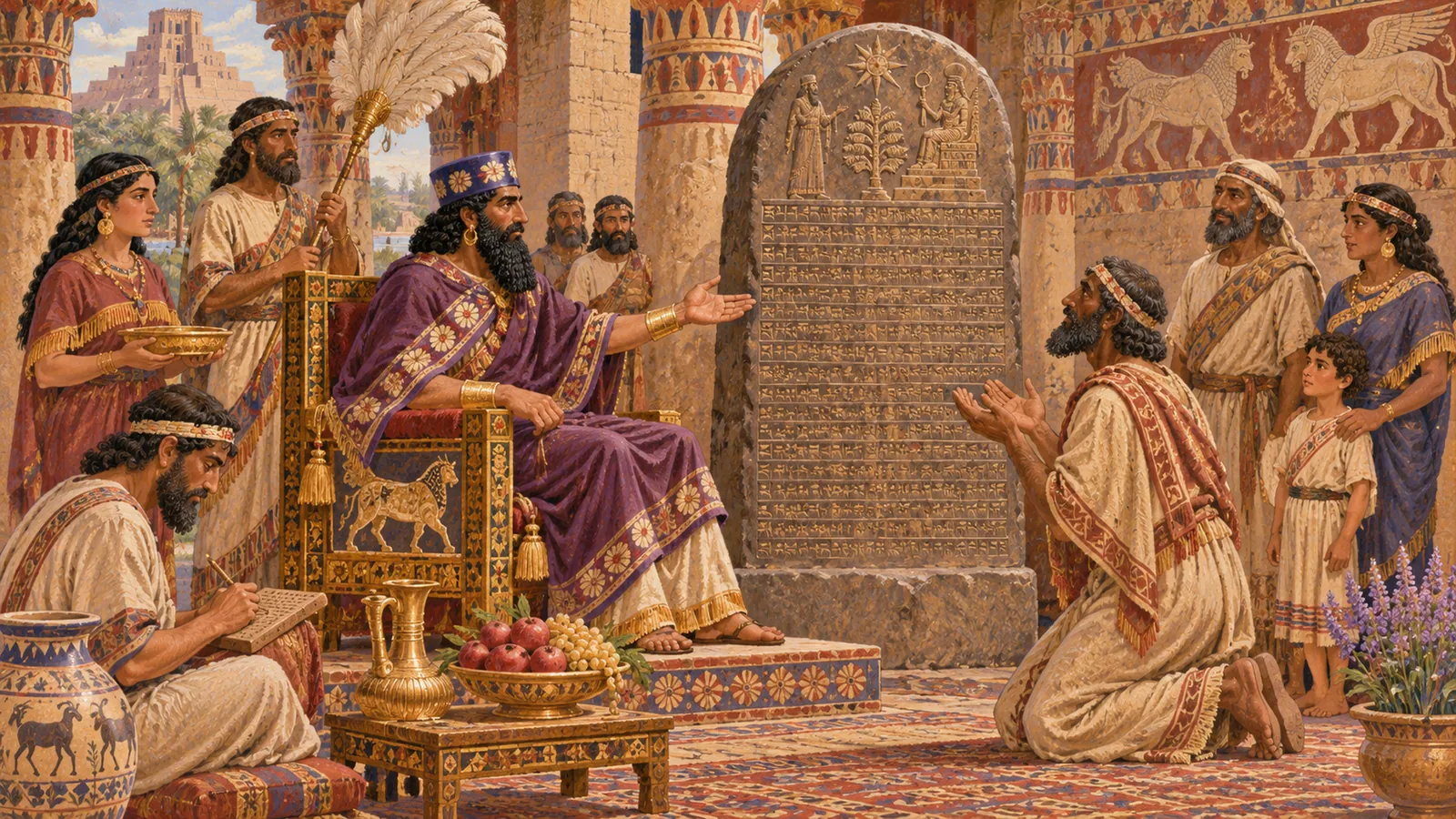
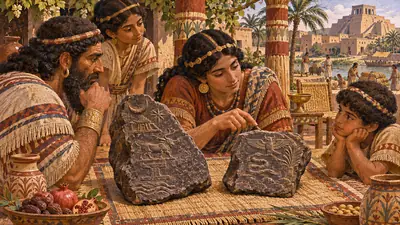
Outside the poem, a Babylonian charter names Nebuchadnezzar I. It credits Shitti-Marduk for service in a campaign against Elam. The stone gives us a named king and a reason to remember his eastern campaign.
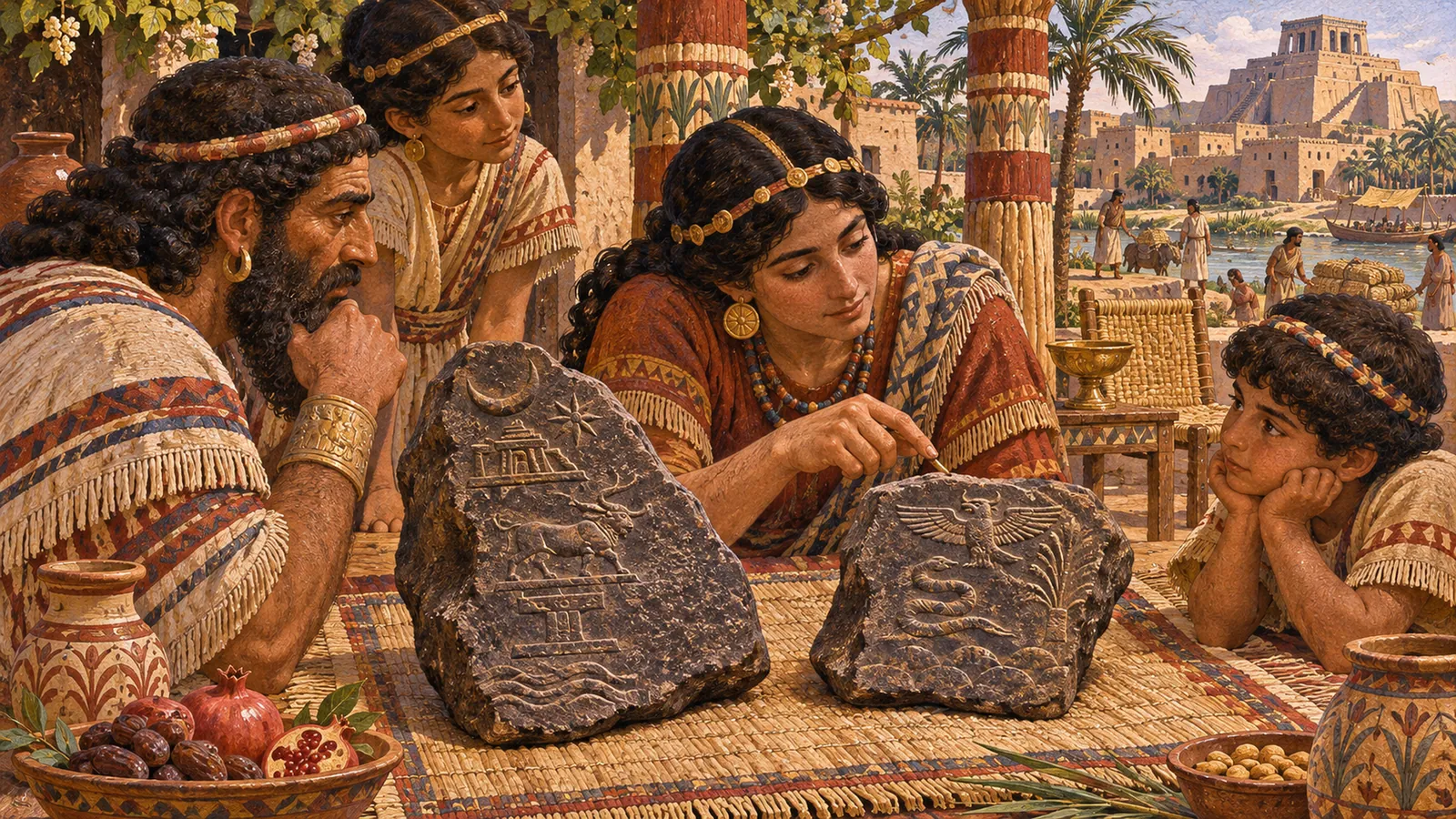
Other inscriptions tell of a king leading Bel home. Their date and attribution are debated, and the prophetic poem leaves its king unnamed. Later readers commonly connected the homecoming to Nebuchadnezzar I.
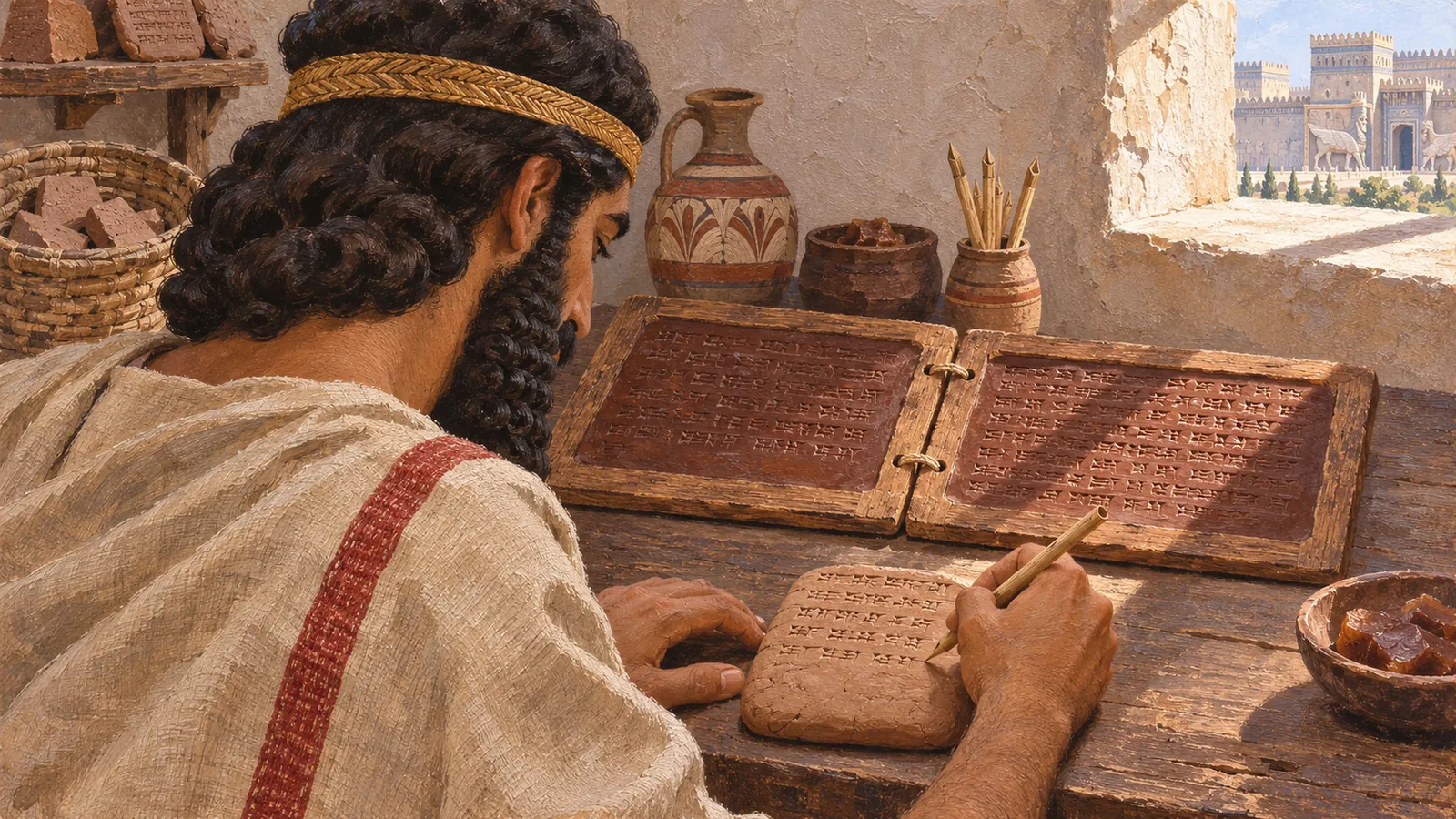
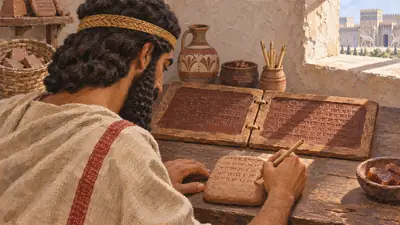
The tablet closes by repeating its opening and giving the start of the next work, the words of Shulgi. A scribe says the text was copied and checked against a writing board from Babylon.
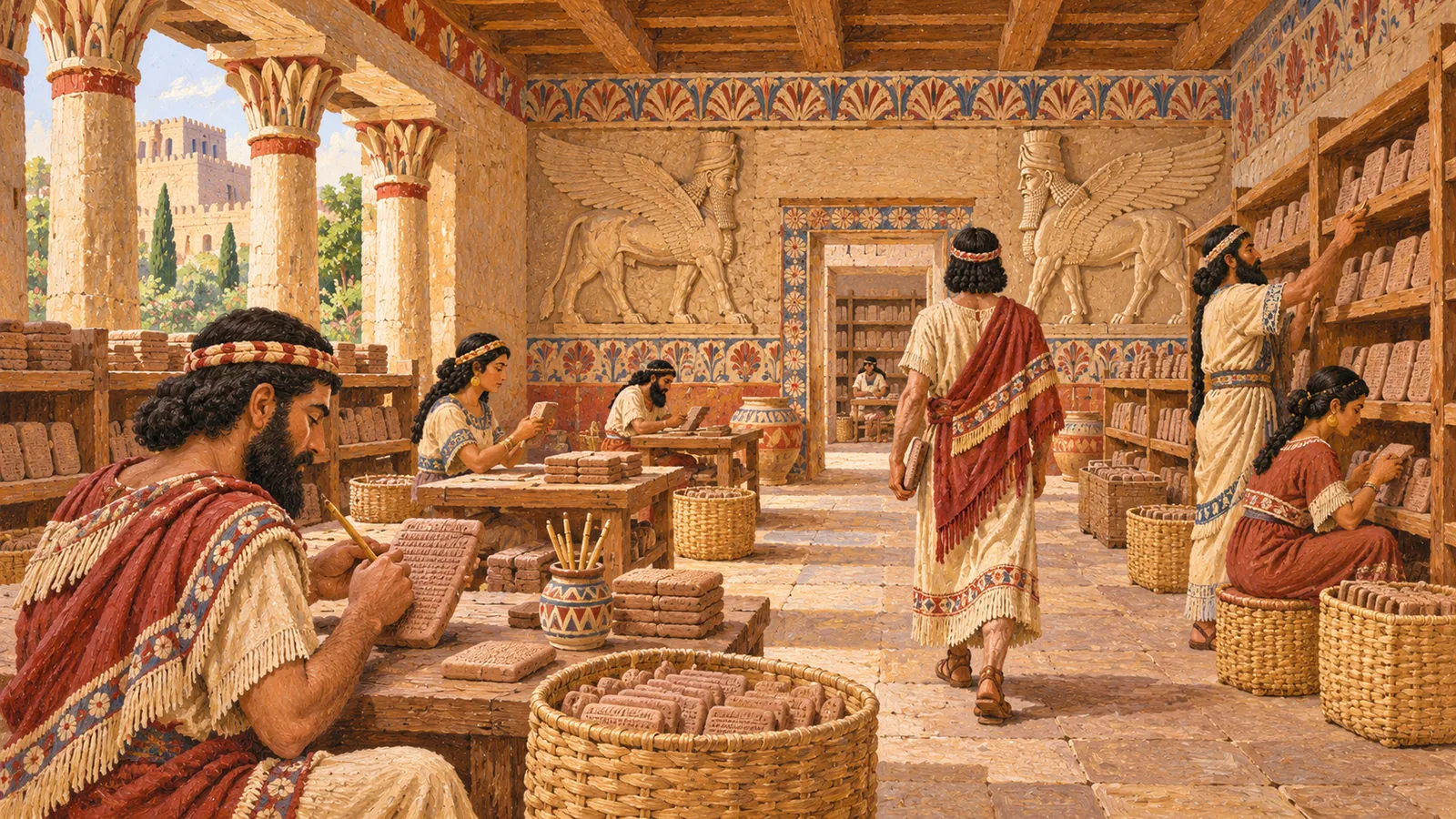
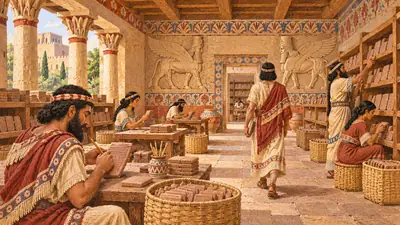
The final words link the copy to Ashurbanipal's palace. What survives of one god's road passed through many hands, from a Babylonian writing board to the fragments found at Nineveh.
End of chapter 1
All pages
Sources
Editions consulted
- Yuval Darabi, The Marduk Prophecy: Introduction, Edition, Commentary, §5.2
- CDLI P394223, Nineveh witness K.2158+
- Takuma Sugie, The Reception of the Marduk Prophecy in Seventh-Century B.C. Nineveh
- NABU 2025/1, Mahieu’s note on the Hatti numeral, pp. 22–25
- L. W. King, Babylonian Boundary-Stones and Memorial-Tablets in the British Museum, no. VI and XXIV
- British Museum, BM 90858, boundary stone for Ritti-Marduk (Shitti-Marduk)
- Yuval Darabi, The Retrieval of Marduk’s Statue by Nebuchadnezzar I: A Historical Reappraisal
- RINBE 1/1, Eanna and its setting at Uruk
Ancient lines behind each page
- Page 1: Marduk Prophecy, I 1–6
- Page 2: Marduk Prophecy, I 1–6
- Page 3: Marduk Prophecy, I 7–13
- Page 4: Marduk Prophecy, I 11–17
- Page 5: Marduk Prophecy, I 14–17
- Page 6: Marduk Prophecy, I 14–17; Mahieu 2025, pp. 22–25
- Page 7: Marduk Prophecy, I 18–22
- Page 8: Marduk Prophecy, I 23–37
- Page 9: Marduk Prophecy, I 1′–5′
- Page 10: Marduk Prophecy, I 6′–14′
- Page 11: Marduk Prophecy, I 15′–21′
- Page 12: Marduk Prophecy, I 22′–25′
- Page 13: Marduk Prophecy, I 22′–25′
- Page 14: Marduk Prophecy, I 23′–25′
- Page 15: Marduk Prophecy, I 24′–25′
- Page 16: Marduk Prophecy, II 1–8
- Page 17: Marduk Prophecy, II 9–11
- Page 18: Marduk Prophecy, II 12–18
- Page 19: Marduk Prophecy, II 19–25
- Page 20: Marduk Prophecy, II 19–24
- Page 21: Marduk Prophecy, II 21–25
- Page 22: Marduk Prophecy, II 26–27
- Page 23: Marduk Prophecy, II 28–35
- Page 24: Marduk Prophecy, II 28–35
- Page 25: Marduk Prophecy, II 1′–11′
- Page 26: Marduk Prophecy, II 12′–17′
- Page 27: Marduk Prophecy, E II 7′–16′
- Page 28: Marduk Prophecy, E III 4–24
- Page 29: Marduk Prophecy, III 5′–13′
- Page 30: Marduk Prophecy, III 9′–13′
- Page 31: Marduk Prophecy, III 14′–20′
- Page 32: Marduk Prophecy, III 21′–24′
- Page 33: Marduk Prophecy, III 25′–30′
- Page 34: Marduk Prophecy, IV 3′–14′
- Page 35: Historical interlude · BM 90858; BBSt 6, i 1–43
- Page 36: Historical interlude · BBSt 24; Huzzi kudurru; Darabi 2026
- Page 37: Marduk Prophecy, IV 15′–19′
- Page 38: Marduk Prophecy, IV 19′–end; K.2158+; Sm.1388
Illustrations made with AI tools by IL Archive; the text is based on the ancient sources (see the sources at the end of each chapter).