Atrahasis Chapitre 2
Le mur de roseaux
Un avertissement parvient à Atrahasis à travers un mur de roseaux, et il construit un bateau couvert pour emporter la vie à travers le déluge. Quand les eaux se retirent, les dieux prennent acte de la survie des humains et fixent de nouvelles conditions à leur vie.
Voir le filmSourcesTournez les pages avec les flèches, le clavier ou en balayant l’écran.
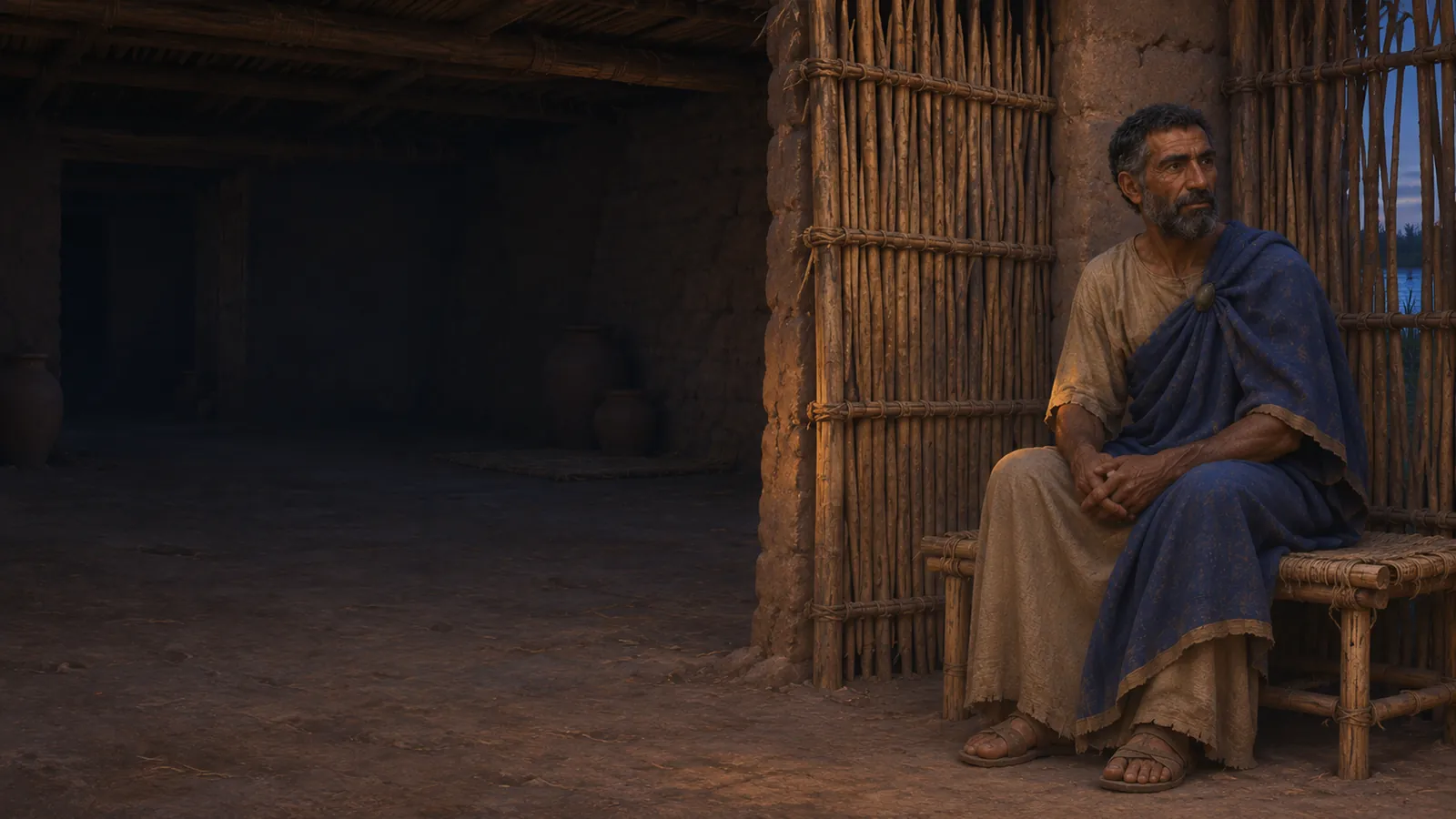
LE RÊVE
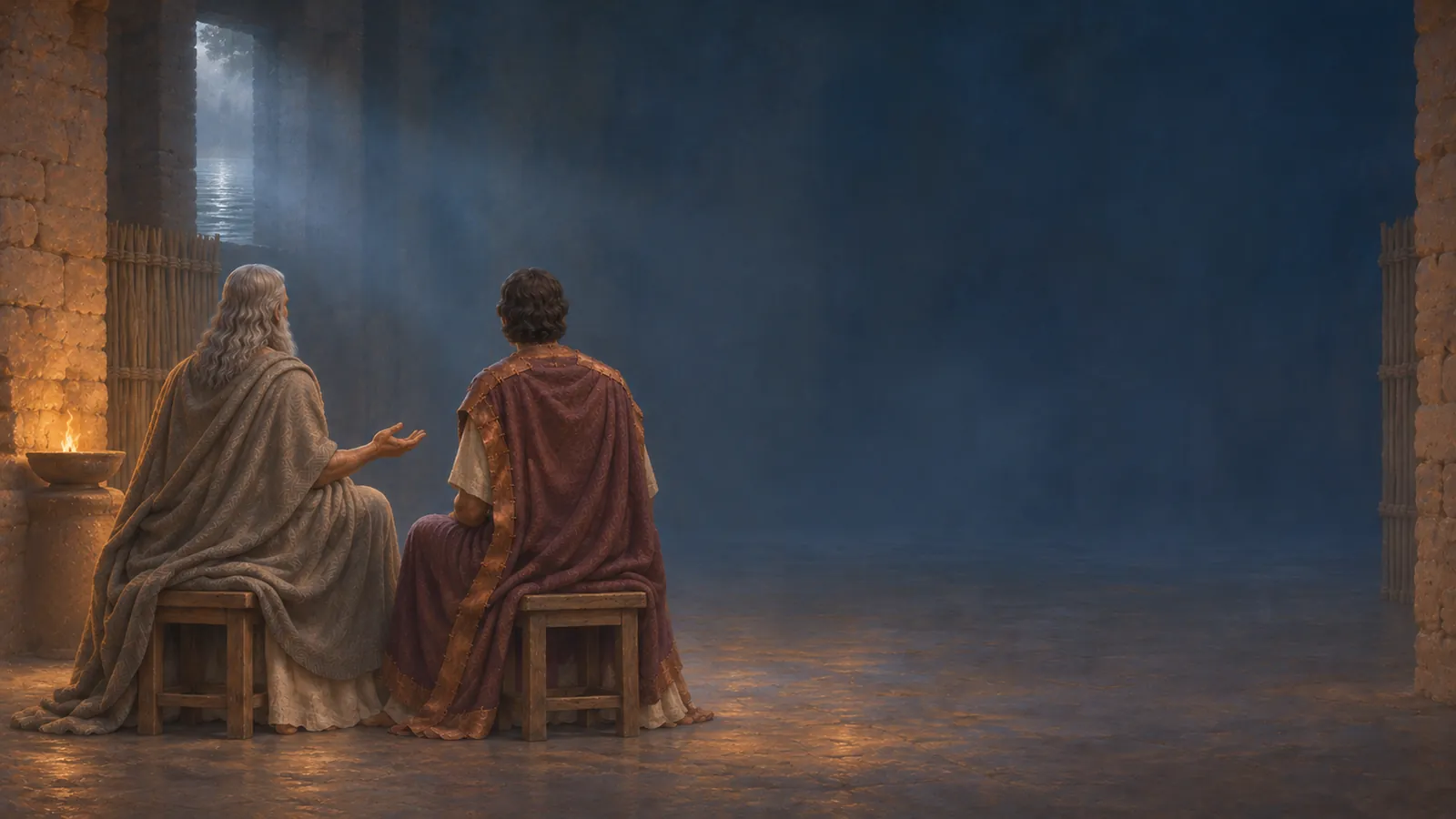
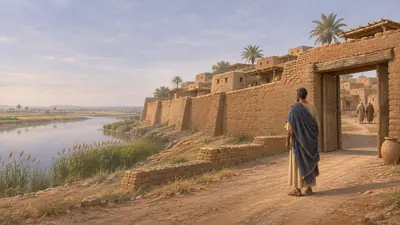
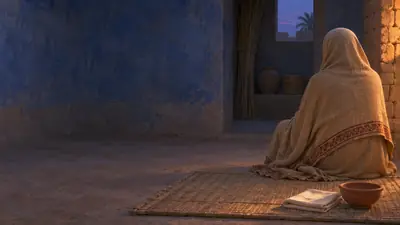
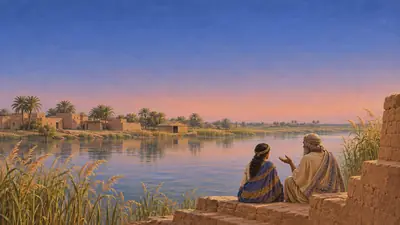
Après la décision des dieux, Atrahasis avait encore une question à poser à Enki. Dans les premières lignes qui subsistent de cette tablette, il lui demande de lui expliquer le sens d’un rêve.
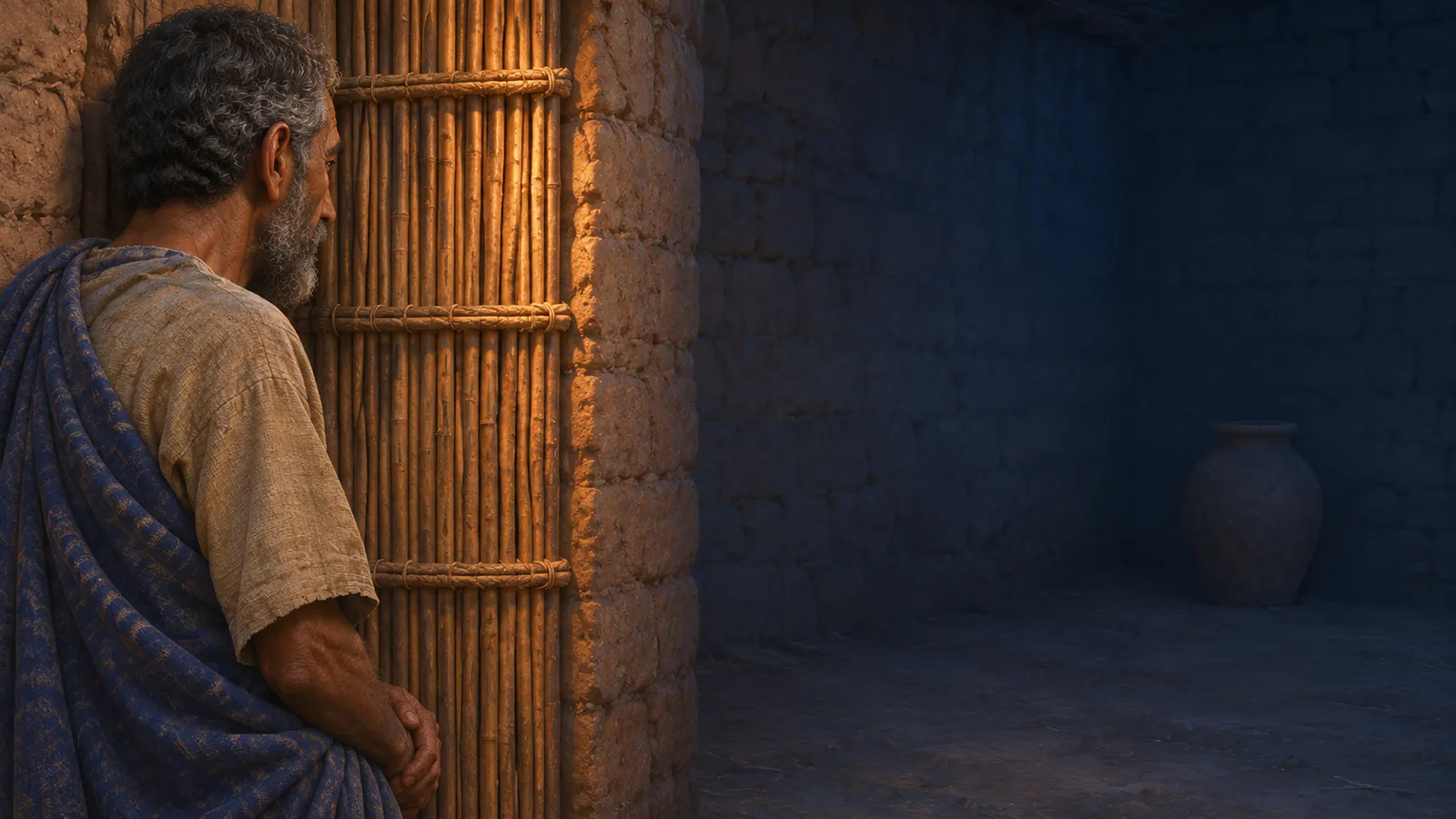
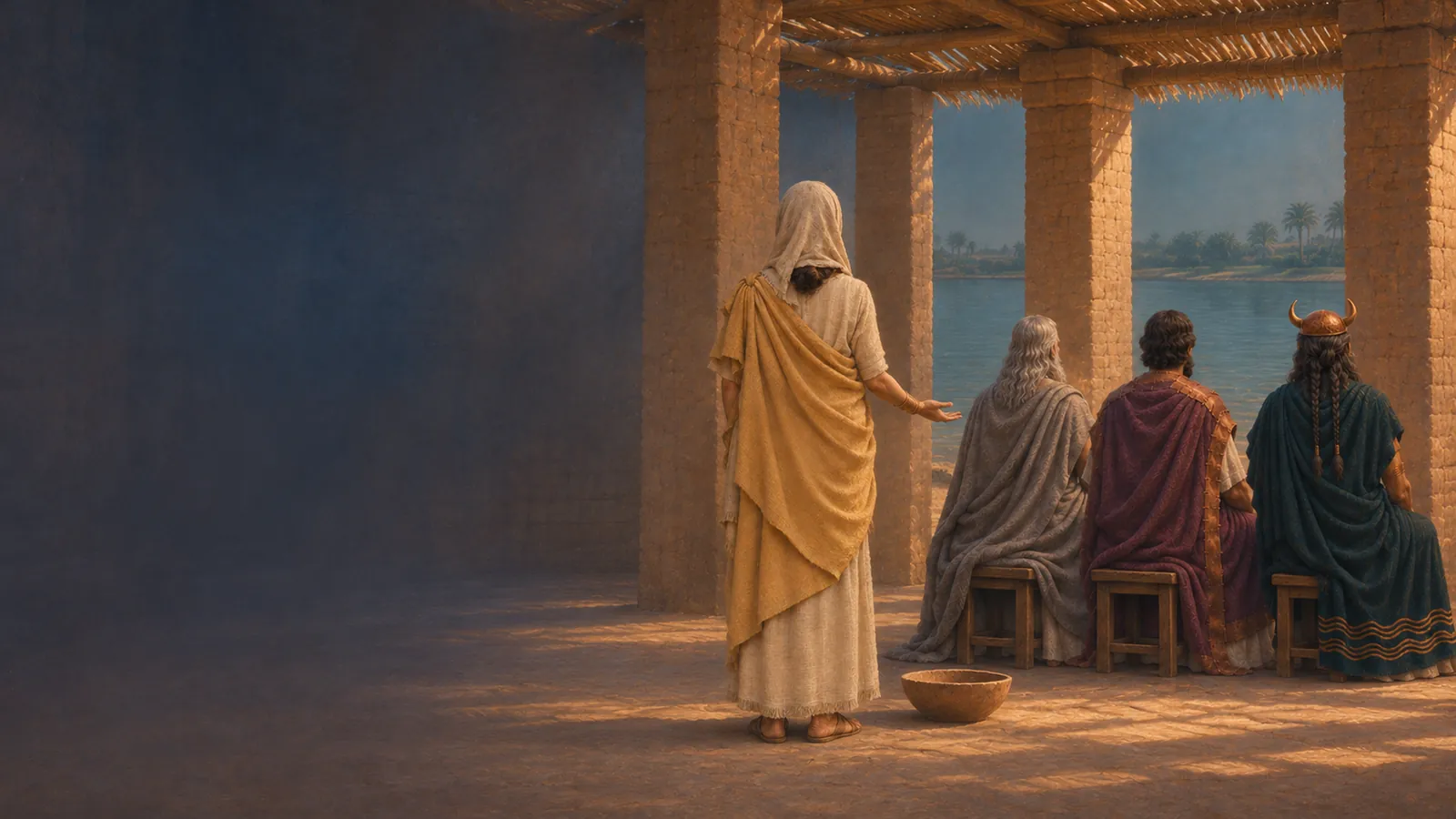
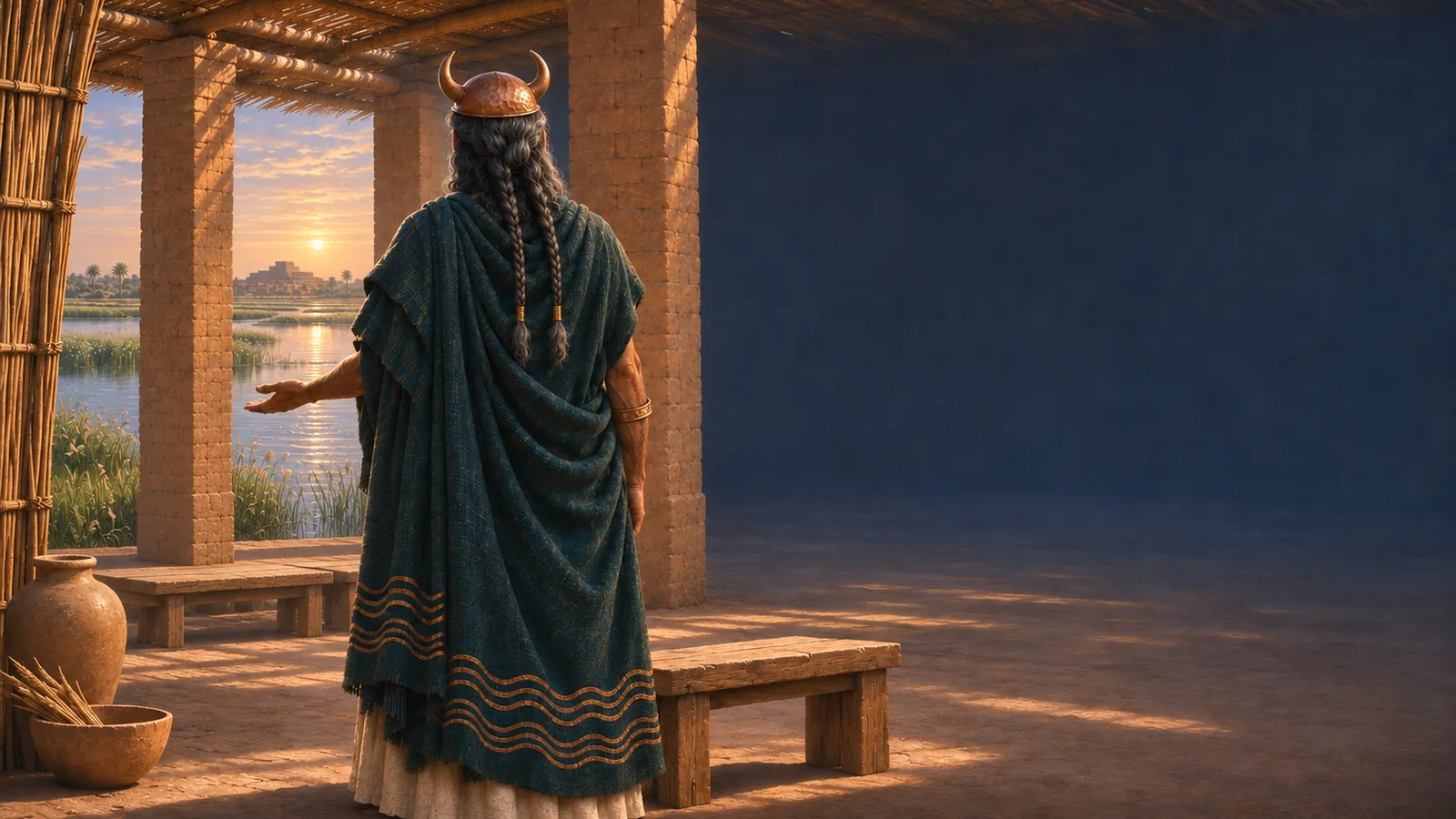
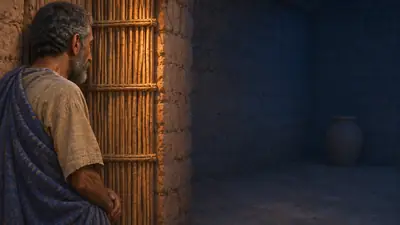
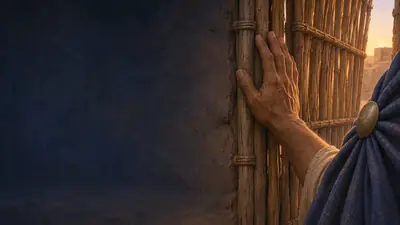
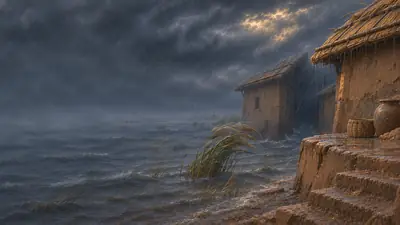
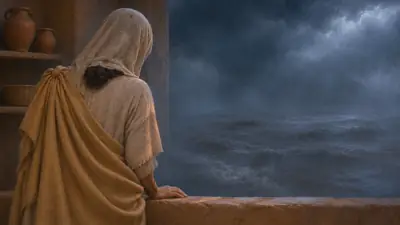
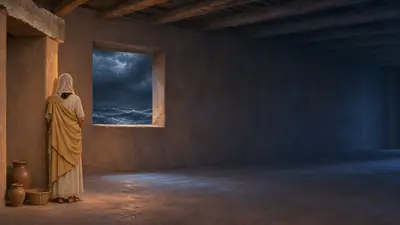
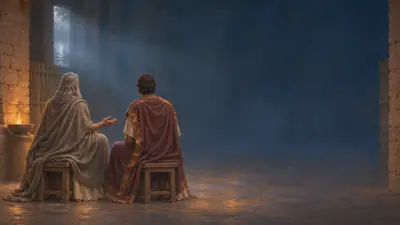
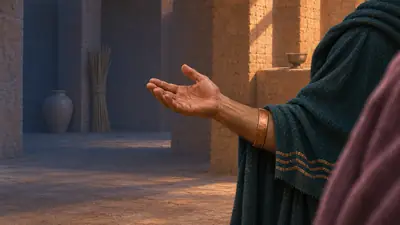
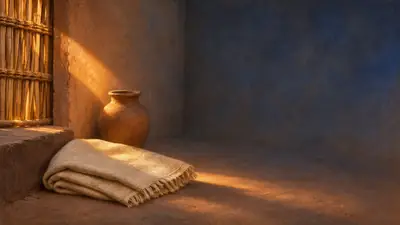
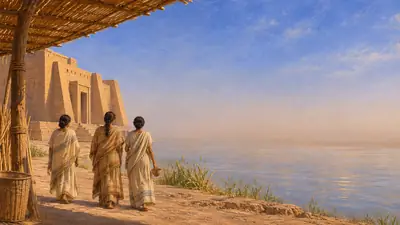
La réponse s’adressa à la paroi de roseaux. Enki lui parla comme si elle pouvait écouter et retenir chaque mot. Atrahasis était là pour entendre.
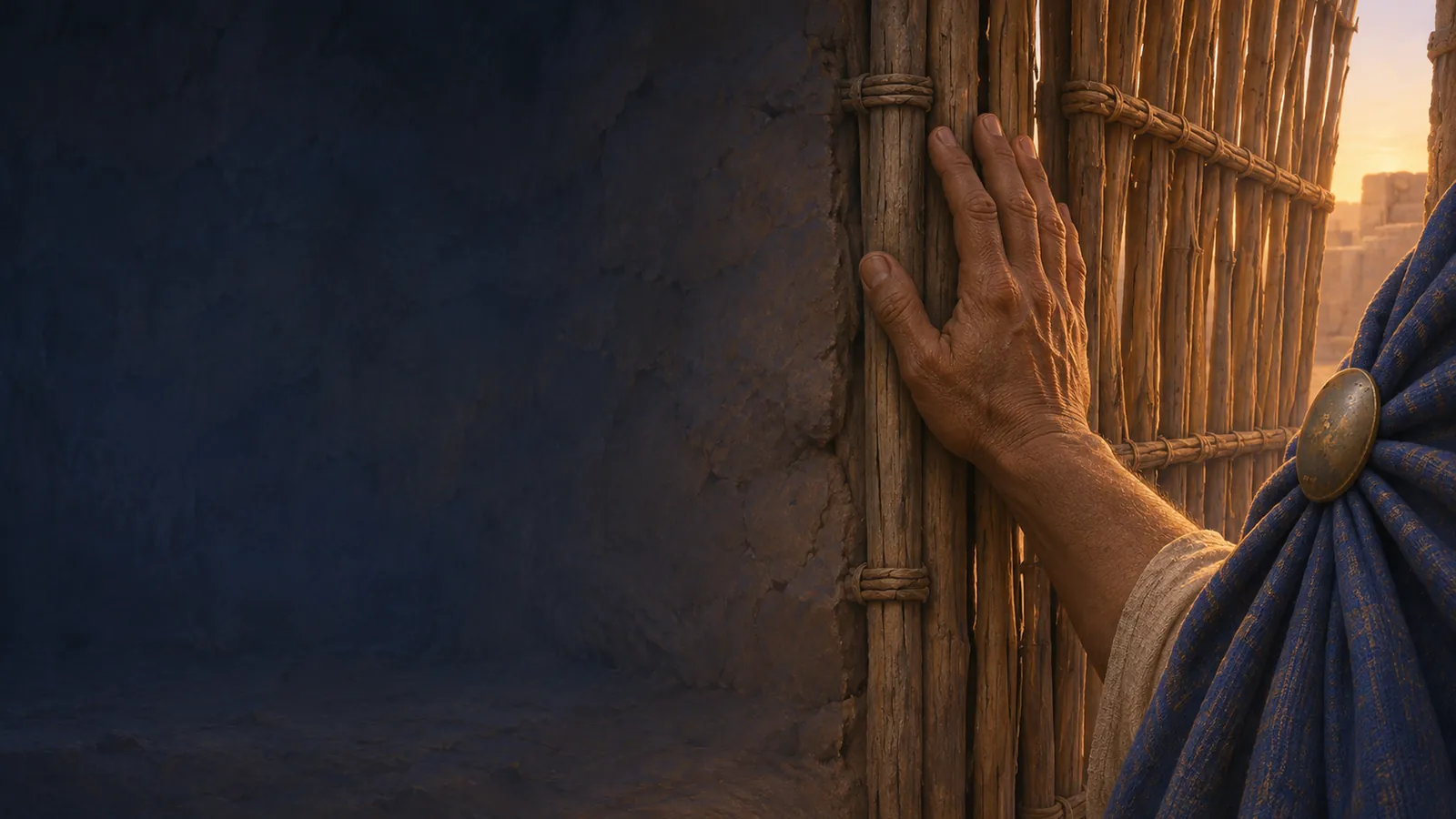
LE DÉPART
La voix parla d’une maison à quitter et d’un bateau à construire. C’était la vie elle-même qui pouvait être sauvée.
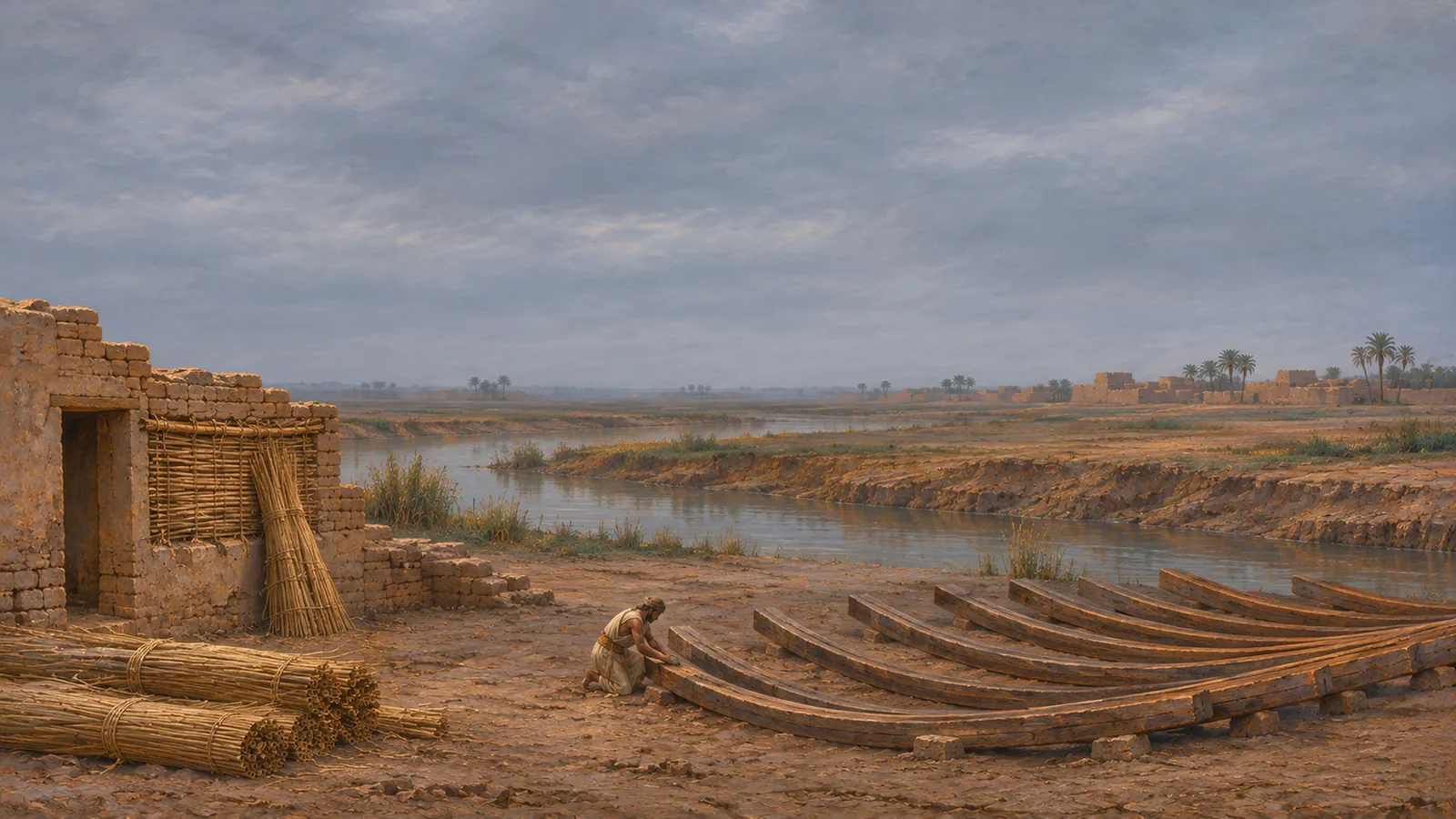
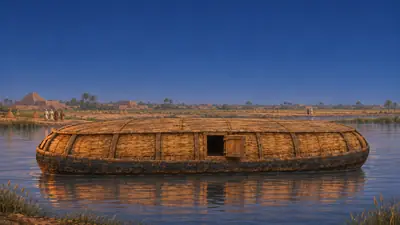
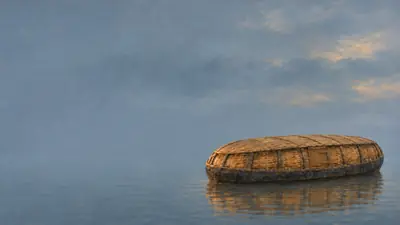
Les mots qui suivent sont fragmentaires, mais on distingue encore une partie du plan du bateau. Un fragment de la tablette semble évoquer un cercle.
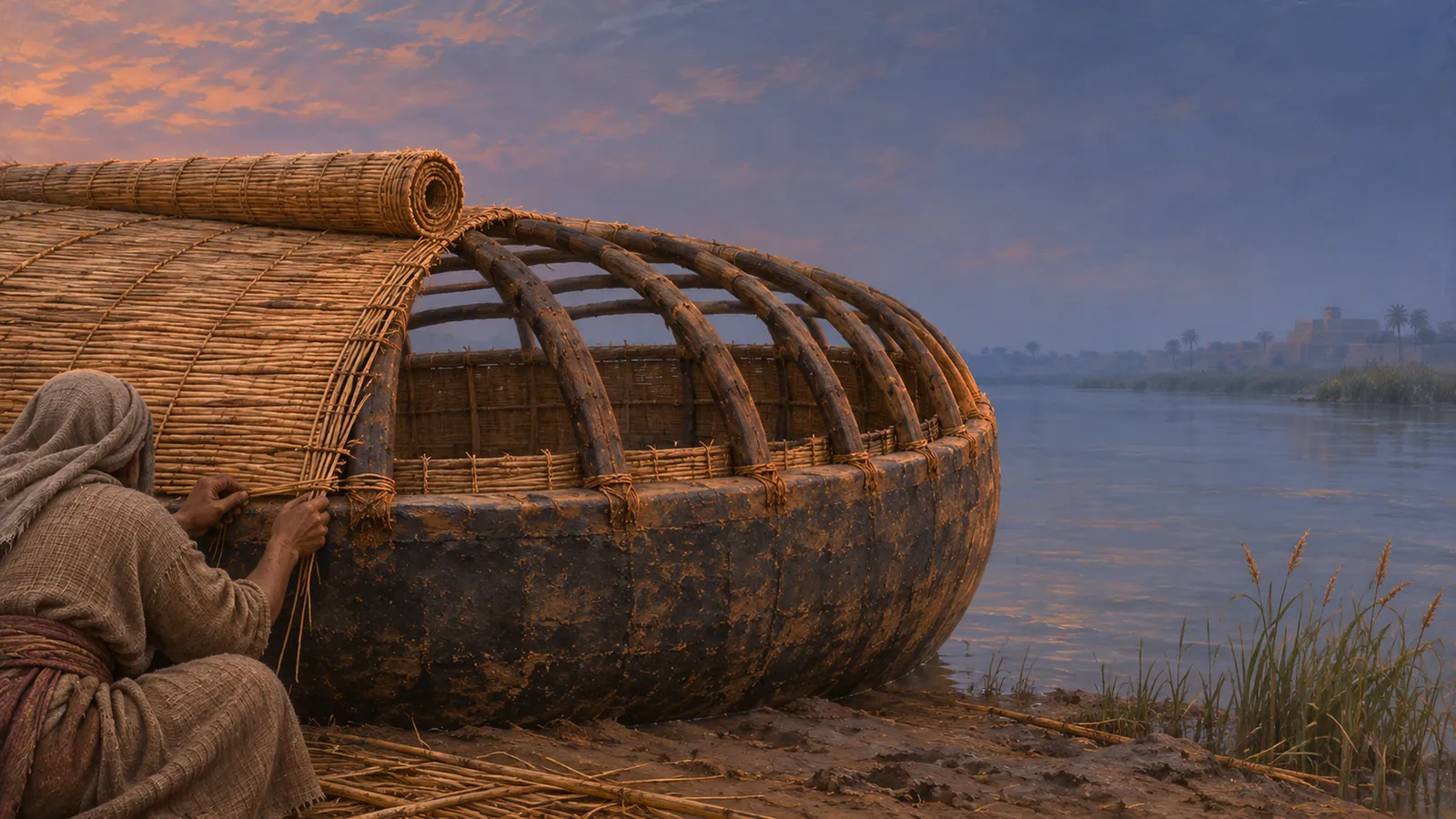
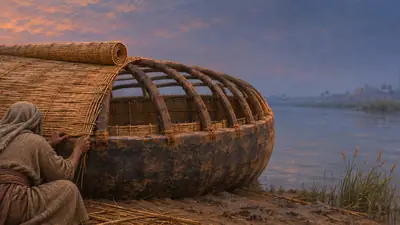
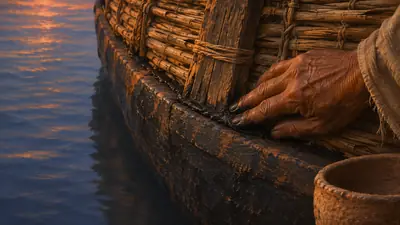
Enki lui dit de couvrir le bateau d’un toit pour que le soleil ne puisse y pénétrer. La structure devait tenir bon jusque dans la montée des eaux.
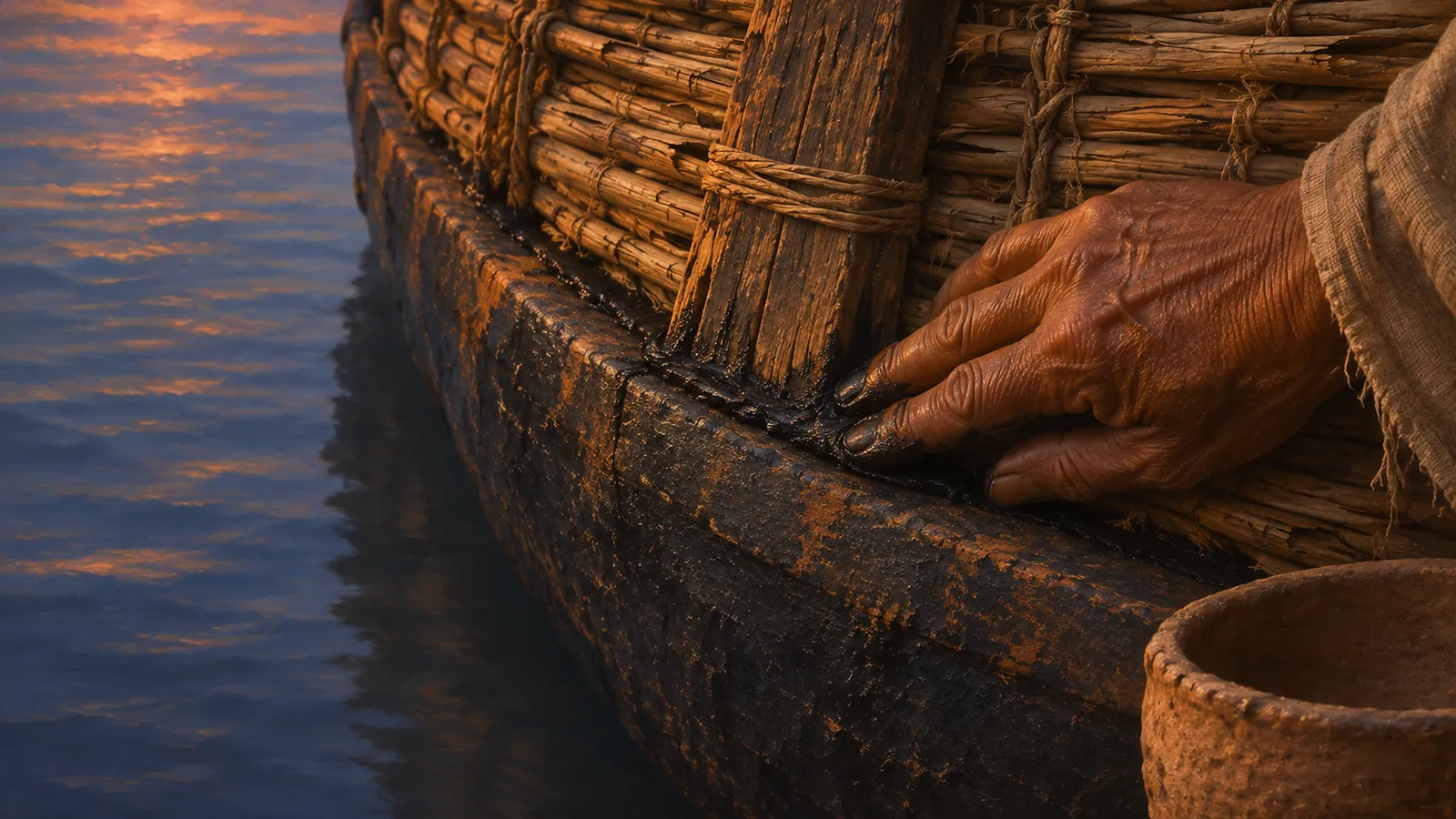
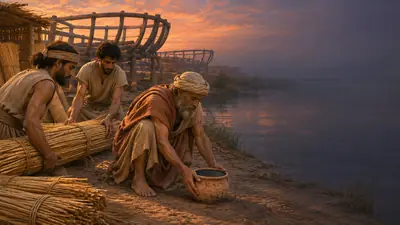
Pour que le bateau tienne, il fallait du bitume noir et résistant aux jointures. La voix annonça aussi que des oiseaux et des poissons viendraient en abondance.
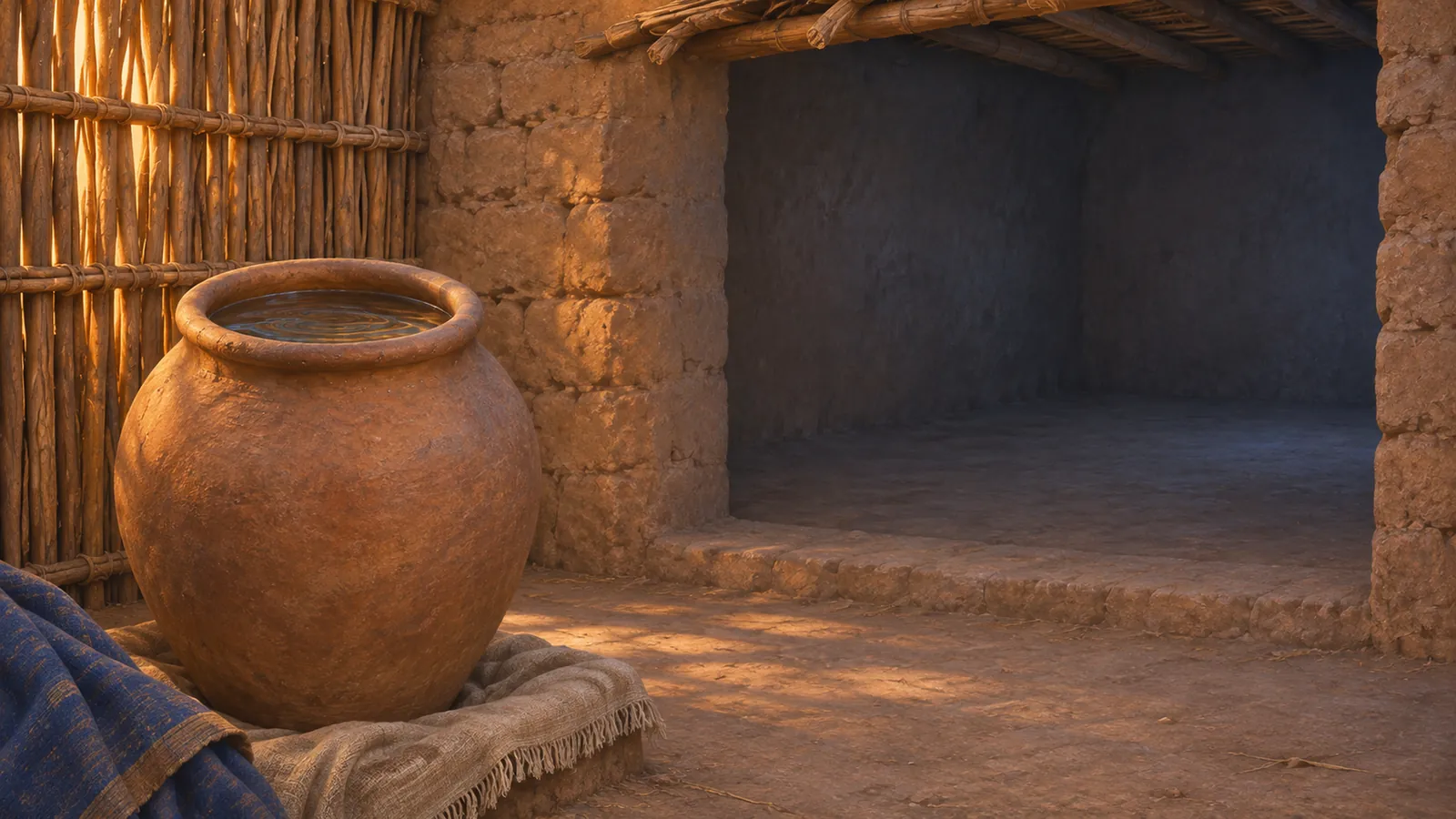
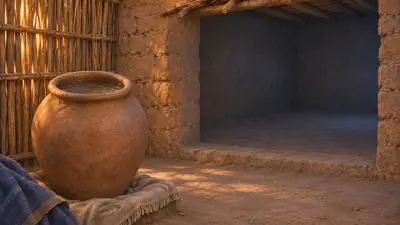
On ouvrit la clepsydre et on la remplit. Enki parla à Atrahasis du déluge qui approchait et des sept nuits qu’il durerait.
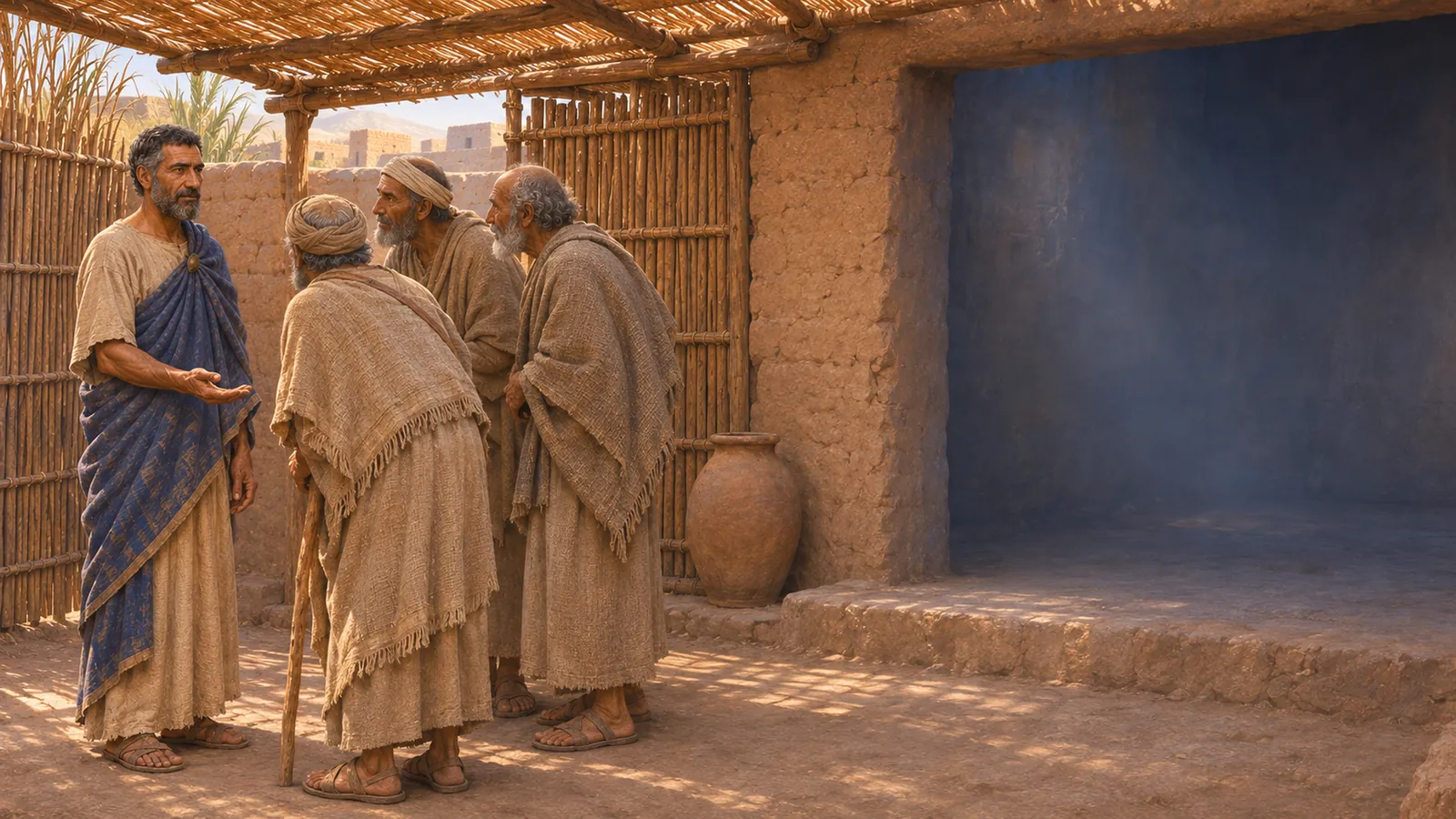
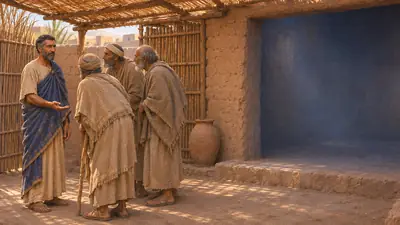
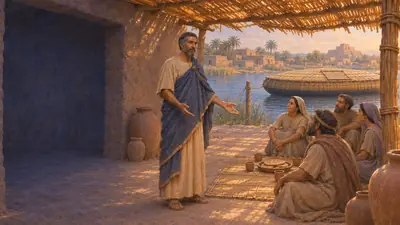
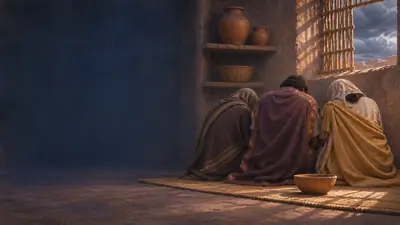
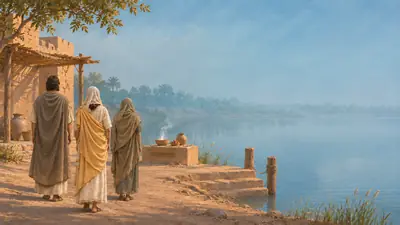
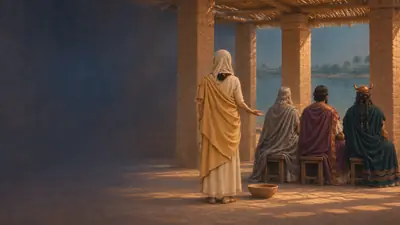
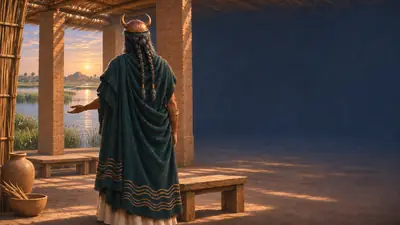
Atrahasis retint ce qu’il avait entendu. Il convoqua les anciens à sa porte, comme lors des épreuves précédentes, et leur raconta une partie de ce qui s’était passé.
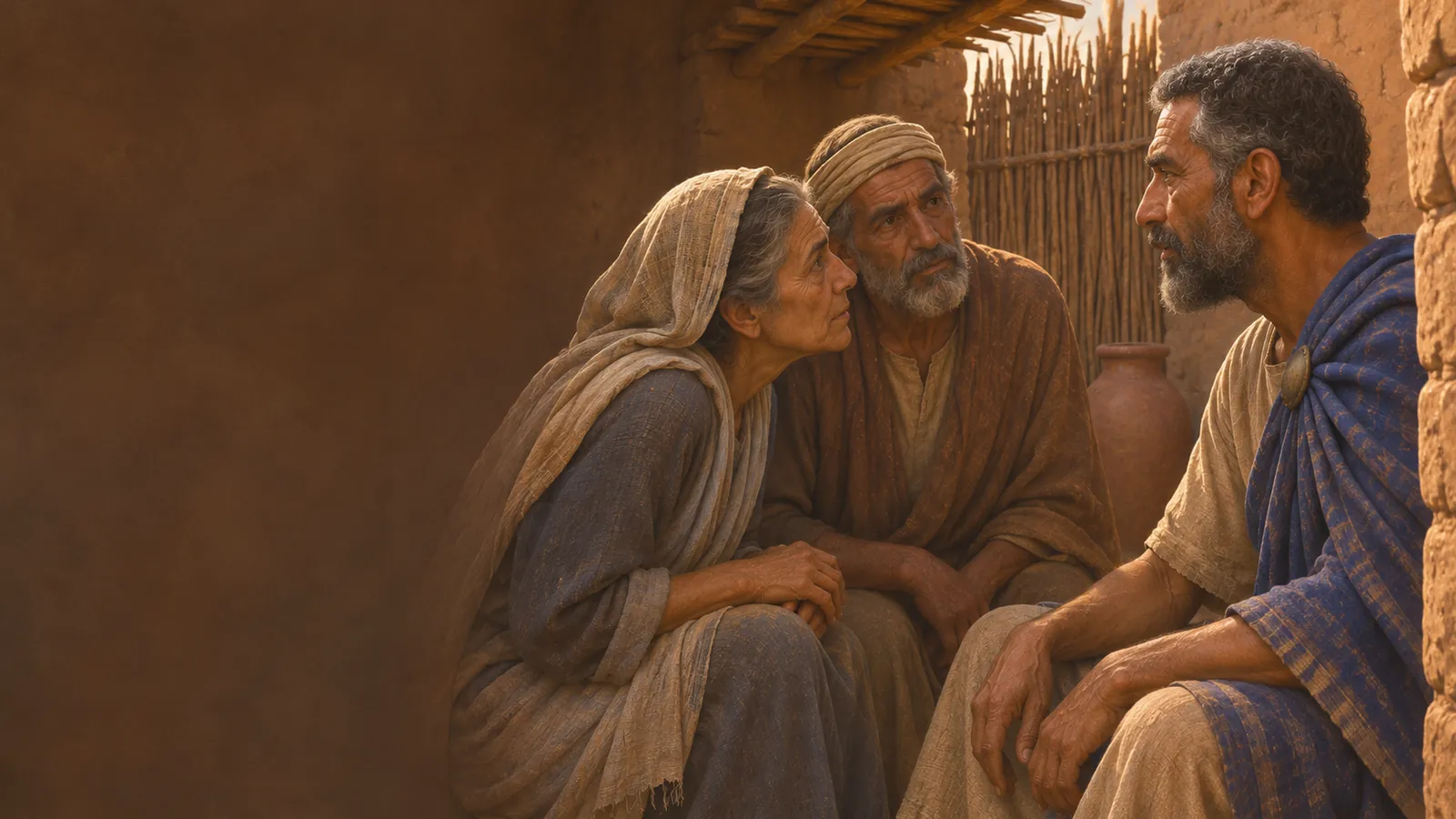
Il dit qu’Enki et Enlil s’étaient fâchés l’un contre l’autre. Atrahasis avait toujours honoré Enki et dit aux anciens que c’était ainsi qu’il avait appris leur querelle.
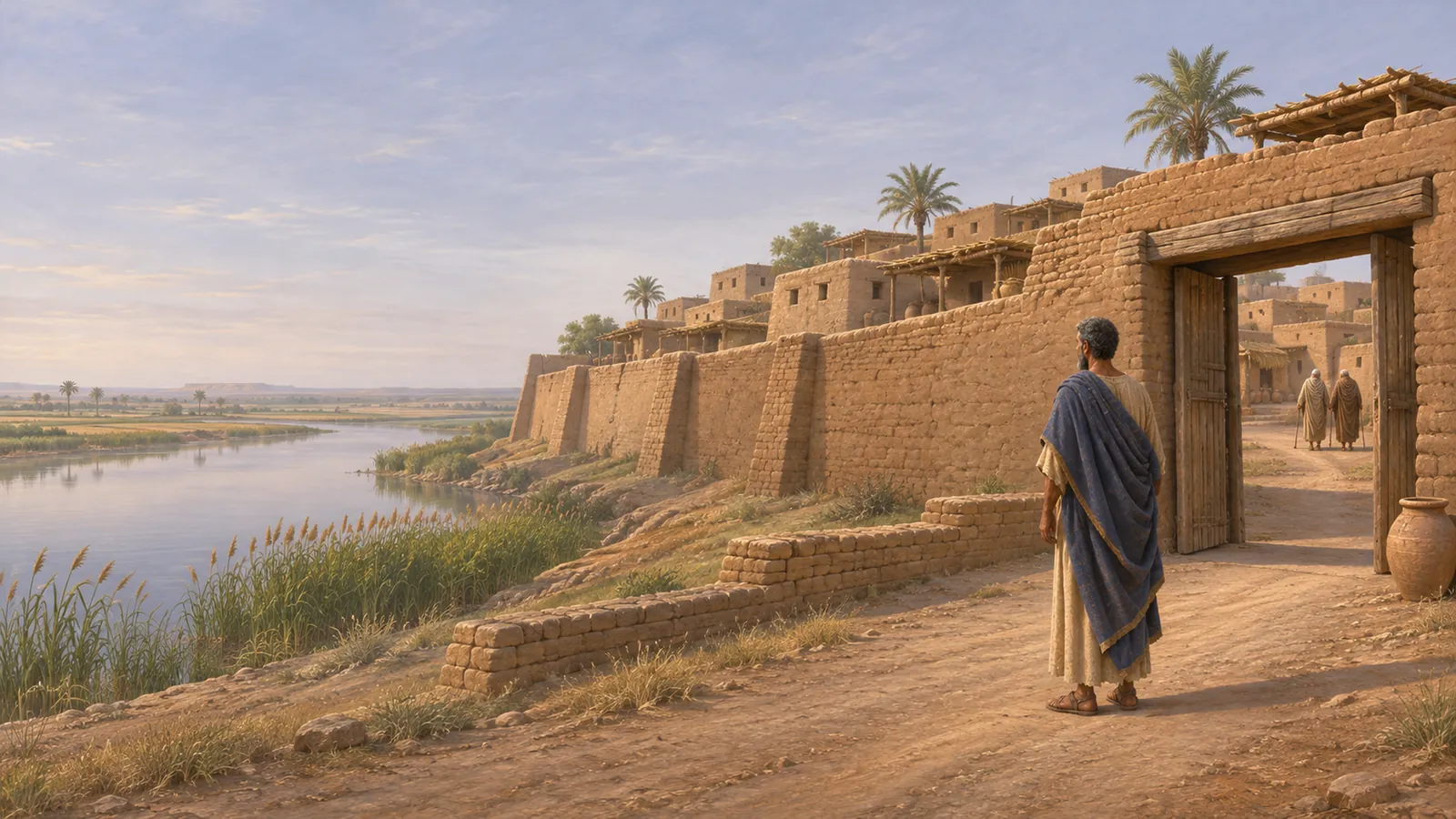
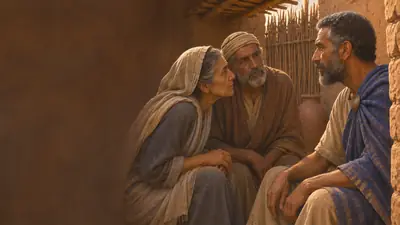
Atrahasis dit qu’il ne vivrait plus parmi eux sur la terre d’Enlil. Ses paroles se tournent vers les eaux profondes, où il dit qu’il ira avec Enki.
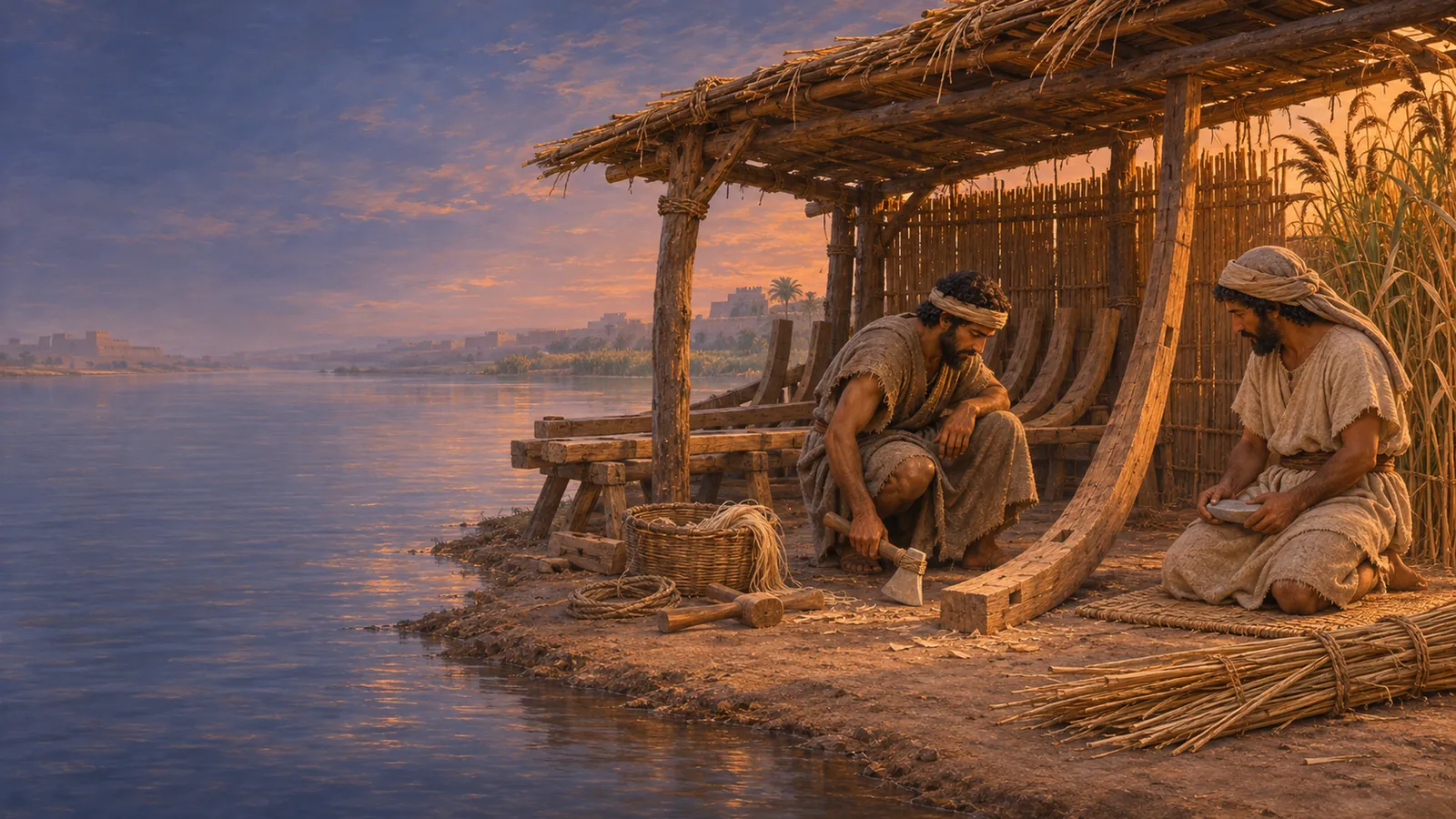
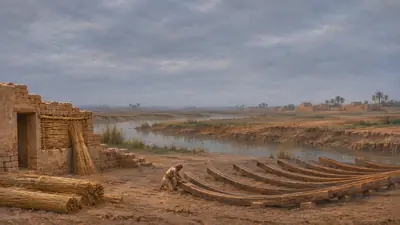
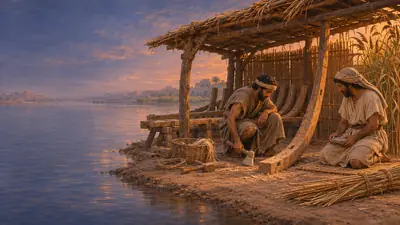
Après une lacune de la tablette, la scène change. Les lignes lisibles qui suivent nous ramènent au chantier, où un charpentier tient sa hache et un artisan du roseau apporte un outil de pierre.
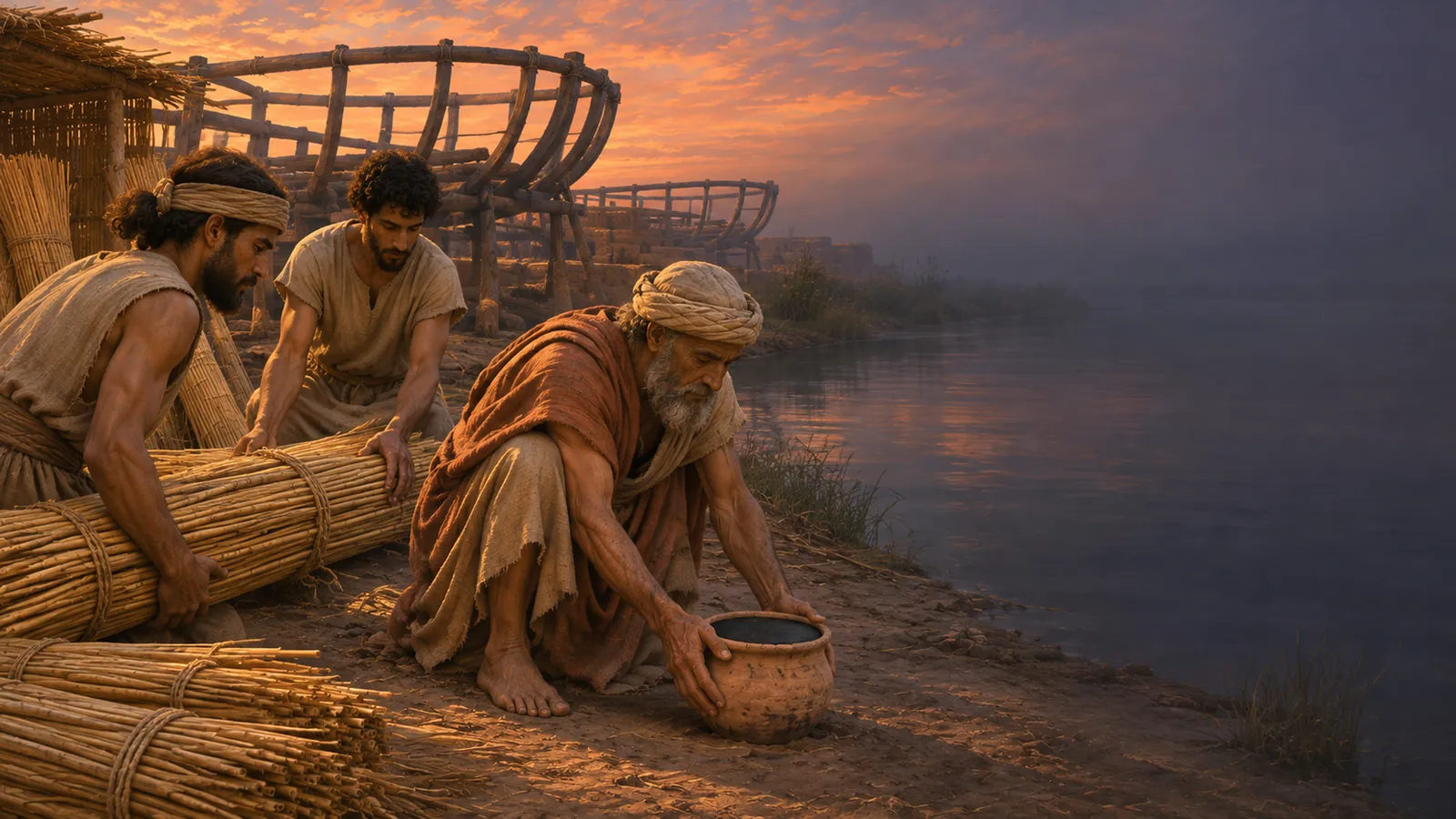
Les mots qui subsistent gardent le souvenir d’autres personnes sur le chantier. L’une apporta du bitume. Une autre apporta ce qu’il fallait, et il fallait bien des bras pour mener l’ouvrage.
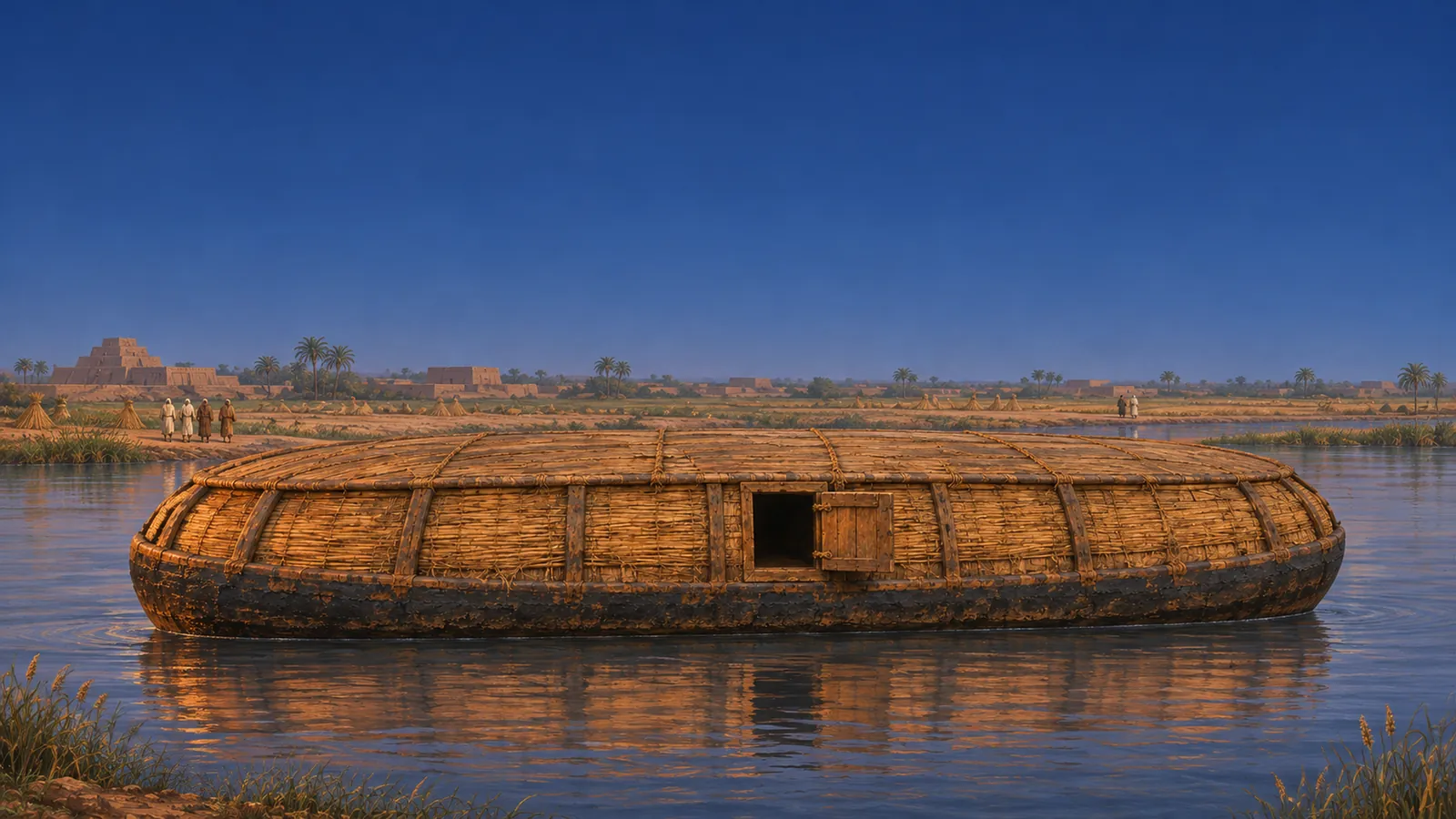
La tablette présente une autre lacune avant la fin du récit des travaux. Dans les lignes lisibles qui suivent, le bateau est prêt à recevoir ce qu’Atrahasis apporte à bord.
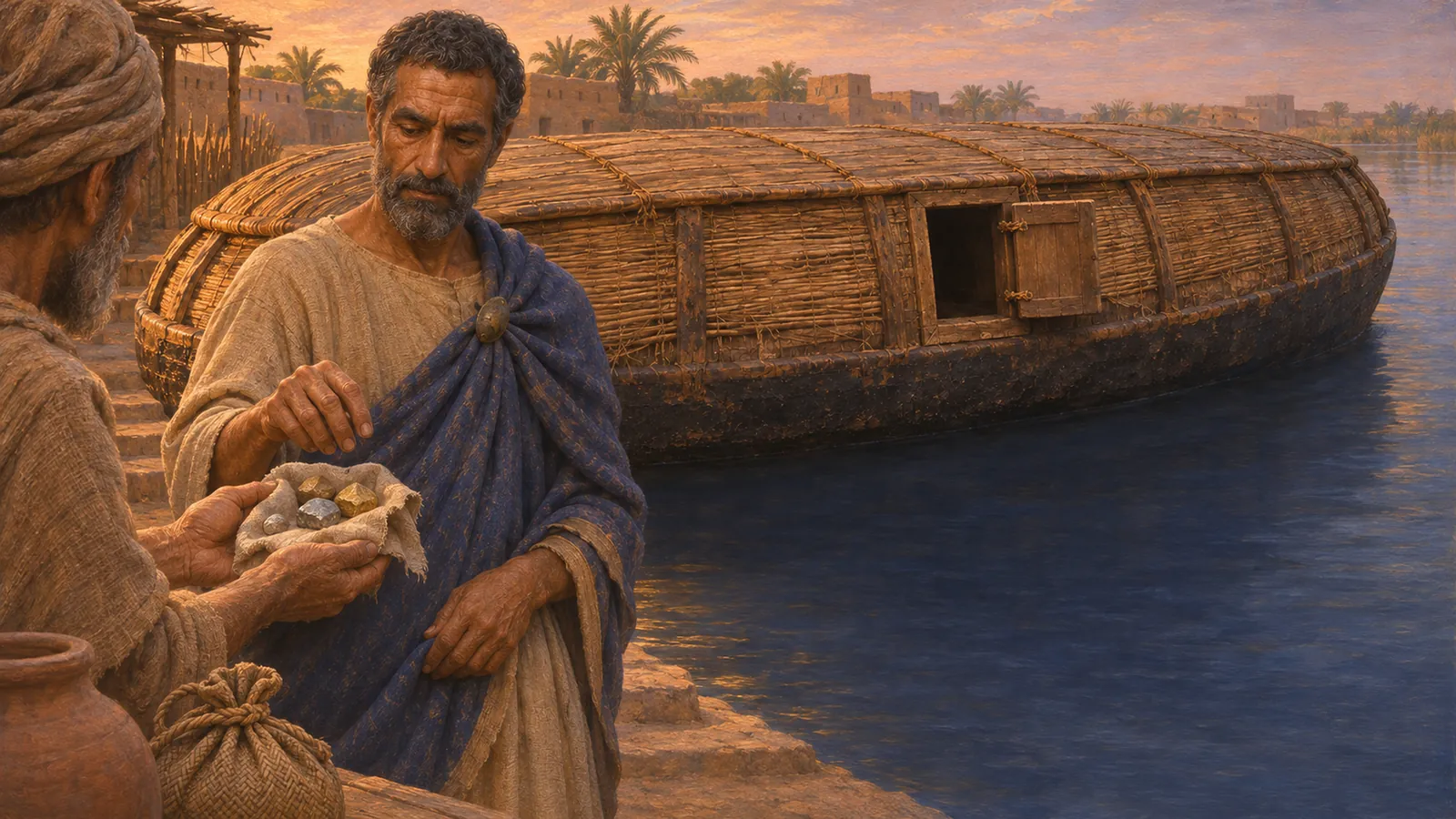
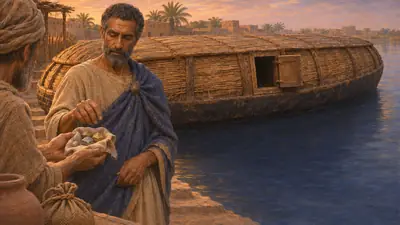
Certaines lignes sur la cargaison sont fragmentaires. Elles parlent d’argent et d’or, puis d’animaux, tandis qu’on préparait le bateau à les recevoir.
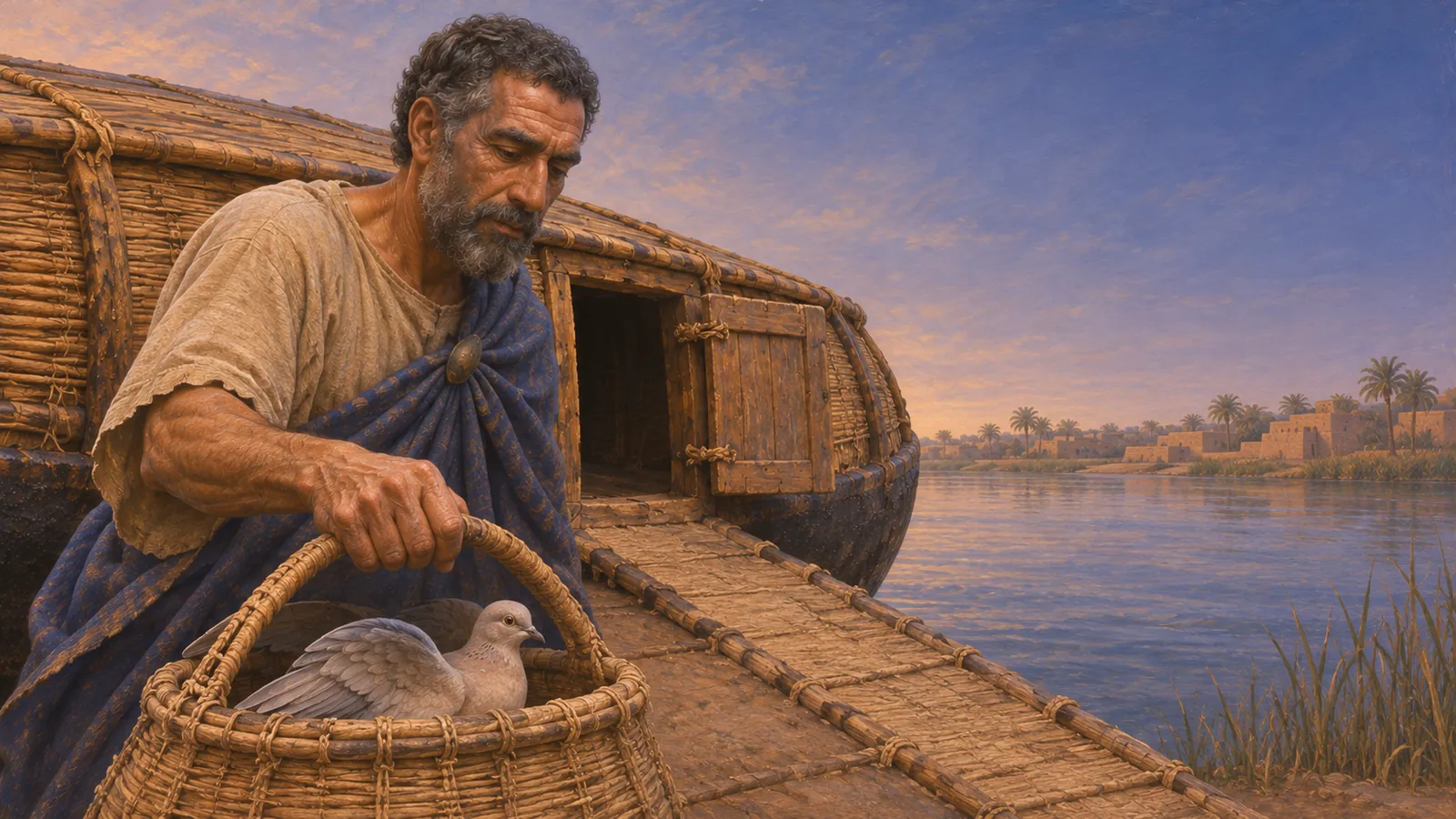
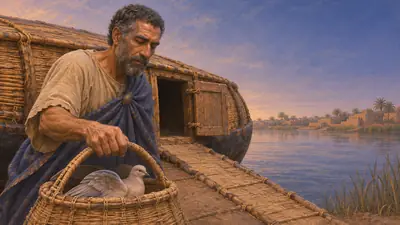
Le bateau devait emporter des créatures du ciel aussi bien que de la terre. Dans les mots qui nous restent, Atrahasis choisit des oiseaux pour le voyage.
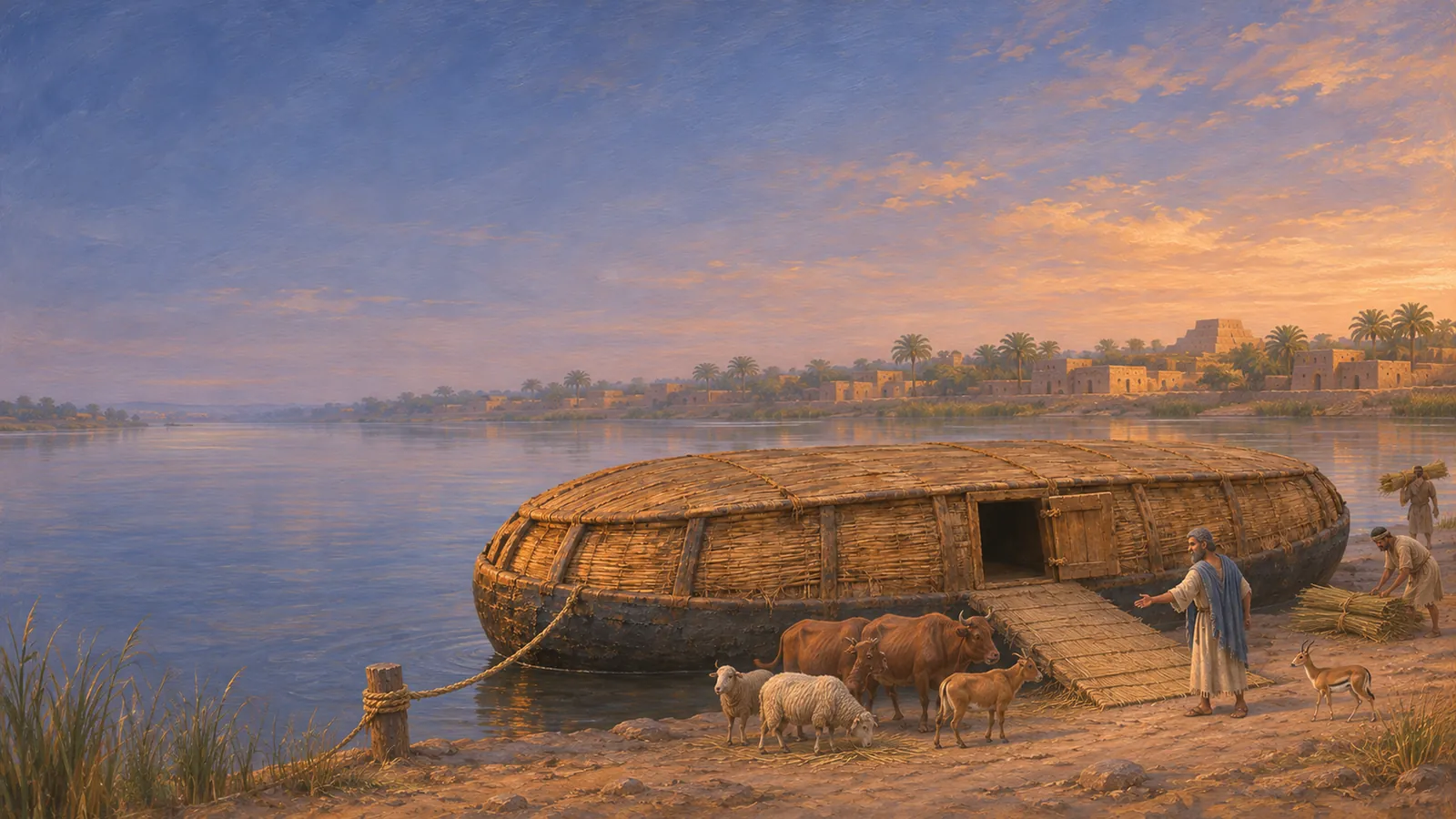
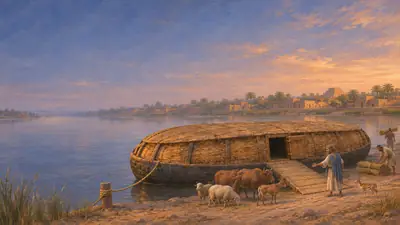
Parmi les êtres vivants embarqués, il y avait des bêtes des troupeaux et des animaux sauvages de la steppe. Les lignes endommagées semblent aussi placer des artisans qualifiés à bord.
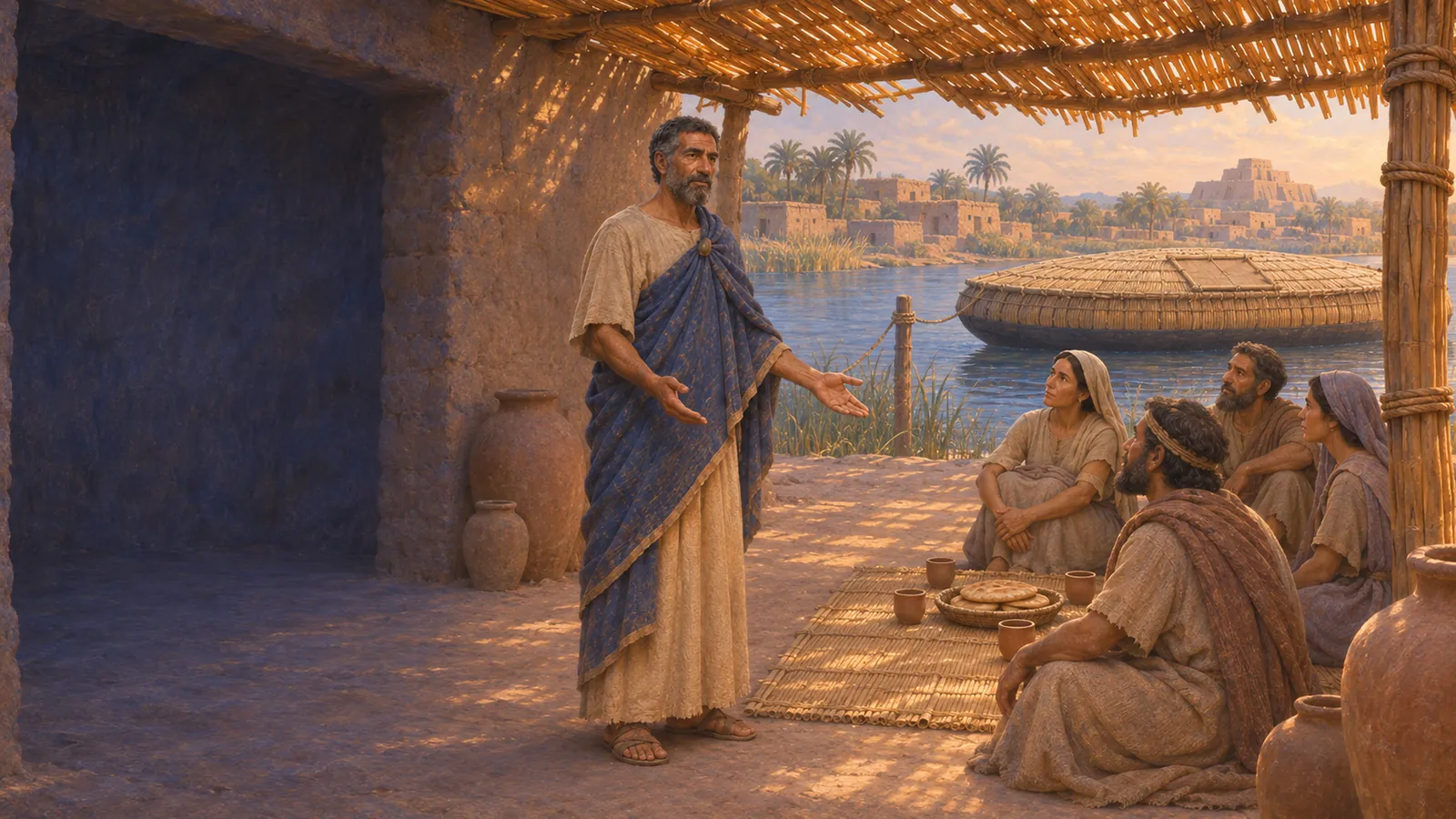
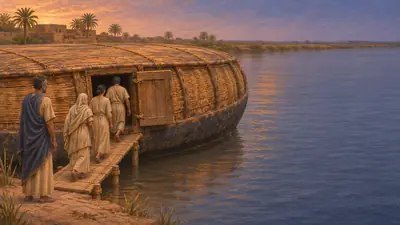
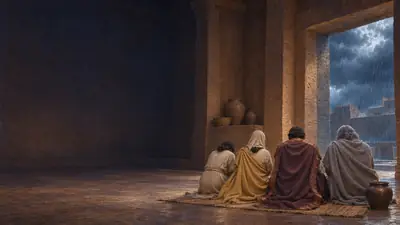
Le mois touchait à sa fin. Ce qui subsiste de la tablette raconte un banquet auquel Atrahasis convia les siens, pour qu’ils s’assoient et mangent avant l’arrivée de la tempête.
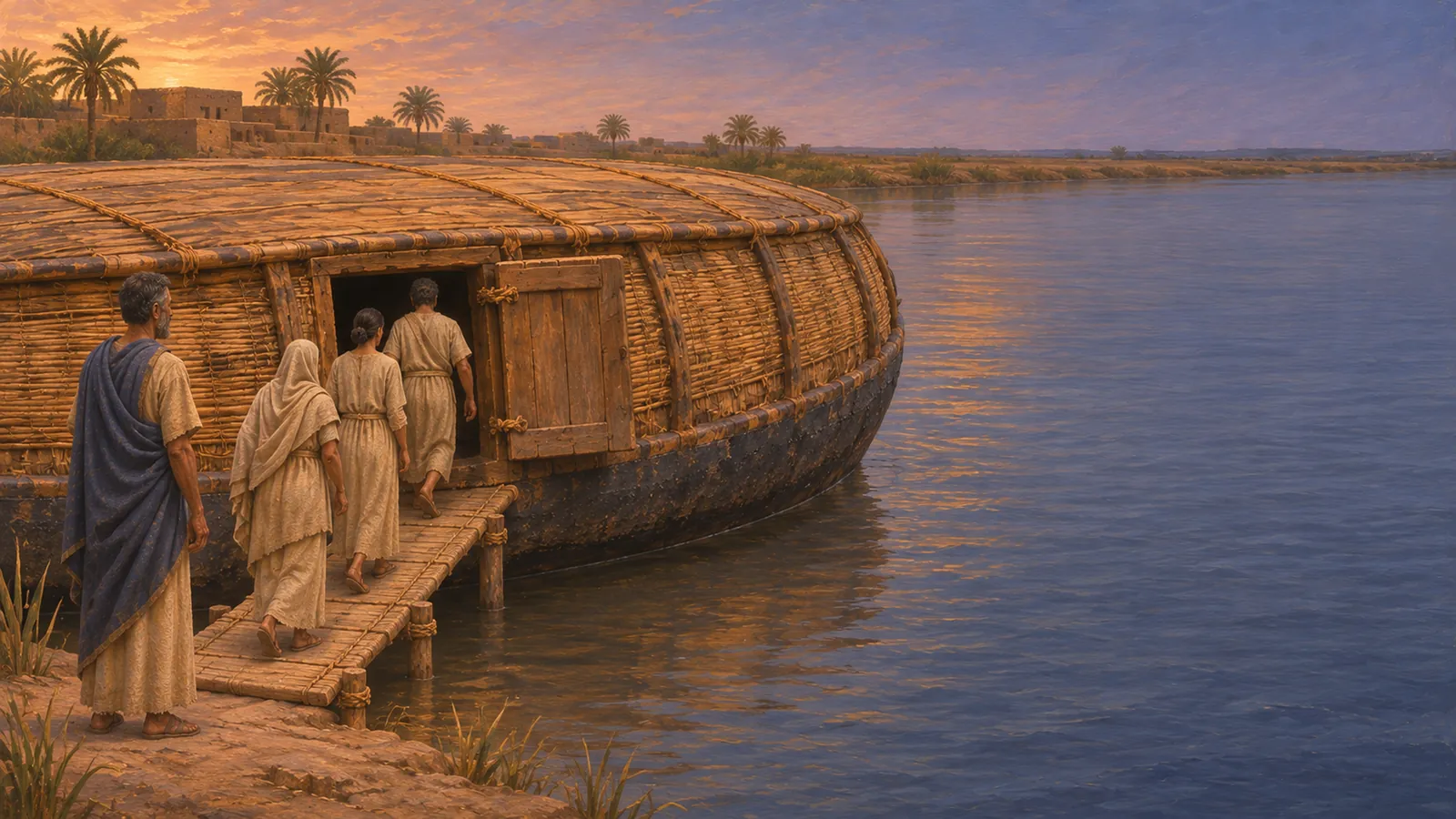
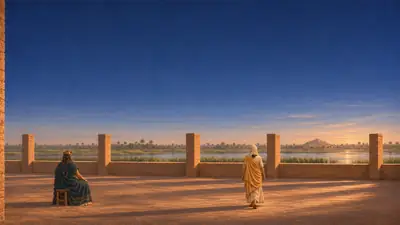
Les gens mangeaient et buvaient tandis qu’Atrahasis allait et venait entre le bateau et la rive. Sa famille était déjà montée à bord sur son ordre.
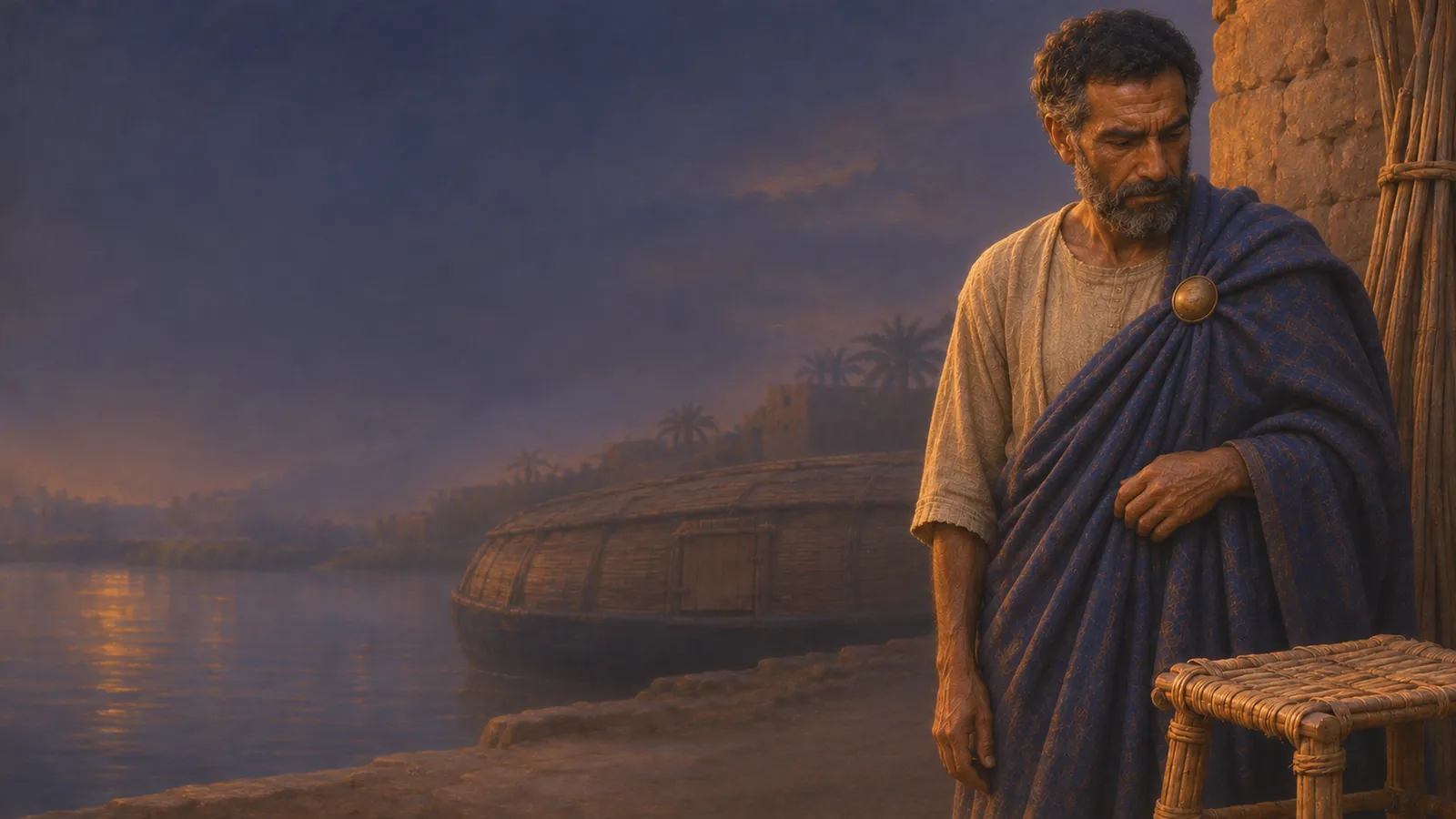
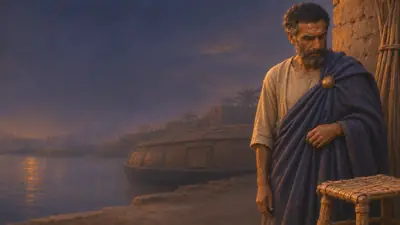
Atrahasis entrait et sortait sans trouver de repos. La tablette nous dit combien sa détresse était profonde avant le premier coup de tonnerre.
LE TONNERRE
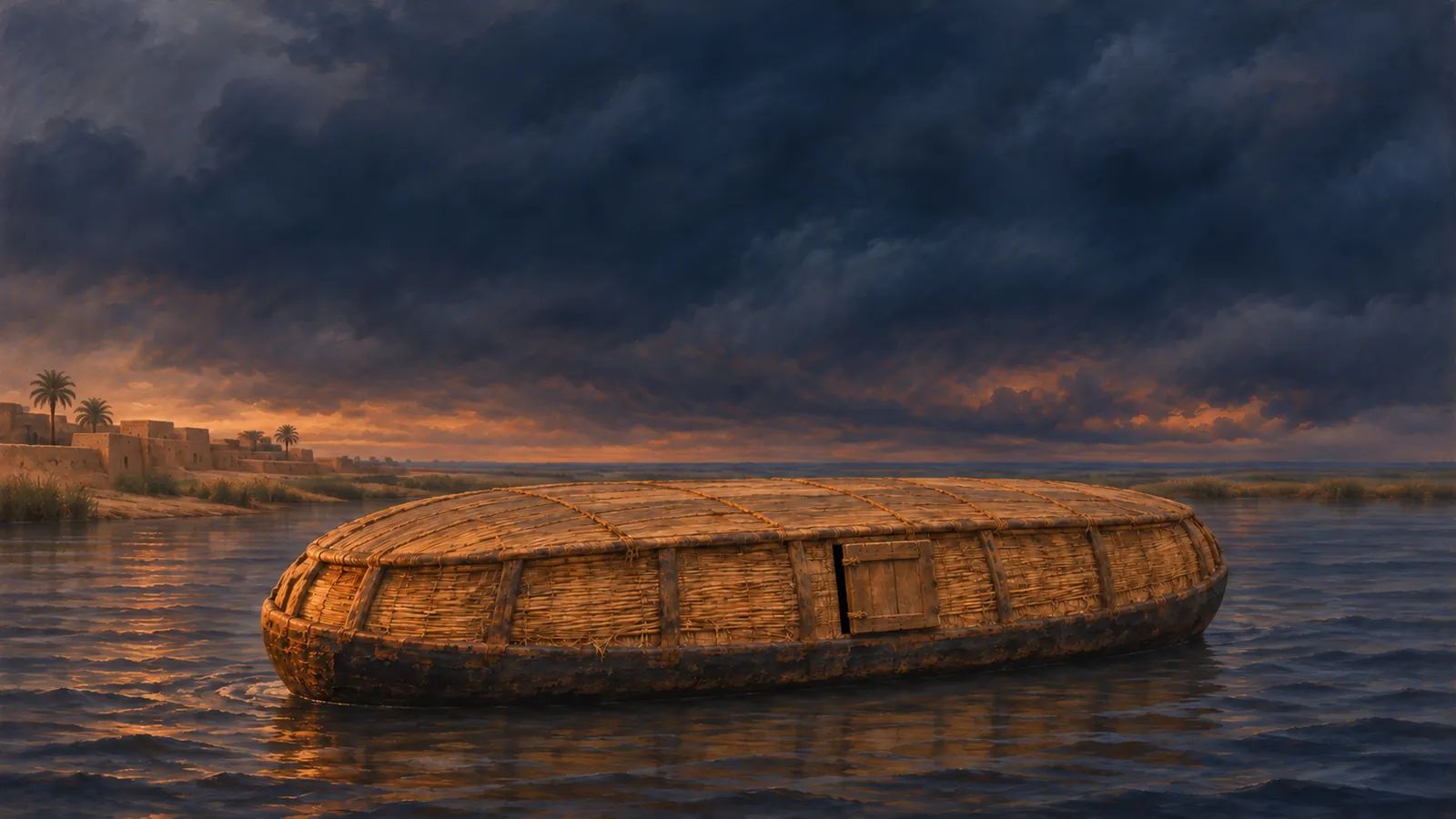
Alors le jour changea d’aspect. Le tonnerre d’Adad gronda dans les nuages, et ceux qui se trouvaient à bord l’entendirent à l’approche de la tempête.
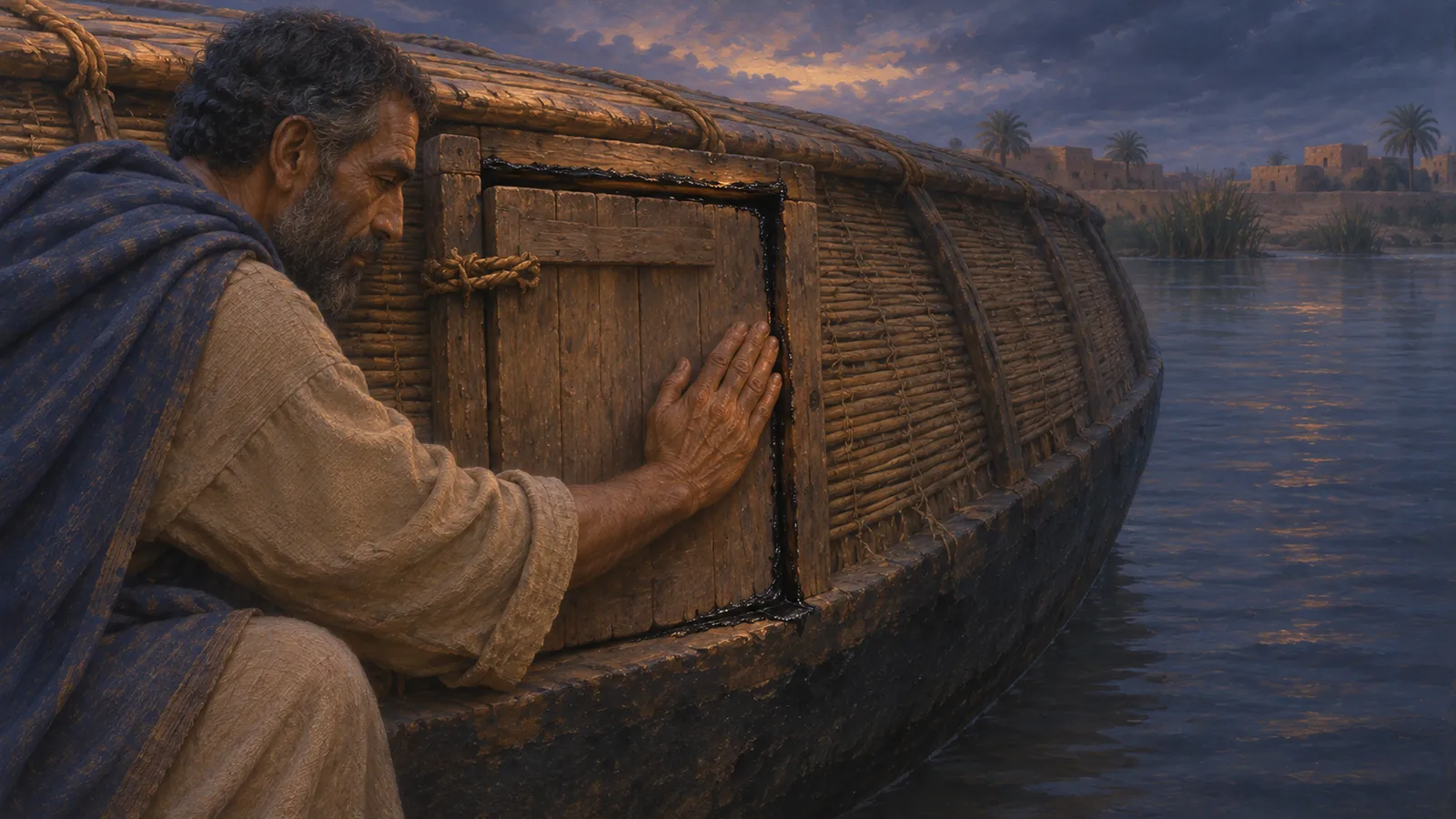
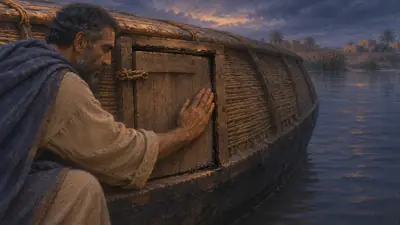
On apporta du bitume pour l’ouverture. Atrahasis scella la porte, et à peine était-elle fermée que le tonnerre d’Adad gronda de nouveau au-dessus du bateau.
À LA DÉRIVE
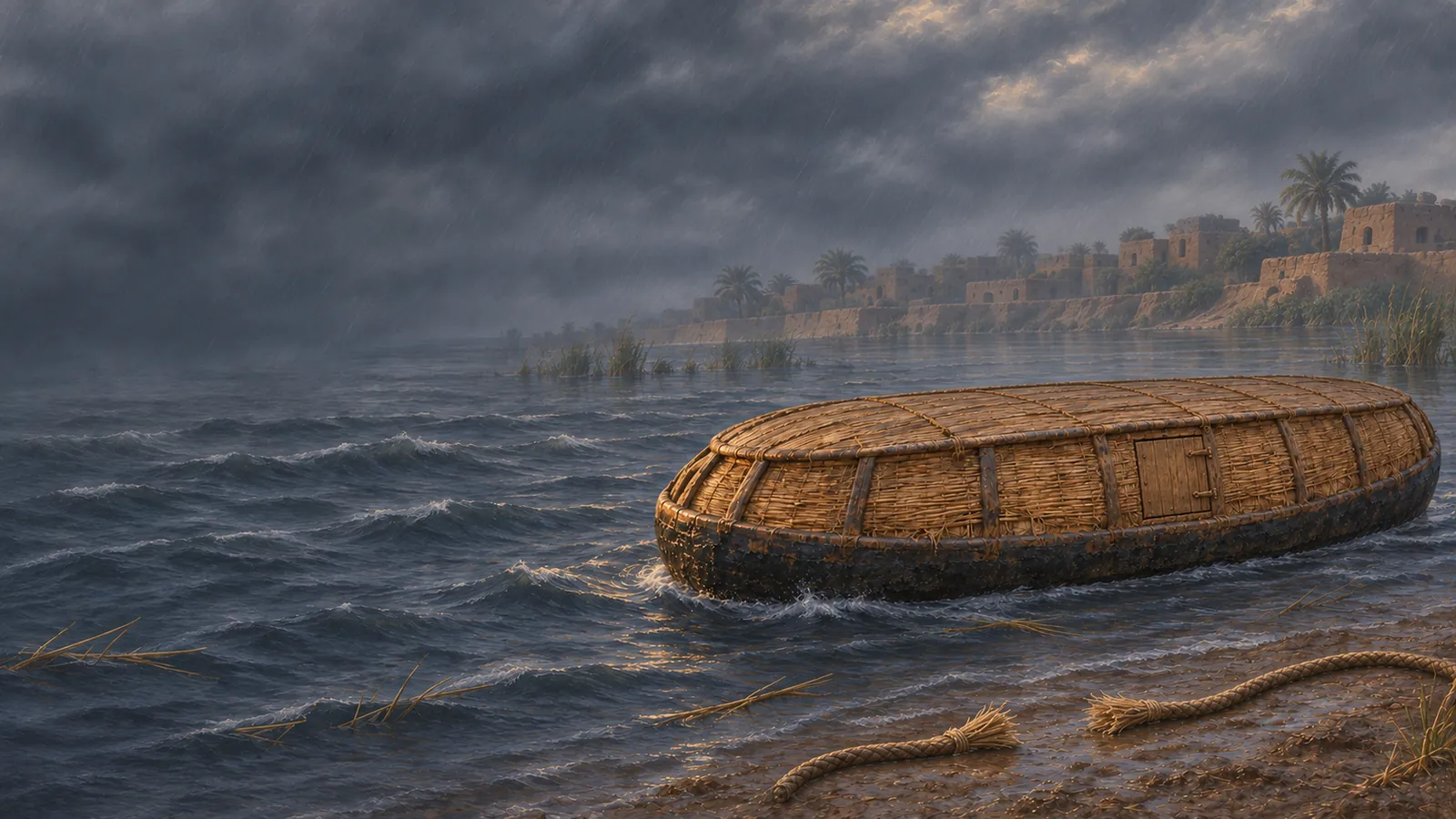
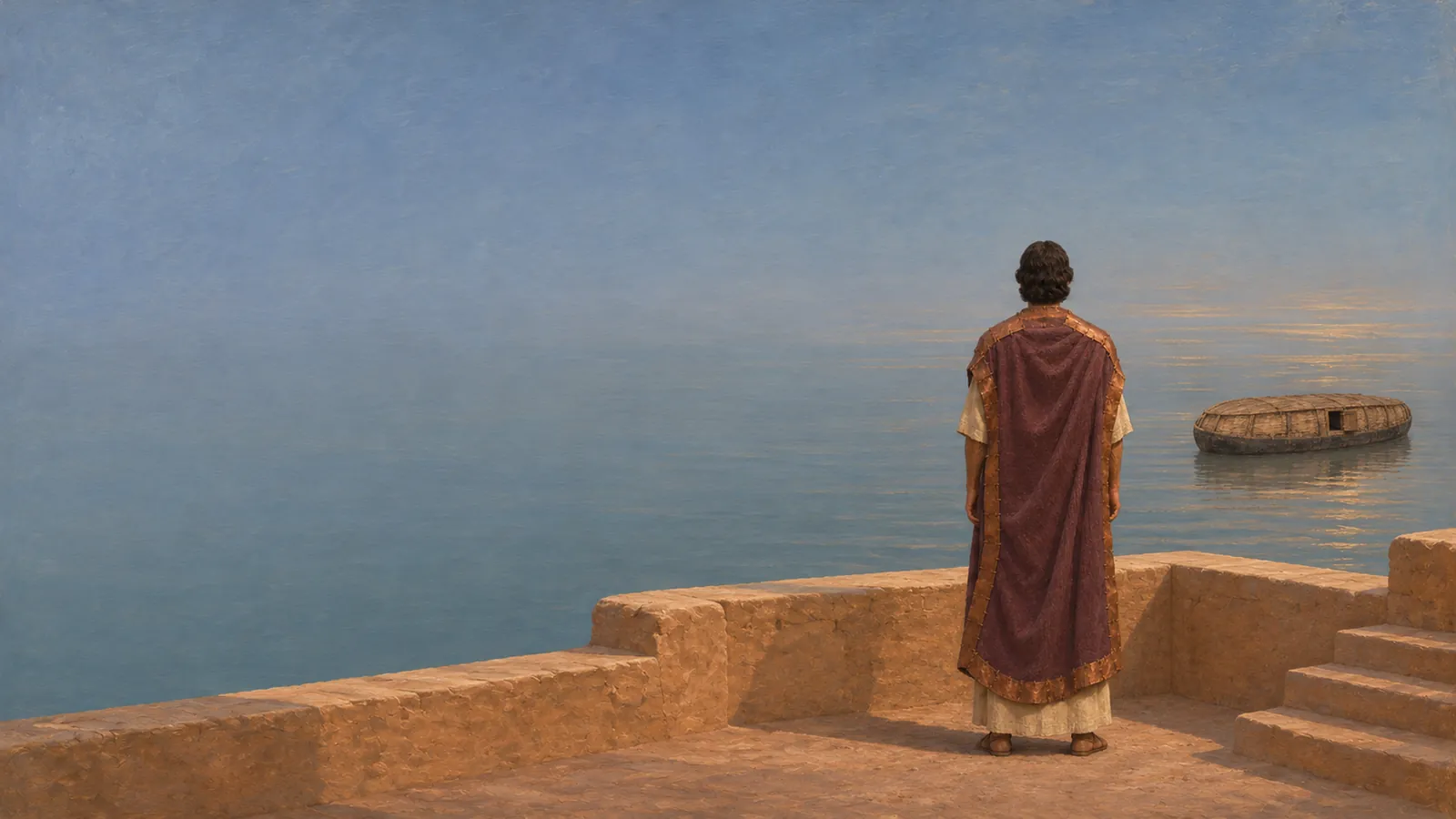
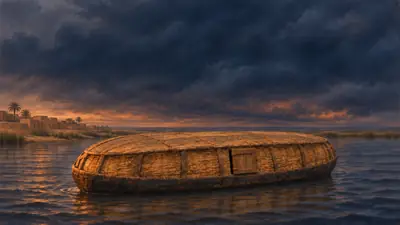
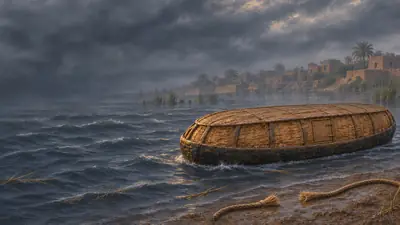
Le vent se leva avec une telle force qu’il rompit l’amarre. Le bateau, libéré de son attache, pivota tandis que le fleuve montait sous lui.
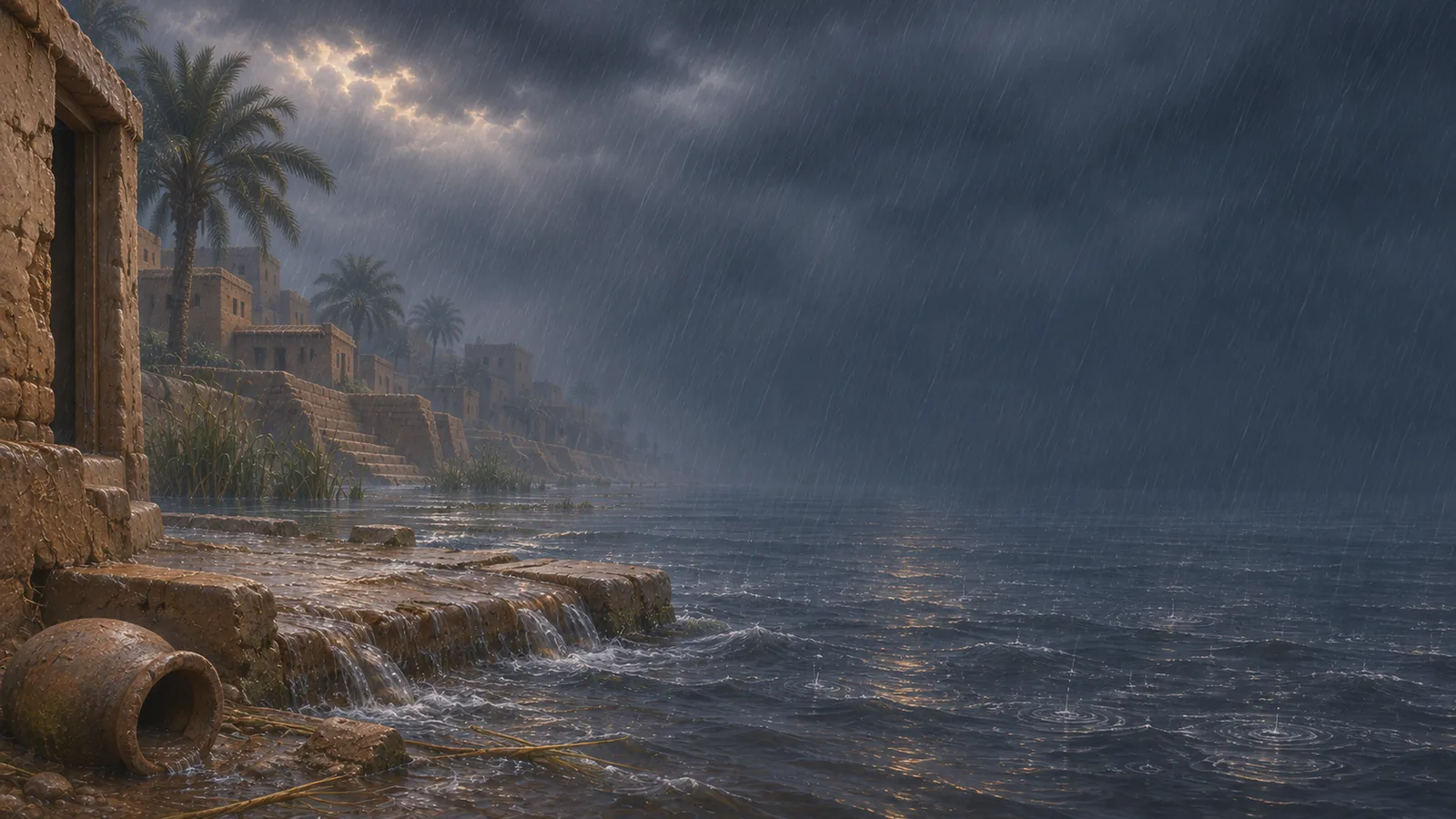
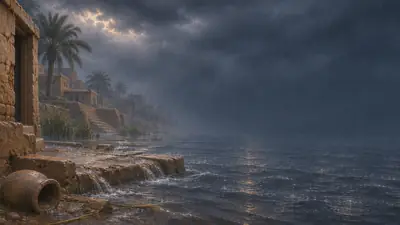
Il ne reste que des fragments des lignes suivantes. À travers eux, on entend la tempête et l’on voit les eaux monter sur le pays, étouffant les voix qui l’emplissaient auparavant.
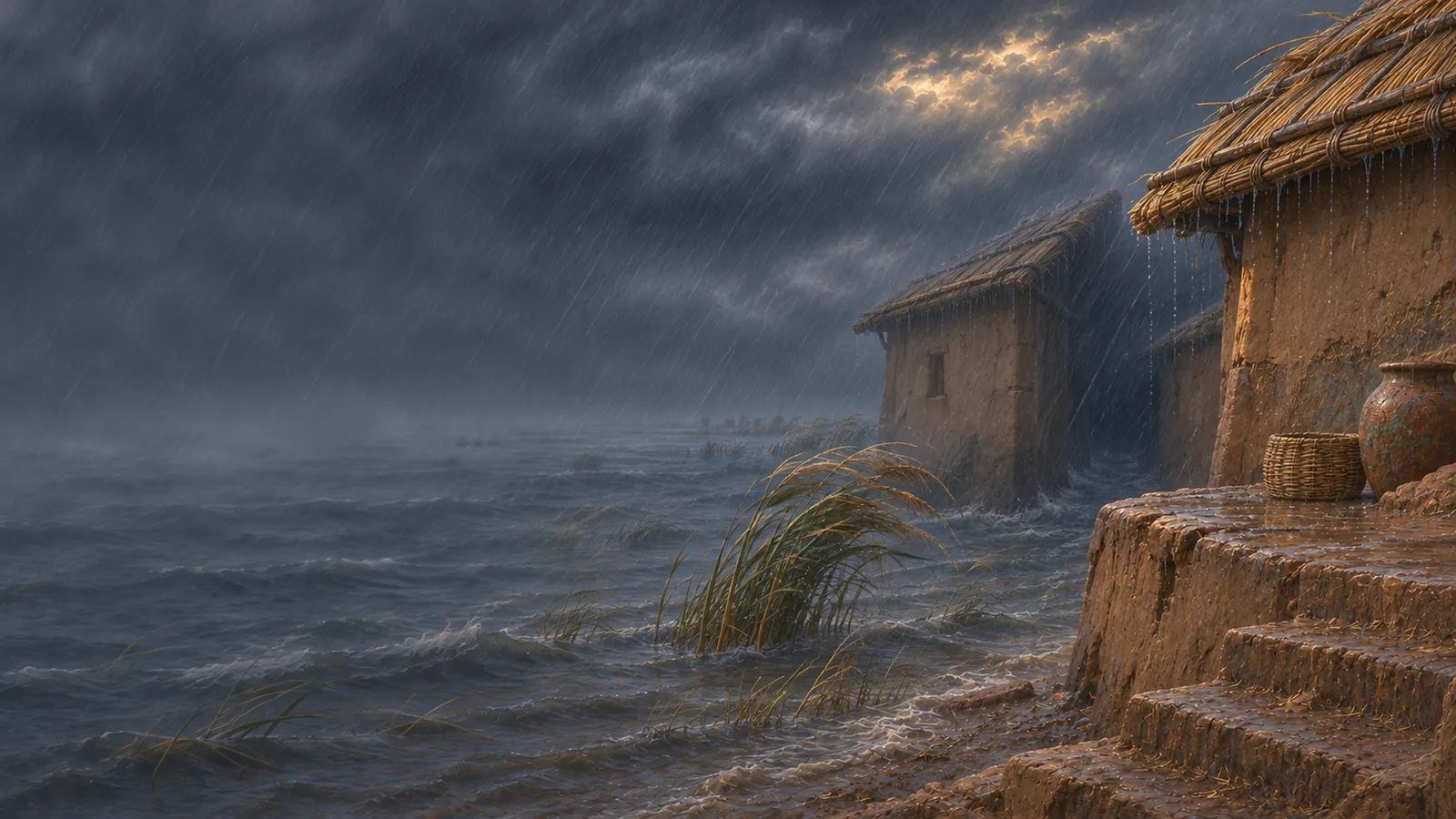
Dans la confusion, un frère ne voyait plus son frère. Les seules voix qui restent dans le récit sont le déluge, qui mugit comme un taureau, et le grand vent, qui crie au-dessus.
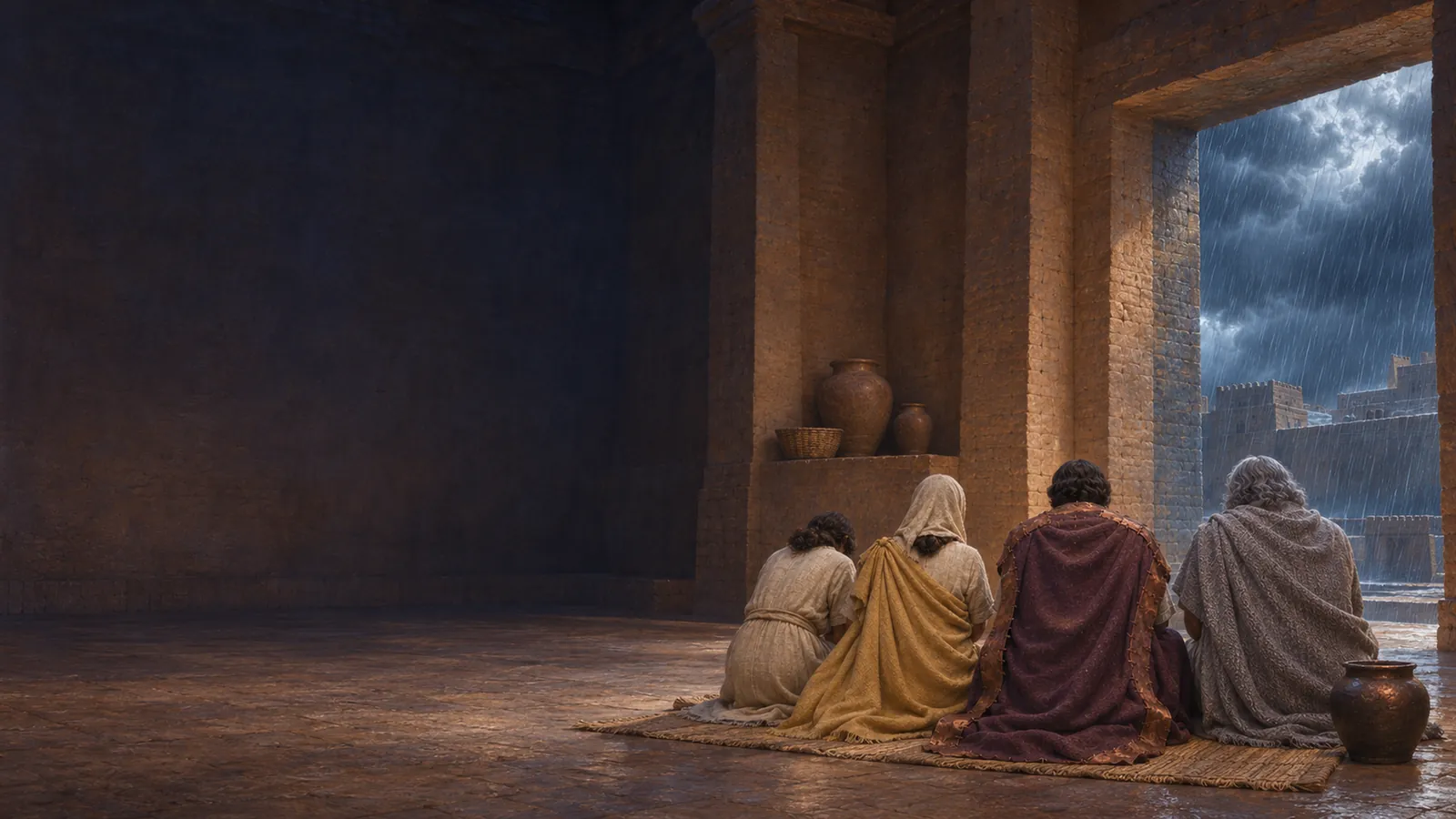
Le bruit du déluge terrifia jusqu’aux dieux. Ils se blottirent ensemble dans leur refuge, et le poème compte la faim et la soif parmi leurs tourments.
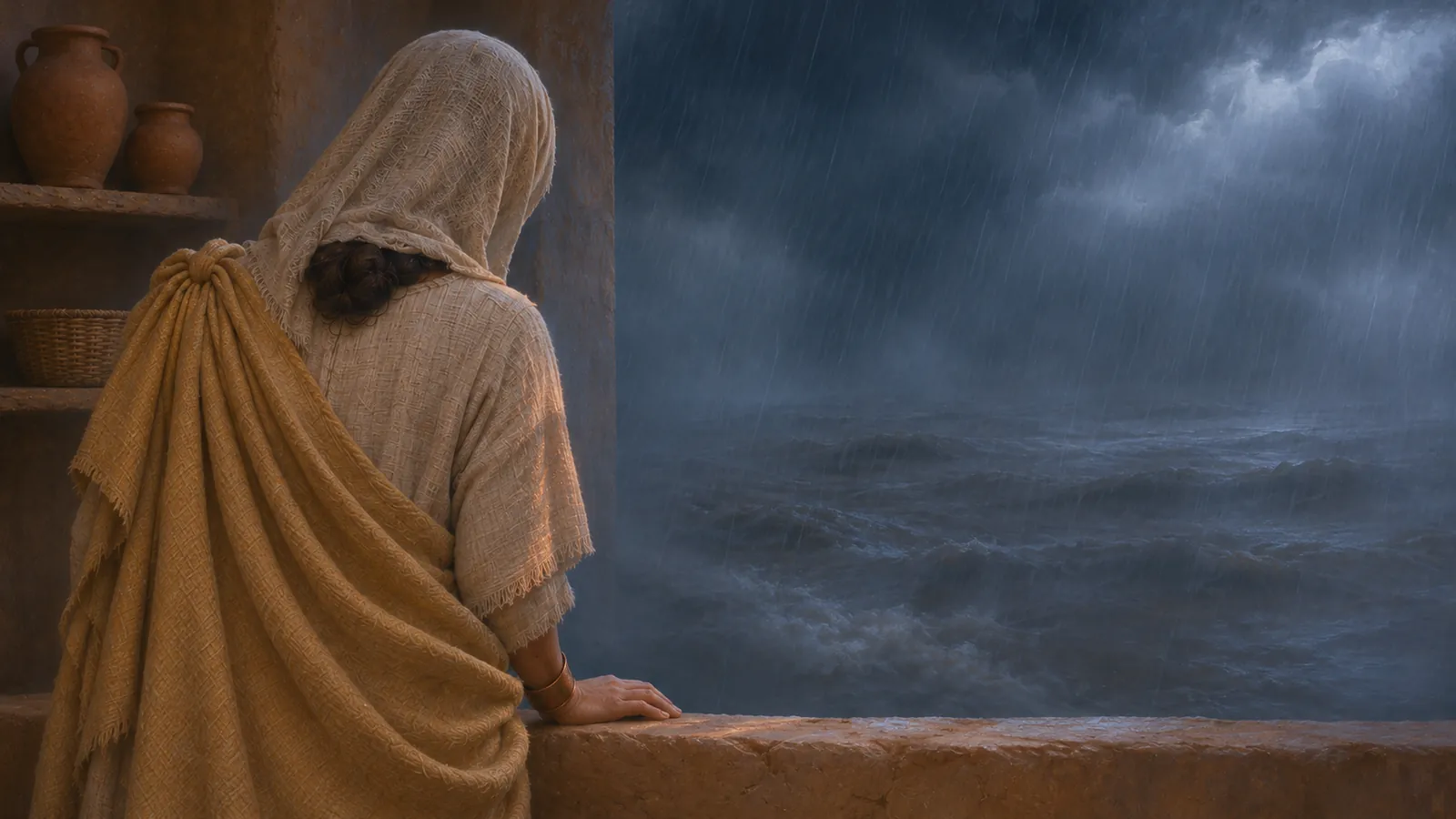
Mami vit ce qu’avait entraîné la décision du conseil et pleura. Elle se souvint qu’elle y avait pris part avec les autres dieux et regretta amèrement ses paroles.
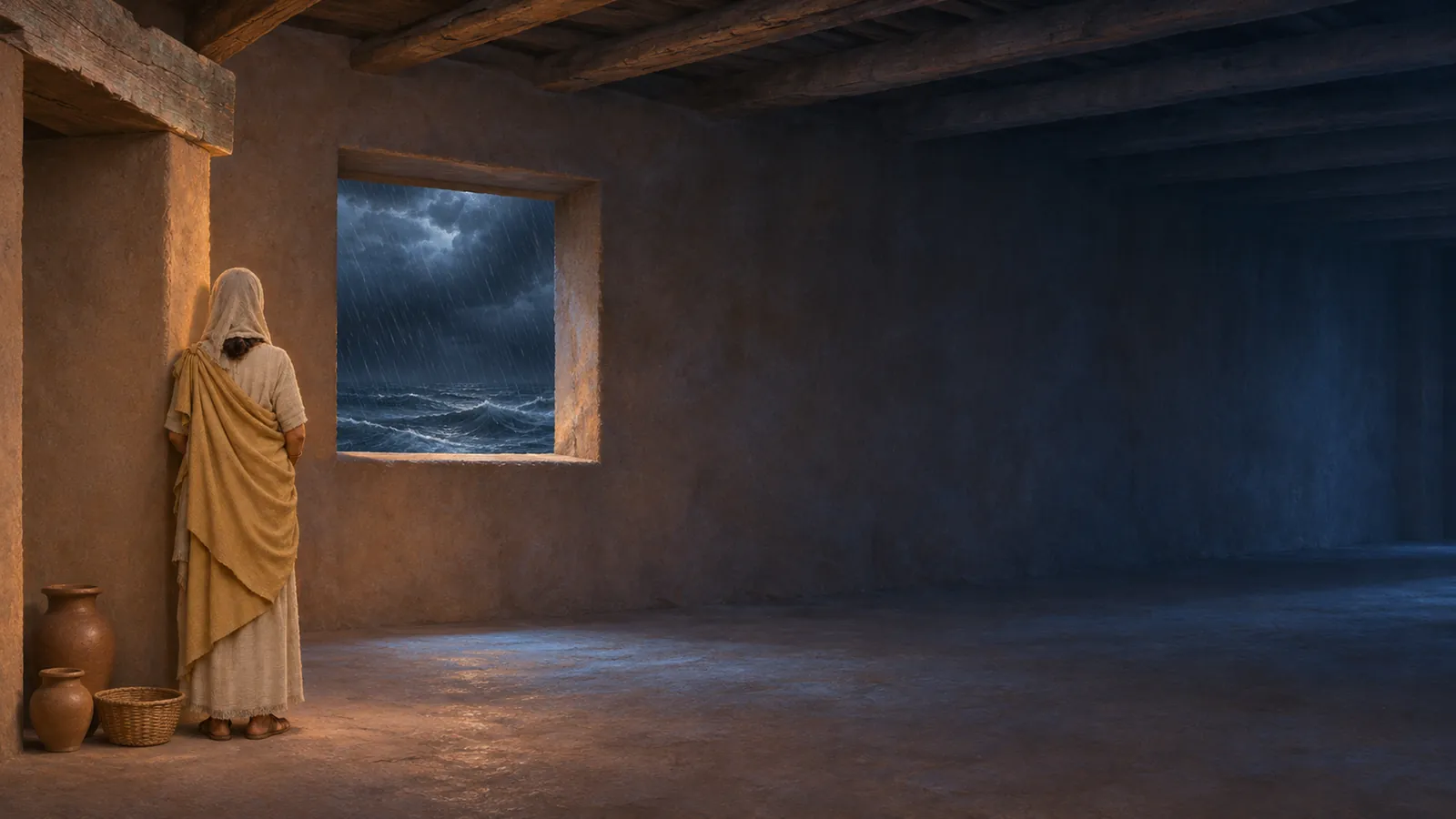
Mami dit que sa propre demeure lui semblait une maison de deuil. Elle demanda comment les dieux avaient pu envoyer le déluge sans penser aux gens en contrebas.
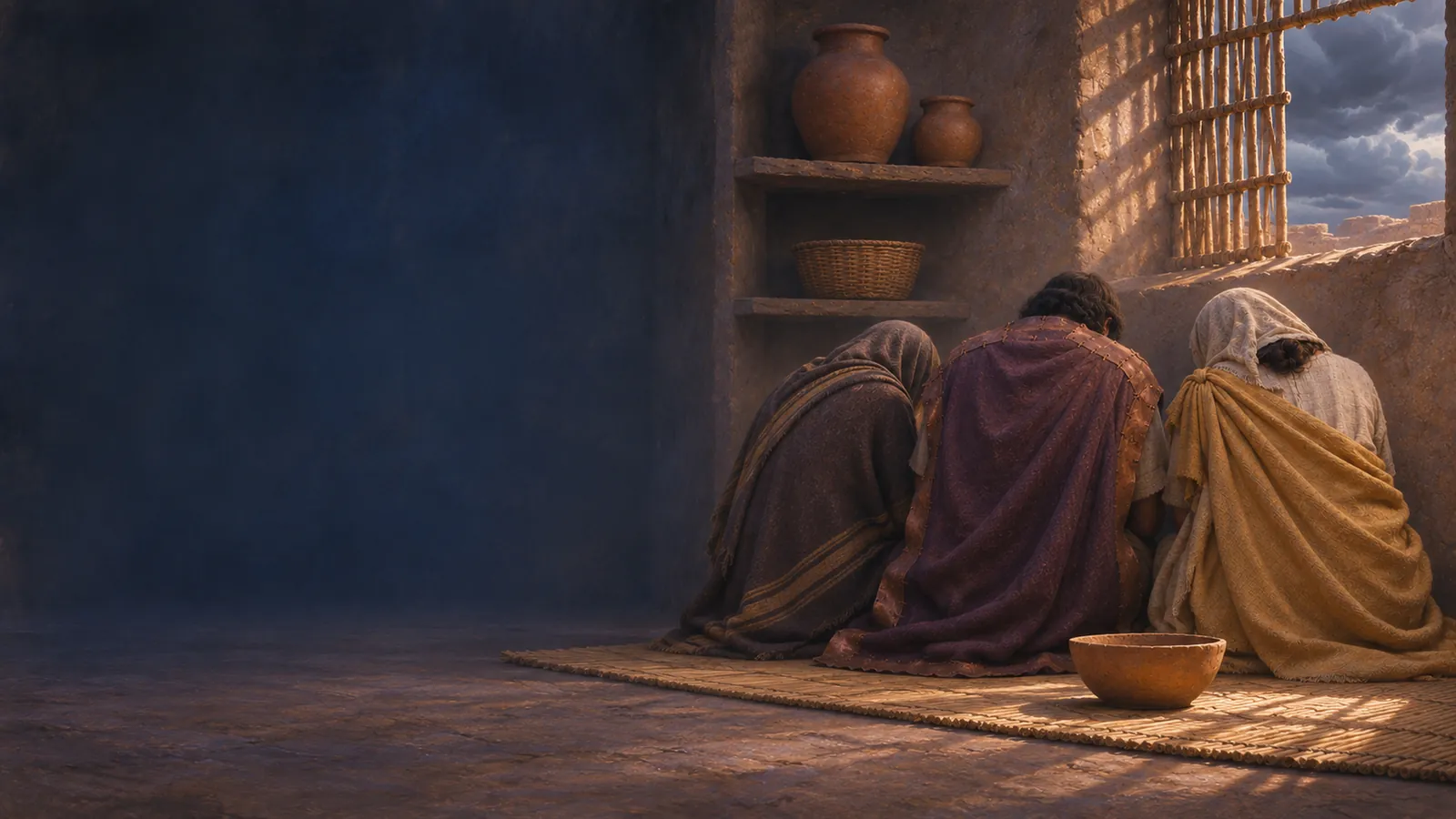
Après une lacune, la tablette reprend sa lamentation. Mami pleura jusqu’à l’épuisement, et les autres dieux pleurèrent avec elle sur le pays.
SEPT NUITS
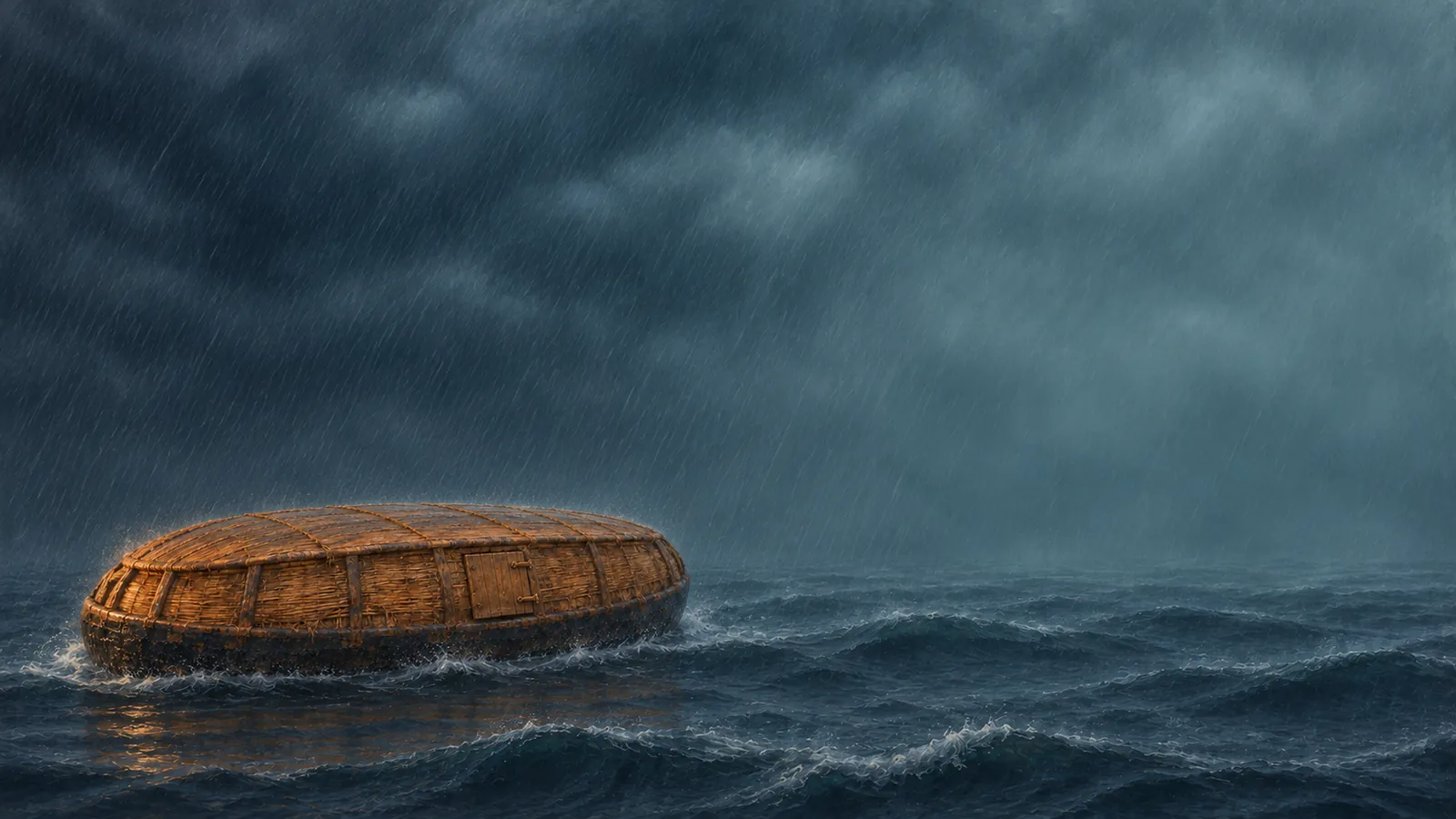
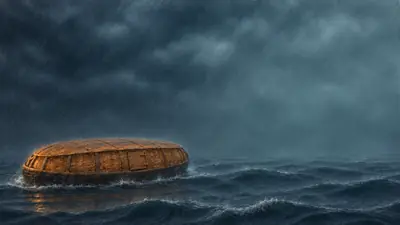
Pendant sept jours et sept nuits, la pluie battit sans répit. Sur l’eau sombre, le bateau porta les gens et les créatures qu’il avait pris à bord.
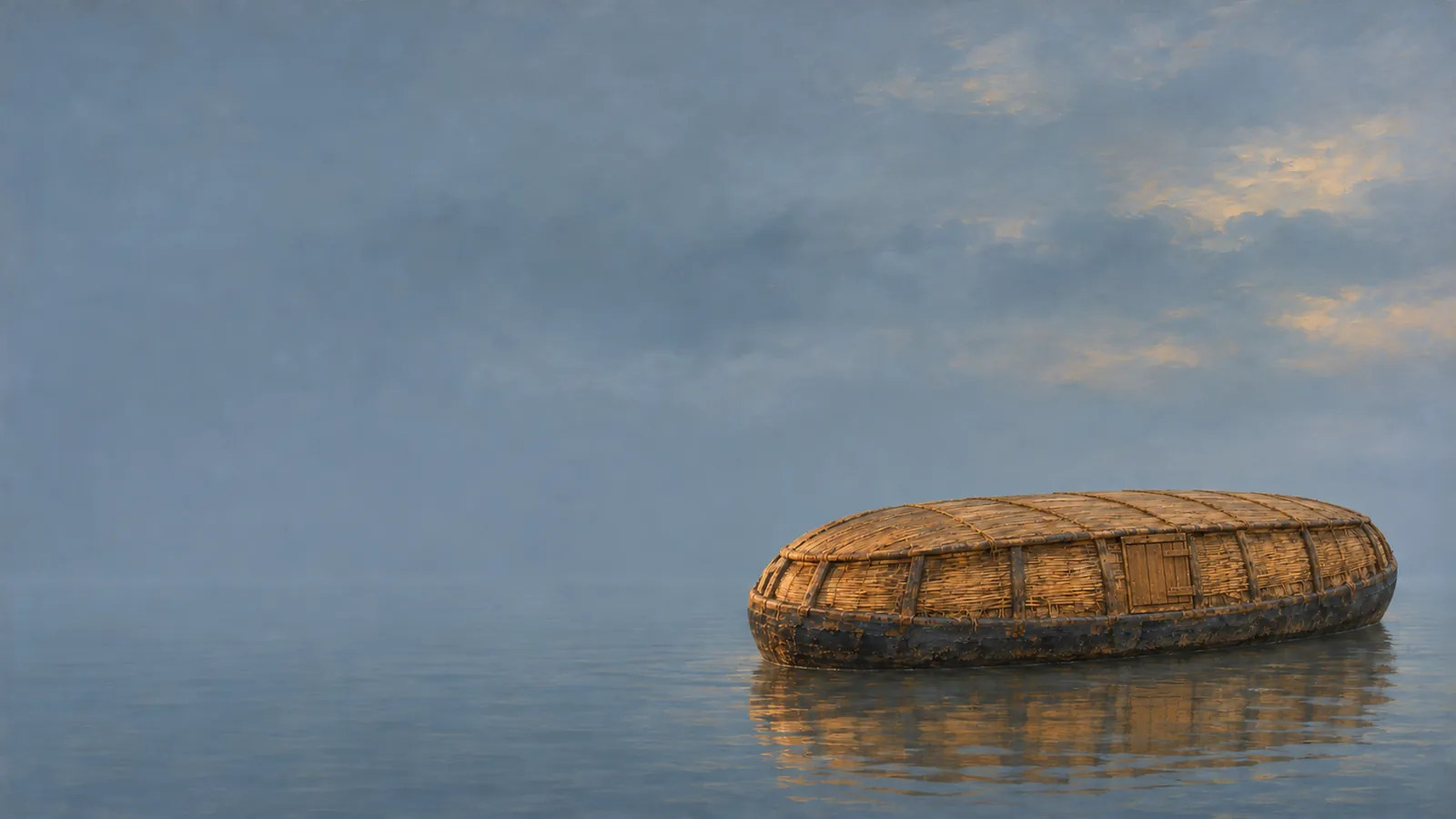
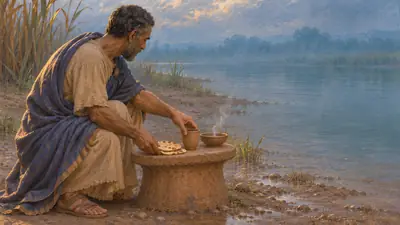
Une grande partie du passage qui suit la tempête a disparu. Dans la prochaine scène clairement lisible, Atrahasis fait une offrande une fois les eaux retirées.
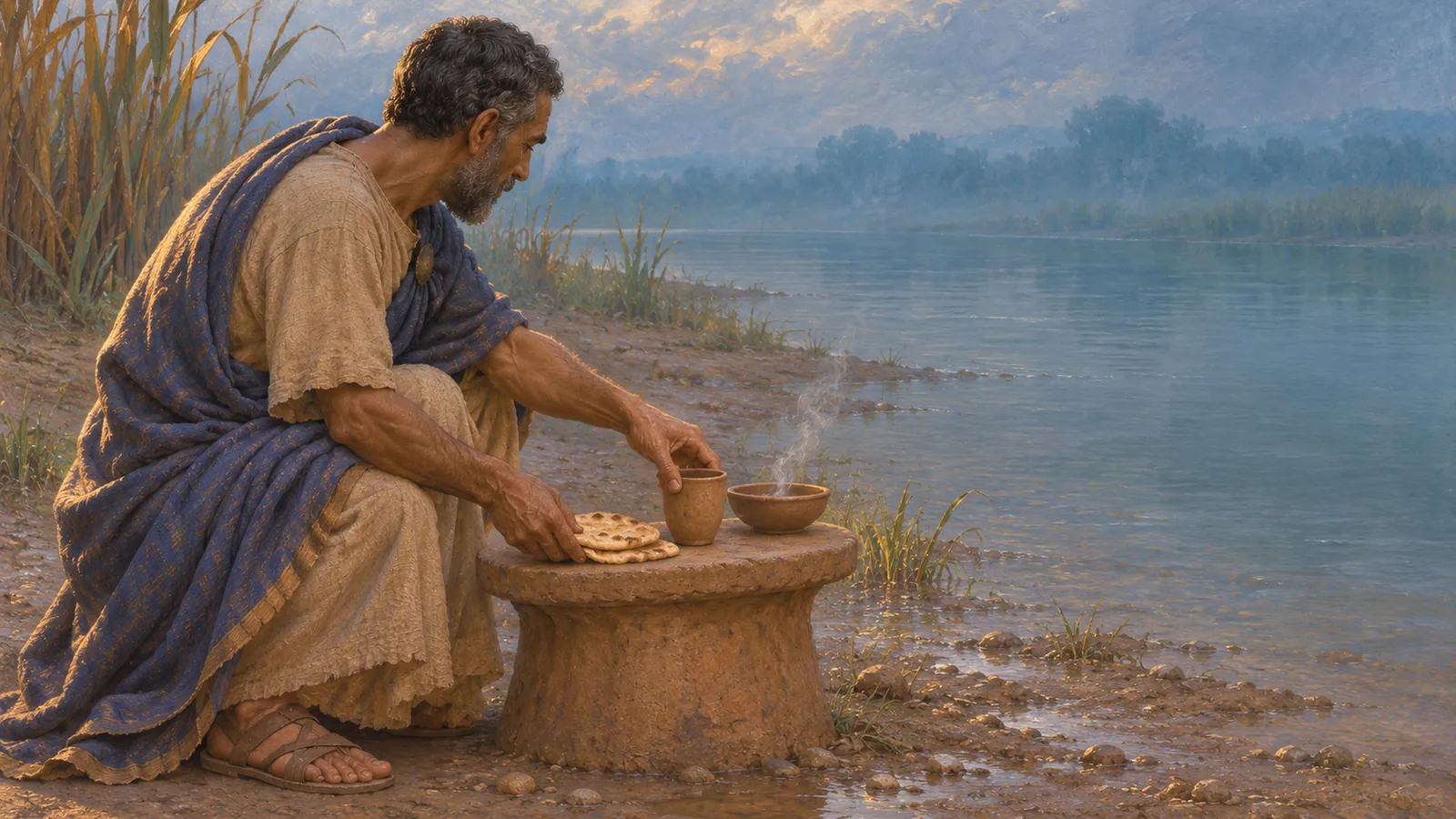
Le premier geste que le récit conserve après le déluge est une offrande. Les mots qui subsistent parlent des quatre vents et de nourriture.
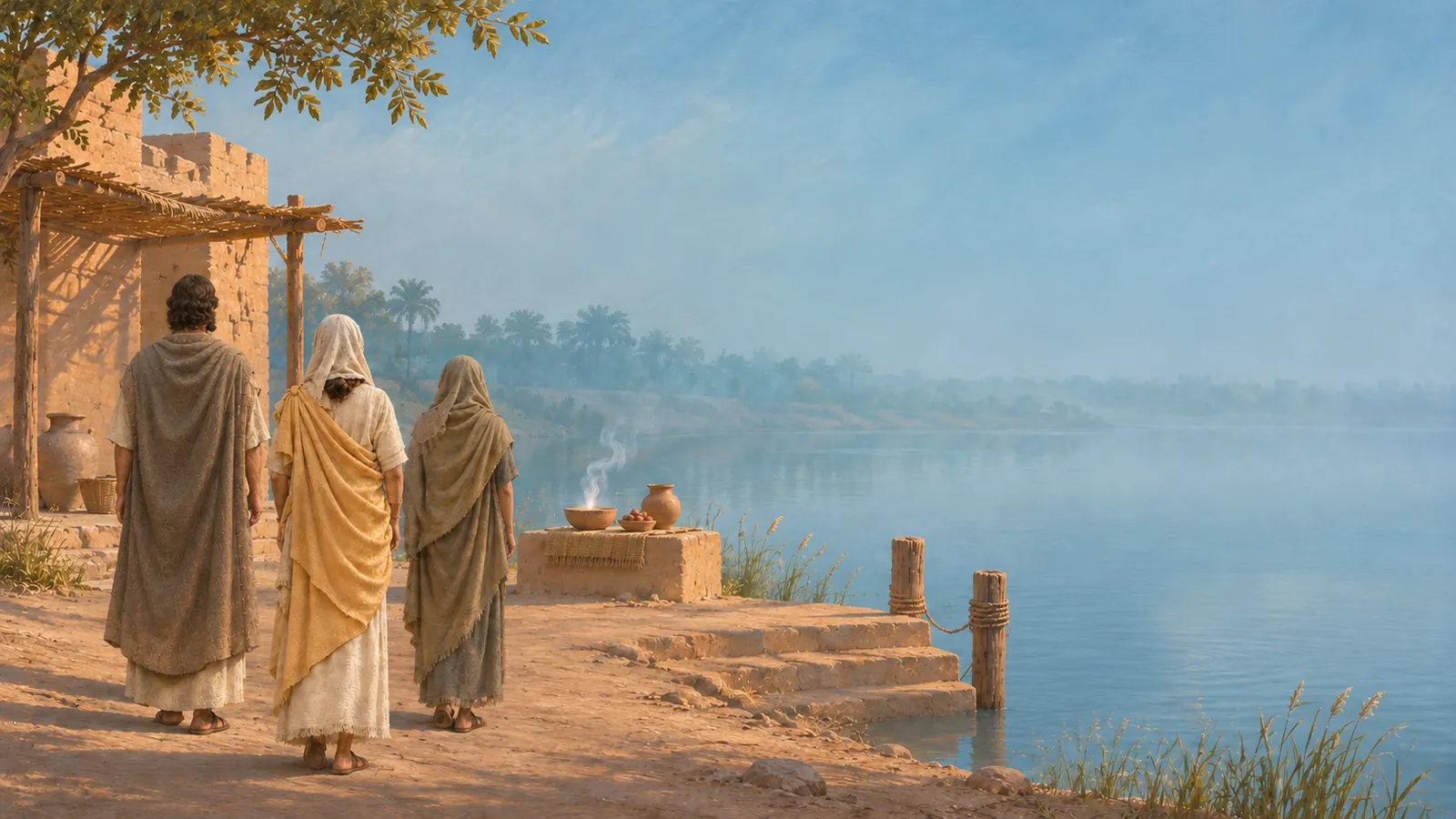
L’odeur se répandit dans l’air. Les dieux se rapprochèrent de l’offrande, et le poème compare leur rassemblement à des mouches attirées par la nourriture.
Quand les dieux eurent mangé, Mami se leva pour contester la manière dont le déluge avait été décidé. Elle se souvint des visages lumineux des gens que le conseil avait condamnés.
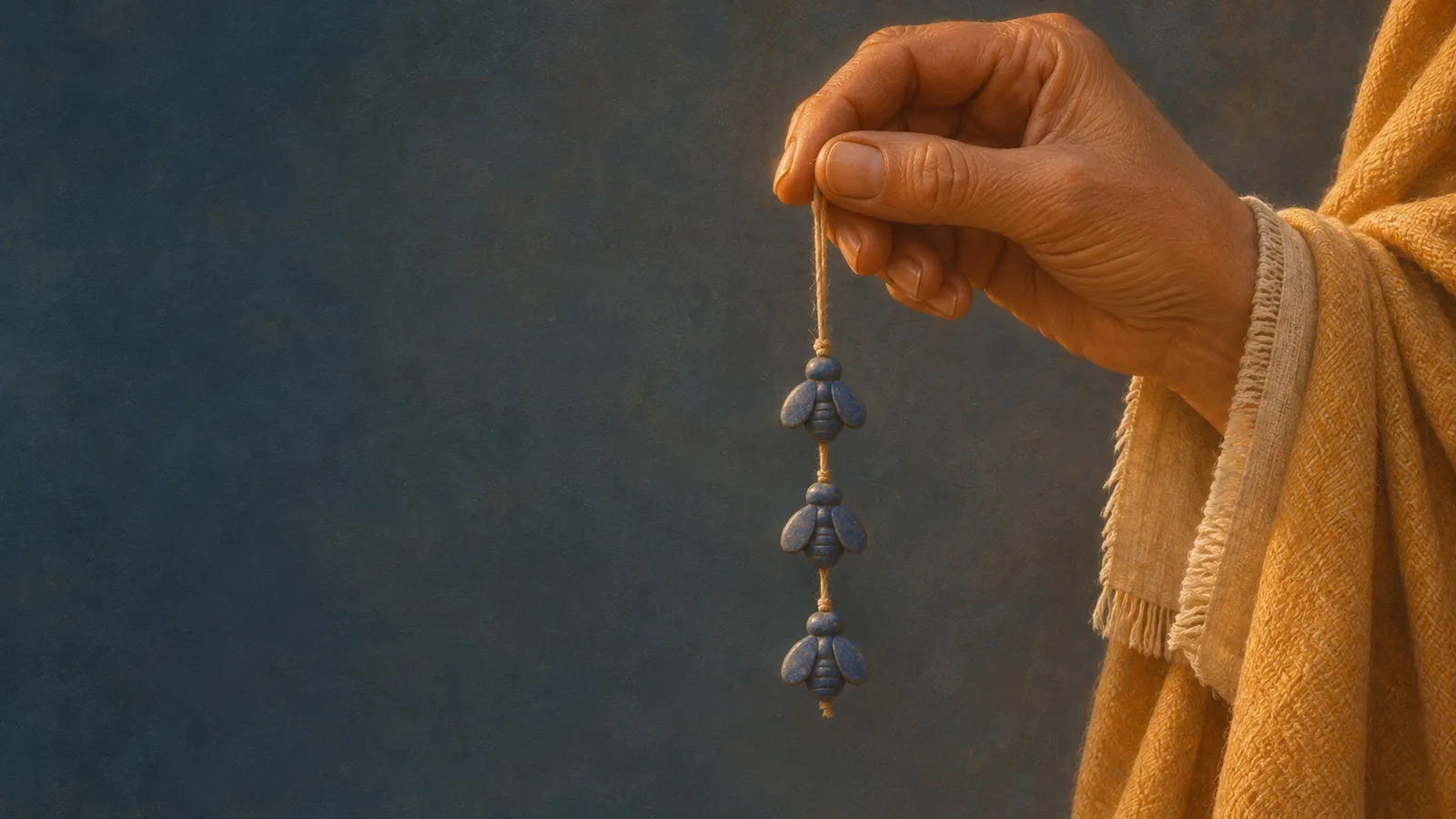
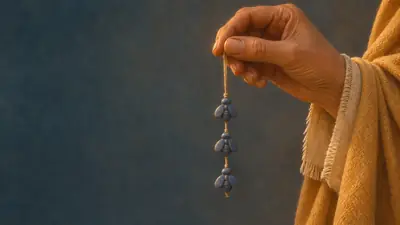
Mami se tourna vers les formes qu’Anu avait placées devant les dieux. Dans les lignes brisées, elle demande à porter à son cou ces formes de mouches en lapis-lazuli, pour que ces jours restent en mémoire.
SURVIE
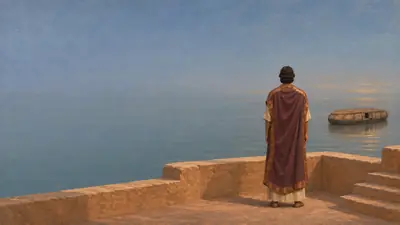
Puis Enlil vit le bateau. Il se mit en colère, car les dieux s’étaient accordés sous serment, et exigea de savoir comment quelqu’un avait pu survivre à la destruction.
Anu répondit à Enlil en nommant le seul dieu qui aurait pu le faire. Enki avait laissé le secret parvenir jusqu’à un mur de roseaux.
VIE
Enki se leva pour leur répondre. Il reconnut ce qu’il avait fait et dit que son but était de préserver la vie.
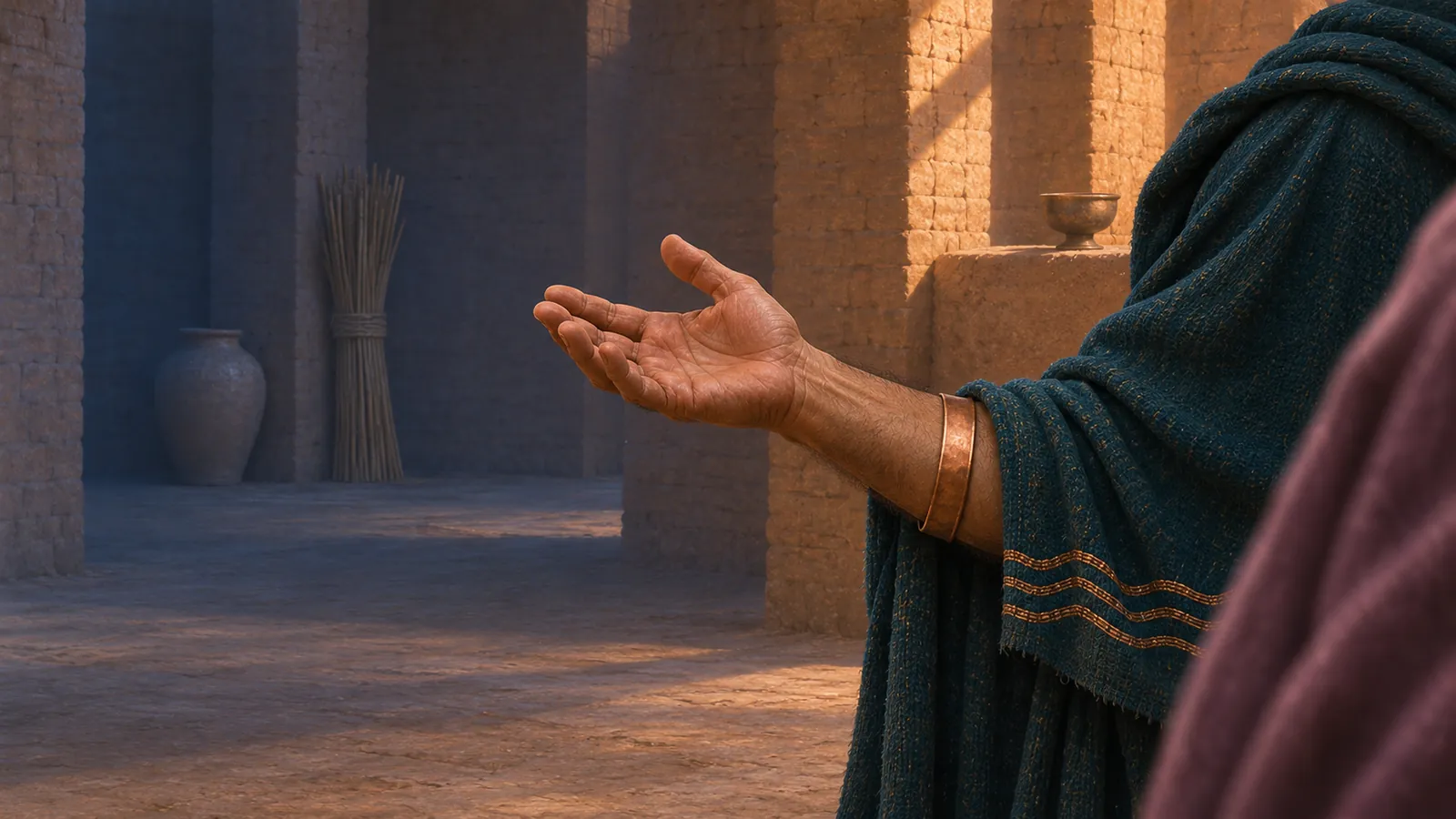
Enki contesta la manière dont le déluge avait été envoyé. S’il fallait punir, dit-il, que la peine tombe sur celui qui avait commis la faute.
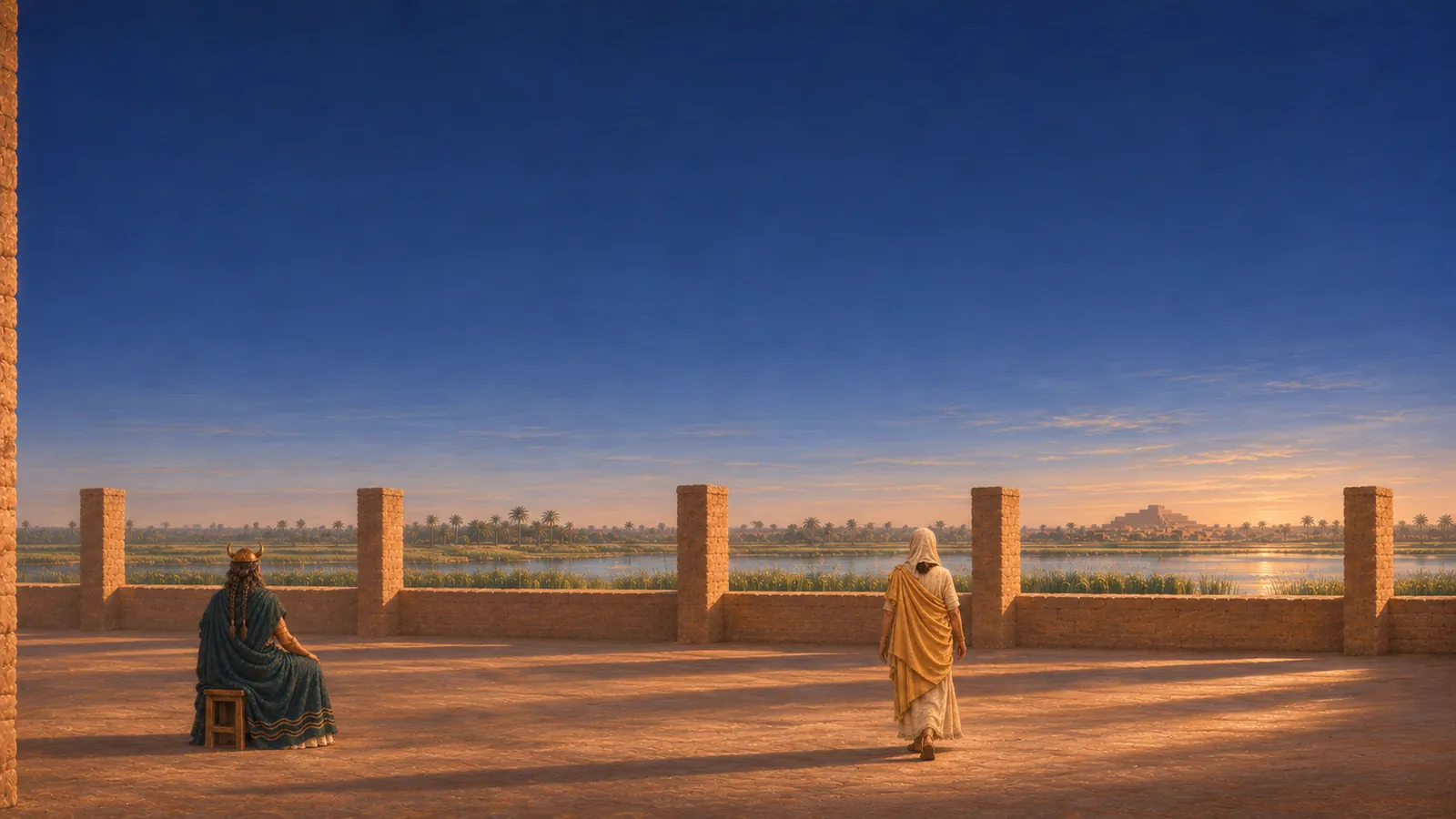
Les mots s’interrompent encore. Lorsqu’ils reviennent, les dieux parlent de nouveau d’un conseil, et Mami est appelée à y rejoindre Enki.
La tablette est brisée au moment où Enki s’adresse à Mami, qui façonne les destins. Dans le passage conservé, la vie humaine reçoit une fin, et la mort vient à chacun.
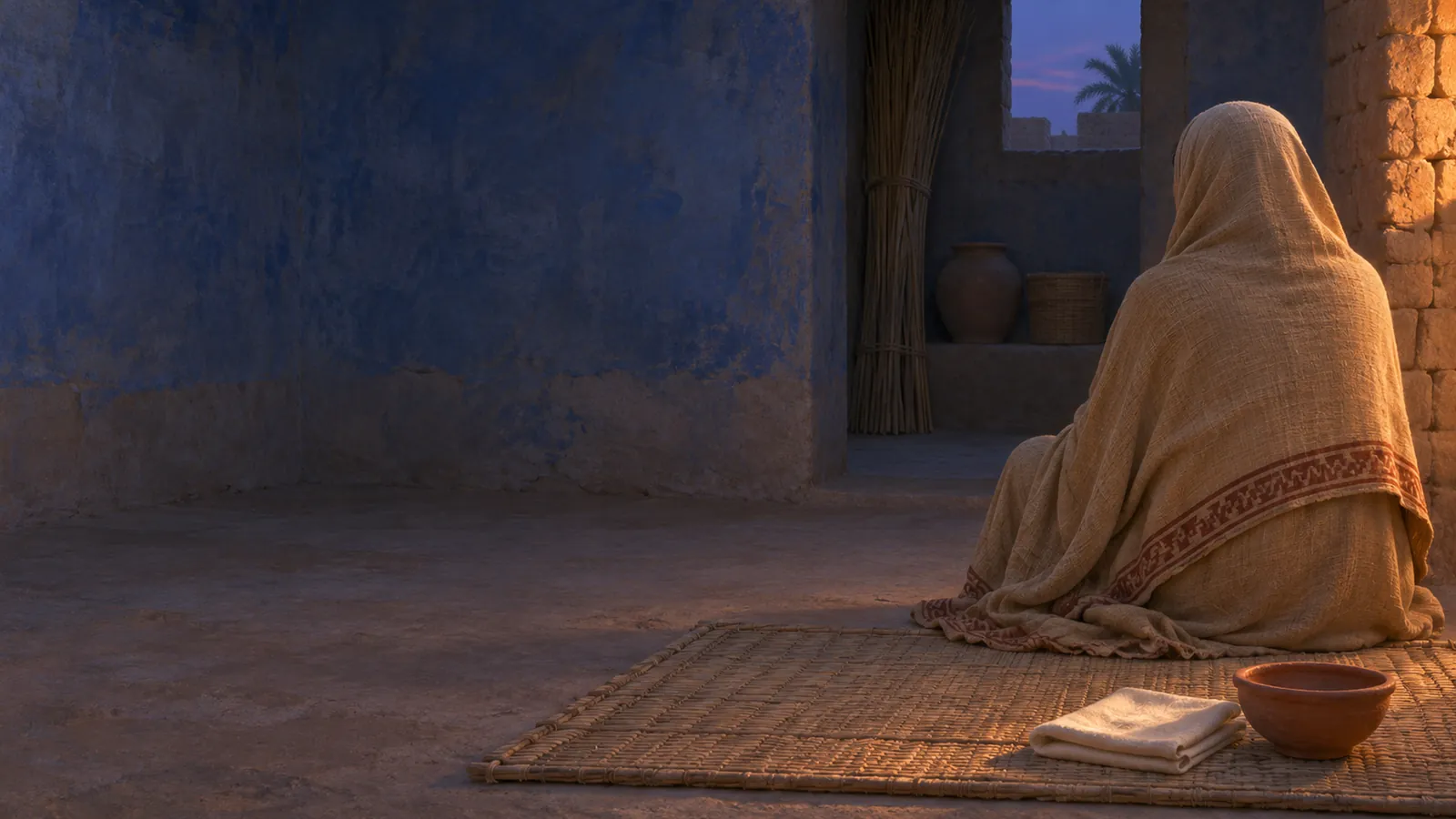
Les nouvelles règles distinguent les femmes qui ont des enfants et celles qui n’en ont pas. Elles nomment aussi la démone Pashittu, qui arrache un nourrisson aux genoux de sa mère.
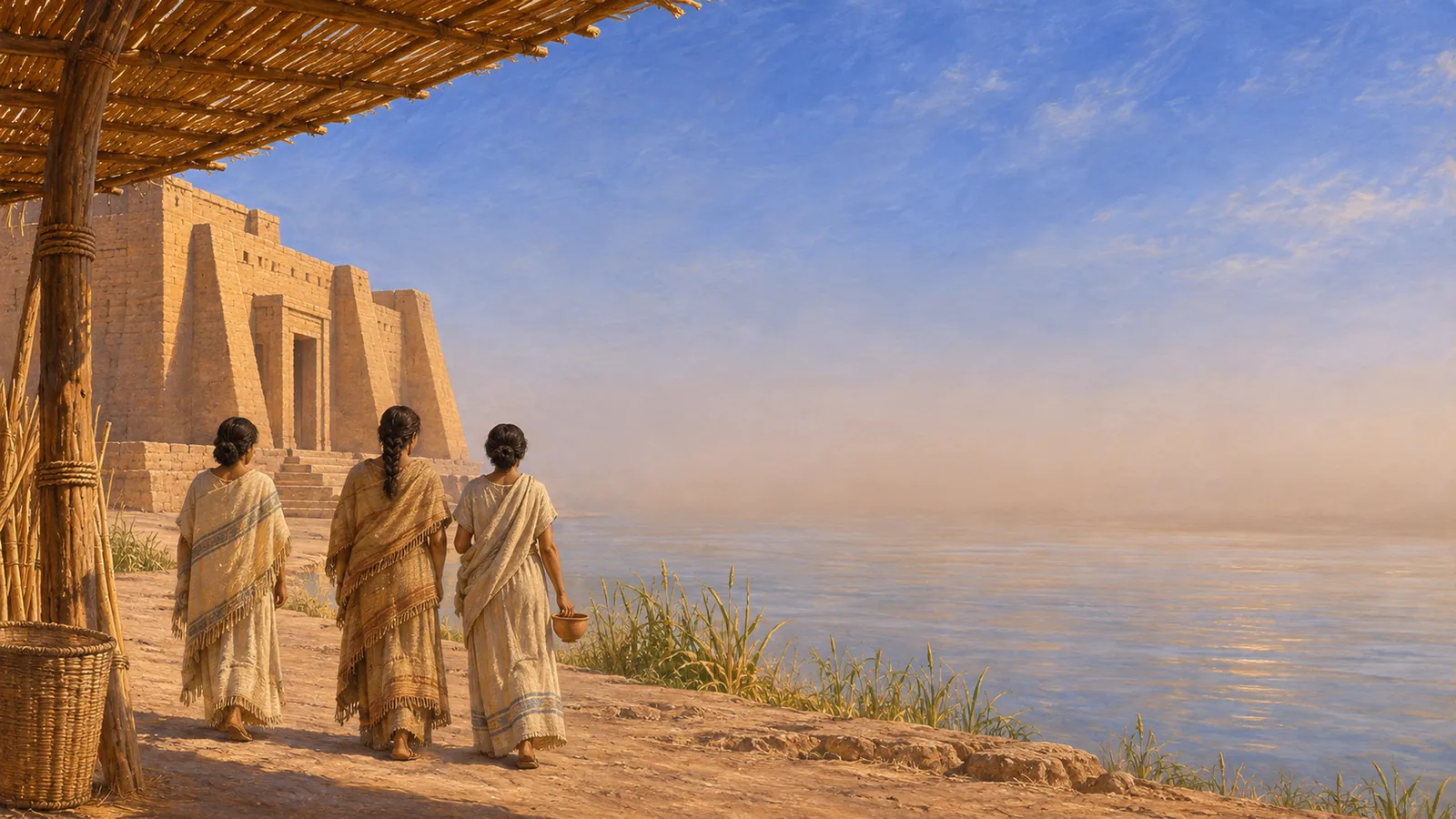
Les dieux mettent à part les prêtresses ugbabtu, entu et egisitu. Parmi les règles énoncées après le déluge, le poème interdit à ces femmes d’avoir des enfants.
LE CHANT
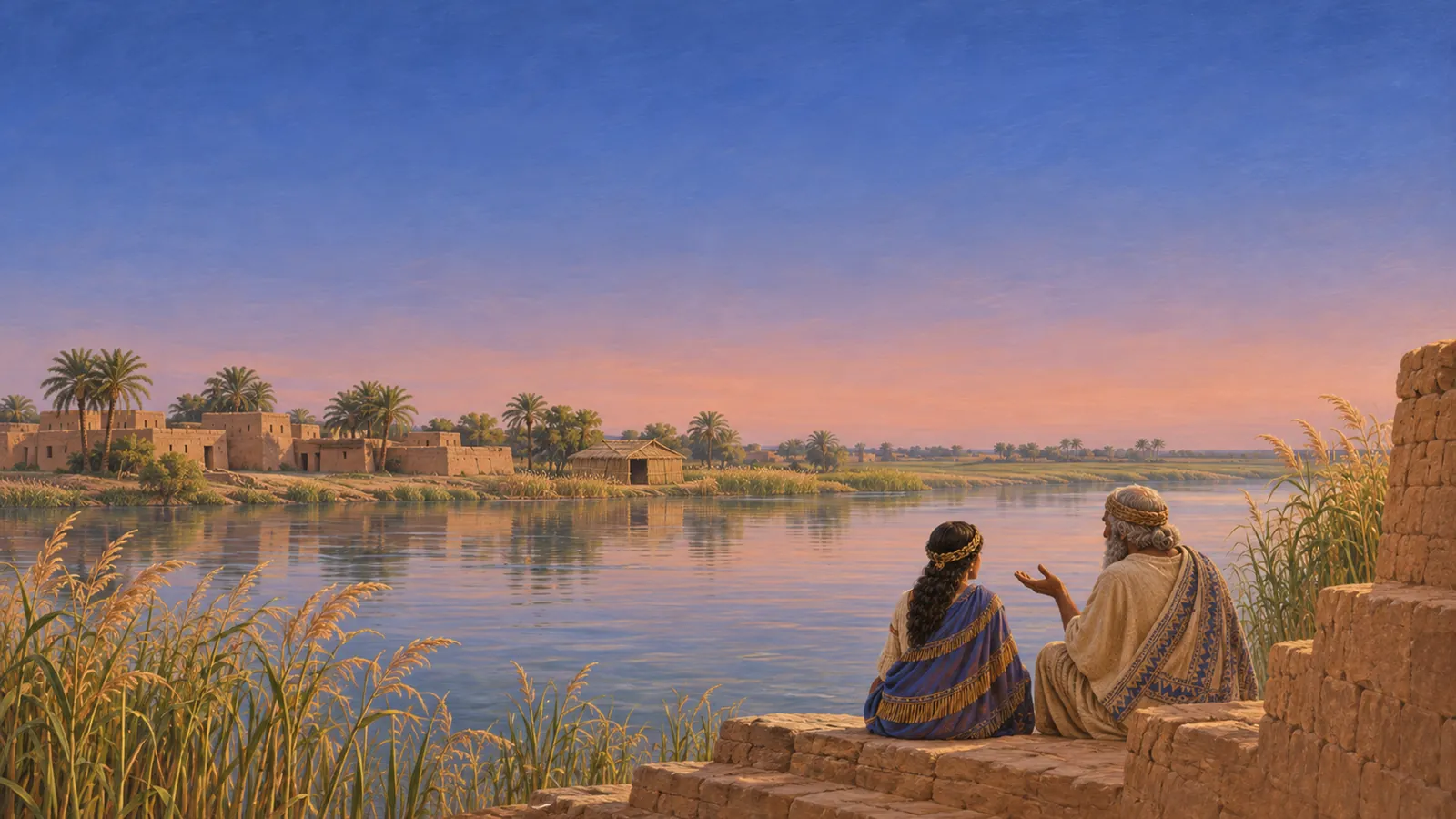
Les dernières lignes se rappellent qu’un déluge fut envoyé et que des gens y survécurent. Le chant demande qu’on l’écoute, et c’est ici que notre récit s’arrête.
Fin du chapitre 2
Toutes les pages
Sources
Éditions consultées
- Wasserman 2020, pp. 19–38, Sippar witnesses C₁ and C₂
- SEAL 1517, Old Babylonian Atrahasis III with translation
- SEAL 39732, closing lines of Atrahasis II
- IL Archive, Atrahasis: Epic and Hero
Les vers antiques de chaque page
- Page 1: Atrahasis III C₂ i 10′–16′, Wasserman 2020
The dream language is partially restored. - Page 2: Atrahasis III C₂ i 15′–21′; C₁ vi 11–15, Wasserman 2020
- Page 3: Atrahasis III C₂ i 20′–24′, Wasserman 2020
- Page 4: Atrahasis III C₂ i 25′–27′; C₁ i 28′, Wasserman 2020
The Old Babylonian line is broken and the reading is debated. - Page 5: Atrahasis III C₁ i 29′–32′, Wasserman 2020
- Page 6: Atrahasis III C₁ i 33′–35′, Wasserman 2020
- Page 7: Atrahasis III C₁ i 36′–37′, Wasserman 2020
- Page 8: Atrahasis III C₁ i 38′–41′; compares I 385–388 and II E 25–28, SEAL
The comparison refers to the repeated gathering of elders in the Atrahasis poem. - Page 9: Atrahasis III C₁ i 42′–46′, Wasserman 2020
Part of the report is broken. - Page 10: Atrahasis III C₁ i 43′–50′, Wasserman 2020
The departure clauses are partially restored; the line with the Apsu is also fragmentary. - Page 11: Atrahasis III C₁ i 50′–C₂ ii 12′, Wasserman 2020
The tablet preserves the occupations and partially restored carried implements. - Page 12: Atrahasis III C₂ ii 11′–15′, Wasserman 2020
This passage is partially restored. - Page 13: Atrahasis III C₁ i 29′–33′; gap C₂ ii 19′–C₁ ii 29″, Wasserman 2020
The text preserves no full construction sequence. - Page 14: Atrahasis III C₁ ii 29″–38″, Wasserman 2020
The words for silver and parts of their loading are restored. - Page 15: Atrahasis III C₁ i 34′–35′; C₁ ii 34″–35″, Wasserman 2020
- Page 16: Atrahasis III C₁ ii 36″–38″, Wasserman 2020
The reading of the people as craftspeople and some animal details are uncertain. - Page 17: Atrahasis III C₁ ii 39″–44″, Wasserman 2020
The dating and invitation are partly restored. - Page 18: Atrahasis III C₁ ii 40″–45″, Wasserman 2020
- Page 19: Atrahasis III C₁ ii 43″–49″, Wasserman 2020
- Page 20: Atrahasis III C₁ ii 48″–50″, Wasserman 2020
- Page 21: Atrahasis III C₁ ii 51″–53″, Wasserman 2020
- Page 22: Atrahasis III C₁ ii 54″–55″, Wasserman 2020
The story names no single source of the rising water. - Page 23: Atrahasis III C₁ iii 3′–12′, Wasserman 2020
- Page 24: Atrahasis III C₁ iii 13′–19′, Wasserman 2020
- Page 25: Atrahasis III C₁ iii 20′–31′, Wasserman 2020
Details about the refuge are partially restored. - Page 26: Atrahasis III C₁ iii 28′–45′, Wasserman 2020
- Page 27: Atrahasis III C₁ iii 46′–54′, Wasserman 2020
- Page 28: Atrahasis III C₁ iv 1′–23′, Wasserman 2020
- Page 29: Atrahasis III C₁ iv 24′–27′; ii 34″–42″, Wasserman 2020
- Page 30: Atrahasis III C₁ iv 26′–v 30′, Wasserman 2020
The transition is a substantial lacuna. - Page 31: Atrahasis III C₁ v 30′–32′, Wasserman 2020
Parts of this action are restored. - Page 32: Atrahasis III C₁ v 34′–38′, Wasserman 2020
Parts are restored. - Page 33: Atrahasis III C₁ v 36′–45′, Wasserman 2020
- Page 34: Atrahasis III C₁ v 46′–52′; vi 1–4, Wasserman 2020
- Page 35: Atrahasis III C₁ vi 5–10, Wasserman 2020
- Page 36: Atrahasis III C₁ vi 11–15, Wasserman 2020
- Page 37: Atrahasis III C₁ vi 16–19, Wasserman 2020
The statement is partly restored in the edition. - Page 38: Atrahasis III C₁ vi 20–26, Wasserman 2020
Paraphrases damage and the restored reference to punishment. - Page 39: Atrahasis III C₁ vi 27–44′, Wasserman 2020
- Page 40: Atrahasis III C₁ vi 45′–51′, Wasserman 2020
Death and grave are editorial restorations in the critical translation. - Page 41: Atrahasis III C₁ vii 1–5, Wasserman 2020
The poem personifies infant loss as Pāšittu. - Page 42: Atrahasis III C₁ vii 6–9, Wasserman 2020
- Page 43: Atrahasis III C₁ viii 8′–19′, Wasserman 2020
Illustrations réalisées par IL Archive avec des outils d’IA ; le texte s’appuie sur les sources antiques (voir les sources à la fin de chaque chapitre).