Entity
Gog and Magog
A reference page linking a name, group, or concept to the materials that discuss it.
Names with different roles in genealogies, invasion prophecy, end-time nations and barrier traditions.
Text
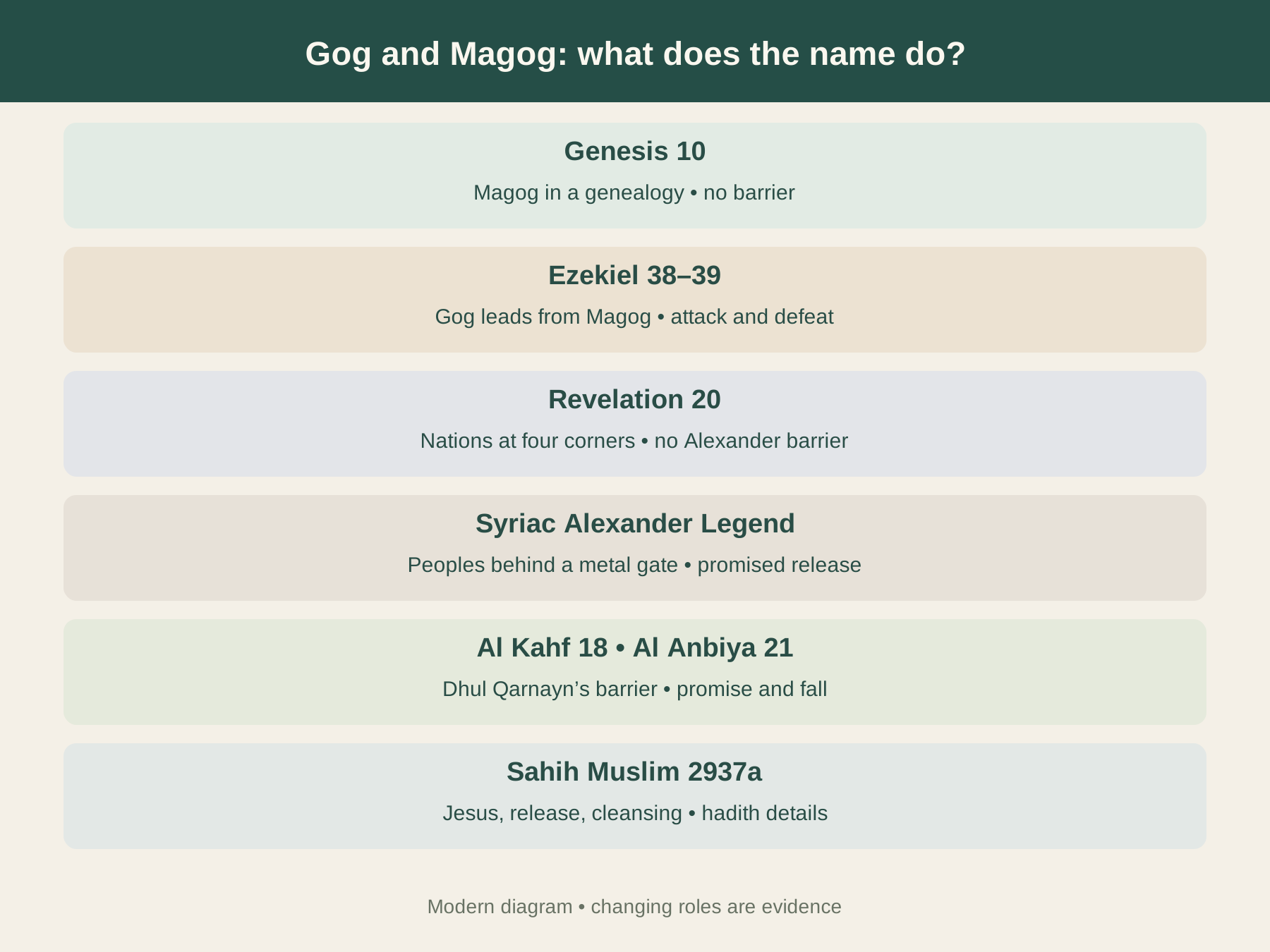
Magog appears among Japheth’s sons in Genesis10; Gog comes from Magog in Ezekiel38–39; Revelation20 describes Gog and Magog as nations. [1]
The SyriacSyriacA literary form of Aramaic, with an extensive Christian heritage and earlier non-Christian attestations.Glossary · Click to read the explanation Legend connects the names with Alexander’s barrier; the QuranQuranCentral text of Islam, used here as evidence of its religious discourse.Glossary · Click to read the explanation names them in Al Kahf and Al Anbiya. These uses do not establish one present-day people. [10][15][16]
References and notes
- Specified passages, complete. Genesis 10:1–5; Ezekiel 38–39; Revelation 20:7–10; KJV Return to the text ↑
- Historical translation; 144–158 and introduction i. E. A. Wallis Budge, The History of Alexander the Great (1889), Christian Legend, pp. 144–158; Introduction p. i Return to the text ↑
- Al Kahf 92–102. Quran, Al Kahf 18:92–102; Arabic text Return to the text ↑
- Al Anbiya 95–97. Quran, Al Anbiya 21:95–97; Arabic text Return to the text ↑
Research history
Substantive changes are retained here. Minor copy edits remain in the internal operational log.
-
Substantive record update
Suggest a correction · Suggest a source for this record
Cite this record
IL Archive, «Gog and Magog», Edition 2, https://ilarchive.com/en/entities/gog-and-magog