Period
Pre-Pottery Neolithic
A regional term for early Neolithic phases in Southwest Asia before the local spread of pottery; it does not imply an absence of settlement, architecture or cereal processing.
Text
Archaeologists use this term to classify early Neolithic phases in Southwest Asia. “Pre-Pottery” describes a local material-cultural sequence; it does not mean that people lacked organisation, buildings or knowledge of plants.[1][2]
Dating and context
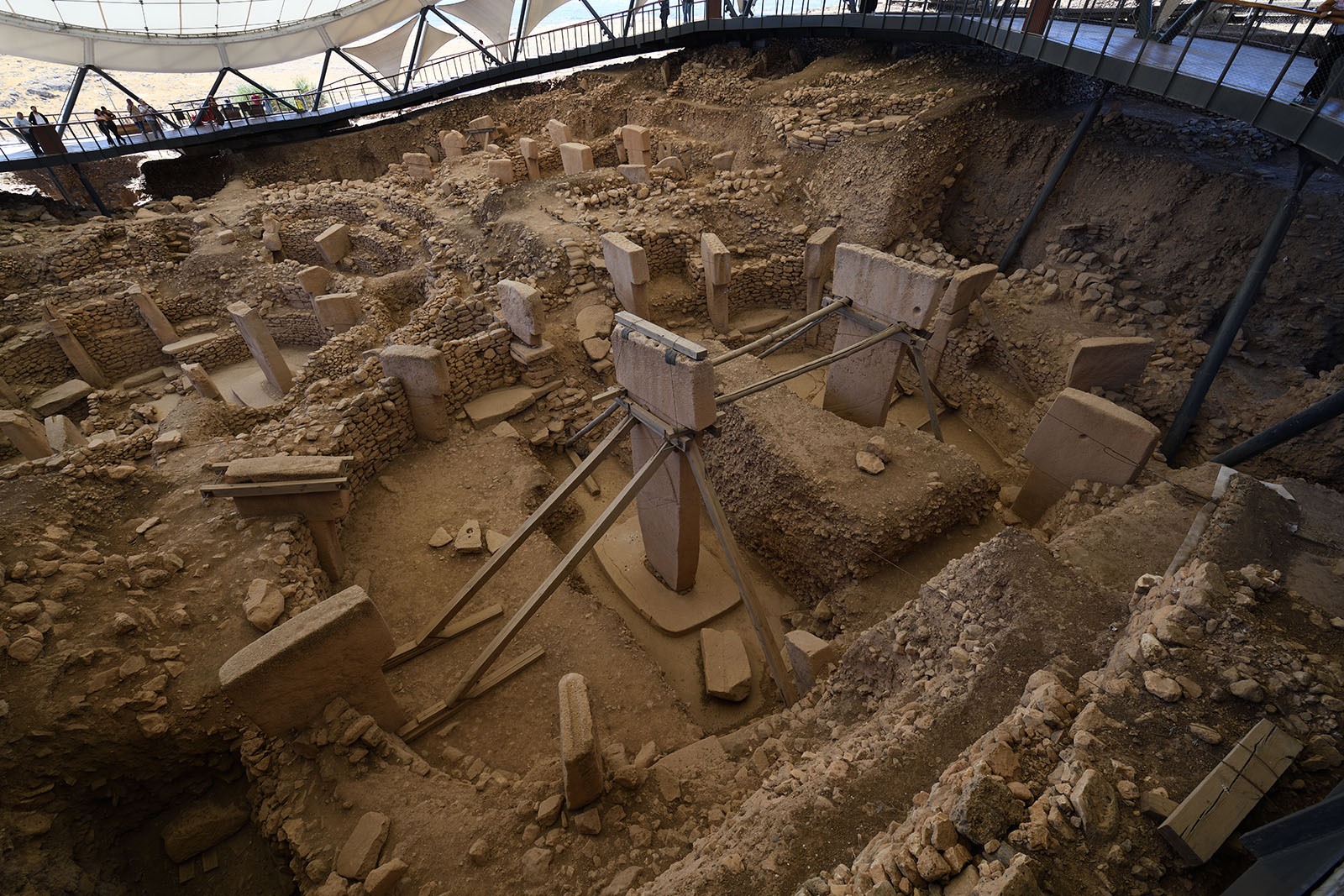
Chronological boundaries vary by region and sequence. The Göbekli TepeGöbekli TepeA Neolithic site in southeastern Turkey, known for communal buildings and T-shaped pillars; the excavation team describes a settlement with a pronounced ritual component.Glossary · Click to read the explanation team’s FAQ places phase A approximately at 9600–8800 BCE and phase B at 8800–8000 BCE. These are boundaries for the regional account used there, not a universal timetable for all societies.[1]
Göbekli Tepe belongs to this changing setting of hunting, gathering, settlement and food production. An absence of pottery does not make the site earlier than every form of architecture or organised ritualRitualAn organised or distinguished practice meaningful to a community; it may leave traces, but its form alone does not reveal an associated doctrine.Glossary · Click to read the explanation.[2]
References and notes
- Göbekli Tepe Research Team. Frequently Asked Questions. The Tepe Telegrams, German Archaeological Institute. Especially questions 1–4 and 11–12: northeast of Şanlıurfa, discovery history, anthropomorphic pillars, dating and the definition of a temple. Relevant answers are used rather than older backfill descriptions in the page introduction. Return to the text ↑
- UNESCO World Heritage Centre. Göbekli Tepe, property 1572. Description and Outstanding Universal Value; monuments approximately 9600–8200 BCE and probable communal and ritual functions. Return to the text ↑
Research history
Substantive changes are retained here. Minor copy edits remain in the internal operational log.
-
Substantive record update
Suggest a correction · Suggest a source for this record
Cite this record
IL Archive, «Pre-Pottery Neolithic», Edition 2, https://ilarchive.com/en/periods/pre-pottery-neolithic