Period
Ubaid culture
- Timeline
- From 6500 BCE to 3800 BCE
An archaeological designation for material traditions originating in southern Mesopotamia with regional diffusion. Broad southern frame c. 6500–3800 BCE; not a known linguistic people, with limits varying by region and phase.
Dates
Dates have distinct roles. The timeline uses creation, composition or historical coverage, rather than publication or discovery dates.
- Historical coverage
- Approximately From 6500 BCE to 3800 BCE
Text
Designation and phases
The modern name comes from Tell al-Ubaid near Ur. A broad southern sequence includes phases 0–5, with different boundaries and usage outside the south. Painted pottery, architecture and contact networks characterize the horizon without making it a unified state or a known ethnic group.[1]
Chronology and identity limits
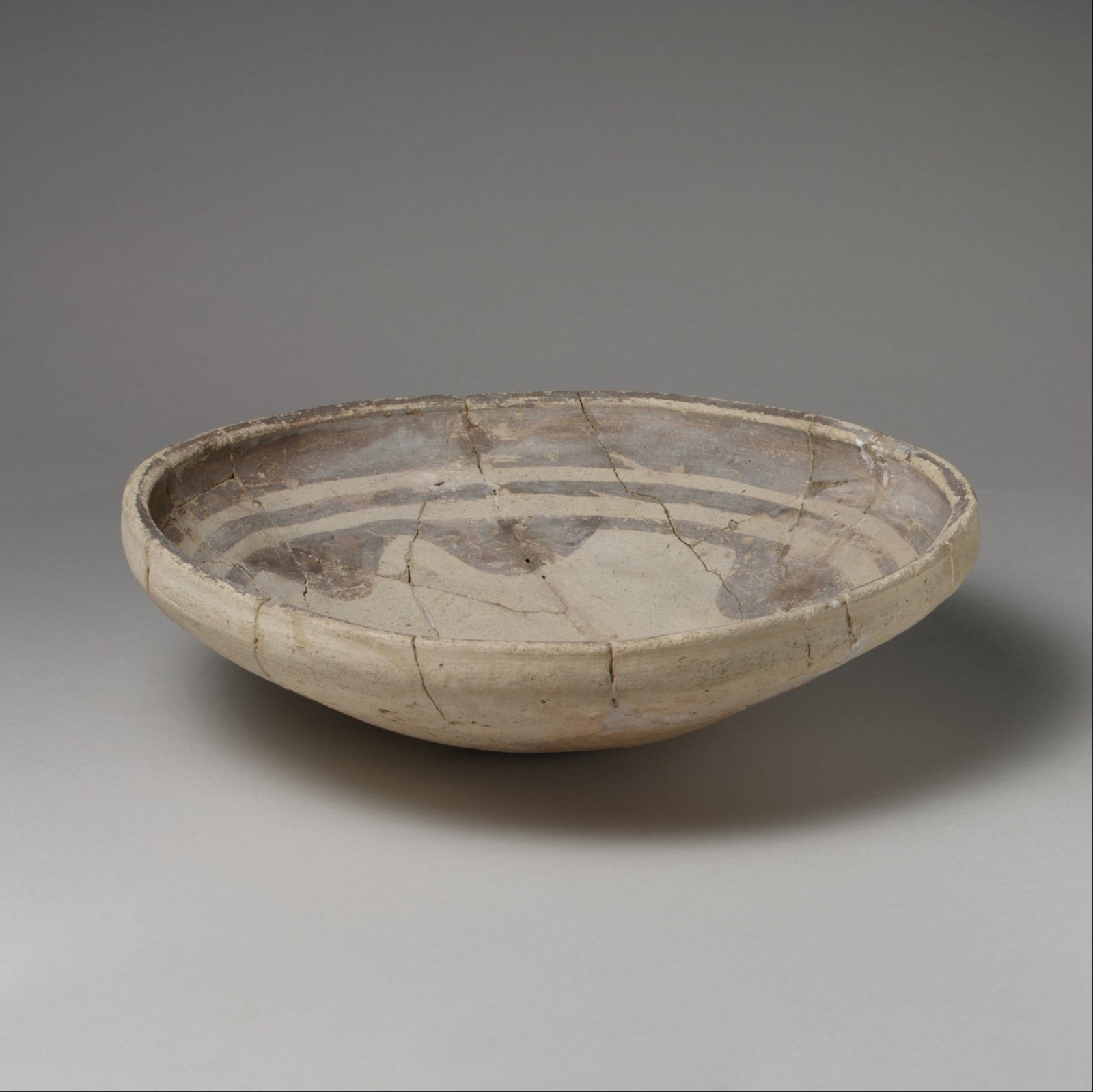
C. 6500–3800 BCE is a broad southern frame including early and terminal phases, not every site throughout that span. Language remains uncertain, and continuity into UrukUrukAncient city at Warka in southern Iraq, a major urban centre around 3200 BCE that preserved early writing and accounting tablets.Glossary · Click to read the explanation alone cannot establish Sumerian identity. The image shows a specific EriduEriduAbu Shahrain in southern Iraq, with a long architectural sequence beginning before writing. Associated with Enki in historical times, which does not establish the sacred being’s identity in its earliest layers.Glossary · Click to read the explanation bowl in the Metropolitan Museum of Art.[2]
References and notes
- Robert A. Carter & Graham Philip (2010). Deconstructing the Ubaid. In Beyond the Ubaid, SAOC 63, pp. 1–22. Chicago: Oriental Institute. Chapter pp. 1–3 checked: designation, phases 0–5 and southern frame c. 6500–3800 BCE. Not the entire book. Return to the text ↑
- The Metropolitan Museum of Art. Bowl, Ubaid, mid-sixth–fifth millennium BCE. Eridu cemetery, grave 136. Accession 49.133.2. Object catalogue and Open Access data: provenance, date and accession; image public domain. One object is not generalized. Return to the text ↑
Research history
Substantive changes are retained here. Minor copy edits remain in the internal operational log.
-
Substantive record update
Suggest a correction · Suggest a source for this record
Cite this record
IL Archive, «Ubaid culture», Edition 2, https://ilarchive.com/en/periods/ubaid