Entity · Concept
Bucrania
A reference page linking a name, group, or concept to the materials that discuss it.
Bucrania are horned cattle skulls or their representations. Real horns, skulls and plaster modelling appeared in Çatalhöyük houses; their ritual and social meaning is interpretive, not on its own proof of a bull deity.
Estimated reading time: 4 min Published Last reviewed:
Share article
Text
Introduction
Bucrania are horned cattle heads or skulls, and images of them. Horn installations in houses at ÇatalhöyükÇatalhöyükNeolithic site on the Konya Plain in central Anatolia, with clustered houses, subfloor burials and imagery on the East Mound, and later Chalcolithic phases on the West Mound.Glossary · Click to read the explanation, a Neolithic settlement in central AnatoliaAnatoliaAnatolia is the region occupying the Asian part of present-day TurkeyGlossary · Click to read the explanation, are among their best-known prehistoric examples. What did excavators actually find in walls and platforms? How far can we move from the selection of an animal head to an interpretation involving ancestors or a deity?
The term: a real skull or an image?
Bucranium is singular and bucrania plural; the word ultimately combines Greek terms for cattle and skull. In classical art history it describes a decorative motif representing an ox or bull skull, sometimes with garlands. In Neolithic archaeological usage, however, it can denote installations that incorporate actual skeletal material or a modelled plaster cattle head into which horn cores were inserted. A shared modern label does not demonstrate the continuation of one rite from the Neolithic into Greek and Roman architecture.[1]
What was found at Çatalhöyük?
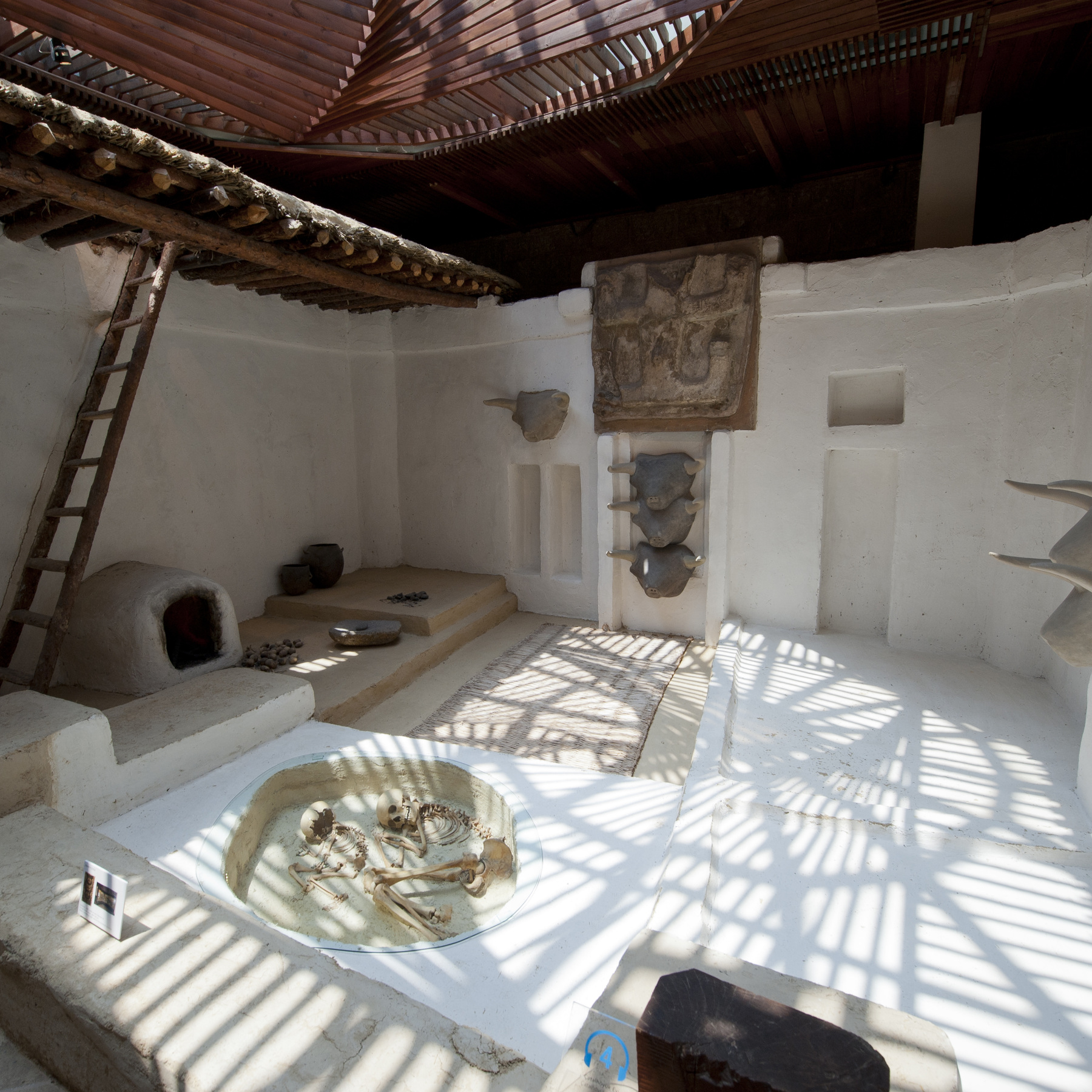
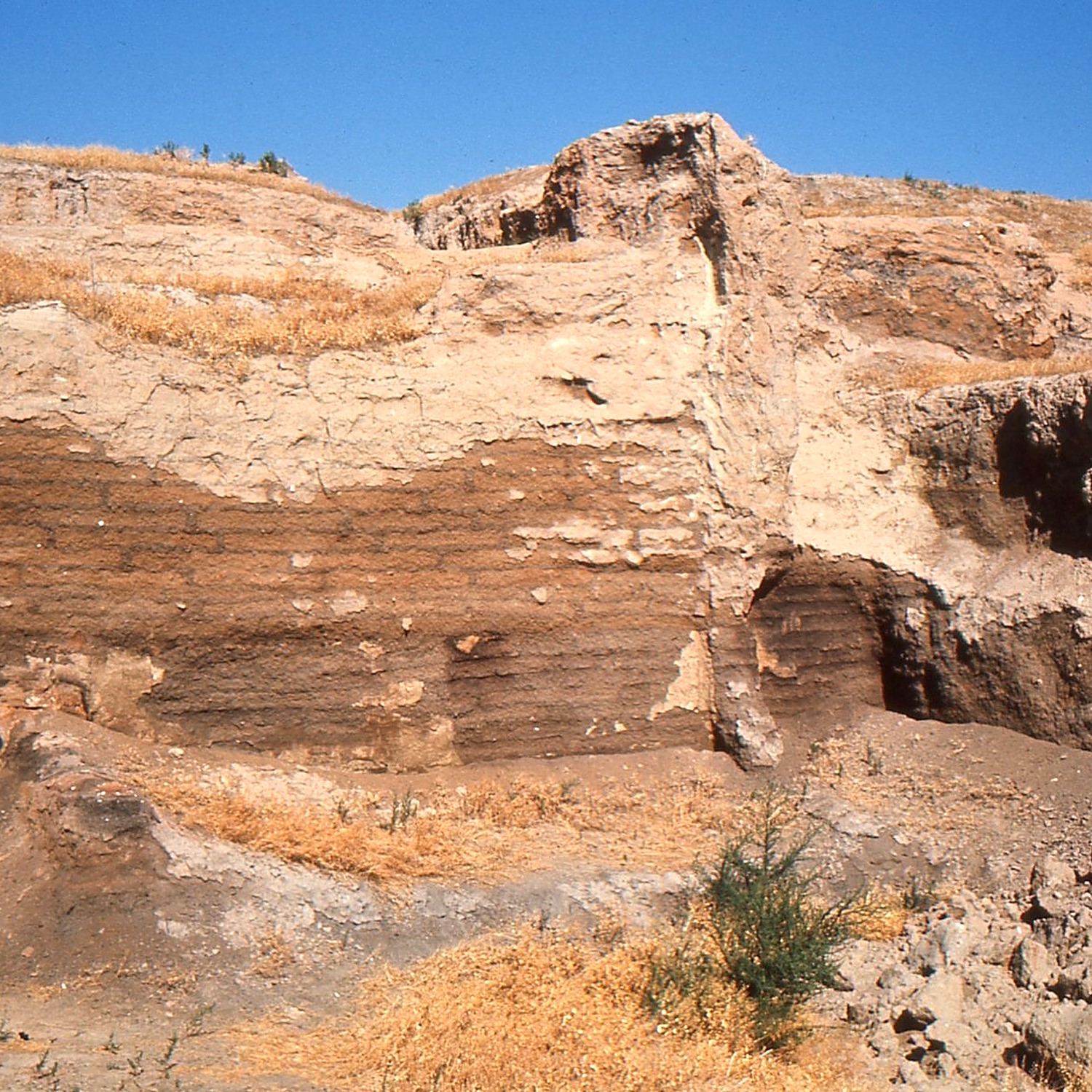
ÇatalhöyükÇatalhöyükNeolithic site on the Konya Plain in central Anatolia, with clustered houses, subfloor burials and imagery on the East Mound, and later Chalcolithic phases on the West Mound.Glossary · Click to read the explanation lies near Konya in present-day TürkiyeTurkeyTurkey is a modern country including Anatolia and territory in southeastern EuropeGlossary · Click to read the explanation. UNESCO broadly dates occupation of its East Mound to about 7400–6200 BCE; this is a chronology for the settlement, not a direct date for every head or horn.[2] In some buildings, horns formed part of plaster installations on walls or beside benches and platforms. The site's management plan describes actual animal skulls, plastered forms incorporating bony horn cores, and related installations involving wild sheep and goats. Thus not every horned installation is a complete bull skull, nor must every component belong to a single animal.[3]
Display, concealment and house closure
In their analysis, Katheryn Twiss and Nerissa Russell distinguish horned skull frontlets set in plaster, horns attached to benches or supports, and horns placed within the architecture where they would no longer have been visible. They report horned supports in Building 77 and discuss horns recovered from house fill and abandonment deposits. These are distinct archaeological settings: a concealed horn cannot have functioned as a visual display in the same way as horns projecting from a bench.[4]
Survival is selective. The outer keratin horn sheaths generally do not survive in the site's deposits, while bony cores may fragment or be removed from installations. Features could also be reused or relocated during a building's life. A restored object on display therefore cannot by itself disclose every earlier stage of its use.[3][4]
Wild or domestic cattle? Male or female?
Faunal evidence offers a firmer basis than symbolic appearance alone. Twiss and Russell found a predominance of mature, probably male animals among horn cores for which sex could be assessed: of 45 specimens, 32 were classed as male or probably male and 13 as female or probably female. Many other pieces could not be sexed, and the characteristics of horns from special and ostensibly ordinary contexts overlapped. This supports the selection of certain animals, not a ready-made account of what masculinity meant to every inhabitant.[4]
Wild cattle, or aurochs, were prominent in these assemblages. The Çatalhöyük Research Project places the appearance of domestic cattle and milk production in a transformation around 6500 BCE. A horned bovine from earlier levels should therefore not automatically be called domestic livestock or an emblem of cattle husbandry.[5]
From “shrines” to “history houses”
Archaeologist James Mellaart once used the concentration of paintings, modelling and horns to distinguish “shrines” from houses. Later architectural analysis instead emphasized the combination of residence, symbolic installations and burials within domestic buildings. Ian HodderIan HodderAn archaeologist who directed the Çatalhöyük project from 1993 to 2018 and read its buildings as houses of dwelling and memory, not necessarily separate temples.Glossary · Click to read the explanation and colleagues developed the interpretation of history housesHistory housesHistory houses: Hodder and Pels’s hypothesis linking certain long-lived Çatalhöyük buildings and concentrated burials to social memory. A debated analytical category, not an ancient name or proof of a separate temple.Glossary · Click to read the explanation, while Ian Kuijt proposed a different model centring on wider House groups and shared memory. These are scholars' analytical frameworks, not terms recorded by the inhabitants.[6]
Kuijt also reviews statistical challenges to any necessary correlation among burial frequency, decorative elaboration and rebuilding. A bucranium is therefore insufficient on its own to identify a separate temple or establish an ancestor rite: its placement, the building's changing history and the associated finds all matter.[6]
What can the evidence sustain?
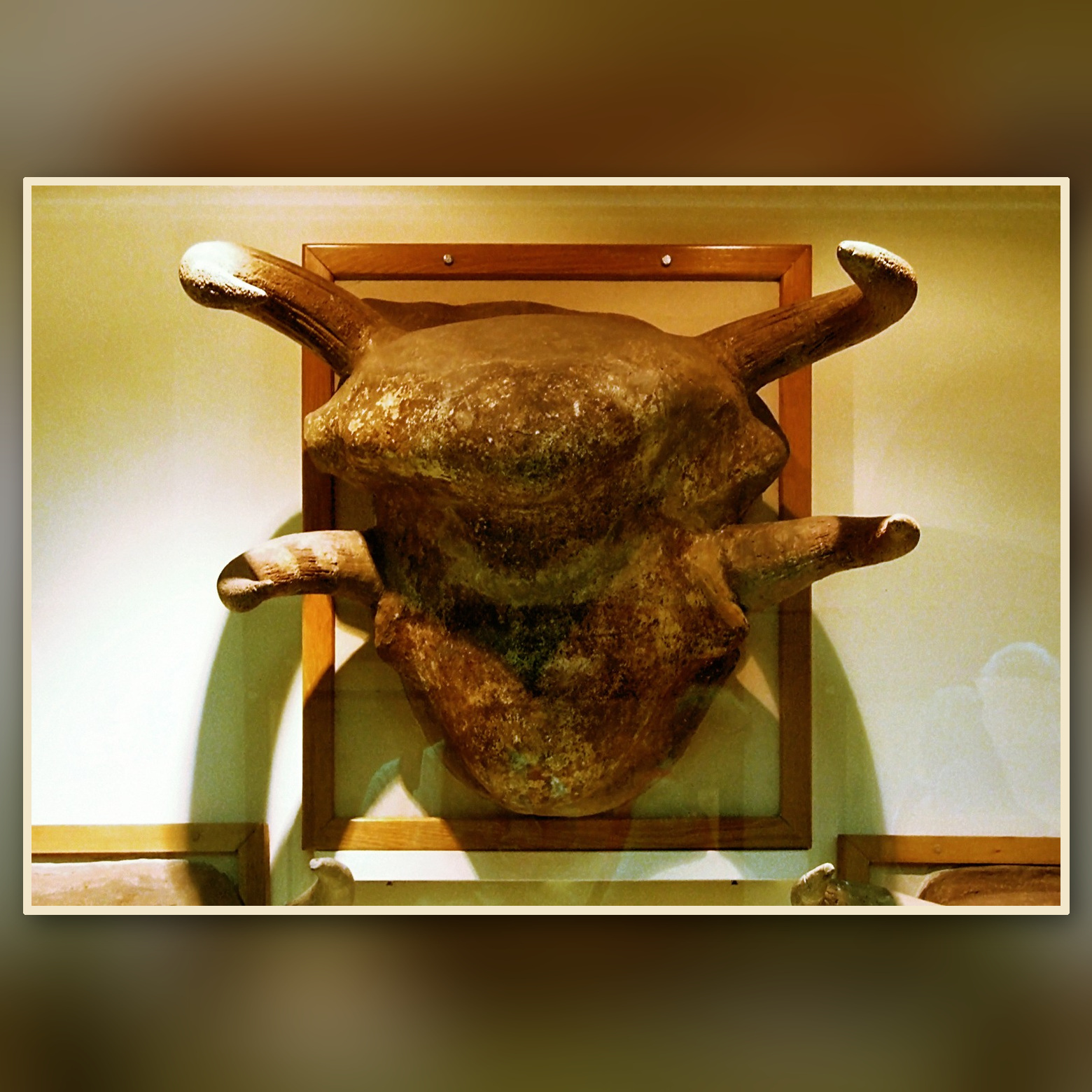
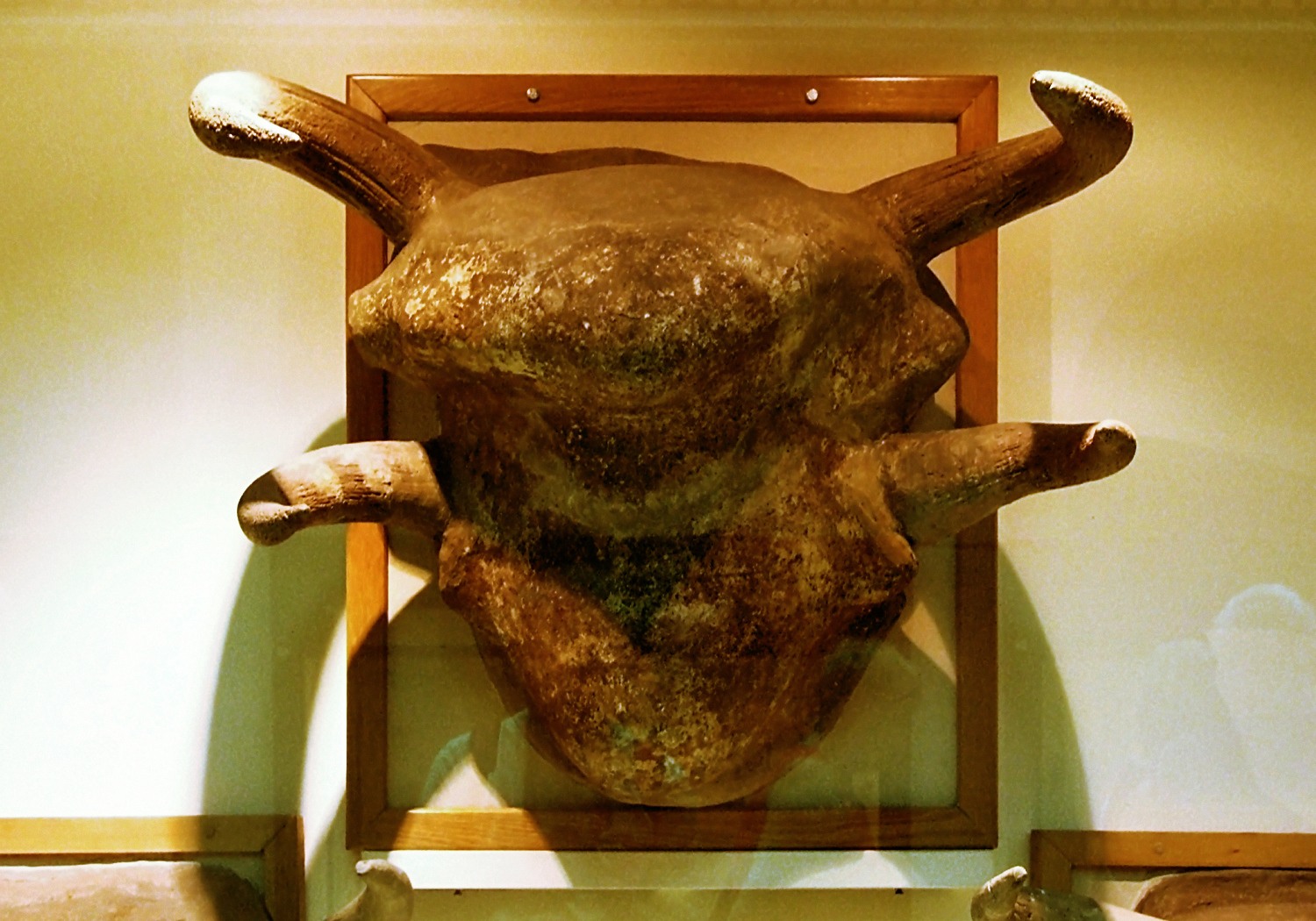
Observed evidence: cattle parts, especially horns, were selected, worked and incorporated into architectural features and diverse deposits at Çatalhöyük. Possible interpretations: some might relate to feasting, collective House memory or symbolically valued practices; the strength of the evidence varies by context. What remains unproven: a named bull deity in a contemporary local text, or one uniform ritualRitualAn organised or distinguished practice meaningful to a community; it may leave traces, but its form alone does not reveal an associated doctrine.Glossary · Click to read the explanation encompassing every installation. The accompanying museum photograph documents an object as now displayed, not its excavated position in an ancient house.[4][6]
References and notes (6)
- The National Gallery, London, “Bucrania”, art glossary: the ornamental classical use of the term. Complete “Bucrania” entry. Return to the text ↑
- UNESCO World Heritage Centre, “Neolithic Site of Çatalhöyük”, property no. 1405. Description and “Brief synthesis”: East Mound occupation, 7400–6200 BCE. Return to the text ↑
- Çatalhöyük site management team, Management Plan of Neolithic Site of Çatalhöyük (May 2013). Printed pp. 14–15 (PDF pages 14–15, counting from 1), on animal skulls, horn cores, plaster and installations; not the entire plan. Return to the text ↑
- Katheryn C. Twiss and Nerissa Russell, “Taking the Bull by the Horns: Ideology, Masculinity, and Cattle Horns at Çatalhöyük (Turkey)”, Paléorient 35(2) (2009), 19–32, DOI 10.3406/paleo.2009.5296. Accessible Persée OCR passages, notably pp. 19–20, 22–23 and 25–29, including discussed tables and contexts; not a page-by-page verification of the complete illustrated article. OCR may contain errors. Return to the text ↑
- Çatalhöyük Research Project, “The Rise and Fall of a Neolithic Town”, project website. Entire accessible page text on occupation, developments around 6500 BCE, and domestic cattle and milk. Return to the text ↑
- Ian Kuijt, “Material Geographies of House Societies: Reconsidering Neolithic Çatalhöyük, Turkey”, Cambridge Archaeological Journal 28(4) (2018), 565–590, DOI 10.1017/S0959774318000240. Abstract and publisher-HTML sections on shrines, lineage/history houses, decorating spaces, and Discussion; not every page of the paper. Return to the text ↑
Suggest a correction · Suggest a source for this record
Cite this record
IL Archive, «Bucrania», https://ilarchive.com/en/entities/bucrania
Continue reading